Jun 262026
 

Protesting injustice is a powerful way for individuals to come together to create change. In the exhibition How We Stay Free at Tilt Institute for the Contemporary Image, photos by Mike Arrison, Harvey Finkle, Joe Piette, and Sunny Singh vividly capture past protests that have taken place in Philadelphia over the years, reminding visitors of the power of community.

From the gallery about the exhibition:

Following the widely publicized murders of George Floyd and other Black citizens by police, an unprecedented wave of public outcry swept the nation. Despite the pervasive uncertainty and restrictions imposed by the global COVID-19 pandemic, Philadelphians organized and sustained mass protests, taking to the streets to emphatically demand racial justice, police accountability, and structural reform. Later that same year, the tragic shooting death of Walter Wallace Jr. by police officers in the West Philadelphia neighborhood of Cobbs Creek further underscored these systemic issues. His family had called 911 seeking assistance for a mental health crisis, only for the encounter to escalate fatally, tragically illustrating the severe gaps in the community’s support and emergency response systems.

Inspired by the energy generated from these events, West Philadelphia residents Fajr Muhammad and Christopher Rogers published How We Stay Free: Notes On A Black Uprising. This project is not merely a book but a dynamic, living archive of community resistance, featuring powerful, multi-modal contributions from a diverse coalition of artists, writers, poets, and scholars who were active participants in the struggle. This exhibition, which shares the same title, serves as an essential visual and experiential archive. It documents the work initiated by the authors, alongside the tireless efforts of local organizations, grassroots collectives, and community-based activists. Philadelphia’s legacy of civil disobedience is both deep and enduring, stretching from the national Black Lives Matter protests to localized calls for Palestinian liberation and the No Arena fight against a proposed sports complex in the historic Chinatown neighborhood.

The visceral imagery and compelling narratives presented on the gallery walls emphasize a crucial point, a collective and sustained response is necessary to ensure meaningful and lasting progress is achieved. This philosophical approach—that change requires unity and shared purpose—serves as the foundational connective tissue binding both the publication and the exhibition. Spanning several decades of resistance and activism, the collection functions as a series of time capsules. These suspended moments deliberately position the artist not as detached photojournalists, but as participant-observers—marching alongside a broad and diverse coalition of revolutionaries united by the inalienable right of all people to be truly free.

This show closes 6/27/26.

Oct 182025
 

https://substackcdn.com/image/fetch/$s_!5vrz!,f_auto,q_auto:best,fl_progressive:steep/https%3A%2F%2Flonglistshort.substack.com%2Fapi%2Fv1%2Fpress_kit%2F175577049.jpg%3FtextColor%3D%2523ffffff%26aspectRatio%3Dinstagram%26bgImage%3Dtrue%26hidePreviewText%3Dtrue%26isDraft%3Dfalse%26hash%3D86331169%26version%3D13

The Recap, my Substack newsletter, returns today with a focus on abstract art, punk rock, the American flag, the 90s, and more. It adds a little more dimension to what I post on the website and ties things together thematically.

Check it out and subscribe!

Oct 022025
 

Corita Kent (Sister Mary Corita)’s print I Should Like to Be Able to Love My Country and Still Love Justice, 1968, was on view at the Museum of Modern Art in NYC in June of 2024.

From the museum about the artist-

Corita Kent, also known in the Catholic Church as Sister Mary Corita, incorporated a range of references into her silkscreen prints, spanning pop culture imagery and song lyrics, biblical allusions, and literary conceits. After seeing Andy Warhol’s Campbell’s Soup Cans in 1962, she was inspired to embrace the language of Pop art, using bold, graphic designs to convey anti-war messages. In the 1980s Kent’s posters and ephemera were collected by PAD/D (Political Art Documentation/Distribution), a New York-based art activism group with a mission to create an archive of politically concerned art and ephemera from around the world. The materials are now part of the MoMA Archives, Library, and Research Collections.

You can currently see some of her photographic archive at Marciano Art Foundation in Los Angeles for the exhibition Corita Kent: The Sorcery of Images, on view until 1/24/26. The show “focuses on a little seen part of Corita’s artistic practice: her archive of over fifteen thousand 35 mm slides that she and her cohorts took between 1955 and 1968 while she was a beloved teacher in the art department at Immaculate Heart College”.

As part of their press release they include this lovely quote from the artist-

“In a sense, the whole world around the artist is his source, his sorting and relating powers are his sorcery, and the one isn’t much good without the other. … Anything can be a source, even a mistake. The sorcery or the thievery is the art of relating sources into a new solution.”

Her work can also be seen in Los Angeles at the Corita Art Center. The center is free to visit on Saturdays (with appointment).


Sep 262025
 

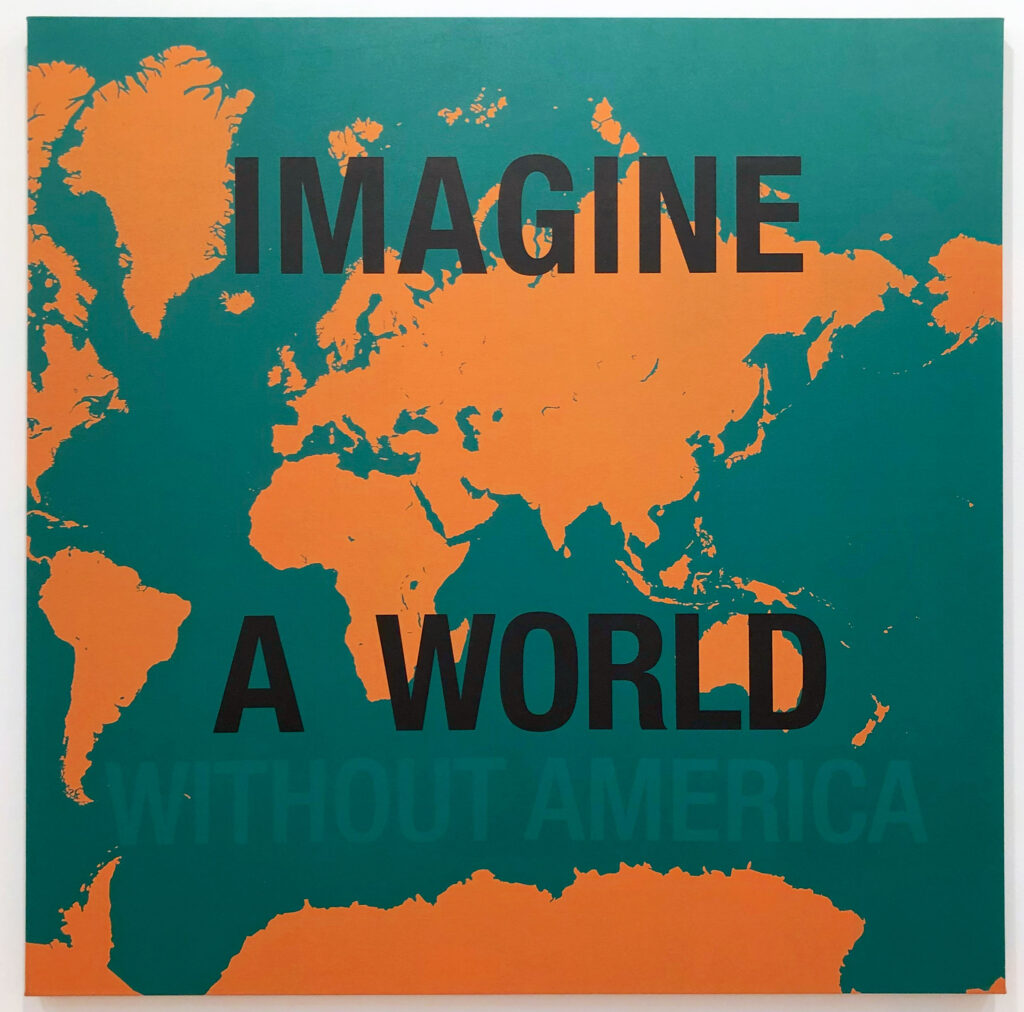
“Imagine a World Without America”, 2007, Screen print and acrylic on canvas

The painting above is by Brooklyn-based artist Dread Scott and was on view as part of the 2019 group exhibition Borders at James Cohan gallery in NYC.

From the press release about the work-

His 2007 work, Imagine a World Without America, calls upon the viewer to participate in the titular thought experiment and contemplate that absence. The painting de-centers the United States of America from the middle of the map that most Americans are familiar with. Scott utilizes the language of cartography to encourage the exploration of social questions, not geography. Land mass and sea are depicted but—like the world as it actually is—borders don’t exist.

The work is currently on view as part of 15, a group exhibition at Cristin Tierney gallery, celebrating the gallery’s anniversary and new location. 15 will be on view until 10/4/25.

Dread Scott has created political works throughout his career in a variety of mediums. In the video below he discusses how one of his art installations, What Is the Proper Way to Display a U.S. Flag (1989), drew controversy- including denouncement by then President George H.W. Bush.

Aug 292025
 

Today’s flashback, in honor of Labor Day weekend, is to Paul Signac’s Le Démolisseur (The Demolition Worker), 1897–99, which was on view at MoMA in NYC in 2020/2021 as part of- Félix Fénéon: The Anarchist and the Avant-Garde-From Signac to Matisse and Beyond.

About the exhibition-

Who was Félix Fénéon? The first exhibition dedicated to this extraordinarily influential but little-known figure explores how he shaped the development of modernism. A French art critic, editor, publisher, dealer, and collector, Fénéon (1861–1944) championed the careers of young, avant-garde artists from Georges-Pierre Seurat and Paul Signac to Pierre Bonnard and Henri Matisse, among many others. He was also one of the first European collectors of art from Africa and Oceania. A fervent anarchist during a period of gaping economic and social disparities, Fénéon believed in the potential of avant-garde art to promote a more harmonious, egalitarian world.

About the painting from the museum-

Signac called for artists to deliver the “forceful blow of a pickaxe to the antiquated social structure.” Here, he depicts demolition workers tearing down the edifice of the old order as a new dawn rises behind them. The monumental canvas is an allegory for Signac’s anarchist vision of a modern, egalitarian society in which laborers would be treated with fairness and respect.

Anarchism flourished during the late 19th and early 20th centuries in France, a period often referred to as the Belle Époque. Though celebrated for its extraordinary cultural achievements, the era saw horrendous economic devastation for a large swath of the population, instilling in many a profound distrust of state institutions. Anarchists, including Fénéon, Signac, and many of their artist and writer friends, looked to a utopian future, when the dissolution of the capitalist government and bourgeoisie would allow social harmony, economic fairness, and artistic freedom to prevail.

This exhibition is included in MoMA’s Virtual Views series on their website- allowing the public to view the show, learn from the curators, and more.

May 222024
 

Artist and activist Andrea Bowers is based in Los Angeles but was born and raised in Ohio. This provides the connection to the work in Exist, Flourish, Evolve, currently on view at moCa Cleveland, which advocates for environmental protections for the area. The educational material informs the viewer, while the artwork reminds us how much beauty there is to lose.

From the museum-

LA-based artist Andrea Bowers bears witness in her work, drawing attention to and inspiring movement around the most urgent issues of our time. Her drawings, sculptures, installations, and films chronicle and preserve history as it occurs, documenting collective action and amplifying the labor and lived experiences of activists dedicated to socio-political change.

Developed through an ongoing partnership with the Community Environmental Legal Defense Fund (CELDF) and activist Tish O’Dell, Exist, Flourish, Evolve is a new, multi-site, multimedia campaign that builds awareness and action around the dangers facing Lake Erie and all of the Great Lakes ecosystems. It features a monumental neon sculpture installed on a waterfront balcony of the Great Lakes Science Center; a documentary investigating the impact of factory farming on Lake Erie’s ecosystem; and a presentation in moCa’s Lewis Gallery that includes a newly-created drawing of the Lake Erie Bill of Rights, first-of-its-kind legislation protecting an entire US ecosystem that is part of the global Rights of Nature Movement.

Bowers was raised in the small town of Huron, Ohio and spent her childhood on the shores of Lake Erie, connecting to the lake itself like a member of her family to be cared for, cherished, and protected. Yet, Lake Erie and its watershed are abused and endangered by corporate practices such as contaminant dumping, toxic runoff from industrial farming, and the introduction of non-native invasive species. Exist, Flourish, Evolve demands justice for the Great Lakes, urging us to prioritize the preservation of our natural ecology over industrialization and capitalism.

Within moCa’s gallery, a timeline connects Bowers’s new and recent artworks with historical facts and archival materials using two catastrophic climate events as bookends to Bowers’s life thus far: the 1969 fire on the Lake Erie-connected Cuyahoga River (a result of oil slicks covering the water) and the massive 2014 algae bloom that blanketed Lake Erie and invaded Toledo’s water systems, preventing residents from using tap water.

From the Maumee to the Cuyahoga, the works in Exist, Flourish, Evolve come together to share the histories of our water, demonstrate the interconnectedness of ourselves and our natural world, and remind us, as Dr. Vandana Shiva states, “nature is not out there; we are a part of it.”


This exhibition closes 5/25/24.

Jan 162024
 

(photograph by Richard Avedon from The New Yorker’s website)

Above is Richard Avedon’s portrait of Martin Luther King Jr. with his father, Martin Luther King, and his son, Martin Luther King III, 1963. The image is part of the 1964 book Nothing Personal, Avedon’s collaboration with writer James Baldwin.

Aug 222023
 

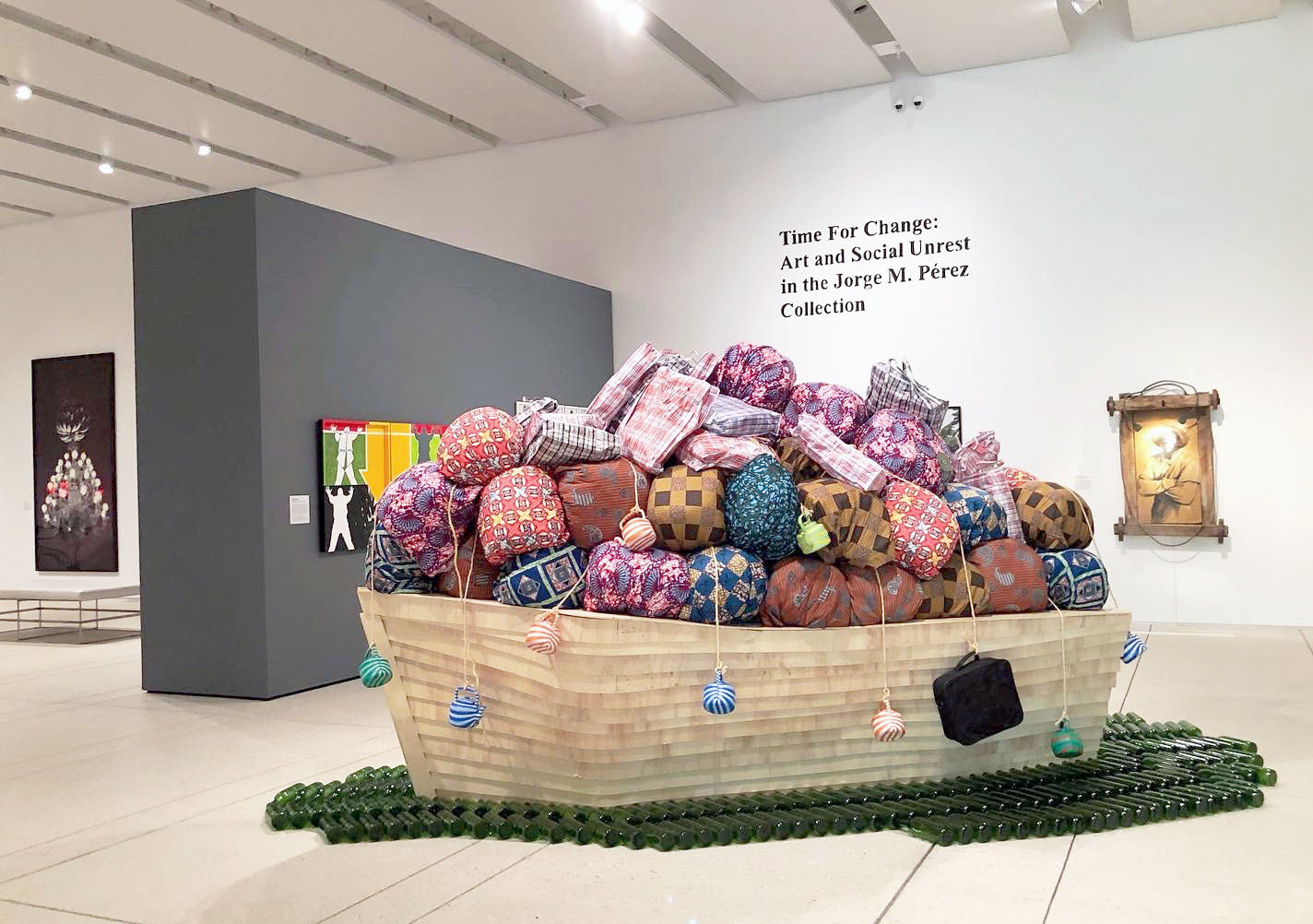
Barthélémy Toguo (Cameroonian, b. 1967), “Road to Exile”, 2018. Wooden boat, cloth bundles, glass bottles, and plastic containers

Currently on view at Tampa Museum of Art is Time for Change: Art and Social Unrest in the Jorge M. Pérez Collection. The exhibition highlights art from around the world that focuses on social issues.

From the museum-

“It is enough for the poet to be the bad conscience of his age”, stated Saint-John Perse in his 1960 Nobel Prize acceptance speech. Something similar could be said when artists address the transformations of society. We should not ask for measurable political action when their role is to point out, to render evident, to shake us from indifference. Art may not provide answers, but most of the time it interrogates and proposes uncomfortable issues, almost like rubbing salt in a wound. Artists are seldom celebratory, nor do they usually provide solutions-art’s potency lays in the symbolic efficacy of the actions it proposes more than in the practical effects they entail. Paraphrasing Brazilian poet Ferreira Gullar, “art exists because life is not enough.”

Time for Change is structured around six themes or nuclei: Entangled Histories, Extraction and Flows, Artivism, State Terror, Spatial Politics, and Emancipatory Calls. The sections are organically linked and establish dialogue and correlations among artworks that do not necessarily illustrate an argument nor are they contained by one. Entangled Histories proposes essential questions: how do we remember as a society? Who is forgotten by History, and for what reasons? Extraction and Flows examines displacement of peoples (usually forced), as well as the unequal logic on the territory. Artivism: Art in the Social Sphere focuses on political unrest and public protest on the streets. State Terror signals how protest is countered with repression and violence. The fifth section, Spatial Politics, reflects on modern architecture and its role in creating segregated communities. Lastly, Emancipatory Calls summons to reclaim difference, in the understanding that a more just society can only be built on respect for one’s right to be different.

A comprehensive look at the Jorge M. Pérez Collection reveals a tendency towards art with an interest in social change- art that examines the conflicts and contradictions of contemporary society, art that critically analyzes historical events and reframes them in the present. Many of the 60 works on view, due to their size or complexity have rarely been exhibited and are shown together for the first time in Time for Change.

About the main work pictured above, Barthélémy Toguo’s Road to Exile, from the museum–

In 2018, the Parrish Art Museum in Water Mill, New York hosted Barthélémy Toguo’s first solo exhibition in the United States. While on site at the Parrish he made Road to Exile, a large-scale installation highlighting the plight of refugees, in particular African migrants in search of a better and safer quality of life. The installation features a life-sized wooden boat that rests on glass bottles. A metaphor of the dangerous voyage across the sea, the bottles represent the fragile line between life and death. The boat nearly overflows with bundles wrapped in brightly colored African textiles and serve as stand-ins for the body. In Road to Exile Toguo employs imagery of the boat as a means of escape rather than a vessel for exploration or adventure.

Below are images from the exhibition as well as some information on a few of the works.

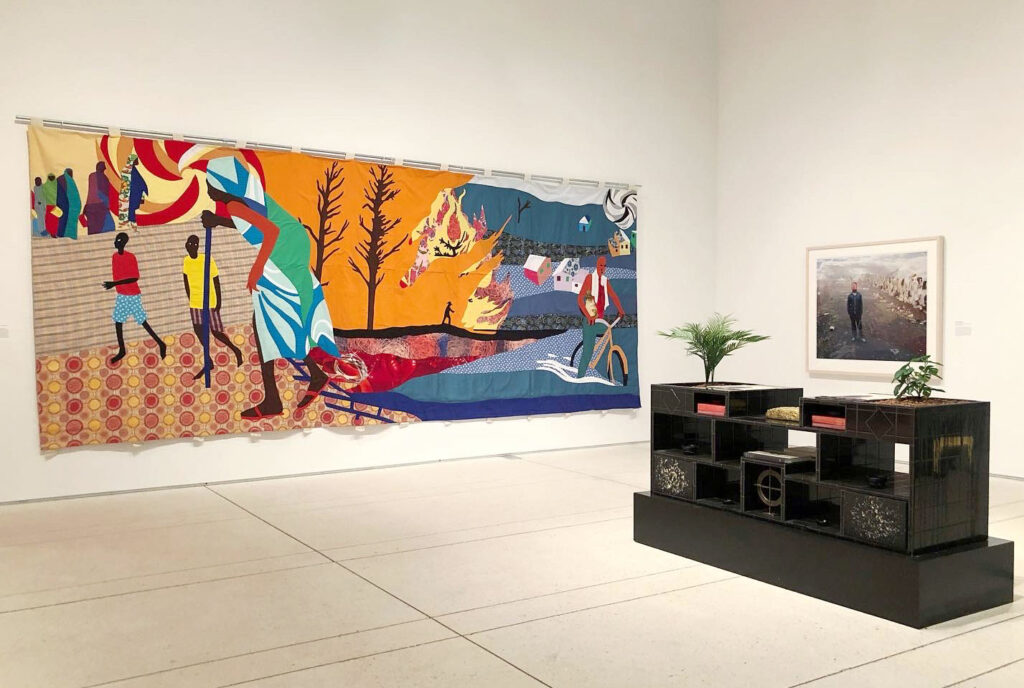
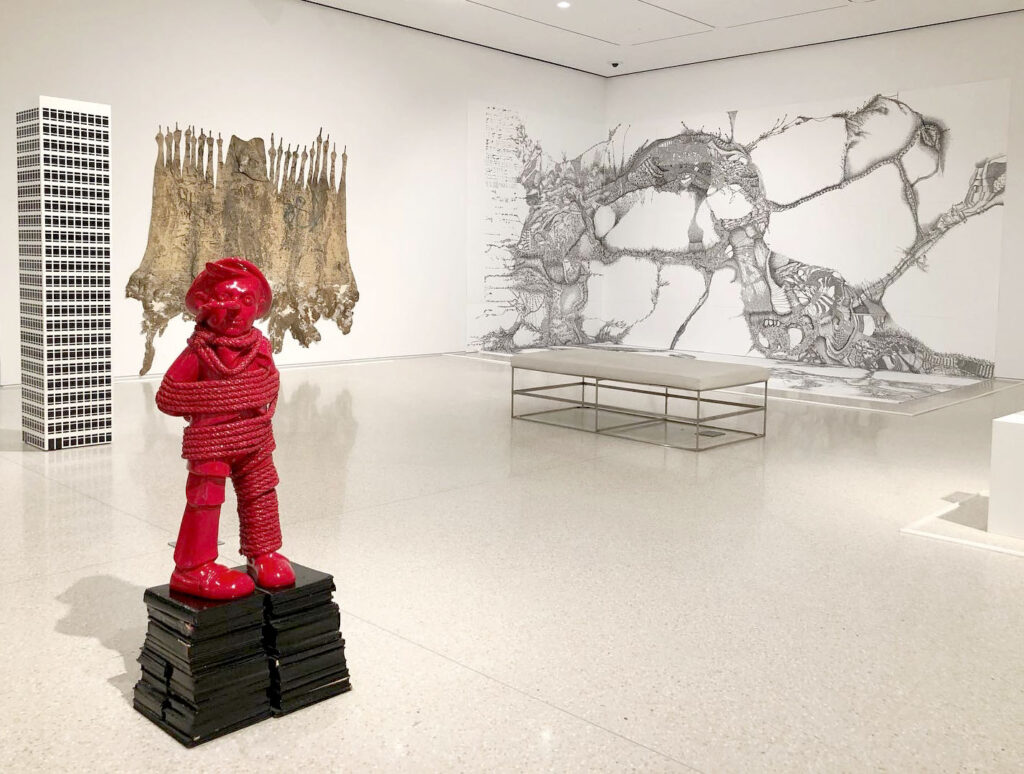
Rashid Johnson, “A Place for Black Moses, (2010), bottom right sculpture, and Christopher Myers “How to Name a Famine, a Fire, a Flood”, 2019, left wall piece

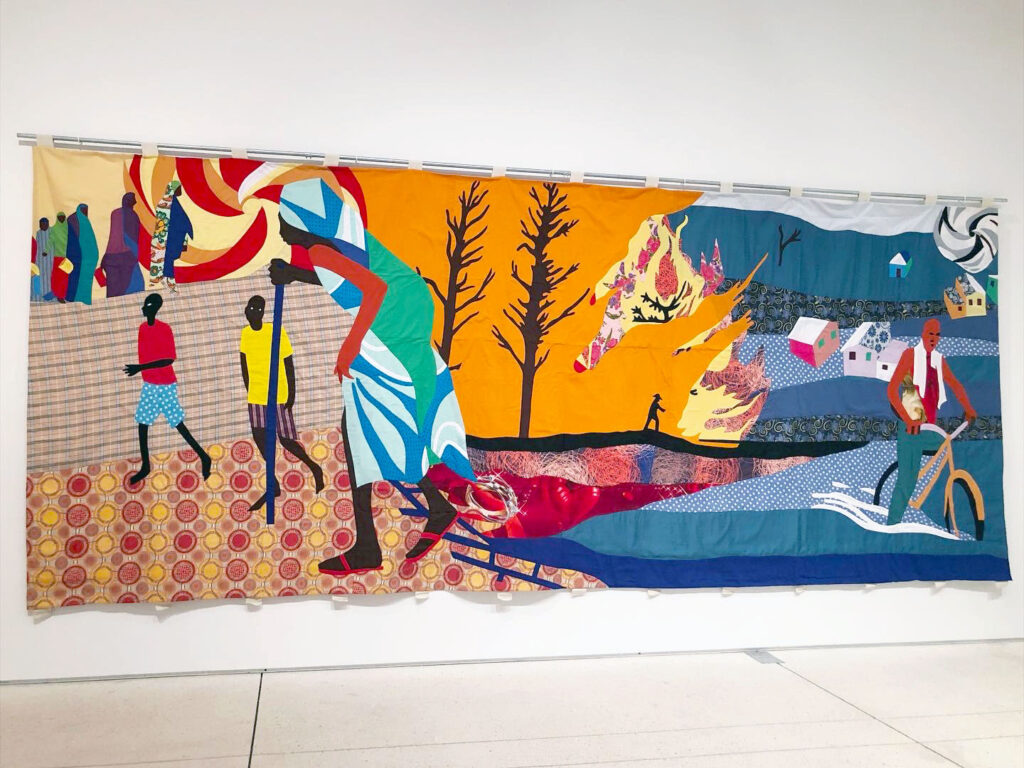
Christopher Myers “How to Name a Famine, a Fire, a Flood”, 2019, Applique fabric

From the museum about the above work-

Storytelling anchors Christopher Myers’ artistic practice. Working in a range of media, he mines history and creates art that links the past to the present. Myers’ tapestries, such as How to Name a Famine, a Fire, a Flood draws on the rich tradition of quilt making as a quiet yet radical form of resistance and protest. The stories depicted center on the effects of globalization on individuals and more specifically, communities of color. In How to Name a Famine, a Fire, a Flood, Myers portrays three different natural disasters linked to climate change. With vivid color and patterned fabric, he illustrates the impact and devastation of these catastrophic events in neighborhoods with minority populations.


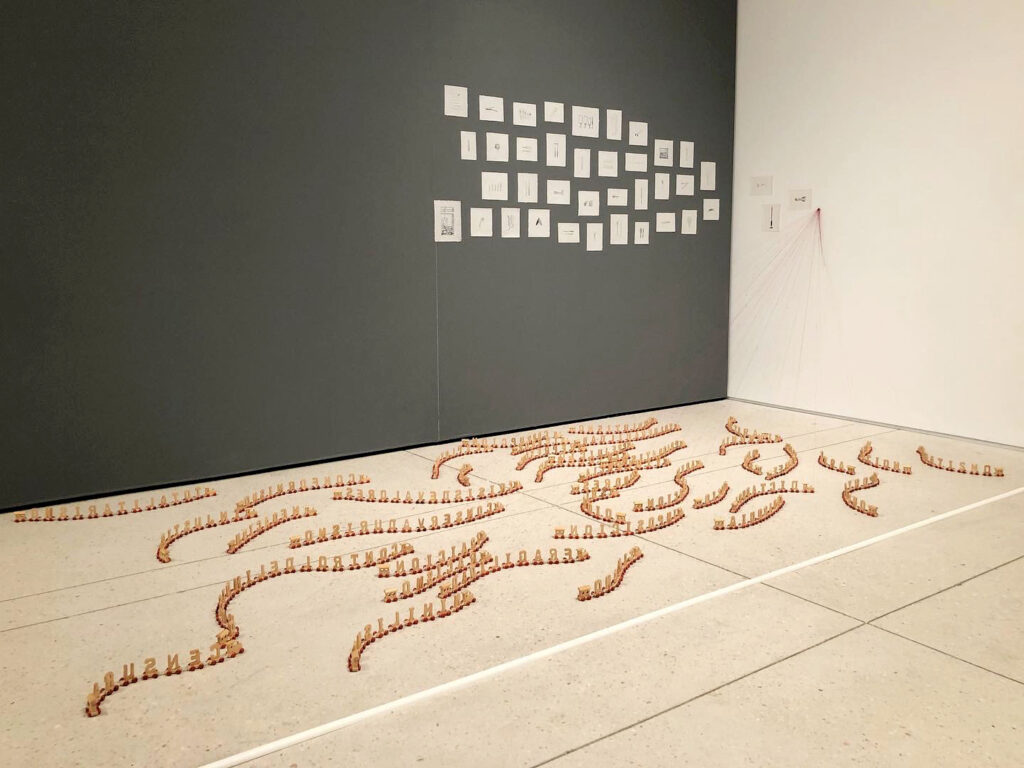
Carlos Garaicoa “La habitacion de mi negatividad (The Room of My Negativity)”, 2003, 39 ink and pencil drawings on rice paper and toy train installation

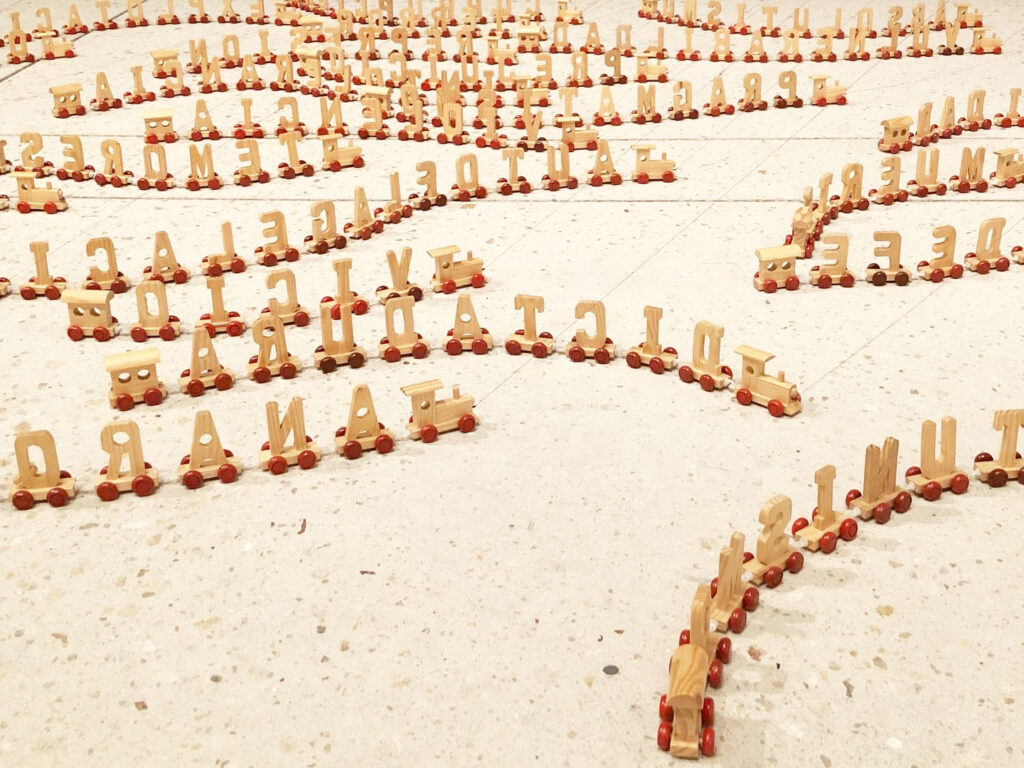
Carlos Garaicoa “La habitacion de mi negatividad (The Room of My Negativity)”, 2003 (detail)

Carlos Garaicoa “La habitacion de mi negatividad (The Room of My Negativity)”, 2003 (detail)

About the above work from the museum-

Carlos Garaicoa works in a variety of media, ranging from installation, photography, and video to performance and public interventions. His early work in the 1990s focused on the urban decay of Havana as result of its political climate and economic strife. La habitacion de mi negatividad (The Room of My Negativity), turns Garaicoa’s lens inward. In this installation, comprised of toy trains and drawings of medical instruments, the artist explores his psyche and subconscious. The train’s engine pulls words that represent Garaicoa’s negative thoughts. Each train is connected to thin red thread that acts as a vein or conduit for the negative thoughts to travel. Arrange in a curved form, the train shapes mimic brain waves or the slink of a snake. Garacoia’s drawings of medical tools serve as mechanisms in which the negatively could be excavated from one’s mind.

Esterio Segura, “La historia se muerde la cola (History Bites its Tail)”, 2015, (statue bottom left); Anamaría Devis, “Infinito (Infinite)”, 2018(upper right)

Anamaría Devis, “Infinito (Infinite)”, 2018, Ink on paper

Anamaría Devis, “Infinito (Infinite)”, 2018, Ink on paper (detail)

About this work from the museum-

Anamaría Devis’ large-scale installation Infinito (Infinite) represents the artist’s study of African history in San Basilio de Palenque, Colombia. Escaped slaves founded Palenque and it was the first free town in the Americas during colonial times. While researching this history, Devis discovered that in this region of Colombia, braided hairstyles worn by Africans served as escape maps. Braid patterns reflected safe points in the area’s topography. This silent form of resistance inspired her to look at other bodily topographies like the characteristics of fingerprints, which also had names associated with cartography such as crossing, island, and fork. Devis then began to create drawings that incorporated footprints, braid patterns, and elements of nature. From the drawings she made stamps and each panel of paper that comprises Infinito (Infinite) is rendered from Devis’ various imprints. The result is an abstract representation of the body and landscape visualized through mapping and codes.

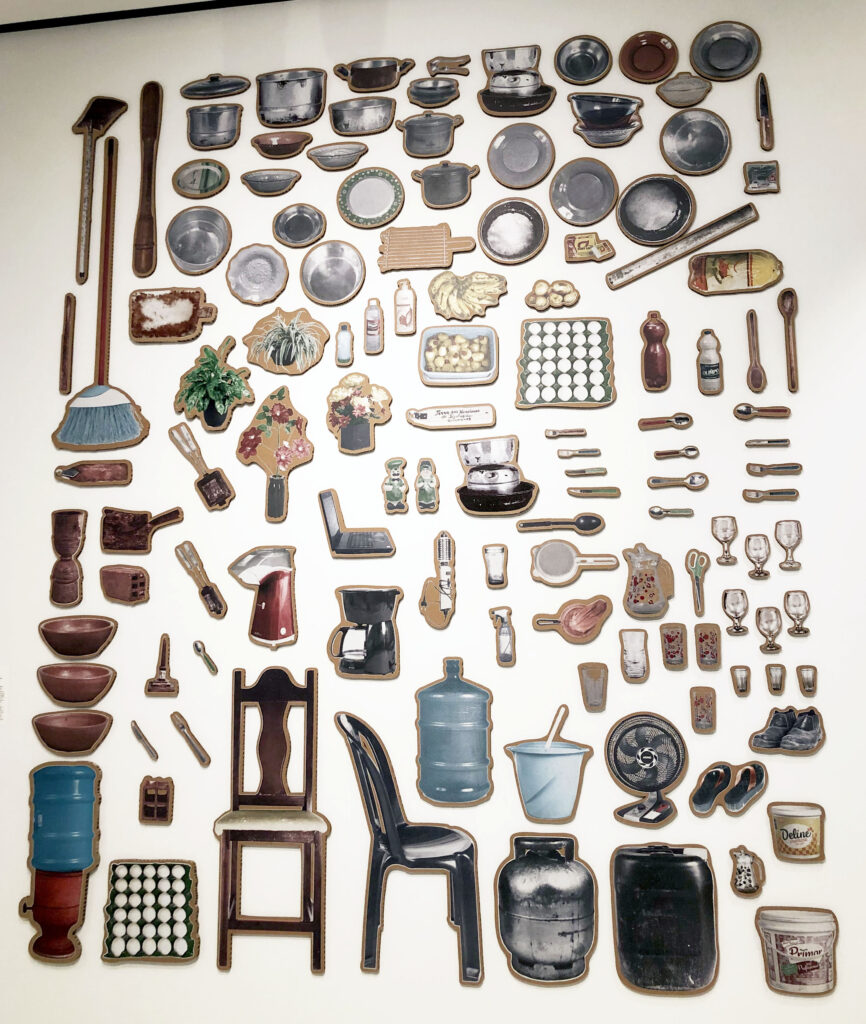
Jonathas de Andrade, “A batalha de todo dia de Dona Luzia, de Tejucupapo (The daily battle of Dona Luzia, from Tejucupapo)”, 2022 Images printed on raw falconboard

About this work from the museum-

Jonathas de Andrade collaborated with the Brazilian theater company Teatro Heroínas de Tejucupapo to create a visual reenactment of the historic 1646 Battle of Tejucupapo. For nearly 25 years, between 1630 and 1654, the Dutch occupied the northeast of Brazil including Tejucupapo, a small community in the city of Goiana. During the Battle of Tejucupapo, a brigade of black and indigenous women forced Dutch soldiers to retreat by arming themselves with household and farm objects. The Teatro Heroínas de Teiucupapo commemorates this female-led rebellion each April by restaging the battle with local actors.

Artist Jonathas de Andrade celebrates the power and courage of Tejucupapo’s women with his large-scale photographic installation A batalha do todo dia de Tejucupapo (The Battle of Tejucupapo). The work on this wall, A batalha de todo dia de Dona Luzia, de Tejucupapo (The daily battle of Dona Luzia, from Tejucupapo), presents everyday objects from the home of one of the women participating in Teatro Heroínas de Tejucupapo. This inventory explores the daily struggles, as well as strength, of Brazil’s black and indigenous women that have spanned centuries.

This exhibition will close on Sunday, 8/27/23.


Mar 022023
 

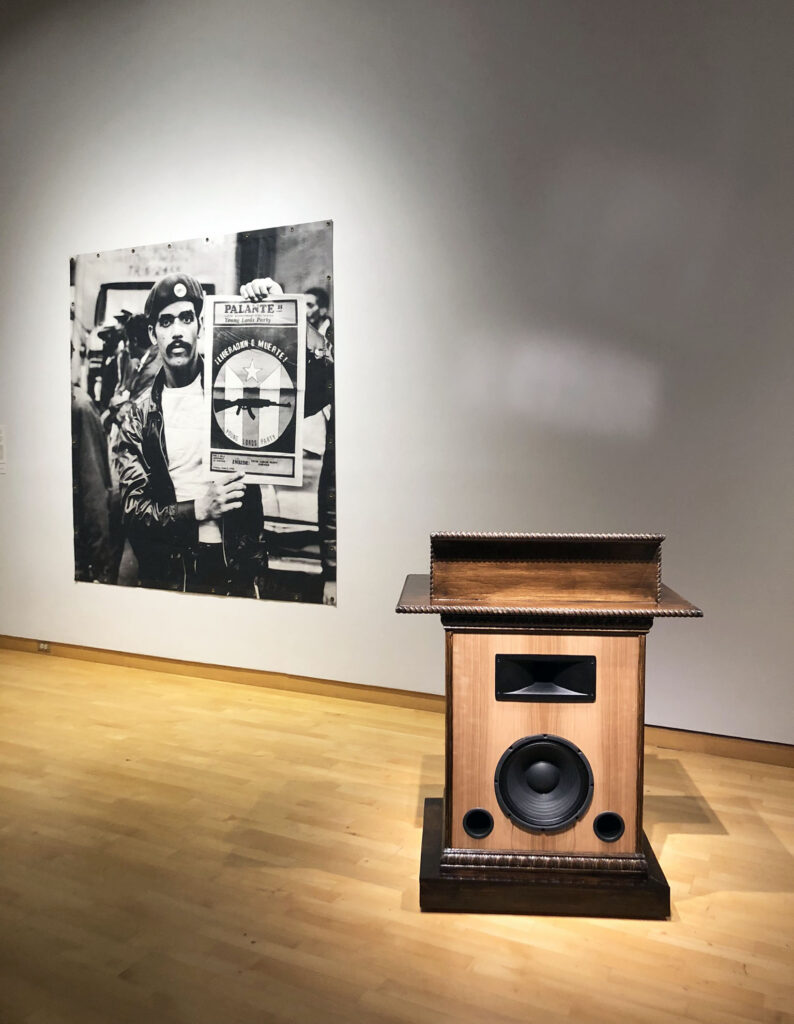
Artist Miguel Luciano– Vinyl banner from the public art project “Mapping Resistance: The Young Lords in El Barrio”, 2019 Image: Young Lords Member with Pallante Newspaper (1970)” by Hiram Maristany and “The People’s Pulpit” (2022), a repurposed vintage pulpit from the First Spanish Methodist Church in East Harlem.
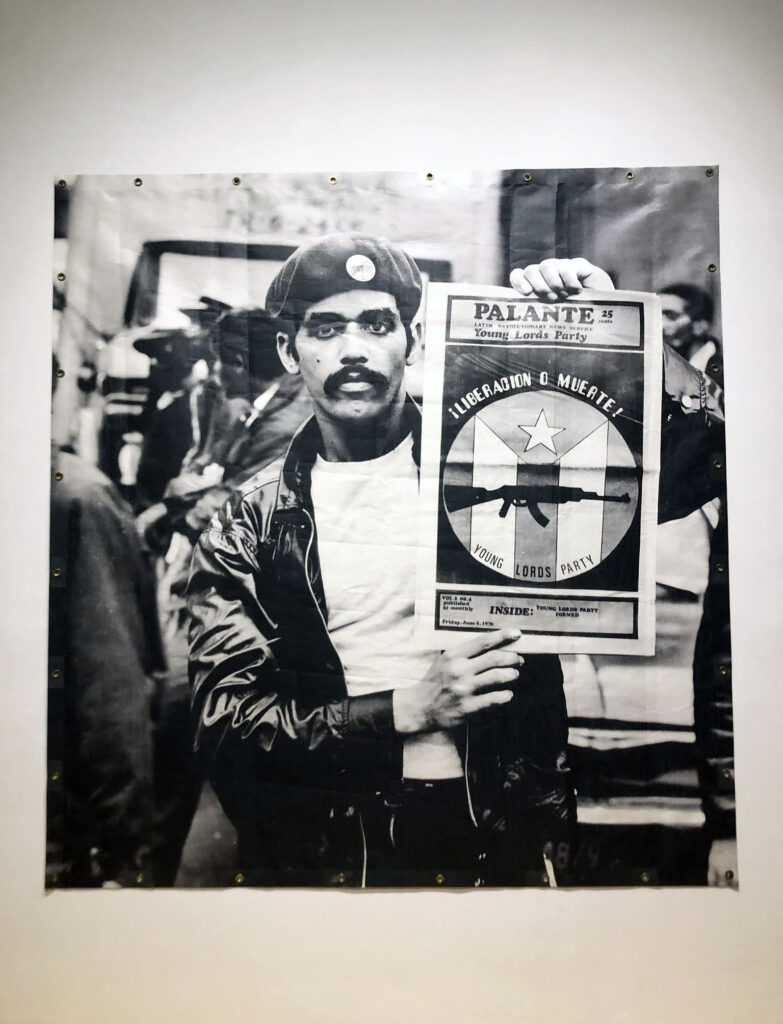
Miguel Luciano- Vinyl banner from the public art project “Mapping Resistance: The Young Lords in El Barrio”, 2019 Image: Young Lords Member with Pallante Newspaper (1970)” by Hiram Maristany


Poor People’s Art: A (Short) Visual History of Poverty in the United States at USF Contemporary Art Museum in Tampa uses installations and artworks to tell the story of, and expand perspectives on, The Poor People’s Campaign- from its origins in the late 1960s to the present day form, as well as comment on poverty and other social issues. Both educational and engaging, it shows that despite long struggles and some progress, we are still very far from much needed social change, especially in regards to poverty.

The museum also produced a free full color, 48 page workbook that you can pick up there or download as a PDF that can be downloaded from their website.

From the gallery’s website-

Dr. Martin Luther King Jr. is well known for his “I Have a Dream” speech, yet much less emphasis is placed on his campaign to seek justice for America’s poor, “The Poor People’s Campaign.” This was a multi-cultural, multi-faith, multi-racial movement aimed at uniting poor people and their allies to demand an end to poverty and inequality. Fifty-three years after Dr. King’s death, the Reverend William Barber II launched a contemporary push to fulfill MLK’s ambitious brief — one that calls for a “revolution of values” that unites poor and impacted communities across the country. The exhibition Poor People’s Art: A (Short) Visual History of Poverty in the United States represents a visual response to Dr. King’s “last great dream” as well as Reverend Barber’s recent “National Call for Moral Revival.”

With artworks spanning more than 50 years, the exhibition is divided into two parts: Resurrection (1968-1994) and Revival (1995-2022). Resurrection includes photographs, paintings, prints, videos, sculptures, books, and ephemera made by a radically inclusive company of American artists, from Jill Freedman’s photographs of Resurrection City, the tent enclave that King’s followers erected on the National Mall in 1968, to John Ahearns’ plaster cast sculpture Luis Fuentes, South Bronx (1979). Revival offers contemporary engagement across a range of approaches, materials, and points of view. Conceived in a declared opposition to poverty, racism, militarism, environmental destruction, health inequities, and other interlocking injustices, this exhibition shows how artists in the US have visualized poverty and its myriad knock-on effects since 1968. Participating artists include John Ahearn, Nina Berman, Martha De la Cruz, Jill Freedman, Rico Gatson, Mark Thomas Gibson, Corita Kent, Jason Lazarus, Miguel Luciano, Hiram Maristany, Narsiso Martinez, Adrian Piper, Robert Rauschenberg, Rodrigo Valenzuela, William Villalongo & Shraddha Ramani, and Marie Watt.

Below are some images from the show and the descriptions from the museum.

About the two works above from the museum’s walls-

A multimedia visual artist whose work explores themes of history, popular culture, and social justice, Miguel Luciano revisits the history of the Young Lords, a revolutionary group of young Puerto Rican activists who organized for social justice in their communities beginning in the late 1960s. Luciano’s first contribution to Poor People’s Art is a vinyl banner from the public art project Mapping Resistance: The Young Lords in El Barrio (2019), a collaboration with artist Hiram Maristany. It features the photograph “Young Lords Member with Pa’lante Newspaper (1970)” by Maristany, who was the official photographer of the Young Lords and a founding member of the New York chapter. This banner, along with nine other enlarged Maristany photographs, were installed throughout East Harlem at the same locations where their history occurred 50 years prior.

Luciano’s second contribution to Poor People’s Art is the sculpture The People’s Pulpit (2022), a repurposed vintage pulpit from the First Spanish Methodist Church in East Harlem. The Young Lords famously took over the church in 1969 and renamed it “The People’s Church”; they hosted free breakfast programs, clothing drives, health screenings, and other community services there. In this exhibition, The People’s Pulpit features an historic recording of Nuyorican poet Pedro Pietri reciting the celebrated poem Puerto Rican Obituary during the Young Lord’s takeover of The People’s Church.

Placards created by USF Contemporary Art Museum students, faculty and staff
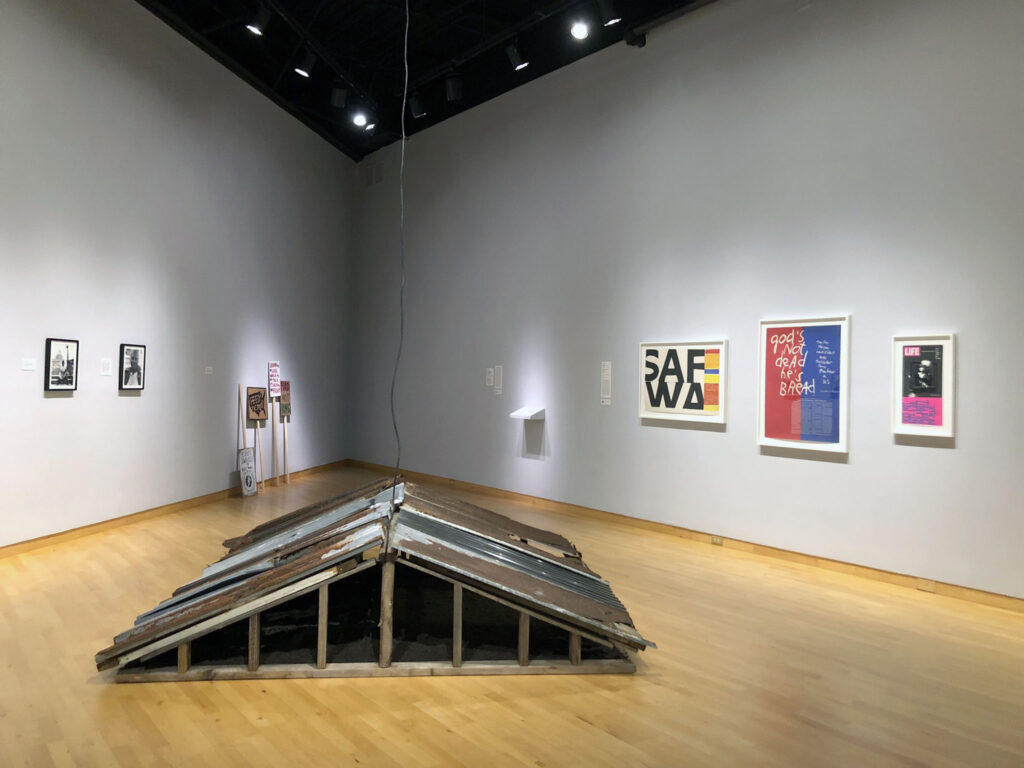
Martha De La Cruz, “Techo de Sin (Roof of Without)”, 2021, made from stolen, scavenged and donated materials found in Southwest Florida.

About the above work from the wall plaque-

Afro-Taino artist Martha De la Cruz fashioned her sculptural installation Techo de sin (Roof of Without), 2021, from stolen, scavenged and donated materials found in Southwest Florida. According to the artist, “Florida is home to a large population of Latin American migrants who have ended up in the US largely due to economic pressures, exploitation and veins of power etched by Europe and the US.” Her powerful work deals with the results of this disjunction and the “symptoms thereabouts (e.g. houselessness, fugitiv-ity, government corruption, and income disparity, etc.).” According to De la Cruz, the word “sin” is a common Dominican mispronunciation for the word “zinc.” The sculpture is animated by a single light bulb that turns on for just ten minutes a day.
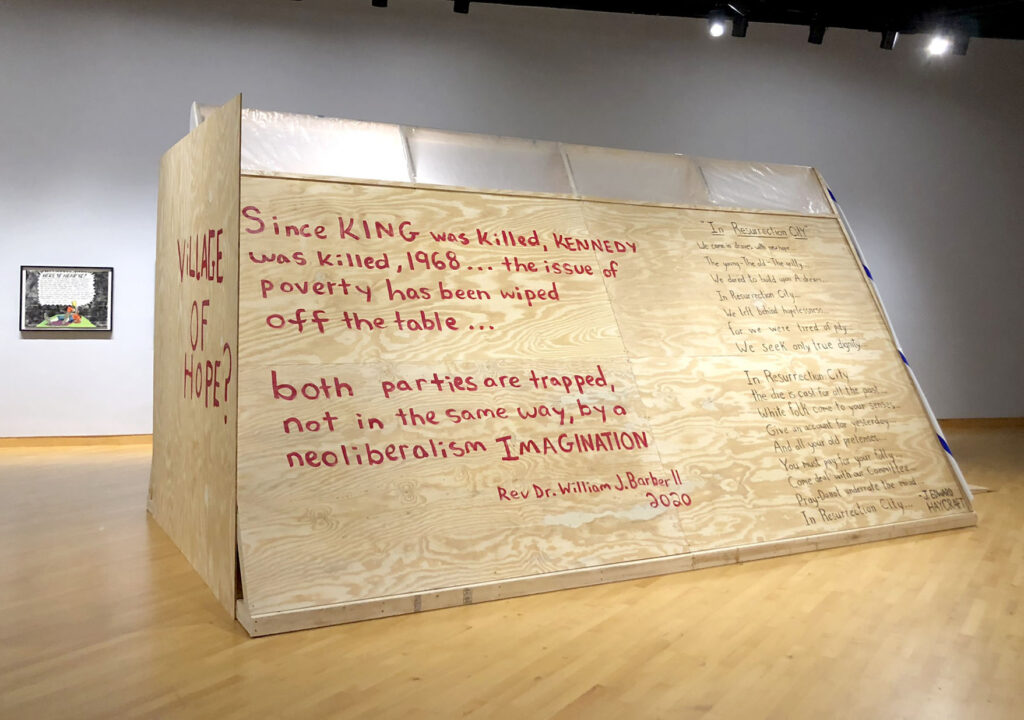
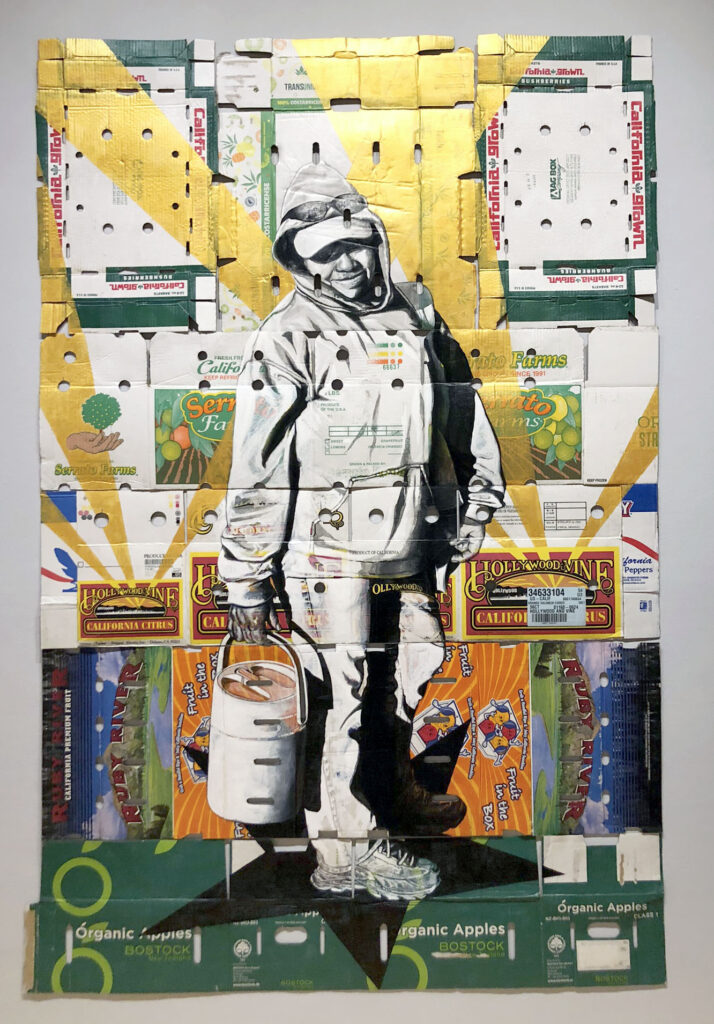
Narsiso Martinez “Hollywood & Vine”, 2022

Jason Lazarus “Resurrection City /Poor People’s Campaign: A National Call for Moral Revival / A Third Reconstruction”, 2023, plywood, utility fabric, blankets, sleeping cot, paint, lamp, plastic, research library, historical ephemera
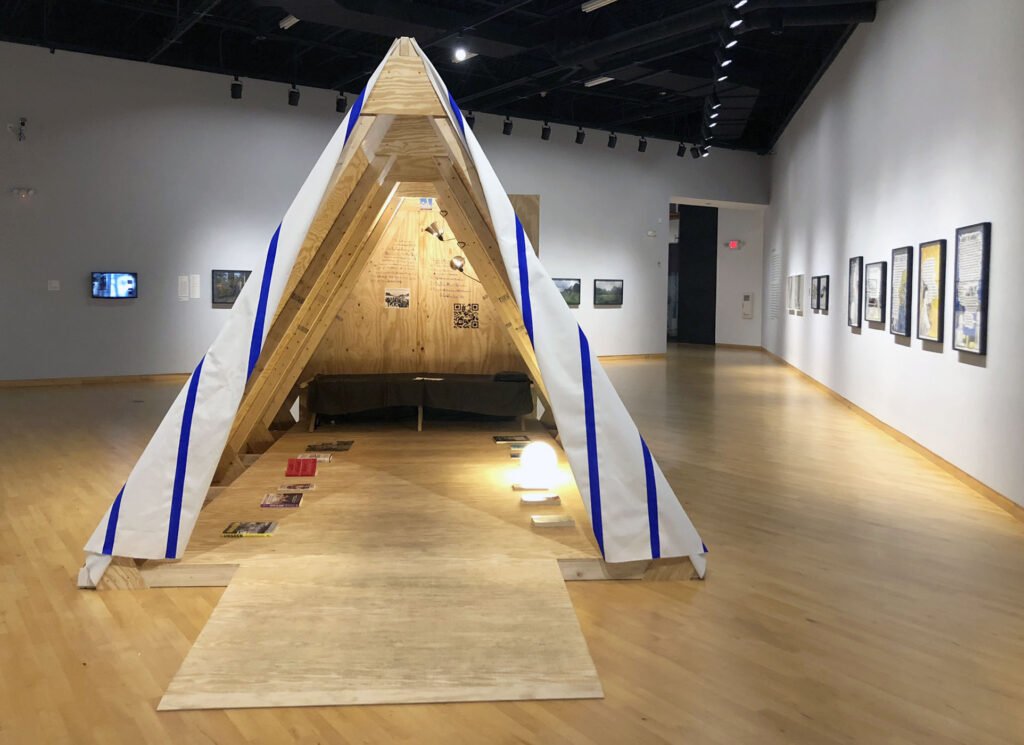
From the wall plaque about the Lazarus installation-

Jason Lazarus’s sculptural installation Resurrection City/Poor People’s Campaign: A National call for Moral Revival/A Third Reconstruction (2023) is anchored in the artist’s historical research and several key photographs of Resurrection City. A tent-like shelter inspired by the temporary residences that populated the 1968 mass protest, the interactive sculpture contains simple sleeping quarters and a curated library filled with physical literature and ephemera centered on both the 1968 Poor People’s Campaign and the 2018 Poor People’s Campaign: A National Call for Moral Revival, co-led by Rev. Dr.William Barber and Rev. Dr. Liz Theoharis. The library allows for audiences to trace, listen, and talk about the history of advocating for the poor, from 1865 to the present. Additionally, the artist provides a custom transcription (and a QR hyperlink) to Barber’s 49-minute address on the syndicated radio show “The Breakfast Club” in which he carefully outlines his powerful vision for how we might address poverty going forward.
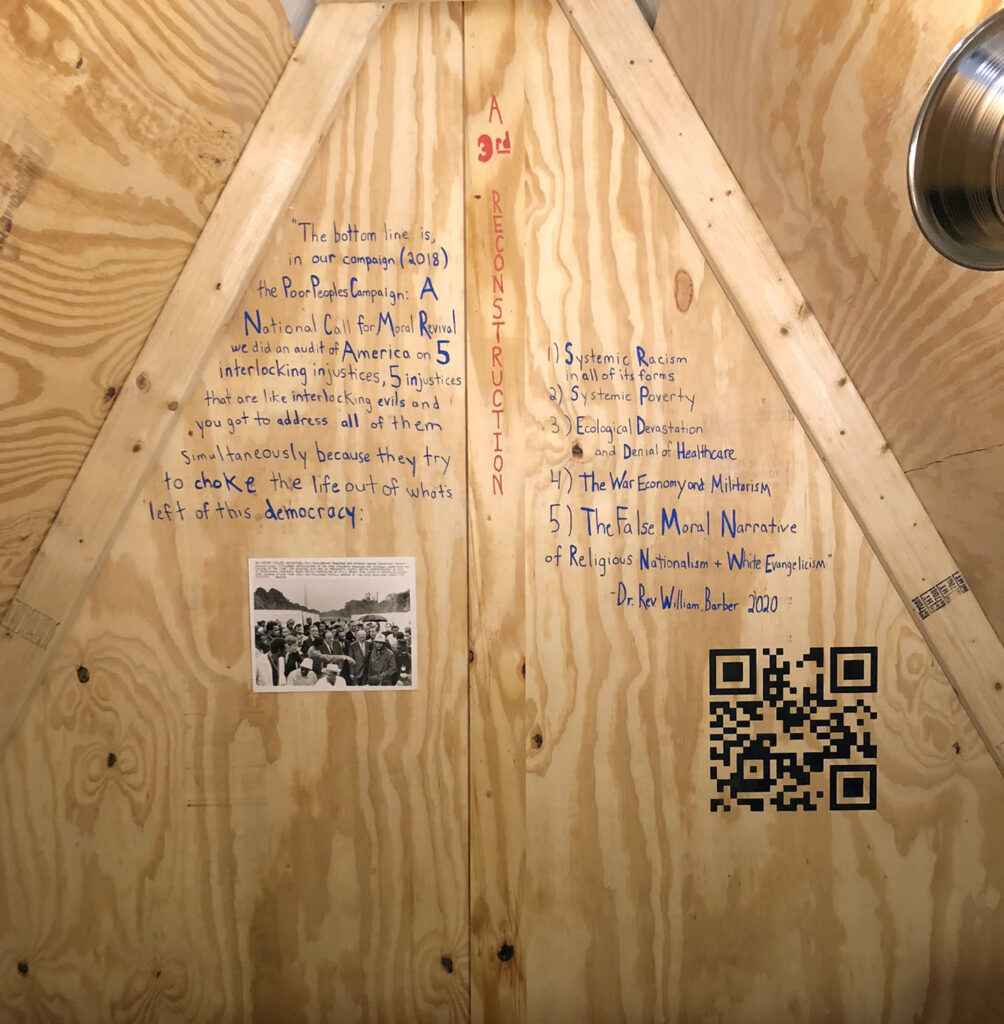
Inside the Jason Lazarus installation
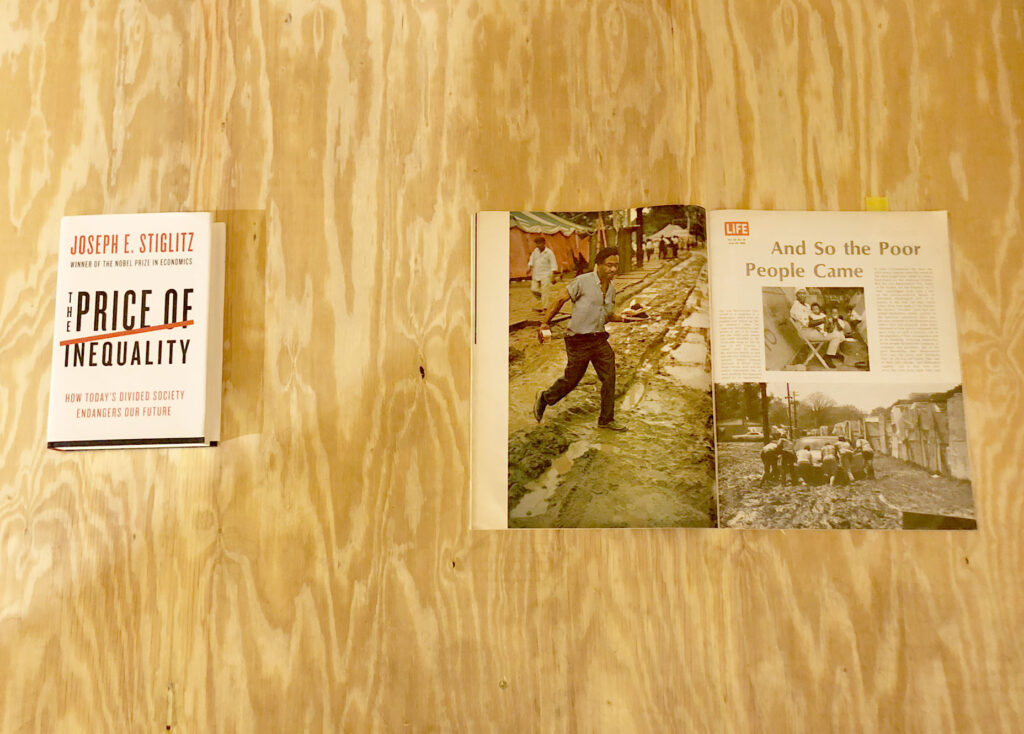
A book and magazine from Jason Lazarus’ installation floor
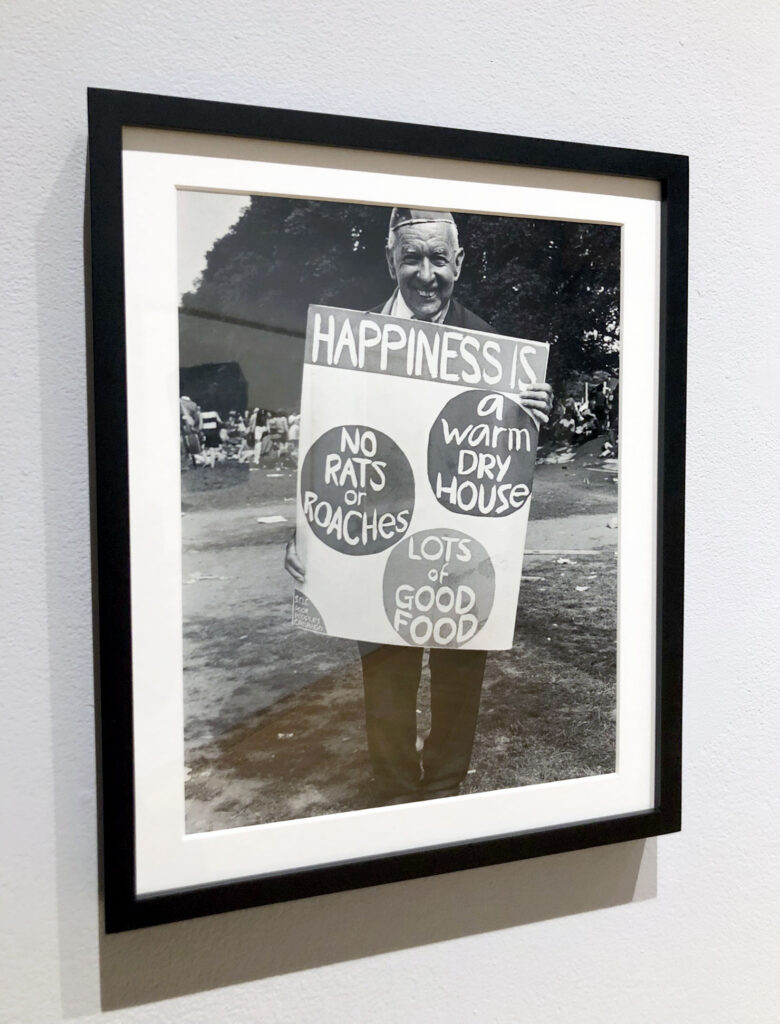
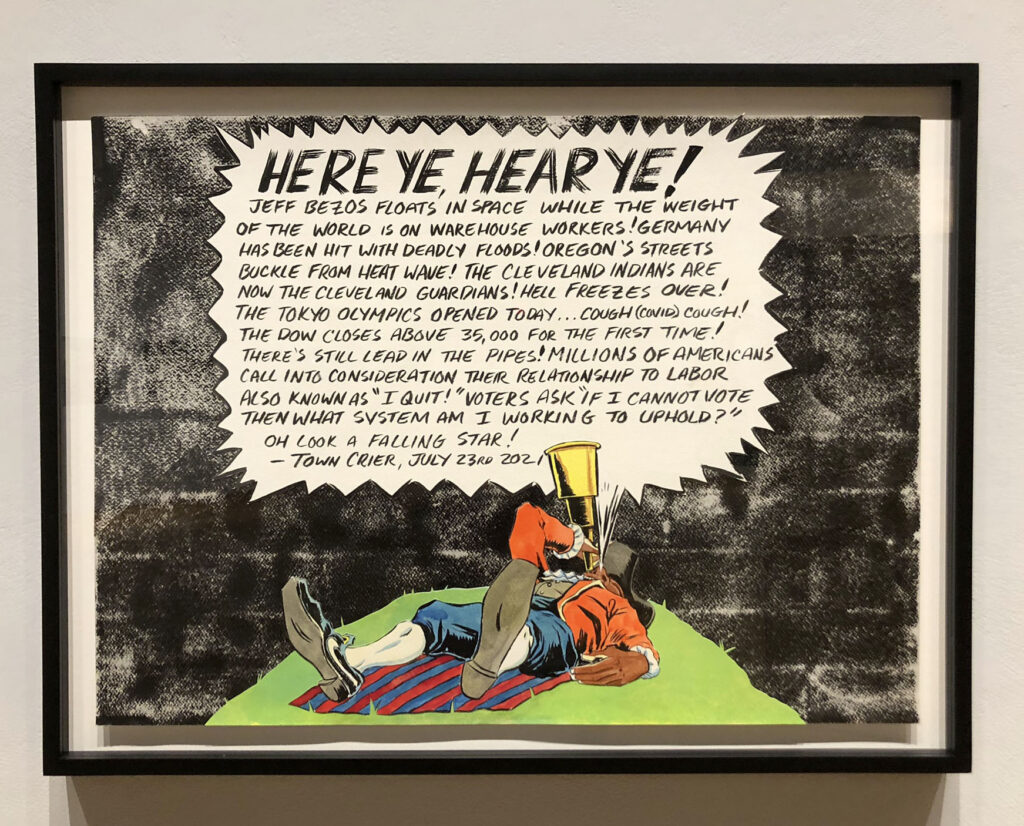
Mark Thomas Gibson, “Town Crier July 23rd”, 2021

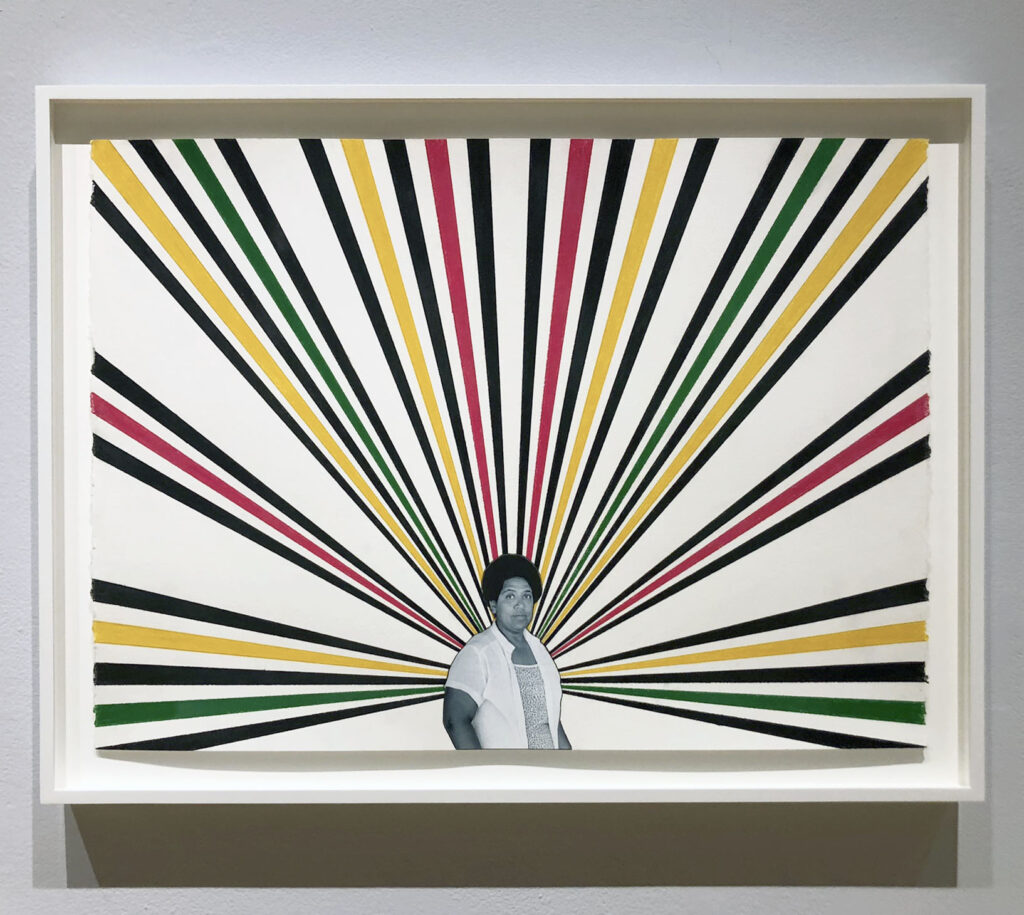
Rico Gatson, “Audre #2”, 2021

Jill Freedman, “Poor People’s Campaign, Resurrection City” 1968

About Jill Freedman’s photograph-

In the spring of 1968, the talented young street photographer Jill Freedman quit her day job as a copywriter in New York City to join the Poor People’s March on Washington. Freedman lived in Resurrection City for the entire six weeks of the encampment’s existence, photographing its residents as they rallied, made speeches, protested in front of government buildings, confronted police, built makeshift kitchens, organized clothing swaps, and dealt with flooding, petty crime, and illness. One of the most important postwar documentarians, and one of the few women photographers of the era, Freedman captured it all. Freedman’s 2017 book, Resurrection City, 1968-from which this exhibition draws a dozen powerful images-showcases the photographs that she made as a participant in the original Poor People’s Campaign. In multiple ways, Freedman’s images are the sympathetic perch upon much of which much of the present exhibition loosely hangs.

This exhibition closes 3/4/23.

Nov 082022
 

Dorothy Day, born today, November 8th, was an American journalist and social activist who co-founded the Catholic Worker Movement in the early 1930s. This portrait is located in the First Street Community Garden.

On November 4th, 2022, the newest vessel in the Staten Island Ferry fleet was named for her, and will enter service in the coming weeks. Day lived on Staten Island for several decades.

Interestingly the quote in the portrait above that reads “All of our problems stem from our acceptance of this filthy, rotten system”, although probably her most famous, may never have been said by her. For more on that debate, this article is pretty informative.