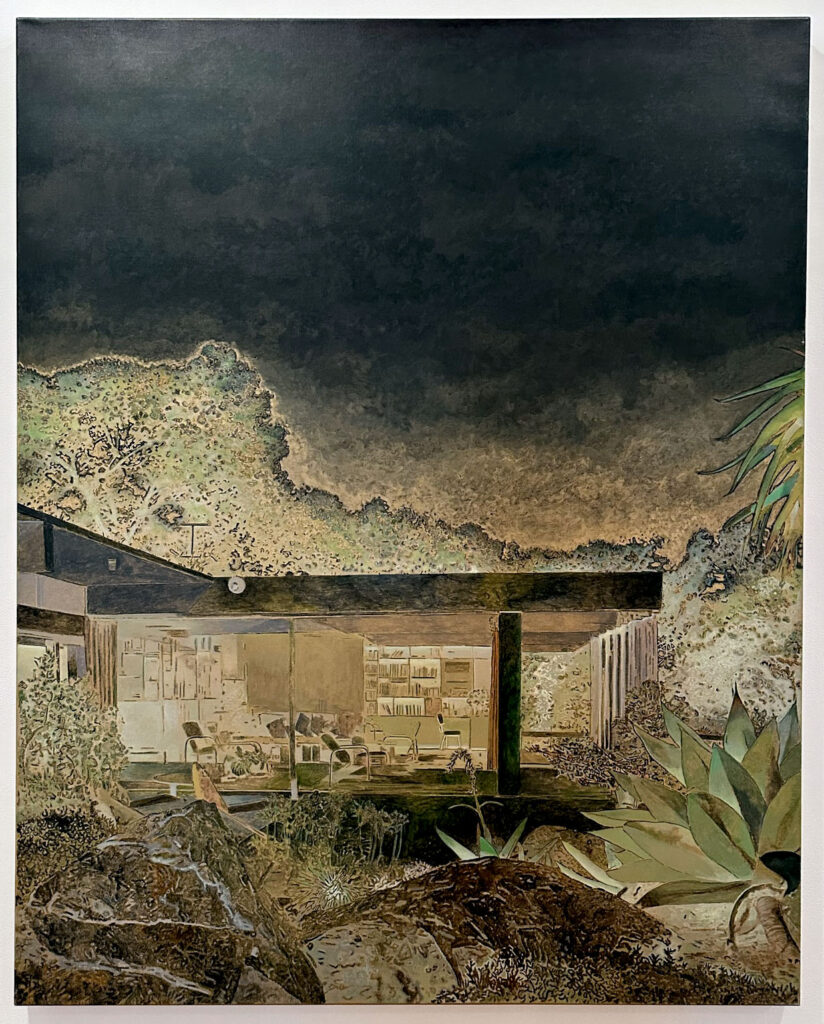
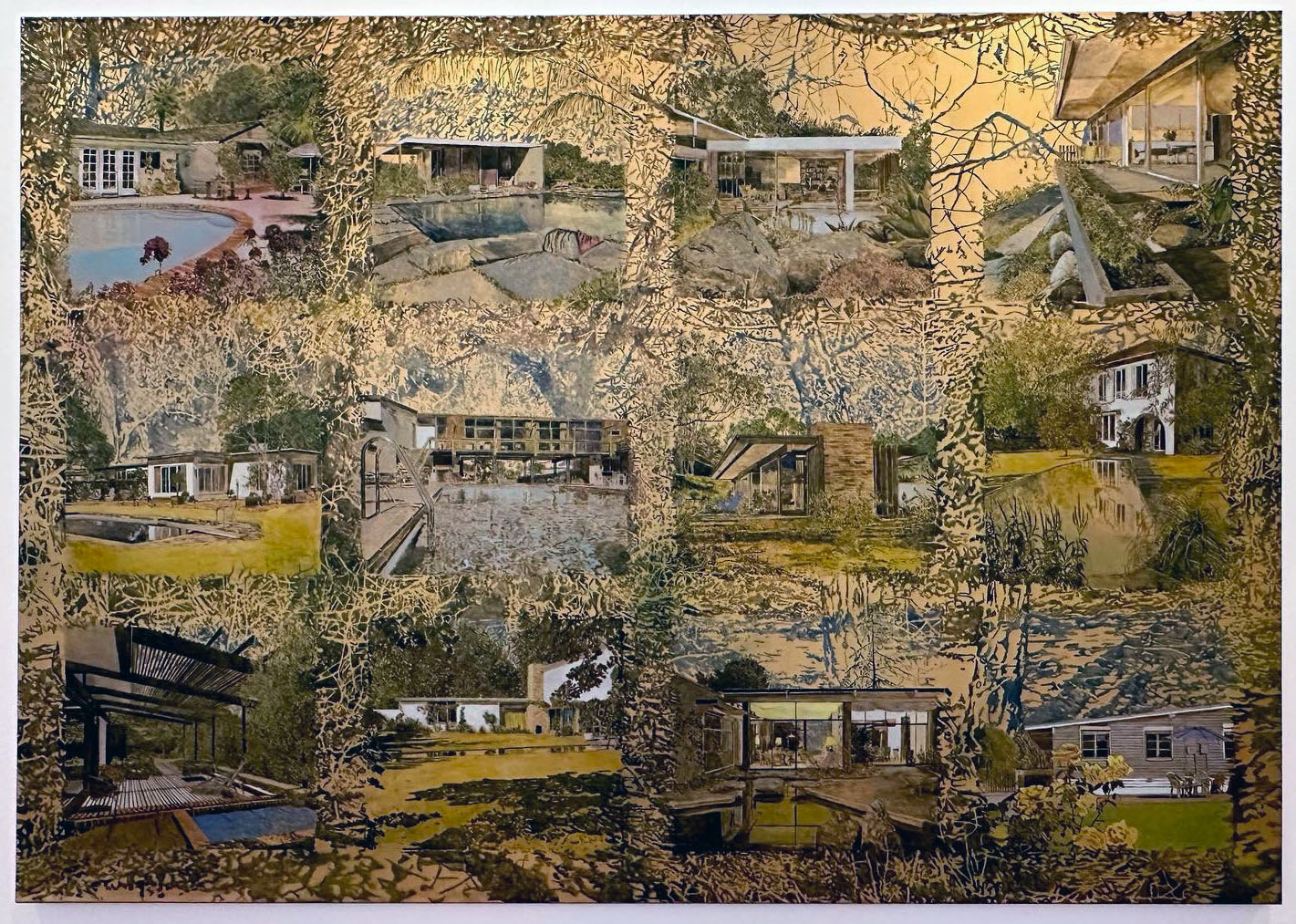
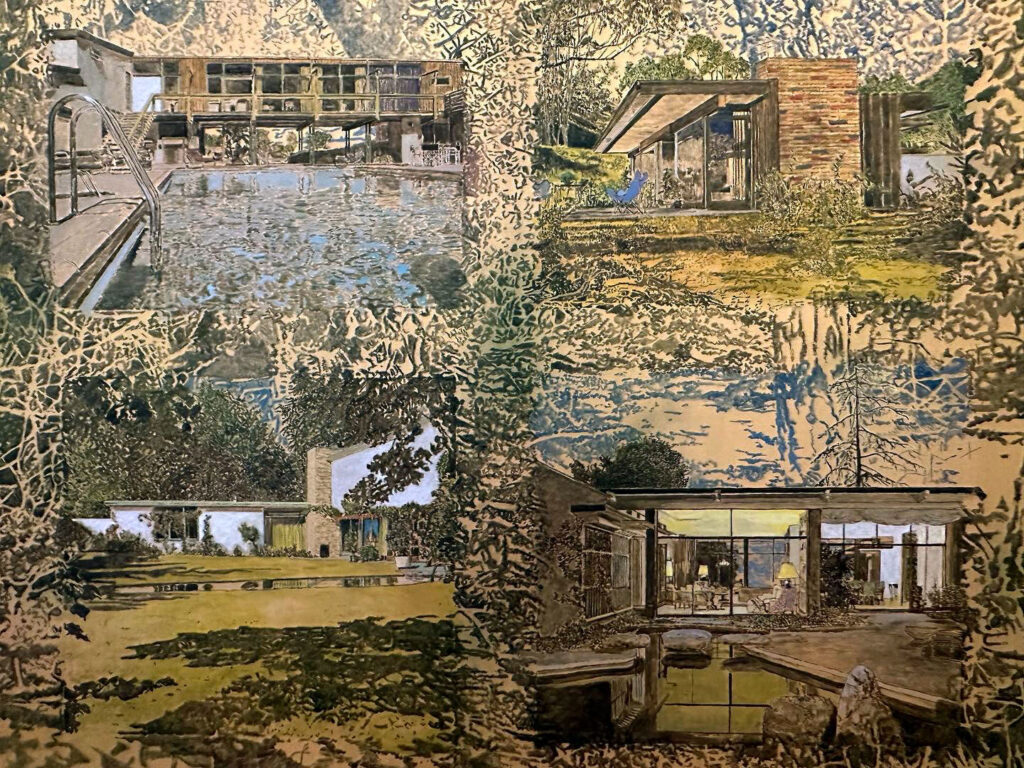
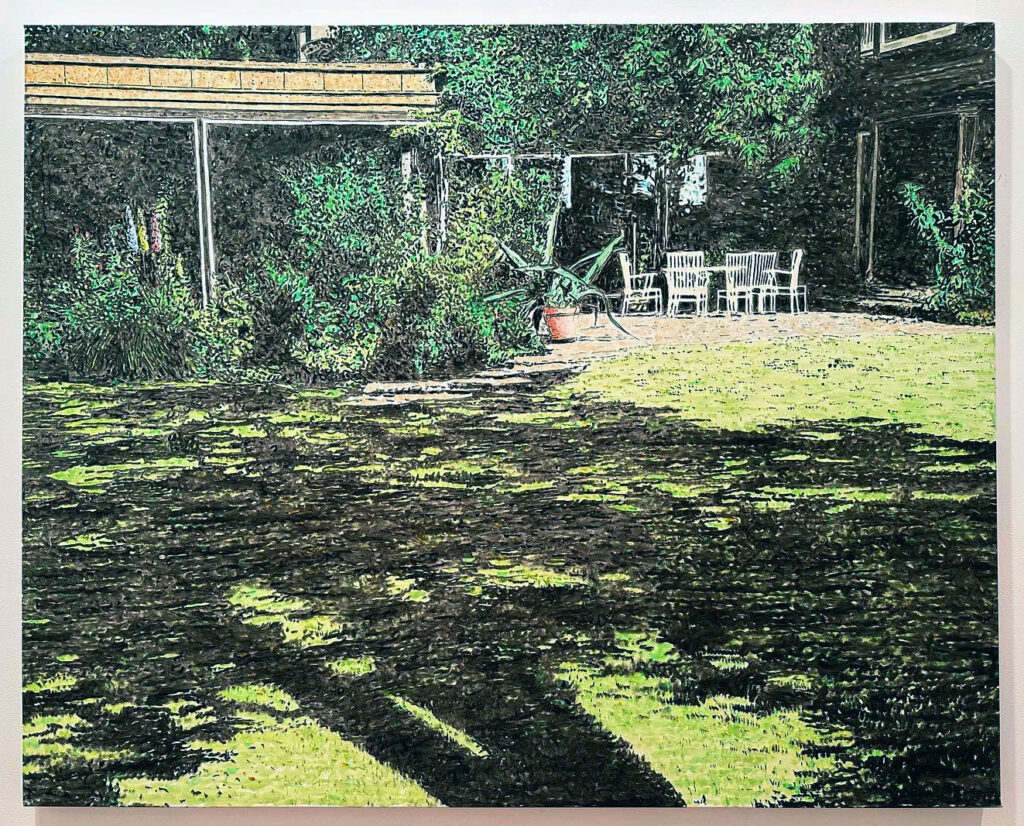
For James Isherwood’s paintings for Thaw at Seizan Gallery he has created strange and beautiful worlds with features both foreign and recognizable. According to the artist the work “examines the context of architecture, landscape, subconscious imagery, psychedelic alternate realities, time, memory and place”.
From the gallery-
Writing in Flash Art in 2020, critic Pier Luigi Sacco characterizes Isherwood as a “master of deception.” Buildings and structures are presiding features in Isherwood’s works. They become architectural protagonists through which Isherwood invents alternate realities, inviting the viewer into visual paradoxes in hyper-saturated palettes.
These structures that populate Isherwood’s paintings, alluding to David Hockney’s pools, are always presented absent of people. Sacco writes, “Despite their obvious allusion to stereotypical built forms, they are clearly not inhabited — or possibly even inhabitable.” This absence of human presence enables the viewer to inhabit the structure in a waking-dream space, transported through a cosmos of the imagination. This space has the capability to offer a duality of feeling: playful yet dangerous, otherworldly yet recognizable. Isherwood’s color palette, likewise, engages this duality, evoking everything from a drifting snowbank or a night sky to a chemical burn or a black hole.
While Isherwood begins his process by referencing visual material—often images of particular buildings—his rendering of this material lands the viewer on another astral plane entirely. His method is highly technical, while retaining an improvisational and serendipitous aspect. His technique utilizes washes and often hundreds of layers, also adding renderings that show the hand of a skilled draftsman. At the same time, his compositions allude to Magritte and other Surrealists through his playful, trickster choices.
This exhibition represents a strong passage, following a highly inventive period in the pandemic lockdown, into a newly deepened visual vernacular of Isherwood’s own invention.
This exhibition is on view until 6/15/24.