Apr 092025
 

“Brownfield”, 2023-2024, Multi-color woodcut on fabric

“Our House is on Fire”, 2023-2025, Multi-color woodcut on fabric

“Our House is on Fire”, 2023-2025, Multi-color woodcut on fabric (detail)

“New York Street; Rainy Day”, 2023-2025, Multi-color woodcut on fabric

“New York Street; Rainy Day”, 2023-2025, Multi-color woodcut on fabric (detail)

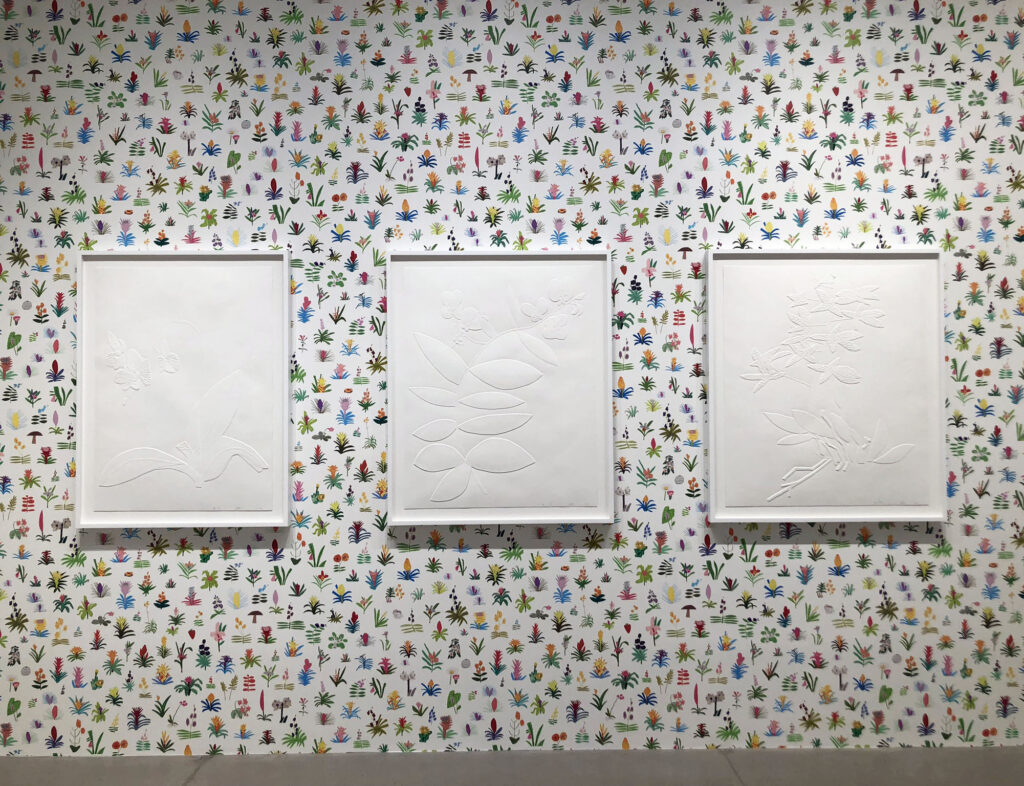
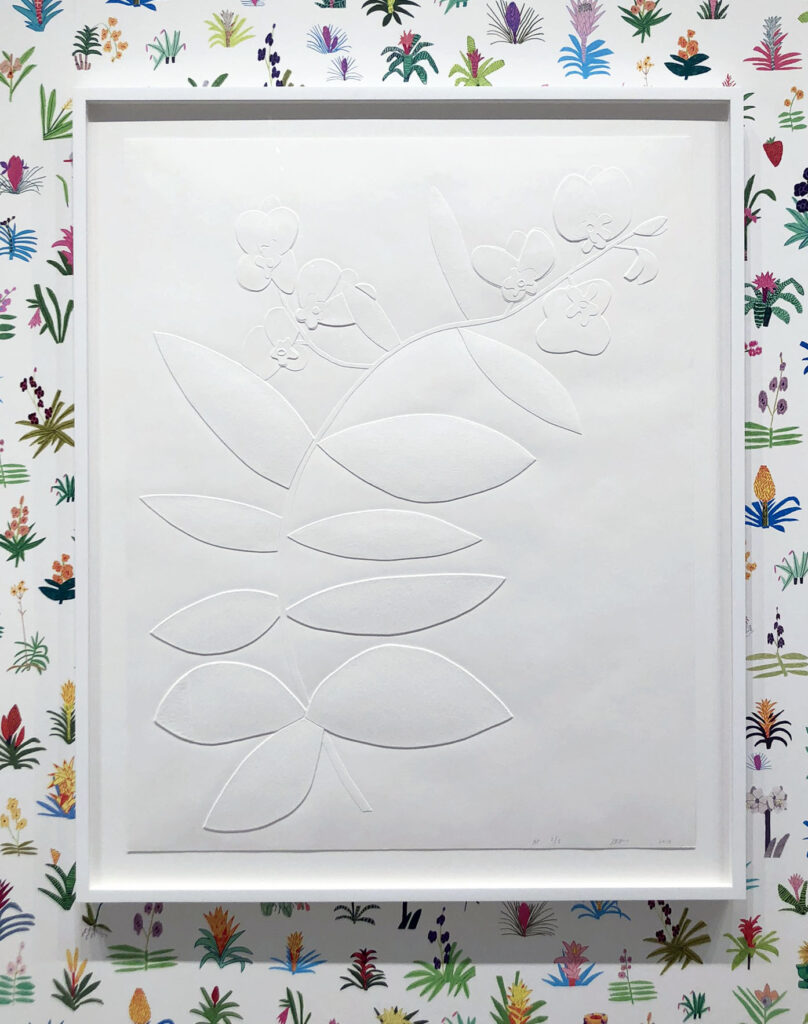
For Zorawar Sidhu and Rob Swainston‘s exhibition Flash Point at Petzel they have created three series of works reacting to various environmental and political events. The large-scale brightly colored woodcut prints on fabric, three of which are pictured above, created for History is Present, are especially impressive.

From the gallery about all three series-

Their series of large-scale, multi-color woodcut prints on fabric, titled History is Present, considers the age of the Anthropocene and the relationship between human impact and shifting natural geographies. Referencing canonical artworks, Sidhu and Swainston lend iconic visual allegories to lasting social conditions and humanitarian issues; for example, their “Raft” depicts contemporary displaced peoples and a history of forced migrations. Made using a custom-built press to accommodate the scale of these works, these monumental woodcut prints demonstrate a mastery of technique and process, with layers of tonal values building complex compositions.

Their second series, War for the Union, features mixed woodcut with silkscreen prints on paper, looking toward distinctly American political issues from recent history. Layered with appropriated images from news media wood engravings of the civil war, such as Winslow Homer’s Civil War drawings for Harper’s Weekly, this series suggests both the cyclical temporality of images in American journalism and a collective fear of a second civil war in our current climate. War for the Union depicts scenes from pivotal moments of civil unrest, including demonstrations following the overturning of Roe v. Wade, 2024 pro-Palestinian protests on university campuses, the 2024 Republican and Democratic National Conventions, and the 2017 Charlottesville white supremacist rally. Through rigorous, vibrant layers of figures, rally signs, and geographies, Sidhu and Swainston slow down the processing of mass circulated images, the antithesis to our current barrage of news media.

The third series, a group of color etchings made in collaboration with Columbia University Neiman Center for Print Studies titled Spring Wake, highlights environmental issues in various regions, rendering signposts of protest with native plants of the respective terrain. For example, “Japanese Lily” layers images of activists protesting the radioactive water released from the Fukushima nuclear power plant into the sea, while “Fairy Primrose” depicts protests of the ecocide resulting from the ongoing Ukraine War—each indigenous flora overlaid atop the local environmental threat. Bearing an almost documentarian quality, these prints link political turmoil and climate disaster intimately with the depicted landscapes.

The exhibition title, Flash Point, defines not only the point of combustion, but also the instant at which a person or event flares up, suddenly exploding into action or being. Using woodcut printmaking, one of the oldest forms of mass communication and a means to propel revolutions, protests, and social movements, Sidhu and Swainston address structures of power and our relationship to hegemonic forces. The artists examine contemporary cultural conflicts through an unraveling of modern news media to reveal its canonical underpinnings, reaching back in time to consider how news images are represented, circulated, and consumed.

This show is closing on 4/12/25.
Feb 262023
 

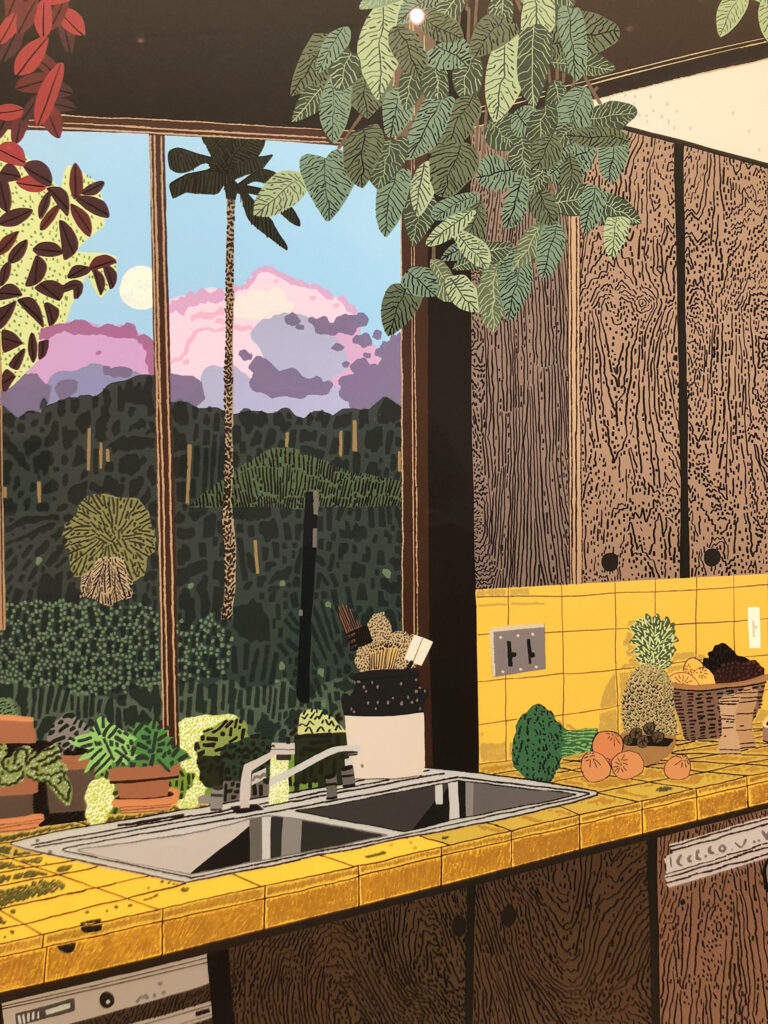
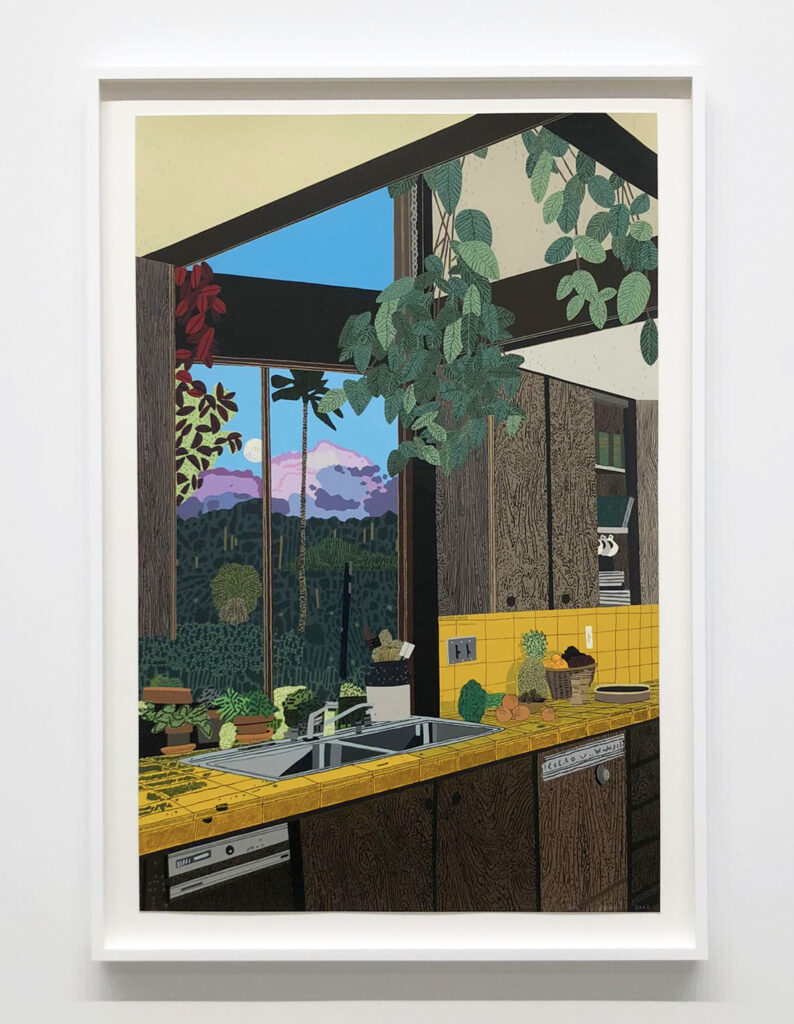
Jonas Wood, “Kitchen Interior”, 2022

Jonas Wood, “Kitchen Interior”, 2022 (detail)


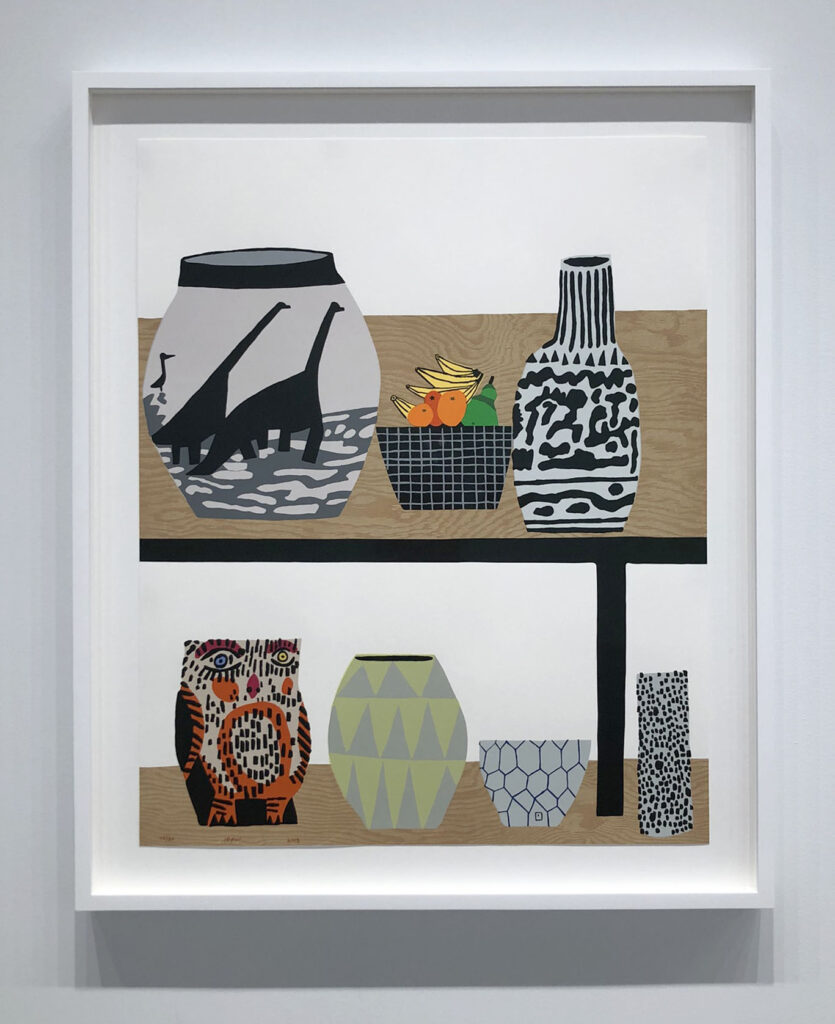
Prints 2, Jonas Wood’s exhibition at Gagosian Gallery in NYC, consists of over thirty prints made between 2018 and 2022, in a variety of styles and subject matter.

From the press release-

You have to build the print piece by piece. I just love the way it looks, the process, the whole feel of it. It’s irreplaceable.
—Jonas Wood

The works on view in Prints 2 feature Wood’s perennial motifs—plants, pottery, portraiture, interiors, landscapes, and basketball—reflecting the life of the artist through representations of home, studio, and natural spaces. They are united by Wood’s transformation of subject matter into images with skewed planar space, dense patterning, and vivid color. Developing his prints in parallel with his paintings, Wood has arrived at linked practices that continually inform one another.

Emphasizing the collaborative aspect of printmaking, Wood works with masters of traditional methods who have made innovative contributions to the field. Prints 2 features works made with Aliso Editions, Cirrus Gallery & Cirrus Editions Ltd., Counter Editions, Hamilton Press, Mixografía, and Pace Editions. In addition, Wood publishes and copublishes under his own imprint, WKS Editions.

The stylistic diversity of Wood’s prints results from his experimentation with pictorial effects, processes, and materials, effectively exploring the genre of printmaking itself. The methods used to produce the works in Prints 2 include hard-ground and soft-ground etching, lithography, screen printing, and woodcut, as well as various hybrid processes. Wood pairs these techniques with variations in mark making, color, texture, and density to harness and reveal the characteristics unique to the medium.

Feb 232023
 

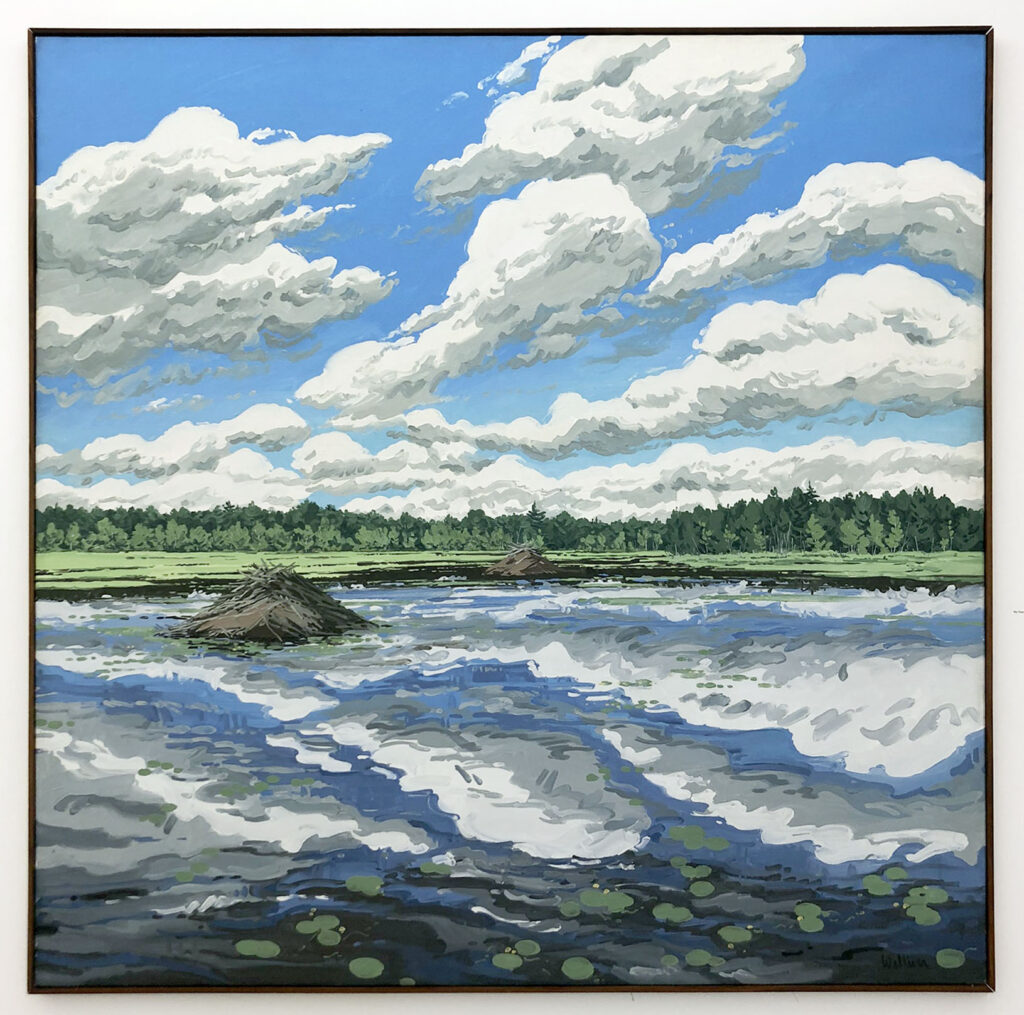
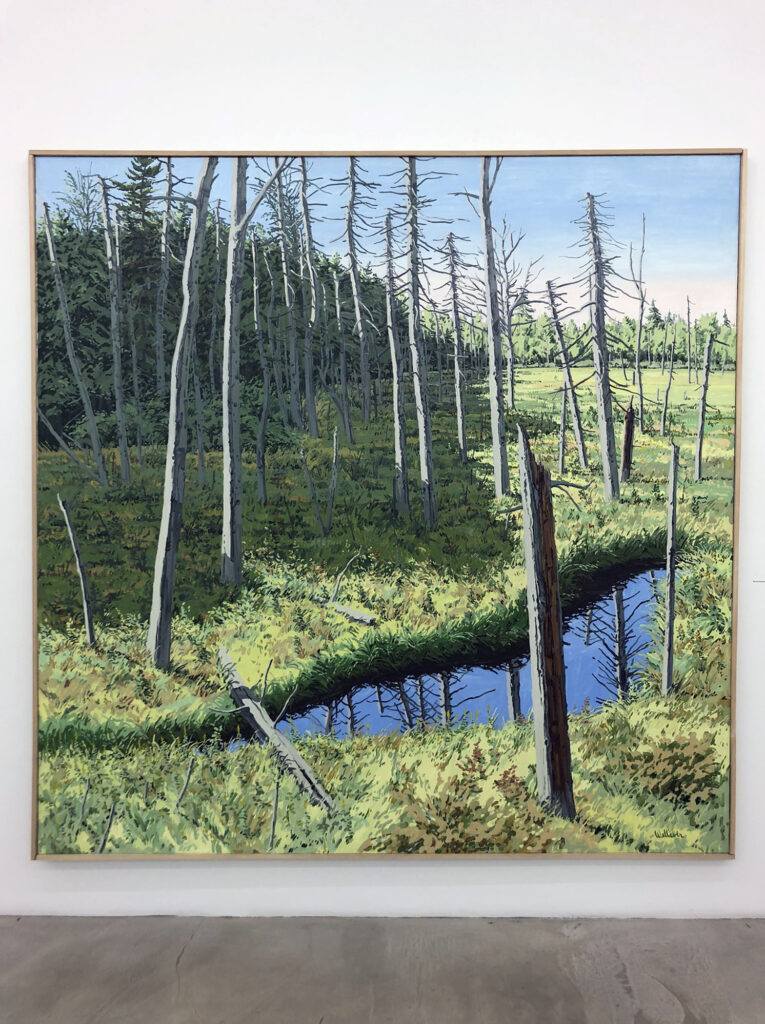
Neil Welliver, “Big Flowage”, 1979

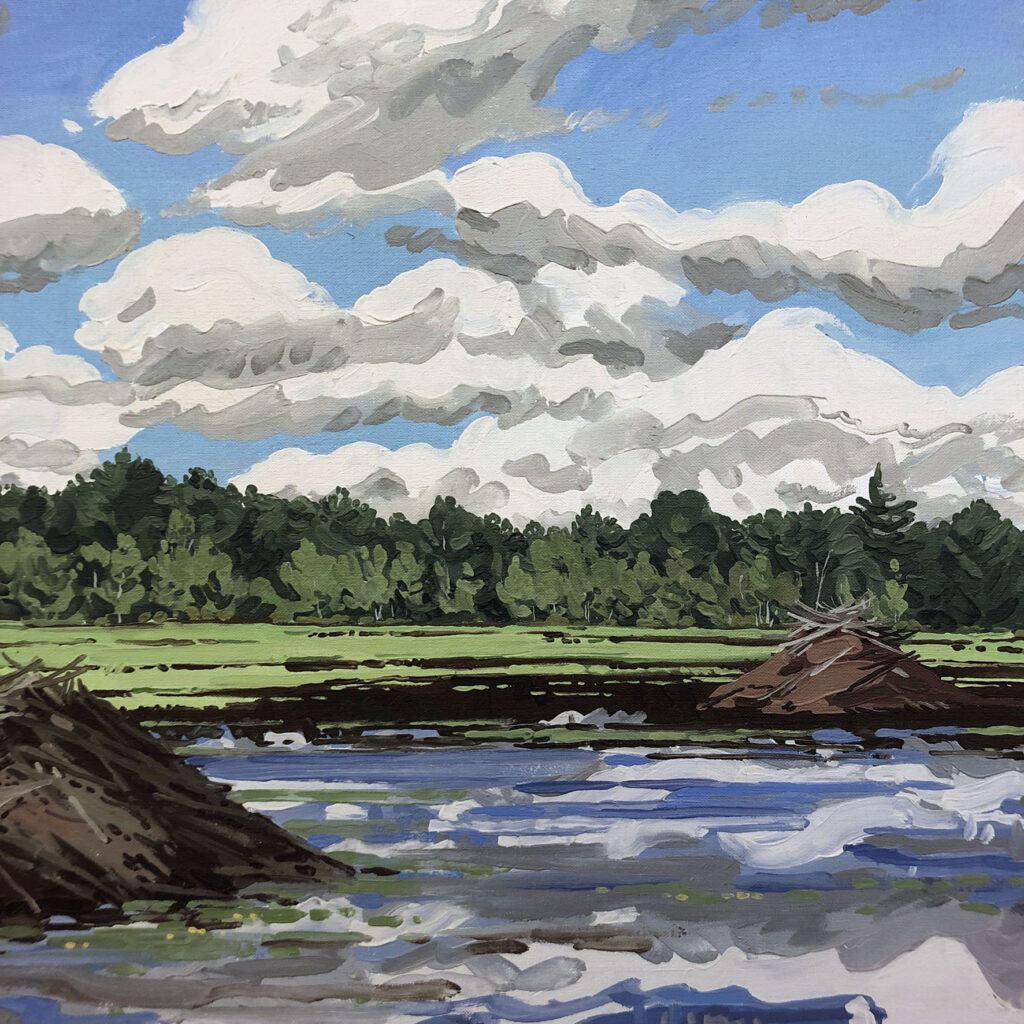
Neil Welliver, “Big Flowage”, 1979 (detail)

Neil Welliver, “Marsh Shadow”, 1984

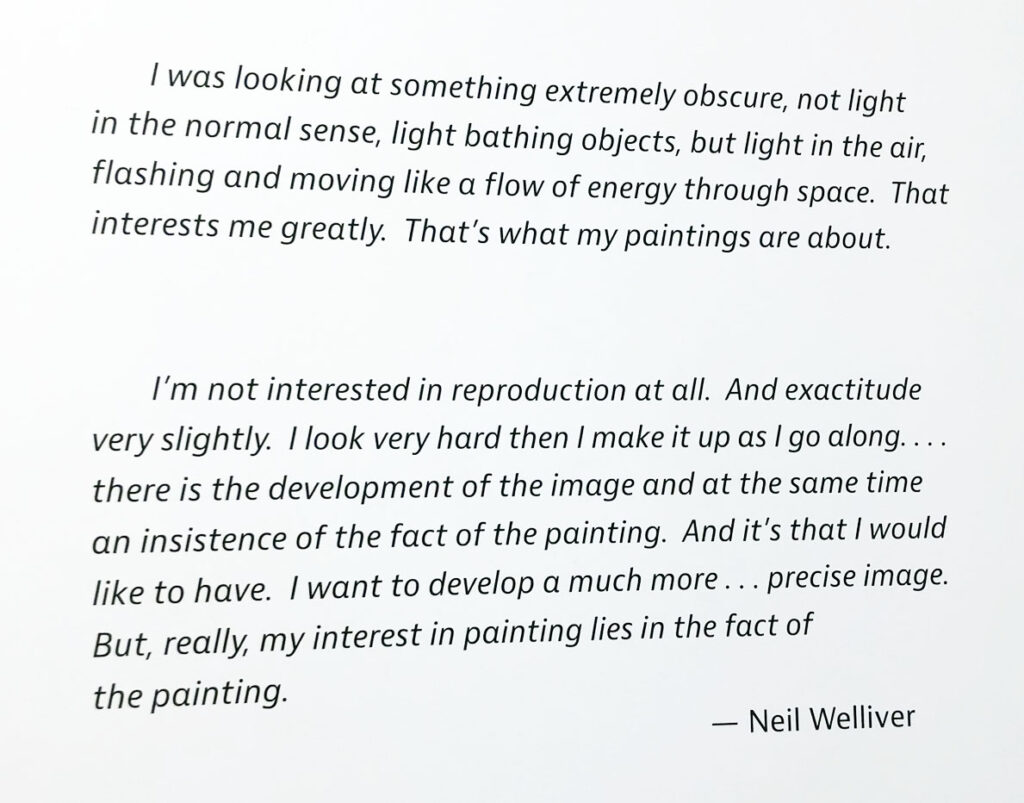
Neil Welliver quote on the gallery wall

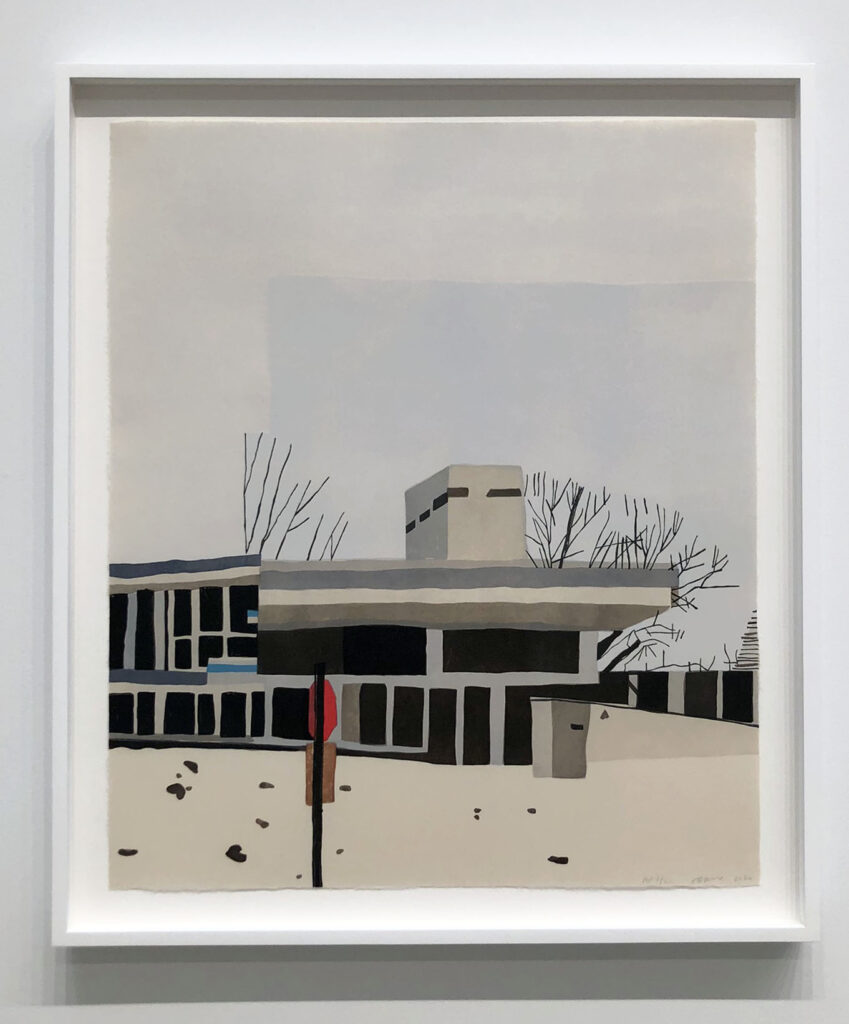
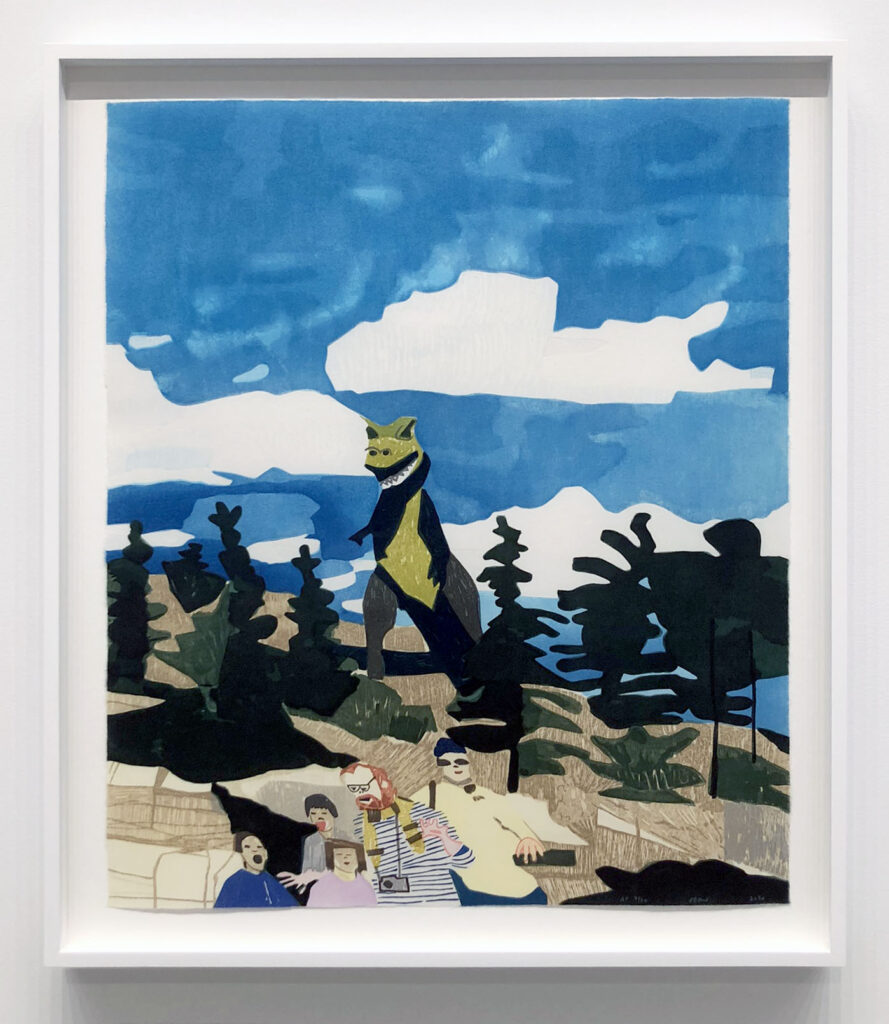
Currently at Alexandre Gallery in NYC are Neil Welliver’s gorgeous paintings and works on paper, spanning his career from the late 1960s-2000, and including his last woodcut print, Stump.

From the gallery’s website

In his 2005 New York Times obituary, Ken Johnson wrote:

Mr. Welliver came of age as an artist in the late 1950’s and 60’s, at a time when nonrepresentational styles of painting like Abstract Expressionism and, later, Color Field and Minimalism were accorded the highest critical prestige. Along with artists like Larry Rivers, Alex Katz and Philip Pearlstein, Mr. Welliver strove to paint representational images without sacrificing the formal innovations that the Abstract Expressionists Jackson Pollock and Willem de Kooning had introduced to modern painting.

Welliver’s lifelong friend, the American poet Mark Strand, wrote of his process in 2001:

What sets Welliver’s woods apart from the woods of others is that they are, of course, his. We see them and know instantly who painted them. That stream plunging and swirling around those gray rocks is familiar, so are those clouds parading in ragged order across that sky spreading a midday blue over those hills. They are all part of Welliver’s woods. The unaffectedness, the ease with which they are simply there, without a hint of what went into their making, without an indication anywhere of the turmoil that prompted them, is what sets them apart. Of course, we can see the many brush strokes in a large Welliver and believe that they—in their tireless application—tell us what goes into a Welliver, but we would be wrong, for there is much in a Welliver that we cannot see. In the past of each one are the long hikes into the woods, which Welliver takes, loaded down with easel, canvas, brushes, oil, thinner, and tubes of color, to the spot where he will paint; then there are the hours he stands, in all kinds of weather, and paints what will be the small preparatory paintings on which he bases the large drawings that lead finally to the large paintings.

This exhibition closes 2/25/23.