
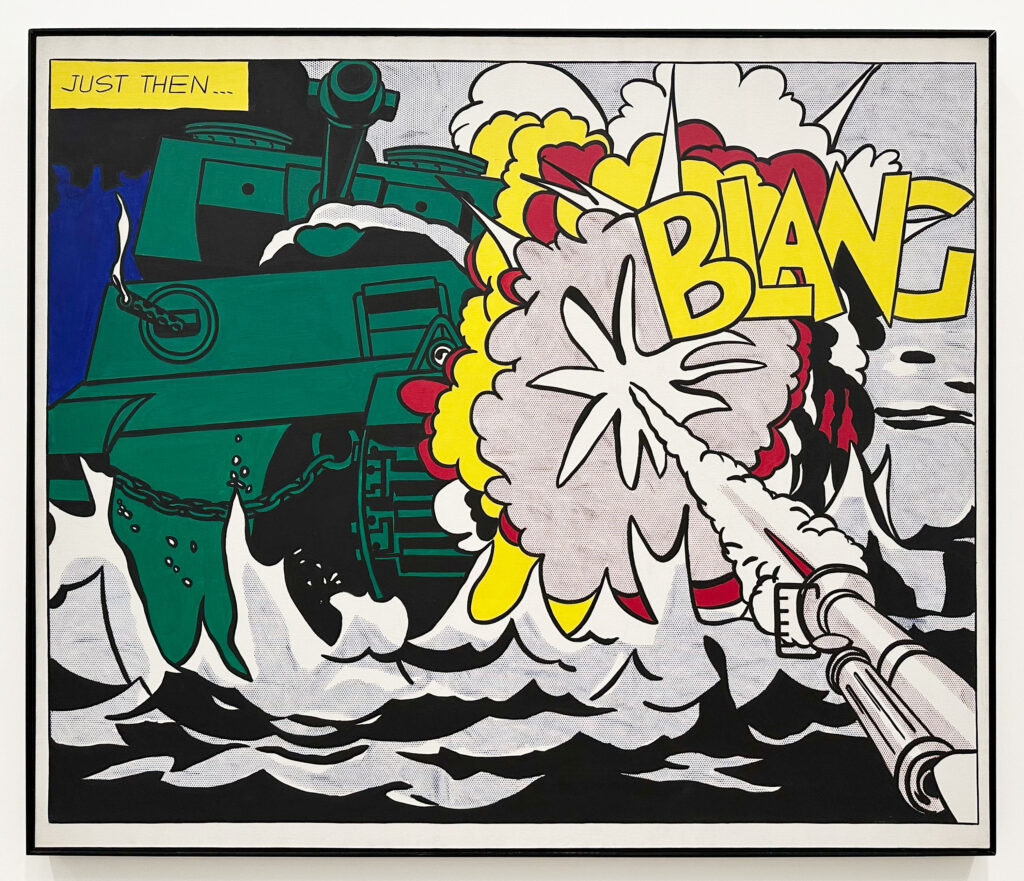
Roy Lichtenstein, “Live Ammo (Blang)”, 1962 Oil and Magna on two canvas panels
Roy Lichtenstein was born today, October 27th, in 1923. His painting Live Ammo (Blang) is part of The Broad’s permanent collection.
From the museum:
Live Ammo (Blang) is an early example of Lichtenstein’s use of comic book imagery, part of an artistic strategy employing images and themes from popular culture that came to define his career. At the time it was painted, the United States was experiencing multiple wars: the spectral uncertainty of the Cold War and the nostalgia for valor from World War II coming into conflict with the twisted realities of the escalating war in Vietnam. Taking images directly from comics such as G.l. Combat, All American Men of War, and Our Fighting Forces, Lichtenstein willfully exaggerated wartime heroics to their breaking point, using caricature to test and render absurd the clean lines between hero and villain. The message was social but also insular to the world of painting, for Lichtenstein detected these macho postures in the American triumphalism of abstract expressionism. Additionally, Live Ammo (Blang) caricatures the spontaneity and “action” of this approach to art.
The Whitney museum’s current exhibition of his work, Roy Lichtenstein: Like New, is getting great reviews and is on view at the museum until 5/10/27.
