
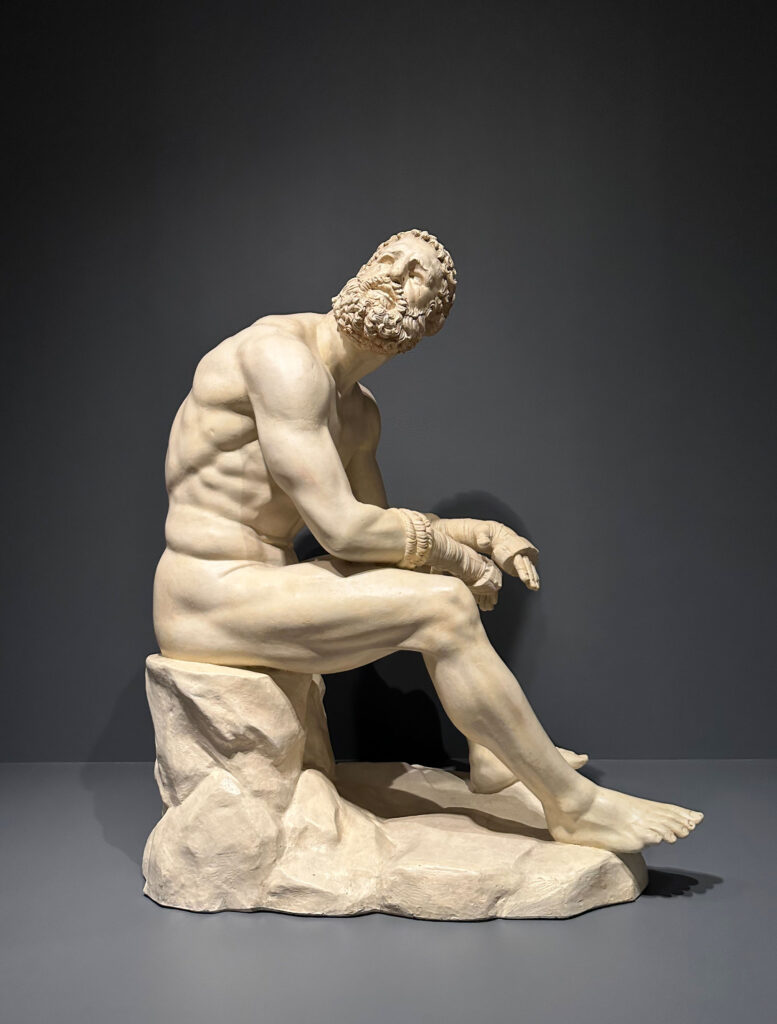
Caproni Brothers, “The Boxer at Rest”, 19th century Painted plaster cast from the original bronze which was produced between the late fourth and second centuries BCE
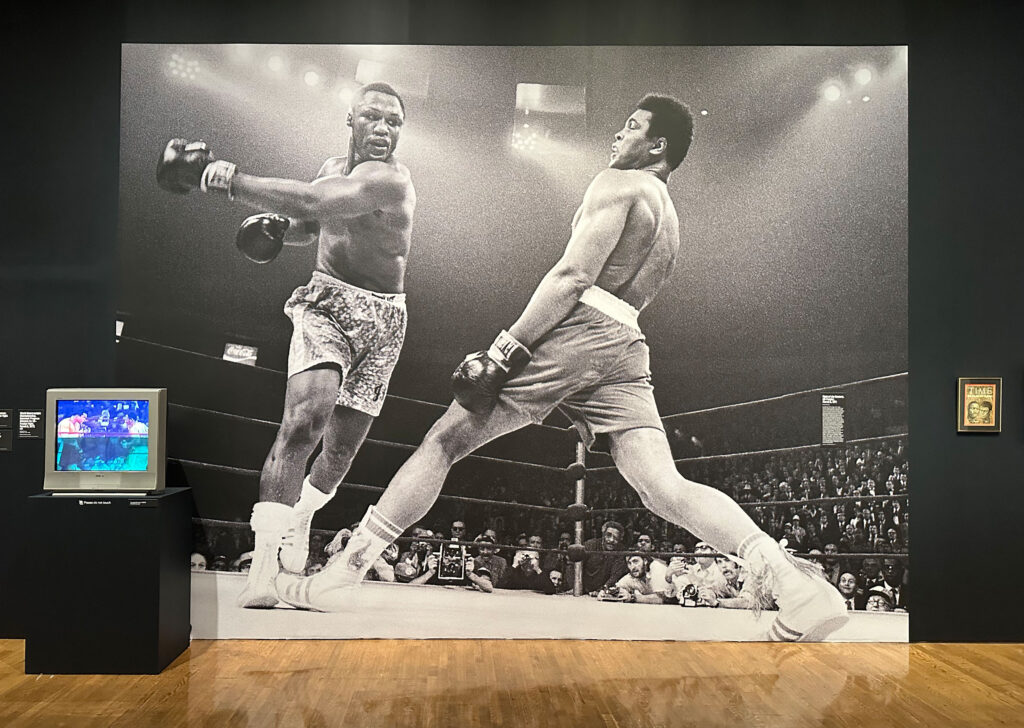
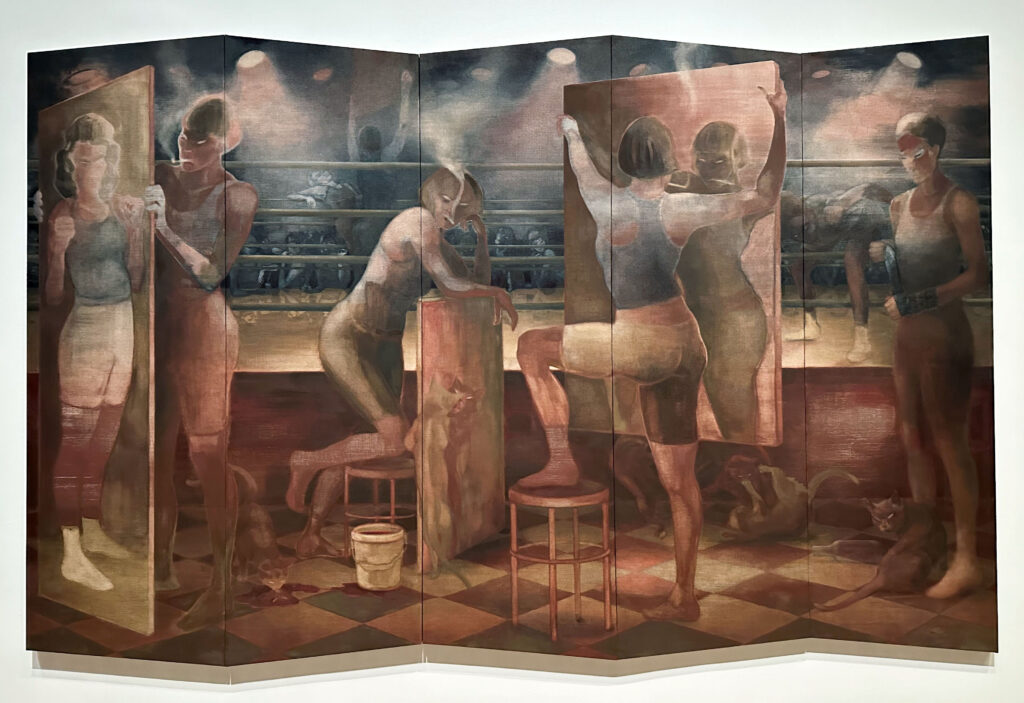
Lisa Brice “Untitled”, 2025 Pigment and natural water-soluble binders on linen
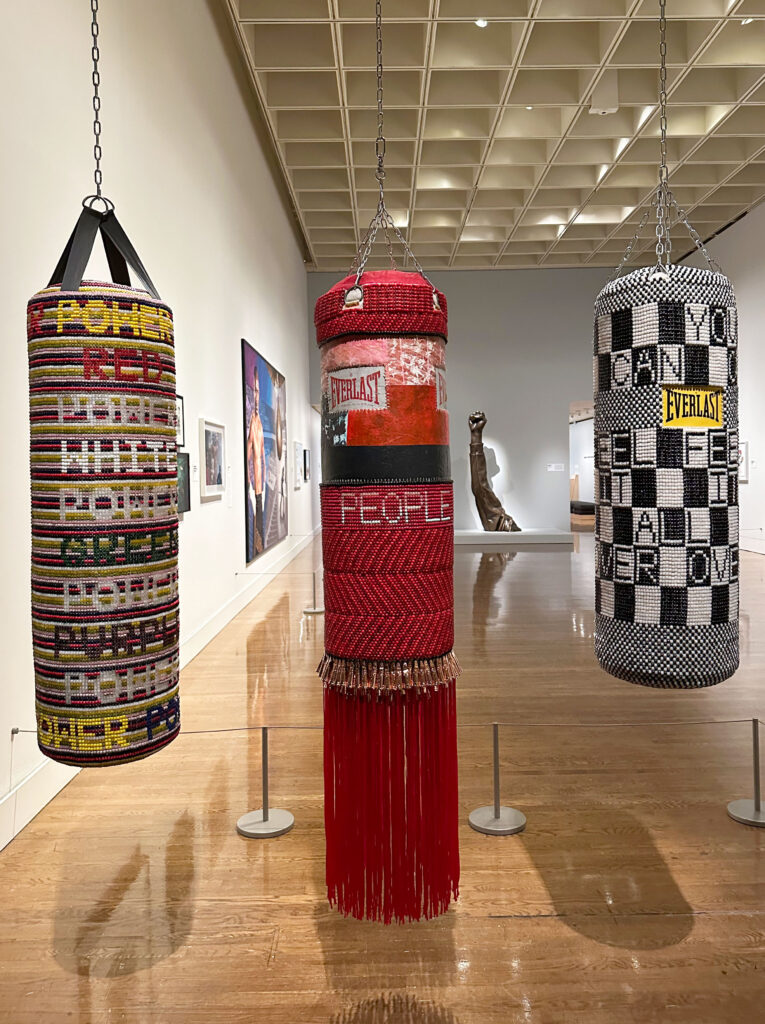
Jeffrey Gibson, (l to r) “Power, Power, Power”, 2017, “People Like Us”, 2014, and “You Can Feel It All Over”, 2015, Repurposed punching bags, glass beads, artificial sinew
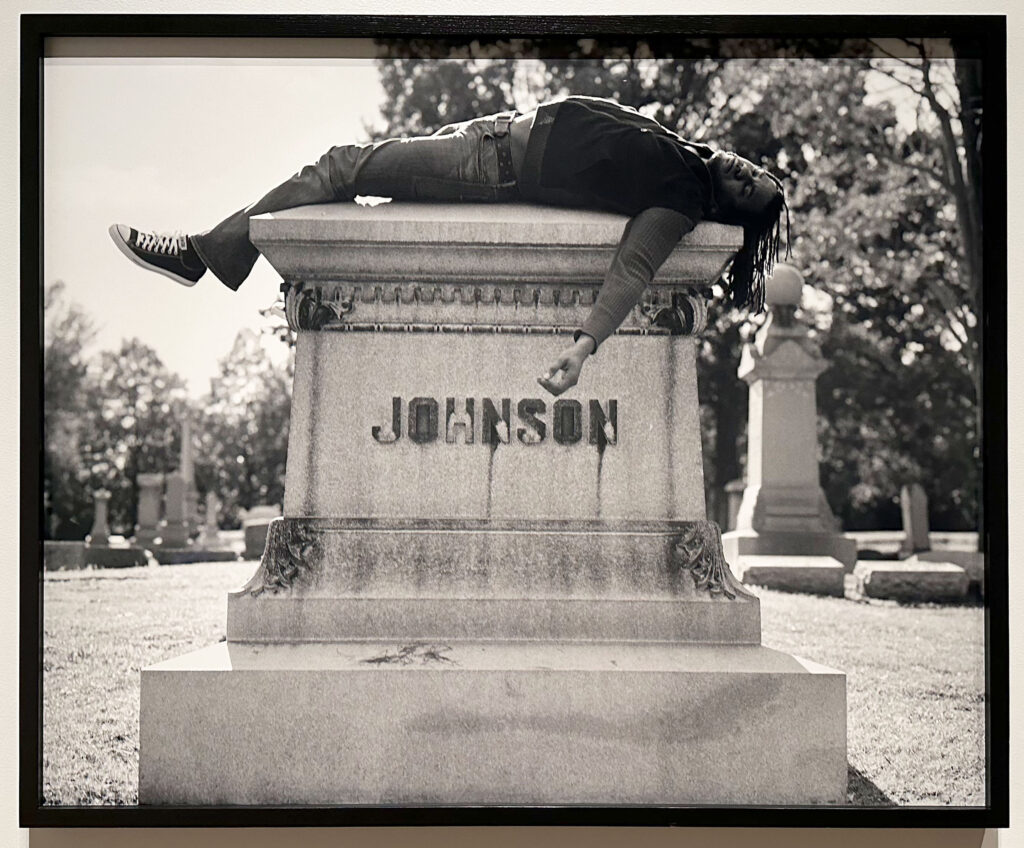
Rashid Johnson, “Self-Portrait Laying on Jack Johnson‘s Grave”, 2006, Durst Lambda print mounted on panel
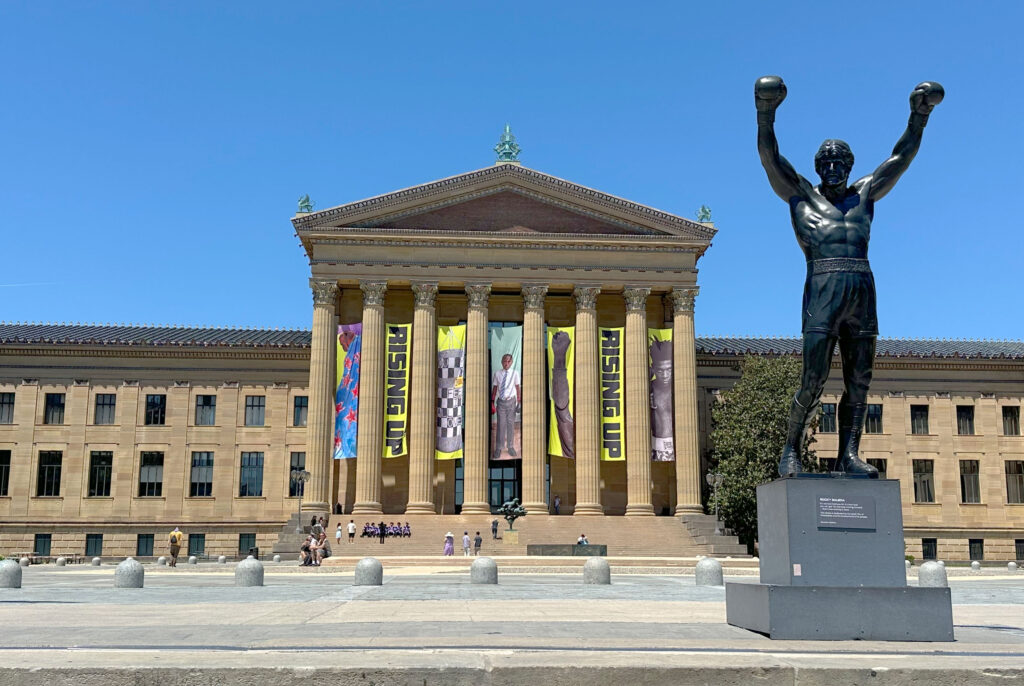
Approaching the front steps of the Philadelphia Museum of Art, you will find people of all ages and backgrounds taking photos with the statue of Rocky out front, often imitating his famous pose. Through a variety of works from antiquity to the present day, Rising Up: Rocky and the Making of Monuments looks at the history of this statue, the meanings attached to monuments, and the allure of boxers and boxing culture.
From the museum about the exhibition:
Blending the worlds of art, sports, and popular culture, Rising Up takes on the life of monuments by exploring the meanings and mythologies of the Rocky statue. The exhibition looks to the statue of the most famous Philadelphian who never lived as a way to better understand our complex and vital relationships to our public monuments.
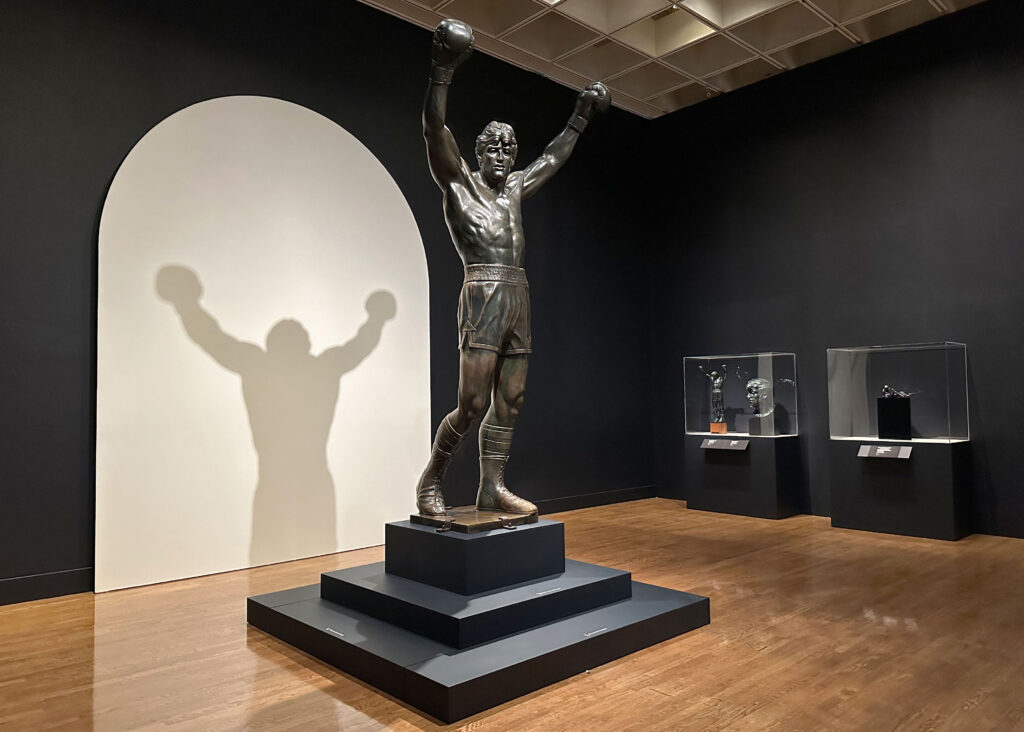
The statue first appeared on-screen in the Oscar-winning Rocky film series. The third installment, Rocky III (1982), featured the dedication of a monument that celebrated the boxer as both an underdog and a hero. The movie-made statue was placed outside the actual museum during filming, a dynamic blurring of art and life that continues to this day. Since that introduction, and through the statue’s departure and prolonged absence from the museum grounds to its prodigal return to the steps, the statue has sparked debate over its aesthetic value and its role in the city. Today, the power of the Rocky statue as a monument stems from its ability to summon public participation.
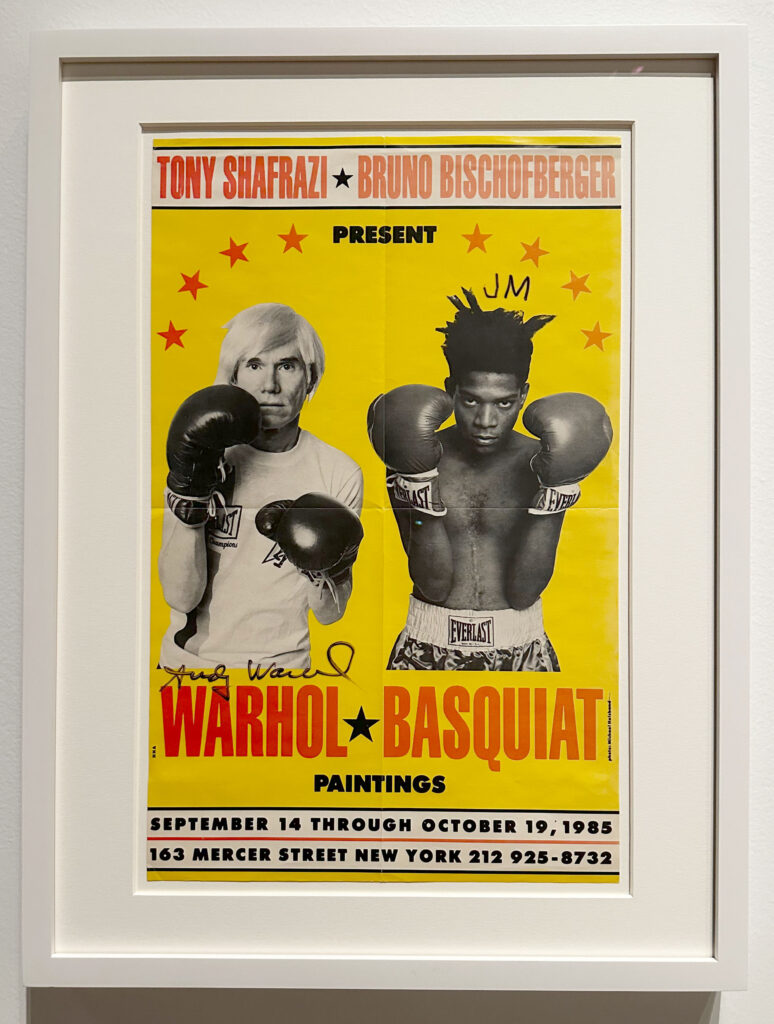
From antiquity to modernity, Hollywood to contemporary art, Rising Up spotlights both popular narratives and undertold stories surrounding the Rocky statue. Each gallery offers a response to the exhibition’s central question — why do millions of people visit the Rocky statue at the steps of the Philadelphia Museum of Art each year? — and further explores the relationship between art, boxing, and civic identity. It offers a renewed context to consider the statue through works and artifacts that reflect on the deep legacies of boxing monuments across time.
Rising Up marks the first time that the Rocky statue has been displayed inside the museum, explored alongside Philadelphia’s landmark boxing culture and multigenerational artists’ interpretations of sport and society. At its core, the exhibition looks at how monuments are made — by artists and by us — through the lens of the Rocky statue and the ways people engage, debate, and gather around this site of memory.
This exhibition closes on 8/2/26.
