Jul 232026
 

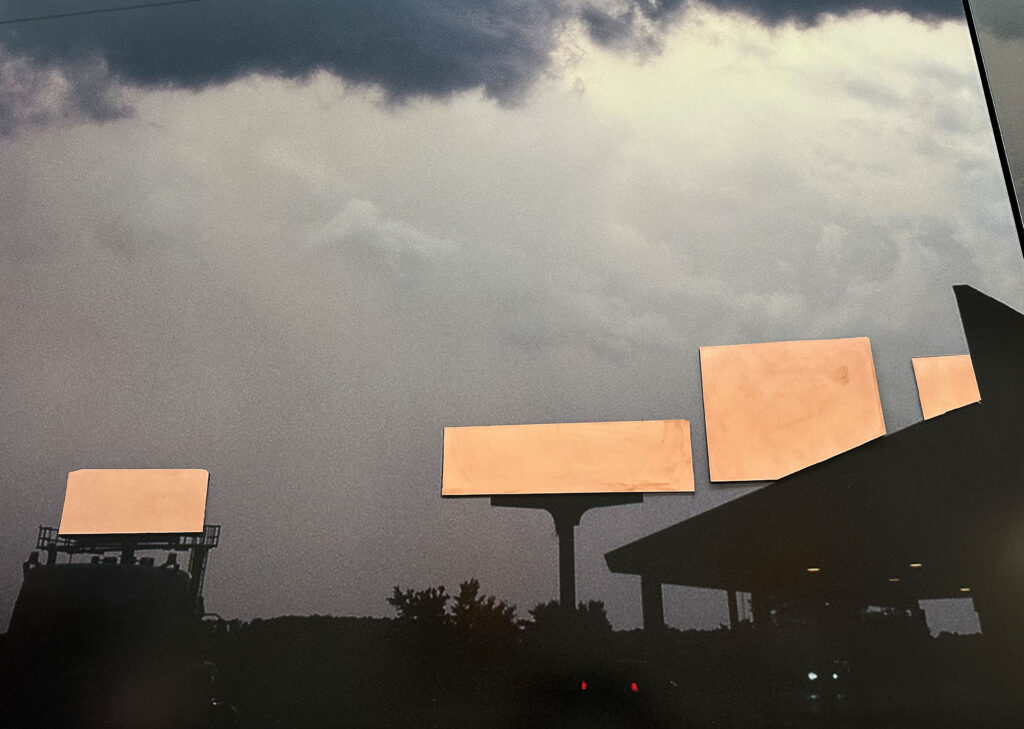
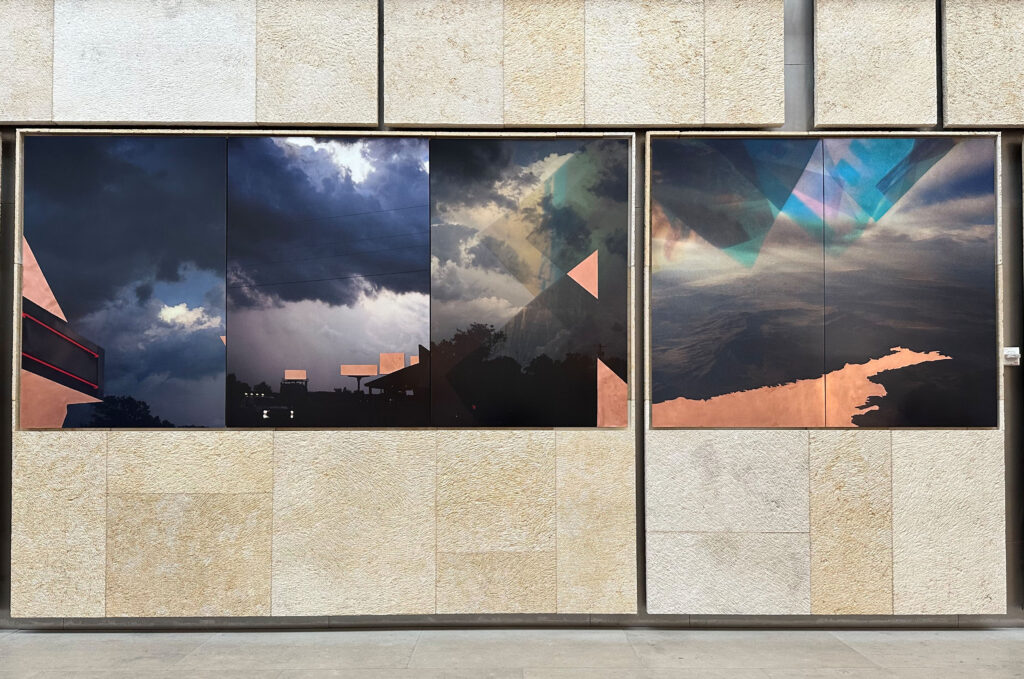
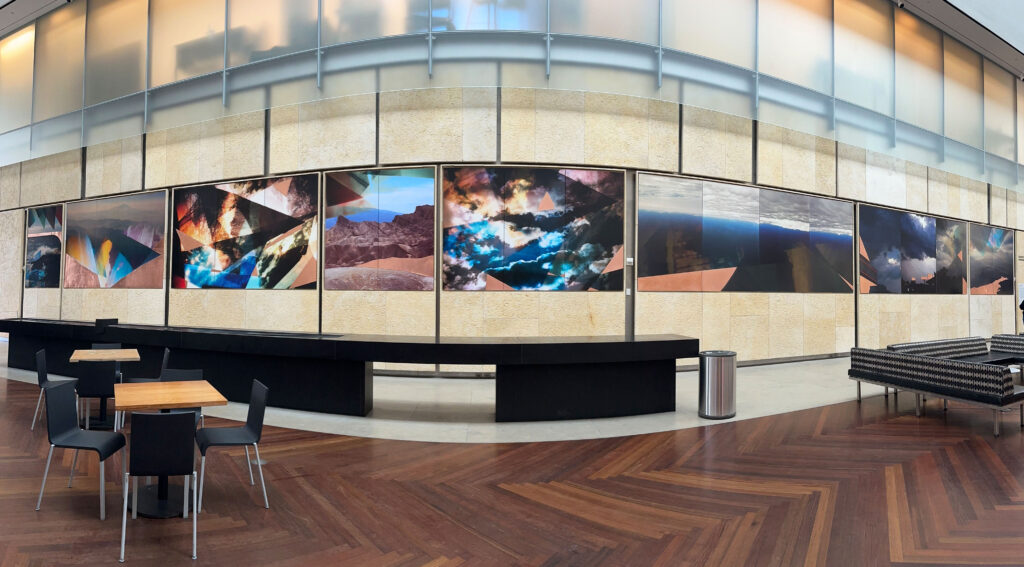
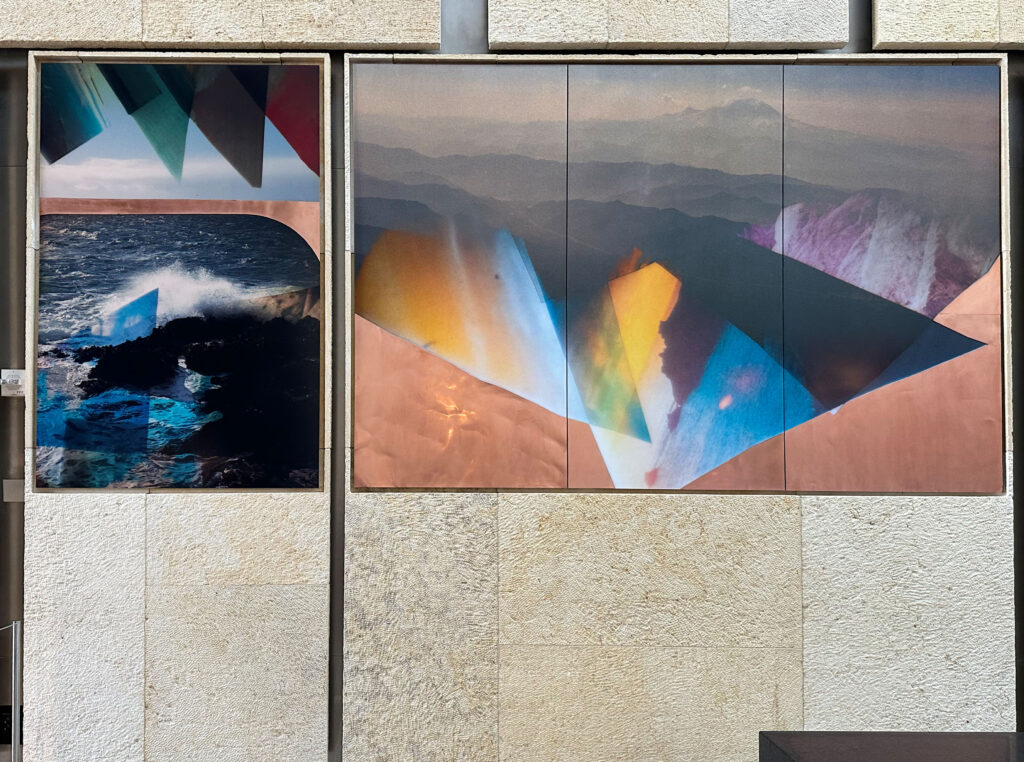
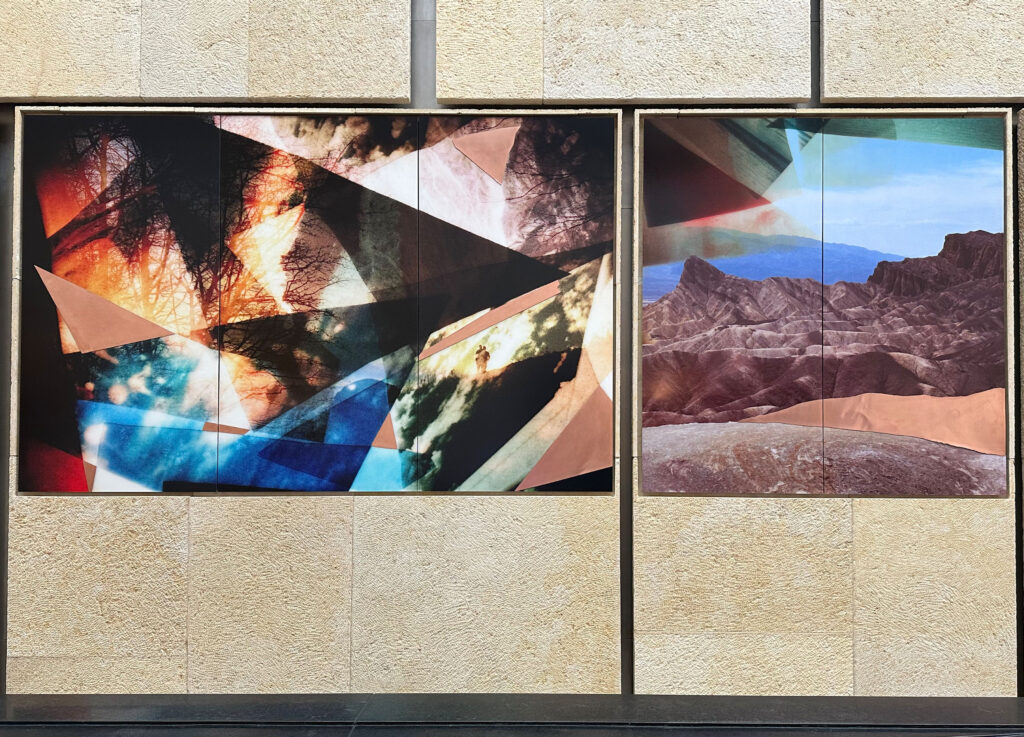
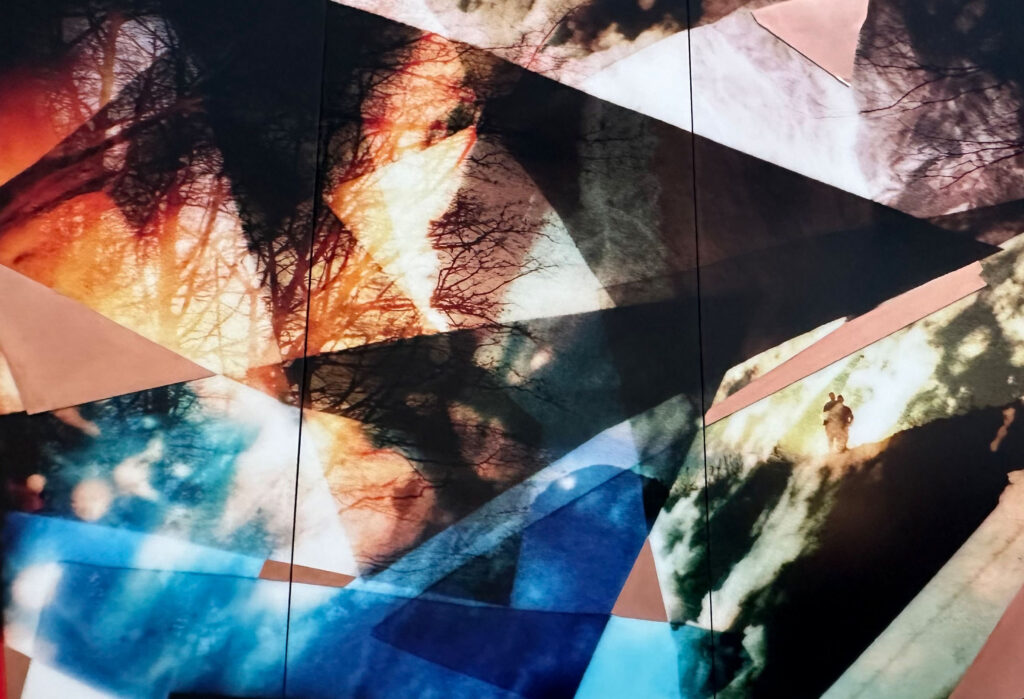
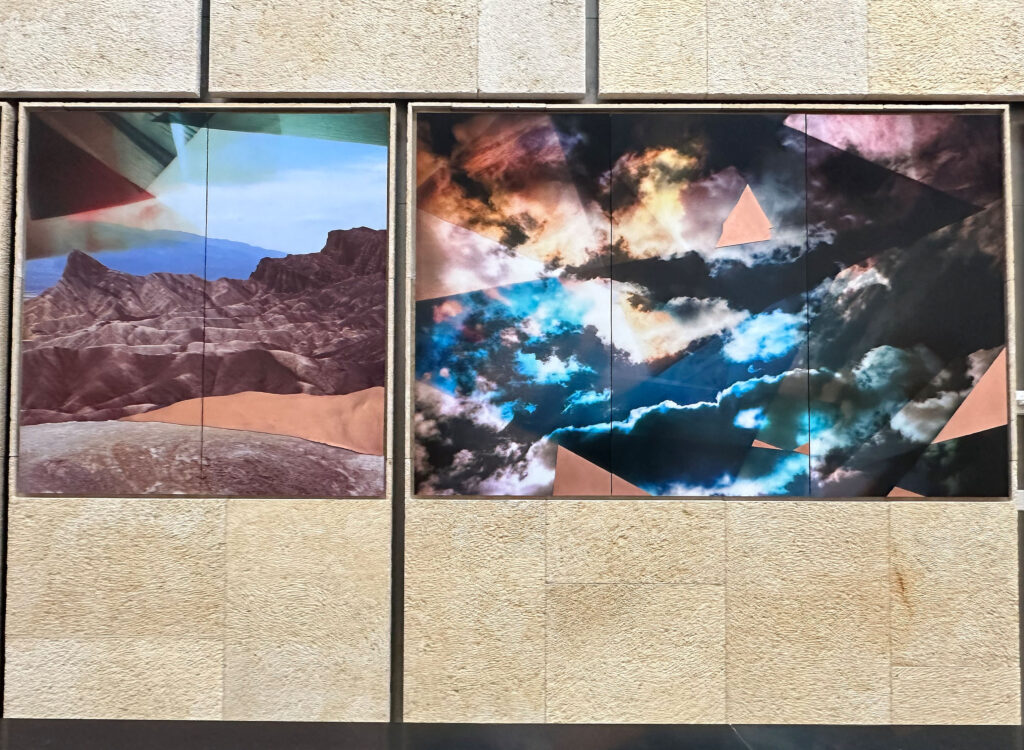
Along several walls at the Barnes, Native American (Ho-Chunk Nation/Pechanga Band of Luiseño Indians) artist Sky Hopinka‘s installation, Red Metal Dust, layers photographs and transparencies of a variety of landscapes with cut copper shapes to form dreamlike vistas.

About the work from the museum (in the artist’s words):

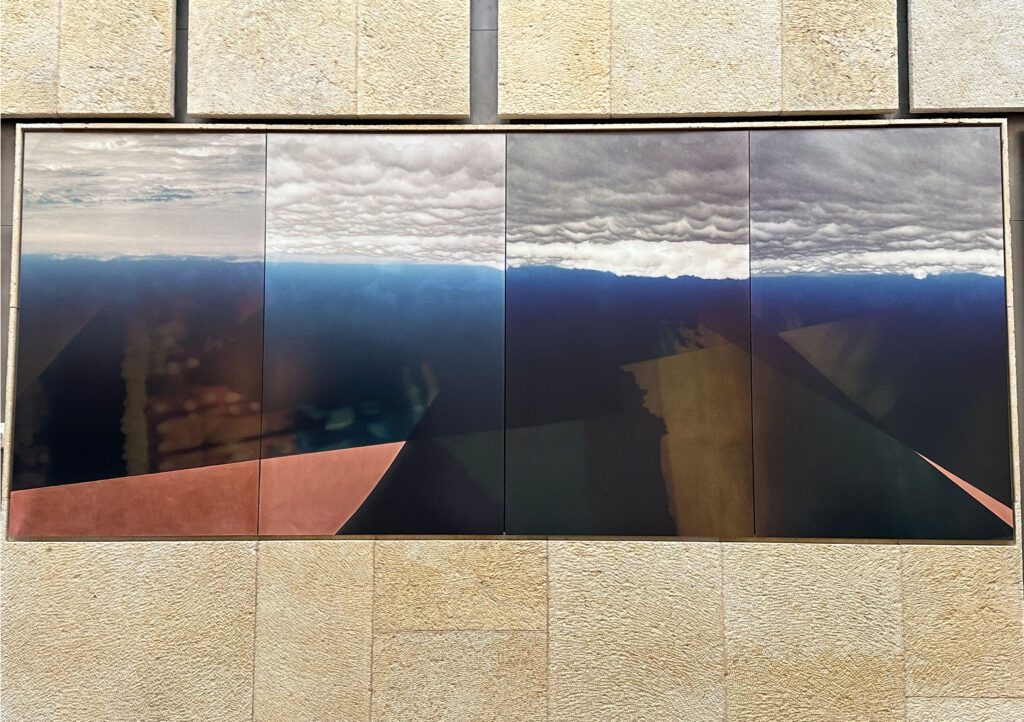
Red Metal Dust is a body of work that considers landscape as a place shaped as much by what remains as by what has been removed. Each panel layers photographic prints with transparencies of concurrent landscapes, allowing images to pass through and across one another rather than resolve into a single view.

Geometric silhouettes, cut into polished copper and placed over the image, follow the contours of the transparencies beneath them. These copper forms both interrupt and clarify the landscape, using the logic of the silhouette to define presence through reduction. The copper reflects light and the viewer’s image, bringing the body and present moment into the work.

The title draws from the Ho-Chunk way of describing copper, naming the material not as monument but as remainder-something carried, scattered, and endured. Here, copper becomes less a surface than a witness, resilient and reflective, shaped through contact rather than display. Across these works, landscape is approached as a layered field of return, where images accumulate, echo, and settle into one another over time.

For more information on the work, this interview with Hopinka from ARTNews is also worth checking out.

Below is another section located on a different wall.
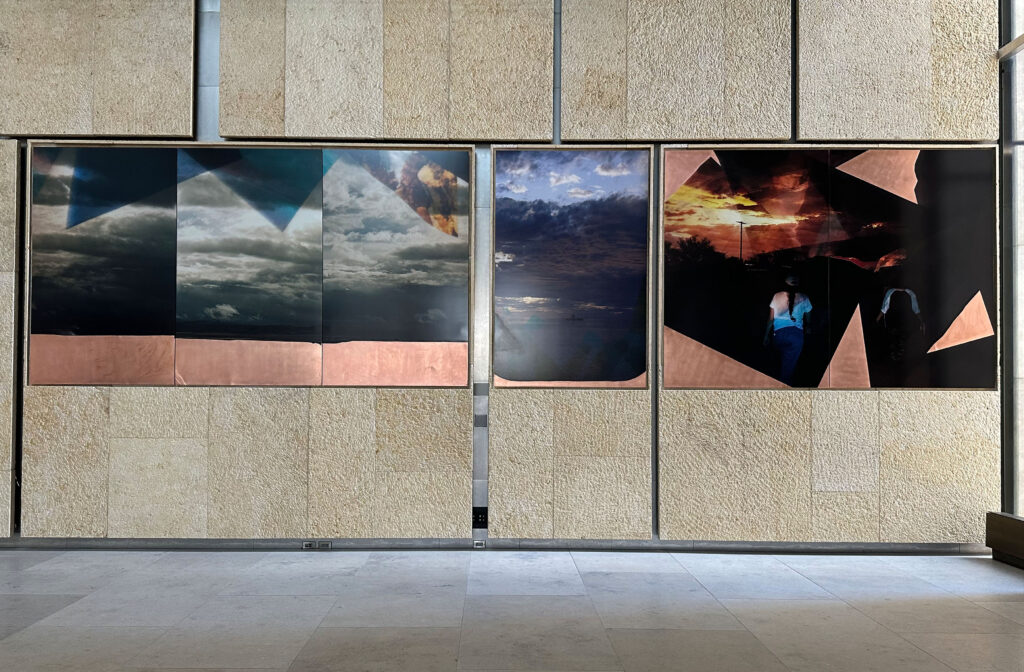
Red Metal Dust is on view until January of 2027. The Barnes is also free for Philadelphia residents for the month of July.

Feb 192026
 

“Woman Walking in an Exotic Forest”, c. 1910, Oil on canvas

“The Sleeping Gypsy”, 1897, Oil on canvas

Henri Rousseau: A Painter’s Secrets at the Barnes Foundation in Philadelphia provides a fascinating look at the self-taught painter’s career. Rousseau’s variety of subjects, from portraits and flowers, to the jungles he never experienced in person, were in part a response to what was popular and might sell. But the unique, and sometimes mysterious, paintings also show an artist unafraid to paint the world in his own distinct style.

From the foundation about the exhibition-

Born in 1844, Henri Rousseau became an artist in his forties, while he was working as a customs officer at the toll gates of Paris. From 1886 his paintings were regularly shown at the annual Salon des Indépendants, where anyone who paid the entrance fee could exhibit. He kept clippings of his reviews, good or bad. What mattered to him was being noticed, and though his paintings were mocked by many, by the end of the 19th century he had become a celebrity. Notoriety, however, did not lift his always meager standard of living.

Rousseau taught himself to paint and was celebrated as a “naif,” which at the time meant uneducated, simple, and honest. In reality, he had received a good basic education and was aware of art history and the art of his time. His acquaintances included Paul Gauguin and Pablo Picasso, and he knew successful “academic” artists too. Moreover, he was not always trustworthy; he joined the army in 1863 to avoid going to prison for embezzlement, and in 1908 he was found guilty of passing false checks.

This exhibition sets out to show how strategic Rousseau was in pursuing earnings and recognition as an artist, as well as the intensity with which he committed himself to painting. It also seeks to reveal the surprising complexity of his painting technique. His self-belief overrode his failures, and the impact of his work ensured art market success, but only after his death in 1910. By the mid-1920s, Dr. Albert C. Barnes was buying Rousseau’s paintings for prices comparable to those of Matisse and Picasso.

Below are a few more selections-

“Carnival Evening”, 1886, Oil on canvas

“Carnival Evening”, 1886, Oil on canvas (detail)

“The Snake Charmer”, 1907, Oil on canvas

“Jungle Landscape with Setting Sun”, c.1910, Oil on canvas

“Jungle Landscape with Setting Sun”, c.1910, Oil on canvas (detail)

This exhibition closes 2/22/26.