
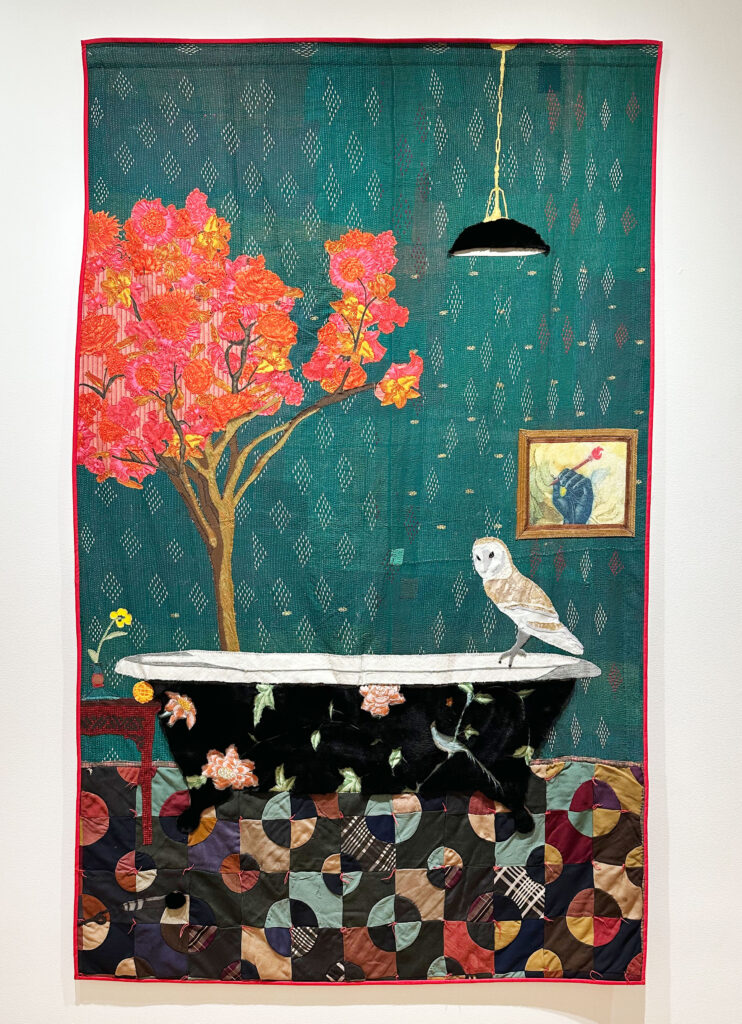
Jesse Krimes, “Riverside”, 2026, Antique quilts, used clothing collected from incarcerated people, assorted textiles
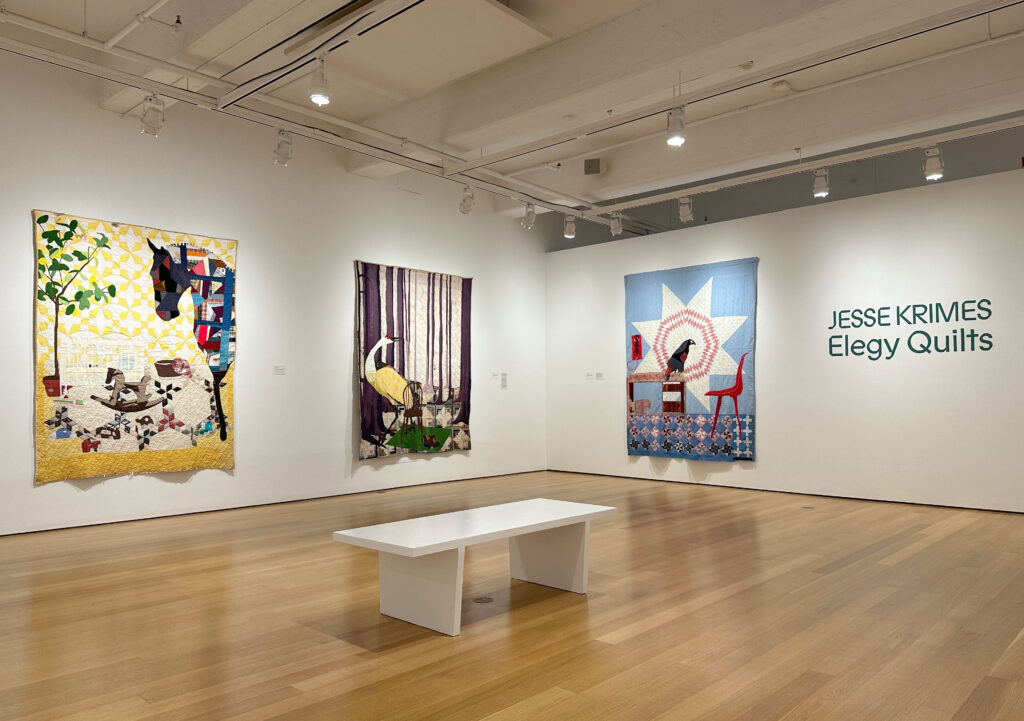
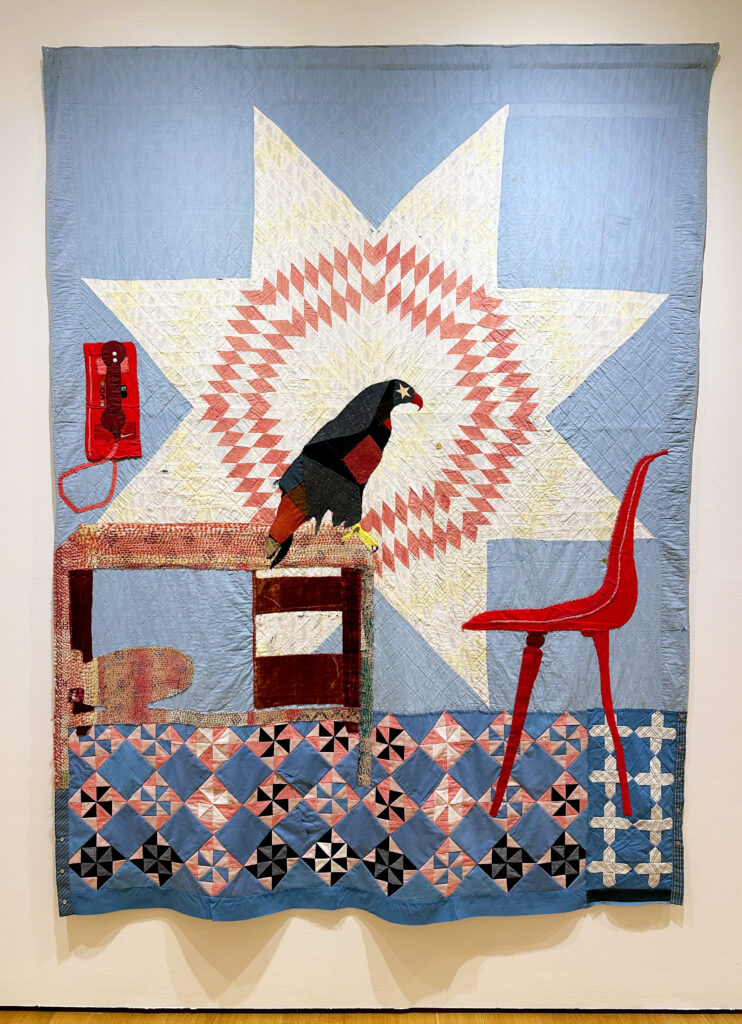
“Red Eagle”, 2020, Antique quilt, used clothing collected from incarcerated people, assorted textiles
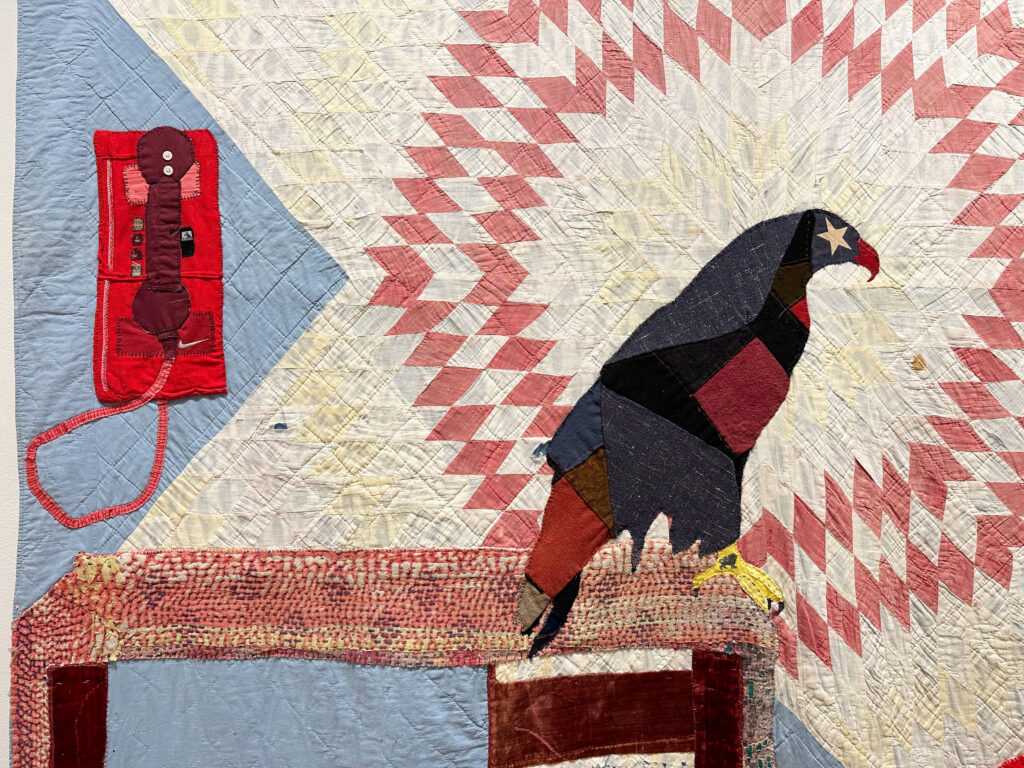
“Red Eagle”, detail
While the quilts in Jesse Krimes‘s exhibition Elegy Quilts at The Fabric Workshop and Museum are beautifully crafted works, it is how he builds on the ideas and personal items of the incarcerated people he worked with that make them so poignant.
The exhibition also includes the recent quilt Riverside, (pictured at the top of this post), a newly commissioned work inspired by Krimes’s workshops with young adults from Mural Arts Philadelphia’s Restorative Justice program. A mural of the piece was also created, located at 990 Spring Garden Street, Philadelphia.
From the museum about the exhibition:
Presented in partnership with Mural Arts Philadelphia, this exhibition features selections from Jesse Krimes’s Elegy Quilt series (2020–present), a body of work that renders the personal effects of the U.S. carceral system through portraits of domestic spaces. Drawing on his own experience with incarceration, Krimes gathers donated clothing and textile fragments from currently and formerly incarcerated individuals and reconstitutes them into intricately patterned quilts that meditate on memory, loss, alienation, and comfort. Continuing in the spirit of American quilting traditions, the works situate these narratives within broader histories of communal making and resilience.
To produce the works on view, Krimes invited incarcerated collaborators to describe a memory of home. He then prompted them to choose a representative animal figure as a symbolic stand in for the incarcerated person. The quilts, titled after U.S. prisons and jails, become tactile archives grappling with estrangement, yearning, and the complexities of release and reintegration. Through this process, Krimes reframes everyday materials into narratives of dignity and connection, prompting critical reflection on the psychological and material costs of incarceration.
Marion, pictured below, also has an affecting story behind it.
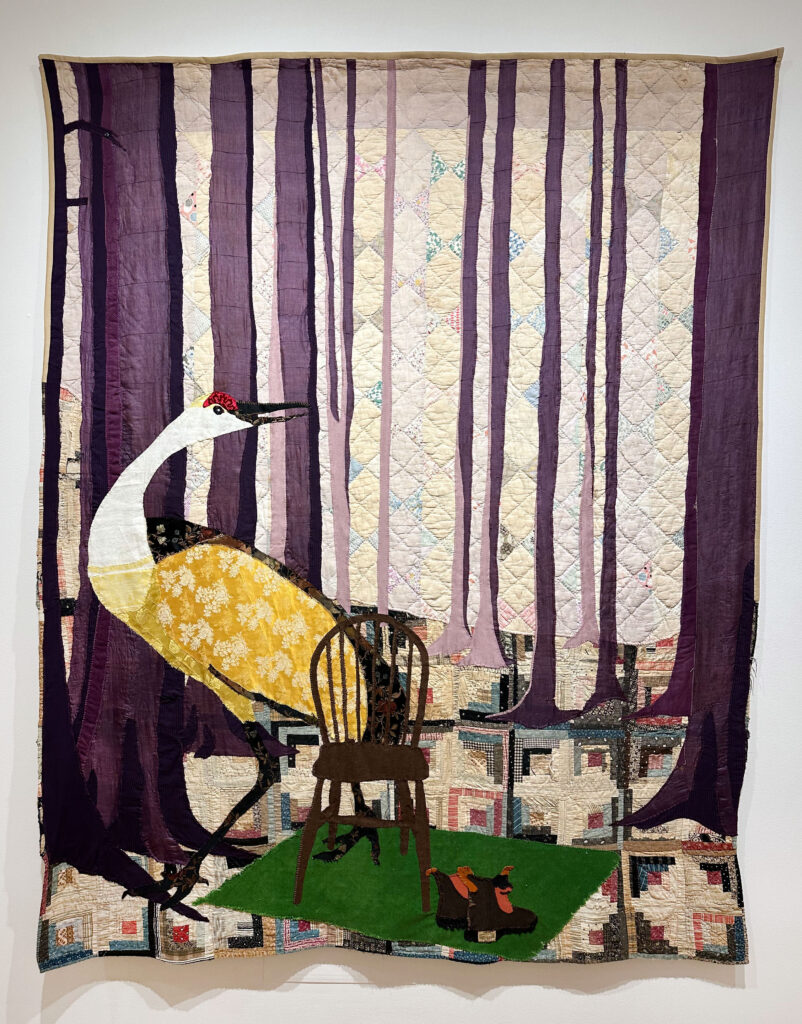
“Marion”, 2022, Antique quilt, used clothing collected from incarcerated people, assorted textiles
From the museum:
Krimes utilizes the names of American penitentiaries-here the Federal Correctional Institution in Marion, Illinois-as titles for his quilts to convey the immense scale of mass incarceration in the United States. The quilts themselves, however, depict personal relationships to home, memory, and safety.
When Krimes asked his collaborator for Marion, who is currently incarcerated, where he last felt most comfortable, the individual described the woods behind his house where he would meditate. The resulting quilt is a portrait in absentia: rather than depicting the figure in contemplative repose, Krimes presents an empty chair and discarded boots as the material traces of the “sitter.” A brightly patterned crane curves around the chair like a guardian figure suggestive of freedom and flight.
The crane’s vivid yellow coloring and the rich purple of the towering trees create a distinction between the peaceful natural setting and this animal avatar. As with the other works in the Elegy Quilt series, Marion offers a vision of individual longing, softness, and vulnerability in resistance to the severe discomfort and violent anonymity produced by the carceral system.
This exhibition is on view until 11/1/26.


