Oct 072026
 

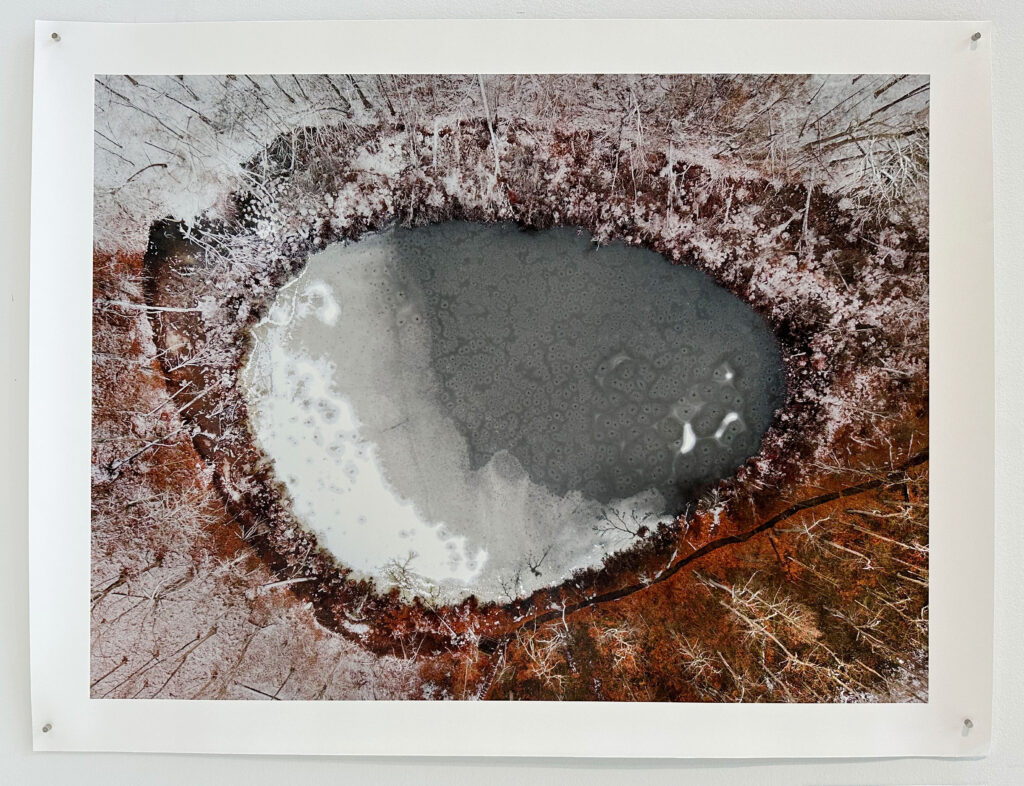
Matt Kresling, “The Devil’s Bathtub”, 2026
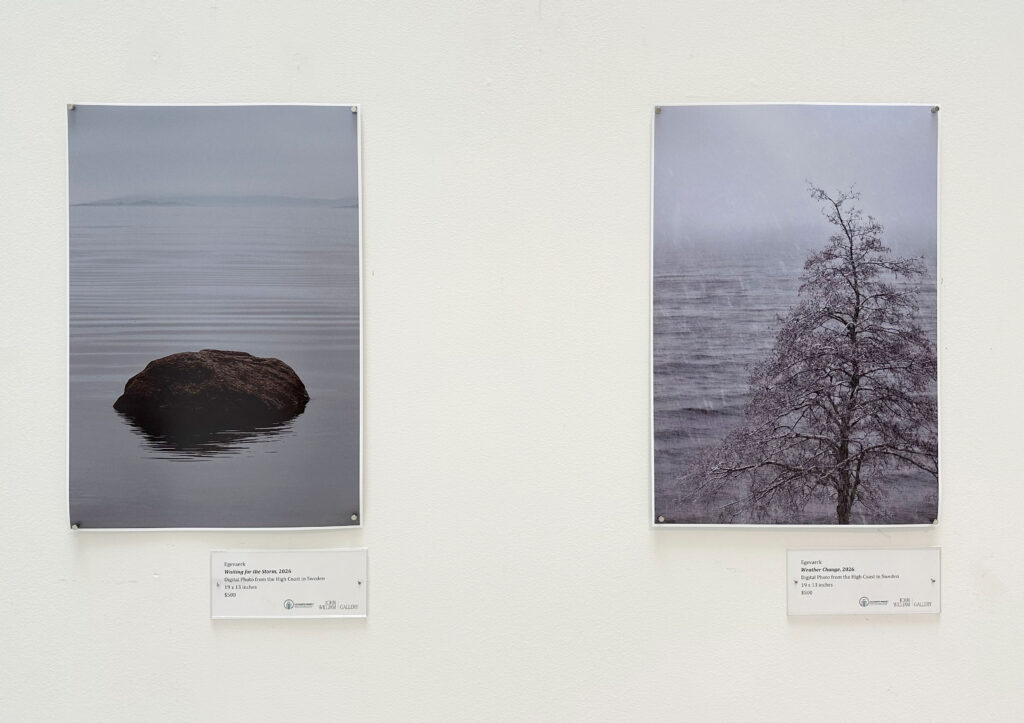
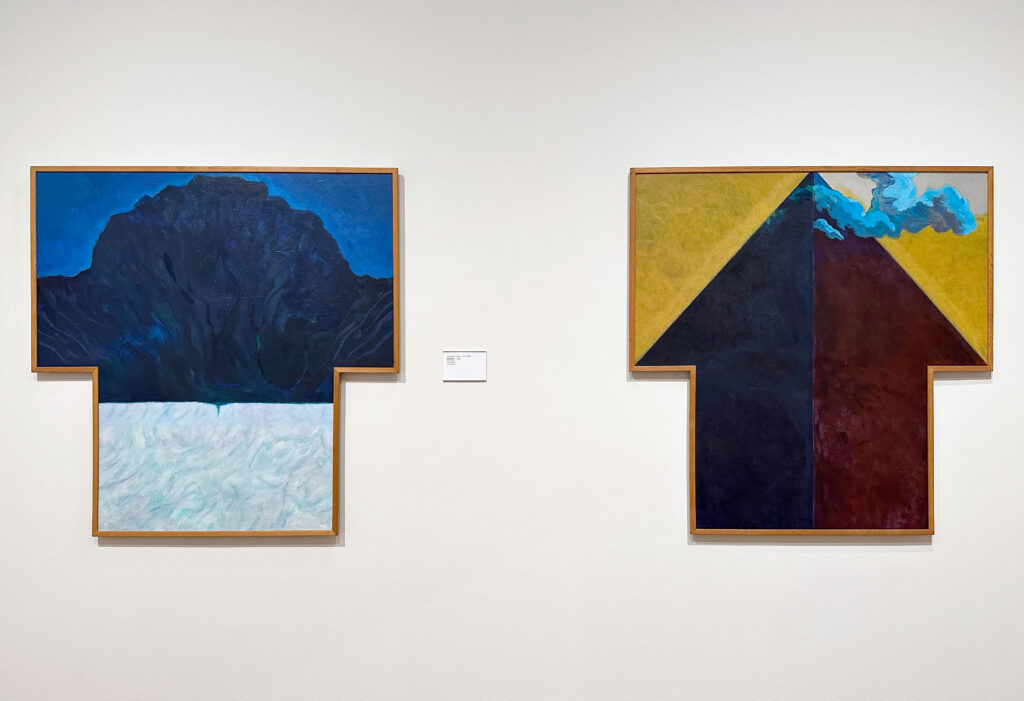
Egevaerk, “Waiting for the Storm”, and “Weather Change” 2026, both taken on the High Coast in Sweden
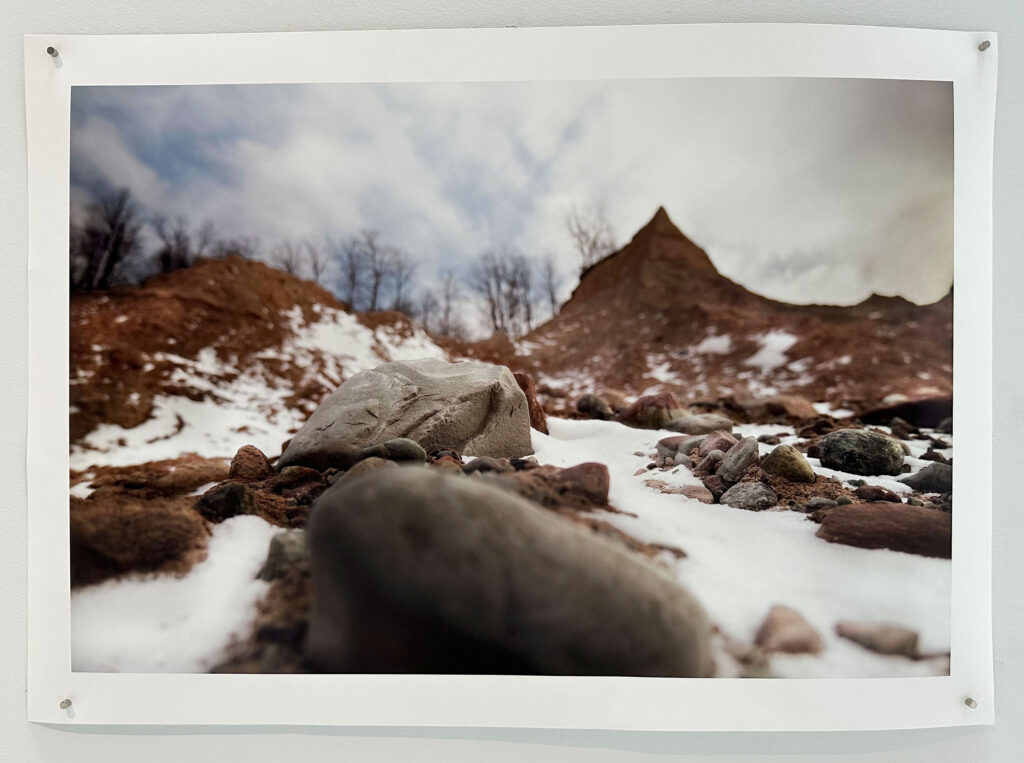
Matt Kresling, “Glacial Till Revealed by the Erosion of the Drumlin at Chimney Bluffs, Near Lake Ontario”, 2026

At the Edge, on view at John William Gallery in Wilmington as part of a collaboration between the Wendell Castle Workshop, HB381 Gallery, and the Wilmington Film Festival, includes photographs by filmmaker Matt Kresling and the Danish artists and furniture designers Mette Bentzen and Lasse Kristensen, also known as Egevaerk. The artists photographed natural formations found in both Scandinavia and the Great Lakes region near the workshop for inspiration and with Kresling created the documentary Path about their work and the residency. The works created at the Wendell Castle Workshop were on view at HB381 in NYC over the summer.

Tonight, 10/7/26, is the opening reception for the exhibition, with a screening of Path at 6pm. The exhibition will be on view until 10/11/26.

More from the gallery and Project Director Kathrine Page:

…The residency became a critical exploration of the deep geographical and cultural connection between the two continents. Working along the shores of Lake Ontario, the artists searched for stones that embodies qualities central to their practice: a reverence for nature in transformation, an awareness of water’s ancient and shaping force, and an appreciation for the mystery and paradox inherent in the sea. They ultimately selected rocks whose fluid contours revealed the incremental effects of tides and whose visible strata suggested the slow thaw of a disintegrating glacier. Inspired by these specimens, they created two large-scale, stack-laminated, hand-carved sculptural furniture works, measuring four and five feet in height.

This exhibition of photographs documenting the residency draws on a visual language shaped by an aesthetic connection to glacial formations and landscapes of confluence and exchange. It explores emotional intersections and celebrates the threshold where atmosphere and materiality meet. The photographs reflect shared characteristics of the landscapes of Denmark and the Great Lakes region, while highlighting the creativity that emerges from this geographical kinship.

At the Edge also celebrates the role of intuition as a catalyst for artistic discovery and breakthrough. At its heart, the exhibition offers a meditation on the collaborative residency that brought together furniture designers and filmmakers in an exploration of landscape, material. memory, and place.

Accompanying the exhibition at the Wilmington Film Festival is the documentary film, Path, by Matt Kresling in partnership with Nordic filmmakers in Denmark. Path documents the design team Egevaerk’s journey from Denmark to their five-week residency of artistic discovery in Rochester, NY where they designed, built, and crafted sculptures in the workshop of the late legendary artist Wendell Castle. Far from the Danish traditions and expectations that had shaped their craft to this point, they set out to find their own path. This is a film about craftsmanship and the courage to break with the familiar forces of nature- far greater than us all.


Sep 112026
 

Jennifer Hintz Eggers, “Through the Night”, Oil on birch panel

RitaMarie Cimini, “After the Dream”, Oil on acrylic

Maia Palmer, “Splitting Headache”, Migraine Portrait Series, Charcoal and pastel on paper

Jennifer S. Rodgers, “Nearly every day (PHQ-9 Depression)” and “More than half the days (GAD-7 Anxiety)” acrylic paint, ink on canvas

Interactive work by Jennifer S. Rodgers– gallery visitors are encouraged to write down worries, fears or anxieties on the paper and place them in the box

Acrylic on wood paintings by Carly Maiorano

Tonight (9/11/26)  is the closing reception for Shadow Work, a group exhibition at Chris White gallery in downtown Wilmington. Curated by Jen Hintz Eggers and Rebecca Howell, nine local artists present work exploring what can be discovered through “shadow work“.

From the gallery:

Shadow Work invites impolite conversations. By shining a light on the hidden aspects of ourselves and our society, each artist examines their experience through honest dialog around parts rarely seen or discussed. From impeccably constructed portraits and florals to expressive large scale paintings and found object sculptures, these works offer a space for vulnerability by opening up the door to community.

Other artists included in the exhibition but not pictured: Regina Katz, Jane Quarterone, Rebecca Howell, and Samara Weaver.

Tonight is also Art Loop Wilmington, a monthly event where galleries and cultural spaces stay open late.


Aug 282026
 

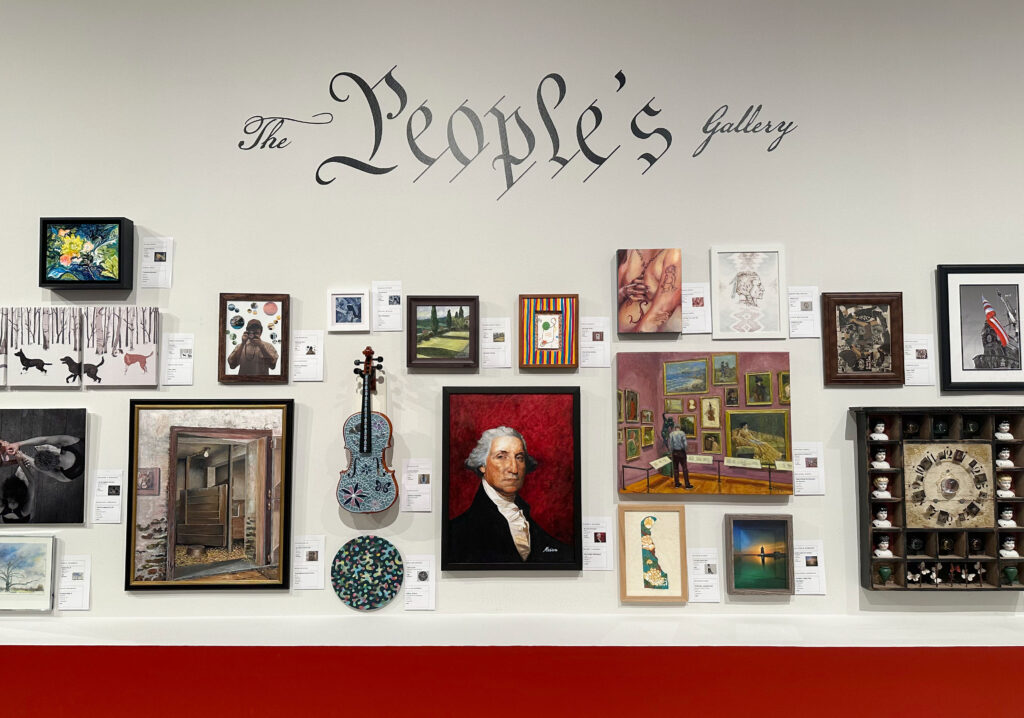
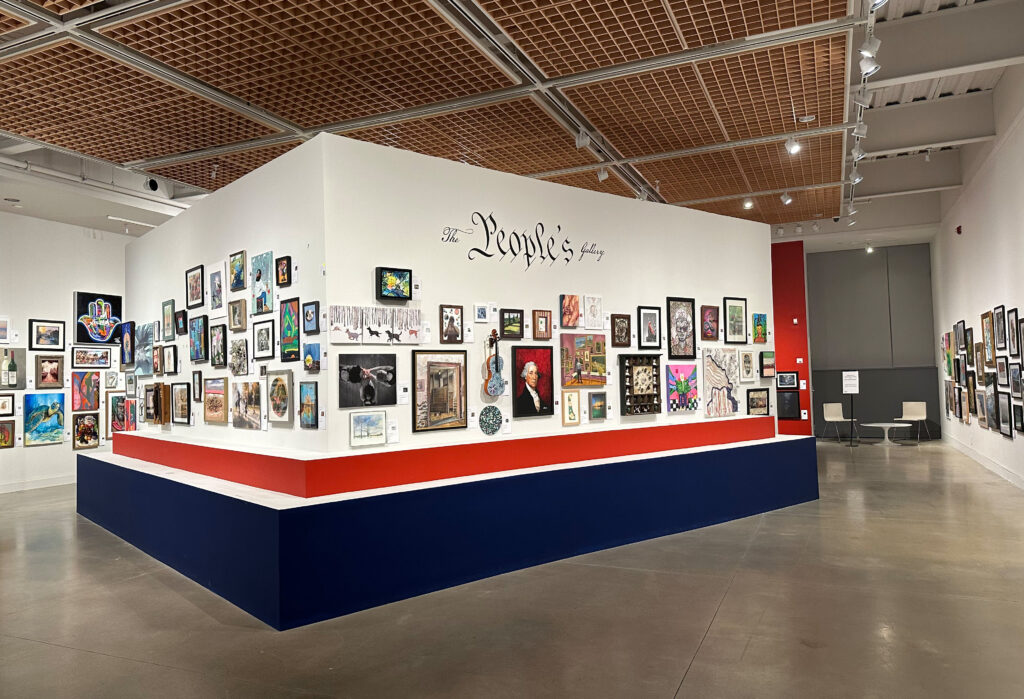
As part of their programming for the nation’s 250th birthday, Delaware Art Museum is showing the work of local artists in their current exhibition, The People’s Gallery. It is a non-juried exhibition which allowed artists at all levels to contribute work.

It’s a fantastic opportunity to see what this community of artists has created and to purchase local art. Check it out before it closes on 9/6/26.

Aug 262026
 

Paintings by E. Lizé

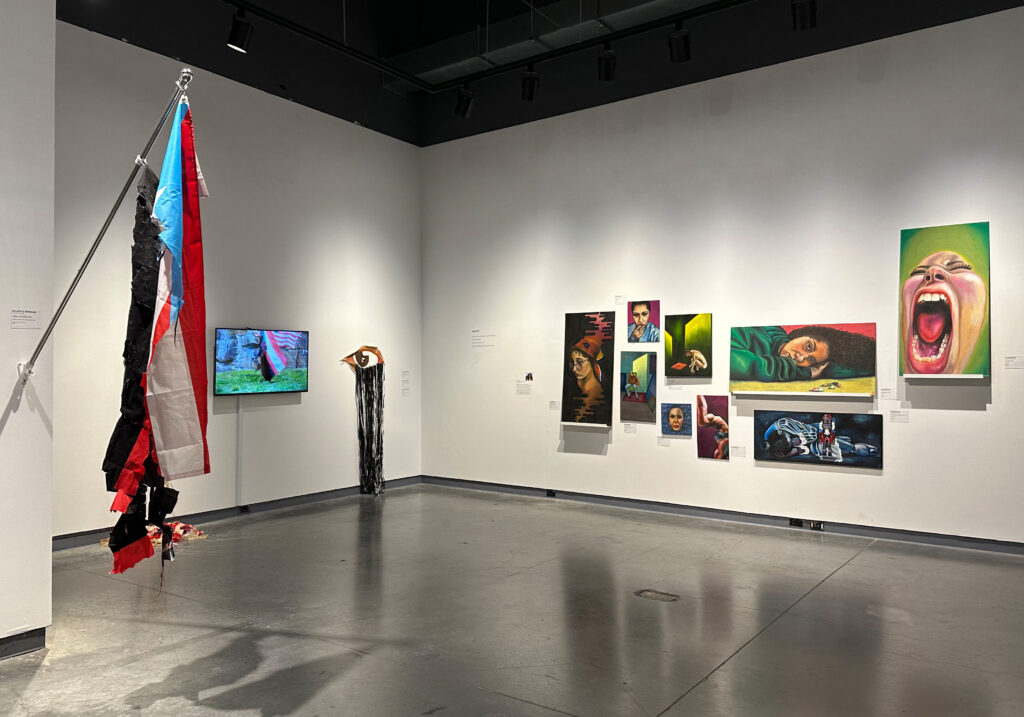
The members of this year’s Artist-in-Residence Cohort (ARC) at The Delaware Contemporary, Mo Berrouet, E.Lizé, and Celeste M. Rodriguez, each explored an element of the self for their culminating exhibition, Self, Realized.

This exhibition was curated by Amber M. Chacana, the first ARC curator-in-residence, and closes on 8/30/26.

Paintings by E. Lizé

E. Lizé’s series is titled Familial World.

E.Lizé is a musical artist and trained visual artist, who paints portraits and scenes dedicated to the Black experience. E.Lizé’s goal is to bridge the gap between predecessors and successors in order to remain a catalyst in preserving Black culture and Black history. E.Lizé is dedicated to archiving and preserving cultural and artistic history. She has a strong interest in tangible history and what it means to inherit it.

Inspired by the women who raised her, E.Lizé created these portraits as a way to honor their legacies and their lives (so far). In doing so, she created a personal archive, marked by her own perspective and care for her family.

Paintings by Mo Berrouet

Mo Berrouet‘s series of work is titled Emotional World.

From the museum:

Mo Berrouet is a visual artist based in Philadelphia, Pennsylvania with a BFA from West Chester University. Her work explores themes of mental and physical health, personal narrative, and the complexities of the human experience, expressed through a variety of mediums including painting, sculpture, ceramics, and photography.

Berrouet delves into the world of her emotions and how they exist within her body, and how her body exists in relation to her emotions. While her subject matter is personal, the emotions and feelings within them resonate with others. For Berrouet, our collective human experiences inspire her.

Work by Celeste M. Rodriguez

Celeste M. Rodriguez chose Cultural World for this body of work.

From the museum:

Celeste M. Rodriguez is a Puerto Rican-American artist born and raised in Camden, NJ. She received her B.A. in Painting from Rutgers University-Camden. Her work examines the complex relationship between Puerto Rico and the United States through visual storytelling, addressing themes of colonialism, cultural erasure, and resilience. Utilizing video, painting, drawing, sculpture, and collage. She confronts exploitation while honoring Puerto Rican strength. She views art as personal and political, and through her art, reimagines a future for Puerto Rico rooted in dignity and self-determination.

Aug 262026
 

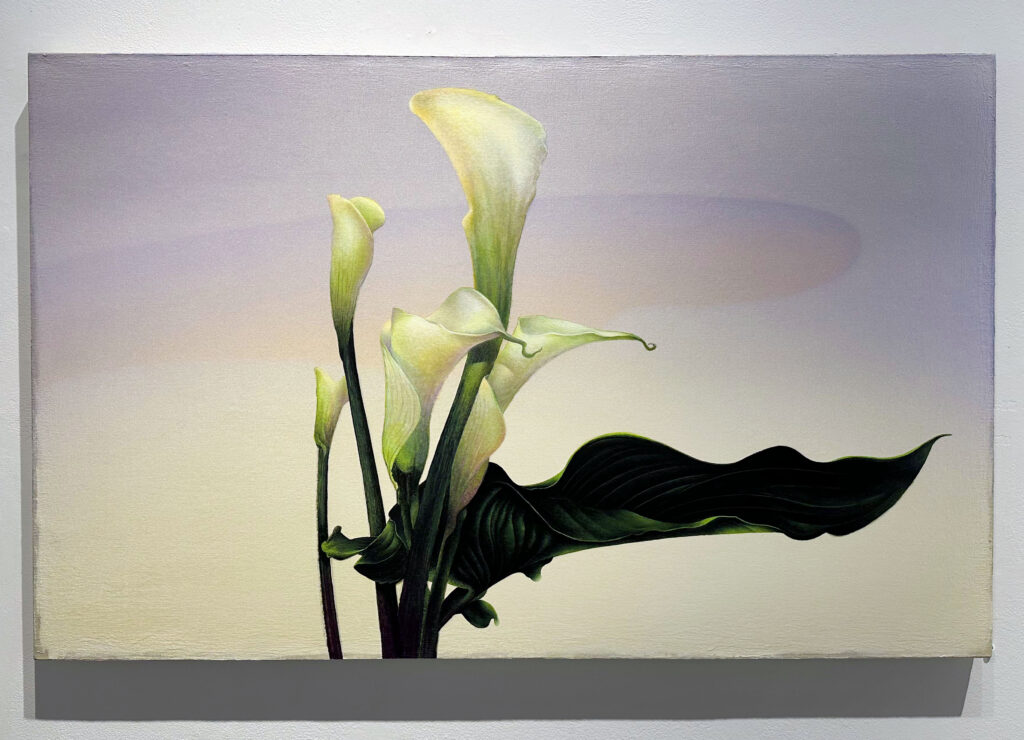
“Calla Lilly Cloud”, 2024, Acrylic and mediums on stretched linen support

In John Breakey‘s paintings for Passing Each Other, at The Delaware Contemporary, he uses flowers and skies to explore the passing of time.

His statement about the work:

Foreground flowers and background sky move at their own pace and span of life.

Together, composed for specific periods within the day, combined to express captured growth and deliberate movement.

A cloud’s soft color shifts throughout time; they can’t seem to sit still.

And what about the flower? Each blossom evolves, invisibly slow. By days, but finite.

Flowers being what they are, fall.
Clouds, how quickly they can pass.

Like the years, the more one has.
This is my current work; a series that mixes different forms of time.

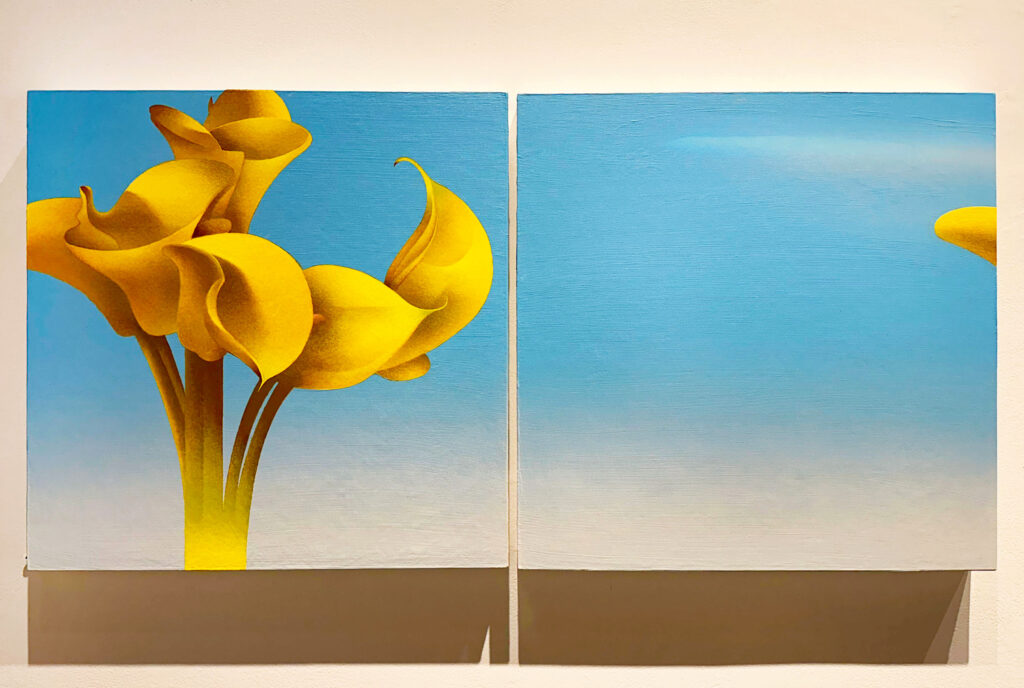
In the work above, Yellow Calla Lillies (2026) he reorders the panels to explore these ideas even further.

He says this about the painting:

I have an engraving by Aki Kuroda in the studio that speaks quietly to me: Flower X, 2004. Simplicity and grace packed into eight by ten inches. It served as a challenge to make this rendition of lillies more simple. Not graphic, not hard edged like Kuroda’s work but a new version of the work to the immediate right.

There was a deliberate choice to flip the left and right panels: these works are about time.

Two kinds.
Faster as the clouds pass.
Slower; a flower’s young green pigments before moving to dark.

Reordering the panels was my way of asking if moments are what we think they are.
Is how we account for time spent as linear as a best guess recall or something else?

This exhibition closes 8/30/26.

Aug 062026
 

Leonard A. Harmon, “Untitled”, c.1980s, Oil on masonite

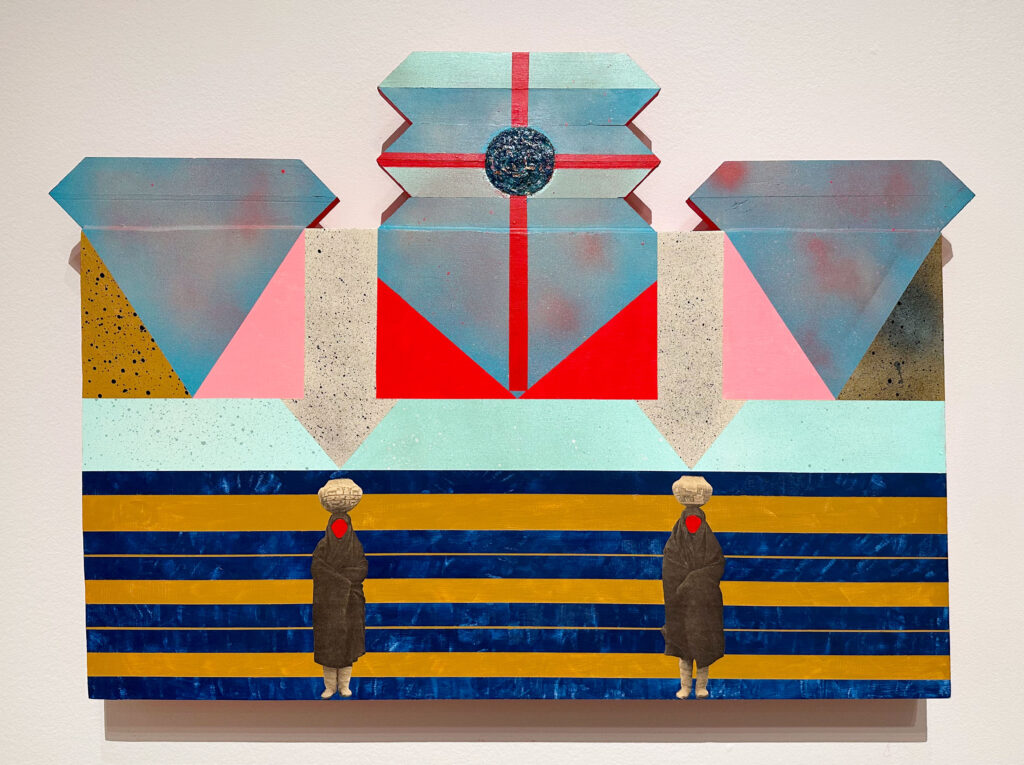
Leonard D. Harmon, “Last Copper Moon”, 2025, Acrylic, spray paint, oxidized copper shavings, paper on wood panel

Leonard D. Harmon, “Last Copper Moon”, 2025 (detail)

Delaware Art Museum‘s Living Indigenous showcases and celebrates Indigenous communities and artists in multiple locations in the museum. The exhibition is part of the museum’s programming for the 250th anniversary of the United States.

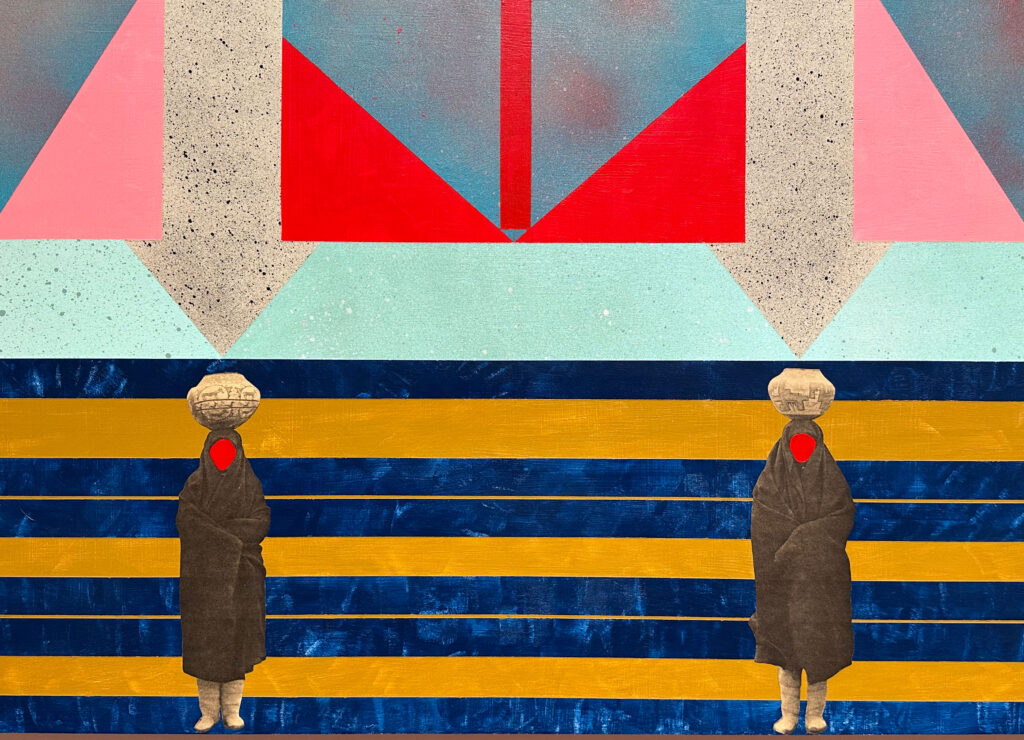
Developed in partnership with the Nanticoke Indian Museum, one room dedicated to works created by Indigenous artists includes paintings by Leonard A. Harmon and his nephew, Leonard D. Harmon.

From the museum and artist about Last Copper Moon (pictured above):

Leonard D. Harmon notes the rich artistic legacy that precedes him. He explains, “I draw inspiration from my ancestors to infuse a modern twist into traditional arts.” This painting references the architectural forms his uncle, Leonard A. Harmon, was creating in the 1980s. A copper moon, or total lunar eclipse, is a sacred Indigenous occurrence, and the images Harmon includes refer to associated rituals.

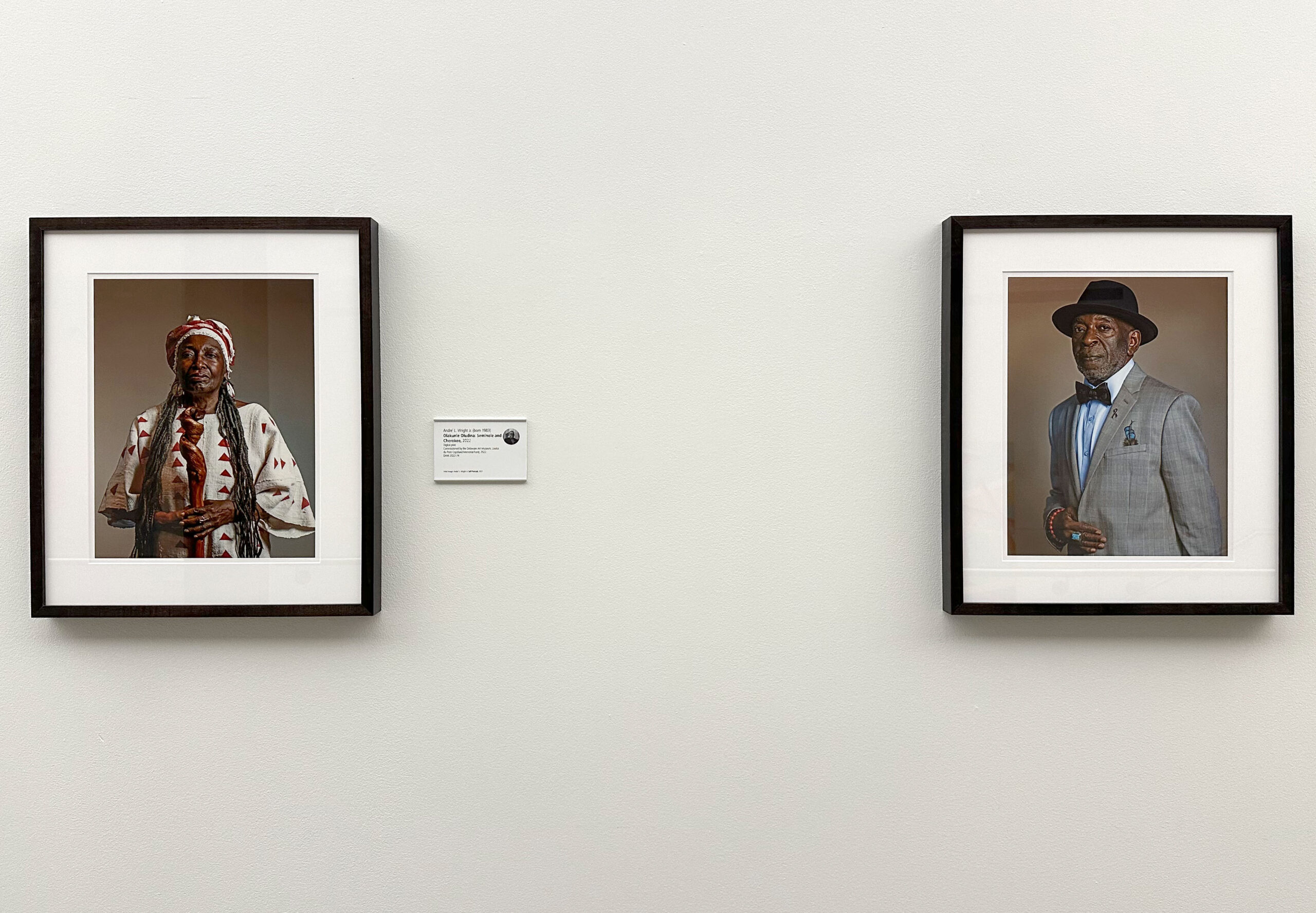
The exhibition continues upstairs with two different series of portraits of members of Delaware’s Indigenous communities– Will Wilson‘s Critical Indigenous Photographic Exchange (CIPX) and Andre’ L. Wright, Jr.’s Indigenous Faces of Wilmington. In 2022 the museum invited Wilson to continue his CIPX project in Delaware and facilitated a photoshoot of citizens of the Lenape Indian Tribe of Delaware (The Original People) and the Nanticoke Indian Tribe (The Tidewater People). That same year the museum also commissioned Andre’ L. Wright, Jr. to create a project showcasing diverse Wilmingtonians, two of which are pictured below.

Two portraits by Andre’ L. Wright, Jr. from his series “Indigenous Faces of Wilmington”

Living Indigenous is on view until 8/23/26 and the museum is free to visit every Thursday from 4-8pm.

Jul 222026
 

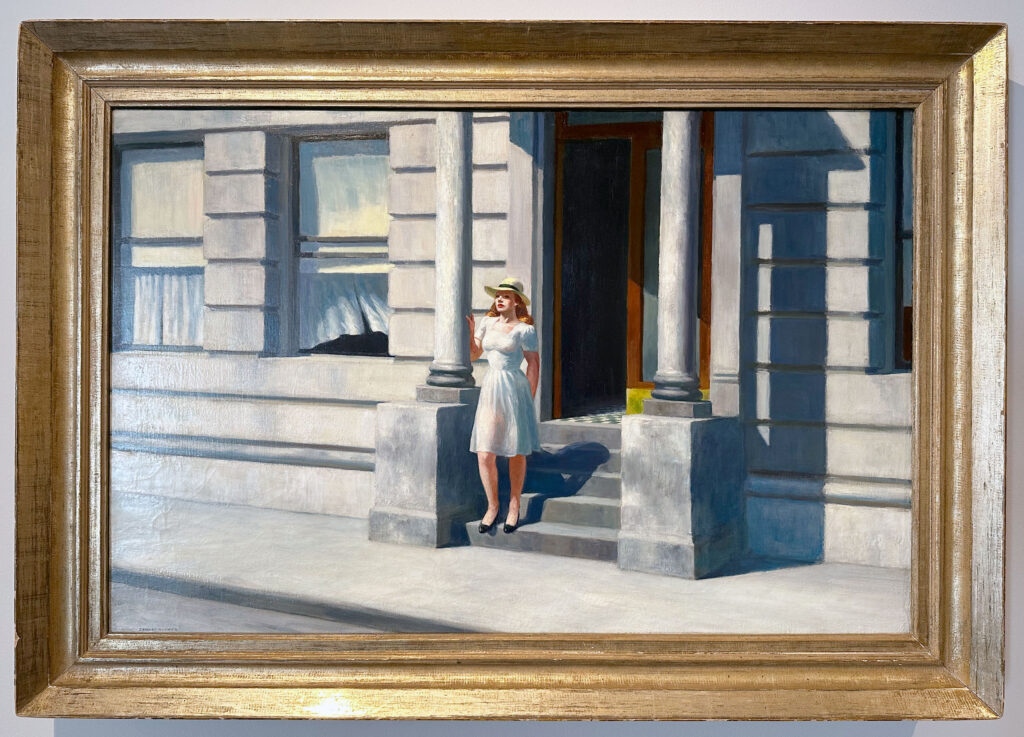
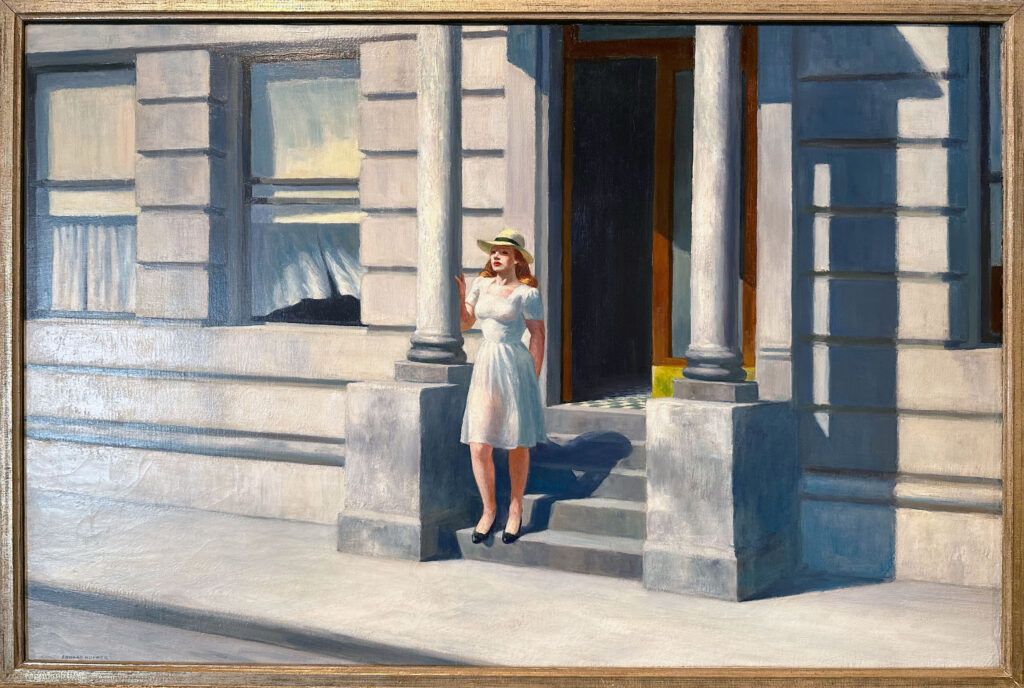
American artist Edward Hopper was born today, July 22nd, in 1882. He created numerous portraits of people in New York City, including the one pictured above, Summertime, painted in 1943.  It is currently on view at the Delaware Art Museum.

Jul 172026
 

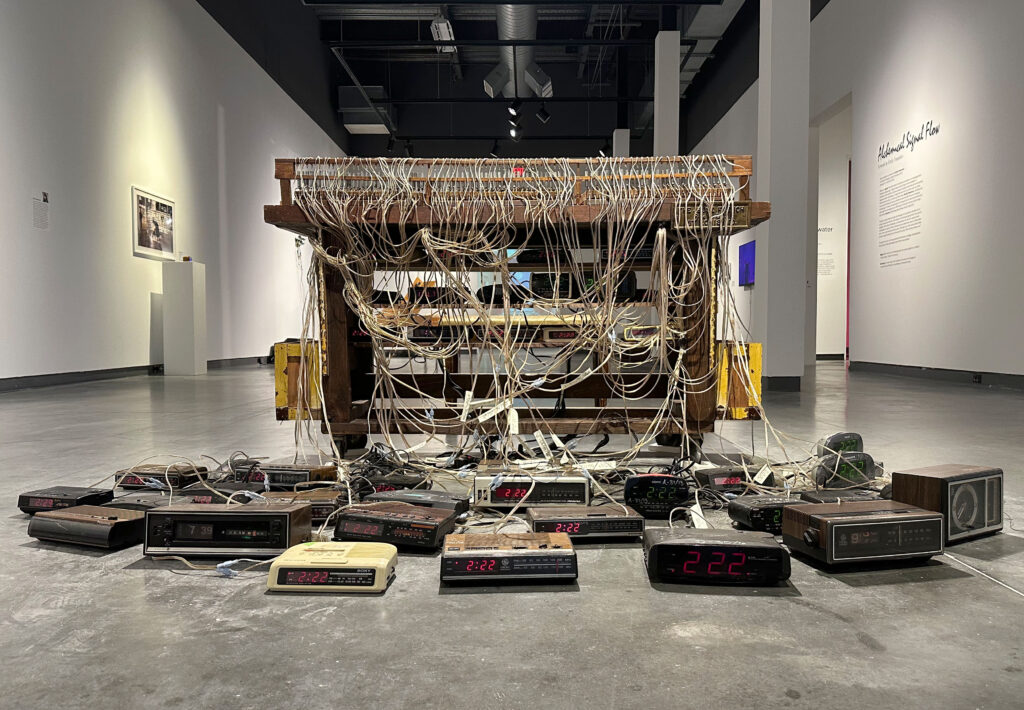
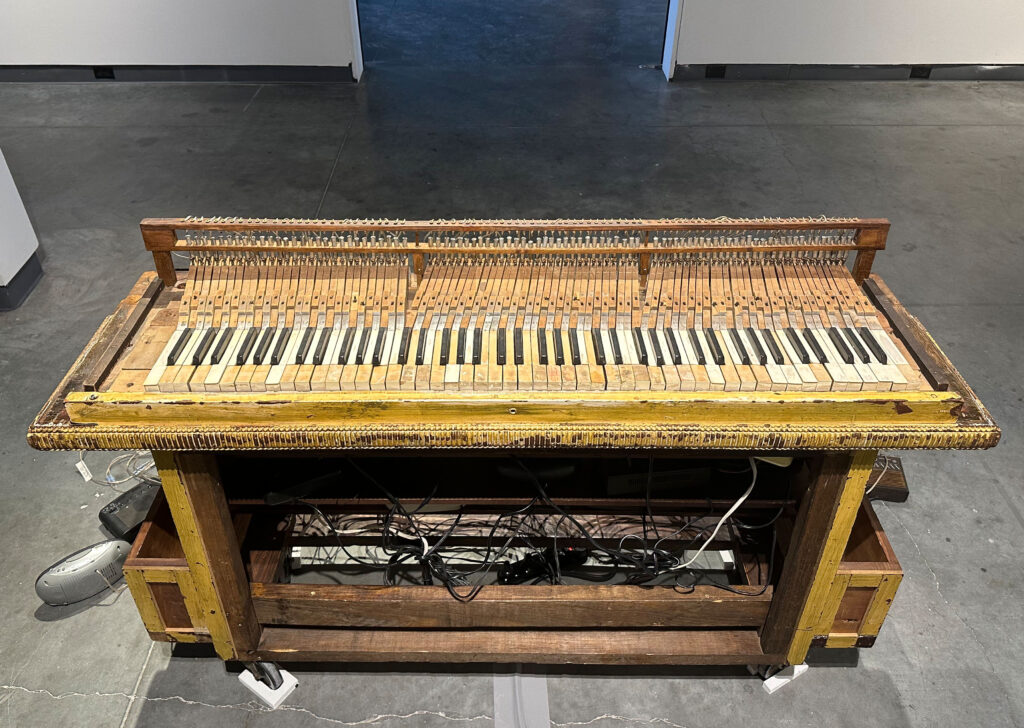
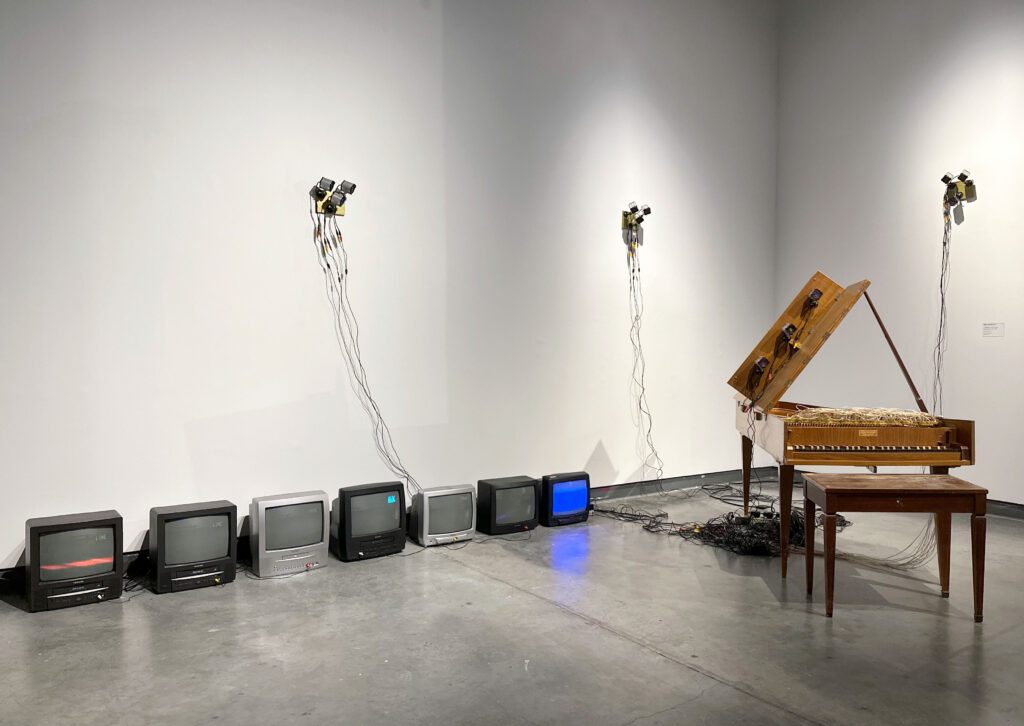
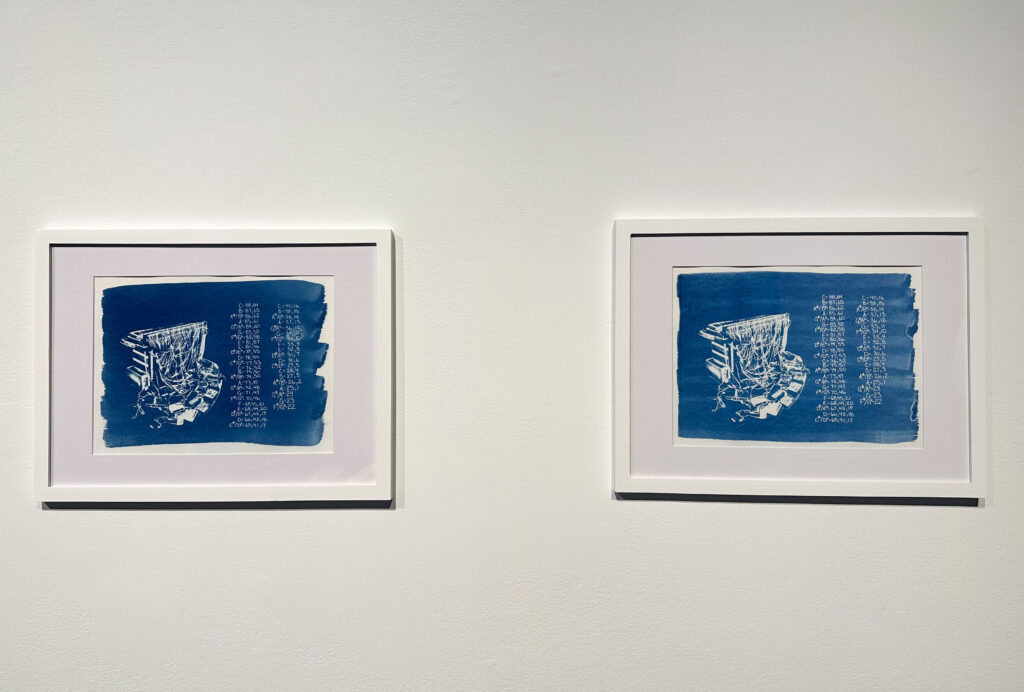
Old televisions and clock radios are given a second life in the interactive sculptures in Emily Francisco‘s exhibition, Alchemical Signal Flow at The Delaware Contemporary. The exhibition also includes videos and documentation of some of Francisco’s other projects, and a few cyanotype prints.

From the museum:

What is a signal? We often think of cell phone reception, or a message sent through a digital app. A signal means many things in this exhibition, it references the transfer of physical data and digital data (ones and zeroes) that happens within technology. A signal can also be social, like how you dress, what brands you buy, or what you throw away. Emily Francisco combines old and new technology to help us rethink how we live with new and changing technology. To many, the mechanics of a harpsichord (a keyboard instrument) and organ are as magical as an MP3 player. Francisco embraces that magic and makes alchemy of blending old and new, low and high tech.

Francisco uses cheap everyday technology and discarded, obsolete (or no longer produced) devices. By doing so, she disrupts signal flows from user to speaker. This action challenges our expectation of call-and-respond and challenges our sense of time. Someone once owed every piece of discarded tech. One could have even been yours. She asks us to think about what these personal objects mean to us at the end of the day. What do they mean to us?

Through her work, she brings together the memory, nostalgia, and aspiration these objects hold, attempting to give them new purpose.

This exhibition closes 8/2/26.

Jul 092026
 

New Deal Posters

Willie Cole, “Rolanda”, November 5, 1978, Pastel on brown paper bag. This work was created while Cole was a CETA employee in Delaware

Photographs from the 1975 CETA-funded project “CITYSIGHTS/CITYSOUNDS” in Wilmington

Dorothea Lange, “Migrant Mother, Nipomo, CA”, 1936

Clockwise from top left: William Davidson White, “Children in the Tree”,1934; Michael J. Gallagher, “A Man’s Job”, c.1933-1934; Philip N. Yates, “Broken Nets”, 1934; Walter Willoughby, “Winter Landscape”, c. 1933-1934

Helen Farr Sloan, “W.P.A. Theater”c.1935, Oil on board. It depicts a Federal Theater production during the Depression in NYC’s Washington Square Park. These productions were often free or heavily discounted.

At a time when government arts funding and jobs programs are needed more than ever, Citizen Artist at Delaware Art Museum reminds visitors of the positive and long lasting impact of two past initiatives- The New Deal in the 1930s and 1940s, and the Comprehensive Employment and Training Act of 1973 (CETA). Featuring artwork created during these both of these time periods, the exhibition also highlights the important contributions made by artists in their communities.

From the museum about the exhibition:

Citizen Artist highlights diverse artists working for America during 1930s and 1940s Depression-era programs and federally funded initiatives of the 1970s. The New Deal and the Comprehensive Employment and Training Act were catalysts in Delaware and across the nation as economic relief programs amplified the arts, creating new possibilities for creative employment. This exhibition centers artists as historians, storytellers, and visionaries during the Semiquincentennial.

Through the Comprehensive Employment and Training Act of 1973 (CETA), the Department of Labor supported a nation’s worth of art programs on a scale not seen since the conclusion of the New Deal in 1943. Those New Deal artists that outlived the Federal Art Project never forgot the significance of their work for the public, and they took that knowledge to the classrooms and administrative offices where they carried out the rest of their careers. CETA was designed as a jobs program, not an arts program, but Title VI of the legislation funded opportunities for the cyclically unemployed —artists—in public service roles. When CETA arrived in the 1970s, artists and their allies across the nation quickly understood its potential in the context of the legacy of the New Deal.

Citizen Artist is a story about reciprocal support between artists and communities. The exhibition celebrates artists who found lasting success through their participation in fine art programs like the Public Works of Art Project and CETA-funded contemporary art spaces. We also honor the public service work undertaken by tens of thousands of New Deal and CETA-funded artists, especially the painters, puppeteers, and photographers who produced educational resources and performances for children across the nation. Citizen Artist looks back at the intertwined histories of CETA and the New Deal to elevate how artists can and do support the public. By working in graphics offices, writers’ programs, and darkrooms, New Deal and CETA artists created and transformed the physical and cultural infrastructure of the United States.

Included within Citizen Artist is Citizen Photographer, an exhibition of images created by Delaware photographers for the U.S.’s 250th anniversary.

From the museum about Citizen Photographer:

What does it mean to be a Delawarean at the nation’s 250th anniversary? The Delaware Art Museum, collaborating with Wilmington’s Teen Warehouse, the Smyrna Opera House, and the Lewes Public Library, invited residents across the state to engage in civic reflection and contribute to shaping public perceptions of identity through photography. Citizen Photographer is inspired by the federally funded initiatives of the past, such as the Farm Security Administration and the Comprehensive Employment and Training Act. These were times when documenting the nation and the many people who called it home was an earnest endeavor, the means to understand and appreciate our individuality, humanity, and common needs.

At the United States 250th anniversary in 2026, this project offers multiple ways for Delawareans to engage as learners, artists, and citizens contributing to the state’s shared story. Photographers Morris Brown II, B. Proud, and Andre’ Wright, Jr. led workshops across the state and selected the 24 photographs on view. For Wright, Jr., Citizen Photographer is “about perspective, voices, and the stories people choose to tell about where they come from.” Proud reflects how local photographers “captured the many facets of Delaware, from its cities to its farmlands, from its people to its landscapes, revealing why the state truly lives up to one of its nicknames, ‘Small Wonder.'” Morris invites us to “take the time to treasure each photograph and to experience each Delaware love story on exhibit.”

This exhibition closes 7/19/26.


Jun 182026
 

Sonya Clark, “Whitewashed”, 2017, Sherwin-Williams house paint

Walking around the rooms of the Delaware Art Museum‘s contemporary collection you could almost miss Sonya Clark‘s Whitewashed. Painted onto one of the walls, her version of the U.S. flag uses only shades of white.

From the museum about the artist and the work:

Sonya Clark possesses the ability to deftly assemble works of art both beautiful in creation and weighted with content. Whitewashed is painted directly onto the gallery wall. Visually subtle, the work engages the viewer’s recollections of the United States flag. Whitewashed is made using three Sherwin-Williams house paint colors-Incredible White, Storyteller, and Natural Choice. The shades of white replace the red, white, and blue of the American symbol.

Clark has worked with the American flag, the Confederate flag, and the Confederate Flag of Truce throughout her career. In doing so, she addresses the physical makeup of these objects and the histories, experiences, and access these symbols uncover or veil.