

“I won’t let love destroy me again”, 2022, “Maybe I’m not so alone anymore”, 2023, “I wish i could erase the memories we made together”, 2021
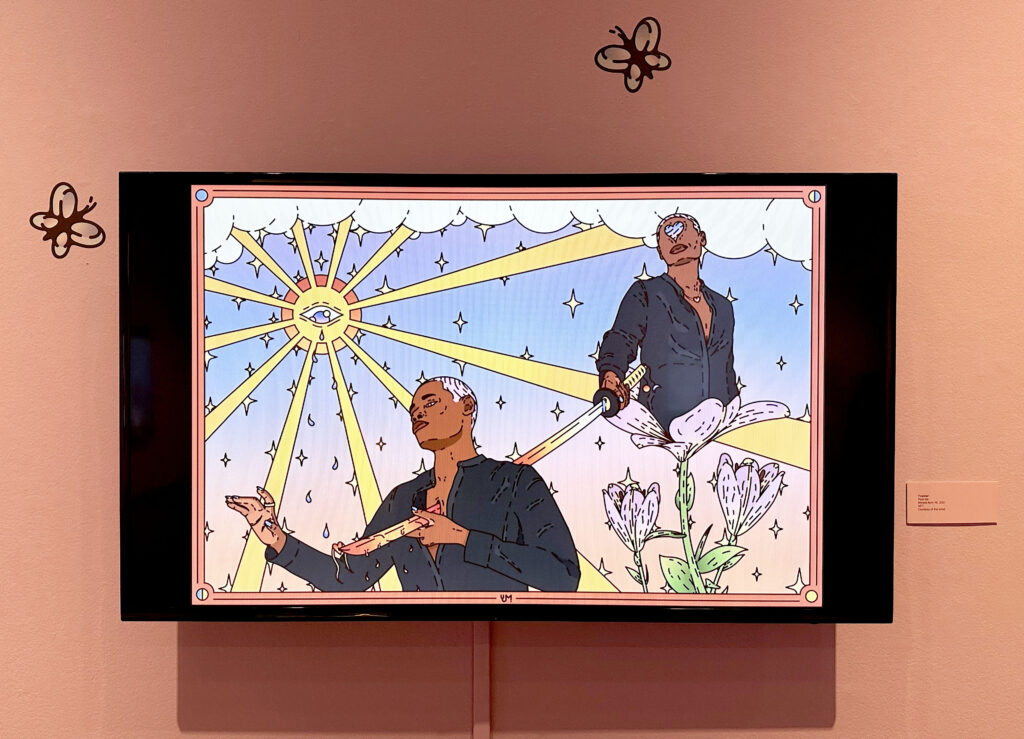
“Past life” 2021, NFT
Yosnier Miranda’s work uses digital media as a tool to create the very personal work on view. The works in the exhibition are NFTs (explained below).
The museum’s information on the artist and their work-
Yosnier Miranda is the first Generation Z (born after 1996) artist to be included in the Florida Prize exhibition. This generation is characterized by being digital natives, having grown up with the internet and social media as a part of daily life. They are comfortable using those technologies to establish a wide range of virtual relationships and to create or enhance technologies to establish a wide range of virtual relationships and to create or enhance identities in a world where surveillance of self and others is ubiquitous. Miranda was developing their artistic vision in the late 20-teens just as new technologies and platforms became available to help digital artists reach larger audiences and find markets for their work.
A significant catalyst that took place beginnings in 2017 was the emergence of NFTs and platforms that showcased them. NFTs (non-fungible tokens) are unique digital identifiers that cannot be copied. Embedded in a digital art file, an NFT is used to certify the file’s ownership and authenticity. With this technology, digital art, graphics, animations, and videos can be sold and collected like physical artworks. This has given digital artists new opportunities to support their careers and be productive. As NFTs have gained an audience and interest by art collectors, platforms such as OpenSea and SuperRare (on which Miranda is represented) have come online, offering a curated selection of digital artists for collectors to acquire, serving a role similar to that of a traditional art gallery.
Miranda produces their art exclusively in digital media from initial concepts to finished work. Instead of making preparatory sketches, they typically begin with writing notes that focus their thinking about the emotional tone and content they would like to express. Miranda considers their work to be therapeutic, allowing them to delve deeply into their most intimate and heartfelt emotions. Often these emotions involve personal trauma. Miranda feels that there is a certain beauty in the pain they experience, and revealing that in their work is a kind of healing.
Each of Miranda’s graphics presents a heroic figure which is a self-portrait or manifestation of some aspect of their identity. Set in an ethereal realm of pale light and clouds, the hero interacts with a complex array of symbolic forms, creating narratives which are at once both esoteric and universal in their meaning. Miranda’s symbolic language comprises elements of their own invention and iconography drawn from age-old spiritual traditions. Hearts burning, arrows and swords piercing flesh, blood and tears falling, butterflies and flowers proliferating, and providential eyes watching over all are only a few of the symbols the artist uses to express ideas of suffering, sacrifice, redemption, and resurrection. Each work reflects an episode in the hero’s journey and invites us to think of our own quest for recovery and fulfillment.