Oct 162026
 

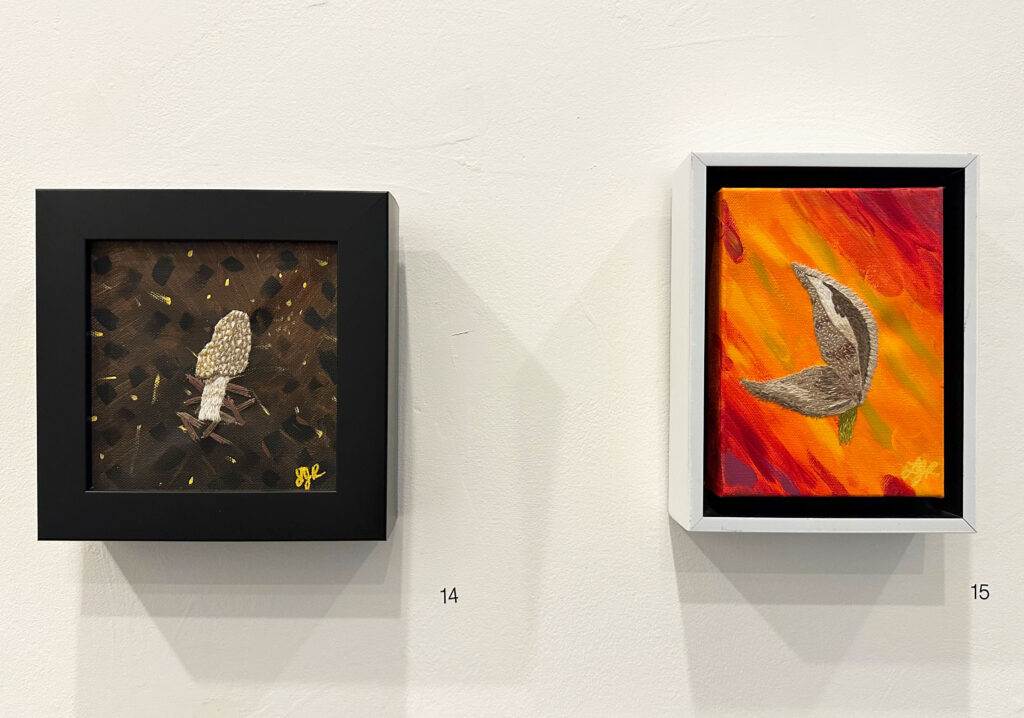
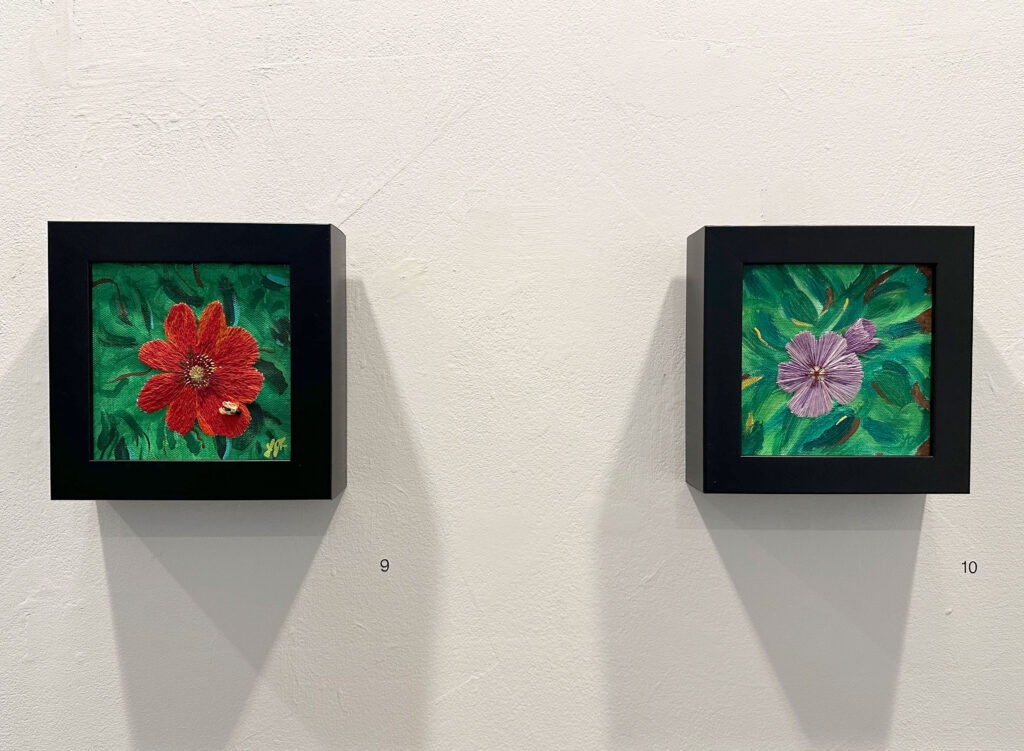
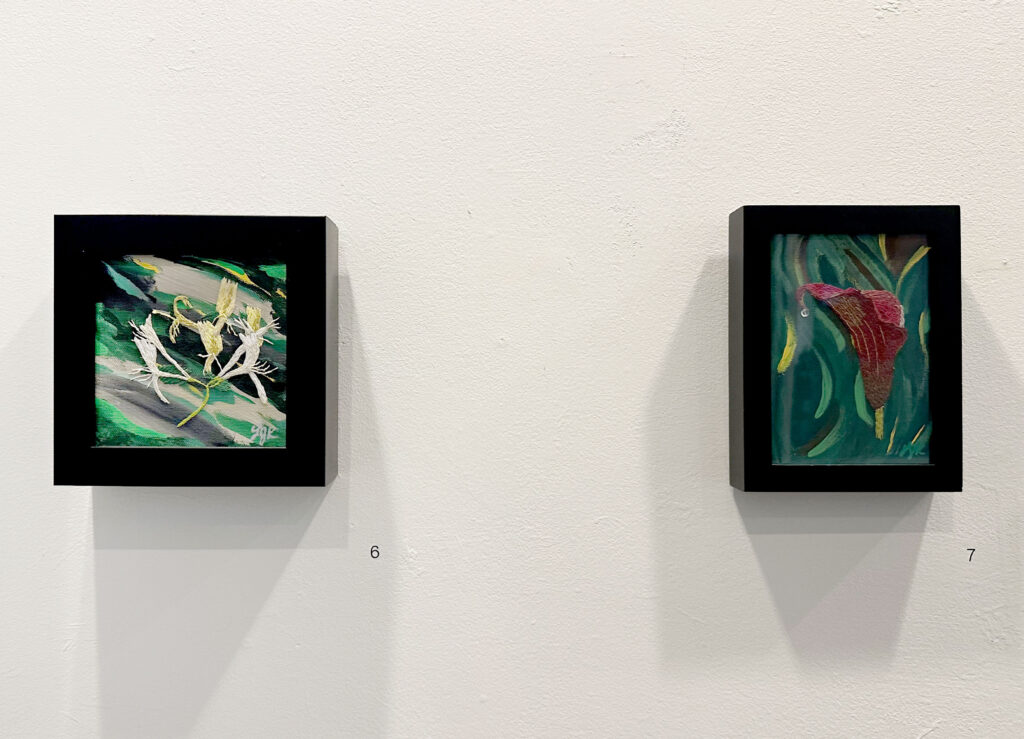
Larissa Ranbom‘s small works, on view at The Delaware Contemporary for We Can Use The Rain, encourage a closer look. The embroidered paintings are also a reminder to take time to look more closely at the natural world around us.

From the museum:

We Can Use The Rain is an exploration of growth through the year, from the redbuds in early spring through the vibrance of summer to the geometry of autumn milkweed pods and cacti grown indoors in the winter. It’s not only carefully tended garden flowers that are sustained by rain, but also the honeysuckle and dogwood that otherwise thrive with little attention. While they may not be mobile, they still change rapidly, taking the spotlight for a while and then fading to be supplanted by the next to bloom.

The flora (and fungus) on display were found in and around Wilmington – whether in a meticulously curated botanical garden or greenhouse, greeting passersby from a front yard, in an out of the way spot in a park, or growing enthusiastically in a neglected patch by the highway. The viewer is encouraged to consider how what grows around us reflects the communities we cultivate. Stitch by stitch, these works closely examine plant life, remembering that no matter where we are, we can all use the rain.

This exhibition is on view until 10/31/26.
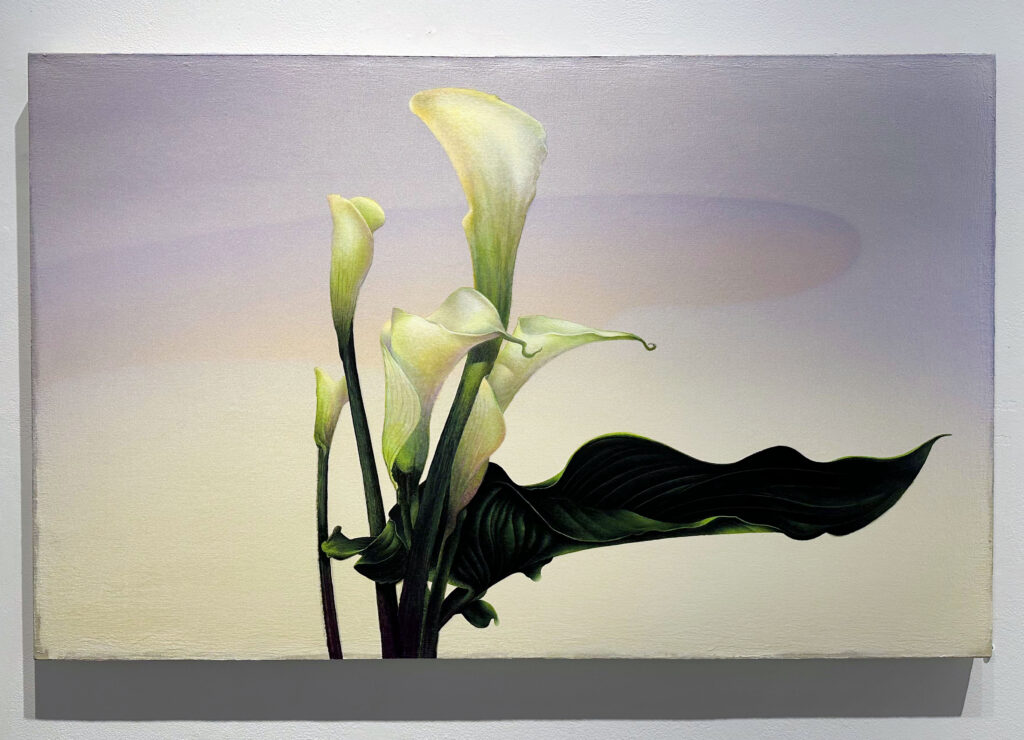
Aug 262026
 

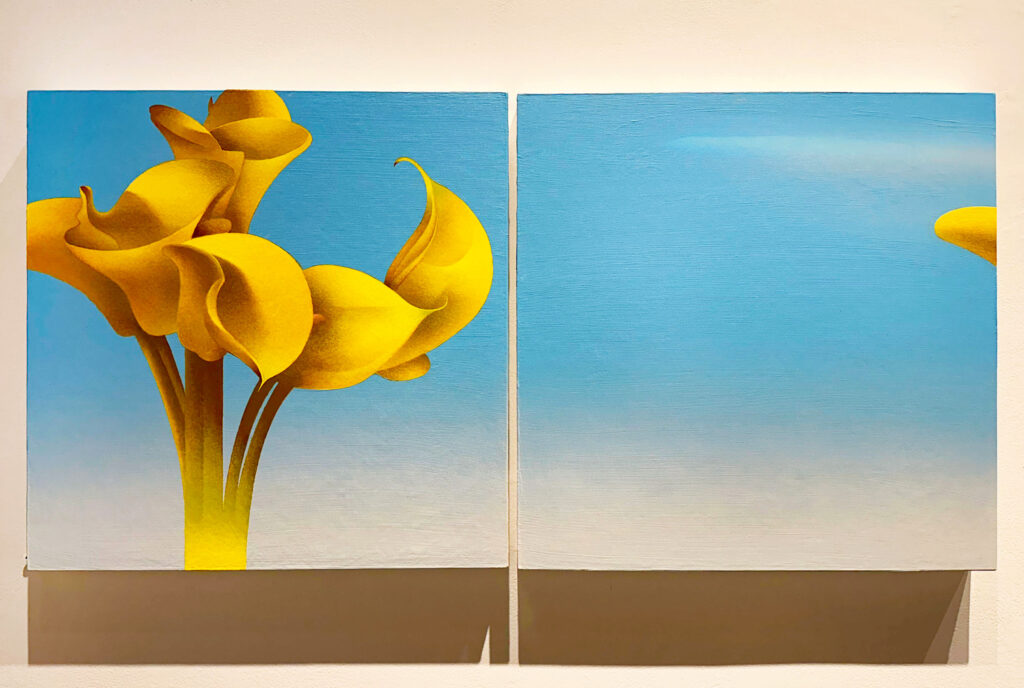
“Calla Lilly Cloud”, 2024, Acrylic and mediums on stretched linen support

In John Breakey‘s paintings for Passing Each Other, at The Delaware Contemporary, he uses flowers and skies to explore the passing of time.

His statement about the work:

Foreground flowers and background sky move at their own pace and span of life.

Together, composed for specific periods within the day, combined to express captured growth and deliberate movement.

A cloud’s soft color shifts throughout time; they can’t seem to sit still.

And what about the flower? Each blossom evolves, invisibly slow. By days, but finite.

Flowers being what they are, fall.
Clouds, how quickly they can pass.

Like the years, the more one has.
This is my current work; a series that mixes different forms of time.

In the work above, Yellow Calla Lillies (2026) he reorders the panels to explore these ideas even further.

He says this about the painting:

I have an engraving by Aki Kuroda in the studio that speaks quietly to me: Flower X, 2004. Simplicity and grace packed into eight by ten inches. It served as a challenge to make this rendition of lillies more simple. Not graphic, not hard edged like Kuroda’s work but a new version of the work to the immediate right.

There was a deliberate choice to flip the left and right panels: these works are about time.

Two kinds.
Faster as the clouds pass.
Slower; a flower’s young green pigments before moving to dark.

Reordering the panels was my way of asking if moments are what we think they are.
Is how we account for time spent as linear as a best guess recall or something else?

This exhibition closes 8/30/26.

Aug 062026
 

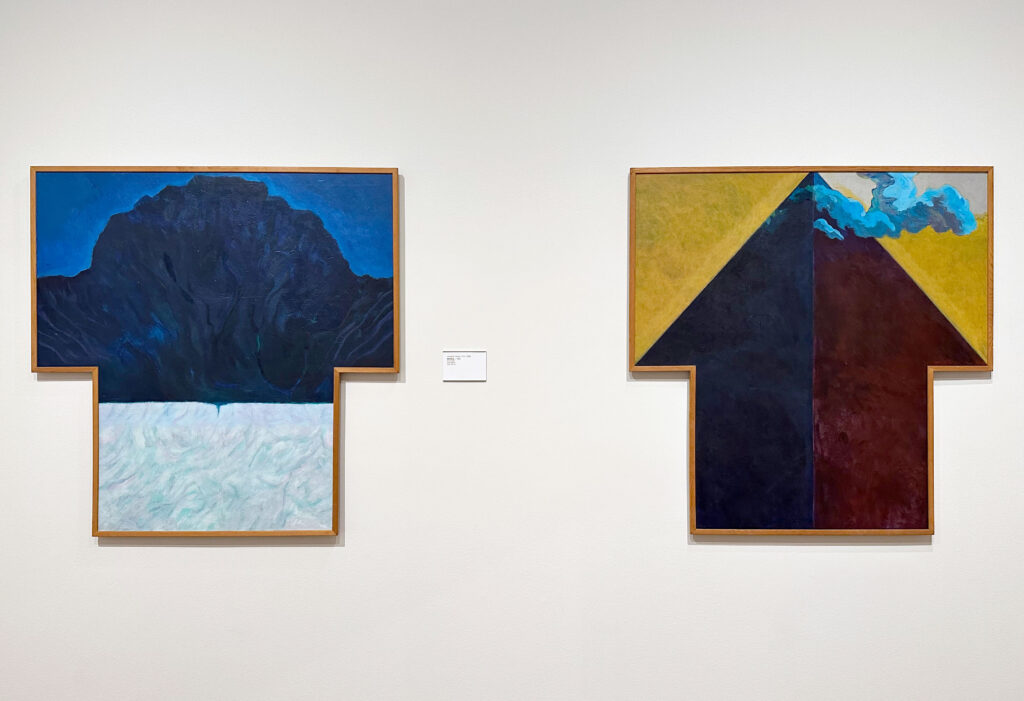
Leonard A. Harmon, “Untitled”, c.1980s, Oil on masonite

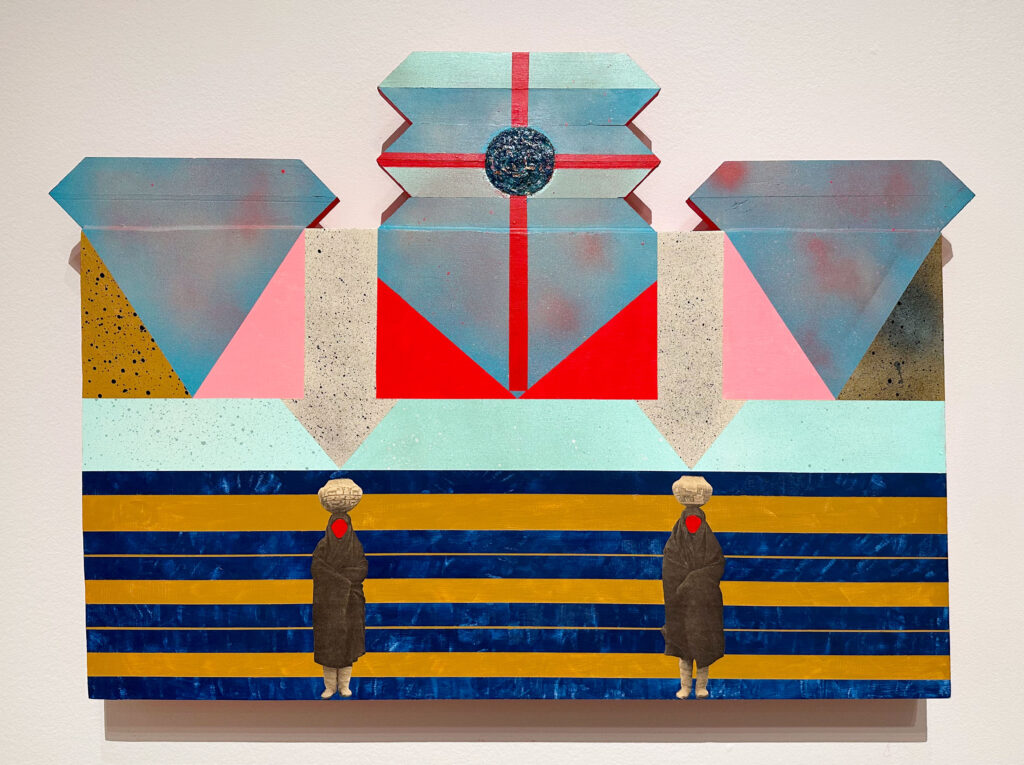
Leonard D. Harmon, “Last Copper Moon”, 2025, Acrylic, spray paint, oxidized copper shavings, paper on wood panel

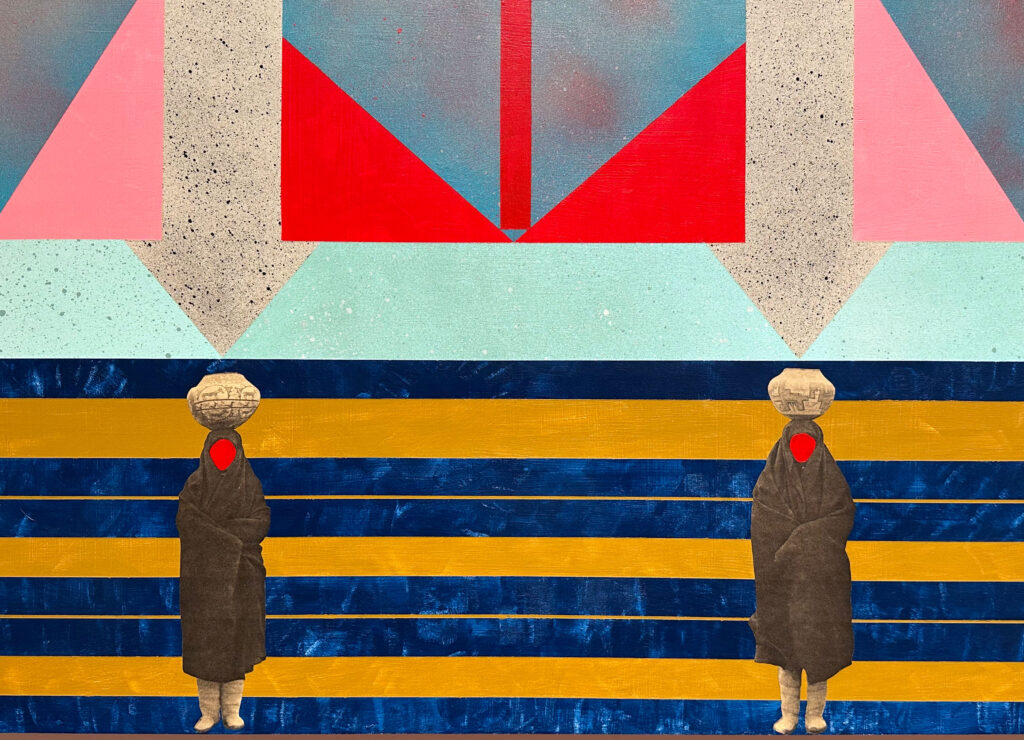
Leonard D. Harmon, “Last Copper Moon”, 2025 (detail)

Delaware Art Museum‘s Living Indigenous showcases and celebrates Indigenous communities and artists in multiple locations in the museum. The exhibition is part of the museum’s programming for the 250th anniversary of the United States.

Developed in partnership with the Nanticoke Indian Museum, one room dedicated to works created by Indigenous artists includes paintings by Leonard A. Harmon and his nephew, Leonard D. Harmon.

From the museum and artist about Last Copper Moon (pictured above):

Leonard D. Harmon notes the rich artistic legacy that precedes him. He explains, “I draw inspiration from my ancestors to infuse a modern twist into traditional arts.” This painting references the architectural forms his uncle, Leonard A. Harmon, was creating in the 1980s. A copper moon, or total lunar eclipse, is a sacred Indigenous occurrence, and the images Harmon includes refer to associated rituals.

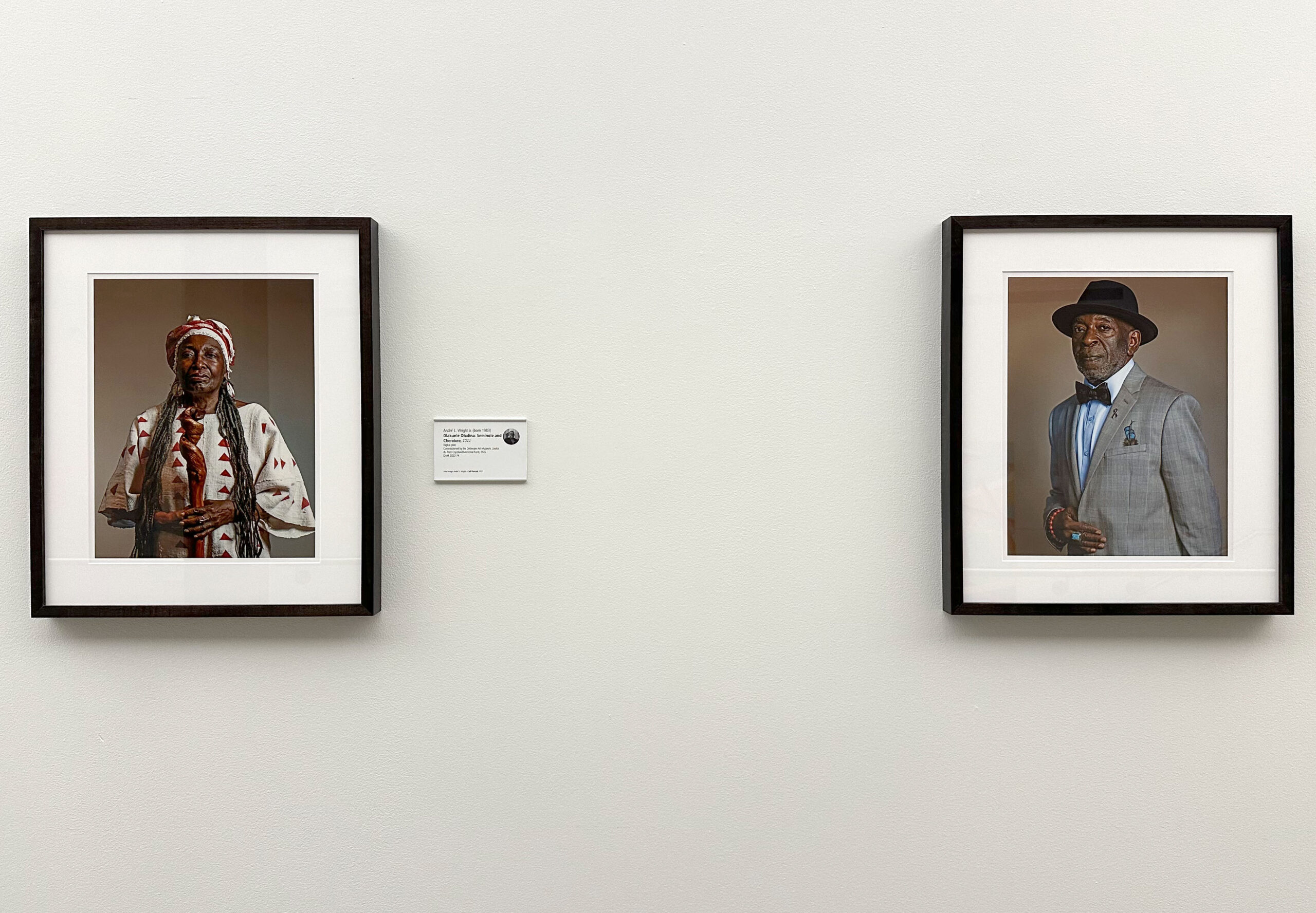
The exhibition continues upstairs with two different series of portraits of members of Delaware’s Indigenous communities– Will Wilson‘s Critical Indigenous Photographic Exchange (CIPX) and Andre’ L. Wright, Jr.’s Indigenous Faces of Wilmington. In 2022 the museum invited Wilson to continue his CIPX project in Delaware and facilitated a photoshoot of citizens of the Lenape Indian Tribe of Delaware (The Original People) and the Nanticoke Indian Tribe (The Tidewater People). That same year the museum also commissioned Andre’ L. Wright, Jr. to create a project showcasing diverse Wilmingtonians, two of which are pictured below.

Two portraits by Andre’ L. Wright, Jr. from his series “Indigenous Faces of Wilmington”

Living Indigenous is on view until 8/23/26 and the museum is free to visit every Thursday from 4-8pm.

Jan 172026
 

Todd Purse recently created this mural on the wall outside of local independent bookstore Huxley and Hiro‘s new location.

You can also find his work at Create Magic Studios, which he runs with his wife, Allison.