Dec 052020
 

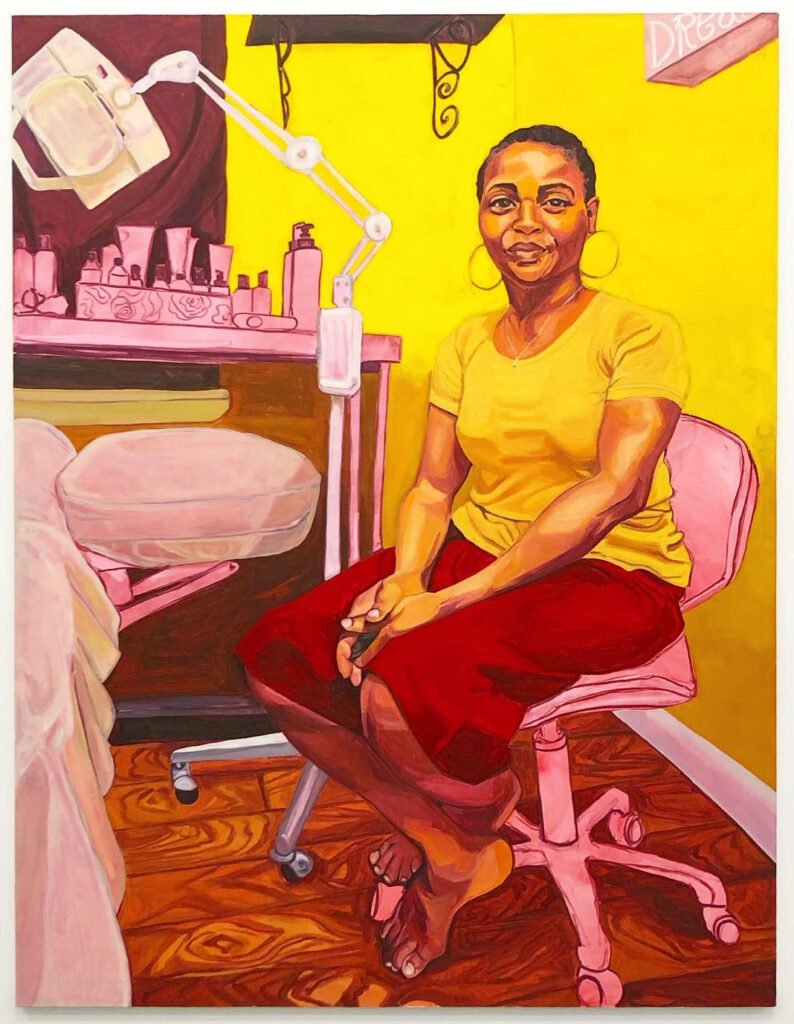
Shirley (Spa Boutique2go), 2018
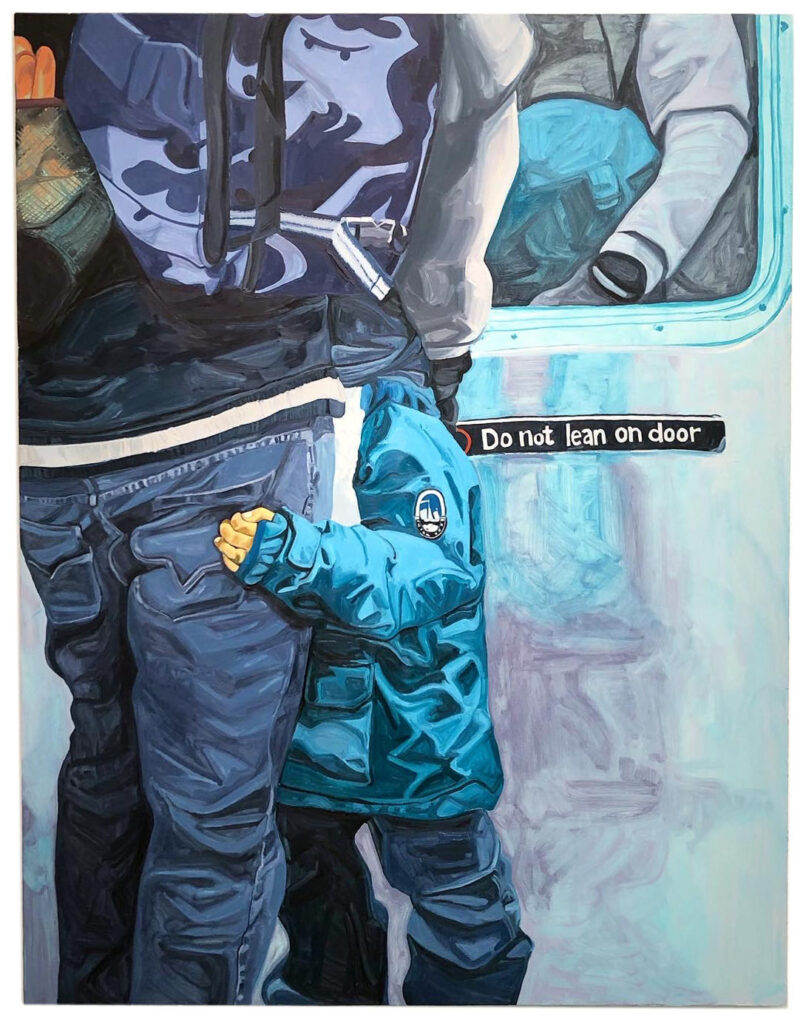
Lean, 2018
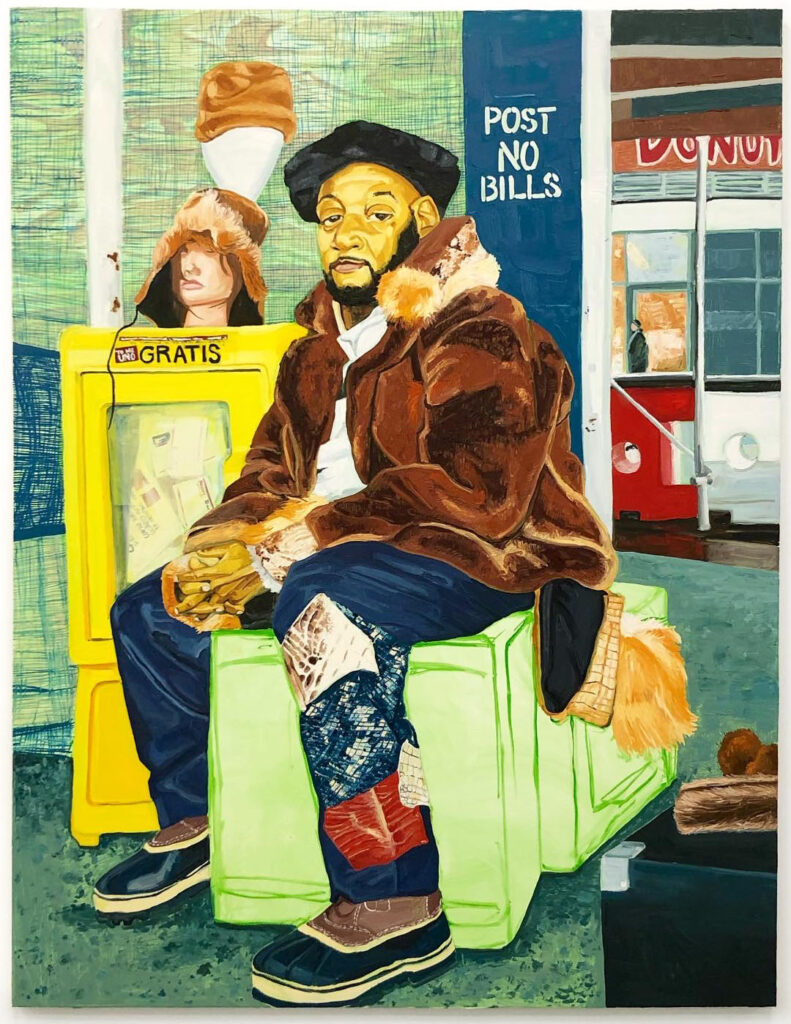
Charles, 2016
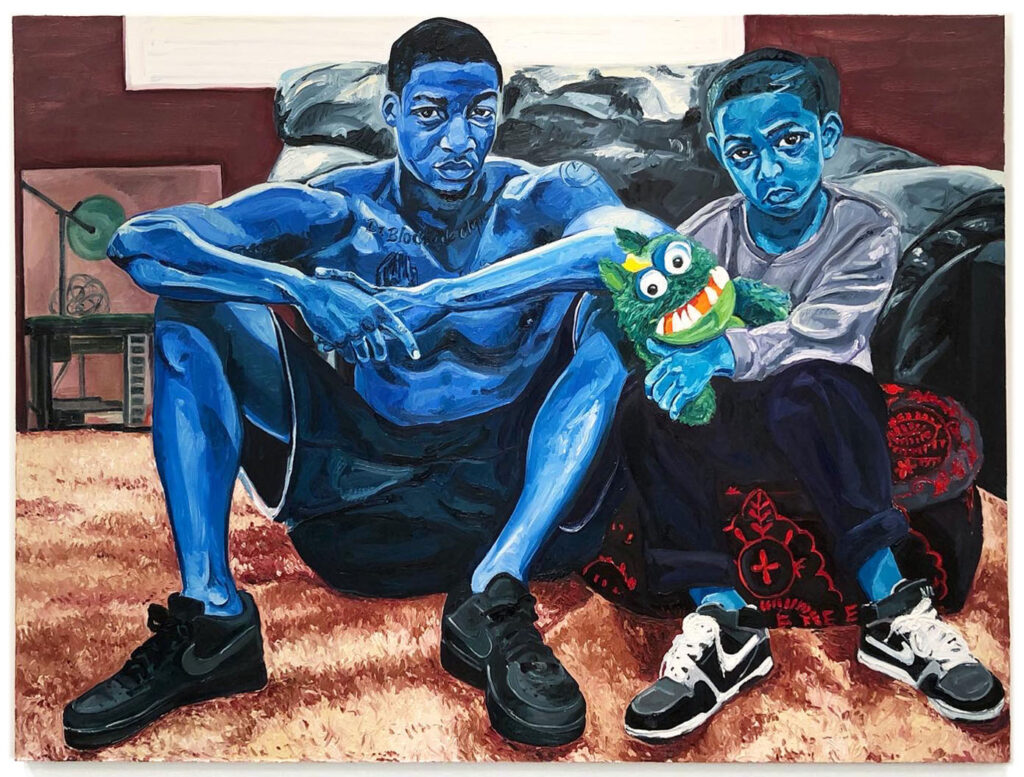
Miles and Jojo, 2015
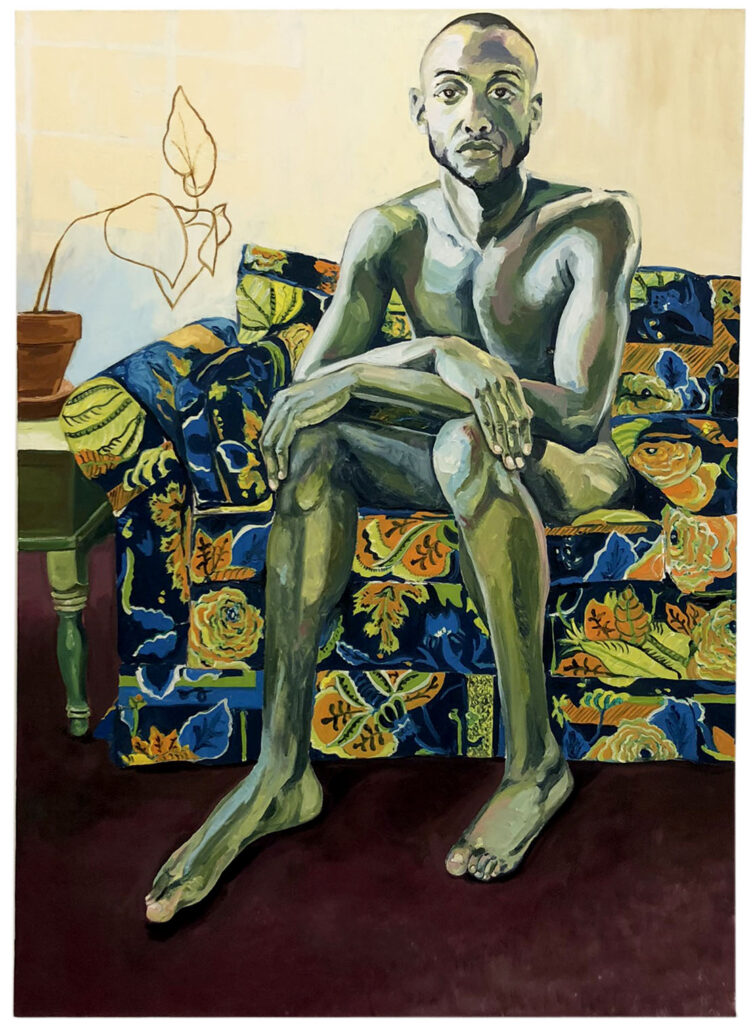
Jireh, 2013

Currently at the New Museum is Jordan Casteel: Within Reach, the artist’s first solo museum exhibition in New York City. It includes paintings from her series Visible Man (2013–14) and Nights in Harlem (2017), and recent portraits of her students at Rutgers University-Newark.

From the museum’s information page-

In her large-scale oil paintings, Casteel has developed a distinctive figurative language permeated by the presence of her subjects, who are typically captured in larger-than-life depictions that teem with domestic details and psychological insights.

Portraying people from communities in which the artist lives and works—including former classmates at Yale, where she earned an MFA; street vendors and neighbors near her home in Harlem; and her own students at Rutgers University-Newark in New Jersey—Casteel insists upon the ordinary, offering scenes with both the informality of a snapshot and the frontality of an official portrait. In these richly colorful works, Casteel draws upon ongoing conversations on portraiture that encompass race, gender, and subjectivity, connecting her practice to the legacy of artists like Alice Neel, Faith Ringgold, and Bob Thompson, among others. Casteel’s studies in anthropology and sociology also inform her works, which can often be read as a reflection on the presentation of the self in everyday life and as an investigation of the relationships that tie together intimacy and distance, familiarity and otherness.

Casteel’s subjects, who are frequently black men looking directly at the viewer, are self-possessed and casually posed, but, as they stare in the distance, they also seem to ponder questions about masculinity and class, belonging and displacement. In the exchange of gazes between the sitters, the artist, and the viewers, her paintings blur impulses and aspirations to compose a nuanced portrait of daily life in the US.

From her earliest series, Visible Man, Casteel has challenged conventional depictions of blackness while simultaneously reconfiguring stereotypes and expectations around femininity and desire. In Jiréh (2013), a student from the Yale School of Drama appears unclothed and in repose at home, gazing tranquilly at the viewer from a patterned couch. More than on any sense of erotic tension, the painting rests on a sense of empathy and quietness. In later works, Casteel’s encounters with her subjects are animated by a different sense of place: in Nights in Harlem, Casteel shifts her attention outside, to men and women who populate the streets of her neighborhood. Posed in their environments, these figures reflect the communal spaces and social relationships they inhabit.

Along with her depictions of life in Harlem, Casteel also explores scenarios in which anonymity and individuality seem to coexist. In her cropped “subway paintings”—one of which lends its title to the exhibition—she zooms in on the everyday gestures she observes on New York City trains. Even against the anonymous weight of strangers clasping cell phones and huddling near doorways, the body still remains legible, its identity concealed but its inner life nevertheless present. In these, as in many of her works, Casteel captures the sensory experience of life in the city, while conjuring the complex emotional landscape of her sitters.

This exhibition closes 1/3/21.


Mar 012019
 

Matvey Levenstein, LY, 2018

Currently at Kasmin Gallery are Matvey Levenstein’s paintings depicting scenes from his life in North Fork, Long Island. There’s a quiet, peaceful quality to the works, which begin with snapshots before they are turned into paintings. This exhibition closes Saturday 3/2/19.

Across the street at another of Kasmin Gallery’s Chelsea locations, and worth a visit, is an exhibition of some of Andy Warhol’s polaroid portraits.

Matvey Levenstein, Pink Moon, 2018

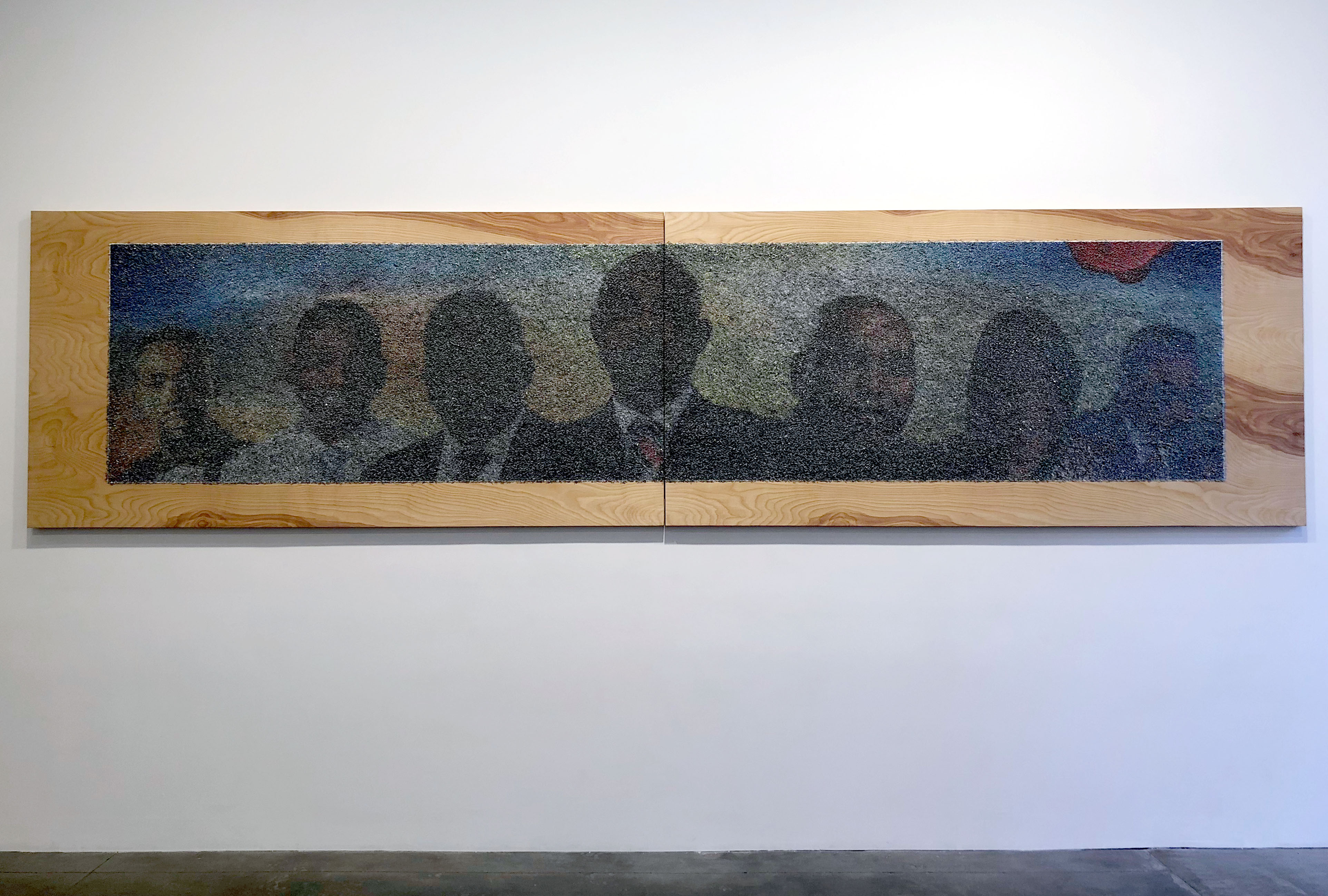
Susan Inglett Gallery is showing Slim… you don’t got the juice, an exhibition of work by Wilmer Wilson IV. His work with staples may seem familiar from its inclusion in the New Museum’s 2018 Triennial: Songs for Sabotage.

From the press release-

Slim… you don’t got the juice presents multidisciplinary departures from familiar modes of figurative representation, as they have evolved in the realm of photographic discourse. Wilmer Wilson IV has developed strategies of redaction and annotation in his work that begin to destabilize the norms of making and viewing portraiture through visual, material, and technical manipulation. An exploration into the complex renderings of individual subject-hood versus object-hood in portraiture, the artist has conceived of a stapled-surface-as-viewing-device that mediates image with material. The device is manifest in a series of staple works that almost fully shroud the photographic subjects beneath dense fields of metal fasteners. The austere, randomized application of the staples onto the surface of each portrait results in a resistance of visual penetration from many angles, complicating access to the underlying figures and deconstructing the voyeuristic inclinations of the viewer.

This exhibition closes 3/16/19.

Wilmer Wilson IV, Host, 2018


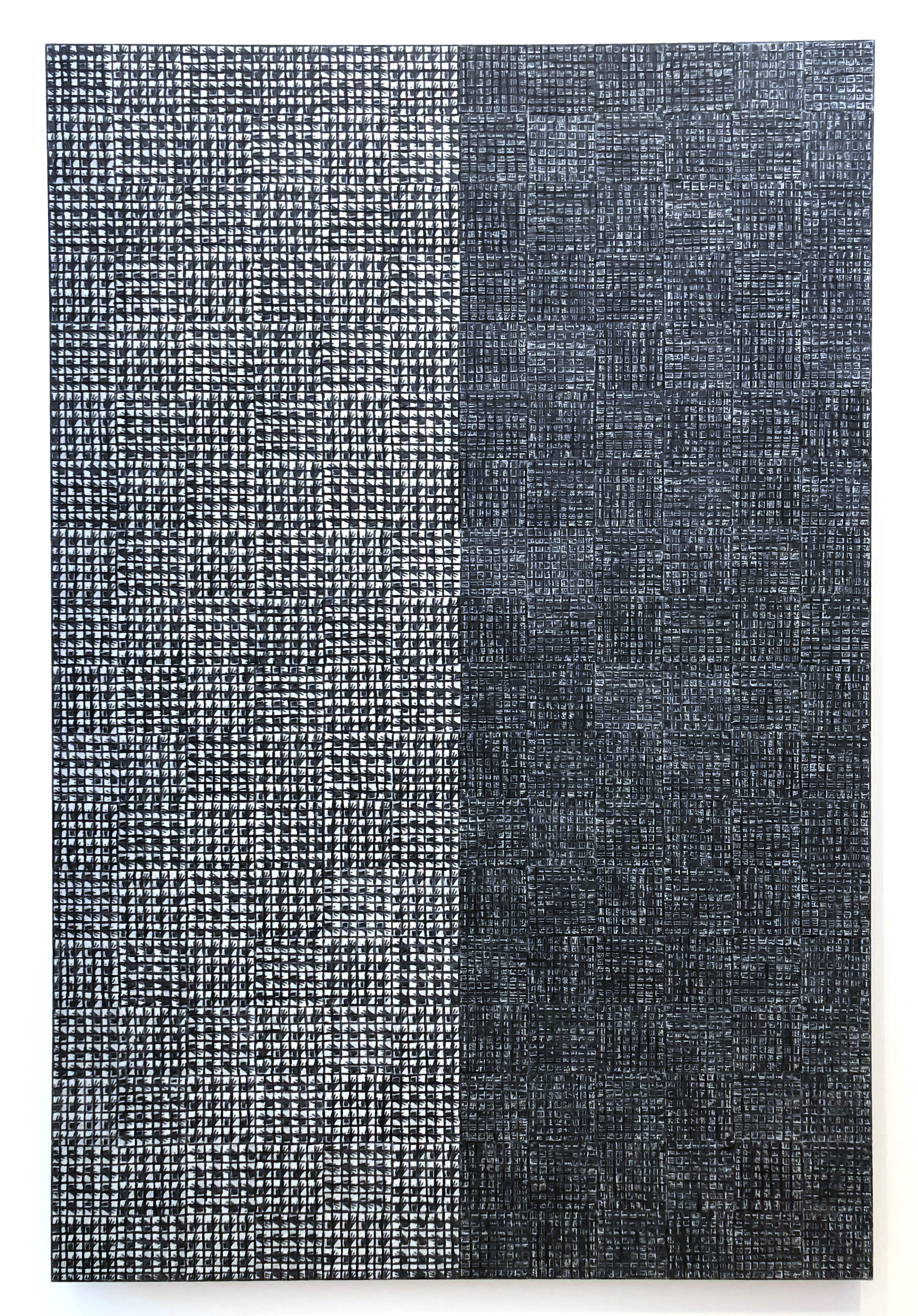
At Lehmann Maupin’s 24th Street location is McArthur Binion, Hand:Work, an exhibition of the artist’s grid paintings created with oil paint stick and paper on board. The patterns created in the work are overwhelming at first glance but then when seen up close, the personal details add a new dimension to the paintings.

From the press release

…For Binion, his personal documents represent the sum total of one’s social life: relationships, citizenship, vocation, and family life. The revealing and obscuring of these aspects of his life also addresses the larger sociopolitical reality of African-American identity—often obscured or erased from common knowledge, yet always present in tandem with major movements in American culture. In his newest Hand:Work paintings, Binion takes an introspective approach that is more closely aligned with the artist’s own self-perception—effectively, his first self-portraits. Using copies of a photo of the home where he was born, along with a photograph of his hand as the ground layer of the paintings, Binion pares down his identity to its most essential elements. These images are tiled in repeated succession, layered under his repetitious line work in oil stick. These gestures themselves relate to memories Binion has of his early childhood farm life, a disciplined approach to the cyclical, sustained effort he maintains in his work today. Through the insertion of his hand, literally in the photographs, and figuratively in his intricate, overlapping mark-making, the artist relates to his earliest introduction to artistry in his mother’s quilting, a tradition he modified and carried into his practice.

This exhibition closes 3/2/19.

McArthur Binion at Lehmann Maupin

McArthur Binion at Lehmann Maupin, detail of above painting

Robert Mann Gallery is showing the newly discovered work of photographer Ed Sievers. The exhibition of black and white photos also includes his later work from the 1970s in Venice Beach. The gallery also has an exhibition of Michael Kenna’s series of black and white female nudes made in Japan (not shown). Both shows close 3/2/19.

Ed Sievers, Untitled (woman in the shadows), c. 1960s, courtesy of the artist, image via Robert Mann Gallery

Damn! The Defiant, a group show curated by Damon Brandt and Andrew Freiser at Fredericks & Freiser Gallery, brings together “images of rebellion and dissent in contemporary portraiture” and includes a wide variety of work in different mediums from an incredible selection of artists that includes Mary Ellen Mark, Gordon Parks, Dana Schutz, Bruce Davidson, Whitfield Lovell and many more. It’s a show that’s very appropriate for a time period that is going to require more and more defiance.

From the press release-

Nothing creates projected personal territory more than the emotional push back generated from the recalcitrant expression of a defiant subject. Yet ironically, it is the very nature of this engagement that makes it difficult for the viewer to quickly detach or withdraw from what in fact amounts to an extended glare or moment of social tension. In a time of undeniable anxiety, finding both the common and contrasting ground in the portrayal of defiance speaks directly to the angst and pre-occupation for self-determination that has been and continues to be a pervasive human concern.

This exhibition closes 3/2/19.


Installation view of Damn! The Defiant, image via Fredericks & Freiser