Nov 292023
 

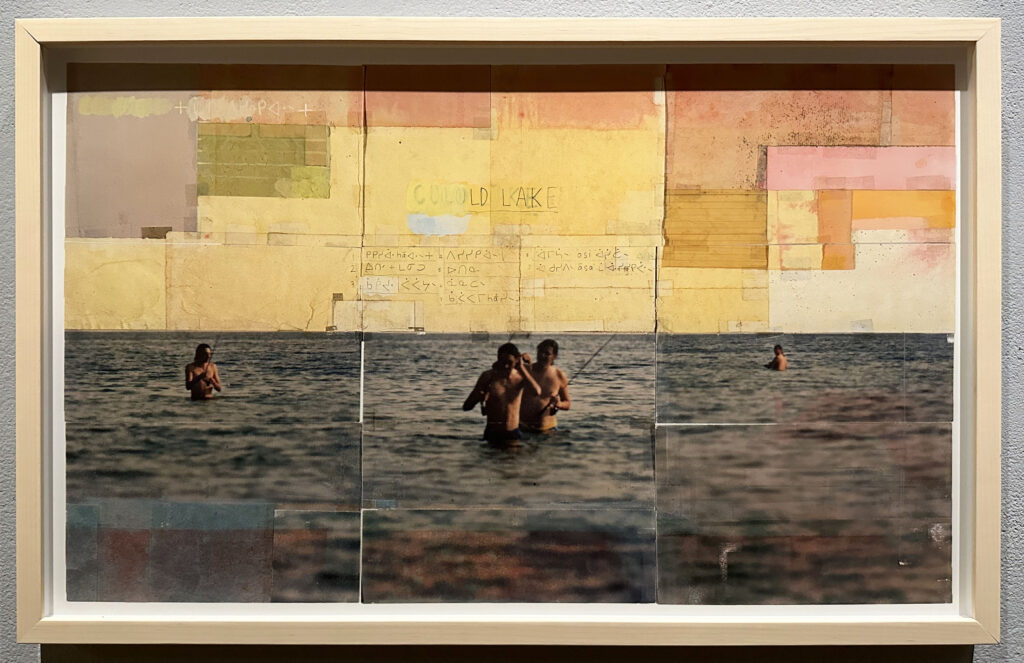
Kimowan Metchewais, “Cold Lake Fishing”, 2004/06
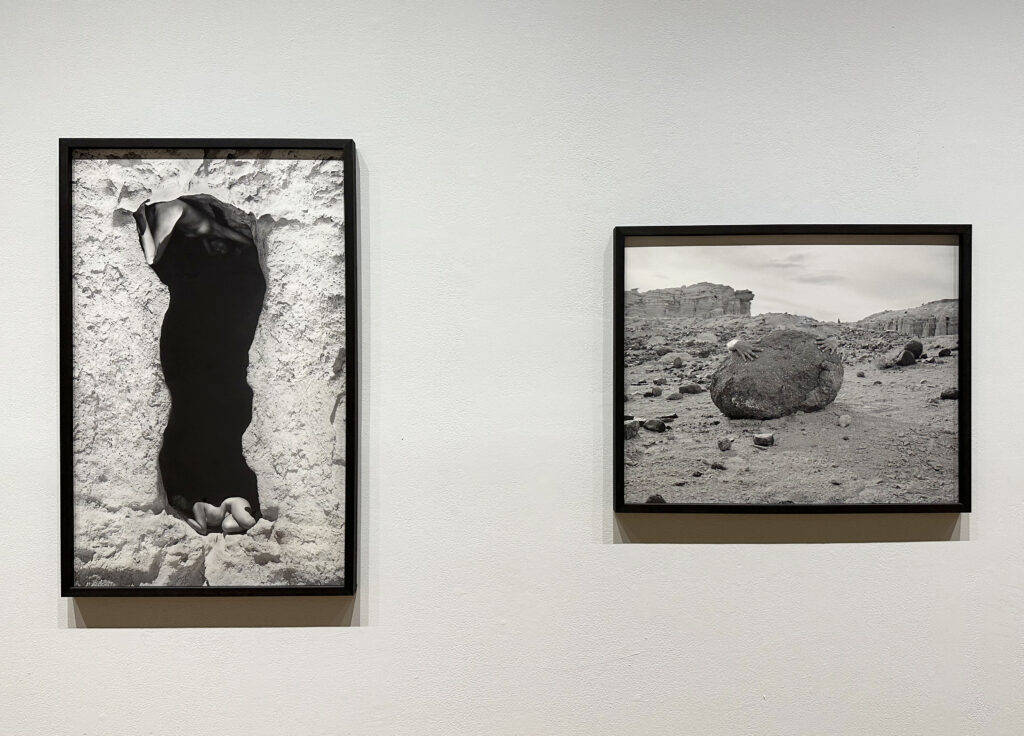
Koyoltzintli, “Gathering Roots” and “Spider Woman Embrace”, Abiquiú, New Mexico, 2019, from the series MEDA, 2018/19, Archival pigment print
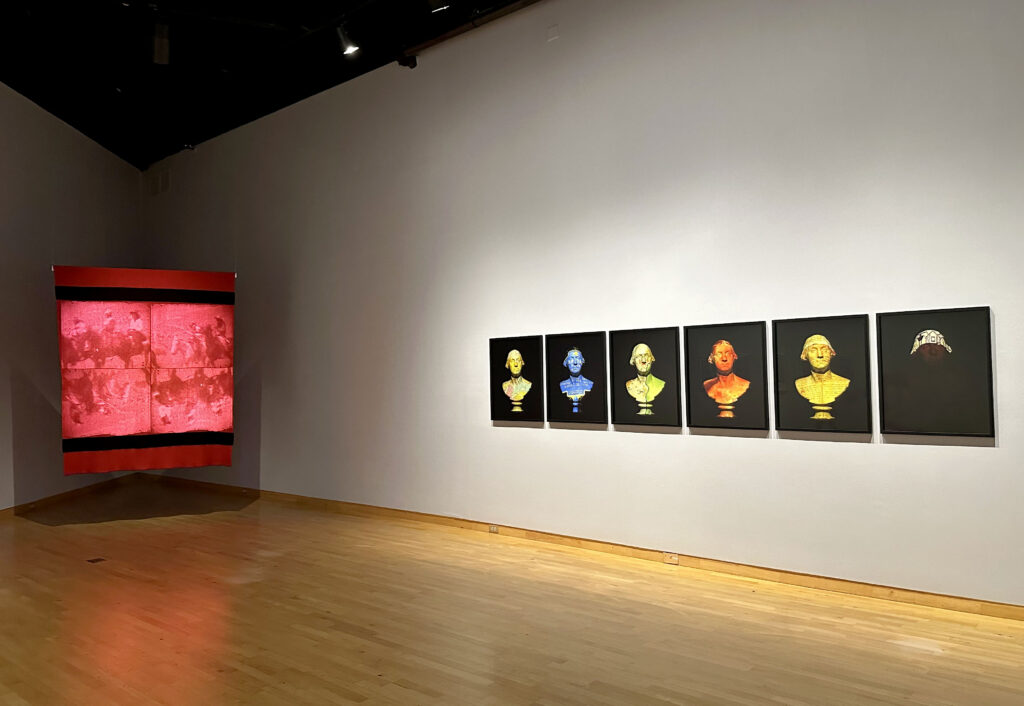
Alan Michelson “Hanödagayas (Town Destroyer): Whirlwind Series”, 2022 Archival pigment prints and “Pehin Hanska ktepi (They Killed Long Hair)”, 2021 Single-channel video installation: wool blanket and video projection; 1:05 minutes (looped), no sound

Currently at the USF Contemporary Art Museum is Native America: In Translation curated by Wendy Red Star and organized by Aperture. The work included offers viewers a chance to discover new perspectives on the Native American experience.

From the museum-

“The ultimate form of decolonization is through how Native languages form a view of the world. These artists provide sharp perceptions, rooted in their cultures.” —Wendy Red Star

Native America: In Translation assembles the wide-ranging work of nine Indigenous artists who pose challenging questions about identity and heritage, land rights, and histories of colonialism. Probing the legacies of settler colonialism, and photography’s complex and often fraught role in constructing representation of Native cultures, the exhibition includes works by lens-based artists offering new perspectives on Indigenous identity, reimagining what it means to be a citizen in North America today.

Works included in the exhibition address cultural and visual sovereignty by reclaiming Native American identity and representation. Honoring ancestral traditions and stories tied to the land, Koyoltzintli (Ecuadorian-American, b. 1983) reflects on how the landscape embodies traditional knowledge, language, and memories. Nalikutaar Jacqueline Cleveland’s (Yup’ik, b. 1979) photographs of contemporary tribal communities in western Alaska document Native foraging and cultural traditions as a form of knowledge passed through generations. Revealing stories of trauma and healing, Guadalupe Maravilla (American, b. El Salvador, 1976) communicates autobiographical and fictional narratives informed by myth and his own migration story.

Expanding Indigenous archives and collective memory through photographic means, works by the late artist Kimowan Metchewais (Cree, Cold Lake First Nations, 1963–2011), drawn from his personal archive of Polaroid photographs, construct self-realized Native imagery challenging the authority of colonial representation. Excavating repressed colonial histories of invasion and eviction, Alan Michelson (Mohawk, Six Nations of the Grand River, b. 1953) reinterprets and repositions archival material to redress history from an Indigenous perspective. Marianne Nicolson’s (Musgamakw Dzawada’enuxw First Nations, b. 1969) light-based installation projects Dzawada’enuxw tribal symbols of authority and power onto colonized spaces to contest treaties that imposed territorial boundaries on Indigenous lands. Duane Linklater (Omaskêko Ininiwak from Moose Cree First Nation, b. 1976) reconfigured the pages sourced from a 1995 issue of Aperture, featuring Indigenous artists, creating space for artistic improvisation and reinvention across generations.

Reflecting on performative aspects of Indigeneity and the colonial gaze, Martine Gutierrez’s (American, b. 1989) series of photographs reinterpret high-fashion magazine spreads with a revolving roster of identities and narratives to question Native gender and heritage. Working across performance and photography, Rebecca Belmore (Anishinaabe, Lac Seul First Nation, b. 1960) creates powerful reenactments of past performances incorporating organic materials that reference knowledge, labor, and care of the Earth in defiance of state violence of Indigenous people.

This exhibition closes 12/1/23.
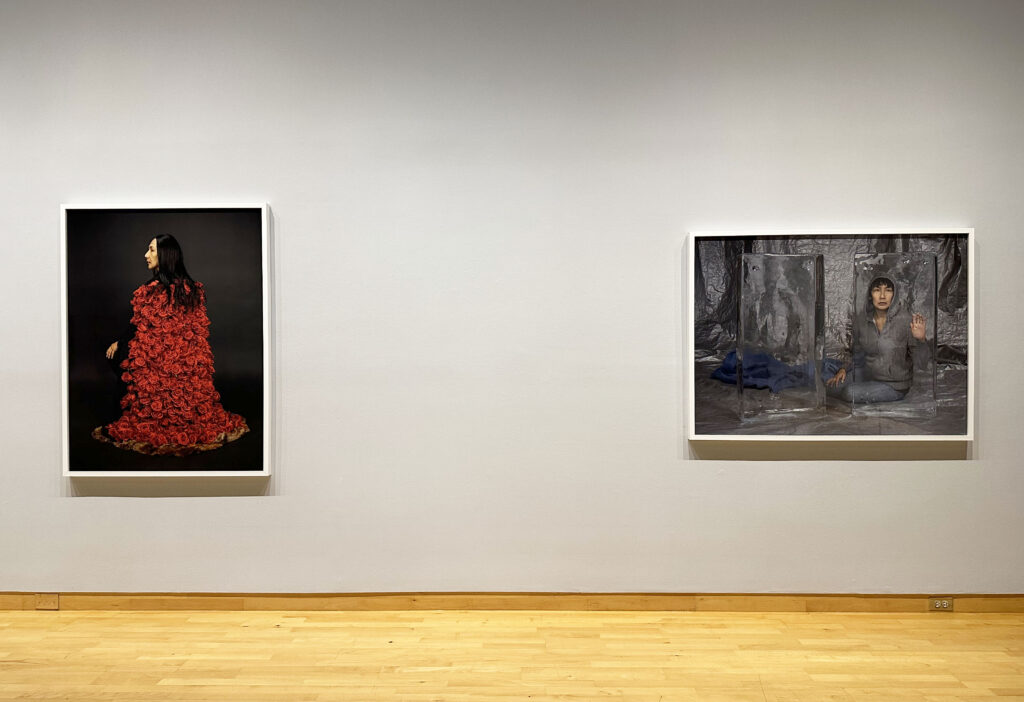
Rebecca Belmore, “matriarch”, 2018, and “mother” from the series “nindinawemaganidog (all of my relations)”, 2018, Archival pigment prints
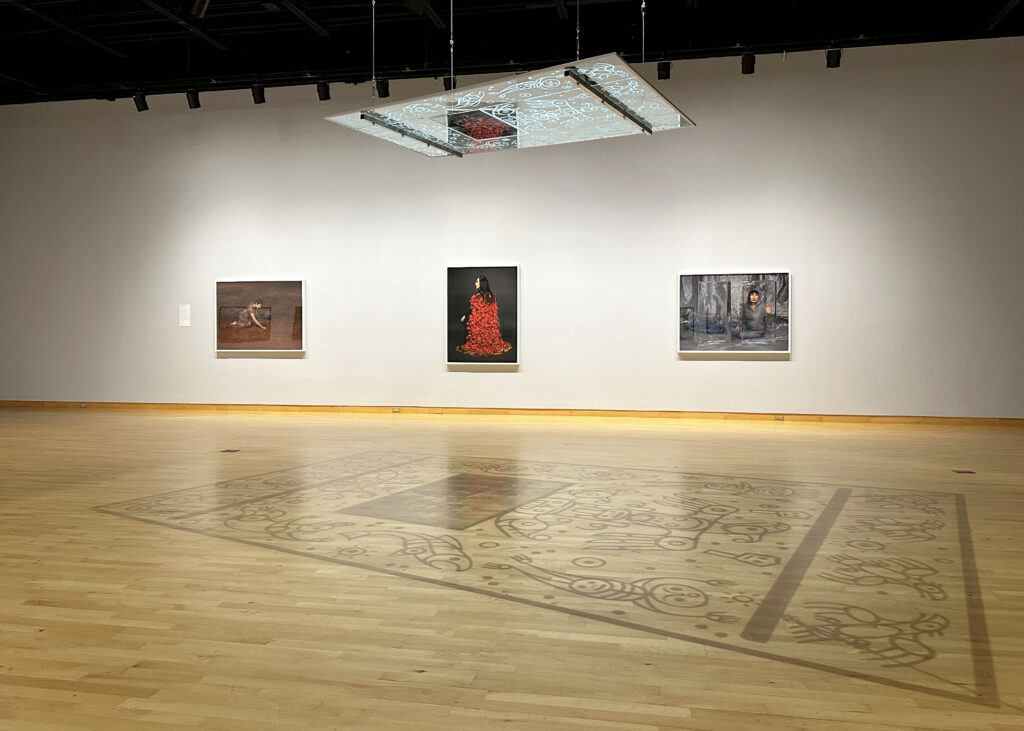
Photos by Rebecca Belmore and Installation by Marianne Nicolson
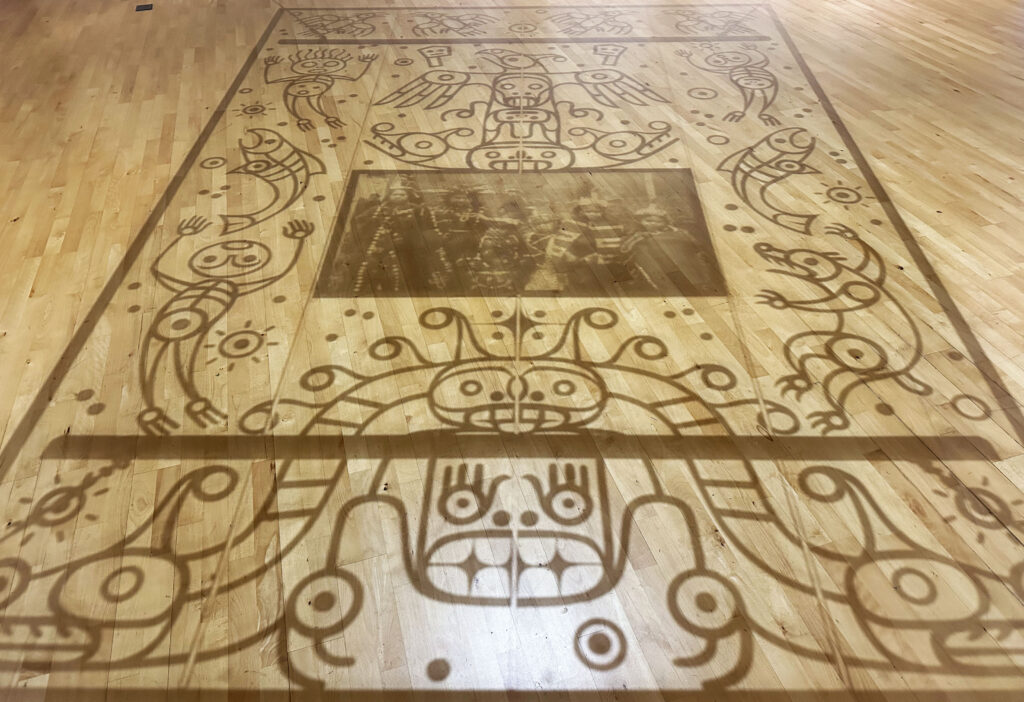
Marianne Nicolson’s installation detail
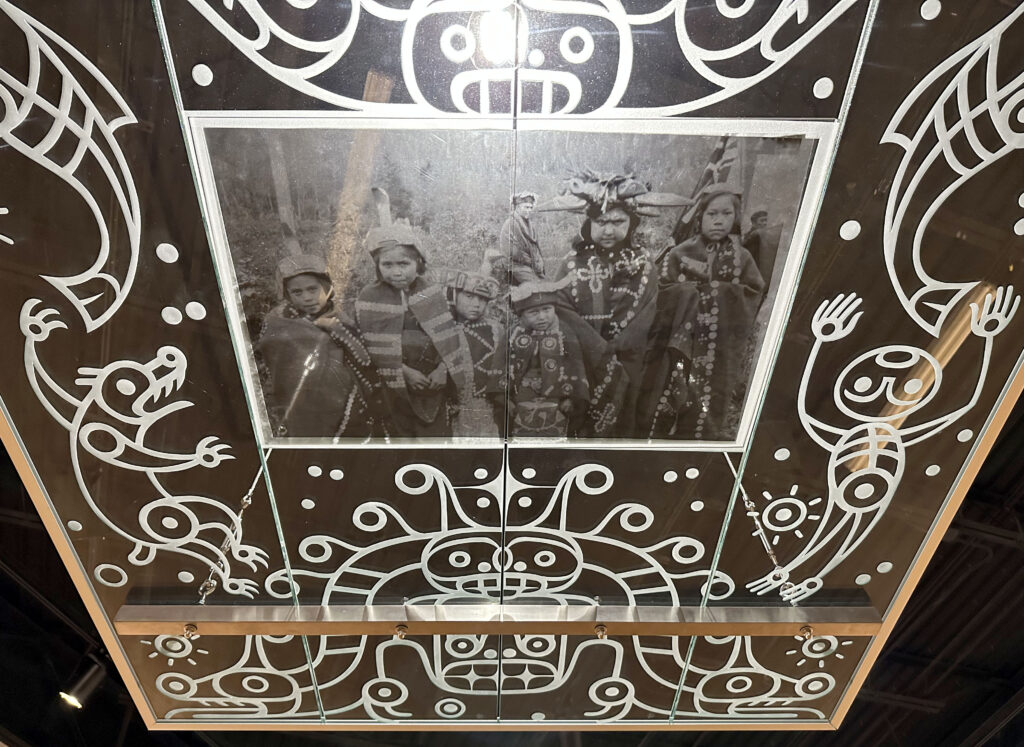
Marianne Nicolson’s installation detail
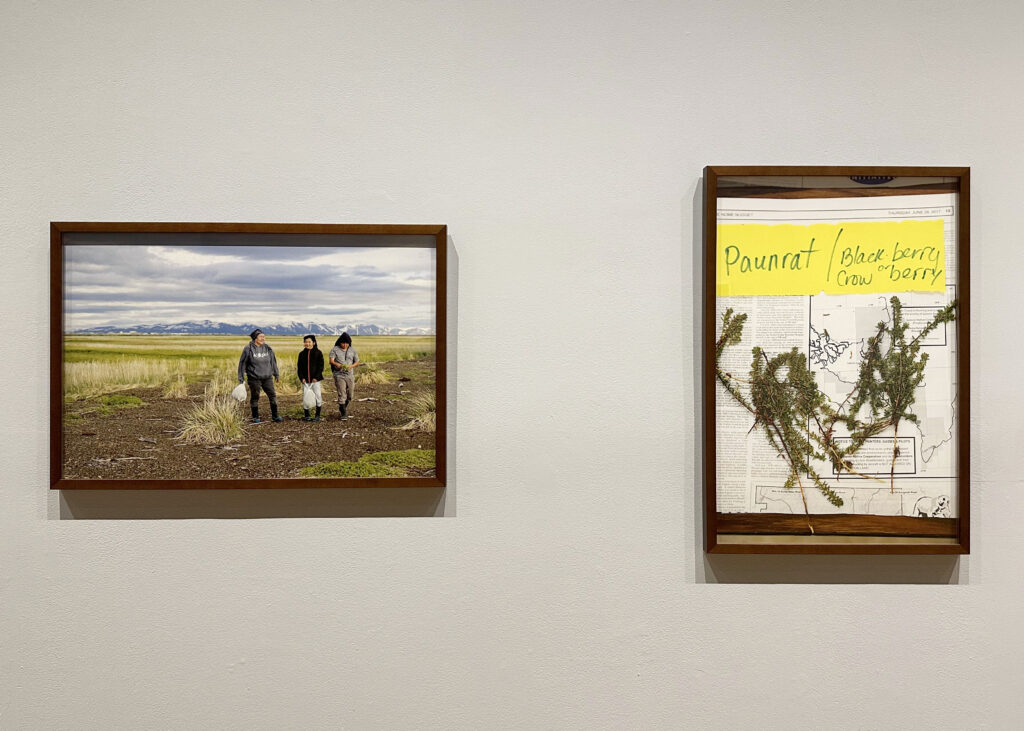
Nalikutaar Jacqueline Cleveland, “Molly Alexie and her children after a harvest of beach greens in Quinhagak, Alaska”, 2018 and “There are two main Yup’ ik names for crowberries or blackberries in Alaska, “paunrat” and “tangerpiit””, 2017, Archival pigment prints
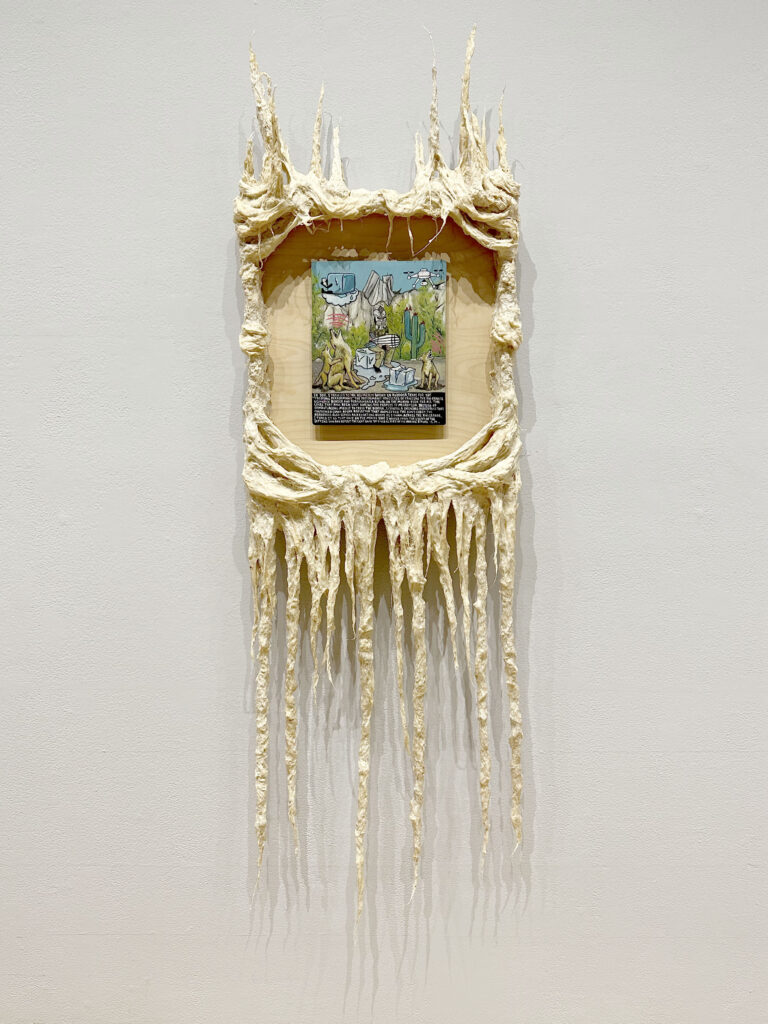
Guadalupe Maravilla, “I Crossed the Border Retablo”, 2021, Oil on tin, cotton, glue mixture, wood
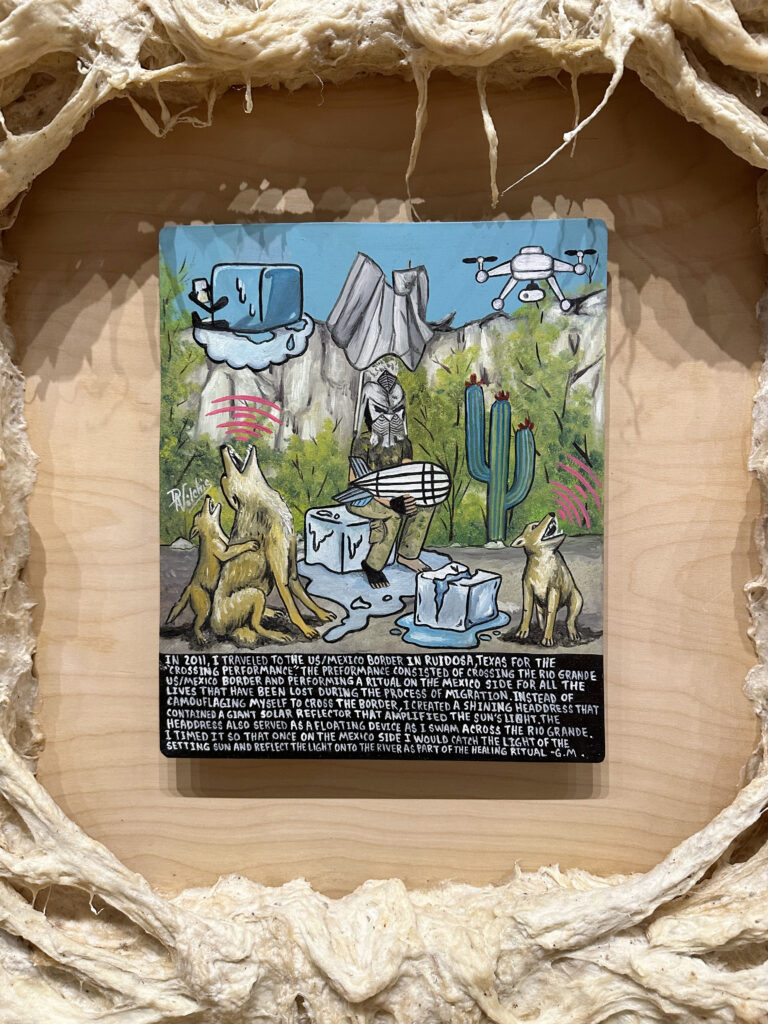
Guadalupe Maravilla, “I Crossed the Border Retablo”, 2021, detail
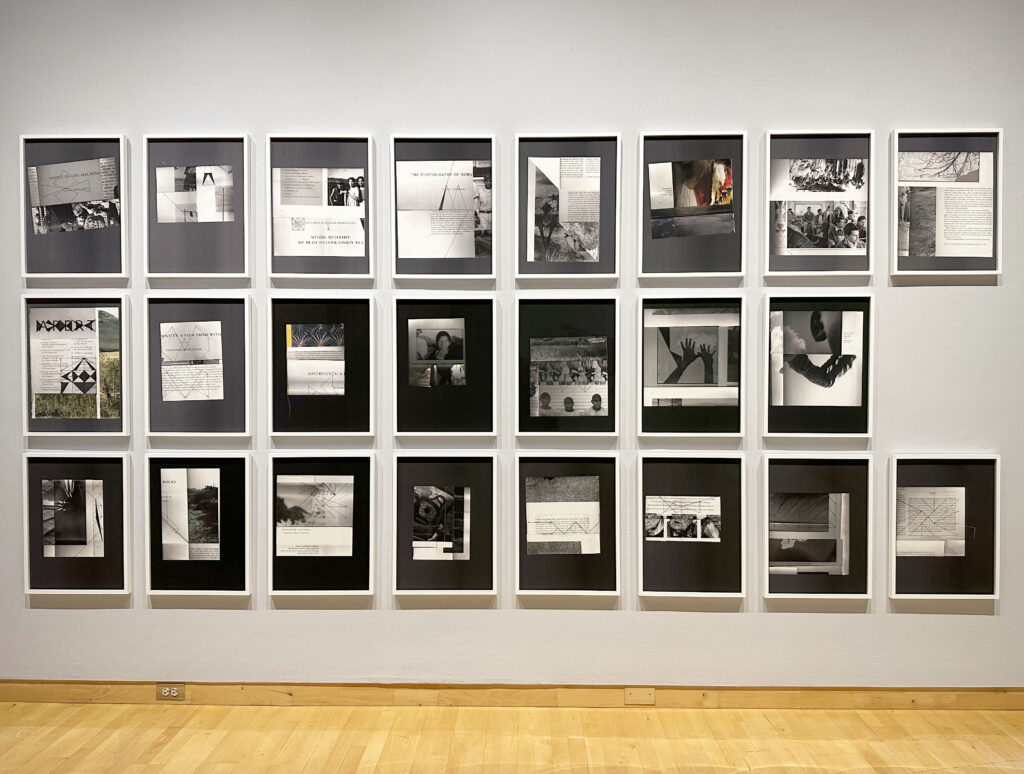
Duane Linklater, “ghost in the machine”, 2021, Archival pigment prints
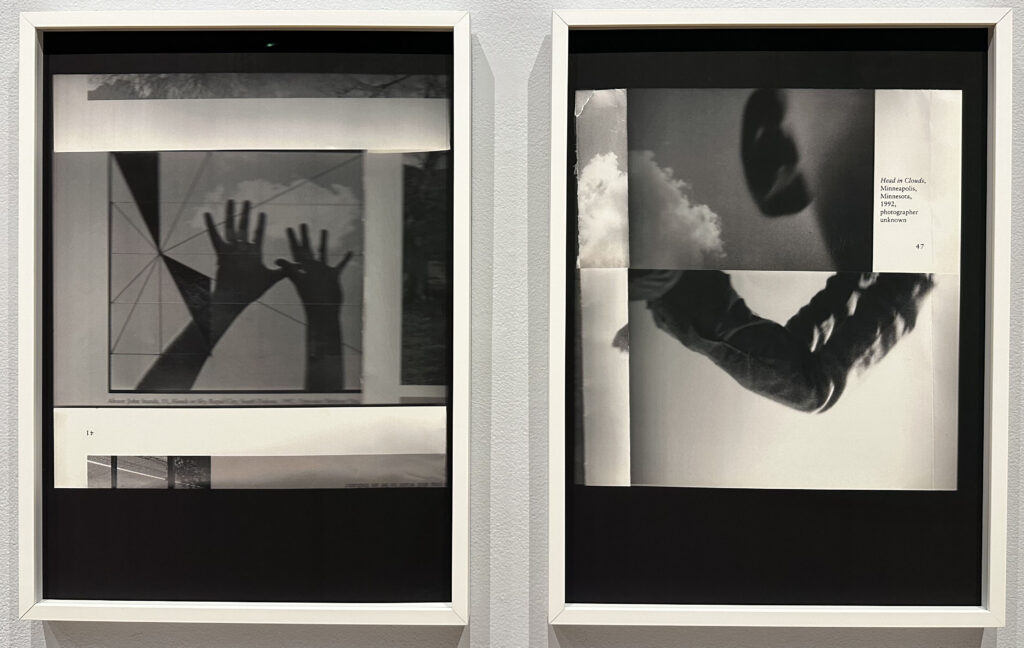
Duane Linklater, “ghost in the machine”, 2021, Archival pigment prints
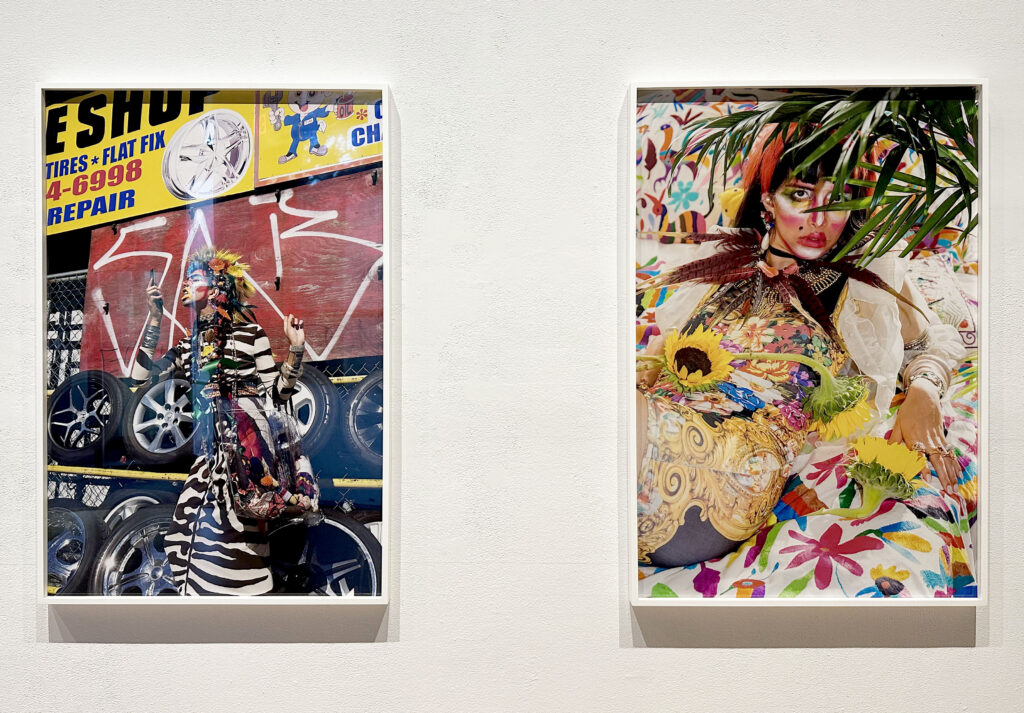
Martine Gutierrez, “Queer Rage, Dear Diary, No Signal During VH1’s Fiercest Divas”, and “Queer Rage, THat Girl Was Me, Now She’s A Somebody”, 2018. digital chromogenic print
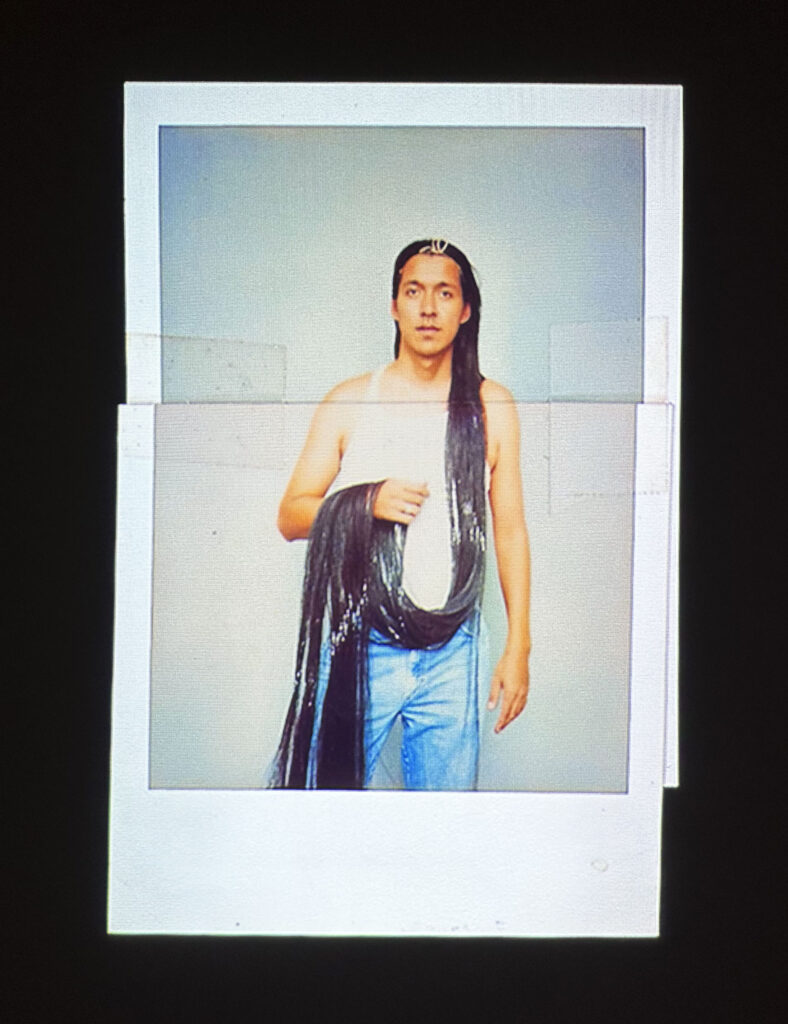
One of Kimowan Metchewais’ polaroids from the slide show


Oct 282023
 

Installation by Edgar Sanchez Cumbas

The Ybor City Arts Tour was last week and was a great way to check out the many spaces currently in the Ybor City area. The Kress Contemporary building with its multiple galleries, artist studios, performance space (The Fringe Theatre), and microcinema, was definitely a highlight.

The above images are of sculptural work by Edgar Sanchez Cumbas (he was also in the Department of Contemporary Art group show in the same building). It is just one of the rotating works you can find while walking around the space.

Below are some selections from the event.

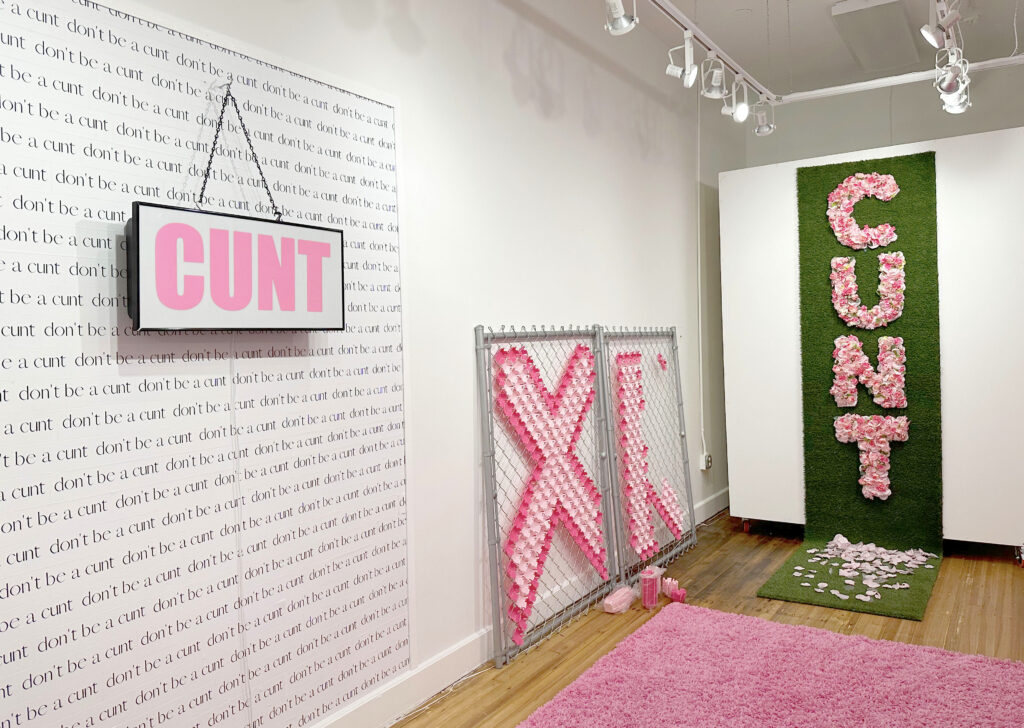
Kim Radatz opened her space, currently showing an installation focused on the “C” word.

Screen Door: An Ybor City Microcinema is always showing interesting films from a variety of genres. Pictured are the seating area and the movie posters lining the hallway outside of the film viewing area. For the art tour they were showing past Flex Fest short films.

On the third floor are a large group of artist studios with several walls hanging work by many of the artists.

Work by Jon Pannier

Sculpture by Eileen Goldenberg

Polaroid work by Brian Pannier

Lots of great work by the three very different artists that make up the Y3K Collective- Jon Pannier, Eileen Goldenberg, and Brian Pannier, seen above.

Work by Juan Espinosa (left) and Ashley Cantero (right) of Dluance

Inside Dluance

Creative space Dluance is run by visual artist Ashley Cantero and music producer/ graphic designer Juan Espinosa.

Paintings by Marilyn Binder Silverman

Paintings by Eilzabeth Fontaine-Barr

The work above is from the painters Marilyn Binder Silverman and Elizabeth Fontaine-Barr who share their studio space.

Painting by Karol Batansky

Self taught painter Karol Batansky just moved in to her new studio from the Ybor Art Colony which is closed while currently being renovated.

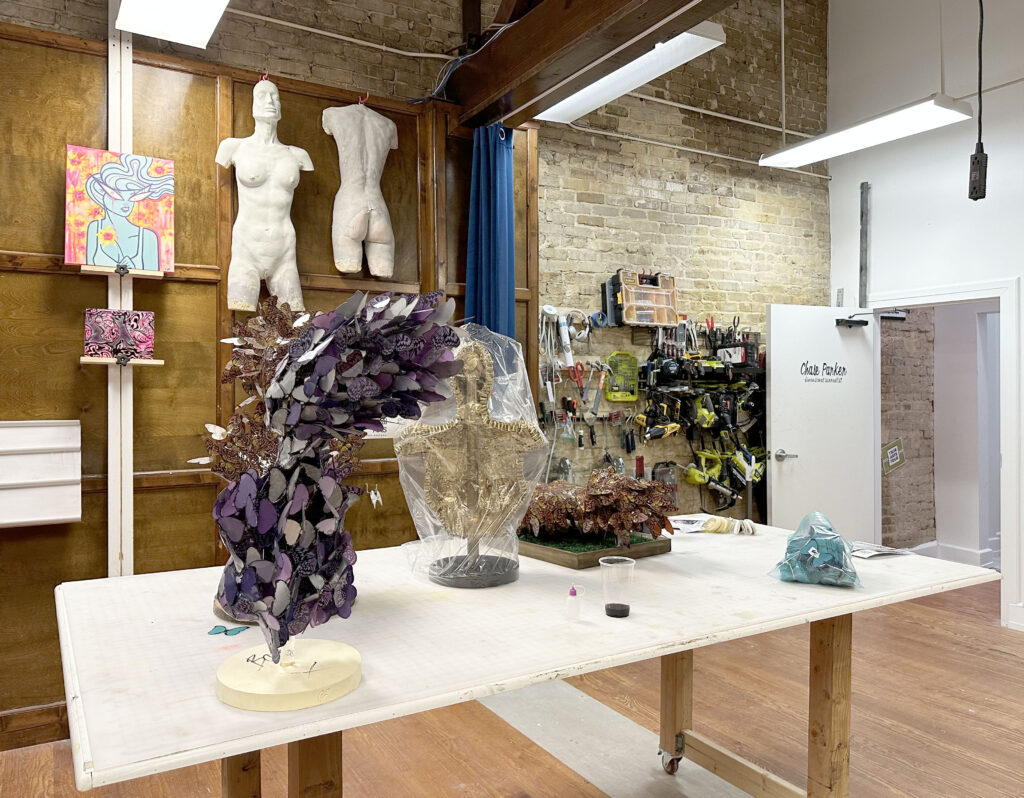
Mixed media artist Chase Parker makes a variety of work, including the unique sculptures pictured above.

Ron Watson creates highly detailed drawings at his Shades of Gray Studio.

Below is one of the common spaces filled with work by a selection of artists. It’s always worth a trip up from the 2nd floor galleries even if most of the artists are not in their studios to see what’s new.

Work by Jenal Dolson (left) and Michael Jones (collage, right)

The next post will focus on three spaces outside of Kress Contemporary that were also part of the tour.

Mar 012019
 

Matvey Levenstein, LY, 2018

Currently at Kasmin Gallery are Matvey Levenstein’s paintings depicting scenes from his life in North Fork, Long Island. There’s a quiet, peaceful quality to the works, which begin with snapshots before they are turned into paintings. This exhibition closes Saturday 3/2/19.

Across the street at another of Kasmin Gallery’s Chelsea locations, and worth a visit, is an exhibition of some of Andy Warhol’s polaroid portraits.

Matvey Levenstein, Pink Moon, 2018

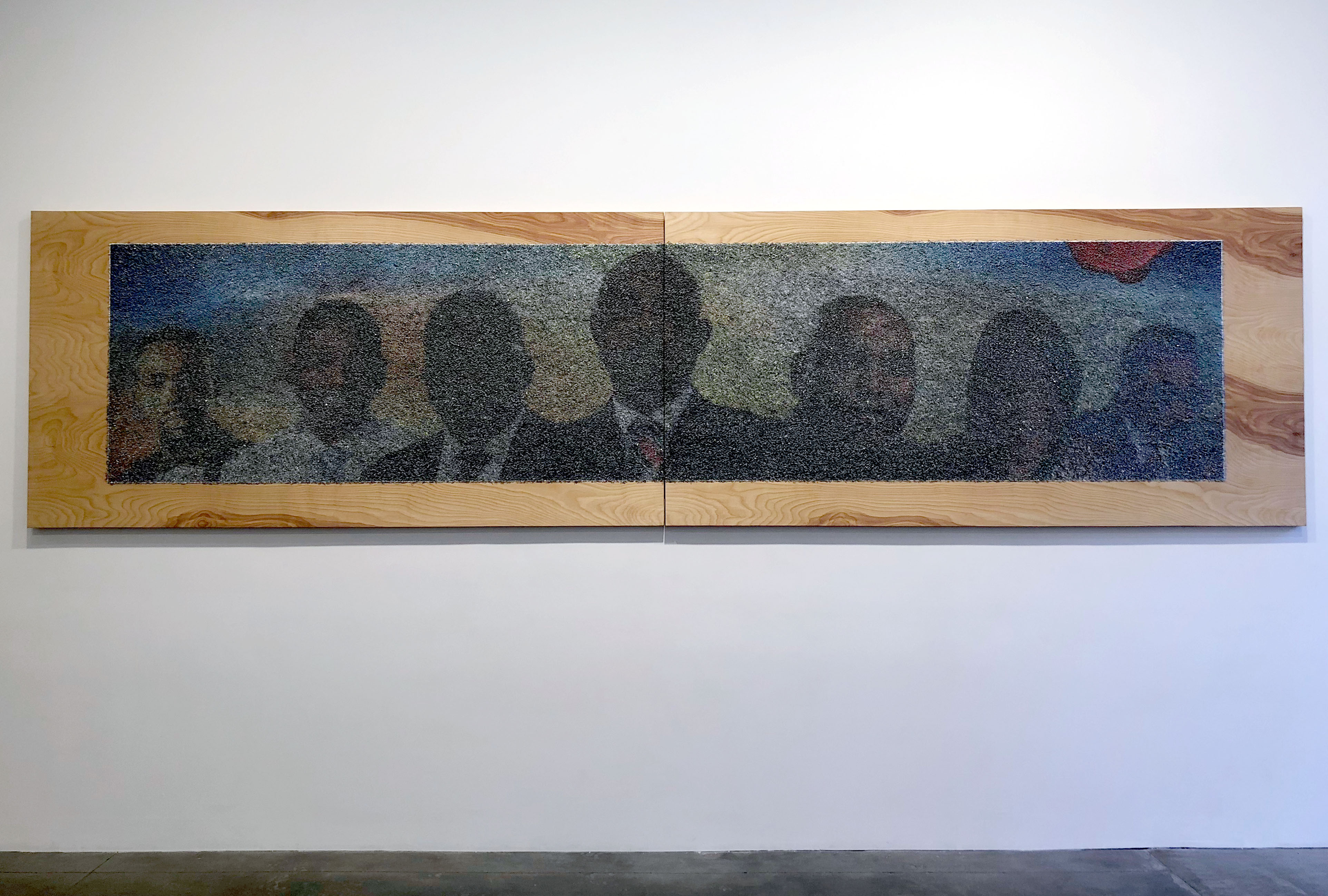
Susan Inglett Gallery is showing Slim… you don’t got the juice, an exhibition of work by Wilmer Wilson IV. His work with staples may seem familiar from its inclusion in the New Museum’s 2018 Triennial: Songs for Sabotage.

From the press release-

Slim… you don’t got the juice presents multidisciplinary departures from familiar modes of figurative representation, as they have evolved in the realm of photographic discourse. Wilmer Wilson IV has developed strategies of redaction and annotation in his work that begin to destabilize the norms of making and viewing portraiture through visual, material, and technical manipulation. An exploration into the complex renderings of individual subject-hood versus object-hood in portraiture, the artist has conceived of a stapled-surface-as-viewing-device that mediates image with material. The device is manifest in a series of staple works that almost fully shroud the photographic subjects beneath dense fields of metal fasteners. The austere, randomized application of the staples onto the surface of each portrait results in a resistance of visual penetration from many angles, complicating access to the underlying figures and deconstructing the voyeuristic inclinations of the viewer.

This exhibition closes 3/16/19.

Wilmer Wilson IV, Host, 2018


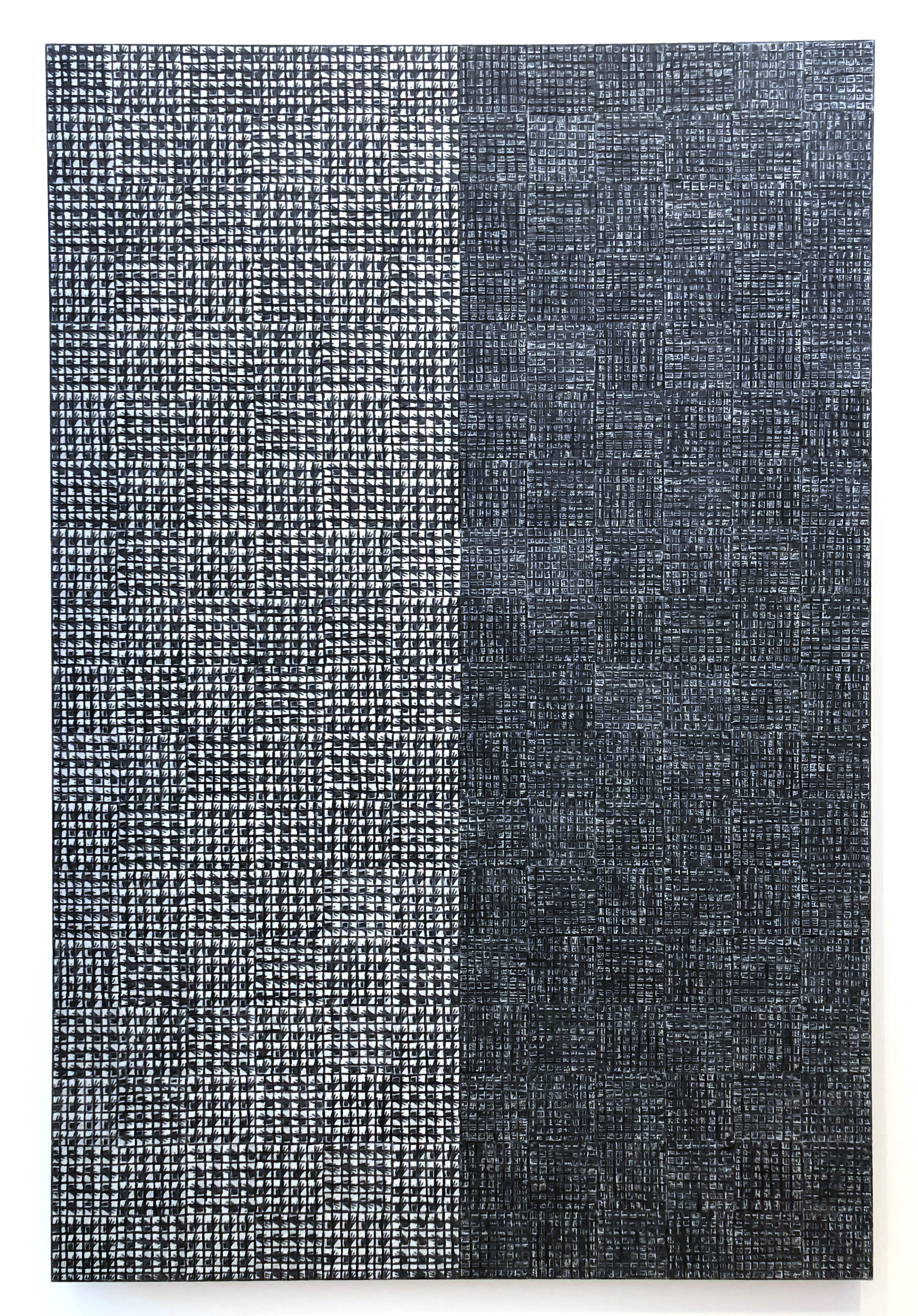
At Lehmann Maupin’s 24th Street location is McArthur Binion, Hand:Work, an exhibition of the artist’s grid paintings created with oil paint stick and paper on board. The patterns created in the work are overwhelming at first glance but then when seen up close, the personal details add a new dimension to the paintings.

From the press release

…For Binion, his personal documents represent the sum total of one’s social life: relationships, citizenship, vocation, and family life. The revealing and obscuring of these aspects of his life also addresses the larger sociopolitical reality of African-American identity—often obscured or erased from common knowledge, yet always present in tandem with major movements in American culture. In his newest Hand:Work paintings, Binion takes an introspective approach that is more closely aligned with the artist’s own self-perception—effectively, his first self-portraits. Using copies of a photo of the home where he was born, along with a photograph of his hand as the ground layer of the paintings, Binion pares down his identity to its most essential elements. These images are tiled in repeated succession, layered under his repetitious line work in oil stick. These gestures themselves relate to memories Binion has of his early childhood farm life, a disciplined approach to the cyclical, sustained effort he maintains in his work today. Through the insertion of his hand, literally in the photographs, and figuratively in his intricate, overlapping mark-making, the artist relates to his earliest introduction to artistry in his mother’s quilting, a tradition he modified and carried into his practice.

This exhibition closes 3/2/19.

McArthur Binion at Lehmann Maupin

McArthur Binion at Lehmann Maupin, detail of above painting

Robert Mann Gallery is showing the newly discovered work of photographer Ed Sievers. The exhibition of black and white photos also includes his later work from the 1970s in Venice Beach. The gallery also has an exhibition of Michael Kenna’s series of black and white female nudes made in Japan (not shown). Both shows close 3/2/19.

Ed Sievers, Untitled (woman in the shadows), c. 1960s, courtesy of the artist, image via Robert Mann Gallery

Damn! The Defiant, a group show curated by Damon Brandt and Andrew Freiser at Fredericks & Freiser Gallery, brings together “images of rebellion and dissent in contemporary portraiture” and includes a wide variety of work in different mediums from an incredible selection of artists that includes Mary Ellen Mark, Gordon Parks, Dana Schutz, Bruce Davidson, Whitfield Lovell and many more. It’s a show that’s very appropriate for a time period that is going to require more and more defiance.

From the press release-

Nothing creates projected personal territory more than the emotional push back generated from the recalcitrant expression of a defiant subject. Yet ironically, it is the very nature of this engagement that makes it difficult for the viewer to quickly detach or withdraw from what in fact amounts to an extended glare or moment of social tension. In a time of undeniable anxiety, finding both the common and contrasting ground in the portrayal of defiance speaks directly to the angst and pre-occupation for self-determination that has been and continues to be a pervasive human concern.

This exhibition closes 3/2/19.


Installation view of Damn! The Defiant, image via Fredericks & Freiser