Apr 102026
 

Lindsey Cherek Waller, “Making Plans”, 2025, acrylic on stretched canvas (It was also used for the cover of the upcoming book “Girls Our Age” by Phoebe Thompson)

Perry Picasshoe, “Splitting Heaven”, 2025, oil on unstretched canvas (part of a performance piece)

Perry Picasshoe, “Splitting Heaven”, 2025 (detail)

Creative Influence(r), currently on view at The Delaware Contemporary, features work by Lindsey Cherek Waller and Perry Picasshoe, two artists who use social media platforms to increase their visibility and success.

From the museum about the exhibition-

For centuries, art museums have wielded their power to define a predictable, prescribed path for aspiring artists. An artist striving to build a career from their work traditionally starts with a formal arts education, then builds a portfolio, hoping to secure gallery representation, which will garner the attention of collectors, galleries, and museums. But since the 2010s, that has shifted. Increasingly, young and emerging artists are utilizing social media platforms to subvert the traditional routes to becoming a working artist; a path that, for many, has numerous real and perceived barriers to entry. Using social media platforms, like TikTok and Instagram, artists have found ways to circumvent the traditional hierarchy of the art world, building their own audiences and collector bases by sharing their work online for millions to discover and appreciate. By utilizing these platforms, artists have also found a way to reinvigorate art for younger generations and those who feel excluded from institutional structures, making contemporary art more accessible for all.

Lindsey Cherek Waller and Perry Picasshoe built their artistic career on social media platforms where their art is activism. Their public artwork has protested ICE abductions, it has protected queer virtual and physical queer spaces, and has raised funds to support causes important to them. These artists are only two of many who are redefining “success in the art world”, their success comes directly from their fearlessness and advocacy for their work and communities.

Creative Influence(r) is on view until 4/26/26.

Mar 092023


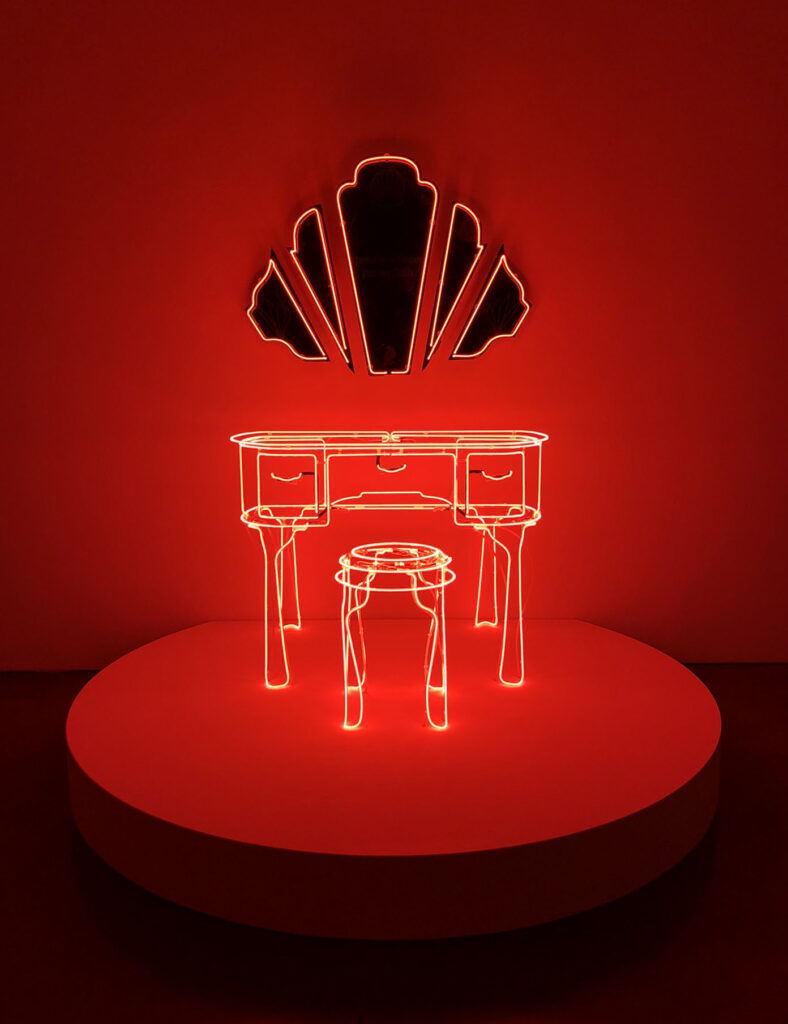
Ja’Tovia Gary “Citational Ethics (Zora Neale Hurston, 1943)”, 2023, wood, neon and engraved obsidian

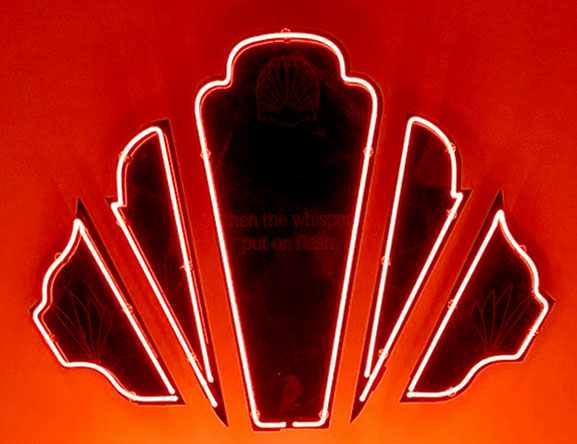
Ja’Tovia Gary “Citational Ethics (Zora Neale Hurston, 1943)”, 2023, wood, neon and engraved obsidian (detail)

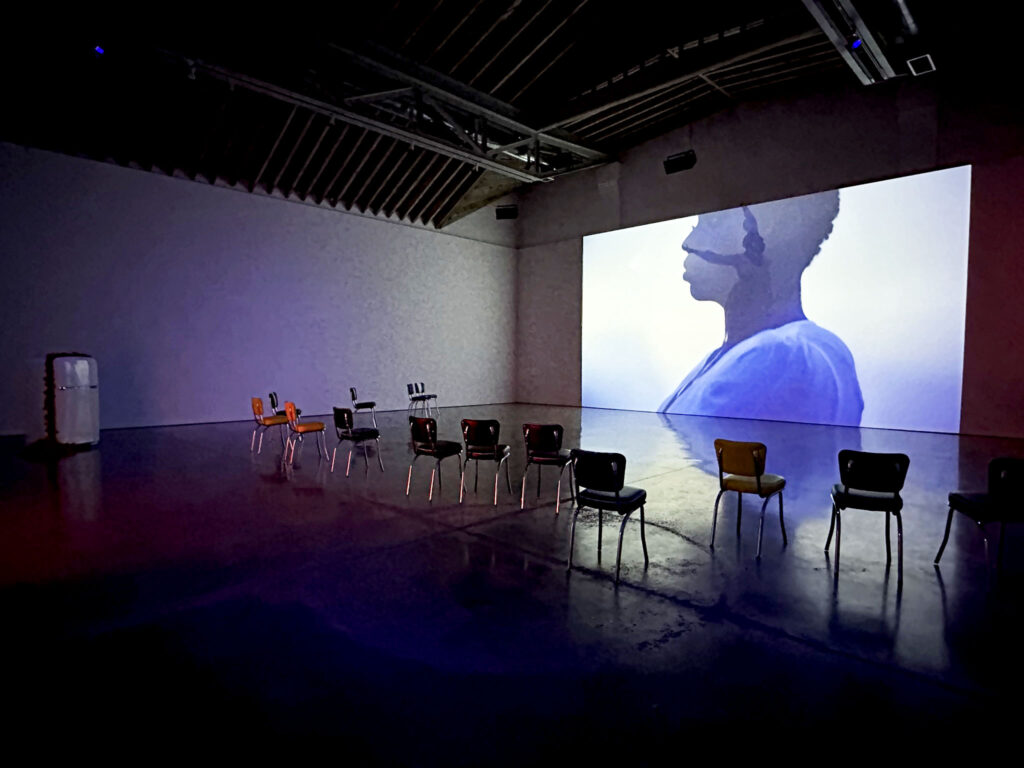
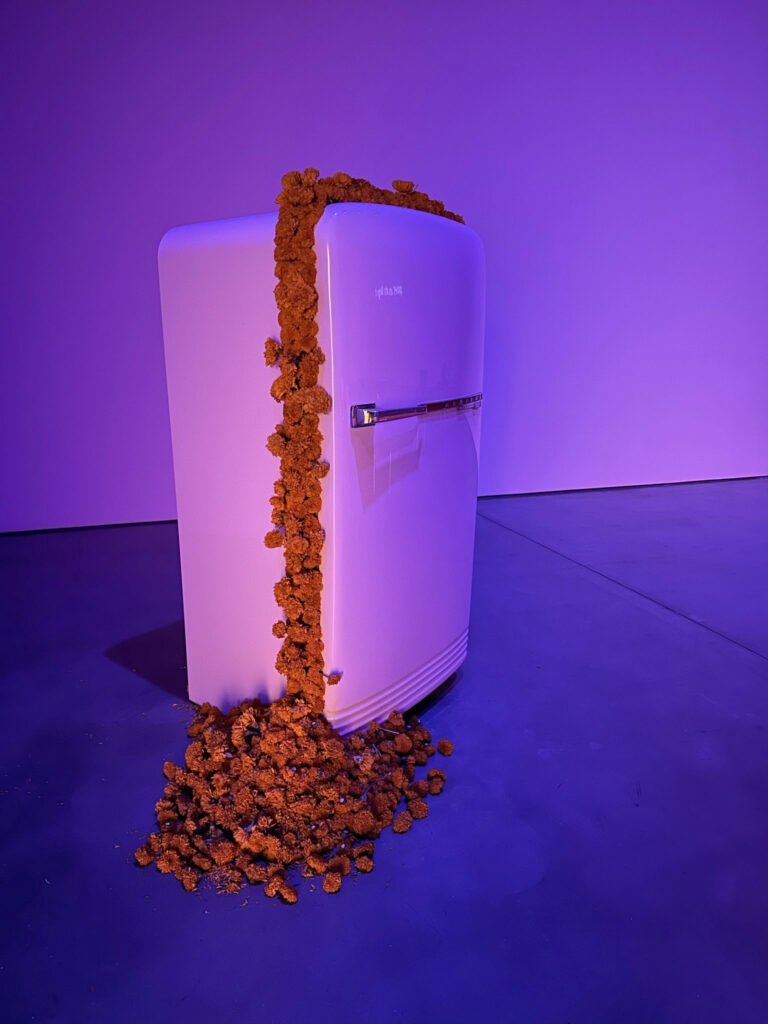
Currently at Paula Cooper Gallery in NYC is Ja’Tovia Gary’s You Smell Like Outside…, an exhibition that centers around her 2023 film, Quiet As It’s Kept, and includes two new sculptures.

From the press release-

The artist continues her practice of interrogating and re-contextualizing multiple archives, concerning herself with the power and responsibility of language and the radical possibilities of narrative. The exhibition title You Smell Like Outside… is a Black Southern phrase that foregrounds the artist’s specific cultural origins with discursive traditions that invoke an interior knowledge. Inspired by Toni Morrison’s 1993 Nobel Laureate lecture, Gary attempts to heighten the contradictions between a living and a dead language. Notions of domesticity, interior and exterior, and the conflict between perception and being perceived are explored in the show.

With a filmic and sculptural language uniquely her own, Gary eloquently intervenes into foundational renderings of Black life to expand the conversation and the possibilities of being. The artist considers what is destabilized when we include the cinematic within the category of language, asserting: “if we are to ensure the future efficacy of storytelling, we must boldly and audaciously insist upon new narrative forms.” Quiet As It’s Kept (2023) is a contemporary response to The Bluest Eye, Toni Morrison’s first novel published in 1970. Set in Ohio in 1941, the book is an evocative illustration of the everyday particulars of colorism and its ravaging effects on the intramural. Themes of embodiment, psychoanalysis, and beauty are explored in both the source text and the answering film. Instinctual and eviscerating, the film encourages viewers to make meaning that is rooted in the subjective and examine their position within looking relations.

Following Gary’s critically acclaimed films THE GIVERNY DOCUMENT (2019) and An Ecstatic Experience (2015), Quiet As It’s Kept (2023) is an intimate bricolage of vintage Hollywood, direct animation, original super 8 and 16mm film footage, and documentary conventions. Mediating on the gaze and Black women’s particular embodied realities, Gary also re-contextualizes contemporary social media footage. Creating conceptual links for each viral clip to a character, event, or thematic element from Morrison’s story, the film emphasizes questions around the book’s themes of internalized and externalized anti-blackness in contemporary culture. Situated within an immersive installation with domestic elements, the film asks the viewer to employ an oppositional gaze that allows for narrative structures that run counter to those of the mainstream.

High John de Conquer came to be a man, and a mighty man at that. But he was not a natural man in the beginning. First off, he was a whisper, a will to hope, a wish to find something worthy of laughter and song. Then the whisper put on flesh. [1]

The sculptures in Gary’s Citational Ethics series illuminate the words of Black women through the medium of neon, with the title of each work serving as a citation for the quote. Citational Ethics (Zora Neale Hurston, 1943) cites Zora Neale Hurston’s 1943 essay on High John de Conquer, a Southern folk trickster figure who brought joy, laughter, and strength to enslaved people while continuously evading capture. The sculpture is a vanity mirror set which gestures towards a speculative future past. Comprising a desk, stool, and fan-shaped obsidian mirror, the object invokes the Harlem Renaissance, Art Deco, and southern Black Hoodoo lore. A departure from the previous works in the series, the quote is etched into the highly polished black stone said to bring about visions through gazing, while the furniture is rendered in neon. Drawing the viewer in to read the words written in the mirror while bathed in red light, the sculpture summons an intimate encounter with the self and spirit.

[1] Zora Neale Hurston, “High John de Conquer,” in The American Mercury, October 1943, pp. 450-458

This exhibition closes 3/11/23