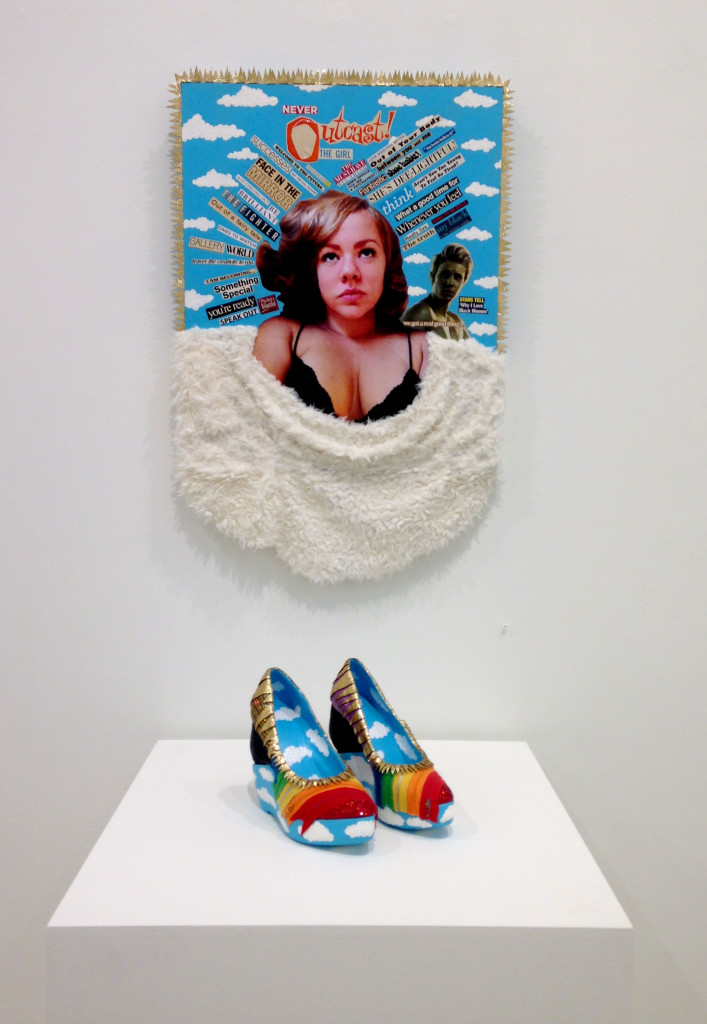
Adrienne Elise Tarver

Cara Despain

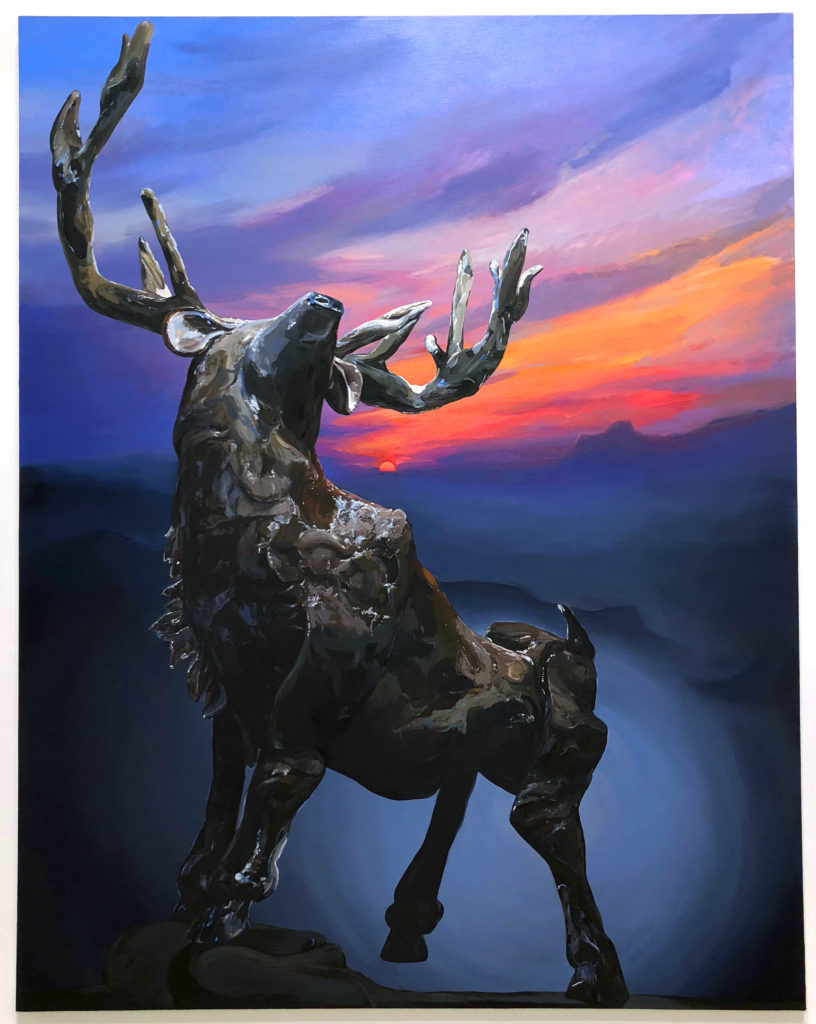
Cara Despain

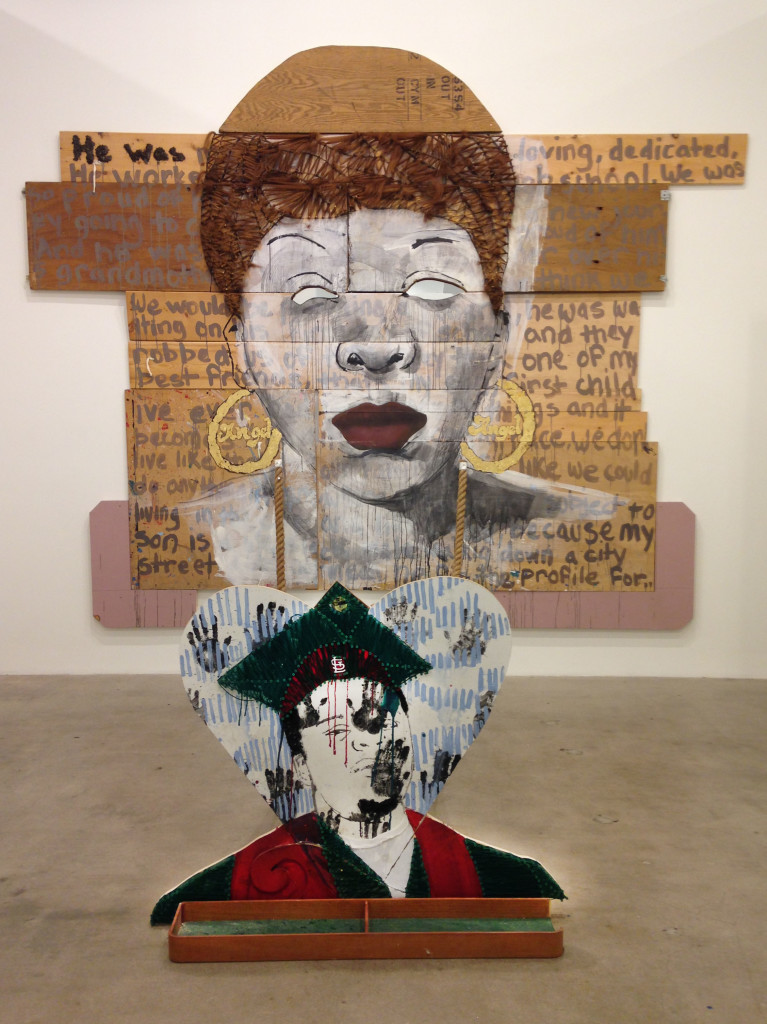
Ashanti Chaplin

Ray Anthony Barrett

Ray Anthony Barrett

Olivia “LIT LIV” Morgan

One room of the gallery with Margaret Griffith sculpture (center)

Jane Chang Mi

Andrae Green (paintings) and Phoebe Collings-James (sculpture)

Andrae Green

Margaret Griffith

Margaret Griffith (detail)
Against Dystopia, the group exhibition at Diane Rosenstein curated by niko w. okuro, presents a variety of interesting work that speaks to the times we are living in.
The exhibition includes ten international artists representing twelve cities across the United Kingdom, Jamaica, and all five regions of the United States- Ray Anthony Barrett, Ashanti Chaplin, Phoebe Collings-James, Cara Despain, Andrae Green, Margaret Griffith, Jane Chang Mi, Olivia “LIT LIV” Morgan, Esteban Ramón Pérez, and Adrienne Elise Tarver.
From the gallery-
Presented on the eve of the 2024 presidential election, Against Dystopia is ‘a far-reaching exhibition, both in terms of the diverse backgrounds and approaches of its featured artists, and the social, cultural, and geographic ecosystems those artists represent and critique,’ writes okoro, who is based in New Haven, CT. The exhibition ‘features artworks that inhabit a spectrum of anti-dystopian thought, from mobilizing conceptualism to overcome historic traumas and the precarity of the present, to envisioning future utopias against seemingly insurmountable odds.’
Against Dystopia transforms fear and anxiety surrounding the uncertainty of our shared future into a tangible site of hope—one where collective memory reminds us of our agency to enact change today, and rich cultural traditions empower us to imagine alternative futures. Of significance is the inclusion of artists who identify as multi hyphenates, playing numerous social roles within their communities, such as advocate, change agent, chef, documentarian, educator, father, filmmaker, mother, musician, oceanographer, researcher, and too many more to name.
Artworks are grouped into three thematic sections, each of which explores creative strategies of resistance and works against dystopia at all costs: field research, symbolic interactionism, and speculative fiction.
Ray Anthony Barrett (Missouri), Ashanti Chaplin (Oklahoma), Cara Despain (Utah/Florida), and Jane Chang Mi (Hawai‘i/California) use field research to map histories of frontierism, settler colonialism, and land politics onto ecological and socioeconomic systems today. With a focus on listening to the land and sea to both unearth and atone for difficult truths, these artists name and dismantle dystopian practices on the path to reconciliation. Embracing an appreciation for both hyperlocal traditions and the tenets of global citizenship, each underscores our shared duty to ensuring ecocultural sustainability and Earth’s habitability for future generations.
While Margaret Griffith (California), Olivia Morgan (New York), and Adrienne Elise Tarver (New York) work through markedly different mediums and styles, they share a fearlessness in addressing ongoing tensions and questions surfaced amidst the political firestorm of 2020. Embracing tenets of symbolic interactionism, or the theory that individuals shape and are shaped by society through daily interactions and the co-creation of meaning from symbols, these artists remind us of the power of human connection to bridge difference. Each steers towards social cohesion by processing collective grief and the enduring impacts of the 2020 presidential election, the proliferation of the COVID-19 pandemic, and the resurgence of the Black Lives Matter Movement respectively. Whereas Morgan and Griffith subvert symbols that often polarize rather than unite us within physical space—such as fences, face masks, and smartphones—Tarver reaches into the past to pull forth reimagined symbols that speak to our spiritual interdependence.
Phoebe Colling-James (United Kingdom), Andrae Green (Massachusetts/Jamaica) and Esteban Ramón Pérez (California) boldly envision alternative realities by using speculative fiction and symbolic allegory to sew threads of connection across time and space. Each resists linearity and subverts narrative tropes to instead materialize the fluid spiritual dimensions of lived experience. Through their layered ceramics, paintings, and sculptures, these artists mine the depths of their respective Jamaican/British, Jamaican/American, and Chicanx heritages to comment more broadly on social conditions today, prompting us to dream beyond what’s readily visible or knowable.
Against Dystopia opens concurrently with The Getty’s Pacific Standard Time: Art x Science x LA, which similarly explores, “opportunities for civic dialogue around some of the most urgent problems of our time by exploring past and present connections between art and science.” By convening an international group of visionary artists to help initiate these dialogues, Against Dystopia prompts viewers to pursue deeper understanding of shared challenges and solutions, on both the micro and macro levels.’
This exhibition closes 11/2/24.