Sep 032026
 

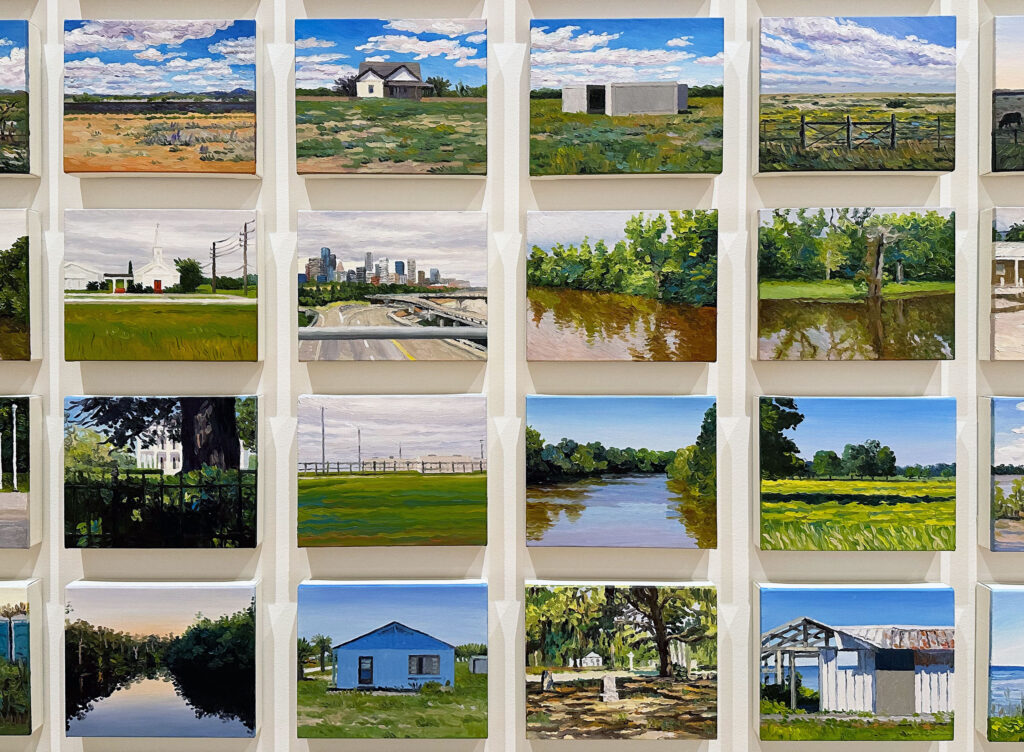
Cynthia Daignault, “Light Atlas”, 2014-2016, Oil on linen (detail)
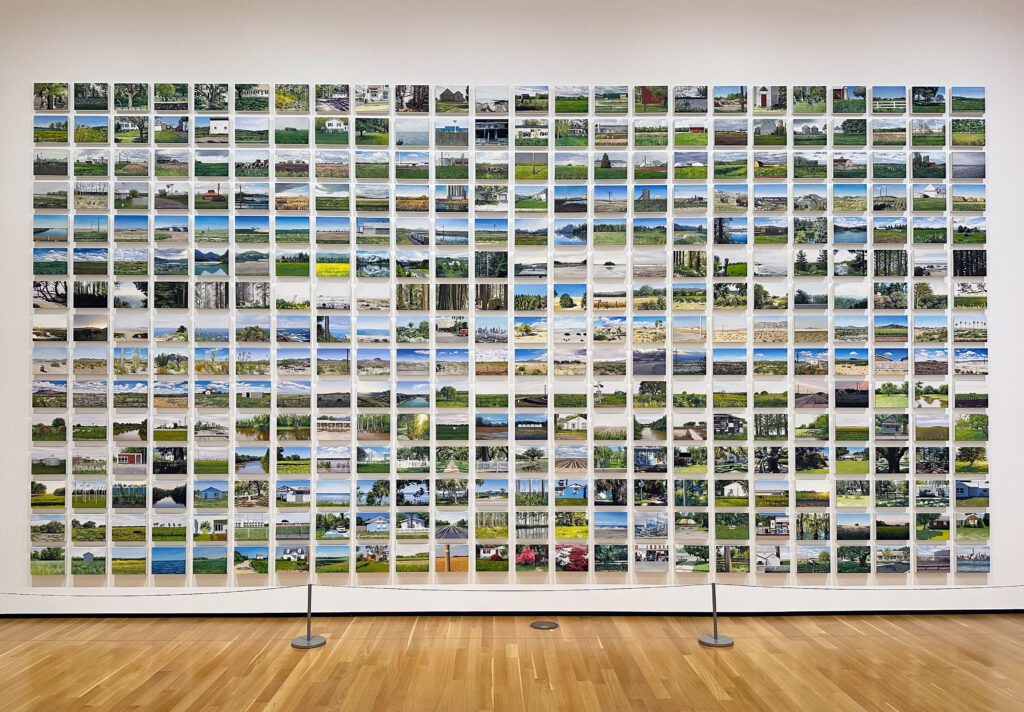
Light Atlas, a painting series by Cynthia Daignault, was on view at Akron Art Museum in 2024.

From the museum:

In 2014, Cynthia Daignault began driving north from her home in Brooklyn, New York. She turned west in New England and south at the Pacific Northwest, and she kept going until she had traced the entire outer perimeter of the continental United States. Having calculated the necessary distance, the artist stopped about every twenty-seven miles to make a sketch so that she could record a total of 360 images, representing the full circle of her journey. After five months on the road, she returned to her studio and created the paintings of Light Atlas. In each picture, Daignault placed the horizon line at the center, helping to suggest a continuous narrative and a collective portrait of the country. Having intentionally set out in the spring, she aimed to capture a mood of optimism and rebirth.

This series is currently on view as an installation at Thomas Cole National Historic Site in Catskill, NY. The 360 landscape paintings, will be on view until November 1st. On Saturday, September 12th, you can create a landscape painting with her for the site’s Second Saturday Workshop, and on Sunday she will be discussing Light Atlas for their Sunday Salon lecture series.

Daignault’s recent series, based on Yosemite National Park‘s iconic Tunnel View, is on view at the Institute of Contemporary Art / Boston until January 2027. For these paintings she used “the “mediated consciousness” of digital images, to meditate on our urgent and evolving relationship with the American landscape”.

For more about this series, this interview, from the museum’s website, provides more background on many of the conceptual ideas she is exploring with this work.
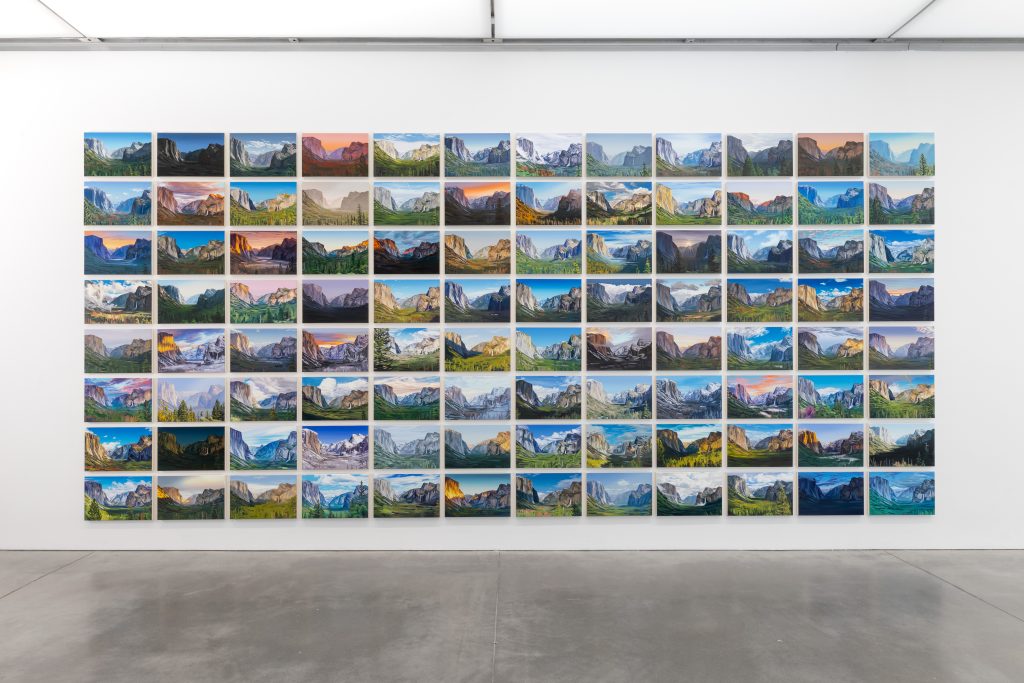
 

Installation view, Cynthia Daignault: Valley, the Institute of Contemporary Art/Boston, 2026-27. Photo by Mel Taing (Image via the Institute of Contemporary Art Boston website)

Jan 022024
 

Frank Weston Benson, “Natalie”, 1917, Oil on canvas

Childe Hassam, “Gathering Flowers in a French Garden”, 1888, Oil on canvas

Luther Emerson Van Gorder, “In the Park”, before 1894, Oil on canvas

Tampa Museum of Art’s current exhibition, Frontiers of Impressionism: Paintings from the Worcester Art Museum, features paintings by American and European impressionists and is a lovely reminder of the extraordinary works these artists created during this time period. The enduring popularity of the impressionists throughout the years makes sense when walking among these paintings. The use of color and brush work, as well as the details and beauty of the subject matter (not to mention the wealth and comfort often depicted)- make the viewer feel like they are being transported through time to the artist’s idyllic world.

From the museum-

In 2024, the term “impressionism” celebrates its 150th anniversary. Such a significant occasion inspires reflection on the profound impact that a relatively small group of artists in Paris made by positing a new mode of painting: one that favored painting outdoors over in a studio, immediacy over planning, the everyday over the grand, and the fleeting over the eternal. In doing so, the impressionists upended centuries of traditions in European art. This exhibition explores the radical impulses behind impressionism and its seemingly endless adaptability, as artists from around the world came to Paris to study and returned to their homelands, assimilating what they had absorbed and propelling the movement further.

The Worcester Art Museum pioneered new artistic horizons by embracing impressionism early in its history. The French and American impressionism collections at the Worcester Art Museum have long drawn visitors to the galleries. The first directors purchased works by Monet from his Parisian dealer, Durand-Ruel, as well as directly from American impressionists, making the Museum one of the first in the United States to collect impressionism actively as contemporary art. Over the past 125 years, this collection has grown, encapsulating the story of the movement’s roots and emergence in France and its subsequent expansion to the United States, Germany, Scandinavia, and beyond. Highlighting more than 30 artists, including Claude Monet, Pierre-Auguste Renoir, Camille Pissarro, Mary Cassatt, Childe Hassam, and Max Slevogt, this exhibition demonstrates impressionism’s international allure, captured in subjects as far-flung as Monet’s famed Giverny lily pond to the natural wonders of the Grand Canyon.

Below are a few more selections from the show.

Max Slevogt, “Selbstbildnis im Garten (A Self-Portrait in the Garden at Godgramstein), 1910, Oil on canvas

Max Slevogt, “Selbstbildnis im Garten (A Self-Portrait in the Garden at Godgramstein), 1910, Oil on canvas (detail)

Paul Signac, “Golfe Juan”, 1896, Oil on canvas

Thomas Cole, “View on the Arno, near Florence”, 1837, Oil on canvas

Lovis Corinth, “Vordem Spiegel (At the Mirror)”, 1912, Oil on canvas

John Singer Sargent, “Katherine Chase Pratt”, 1890, Oil on canvas

About the unfinished painting above (from the museum)-

A successful society portraitist, Sargent painted the elite from his international social circles. In June 1890, Sargent visited Worcester, Massachusetts, where he was inundated by requests for portraits. The sitter’s father, Frederick Pratt, a noted collector and eventual acting director of the Worcester Art Museum (1908 and 1917), became friends with the artist and invited him to return a few months later to paint his daughter, Katherine- although the idea for Katherine’s portrait originated in Sargent’s first trip to Worcester, when he had made a sketch of hydrangeas. Sargent’s vision of Katherine against a backdrop of flowers, however, proved less than satisfactory for his client and he abandoned the painting for another, more formal depiction. As an unfinished work, this painting reveals the immediacy of Sargent’s process, with careful attention to broad swaths of color and patterns in the brushwork to convey flower petals or folds of clothing.

This exhibition will be on view until 1/7/2024.