
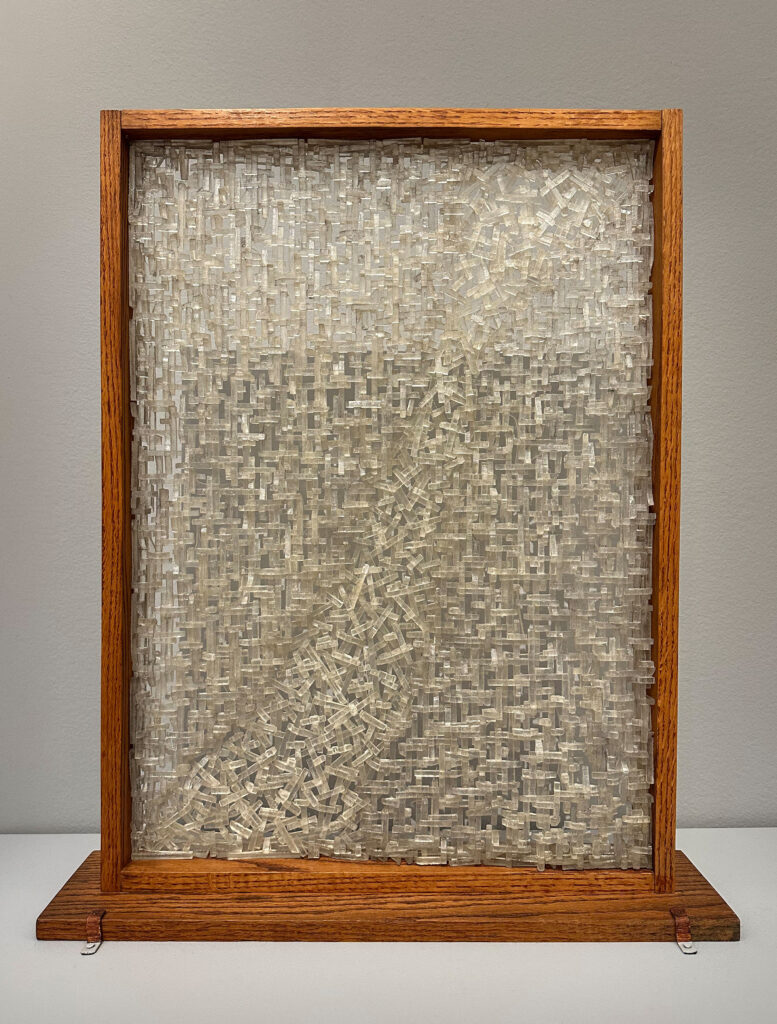
Leo Amino, “In Between”, 1962, Acrylic and wood
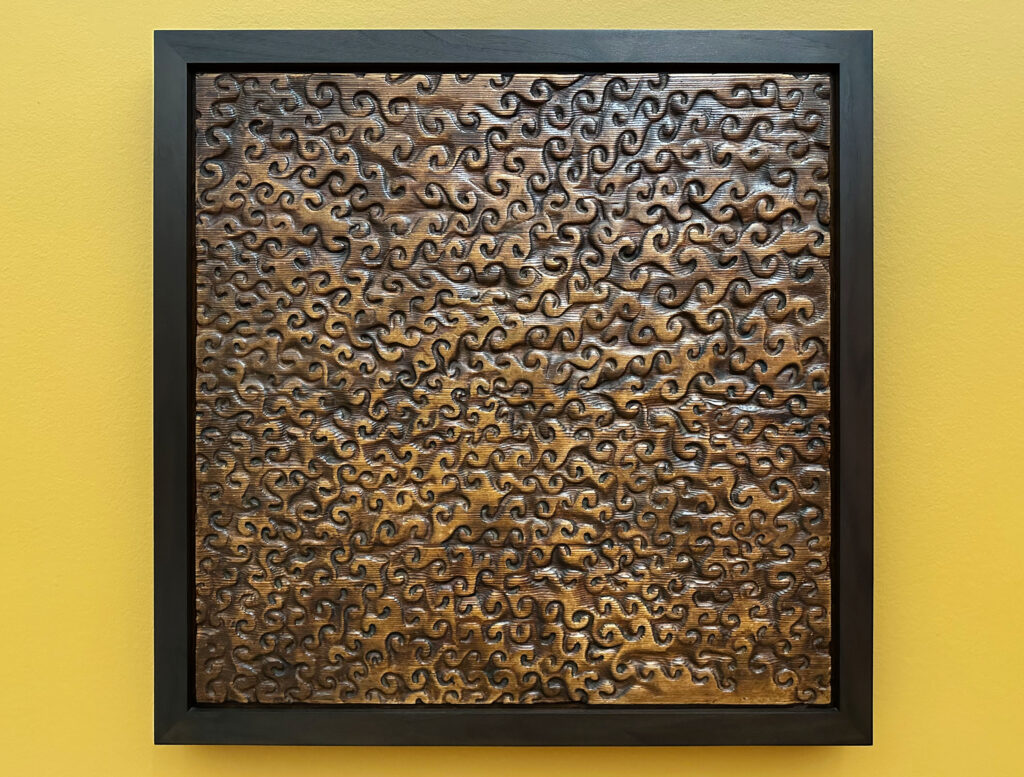
Ruth Asawa, “Untitled (S.818 Carved meander Panel)”, 1965, Sugar pine carved center section with oak table frame
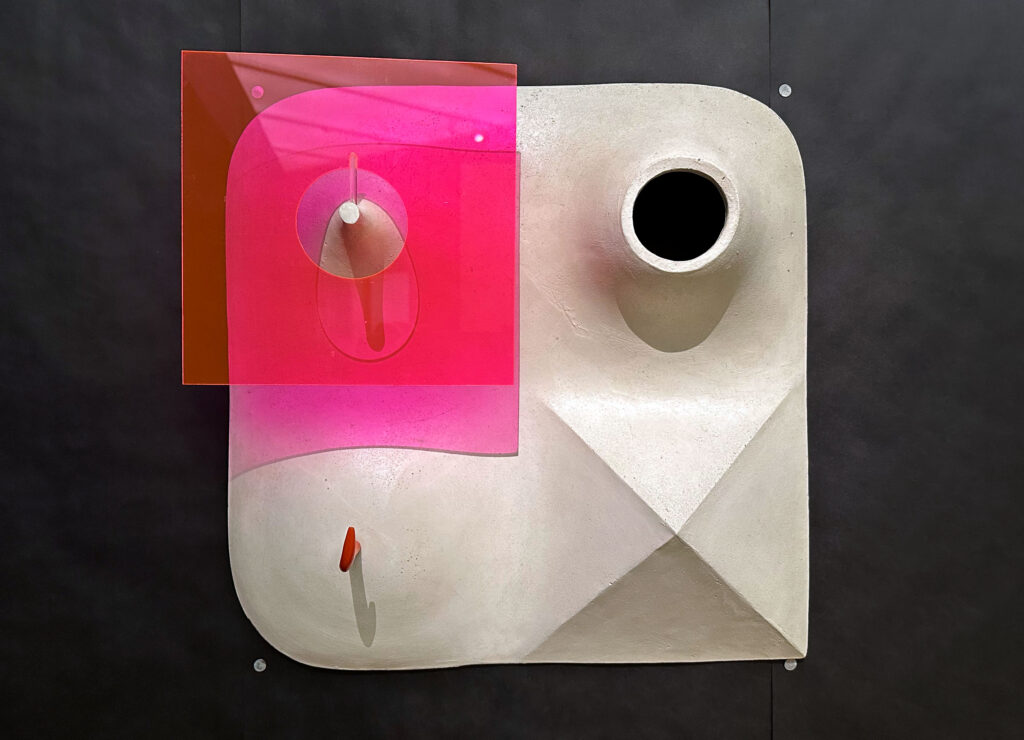
Isamu Noguchi, “My Arizona” (original magnesite body replaced by the artist, 1978), 1943, Fiberglass and plexiglass
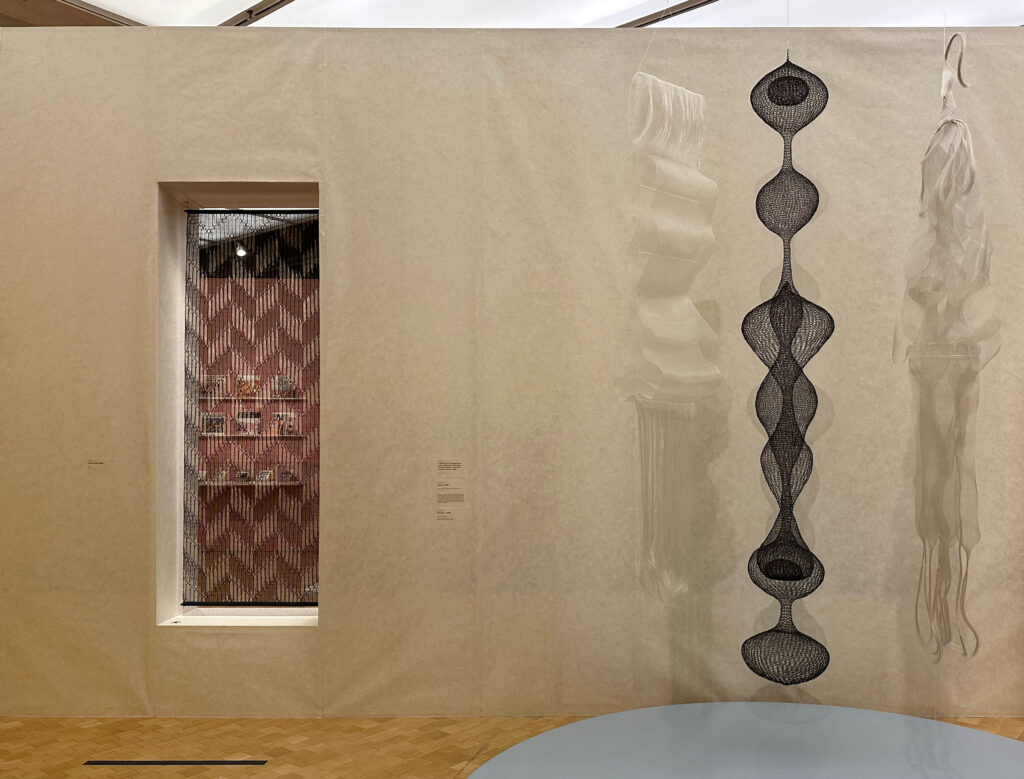
(from far left to right) Kay Sekimachi, “Room Divider”, 1960, linen; Kay Sekimachi, “Ogawa II”, 1969, Nylon monofilament, glass beads, and plastic tubing; Ruth Asawa, “Untitled” (S. 272, Hanging Seven-Lobed Continuous Interlocking Form with Spheres in the First and Sixth Lobes), c. 1954, Copper and iron wire; Kay Sekimachi, “Kunoyuki”, c.1968, Nylon monofilament
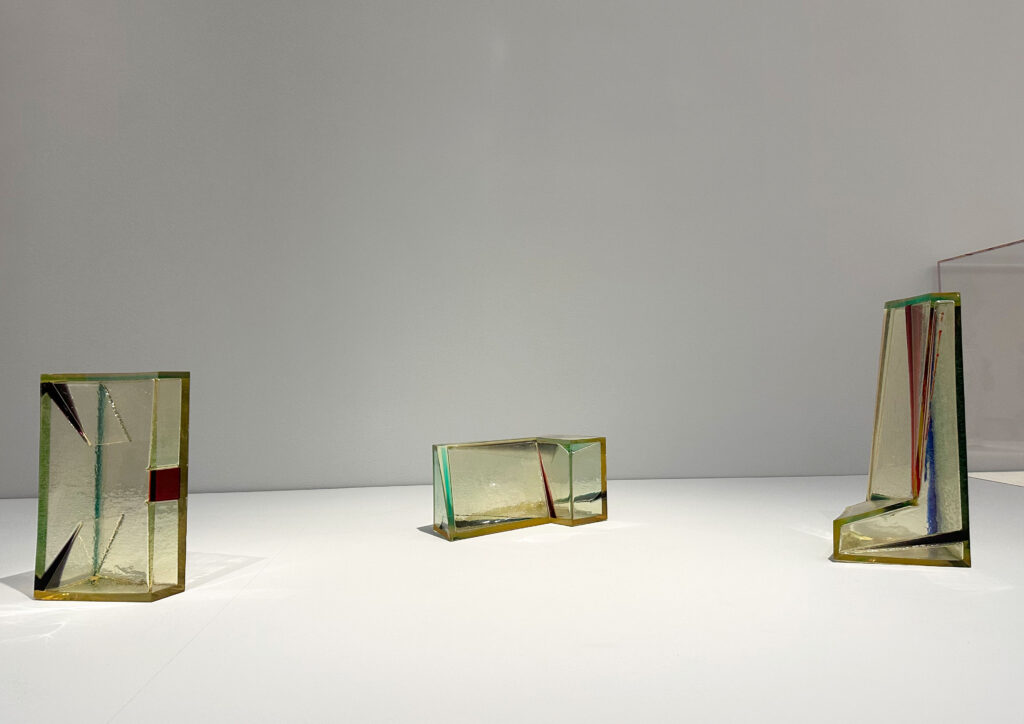
Leo Amino, three works from his “Refractional” series from the 1960s, Polyester resin
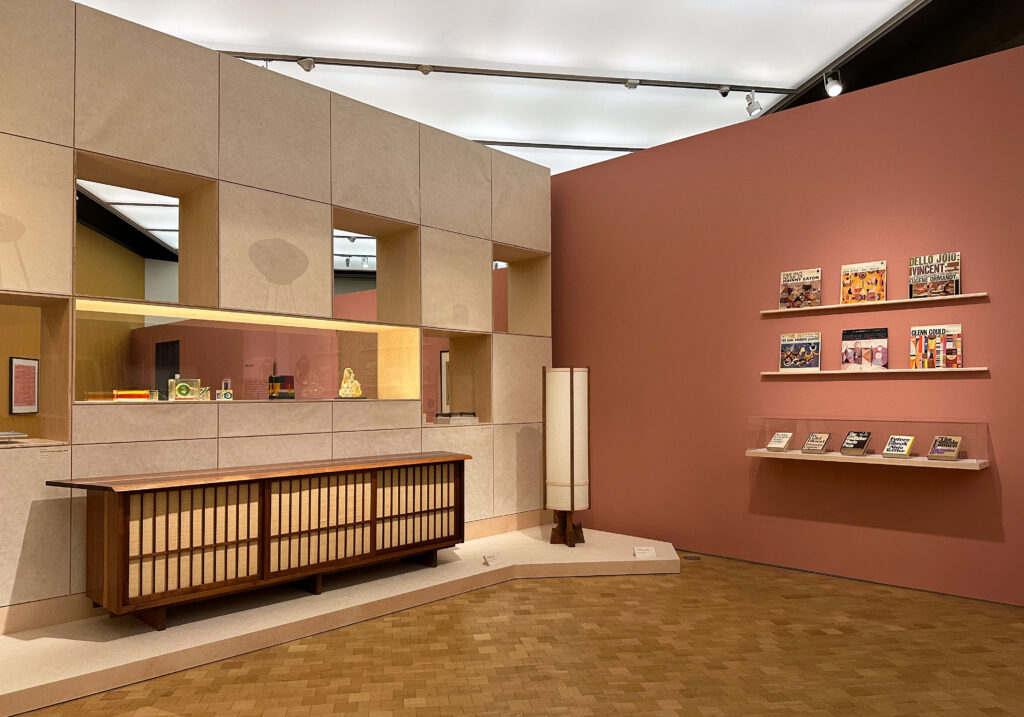
A beautifully curated exhibition that includes furniture, fine art, and graphic design, Noguchi to Asawa: Designing Postwar America, currently on view at the Barnes Foundation in Philadelphia, features work by Japanese American artists Isamu Noguchi, George Nakashima, Leo Amino, S. Neil Fujita, Kay Sekimachi, and Ruth Asawa. It celebrates their numerous contributions to American art and culture while also focusing on how the World War II incarceration of Japanese Americans and its aftermath affected their work and careers.
From the Barnes about the exhibition:
At first glance, something familiar. Look again.
You’ve seen these forms before—a paper lantern, a walnut table, a wire form suspended in light. What you perhaps haven’t seen is who made them, or what shaped them.
Sculptor and designer Isamu Noguchi • Architect and furniture designer George Nakashima • Sculptor Leo Amino • Graphic designer S. Neil Fujita • Fiber artist Kay Sekimachi • Artist and sculptor Ruth Asawa
Noguchi, Nakashima, and Amino had started to build their practices before December 1941, when the Japanese military attacked Pearl Harbor. The attack brought the United States into World War II, and Japanese and Japanese American families were sent to incarceration camps—a seismic rupture that redirected these artists’ work and careers. Fujita was 20 at the time, and Sekimachi and Asawa just teenagers; some of their earliest art training happened inside the camps. Each of the six followed a different path from there.
The works they created weren’t just gallery objects. They were album covers stacked by the record player, a chair at the dinner table, a lamp lighting the corner of a living room. You might not own the originals. You’ve likely lived with their influence anyway: this is the design language that shaped how a generation furnished, decorated, and saw modern America.
Noguchi to Asawa: Designing Postwar America is the first exhibition of its kind to unite the work of these six iconic artists, and to consider the question at the heart of the show: what shaped these objects, and who shaped America because of it?
This exhibition is on view until 1/10/27.