Dec 052020
 

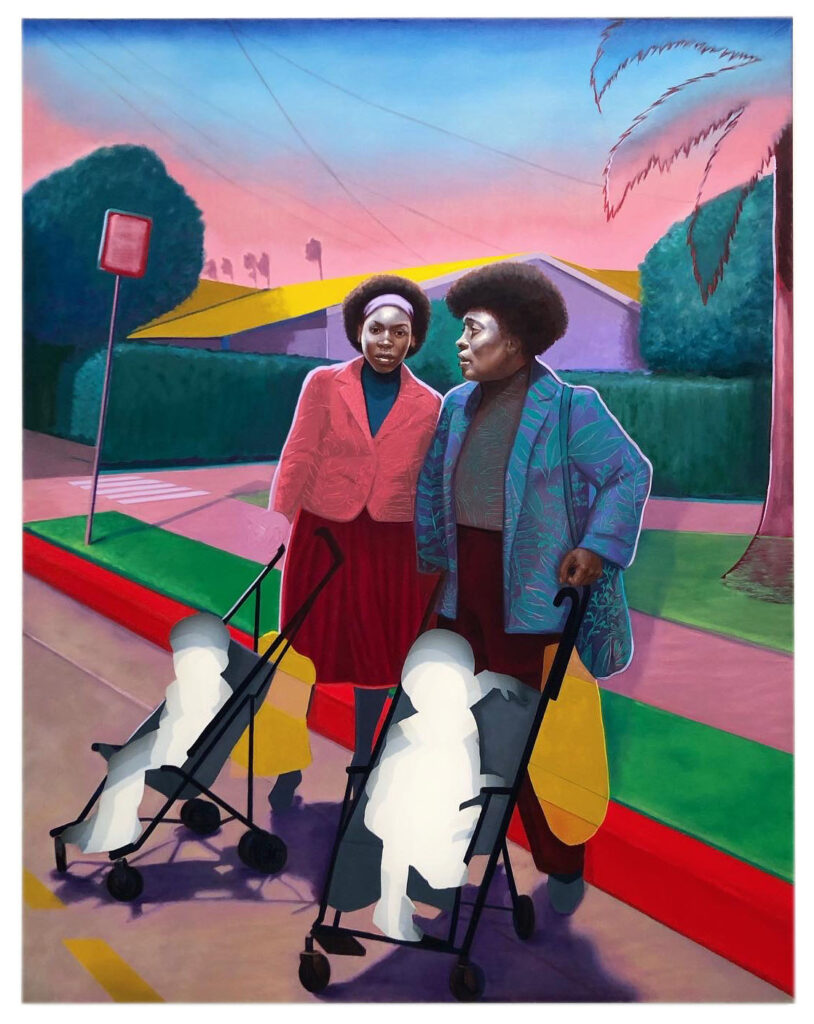
Not My Burden, 2019

From a Tropical Space, 2019
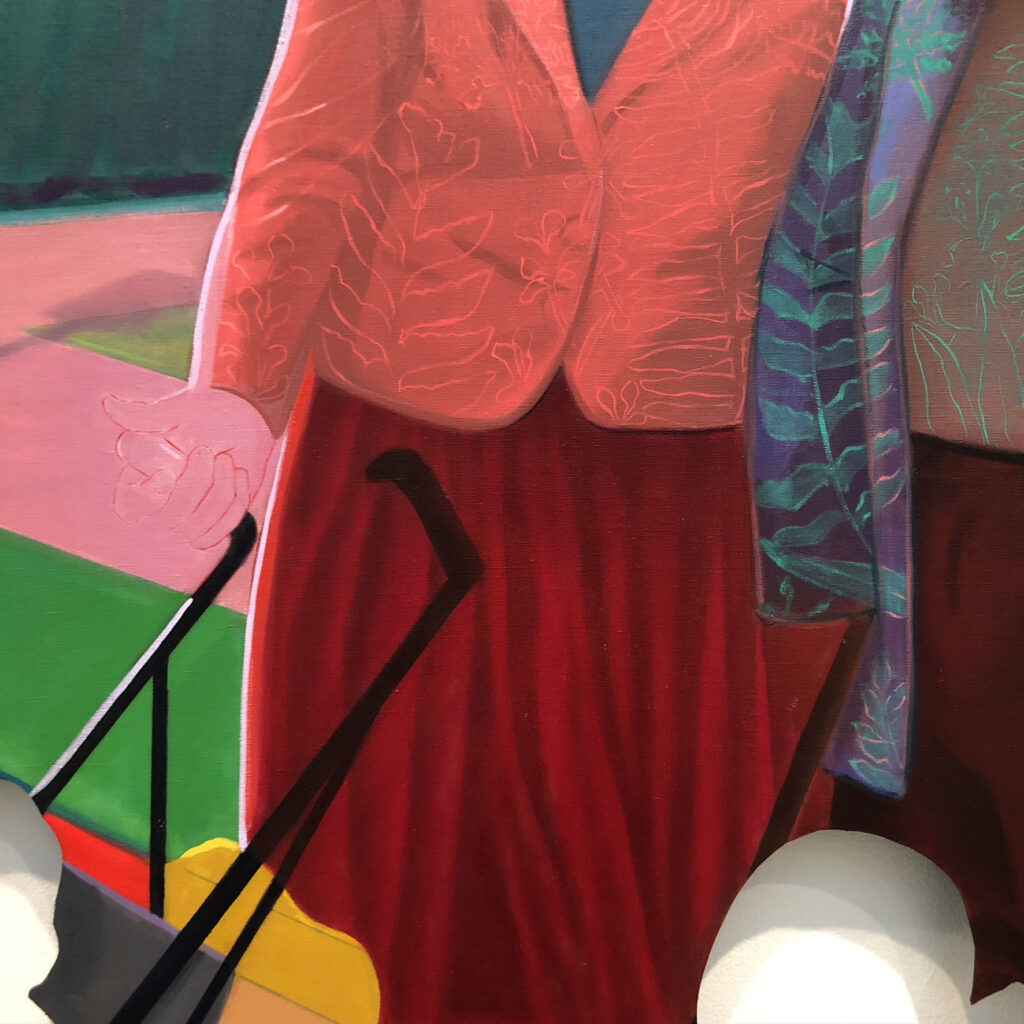
From a Tropical Space (detail)
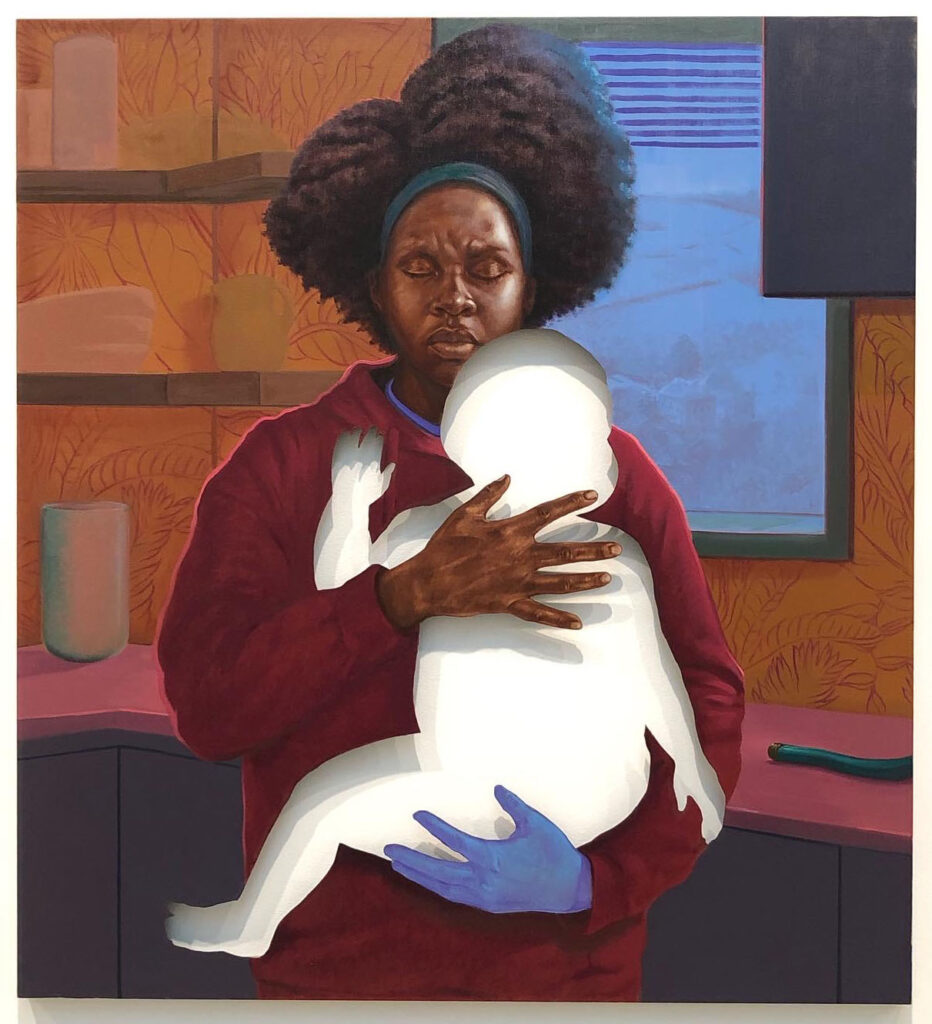
Analogous Colors, 2020
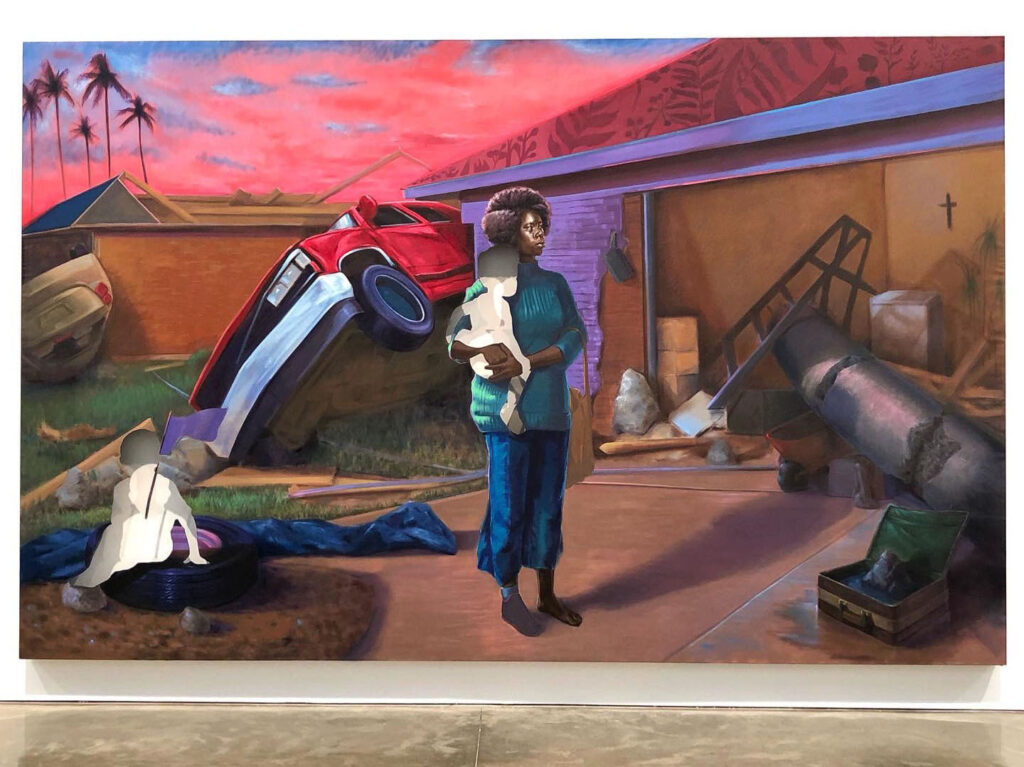
The Aftermath, 2020
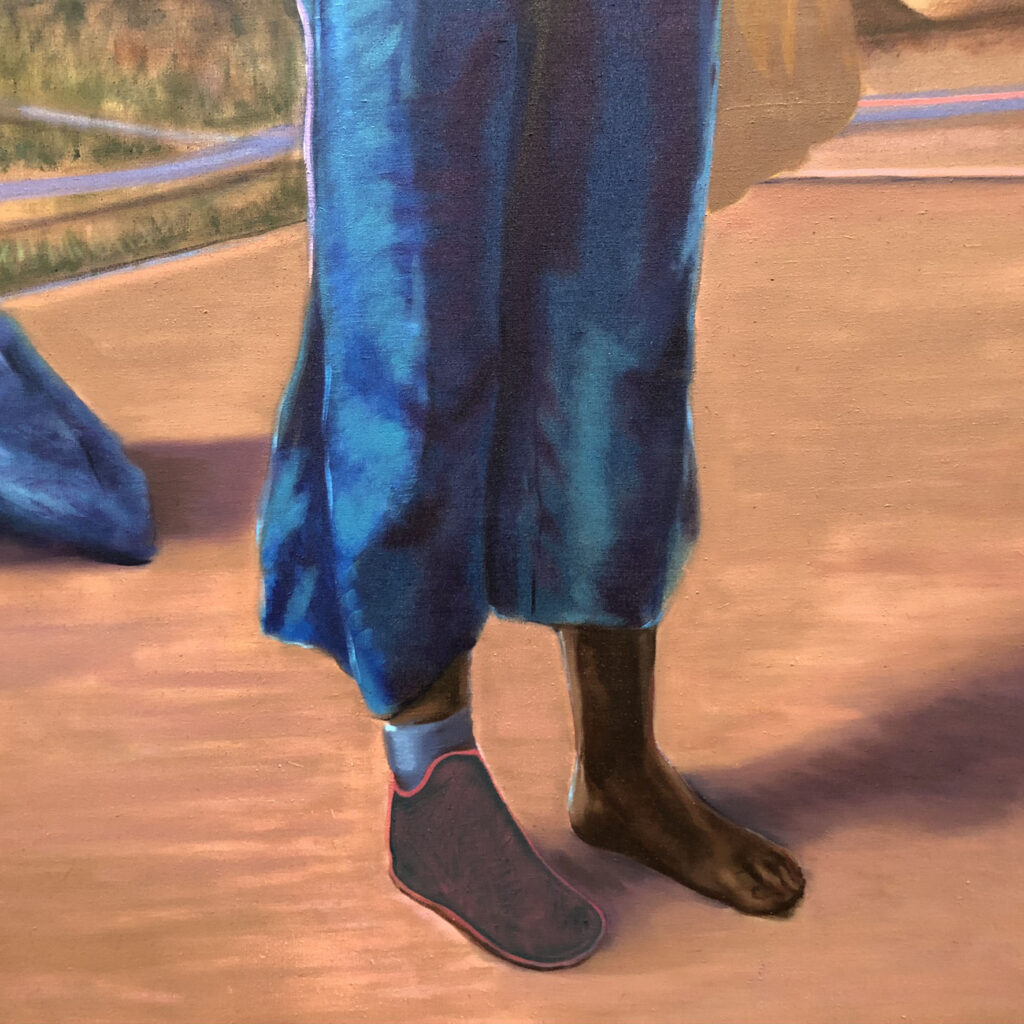
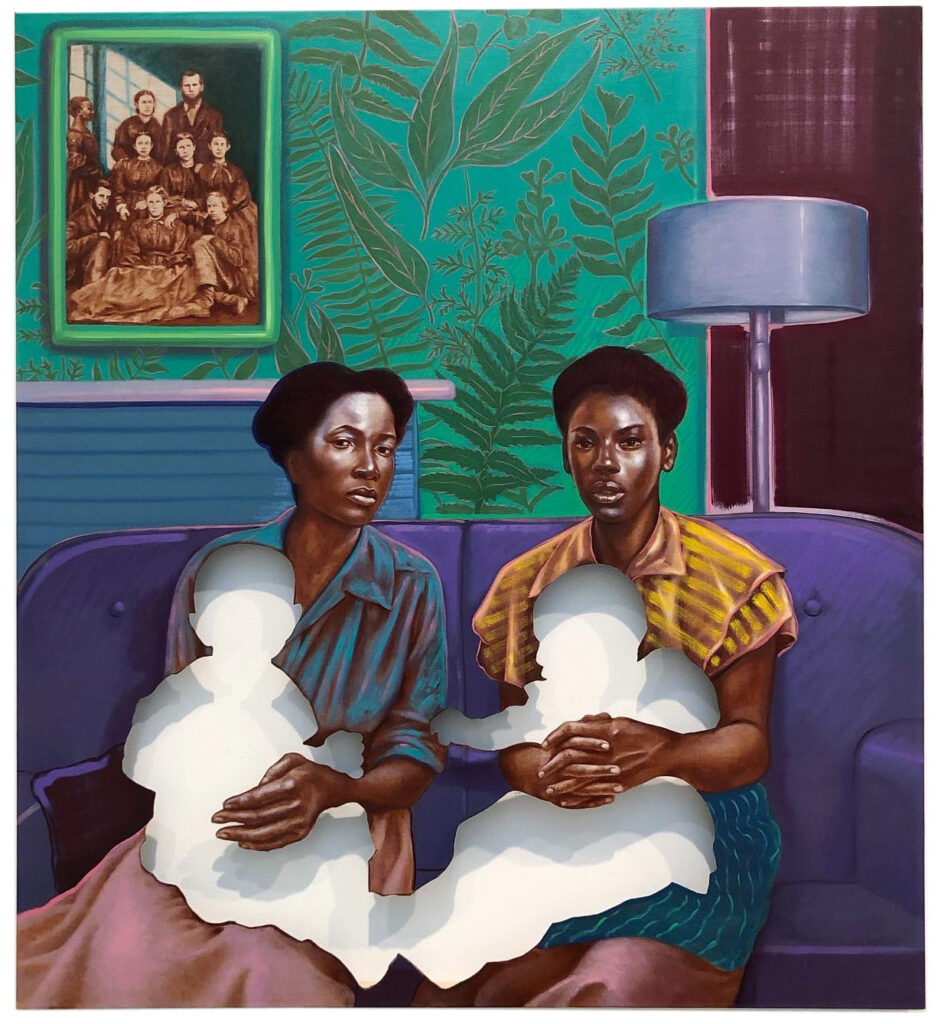
For Titus Kaphar’s first exhibition at Gagosian Gallery in NYC, From A Tropical Space, he has created moving scenes of loss, with children cut out of the paintings. While the cutouts and vivid colors are the first things that get noticed, on a longer look you can see that the women in these paintings are not just missing children, but often pieces of their own bodies are affected. Arms, a hand fading away or turning blue, a leg with only one sock and shoe- these women are losing more than what has been cut away from them, they are losing parts of themselves.

From the press release-

A painter, sculptor, filmmaker, and installation artist, Kaphar reexamines American history by deconstructing existing representations and styles through his own formal innovations. His practice seeks to dislodge history from its status as “past” in order to understand its continuing impact on the present. Using materials including tar, glass, and rusted nails—together with highly refined oil painting—and employing techniques such as cutting, shredding, stitching, binding, and erasing, he reworks canonical art historical codes and conventions. And by uncovering the conceptual and narrative underpinnings of certain source images, he explores the manipulation of cultural and personal identity as a central thematic concern while inventing new narratives.

While much of Kaphar’s work begins with an exhaustive study of pre-twentieth-century master painting techniques, From a Tropical Space sees him wield these various methods to create an emotionally saturated visual landscape that is entirely contemporary. Just as artists, through time, have translated the fraught and mercurial sociopolitical contexts in which they operate into new and often radical aesthetic modes, so do the pervasive social and cultural anxieties of the world in which we find ourselves resonate throughout Kaphar’s new work.

In From a Tropical Space, Kaphar presents a haunting narrative of Black motherhood wherein collective fear and trauma crescendo in the disappearance of children, literalized through the physical excision of their images from the canvases themselves. The absence of each juvenile figure—whether seated in a stroller or held in a woman’s arms—reveals only the blank gallery wall beneath. The intense coloration of the suburban environments in which the figures are set only heightens a pervasive tension—these are images for uncertain times. Included in the exhibition is Analogous Colors (2020). Demonstrating further the broader resonance of Kaphar’s recent work, the painting was featured on the cover of the June 15 issue of Time magazine, which included a report on the protests sparked by George Floyd’s killing at the hands of Minneapolis police.

This exhibition closes 12/19/20.

Jan 102020
 

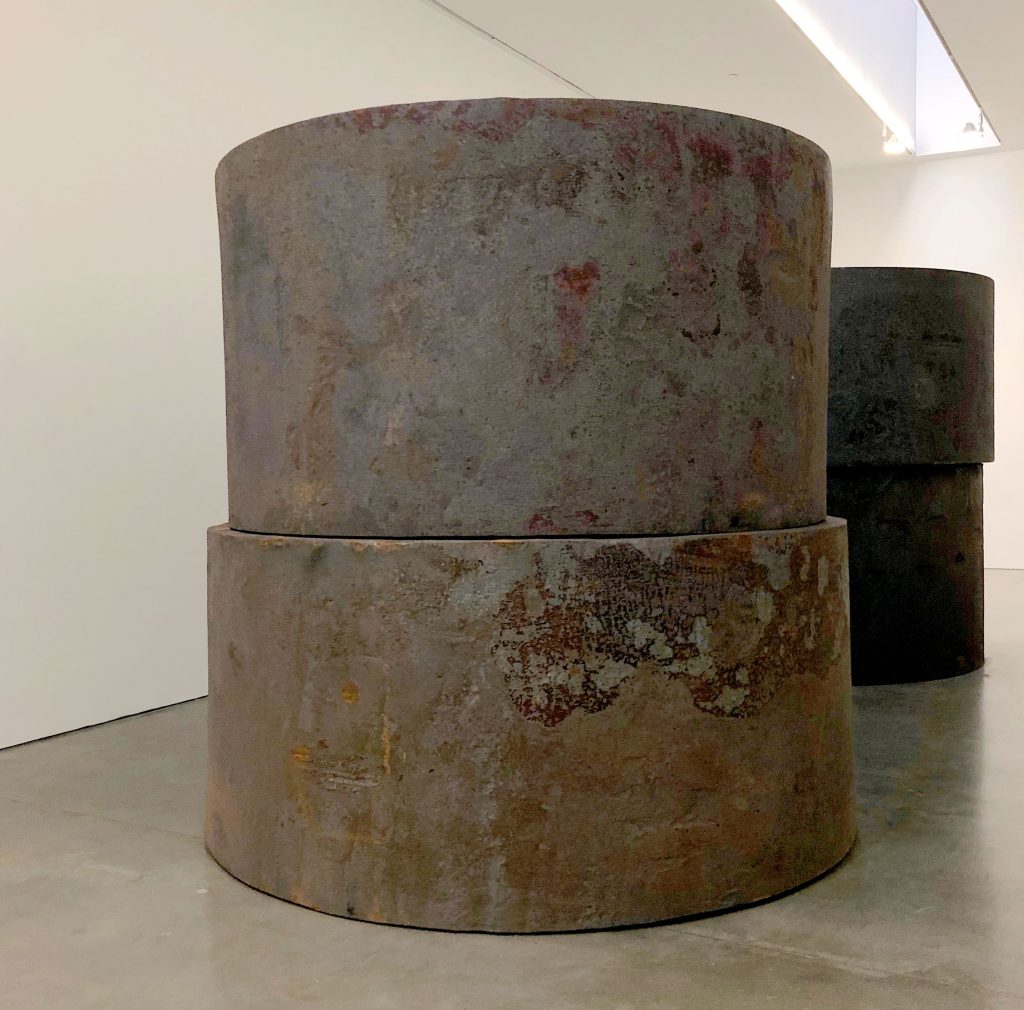
Gagosian is currently showing artist Richard Serra’s work at two of their locations. Above are works from Serra’s Rounds series and fill the entire West 24th Street location (closing 1/11/20), and in the 21st Street space is his Reverse Curve sculpture (closing 2/1/20).

May 202017
 

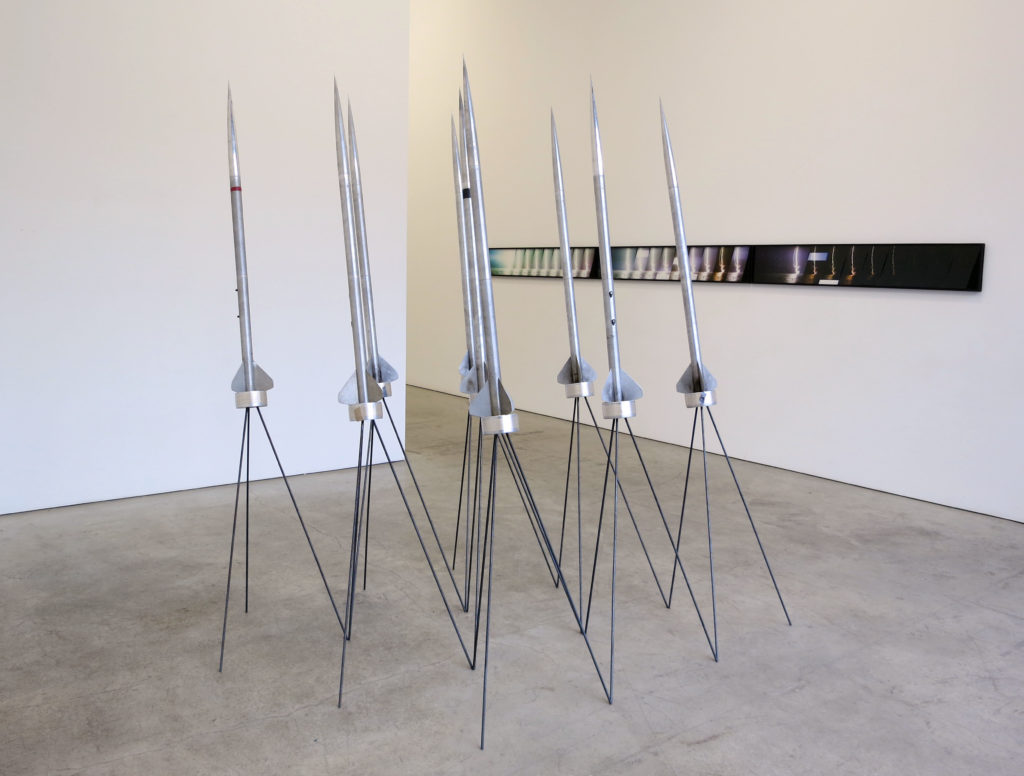
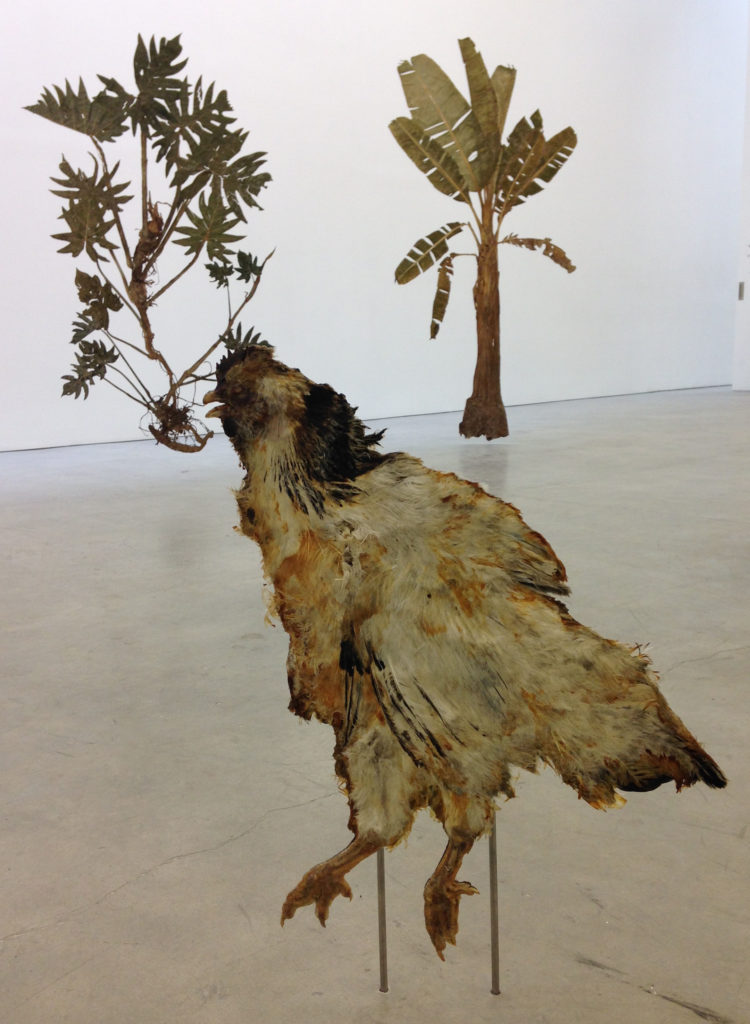
Julius von Bismarck’s Good Weather at Marlborough Contemporary is an interesting meditation on man’s desire to control nature. The first half of the exhibition focuses on Bismarck’s attempts to capture a lightning bolt with the rockets pictured above. In a side room there is a mesmerizing video of a storm rolling into a jungle and the lightning that he used for his experiment. The second half of the gallery focuses on pressed plant species and chickens.

In the press release his process for achieving these flattened works is described in detail-

Like a Colonial scientist, von Bismarck has collected plant species from jungle. Rather than pressing tiny flowers in a notebook, the artist has pressed large plants and entire palm trees into flattened specimens. Heated to a precise 250 degrees in an enormous custom-built oven and a 50-ton hydraulic press, the plants are completely dehydrated without losing their verdant coloration, and squashed astonishingly flat. They are then backed with thin stainless steel to maintain their shape for presentation.

This exhibition closes 5/20/17.

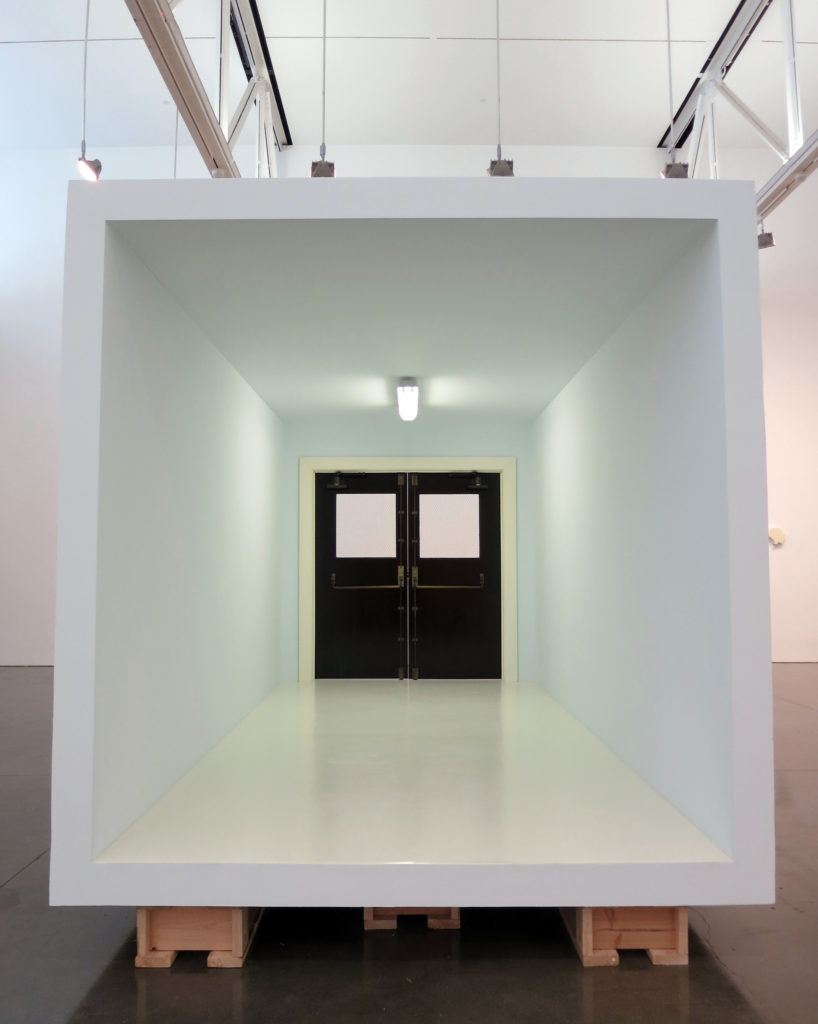
                                                                                       No title (room, panic doors), 2013-14

At Gagosian gallery is Robert Therrien‘s first show in New York in ten years. The artist, well known for his sculptures of massive tables, chairs and plates, is now creating rooms and new objects- which include drops, a bow, and a flagpole. The rooms are the works that stand out most, both in scale and in the disconcerting feeling of environments that should feel more normal than they do.

From the press release-

Despite their verisimilitude, Therrien’s rooms impede the viewer’s ability to engage with space in any comfortable way.  Meticulously assembled features of common industrial design allow one to stand in front of architectural vistas. Elevated above ground level and cut away to show interiors that, like dioramas, become impenetrable replicas of reality, each is like a mise-en-scène or readymade. No title (room, panic doors) (2013–14) presents a set of doors in a room filled with fluorescent light. In No title (paneled room) (2017), tambourines rest silent on the floor of a room luxuriously paneled in hardwood, and a ladder leads to a trapdoor in the ceiling. Each room transports the viewer out of the gallery and into a new narrative situation, prompting connections between material details and their subconscious associations. By making use of everyday things that are often overlooked, Therrien situates the viewer in familiar territory, then allows the objects to demand reassessment as instruments of subjectivity and of consciousness itself.

This exhibition closes 5/26/17.

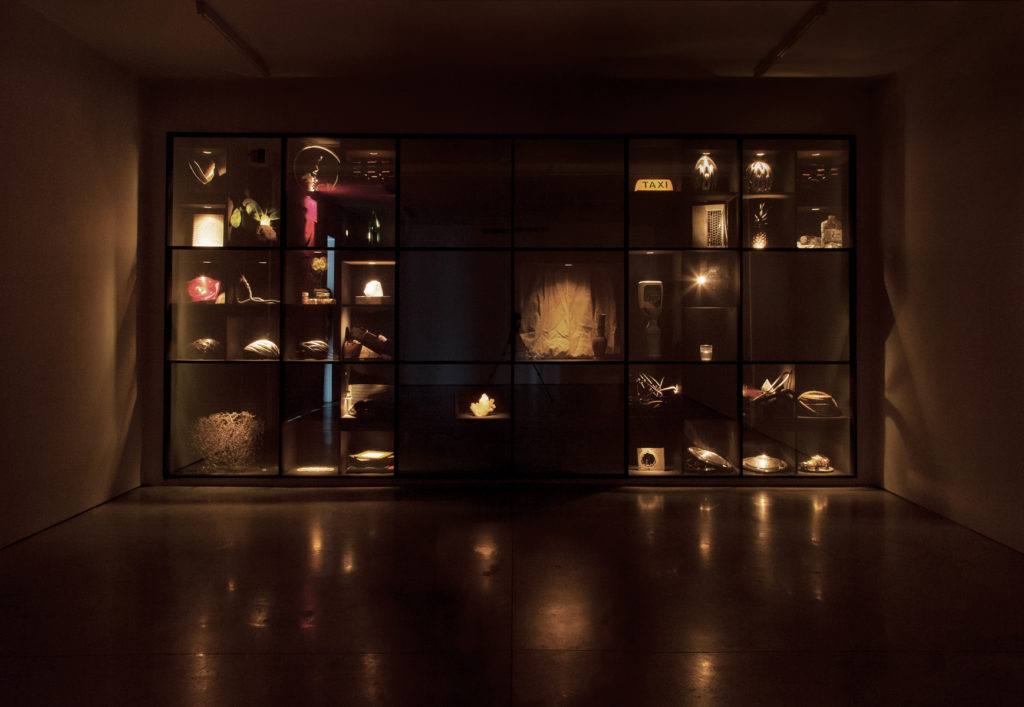
For a room of a different sort, there is Gabriel Lester’s Nevada at Ryan Lee gallery, in which various sections of a wall sized installation light up as assorted voices tell their stories.

                                                                                        Nevada, 2017 (image courtesy of Ryan Lee)
From the press release-

Questions of presence and absence resurface in Nevada, the second component of this exhibition. Nevada confronts the viewer with a floor to ceiling modular wall. Carefully selected objects that correspond with the individual stories combined in Nevada’s multilayered narrative occupy each compartment. Guided by light and sound, the viewer navigates the histories of a series of anonymous characters that find themselves locked out of the world they used to inhabit. In an effort to escape the parallel world in which they have come to dwell, each character attempts to understand the nature and cause of their own existence. Considering personal memories and local histories of migration, mining, gambling, nuclear test sites, and mysterious locations like Area 51 and the Nevada triangle (an area in the California-Nevada desert where numerous aircrafts have vanished), Lester’s Nevada probes the tensions that link the seemingly distinct characteristics of this place to a number of characters looking for a way back to a life they have lost.

The exhibition opens onto a room of low-resolution LED panels showing internet-sourced images of near extinct animals and their habitats. The two rooms feel like separate exhibitions but are brought together by their shared qualities of losing one’s place in the current world.

This show runs until 5/20/17.

Mar 102017
 

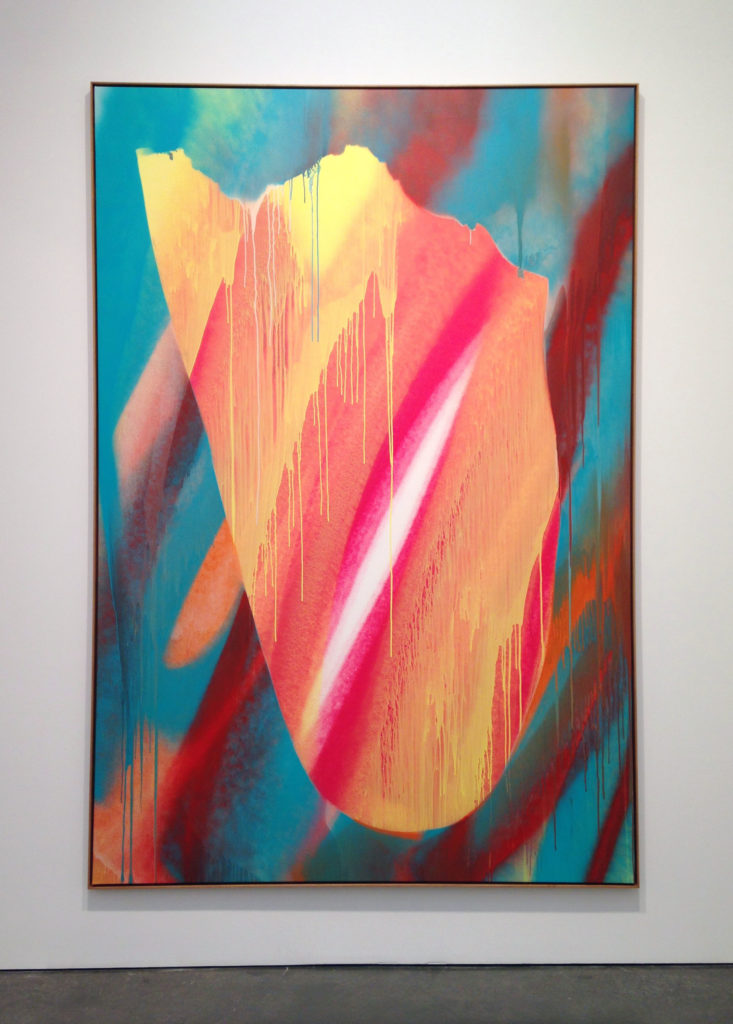
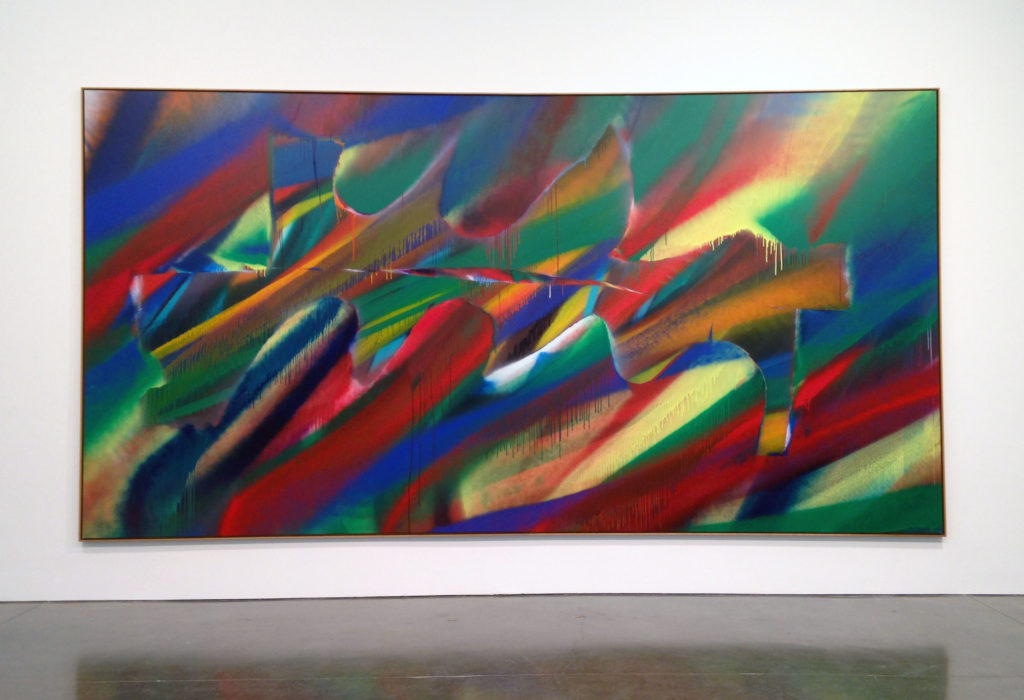
Katharina Grosse‘s current exhibition at Gagosian, consists of dynamic brightly colored canvases and one cast metal sculpture. Unlike traditional painting, these works are created using a spray gun which creates the unique effects.

Her process is described in the press release-

Embracing the events and incidents that arise as she paints, Grosse opens up surfaces and spaces to the countless perceptual possibilities of the medium. While she is widely known for her temporary and permanent in situ work, which she paints directly onto architecture, interiors, and landscapes, her approach begins in the studio. With calculated focus, she allows new patterns and procedures in her paintings to emerge from action, further multiplying this potential with stencils cut from cardboard and thick foam rubber—tools with which to develop further cuts, layers, and perspectival depths. Grosse’s gestures unfold all at the same time in unmixed acrylic colors, engulfing the viewer in a toxic sublime.

In this exhibition, selected works from several interconnected suites of untitled paintings produced during the last twelve months demonstrate this constant interaction of process and material. Base shapes migrate from one painting to another, appearing in new layers or fusing into clusters that advance and retreat. The paintings record Grosse’s ongoing choices about color, density, and velocity. In one group, monadic forms proclaim their specific hues within larger zones of color. A red shape takes its place amidst expressive jewel-toned streaks. A plane of cerulean blue opens, or perhaps closes, to a black and yellow void. In other more complex orchestrations, these coloristic moments become so compelling that the canvas, which supports it all, is easily forgotten.

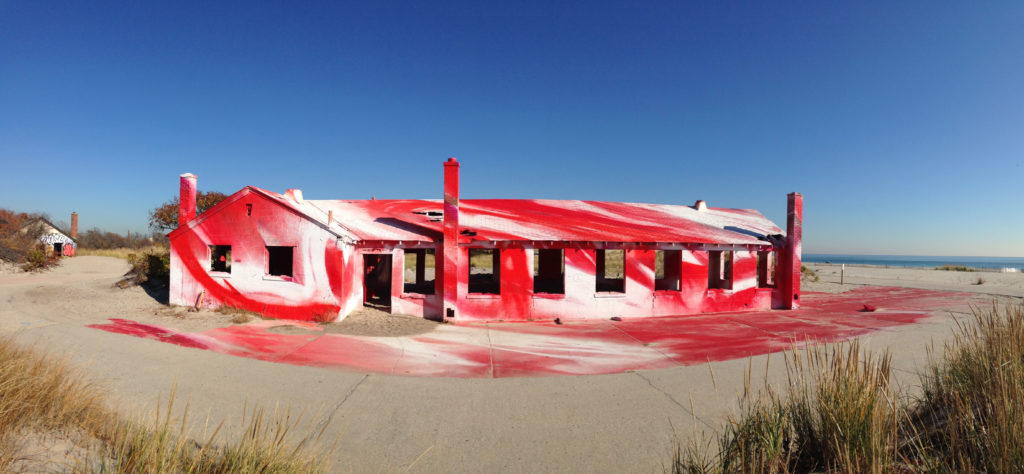
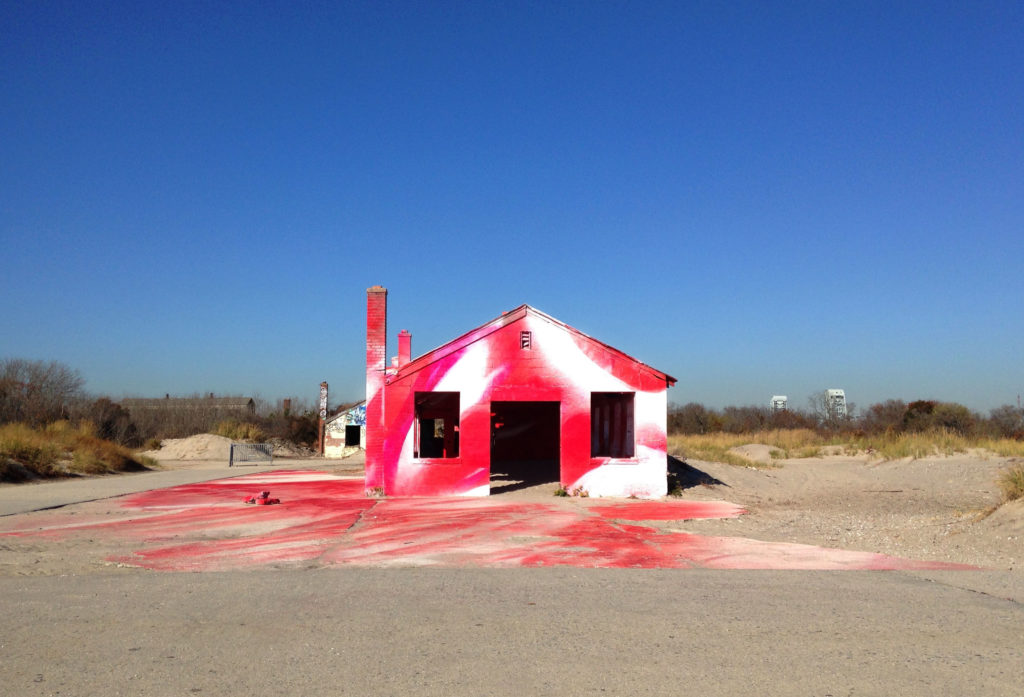
Grosse also made news this past summer with her installation for MOMA P.S. 1, titled Rockaway!. Located at Fort Tilden, she used a similar technique to paint an abandoned and soon to be demolished building (due to being structurally unsound after Hurricane Sandy).

 Grosse’s gallery exhibition closes this weekend, 3/11/17.
Nov 012013
 

tabledead

(photo above of Dia de Los Muertos @ Hollywood Forever- 2012)

Things to do in Los Angeles this weekend-

Also, the following museums are free all weekend with a Bank America card: LACMA, Hammer, Skirball Cultural Center, Discovery Science Center, and Autry National Center.