Jun 162021
 

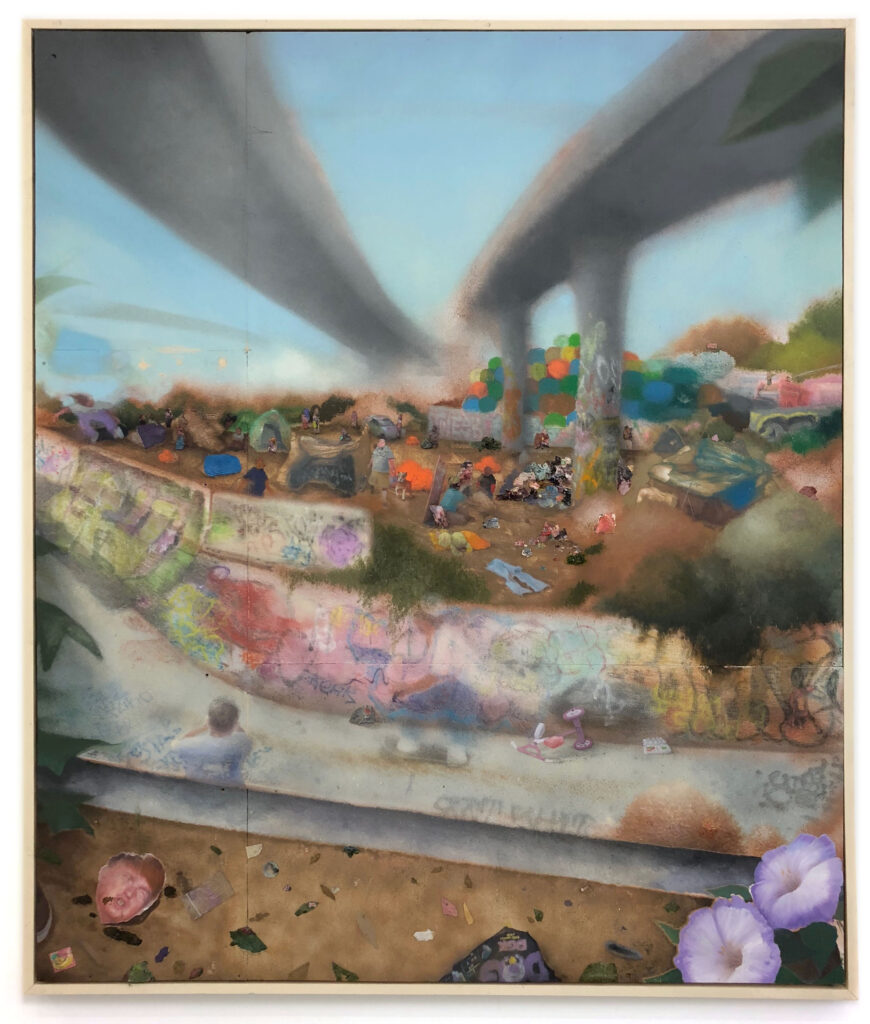
Wasteland Paradise, 2018
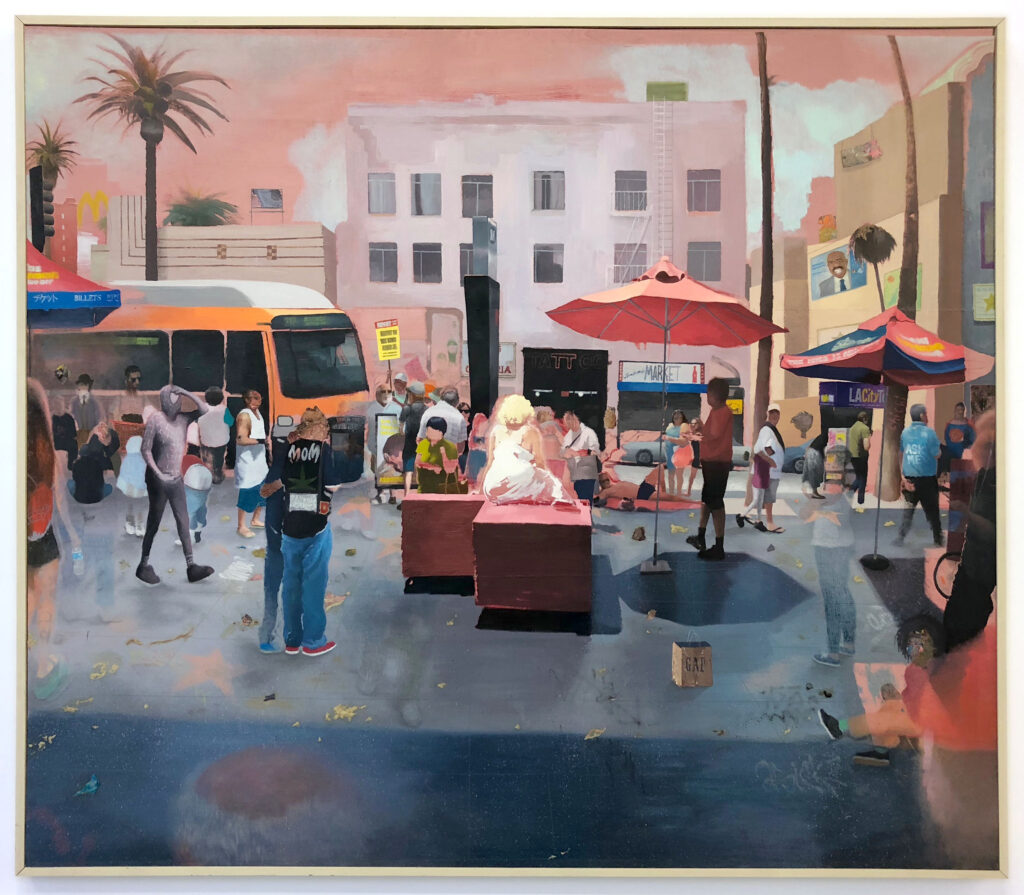
Hollywood/ Highland, 2017

These paintings are from Michael Alvarez’s 2018 exhibition We’re Out Here at Marlborough gallery in New York.

From the press release–

Taking inspiration from his immediate surroundings in the domestic sphere, at work in alternative education high schools and Juvenile Detention Centers, and the city at large, Alvarez creates a compound narrative of life as lived in the complex sprawl of his native Los Angeles. From the glitz and dashed hopes of Hollywood Boulevard to the backyard barbeque we begin to see through carefully constructed surfaces, revealing a tender humanity.

Also depicted are more marginal and thornier hybrid sites. Concrete drainage ditches, that double as skateboarding spots and broad canvasses for graffiti murals, are also host to homeless encampments, presenting a friction between an ascendant and hopeful lawlessness and the desperation of pure survival. Similarly, the eponymous painting We’re Out Here, which was created in collaboration with his incarcerated students (Alvarez’s portraits are interspersed with students’ original artworks) underscores the fine line and expanding gulf between opportunity and a dead-end existence.

Technically, Alvarez mixes a matter-of-fact style with dashes of magical realism. Exhibiting a keen understanding of photo-specific technique, figures blur and ghost across the images suggesting movement through time and space in a static image. Appropriately, snapshot source material ranges from the posed semi-formality of the family portrait to the yearbook-candid playfulness of his students. These images are collaged or cleverly composited into painted scenes that are invested with a warmth, humor and realism that supersedes mere depiction.

Alvarez recently was part of a group show at Sow and Tailor in Los Angeles. Follow his Instagram for more updates on his work and shows.
Dec 052020
 

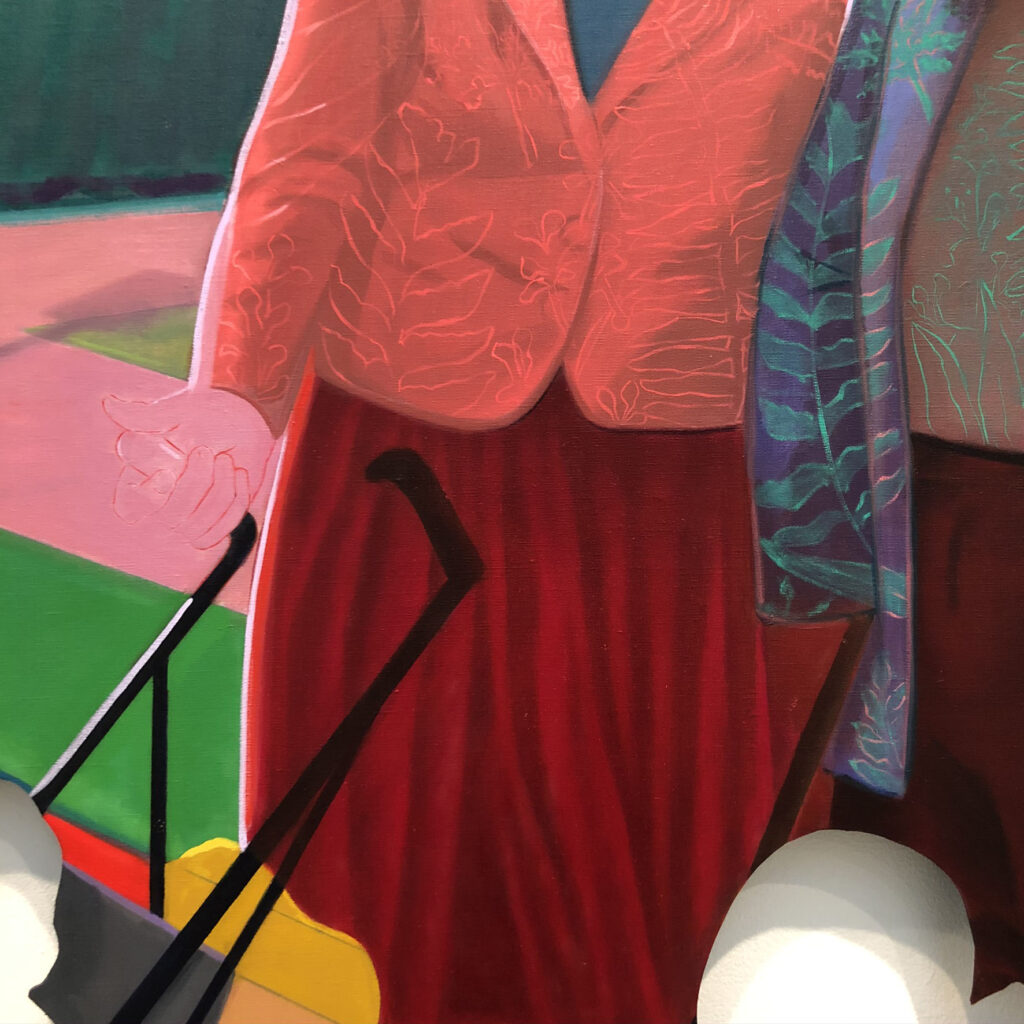
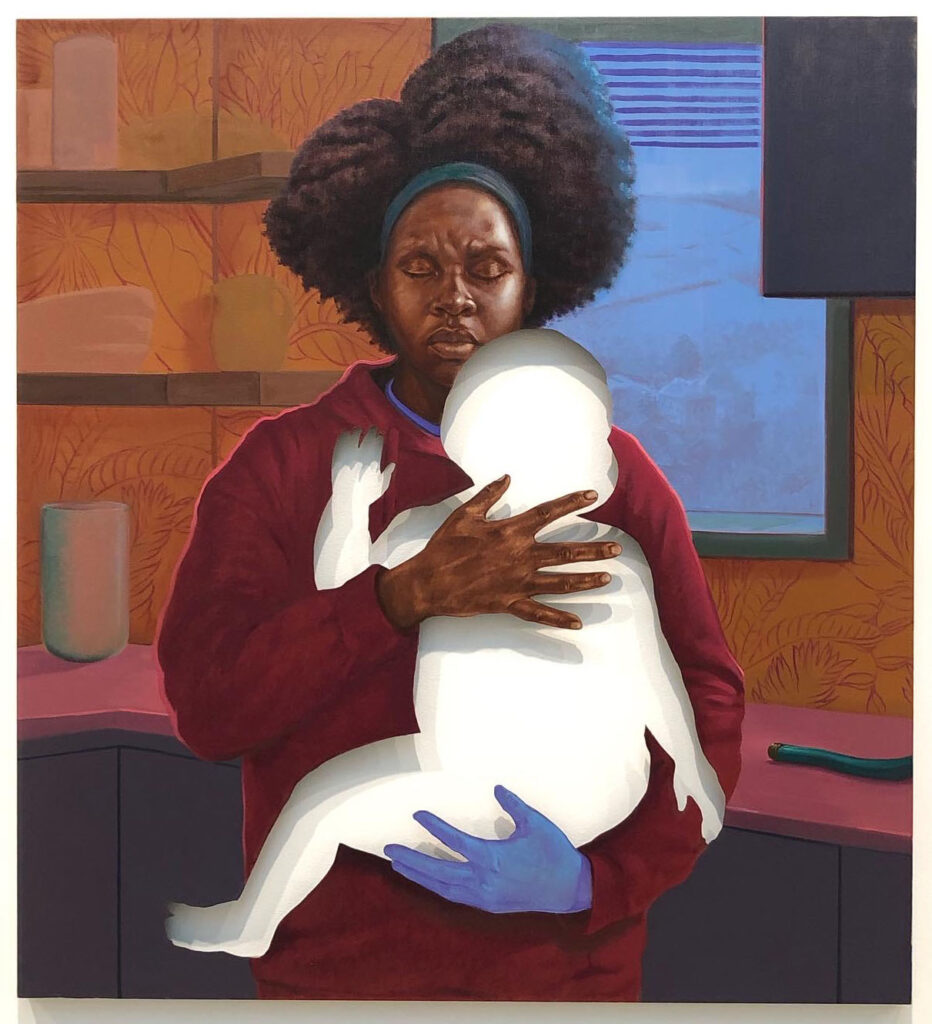
Not My Burden, 2019

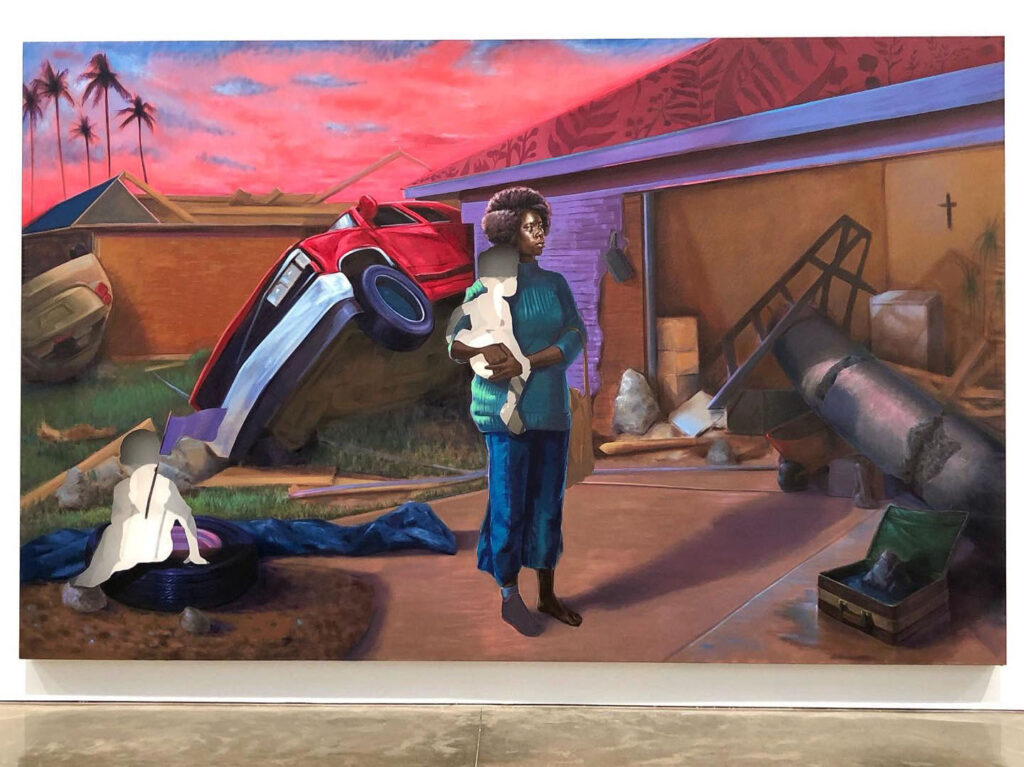
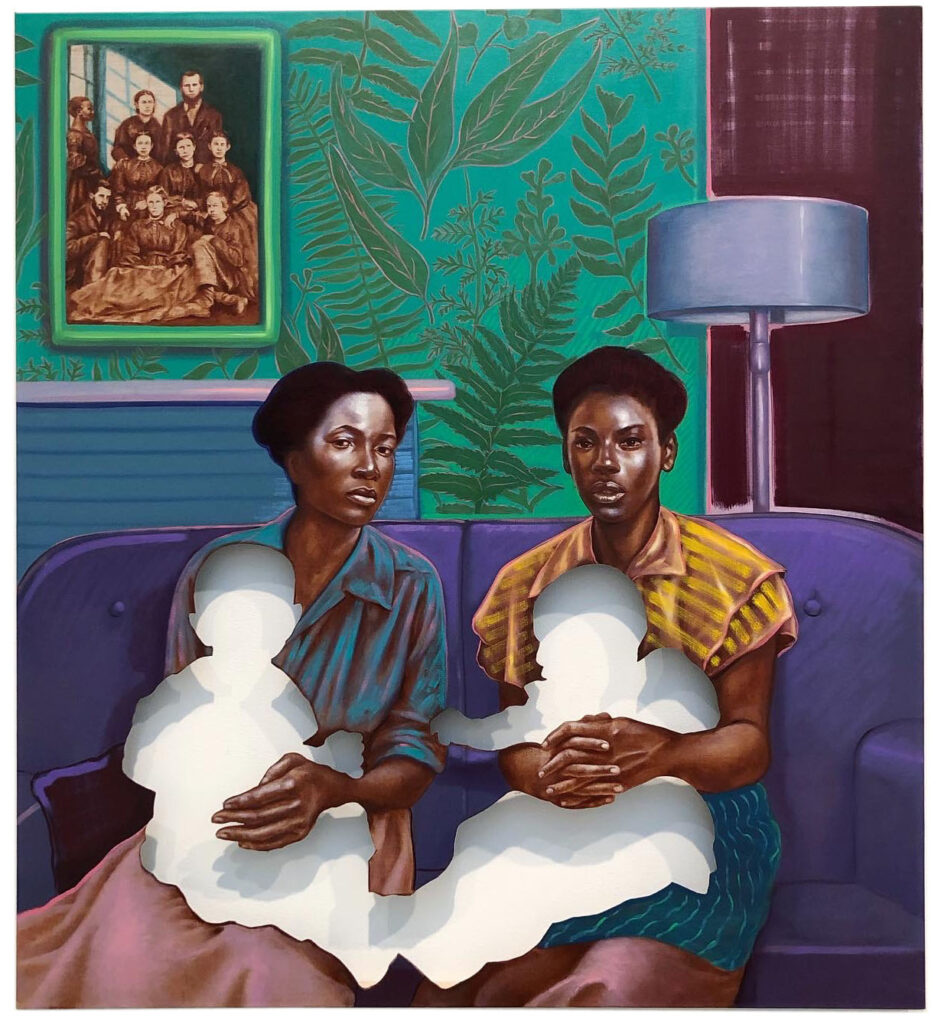
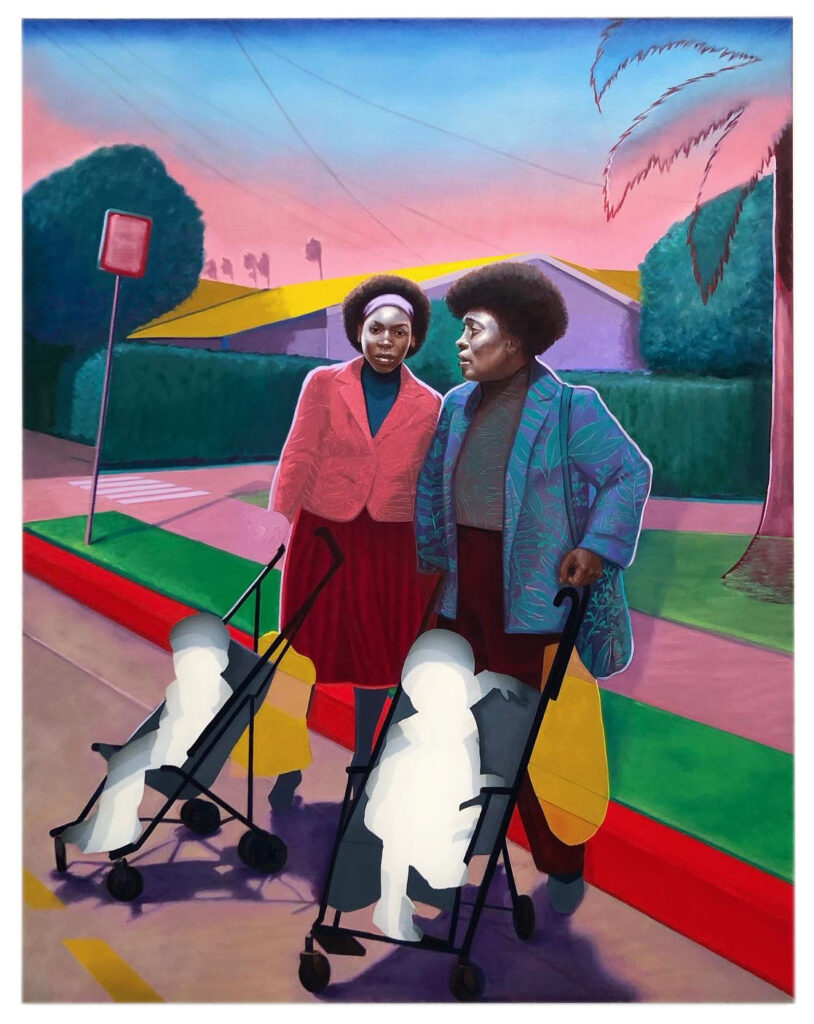
From a Tropical Space, 2019

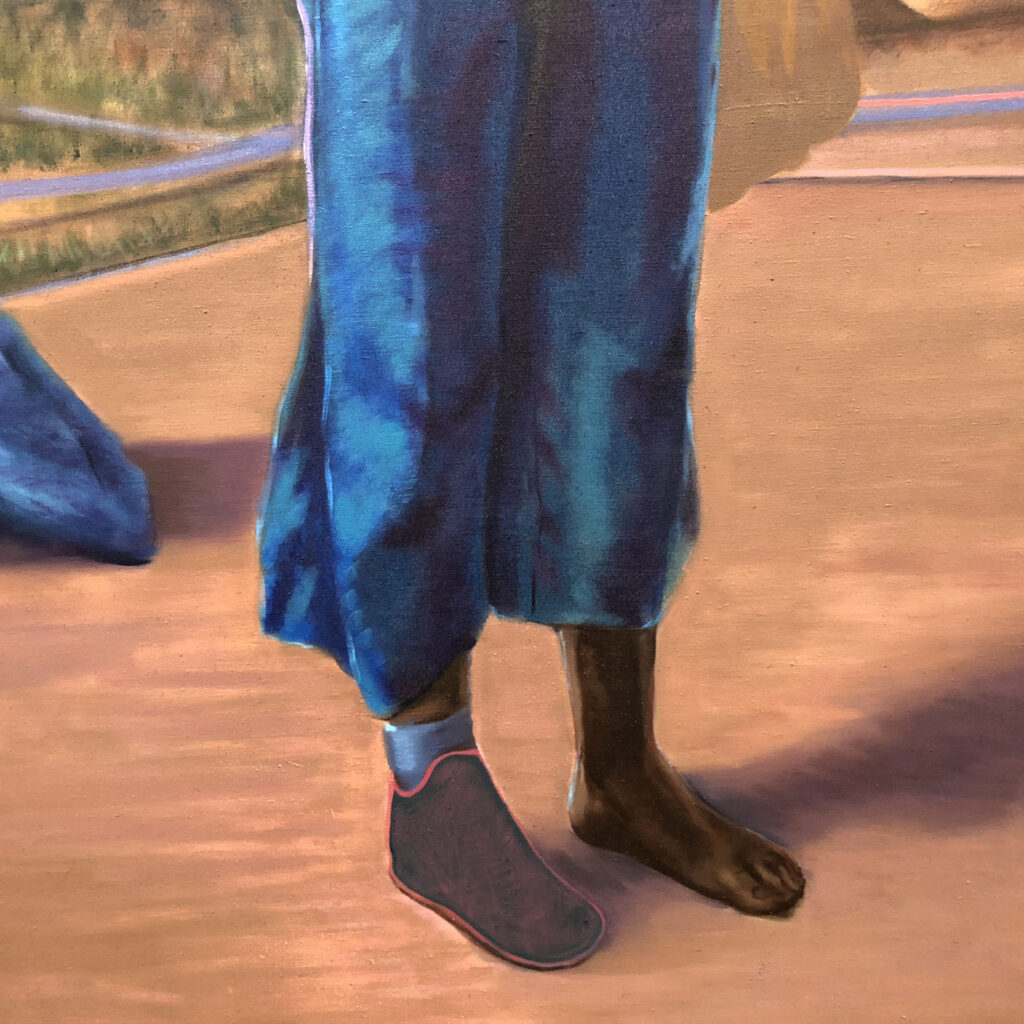
From a Tropical Space (detail)

Analogous Colors, 2020

The Aftermath, 2020

For Titus Kaphar’s first exhibition at Gagosian Gallery in NYC, From A Tropical Space, he has created moving scenes of loss, with children cut out of the paintings. While the cutouts and vivid colors are the first things that get noticed, on a longer look you can see that the women in these paintings are not just missing children, but often pieces of their own bodies are affected. Arms, a hand fading away or turning blue, a leg with only one sock and shoe- these women are losing more than what has been cut away from them, they are losing parts of themselves.

From the press release-

A painter, sculptor, filmmaker, and installation artist, Kaphar reexamines American history by deconstructing existing representations and styles through his own formal innovations. His practice seeks to dislodge history from its status as “past” in order to understand its continuing impact on the present. Using materials including tar, glass, and rusted nails—together with highly refined oil painting—and employing techniques such as cutting, shredding, stitching, binding, and erasing, he reworks canonical art historical codes and conventions. And by uncovering the conceptual and narrative underpinnings of certain source images, he explores the manipulation of cultural and personal identity as a central thematic concern while inventing new narratives.

While much of Kaphar’s work begins with an exhaustive study of pre-twentieth-century master painting techniques, From a Tropical Space sees him wield these various methods to create an emotionally saturated visual landscape that is entirely contemporary. Just as artists, through time, have translated the fraught and mercurial sociopolitical contexts in which they operate into new and often radical aesthetic modes, so do the pervasive social and cultural anxieties of the world in which we find ourselves resonate throughout Kaphar’s new work.

In From a Tropical Space, Kaphar presents a haunting narrative of Black motherhood wherein collective fear and trauma crescendo in the disappearance of children, literalized through the physical excision of their images from the canvases themselves. The absence of each juvenile figure—whether seated in a stroller or held in a woman’s arms—reveals only the blank gallery wall beneath. The intense coloration of the suburban environments in which the figures are set only heightens a pervasive tension—these are images for uncertain times. Included in the exhibition is Analogous Colors (2020). Demonstrating further the broader resonance of Kaphar’s recent work, the painting was featured on the cover of the June 15 issue of Time magazine, which included a report on the protests sparked by George Floyd’s killing at the hands of Minneapolis police.

This exhibition closes 12/19/20.

Dec 272019
 

Volcanic Eruption At The Junk Yard, 2019

Standoff at the Bedrock Bunny Club, 2019

After The Rapture (Border Town), 2019

Rosson Crow’s paintings for her exhibition Trust Fall at The Hole are bright, chaotic, and very reflective of the times we are living in.

From the press release-

Rosson Crow is in one sense an American History Painter—capitalized—who has made paintings across a range of subjects, foreign and domestic, but always meditating on the American story and her place in it. Since her debut show at Canada Gallery in 2004 while still an undergrad, Crow has established herself as a big, brainy, macho painter who nonetheless maintains a performative seduction with color and content.

This new exhibition features ten immersive panorama paintings that meditate on our 2019 moment in America. In what is her most urgent and timely work to date, she grapples with the erosion of American institutions and even of reality and truth itself. “Chaos autopsies” she calls them, each taking on specific aspects of her thinking—or dreaming—about current issues. KonMari is about the latest trend of disciplinary minimalism but depicts a giant landfill of “fast fashion”; After the Rapture in a Border Town shows a human-free street at the Mexican border; Volcanic Eruption at the Junk Yard is a fierce, fiery pit of melting old cars, while Ocean Front Property in Arizona is pretty self explanatory. No humans are present in any of the works, unless a cardboard cutout or statue; in this trust fall there is no one to catch us.

Using luminous oil paint, spray paint and thrown enamel, Crow builds up the surfaces of her works as she layers their content; bleeding into one another, the paintings feel like a tinted vintage post card, hi-contrast outlines whose colors have melted with time. Using moments of photo transfer for snippets of text, bumper stickers or beer cans, the repeating transfers confer a sense of glitching in the painted image, heightening their theatrical illusionism while questioning their reality; has this image been photoshopped? Has this video been edited? How much can we trust our own eyes?

The paintings are topical but not didactic. Ignorance, absurdity and swirling misinformation make the current political landscape untraversable; to a civilian psyche it makes analysis and action extremely difficult.  The exhaustion that comes from this onslaught must make artmaking even harder; most retreat, make head-in-the-sand works that don’t attempt any sociopolitical issues. Crow has always made works that highlight the staged nature of space, that look at fake or contrived scenes, like the painting above; in this Garden of Eden recreation from a religious-themed creationism park, the plants look like they are from Home Depot not an actual tropical jungle. Looking “behind the curtain” at manipulated reality is a non-partisan issue that speaks to both sides of the cultural divide, as everyone is stuck in this morass together; everyone wants to unravel the myriad ways we are secretly controlled and how power is written into our lived and virtual environment.

This exhibition closes 12.29.19.

Mar 242018
 

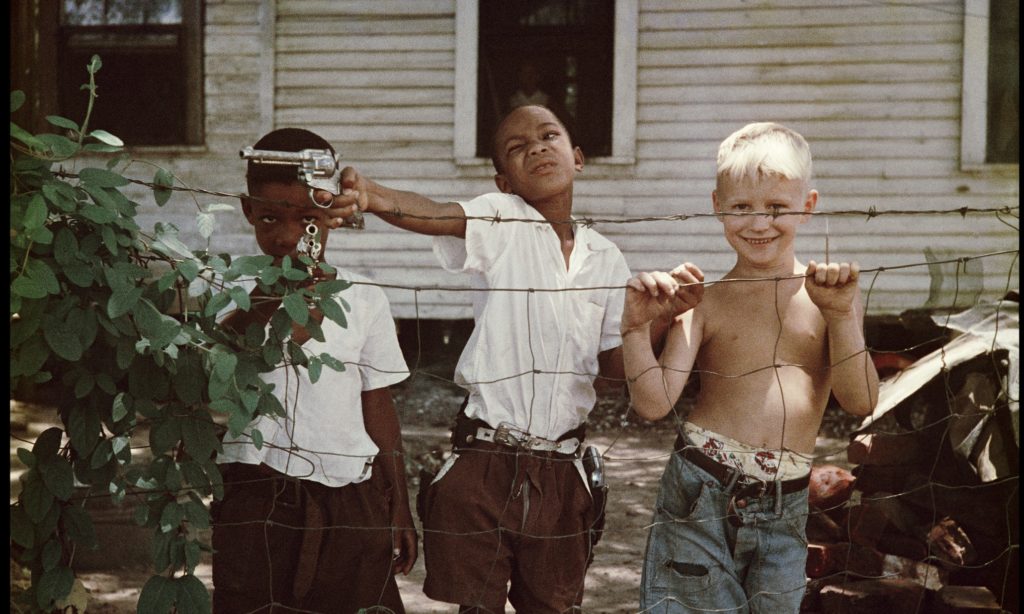
Gordon Parks, “Untitled”, Alabama (1956)

Gordon Parks was an incredible photographer whose influence continues to be felt in photography today. He had a long creative career that also expanded beyond photography to include writing several books, composing music, and directing films- the most famous being Shaft.

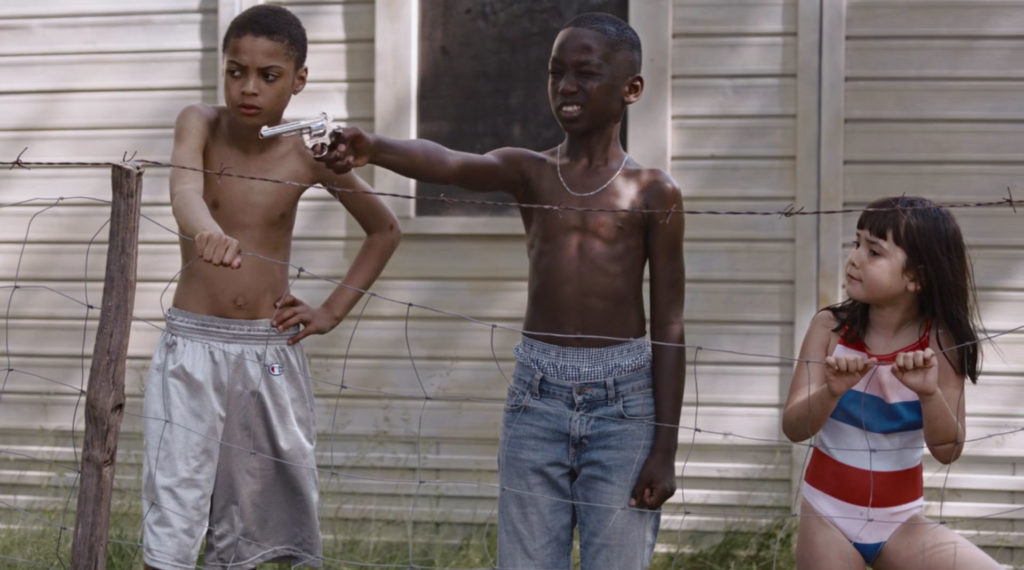
The Gordon Parks Foundation recently hosted the exhibition ELEMENT, which focused on several of the photographs that inspired Kendrick Lamar’s video from his album DAMN, seen below. The photo pictured above can be seen as part of the exhibition of Gordon Parks’ work I Am You Part 2 at Jack Shainman Gallery in New York. It is from his series Segregation Story for Life magazine which focused on the daily lives of three black families in Alabama in 1956.

The photo below is a still from Kendrick Lamar’s Element. The video was directed by Jonas Lindstroem and The Little Homies (Kendrick Lamar and Dave Free).

To see more of Parks’ work and the work he has influenced, The Gordon Parks Foundation’s website is a good resource for upcoming exhibitions around the world.

Jan 092018
 

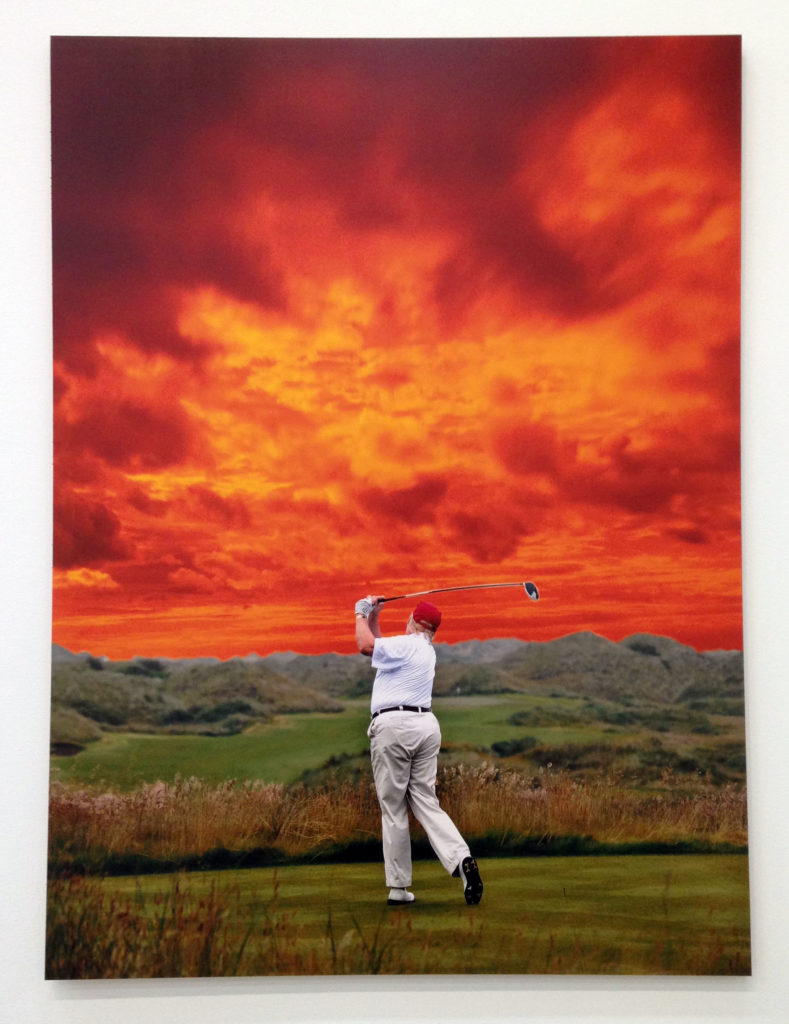
Jim Shaw “Cloud Maintenance”, 2017

Jim Shaw “The Ties That Bind”, 2017

Currently at Metro Pictures, Jim Shaw‘s current mixed media exhibition is full of works that are interesting, engaging and fun.

From the press release–

Rendered in exquisite detail, Shaw’s virtuosic work combines his analysis of the political, social and spiritual histories of the United States with contemplative reflections of his own psyche. For more than three decades he has examined art history, comic books, subcultural undergrounds and consumer products—to name only a few of his wide-ranging fields of interest—to articulate a distinct visual language that charts the country’s ever-shifting sociopolitical landscape.

The paintings in this exhibition incorporate symbols and characters of the past to comment on our fraught present. Using imagery drawn from Old Testament stories, pagan myths and satirical cartoons, Shaw relies on his encyclopedic knowledge to visualize our common vernacular. His layered symbology reads like an exaggerated mirror of our hyper-mediated, “post-truth” reality.

This show closes 1/9/18.

Work by Elizabeth Murray

At Pace Gallery’s 25th Street location is Elizabeth Murray: Painting in The ’80s, a collection of sixteen unique colorful canvases the artist created during this period.

From the press release-

Elizabeth Murray: Painting in the ‘80s presents formal and narrative content that continues to influence the techniques and subject matter of contemporary painting. Murray arrived in New York in 1967 during the heyday of Minimalism and the rise of Conceptualism, and amid prevailing assertions of painting’s demise. As she recollected, “The mood was that painting was out, that hip people, people who were avant, weren’t involved in painting. That was unnerving, but then I didn’t give a damn.” Fully committed to painting, Murray broke new ground depicting personal, poetic and at times feminist narratives on complex multidimensional shaped canvases. Murray’s compositions from the 1980s suggest large-scale breaking cups, tumbling wineglasses, tilting tables, windows, rooms, attenuated human forms, letters, symbols and abstract shapes constructed through positive and negative, real and imagined space. As Roberta Smith has written, “She has put the vocabulary of twentieth-century abstraction to new and different uses, tracing in irresistible formal terms a psychological narrative that is not explicitly feminine but that women, thanks to society’s relentless conditioning, know best and most completely.”

This show closes 1/13/18.

Jorge Pardo

For Jorge Pardo‘s first painting show at Petzel Gallery, he combines his painted self portraits with a sculptural element. Candid snapshots of the artist are “blown-up, engraved, laser-cut, hand-painted and back-lit with LEDs, to produce, in some cases, vast ornamental objects”. The beautiful large works have the added effect of changing slightly depending on where you stand in the gallery as the light shines through the wood.

This show closes 1/13/18.


Feb 112017
 

                                         Jonathan Horowitz– Does she have a good body? No. Does she have a fat ass? Absolutely. 2016

For their current exhibition, Petzel Gallery decided to focus on the issues raised by the recent election by having a group show related to that theme. In addition they are encouraging visitors to “write down their reactions, thoughts, anxieties, hopes for the future.”

There is a lot of great work in the show by a long list of artists that includes Barbara Kruger, Robert Longo, Glenn Ligon, Jenny Holzer, Charles Gaines and Sam Durant.  Although it can be exhausting these days to follow politics, it is encouraging to see creative expression thriving in the midst of the chaos.