Oct 142024
 

The Agua Caliente Cultural Museum opened in 2023 in its new location in Palm Springs as part of the Agua Caliente Cultural Plaza. It consists of several exhibition areas that tell the story of the Agua Caliente Band of Cahuilla Indians. These include an immersive digitally animated film in a theater at the entrance, scale replicas of the Indian Canyons, and videos, historical photographs and documents. The museum also includes several artifacts including those found during excavations for the plaza that are over 7,000 years old.

The museum also has a gallery for rotating exhibitions focused on traditional and contemporary Native American art. Currently on view is For a Love of His People, the black and white photography of Horace Poolaw.

From the museum

Horace Poolaw (Kiowa, 1906-1984) was born during a time of great change for his people—one year before Oklahoma statehood and six years after the U.S. government approved an allotment policy that ended the reservation period. A rare American Indian photographer who documented Indian subjects, he began making a visual history in the mid-1920s and continued for the next 50 years.

Poolaw photographed his friends and family, and events important to them—weddings, funerals, parades, fishing, driving cars, going on dates, going to war, playing baseball. When he sold his photos at fairs and community events, he often stamped the reverse: “A Poolaw Photo, Pictures by an Indian, Horace M. Poolaw, Anadarko, Okla.” Not simply by “an Indian,” but by a Kiowa man strongly rooted in his multi-tribal community, Poolaw’s work celebrates his subjects’ place in American life and preserves an insider’s perspective on a world few outsiders are familiar with—the Native America of the Southern Plains during the mid-20th century.

Organized around the central theme of Poolaw as a man of his community and time, For a Love of His People is based on the Poolaw Photography Project, a research initiative established by Poolaw’s daughter, Linda, in 1989 at Stanford University and carried on by Native scholars Nancy Marie Mithlo (Chiricahua Apache) and Tom Jones (Ho-Chunk) of the University of Wisconsin-Madison.

For a Love of His People: The Photography of Horace Poolaw is organized by the Smithsonian National Museum of the American Indian. The exhibition was curated by Tom Jones (Ho-chunk) and Nancy Marie Mithlo (Chiricahua Apache).

Below are a few selections from the show-

Nov 292023
 

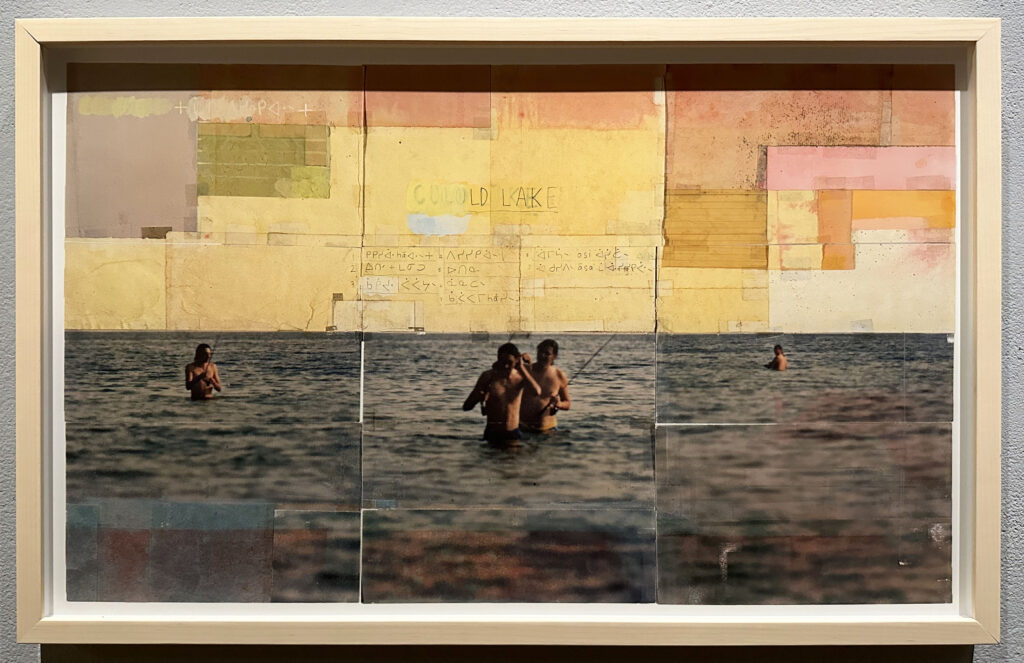
Kimowan Metchewais, “Cold Lake Fishing”, 2004/06

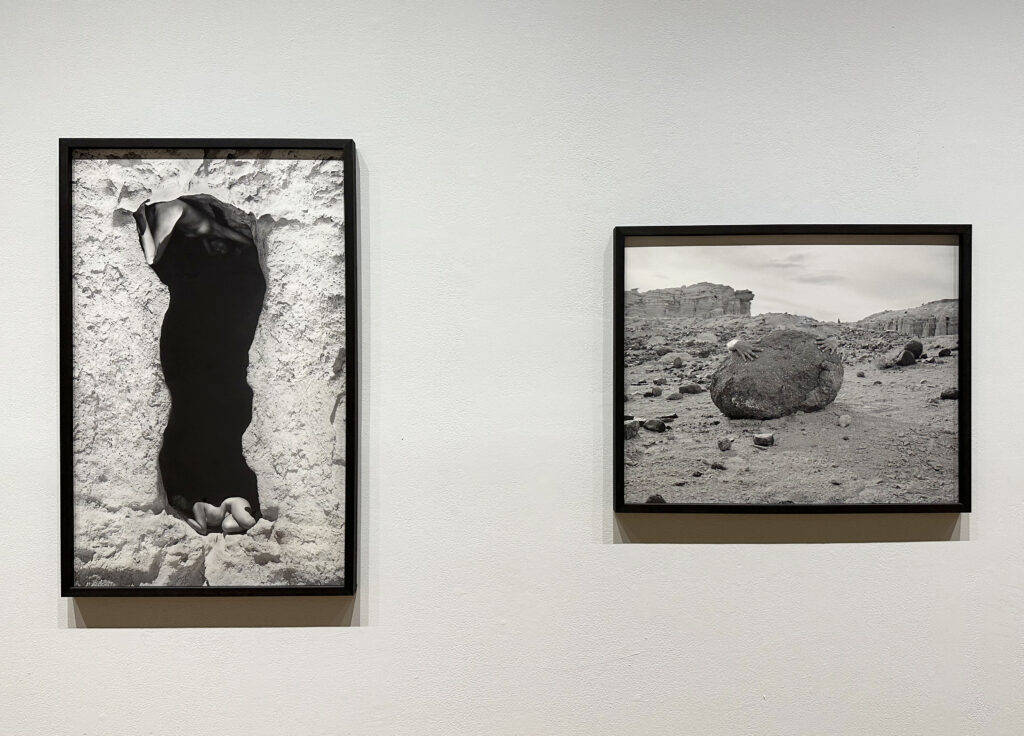
Koyoltzintli, “Gathering Roots” and “Spider Woman Embrace”, Abiquiú, New Mexico, 2019, from the series MEDA, 2018/19, Archival pigment print

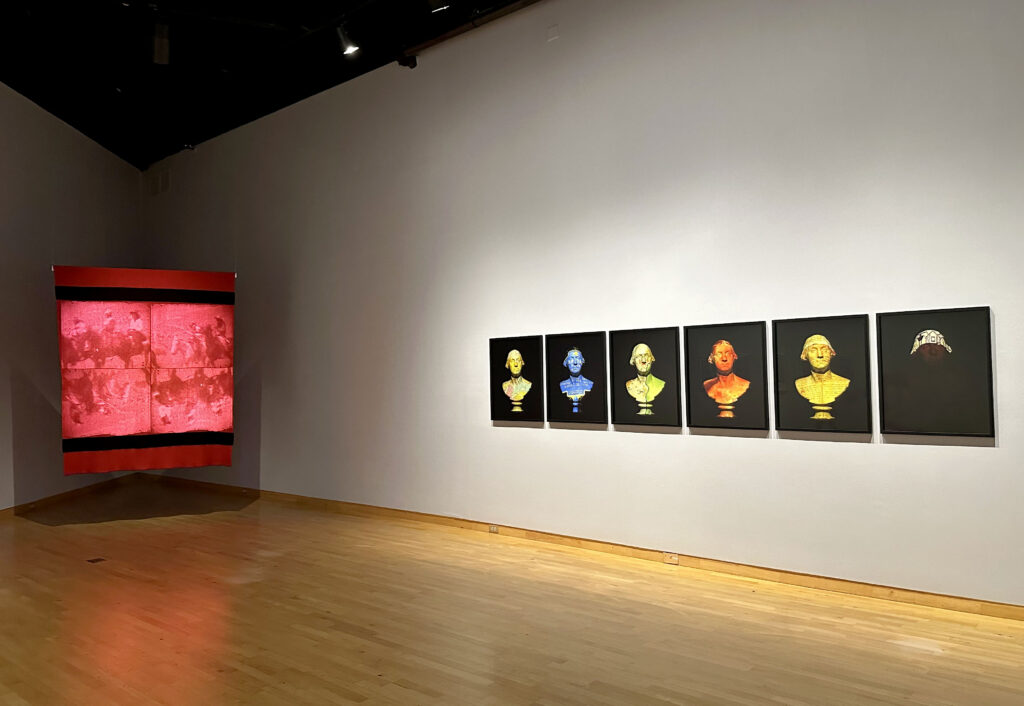
Alan Michelson “Hanödagayas (Town Destroyer): Whirlwind Series”, 2022 Archival pigment prints and “Pehin Hanska ktepi (They Killed Long Hair)”, 2021 Single-channel video installation: wool blanket and video projection; 1:05 minutes (looped), no sound

Currently at the USF Contemporary Art Museum is Native America: In Translation curated by Wendy Red Star and organized by Aperture. The work included offers viewers a chance to discover new perspectives on the Native American experience.

From the museum-

“The ultimate form of decolonization is through how Native languages form a view of the world. These artists provide sharp perceptions, rooted in their cultures.” —Wendy Red Star

Native America: In Translation assembles the wide-ranging work of nine Indigenous artists who pose challenging questions about identity and heritage, land rights, and histories of colonialism. Probing the legacies of settler colonialism, and photography’s complex and often fraught role in constructing representation of Native cultures, the exhibition includes works by lens-based artists offering new perspectives on Indigenous identity, reimagining what it means to be a citizen in North America today.

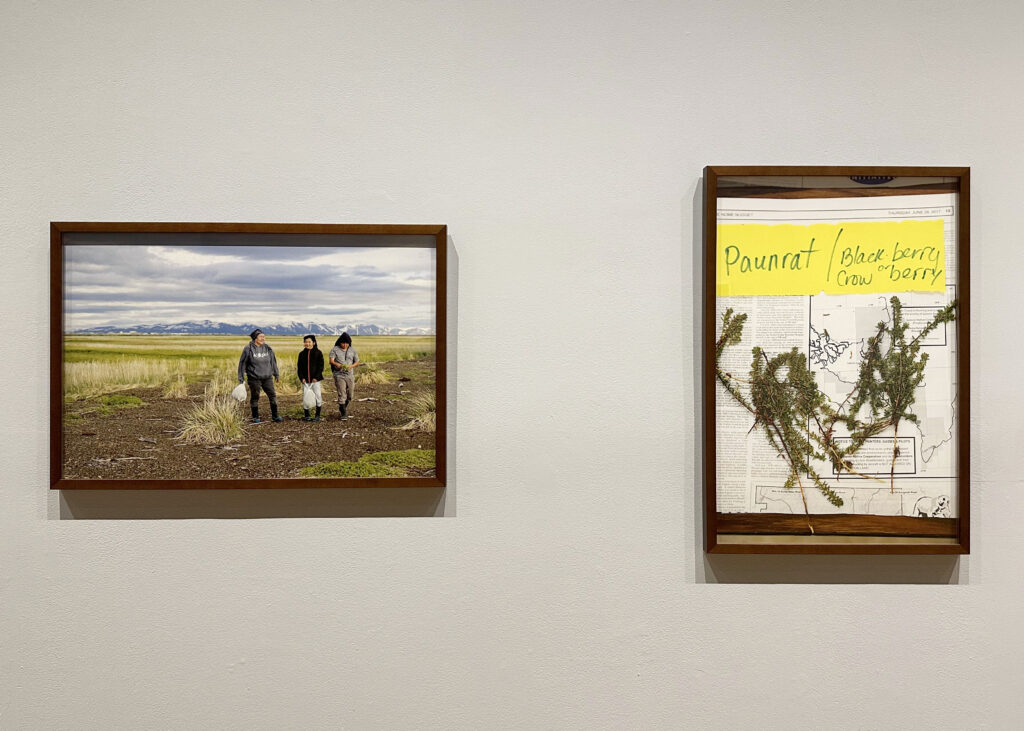
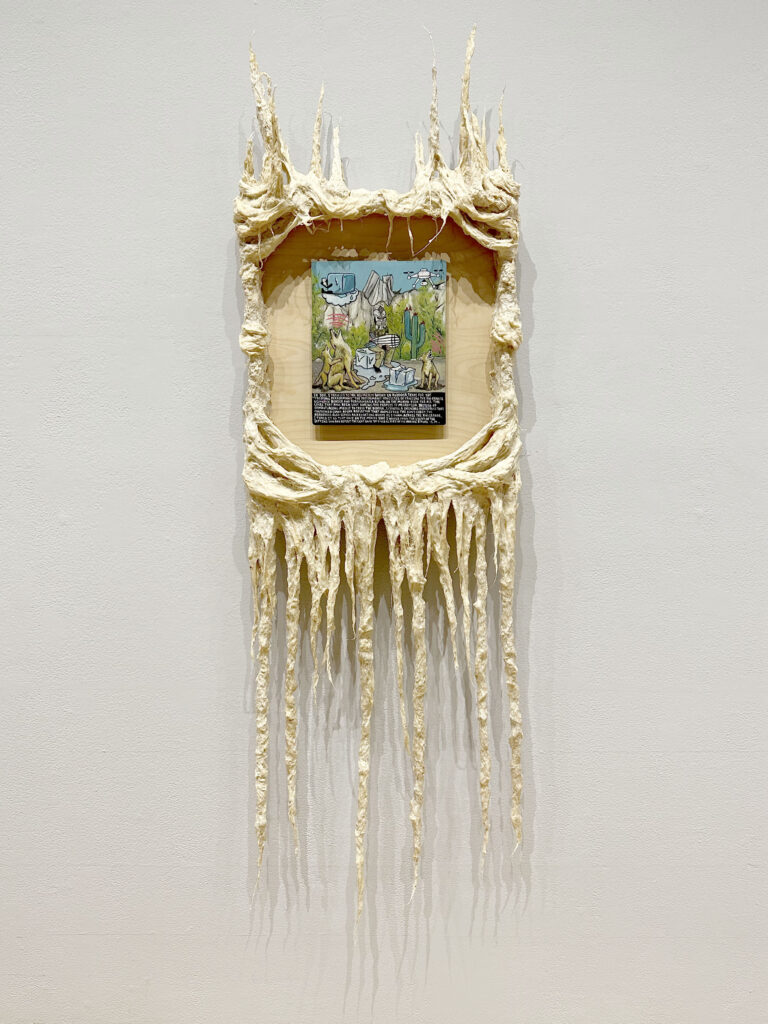
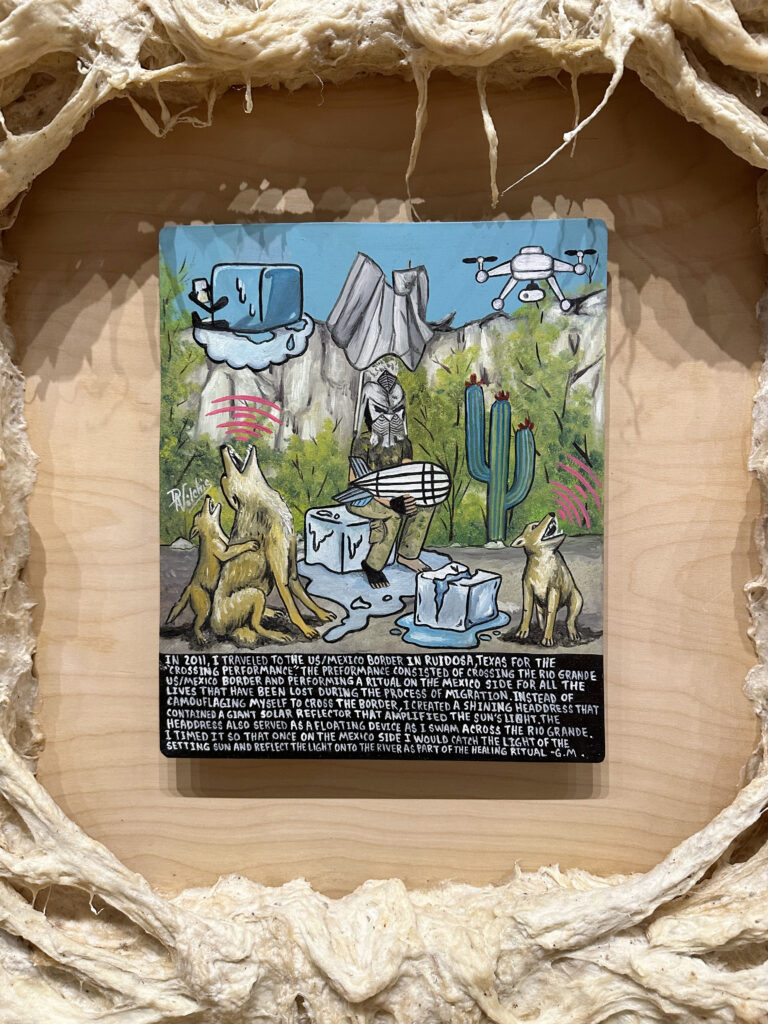
Works included in the exhibition address cultural and visual sovereignty by reclaiming Native American identity and representation. Honoring ancestral traditions and stories tied to the land, Koyoltzintli (Ecuadorian-American, b. 1983) reflects on how the landscape embodies traditional knowledge, language, and memories. Nalikutaar Jacqueline Cleveland’s (Yup’ik, b. 1979) photographs of contemporary tribal communities in western Alaska document Native foraging and cultural traditions as a form of knowledge passed through generations. Revealing stories of trauma and healing, Guadalupe Maravilla (American, b. El Salvador, 1976) communicates autobiographical and fictional narratives informed by myth and his own migration story.

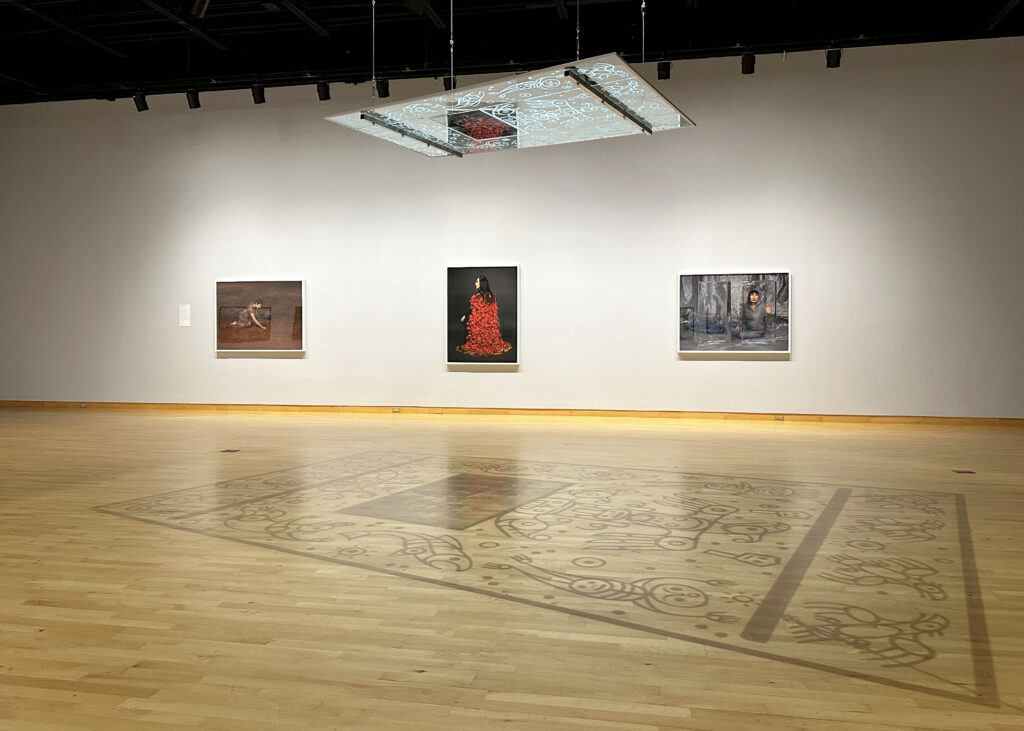
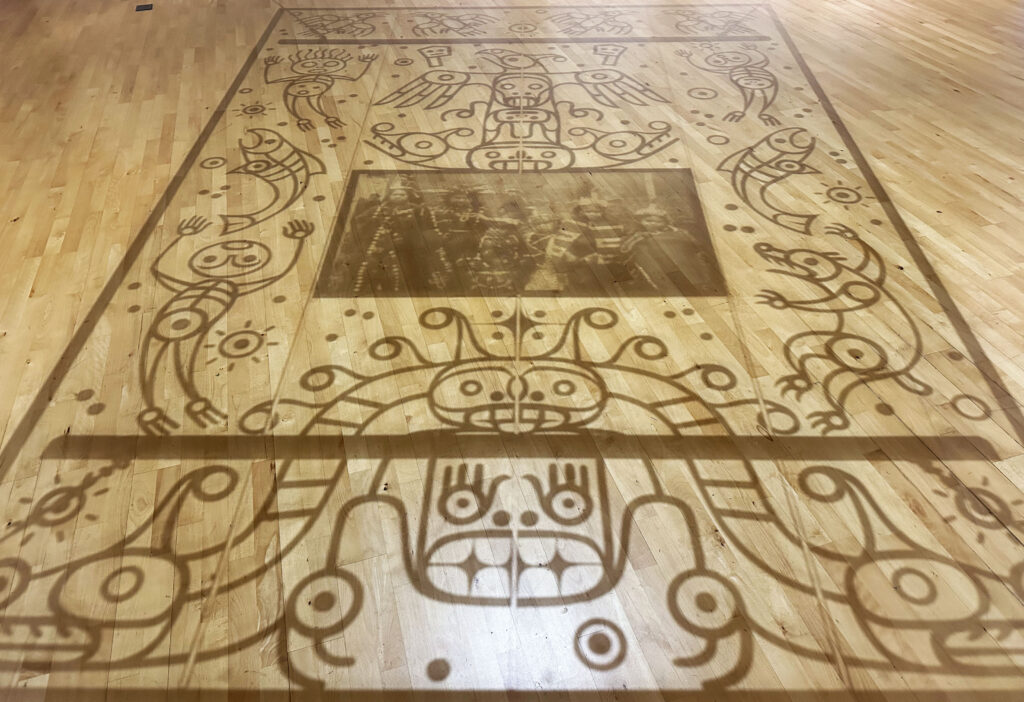
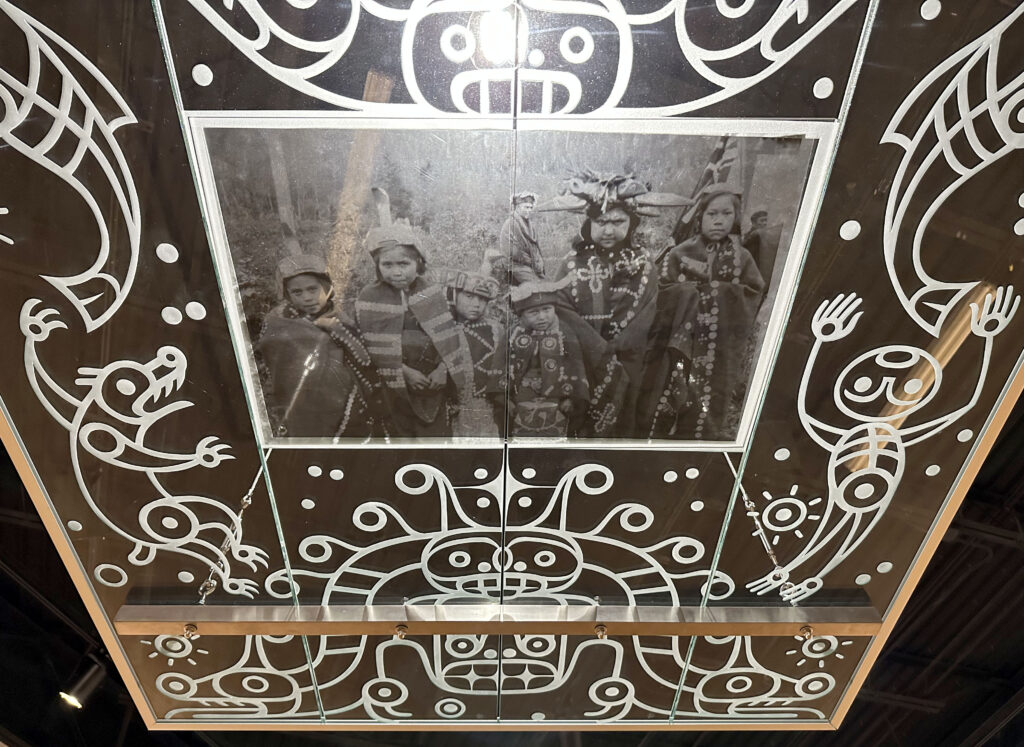
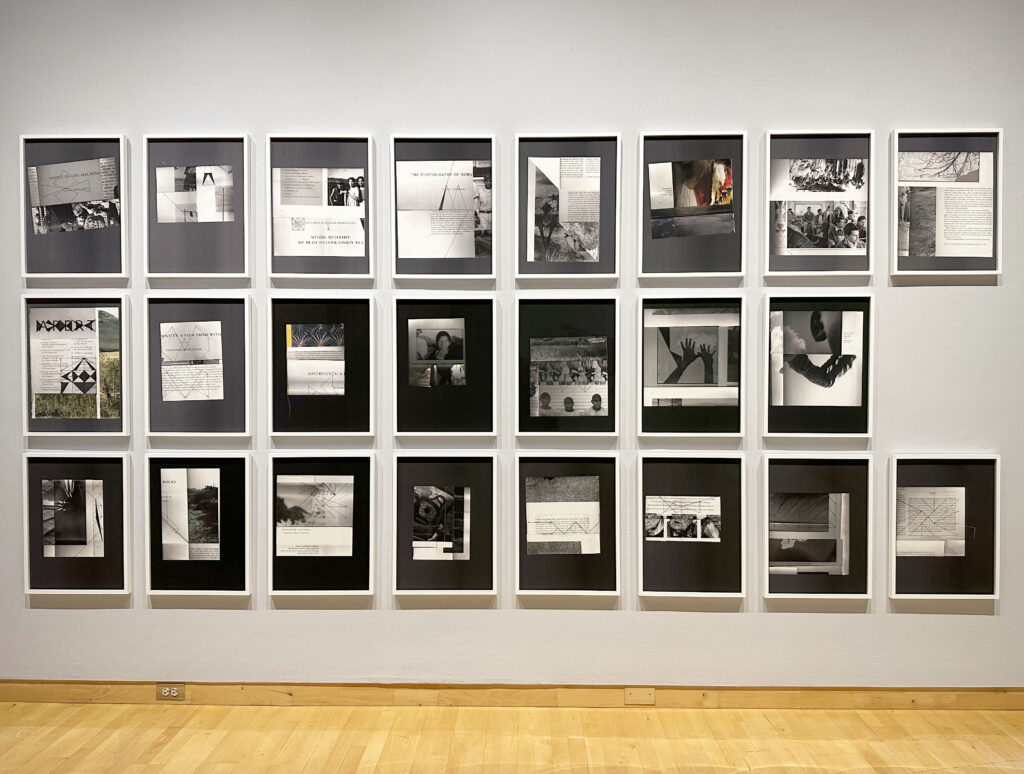
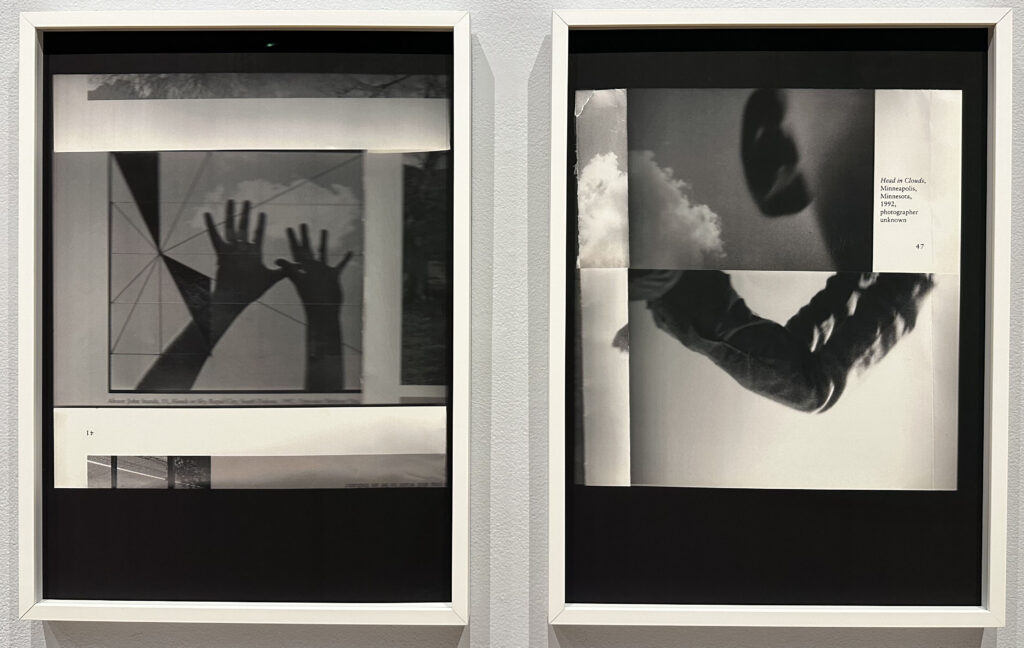
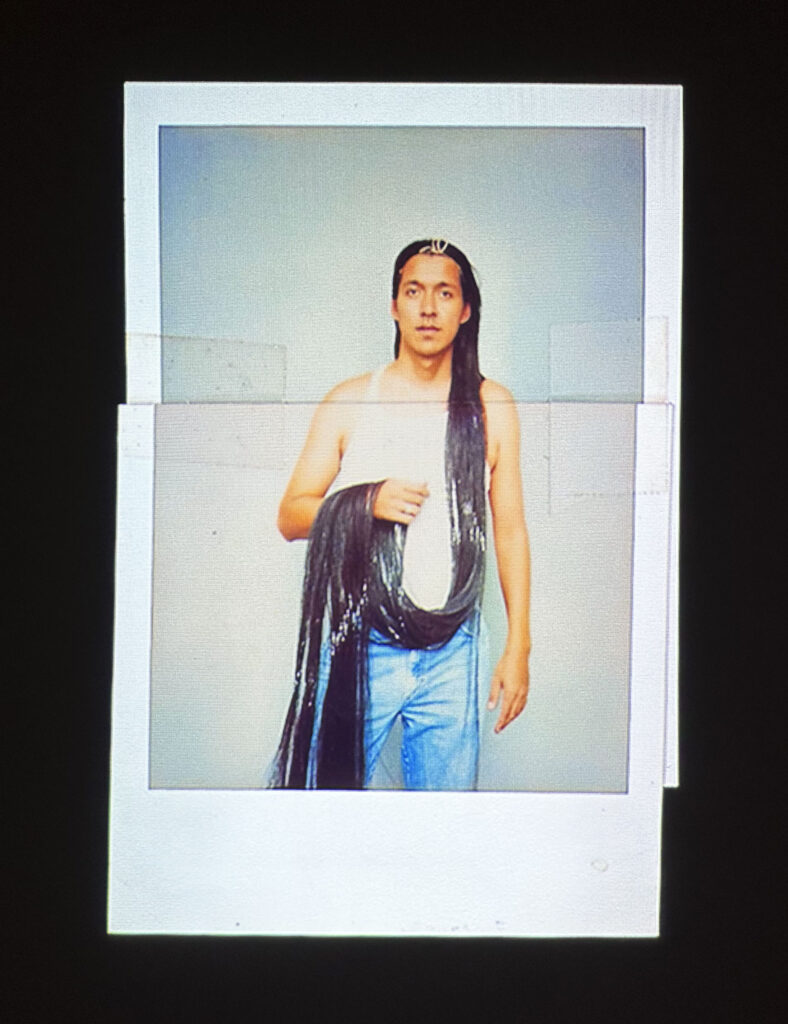
Expanding Indigenous archives and collective memory through photographic means, works by the late artist Kimowan Metchewais (Cree, Cold Lake First Nations, 1963–2011), drawn from his personal archive of Polaroid photographs, construct self-realized Native imagery challenging the authority of colonial representation. Excavating repressed colonial histories of invasion and eviction, Alan Michelson (Mohawk, Six Nations of the Grand River, b. 1953) reinterprets and repositions archival material to redress history from an Indigenous perspective. Marianne Nicolson’s (Musgamakw Dzawada’enuxw First Nations, b. 1969) light-based installation projects Dzawada’enuxw tribal symbols of authority and power onto colonized spaces to contest treaties that imposed territorial boundaries on Indigenous lands. Duane Linklater (Omaskêko Ininiwak from Moose Cree First Nation, b. 1976) reconfigured the pages sourced from a 1995 issue of Aperture, featuring Indigenous artists, creating space for artistic improvisation and reinvention across generations.

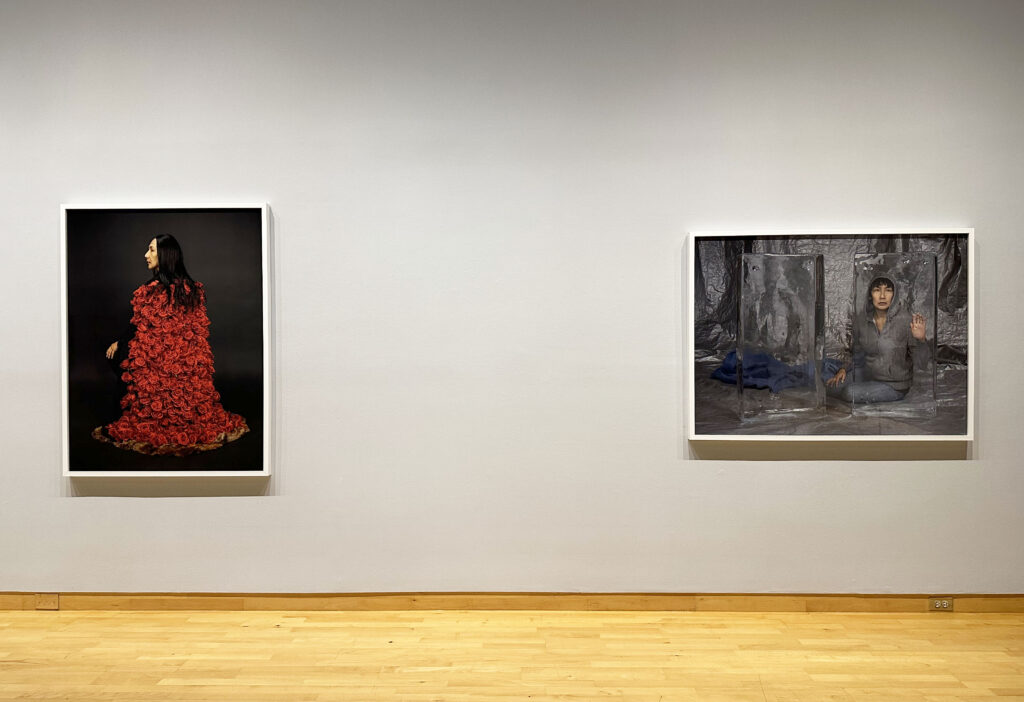
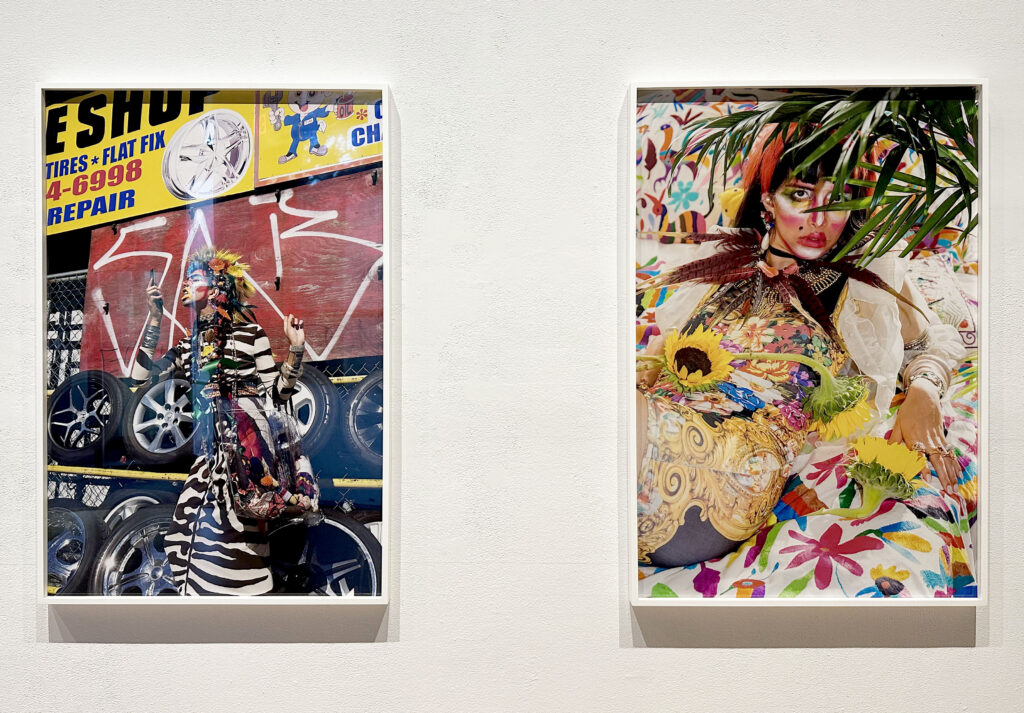
Reflecting on performative aspects of Indigeneity and the colonial gaze, Martine Gutierrez’s (American, b. 1989) series of photographs reinterpret high-fashion magazine spreads with a revolving roster of identities and narratives to question Native gender and heritage. Working across performance and photography, Rebecca Belmore (Anishinaabe, Lac Seul First Nation, b. 1960) creates powerful reenactments of past performances incorporating organic materials that reference knowledge, labor, and care of the Earth in defiance of state violence of Indigenous people.

This exhibition closes 12/1/23.

Rebecca Belmore, “matriarch”, 2018, and “mother” from the series “nindinawemaganidog (all of my relations)”, 2018, Archival pigment prints

Photos by Rebecca Belmore and Installation by Marianne Nicolson

Marianne Nicolson’s installation detail

Marianne Nicolson’s installation detail

Nalikutaar Jacqueline Cleveland, “Molly Alexie and her children after a harvest of beach greens in Quinhagak, Alaska”, 2018 and “There are two main Yup’ ik names for crowberries or blackberries in Alaska, “paunrat” and “tangerpiit””, 2017, Archival pigment prints

Guadalupe Maravilla, “I Crossed the Border Retablo”, 2021, Oil on tin, cotton, glue mixture, wood

Guadalupe Maravilla, “I Crossed the Border Retablo”, 2021, detail

Duane Linklater, “ghost in the machine”, 2021, Archival pigment prints

Duane Linklater, “ghost in the machine”, 2021, Archival pigment prints

Martine Gutierrez, “Queer Rage, Dear Diary, No Signal During VH1’s Fiercest Divas”, and “Queer Rage, THat Girl Was Me, Now She’s A Somebody”, 2018. digital chromogenic print

One of Kimowan Metchewais’ polaroids from the slide show