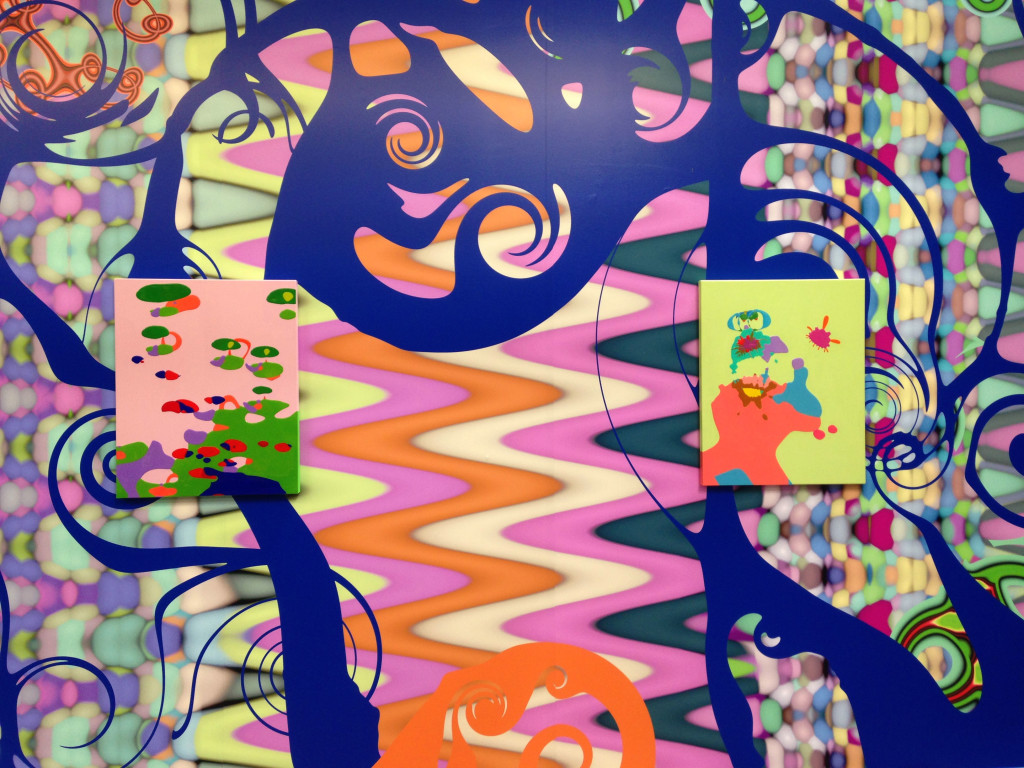
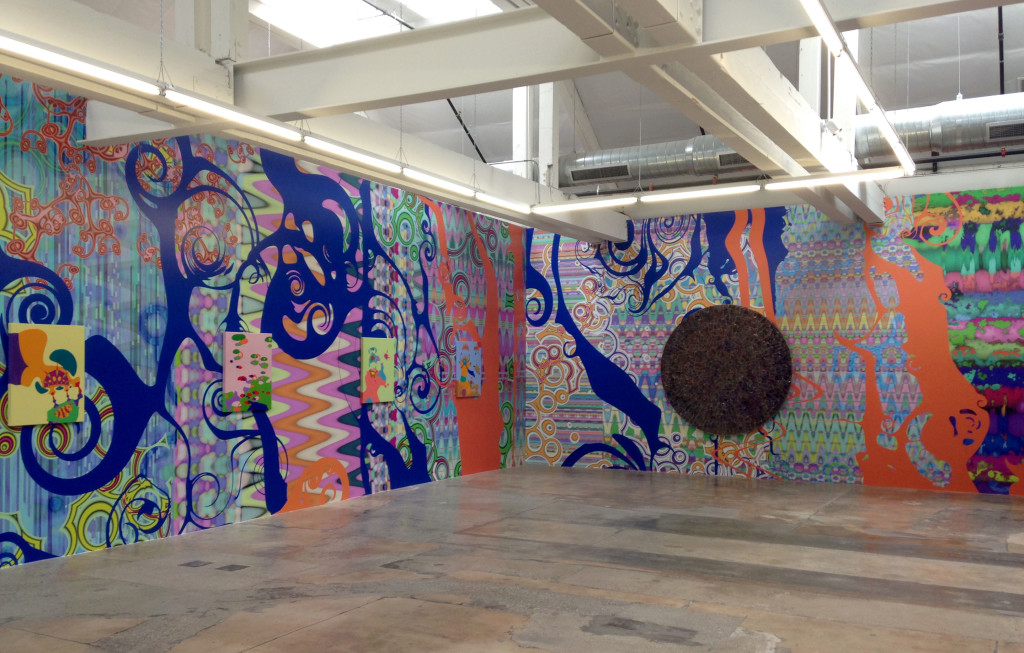
Today (10/24/15) is the last day to see Jose Alvarez’s multi-colored, multi-textured wonderland– (D.O.P.A.) “We’re All Made of Star Stuff” at Gavlak Gallery.

Today (10/24/15) is the last day to see Jose Alvarez’s multi-colored, multi-textured wonderland– (D.O.P.A.) “We’re All Made of Star Stuff” at Gavlak Gallery.


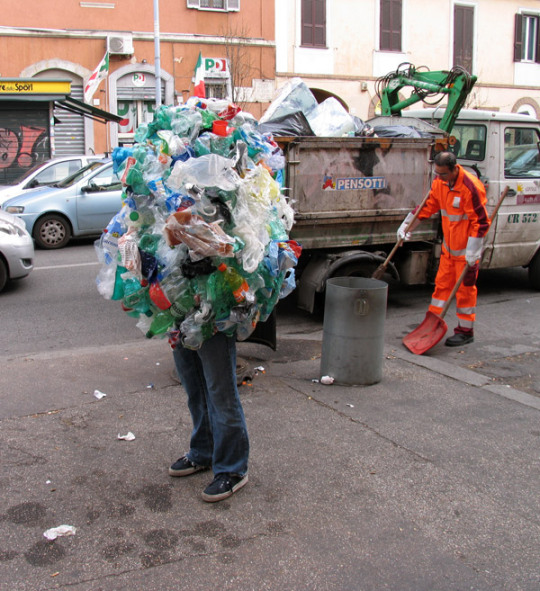
When you first open the door of the Fabien Castanier Gallery you are confronted by a life size figure clad all in black that appears to be looking at you through binoculars from the back of the gallery. This is one of many ominous sculptures at Mark Jenkins’ current solo exhibition Still Life.
From the press release–
Akin to traditional notions of the “still life,” his sculptures capture moments that conjure their own realities, presenting tableaus that challenge one’s sense of what is real and what is not. Jenkins constructs his people, animals, children – entities commonly filled with life – into inanimate objects, frozen in bizarre postures and scenarios. By creating these unconventional situations, he re-contextualizes commonplace ideas or things and inserts them into a new landscape in which the viewer plays an integral part.
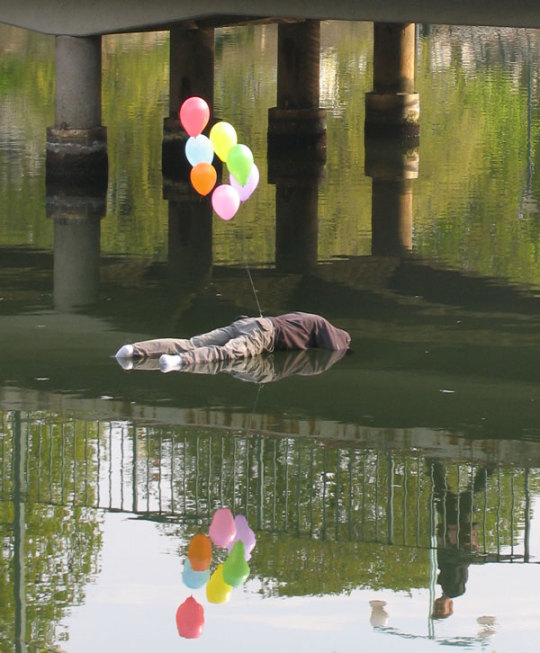
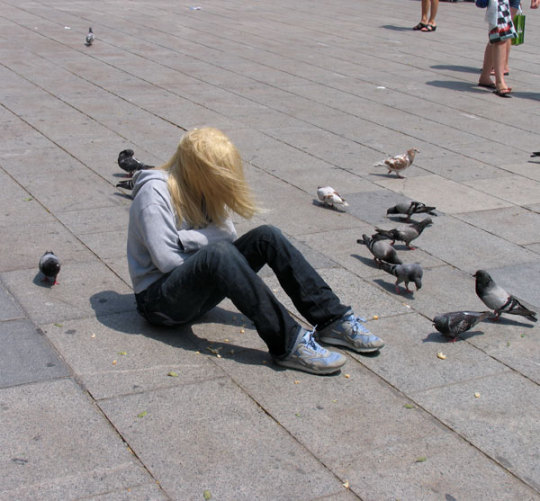
Jenkins’ sculptures, whether placed in the street or in the gallery, alter perceptions of the ordinary and create surreal settings that infallibly elicit an alternative experience. The placement of his artwork always creates a new form of discourse central to space and audience. For the pieces he situates in the urban environment, the artist intentionally leaves the sculptures unattended to fulfill their life cycles to whatever end, may it be natural deterioration or confiscation. The viewer’s reaction to his pieces becomes part of the sculptures, turning the street into a stage. The theatricality of Mark Jenkins’ work remains a central theme, and in this solo exhibition he uses the gallery space as the performance platform, incorporating the viewers not only as spectators but as actors themselves.
The second paragraph references Jenkins’ extensive outside work which has been placed in different areas around the world. The images below (via his site) were in Malmö, Barcelona, and Rome, respectively. More of these sculptures as well as the rest of his work can be seen here.
This show closes 10/3/15.


Noah Purifoy’s current retrospective at LACMA offers a comprehensive look at the influential assemblage artist.
A little background on the artist from LACMA’s website–
Noah Purifoy (1917-2004) lived and worked most of his life in Los Angeles and Joshua Tree, California. A founding director of the Watts Towers Art Center, his earliest body of sculpture, constructed out of charred debris from the 1965 Watts Rebellion, was the basis for 66 Signs of Neon, a landmark group exhibition about the riots that traveled to nine venues between 1966 and 1969. In line with the postwar period’s general fascination with the street and its objects, Purifoy’s 66 Signs of Neon constituted a Duchampian approach to the fire-molded alleys of Watts, a strategy that profoundly impacted artists such as David Hammons, John Outterbridge and Senga Nengudi.
In the late 1980’s, after eleven years of public policy work for the California Arts Council, where Purifoy initiated programs such as Artists in Social Institutions, bringing art into the state prison system, Purifoy moved his practice to the Mojave desert. He lived there for the last fifteen years of his life, creating ten acres of large-scale sculpture constructed entirely from junked materials.
For more information on Purifoy and his Joshua Tree Outdoor Museum (where some of the pieces in the exhibition are from), KCET has an interesting article.
Noah Purifoy: Junk Dada closes Sunday 9/27/15.


Today (7/25/15) is the last day to see the Pontus Willfors exhibition Homeland at Edward Cella Art + Architecture in Culver City.

Tomorrow (3/7) is the last day to see the Ei Arakawa and Karl Holmqvist exhibition Y.O.Y.O.G.A.L.A.N.D. at Overduin & Co.
From the press release:
The exhibition features sculpture, drawing, poetry, and video in an installation addressing a range of subjects from global energy production-nuclear power and the potential of geothermal energy-to utopian ideals and the relationship between art and social issues.
Also closing 3/7 is London based artist Anish Kapoor’s sculpture show at Regen Projects.


From the press release:
A series of monumental works feature organic, terrestrial forms made from resin and earth. In contrast to their raw, earthly matter, a series of highly polished stainless steel sculptures reflect and refract an illusion of the world onto their mirrored surfaces and confound the viewers’ relationship to the space around them. Similarly, several monochromatic voids appear to float on the gallery walls, their concave interiors play with the viewers’ perception of surface and depth and create the illusion of infinite space reflected in their void like interiors. A trio of amorphous wall sculptures entitled Keriah (I, II, III) refer to the Jewish mourning practice of clothes tearing. Visceral and raw, their shapes hang on the wall as if in a perpetual state of decay.


Today (2/22) is the last day to see Pierre Huyghe at LACMA. There is so much to see within the show and it is, at times, overwhelming. You enter the exhibition with your name announced by a live announcer and then proceed through the maze like space to find aquariums with live sea creatures in them; video work, including a film with a monkey walking around wearing the mask of a girl; sculptures including the one pictured above with a head of live bees (Untilled (Liegender Frauenakt)); and Human, a live dog who is around the gallery at various times. It’s Huyghe’s first retrospective in his twenty-five year career and well worth a trip into his unique visual world.


Today (2/22) is the last day of exhibition LOUIS VUITTON SERIES 2 – Past, Present and Future in Hollywood.
From their website:
The Series 2 exhibit is a modern and unexpected interpretation of a fashion show that contextualizes the Spring 2015 Women’s Ready-to-Wear collection, conceived by Women’s Artistic Director, Nicolas Ghesquière. The exhibit allows visitors to explore the creative process behind the collection through a “series” of distinctive rooms that thematically share his influences and inspirations as well as the excitement of the fashion show experience.
It is an interesting exhibit and does immerse you in the fashion show world. There is even a video section where you learn about the process of creating the items themselves. And free stickers at the end!

Juan Capistrán‘s I Am Hoping to See the Day for Hammer Museum’s exhibition Made in L.A. 2014.
Today (9/7) is the last day to see Hammer Museum’s Made In L.A. 2014, their second biennial exhibition consisting of Los Angeles based artists.


Today (6/8/14) is the last day to see Jacob Hashimoto’s stunning Gas Giant at MOCA Pacific Design Center. Thousands of paper sculptures in color and black and white (on the first floor) combine to create the feeling of walking into another world.
From the artist’s website about the work-
In its third and final edition at MOCA Pacific Design Center, Gas Giant begins its voyage subverting the grid of the white cube on the first floor by tangling the black and white elements of the installation while directing the viewer to the second floor, where an open, atmospheric, and colorful emphasis on the verticality of the space is the climax of the piece. Influenced by ample sources that range from sacred architecture, post-war abstract painting, the Light and Space movement from the 1960s in Southern California, and the 1990s generation of Los Angeles painters, Hashimoto expands painting and collage strategies in an ongoing exploration of abstraction and landscape through color, repetition, association, and even simple marks and gestures that when combined together, result in the infinite layers of complexity that characterize his work. Becoming a mirror of human experience, Gas Giant is a metaphor of possibility and temporality—the viewer encounters the beauty of an encompassing landscape, through vastness and detail in equal manner, but also with the idea of loss, since the work also reflects on the intensity of human labor in its creation, and considers the temporality of the viewing experience, and of the piece itself. This exhibition marks Hashimoto’s first solo museum exhibition in California.


