Kadir Nelson, “Harlem On My Mind”, 2016, Oil on canvas, Cover for The New Yorker, February 22, 2016

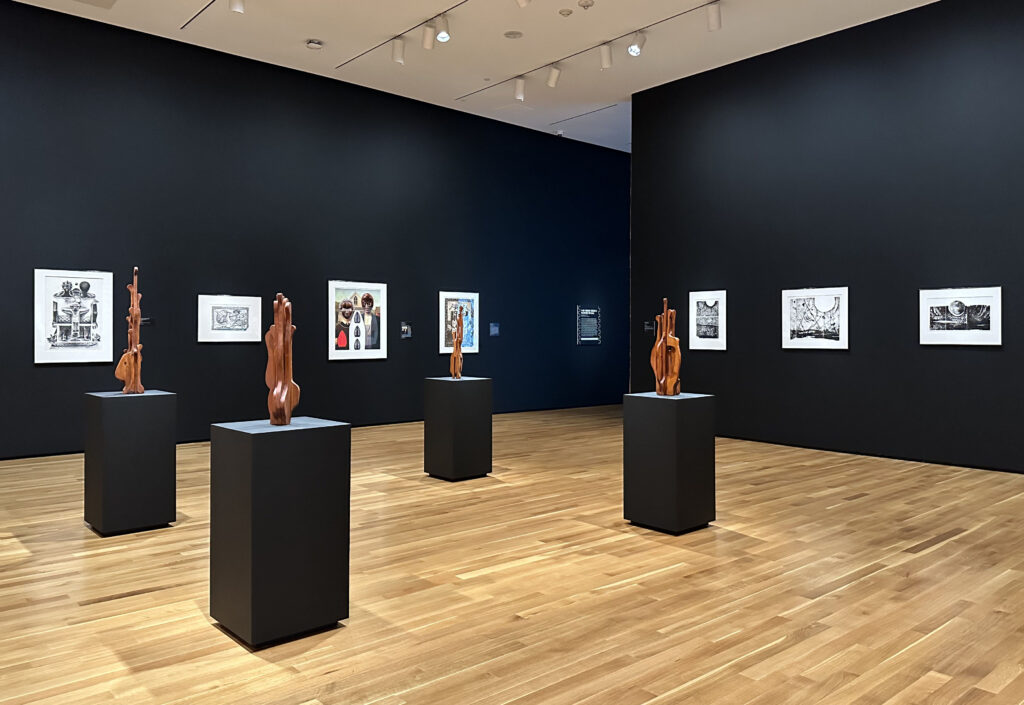
There’s only a few days left to see the excellent and informative exhibition Imprinted: Illustrating Race at Delaware Art Museum.
From the museum about the exhibition–
The Norman Rockwell Museum assembled Imprinted: Illustrating Race with co-curator Robyn Phillips-Pendleton, a professor at the University of Delaware. The exhibition honors Rockwell’s powerful images supporting the Civil Rights Movement, displaying his work within a sweeping historical survey of American illustration that features illustrators including Romare Bearden, Emory Douglas, Howard Pyle, and Loveis Wise.
Illustration has been at the forefront of defining events in the United States, from the American Civil War and Reconstruction Era to the Harlem Renaissance and the Civil Rights Movement of the 1960s, moving forward to today. Imprinted examines widely circulated imagery, conceived and published over the course of more than three centuries, which has reflected and shaped perceptions of race across time.
Featuring over 200 artworks commissioned by publishers and advertisers, the exhibition traces harmful and prolific stereotypical representations of race that were historically sanctioned and prominently featured in newspapers, magazines, and books, on trade cards, posters, and advertisements, and on packaging and products. Imprinted also celebrates the concerted efforts of 20th and 21st century artists and editors to shift the cultural narrative through the publication—in print and across digital platforms—of positive, inclusive imagery emphasizing full agency and equity for all.

Norman Rockwell, “Murder in Mississippi”, 1965, Oil on canvas (Unpublished, intended as the final illustration for “Southern Justice” by Charles Morgan, Jr, in Look, June 29, 1965)
From the museum about the Rockwell work above-
In 1963, Rockwell turned his attention to the documentation of America’s most pressing social concerns and the subject of human rights by making works for Look magazine.
In the beginning of 1965, Rockwell began work on a piece about the murders of Michael Schwerner, James Chaney, and Andrew Goodman-three young civil rights workers who were in Mississippi to expand voter registration.
He wanted the painting to express his outrage. In a letter to Look art director Allen Hurlburt, Rockwell wrote: “I tried in a big way…to make an angry picture. If I just had a bit of Ben Shahn in me it would have helped.”
Shahn’s portraits of the three activists are also on view next Rockwell’s.
Below is Jacob Lawrence‘s painting, The Brown Angel.

Jacob Lawrence, “The Brown Angel”, 1959, Tempera on gesso panel
From the museum-
In the 1940s and 1950s, Lawrence painted a series of compelling works inspired by nightlife and its social atmosphere. In The Brown Angel, the painting’s sharp, edgy forms convey a sense of unease, perhaps pointing to the mounting racial tensions of the time.
Several of Ahmed Samuel Milai’s series of comic-style historical portraits are also on view.

Ahmed Samuel Milai, “Marie Laveau, III”, 1966, Ink, benday, and conte crayon on board For “Facts About the Negro” by J. A. Rogers, in The Pittsburgh Courier, April 2, 1966
From the museum-
Milai was an editorial and comic strip cartoonist for the Pittsburgh Courier, an influential African American weekly newspaper published from 1907 to 1966. For 30 years, he illustrated “Your History,” a cartoon feature that became known in the 1960s as “Facts About the Negro.”
Designed to celebrate and inspire pride in the accomplishments of people of color across the fields of the arts, literature, education, and science, the series brought Black history to light at a time when such information was not widely acknowledged or shared.
You can find a few more of his illustrations here.
Thanks to the support of The Gilliam Foundation, for Black History Month the museum is offering free admission (including the exhibition), every Saturday in February. The exhibition closes 3/1/26.