Feb 072025
 

This mural, Southern Expansion, was created by Zulu Painter and is located in St. Pete, Florida.

Located in the old phone booth on the corner is a plaque that reads-

In the late 1800’s, Black Men were hired to continue the railroad in to the territory that is now known as St. Petersburg, FL. These men settled in this area and were largely responsible for building our city and streets and creating this Gulf Coast community.

This mural honors the history and legacy of the African American people at the foundation of our great city.

You also find Zulu Painter’s work on Instagram.


Feb 072025
 

The Triangle Park Mural, in downtown Asheville, North Carolina, pays tribute to Asheville’s historic African American business district and the surrounding Valley Street/ East End neighborhoods. Completed in 2013, the project was a collaboration between the Just Folks community club, the Asheville Design Center (ADC), and artist/community-arts organizer Molly Must.

From Molly Must’s website

Triangle Park is in the heart of “The Block,” an historic area that was the cultural and economic center for all of Western North Carolina’s African-American citizens, from the time of Reconstruction until the years of integration and the East-Riverside Re-Development Project (funded under the federal Urban Renewal program), which severely altered the community’s physical, cultural, and economic topography. Although the community continues to experience displacement and transformation under heavy development, a generation of people who grew up on and around Valley Street (now Charlotte Street) still congregate in Triangle Park, as they have for many years. This dedicated group of community members — who organized under the name Just Folks — has been hosting regular block parties in the park for over a decade. The Triangle Park Mural was born of this vital commitment and a collective desire to mark the changing landscape with celebratory evidence of the area’s profoundly important past.

In an upwelling of community effort and care, nearly 100 volunteers helped paint the Triangle Park Mural between June of 2012 and May of 2013 (many of whom have their own stories about the heyday of the Block). The design is a product of community discussion that was aided by historical archives, interviews, family stories, and donated photographs (including the collection of photographer Andrea Clark). The mural honors both personal stories and memories of several historic institutions of the area, including the Stevens Lee High School, Catholic Hill School, and the Young Men’s Institute (YMI). Artist Molly Must composed the design, with contributions by artists Ernie Mapp, Twila Jefferson, Ian Wilkinson, Harper Leich, and Liana Murray.


Feb 262024
 

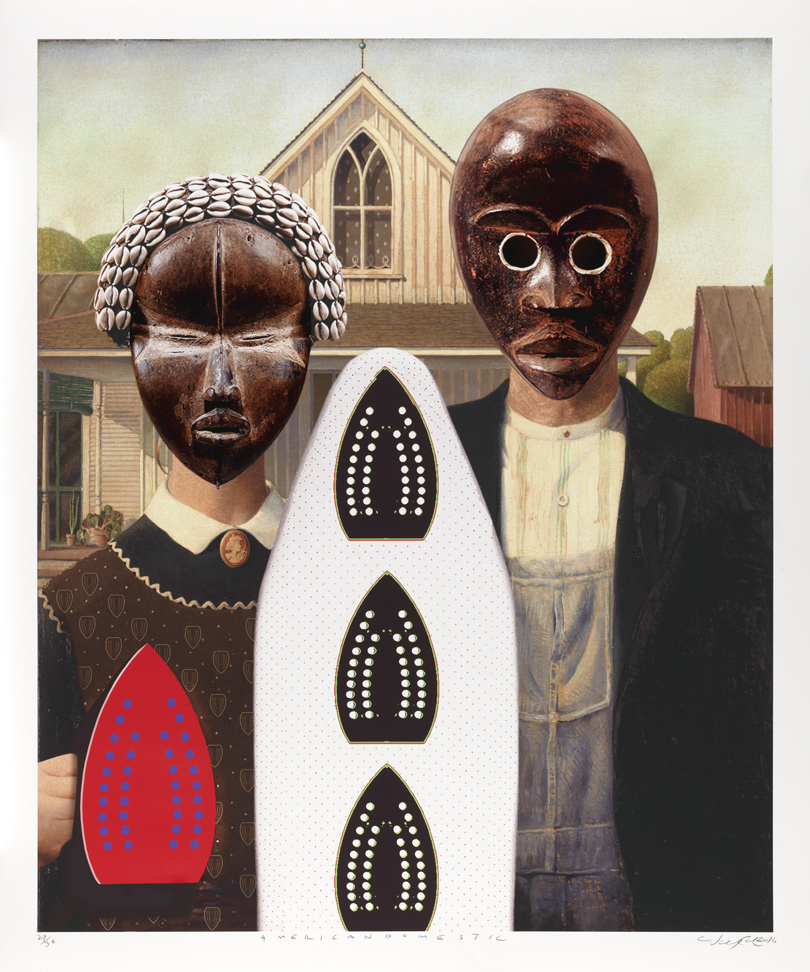
Willie Cole, “American Domestic”, 2016, Digital Print

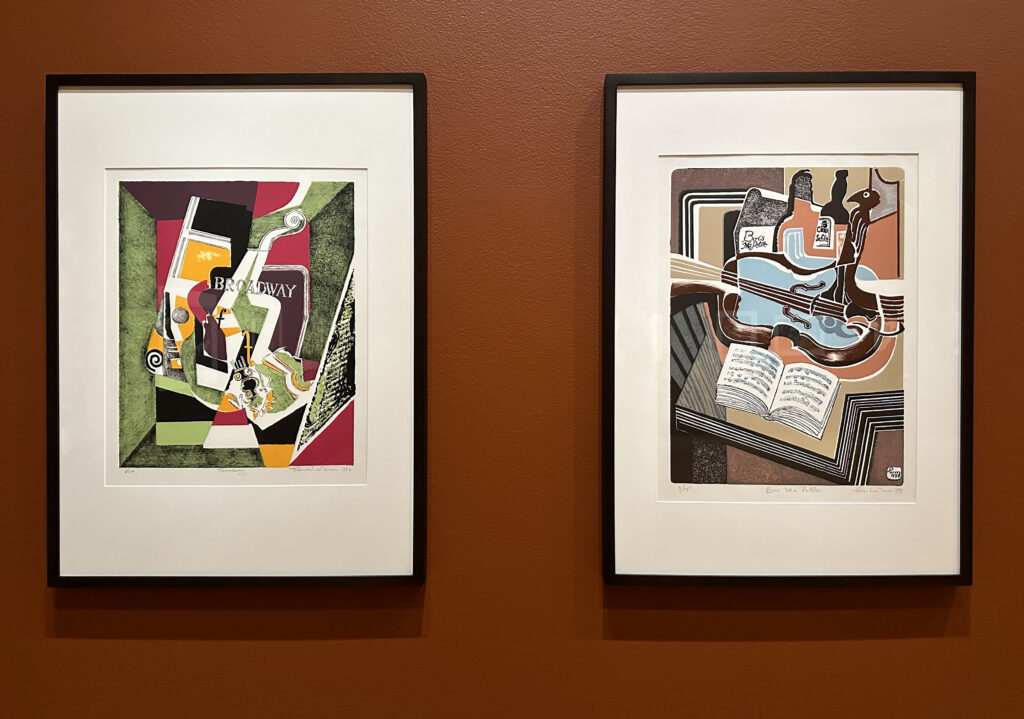
Tom Laidman, “Broadway”, 1993 and “Bois Ma Petite”, 1999, Lithograph on paper

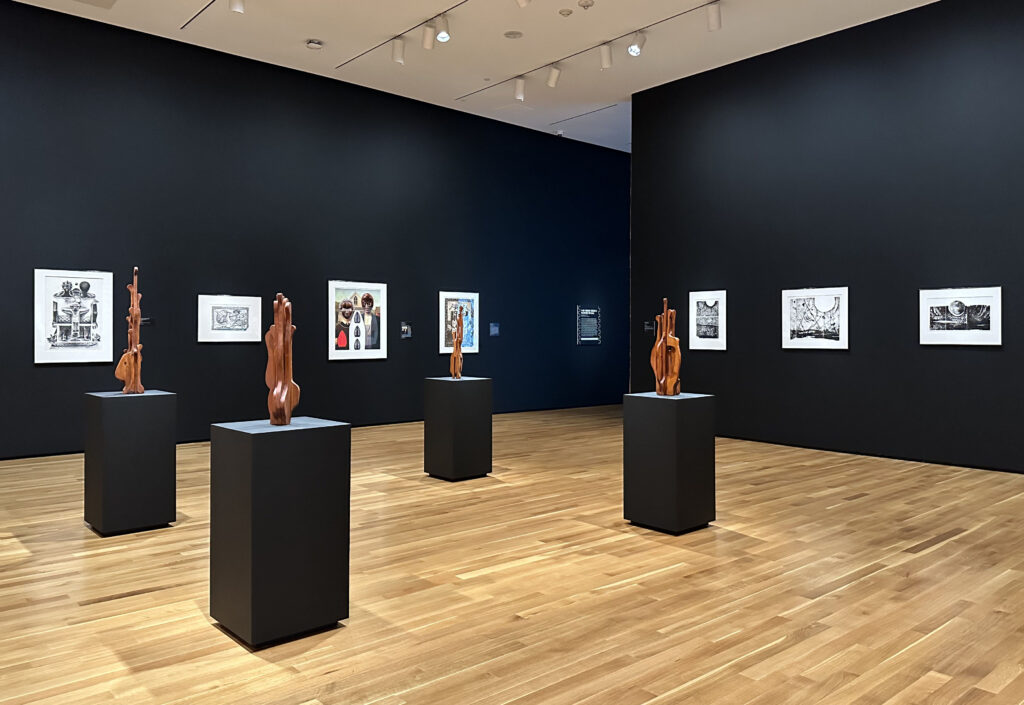
Currently on view at Akron Museum of Art is RETOLD: African American Art and Folklore, a collection of art from the Wesley and Missy Cochran collection, organized into themes exploring aspects of African American history and culture. The show features many well known and lesser known artists including Amiri Baraka, Beverly Buchanan, Willie Cole, Trenton Doyle Hancock, William Pope.L., Tom Laidman, Jacob Lawrence, Alison Saar and more.

From the museum about the exhibition-

African folklore has been around as long as humankind, and the African diaspora in America has added new dimensions to its rich history. African American folk stories teach about culture, the mysteries of life, and the survival of a race of people bought and sold who continue to thrive in an unjust society.

“RETOLD: African American Art and Folklore” focuses on four themes: Remembering, Religion, Racialization, and Resistance. These themes provide a comprehensive retelling of the works featured in the exhibition. In many of the pieces, the artist’s muse connects closely with stories that have been told generation after generation. Folklore texts are featured throughout the space as a means to retell a richer, deeper story of African American culture.

There are more than forty artists represented in this exhibition, all holding one similar truth: their story of joy and struggle in the African American experience.

In addition to the artwork, there is also an educational video produced by Josh Toussaint-Strauss of The Guardian that explores the misconceptions about Haitian Voudou that is worth a watch.

How ‘voodoo’ became a metaphor for evil

Dec 202022
 

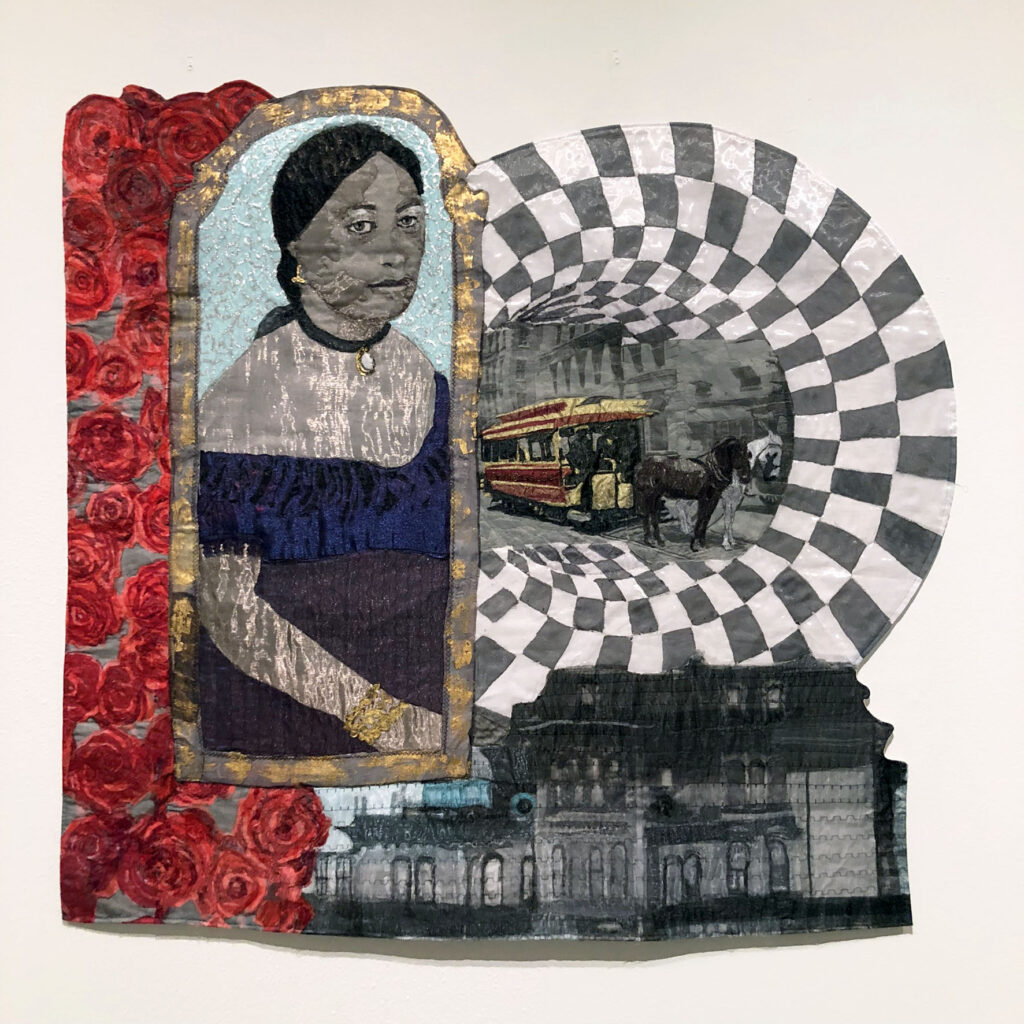
“Call Me Mrs. Mary E. Pleasant: The Midas Touch” by L’Merchie Frazier

Pictured above is a portrait of entrepreneur, civil rights activist and benefactor, Mary Ellen Pleasant who made a name and a fortune for herself in Gold Rush era San Francisco. Her timeline from 1814 to 1904 begins in racial slavery as an indentured servant girl with no formal education. She ascended to a self-made millionaire, amassing a fortune in her lifetime of over $30 million, ($900 million today).

Organized by historian, artist, and curator Dr. Carolyn Mazloomi, “Black Pioneers: Legacy in the American West” at The James Museum of Western and Wildlife Art, consists of 50 pictorial quilts created by members of Women of Color Quilters Network, a group founded by Mazloomi in 1985.

Mazloomi’s statement at the exhibition entrance-

American history is incomplete without the stories of African American men and women, from our enslaved ancestors to our societal challenges. The role of African Americans in the movement toward westward expansion has been largely overlooked. This exhibition of original pictorial quilts brings into focus the rich and diverse stories and achievements of Blacks in American western history. The timeline begins with Esteban’s 1528 arrival in the West and continues through the Civil Rights Movement.

At the end of Reconstruction in the South, discrimination and segregation caused African Americans to seek opportunities where there was less prejudice. In the 1800s, they moved by the thousands to the American West. Some went West as slaves, while free African American men joined the United States Army or became ranch hands, fur traders, cowboys, or miners.

Why quilts? Quilts and quilt making are important to American, and Black culture in particular. The art form was historically one of the few mediums accessible to marginalized groups to tell their own story, to provide warmth for their families, and to empower them with a voice through cloth. Using quilts to tell these stories accentuates the intersections of African Americans in the Western frontier while at once informing about the art form and its role in Black history. It is this often unknown and underappreciated shared reality that must be voiced if we are ever to truly value the unique contributions diverse groups make to the fabric of our nation.

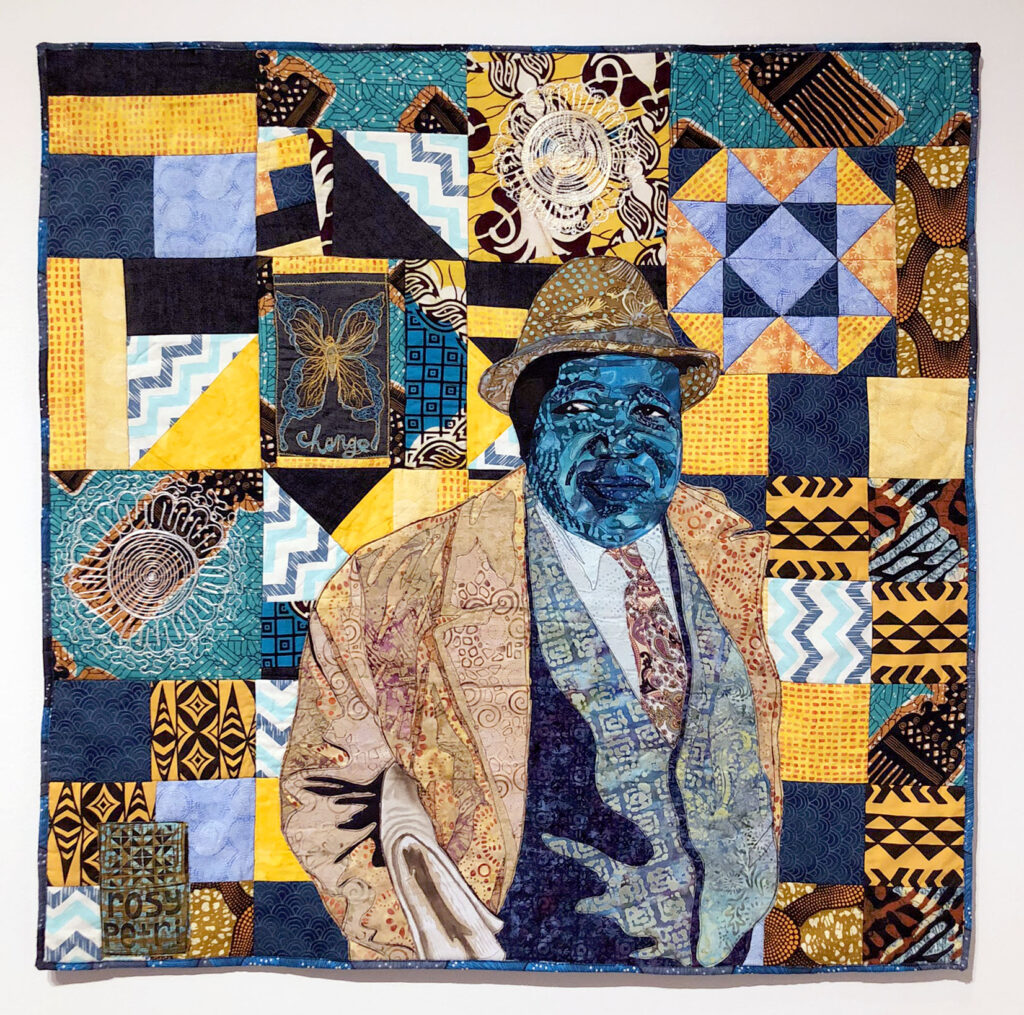
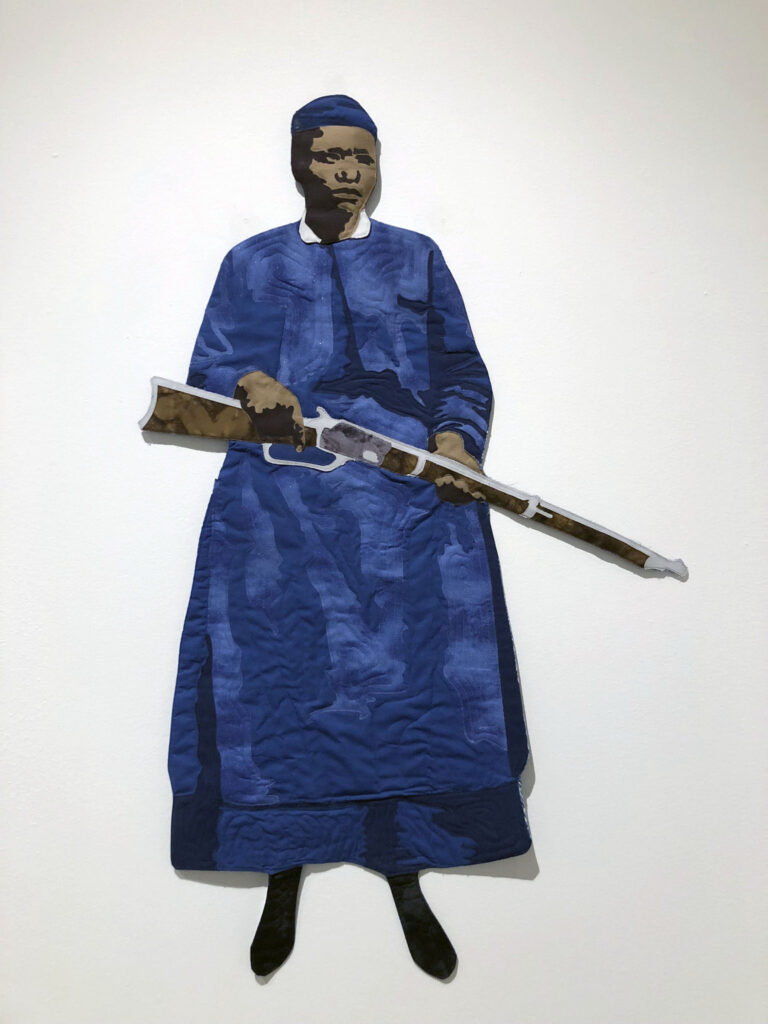
Two more selections from the exhibition are below, although it was very hard to choose which quilts to highlight- there are so many great ones to choose from.

“A Good Soldier: Thomas C. Fleming, America’s Longest Serving Black Journalist” by Rosy Petri

At the time of his retirement in 1997, California journalist Thomas C. Fleming was the nation’s oldest Black journalist with the longest consecutive period of publication.

Information from the Museum’s wall plaque on Stagecoach Mary

Mary Fields- also known as Stagecoach Mary, Black Mary and White Crow-became a Wild West legend because she was the second woman and the first African American woman star route mail carrier in the United States.

Born into slavery and freed after the Civil War, she worked as a servant and laundress for families on riverboats before moving to Montana in 1885. A decade later she became a star route carrier, delivering mail using a stagecoach. She drove the 15-mile route from Cascade to Saint Peter’s Mission, Montana, from 1895 to 1903. Nicknamed Stagecoach Mary, she was known for her reliability and speed.

The six-foot-tall Fields was a quick-shooting and hard drinking mail carrier who wore men’s clothing and flaunted a revolver and a rifle. Locals praised her kindness and generosity, and schools in the town of Cascade were closed each year to celebrate her birthday.  Cascade’s mayor granted her an exemption to enter saloons after Montana passed a law forbidding women from entering these establishments.

The impressive quilts on view educate viewers with stories of individuals and events in African American history that may not have previously been familiar, and present new perspectives on those that are. It’s a wonderful way to utilize a visual medium to captivate, inform, and often inspire.

This exhibition closes on 1/8/2023.