Feb 262026
 

Kadir Nelson, “Harlem On My Mind”, 2016, Oil on canvas, Cover for The New Yorker, February 22, 2016

There’s only a few days left to see the excellent and informative exhibition Imprinted: Illustrating Race at Delaware Art Museum.

From the museum about the exhibition

The Norman Rockwell Museum assembled Imprinted: Illustrating Race with co-curator Robyn Phillips-Pendleton, a professor at the University of Delaware. The exhibition honors Rockwell’s powerful images supporting the Civil Rights Movement, displaying his work within a sweeping historical survey of American illustration that features illustrators including Romare Bearden, Emory Douglas, Howard Pyle, and Loveis Wise.

Illustration has been at the forefront of defining events in the United States, from the American Civil War and Reconstruction Era to the Harlem Renaissance and the Civil Rights Movement of the 1960s, moving forward to today. Imprinted examines widely circulated imagery, conceived and published over the course of more than three centuries, which has reflected and shaped perceptions of race across time.

Featuring over 200 artworks commissioned by publishers and advertisers, the exhibition traces harmful and prolific stereotypical representations of race that were historically sanctioned and prominently featured in newspapers, magazines, and books, on trade cards, posters, and advertisements, and on packaging and products. Imprinted also celebrates the concerted efforts of 20th and 21st century artists and editors to shift the cultural narrative through the publication—in print and across digital platforms—of positive, inclusive imagery emphasizing full agency and equity for all.

Norman Rockwell, “Murder in Mississippi”, 1965, Oil on canvas (Unpublished, intended as the final illustration for “Southern Justice” by Charles Morgan, Jr, in Look, June 29, 1965)

From the museum about the Rockwell work above-

In 1963, Rockwell turned his attention to the documentation of America’s most pressing social concerns and the subject of human rights by making works for Look magazine.

In the beginning of 1965, Rockwell began work on a piece about the murders of Michael Schwerner, James Chaney, and Andrew Goodman-three young civil rights workers who were in Mississippi to expand voter registration.

He wanted the painting to express his outrage. In a letter to Look art director Allen Hurlburt, Rockwell wrote: “I tried in a big way…to make an angry picture. If I just had a bit of Ben Shahn in me it would have helped.”

Shahn’s portraits of the three activists are also on view next Rockwell’s.

Below is Jacob Lawrence‘s painting, The Brown Angel.

Jacob Lawrence, “The Brown Angel”, 1959, Tempera on gesso panel

From the museum-

In the 1940s and 1950s, Lawrence painted a series of compelling works inspired by nightlife and its social atmosphere. In The Brown Angel, the painting’s sharp, edgy forms convey a sense of unease, perhaps pointing to the mounting racial tensions of the time.

Several of Ahmed Samuel Milai’s series of comic-style historical portraits are also on view.

Ahmed Samuel Milai, “Marie Laveau, III”, 1966, Ink, benday, and conte crayon on board    For “Facts About the Negro” by J. A. Rogers, in The Pittsburgh Courier, April 2, 1966

From the museum-

Milai was an editorial and comic strip cartoonist for the Pittsburgh Courier, an influential African American weekly newspaper published from 1907 to 1966. For 30 years, he illustrated “Your History,” a cartoon feature that became known in the 1960s as “Facts About the Negro.”

Designed to celebrate and inspire pride in the accomplishments of people of color across the fields of the arts, literature, education, and science, the series brought Black history to light at a time when such information was not widely acknowledged or shared.

You can find a few more of his illustrations here.

Thanks to the support of The Gilliam Foundation, for Black History Month the museum is offering free admission (including the exhibition), every Saturday in February. The exhibition closes 3/1/26.

Feb 202024
 

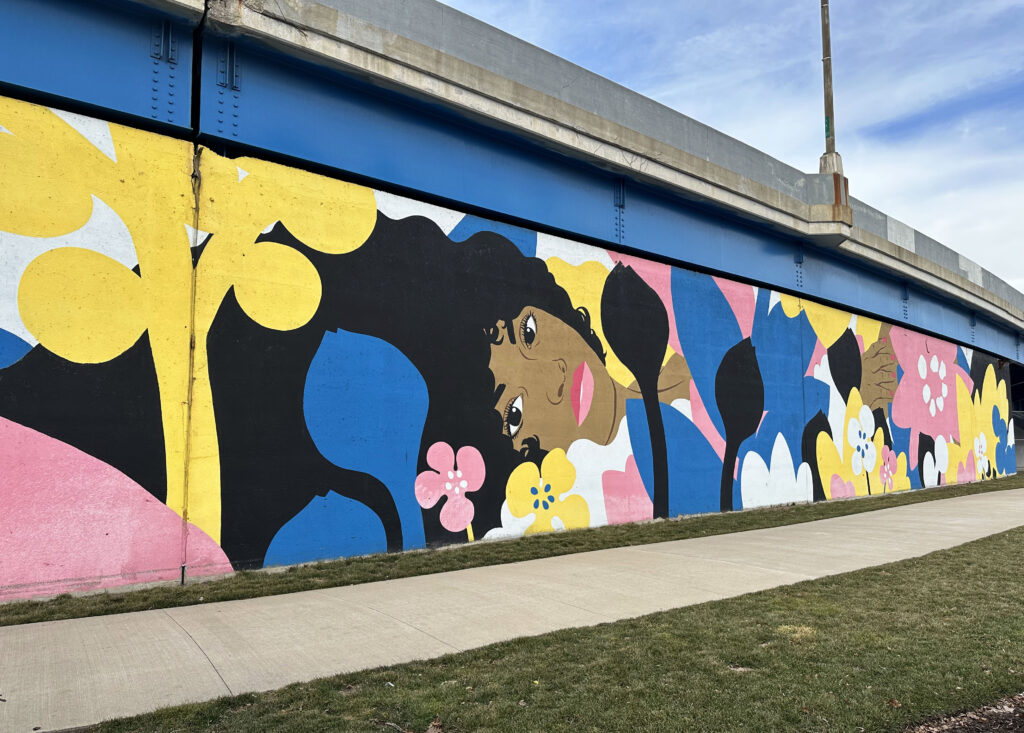
Cannaday Chapman created Flora, the mural seen above, for Hingetown Culture Works in Cleveland, Ohio, in 2018. He has created illustrations for The New York Times, The New Yorker, as well as a Google Doodle for Martin Luther King Jr. Day.

For more of his work also check out his Instagram.

Oct 052023
 

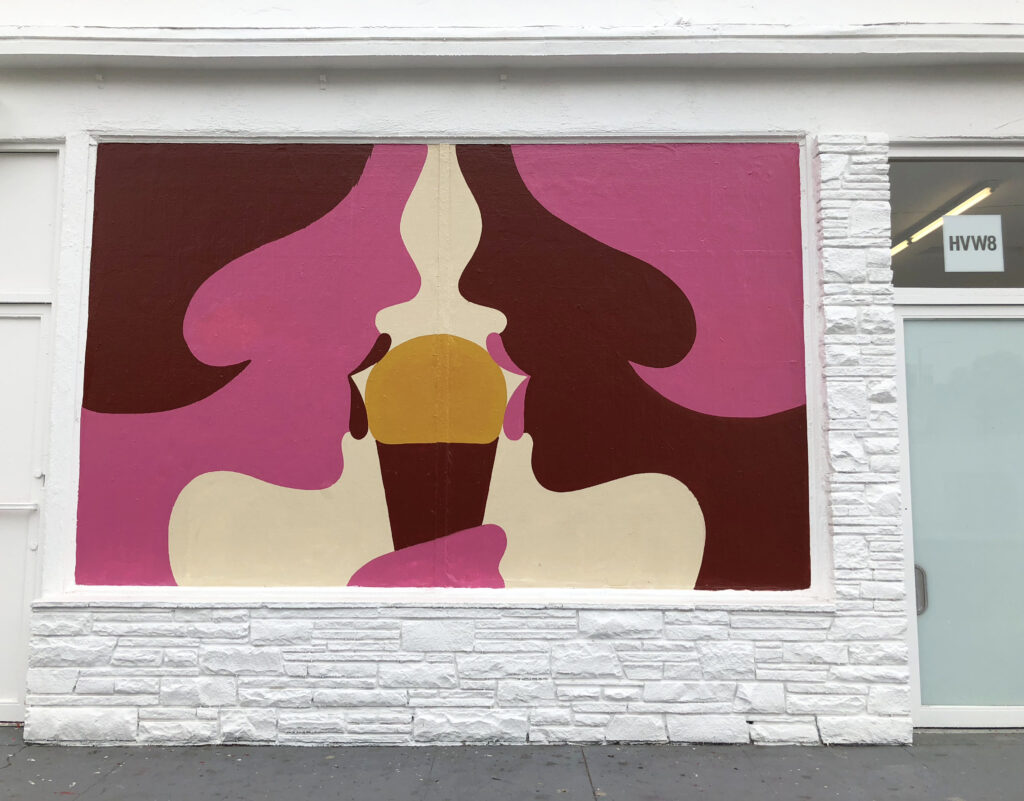
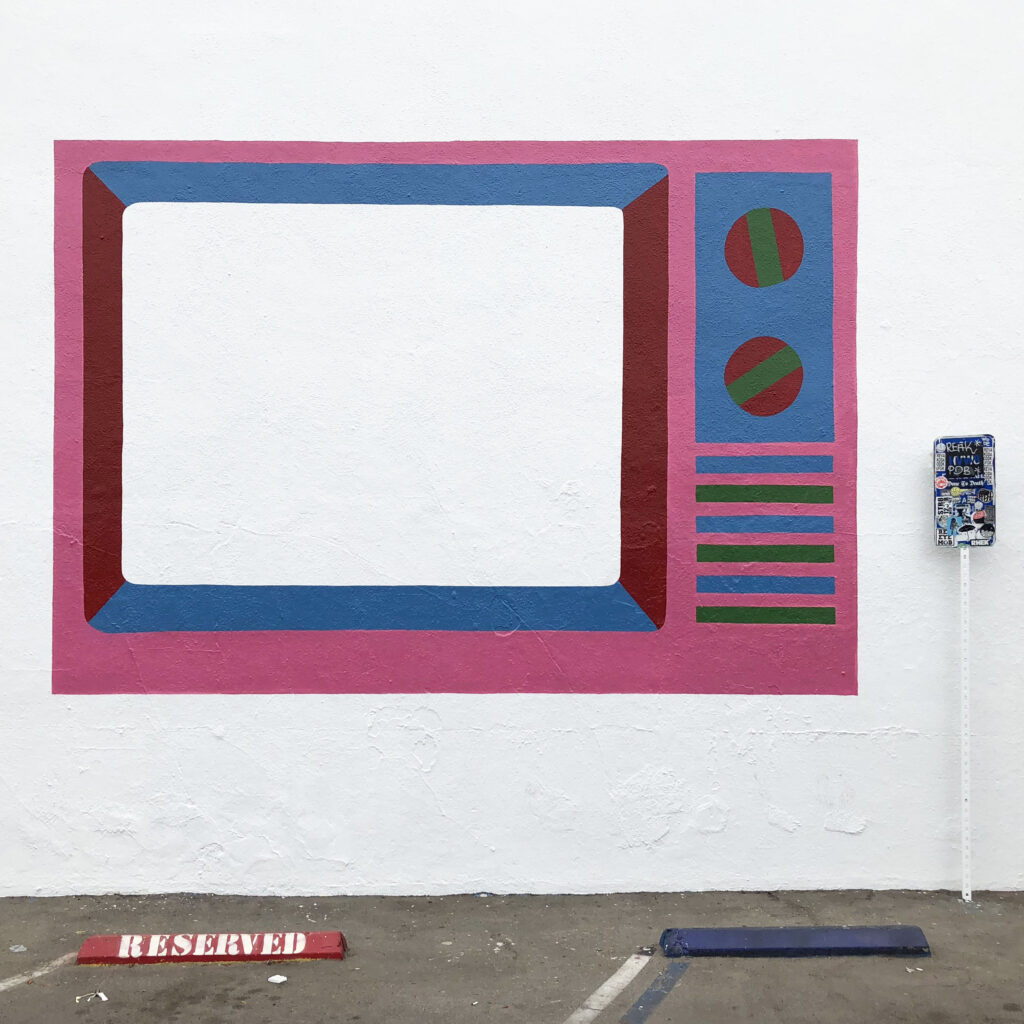
Above are images from Olimpia Zagnoli’s 2018 exhibition Cuore di Panna at HVW8 Gallery in Los Angeles. She is currently showing her work, along with her talented family at Antonio Colombo Gallery in Milan, Italy. That exhibition, ZaLiZaZa. Inventario di famiglia will be on view until 11/19/23.

The press release from the gallery-

Galleria Antonio Colombo is pleased to present the exhibition ZaLiZaZa. Inventario di famiglia, curated by Francesca Pellicciari, featuring a group of artists belonging to the same family: the photographer Miro Zagnoli (Za), the artist Emi Ligabue (Li) and their two daughters: the illustrator Olimpia Zagnoli (Za), already connected with the gallery, and the costume designer Emilia Zagnoli (Za).

The members of ZaLiZaZa are a very modern family, but also one of days gone by: were they not engaged in making their own various artifacts, we could imagine them operating in a family workshop in the Renaissance or Baroque spirit, experimenting with new painting techniques, revolutionizing styles or using them as examples to make their own; creating majestic theatrical wings, garbed in their style which is simultaneously classic and eccentric.

After all, this image is not so far from what ZaLiZaZa are doing today, in the 21st century, each in his or her own field – contiguous and often overlapping ambits – constantly coming to grips with their own research and experimentation, relying on a shared language, a true family lexicon.

The exhibition pathway is an inventory of works of all kinds – drawings and photographs, wooden books, collages, object/sculptures, fabrics, screens and magic boxes – in an intense dialogue of correspondences, where the four voices alternate and take turns, without a chronological order; a dialogue accompanied by a selection of items (sketches, notes, postcards, family photos) that document a methodology, while at the same time emphasizing the constant presence of art in the private life of ZaLiZaZa.

Thus it is no coincidence that many subjects are similar in the work of ZaLiZaZa.

While for decades design has pervaded the still analog settings and photographs of Miro (Za), it is also a recurring theme in the works of Emi (Li), from the Cicognino of Albini to the life and work of Charlotte Perriand, or anonymous design found for sale online: “I have no taboos, no type of respect or norm.” Similar use of anonymous and unconventional materials is found in the “Souvenir” clothing series by Emilia (Za), made from touristy dishtowels with the map of Italy, just as certain archetypes return in the thousands of stripes traced by Olimpia (Za), always in pursuit of the perfect synthesis between the idea and its representation.

Beyond this, beyond design, mountains, figures, bodies, portraits, chiaroscuro effects, balconies, there is the continuing echo – in the various generations of ZaLiZaZa of what Matisse said one day to Picasso, as Emi (Li) reminds us: “In the end, Picasso, we don’t have to try to be so smart. You and I are alike: what we try to rediscover in art is the atmosphere of our First Communion.” To always observe the world with the eyes of children, with the gaze of ZaLiZaZa.

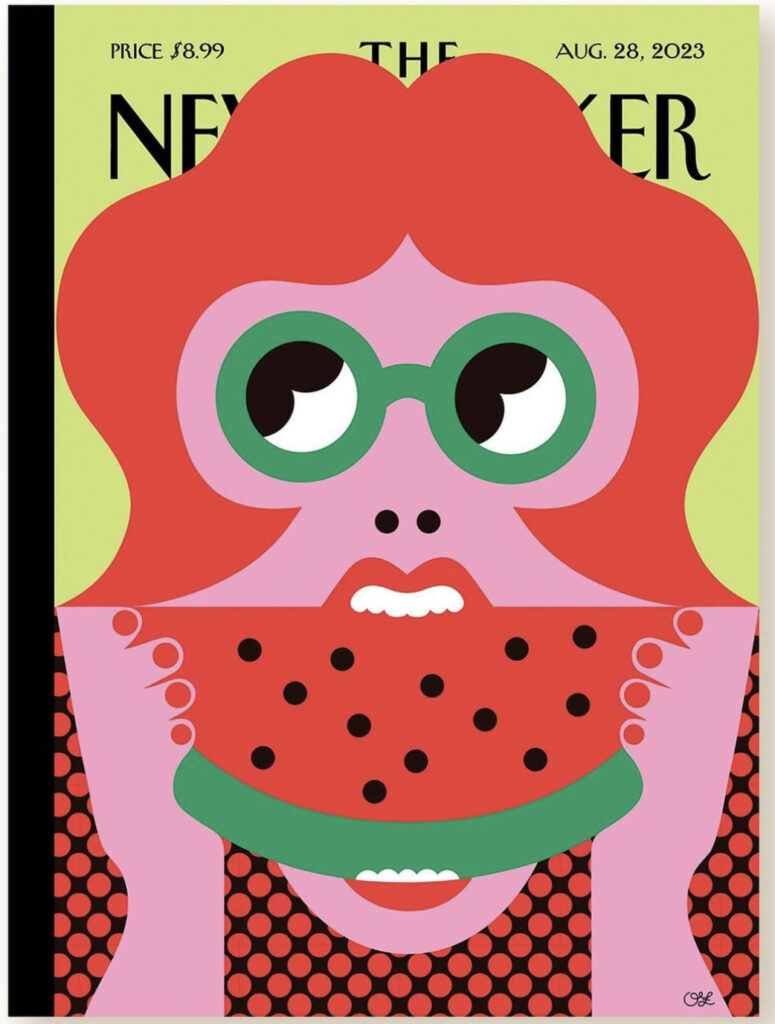
If Olimpia Zagnoli’s work looks familiar, she also designed The New Yorker’s August 28th issue, seen below.

Apr 152022
 

Lynette Yiadom-Boakye’s 2018 painting, The Ever Exacting, from her 2019 exhibition, In Lieu of a Louder Love at Jack Shainman Gallery in NYC.

This poem, written by the artist, was included with the press release for the show-

In Lieu Of A Louder Love

In the Shade of Hooded Cove,

In Debt to the Dead Oak.

In Range of a Twelve Gauge,

On Embers over Smoke.

At Pains to Hold the Wanton,

At Home to all who Knock.

At Prayer on Prickly Hearth Rug,

An Eye upon the Clock.

In the Parlance of the Pilgrim,

In Hallelujah Coat and Tie.

In Soul so Black Beguiling,

That the Ravens do Carp and Cry.

In Memory of A Cipher,

At Peace beside resting Dove.

In Light of Care and Kindness,

In Lieu of A Louder Love.

The information below is from the gallery’s artist biography, and gives some added insight on her paintings.

Lynette Yiadom-Boakye’s oil paintings focus on fictional figures that exist outside of specific times and places. In an interview with Nadine Rubin Nathan in the New York Times Magazine, Yiadom-Boakye described her compositions as “suggestions of people…They don’t share our concerns or anxieties. They are somewhere else altogether.” This lack of a fixed narrative leaves her work open to the projected imagination of the viewer.

Her paintings are rooted in traditional formal considerations such as line, color, and scale, and can be self-reflexive about the medium itself, but the subjects and the way in which the paint is handled is decidedly contemporary. Her predominantly black cast of characters often attracts attention. In an interview with Hans Ulrich Obrist in Kaleidoscope, she explained “People are tempted to politicize the fact that I paint black figures, and the complexity of this is an essential part of the work. But my starting point is always the language of painting itself and how that relates to the subject matter.”

The New Yorker published a wonderful portrait of Yiadom-Boakye by Zadie Smith in 2017, that is well worth a read as well.