Mar 222019


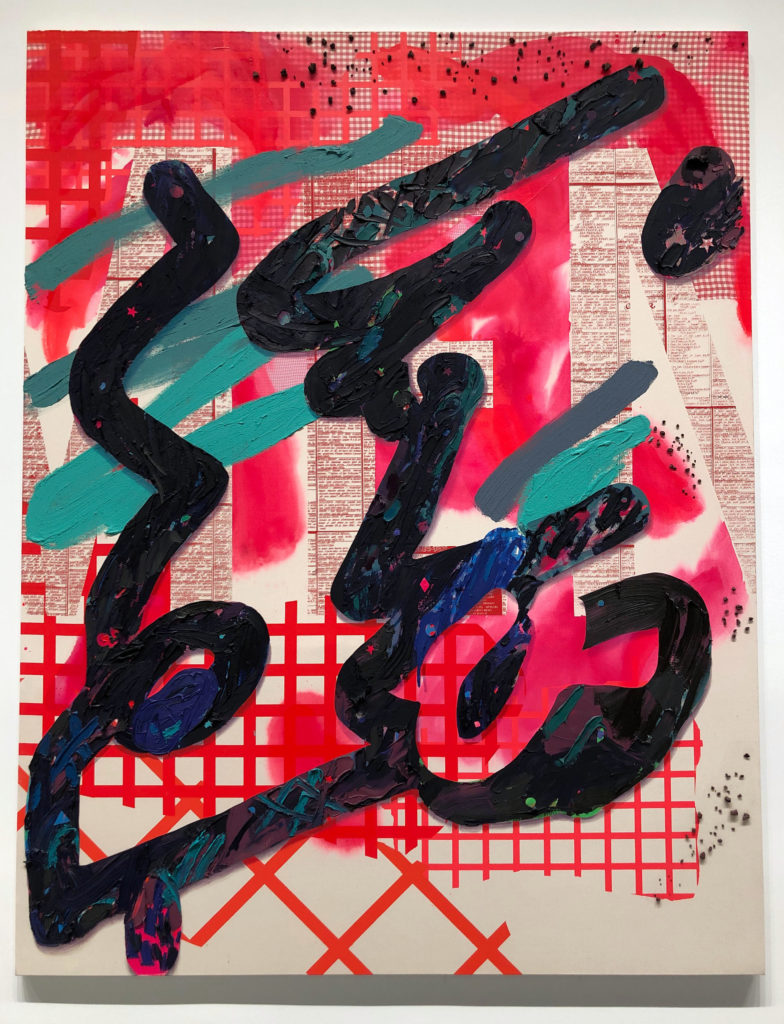
Currently at The Geffen Contemporary at MOCA are Laura Owens mid-career survey and Zoe Leonard: Survey. Two very different exhibitions, each exceptional in their own way.

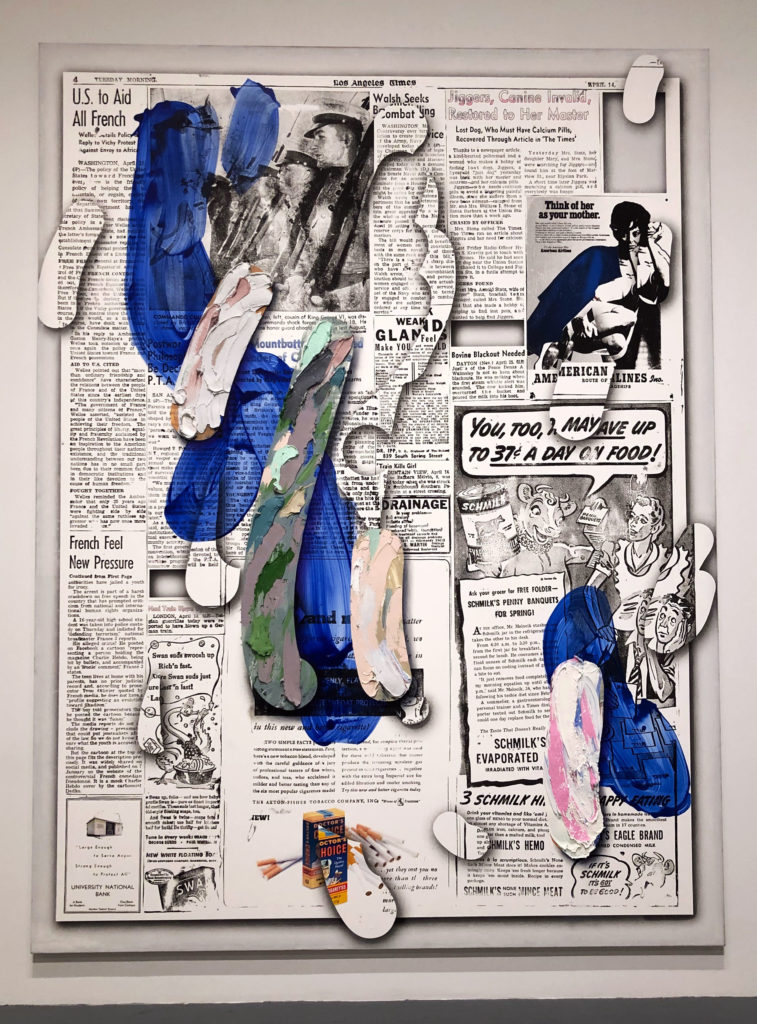
Laura Owens’ exhibition (pictured above), captures the exuberance of her work throughout her career from the mid-1990s until today. Looking at the colorful paintings, it’s the details you don’t notice at first that give them added depth and life. Textured paint seems to float above the canvas and in some of the work sculptural pieces extend beyond the frame. Traveling from room to room you can see her style grow and change while still keeping elements from the previous work.

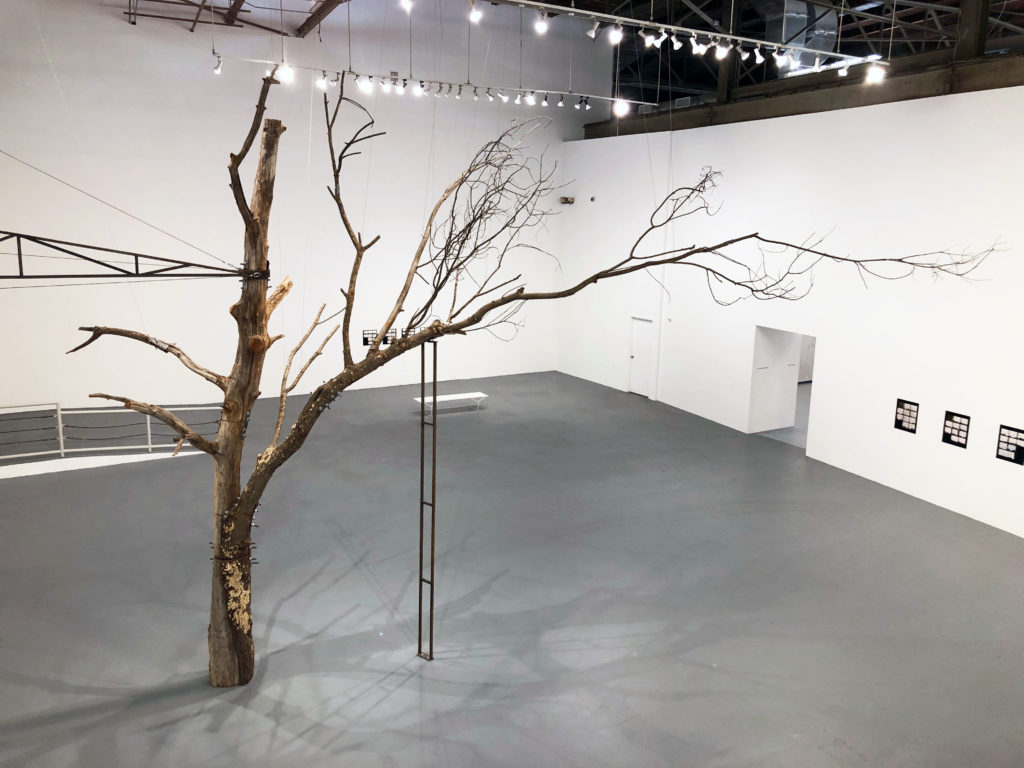
Zoe Leonard’s exhibition (seen below) is a thought provoking collection of the artist’s work that varies between the political and the personal and sometimes a blending of the two.

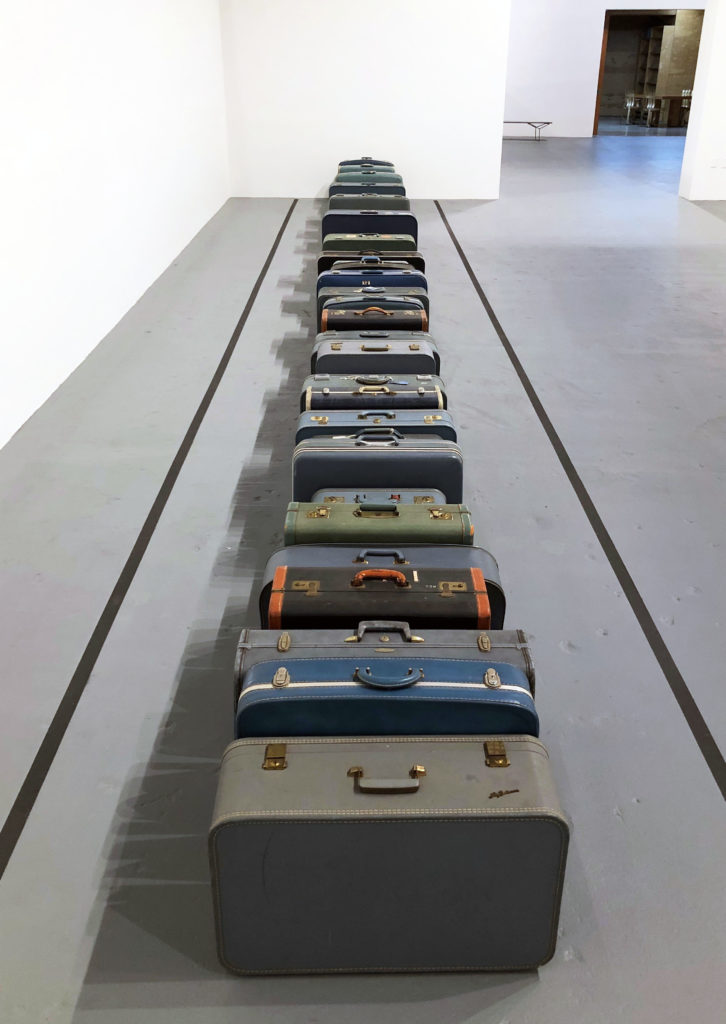
A tree sliced apart and bolted back together is suspended in a room that also contains contact sheets of birds in flight. In another, there’s a line of suitcases, one for every year of the artist’s life. There are photos taken of the sun and a table with stacks of postcards of various views of Niagara Falls.  Black and white photos of animals who have been killed and dismembered confront you in another section of the gallery. Nature, death, and the passing of time are common themes present in Leonard’s work and in our own lives. The effect is meditative.

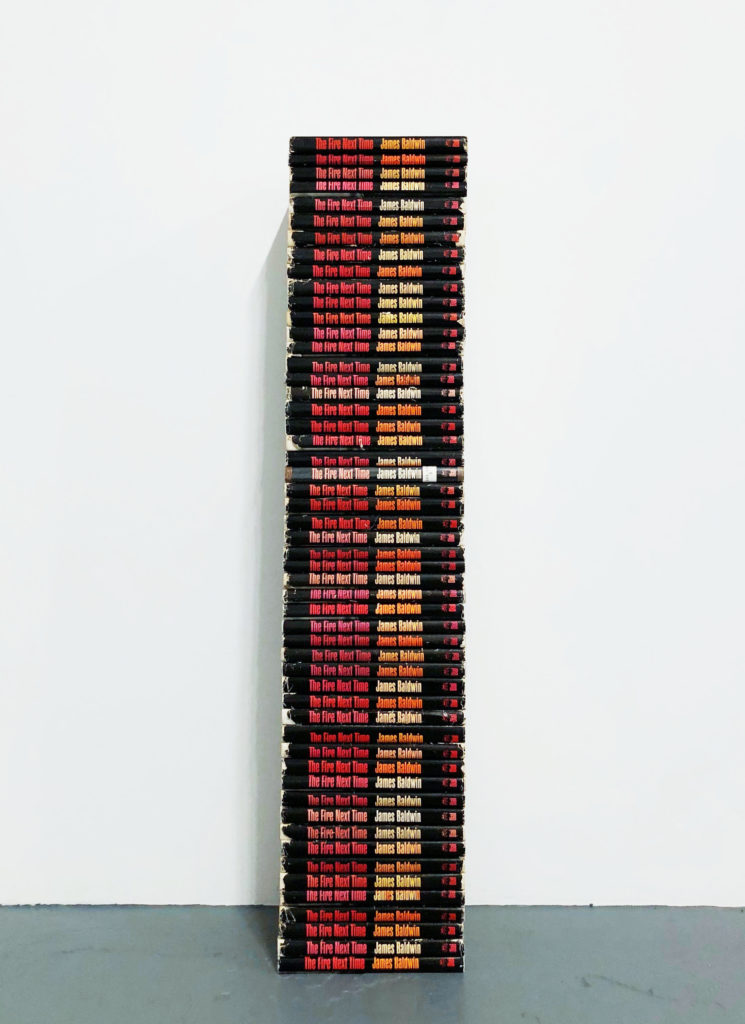
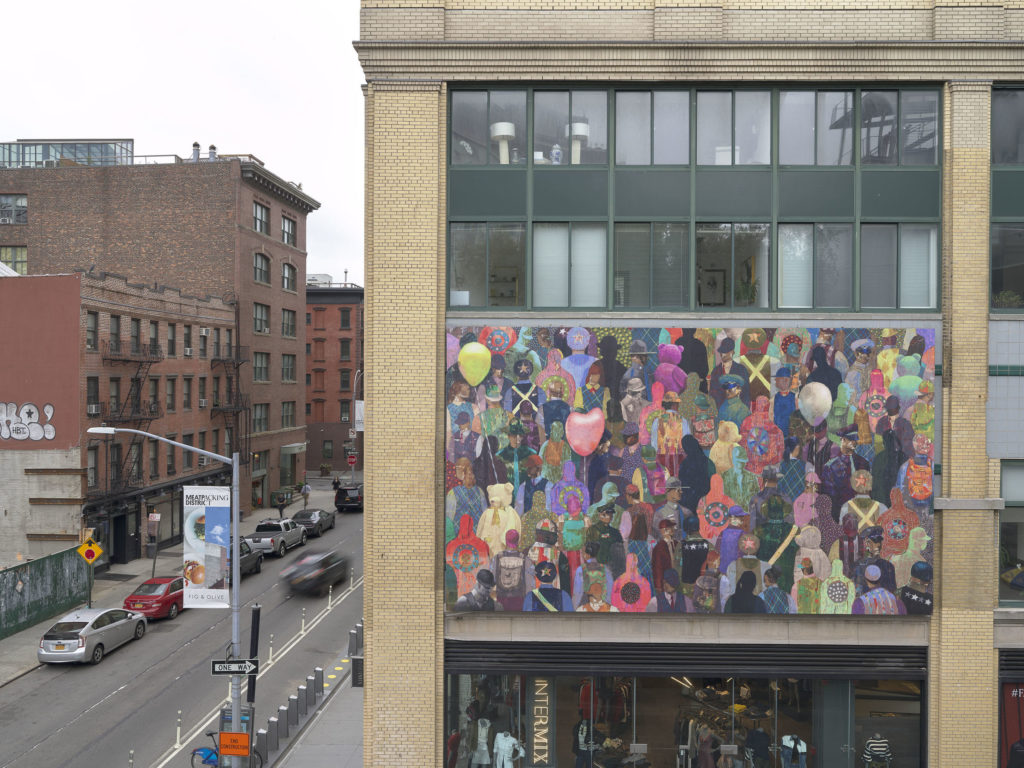
There are also the more overtly political works. For Tipping Point (pictured below) which she created in 2016, she created a tower of 53 copies of James Baldwin’s The Fire Next Time, one for each year since the book was published. On one wall a typed copy on onionskin of her famous work I want a president, that she wrote when poet Eileen Myles ran for president, hangs between two pieces of glass. (This work was also printed as a large mural for The Highline in New York in 2016)

From MOCA’s website-

New York–based artist Zoe Leonard (b. 1961) is among the most critically acclaimed artists of her generation. Over the past three decades, she has produced work in photography and sculpture that has been celebrated for its lyrical observations of daily life coupled with a rigorous, questioning attention to the politics and conditions of image making and display.

Zoe Leonard: Survey is the first large-scale overview of the artist’s work in an American museum. The exhibition looks across Leonard’s career to highlight her engagement with a range of themes, including gender and sexuality, loss and mourning, migration, displacement, and the urban landscape. More than it focuses on any particular subject, however, Leonard’s work slowly and reflectively calibrates vision and form. Using repetition, subtle changes of perspective, and shifts of scale, Leonard draws viewers into an awareness of the meanings behind otherwise familiar images or objects. A counter-example to the speed and disposability of image culture today, Leonard’s photographs, sculptures, and installations ask the viewer to reengage with how we see.
On Sunday, 3/24, MOCA Senior Curator Bennett Simpson will lead a final walkthrough of both of these exhibitions before they close on Monday 3/25/19.  Admission is free to the museum and this event this weekend.
Mar 212019
 

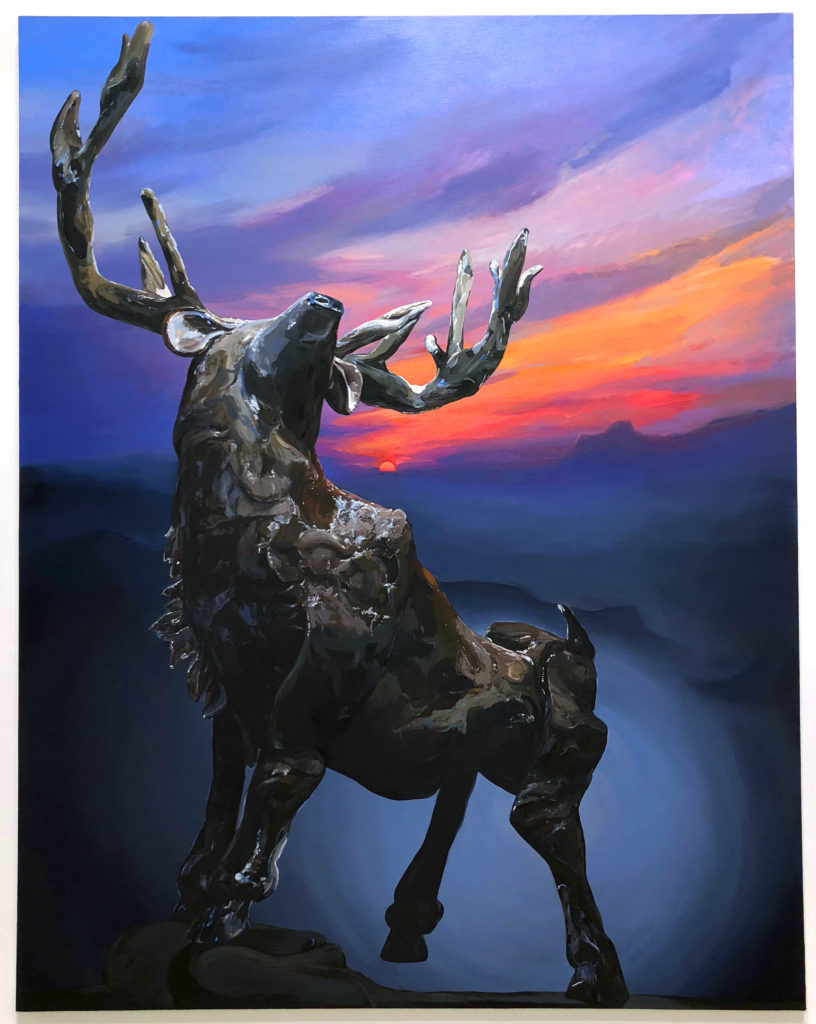
Emma Webster “Actaeon,” 2018

Emma Webster “Still Life” 2018

For Emma Webster’s current exhibition Arcadia at Diane Rosenstein, she created dioramas based on historic paintings, lit them in a theatrical manner, and then reproduced them as oil paintings . The results are dramatic worlds where a sense of foreboding weighs on the scenes. This is not the fictional Arcadia of pastoral harmony, which the title of the exhibition references, but something more.

From the press release-

The show’s title Arcadia alludes to recycled and reassembled notions of nature and art passed down from antiquity. These fake bucolics, where each tree is as much a reflection of its maker’s hands as it is a symbol, point to the ways humanity manipulates nature, seeing nature only as it relates to mankind itself. As in garden design, man contrives his own aesthetic of “natural” beauty despite the existence of another untamed and unpredictable reality. Considering climate change and deforestation, Emma Webster’s landscape as still life rings a warning.

In the paintings with complex scenes, like Still Life, there is more of a feeling of collage than painting. A figure appears to be falling from the sky at the top of the canvas, day and night blend, and a tiny American flag is seen among the figures of animals and people. There is too much going on for the scene to be peaceful.

In Actaeon, the imagery is simpler. Referencing the myth of the hunter turned to a stag by Artemis and devoured by his own hunting dogs, the painting depicts the stag against the backdrop of a rising or setting sun. The figure is imposing, but at the same time it is also evident that it is a painting of a figure originally made in clay.

Webster’s paintings keep the viewer guessing at the layers of meaning behind the worlds she created, both simple and complex. They are also beautiful, skillful works that reveal more the longer you look at them.

This exhibition closes 3/23/19.

Mar 062019
 

Currently at The Rendon Gallery, at a pop-up space on Palmetto Street, is Los Angeles based South African artist Ralph Ziman’s exhibition, The Casspir Project. The Casspir is a massive military vehicle that was used to terrorize the civilian population in South Africa during the apartheid-era. Sadly, they are still used by police forces in certain parts of the world, including in the United States. Ziman, with a team of artists from Zimbabwe and the Mpumalanga province of South Africa, have covered the Casspir in brightly colored beads in traditional patterns, making something beautiful out of what was once a symbol of horror.

Although the vehicle is the centerpiece, the exhibition also focuses on the arms trade and includes photos, a video, and additional beaded work. From the press release-

For this iteration of The Casspir Project, Ziman has designed the massive gallery space with a “macro and micro” experience in mind. Each room within the gallery space brings context to the next, informing the project as whole. The exhibition starts with an installation of brightly colored AK-47s leading into a room with large photographs taken in Soweto. For the photos, Ziman recreated scenes from newspapers during the apartheid, incorporating many of the elements found within the exhibition such as the beaded guns and SPOEK 1. A screening room shows a 20 minute documentary by Ziman which tells the history of the Casspir, from its design and conception to people’s personal experiences with it in the ‘70s and ‘80s. It chronicles Ziman’s reclaiming of the Casspir, detailing how he transformed and Africanized it. The exhibition culminates with the dramatic presentation of SPOEK 1, lit only by a spotlight in a dark room.

Opening a dialogue between those who remember and those too young to know, The Casspir Project is a profound attempt to reconcile history. Ziman has reclaimed the savagely violent brute—embellished and bedazzled, the Casspir has been made less threatening, its power and authority subverted.

This exhibition has been extended through 3/10/19 and this weekend Ziman will be live painting at the gallery with artist Keya Tama.


Mar 022019
 

What are the webs within our own lives? How are we connected to others? What is seen and not seen in our world? How do we function within our environment? What is created without our even noticing?

Tomás Saraceno’s current exhibition at Tanya Bonakdar Gallery in Hollywood, his first ever solo exhibition in Los Angeles, explores these ideas through the intersection of science and art. In one room, balloons drag pens to create drawings from the air and movements of those who wander through. Spider webs (displayed without the spiders) play an important part in weaving together the themes of the exhibition. Made by different species of spider and dyed with carbon ink, they are in frames against the wall. Presented in another part of the gallery, in a dark room, they are spot lit creating beautiful three dimensional sculptures. In another room, in full darkness, they are lit by a slowly moving laser which highlights in red various sections of the webs as others fade away.

In the front room of the gallery is a sculpture that continues the artist’s Cloud Cities body of work (pictured below). Cloud Cities was shown on the rooftop of the Metropolitan Museum of Art in New York in 2012.


From the press release-

… Conceived and inspired by the geometries of soap bubbles, the cluster-like artworks are composed of a number of interconnected modules, some with web-like structures set within them, which form geometric constellations inspired by the Weaire-Phelan structure. The Cloud Cities project is intimately tied to and embodied in the Aerocene Foundation, a community that proposes an epoch free from fossil fuel emissions, which challenges socio-political atmospheres by trespassing and weaving new, much needed, aerographies.

Cloud Cities are fictional urban and socioscapes in such imagined post-Anthropocenic future. These sculptural assemblages whose interplay between being tethered to the Earth whilst inviting our gaze to the sky, are devoted to reimagining life in tune and in collaboration with the atmosphere. Indeed, with 102,465 planes and about 8.3 million people traversing the atmosphere every day, swarms of particulate matter crossing borders and billions of pounds of carbon dioxide produced by fossil fuel aerial transportation, there is an entire metropolis up in the air already, coming with a huge cost and carbon print. The elemental imaginaries of Cloud Cities and Aerocene epoch call to open up the boundaries of the Earth toward a new interplanetary ecology of practice. We can reconnect with elemental sources of energy and form a new set of values that would overcome the extractive economies of the fossil fuel regime – a new stratigraphy of the future.

This exhibition closes 3/2/19.


Mar 022019
 

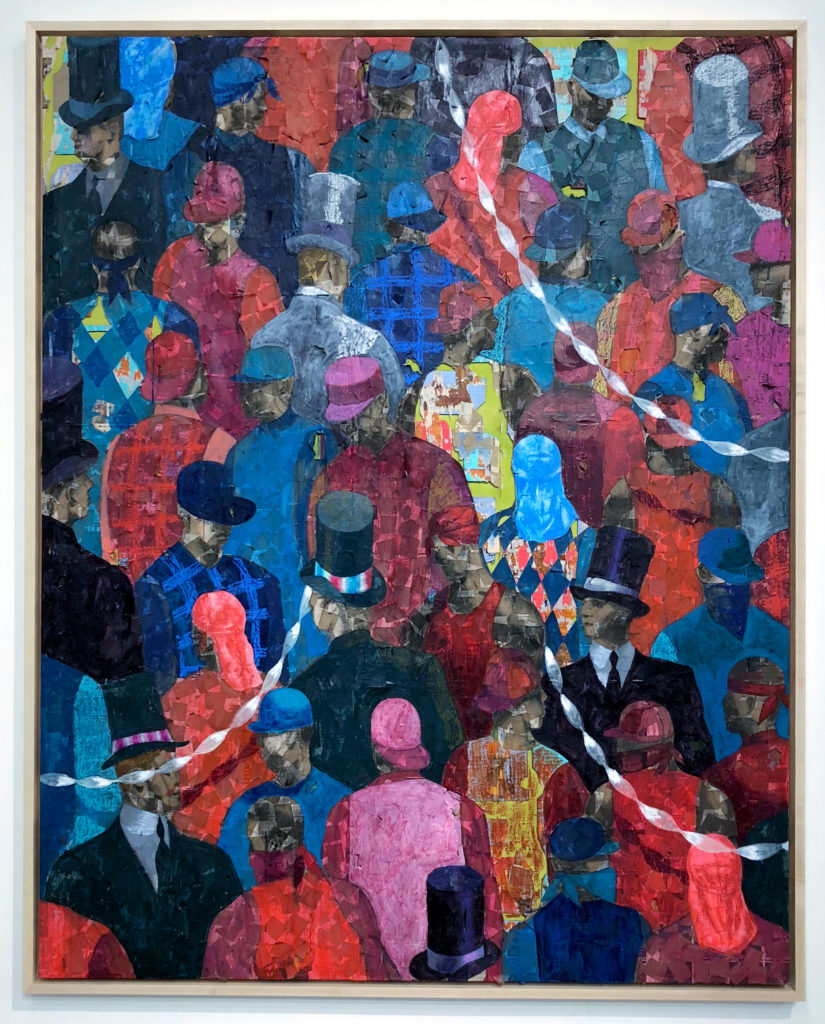
Derek Fordjour, Two Party System, 2019


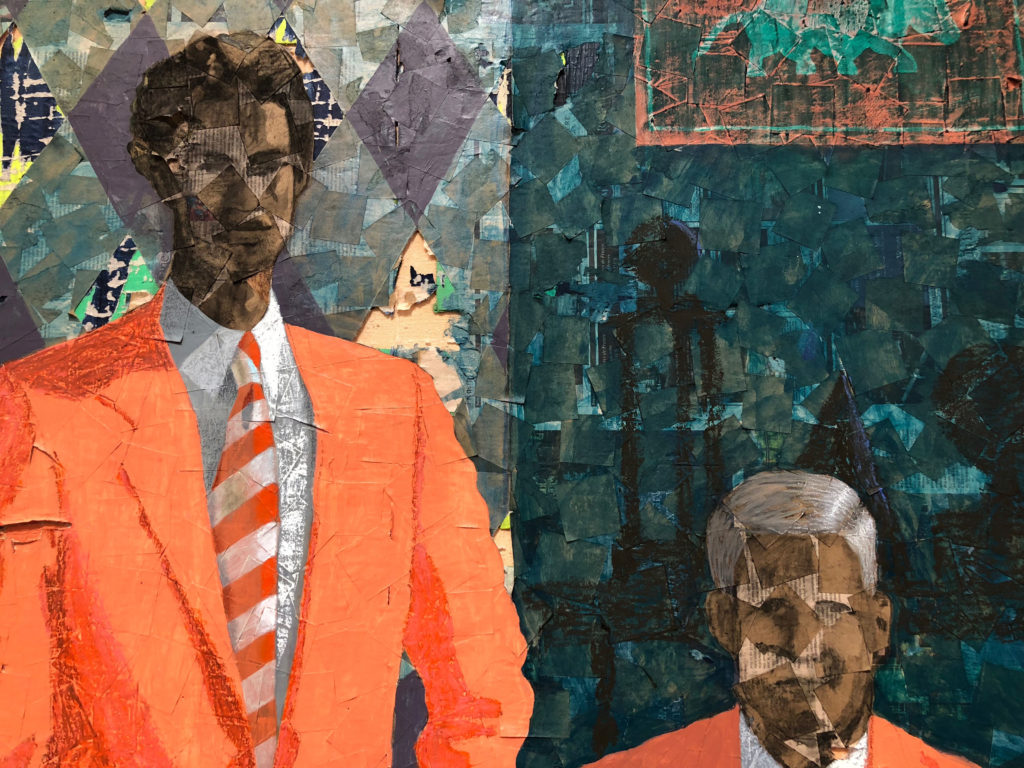
JRRNNYS, Derek Fordjour’s solo exhibition at Night Gallery, includes new paintings and sculptures that “advance explorations of earlier works, returning to the subjects of crowds and athletic competitions to illustrate the entrenchment of power relations, capital flows, and racial inequality within the economic and social systems of the United States”. The paintings are made of multiple layers of painted cardboard and newspaper that are then scored and sections are removed.

This interview with the artist from artnet goes into more detail on his fascinating process and the reasons behind it.

Signing Day, 2019

Signing Day detail


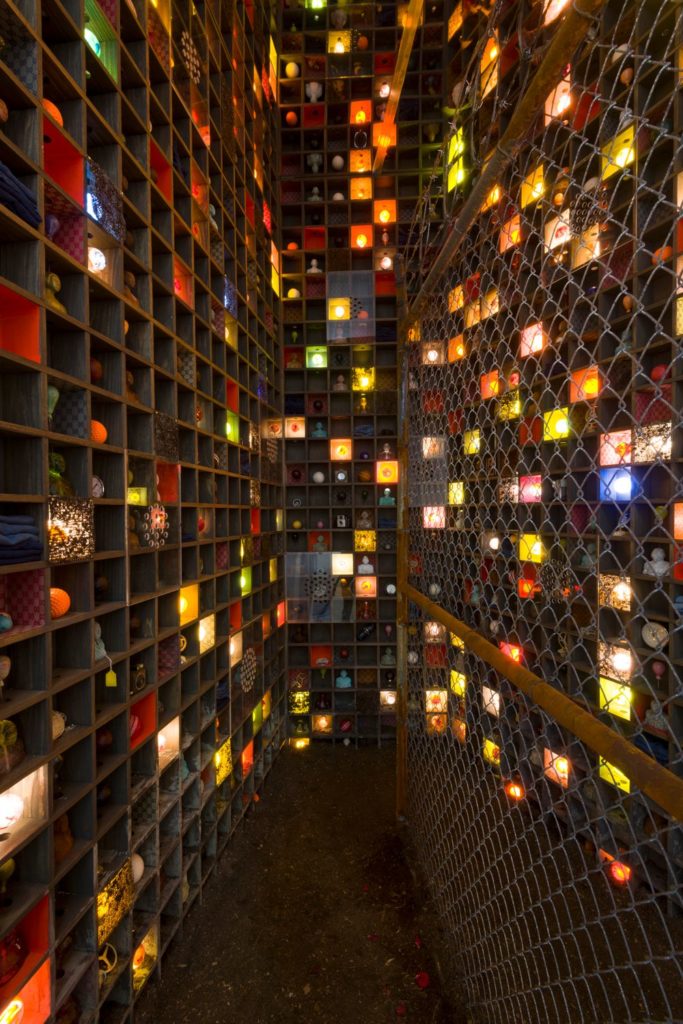
The centerpiece of the exhibition is the installation STOCKROOM Ezekiel.

From the press release

…The work takes its name from the 1884 letters of Ezekiel Archey, an 25-year-old unjustly held as a prisoner sent to labor at the Pratt Coal Mines in Birmingham. Archey’s letters, sent to the Alabama inspector of prisons, are among the most prominent primary-source documentation of the ravages of the convict leasing system, acknowledging the stark preponderance of black prisoners and the gruesome treatment of the laborers by their supervisors. Fordjour’s installation responds to Archey’s letters by creating a walled-in structure comprised of over 1,000 individually constructed compartments – cells, as the artist calls them – painstakingly organized with a variety of found and handmade objects, though by a logic that is never explicated to the viewer. Lights in individual cells blink on and off variously, while small speakers let forth bursts of music by the dictates of a rigid but similarly inscrutable pattern, luring the viewer in the eye-popping manner of the carnival game or game board. The intermittent sounds of music range from the early field recordings of 20th century ethnomusicologist Alan Lomax to 80s- and 90s-era drug dealer anthems to modern day Trap music, a largely Southern genre of hip-hop inspired by the illegal drug trade. The viewer has entered a gamelike arena whose rules remain obscure. With time, the objects that populate the shelves come into focus. Some cells contain familiar items – balls extracted from various sporting contests, the lottery and billiards, cameras, hood ornaments from luxury sports cars, decommissioned prison uniforms, and hundreds of hand blown glass balloons, among others. Others are closed off with metal grating, while still more are lined with the ubiquitous fabrics of luxury designers, invoking the aspirational quests of poverty-stricken urban communities. Finally, many cells contain small busts of the same expressionless figure, molded from resin, copper, metal, plaster, dirt, and salt – materials which stand in for the most prominent products from the era of convict leasing, including the coal mines and steel plants of of Alabama and the molasses distilleries of Florida. Taken individually, the contents of these cells suggest luxury and labor, surveillance and displacement, strategy and competition; as a whole, the work suggests the laws of chance taking place within the confines of a framework that is as unknowable as it is oppressive. From the era of Pig Laws to our current three-strikes mandatory sentencing, educational lotteries to modern day sporting empires, Fordjour’s installation points to the tragic persistence of unjust structures that define American life, employing contemporary commodities while invoking history. At once mournful and flickering with possibility, the installation conjures notions of personal loss and gain within the macro-scale context of the inscrutable systems that have determined the fates of black and brown people through the nation’s history.

Derek Fordjour, STOCKROOM Ezekiel, 2019 image via Night Gallery

This exhibition closes 3/2/19.

If you are in NYC you can see one of Fordjour’s new works, Half Mast, as a public art installation for the Whitney Museum. The large vinyl reproduction of his painting can be seen at the intersection of Gansevoort and Washington Streets, directly across from the Whitney and the High Line.

Derek Fordjour, Half Mast. Image via Whitney Museum

Feb 252019


Currently outside of LACMA’s Ahmanson Building is one of artist Sam Durant’s “electric signs”. It takes its text from a photo taken at the 1963 March on Washington for Jobs and Freedom where Martin Luther King, Jr. delivered his “I Have A Dream” speech.

Feb 232019
 

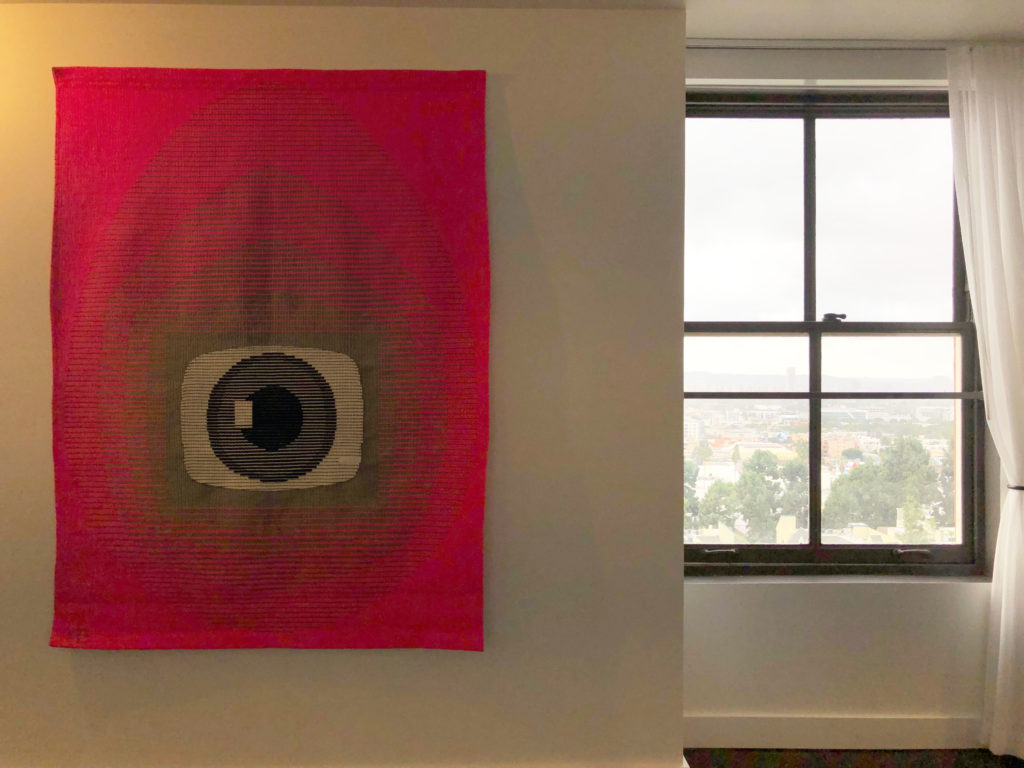
Artist Pierre Daquin’s tapestry “La Vue” courtesy of Galerie Chevalier as part of The 13th Floor project

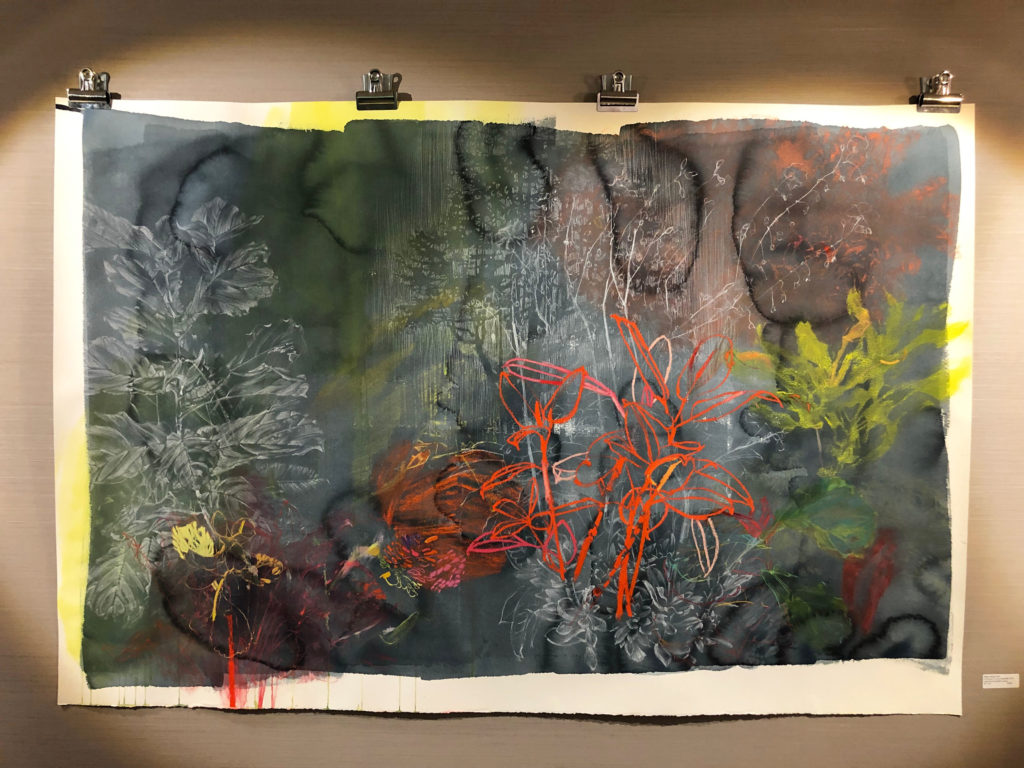
Several art fairs took over Los Angeles last weekend, two of which used hotels to create temporary galleries and installations.

At the The Hollywood Roosevelt was the first edition of Felix, a free art fair co-founded by Dean Valentine along with brothers Al Morán and Mills Morán (of LA gallery Morán Morán). Galleries took over rooms along the pool, on the 11th floor, and the penthouse.  Starting at the penthouse was The 13th Floor (pictured above), a collection of work by French artists curated by writer Andrew Berardini and presented by The French Committee of Art Galleries and the Cultural Services of the French embassy.

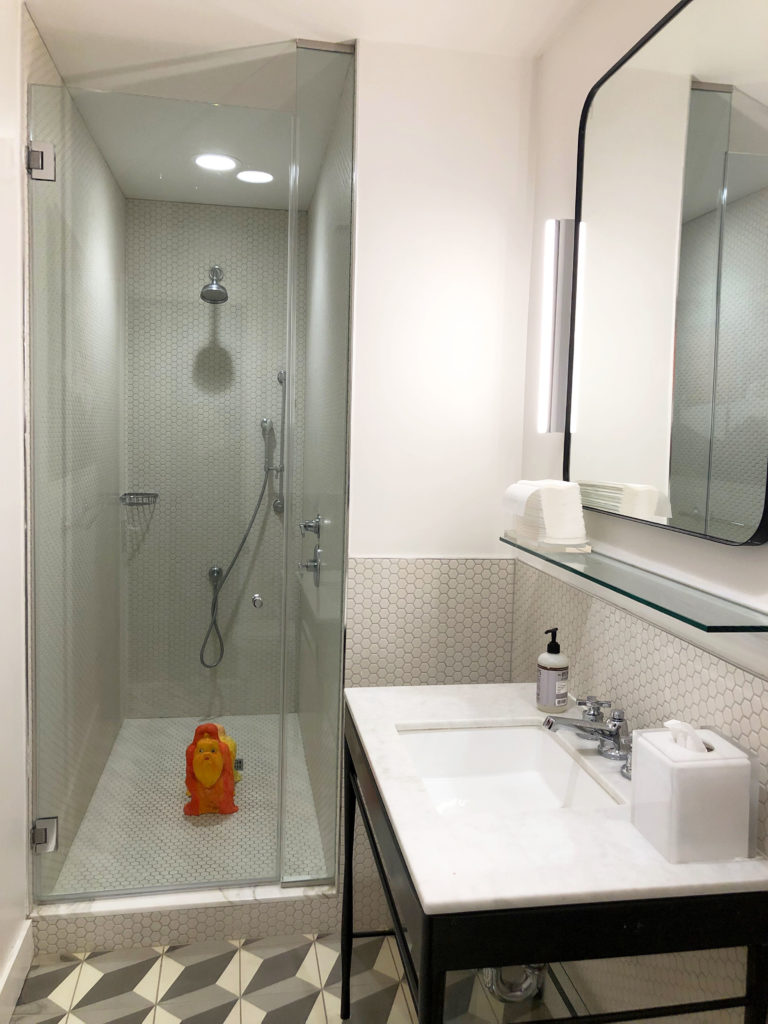
Kenny Schachter had some fun pieces in his room on the 11th Floor including Ilona Rich’s sculptures, one of which was in the bathroom shower (pictured above), and a framed collection of artist Chris Burden’s cancelled checks.

Bodega gallery, from New York’s Lower East Side, had a selection of interesting work including paintings by Alexandra Noel.

Alexandra Noel, “And then the air was filled with 10,000 things (or when a minor piece of wood becomes a missile)”

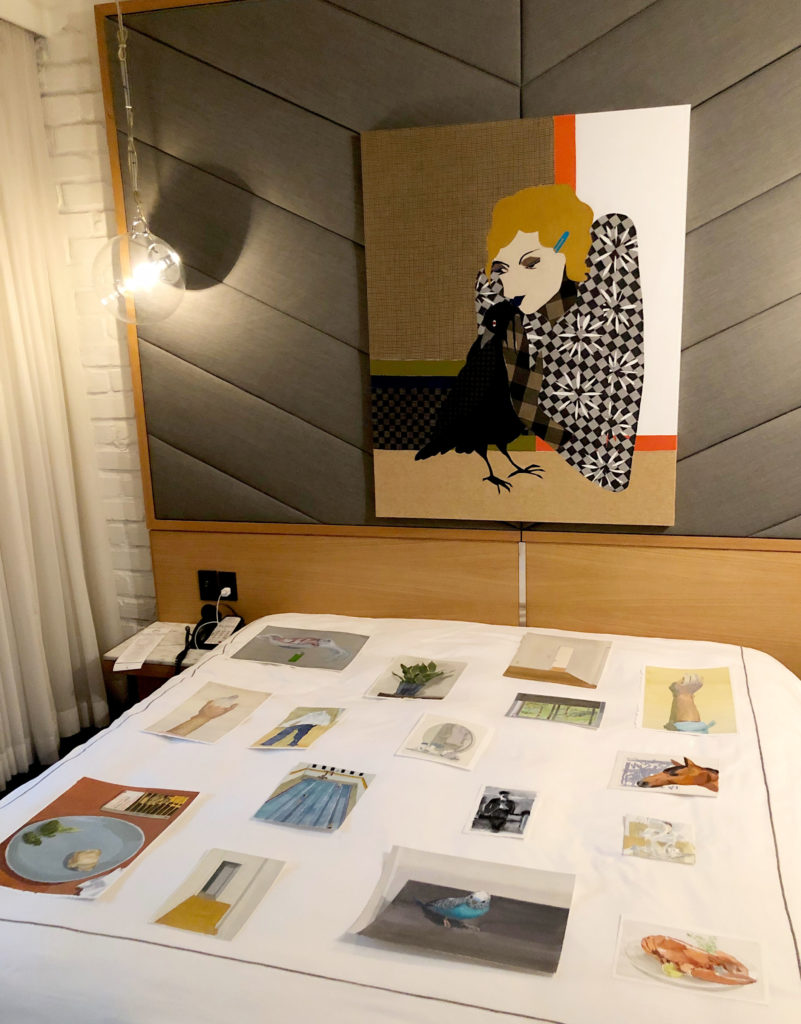
Grice Bench’s selections included a collection of lovely watercolors by Roger White and a painting placed above the bed by Lara Schnitger.

Work by Lara Schnitger and Roger White

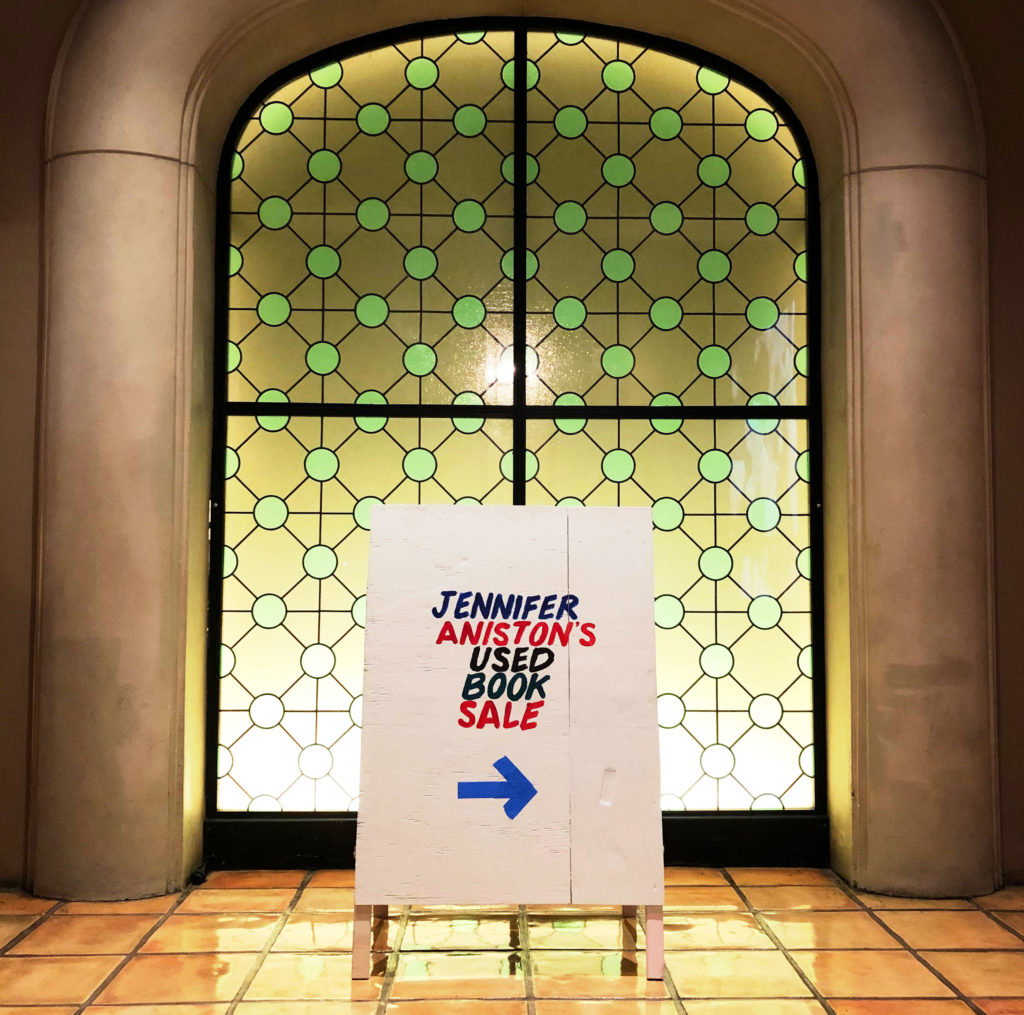
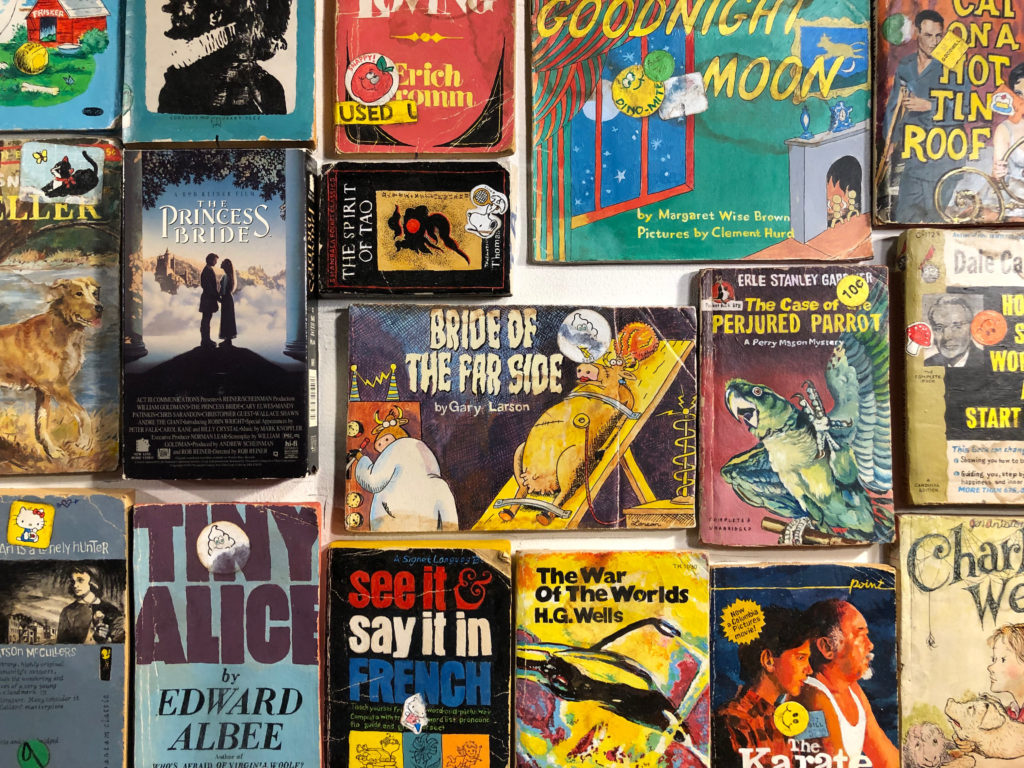
On the ground floor Marc Selwyn Fine Art presented Jennifer Aniston’s Used Book Sale, artist Kristen Morgin’s incredibly realistic ceramic replicas of books she imagines might make up the actress’ collection (the VHS tape is real).

Kristen Morgin’s ceramic books

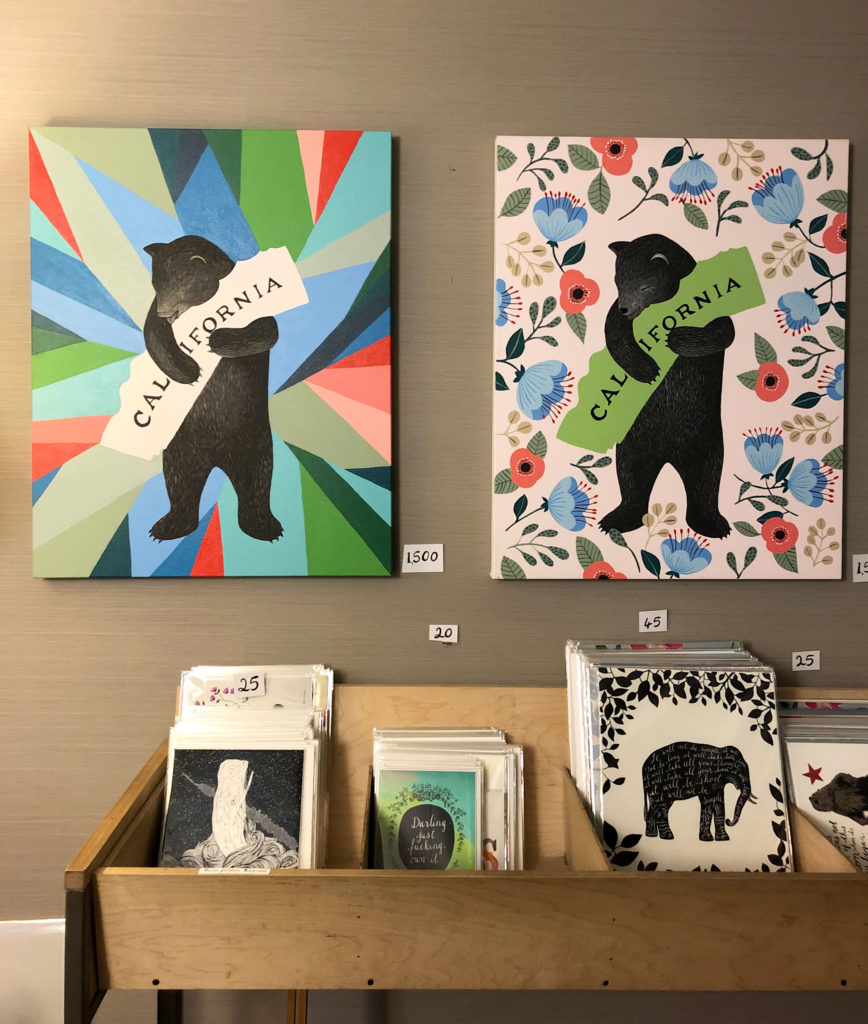
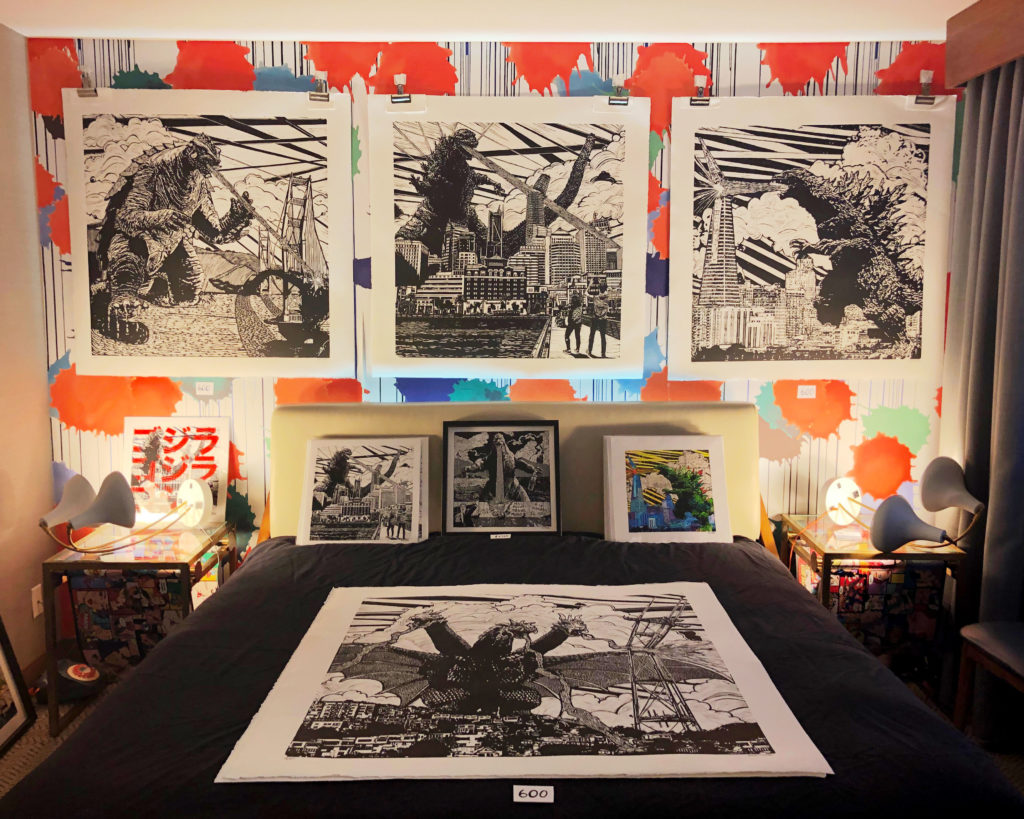
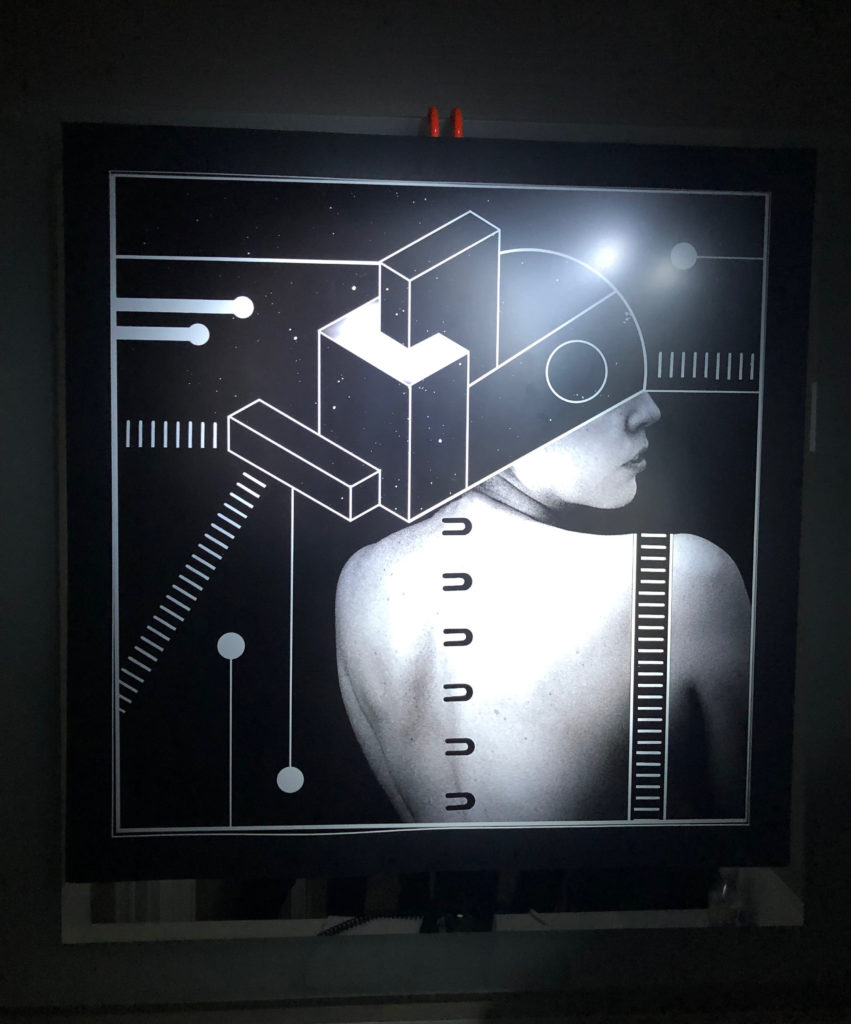
At a hotel in a completely different part of town was the stARTup Art Fair, taking place at The Kinney in Venice. Here, instead of galleries representing the artists, it’s the artists that set up their rooms and sell their art.  It made for a great experience as the artists were all very friendly and eager to discuss their work. Below are a few highlights from the fair.

Lisa Kairos and Melissa Mohammadi’s work

“Leaf Insects Turn Into Butterflies” by Melissa Mohammadi

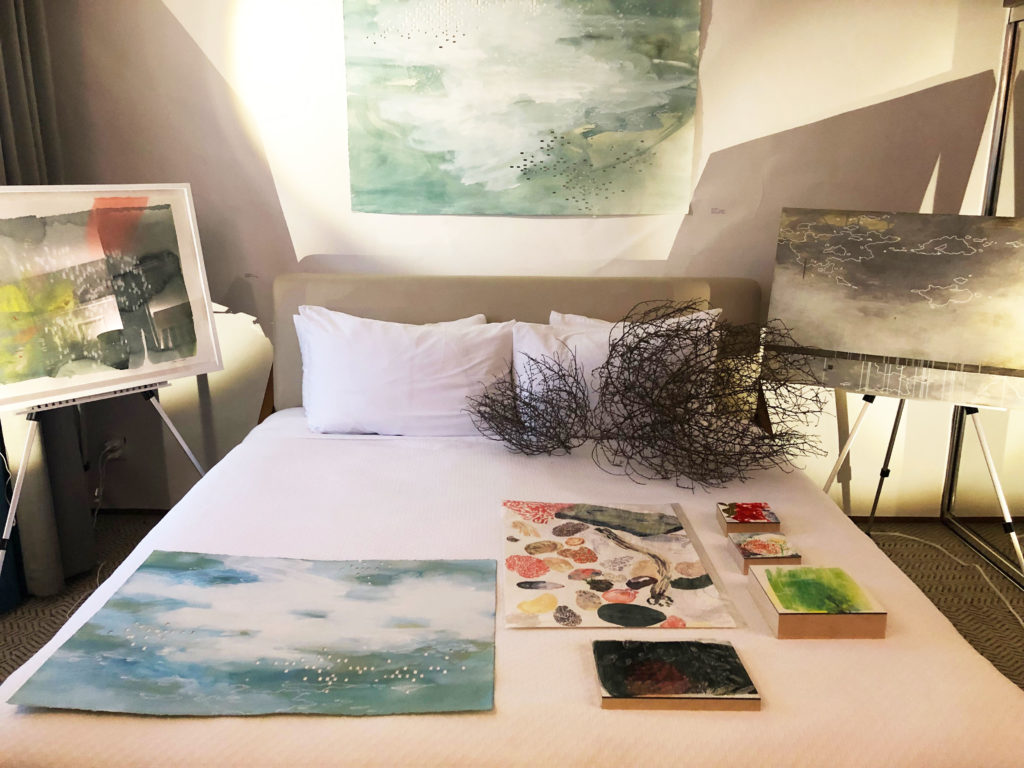
San Francisco artists Lisa Kairos and Melissa Mohammadi’s room was filled with really beautiful work. Kairos makes dreamy multilayered paintings based on natural landscapes. She then cuts patterns into the images which adds yet another dimension to the paintings. Mohammadi’s work incorporates botanical and marine life into a meditative world where bright pastels stand out among subdued watercolor backgrounds; highly detailed sections mix with the more abstract. The end result for both artists is work you want to spend time looking at.

Work by Annie Galvin of 3 Fish Studios

Work by Eric Rewitzer of 3 Fish Studios

Husband and wife artists Eric Rewitzer and Annie Galvin of 3 Fish Studios in San Francisco had lots of great, affordable prints. They also teach printmaking and collage classes in their studio.

One of Camilla Magrane’s artworks

Artist Camila Magrane had several pieces in her darkened hotel room that use augmented reality technology to make the works animated and three dimensional when looked at through her Virtual Mutations app. The video above illustrates the effect.

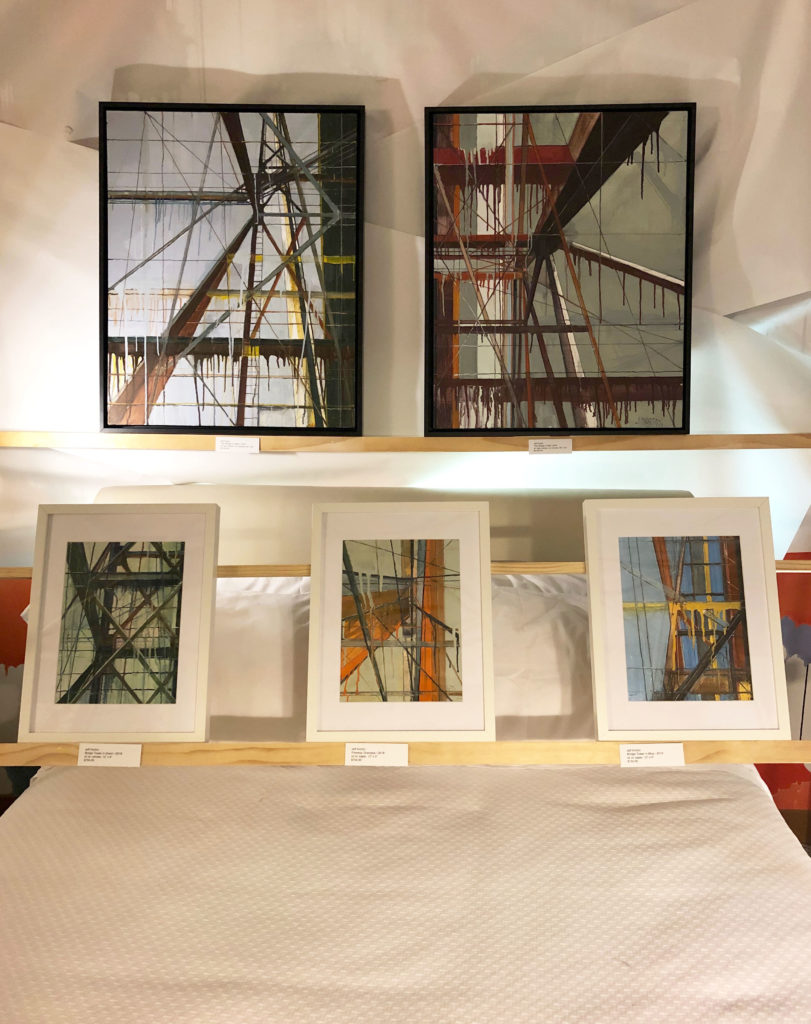
Jeff Horton uses his architecture background to create paintings of urban structures (often larger than what’s pictured above), some of which incorporate wax with oil paint for an added layer.

Other artists work not shown but worth checking out- Margaret Hyde makes ethereal still life photographs of natural objects she finds and combines with water, and Kyong Ae Kim showed a variety of impressive work including her animal skulls cut from multiple layers of drafting film and acrylic paintings combined with hand cut elements.


Feb 172019
 

Currently at Shulamit Nazarian gallery is Trenton Doyle Hancock: An Ingénue’s Hues and How to Use Cutty Black Shoes, the artist’s first solo exhibition in Los Angeles.

From the press release-

The new drawings, paintings, and sculptures in this show expand upon the artist’s saga of The Moundverse, a constructed world that has propelled his artistic practice for the past twenty-five years.

In addition to the narrative tradition of his religious upbringing, Hancock immersed himself in graphic novels, comics, and Greek mythology; at the age of ten, he began creating characters as articulations of his experience as a Black youth in small-town Paris, Texas. In The Moundverse, Hancock has developed an extensive cast: altruistic Mounds, destructive Vegans, and mutated Bringbacks; TorpedoBoy is a tragically flawed hero who serves as the artist’s alter ego; Undom Endgle is a color-wielding goddess who protects young souls, representing the force of the Black women who have affected and supported Hancock over the years. These characters and others explore timeless polarities like good and evil alongside related issues of race, class, identity, politics, and social justice.

Using the fantastical to grapple with the deeply personal has long been at the core of Hancock’s artistic practice. Formally, this is seen in what the artist calls his “rough and tumble” aesthetic: Richly colored tactile surfaces are loaded with objects that range from bottle caps that the artist played with in childhood to bits and pieces of older works that have been rebirthed to create something entirely new. Drawing heavily from the temporal structure of comics, Hancock’s practice seamlessly weaves storylines spanning long periods of time, often within a single artwork. The totality of his practice can be seen as an ever-expanding graphic novel in its own right, articulated through a variety of media.

Laced with personal memoir, Hancock’s Moundverse is a metaphorical space that reflects the everyday world. Several works show TorpedoBoy in mid-stride, clad in football gear, wearing his “cutty black shoes” as he runs from evil-natured Vegans that at times take the aggregated form of a goofy-footed, cloaked member of the Ku Klux Klan (the Paris, Texas, of Hancock’s youth had an active Klan). The malignant force that reaches for this distraught—albeit defiant—central character points to longstanding concerns of systematic racism and oppression.

The exhibition also includes Hancock’s most recurring character, The Mound—a half-plant, half-animal creature that absorbs and processes negative human emotions to bring positive energy to the world. Presented within the exhibition will be two large-scale paintings of Mounds, one standing nearly eight feet tall. In addition, Hancock will present new ink-on-paper works that introduce the first chapter of the artist’s most ambitious drawings to date: Trenton Doyle Hancock Presents The Moundverse. Designed as a traditional graphic novel, this series offers a sequential understanding of the characters and stories that have dominated Hancock’s practice for the past two and a half decades.

An Ingénue’s Hues and How to Use Cutty Black Shoes continues the artist’s exploration of primal forces as they play out in The Moundverse, reflecting our current moment and inviting viewers to consider parallel themes and stories in the world around us today.

This show closes 2/17.


Aug 312018
 

Lauren Halsey- The Crenshaw District Hieroglyph Project (Prototype Architecture) 2018

Lauren Halsey- The Crenshaw District Hieroglyph Project (Prototype Architecture) 2018

Currently at the Hammer Museum is Made in L.A. 2018, the museum’s fourth biennial exhibition of artists working in Los Angeles and the surrounding areas. The diverse group of artists included range in age from 29 to 97.  With so many excellent works in the exhibition, it was very hard to choose which of them to highlight. The following are just a few selections from the exhibition that stood out.

Lauren Halsey’s sculptures (pictured above), won the Mohn Award, a jury award which honors artistic excellence. You can also see another one of her sculptures at MOCA, until September 3.

Selection of works by Luchita Hurtado

The paintings above are from the oldest artist showing in the exhibition, Luchita Hurtado. At 97, she is just starting to get recognition for a lifetime of work.

The youngest artist in the show is Diedrick Brackens (shown below) who uses weaving and textile making to tell stories that reflect on cultural and personal narratives from his childhood in Mexla,Texas.

Diedrick Brackens

The most entertaining of the works in the exhibition is OURCHETYPES, created by Jade Gordon and Megan Whitmarsh. Taking up an entire room, it consists of videos, sculptures, and a publication- all dealing with issues of self discovery, adulthood, womanhood, happiness, and success from a tongue in cheek, retro New Age perspective.

Jade Gordon & Megan Whitmarsh, OURCHETYPES

Two additional video installations also worth taking time to watch-

Gelare Khoshgozaran’s Medina Wasi: Connecting Town, shot mainly in Mecca and Thermal in the Coachella Valley, includes footage from US military bases where sets were created to simulate Middle Eastern towns for troops to practice fighting in. She also includes interviews with US veterans who discuss their memories of the landscape when they were in the Middle East.

Neha Choksi’s multichannel video installation Everything sunbright, examines our relationship to the sun and includes images from nature, a dance performance, and children making drawings of the sun- all tying together themes of birth, life, and death.

This weekend Hammer Museum has programming to accompany the exhibition. On Saturday, taisha paggett will present a series of solo and duet dance performances and on Sunday, composer/performer Carolyn Pennypacker Riggs is assembling a group of mothers to explore the tropes and meanings of motherhood and Von Doog is offering empathic musical readings in the gallery prior to the performance.

This exhibition closes on Sunday 9/2.


Aug 252018
 

The Marciano Art Foundation, established by Paul and Maurice Marciano (co-founders of the Guess clothing brand), opened its doors in May of 2017 in Los Angeles and is a great addition to the city’s art spaces. It is currently showing Olafur Eliasson: Reality Projector (pictured above), an immersive kaleidoscopic piece created specifically for this location, with a soundscape created by Jónsi of Sigur Rós. A rotating selection of works from the Marcianos’ permanent collection is also on view as well as Instagram favorite Yayoi Kusama’s With All My Love For The Tulips, I Pray Forever.

The foundation is housed in a former Scottish Rite Masonic Temple and there is a room dedicated to objects that the Masons left behind.

Both the inside and outside of the building retain the symbols and remnants of the Masonic history as well.

It is free to go to the MAF but it is recommended that you reserve tickets online.