Jul 102025
 

“Apokaluptein 16389067” 2010-2013, Prison bed sheets, transferred newsprint, color pencil, graphite, and gouache

Apokaluptein: 16389067 by Jesse Krimes was part of the group exhibition Marking Time: Art in the Age of Mass Incarceration, on view at MoMA PS1 from 2020-2021. This work can currently be seen as part of his solo exhibition Corrections, on view at The Metropolitan Museum of Art until 7/13/25.

From MoMa PS1 about Krimes and Apokaluptein

Jesse Krimes graduated from art school shortly before he was arrested and incarcerated. He spent his first year in prison in an isolation cell in North Carolina. After being transferred to Federal Correctional Institution, Fairton, in New Jersey, Krimes formed a multiracial art collective with Jared Owens and Gilberto Rivera, whose works also appear in this exhibition. During his time at Fairton, Krimes used penal matter to address questions of political theory, philosophy, aesthetics, and value.

Made over three years, Apokaluptein: 16389067 comprises thirty-nine prison bed sheets that depict a sweeping landscape representing heaven, earth, and hell. Using hair gel and a spoon, Krimes transferred images from print media to the bed sheets, drawing and painting around them to create an exploration of social value, state power, idealized beauty, and extractive capitalism. The work’s title combines the Greek word “apokaluptein,” meaning “to reveal” or “to uncover,” with Krimes’s prison number. The mass destruction Krimes depicts resonates with what he has described as his “loss of identity and stripping away of all societal markers and this destruction that happened on a very personal level….You lose your name; you become this number.” Imprisoned people are rendered state property and exploited to produce state goods: the bedsheets that compose Apokaluptein: 16389067 were made by imprisoned workers through a federal government-initiated program called UNICOR.

Krimes made each panel of this work individually, using the edge of his desk to measure the horizon on each sheet so that the panels would line up once joined. Assisted by incarcerated mailroom workers and sympathetic guards, the artist clandestinely transported finished panels out of prison before they could be confiscated. Upon his release in 2014, he assembled Apokaluptein: 16389067 and was finally able to see the work in its totality for the first time.

From The Met’s website about Corrections

Photography has played a key role in structuring systems of power in society, including those related to crime and punishment. This exhibition presents immersive contemporary installations by the artist Jesse Krimes (American, b. 1982) alongside nineteenth-century photographs from The Met collection by the French criminologist Alphonse Bertillon, who developed the first modern system of criminal identification before the adoption of fingerprinting.

Krimes’s image-based installations, made over the course of his six-year incarceration, reflect the ingenuity of an artist working without access to traditional materials. Employing prison-issued soap, hair gel, playing cards, and newspaper he created works of art that seek to disrupt and recontextualize the circulation of photographs in the media. Displayed at The Met in dialogue with Bertillon, whose pioneering method paired anthropomorphic measurements with photographs to produce the present-day mug shot, Krimes’s work raises questions about the perceived neutrality of our systems of identification and the hierarchies of social imbalance they create and reinscribe. An artist for whom collaboration and activism are vital, Krimes founded the Center for Art and Advocacy to highlight the talent and creative potential among individuals who have experienced incarceration and to support and improve outcomes for formerly incarcerated artists.

One of his recent works on view in Corrections, Naxos, was created to pair with Apokaluptein.

About the work from curator Lisa Sutcliffe’s essay on The Met’s website

The breadth of this interest in collaboration and advocacy can be seen in Naxos (2024), which features nearly ten thousand pebbles gathered from prison yards by incarcerated individuals around the country and shared with Krimes. Each hand-wrapped stone is suspended from a needle by a thread hand-printed with ink to match imagery from Apokaluptein. Installed across from each other, their pairing mirrors and deconstructs that earlier work, serving as a reflection of individuals caught up in the system of mass incarceration. The artist was inspired by the writings of psychologist Carl Jung, who warned of the danger of reducing individuals to statistics: Jung noted the impossibility of finding a river stone whose size matches the ideal average. With each distinctive yet anonymous pebble standing in for the mugshot, Krimes interweaves the complexity of individual experience with the broader social and political context in which mass incarceration exists.

Krimes’ Center for Art and Advocacy recently opened ts flagship location in the Bedford-Stuyvesant neighborhood of Brooklyn, New York. Its inaugural exhibition, Collective Gestures: Building Community through Practice,  highlights “the transformative work of over 35 artists who have participated in The Center’s Right of Return Fellowship Program” and will be on view until 9/20/25.

Sep 112022
 

Ofer Wolberger’s photo of Spencer Finch’s installation Trying to Remember the Color of the Sky on that September Morning, 2014, located at the 9/11 Memorial & Museum.

From the museum’s webpage about the work-

At the heart of the 9/11 Memorial & Museum’s mission is the promise to commemorate the 2,983 killed as a result of the 9/11 and February 26, 1993 attacks. The Memorial and the Museum fulfills this sacred responsibility in many ways—through memorialization, through education and, in some cases, through artistic expression.

One of the Museum’s most recognizable installations is a piece by artist Spencer Finch titled “Trying to Remember the Color of the Sky on That September Morning.” This work runs prominently through Memorial Hall, or the space that connects the two main exhibitions at bedrock in the Museum. This larger-than-life installation is part of the Memorial Museum’s permanent collection and was commissioned in 2014 before the Museum opened its doors to the public.

The piece is comprised of 2,983 individual watercolor squares—each representing a victim of the 2001 and 1993 attacks—and symbolizes the idea of memory. Many remember the beauty of the clear blue sky on the morning of 9/11. But, our own perception of the color blue might not be the same as that of another person. However, just like our perception of color, our memories share a common point of reference.

Within the larger art installation is the quote “No Day Shall Erase You From the Memory of Time” from Book IX of The Aeneid by Roman poet Virgil. Each letter was forged from recovered World Trade Center steel by New Mexico artist Tom Joyce. This quote suggests the transformative potential of remembrance and succinctly reinforces the 9/11 Memorial & Museum’s mission. Today, while the Memorial and the Museum are temporarily closed, these words remain as true as ever.

The image of the work shown above was included in Mint Museum’s 2021 exhibition, W|ALLS: Defend, Divide, and the Divine.


Jul 142021
 

For Marlene McCarty’s current exhibition Into The Weeds: Sex & Death at Sikkema Jenkins, she has combined her large scale drawings with an indoor and outdoor garden.

From the press release-

Using everyday materials such as graphite and ballpoint pen, McCarty’s work often focuses on representations of the female body, femininity, and its position within familial and biological systems. Her subjects are depicted engaging in unorthodox or transgressive social formations, breaking down the traditional, accepted interactions among humans and other species, as well as between humans and nature. For Into the Weeds, McCarty turns to plants, and their complex ecocultural role within society to explore issues of reproductive health, physical autonomy, public space, and the symbiosis of growth and decay.

Throughout history, certain plants and weeds have been foraged and cultivated for a wide range of purposes, both curative and toxic. The alkaloids of the deadly nightshade, for example, have also been used to treat fevers and inflammation, while mugwort has been used to regulate menstruation and induce abortion. Seedlings have been cultivated and installed alongside McCarty’s densely drawn compositions of plants, weeds, body parts, clothing, and abstract geometric forms. Meticulously shaded limbs and flowers interlace one another, mirroring each other’s shape with the curl of a finger or the droop of a petal. This interplay of human body and plant is disrupted by various symbols alluding to a hegemony of white western culture: a Civil War ball gown, cowboy hat, and fragments of Modernist architecture, including the honeycomb-esque Vessel at Hudson Yards. Within these chimerical gardens lies a contentious ecosystem, constantly negotiating the power dynamics across gender, race, health, and history.

This exhibition is on view until 7/30/21.

Jun 252021
 

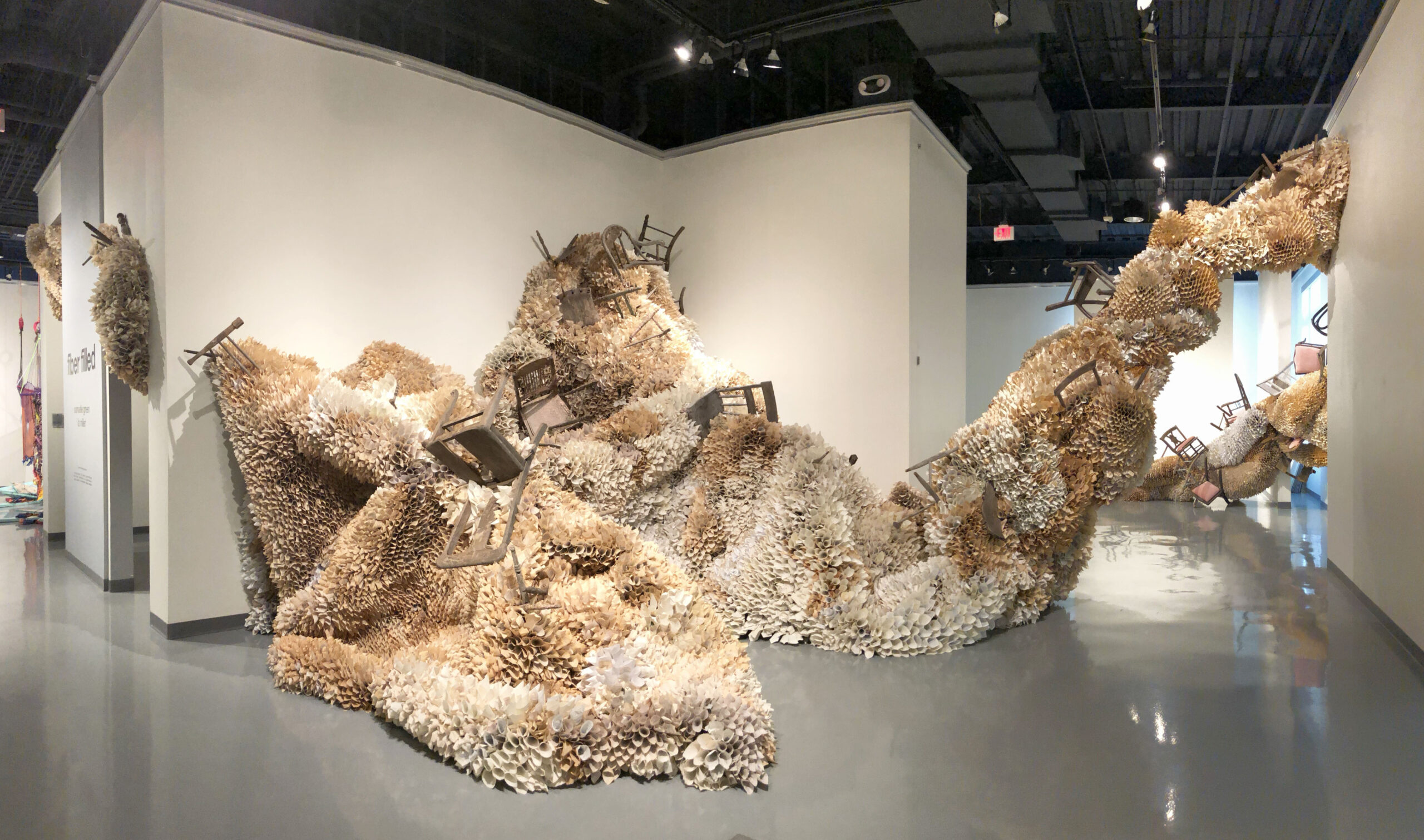
Currently at the Spartanburg Museum of Art in South Carolina is fiber filled, an exhibition consisting of two art installations. The one pictured above is by artist Samuelle Green, titled Manifestation 8: Permutation 1.

Her statement about the work-

There is structure and design inherent in the natural world, which we constantly draw from and take for granted. We generally fail to acknowledge the skill, time, and detail required to manifest the intricate structures found in objects we encounter regularly- such as those found in bird and wasps nests, beehives, spiderwebs, rock formations, anthills, feathers, etc.

My work, especially the large scale installations like this one, reference these natural forms as they merge with human-made objects, inspiring contemplation.

Also check out the museum’s site for a short video from the artist going into more detail on her process.

The other installation is by Liz Miller, titled Alchemical Conundrum, part of which is seen below.

Her statement about the work-

My work explores the fallibility of infrastructure and the precariousness of perceptions, as seen through a materially-intensive process-based lens. I create elaborate site specific installations that are equal parts absurd, menacing, and poetic. Pattern and tactility confuse and complicate identification, camouflaging recognizable forms and evoking recognition when applied to non-objective forms. The tensions between fact/fiction and dimensionality/flatness are endlessly fascinating to me, playing out my work as a dialogue between reality and illusion.

More recently I have become fascinated with rope and knotting as a byproduct of my large-scale installations, where I utilize rope to achieve tension that gives volume to otherwise flat materials. The varied use of rope and knotting across cultures and history ranges from utilitarian to decorative, and even deadly. I create interdependent knotted topographies that allude to both structure and malleability. The repeated act of tying by hand integrates an emphatic sense of strength, while the flexibility and nuance of the textile material ensures structural permutations. The resulting works are only quasi-architectural providing metaphorical insight laced with humor as related to a variety of structural and systemic behavior.

This exhibition closes 6/30/21.

Nov 262020
 

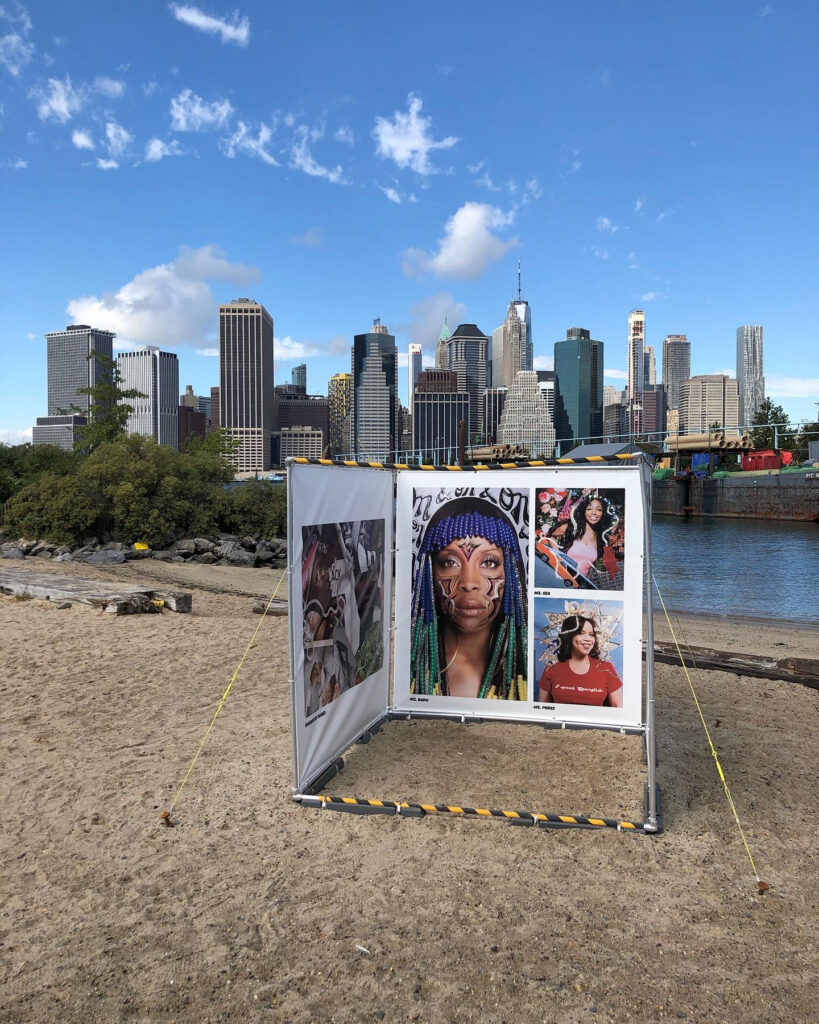
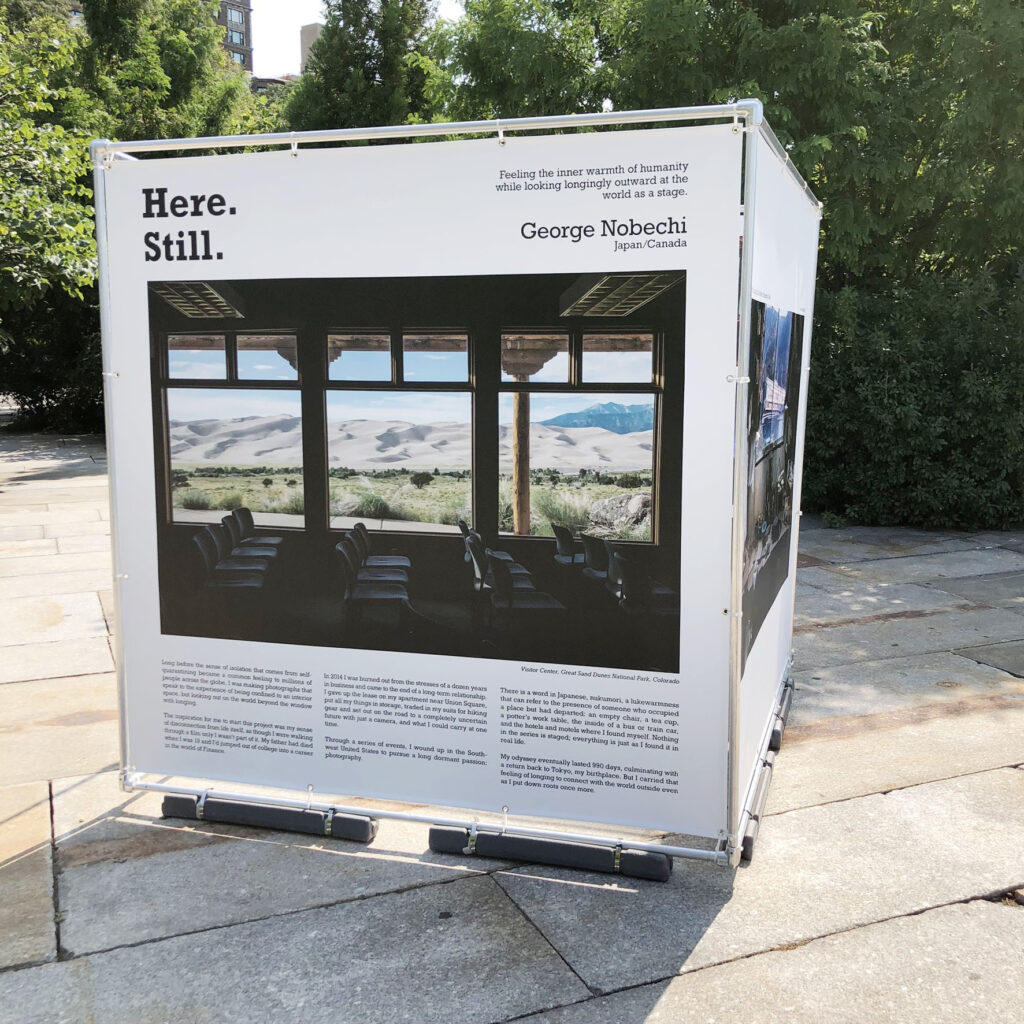
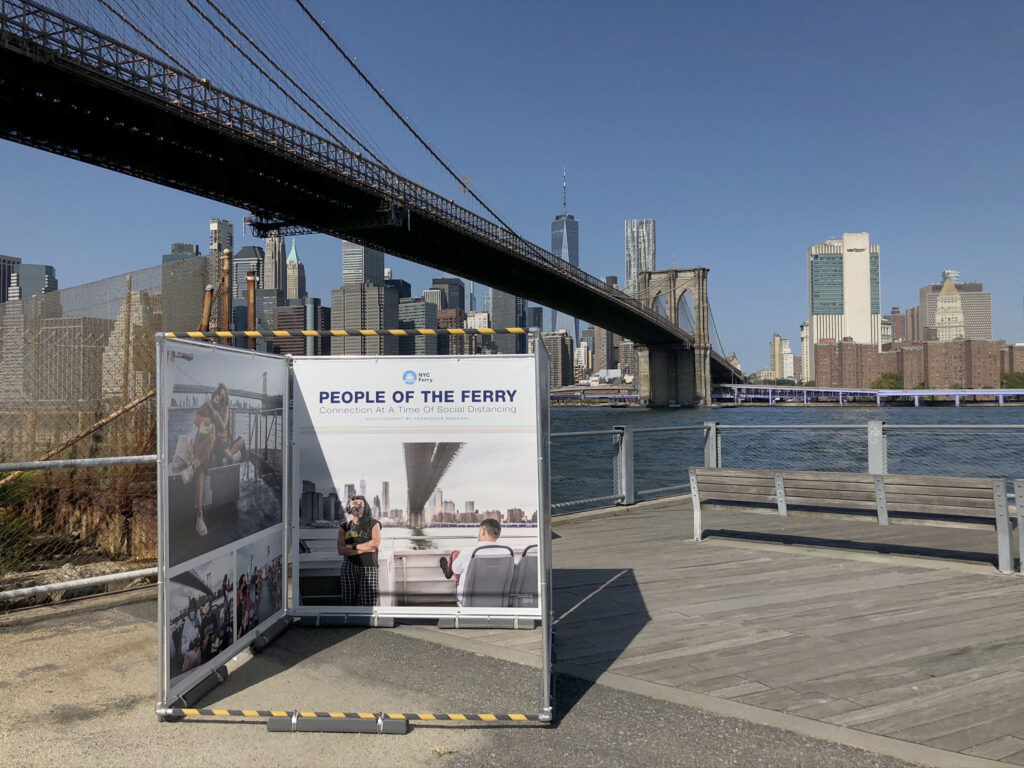
This year because of the pandemic, Photoville’s 2020 version is entirely outside. It is in all five boroughs of New York City, but the majority of the exhibits are located in Brooklyn Bridge Park.

It closes this weekend (9/29/20) and is a wonderful way to get some fresh air and see some excellent work.

Pictured above is work by anonymous art collective Mz. Icar featuring Erin Patrice O’Brien (VALUE: In terms of Iconography), George Nobechi (Here. Still.), and Francesca Magnani (People of the Ferry 2020. Connection at a Time of Social Distancing). 

For more information on these works and to check out samples from the other installations check out Photoville’s website.

May 212020
 

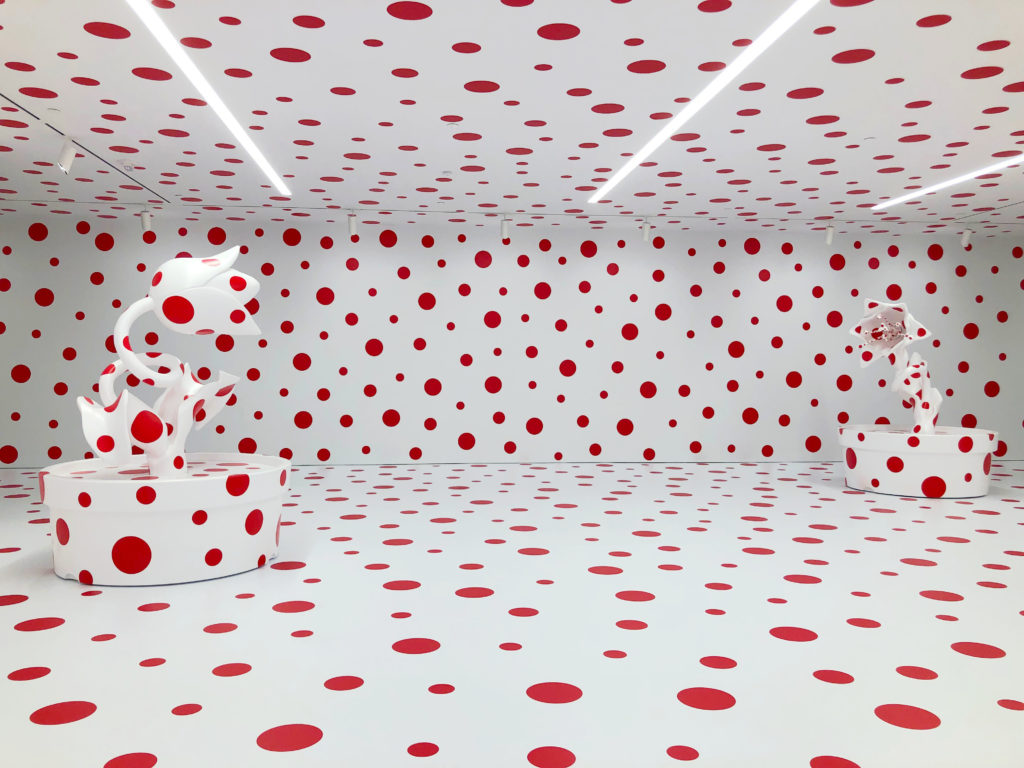
A section of Yayoi Kusama’s installation at the now permanently closed Marciano Art Foundation in Los Angeles.

Feb 272020
 

Currently at Sikkema Jenkins & Co. gallery in New York is on the lower frequencies I speak 4U (alquimia sagrada), a solo exhibition of work by william cordova.

From the press release-

For the artist’s fourth solo exhibition at the gallery, cordova has developed a multi-media installation seeking to explore “the juxtaposition of past structures to more contemporary structures that illuminate the ephemeral nature of our existence, as beings who create material culture as a means of documentation and memory.”

The exhibition incorporates large-scale drawing collages, photography, and sculpture into an environment that reflects on abstract forms rooted in sacred geometries, while also drawing from historical moments and monuments of resistance. Two large scale sculptures, untitled (RMLZ), and untitled (palenque), reference both Brutalist and pre-Columbian architecture, specifically the temple-Citadel sites at Sacsayhuaman and Ollantaytambo. Incorporating the architectural motifs found at these sites, such as zigzags and grids, cordova’s sculptures thread an ephemeral repository, meditating on the concepts of image encoding from biological, natural, galactic, and cultural sources. The sculptures disrupt the formal structure of the gallery, creating alternative perceptions of space and time.

In his series rumi maki, william cordova takes on an ethnographic approach in addressing shared symbolism found in textile data encoding and architectural design. Named after the ancient Andean martial arts, rumi maki consists of multi-colored collages on paper, constructed from vivid layers of recycled paint chips. The arrangement of colors and patterns carry latent meanings, dependent on geography, culture, and the readings of celestial bodies. As cosmological maps, the collages synthesize the sacred geometries of architecture with the visual narratives of historical civilizations. Its form also recalls pioneering early video installation artist Beryl Korot, and her contributions to the 1970s video journal Radical Software.

ogun (el siglo de silencio) sees the artist return to large-scale collage on paper after several years focused on site-specific installations and smaller-scaled work. This work introduces viewers to a new series titled el quinto suyo (the fifth suyo), collages culled from reclaimed paint chip samples and recycled cardboard pigmented with old discarded oil stick paint. Literary references permeate cordova’s collages; texts such as El Siglo de Las Luces by Alejo Carpentier, El Monte by Lydia Cabrera and Decimas by Nicomedes Santa Cruz point to his ongoing interest in the distribution of power, spirituality, and labyrinths of perception.

In the back gallery is an exhibition of paintings (pictured below) by Josephine Halvorson, titled On The Ground.

From the press release-

On The Ground, also the title of her essay in Art In America (June/July 2018), continues Halvorson’s exploration of the ground—as a motif, material, and metaphor. Each painting registers an area of ground through Halvorson’s close observation and pictorial description, while its accompanying surround incorporates crushed rocks and debris from the site of the painting’s making. Together, they realize a faithful translation of place and time. The work in this exhibition was made in the Berkshire mountains, the Mojave Desert, and Matanzas, Cuba.

These hybrid paintings are made with gouache, site material, dry pigment, and printmaking. They expand Halvorson’s on-site practice of transcribing direct experience by hand. While her previous work in oil allowed her encounter with an object to congeal over the course of a day, Halvorson has turned to gouache, a fast drying and graphic medium, which, like handwriting, records her observations in real time. Her paint application is indelible and fresco-like, transferring color from the brush into the absorbent ground of the panel.

Touching down at various points of interest—a piece of plastic, a blade of grass—Halvorson’s notational marks establish a correspondence between environment, painting, and viewer. Like a map, they depict the literal scape of the ground while offering an escape from mimesis. The reality of proximity breaks down as one gets lost in the archeology of a single stride. Gravel becomes galactic. The surround acts as a legend or key, a space for evidence and tools of calibration. A ruler, coins, or color chart orient the onlooker in terms of scale and perception, and the site material indexes the painting to its original locale. These are paintings of verification and memorialization. They ask how we make sense of what we see, how we express that witnessing, and how an account of experience is made concrete.

Both of these exhibitions close 2/29/20.

Feb 202020
 

Mary Jane, 2008

Untitled, 2015


1975 (8), 2013

Painting for My Dad, 2011

The “Fitz”, 2015

Black Widow, 2007

Leni Riefenstahl, 2010

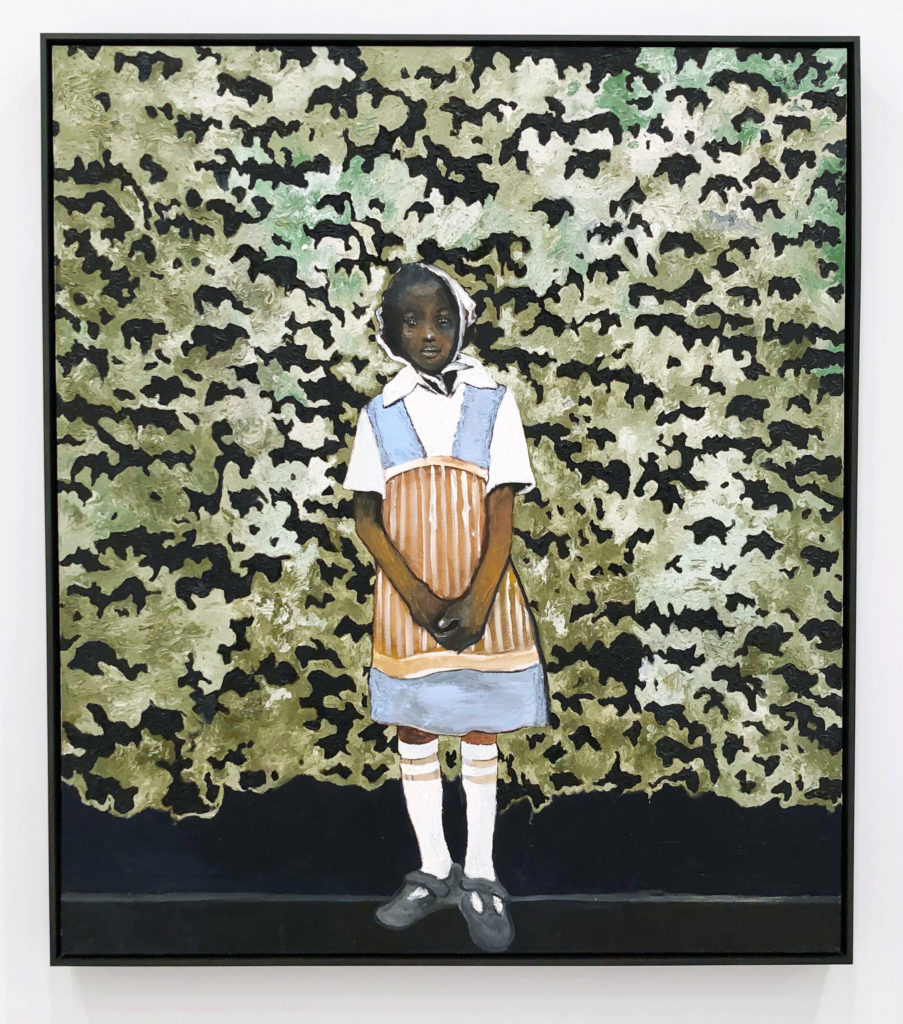
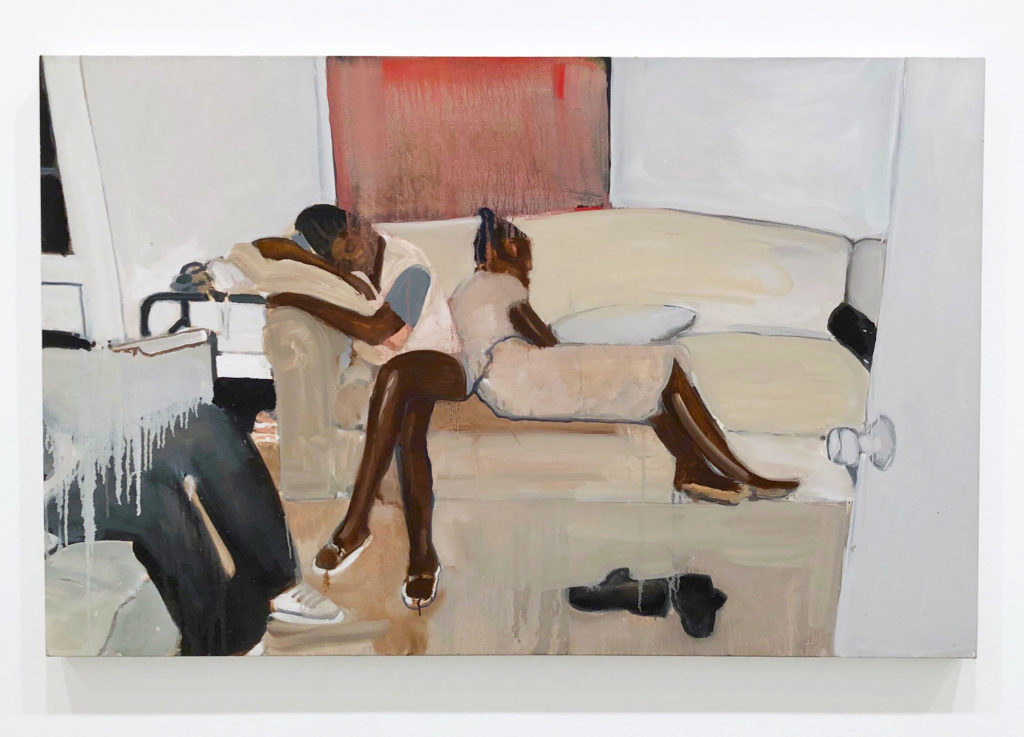
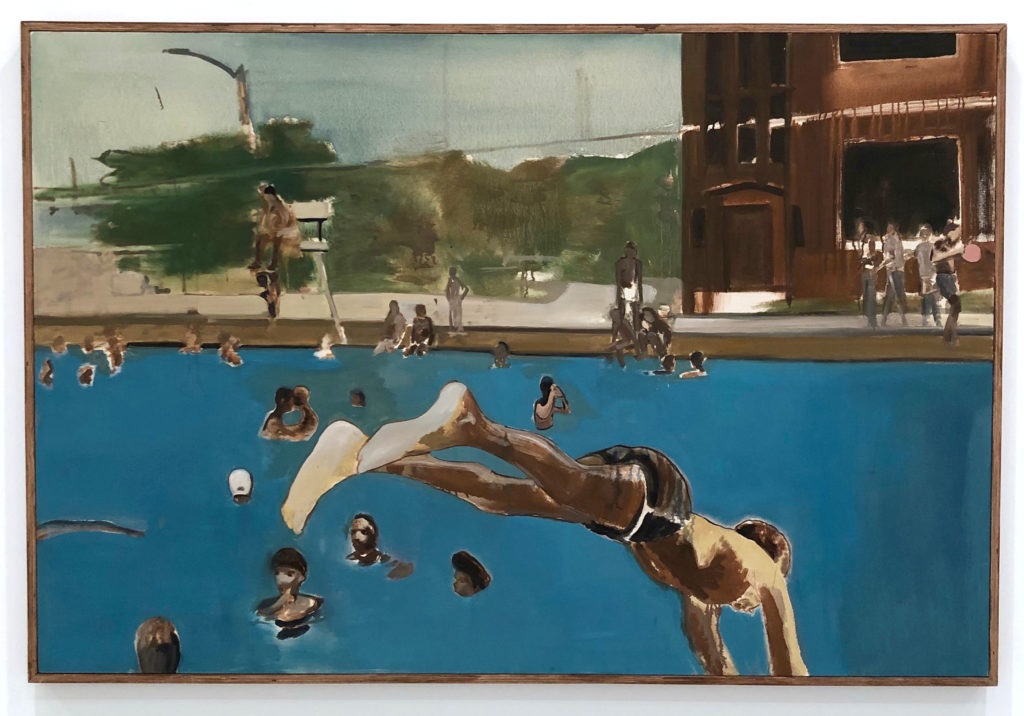
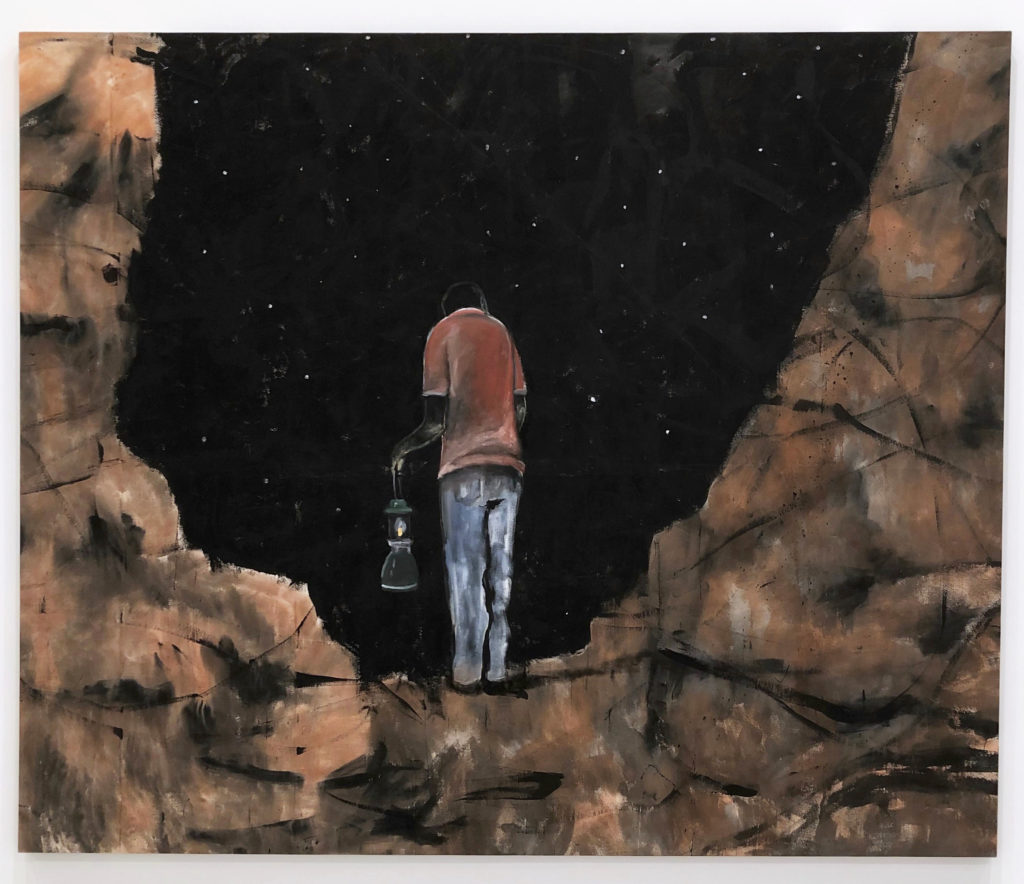
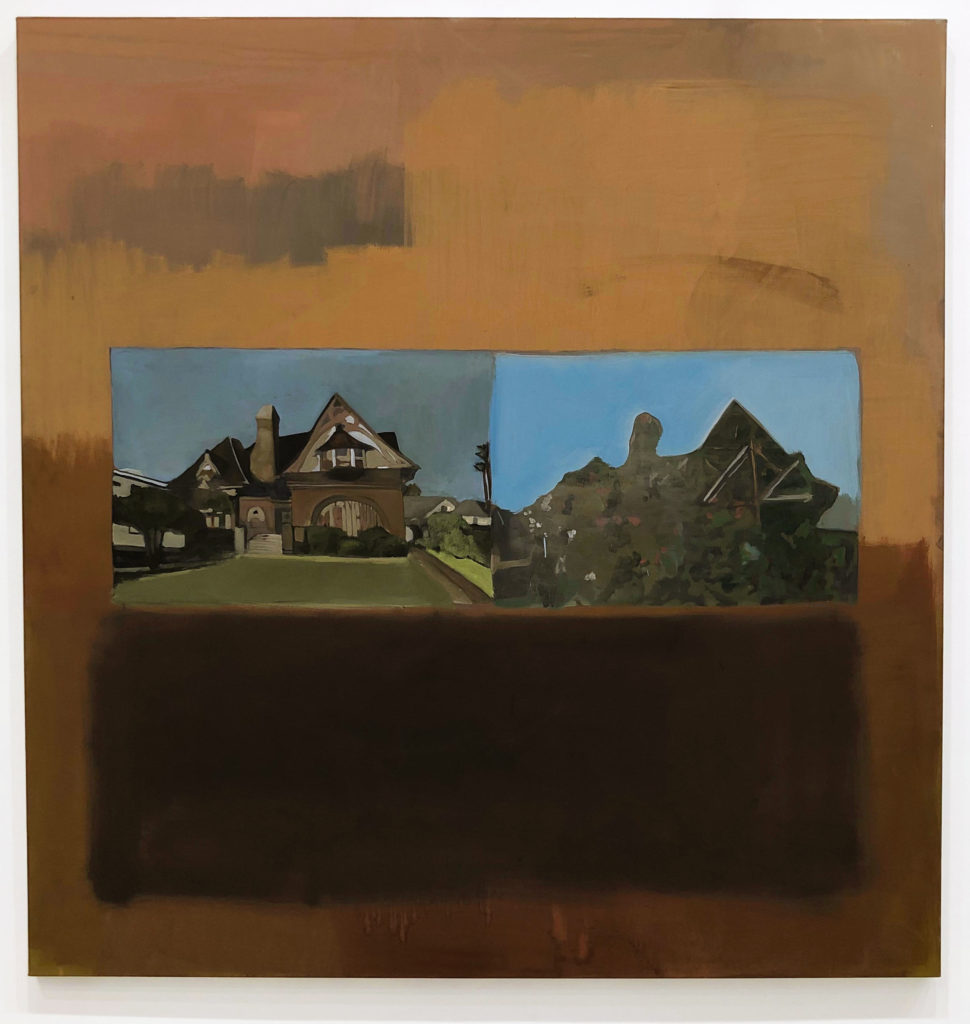
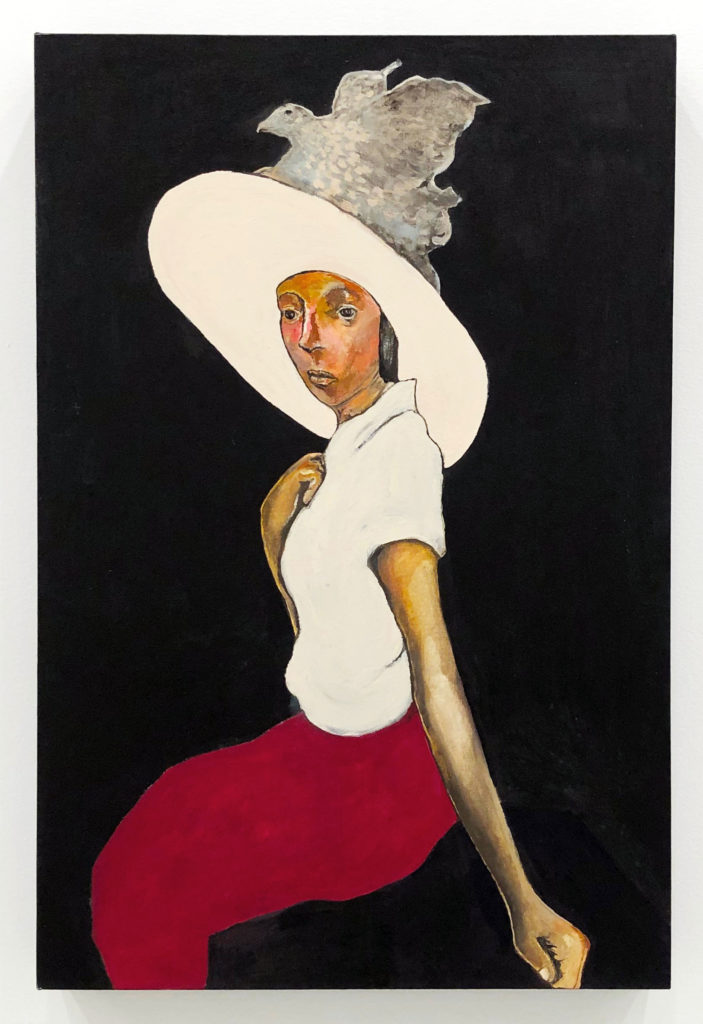
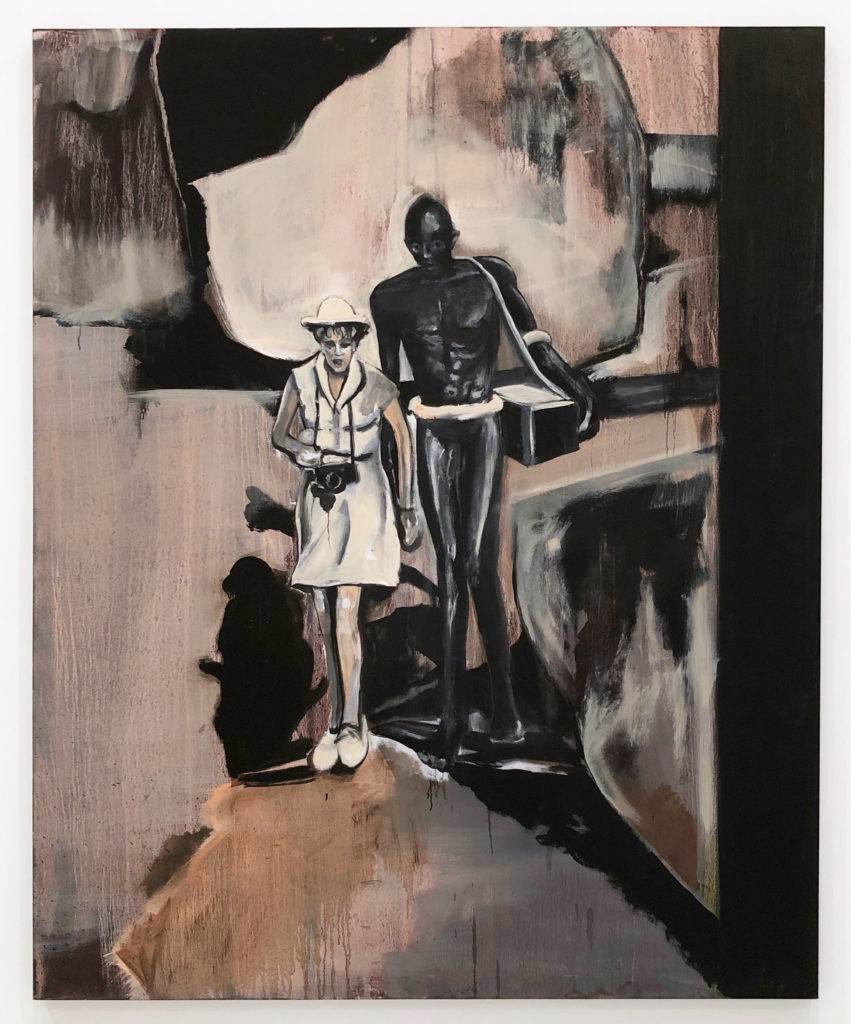
Artist Noah Davis’s superb paintings are currently on view at David Zwirner gallery’s two 19th Street locations in New York until 2/22. Although his career was brief, he died in 2015, what he accomplished in his life is admirable.

From the press release

Davis’s body of work encompasses, on the one hand, his lush, sensual, figurative paintings and, on the other, an ambitious institutional project called The Underground Museum, a black-owned-and-operated art space dedicated to the exhibition of museum-quality art in a culturally underserved African American and Latinx neighborhood in Los Angeles. The works on view will highlight both parts of Davis’s oeuvre, featuring more than twenty of his most enduring paintings, as well as models of previous exhibitions curated by Davis at The Underground Museum. The exhibition also includes a “back room,” modeled on the working offices at The Underground Museum, featuring more paintings by Davis, as well as BLKNWS by Davis’s brother Kahlil Joseph; a sculpture by Karon Davis, the artist’s widow; and Shelby George furniture, designed by Davis’s mother Faith Childs-Davis.

Helen Molesworth notes:

Noah Davis (b. Seattle, 1983; d. Ojai, California, 2015) was a figurative painter and cofounder of The Underground Museum (UM) in Los Angeles. Despite his untimely death at the age of thirty-two, Davis’s paintings are a crucial part of the rise of figurative and representational painting in the first two decades of the twenty-first century.

Loneliness and tenderness suffuse his rigorously composed paintings, as do traces of his abiding interest in artists such as Marlene Dumas, Kerry James Marshall, Fairfield Porter, and Luc Tuymans. Davis’s pictures can be slightly deceptive; they are modest in scale yet emotionally ambitious. Using a notably dry paint application and a moody palette of blues, purples, and greens, his work falls into two loose categories: There are scenes from everyday life, such as a portrait of his young son, a soldier returning from war, or a housing project designed by famed modernist architect Paul Williams. And there are paintings that traffic in magical realism, surreal images that depict the world both seen and unseen, where the presence of ancestors, ghosts, and fantasy are everywhere apparent.

Generous, curious, and energetic, Davis founded, along with his wife, the sculptor Karon Davis, The Underground Museum, an artist- and family-run space for art and culture in Los Angeles. The UM began modestly—Noah and Karon worked to join three storefronts in the city’s Arlington Heights neighborhood. Davis’s dream was to exhibit “museum-quality” art in a working-class black and Latino neighborhood. In the early days of The UM, Davis was unable to secure museum loans, so he organized exhibitions of his work alongside that of his friends and family, and word of mouth spread about Davis’s unique curatorial gestures.

In 2014 Davis began organizing exhibitions using works selected from The Museum of Contemporary Art’s collection as his starting point. In the aftermath of Davis’s passing, the team of family and friends he gathered continued his work at The UM, transforming it into one of the liveliest and most important gathering places in Los Angeles for artists, filmmakers, musicians, writers, and activists.

If you are in Los Angeles, The Underground Museum is definitely worth a visit, and if you cannot make it to this exhibition in NYC- a portion of it moves there this March.

Also, Kahlil Joseph’s “BLKNWS” will be shown the Brooklyn Academy of Music in NYC from 3/23-6/21/20.

Jan 242020
 

Sadie Barnette’s recreation of her father Rodney Barnette’s bar, Eagle Creek Saloon for The New Eagle Creek Saloon at ICA LA is not only beautiful, but it also celebrates an important piece of history.

From the museum’s website-

For her first solo museum presentation in Los Angeles, Oakland-based artist Sadie Barnette (b. 1984) will reimagine the Eagle Creek Saloon, the first black-owned gay bar in San Francisco, established by the artist’s father Rodney Barnette, founder of the Compton, CA chapter of the Black Panther Party. From 1990–93 Barnette’s father operated the bar and offered a safe space for the multiracial LGBTQ community who were marginalized at other social spaces throughout the city at that time.

Barnette engages the aesthetics of Minimalism and Conceptualism through an idiosyncratic use of text, decoration, photographs, and found objects that approach the speculative and otherworldly. Barnette’s recent drawings, sculptures, and installations have incorporated the 500-page FBI surveillance file kept on her father and references to West Coast funk and hip-hop culture to consider the historical and present-day dynamics of race, gender, and politics in the United States. Using materials such as spray paint, crystals, and glitter, she transforms the bureaucratic remnants from a dark chapter in American history into vibrant celebrations of personal, familial, and cultural histories and visual acts of resistance. The New Eagle Creek Saloon is a glittering bar installation that exists somewhere between a monument and an altar, at once archiving the past and providing space for potential actions.

The museum is also showing No Wrong Holes: Thirty Years of Nayland Blake (pictured below).

From the museum’s website-

For over 30 years, artist, educator, and curator Nayland Blake (b. 1960) has been a critical figure in American art, working between sculpture, drawing, performance, and video. No Wrong Holes marks the most comprehensive survey of Blake’s work to date and their first solo institutional presentation in Los Angeles.

Heavily inspired by feminist and queer liberation movements, and subcultures ranging from punk to kink, Blake’s multidisciplinary practice considers the complexities of representation, particularly racial and gender identity; play and eroticism; and the subjective experience of desire, loss, and power. The artist’s sustained meditation on “passing” and duality as a queer, biracial (African American and white) person is grounded in post-minimalist and conceptual approaches made personal through an idiosyncratic array of materials (such as leather, medical equipment, and food) and the tropes of fairy tales and fantasy. Particular focus will be paid to work produced while Blake lived on the West Coast, first in the greater Los Angeles area as a graduate student at CalArts, followed by a decade in San Francisco—years bookended by the advancement of the HIV/AIDS epidemic in the 1980s and the “culture wars” of the 1990s.

Feeder 2, 1998

The gingerbread house, pictured above, is one of Blake’s best known works and was created using actual gingerbread. It references the fairy tale Hansel and Gretel as it recreates the house used to lure the children to their potential doom.

From the wall description-

Fairy tale and fantasy are themes to which the artist often returns as a mirror onto society and culture. Further, duality and the act of revealing are critical to Blake’s practice: as a biracial, white-passing, queer, gender non-binary person, Blake’s identity is one that is not obvious and is predicated on existing in two spaces at once. Though initially captivating through its inviting sight and scent, over time, the once-pleasant sensorial experience of Feeder 2, with its cold, empty interior, becomes overwhelming, even nauseating, as it challenges the truth of perception and association.

Both of these exhibitions close 1/26/20.