Nov 192025
 

In Andrei Tarkovsky‘s 1983 film, Nostalghia, a Russian author finds himself lost in memories of home while traveling in Italy researching the life of an 18th century Russian composer who committed suicide after returning to Russia from Italy. The film initially follows the author, Andrei Gorchakov, and his relationship with his attractive interpreter. Drifting between dreams of his family in Russia shot in black-and-white and the present day in color, he later becomes fascinated by a local man, Domenico, who struggles with complicated issues of his own.

Nostalghia features motifs Tarkovsky used in many of his films including reflections, mirrors, water, and birds. There are also several scenes reminiscent of Ingmar Bergman‘s work, including the dream scenes of his wife and the interpreter (seen below). Tarkovsky’s feelings while living in Italy, away from his homeland, are also mirrored by those of Gorchakov.

It is in the character of Domenico (played by actor Erland Josephson who was also in several Bergman films), his past, and his connection to the author, that the film takes a more interesting and tragic turn.

Through Domenico’s moving speech, given from on top of a statue of Marcus Aurelius in Rome, Tarkovsky comments on a culture he sees headed in the wrong direction.

“What ancestor speaks in me? I can’t live simultaneously in my head and in my body. That’s why I can’t be just one person. I can feel within myself countless things at once.

There are no great masters left. That’s the real evil of our time. The heart’s path is covered in shadow. We must listen to the voices that seem useless in brains full of long sewage pipes of school wall, tarmac and welfare papers. The buzzing of insects must enter. We must fill the eyes and ears of all of us with things that are the beginning of a great dream. Someone must shout that we’ll build the pyramids. It doesn’t matter if we don’t. We must fuel that wish and stretch the corners of the soul like an endless sheet.

If you want the world to go forward, we must hold hands. We must mix the so-called healthy with the so-called sick. You healthy ones! What does your health mean? The eyes of all mankind are looking at the pit into which we are plunging. Freedom is useless if you don’t have the courage to look us in the eye, to eat, drink and sleep with us! It’s the so-called healthy who have brought the world to the verge of ruin. Man, listen! In you water, fire and then ashes, and the bones in the ashes. The bones and the ashes!

Where am I when I’m not in reality or in my imagination? Here’s my new pact: it must be sunny at night and snowy in August. Great things end. Small things endure. Society must become united again instead of so disjointed. Just look at nature and you’ll see that life is simple. We must go back to where we were, to the point where we took the wrong turn. We must go back to the main foundations of life without dirtying the water. What kind of world is this if a madman tells you you must be ashamed of yourselves!

O Mother! The air is that light thing that moves around your head and becomes clearer when you laugh.”

Although written in the 1980s the speech feels relevant today, perhaps more than ever. Below is the re-release trailer.
Mar 262024
 

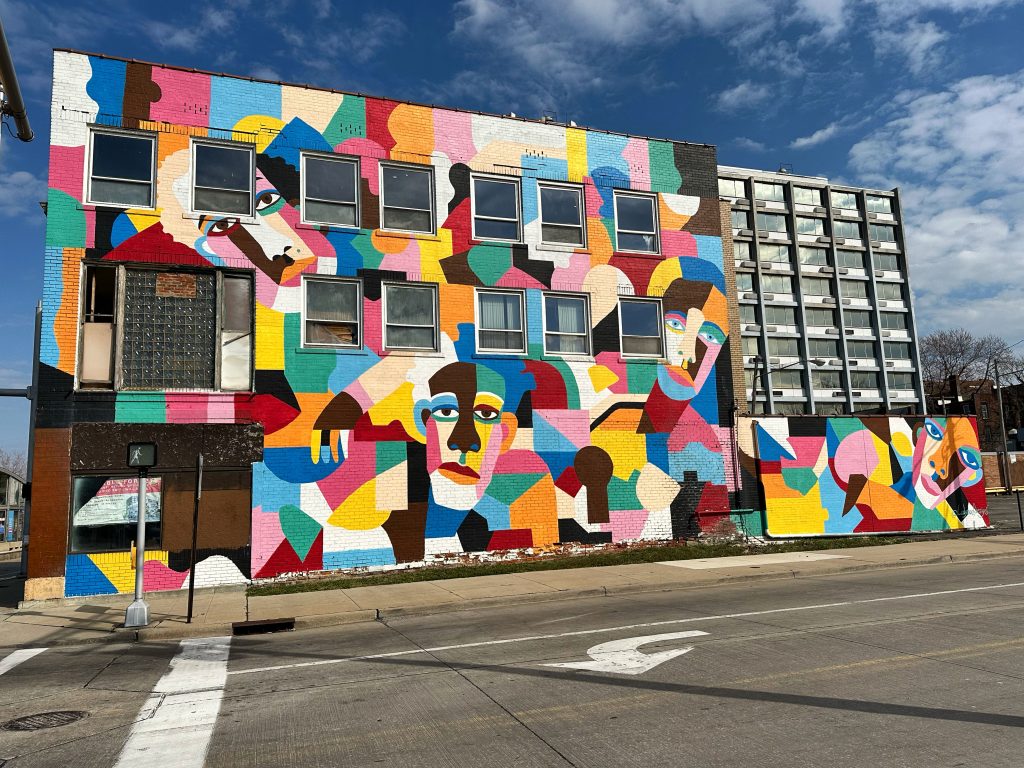
The mural above was created by artist Lauren Pearce and is located in Cleveland, Ohio. You can also find her work on Instagram.

She will also be part of the upcoming group exhibition How Do You Want to See Yourself, curated by Larry Ossei Mensah, at Galleria Anna Marra in Rome, Italy. That show will open on 4/10/24.

Oct 052023
 

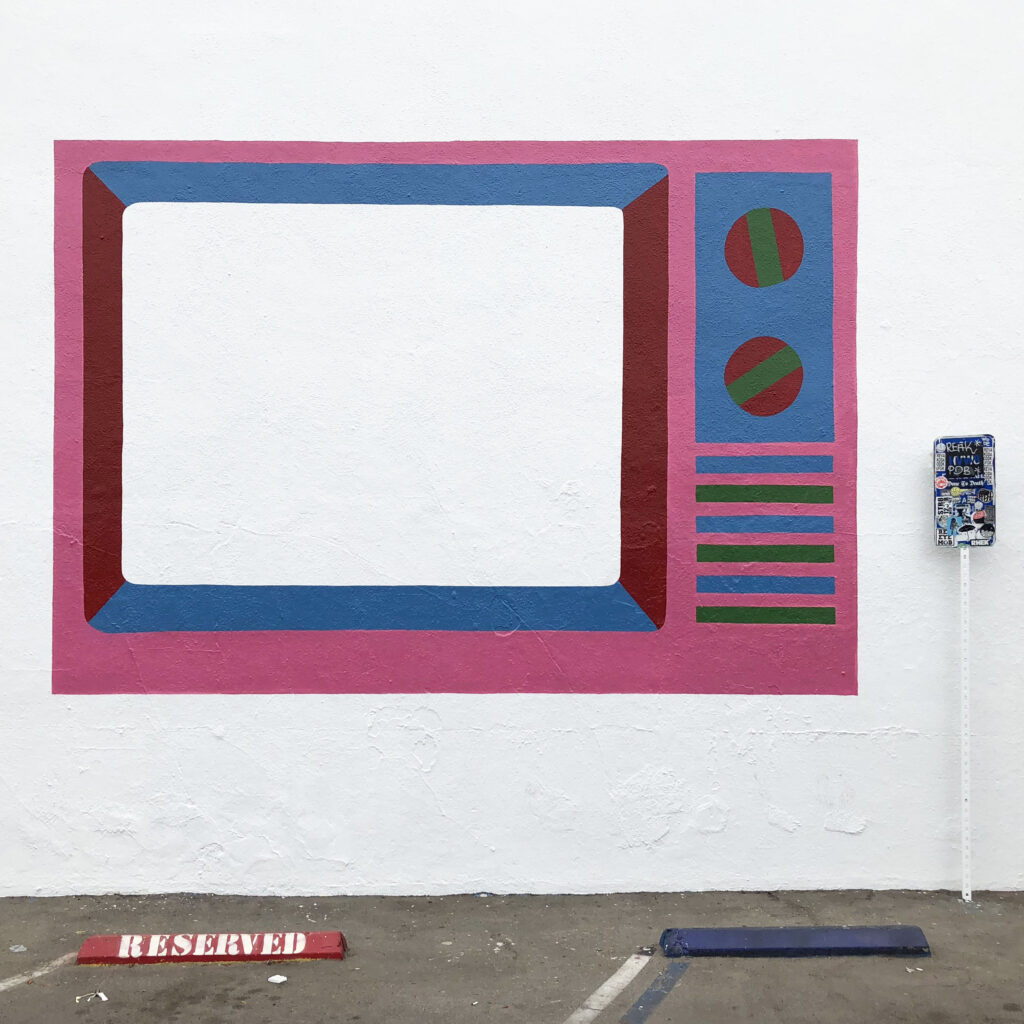
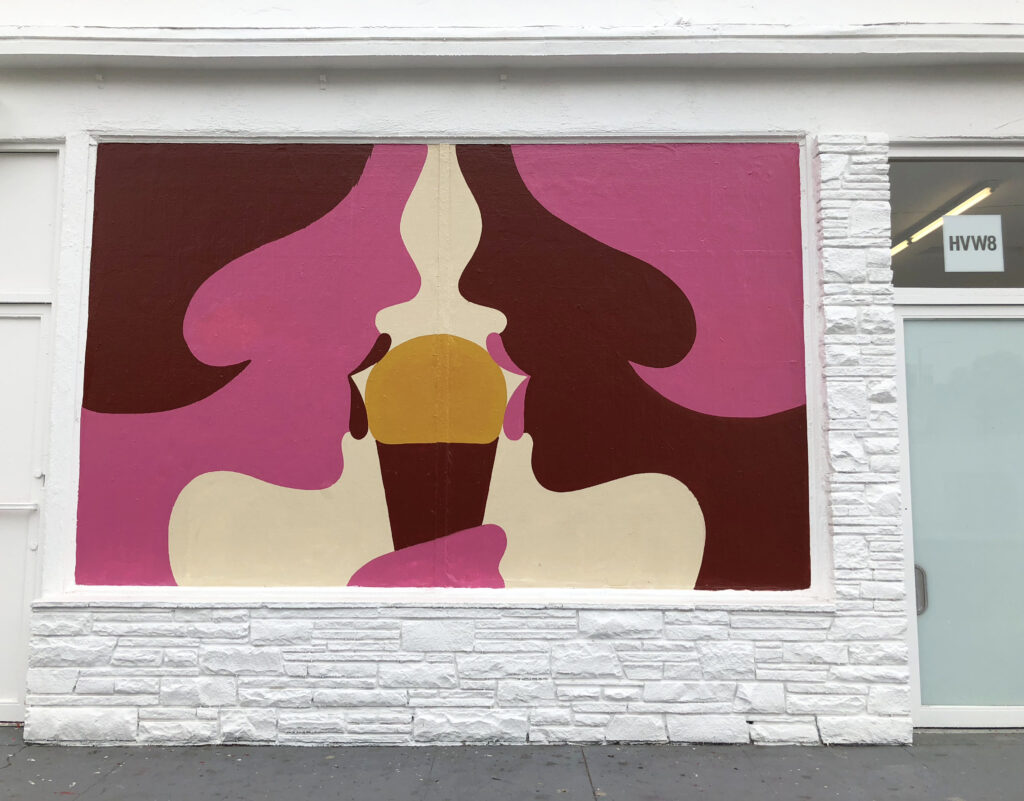
Above are images from Olimpia Zagnoli’s 2018 exhibition Cuore di Panna at HVW8 Gallery in Los Angeles. She is currently showing her work, along with her talented family at Antonio Colombo Gallery in Milan, Italy. That exhibition, ZaLiZaZa. Inventario di famiglia will be on view until 11/19/23.

The press release from the gallery-

Galleria Antonio Colombo is pleased to present the exhibition ZaLiZaZa. Inventario di famiglia, curated by Francesca Pellicciari, featuring a group of artists belonging to the same family: the photographer Miro Zagnoli (Za), the artist Emi Ligabue (Li) and their two daughters: the illustrator Olimpia Zagnoli (Za), already connected with the gallery, and the costume designer Emilia Zagnoli (Za).

The members of ZaLiZaZa are a very modern family, but also one of days gone by: were they not engaged in making their own various artifacts, we could imagine them operating in a family workshop in the Renaissance or Baroque spirit, experimenting with new painting techniques, revolutionizing styles or using them as examples to make their own; creating majestic theatrical wings, garbed in their style which is simultaneously classic and eccentric.

After all, this image is not so far from what ZaLiZaZa are doing today, in the 21st century, each in his or her own field – contiguous and often overlapping ambits – constantly coming to grips with their own research and experimentation, relying on a shared language, a true family lexicon.

The exhibition pathway is an inventory of works of all kinds – drawings and photographs, wooden books, collages, object/sculptures, fabrics, screens and magic boxes – in an intense dialogue of correspondences, where the four voices alternate and take turns, without a chronological order; a dialogue accompanied by a selection of items (sketches, notes, postcards, family photos) that document a methodology, while at the same time emphasizing the constant presence of art in the private life of ZaLiZaZa.

Thus it is no coincidence that many subjects are similar in the work of ZaLiZaZa.

While for decades design has pervaded the still analog settings and photographs of Miro (Za), it is also a recurring theme in the works of Emi (Li), from the Cicognino of Albini to the life and work of Charlotte Perriand, or anonymous design found for sale online: “I have no taboos, no type of respect or norm.” Similar use of anonymous and unconventional materials is found in the “Souvenir” clothing series by Emilia (Za), made from touristy dishtowels with the map of Italy, just as certain archetypes return in the thousands of stripes traced by Olimpia (Za), always in pursuit of the perfect synthesis between the idea and its representation.

Beyond this, beyond design, mountains, figures, bodies, portraits, chiaroscuro effects, balconies, there is the continuing echo – in the various generations of ZaLiZaZa of what Matisse said one day to Picasso, as Emi (Li) reminds us: “In the end, Picasso, we don’t have to try to be so smart. You and I are alike: what we try to rediscover in art is the atmosphere of our First Communion.” To always observe the world with the eyes of children, with the gaze of ZaLiZaZa.

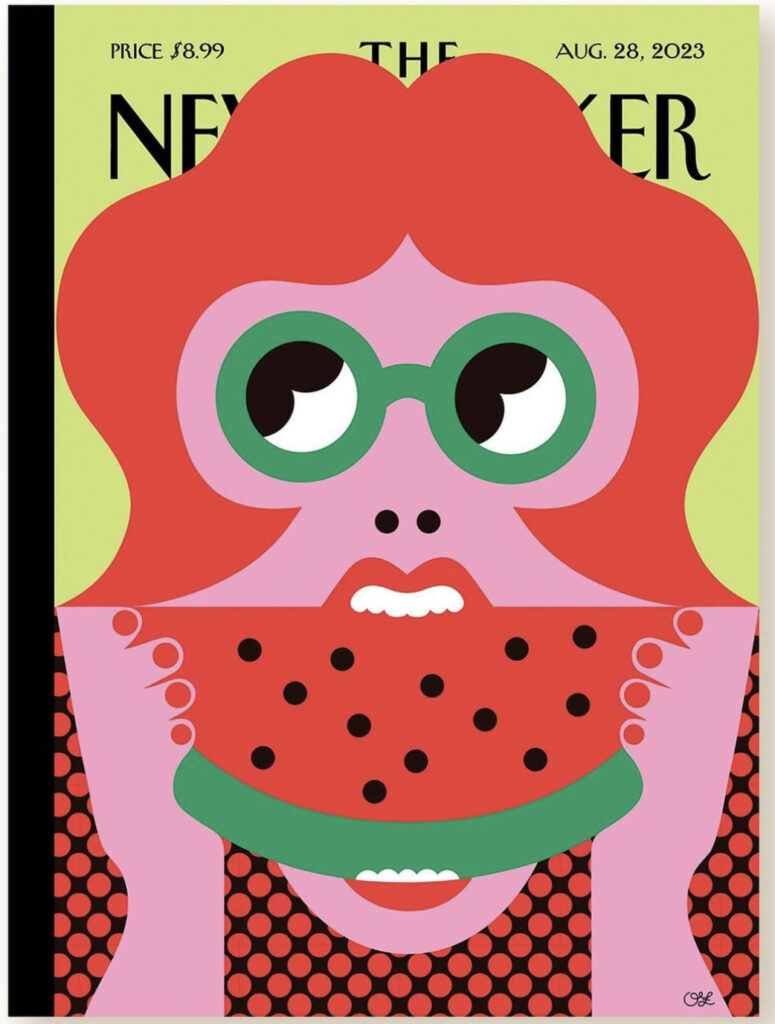
If Olimpia Zagnoli’s work looks familiar, she also designed The New Yorker’s August 28th issue, seen below.