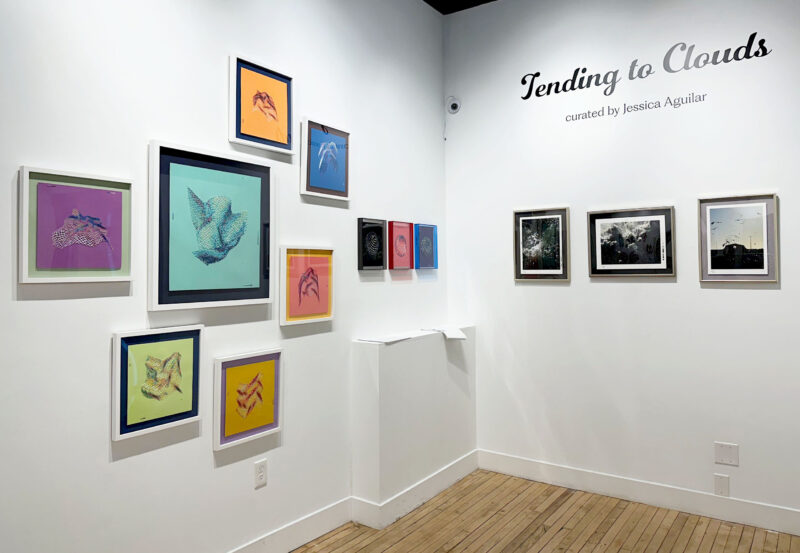
Works by Catalina Escallón Rosselli at Paradigm
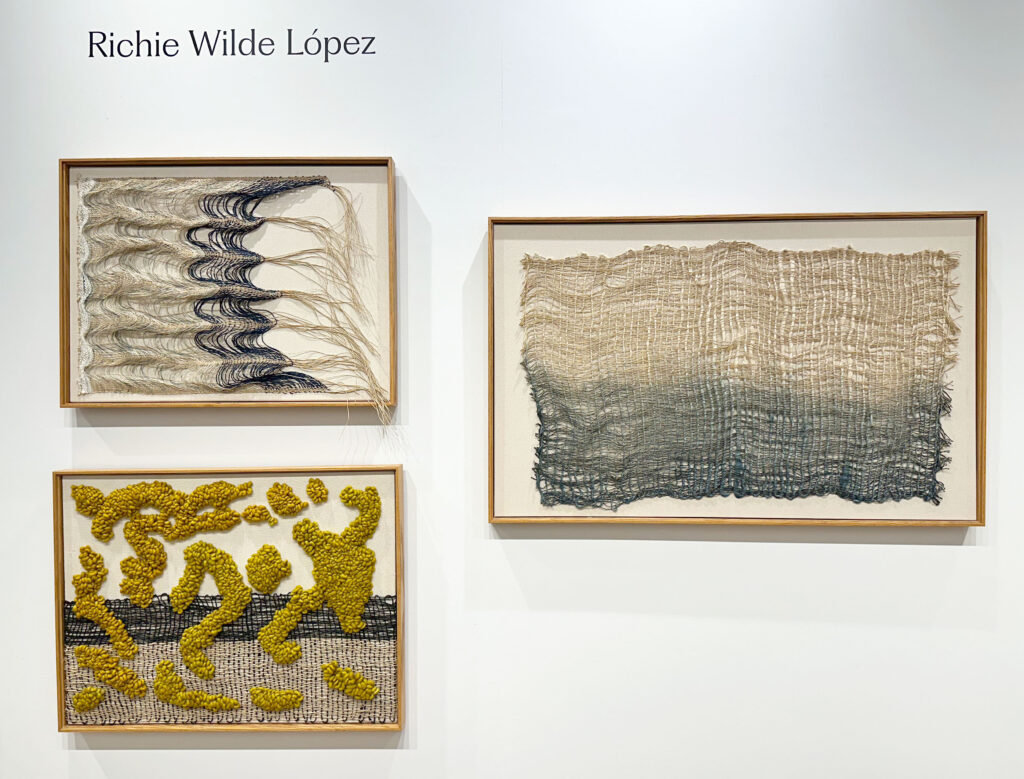
Artwork by Richie Wilde López
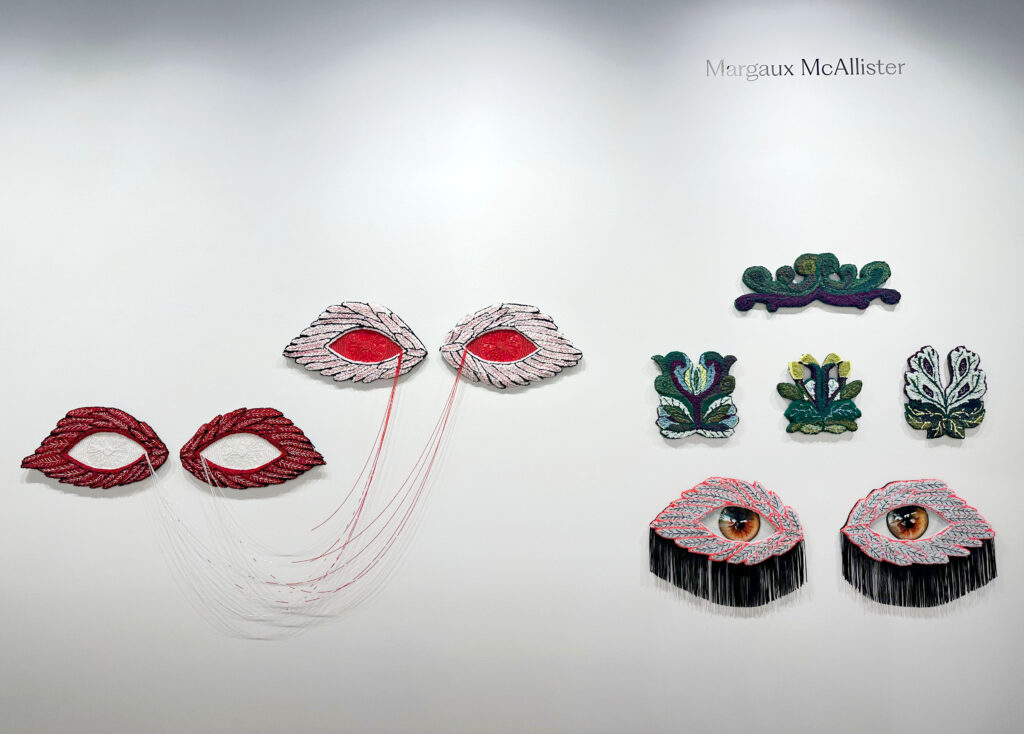
Artwork by Margaux McAllister
Like clouds drifting across the sky, the hands of Catalina Escallón Rosselli, Richie Wilde López, and Margaux McAllister move patiently and methodically while creating work in their chosen mediums. Several of the beautiful resulting pieces are featured in Tending to Clouds, a fiber arts exhibition curated by Jessica Aguilar, on view at Paradigm Gallery + Studio until 9/27/26.
From the gallery:
Celebrating the expansive medium of hand-crafted textiles, Aguilar brings together three artists who transform simple materials like thread, wool, and banana leaves into dreamscape compositions, grand ensembles, and embellished tapestries. Each artist engages in a personal definition of ritual while embracing repetitions in everyday tasks: tending to gardens, sustaining a home, and, of course, art-making. Each artist follows while not knowing the final results, but maintaining a strong belief in the possibilities. Embroidery artist Catalina Escallón Rosselli builds abstract colorscapes with her delicate threadwork on paper and photographs, evoking soft, beaded veils floating in space. Weaver Richie Wilde López arranges tree fibers, wool, and natural dyes to tell impactful stories in their texture and layering. Tufter Margaux McAllister adorns spiritual symbols on her ceremonial masks, veiling ethereal beings that preside over fantastical plant forms. Each of these transformations requires time and purposeful labor, a habit which these artists channel back into their art, driven by the urge to work basic material to the point of metamorphosis. Fiber is an inherently relational medium, as we all have reference points for textiles in the home: blankets, kitchen towels, upholstery; all the softer places against the hard doors and walls. In the fog of our busy lives, these artists have found meditation and convalescence through fiberwork. As they encourage the material into new form, they demonstrate the impact of slow and meaningful craft in this contemporary landscape.