Currently at Sikkema Jenkins & Co. gallery in New York is on the lower frequencies I speak 4U (alquimia sagrada), a solo exhibition of work by william cordova.
From the press release-
For the artist’s fourth solo exhibition at the gallery, cordova has developed a multi-media installation seeking to explore “the juxtaposition of past structures to more contemporary structures that illuminate the ephemeral nature of our existence, as beings who create material culture as a means of documentation and memory.”
The exhibition incorporates large-scale drawing collages, photography, and sculpture into an environment that reflects on abstract forms rooted in sacred geometries, while also drawing from historical moments and monuments of resistance. Two large scale sculptures, untitled (RMLZ), and untitled (palenque), reference both Brutalist and pre-Columbian architecture, specifically the temple-Citadel sites at Sacsayhuaman and Ollantaytambo. Incorporating the architectural motifs found at these sites, such as zigzags and grids, cordova’s sculptures thread an ephemeral repository, meditating on the concepts of image encoding from biological, natural, galactic, and cultural sources. The sculptures disrupt the formal structure of the gallery, creating alternative perceptions of space and time.
In his series rumi maki, william cordova takes on an ethnographic approach in addressing shared symbolism found in textile data encoding and architectural design. Named after the ancient Andean martial arts, rumi maki consists of multi-colored collages on paper, constructed from vivid layers of recycled paint chips. The arrangement of colors and patterns carry latent meanings, dependent on geography, culture, and the readings of celestial bodies. As cosmological maps, the collages synthesize the sacred geometries of architecture with the visual narratives of historical civilizations. Its form also recalls pioneering early video installation artist Beryl Korot, and her contributions to the 1970s video journal Radical Software.
ogun (el siglo de silencio) sees the artist return to large-scale collage on paper after several years focused on site-specific installations and smaller-scaled work. This work introduces viewers to a new series titled el quinto suyo (the fifth suyo), collages culled from reclaimed paint chip samples and recycled cardboard pigmented with old discarded oil stick paint. Literary references permeate cordova’s collages; texts such as El Siglo de Las Luces by Alejo Carpentier, El Monte by Lydia Cabrera and Decimas by Nicomedes Santa Cruz point to his ongoing interest in the distribution of power, spirituality, and labyrinths of perception.
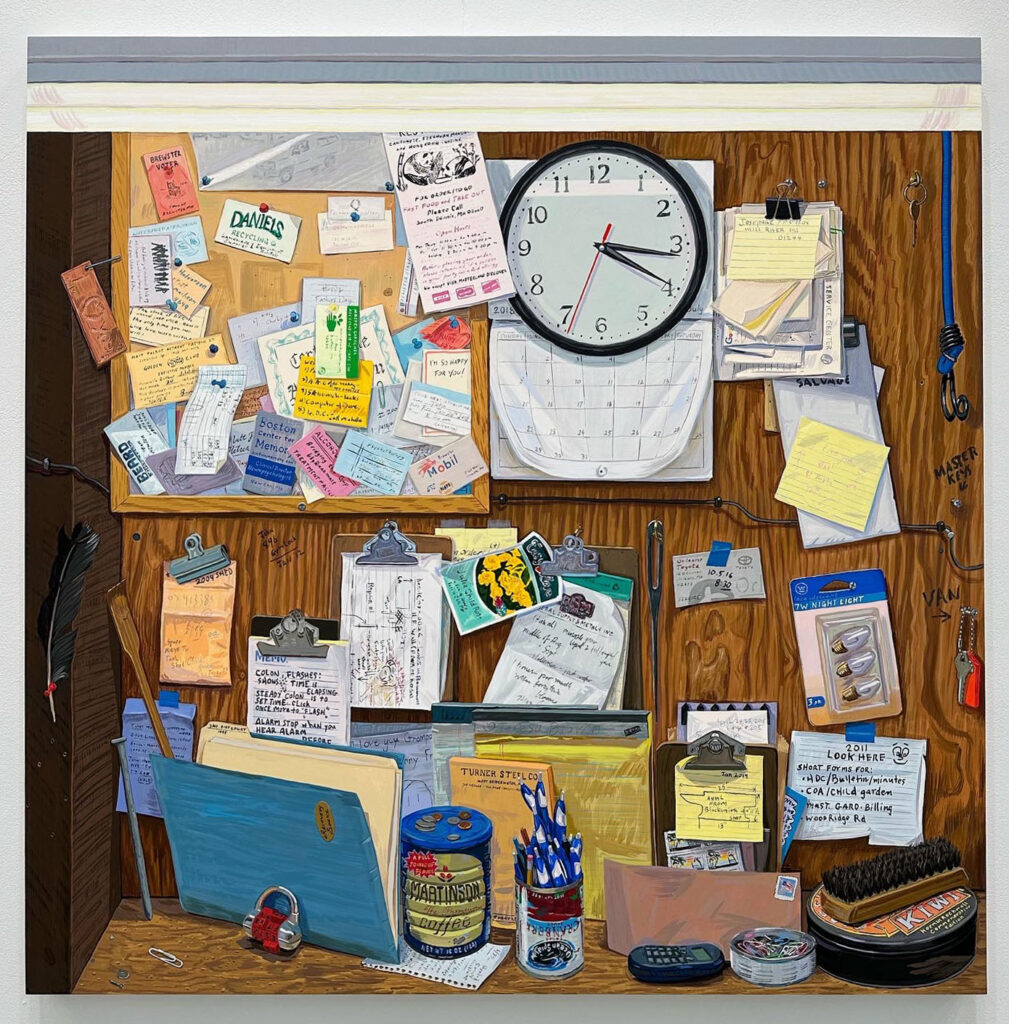
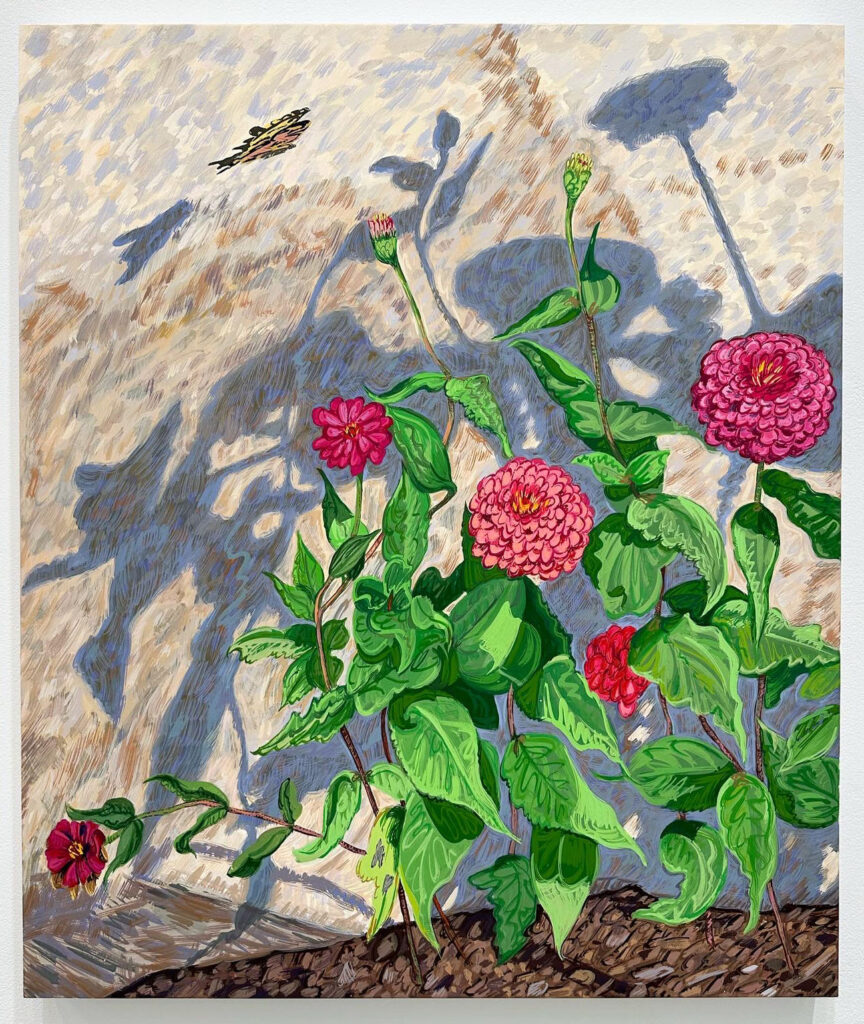
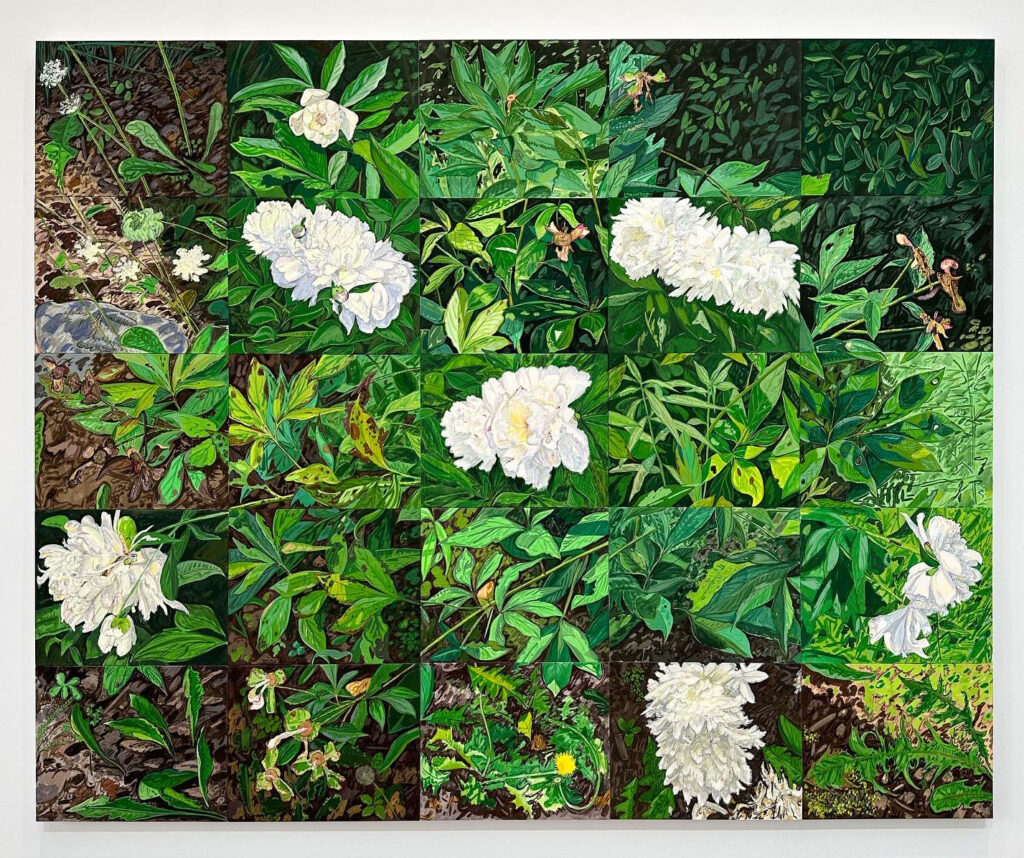
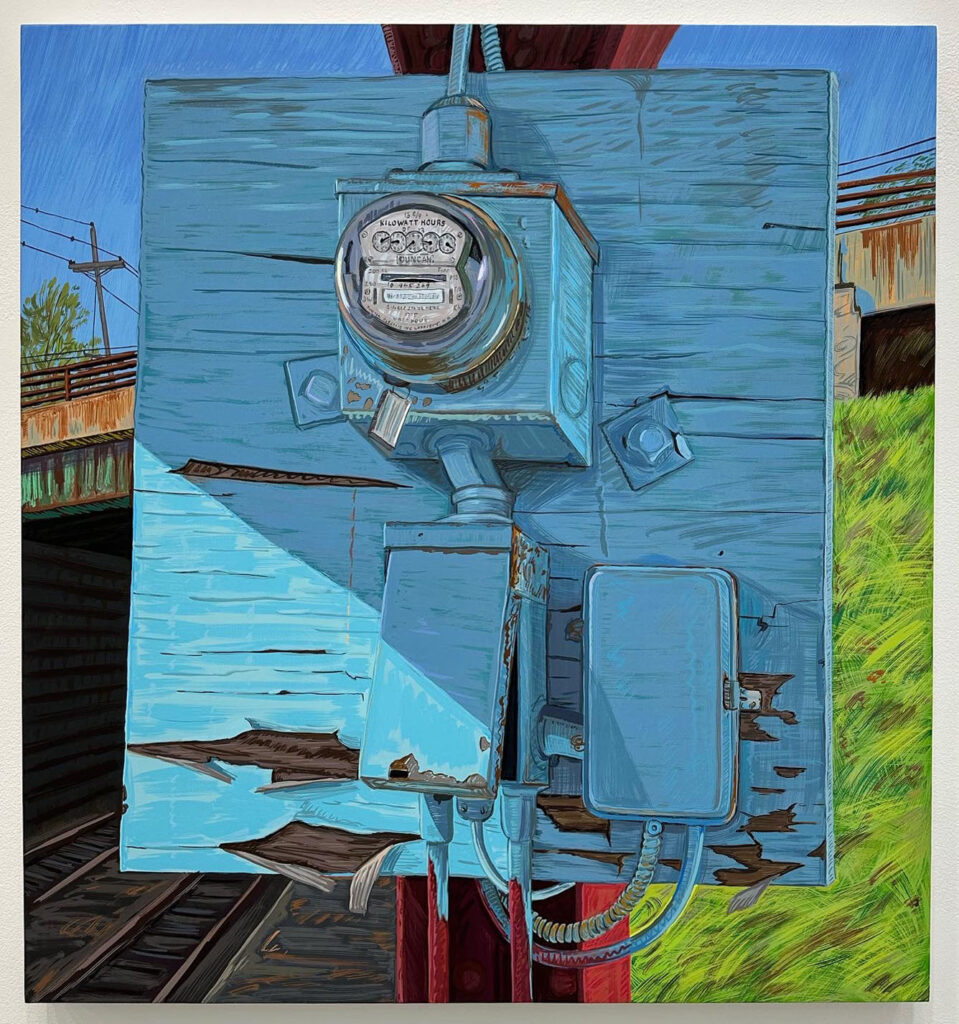
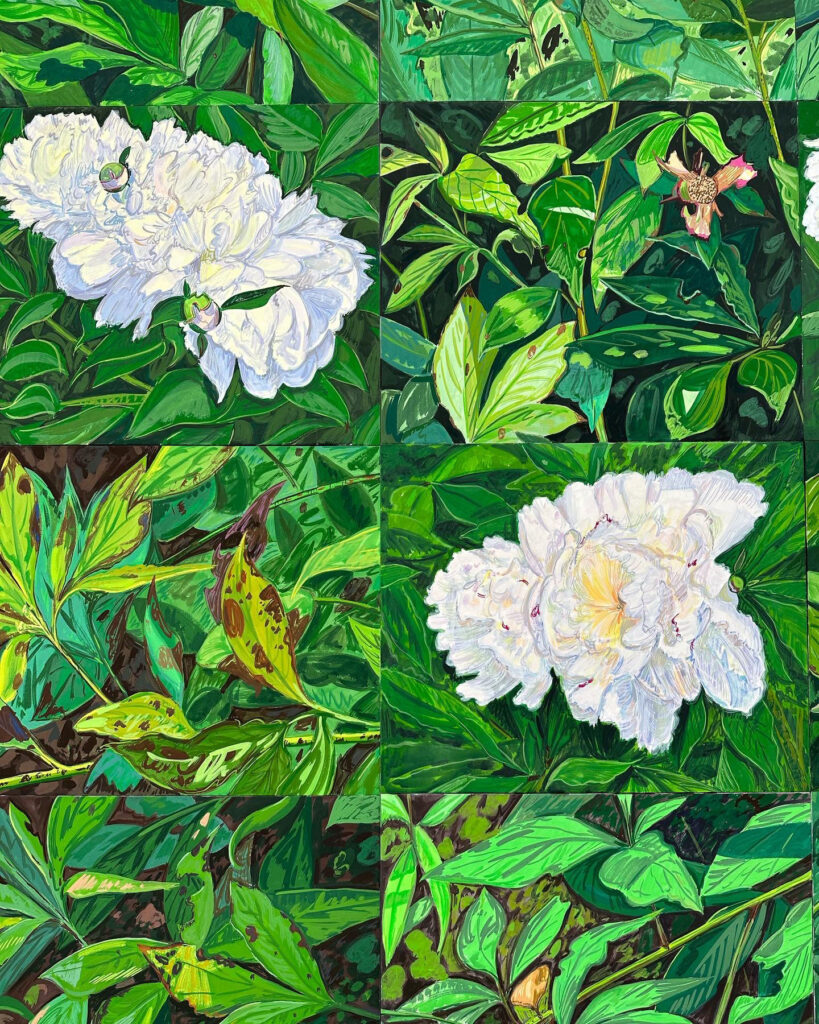
In the back gallery is an exhibition of paintings (pictured below) by Josephine Halvorson, titled On The Ground.


From the press release-
On The Ground, also the title of her essay in Art In America (June/July 2018), continues Halvorson’s exploration of the ground—as a motif, material, and metaphor. Each painting registers an area of ground through Halvorson’s close observation and pictorial description, while its accompanying surround incorporates crushed rocks and debris from the site of the painting’s making. Together, they realize a faithful translation of place and time. The work in this exhibition was made in the Berkshire mountains, the Mojave Desert, and Matanzas, Cuba.
These hybrid paintings are made with gouache, site material, dry pigment, and printmaking. They expand Halvorson’s on-site practice of transcribing direct experience by hand. While her previous work in oil allowed her encounter with an object to congeal over the course of a day, Halvorson has turned to gouache, a fast drying and graphic medium, which, like handwriting, records her observations in real time. Her paint application is indelible and fresco-like, transferring color from the brush into the absorbent ground of the panel.
Touching down at various points of interest—a piece of plastic, a blade of grass—Halvorson’s notational marks establish a correspondence between environment, painting, and viewer. Like a map, they depict the literal scape of the ground while offering an escape from mimesis. The reality of proximity breaks down as one gets lost in the archeology of a single stride. Gravel becomes galactic. The surround acts as a legend or key, a space for evidence and tools of calibration. A ruler, coins, or color chart orient the onlooker in terms of scale and perception, and the site material indexes the painting to its original locale. These are paintings of verification and memorialization. They ask how we make sense of what we see, how we express that witnessing, and how an account of experience is made concrete.
Both of these exhibitions close 2/29/20.