Apr 122023
 

“With a Full Heart”

“Unforbidden Pleasures”

“Unforbidden Pleasures” (detail)

“Wild Nights”

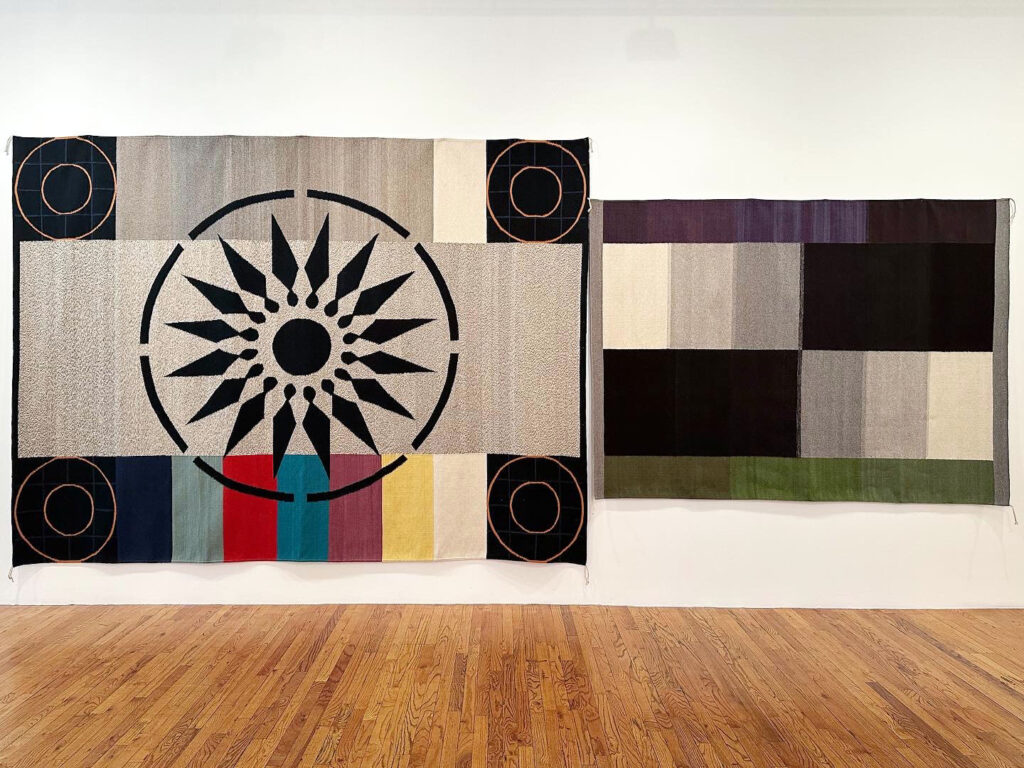
Currently at the Creative Pinellas gallery is Yolanda Sánchez’s Out of Eden, a collection of her paintings and textile work. The gallery is filled bright pleasing colors and this is the perfect exhibition to celebrate the spring season.

On the Creative Pinellas website, Sánchez discusses her work in a detailed essay. Below is a section of that piece.

Whether in painting or textiles, my working instruments are rhythm and color. I am interested in the joyful, playful or even spiritual properties of light. I am reflecting the light and color of where I live, of my immediate environment.

This artistic practice is improvisational and process-oriented, abstract. The relationship of one color to another creates a rhythm and tempo and establishes the composition. Each color suggests the next color, almost like the “call and response” form found in many musical traditions. There is a continuous orchestration, as the colors converse with one another, suggesting a mood or vibe.

I am often not sure where it is going or going to go. It is a surprise at every turn. I shape my perception as I work.

My textile work is informed by the Korean art form known as Bojagi. Humble in its origins, nameless women made these traditional textiles as often extravagant visual pieces using mundane, leftover fabric from wrapping, storing and transporting goods. Over time, the nobility introduced finer, more delicate cloth.

In its traditional form, design characteristics include stitching and seams to create linear elements, especially with translucent fabrics. These features differentiate and distinguish Bojagi from patchwork textiles found in other cultural traditions. Nevertheless, Bojagi shares what feminist art historians identify as centuries-old histories of turning scraps of fabric into beautiful objects and ultimately shifting perspectives from private to public.

I pay homage to these unknown women, authenticating their domestic work – and I affirm their values of inclusion, pleasure, love, the familial, the decorative, the colorful and joyful, the spiritual and the everyday.

My Bojagi-inspired textile work – painting with thread and fabric – honors the Korean tradition. Still, while relying on the conventions and basic structure, these pieces extend and interpret the Bojagi into a more contemporary form. I offer a new direction by varying medium and size and utilizing color compositions and stitching techniques less anchored to established methods.

Material, color, texture and transparency are crucial elements in this work, as is the geometry inherent in the design. While geometry, in this case, emerges from a particular culture, the form does not demand a specific culture-dependent response. Its only function is beauty. It is about the sensual delight derived from looking – the viewer can ascribe or chose meaning, if at all.

As an order, rhythm and pattern are generated within the geometry, creating beauty through harmony and stability, color dominates as a suggestive poetic force, concurrently evoking a connection to my immediate tropical environment. It sets as my intention arousing a sense of place, a feeling, and the atmosphere of an abstract garden, or even a walk through a field of flowers.

It is the color but also the sensuousness of nature that I endeavor to suggest in both my paintings and textiles.

This exhibition closes 4/16/23.
Mar 292023
 

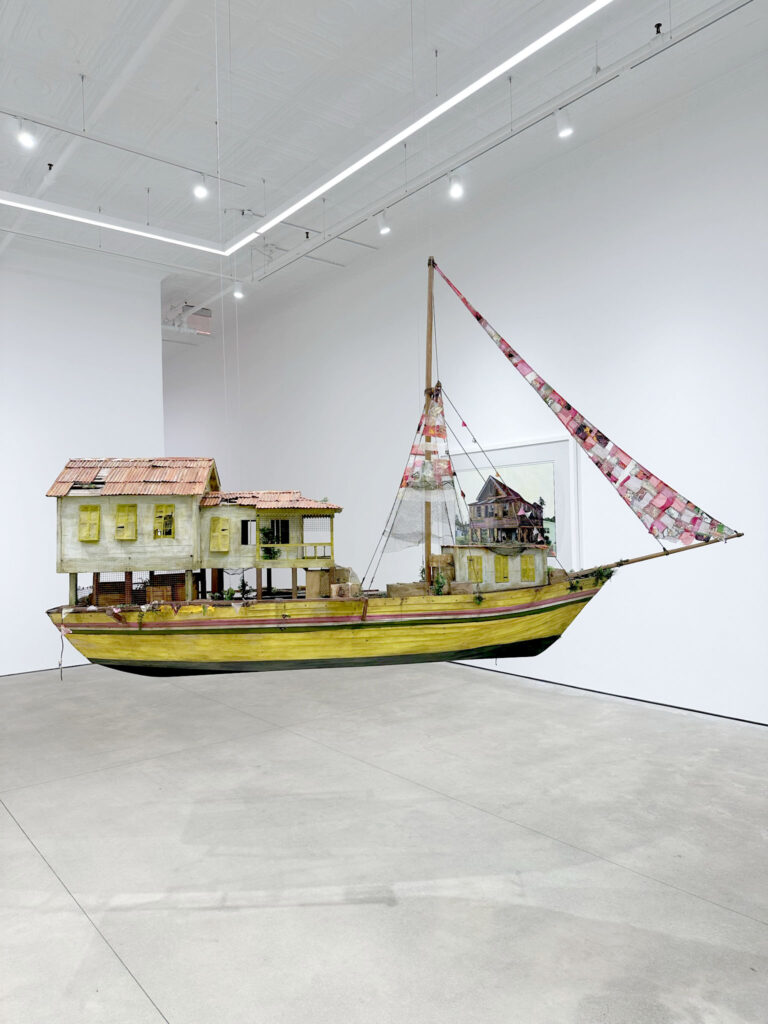
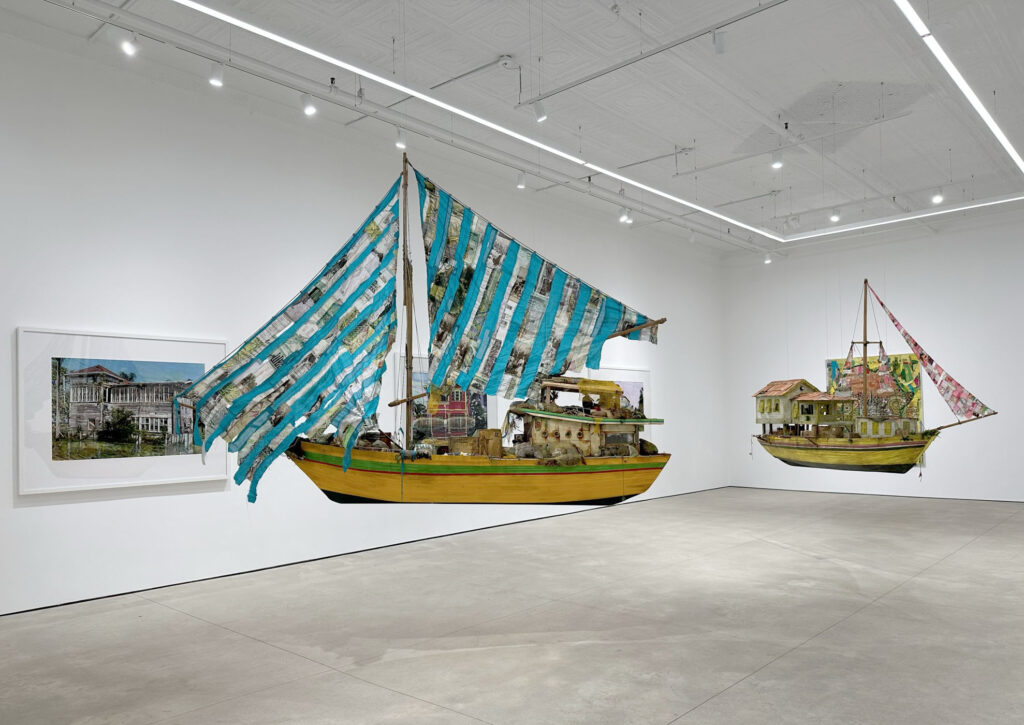
Hew Locke, “Listening to the Land” room view

“The Relic”, 2022

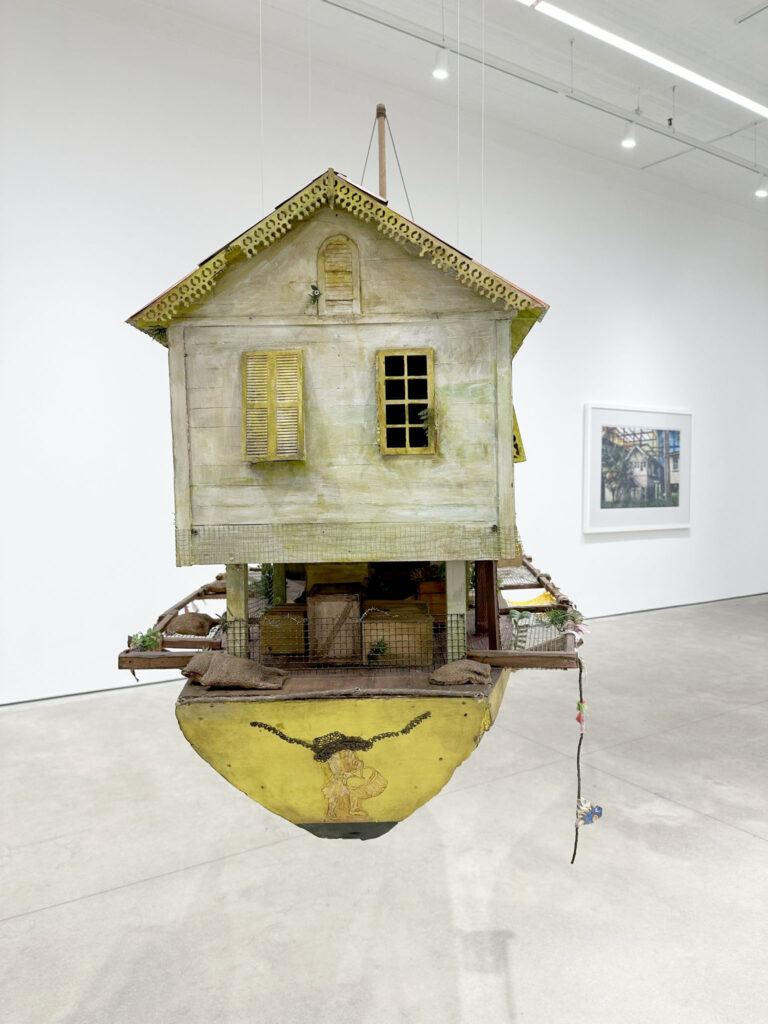
“The Relic” 2022 (another side)

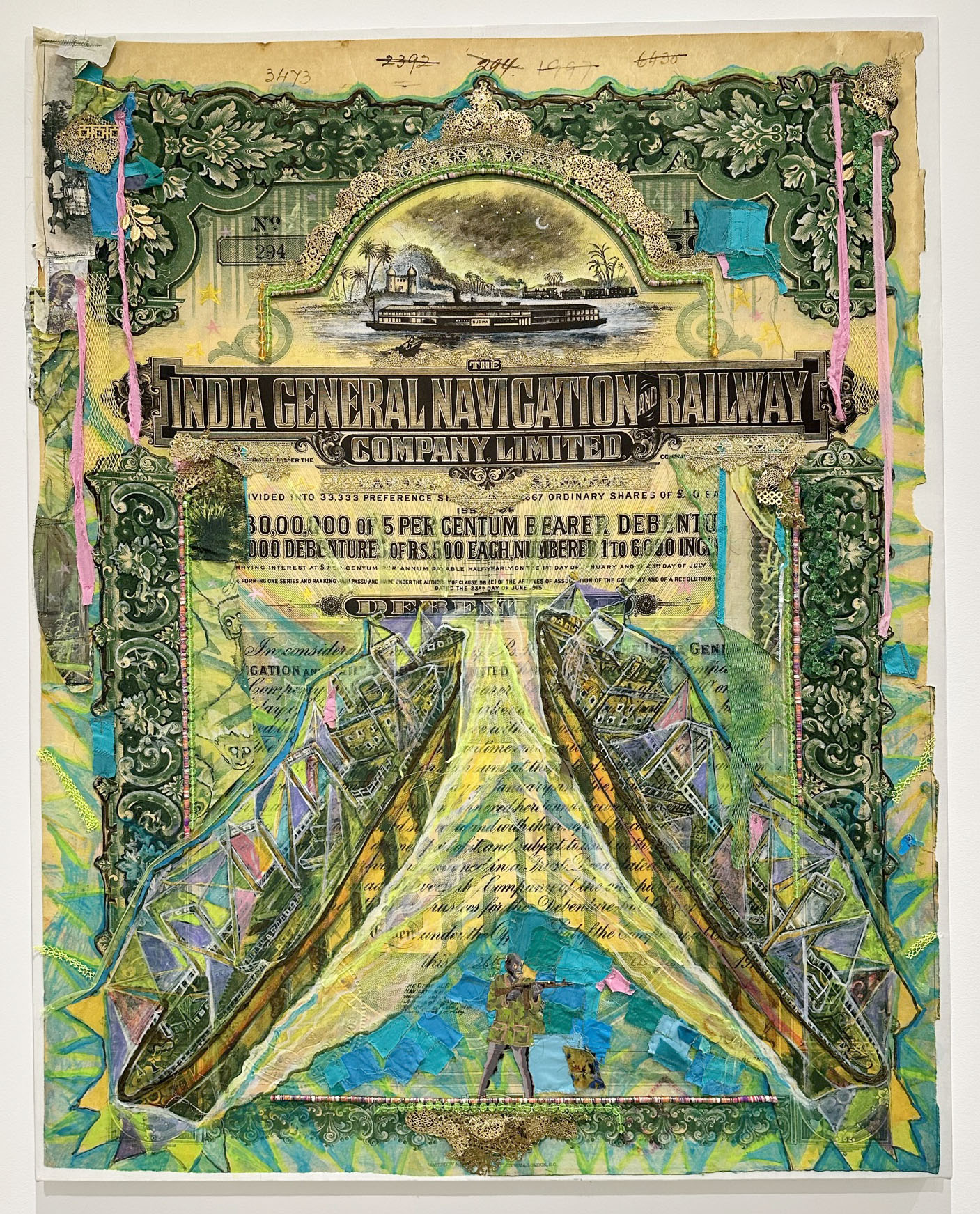
“Raw Materials 3”, 2022

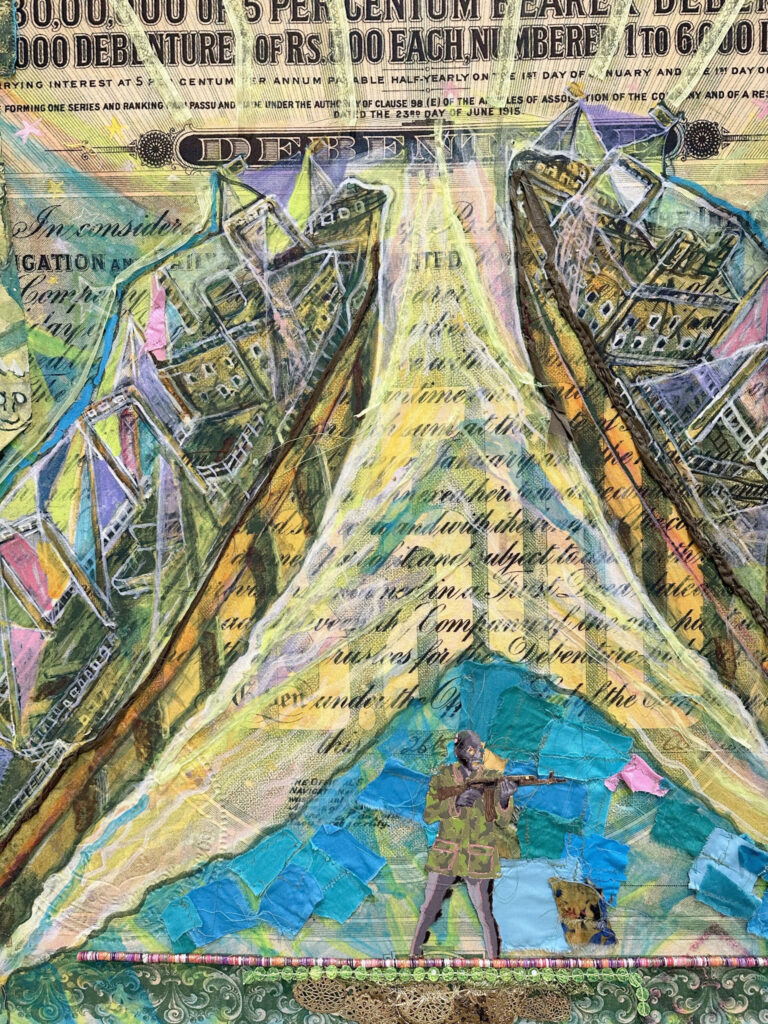
“Raw Materials 3”, 2022 (detail)

“Raw Materials 3”, 2022 (detail)

“Jumbie House 2”, 2022

“Jumbie House 2”, 2022

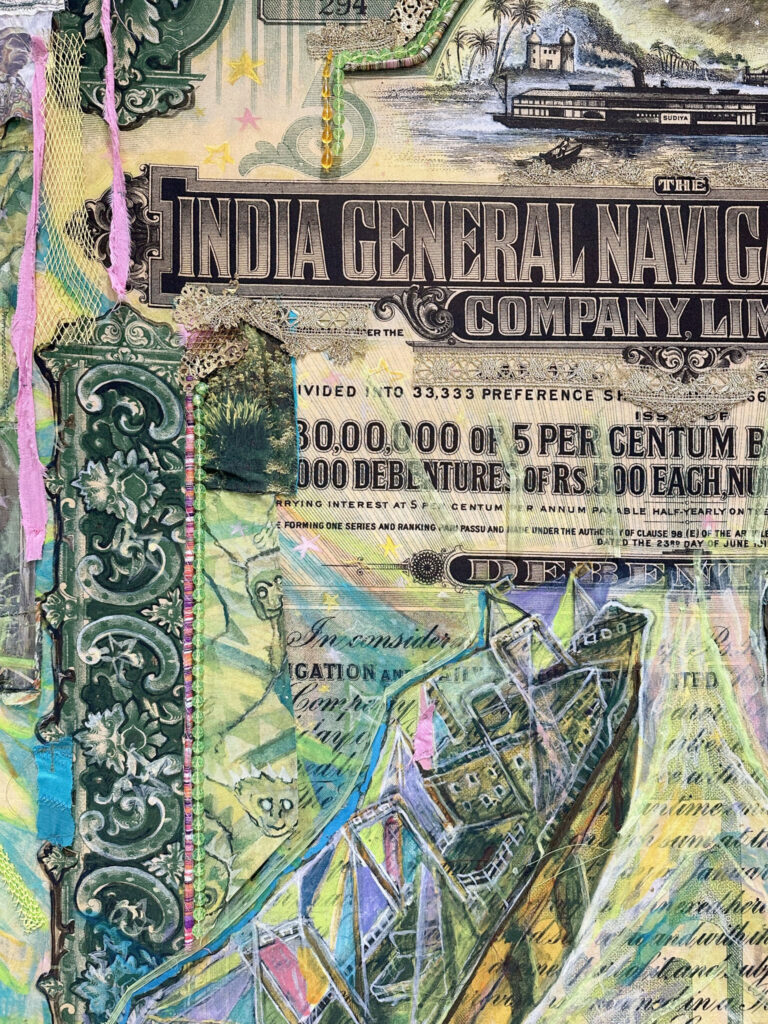
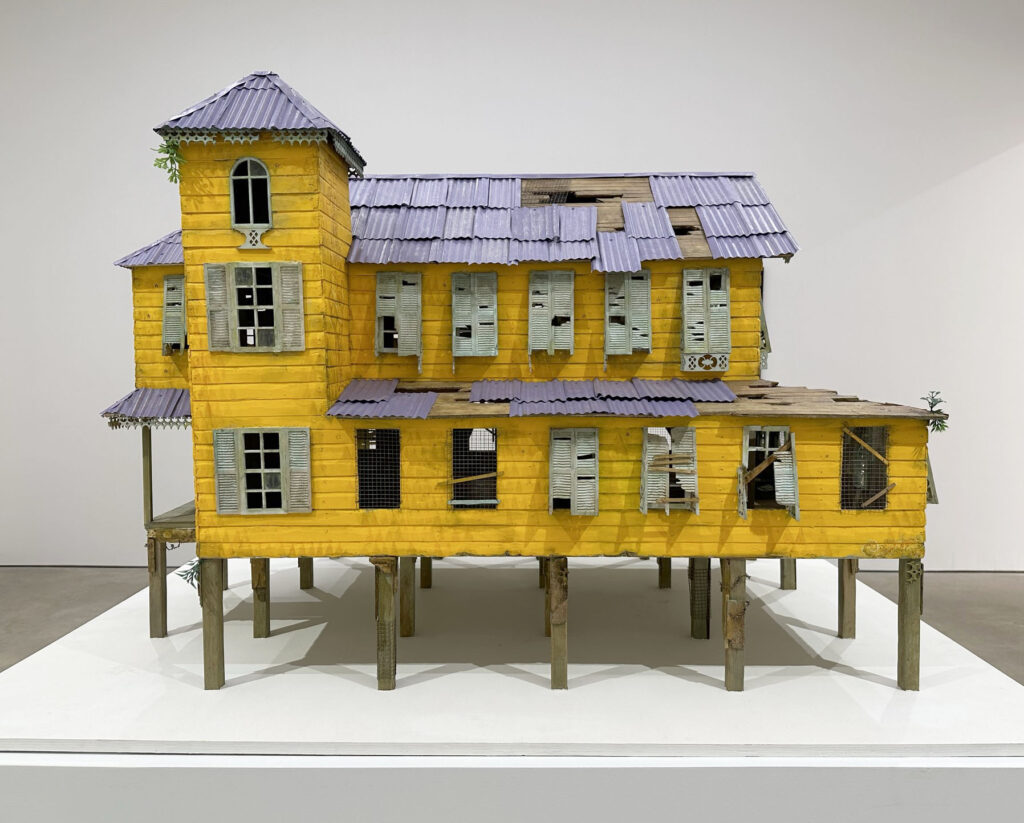
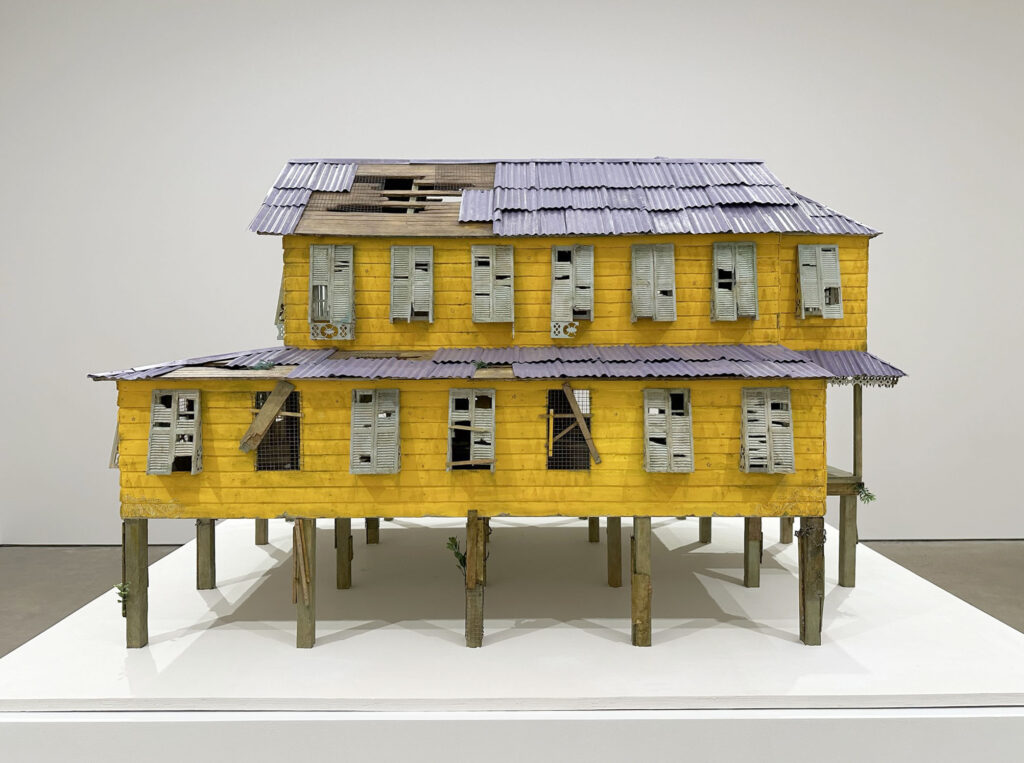
For Hew Locke’s exhibition, Listening to the Land, at P.P.O.W. he has created intricate sculptures and paintings that are fascinating in person.

From the press release-

Locke is known for exploring the languages of colonial and post-colonial power, and the symbols through which different cultures assume and assert identity. Furthering the themes explored in his celebrated commission The Procession at Tate Britain, and his concurrent installation Gilt on the façade of The Metropolitan Museum of Art, this exhibit engages with contemporary and historical inequities while reflecting on the landscape and history of the Caribbean. The exhibition draws its title from a poem by Guyanese political activist and poet Martin Carter which situates itself between two opposing forces of the landscape – sea and forest. Locke’s show features new sculptures and wall works with recurring motifs of stilt-houses, boats, memento mori, and share certificates referencing tensions between the land, the sea, and economic power. Reflecting on these links, Locke notes, “The land was created to generate money for colonial power, now the sea wants it back.”

Translating to ‘land of many waters,’ Guyana and its physical, economic, and political landscape serve as one of the primary sources for Locke’s work. Having spent his childhood in this newly independent nation, the artist witnessed first-hand an era of radical transformation. Now, the country teeters on the precipice of an oil boom and is one of the world’s fastest growing economies. Juxtaposing personal meditations on the climate crisis with political commentary on the history of a globalized world, Locke contemplates the ways in which colonies were exploited to accumulate capital, and observes how Guyana’s economic future lies in the exploitation of its waters. Locke’s new boat sculptures The Relic and The Survivor embody this broad worldview as the two battered wrecks drift through time and history. Evoking the fragmented and diverse legacies of the global diaspora, the boats’ patchwork sails are interspersed with photo transfers of 19th Century cane cutters and banana boat loaders, while their decks are loaded with cargo that could allude to colonial plunder, trade goods or personal belongings.

Based on an abandoned plantation house, Locke’s newest sculpture Jumbie House 2 features layered images that unveil the spirits that haunt this colonial vestige. Presented alongside are a series of painted photographs of dilapidated vernacular architecture across Georgetown and rural Guyana. Constantly under threat of being washed away by storms or rising sea levels, these crumbling structures echo anxieties surrounding climate change and historical erasure. A new series of mixed media wall works, Raw Materials, is derived from antique share certificates and bonds. Locke richly decorates the appliques with acrylic, beads, and patchwork to draw attention to the complex ways in which the past shapes the present. The image of an 1898 Chinese Imperial Gold Loan behind painted Congolese figures connects the global economy at the height of Empire to current Sino-African trade networks. In another work, a painted representation of a Nigerian Ife mask, alongside an image of David Livingstone, is layered on a French-African Mortgage Bond from 1923, connecting exploration and exploitation of African land, to current conversations surrounding the repatriation of artifacts. Taken together, the works in Locke’s Listening to the Land echo William Faulkner’s adage “The past is never dead. It’s not even past.”

This exhibition closes 4/1/23.
The Procession, mentioned above, can now be seen at Baltic Centre for Contemporary Art, in Gateshead, England until June 11th, 2023.

Gilt, also mentioned above, is on view at The Metropolitan Museum of Art until May 30th, 2023.
 

Mar 282023
 

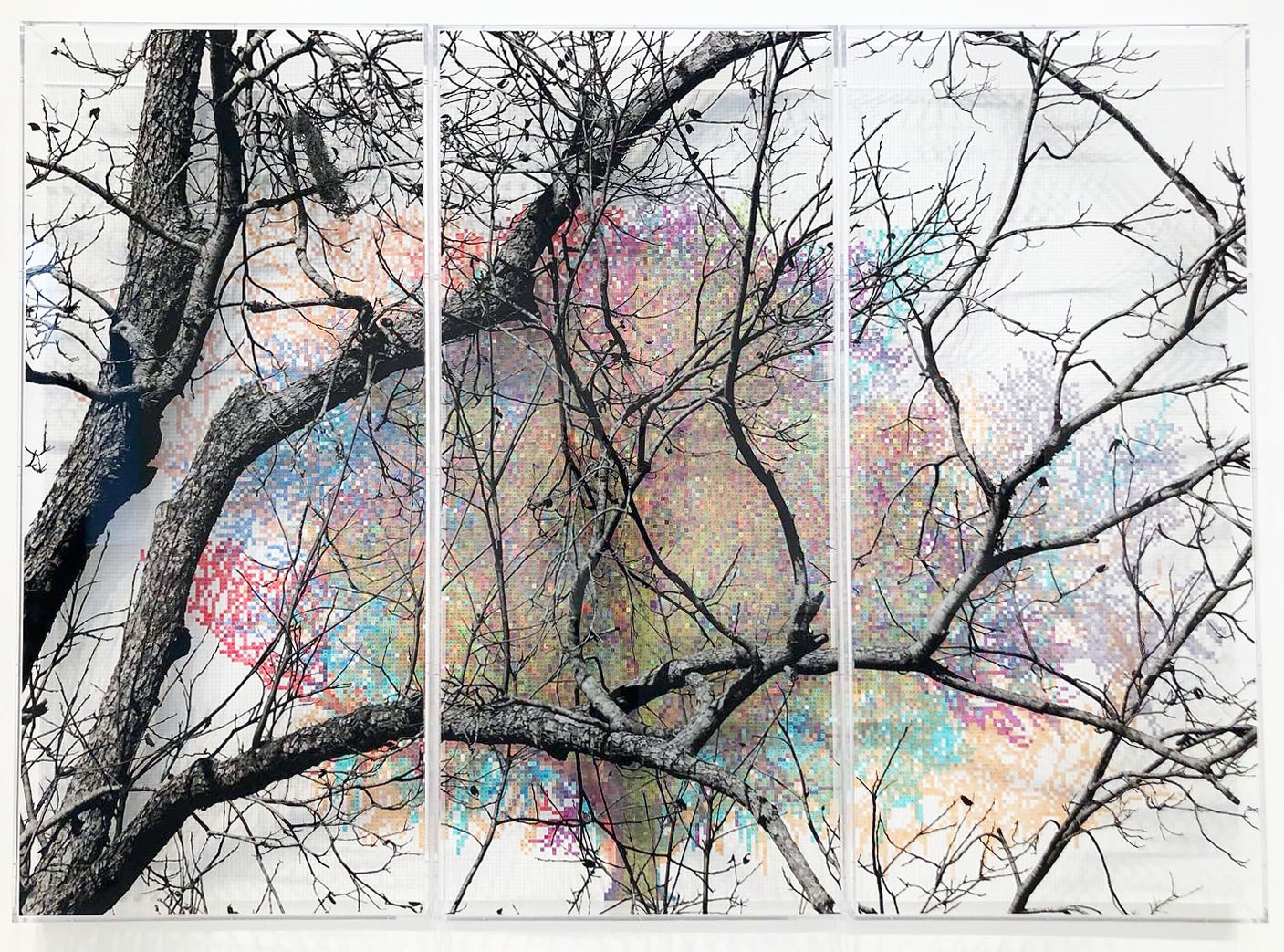
Charles Gaines’ work never fails to impress and his recent exhibition, Southern Trees, at Hauser and Wirth in NYC, is no exception.
From the press release-

One of the most important conceptual artists working today, the show explores the evolution of Gaines’s complex practice, demonstrating how he has continued to forge new paths within the innovative framework of two of his most acclaimed series, Numbers and Trees and Walnut Tree Orchard. The exhibition’s title, ‘Southern Trees,’ alludes directly to the 150-year-old pecan trees pictured in the new works, and symbolically to the opening lyrics of ‘Strange Fruit,’ Billie Holiday’s haunting protest anthem from the 1930s.

The image of the tree has been central to Gaines’s practice since he first began the Walnut Tree Orchard series in the 1970s. In ‘Southern Trees,’ Gaines advances the series using pecan trees photographed on a visit to Boone Hall Plantation in Charleston County, South Carolina––not far from where the artist was born and lived until he was five years old. Presented alongside a key early example from the walnut tree series, eight new triptych works on paper revisit and expand upon this significant original body of work.

‘Walnut Tree Orchard: Set M’ (1977), on loan from the Whitney Museum of American Art, New York, pairs a black and white photograph of a walnut tree with two drawings derived from it––an ink outline of the same tree and a grayscale grid that plots all of the trees included in the series up until that point. The newest series, titled Pecan Trees (2022), begins similarly, with a stark black and white photograph of a tree; yet in the drawings that accompany it, Gaines has filled in the outline of the tree with solid ink and used vibrant watercolors to plot all the previous trees in the final drawing. These successive modifications to scale, color and background demonstrate Gaines’s theory that while ‘the system has never changed, the outcome is always different.’

This extends to Gaines’s new Numbers and Trees Plexiglas series, which begin with the artist assigning each tree a distinctive color and numbered grid––breaking down the composition into individual cells that reflect the full form of the tree depicted in the photograph on the surface. However, Gaines reverses his signature process in this new series by overlaying the forms of the trees one at a time and in progression on the back panel of the work rather than on the front. He then brings the photograph to the surface by printing an enlarged detail of the most recently added tree on the work’s Plexiglas surface. This approach brings the tree’s shadowy branches to the foreground, highlighting its textural details and contrasting tones while obscuring the colorful numbered grids painted underneath it. This reversal produces a dramatically different effect, igniting a more somber, yet stirring, reaction to the work as the austere branches, dripping with moss, dominate the picture.

Created through carefully considered systems rather than through the artist’s own imagination or intuition, these new works remove the artist’s subjectivity by following a set of self-determined rules and procedures. The works call into question both the objective nature of the trees and the subjective natural and material human actions that surround them. The fastidious layering process allows Gaines to reveal the differences between the trees’ shapes where the forms do not align. These differences, highlighted by the artist’s systems, suggest the arbitrary nature of other manufactured systems in our society––such as politics, gender, race and class.

This exhibition closes 4/1/23.

Mar 262023
 

Kirsty Wither “Tumbling Crowd”

Yelena Lezhen “Clockwork Bird Song”

Esther Rosa “Goes around, comes around III”

This weekend is the Affordable Art Fair in NYC. It’s a chance to check out and buy art at reasonable prices.The fair goes to Hampstead, London next, and will return to New York in September of 2023.

For more on the artists pictured above and their galleries-

Kirsty Wither runs the London gallery Cameron Contemporary with her husband, Robin Cameron.

Yelena Lezhen’s work was shown by Barcelona gallery Manifest Destiny Art. Check out her Instagram for current work.

Esther Rosa’s sculpture was part of InSight Artspace’s booth. Her Instagram is also a good place to see her work.


Mar 232023
 

Stefan Kürten, “We are all made of stars”, 2013

Stefan Kürten, “Running to Stand Still”, 2014

Stefan Kürten, “Running to Stand Still”, 2014 (detail)

Stefan Kürten, “Fine Wrinkles”, 2000

Rita McBride, “Mae West Mandala (Oaxaca), 2009 and “Color Test (Green Bar)”, 2009

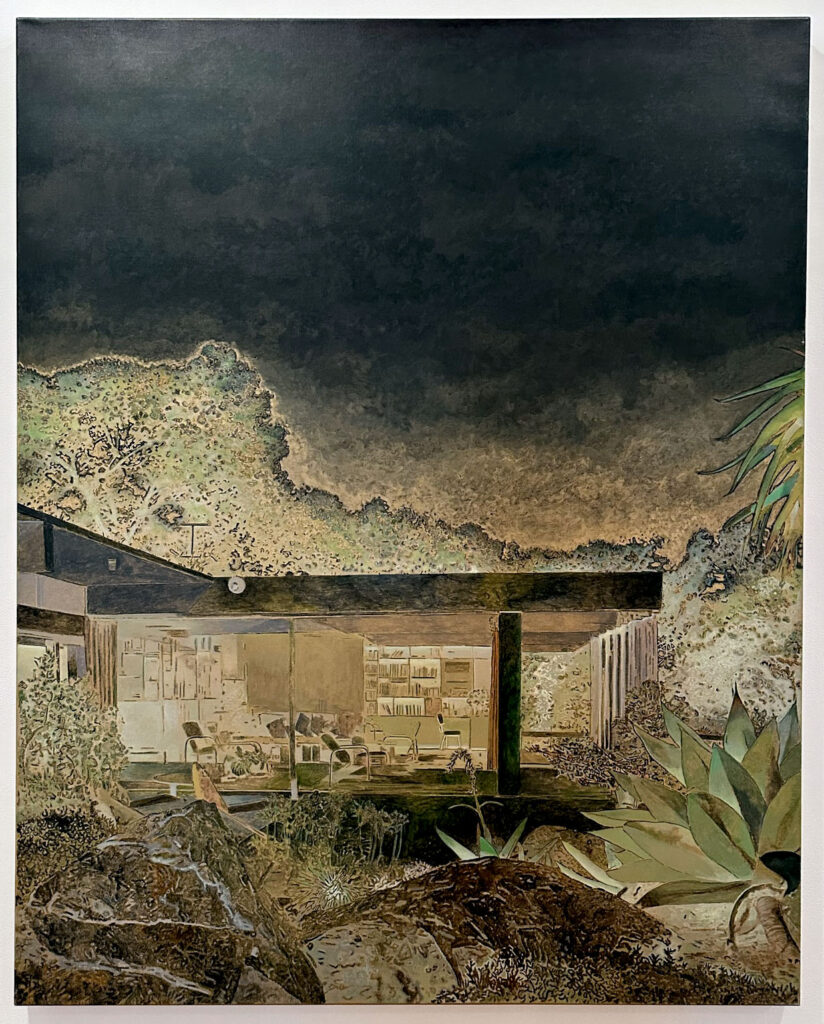
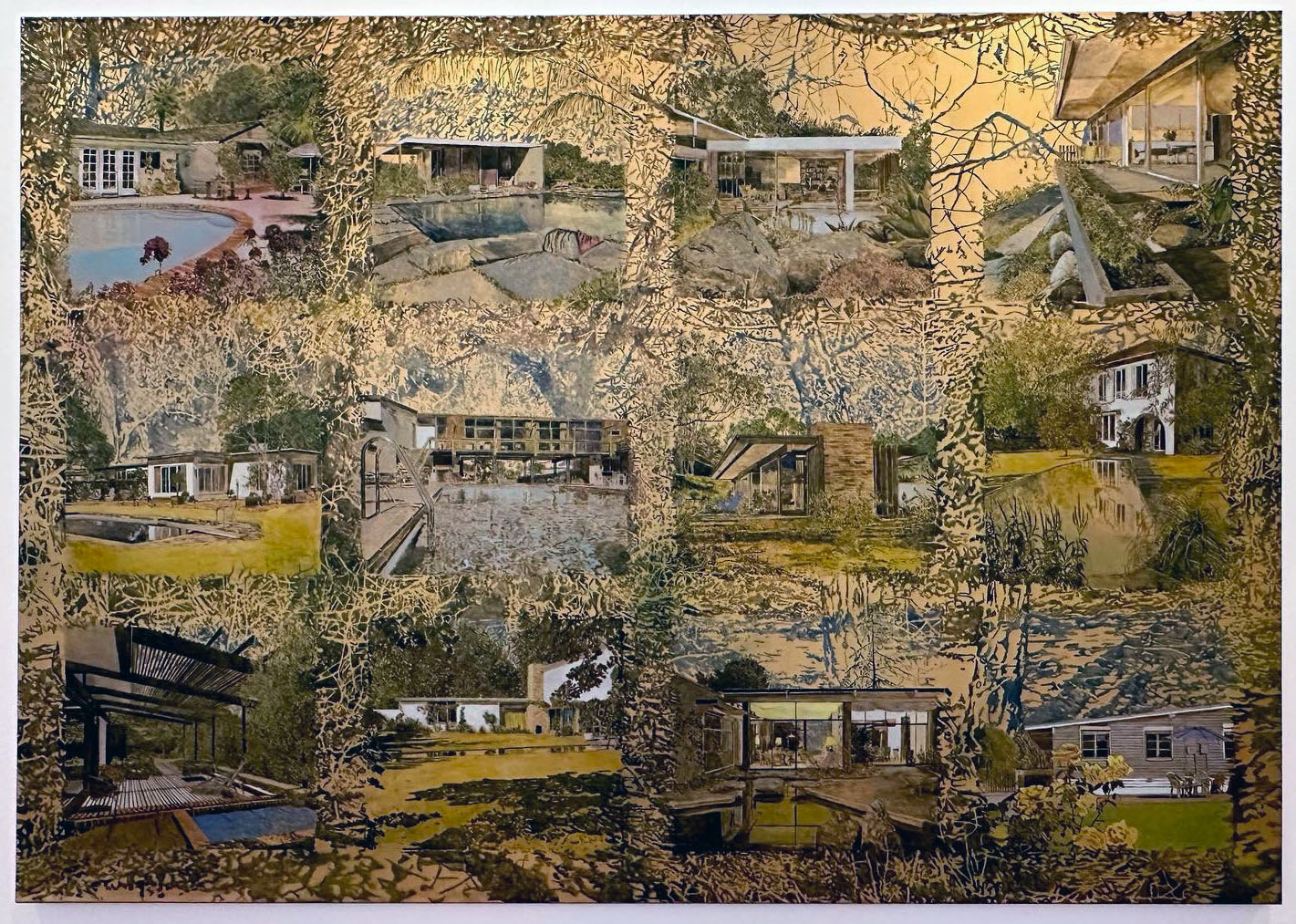
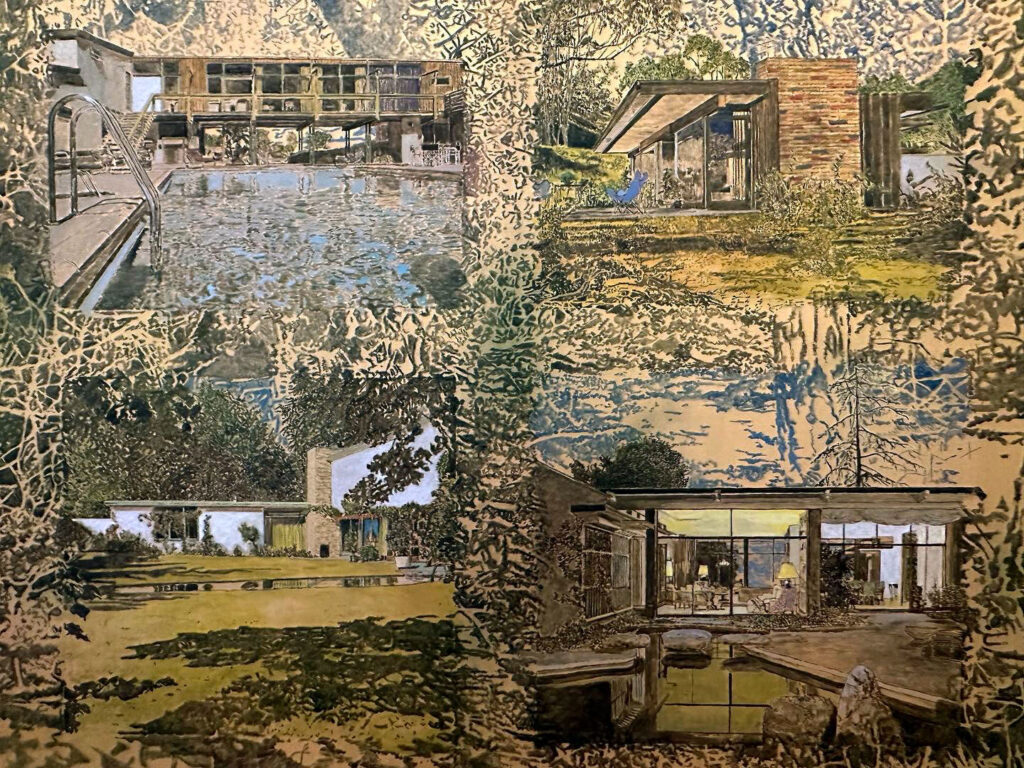
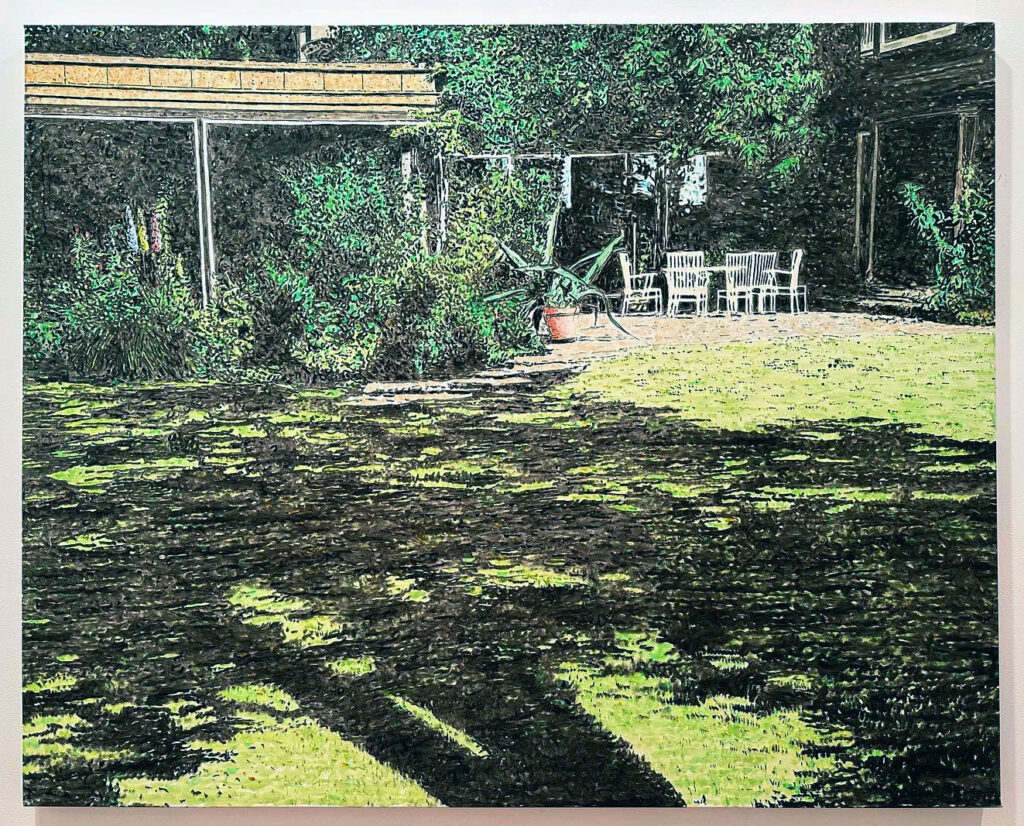
Stefan Kürten’s paintings of houses and Rita McBride’s wall coverings (and other sculptures) work with each other to question the concept of home, as well as the objects you might find within one. The exhibition, titled I Continue To Live In My Glass House, is on view at Alexander and Bonin until 3/25/23.

From the press release-

Stefan Kürten is known for detailed depictions of homes. Although constructed from both found and invented imagery, his homes feel known or experienced. The slippage between archetypes, memories, and dreams are central to his compositions. Set in lush landscapes and mysteriously unpeopled, Kürten’s homes evoke modern art or design museums with iconic sculptures and furniture viewable inside and outside of their transparent walls.

Rita McBride’s work invites us to reconsider structures and design elements such as ductwork, awnings, wall coverings and other utilitarian objects. McBride represents a bentwood chair in Murano glass, fastened together by a material that evokes spun candy or plastic wrap. Chair (1999) comments on the life of a domestic object whose usage necessitates an inventive approach to repair or stabilization.
McBride is also showing Particulates, an art installation that combines lasers with ambient dust and water molecules, will be on view at the Hammer Museum in Los Angeles starting 3/27/23.


Mar 222023
 

Erika Ranee, “Nacre”, 2023

Erika Ranee, “Nacre”, 2023 (detail)

Erika Ranee, “You Go First”, 2023

Erika Ranee, “You Go First”, 2023 (detail)

Erika Ranee, “You Go First”, 2023 (detail)

The paintings by Erika Ranee, part of her exhibition, All Natural at Klaus von Nichtssagend Gallery, are densely constructed and require a closer look to truly appreciate the work it took to create the intense final products.

From the press release-

Ranee takes inspiration from the world all around her; a crosstown bus ride might reveal pops of color in a passenger’s bright blue IKEA bag seen against municipal orange plastic seats. A bucket of “Purple Dark” acrylic, discontinued by Guerra Paints but gifted to the artist, might bring to mind dahlias and peonies, her favorite flowers. All Natural refers to Ranee’s time spent between NYC and rural Western Massachusetts, and an ongoing fascination with both the fertile, natural world of the countryside and a – no-less fecund  – urbanized terrain shaped by its human inhabitants. The title also obliquely refers to drawings Ranee made of her niece’s braided hair extensions, some of which have been collaged into her paintings’ surfaces, fomenting another set of layered meaning to the works.

Ranee employs a wide variety of painting techniques to create her abstractions. Image and surface are developed through wide-ranging and multitudinous applications and removals of material in dense layers. Wide swaths of color are poured, allowing multi-directional deltas that show the influence of gravity and entropy. Lustrous, glossy paints sit under or beside bubbling and crackled powdery pigments on the canvas. Elements are collaged from sources including blacklight posters, coloring book pages, found children’s drawings and spray-stenciled botanical matter. In places, cut scraps of other paintings are glued onto her raucous surfaces then painted over, cut up, torn out and painted again. Some layers include ink drawings on newsprint shellacked or encased in gel mediums, then incised and peeled to reveal hidden forms underneath. Patterns resembling electric Lichtenberg formations are made through spray paint expelled directly into wet shellac. The result is a body of work that invites us to look closely, examine details, and wonder at its making, all while reveling in the lush colors and forms that ebb and flow before us.

This exhibition closes 3/25/23.

Mar 162023
 

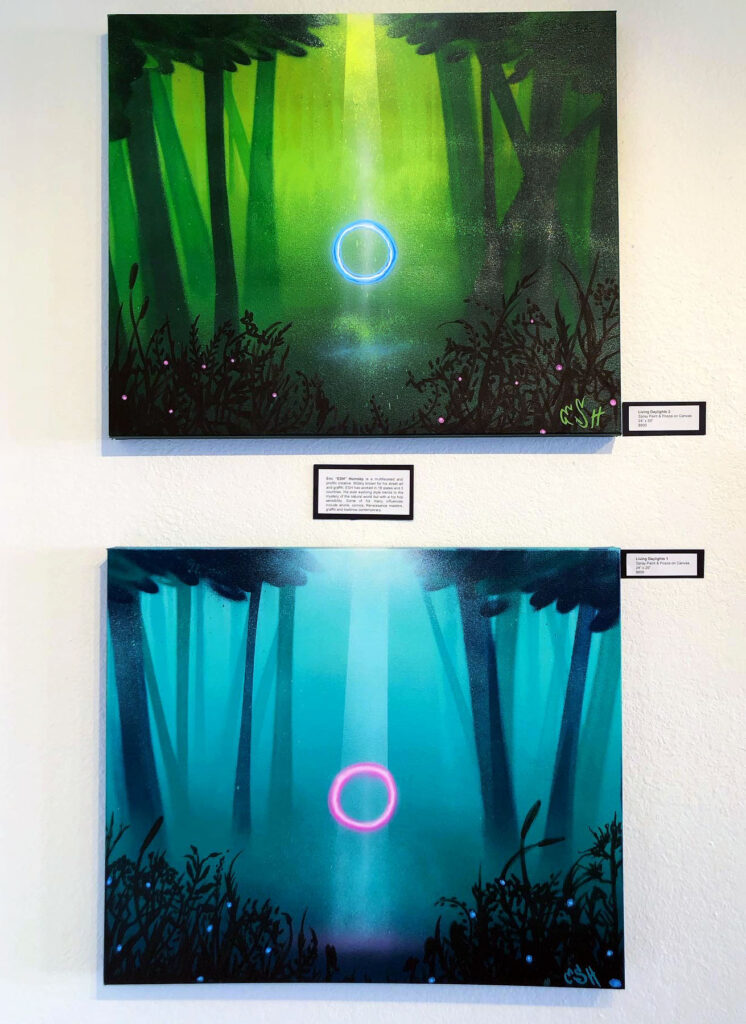
Eric “ESH” Hornsby, “Living Daylights 1″and “Living Daylights 2”

Adam Christopher Reed, “The Judge”

Nikita Rosalind, “Peace in the Wild Waves”

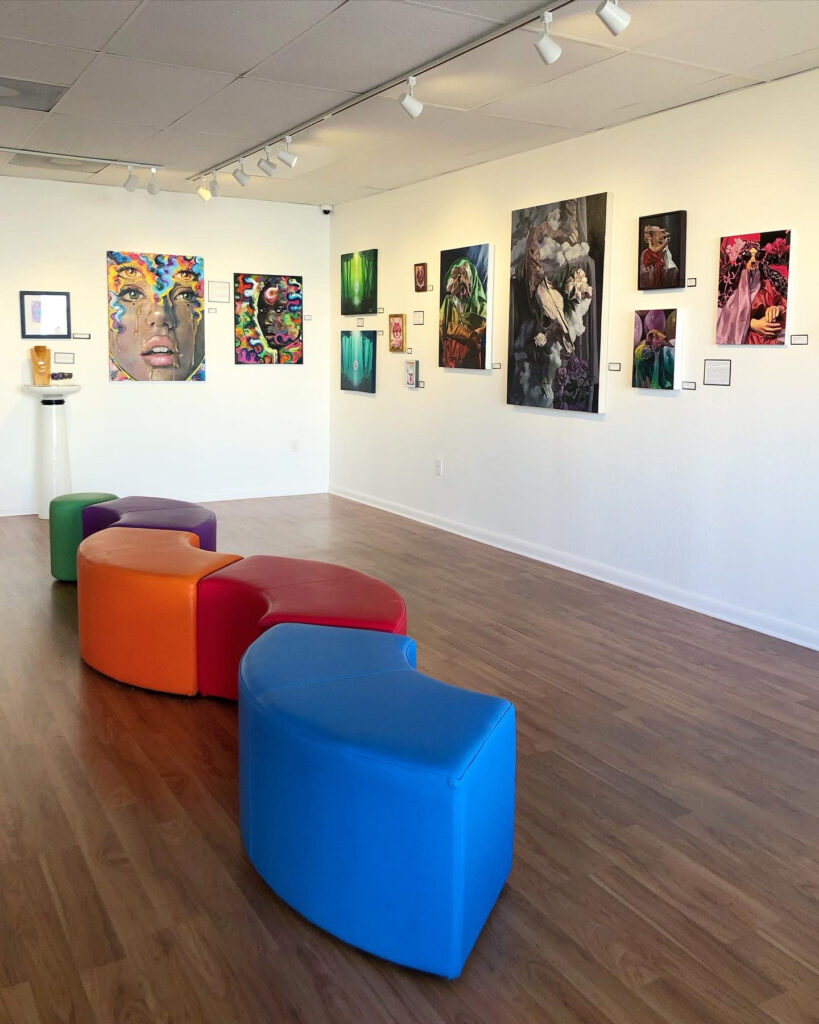
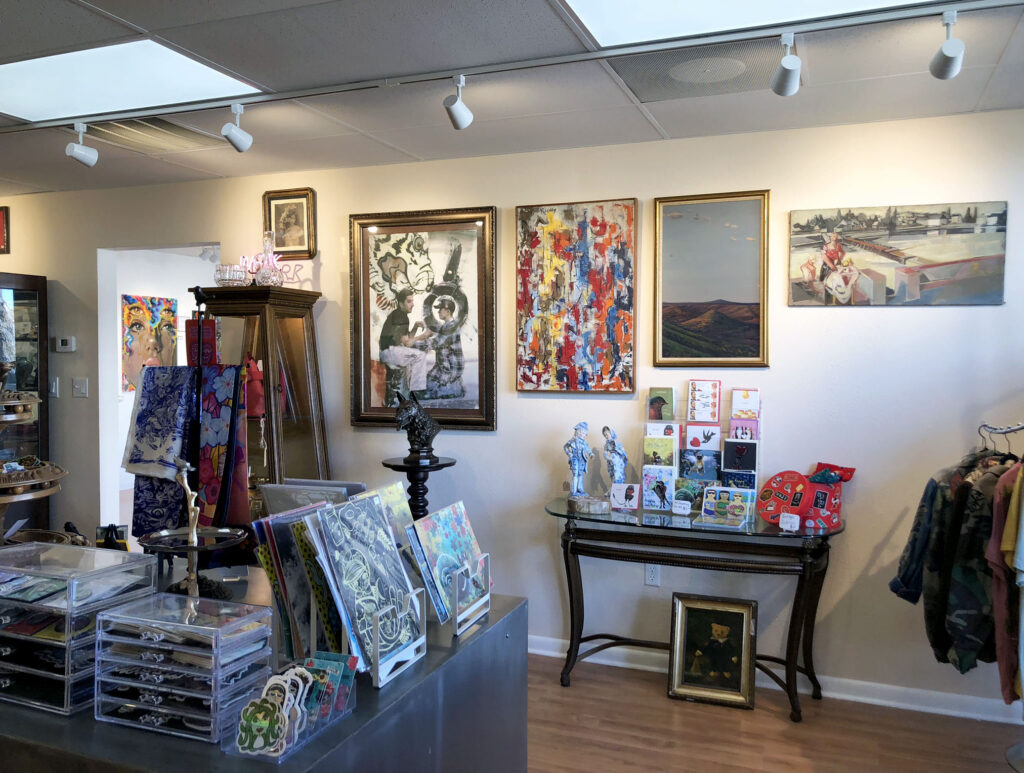
The Werk Gallery is an exciting new space in St. Pete that hosts monthly exhibitions in one half and the owners’ curated mix of vintage and modern items in the other. The photos above are from Shiny & New, the first gallery’s first show.

Artists from this exhibition pictured above- Adam Christopher Reed, Nikita Rosalind, and Eric “ESH” Hornsby

Currently the gallery is showing Rite of Spring, featuring artists Kenny Jensen, Nathan Beard, Samson Huang, Laura Spencer (Miss Crit), John Gascot, and Leafmore Studios (Becca McCoy and Justin Groom).

The gallery is open Thursday- Sunday from 12-5 pm.

Mar 162023
 

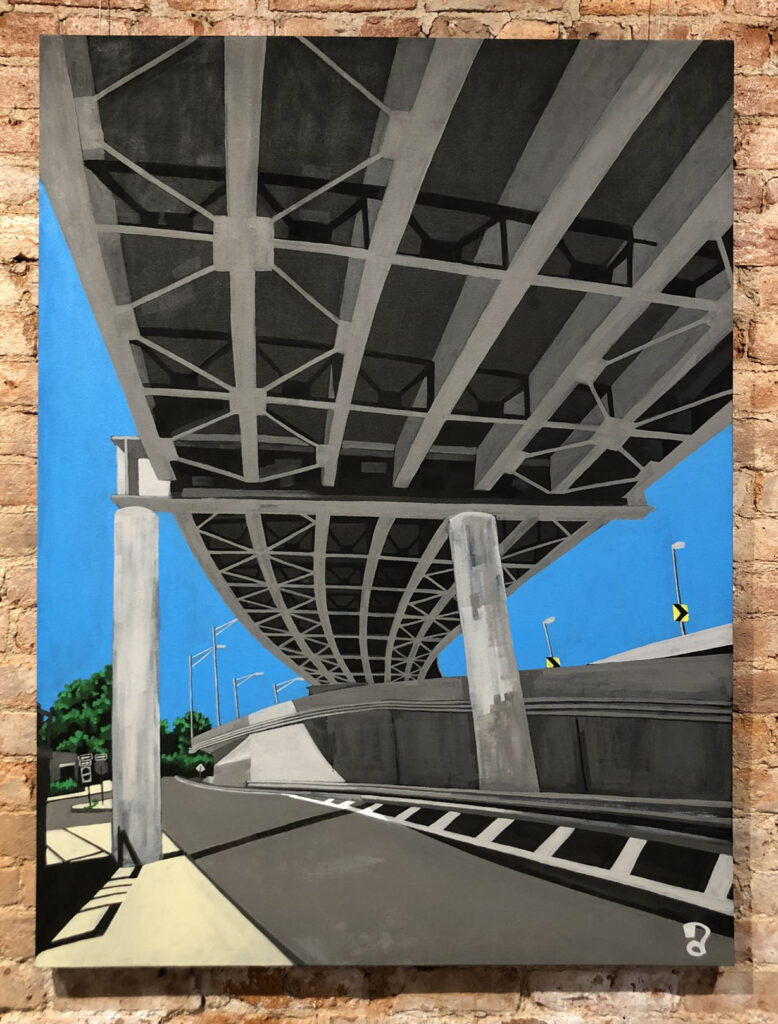
Adam Suerte, “Overpass, Redhook”

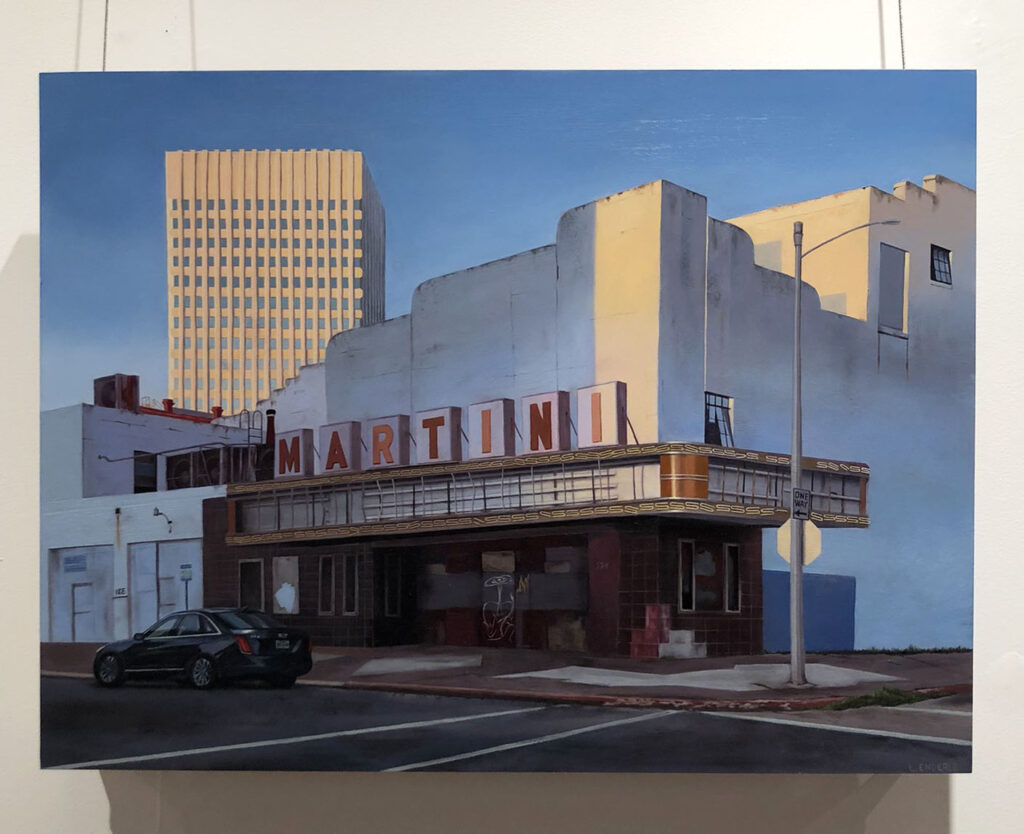
Laura Enderle, “Martini Theater”

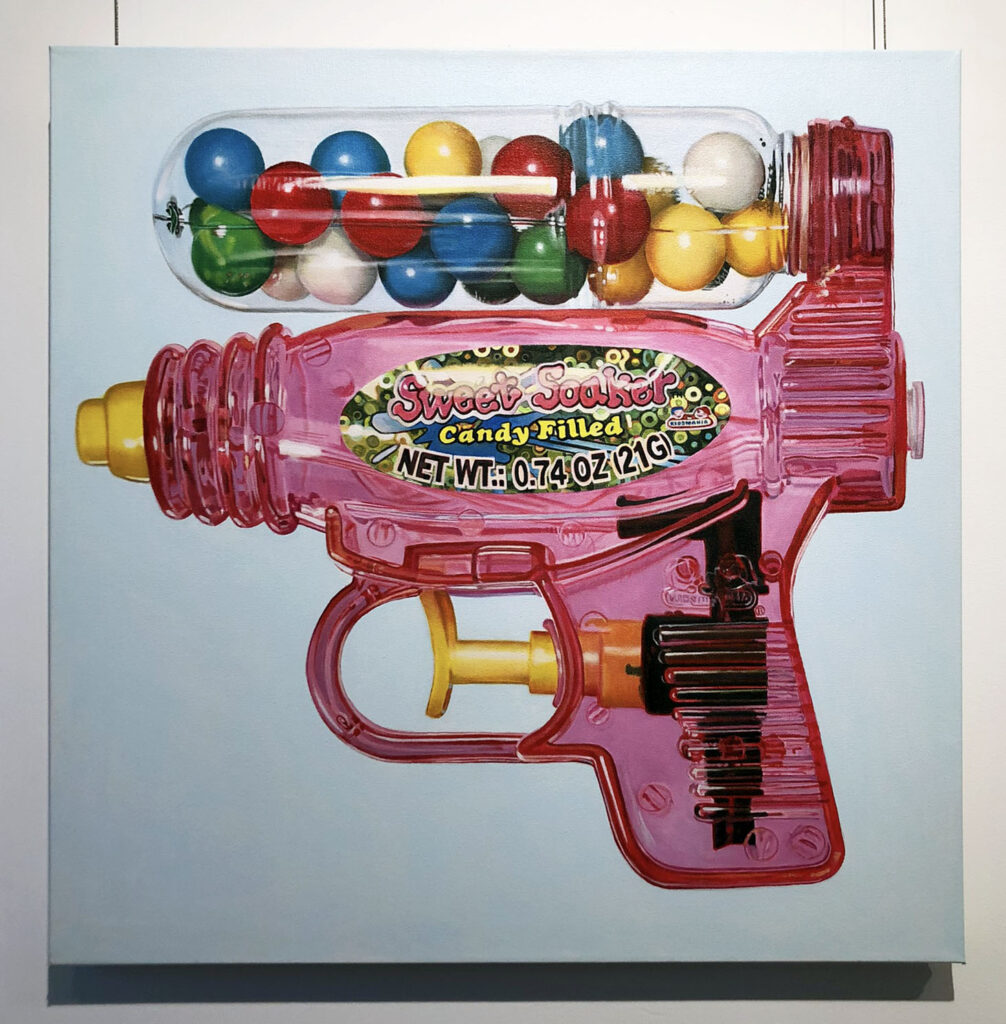
LJ Lindhurst, “Magenta Sweet Soaker”

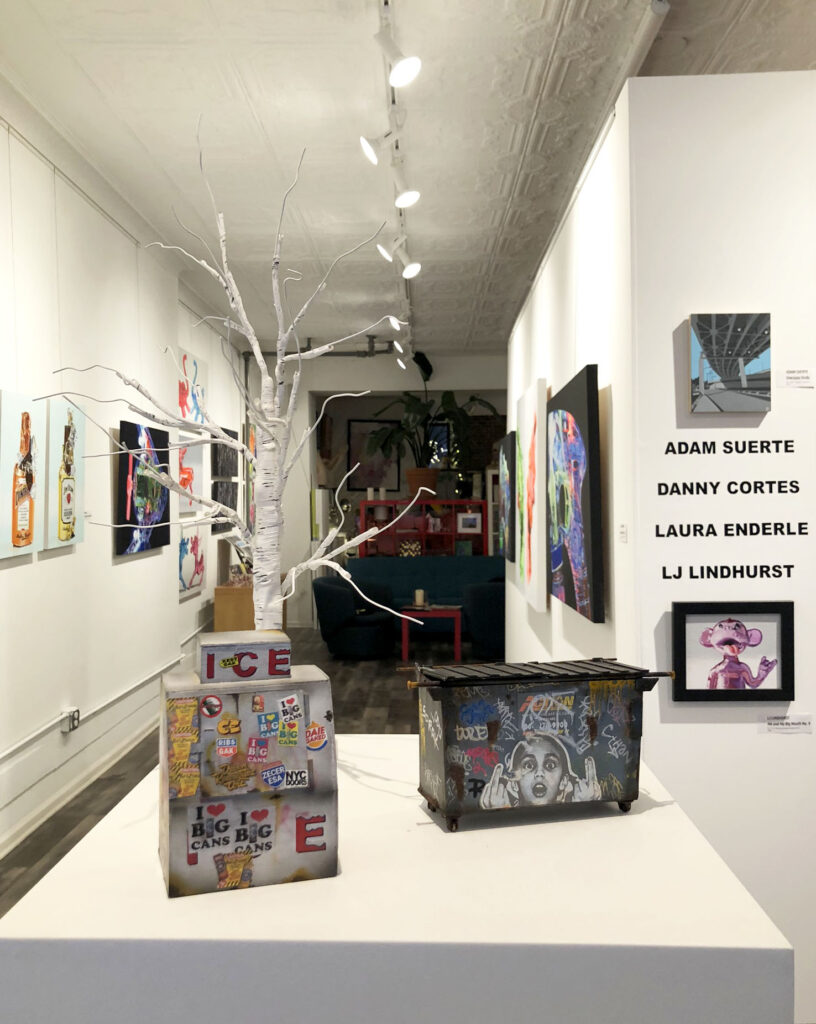
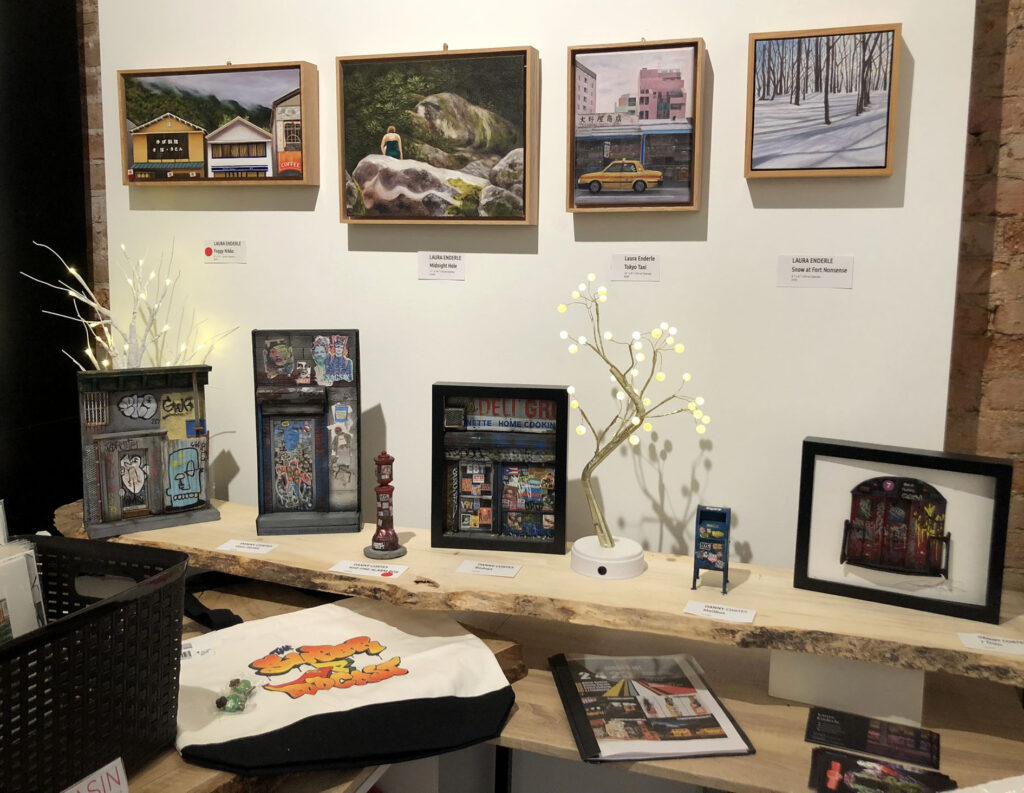
Tonight (3/16/23) at Basin Gallery in Redhook, Brooklyn, is the closing reception for the group exhibition of work by Adam Suerte, Danny Cortes, Laura Enderle, and LJ Lindhurst.


Mar 092023


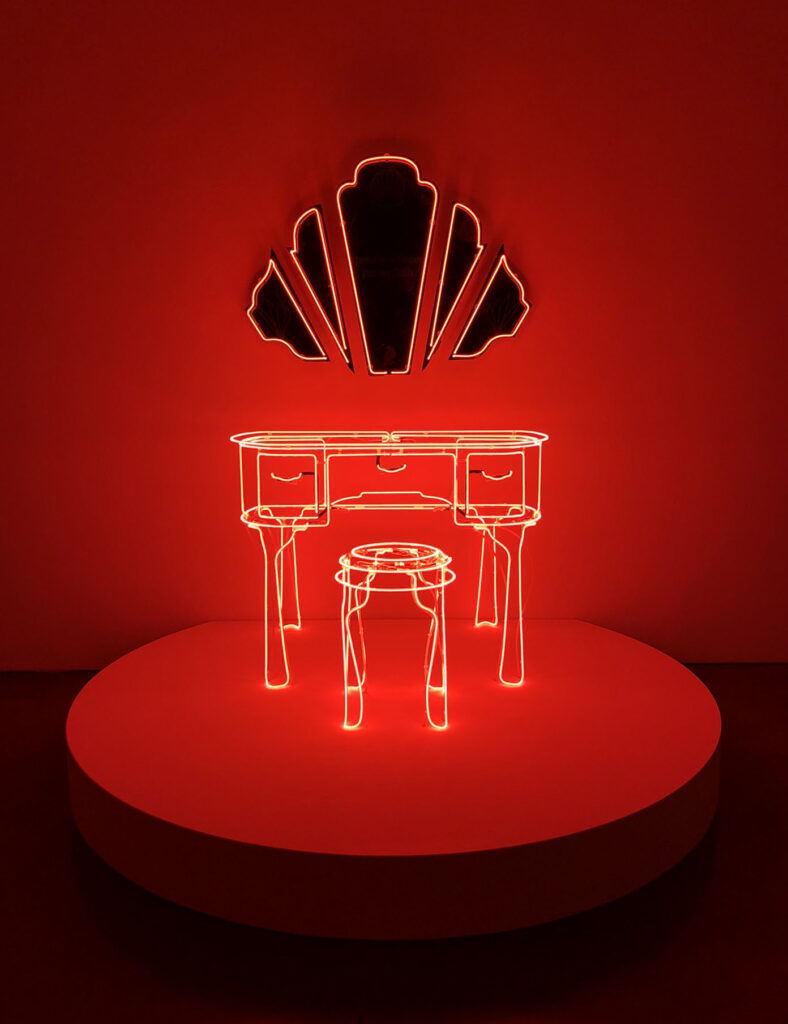
Ja’Tovia Gary “Citational Ethics (Zora Neale Hurston, 1943)”, 2023, wood, neon and engraved obsidian

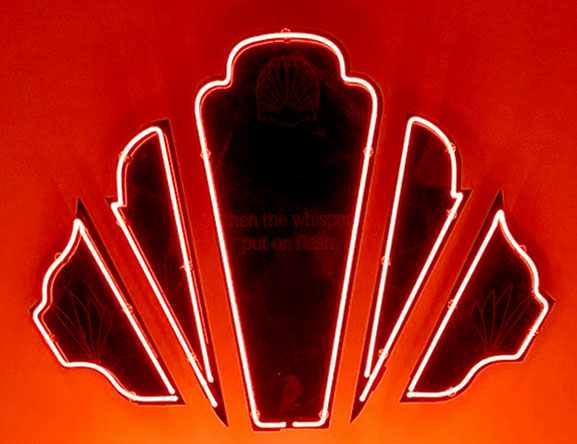
Ja’Tovia Gary “Citational Ethics (Zora Neale Hurston, 1943)”, 2023, wood, neon and engraved obsidian (detail)

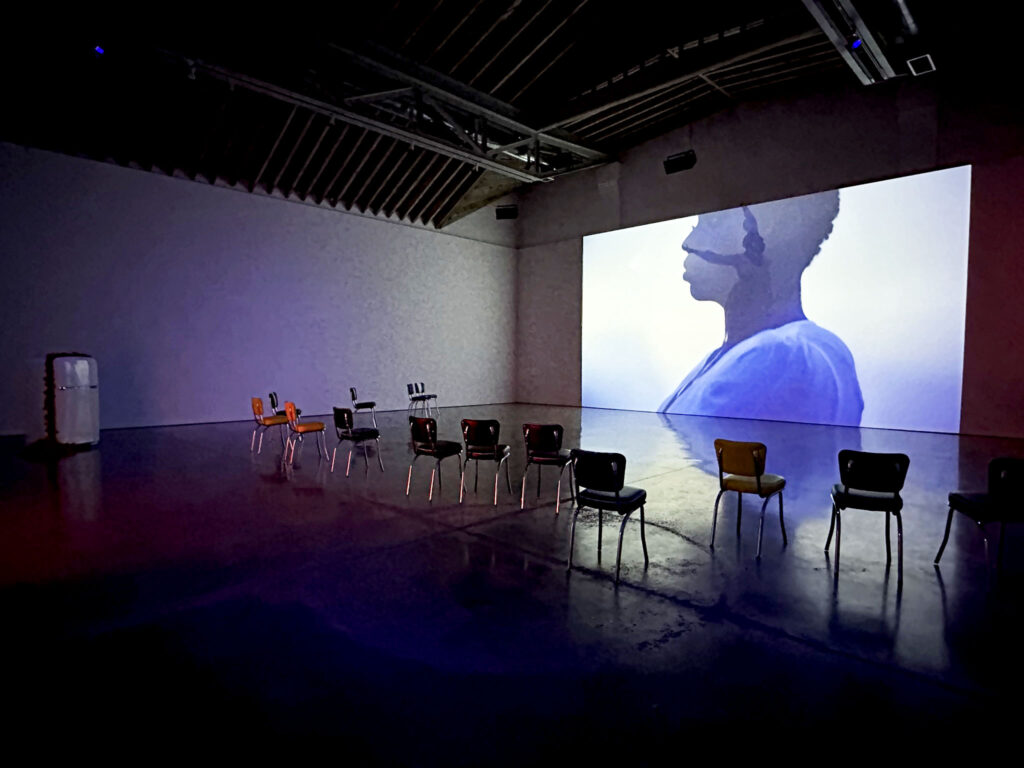
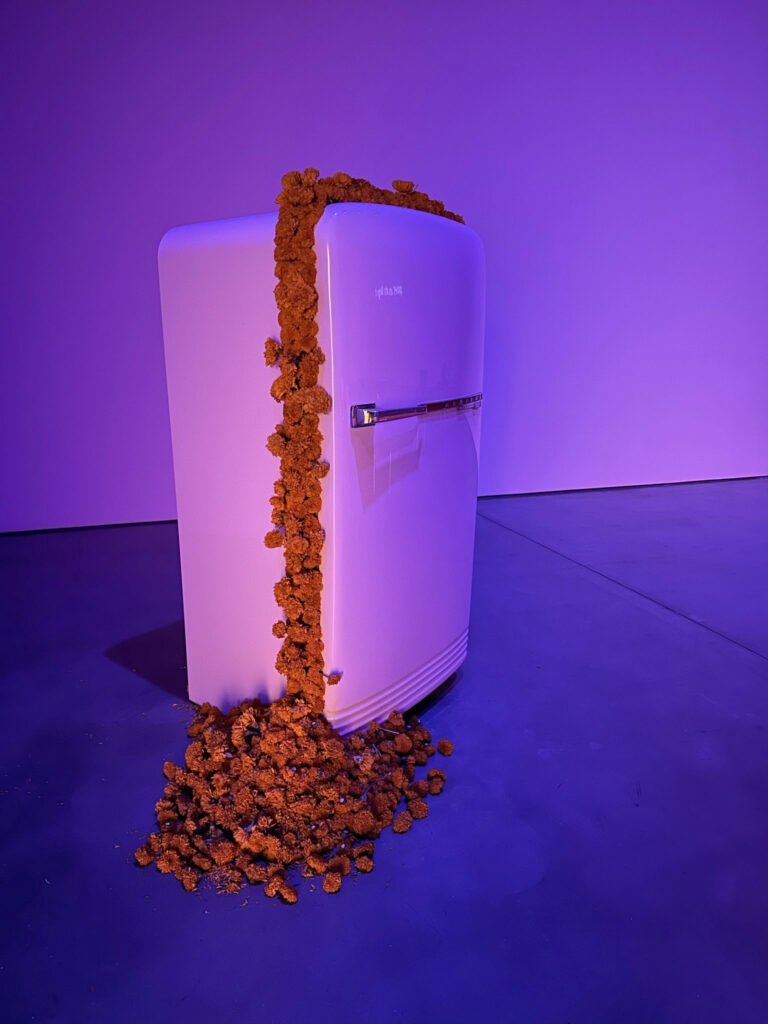
Currently at Paula Cooper Gallery in NYC is Ja’Tovia Gary’s You Smell Like Outside…, an exhibition that centers around her 2023 film, Quiet As It’s Kept, and includes two new sculptures.

From the press release-

The artist continues her practice of interrogating and re-contextualizing multiple archives, concerning herself with the power and responsibility of language and the radical possibilities of narrative. The exhibition title You Smell Like Outside… is a Black Southern phrase that foregrounds the artist’s specific cultural origins with discursive traditions that invoke an interior knowledge. Inspired by Toni Morrison’s 1993 Nobel Laureate lecture, Gary attempts to heighten the contradictions between a living and a dead language. Notions of domesticity, interior and exterior, and the conflict between perception and being perceived are explored in the show.

With a filmic and sculptural language uniquely her own, Gary eloquently intervenes into foundational renderings of Black life to expand the conversation and the possibilities of being. The artist considers what is destabilized when we include the cinematic within the category of language, asserting: “if we are to ensure the future efficacy of storytelling, we must boldly and audaciously insist upon new narrative forms.” Quiet As It’s Kept (2023) is a contemporary response to The Bluest Eye, Toni Morrison’s first novel published in 1970. Set in Ohio in 1941, the book is an evocative illustration of the everyday particulars of colorism and its ravaging effects on the intramural. Themes of embodiment, psychoanalysis, and beauty are explored in both the source text and the answering film. Instinctual and eviscerating, the film encourages viewers to make meaning that is rooted in the subjective and examine their position within looking relations.

Following Gary’s critically acclaimed films THE GIVERNY DOCUMENT (2019) and An Ecstatic Experience (2015), Quiet As It’s Kept (2023) is an intimate bricolage of vintage Hollywood, direct animation, original super 8 and 16mm film footage, and documentary conventions. Mediating on the gaze and Black women’s particular embodied realities, Gary also re-contextualizes contemporary social media footage. Creating conceptual links for each viral clip to a character, event, or thematic element from Morrison’s story, the film emphasizes questions around the book’s themes of internalized and externalized anti-blackness in contemporary culture. Situated within an immersive installation with domestic elements, the film asks the viewer to employ an oppositional gaze that allows for narrative structures that run counter to those of the mainstream.

High John de Conquer came to be a man, and a mighty man at that. But he was not a natural man in the beginning. First off, he was a whisper, a will to hope, a wish to find something worthy of laughter and song. Then the whisper put on flesh. [1]

The sculptures in Gary’s Citational Ethics series illuminate the words of Black women through the medium of neon, with the title of each work serving as a citation for the quote. Citational Ethics (Zora Neale Hurston, 1943) cites Zora Neale Hurston’s 1943 essay on High John de Conquer, a Southern folk trickster figure who brought joy, laughter, and strength to enslaved people while continuously evading capture. The sculpture is a vanity mirror set which gestures towards a speculative future past. Comprising a desk, stool, and fan-shaped obsidian mirror, the object invokes the Harlem Renaissance, Art Deco, and southern Black Hoodoo lore. A departure from the previous works in the series, the quote is etched into the highly polished black stone said to bring about visions through gazing, while the furniture is rendered in neon. Drawing the viewer in to read the words written in the mirror while bathed in red light, the sculpture summons an intimate encounter with the self and spirit.

[1] Zora Neale Hurston, “High John de Conquer,” in The American Mercury, October 1943, pp. 450-458

This exhibition closes 3/11/23

Mar 092023
 

Lilian Thomas Burwell, “Enfolded”, 1973

Lilian Thomas Burwell, “Untitled”, c. 1980

Lilian Thomas Burwell, “Montagne”, 2012

The work above is from Lilian Thomas Burwell’s exhibition Enfolded at Berry Campbell gallery in NYC.

From the press release

Living and working  in Highland Beach, Maryland, Burwell, age 95, was recently hailed as the “Tom Brady of Artists” in the New York Times. In 2022, Burwell received Howard University’s Lifetime Achievement Award along with Betye Saar.

Lilian Thomas Burwell: Enfolded highlights the dynamic transition in Burwell’s abstract visual language from two-dimensional painterly canvases to three-dimensional sculptural forms. Burwell’s paintings from the late 1970s and early 1980s employ a distinctly bold palette and reference the natural world, featuring organic forms that abstract biotic phenomena. In 1984, Burwell literally cut into a canvas, creating a shape beyond the square. This pivotal act gave way to Burwell’s examination of form, bringing forth Burwell’s signature style of three-dimensional, painted wall sculpture. Dr. David Driskell described Burwell’s work as, “transcendental in showing stylistic diversity of earthly beauty and cosmic vision.”

This exhibition closes 3/11/23.