Jun 052023
 

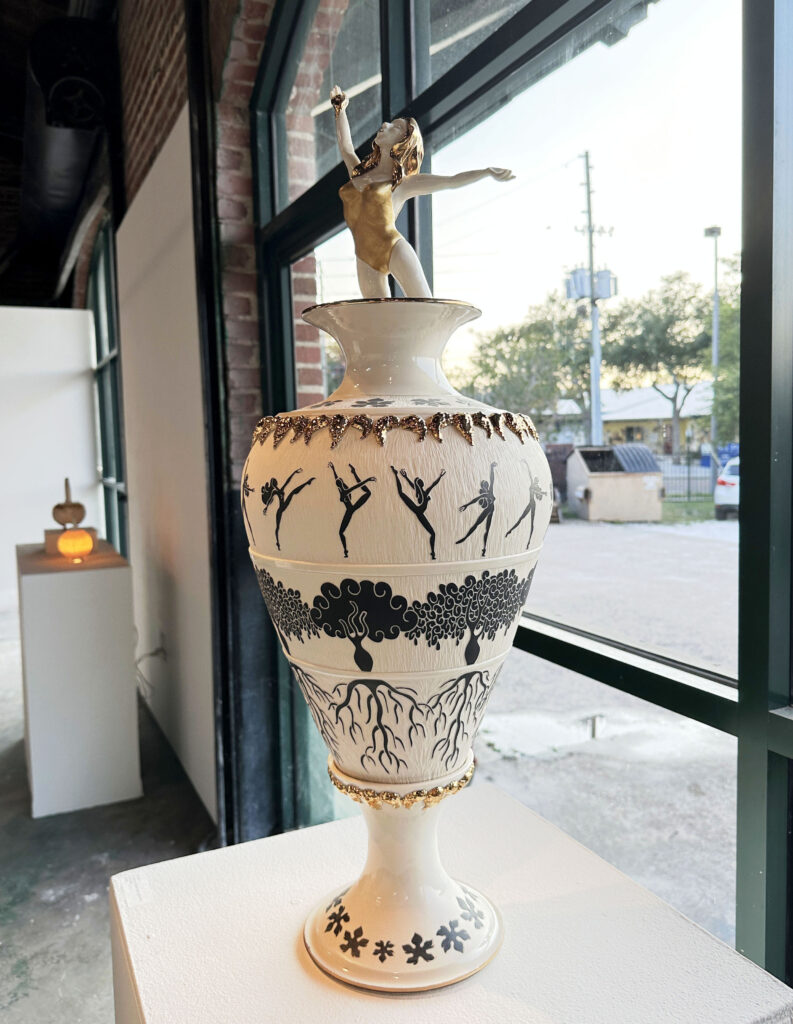
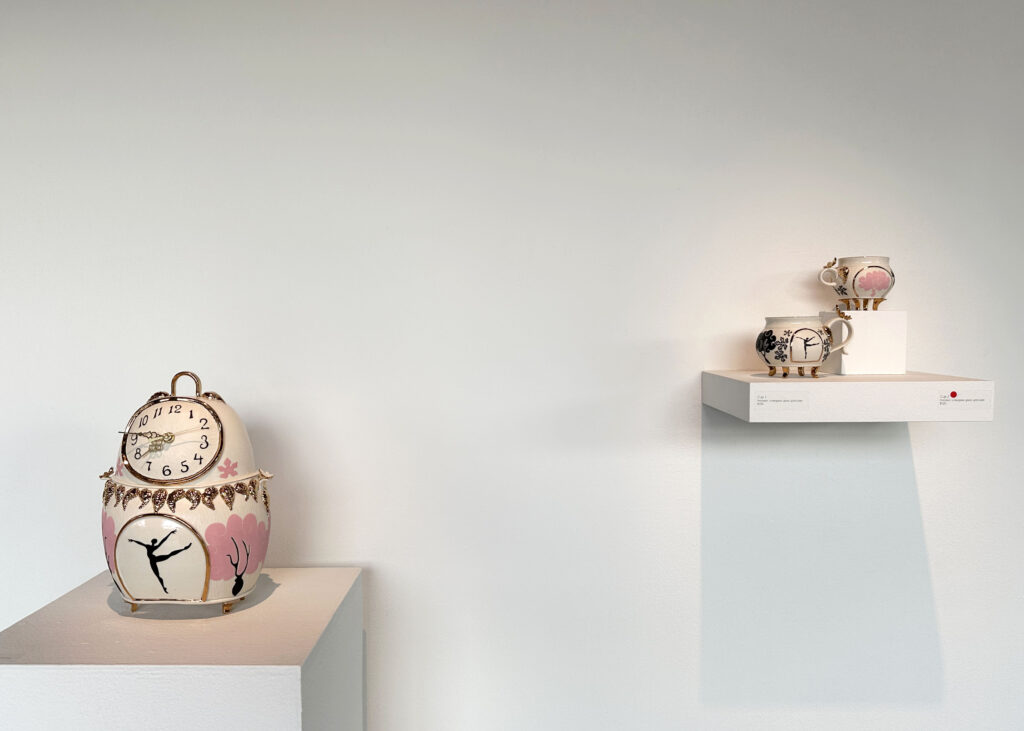
Currently at Jenny Carey’s Gratus Gallery in Ybor City are photographs by Johanna Keefe.

Keefe is a talented ceramicist as well as photographer. For this series she created the objects, photographed them, and than used a specific AI filter to obtain her final results.

This exhibition will be on view until 6/15/23.

May 272023
 

Jaime Aelavanthara, “Cicada Calling “and “Ribs”

As part of St. Pete Month of Photography (SPMOP), Morean Arts Center is showing Photo Laureate 2023: The Nominees.

For more on the five nominees, below are links to their websites and an example from their personal websites of their work.

Jaime Aelavanthara (see first image above)- website and Instagram

Selina Románwebsite and Instagram

Selina Román “Refusal to Unpack”, 2020, image from her website

Emily Willwebsite and Instagram

Emily Will- “Saint Petersburg, Russia”, image from her website

Tristan Wheelockwebsite and Instagram

Tristan Wheelock- “NASCAR Family”, 2014, image from his website

Thomas Sayers-Ellis became the winning finalist and will be the Photo Laureate this year. The 2023 Photo Laureate will create an historical document of events, people and places of Tampa Bay for the next twelve months. The results of this project will be shown next year in a solo exhibition.

Thomas Sayers-Ellis, “The Mirror in Uncle Tom’s Camera”, 2011 image from his Instagram

The best place to see his photography is on his Instagram.

The photo exhibition will be on view until 6/30/23.


May 242023
 

Rachel Ratcliff, “Roll of the Kaleidoscope”, 2021, acrylic on canvas

Richard Logan “Sea Oats”, 2022, photographic transfer on metal with etched glass

Steven Spathelf, “Orange Blossom”, 2022, acrylic on canvas

This past Friday the city of Dunedin, Florida, celebrated the opening of its new City Hall. As part of the celebration, the building and all of its offices were open to the public. It was the first opportunity to see all the wonderful art by Florida artists- selected and commissioned by Elizabeth Brincklow.

Pictured above are works by Rachel Ratcliff (wave painting) and Richard Logan (photography). The third work is by Steven Spathelf whose oranges can be seen adorning buildings and homes all around town.

Scroll through the pages below to see the other works on view.

May 162023
 

“Salon, Apartment of Valerian Rybar and Jean-Francois Daigre, Rue du Bac, Paris”, 2015, acrylic paint, acrylic caulk, acrylic transfer, GAC 800 on canvas mounted on wood

“Salon, Apartment of Valerian Rybar and Jean-Francois Daigre, Rue du Bac, Paris”, 2015, (detail)

“Salon, Rue du Bac, Paris”, 2022, acrylic and acrylic caulking on canvas mounted on board

“Salon, Rue du Bac, Paris”, 2022, (detail)

“Aquarium (Taboo)”, 2019

“Aquarium (Taboo)”, 2019

Currently at Arsenal Contemporary are Dorian FitzGerald’s paintings for his exhibition Fitzcarraldo. The images above are a few of the larger paintings from the show. The works initially look like photographs, but on closer inspection you can see more of the process involved in their creation.

Below is a section from the press release that discusses FitzGerald’s work and the paintings pictured above. For more on the other works shown, including some of the smaller paintings, head to gallery’s website.

FitzGerald has spent the last two decades meticulously crafting a compelling, often monumental body of works, several of which have taken years to finish. His various lines of inquiry revolve around a central tenet: that the excesses, the follies, the deceptions and indulgences, the grand edifices, the opulence, the waste and plunder, the vanities, the subterfuges and the chummy pacts of the wealthy and the powerful, are all fodder for scrutiny. His subjects have ranged from the outdoor stage at the secretive Bohemian Grove during a production of Faust, a fake crown of costume jewelry made by the British to impress the King of Adra and help them facilitate their slave trade, to the staggering array of sunglasses collected by Elton John, to a vast aquarium stocked with black market fish. In this regard, FitzGerald has been compared to a contemporary court painter, albeit one who fully understands the paradox of using ostensibly beautiful works of art to deliver barbed comment on the very subjects he has so painstakingly rendered. FitzGerald’s large paintings are constructed with acrylic paint (and occasionally caulking) in a slow, precise method that the artist has refined in his studio over several years. The pre-process involves researching imagery, preparing it with custom software, making a large-scale acetate transfer onto canvas and then building up the paint slowly in a manner that resembles a kind of pointillism filtered through vector graphics. Both colour theory and the physical properties of paint, such as drying times and viscosity, are brought to bear in the setting of the final image. The infinite patience and granular attention to detail suggest a kinship with Tibetan sand painting. While the latter, once finished, is soon wiped away to drive home the impermanence of all things, FitzGerald’s works tend to hold a mirror up to that innately human wish to be exalted and remembered in the minds of others before the scythe comes down, as it inevitably does for queen, shepherd (and artist) alike.

Anchoring the exhibition is a pair of monumental paintings, both depicting a room in a Parisian apartment. Salon, Apartment of Valerian Rybar and Jean-François Daigre, Rue du Bac, Paris (2015) is the furnished version. Daigre and Rybar’s New York- and Paris-based firm Valerian Rybar & Daigre Design Corporation was renowned for providing the most lavish interior design and decorating for society doyennes from Miami Beach to Marakkesh in the 1970s and 1980s. It was closed following Rybar’s death in 1992. Their clients included Guy and Marie-Helene de Rothschild, Nicholas and Genevieve DuPont, Antenor and Beatriz Patino, Samuel and Mitzi Newhouse, Pierre and Sao Schlumberger, Sir James Goldsmith, Christina Onassis and Stavros Niarchos. They employed a host of artisans all over the world who did anything from paint Medieval tapestries on blank walls to create mother-of-pearl panels for a bathroom. They designed much of the furniture and rugs and were meticulous about the choice of fabrics, using opulent materials like satins trimmed with gold thread. The related painting, four years in the making, acts as a kind of coda. Salon, Rue de Bac, Paris (2022), depicts the same room after Rybar’s death, now an empty hall of mirrors en route to being dismantled. The searing band of red in the centre of the painting, glowing behind a door already off its hinges, is a peek into the molten bedroom that they had once kitted out like a Roman general’s tent.

Aquarium (Taboo) (2018), at 128” long and 40” high, was two years in the making. The painting shows a vibrant aquatic scene, with dazzling exotic fish and a mesmerizing array of coral. But the fish are black market, the coral has been pilfered, the 240-gallon tank is overcrowded with 53 specimens and the entire enterprise is kept alive by a complex system that is wholly unnatural and requires constant vigilance to prevent collapse. Of course, wild fish bound for the aquarium market must be caught alive and thus there exists an unsavoury network of divers who prowl the world’s reefs to find the most exotic and rare, often using cyanide spray to stun them (or inadvertently kill them if too much is used). The cyanide, when it settles on coral, soon kills that too.

This exhibition closes on 5/20/23.

May 122023
 

Currently at Marc Straus is Marie Watt’s impressive exhibition, Singing Everything.

From the press release-

A member of the Seneca Nation, Watt also has German-Scott ancestry. Her layered and complex influences include Indigenous knowledge and Iroquois proto-feminism, the matriarchal structures of certain Native American nations, the rise of social activism throughout the 20th century, and the anti-war and anti-hate content of the 1960s and 1970s music scene.

Central to the exhibition are three Sewing Circle pieces that were initiated at communal gatherings at the Whitney Museum of American Art in 2022. Watt’s sewing circles are cross generational, multicultural gatherings that she has been organizing for over a decade. Inspired by poet laurate Joy Harjo’s (Mvskoke/Creek) poem Singing Everything, Watt collects words from the participants of her sewing circles with the prompt, “what do you want to sing a song for in this moment?” The submitted words are then embroidered or sewn onto patches of fabric during the sewing circle. For the Whitney Sewing Circle, with over 300 participants, Watt, for the first time, used all the submitted words. Each panel is patterned in a way that stays true to the original hand. She thinks of ones handwriting as an extension of the cadence of one’s voice and in this project, it becomes part of a larger chorus. By composing large-scale wall works from these pieces of fabric, Watt creates collaborative artworks that interweave many individual handwritings, touches, and the stories that were exchanged in a shared space.

When entering the gallery, the visitor is greeted by a sweeping, 24-foot-long neon sign spelling out the words “deer, skywalker, heron, bass, great lake, woodland, beaver, turtle, wolf, lowly, muskrat, rat” in various hues that evoke the sky on the horizon during sunset and sunrise. While the piece represents a new direction in Watt’s work, she views neon as an extension of beadwork. The glass itself is at once thread and bead, and both neon and beads have a relationship to trade. They both envelop light, color, and sound, embodying sunrises and sunsets on the horizon.

Two blanket towers, her signature sculptural works, appear in the show but now with tin bells or jingles added to the reclaimed wool blankets. This choice of added material felt like a natural extension to Watt. She writes: “Blankets are danced and so are jingles, there is something healing about them both. They are objects of comfort” – by way of touch or sound. Jingles acknowledge the Jingle Dress Dance which began as a healing ritual in the Ojibwe tribe in the 1910s during the influenza pandemic. The Jingle Dress Dance was also a radical act. In 1883, the United States banned Indigenous ceremonial gatherings. Though the ban was repealed in 1978 with the American Indian Religious Freedom Act, during its century-long prohibition the Jingle Dress Dance was shared with other tribal communities. Today it is a pow-wow dance and continues to be associated with healing. The relevance of this dance extends beyond pandemics.” By including jingles Watt brings the potential of sound into her work, adding to their visual and tactile aspects.

While drawing from long craft traditions such as textile or glass work, Watt is expanding her work by including contemporary stories and both individual and collective experiences. Her primary interest is to think about art as more experiential, rather than only visual, a direction she plans to explore further.

This exhibition closes 5/20/23.

May 112023
 

This mural was created by Lara Nguyen in 2016 for The Refinery in Asheville, North Carolina. The local artist and teacher’s design was chosen for the building by the Asheville Area Arts Council.

From a Mountain Xpress article about the work-

Bowerbirds and butterflies decorate the building’s facade. Nguyen considers the former “the artists of the bird world.” Each year, for up to six months, the male bowerbird will spend its days building arches made of straw. He will then gather brightly colored objects and place them outside the construction in order to attract mates.

“They perform,” says Nguyen. “They use the hole [of the arch] as a stage. … They’re also great mimickers and singers. I thought that was interesting. They’re like actors, performance artists, builders, makers, collectors, [and] in some way they’re painters. They pick certain colors and situate them.”

Nguyen saw the creature as a perfect symbol for The Refinery Creator Space. She lists off the various types of artists (painters, photographers, sculptors, filmmakers, fiber artists…), in addition to the art-based organizations (Asheville Darkroom, Asheville Makers, The Bright Angle, Local Cloth and Mechanical Eye Microcinema) that now call the space their home. She views her mural, with its bright colors and visual appeal, as a way to help facilitate traffic; a way to intrigue the public to step inside and support the arts.

More recently, Nguyen contributed work to the 2023 annual ArtFields event in Lake City, South Carolina. The two pieces are from her series “Letters to My Children”.

Her statement about these works-

“Strong Arms” & “Keep Going” are from a series entitled “Letters to My Children.” I was diagnosed with uterine leiomyosarcoma in July 2018 when my kids, Atticus and Moon, were 7 & 9 years old. In January 2020, my lung collapsed and I underwent a lobectomy. Now with a stage 4 cancer diagnosis I have found myself up at all hours worrying about dying before my kids are grown. When I couldn’t sleep, I wrote letters to them, recording their favorite recipes and my fondest memories of them for them. In 2021, I decided to share my writing with them instead of saving all this pondering in a box for later. Making and sharing this work has allowed us to cry and grieve together, which, in turn, has opened up space to truly be honest and present for one another while we are all still alive. With my children’s permission, I present slices of difficult conversations we have had to a wider audience in hopes of easing any load the viewer might be carrying on their own personal journey.

May 112023


Andrew Edlin Gallery is currently showing a collection of rarely seen works by artist Beverly Buchanan. It covers her years as an abstract expressionist painter in NYC and her later work inspired by the rural South.

The gallery’s press release gives a really good history of this wonderful artist-

The first section of the show features the artist’s abstract paintings and works on paper from the 1970s, alongside post-minimalist sculpture from the late 1970s and early 1980s. The second section introduces a later, more personal side of Buchanan’s oeuvre, her colorful depictions of flowers and small folk-inspired assemblages created during the same period as her well-known “shacks.” A number of the works in the show, many of which were part of the artist’s private collection, have never been shown.

Though Buchanan wrote about her love of “making things” from an early age, it wasn’t until 1971, when she began taking evening classes taught by African-American painter Norman Lewis (1909-1979) at the Art Students League in New York, that her career as an artist took off. Abstract still-lifes that she made in Lewis’s class in 1972 are displayed here for the first time. That same year, her paintings were included in a group show at Cinque Gallery, a nonprofit space co-founded by Lewis and Romare Bearden (1911-1988), which showcased the art of emerging minority artists.

Having witnessed demolition sites in Harlem and SoHo, Buchanan evoked the visual erosion of architectural facades through what she dubbed her “Wall” paintings. In 1976 she presented a selection that she called “Torn Walls” in a two-person show titled City Walls at the Montclair Art Museum in New Jersey. In his New York Times review, David Shirey described the show as “indisputably a tinderbox of a display that will cause sparks to fly” and “the kind …one sees more regularly at the Whitney Museum and at some of New York’s avantgarde galleries.” Three of these paintings are being shown for the first time since that exhibition, forty-seven years ago. The show also includes a monotype, small studies, and a large painting from a series she titled “Black Walls.” The latter was originally featured in Shackworks, a seminal exhibition that opened at the Montclair Art Museum in 1994 and traveled to nine other institutions from 1994-1996.

By the late 1970s, Buchanan was further exploring the aesthetics of architectural decay through sculpture, i.e., cast concrete assemblages, made from pieces of stone, brick debris, clay, and cement mixtures. She arranged these works in clusters on the floor, documenting them with photographs, and exhibited them, notably at Truman Gallery in New York in 1978, and at the feminist artist cooperative A.I.R. Gallery in 1980 in its groundbreaking show Dialectics of Isolation, curated by Ana Mendieta. Some of the small black terracotta works on display may be considered as studies for these larger assemblages.

After moving to Georgia in 1977, Buchanan became increasingly interested in making what she referred to as “environmental sculpture,” artworks that mimicked exterior surfaces and were also site-specific installations that were allowed to decay over time and become part of the surroundings. Most notably, in 1979 she completed Ruins and Rituals (also the title of the Brooklyn Museum retrospective from 2016-2017), and in 1980 Marsh Ruins, with funding from a Guggenheim Fellowship. To construct the three mounds that comprise Marsh Ruins, Buchanan produced her own tabby cement. Composed of the lime from burned oyster shells mixed with sand, water, ash, and other shells, tabby is what colonial settlers used to build structures in coastal Georgia, the location of Marsh Ruins. In her zine “Making Tabby for Brick Sculptures,” Buchanan documented the labor-intensive process of making tabby, a task that in the eighteenth century was typically delegated to enslaved workers. Two smaller iterations of these structures, with bits of oyster shell showing in the concrete, are laid out in the show alongside four other examples of her cast concrete assemblages. Though little is known about their exhibition history, we do know that the artist placed these cast concrete works in her garden in Athens, Georgia. They retain stripes of the green, blue, black and earth-toned paint with which Buchanan initially covered them. The faint outline of her signature “B.B.” is also visible.

Buchanan’s later work is intimately linked to her natural surroundings and folk art. As a native Southerner, she drew on memories from her childhood as well as the lush Georgian landscape and yard art of local self-taught artists. A passionate gardener, Buchanan produced vivid oil pastel flower drawings and small assemblage works. She loved to rummage through thrift stores collecting marbles, wedding toppers, and beads, to create what she referred to as her “Christmas trees,” and “spirit jars,” her take on memory jugs, a prized Southern Folk Art form. Buchanan was particularly moved by a visit to folk artist Nellie Mae Rowe’s home in Fayette County, Georgia, and reminisced: “Being at Nellie Mae Rowe’s home was like being engulfed in a magic forest of her work because every surface had a mark from her hand and the simple chewing gum works made you never take gum as just chewing gum again.” A distinctive chewing gum jug and pin are also included in the show.

This exhibition closes 5/13/23.

May 092023
 

“Curtains”, 1972, Acrylic and fabric on canvas

“Curtains”, 1972 (detail)

“Voyage”, 1973, Acrylic and collage on canvas

“Shrine: Homage to M.L.”, 1963, Oil on canvas

“Big Ox”, 1967, acrylic on canvas

There’s only a few days left to see Miriam Schapiro: The André Emmerich Years, Paintings from 1957–76 at Eric Firestone Gallery.

From the press release-

Miriam Schapiro (1923–2015) is now well-known as a pioneer of the Women’s Art Movement, and for her contribution to the Pattern and Decoration Movement. She fused craft work, traditionally made by women, with modern painting in collages termed “femmage.” However, this exhibition will additionally shed light on her early Abstract Expressionist canvases, and her pioneering approach utilizing computer technology to create Hard Edge geometric painting in the 1960s. Spotlighting the legacy of this feminist artist, the exhibition will explore three stylistic phases, with significant examples from these two decades of Schapiro’s career.

This exhibition closes 5/13/23.

May 052023
 

“Méduse de bal” gown

Even if fashion isn’t something you normally find interesting, it’s hard to resist the allure of the creations on view at the Brooklyn Museum for the retrospective Thierry Mugler: Couturissime.

From the museum’s web page-

Thierry Mugler: Couturissime is the first retrospective to explore the fascinating, edgy universe of French designer and creator of iconic perfumes Thierry Mugler. A fashion visionary, Mugler established himself as one of the most daring and innovative designers of the late twentieth century. His bold silhouettes and unorthodox techniques and materials—including glass, Plexiglas, vinyl, latex, and chrome—made their mark on fashion history.

In the 1970s, Mugler defined trends with his acclaimed “glamazon,” a chic, modern woman whose style evolved from the hippie fashions of the 1960s. In the 1980s and ’90s, Mugler galvanized the renaissance of haute couture through his provocative collections and theatrical fashion shows, which involved grandiose locations and the era’s most iconic models. Just as his work is still influencing new generations of couturiers, celebrities continue to be drawn to Mugler’s designs: his classic gowns have recently been worn by Beyoncé, Cardi B, and Kim Kardashian.

The exhibition features over one hundred outfits ranging from haute couture pieces to stage costumes, alongside custom accessories, sketches, videos, images by leading fashion photographers, and spectacular installations that mirror Mugler’s futuristic approach. The Brooklyn Museum’s presentation also introduces an expanded section dedicated to fragrance, centered on Mugler’s trailblazing scent Angel. Thierry Mugler: Couturissime is an opportunity to discover and rediscover the fantastical work of this multidisciplinary artist, who revolutionized the world of fashion.


A description of the above gown from the museum’s info plaque-

The “La Chimère” gown-Mugler’s masterpiece made in collaboration with the South African corset maker Mr. Pearl and the artist Jean-Jacques Urcun- has mythical status, considered by some as one of the most expensive creations in couture history, given the meticulous amount of work required in its making.

Mr. Pearl describes that collaboration with Mugler as the most extreme experience of his life: “[‘La Chimère gown] was probably the most intense project, it took six weeks working 24/7, so basically more than one thousand hours just in embroidery. We were about twenty people working on different parts of it along with Jean-Jacques Urcun. It’s about fantasy, it was like going to the University of Beauty. To fulfill his vision and his fantasies with clothes is already a challenge, he is a genius, a perfectionist. You have to try, and he pushes everyone to try what seems impossible to achieve with a needle.”

Also included in the exhibition are several incredible (and often safety-defying) photos Mugler took himself at various landmarks, including the one below at NYC’s Chrysler Building.

“Chrysler Building, New York”, 1989 -Claude Heidemeyer in “Vertigo” by Mugler, 1988

This exhibition closes 5/7/23.