Apr 202023
 

“Last Words”, 2022

“Butterfly”, 2022

“Peony”, 2022

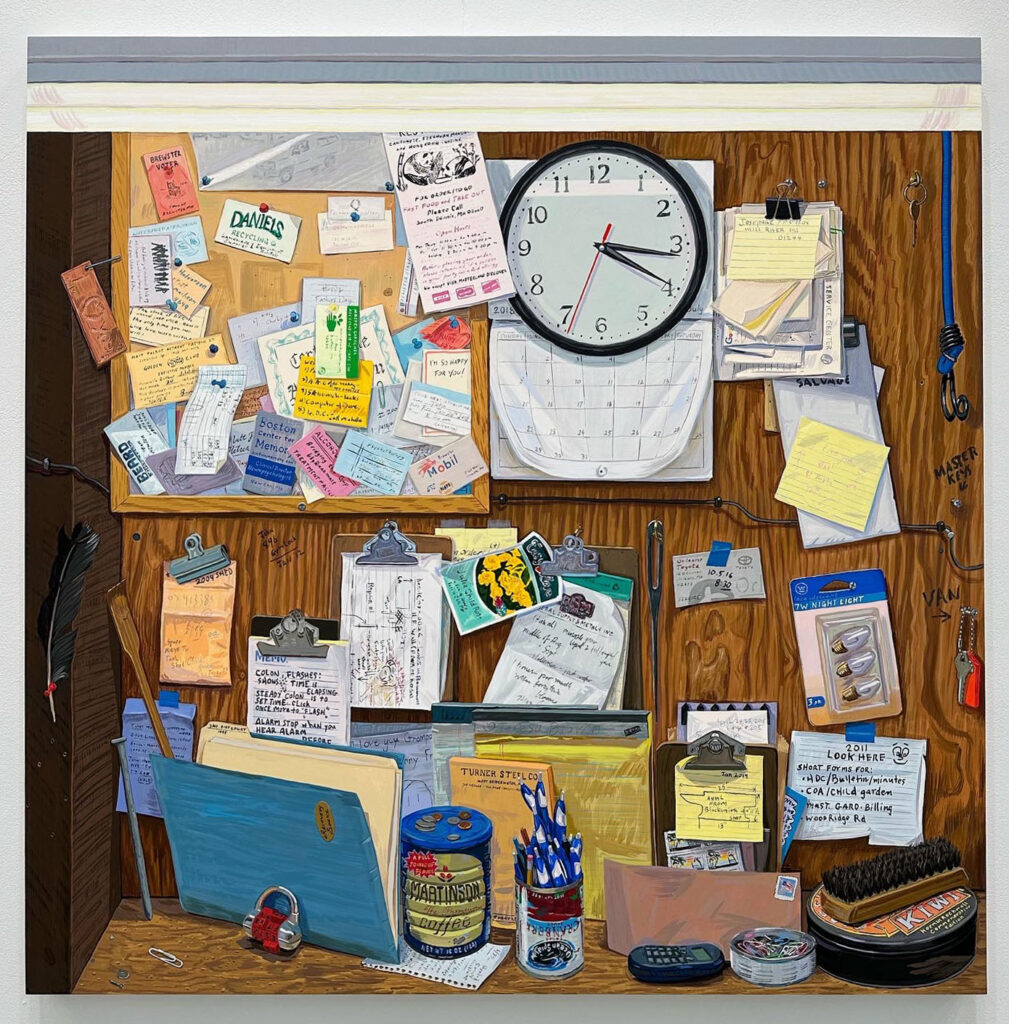
“Station Meter”, 2023


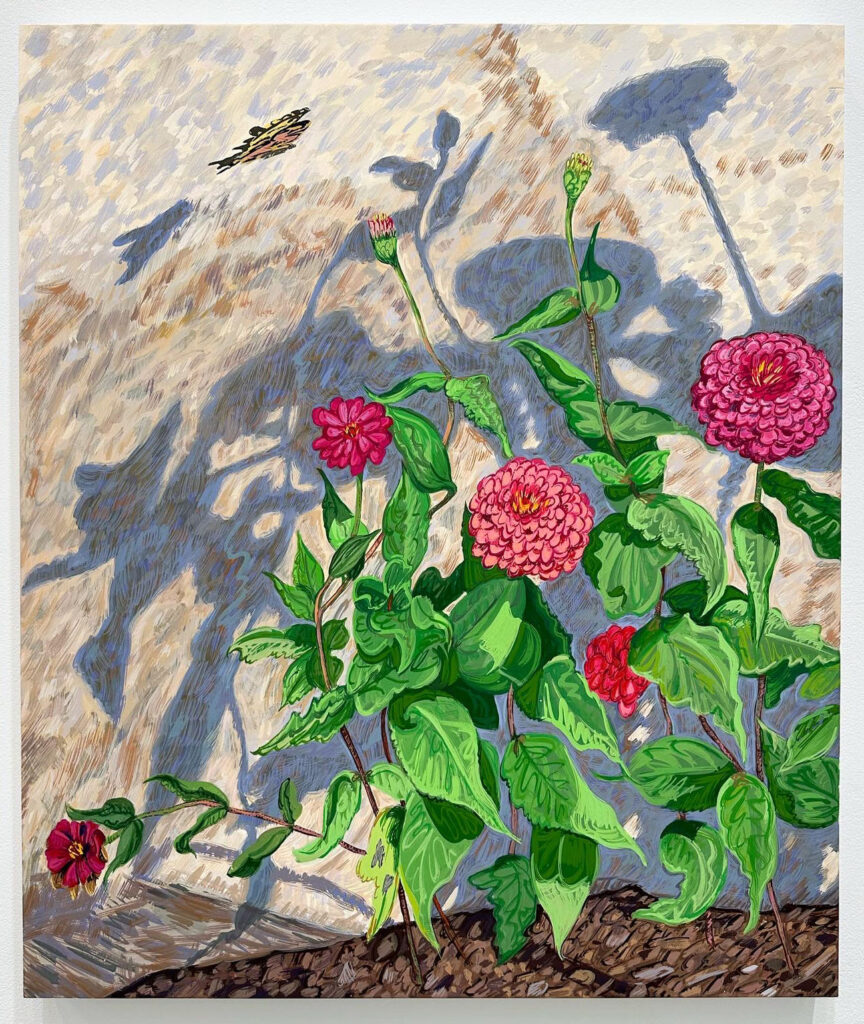
“Peony”, 2022 (detail)

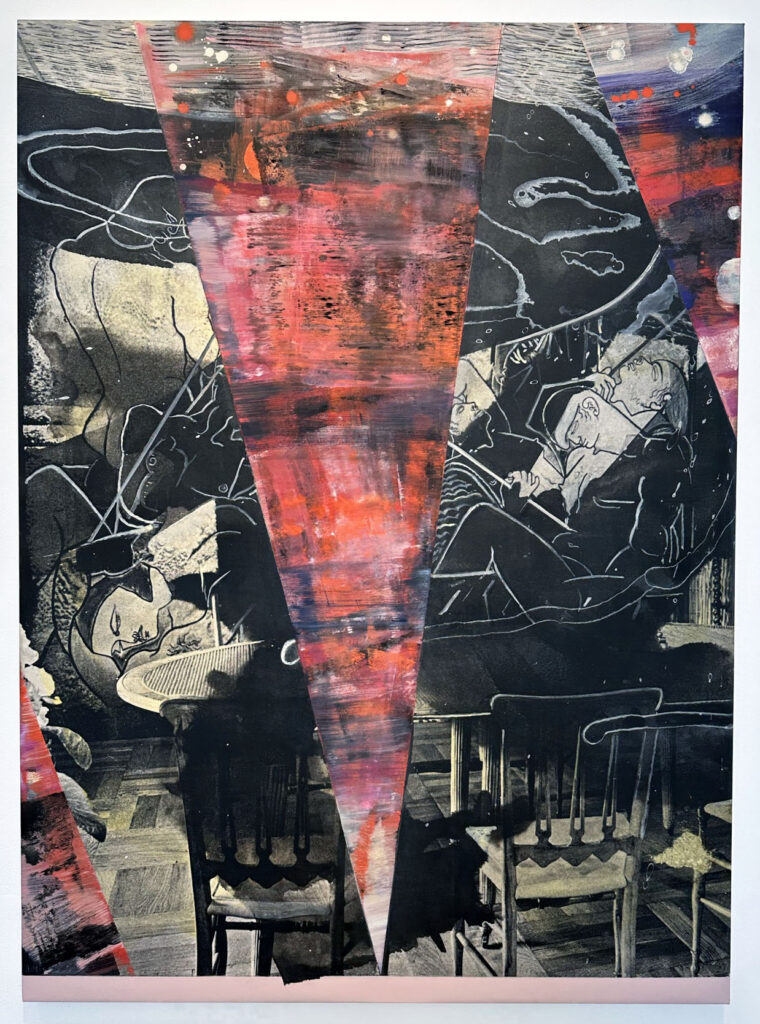
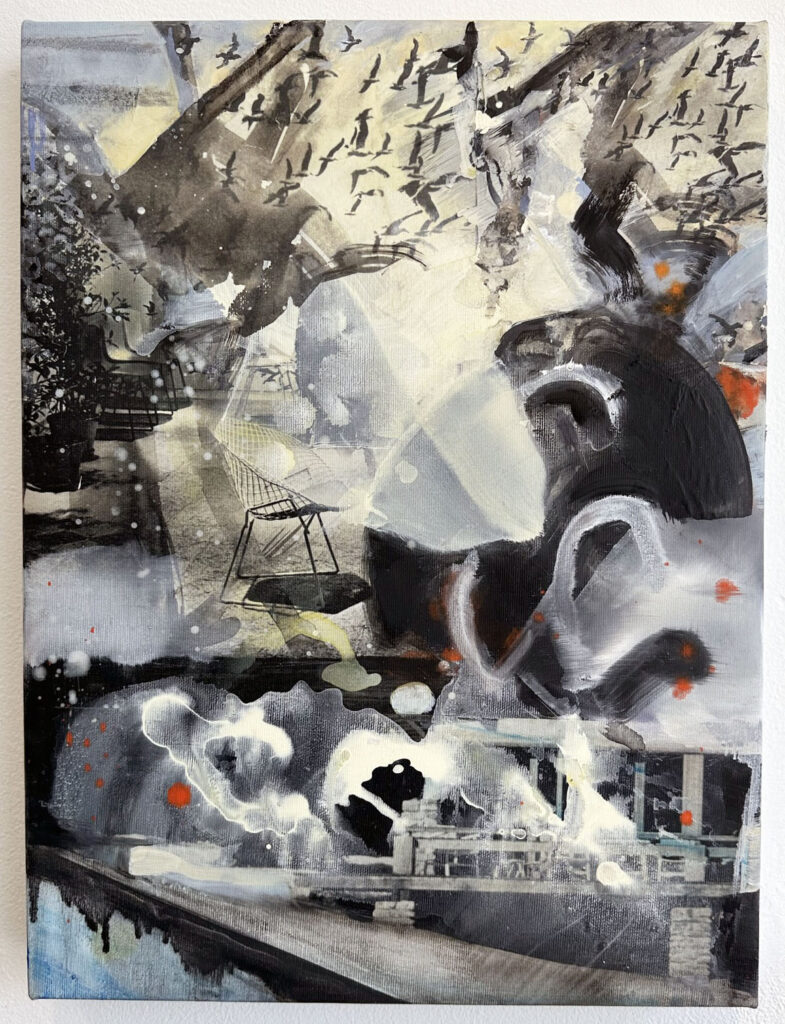
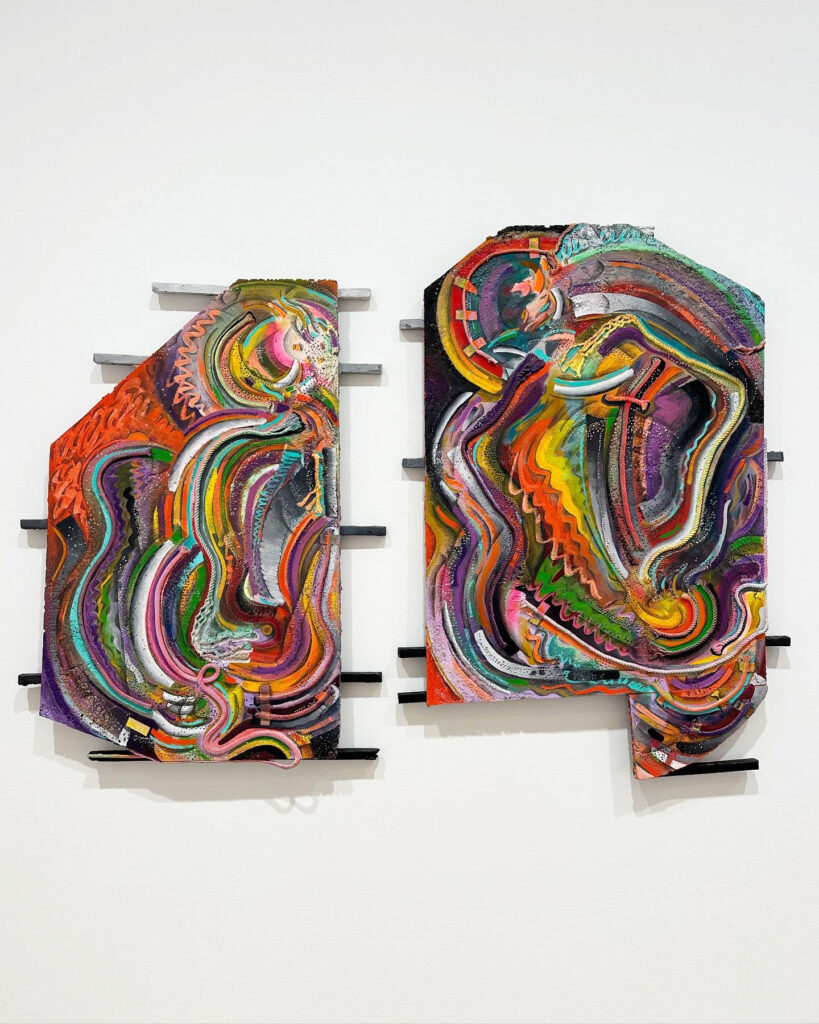
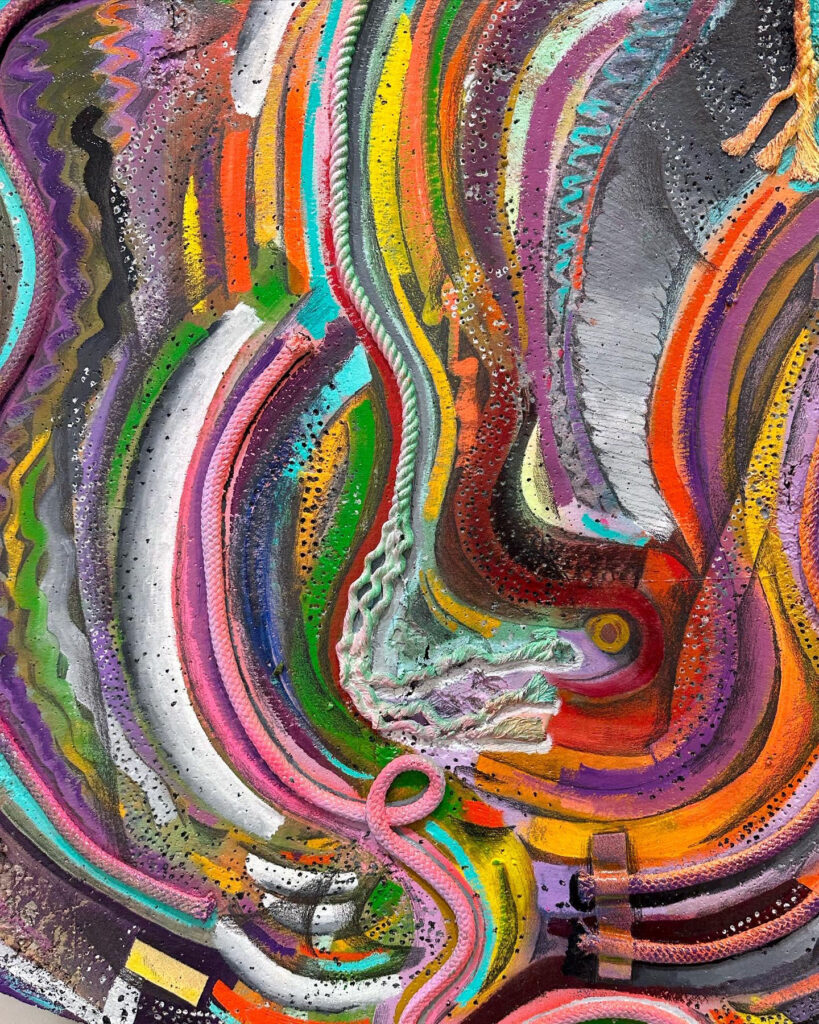
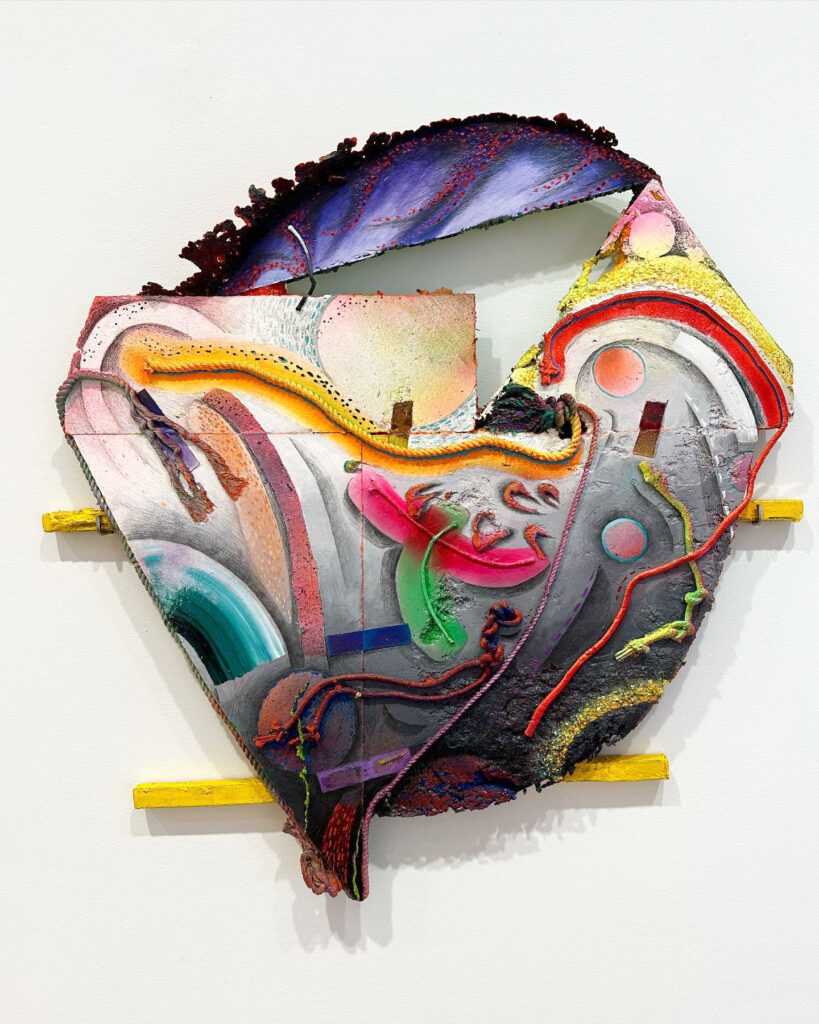
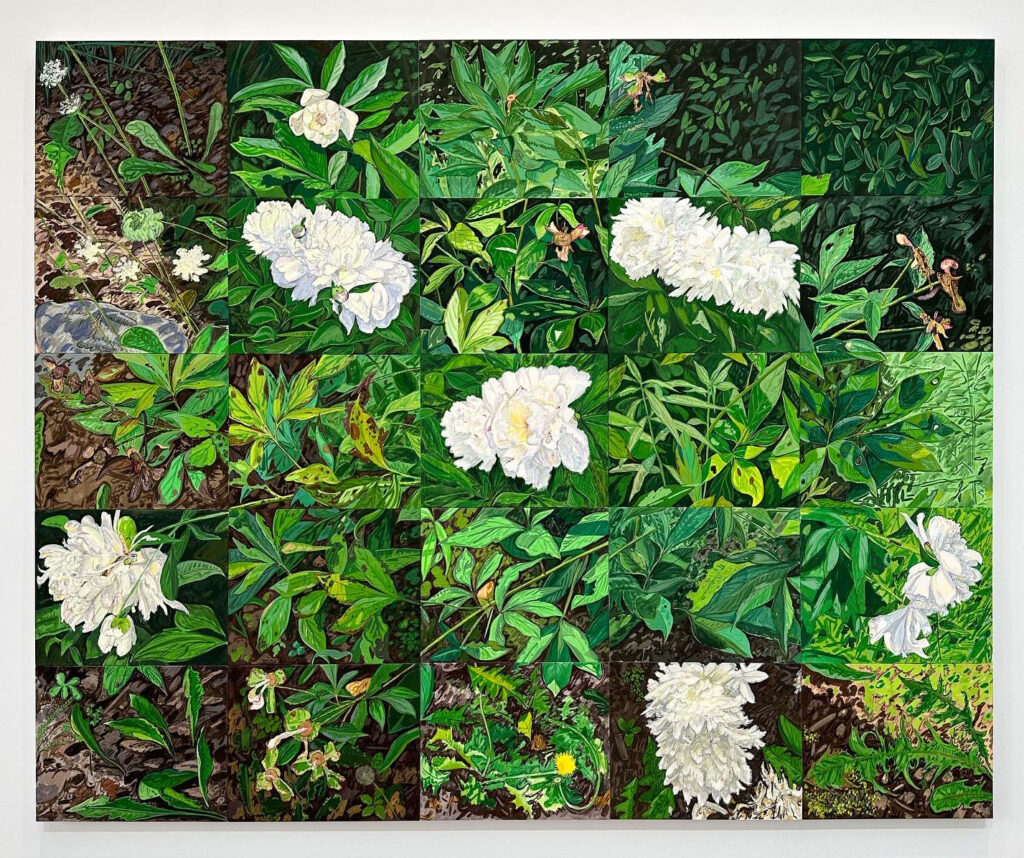
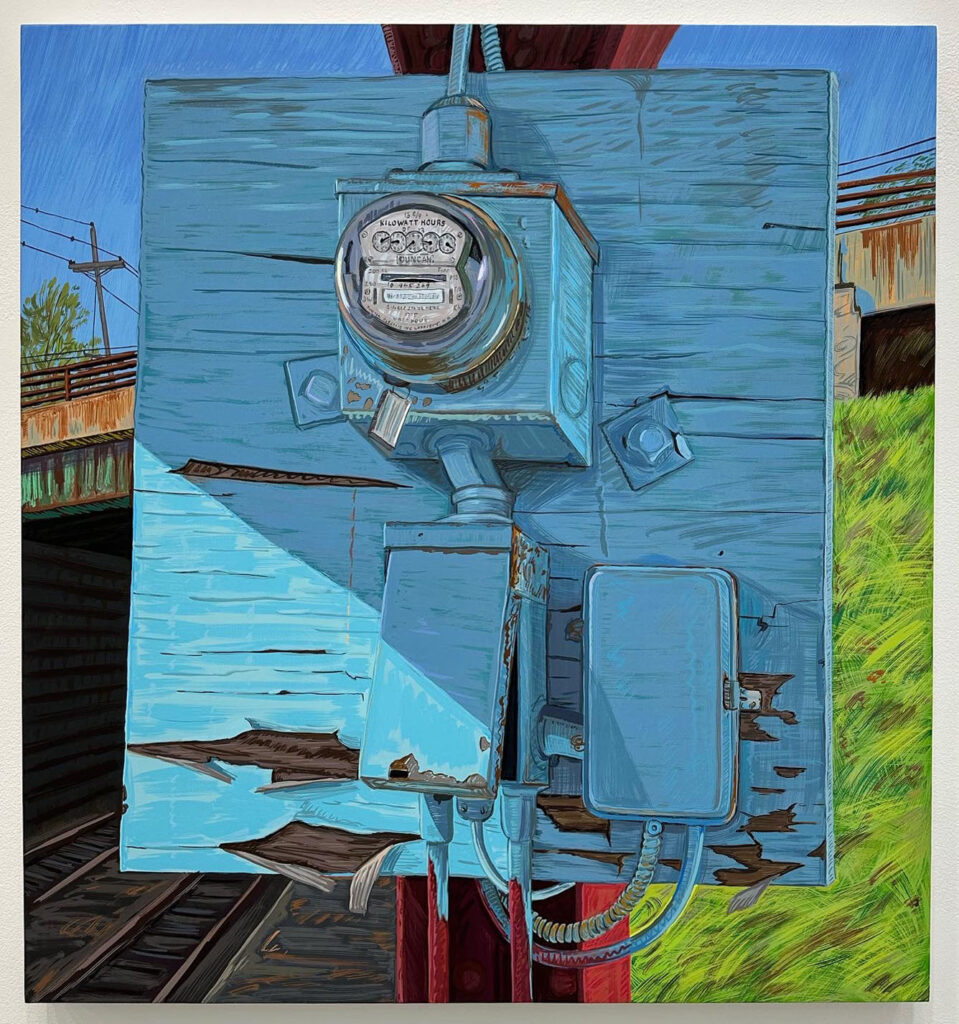
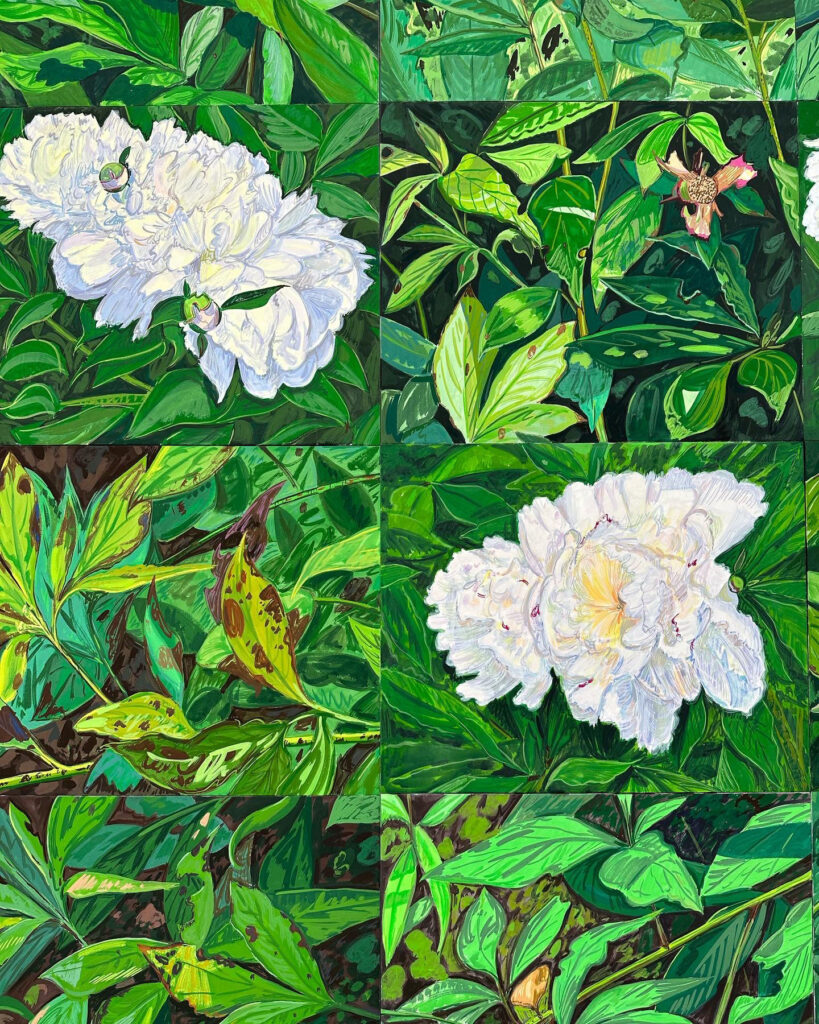
Josephine Halvorson’s paintings for Unforgotten at Sikkema Jenkins, contain an amazing amount of detail and encourage the viewer to take in the little details of things they might ordinarily not pay much mind to.

From the press release-

Josephine Halvorson’s paintings emerge from chance or repeated encounters with objects the artist comes across while wandering and traveling. Her practice often takes place outdoors, naturally relating to daylight, geography, and season. The works in this show center on still life and memento mori, artistic genres that, for Halvorson, “hover between liveliness and decay.” She is drawn to things which have little apparent value—objects and spaces that have been, or may be, forgotten. Sharing the same air and hours with a subject, Halvorson finds within them latent expressions and buried meanings.

Since 2018, Halvorson has been painting with acrylic gouache on absorbent grounds. Inspired by fresco painting’s ability to indelibly hold color and mark, the artist has sought to make a sensitive surface that preserves her observations in real time. Painting in longhand, Halvorson works in a verité style, documenting the subtle shifts of shadow and thought. As she says, “I want to make a painting that remembers better than I can.”

This exhibition closes 4/22/23.


Apr 202023
 

Closing on 4/22/23 is Amoako Boafo’s exhibition, what could possibly go wrong, if we tell it like it is, at Gagosian gallery’s Madison Avenue location.

From the press release-

When I’m making paintings, I want the characters to be strong, I want them to be free, I want them to be independent, I want them to be unapologetic.
—Amoako Boafo

Boafo’s large-scale portraits portray his friends and those he admires with candor, joy, and individuality. Focused on Black identity, his monumental paintings have already become key works in the representation of contemporary Africa and the African diaspora.

Boafo paints the faces and bodies of his subjects with his fingertips rather than a brush, the directness of his touch enhancing their expressive qualities. The works’ surfaces feature a gestural facture which the artist uses to model the figures’ anatomy. Making eye contact, Boafo’s subjects return the gaze of the viewer in an assertion of presence and identity, reflecting the artist’s interest in conveying charisma and individuality. The characters occupy domestic interiors, their casual grace reinforced by the familiarity of these settings.


Apr 192023
 

“…from dawn to dusk, (January)”, 2022

“…from dawn to dusk, (May)”, 2022

“…from dawn to dusk, (December)”, 2022

“white blind (bright red) (02.13)”, 2002

“white blind/bright red (02.6)”, 2002

“Untitled (98.5)”, 1998

From “nowhere near” Untitled (NW 18), 1999

“… and to draw a bright white line with light (Untitled 11.10)”, 2011

Uta Barth’s two part exhibition at Tanya Bonakdar Gallery is a fascinating look at the artist’s work.  It includes the New York debut of her most recent piece, …from dawn to dusk, a nearly 360-degree installation of images commissioned by the J. Paul Getty Trust.

From the press release-

Barth’s expansive 2022 series … from dawn to dusk focuses on the intersection of Southern California light with the architecture of the Getty Center. It traces the changing light at one location of the Richard Meier built campus, for the period of one year. The location was photographed every five minutes, from dawn to dusk, on two days each month, for the entirety of the year. Made with a GigaPan, over 64,000 images were captured and a Timelapse video sequence now shows the progression of this movement of light. As the view repeats from panel to panel, there are subtle changes in light as well as more dramatic blurring and color shifts, which invoke inverted optical afterimages and other visual phenomena that occur when staring at a fixed point for a prolonged period of time. Presented as twelve consecutive single views, the video is embedded among the still images of the installation, and it comes as a surprise to discover what one first assumes to be a still photograph to actually be the moving summation of the show.

In the upstairs galleries, Elizabeth Smith’s selection of work reveals the foundations of the artist’s renowned and influential practice, as well as the trajectory that led to the explorations found in …from dawn to dusk. Elizabeth Smith shared her thoughts on Barth’s practice as she approached this exhibition:

It’s been almost thirty years since I worked with Uta Barth to present her first solo museum show at MOCA in 1995. In relation to her newest project, the gallery’s invitation to select some key examples from both her early series and subsequent ones has offered a welcome opportunity to reengage with and consider the full trajectory of her work. From her earliest to her most recent photographs, Barth’s practice has centered on a nuanced investigation of visual experience, free from narrative. Light, color, the passage of time, and the shifting nature of the process of vision through bodily experience are the ongoing subjects of her resonant images, probed in various ways over decades.

Throughout her career, Uta Barth has made visual perception the subject of her work. Regarded for her “empty” images that reference painterly abstraction, the artist carefully renders blurred backgrounds, cropped frames and the natural qualities of light to capture incidental and fleeting moments, those which exist almost exclusively within our periphery. With a deliberate disregard for both the conventional photographic subject and the point-and-shoot role of the camera, Barth’s work delicately deconstructs conventions of visual representation by calling our attention to the limits of the human eye.

As Leah Ollman writes in her recent Los Angeles Times profile of the artist,

From her earliest years as an artist, Barth’s attention has been drawn to the eye’s behavior: what attracts it, what makes it stay, what causes it to double back, what generates after-images and optical fatigue. Learning to photograph was, for her, a way of learning to see.

This exhibition closes 4/22/23.
 

Apr 182023
 

“Untitled (Thicket)”, 2022, Steel, wood and paint

“Untitled”, 2020-22, Bronze and paint (two parts)

“Untitled (Fence I)”, 2020, Papier mache

Rachel Whiteread’s sculptures at Luhring Augustine’s Tribeca location draw the eye in with their textures, colors, and in some the unique combinations of items. They are even more intriguing when you discover they are often not what they first appear to be.

From the press release-

As is typical in Whiteread’s work, the sculptures in this exhibition communicate a high-low dialogue: discarded, seemingly inconsequential items are rendered in often precious, high-art materials, which transforms and elevates them from their original context and reading. The eye is tricked, and careful observation is required of the viewer. What appears to be spray-painted cardboard is in reality patinated bronze or silver, or shimmering metallic papier-mache, and assemblages of found materials are in reality amalgams of both found objects and hand-crafted simulacra. Cartons, boxes, branches, crates, cardboard, packing materials, and pipes overlap and interchange, creating an installation that becomes a pleasing visual puzzle. Whiteread created the works for this exhibition specifically with the light-filled, high-ceilinged Tribeca gallery in mind, so a beautiful optical play with colors and materials punctuates the space and draws the viewer into close examination of these human-scaled pieces. Silver and bronze casts of empty, anonymous boxes have a weighty presence, in contrast to the disposable nature of their form. The floor pieces are ghostly white assemblages of both found and cast objects, mostly debris; sitting wraithlike on the floor, each beckons the viewer to circle them and decode their elements.

This exhibition closes 4/22/23.
 

Apr 142023
 

“The Rake’s Progress”, 1991

“The Rake’s Progress”, 1991 (detail)

“Magnet”, 1992

“Magnet”, 1992 (detail)

“Stella Polaris”, 1990

Currently at Gagosian in NYC is Helen Frankenthaler’s Drawing within Nature: Paintings from the 1990s. The exhibition includes twelve paintings and two large scale works on paper.

From the press release-

My pictures are full of climates, abstract climates, and not nature per se. But a feeling. And the feeling of an order that is associated more with nature. Nature in seasons, maybe; but nature in, well, an order. And I think art itself is order out of chaos.
—Helen Frankenthaler

Frankenthaler’s celebrated 1952 composition, Mountains and Sea, was the first of her soak-stained canvases and was highly influential in the development of 1960s Color Field painting. By the 1970s, though, she had amplified her methods to include the expressive possibilities of surface inflection and density. Over the course of the 1980s, highly painterly canvases became her principal pictorial means, soon resulting in, during what would be her final decade, canvases of the greatest dramatic impact of her entire career, some of an unexpectedly large size.

Drawing within Nature features works dating from 1990 through 1995, made following Frankenthaler’s paintings retrospective which opened in 1989 at the Museum of Modern Art, New York. Composed in her studios in New York; Stamford, Connecticut; and Santa Fe, New Mexico—where she held a summer teaching residency at the Santa Fe Institute of Art in 1990 and 1991—these abstractions are inspired by the artist’s experience of landscapes.

Works in the exhibition include Poseidon (1990), more than eight feet wide, which calls on qualities of Frankenthaler’s earlier soak-stained canvases to evoke ocean currents, with its wet-on-wet passages of aqua, white, and green. The even larger Stella Polaris (1990) sets streams and patches of dense cloudlike white paint beneath the starlight of its title. Western Roadmap (1991) transforms the desert rock and glowing sunsets of the American Southwest into a stratified abstraction that hangs within an almost nine-foot-wide panorama. Reef and Spellbound (both 1991) lay out washes of rich, glowing color of varying density across dark grounds. The verdant hues of The Rake’s Progress (1991) suggest a garden in bloom, and show how Frankenthaler began to use gel to thicken her paint as well as combing and raking tools to create tracks bearing the imprint of the energy passing over the surface.

Painted a few years later, in acrylic on large sheets of paper, Flirt and Aerie (both 1995) are less grounded in memories of landscape vistas. Rather, their open, cursive forms invoke vividly colored and magnified details of drawing within nature.

This exhibition closes 4/22/23.
Apr 142023
 

“As the Crow Flies”, 2022

“As the Crow Flies”, 2022 (detail)

“As the Crow Flies”, 2022 (detail)

“As the Crow Flies”, 2022 (detail)

“Skunk Hour”, 2022

“Dogwood”, 2022

“Dogwood”, 2022 (detail)

There’s more to Nikki Maloof’s paintings than meets the eye in her exhibition Skunk Hour at Perrotin. The more you look, the more details- often dark- begin to emerge.

From the press release-

For Nikki Maloof, painting is a way to convey the experience of existing in the world—the light, the dark, and all the shadows in between. Her language is figuration: she started out with portraits of individual animals, progressing onto still lifes and, most recently, domestic interiors and landscapes populated with a mix of creatures—human and non-human; alive, dead, and inanimate. These subjects, on one level, have an everyday familiarity. Indeed, they are in many instances collected from Maloof’s immediate environment: for the past few years, her house and studio in rural Massachusetts. But the resulting depictions, however vivid, never feel quite real. The colors are bright, the shapes cartoonish, the compositions often implausible. Everything is emotionally charged. The eyes of dead fish seem to brim with sadness, the oversized blade of a knife glints with menace. A woman who shares Maloof’s physical features stands at a window with a glum expression, her face only just visible behind a tree dense with apples. Looking at these canvases is like looking at a series of dreams, governed by a mysterious logic, their characters and events freighted with ambiguous symbolism.

Of course, unlike in a dream, Maloof chooses what to paint: hers is a conscious artistry. We see evidence of this in her equally accomplished graphite works on paper, in which images are carefully worked out before she embarks on the larger oils on linen. (It’s fun to play spot the difference between the versions in pencil and paint: notice how a glass of wine materializes on a countertop; how a cat relocates from the landing to the stairs.) Perhaps her work is more akin to confessional poetry, intensely personal yet meticulously crafted. The title of this exhibition, “Skunk Hour,” is borrowed from a well-known poem by Robert Lowell, published in 1959, which begins as a light-hearted description of a seaside town in Maine and culminates in a self-portrait of a mind in turmoil. “I myself am hell,” wrote Lowell, “nobody’s here— / only skunks, that search / in the moonlight for a bite to eat.” Similarly, Maloof describes the scenes she constructs as “vessels,” giving tangible form to psychological states or particular thoughts and feelings.

The idea for this new series of paintings hatched last spring, when one morning the artist stumbled upon the birth of a fawn near her home, and later that day witnessed the body of a recently deceased neighbor being removed from his home. She decided that she wanted to capture the weight of being made simultaneously aware of the beginning and the end of life, as well as the tension between the mundane and extraordinary. There are no laboring deer or body bags here: instead, we get paintings like Life Cycles (2022), in which five plates are arranged in a circle, showing the progression of fishes’ lives from small orange roe on crackers to clean-picked bones. Or Burning Bush (2022), in which an empty bird’s nest rests inches away from a hawk dismembering its prey on a branch of the same tree. Whether taking the form of conventional still lifes or more expansive house-and-garden scenes, Maloof’s coded pictures make clear reference to the conventions of Western religious vanitas painting, with its representations of physical objects—flowers, food, skulls—to symbolize the transience of earthly pleasures.

If this sounds unremittingly heavy, it’s not. Maloof’s paintings also offer up many of their own pleasures, both intellectual and sensuous. It would be remiss, for instance, to ignore the slapstick wit in the detail of a rolled joint on a kitchen shelf in the work entitled Skunk Hour (2022): skunk here signifying not the foul-odored mammal but the just-as-pungent strain of cannabis. Life, as Maloof understands, is nearly always funny, even when things are pretty bad. And if you’re not in the mood to laugh, well, just try to resist the delights of the paintings themselves—their profusions of color, pattern, and texture. Extending the culinary theme, we might describe her work as a feast for the eyes. See how the coiling smoke from the lit joint rhymes with the squiggles of steam rising above a pair of artichokes in a colander; notice the thick scraped impasto of the howling cat’s bristling fur. Maloof is unabashedly maximalist in her approach to her canvases, layering both imagery and brushstrokes, at times threatening to overwhelm her subjects through an abundance of painterly gesture. This makes perfect sense. In such moments it becomes clear that, despite the universality of their themes, Maloof’s paintings are a vision of the world as seen through the eyes of a singular artist.

This exhibition will close 4/15/23.

Apr 142023
 

Thornton Dial, “Memory of the Ladies That Gave Us the Good Life”, 2004, Tin, carpet, wood, glove, washbasin, scrub brush, yard ornament, motor-oil bottle, paint brush, clothing, wire, enamel, and spray paint on wood

David Hammons, “Untitled”, 1976-77, Wire, rope, pipe cleaner, hair, rubber ball, mesh, aluminum, sand paper, thumb tack

Robert Rauschenberg, “Matt’s Defense (Scenarios)”, 2005, Pigment transfer on polylaminate

Dial / Hammons / Rauschenberg at David Lewis presents several works by the three artists that, although different in many ways, work together well.

From the press release-

This is the first-ever exhibition to solely bring together these three great American artists, each of whose conceptual ingenuity is expressed by way of material transformation and possibility. In particular, Dial / Hammons / Rauschenberg seeks to articulate the intersection between the American Duchampian legacy, as expressed in the material invention and possibilities of postwar Neo-Dada, and African-American traditions of redemptive, alchemical, and visionary practices based in found and discarded objects.

The exhibition ranges over more than 50 years; the earliest work presented is in Rauschenberg’s iconic 1962 assemblage Cartoon, then includes an early Duchampian wire, rope, pipe cleaner, hair, ball, and tack construction by David Hammons (Untitled, 1976-77), and then focuses on the 90s and 2000s, featuring four magisterial assemblages from Thornton Dial’s ‘high,’ most modernist phase of work, as well as an example of each of Hammons Kool-Aid and Tarp series from 2006 and 2007 and additional later Rauschenberg works. The exhibition also features two important sculptures: Dial’s Top of the World (1998), and Rauschenberg’s extraordinary The Lurid Attack of the Monsters from the Postal News, August, 1875 (Kabal American Zephyr) (1981). The largest work in the exhibition, Dial’s astonishing Master of Space (2004), conjures and critiques the iconography of American imperialism, military and corporate both (the eagle is made of neckties), while simultaneously calling upon and vengefully subverting the most classical of all modernist devices: the grid.

Every piece in the exhibition deploys, invents, and reflects upon the logic of assemblage: the Duchampian act of appropriation, transmuted in postwar America, into the language of assemblage, the Rauschenbergian combine. Dial / Hammons / Rauschenberg highlights these acts of American alchemy, and asks us to imagine their power and possibilities in ways which revise, expand, and complicate the history of modern and contemporary art, and weave a broader tapestry.

This exhibition closes 4/15/23.

Apr 132023
 

Closing on 4/15/23 is Sean Landers’ exhibition Adrift at Petzel Gallery in NYC.

From the gallery’s press release-

Featuring over twenty new oil paintings by Landers, this largely allegorical exhibition illustrates the complexity of artistic mortality using four protagonists: dogs—depicted in single portraits and alone in rowboats unmoored at sea; lighthouses; the ocean; and sperm whale skeletons at rest on ocean shorelines. Each subject represents the dichotomy of freedom and trepidation involved in the act of releasing art to an unknown fate. “…a bit of the artist remains in their paintings, so in that way, a painting is like an artist adrift in time and space,” says Landers in an interview with writer Johanna Fateman for the exhibition catalogue.

A cornerstone of inspiration for Adrift is Landers’ long-term interest in the work of American painter Winslow Homer (b. 1836—d. 1920) and in particular Homer’s ocean paintings. The vast and unpredictable ocean marks time and space, a preeminent symbol used throughout the years in Landers’ paintings and art history. Homer’s style is emulated by Landers in paintings throughout the exhibition including Northeaster, Summer Squall, and Yellow Dog.

Each of these subjects can be seen as a character existing within the vicissitudes of artistic practice. The dogs, at attention and alone in their boats, symbolize the vulnerability of art against an unknown future. These works also parallel Joachim Patinir’s (b. 1483—d. 1524) painting Charon crossing the Styx in which a human soul is being transported by boat into afterlife. Landers sees this as symbolic for what a painting is—a vessel for the artist into afterlife.

Two lighthouses, Portland Lighthouse, US and Sunderland Lighthouse, UK, are both welcoming and warning beacons, allegories for institutions that signal to the public what art is worth preserving. This ruling system will determine the dogs’ fate as they head into the unknown of art history. The bare whale bones, epic in their repose on the sandy shore echo the finality in the lifespan of an artwork. Such relics are epitaphs and beginnings, a sentiment imparted in We Hover, where Landers’ text painted over a fierce ocean reads: And then we hover in between existence and nonexistence in our paintings and that is both terrifying and reassuring. For Landers, Adrift is the everlasting reminder that the artist, like Patinir’s soul, is forever navigating the here and hereafter.

For added perspective on the symbolism, this is from Landers’ Instagram account

“The ocean represents time and space. The dog adrift in the boat is like an artwork adrift in time and space after the artist passes. The lighthouse is the institution that decides which art civilization will preserve. The whale skeleton is the fear of a life’s work gone unloved and allowed to die.”

Apr 132023
 

“Apologia, Apology”, 2023

“To Contain More…or Less”, 2023

“The Air Was Heavy”, 2023

“4:33 AM”, 2023

If a picture is worth a thousand words, Timothy Lai’s paintings for Double Wall at Jack Barrett may be worth a few more. Everything feels tense and uncertain in the work, leaving the viewer with questions that they must answer with their own stories.

From the press release-

“Memory is a choice. You said that once, with your back to me, the way a god would say it.” 

– Ocean Vuong

In Timothy Lai’s exhibition Double Wall, things left unsaid reside in waiting. Silence crouches as an omnipresent figure living within the familial unit, unleashed sometimes as performative protection, and at other times, leashed as a placeholder against emotions that cannot or will not be articulated. Amid this verbal lack, Lai’s work materially bristles. 

The works in Double Wall reflect their domestic setting, showing vignettes of encounters between family members. These encounters are pushed compositionally, almost theatrically, to the foreground, pulling the viewer to witness these skirmishes. The works in Double Wall teeter on the precipice between conflict and resolution. In Apologia, Apology, the figures reside in the margins, in a non-confrontational stasis of pause. The air vibrates with the “dot dot dot” of feelings inarticulable.  This tension Lai builds up in heavy impasto; the architectural negative space becomes an actor within the dynamic. 

If Lai’s previous body  of work centered around the misrecognition between father and son, Double Wall reads the effect these patriarchal structures have on the parental figure, and how inevitably, they are the heirlooms that make up the next generation’s inheritance. In Coronation, a person stands atop a stool with their back to us, arms hanging limp at their side as a shadowy figure in the background configures the suit jacket around their body.  The suit, a uniform to gain social currency, and a mantle of white-Western authority, trickles down patriarchal economics to bestow the role of family leader on a new individual. The sharp geometric lines of the suit trap the fleshiness of the central figure.  The transference uncovers the mutable masculine roles of father and son. Inherent in this piece is a subtle formal nod to the Crucifixion; Lai deftly gestures towards how the embodiment of these patriarchal roles can be similarly sacrificial, trading individuality to conform to the family unit, to become martyr.

In the other works, silence also sires assimilation. Mirrors appear often. In the work, To Contain Less… or More? a figure, bound up in the suit jacket, is caught between a chinoiserie and a colonial eagle mirror. Lai explores the triangulation of these three elements as a space that reflects the nuanced ontology of existing as a person of color in the United States. The figure departs the composition, leaving suit behind, alluding to the difficulty of choosing to engage, assimilate with and perform into these predetermined frameworks. 

The uncertain site between the binaries of stasis and movement, silence and conflict are a running theme throughout the show. Depictions of a window-framed outside world are too small to envision moving through. A hand held mirror resting on an armchair reflects a closed door. Double Wall makes this tension visible, and Lai offers us no clear resolution. We are forced to sit within the pauses, breath held and on the cusp of speech.

This exhibition closes 4/15/23.

Apr 122023
 

There are only a few days left to see Franz West’s large, fun sculptures, Echolalia, at David Zwirner in NYC.

From the press release-

Executed in 2010, only a few years before the artist’s death, Echolalia consists of seven colorful, larger-than-life sculptures that seem to stand slightly off-balance, interspersed with three cushioned divans. The work’s title—which refers to the repetition of words and sounds made by young children when learning to talk—was inspired by the artist’s son, who at the time of its creation was three years old and brought his own, distinct perspective to his father’s oversized works.

Not exhibited publicly in more than ten years, the work represents the apotheosis of West’s commitment to sculpture as social space, integrating the viewer within an immersive, total environment. Conceptually, the installation manifests the intersection of many of West’s ongoing interests—most notably, the playfulness of sculpture, the participation of the viewer, and the importance of language.

A voracious reader throughout his lifetime, West was constantly and consistently incorporating various philosophical, psychoanalytical, and historical lines of thinking in his work, as though language itself was another material one could work with.

When Echolalia debuted in Rome in 2010, West published excerpts from the readings that came to influence the work, which included writings from figures across eras and disciplines, including Jacques Lacan, William Shakespeare, Sigmund Freud, Karl Marx, Mike Davis, Jean-Paul Sartre, Max Weber, and over a dozen others.

West’s sculptures and installations often invite the public’s interaction, engaging his viewers in order to subvert traditional exhibition models. In the mid-1970s, he began creating his so-called Passstücke, or Adaptives, a number of which are on view in a concurrent exhibition of West’s work at our Paris gallery.

These roughly hewn, abstracted sculptural forms were intended to be handled by the viewer in a manner of his or her choosing, thereby “adapting” the works to their own physical being and context.

Extending this interest, in Echolalia, the individual sculptures are seemingly weightless and on wheels, meaning the exhibitor can hypothetically rearrange these elements, interacting with the sculpture and evidencing the artist’s longstanding fascination with spatial manipulation and play.

This exhibition closes 4/15/23.