May 192024
 

Ann Schaumburger, “Silver Moon in Darkened Sky House”, 2023, Flashe on wood

Ann Schaumburger

Ann Schaumburger

The three exhibitions currently on view at A.I.R. Gallery in Brooklyn all focus on homes in unique ways. In the first gallery, Ann Schaumburger’s paintings of houses for New Work continue her exploration of color.

From the gallery-

For over fifty years, Schaumburger has used the house as a basic structure—a scaffold—for exploring how colors interact with one another. Schaumburger builds her houses with blocks of four pigments, using stencil brushes and tape to fill each house with modular forms. Influenced by the theories of Josef Albers, Schaumburger’s approach to color is meticulous yet playful. Different colors dazzle and dance when placed in proximity, creating a sense of surprise.

The paintings in this new body of work depart from Schaumburger’s earlier explorations in one key detail: the houses are now mounted on wheels. This choice was inspired by Schaumburger’s reading of the biography of Henry David Thoreau, whose family had attached wheels to their domicile, allowing them to transport the house across different sites in Concord, Massachusetts. “The idea of taking a solid house, attached to the ground, and letting it roll away,” Schaumburger says, “seems both comical and deeply suggestive of our times.”

Schaumburger has described her color choices as an attempt to “solve an aesthetic problem.” Yet the work is not entirely abstract. Titles like Forest House Under Summer Sky and Moonscape Moving House gesture toward the fact that certain color relationships become evocative of different seasons, places, and times of day. All of the paintings in the exhibition feature a crescent or small globe in the upper left or right quadrant. Sometimes, this globe is rendered in metallic gold or bronze, recalling the sun. Other times, it is a lunar silver. The round shape of the globe mirrors the house’s circular wheels. Just as the earth rotates around the sun, the wheels rotate around their own axles, allowing the house to move.

The wheeled house becomes a spirited metaphor for Schaumburger’s practice. Dynamic rather than stationary, it embodies the liveliness and energy of Schaumburger’s color choices, as well as the open-ended nature of her process.

Roberta Dorsett’s photos for Sleepwalking explore isolation and uneasiness in her family’s suburban home.

Roberta Dorsett, “Sleepwalking”

Roberta Dorsett, “Sleepwalking”

Roberta Dorsett, “Sleepwalking”

From the gallery-

Dorsett’s Sleepwalking is a series of photographs examining isolation in the suburbs and how a sense of danger often accompanies seemingly idyllic environments. The work depicts three women, Dorsett’s aunt, her cousin, and Dorsett herself, occupying the shared space of a suburban home in Connecticut. Tension arises from the camera’s interaction with the women. The camera acts as an intrusive person, an interloper, and a voyeur as it captures the women in moments of discomfort and vulnerability.

In Dorsett’s previous work, she took on the role of family historian, photographing moments of in-betweenness that result in candid and uncontrived images. Her obsession with taking photographs of her family is driven by their lack of extant family albums or other visual documentation. Because of the family’s socioeconomic status, photography was considered a luxury and only done for special occasions. Moreover, Dorsett’s mother had to leave behind her family’s photographic history when she immigrated from Jamaica to the United States.

Dorsett initially intended Sleepwalking to be a straightforward documentation of her aunt and cousin’s experience as first-time Black homeowners. But she found herself drawn into the project’s narrative and began photographing her family in a more constructed and story-driven way, drawing inspiration from slasher and horror films. Dorsett captures the visceral thrills of these types of films by continuing to utilize her family to explore the concepts of voyeurism and anxiety. The single-family home, once a symbol of milestone achievement, now becomes a surreal site of both safety and terror. As she stood behind and in front of the camera, registering the uneasiness and distress of these three women inside their home, Dorsett dreamed up a distorted reality and asked herself, “Am I awake or sleepwalking?”

Finally, Denisse Griselda Reyes multimedia installation for Did you have a hard time finding me?  explores home and identity using a combination of original artwork and family archives.

Denisse Griselda Reyes, “Did you have a hard time finding me?

Denisse Griselda Reyes

From the gallery-

Featuring short films and familial ephemera alongside a new body of paintings, this exhibition humorously meditates on questions of self-formation, reparative representation, and archival preservation, inviting us to dwell in the absurdity these ambitions unintentionally generate. This is Reyes’s first solo exhibition in New York City.

Presenting what Reyes has called a “maximalist constellation of memory,” the exhibition juxtaposes materials from their family archives with paintings and multimedia projections within an installation space that recalls, yet does not perfectly reproduce, the domestic interiors of Reyes’s family. Anchoring this exhibition is a short film that ties together two threads. First, the border crossings of Reyes’s grandmother Anita that were necessitated by the peril of the Salvadoran Civil War, and this history’s impact on Reyes’s mother. Second, the queer dating life of Reyes’s indignant and savvy alter-ego, Griselda. Part-narrator, part-drag-persona, part-survival-strategy, Griselda offers Reyes a means to dictate the terms of their own representation against the expectations that constrict queer Latinx artists in the United States. Still, Griselda is also beholden to identitarian demands. Reyes allows their avatar to straddle the line of spectacle, flirting with failure, acknowledging that self-formation might be an impossible endeavor. By juxtaposing Griselda’s exploits with the narrative of their grandmother, Reyes interrogates whether familial, social, and historical processes have the final word on what generates a self.

Reyes has produced Griselda as a mediating figure—one who negotiates their own identity between femininity and non-binary gender, and who personifies the absurdity of any singular narrative of origin. In its plenitude and play, the exhibition exceeds the ostensible facticity of the familial and historical archive. Featuring new paintings that hazily recreate family photographs, a vitrine full of childhood teeth that parodies genres of museal presentation, screens that toggle between home videos and the simulation of archival footage, and striking blue-green walls that recall the past domestic spaces of Reyes’s family in El Salvador, the exhibition transforms processes of preservation into acts of mythmaking. The exhibition is less a recreation of the artist’s family’s domiciles than a space of critical reflection and ambiguity. Guests are invited to join in this meditation—and may find their own notions of selfhood implicated as a result.

These exhibitions close 5/19/24.
Feb 232024
 

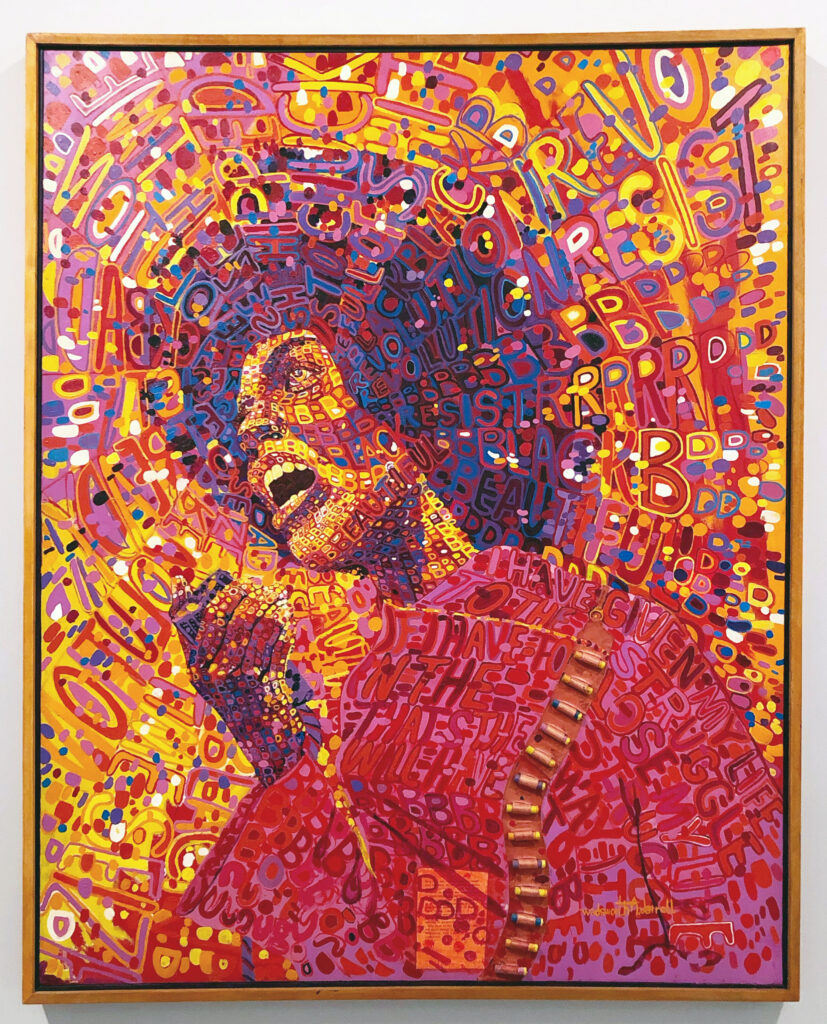
Wadsworth A. Jarrell’s Revolutionary (Angela Davis), 1971, spotted at Brooklyn Museum in 2020, is based off of a photograph of the activist.  The colorful painting includes words from her speeches and actual bullet cartridges.

From the museum about the work-

Wadsworth Jarrell’s Revolutionary (Angela Davis) is one of the most recognized paintings associated with the Black Arts Movement, a cultural manifestation of the Black Power Movement. Artists of this movement sought to create uplifting images that called upon Black people to harness their collective power. The power of communal action is here expressed through a chromatic swirl of individual colors that coalesce into a unified image of the radical activist and intellectual Angela Davis. Davis’s militant clothing—complete with bullet cartridges—was modeled after the Revolutionary Suit designed by artist Jae Jarrell, Wadsworth’s wife. An icon of Black Power, Davis continues to lead the prison abolition movement today.

Jarrell, along with his wife, is part of the African American artist collective AFRICOBRA, formed in Chicago in 1968.

Below is part of a statement about the group from their website by another of the founders, Gerald Williams.

AFRICOBRA began very loosely in 1968 as an association of visual artists. We decided to commit our selves to the collective exploration, development, and perpetuation of an approach to image making which would reflect and project the moods, attitudes, and sensibilities of African Americans independent of the technical and aesthetic strictures of Euro-centric modalities.  Jeff Donaldson, who spearheaded the movement,Wadsworth Jarrell, Jae Jarrell, Barbara Jones-Hogu, and myself, Gerald Williams opened the lid on what we called AFRICOBRA – African Commune of Bad Relevant Artists.  It was an original name that came to identify our place within the broader context of Black art.

Our mission was to encapsulate the quintessential features of African-American consciousness and world view as reflected in real time 1968 terms.  For months, beginning as early as 1967, we examined and talked about the forms of expression and images produced by previous generations of artists.  We came to the realization that there was not the existence of a consistent, unequivocal, uniquely Black aesthetic in visual arts as there was in other disciplines, notably music and dance. Many of our contemporary artists, at the time, generally said that they “were artists who happened to be black”, or held the view that their work was expressing universal ideas or concepts that were not tied to such a narrow category as Black art.   The notion of an intrinsically Black view point, expressed in characteristically “Black ways”  was a relatively alien idea for the most part.  That notion begged the question as to whether it was possible to create a style or approach to art that at its core could be identified as African-American or Black, notwithstanding  the presence of Black imagery or subject matter.  If imagery and subject matter were the sole criteria then the question was moot.  One could conclude, thereby, that Winslow Homer or any number of artists produced Black art when they painted Black images.  After numerous brain storming sessions where such topics were discussed, after test projects and critiques,  the five of us mapped out the core principles that became the foundation of AFRICOBRA.


Dec 222023
 

José Parlá’s majestic paintings, pictured above, are from his series CICLOS: Blooms of Mold. They are currently on view as part of the Brooklyn Museum exhibition, Brooklyn Abstraction: Four Artists, Four Walls. The other artists included are Maya Hayuk, Kennedy Yanko, and the late Leon Polk Smith.

From the museum about the work-

In his monumental compositions, José Parlá layers and scrapes paint to obscure, reveal, and abstract both text and narrative, creating landscapes with textured gestural skies interwoven with a unique code of writing to reveal a new horizon with a universal line. Parlá’s abstracted text visually recalls underground mycelium formations, complex and mysterious fungi communication networks he references that interconnect everything on earth through a web of life. The five newly created paintings on view draw upon his youth as a Cuban American in Miami in the 1980s, his world travels, his almost fatal battle with COVID-19 in 2021, and his survival and recovery.

While in a three-month-long coma after contracting the virus, Parlá experienced dreams that carried him through his healing process. While recovering in the hospital, he transformed these visions into acrylic on paper drawings and, once back in the studio, into these powerful, otherworldly paintings that evoke natural landscapes. Their distinct horizon lines and internal, precise, psychological geographies remind us of our shared humanity.

Blooms of Mold, this new body of large-scale paintings, was inspired by what the art historian Simon Schama, in describing the art of Dutch painter Rembrandt van Rijn, once called “blooms of mold,” which one encounters on decaying urban and natural landscapes.

Parlá chose the subtitle Ciclos (from the Greek Kúkos, meaning circle) to refer to the life cycle and the function of the mycelium. It connects to ecosystems, providing nutrients and information to trees, which, in turn, convert carbon dioxide into oxygen, providing critical support for the respiratory systems of humans and all other living beings. Without mycelium, there would be no life.

The exhibition will be on view until 7/28/24.

Nov 082023
 

The image above is Boris Anisfeld’s Clouds over the Black Sea-Crimea, 1906, from Brooklyn Museum’s exhibition Monet to Morisot: The Real and Imagined in European Art which highlights European art from the 19th and early twentieth-century from their collection. The exhibition “focuses on a period of significant societal transformation, when artistic techniques, subject matter, and patronage underwent profound changes”.

About the painting from the museum-

Boris Anisfeld’s canvas presents a vertiginous view of the Black Sea from the top of the Ayu-Dag mountain in southern Ukraine. The viewer has the sensation of being placed in midair, looking down through billowing clouds at an expanse of blue water, in the midst of which is a small boat. Although the scene represents a vast space, the artist’s complex composition challenges the illusion of depth in traditional landscapes by flattening the elements-cloud, land, and horizon-onto a single plane.

This painting was included in the 1906 Salon d’Automne in Paris in the Russian galleries organized by the ballet impresario Sergei Diaghilev, for whom Anisfeld designed stage sets and costumes. After the 1917 Russian Revolution, the artist came to the United States, and within a year the Brooklyn Museum hosted his first American one-person exhibition.

This exhibition closes on 11/12/23.


Jun 192023
 

Robert Pruitt, “A Song for Travelers”

Brooklyn Museum’s exhibition, A Movement in Every Direction: Legacies of the Great Migration, is an opportunity to learn about an important period of American history, and see it interpreted through the eyes of twelve contemporary artists.

From the museum’s website-

Between 1915 and 1970, in the wake of racial terror during the post-Reconstruction period, millions of Black Americans fled from their homes to other areas within the South and to other parts of the country. This remarkable movement of people, known as the Great Migration, caused a radical shift in the demographic, economic, and sociopolitical makeup of the United States. A Movement in Every Direction: Legacies of the Great Migration brings together twelve contemporary artists to consider the complex impact of this period on their lives, as well as on social and cultural life, with newly commissioned works ranging from large-scale installation, immersive film, and tapestry to photography, painting, and mixed media. Featured artists are Akea Brionne, Mark Bradford, Zoë Charlton, Larry W. Cook, Torkwase Dyson, Theaster Gates Jr., Allison Janae Hamilton, Leslie Hewitt, Steffani Jemison, Robert Pruitt, Jamea Richmond-Edwards, and Carrie Mae Weems.

A Movement in Every Direction presents a departure from traditional accounts of the Great Migration, which are often understood through a lens of trauma, and reconceptualizes them through stories of self-possession, self-determination, and self-examination. While the South did lose generations of courageous, creative, and productive Black Americans due to racial and social inequities, the exhibition expands the narrative by introducing people who stayed in, or returned to, the region during this time. Additionally, the Brooklyn Museum’s presentation centers Brooklyn as another important site in the Great Migration, highlighting historical and contemporary census data about the borough’s migration patterns. Visitors are encouraged to share their own personal and familial stories of migration through an oral history “pod” available in the exhibition galleries.

About Robert Pruitt’s work, pictured above, from the museum’s wall information plaque-

“A Song for Travelers” celebrates the individual and Black collective experiences that have shaped the histories of rural East Texas and Houston’s Third, Fourth, and Fifth Wards. In this drawing-based on an early 1970’s photograph of a reunion of the artist’s family in Dobbin, Texas -sixteen people gather around a seated central figure about to embark on a journey. During the creation of this work, the masked traveler became a stand-in for Pruitt, who had recently left his hometown of Houston.

Pruitt often draws inspiration from his and others’ family photographs while examining historical events that have impacted Houston’s Black communities. Wearing costumes and adorned with items that reference various aspects of Black culture found in schools, social clubs, and religious spaces, the figures in the work reflect the numerous networks that remained and flourished in the South. Merging the Great Migration period with the present, Pruitt centers the Black neighborhoods across the southern region that served as safe havens and rich sites of cultural expression for migrants during the twentieth century. This link extends to today as many Black Americans leave the northern and western cities that once attracted their elders and return to the South.

Allison Janae Hamilton’s A House Called Florida, below, takes the viewer on a journey through part of northern Florida’s natural beauty.

From the museum’s information plaque about the video installation-

Allison Janae Hamilton produced the three-channel film installation A House Called Florida in her hometown region of northern Florida. The breathtaking landscapes of Apalachicola Bay and the swampy Blackwater Lakes of Florida’s Big Bend frame musicians, dancers, motorists, a Victorian house, and a slow resounding rhythm.

The artist references French Argentinian writer Julio Cortázar’s 1946 short story “Casa Tomada.” (“House Taken Over”) about ghosts that slowly take over a home and eventually push out its owners, room by room. Hamilton echoes the story’s theme of displacement with two regally dressed, spirit-like protagonists who move about the house engaging in mark-making and ritual performances. Hamilton’s film pays tribute to the Black Floridians who remained in the Red Hills and the Forgotten Coast regions, despite the racial violence and environmental precariousness they faced throughout the nineteenth and twentieth centuries.

Carrie Mae Weems‘ personal and moving contribution is in two parts- a series of photographs and a unique digital video installation.

The museum’s description of the work-

Carrie Mae Weems explores a painful family story: the disappearance of her grandfather Frank Weems, a tenant farmer and union activist who was attacked by a white mob in Earle Arkansas, in 1936. Presumed dead, he narrowly escaped and made his way to Chicago on foot, never again reuniting with his family. Frank Weems may have followed the North Star to Chicago. Weems’s series of seven prints, The North Star, makes an apt metaphor for Frank’s life. In Leave! Leave Now! Weems conjures the figure of her grandfather with a Pepper’s Ghost, a late nineteenth-century form of illusion first used in theater. By weaving historical events with fragmented family stories, photographs, poetry, music, and interviews, the artist reveals the tragedy of her grandfather’s disappearance and the aftermath.

This exhibition will close on Sunday, June 25th, 2023.

Mar 162023
 

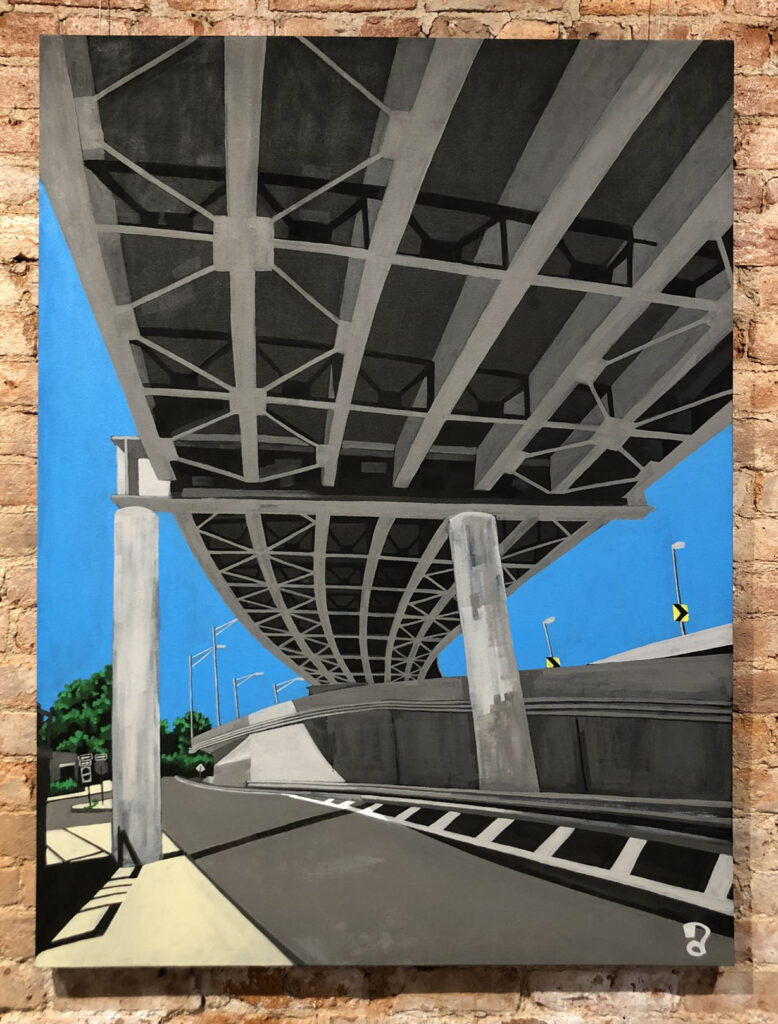
Adam Suerte, “Overpass, Redhook”

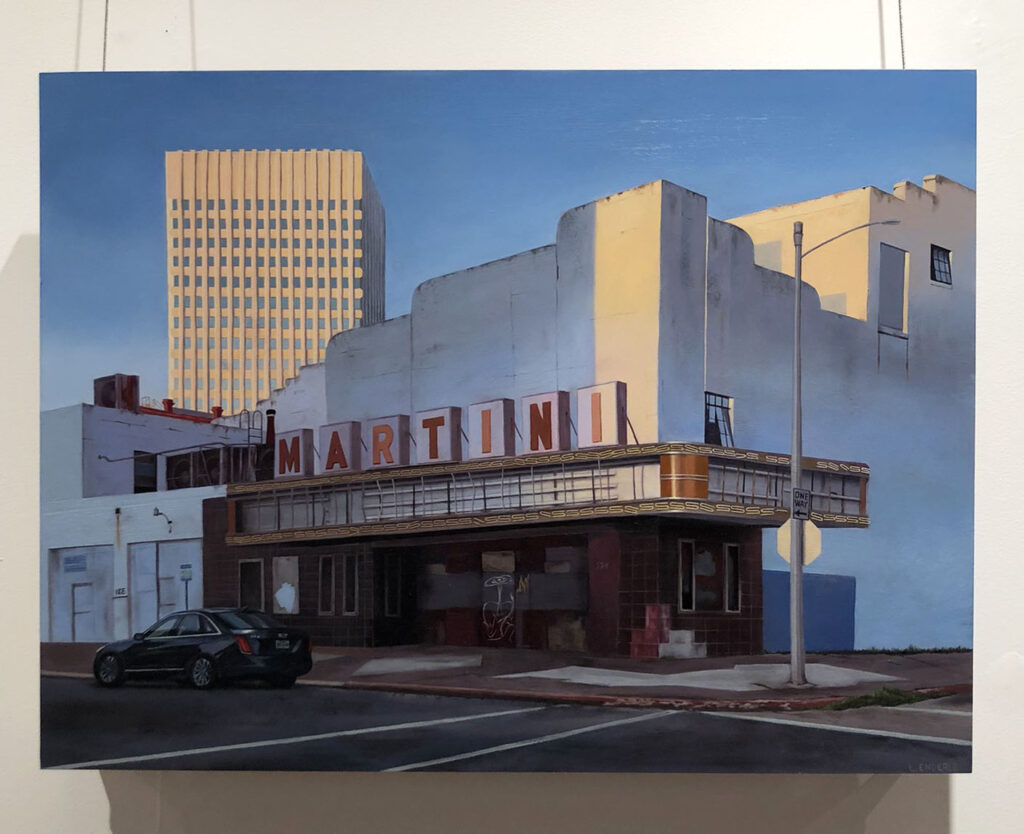
Laura Enderle, “Martini Theater”

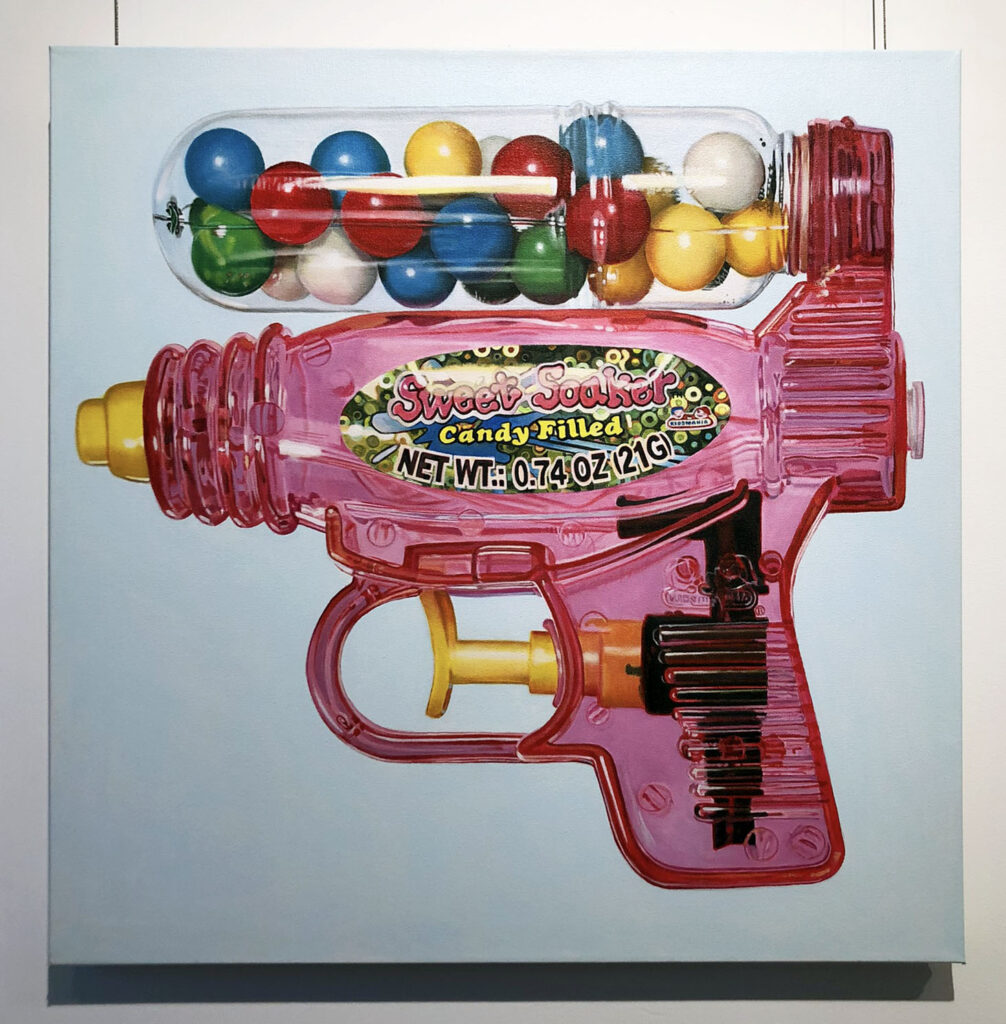
LJ Lindhurst, “Magenta Sweet Soaker”

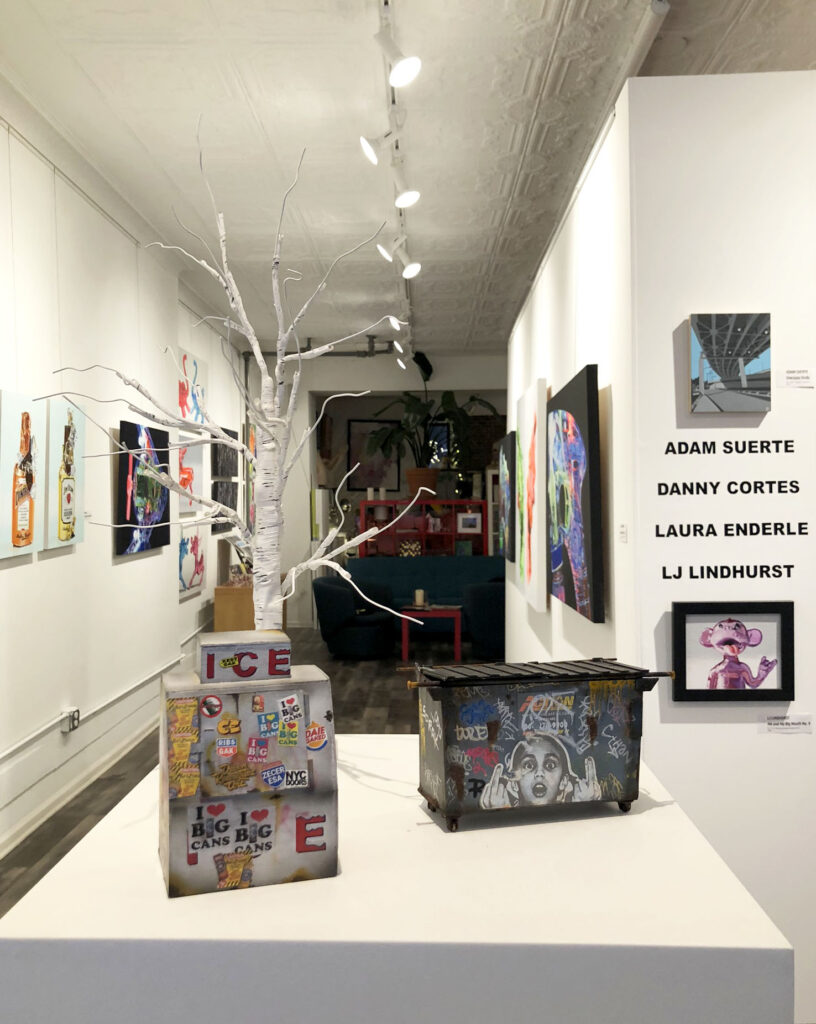
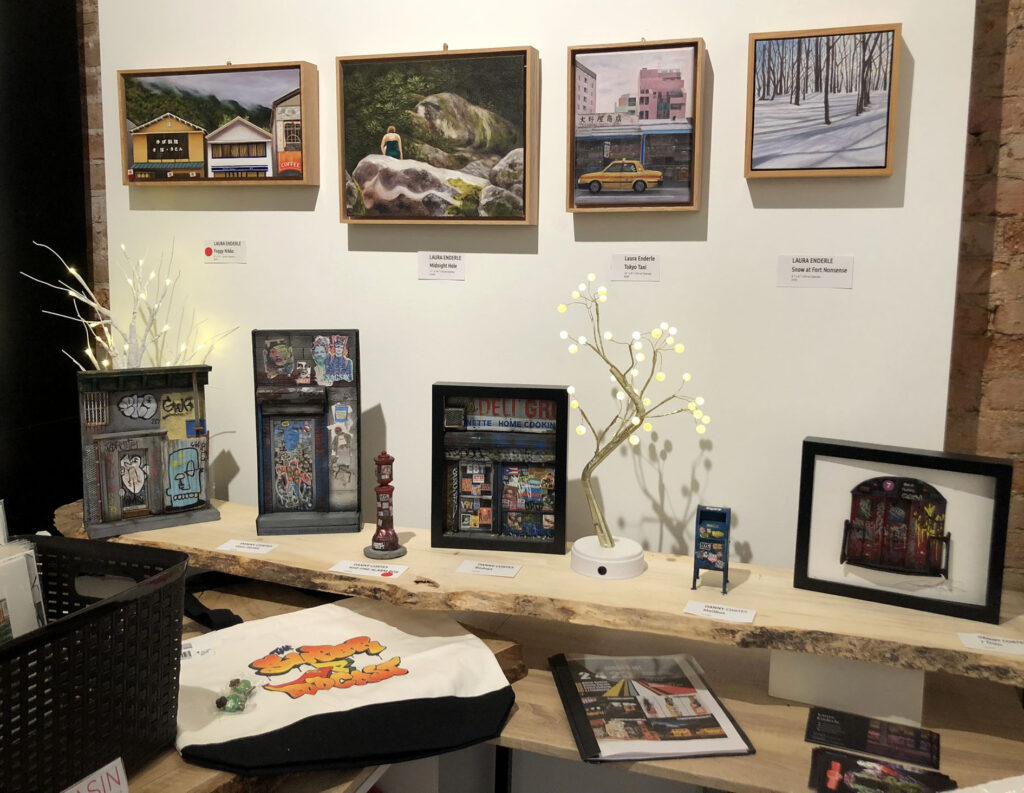
Tonight (3/16/23) at Basin Gallery in Redhook, Brooklyn, is the closing reception for the group exhibition of work by Adam Suerte, Danny Cortes, Laura Enderle, and LJ Lindhurst.


Mar 102023
 

Bonam Kim, “Untitled (401 Suydam Street), 2022”, Dollhouse miniatures, taxidermy pigeon, wood, paint and “Can’t Stand Up For Falling Down”, 2018, wood, screw, silicone

Bonam Kim, “Untitled (401 Suydam Street)”, 2022, Dollhouse miniatures, taxidermy pigeon, wood, paint

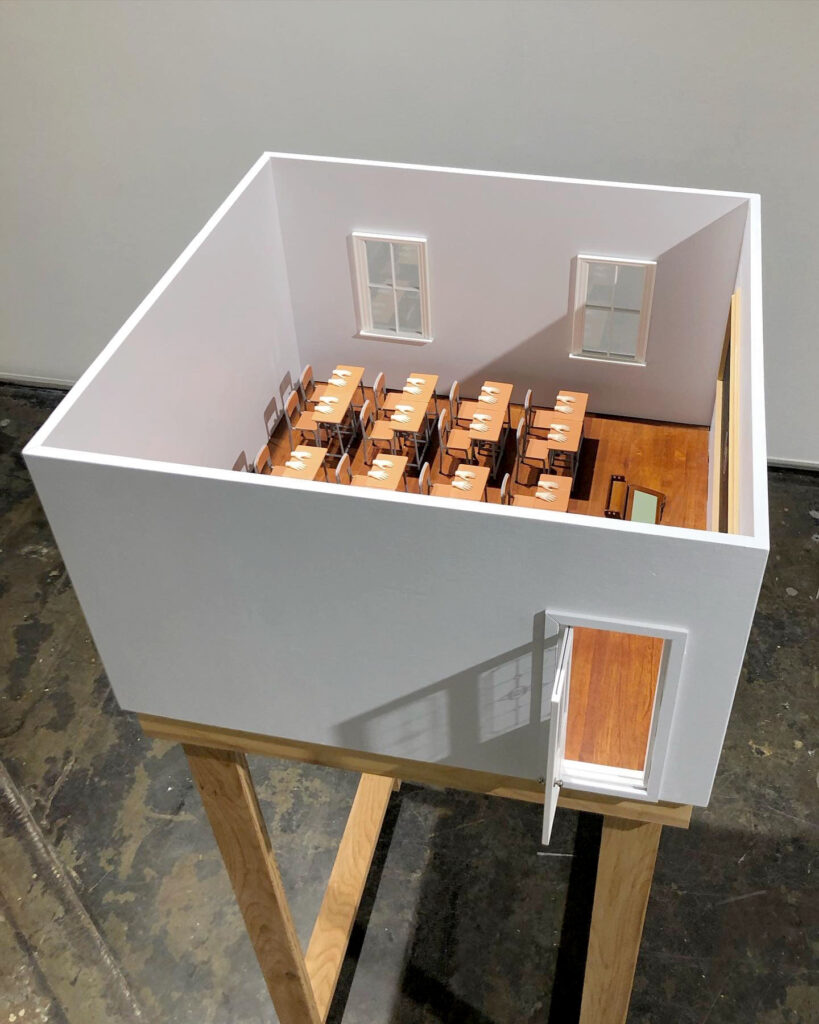
Bonam Kim, “Untitled (Classroom)”, 2022, Dollhouse miniatures, wood, paint, paper

Bonam Kim, “Untitled (Classroom)”, 2022, Dollhouse miniatures, wood, paint, paper

Bonam Kim, “Untitled (1990-2005)”, 2022, Wall clock, dollhouse miniatures, wood

It’s the last weekend to see Bonam Kim’s GOOD JOB WELL DONE, at A.I.R. Gallery in Brooklyn. The collection of sculptures are each based on events in Kim’s life and are incredible creations.

From the press release-

Kim grew up with her brother’s architectural models and drawings scattered around their house. Captivated by the relationship between model and actual space, she gained an acute sense of her spatial surroundings. This sensibility, combined with her love of making things with her hands, led her to constructing miniatures of her world. These objects invite us to navigate not only the spaces she has occupied physically, but also the psychological space of her experiences and memories. By manipulating scale and taking a bird’s-eye view perspective, Kim reclaims power over the past and present. Works like Between Dream and Dark and Can’t Stand Up For Falling Down playfully explore the frustrations of cross-cultural exchange, while Untitled (April 2, 2020) and Untitled (203 Harrison Pl) evince feelings of isolation and accumulation during the pandemic era.

In Untitled (Classroom), Kim recreates a typical classroom from memory. Within it she presents us with some of the artifacts of the post-war South Korean educational system: politely folded hands are given a “stamp of approval” on the blackboard, commended for their conformity. Kim continues this examination of the way architectural spaces regulate human behavior in Untitled (401 Suydam Street), a model of the artist’s bedroom. She restages an event in which her apartment’s ceiling had become infested by pigeons, eroding her sense of personal space and producing an uneasy awareness of surveillance—of being observed at her most intimate by an other.

Untitled (1990-2005) contends with a traumatizing childhood experience where Kim suffered a severe hand burn which led her to have multiple surgeries over an extended period of time. These memories led her to grow averse to going into spaces that brought forth memories of the hospital’s formal qualities, such as hair salons. With the piece she distills the relation between time, space, and memory, turning a wall clock into an operating room and hair salon. This sense of spatial unease is echoed in the piece Untitled (Mexico City-Seoul), which models the circumstances of renewing her visa in the middle of the 2020 pandemic. Having to ping-pong between Mexico and Seoul without knowing when she would be able to return to the United States made her reflect on the arbitrariness of the system, which is mirrored in the piece by an embassy office held within a lottery box, pointing to a bureaucratic opacity that leaves the user in a sort of Kafkaesque limbo.

This exhibition closes 3/12/23.

Nov 112022
 

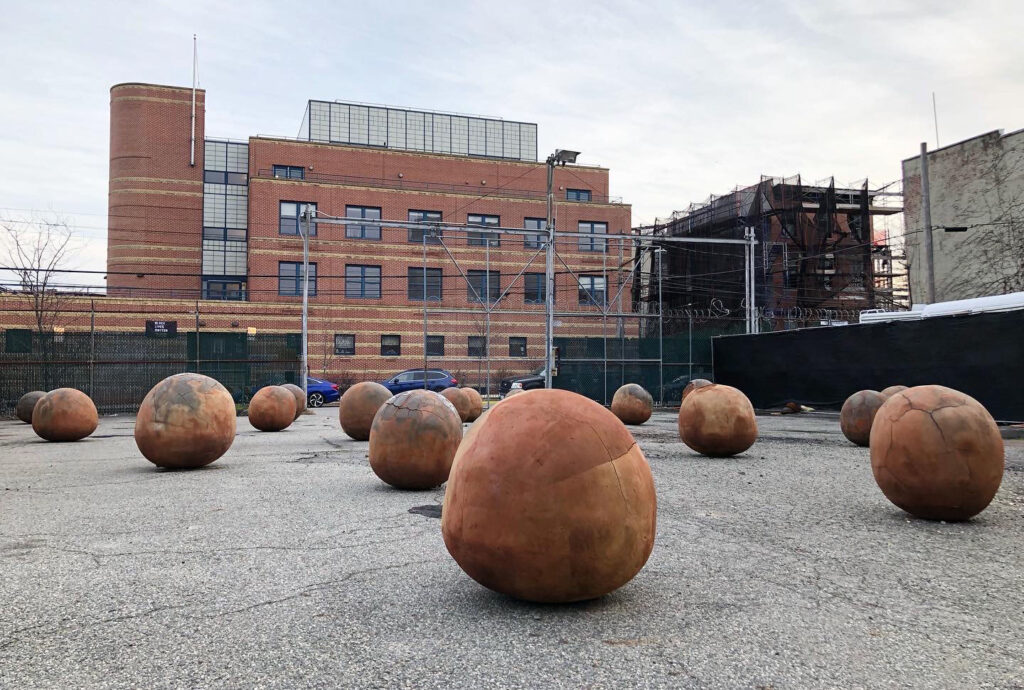
Bosco Sodi’s outdoor sculpture installation, Perfect Bodies, presented by Pioneer Works, was on view in Redhook, Brooklyn from October 2020 until December 2020.

From Pioneer Works’ press release-

Sited on a once teeming commercial concrete parking lot two blocks south of Pioneer Works, Perfect Bodies speaks to, in artist Bosco Sodi’s words, “silence, contemplation and the passing of time—the small things in life and our relationship with the earth.” The installation consists of large-scale clay spheres and cubes made from local clay fired in the artist’s studio in Oaxaca, Mexico, which made the long journey by road across the Mexico-US border to Red Hook. A longtime resident of the neighborhood—itself named after the tone of its own clay soil—Sodi is known for his use of raw and organic materials to create textured paintings and objects.

Sodi’s ongoing dialogue with nature and landscape, shaped by his interests in Japanese aesthetics and Abstract Expression, puts himself in the lineage of both Arte Povera and Land Art—two post-war movements which emphasized, respectively, radically simple materials and an integral relationship between art and earth. As Spanish author Juan Manuel Bonet remarked in the artist’s 2020 eponymous monograph, his three dimensional works reconcile an interest in minimalism with the practices of Mexican heritage. On this topic, curator Dakin Hart further writes: “At his place in Oaxaca, Sodi hand forms large geometric sculptures from clay and fires them in a makeshift kiln on the beach. Cuboids in different formats recall the scale and how-did-they-do-that-craft of cyclopean architecture across the ancient world. While spheroids, each formed by eye in a landscape of unbelievable things, might be the petrified remnants—or organic vanguard—of a Jurassic invasion. The past seeding itself into the present, a starting point for nature’s revenge.”

Currently, as part of Art Biennale 2022, Fondazione dell’Albero d’Oro is showing What Goes Around Comes Around at Palazzo Vendramin Grimani, in Venice, Italy, until November 27th, 2022.  The art installation will include his paintings as well as recent sculptures.


Dec 282019
 

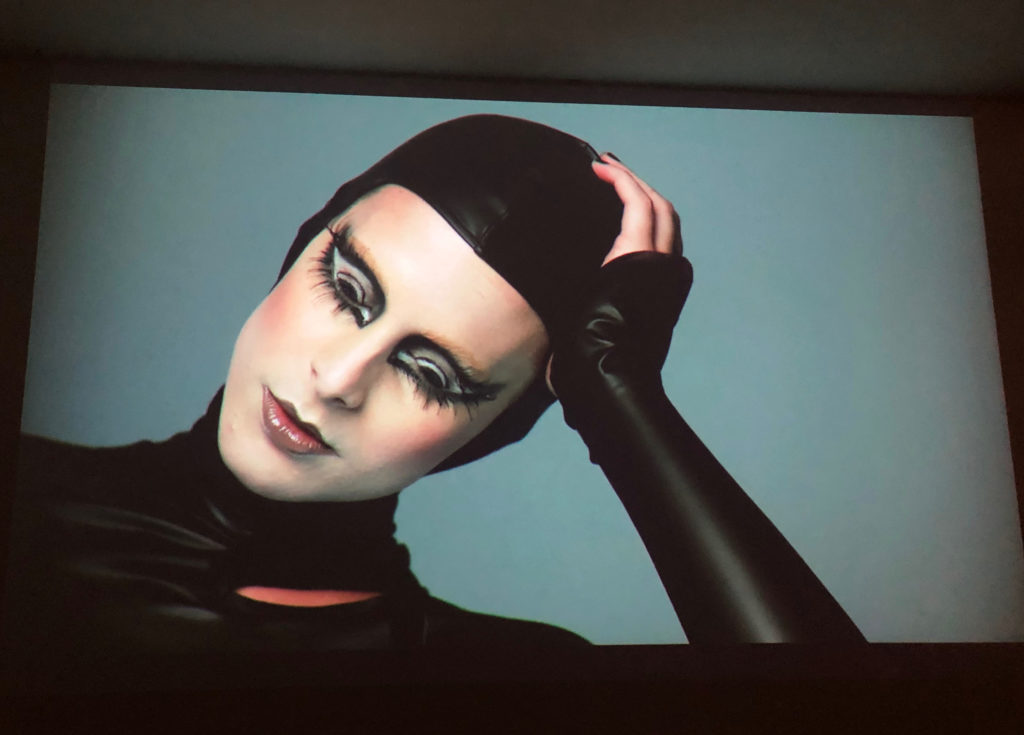
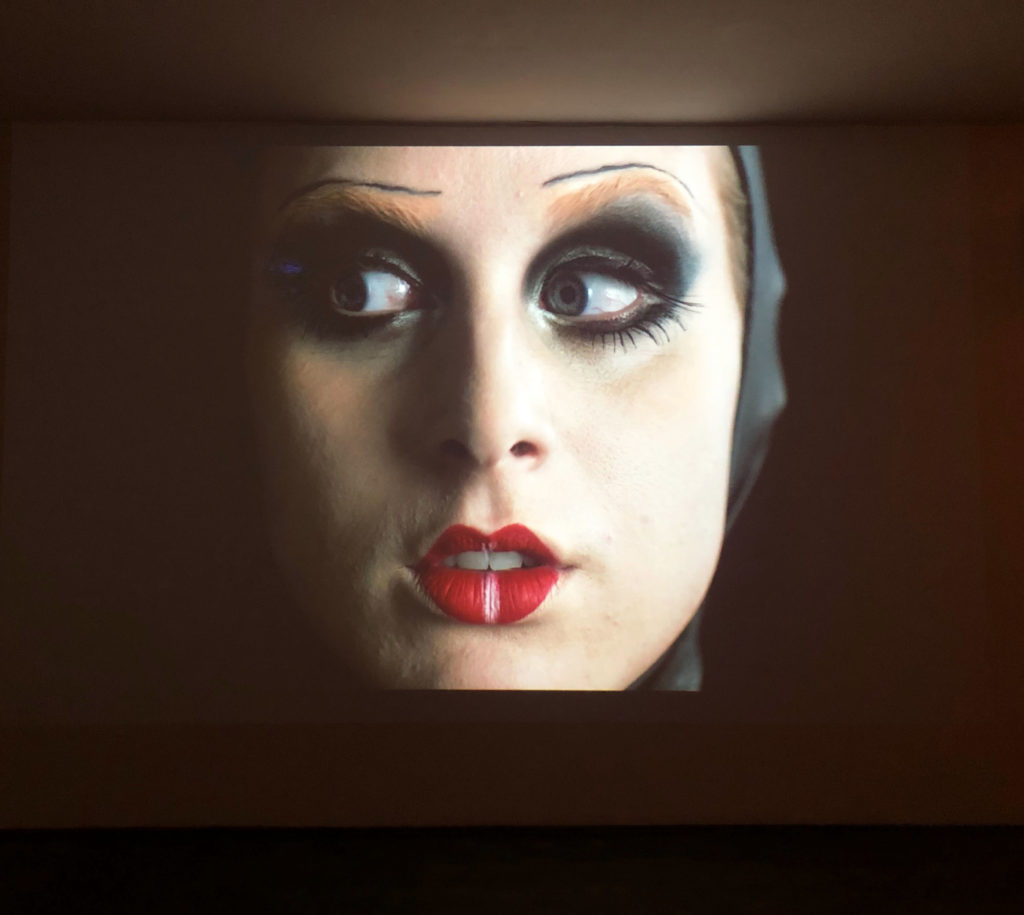
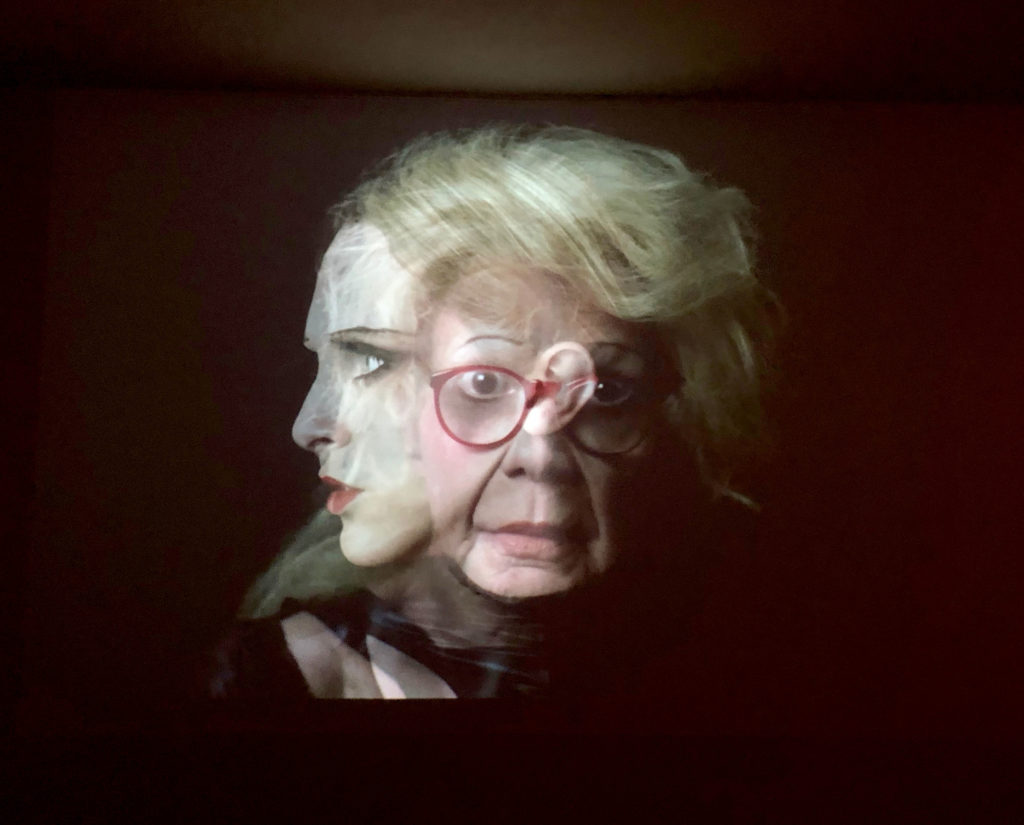
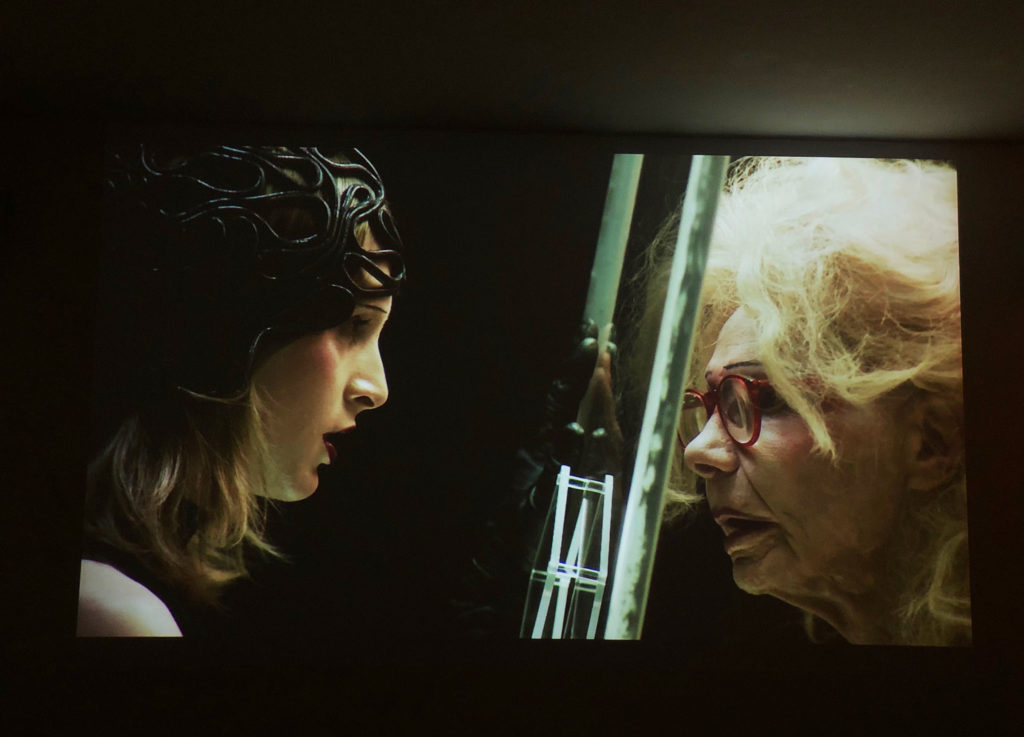
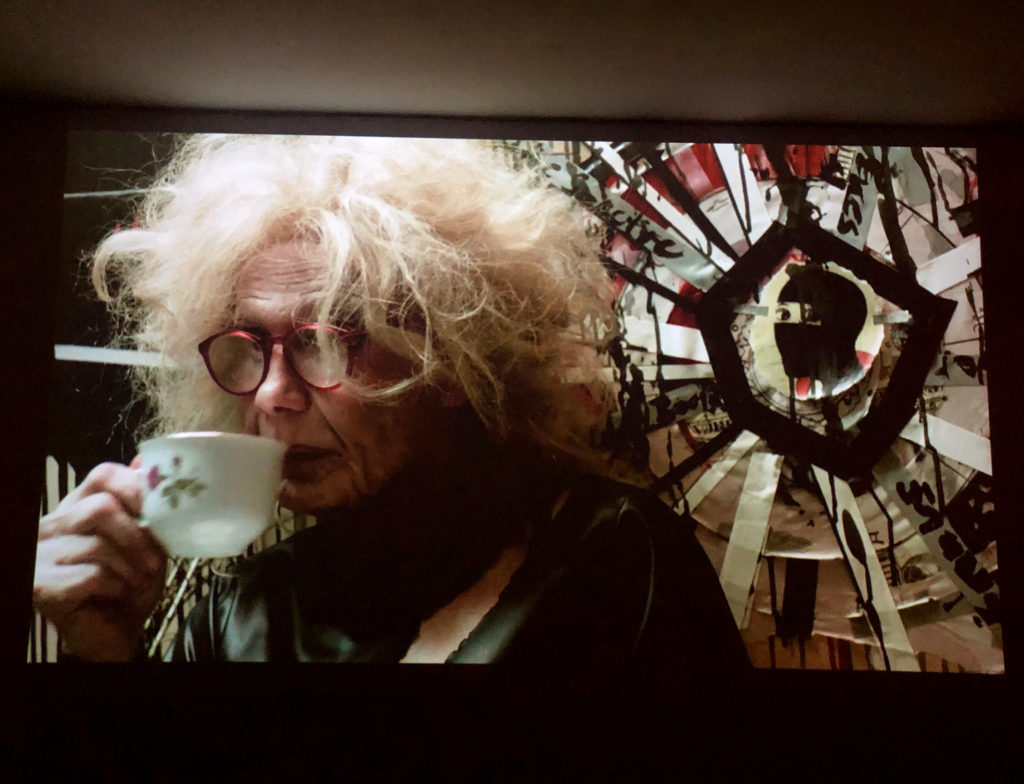
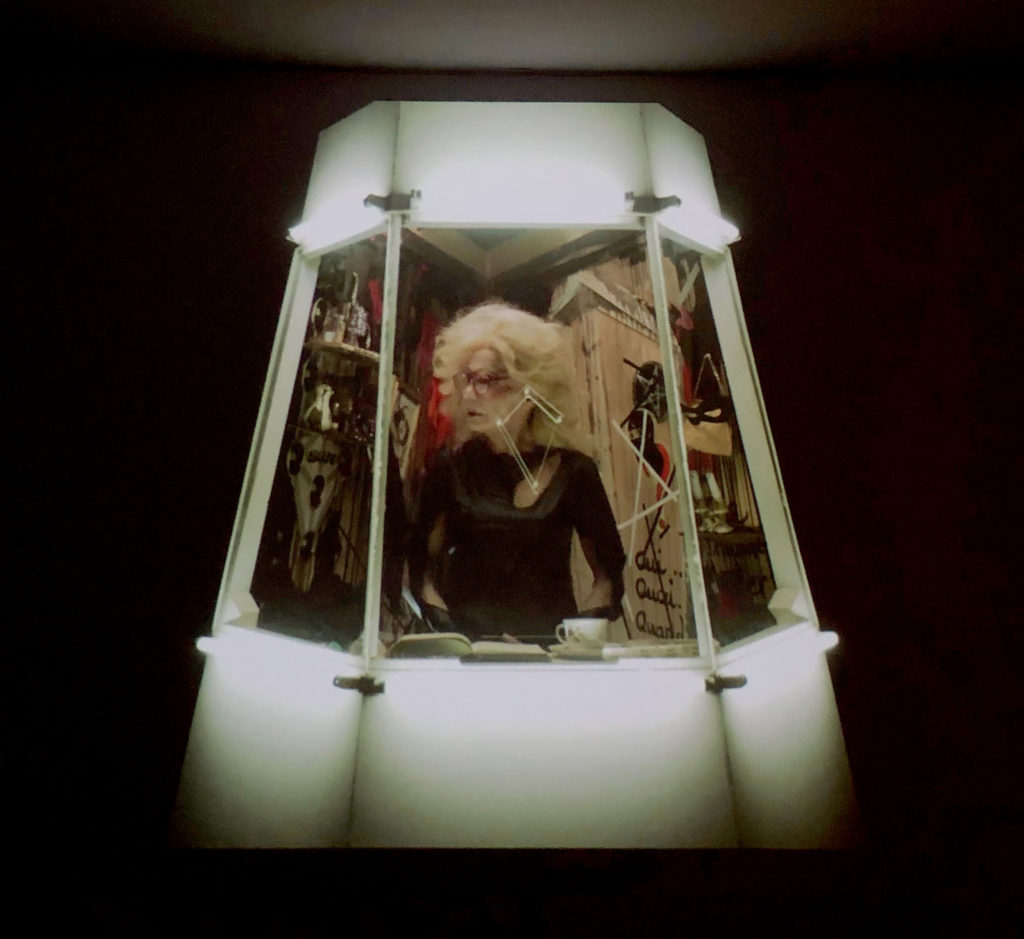
The images above are from Michelle Handelman’s film Irma Vep, The Last Breath, starring Zackary Drucker and the late Flawless Sabrina.

The video installation is based on Musidora, the French silent film actress, and the character she is best known for Irma Vep from the 1915 film Les Vampires directed by Louis Feuillade.

From the exhibition’s caption-

It’s a piece about living in the shadows, criminal anxiety, and the relationship between the artist and her creation, both fictional and real.

Irma Vep and Musidora are played by Zackary Drucker (Transparent) and the late Flawless Sabrina (The Queen), two artists whose identities transgress the border of art and life. Together, they developed a relationship that documents a cultural evolution of gender.

Musidora was an early 20th century feminist who took control of her career, not only acting, but also producing/directing films and theater. She was an artistic force of her time, producing several works by her lover Colette and having many documented affairs with both men and women. After financing dried up for her projects, she lived in relative obscurity until her death in Paris, 1957. In her later years, she worked the ticket booth of the Cinematheque Francaise, where few people ever knew that the woman selling them their movie tickets was France’s beloved vamp of the silver screen.

Irma Vep, The Last Breath takes up motifs from the silent movie such as gazes, affected body language and the figure of the masked woman. It’s shot on a starkly illuminated set that makes space for anxious projections of desire on the void that is Irma Vep- a space between genders, between vamps of the silent era and the contemporary queer- smashing the shiny veneer to reveal dark, subconscious layers of fluid identity.

The film is part of the larger exhibition Idol Worship, a group show curated by Emily Colucci, at Smack Mellon which “celebrates the ongoing cultural, social and political significance of role model adoration as an essential survival strategy”.

The exhibition closes 12/29/19.

Dec 062019
 

Currently at Brooklyn Museum is Garry Winogrand: Color, the first exhibition dedicated to Winogrand’s color photographs.

From Brooklyn Museum’s website-

While almost exclusively known for his black-and-white images that pioneered a “snapshot aesthetic” in contemporary art, Winogrand produced more than 45,000 color slides between the early 1950s and late 1960s.

Coming from a working-class background in the Bronx and practicing at the time when photographs had little market value, Winogrand did not have the resources to produce costly and time consuming prints of his color slides during his lifetime. Yet, he remained dedicated to the medium for nearly twenty years.

The exhibition presents an enveloping installation of large-scale projections comprising more than 400 rarely or never-before seen color photographs that capture the social and physical landscape of New York City and the United States. On his numerous journeys through Midtown Manhattan and across the country, Winogrand explored the raw visual poetics of public life—on streets and highways, in suburbs, at motels, theaters, fairgrounds, and amusement parks. For him, the industrially manufactured color film, which was used by commercial and amateur photographers, perfectly reproduced the industrially manufactured colors of consumer goods in postwar America. By presenting this group of largely unknown color work, Garry Winogrand: Color sheds new light on the career of this pivotal artist as well as the development of color photography before 1970.

Winogrand’s photos are always captivating, both in his style and subject matter, and now there is the addition of time, which adds nostalgia to their allure.

The exhibition begins with a slide projector showing single slides, most of which aren’t on view in the main room (shown below).

The main room (shown below) has slides rotating on the walls along both sides of the large room with seats in the center for viewing. The pairings often accentuate each others colors, with the smaller slide of each pair staying up longer. It is definitely worth making the time to see them all.

Also included in the exhibition are a room of Winogrand’s black and white photographs and a video of him discussing his work.

This exhibition closes 12/8/19.