Feb 212020
 

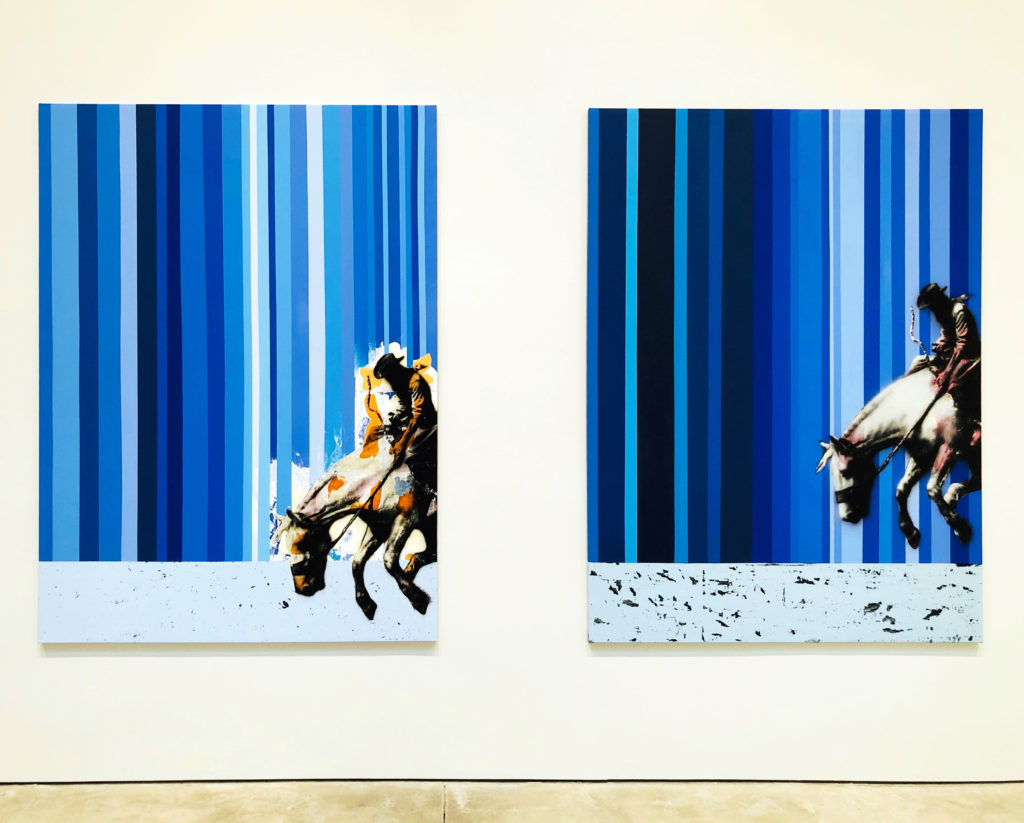
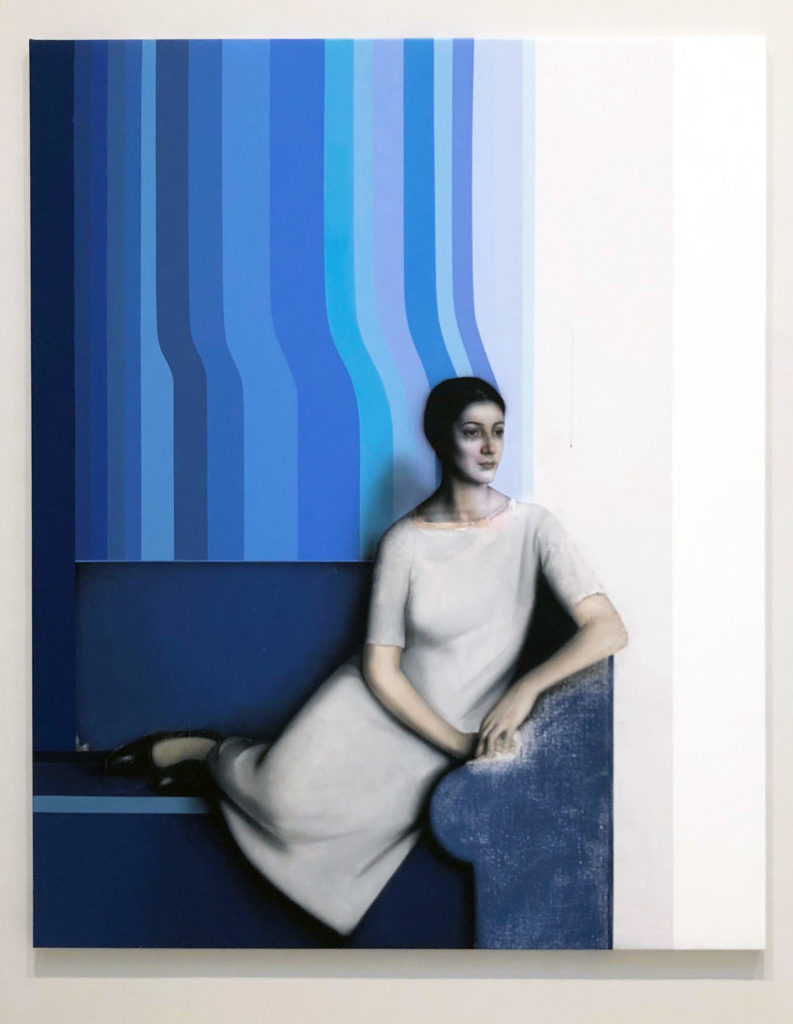
Currently at Blain Southern gallery’s New York location is  Mircea Suciu’s Universal Fatigue.

From the press release-

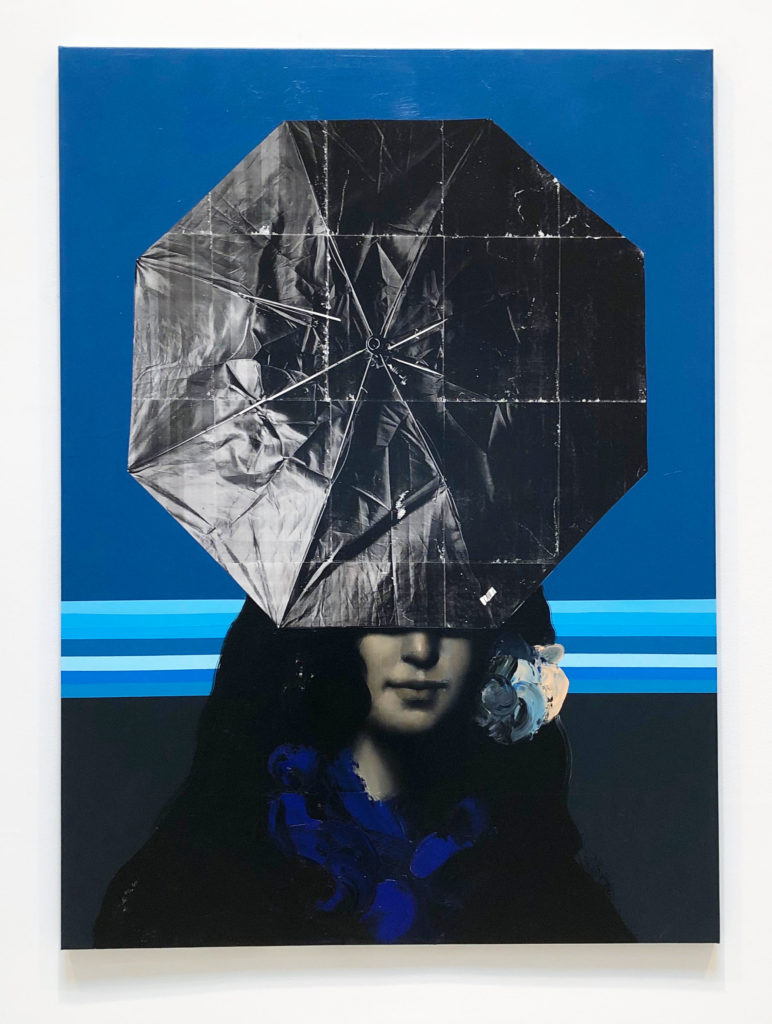
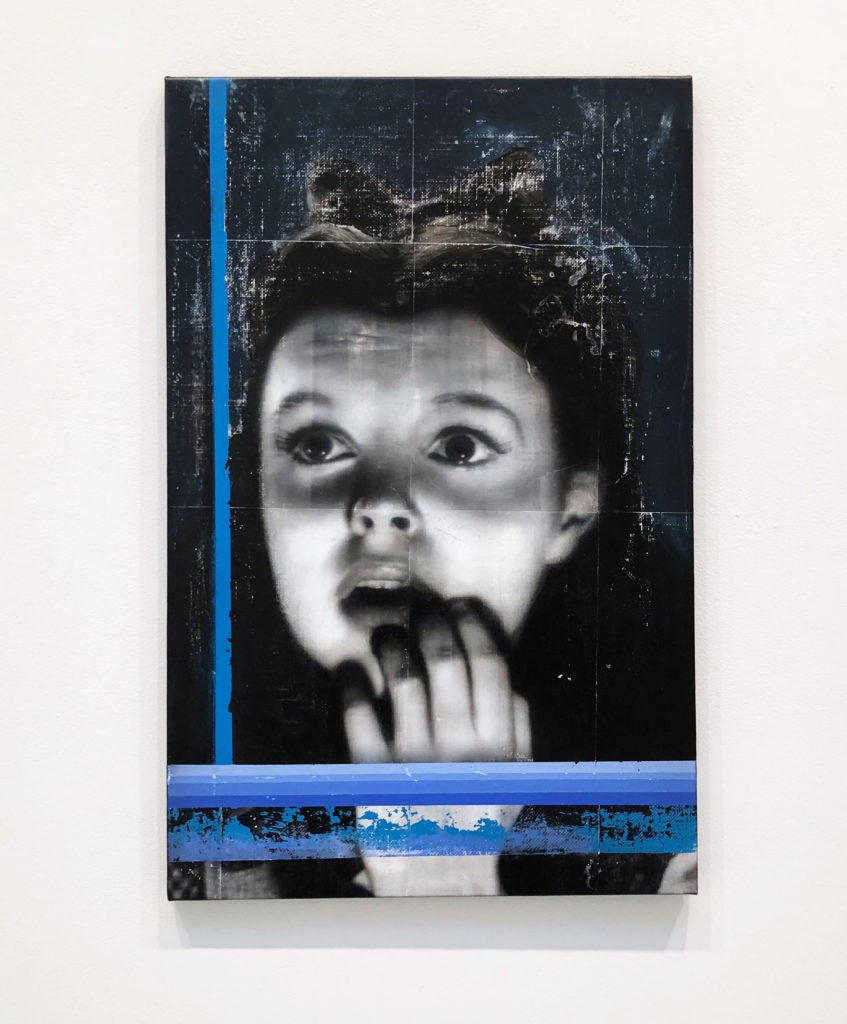
Part of the Cluj School, Mircea Suciu (b. 1978, Baia Mare, Romania) is regarded as one of Romania’s leading artists. During his formative years he witnessed the country’s tumultuous transition after the only violent overthrow of a communist government in the 1989 revolutions. Describing himself as an image creator rather than a traditional painter, Suciu mines and references art history and contemporary imagery, reducing down the elements and adding colour coded symbolism. He has ‘his own complex way of making things in which painting, photography, drawing and print all cooperate while playing their individual parts’ 1

Inspired by his former studies on the restoration of Baroque paintings, Suciu has developed a process he calls ‘monoprinting’. A photographic image is split into a grid of A4 surfaces, each one printed onto an acetate sheet onto which a layer of acrylic paint is applied. The paint acts as a ‘glue’ that adheres to directly to the canvas and once dry, the acetate sheet is peeled off. The result is a transference of the printed image with associated faults and imperfections which Suciu then ‘restores’ by re-painting with oil and acrylic paint. Sometimes, as with works in the Disintegration series, he overlays the image multiple times using various colours until he creates a surface that is barely recognisable from the original. As a final stage the whole image is repainted. This multi-layered process creates compositions of reinvented images which allude to history, memory and eventual dissolution of all things.

‘A characteristic of my work is frailty, not regarding the subject but the relationship between the surfaces that constitute the ensemble of the whole picture.’ – Mircea Suciu

This exhibition closes 2/21/20.


Feb 202020
 

Closing 2/22/20 at David Zwirner’s 20th Street location in New York is Stan Douglas’s fascinating video installation Doppelgänger. It is also on view at view at Victoria Miro Gallery in London.

From the press release–

Since the late 1980s, Douglas has created films and photographs—and more recently theater productions and other multidisciplinary projects—that investigate the parameters of their mediums. His ongoing inquiry into technology’s role in image-making, and how those mediations infiltrate and shape collective memory, has resulted in works that are at once specific in their historical and cultural references and broadly accessible.

Doppelgänger is set in an alternative present. Displayed on two square-format, translucent screens, each of which can be viewed from both sides, the looped narrative unfolds in side-by-side vignettes that depict events on worlds that are light years apart. When one spacecraft embarks on its journey, another is launched at the same time in a parallel reality. Alice, a solitary astronaut, is teleported to a distant planet, and her double to another. Then, Alice and her ship, the Hermes II, for unknown reasons, return. Alice assumes her mission has failed and she has somehow returned home, but she has, in fact, arrived at a world where everything, from writing to the rotation of the sun, is literally the reverse of what she once knew.

The action on the two screens proceeds alternately in tandem and in parallel, seamlessly moving between two oppositional scenarios of Alice’s reception back on Earth. In one version, Alice is received compassionately and welcomed home, whereas in the other, she is treated as an outlaw or a potential threat. Douglas intentionally heightens the viewer’s feeling of displacement through a continual sense of reversal and mirroring, both in the form and content of his installation. Since the early 1990s, multi-channel video installations have been an integral part of Douglas’s practice, allowing for the simultaneous presentation of multiple, overlapping narratives or vantage points, and with Doppelgänger, he extends his ongoing exploration of both nonlinear narratives and alternate histories: the omnipresent sense of doubling that is built into the structure of the work implicitly suggests the possibility of simultaneous, diverging experiences and realities.

Intercut with quasi-abstract passages of color and light, which nod both to avant-garde cinema as well as the history of space exploration, Doppelgänger presents a nuanced and layered parable that powerfully addresses the slippery notion of objective truth, and the position of the “other” in contemporary society.


Feb 132020
 

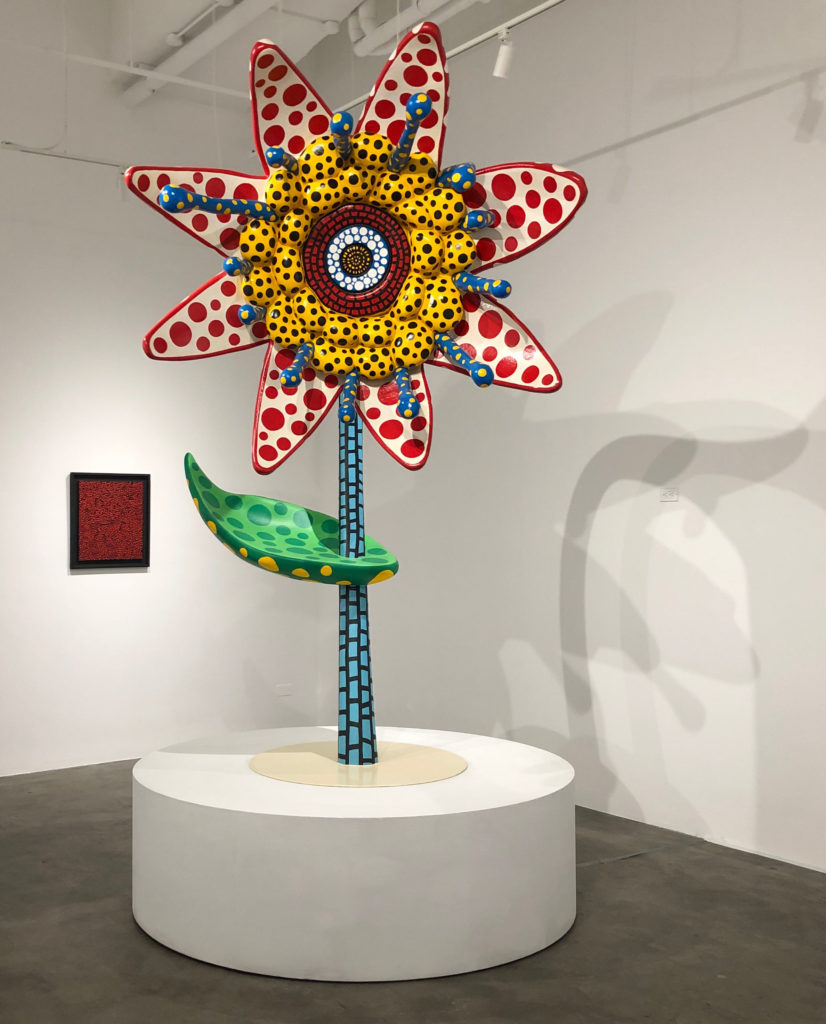
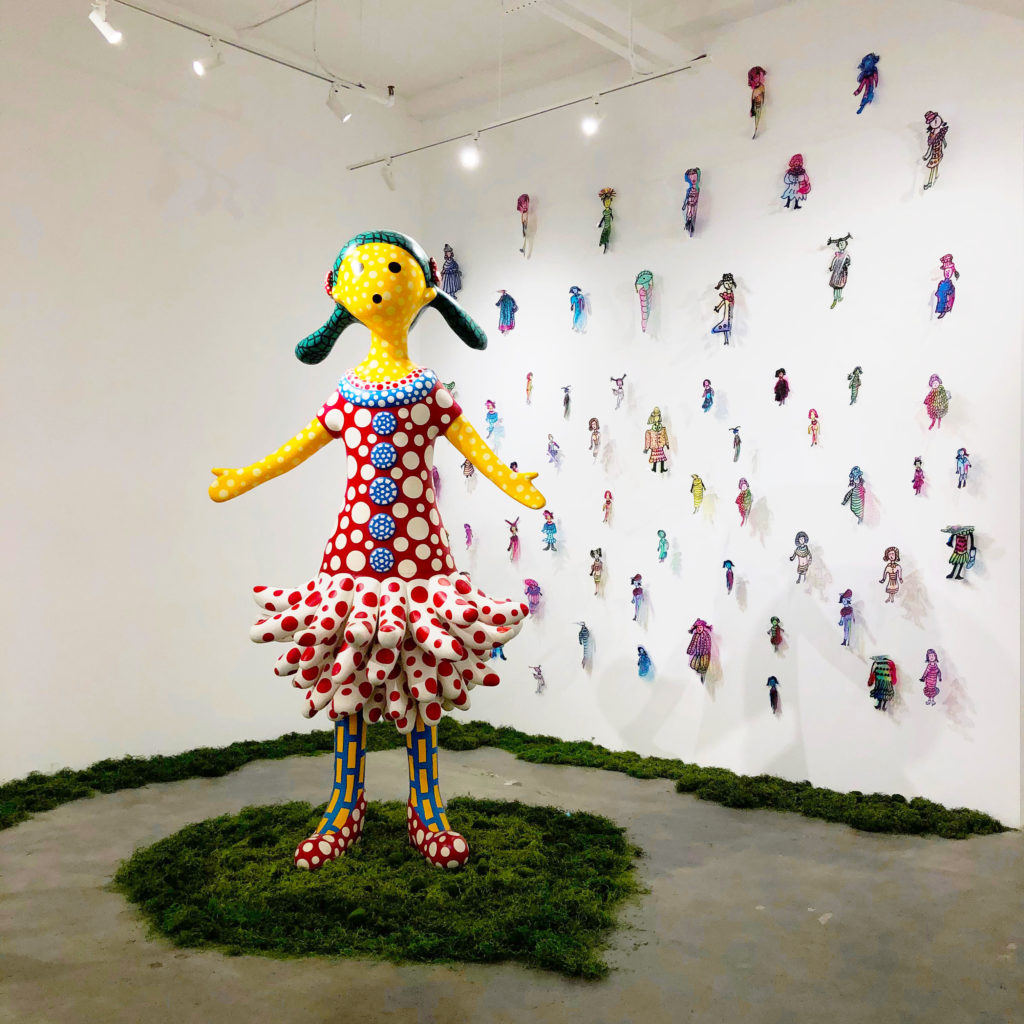
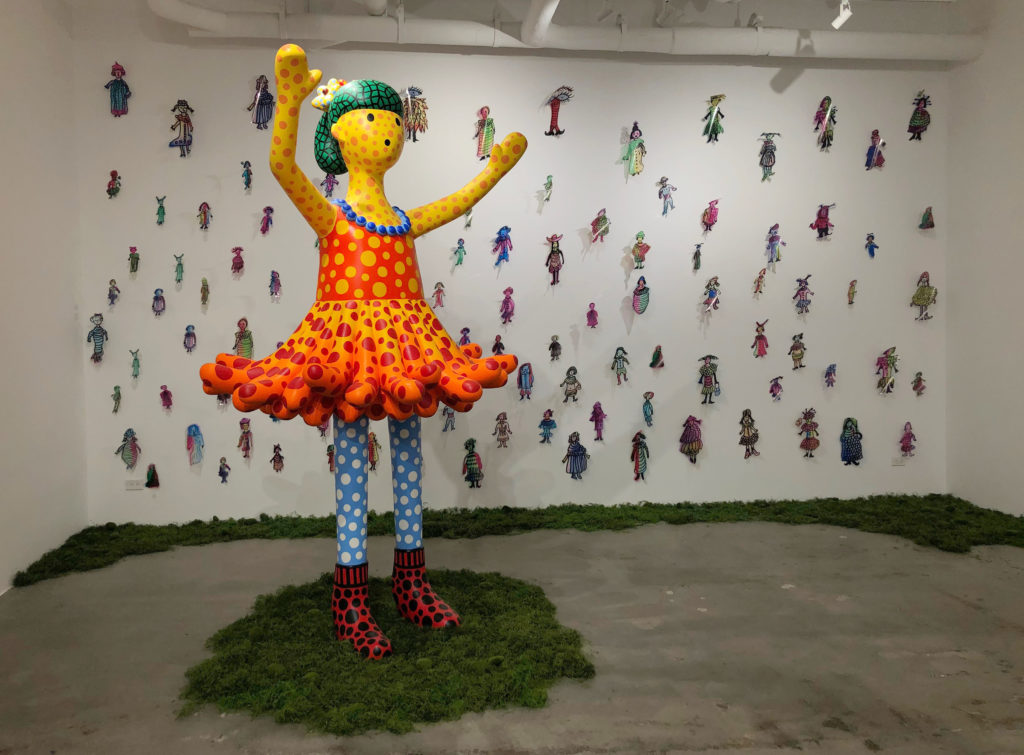
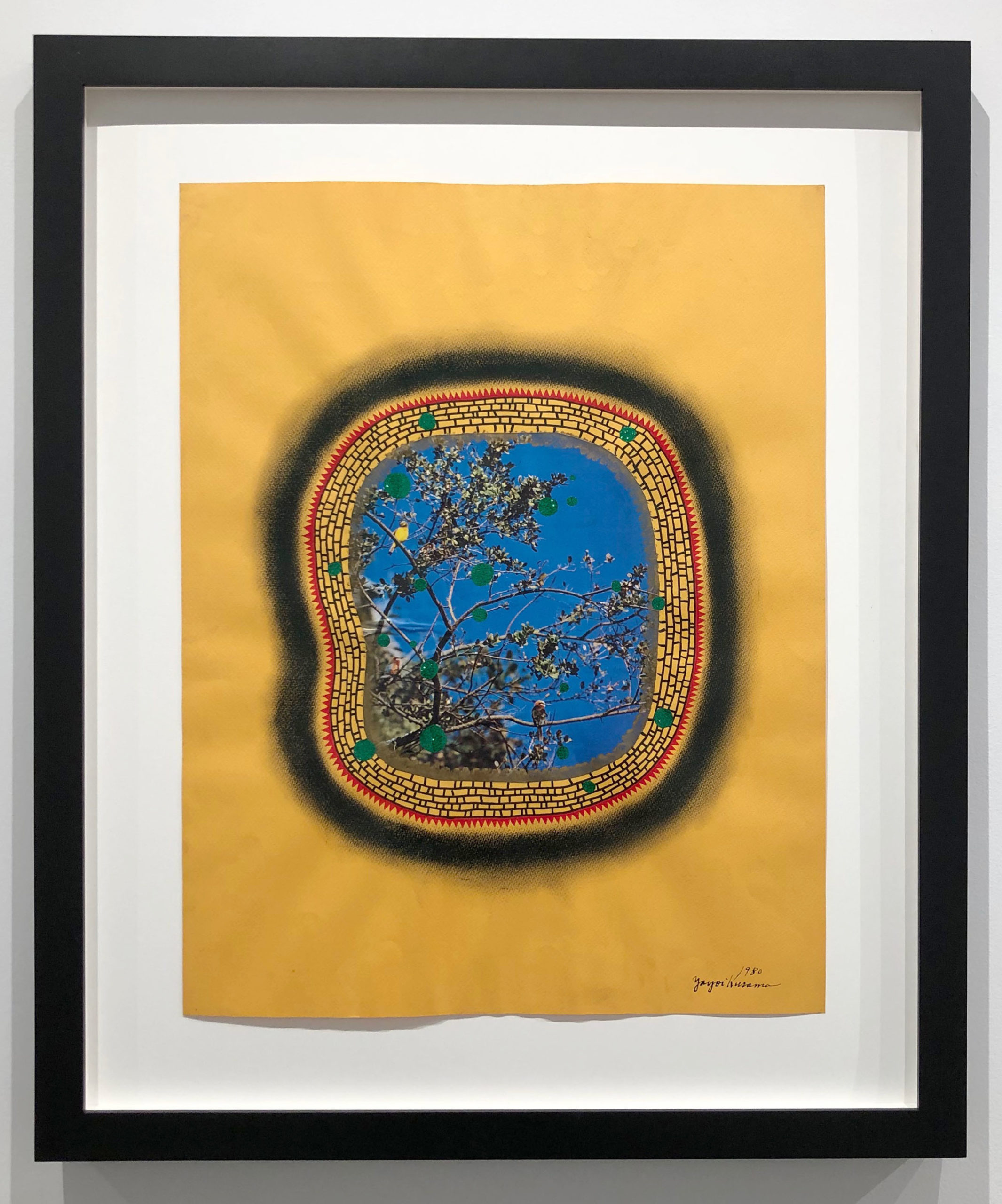
For its inaugural exhibition at its Chelsea New York location, Mucciaccia Gallery is showing the work of Yayoi Kusama. The show includes sculptures, her signature infinity polka dot paintings, and several of her works on paper.

This exhibition closes 2/15/20.

Jan 172020
 

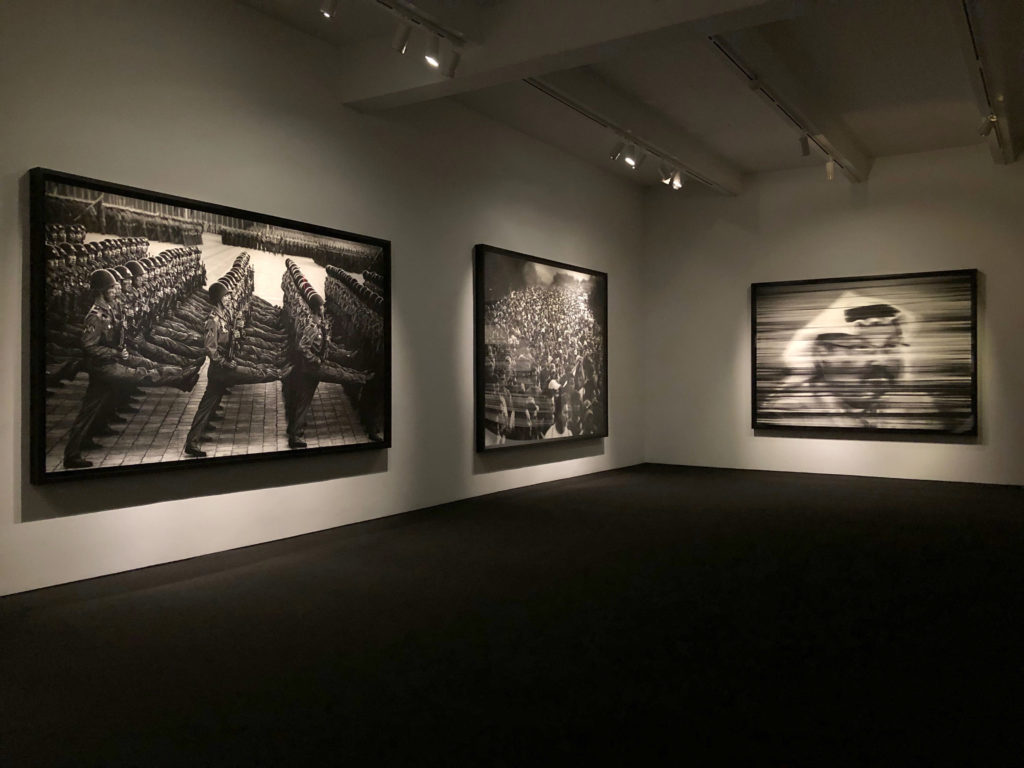
It’s the last week to see Robert Longo’s eight hyperreal charcoal drawings from his “Destroyer Cycle” at Metro Pictures.

From the press release-

The title (of the exhibition) Fugitive Images refers to the transitory appearance and displacement of impactful media images from across the globe. Longo believes it is morally imperative to secure their permanence.

Longo’s drawing of Jamal Khashoggi is central to the exhibition, which includes works depicting a range of world events from disparate locations. The journalist is shown disappearing into a field of static that recalls a television with poor reception, struggling to maintain the picture. In stark contrast to the evanescent portrait of the murdered journalist is a deeply humane drawing of a mass of migrants on a grueling journey from Central America. The work focuses on the faces and personal effects of the individual men, women, and children, who appear desperate and exhausted. Another drawing that shares the main gallery counters this sympathetic sentiment, showing a choreographed military parade of North Korean soldiers in an exaggerated, highly athletic, mechanized goose step commonly associated with dictatorial regimes and blind obedience.

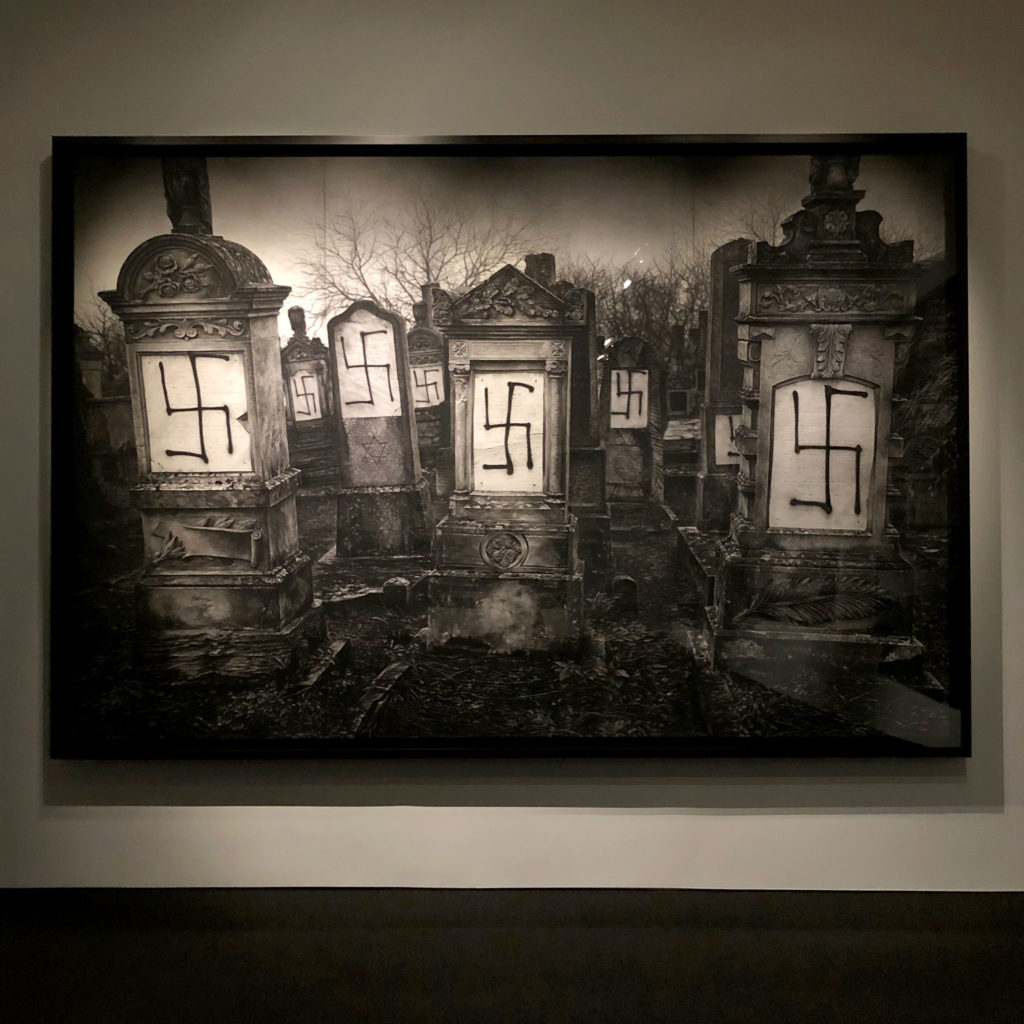
The reference images that are the basis of Longo’s drawings are generally extensively altered and merged. His drawing of a Jewish cemetery in France crudely vandalized by Neo-Nazis is an exception. Longo maintains the legibility of the tombstones despite the spray-painted swastikas, which fail to obscure the engraved epitaphs of the people buried there––a widow, a religious man who lived a long life, and an honest hardworking man who died on Shabbat.

The exhibition ends with a moment of optimism, determination, and progress. Longo’s drawing of Congress during President Trump’s second State of the Union Address immortalizes the female representatives and lawmakers who chose to wear white in solidarity with the suffragette movement by portraying them as a blurred beacon of light within a sea of darkness.

This exhibition closes 1/18/20.

Jan 172020
 

Closing on 1/18/20 at Gladstone Gallery in Chelsea is Ugo Rondinone’s thanx 4 nothing, a multi-channel video installation that pays tribute to the artist’s late husband, the poet and performance artist, John Giorno.

From the press release-

Rondinone reconstructs the gallery into a black box theater, creating an immersive environment through the use of black-and-white film, minimalist score, and the rhythmic intonations of Giorno’s own voice. This exhibition is a prismatic paean to the poet, raconteur, muse, cultural icon, and New York fixture.

Curator Ralph Rugoff said of the work on the occasion of its installation at Hayward Gallery in 2016:

“In elegantly spectacular fashion, Ugo Rondinone’s 20-screen video installation, “thanx 4 nothing “(2015), presents the American poet John Giorno reciting – though ‘performing’ might be a better word – the titular poem. Written on his seventieth birthday in 2006, and framed as an extended and wide-ranging expression of gratitude to ‘everyone for everything,’ Giorno’s poetic monologue looks back over his life with frank insight and humour, reflecting on loves and losses, friends and enemies, sex and drugs, depression and spiritual acceptance. As presented by Rondinone, whose work inventively interlaces the rhythms of his images with those of the poet’s speech, it is also a dizzying meditation on duality.”

It’s a great poem and a wonderful visual. Surrounded by the poet himself on all four walls of the gallery, you are completely immersed in his reading.

If you are curious about the poem itself, below is a video of Giorno reading it for his 75th Birthday Tour at the Words Aloud 8 Spoken Word Festival at the Durham Art Gallery in Durham, Canada, in 2011.


Jan 162020
 

Drink More, 1964 by Ushio Shinohara (left piece) and Untitled, 1980s by Nobuaki Kojima (sculpture on right)

Souvenir, 1964, by Jasper Johns

Shadow of a Hanger, 1971 by Jiro Takamatsu

Japan is America at Fergus McCaffrey gallery in Chelsea “explores the complex artistic networks that informed avant-garde art in Japan and America between 1952 and 1985. Starting with the well-documented emergence of “American-Style Painting” that ran parallel to the Americanization of Japan in the 1950s, Japan Is America endeavors to illustrate the path and conditions from Japanese surrender in 1945 to that country’s putative cultural take-over of the United States some forty years later”.

Artists in the show include: Yuji Agematsu, Ruth Asawa, James Lee Byars, John Cage, Joe Goode, Sam Francis, Marcia Hafif, Noriyuki Haraguchi, Tatsuo Ikeda, Shigeo Ishii, Ishiuchi Miyako, Jasper Johns, Alison Knowles, Nobuaki Kojima, Tomio Miki, Sadamasa Motonaga, Hiroshi Nakamura, Natsuyuki Nakanishi, Senga Nengudi, Yoko Ono, Ken Price, Robert Rauschenberg, Ed Ruscha, Richard Serra, Ushio Shinohara, Fujiko Shiraga, Kazuo Shiraga, Jiro Takamatsu, Anne Truitt, and Toshio Yoshida.

This exhibition closes 1/18/20.

Jan 032020
 

The Occult Enthusiast, 2019

The Occult Enthusiast, 2019 (detail)

Conspiracy Screen, 2019

Conspiracy Screen, 2019 (detail)

The GloFish Enthusiast, 2019

A Moment Eclipsed #1, 2019

The paintings in the Hernan Bas exhibition TIME LIFE at Lehmann Maupin’s 24th Street location tell stories. What those stories are, in some ways, ends up being up to the viewer. There is something really fun about that- paintings that your imagination can expand upon.

From the press release–

This exhibition will include seven large-scale paintings and one decorative room screen that feature a series of strange and seemingly obscure or forgotten moments that have influenced American culture. This body of work illustrates Bas’ innate ability to highlight cult phenomena from the past that offer insight into the political and social concerns of today. Rather than focusing on a singular subject matter, as Bas has done previously, this series spans time periods and themes, providing a unique perspective on American subculture and a contemporary version of History Painting.

Bas is best known for his narrative paintings that weave together adolescent adventures and the paranormal with classical poetry, religious stories, mythology, and literature. His subjects are often young men, typically in the transitional moment between boyhood and manhood. While the young male figure remains prominent in this body of work, each individual painting becomes an in-depth investigation into a singular critical subject, addressing topics such as LGBTQIA+ activism and desire, politics, news, conspiracy theories, and the occult. The title of the exhibition, TIME LIFE, is inspired by the Time-Life Book series Mysteries of the Unknown. Published between 1987 and 1991, each book focused on a different paranormal topic, such as ghosts, UFOs, psychic powers, and dreams. For TIME LIFE, Bas has similarly produced a series of paintings, each focused on a singular topic, that navigate the boundaries between pop culture and history, fiction and reality, and the artist’s personal interests and curiosities.

The Sip In, 2019

For The Sip In (pictured above) however, there is more of a specific story that Bas is telling.

From the press release-

For the large-scale painting, The Sip In (2019), Bas drew inspiration from a photograph that was recently featured in The New York Times for the 50th anniversary of Stonewall. The image depicts the 1966 “sip in” at Julius’ bar, where three young men, dressed in suits, were refused service for being openly gay. The bar still exists today and is now known as the oldest gay bar in New York City. Bas was intrigued by this irony and hidden piece of New York history, as well as by the compositional similarity to Leonardo da Vinci’s The Last Supper (1495). Bas’ interpretation highlights this formal similarity by removing the body of the bartender, leaving only his apparition in the form of a white glove hovering over a glass, making the young men the primary subjects of the painting. This representation of 1960s gay activism through the formal likeness to an iconic religious painting depicting Christ just prior to his death emphasizes the violence the LGBTQIA+ community continues to endure, especially as their rights are increasingly at risk due to the current presidential administration’s discriminatory language and policies.

This exhibition closes 1/4/20.


Dec 202019


Jack Shainman Gallery is currently showing two solo exhibitions of recent paintings by Meleko Mokgosi. The first, (a painting from which is pictured above) is titled The social revolution of our time cannot take its poetry from the past but only from the poetry of the future.

From the press release-

The title of Mokgosi’s 20th Street installation, The social revolution of our time cannot take its poetry from the past but only from the poetry of the future., is taken from Karl Marx’s The Eighteenth Brumaire of Louis Bonaparte. This text points to the limits of revolutionary discourses and proposes that it is only through disavowing the past that revolutionary action can occur. Similar to this argument, this body of work argues both for a disavowal of past grand narratives as well as the recuperation of non-Western forms of knowledge that were not privileged to coexist with conventional or established discursive frameworks. All twelve paintings are paired with a text that is taken from the writings of women either from Africa or the African Diaspora. The texts and paintings examine a wide range of issues, from African feminism and the struggle for liberation by African countries, to love, solidarity, and aesthetics. By pairing text and image, Mokgosi’s work aims to further questions around the politics of representation and strategies of resistance.

The second exhibition is Pan-African Pulp, pictured below.

From the press release-

…Mokgosi’s body of work at 24th Street, uses popular southern African pulp magazines or photo-novels to examine, broadly, the history of Pan-Africanism. These photo-novels, colloquially referred to as look-books, were first printed in the 1960s as an off-shoot of Drum Publications. Unlike Drum magazine, which addressed politics and issues of race in South Africa, photo-novels such as Lance Spearman avoided engaging with debates around politics, instead choosing to offer entertaining James Bond-like episodes of crime fighting. The photo novels—a less expensive alternative to filmmaking—are composed of staged photographs depicting action scenes, and follow a script conveyed with speech bubbles written in English, combining elements of comic books, films, and magazines.

Mokgosi has appropriated this trope and created new dialogue and plots within the existing imagery. By specifically focusing on Pan-Africanism, Mokgosi hopes to find meaningful ways of reconceptualizing the importance of a movement that sought to build alliances towards Black consciousness and foregrounding the rights and aspirations of Africans to self-determination and self-governance. Mokgosi reflects, “There is no doubt about the injustices, inhumanity, exploitation, violence, and racism caused by and associated with the Euro-American slave trade, European imperialism in Africa, and institutionalized racism in the Americas; the effects of these are ongoing and reflected not only in cultural and geopolitical contexts but also in the very reproduction and circulation of capital.” This work is the first of many stages through which Mokgosi intends to engage with and ask urgent questions around Pan-Africanism and solidarity.

Both of these exhibitions close 12/21/19.