Jan 162020
 

Drink More, 1964 by Ushio Shinohara (left piece) and Untitled, 1980s by Nobuaki Kojima (sculpture on right)

Souvenir, 1964, by Jasper Johns

Shadow of a Hanger, 1971 by Jiro Takamatsu

Japan is America at Fergus McCaffrey gallery in Chelsea “explores the complex artistic networks that informed avant-garde art in Japan and America between 1952 and 1985. Starting with the well-documented emergence of “American-Style Painting” that ran parallel to the Americanization of Japan in the 1950s, Japan Is America endeavors to illustrate the path and conditions from Japanese surrender in 1945 to that country’s putative cultural take-over of the United States some forty years later”.

Artists in the show include: Yuji Agematsu, Ruth Asawa, James Lee Byars, John Cage, Joe Goode, Sam Francis, Marcia Hafif, Noriyuki Haraguchi, Tatsuo Ikeda, Shigeo Ishii, Ishiuchi Miyako, Jasper Johns, Alison Knowles, Nobuaki Kojima, Tomio Miki, Sadamasa Motonaga, Hiroshi Nakamura, Natsuyuki Nakanishi, Senga Nengudi, Yoko Ono, Ken Price, Robert Rauschenberg, Ed Ruscha, Richard Serra, Ushio Shinohara, Fujiko Shiraga, Kazuo Shiraga, Jiro Takamatsu, Anne Truitt, and Toshio Yoshida.

This exhibition closes 1/18/20.

Jan 162020
 

Sexy Robot_Floating, 2019 by Hajime Sorayama

Tokyo Pop Underground curated by Tokyo gallerist Shinji Nanzuka and currently at Jeffrey Deitch gallery in Los Angeles “explores the complex history of Japanese contemporary art from the 1960s to the present through the works of seventeen artists who emerged from pop and underground culture”.

From the press release-

Shinji Nanzuka explains that “originally in Japan, most of what is referred to as art are practical items, developed together and in integration with popular culture.” He cites examples from calligraphy to folding screens, paintings on sliding paper doors, lacquerware, netsuke, and the Ukiyo-e prints that served as posters and commercial portraits. He also mentions art historian Naoyuki Kinoshita’s study of intricately realistic handicrafts such as iki-ningyou, life-like dolls that were made for exhibitory performances. Nanzuka’s mission in this exhibition is to present contemporary artistic commentaries on this Japanese artistic heritage.

Deviating from the mainstream current of “art for art’s sake” when he opened his Tokyo gallery in 2005, Nanzuka decided to focus on artists whose works at the time were not considered to be art. Artists like Keiichi Tanaami, Harumi Yamaguchi, and Hajime Sorayama, whose works are now celebrated in the international art world, were looked down upon as producers of commercial and popular art. Nanzuka saw them as prime exponents of the idiosyncratic nature of Japan’s culture and history.

Another reason that Tanaami, Yamaguchi, Sorayama, and Toshio Saeki did not receive recognition until recently is the radical intensity of their practice. The expressions of sex and violence in their work are statements of anti-authority and anti-uniformity. The aggressive portraits of women painted by Harumi Yamaguchi show her engagement with the women’s liberation movement of the 1970s. Sorayama’s sexualized robots predict a dystopian future.

There are strong links between the underground Japanese culture from which many of these artists emerged and the American graffiti and skateboard subcultures that were embraced by Japanese youth. Haroshi, one of the younger artists in the show, constructs his works entirely from wood sliced from skateboards donated by friends and professional skateboarders to compose a collective portrait of his enlarged, international community.

The artists in Tokyo Pop Underground reflect the strains in contemporary Japanese culture as it rebuilt itself after the ruins of war and confronts numerous natural disasters. Their work reflects what Nanzuka describes as “the crazy cross-cultural exchange” between the West, the East, and the Far East, shaping a new international artistic language.

This exhibition closes 1/18/20.

Dec 062019
 

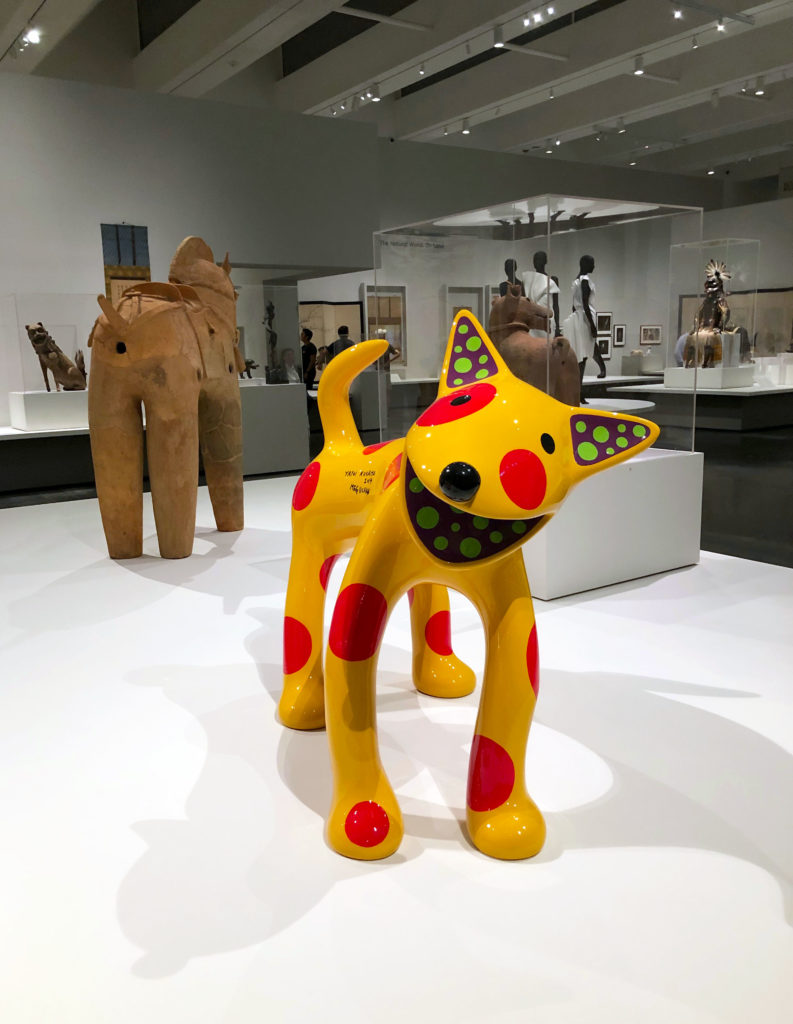
Closing 12/8/19 at LACMA is Every Living Thing: Animals in Japanese Art. It’s a really fun of exhibition with a good selection of art from different time periods, including Yayoi Kusama’s dog sculptures from Megu-chan (2014), two of which are pictured above.

From LACMA’s website-

Every Living Thing: Animals in Japanese Art celebrates one of the most distinctive and compelling aspects of Japanese art: the depiction of animals. Underpinned by Japan’s unique spiritual heritage of Shintō and Buddhism, the Japanese reverence for nature—and the place of animals within that realm—is expressed in sculpture, painting, lacquer-work, ceramics, metalwork, cloisonné, and woodblock prints.

Lions, dogs, horses, oxen, cats, fish, insects, birds, dragons, phoenixes—animals warm and cold-blooded, real and imaginary—are meticulously and beautifully rendered in myriad works from ancient 6th-century clay sculpture to contemporary art. Arranged in themes such as Zodiac Animals, Animals from Nature, Religion, Myth and Folklore, and Leisure, the exhibition draws heavily from LACMA’s permanent collection and includes masterpieces from Japanese and American public and private collections, some of which are on view for the first time.


May 162019
 

Blum & Poe is currently showing  Parergon: Japanese Art of the 1980s and 1990s Part II, the gallery’s second installment of their survey.

From the press release-

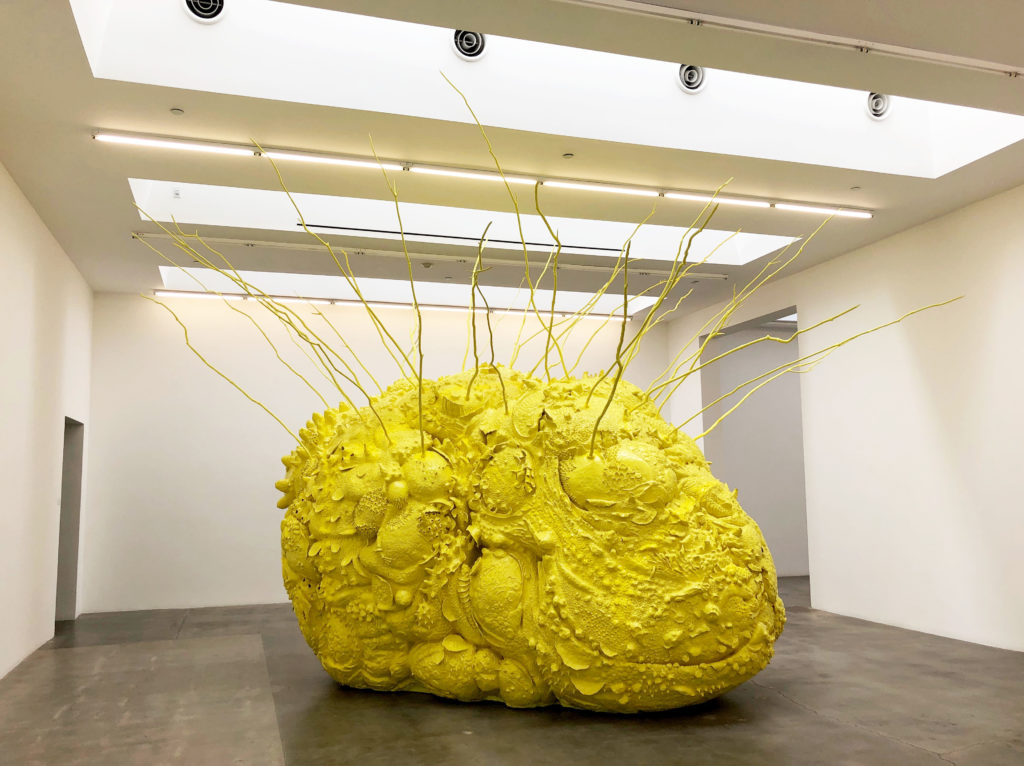
Part II of Parergon expands on the thematic territories explored in Part I, with seminal installations and sculptures from the era and performances by renowned figures of noise, sound, and electro-acoustic music genres. Kenji Yanobe’s Tanking Machine (Rebirth) (2019) is a darkly humorous, interactive, sci-fi sculpture first presented in 1989 that addresses the ever-present reality of nuclear crisis through a retro-futurist narrative. Influential multimedia artist, Kodai Nakahara’s bizarre installations of figurine-like marble stones and brightly, suspended spheres reflect a humorous take on sculpture’s “post-medium” condition.  As an intellectual and artist, Kenjiro Okazaki’s practice engages with theories of perception through interdisciplinary genres spanning architecture, literary theory, painting, reliefs, sculpture, robotics, and dance. Trained in both Japan and the U.S., Yukinori Yanagi’s large-scale and site-specific installations interrogate the politics of institutional borders and boundaries often drawing from semiotic systems of symbolic imagery. Psychedelic ’60s graphic designer Tadanori Yokoo revisits strategies of historical pastiche with his figurative noir paintings that hang alongside his cut-canvas portraits of Dada figures, as well as ceramic depictions of spiritual mediums. Finally, a dedicated Japanese noise archive of photography, journals, and vinyl records from Tokyo’s experimental underground will also be featured on the second floor giving historical context to the live performances.

The exhibition title makes reference to the gallery in Tokyo (Gallery Parergon, 1981-1987) that introduced many artists associated with the New Wave phenomenon, its name attributed to Jacques Derrida’s essay from 1978 which questioned the “framework” of art, influential to artists and critics during the period. Parergon brings together some of the most enigmatic works that were first generated during a rich two-decade period that are pivotal to the way we perceive and understand contemporary Japanese art today.

This exhibition closes 5/18/19.


Mar 212019
 

Noboru Tsubaki “Fresh Gasoline”, 1989
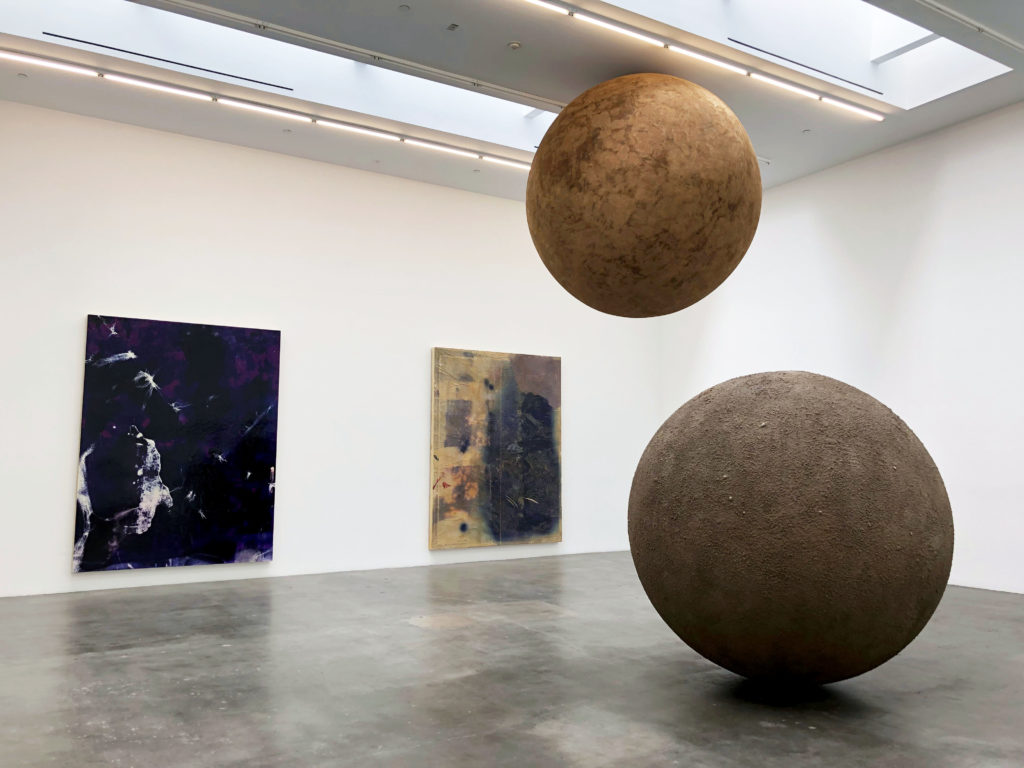
Yukinori Yanagi “Ground Transposition”, 1987/2019 (balloons) and Shinro Ohtake “Retina (Night Fever 1)”, 1990 (left on wall) and “Retina (DNA Shadow III)” (right on wall), 1990
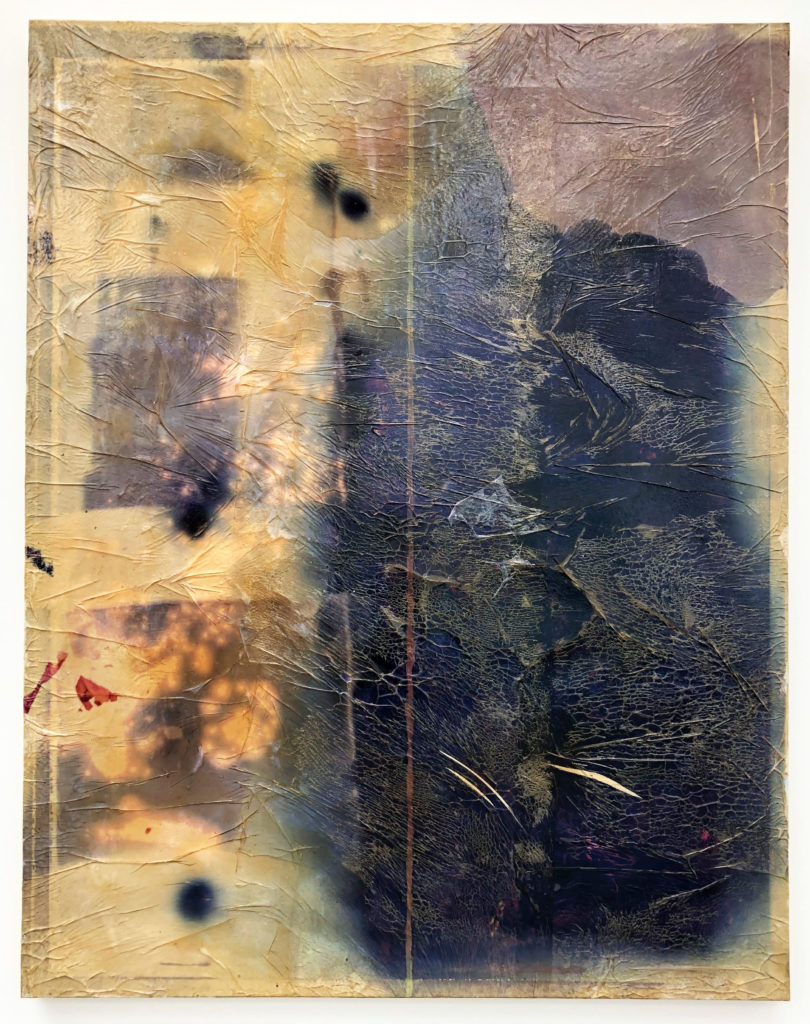
Shinro Ohtake “Retina (DNA Shadow III)”, 1990


Blum & Poe’s current exhibition Parergon: Japanese Art of the 1980s and 1990s, is a selected survey exhibition of Japanese art of the 1980s and ‘90s, curated by Mika Yoshitake. It includes the work of over twenty-five visual artists in a variety of media including painting, sculpture, video, and photography.

From the press release–

The exhibition title makes reference to the gallery in Tokyo (Gallery Parergon, 1981-1987) that introduced many artists associated with the New Wave phenomenon, its name attributed to Jacques Derrida’s essay from 1978 which questioned the “framework” of art, influential to artists and critics during the period. Parergon brings together some of the most enigmatic works that were first generated during a rich two-decade period that are pivotal to the way we perceive and understand contemporary Japanese art today. In the aftermath of the conceptual reconsideration of the object and relationality spearheaded by Mono-ha in the 1970s, this era opened up new critical engagements with language and medium where artists explored expansions in installation, performance, and experimental multi-genre practices.

When the U.S. and Europe were witnessing a return to Expressionism alongside a postmodern aesthetic of simulacra and deconstruction characterized by the Pictures generation, this zeitgeist of cultural capitalism was instead manifest under Japan’s unique social and geo-political conditions resulting from the rise and burst of the bubble economy. Artists began to explore subversive artistic languages and integrate underground subcultures into their practice using a variety of media, ranging from experimentations in electro-acoustic music, geopolitical and conceptual photography, and appropriations of advertisement culture. Others addressed the internalization of historical avant-garde and modernist aesthetics that were filtered through a new poetics of form, space, and language.

In the post-1989 Hirohito era, politics of gender, nuclear crisis, and critique of nationalism are especially poignant among artists from the Kansai region. This period also witnesses the rise of art collectives in the mid-90s and their darkly humorous performances and conceptual practices that reevaluated the history of Japan’s postwar avant-garde. These events reflect on a subculture generated out of a profoundly unique “infantile capitalism,” anticipating the explosive rise of the Neo-Pop generation.

This exhibition is presented on the occasion of Blum & Poe’s 25-year anniversary. Parergon commemorates a special facet of the gallery’s history rooted in this very timeframe in Japan—with Tim Blum’s early years as an art dealer and curator spent in Tokyo in the early ‘90s—and charts a bridge between the Japanese art historical territories the gallery has long championed. Parergon pursues the creative significance of the years between the milestones of Mono-ha and the Neo-Pop generation now synonymous with Takashi Murakami and Yoshitomo Nara.

This exhibition closes 3/23/19. Part II will open 4/6/19.