
Car Smash Requiem, 2023 by Tony Rodrigues was part of the recently closed exhibition CMND/CTRL at Heiress Gallery in St. Pete, Florida.

Car Smash Requiem, 2023 by Tony Rodrigues was part of the recently closed exhibition CMND/CTRL at Heiress Gallery in St. Pete, Florida.
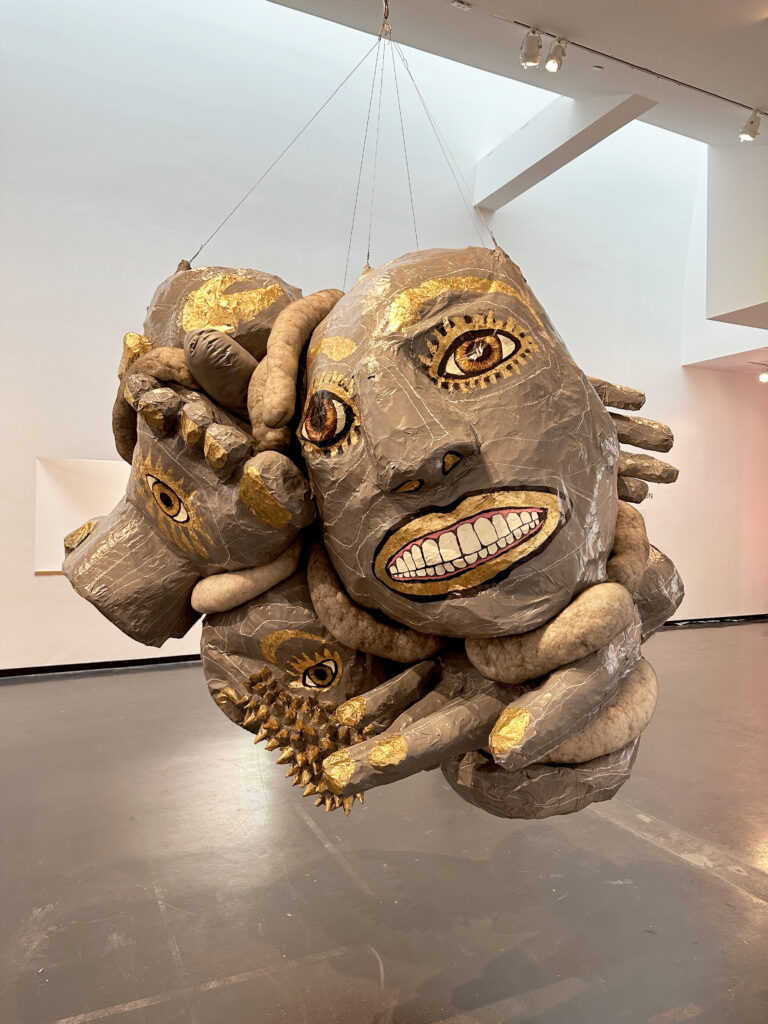
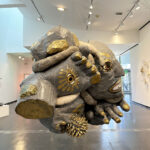
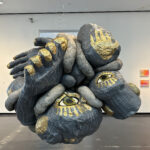
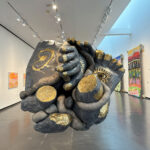
The 2023 Emerging Artist Exhibition in Creative Pinellas’ gallery space highlights work from the ten Pinellas County artists chosen by the organization for this year’s Emerging Artist Grant.
Above are sculptures by Amy Wolf. She has written several articles for the Creative Pinellas website which give some insight into her work and are worth a read.
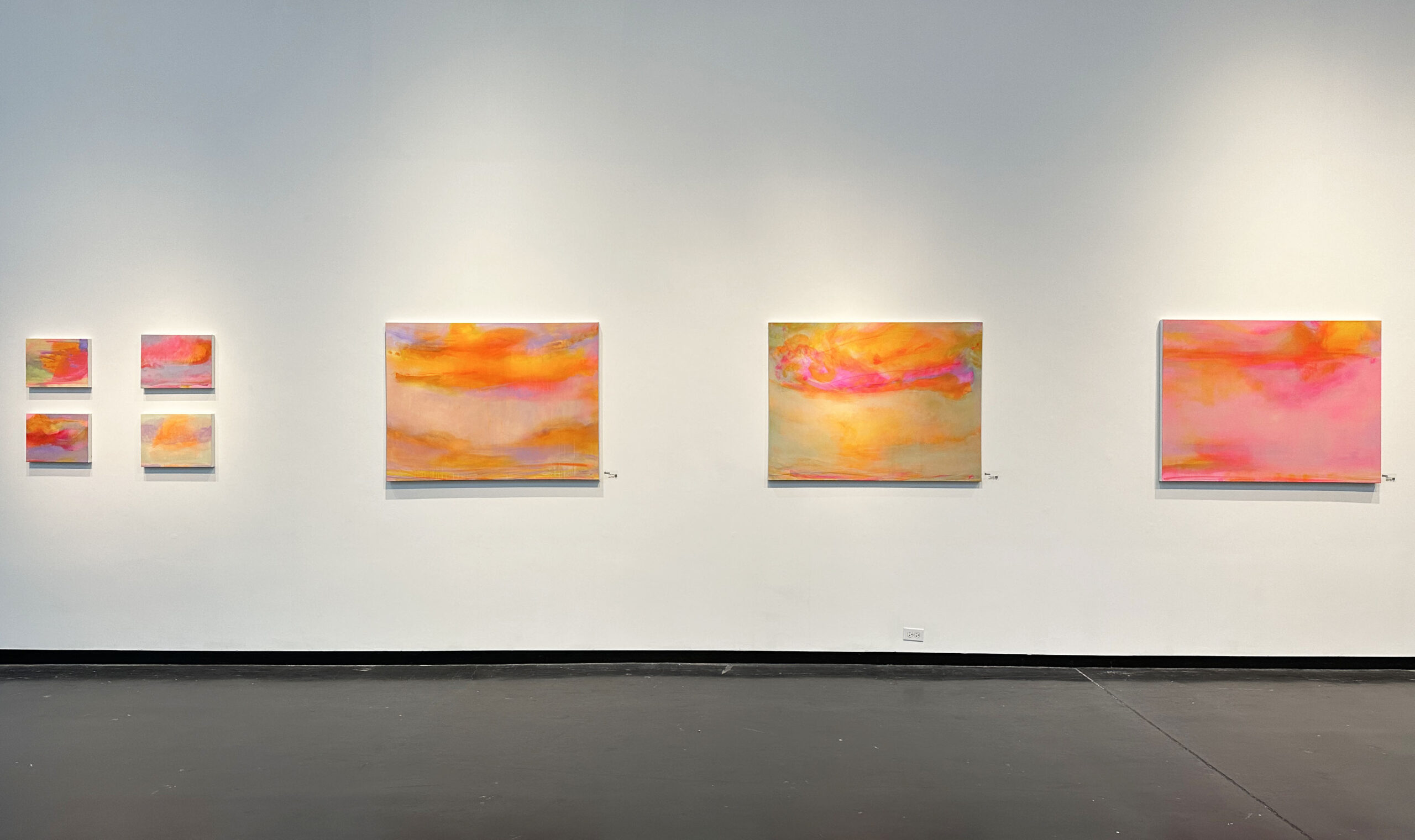
According to artist Kimberly Engel, the paintings above “explore vibrant color interaction while inviting viewers to meditate on an illusive horizon line where sky meets water.”
From the Creative Pinellas website-
Kimberly Engel is a contemporary abstract painter who lives and works in Clearwater, Florida. Her distinct gestural style combines a love for color interaction with spontaneous mark making. Engel’s paintings explore levels of transparency, evoking depth and light. She is inspired by the constant presence and changing states of large bodies of water. She has lived on the shore of Lake Erie in Euclid, Ohio prior to moving to the Gulf Coast.
Engel describes her process as an exploration of herself and ultimately the dissolving of herself mirrored in the process of making and deconstructing works. Her gestural marks have been described as both compulsive and somewhat calligraphic. They undulate and disappear under thin veils of color.
Also check out her Instagram.
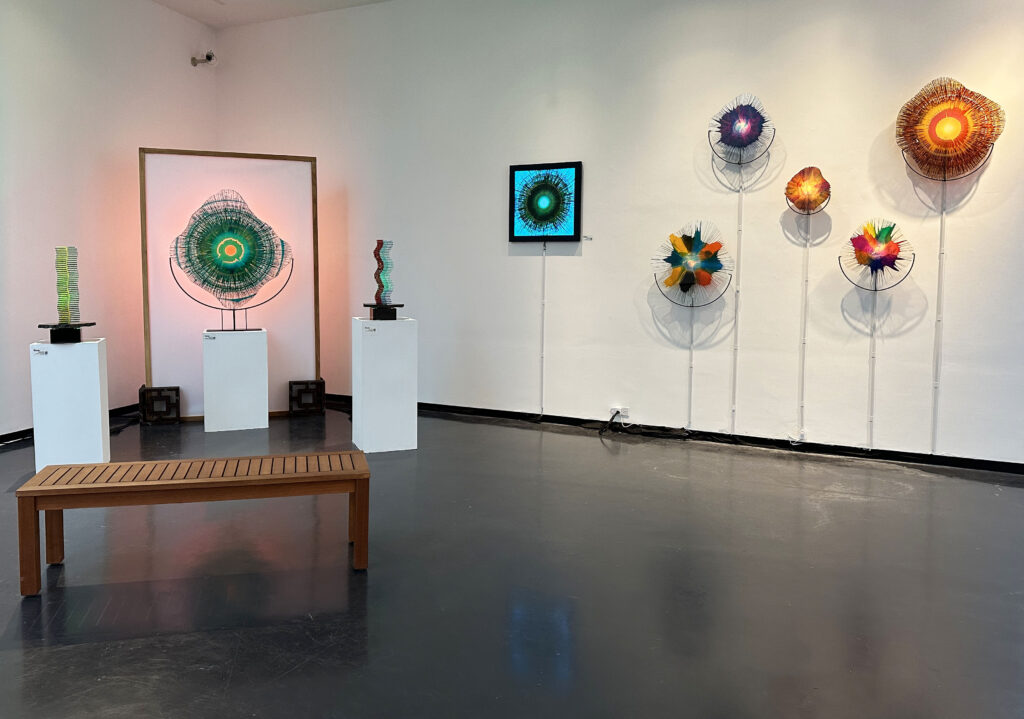
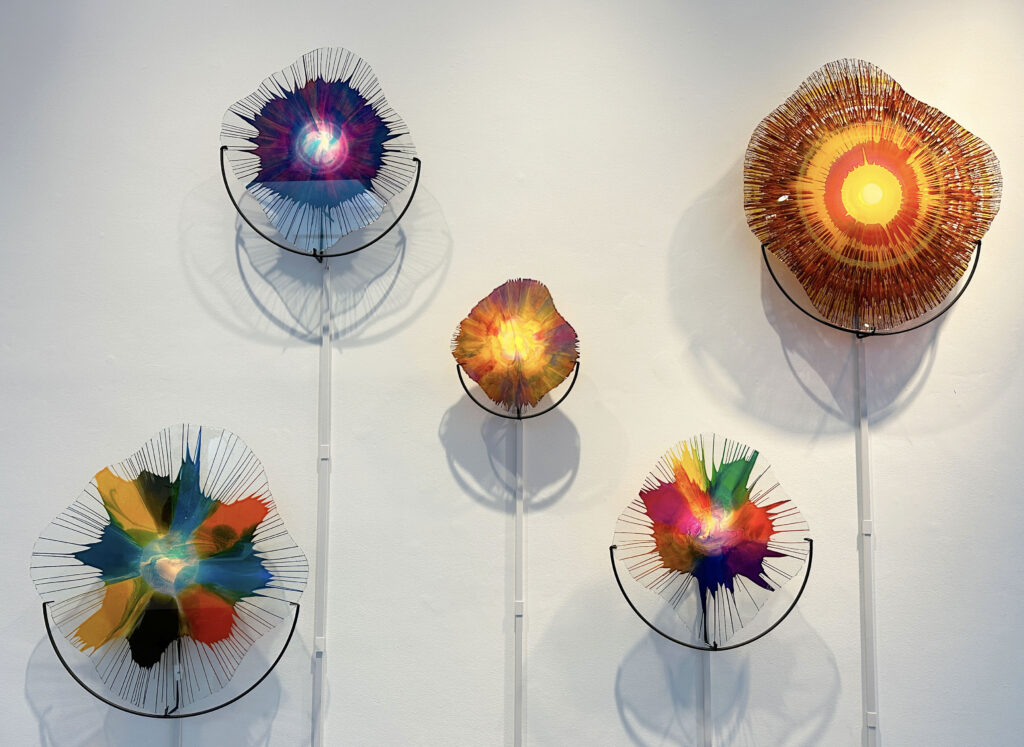
Denis DeBon created the unique glass works seen above.
His biography from the gallery website-
Dennis DeBon is the creator of EnergyWebs, which are one-of-a-kind works of modern glass art. He is often been compared to artist Jackson Pollock. Like Pollack, Dennis uses simple artistic techniques and has combined reverse painting on glass with spin art and taken both to a whole new level.
Each EnergyWeb is cut from a large sheet of plate glass, then free-style hand-cut into shape, scalloped, polished then spun. Dennis uses a multitude of application techniques and color combinations when creating each piece before firing and hand-signing them.
Every EnergyWeb is a unique, one-of-a-kind work of modern glass art and he is the only artist in the world creating them.
In addition to selling his artwork at fine art festivals across the country, Dennis was commissioned as the artist to create the Richard Dawkins Awards. In addition, his past creations have been presented to James “The Amazing” Randi, Carl Sagan’s widow, Ann Druyan, and the Zora Neale Hurston and the Koi Society of America award winners.
Dennis was born and raised in Buffalo, New York and attended the Rochester Institute of Technology in Rochester, New York, where he studied photography and graphic design.
He now lives in Saint Petersburg, Florida and when he isn’t creating art, you might find him writing screenplays or in the boxing ring . . . working as a professional boxing referee.
For more of the artists in the exhibition, head to the pages below.

“North Tower”, 2021, mixed media on canvas

“North Tower” detail

“South Tower”, 2023 mixed media on canvas

Paintings created from zoomed-in sections of the underpaintings of the larger works

“Memories”, 2023, digital photographs

“Memories”, 2023, digital photographs (closer look)
Gallery 221, at Hillsborough Community College’s Dale Mabry Campus, is currently showing Snow in September, an exhibition of work by Kirk Ke Wang. The layered mixed media works are really pretty but there is a deeper meaning within the details.
From the gallery about the exhibition-
Kirk Ke Wang (b. Shanghai, China) is a multimedia artist whose work focuses on critiquing modern stereotypes as a diaspora. Throughout his career, Wang has used painting, installation, mixed media, video and photography to present his vision of the world, led by a consistent thread: the fear of inexorable cataclysm.
Wang’s solo exhibition in Gallery221@HCC draws inspiration from a 13th century Chinese play called The Injustice to Dou E, also known as Snow in Midsummer. In the story, the tragic and unjust death of Lady Dou E causes the heavens to snow during a hot midsummer day, thereby proving her innocence.
Today, the story symbolizes injustice and tragedy, and in Wang’s exhibition Snow in September, the artist parallels the Chinese fable with abstracted images of more recent tragedies such as 9/11, calling to mind the moment when the twin towers collapsed, and debris rained down like falling snow.
Through retelling tragedies, Wang tries to find a spiritual solace and the meaningfulness of being human.
This exhibition closes 6/22/23.

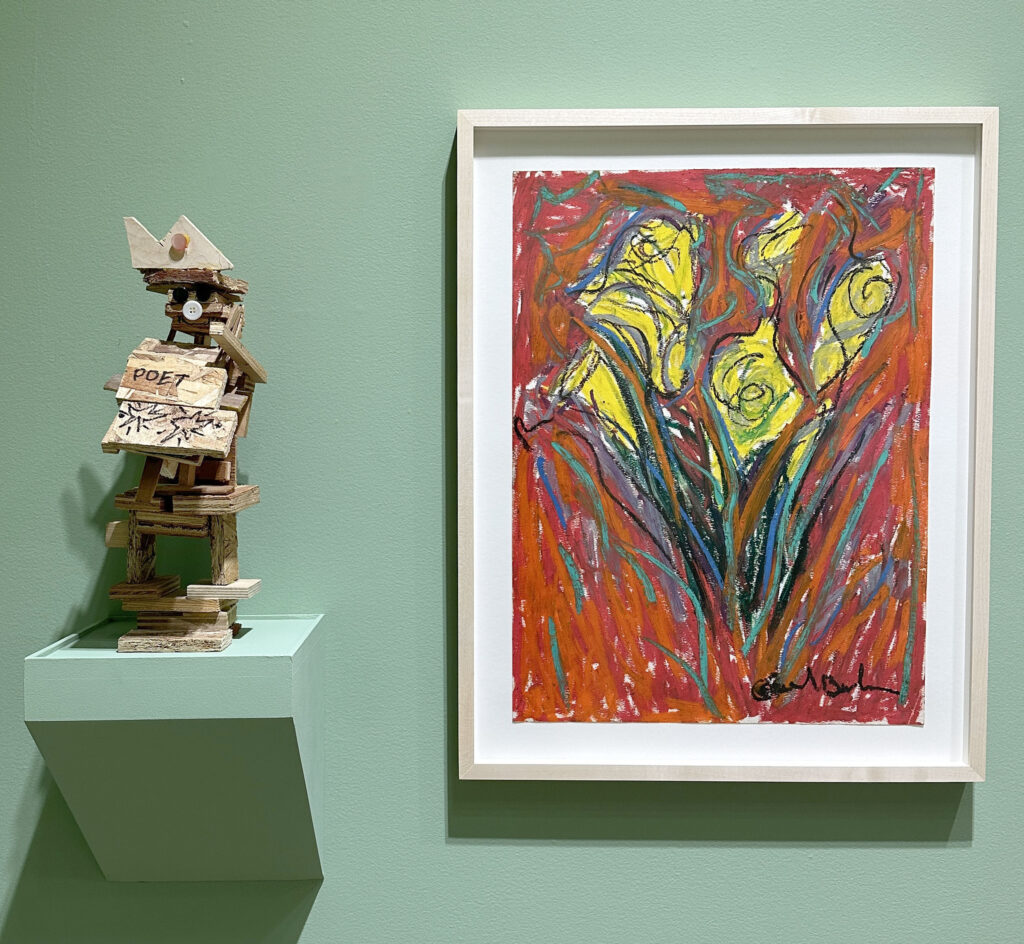
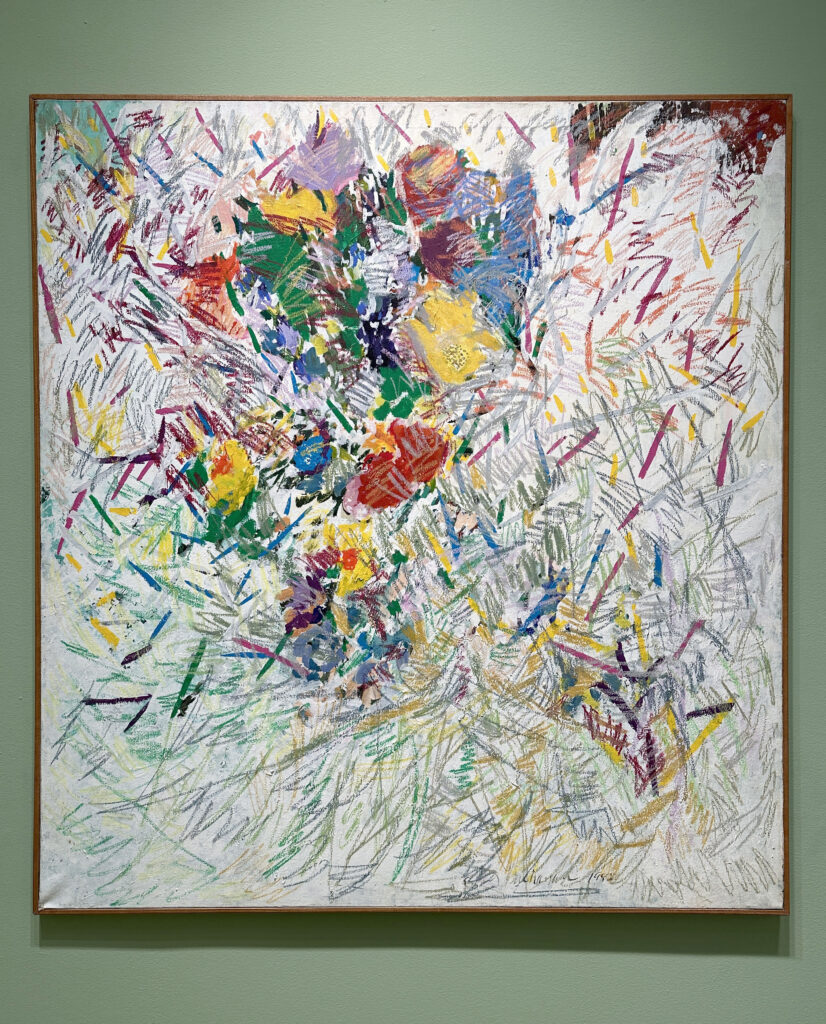
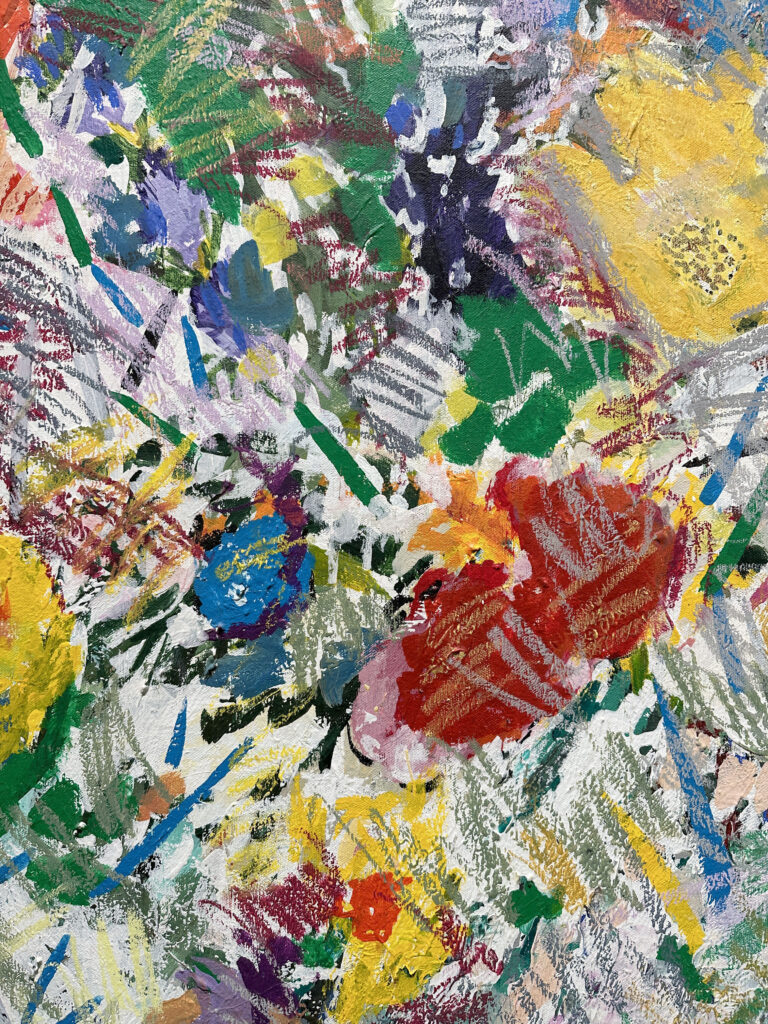
Andrew Edlin Gallery is currently showing a collection of rarely seen works by artist Beverly Buchanan. It covers her years as an abstract expressionist painter in NYC and her later work inspired by the rural South.
The gallery’s press release gives a really good history of this wonderful artist-
The first section of the show features the artist’s abstract paintings and works on paper from the 1970s, alongside post-minimalist sculpture from the late 1970s and early 1980s. The second section introduces a later, more personal side of Buchanan’s oeuvre, her colorful depictions of flowers and small folk-inspired assemblages created during the same period as her well-known “shacks.” A number of the works in the show, many of which were part of the artist’s private collection, have never been shown.
Though Buchanan wrote about her love of “making things” from an early age, it wasn’t until 1971, when she began taking evening classes taught by African-American painter Norman Lewis (1909-1979) at the Art Students League in New York, that her career as an artist took off. Abstract still-lifes that she made in Lewis’s class in 1972 are displayed here for the first time. That same year, her paintings were included in a group show at Cinque Gallery, a nonprofit space co-founded by Lewis and Romare Bearden (1911-1988), which showcased the art of emerging minority artists.
Having witnessed demolition sites in Harlem and SoHo, Buchanan evoked the visual erosion of architectural facades through what she dubbed her “Wall” paintings. In 1976 she presented a selection that she called “Torn Walls” in a two-person show titled City Walls at the Montclair Art Museum in New Jersey. In his New York Times review, David Shirey described the show as “indisputably a tinderbox of a display that will cause sparks to fly” and “the kind …one sees more regularly at the Whitney Museum and at some of New York’s avantgarde galleries.” Three of these paintings are being shown for the first time since that exhibition, forty-seven years ago. The show also includes a monotype, small studies, and a large painting from a series she titled “Black Walls.” The latter was originally featured in Shackworks, a seminal exhibition that opened at the Montclair Art Museum in 1994 and traveled to nine other institutions from 1994-1996.
By the late 1970s, Buchanan was further exploring the aesthetics of architectural decay through sculpture, i.e., cast concrete assemblages, made from pieces of stone, brick debris, clay, and cement mixtures. She arranged these works in clusters on the floor, documenting them with photographs, and exhibited them, notably at Truman Gallery in New York in 1978, and at the feminist artist cooperative A.I.R. Gallery in 1980 in its groundbreaking show Dialectics of Isolation, curated by Ana Mendieta. Some of the small black terracotta works on display may be considered as studies for these larger assemblages.
After moving to Georgia in 1977, Buchanan became increasingly interested in making what she referred to as “environmental sculpture,” artworks that mimicked exterior surfaces and were also site-specific installations that were allowed to decay over time and become part of the surroundings. Most notably, in 1979 she completed Ruins and Rituals (also the title of the Brooklyn Museum retrospective from 2016-2017), and in 1980 Marsh Ruins, with funding from a Guggenheim Fellowship. To construct the three mounds that comprise Marsh Ruins, Buchanan produced her own tabby cement. Composed of the lime from burned oyster shells mixed with sand, water, ash, and other shells, tabby is what colonial settlers used to build structures in coastal Georgia, the location of Marsh Ruins. In her zine “Making Tabby for Brick Sculptures,” Buchanan documented the labor-intensive process of making tabby, a task that in the eighteenth century was typically delegated to enslaved workers. Two smaller iterations of these structures, with bits of oyster shell showing in the concrete, are laid out in the show alongside four other examples of her cast concrete assemblages. Though little is known about their exhibition history, we do know that the artist placed these cast concrete works in her garden in Athens, Georgia. They retain stripes of the green, blue, black and earth-toned paint with which Buchanan initially covered them. The faint outline of her signature “B.B.” is also visible.
Buchanan’s later work is intimately linked to her natural surroundings and folk art. As a native Southerner, she drew on memories from her childhood as well as the lush Georgian landscape and yard art of local self-taught artists. A passionate gardener, Buchanan produced vivid oil pastel flower drawings and small assemblage works. She loved to rummage through thrift stores collecting marbles, wedding toppers, and beads, to create what she referred to as her “Christmas trees,” and “spirit jars,” her take on memory jugs, a prized Southern Folk Art form. Buchanan was particularly moved by a visit to folk artist Nellie Mae Rowe’s home in Fayette County, Georgia, and reminisced: “Being at Nellie Mae Rowe’s home was like being engulfed in a magic forest of her work because every surface had a mark from her hand and the simple chewing gum works made you never take gum as just chewing gum again.” A distinctive chewing gum jug and pin are also included in the show.
This exhibition closes 5/13/23.

“Curtains”, 1972, Acrylic and fabric on canvas

“Curtains”, 1972 (detail)

“Voyage”, 1973, Acrylic and collage on canvas

“Shrine: Homage to M.L.”, 1963, Oil on canvas

“Big Ox”, 1967, acrylic on canvas
There’s only a few days left to see Miriam Schapiro: The André Emmerich Years, Paintings from 1957–76 at Eric Firestone Gallery.
From the press release-
Miriam Schapiro (1923–2015) is now well-known as a pioneer of the Women’s Art Movement, and for her contribution to the Pattern and Decoration Movement. She fused craft work, traditionally made by women, with modern painting in collages termed “femmage.” However, this exhibition will additionally shed light on her early Abstract Expressionist canvases, and her pioneering approach utilizing computer technology to create Hard Edge geometric painting in the 1960s. Spotlighting the legacy of this feminist artist, the exhibition will explore three stylistic phases, with significant examples from these two decades of Schapiro’s career.
This exhibition closes 5/13/23.
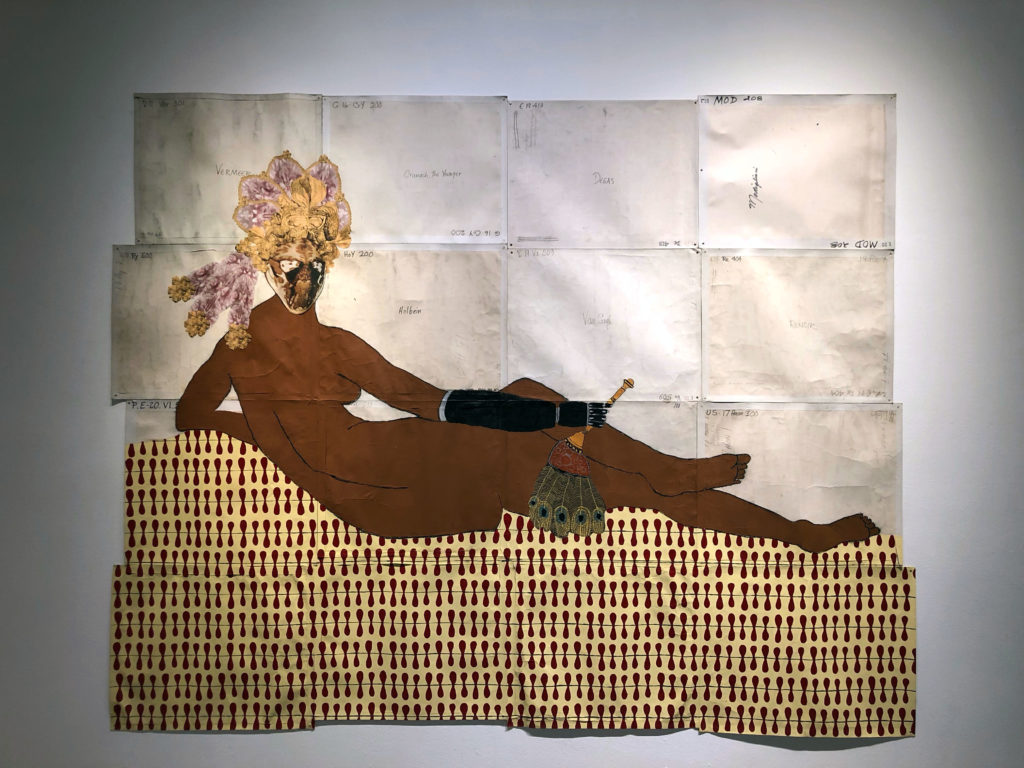
After Ingres, 2014
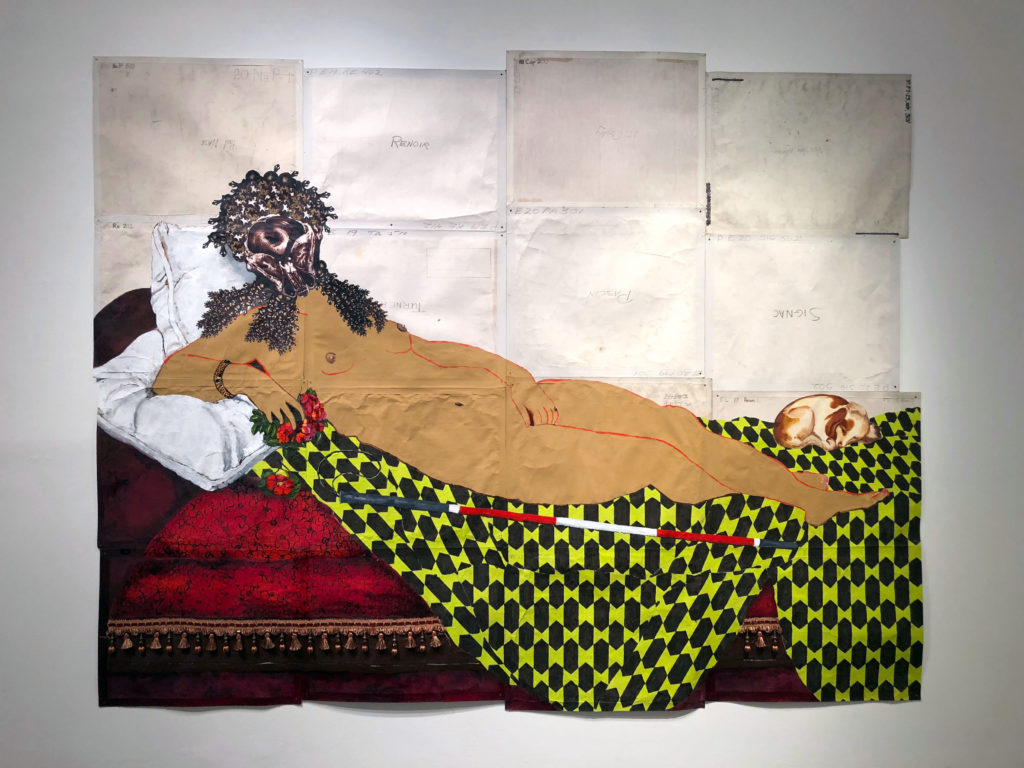
Blind Venus (for G),2018
Currently at Walter Maciel Gallery is Katherine Sherwood’s solo exhibition, The Interior of the Yelling Clinic. The title, according to the press release, takes its name from an organized group of six artists, including Sherwood, “who have an interest in the intersections between war and disability. The Yelling Clinic was created to mix artistic practice with community outreach, art instruction and activism.”
Sherwood’s paintings are influenced by famous European works, but also include evidence of physical disabilities (like the cane in Blind Venus, pictured above), and her own brain scans. After a cerebral hemorrhage at 44, the artist lost the use of her right arm and hand and was forced to learn to paint with her left. The nudes mix the personal with the traditional while also challenging notions of beauty and the idealized female form. Adding another dimension to the paintings, they are created on the backs of old art history painting reproductions that she saved from being thrown away by the UC Berkeley Art Department where she taught. The gallery has hung one of her flower paintings (pictured below) from the ceiling so that you can see an example of what is on the other side of the work.
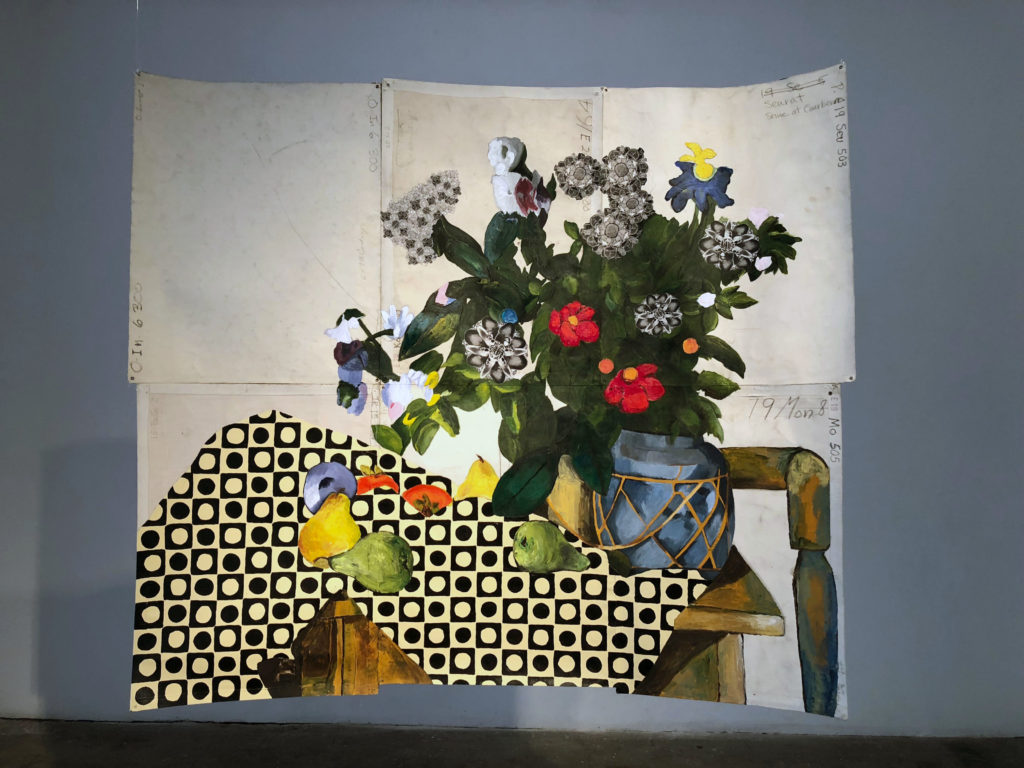
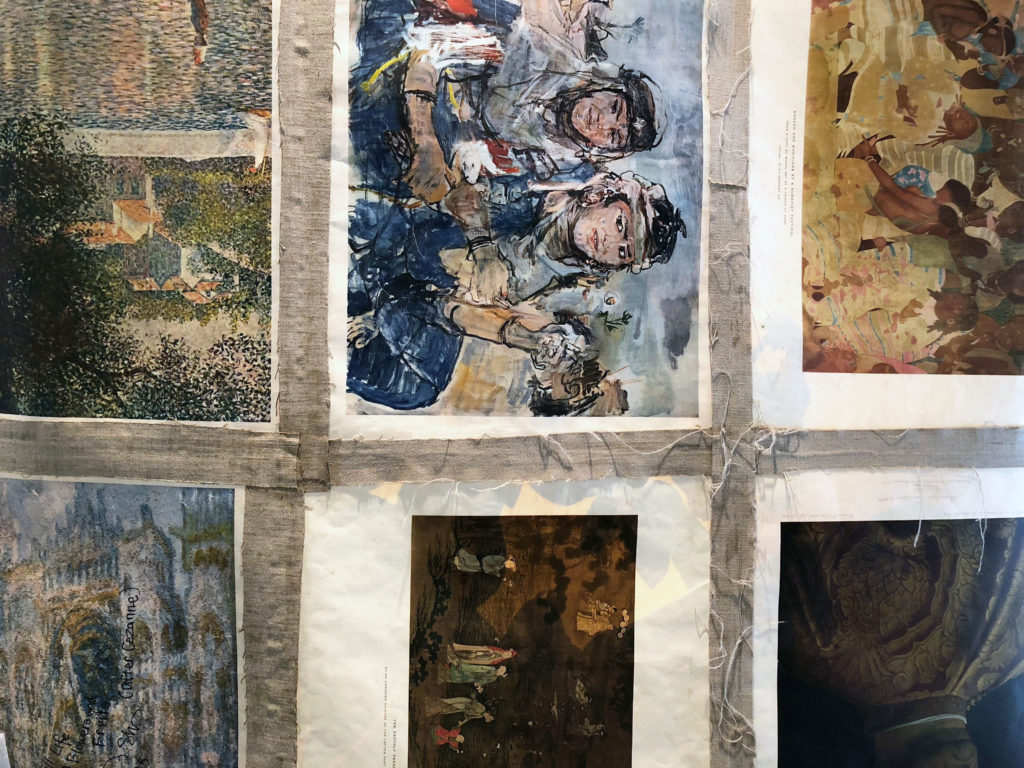
This exhibition closes 4/28/18.


To keep these posts a little shorter, I have split them up into two parts. The following continues the list of Chelsea exhibitions-
Terry Winters‘ vibrant paintings at Matthew Marks Gallery are made up of layers of marks in oil, resin, and wax.
From the press release-
“These recent paintings are a series of accumulations,” Winters says. “There’s a range of paint application in terms of both material and technique. Each color is a marker, a stage of development. I’m moving across the surface, modulating the material in different ways. That inflection produces an amplification of colors, both physical and chemical. But color is basically wild and full of surprises.”

Pádraig Timoney‘s work in The Deedle Eye, at Andrew Kreps Gallery, is a diverse combination of painting, photography, and installation.
From the press release-
Despite the visually distinct results, at the work’s core is a focused inquiry into the mechanics of images. Timoney conversely works in both directions – creating new images from abstractions (the captivating results of processes achieved in the studio), or rebuilding them part-by-part from photographs or observation. In each, he acknowledges the inherent flaws of these constructions, from the faultiness of recognition, the errors of translation, and further, the subjectivity of both viewers and the artist.
These in turn become generative openings in Timoney’s work as they are distanced from their original context. The images exist within thrilling, new visual constellations, allowing for the introduction of artifice and illusion, and the question of not only what they depict, but why? Each work records an index of decisions that determine its final state, materially and cognitively, displaying a history that is intentionally left open-ended. Figuration appears to hover only a hair away from abstraction, as if the movement of a line would cause one to collapse into the other. The narrowing of this gap suggests that the works’ initial disparate appearance may lead to an alternate understanding of their connections; a net that widens only to close anew, though what’s caught within it is left for the viewer to decide.
Also make sure to go to the space next door to see Klaus Weber’s sculpture Emergency Blanket.

Ai Weiwei has four shows up in NYC right now. Two of which are in Chelsea, at Mary Boone Gallery and Lisson Gallery, one is at the Mary Boone Gallery uptown, and one is at Deitch Projects in SoHo. Mary Boone Gallery and Lisson are both showing Weiwei’s Roots and Branches work, which includes large scale sections of dead trees, sometimes like the one seen below in cast iron at Lisson, and a 25 foot sculpture made up of tree parts bolted together. The uptown gallery includes a circle made up of 40,000 spouts broken off from Chinese teapots. Deitch Projects gallery has Laundromat, in which Weiwei has arranged items of clothing left behind by Syrian refugees (after they were forced to leave camps near the border of Greece) that he collected and laundered.


James Hyde’s exhibition Ground at Luis de Jesus Los Angeles combines photography and painting to form strong graphic images.
From the press release–
The title “Ground” resonates with the descriptive photography of western landscapes. In the painting context, the ground is the active place on which painting occurs. Hyde uses a home brewed paint for these works, consisting of pigment dispersed in acrylic mediums, and in most cases that pigment is a form of ground earth. In turn, Hyde’s photographs follow a “light-room” process developed in the computer, distorting and adjusting it and challenging the notion of any factual naturalism.
Resisting genres and traversing mediums, Hyde investigates the abstract gesture in relationship to photography. His opposition to the “realism” of digital photography, placed against the colors of abstracted shapes, snaps photography into place, making it a site, a location, and naturalizing it as a pictorial fact while reframing the question of the truthfulness of photography.
This exhibition closes 12/19/15.
(images via Luis de Jesus Los Angeles)


LAM Gallery in Hollywood is currently showing the work of Miriam Wosk in an exhibition titled Touch of the Hand.
From the press release-
Comprised of mixed media paintings, collages, and sculptures from the last decade of Wosk’s life, the exhibition is an enchanted journey through a world of her own creation. In this world, human, insect, and aquatic life-forms meet insidious botanical growths; hearts share the stage with horns and claws; and beauty rules with a heavy hand.
Get up close to see all the tiny details that went in to these amazingly intricate works. This show closes 10/31/15.

Mark Bradford- Dead Hummingbird, 2015 (image via Hammer Museum)
Today (9/20/15) is the last day to see the majority of artist Mark Bradford’s exhibition Scorched Earth at the Hammer Museum.
From the museum’s site:
Comprising a suite of new paintings (on view through September 20), a multimedia installation (on view through September 27), and a major painting on the Lobby Wall (on view through November 15), this new body of work by the Los Angeles–based artist Mark Bradford refers to formative moments in his life and ruminations on the body in crisis. As an artist who has long been interested in strategies of mapping and the psychogeography of the city he calls home, Bradford uses his characteristic painting style to excavate the terrain— emotional, political and actual—that he inhabits. Examining the moment and afterlife of the 1992 uprisings in Los Angeles, which he experienced from his studio in Leimert Park, Bradford has translated the outrage and lasting wounds of the riots into these new paintings. Scorched Earth is Bradford’s first solo museum exhibition in Los Angeles.
For more on Mark Bradford, his life and work, this LA Times article is an excellent portrait of the artist.
Get out of the heat and check it out- it’s free!