Mar 022019
 

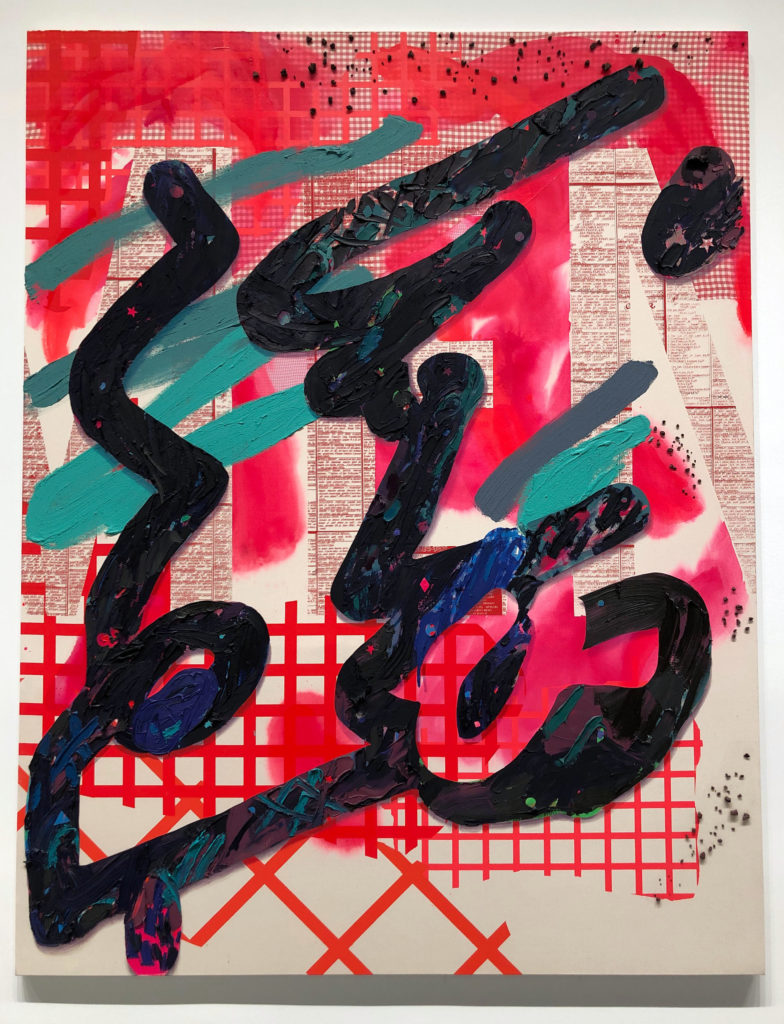
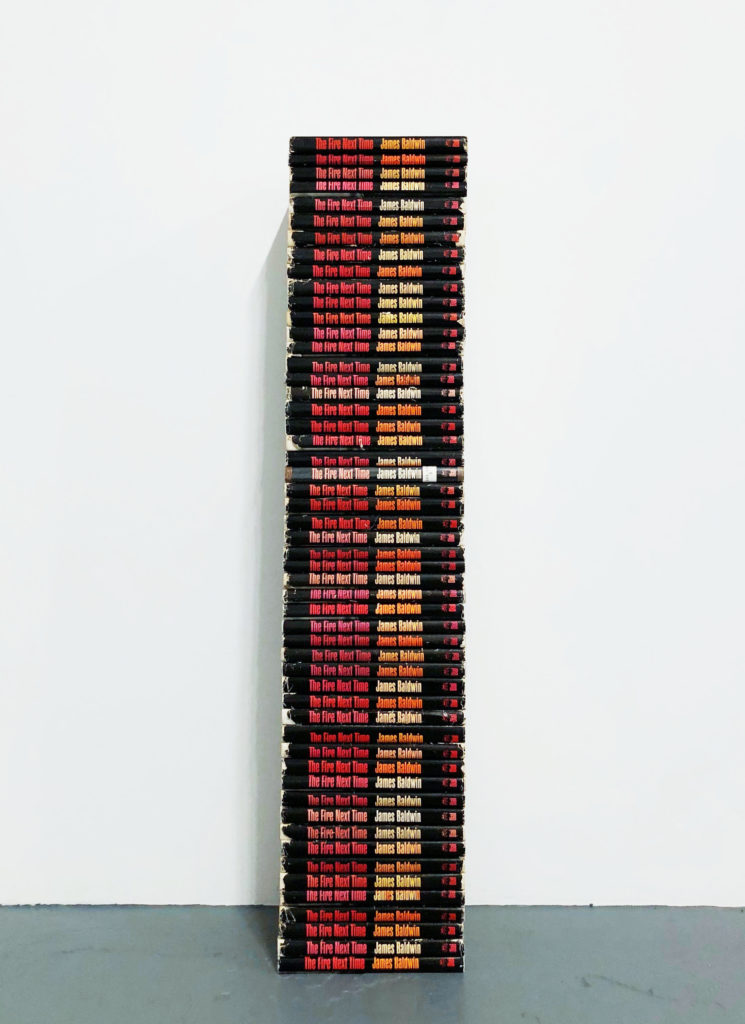
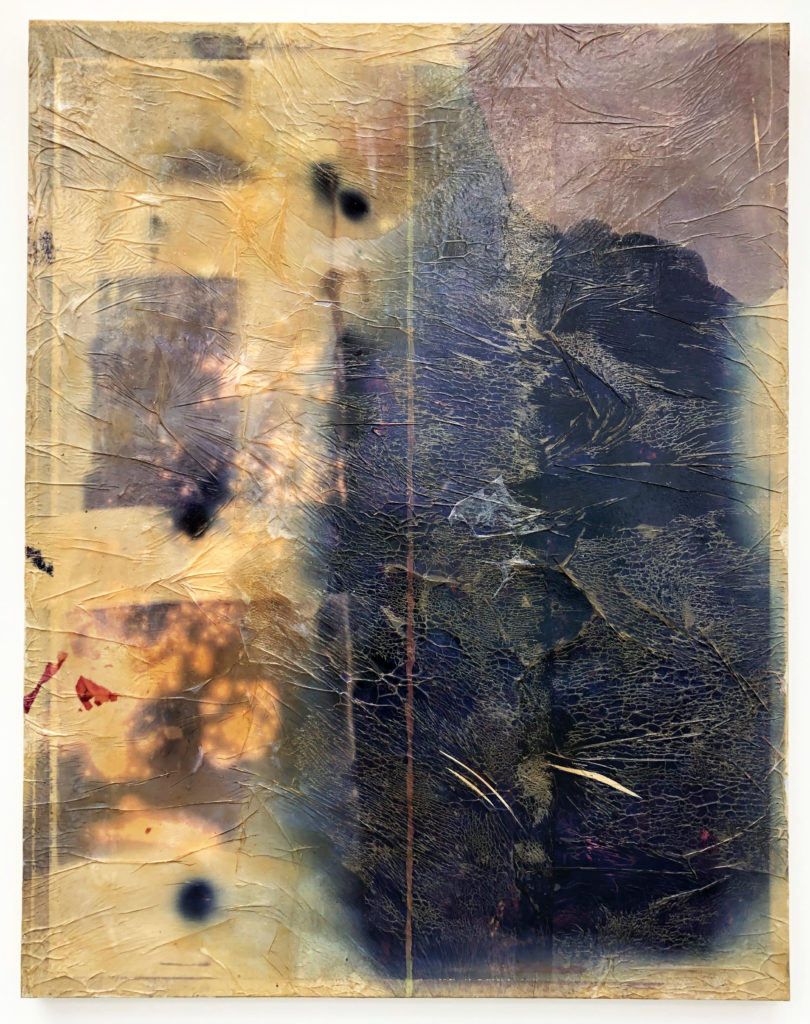
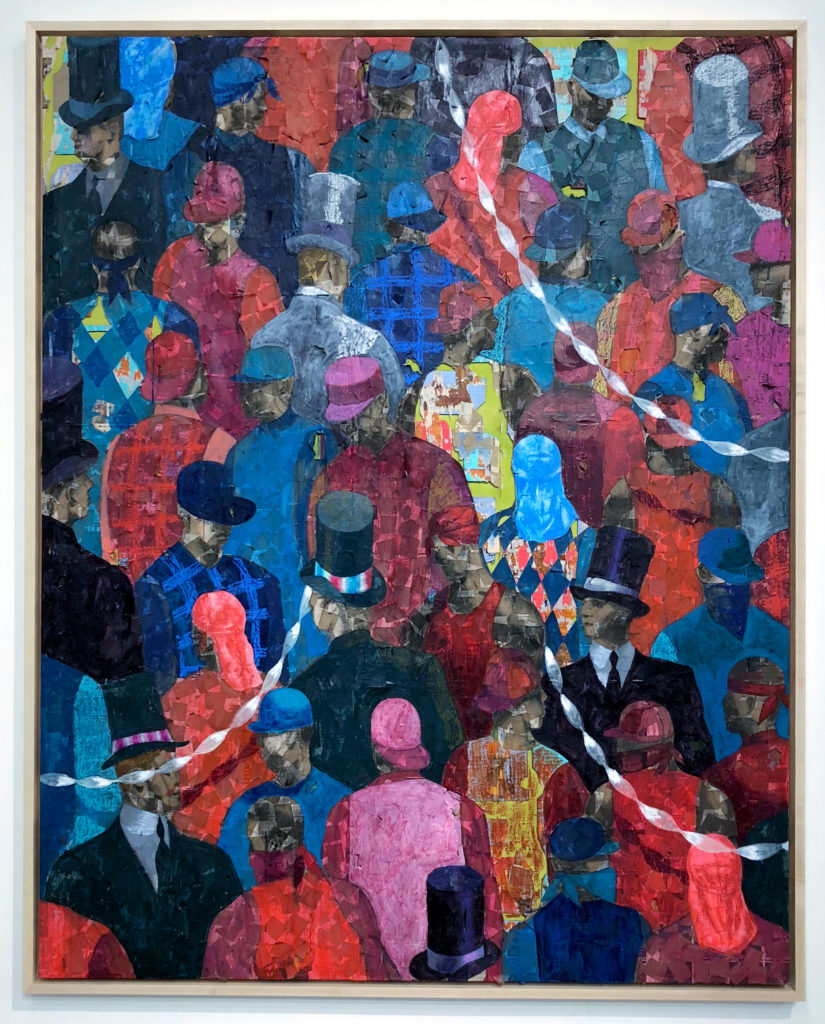
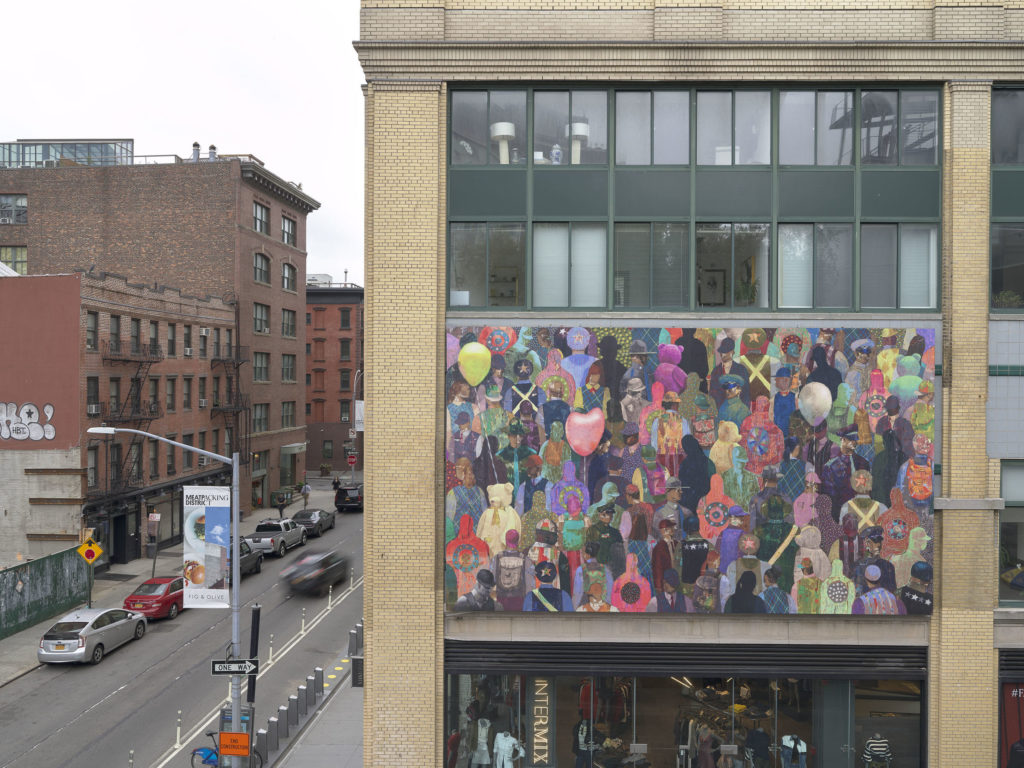
Derek Fordjour, Two Party System, 2019


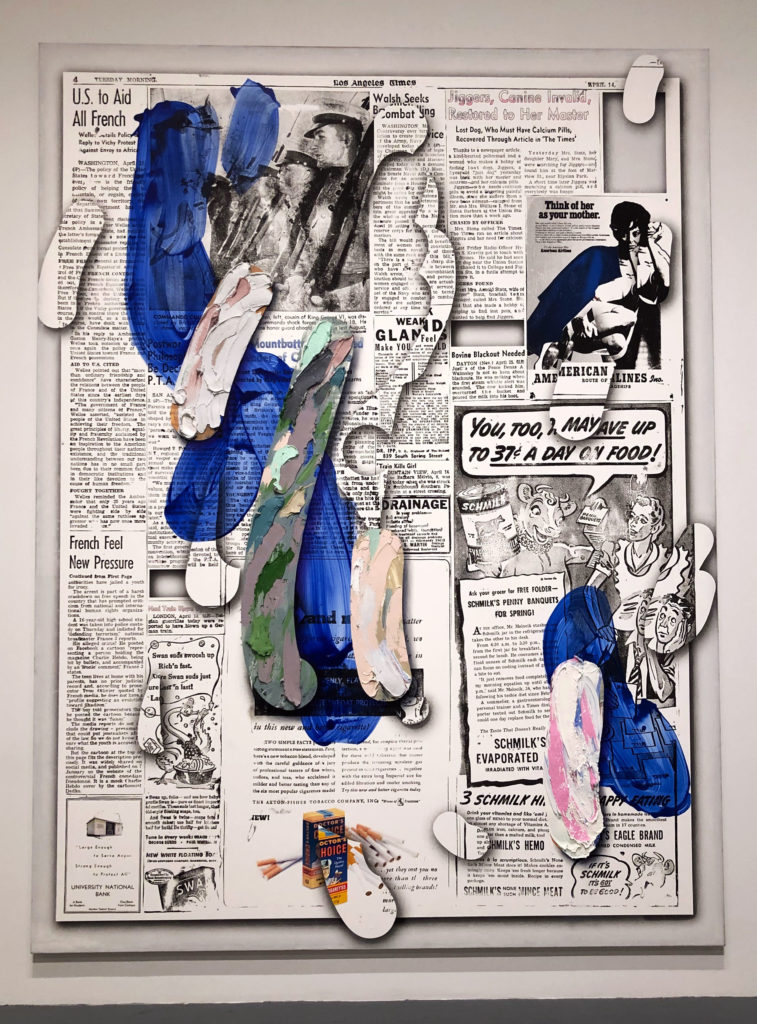
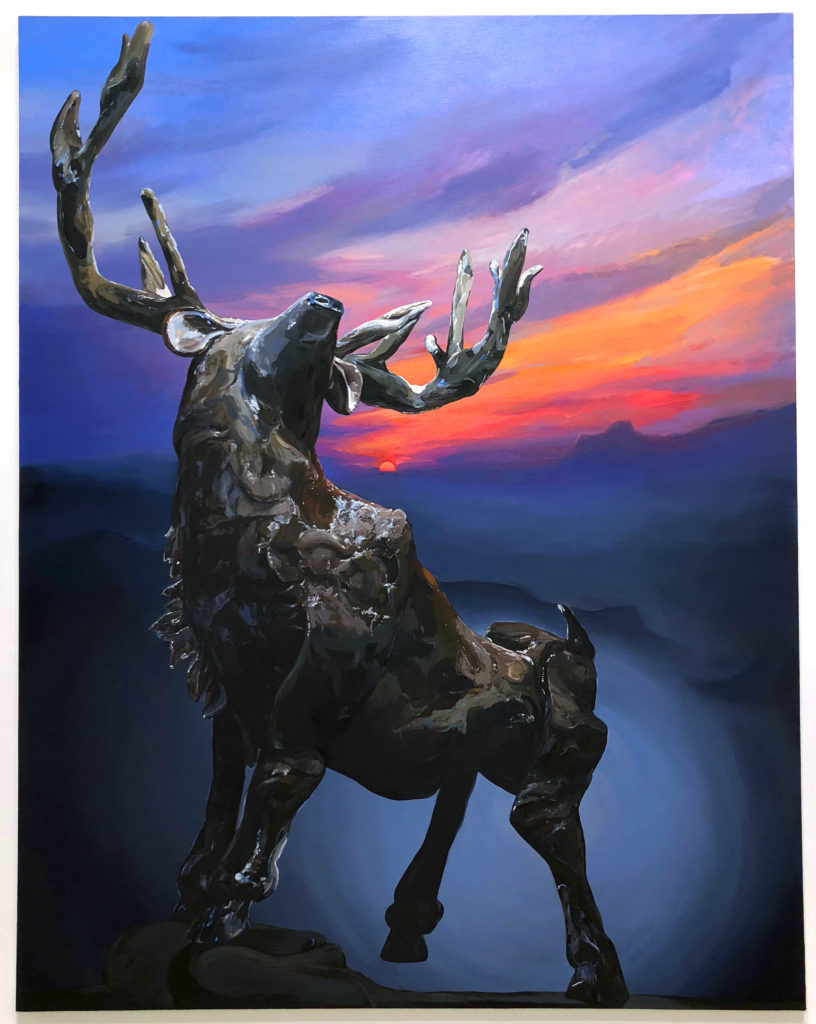
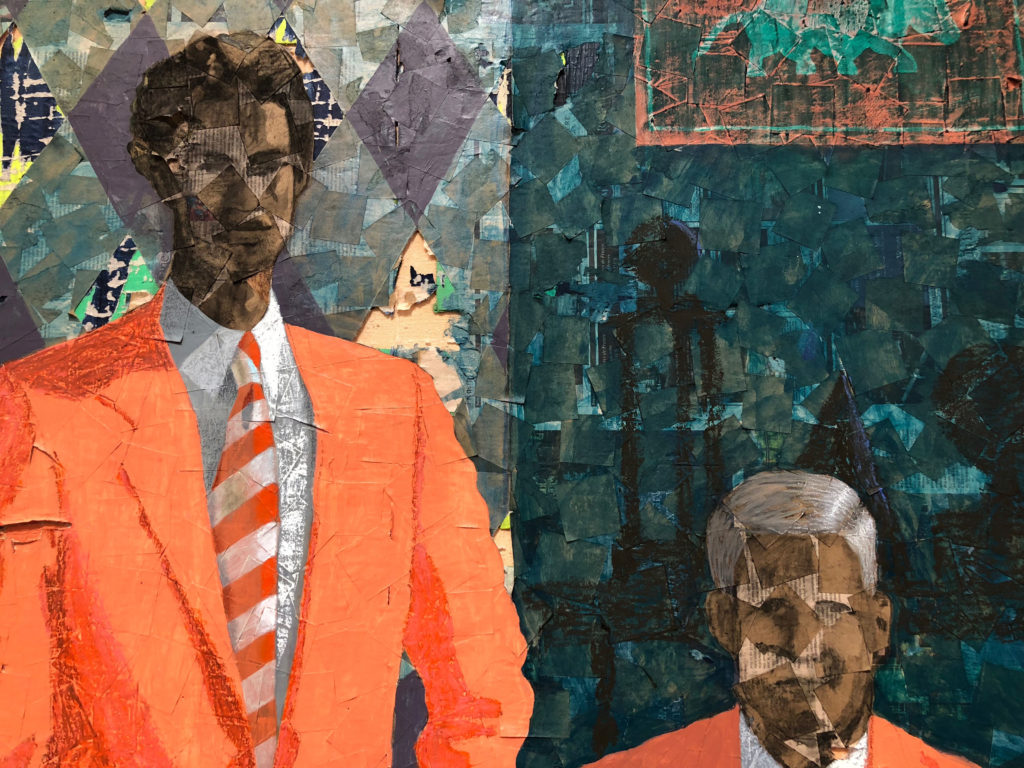
JRRNNYS, Derek Fordjour’s solo exhibition at Night Gallery, includes new paintings and sculptures that “advance explorations of earlier works, returning to the subjects of crowds and athletic competitions to illustrate the entrenchment of power relations, capital flows, and racial inequality within the economic and social systems of the United States”. The paintings are made of multiple layers of painted cardboard and newspaper that are then scored and sections are removed.

This interview with the artist from artnet goes into more detail on his fascinating process and the reasons behind it.

Signing Day, 2019

Signing Day detail


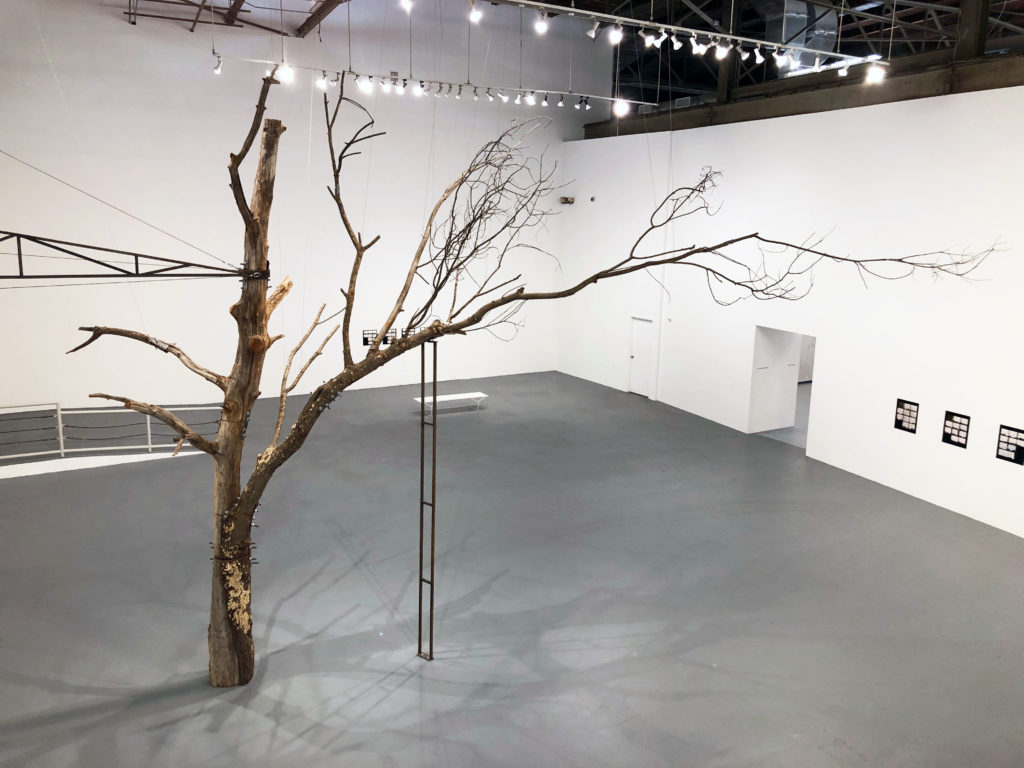
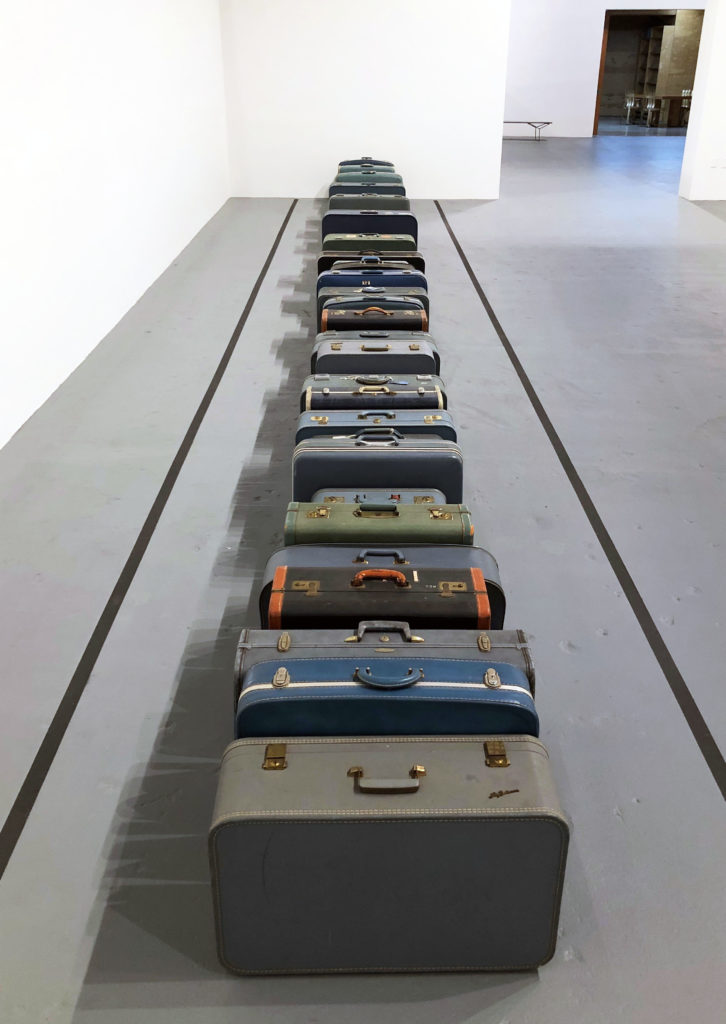
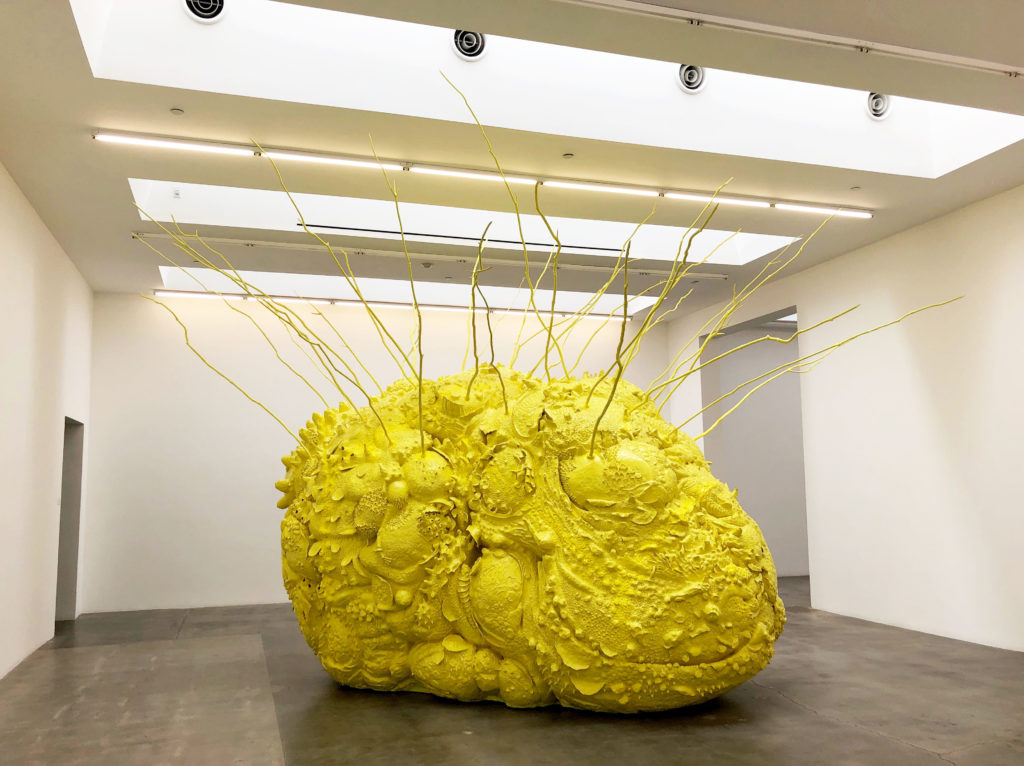
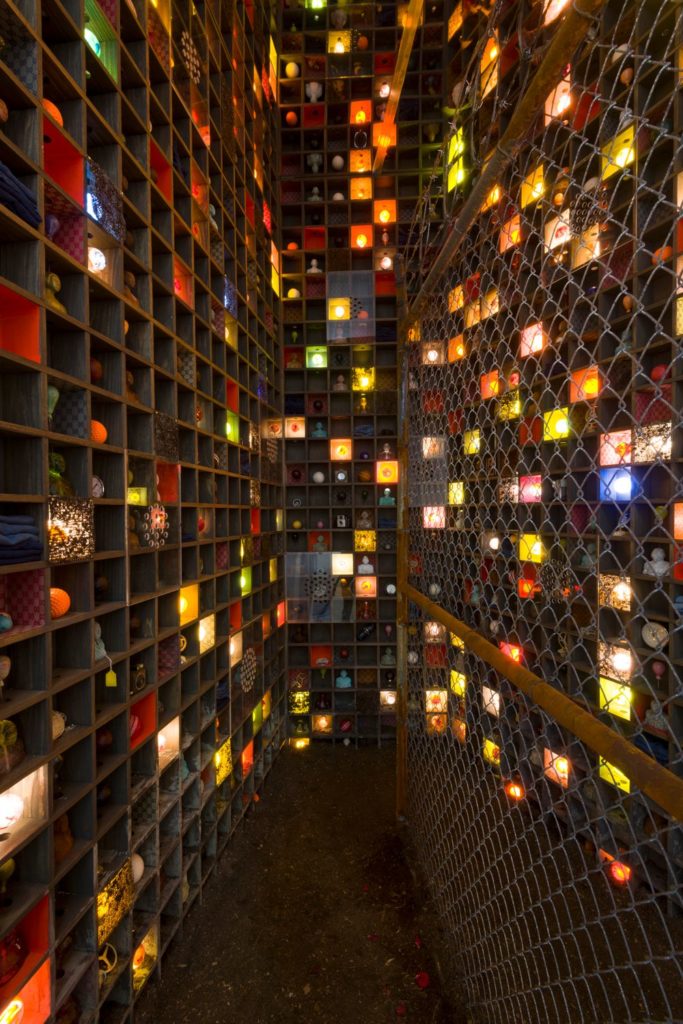
The centerpiece of the exhibition is the installation STOCKROOM Ezekiel.

From the press release

…The work takes its name from the 1884 letters of Ezekiel Archey, an 25-year-old unjustly held as a prisoner sent to labor at the Pratt Coal Mines in Birmingham. Archey’s letters, sent to the Alabama inspector of prisons, are among the most prominent primary-source documentation of the ravages of the convict leasing system, acknowledging the stark preponderance of black prisoners and the gruesome treatment of the laborers by their supervisors. Fordjour’s installation responds to Archey’s letters by creating a walled-in structure comprised of over 1,000 individually constructed compartments – cells, as the artist calls them – painstakingly organized with a variety of found and handmade objects, though by a logic that is never explicated to the viewer. Lights in individual cells blink on and off variously, while small speakers let forth bursts of music by the dictates of a rigid but similarly inscrutable pattern, luring the viewer in the eye-popping manner of the carnival game or game board. The intermittent sounds of music range from the early field recordings of 20th century ethnomusicologist Alan Lomax to 80s- and 90s-era drug dealer anthems to modern day Trap music, a largely Southern genre of hip-hop inspired by the illegal drug trade. The viewer has entered a gamelike arena whose rules remain obscure. With time, the objects that populate the shelves come into focus. Some cells contain familiar items – balls extracted from various sporting contests, the lottery and billiards, cameras, hood ornaments from luxury sports cars, decommissioned prison uniforms, and hundreds of hand blown glass balloons, among others. Others are closed off with metal grating, while still more are lined with the ubiquitous fabrics of luxury designers, invoking the aspirational quests of poverty-stricken urban communities. Finally, many cells contain small busts of the same expressionless figure, molded from resin, copper, metal, plaster, dirt, and salt – materials which stand in for the most prominent products from the era of convict leasing, including the coal mines and steel plants of of Alabama and the molasses distilleries of Florida. Taken individually, the contents of these cells suggest luxury and labor, surveillance and displacement, strategy and competition; as a whole, the work suggests the laws of chance taking place within the confines of a framework that is as unknowable as it is oppressive. From the era of Pig Laws to our current three-strikes mandatory sentencing, educational lotteries to modern day sporting empires, Fordjour’s installation points to the tragic persistence of unjust structures that define American life, employing contemporary commodities while invoking history. At once mournful and flickering with possibility, the installation conjures notions of personal loss and gain within the macro-scale context of the inscrutable systems that have determined the fates of black and brown people through the nation’s history.

Derek Fordjour, STOCKROOM Ezekiel, 2019 image via Night Gallery

This exhibition closes 3/2/19.

If you are in NYC you can see one of Fordjour’s new works, Half Mast, as a public art installation for the Whitney Museum. The large vinyl reproduction of his painting can be seen at the intersection of Gansevoort and Washington Streets, directly across from the Whitney and the High Line.

Derek Fordjour, Half Mast. Image via Whitney Museum

Mar 012019
 

Matvey Levenstein, LY, 2018

Currently at Kasmin Gallery are Matvey Levenstein’s paintings depicting scenes from his life in North Fork, Long Island. There’s a quiet, peaceful quality to the works, which begin with snapshots before they are turned into paintings. This exhibition closes Saturday 3/2/19.

Across the street at another of Kasmin Gallery’s Chelsea locations, and worth a visit, is an exhibition of some of Andy Warhol’s polaroid portraits.

Matvey Levenstein, Pink Moon, 2018

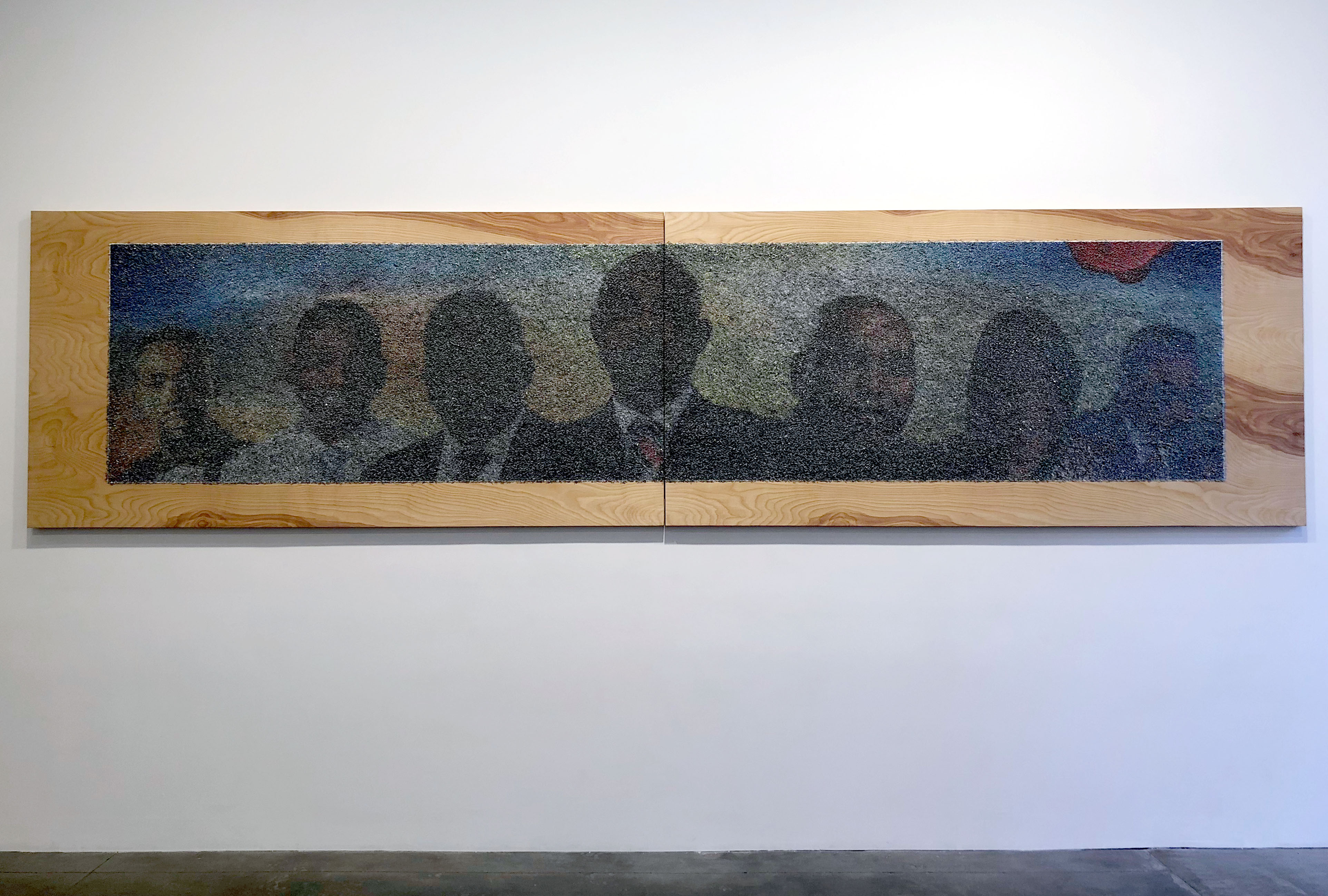
Susan Inglett Gallery is showing Slim… you don’t got the juice, an exhibition of work by Wilmer Wilson IV. His work with staples may seem familiar from its inclusion in the New Museum’s 2018 Triennial: Songs for Sabotage.

From the press release-

Slim… you don’t got the juice presents multidisciplinary departures from familiar modes of figurative representation, as they have evolved in the realm of photographic discourse. Wilmer Wilson IV has developed strategies of redaction and annotation in his work that begin to destabilize the norms of making and viewing portraiture through visual, material, and technical manipulation. An exploration into the complex renderings of individual subject-hood versus object-hood in portraiture, the artist has conceived of a stapled-surface-as-viewing-device that mediates image with material. The device is manifest in a series of staple works that almost fully shroud the photographic subjects beneath dense fields of metal fasteners. The austere, randomized application of the staples onto the surface of each portrait results in a resistance of visual penetration from many angles, complicating access to the underlying figures and deconstructing the voyeuristic inclinations of the viewer.

This exhibition closes 3/16/19.

Wilmer Wilson IV, Host, 2018


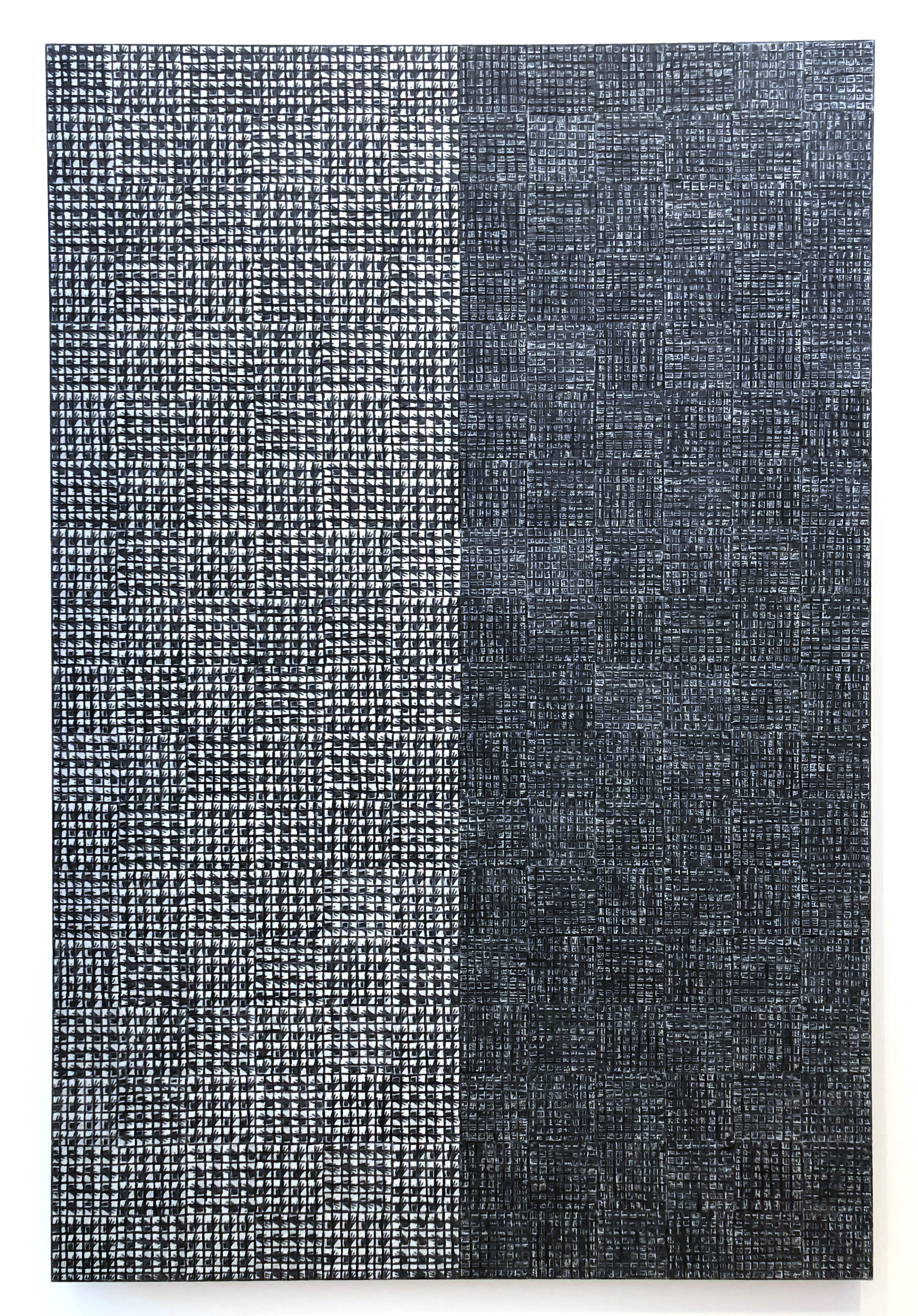
At Lehmann Maupin’s 24th Street location is McArthur Binion, Hand:Work, an exhibition of the artist’s grid paintings created with oil paint stick and paper on board. The patterns created in the work are overwhelming at first glance but then when seen up close, the personal details add a new dimension to the paintings.

From the press release

…For Binion, his personal documents represent the sum total of one’s social life: relationships, citizenship, vocation, and family life. The revealing and obscuring of these aspects of his life also addresses the larger sociopolitical reality of African-American identity—often obscured or erased from common knowledge, yet always present in tandem with major movements in American culture. In his newest Hand:Work paintings, Binion takes an introspective approach that is more closely aligned with the artist’s own self-perception—effectively, his first self-portraits. Using copies of a photo of the home where he was born, along with a photograph of his hand as the ground layer of the paintings, Binion pares down his identity to its most essential elements. These images are tiled in repeated succession, layered under his repetitious line work in oil stick. These gestures themselves relate to memories Binion has of his early childhood farm life, a disciplined approach to the cyclical, sustained effort he maintains in his work today. Through the insertion of his hand, literally in the photographs, and figuratively in his intricate, overlapping mark-making, the artist relates to his earliest introduction to artistry in his mother’s quilting, a tradition he modified and carried into his practice.

This exhibition closes 3/2/19.

McArthur Binion at Lehmann Maupin

McArthur Binion at Lehmann Maupin, detail of above painting

Robert Mann Gallery is showing the newly discovered work of photographer Ed Sievers. The exhibition of black and white photos also includes his later work from the 1970s in Venice Beach. The gallery also has an exhibition of Michael Kenna’s series of black and white female nudes made in Japan (not shown). Both shows close 3/2/19.

Ed Sievers, Untitled (woman in the shadows), c. 1960s, courtesy of the artist, image via Robert Mann Gallery

Damn! The Defiant, a group show curated by Damon Brandt and Andrew Freiser at Fredericks & Freiser Gallery, brings together “images of rebellion and dissent in contemporary portraiture” and includes a wide variety of work in different mediums from an incredible selection of artists that includes Mary Ellen Mark, Gordon Parks, Dana Schutz, Bruce Davidson, Whitfield Lovell and many more. It’s a show that’s very appropriate for a time period that is going to require more and more defiance.

From the press release-

Nothing creates projected personal territory more than the emotional push back generated from the recalcitrant expression of a defiant subject. Yet ironically, it is the very nature of this engagement that makes it difficult for the viewer to quickly detach or withdraw from what in fact amounts to an extended glare or moment of social tension. In a time of undeniable anxiety, finding both the common and contrasting ground in the portrayal of defiance speaks directly to the angst and pre-occupation for self-determination that has been and continues to be a pervasive human concern.

This exhibition closes 3/2/19.


Installation view of Damn! The Defiant, image via Fredericks & Freiser


Feb 232019
 

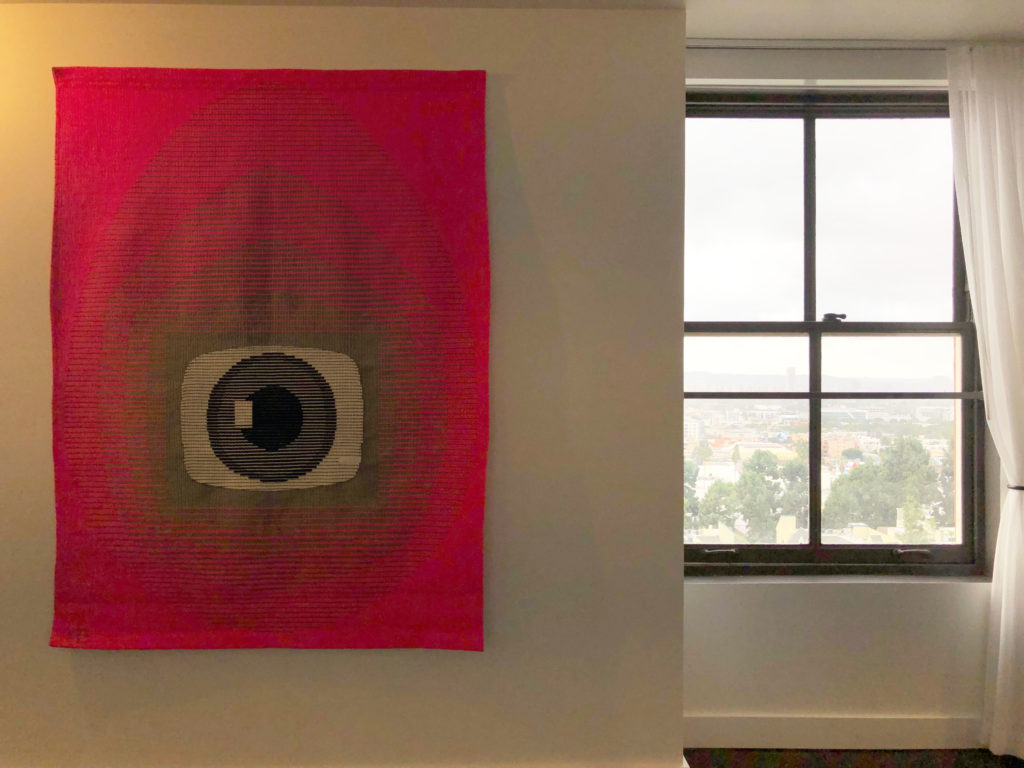
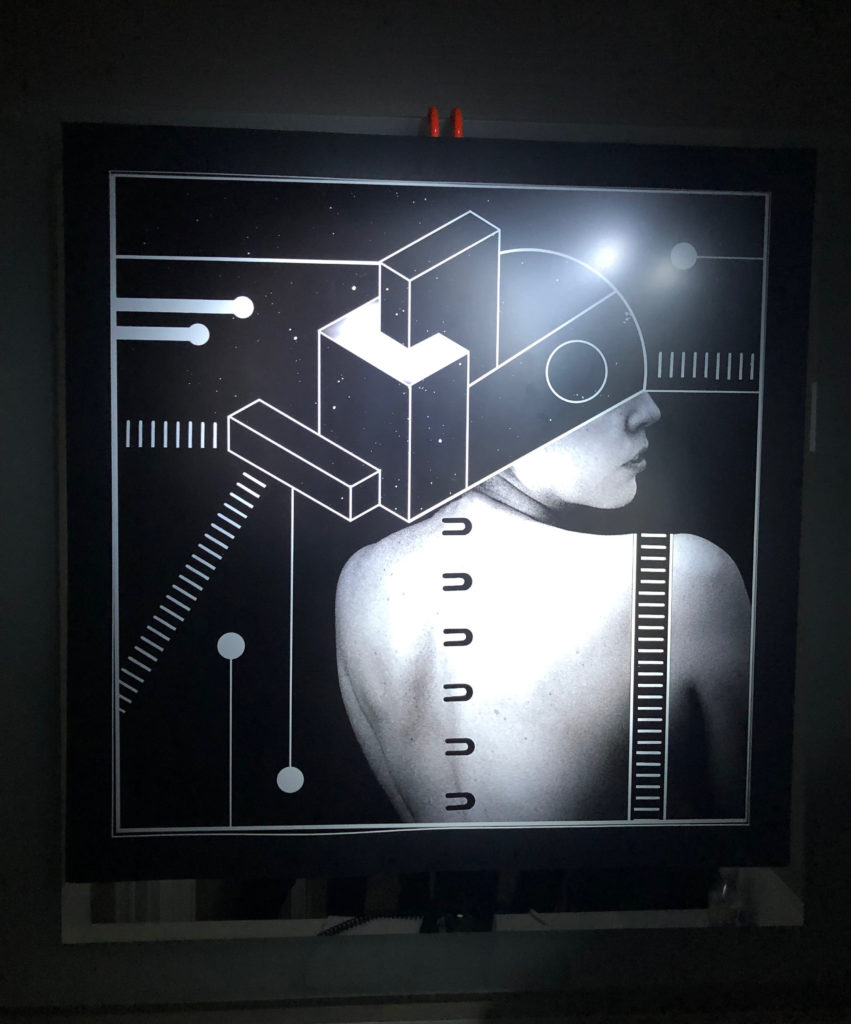
Artist Pierre Daquin’s tapestry “La Vue” courtesy of Galerie Chevalier as part of The 13th Floor project

Several art fairs took over Los Angeles last weekend, two of which used hotels to create temporary galleries and installations.

At the The Hollywood Roosevelt was the first edition of Felix, a free art fair co-founded by Dean Valentine along with brothers Al Morán and Mills Morán (of LA gallery Morán Morán). Galleries took over rooms along the pool, on the 11th floor, and the penthouse.  Starting at the penthouse was The 13th Floor (pictured above), a collection of work by French artists curated by writer Andrew Berardini and presented by The French Committee of Art Galleries and the Cultural Services of the French embassy.

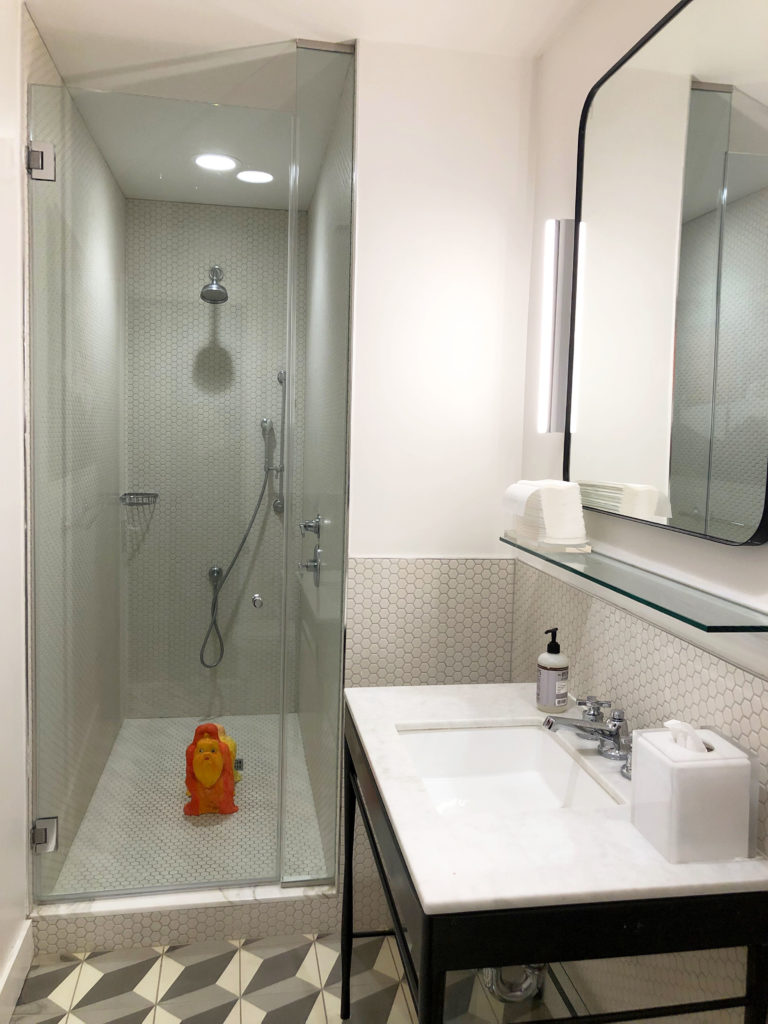
Kenny Schachter had some fun pieces in his room on the 11th Floor including Ilona Rich’s sculptures, one of which was in the bathroom shower (pictured above), and a framed collection of artist Chris Burden’s cancelled checks.

Bodega gallery, from New York’s Lower East Side, had a selection of interesting work including paintings by Alexandra Noel.

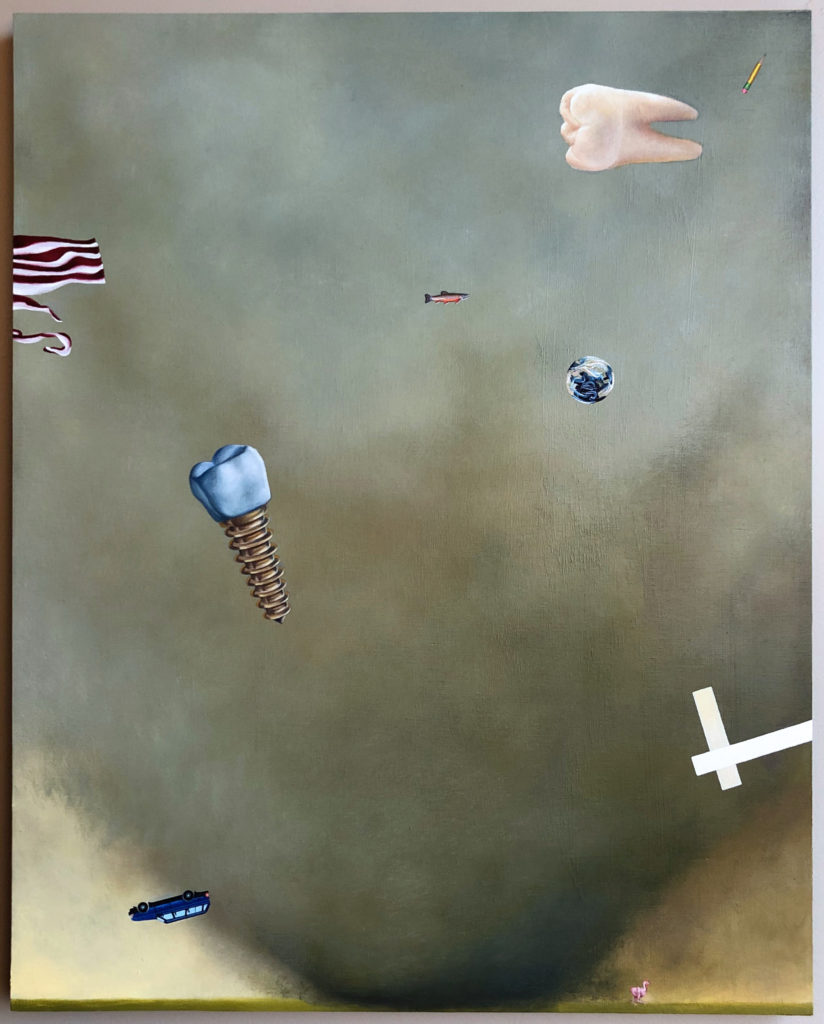
Alexandra Noel, “And then the air was filled with 10,000 things (or when a minor piece of wood becomes a missile)”

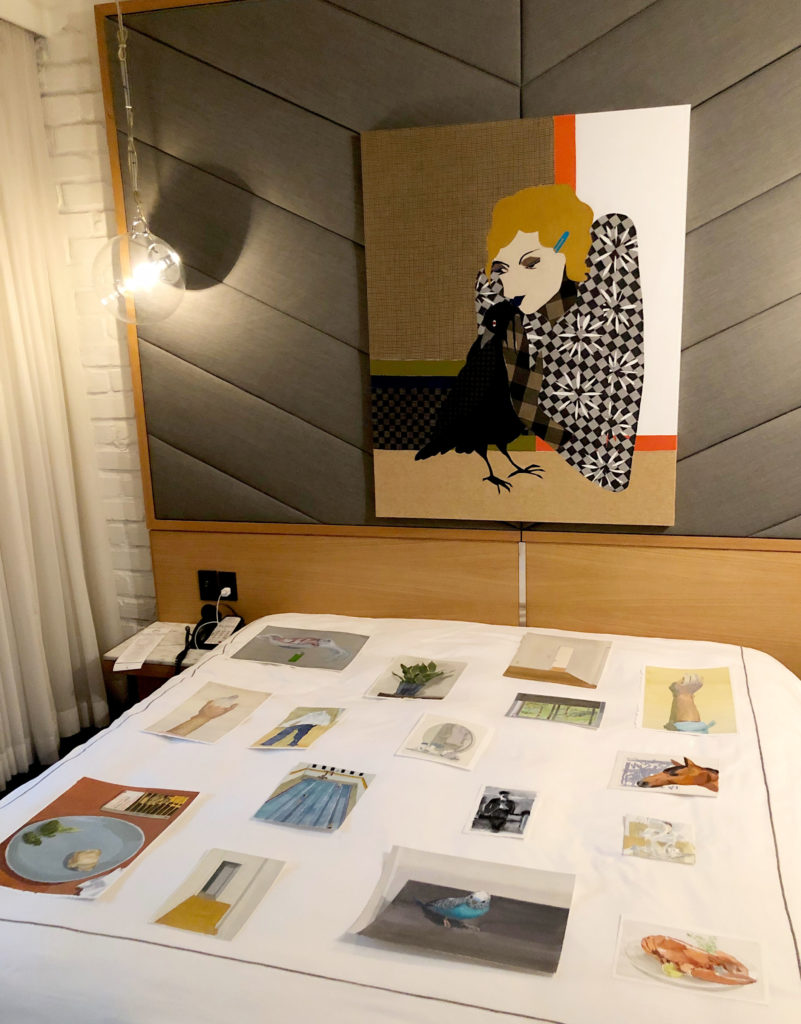
Grice Bench’s selections included a collection of lovely watercolors by Roger White and a painting placed above the bed by Lara Schnitger.

Work by Lara Schnitger and Roger White

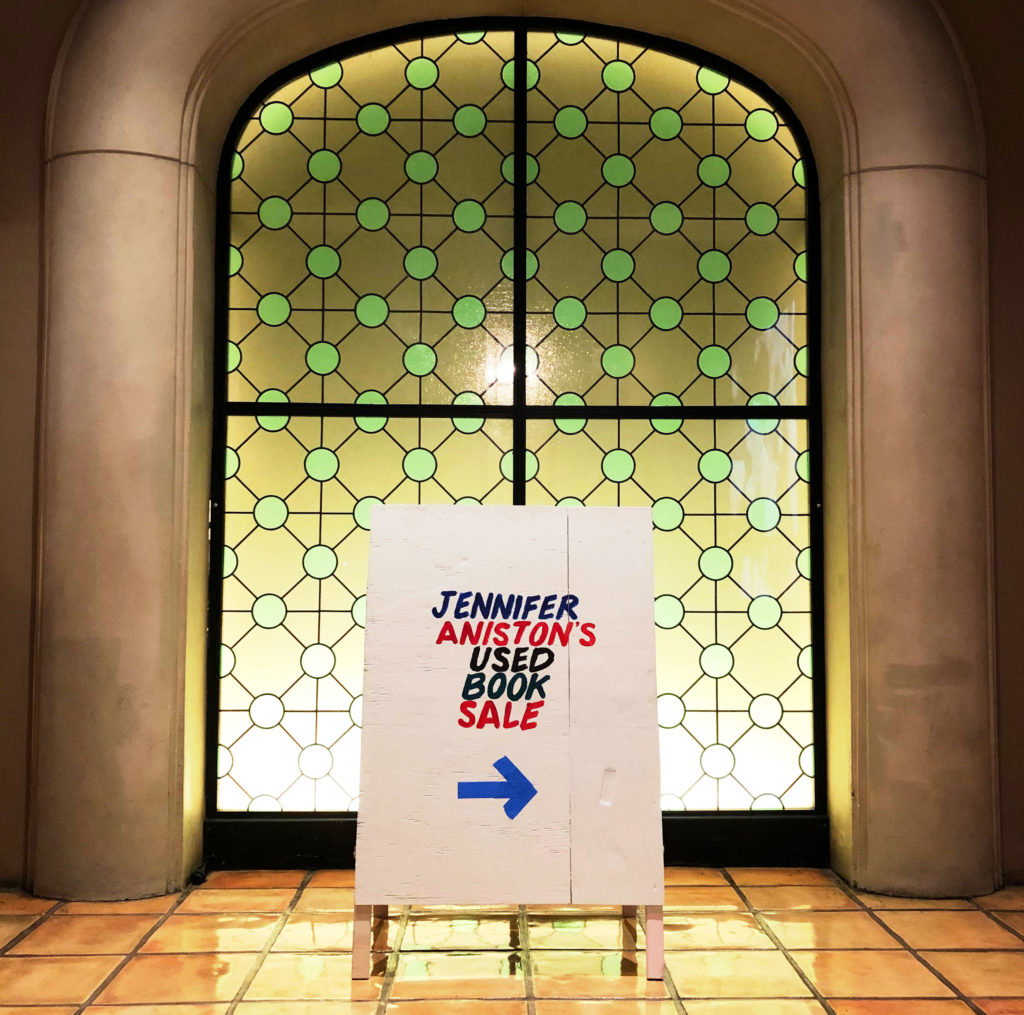
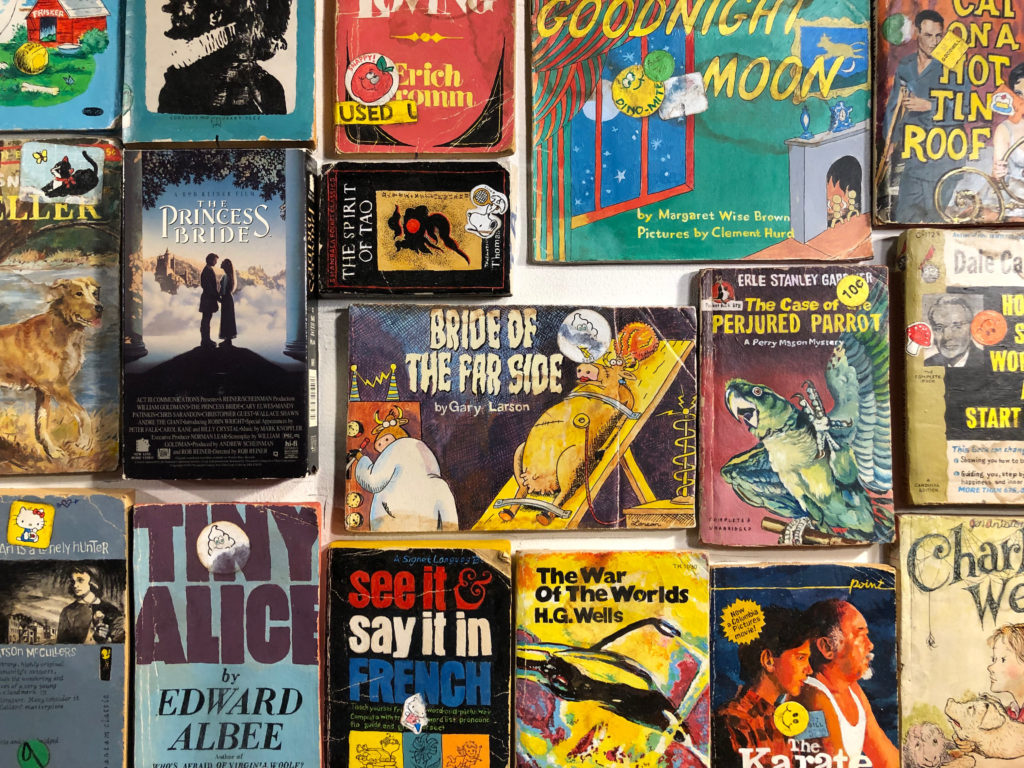
On the ground floor Marc Selwyn Fine Art presented Jennifer Aniston’s Used Book Sale, artist Kristen Morgin’s incredibly realistic ceramic replicas of books she imagines might make up the actress’ collection (the VHS tape is real).

Kristen Morgin’s ceramic books

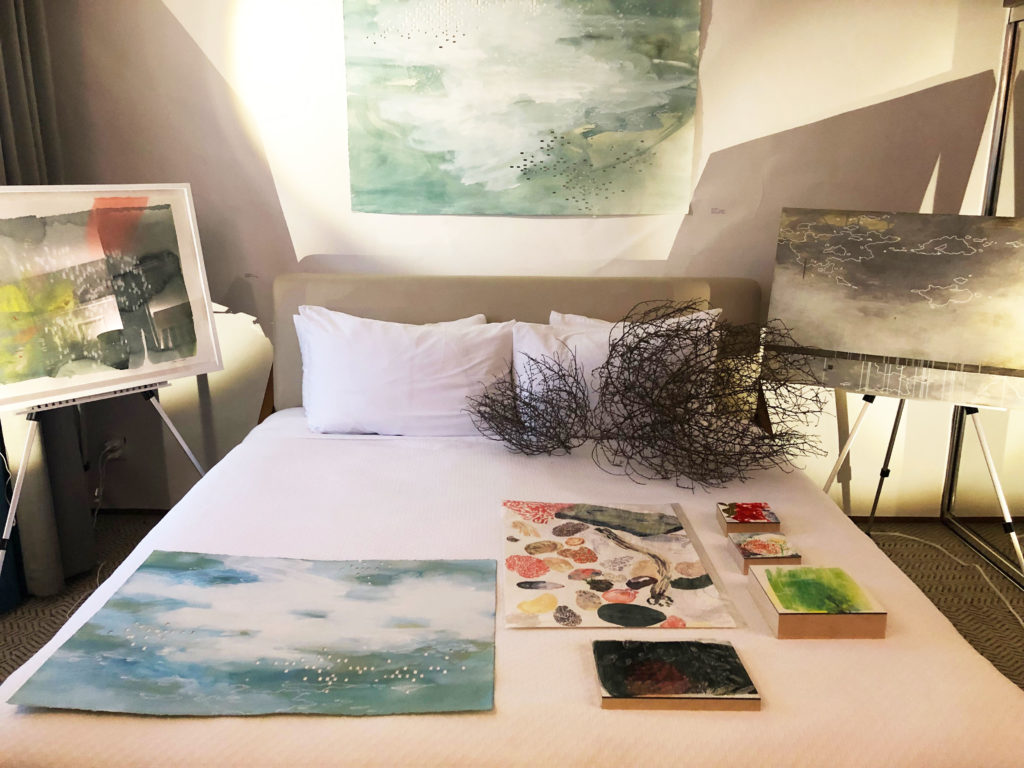
At a hotel in a completely different part of town was the stARTup Art Fair, taking place at The Kinney in Venice. Here, instead of galleries representing the artists, it’s the artists that set up their rooms and sell their art.  It made for a great experience as the artists were all very friendly and eager to discuss their work. Below are a few highlights from the fair.

Lisa Kairos and Melissa Mohammadi’s work

“Leaf Insects Turn Into Butterflies” by Melissa Mohammadi

San Francisco artists Lisa Kairos and Melissa Mohammadi’s room was filled with really beautiful work. Kairos makes dreamy multilayered paintings based on natural landscapes. She then cuts patterns into the images which adds yet another dimension to the paintings. Mohammadi’s work incorporates botanical and marine life into a meditative world where bright pastels stand out among subdued watercolor backgrounds; highly detailed sections mix with the more abstract. The end result for both artists is work you want to spend time looking at.

Work by Annie Galvin of 3 Fish Studios

Work by Eric Rewitzer of 3 Fish Studios

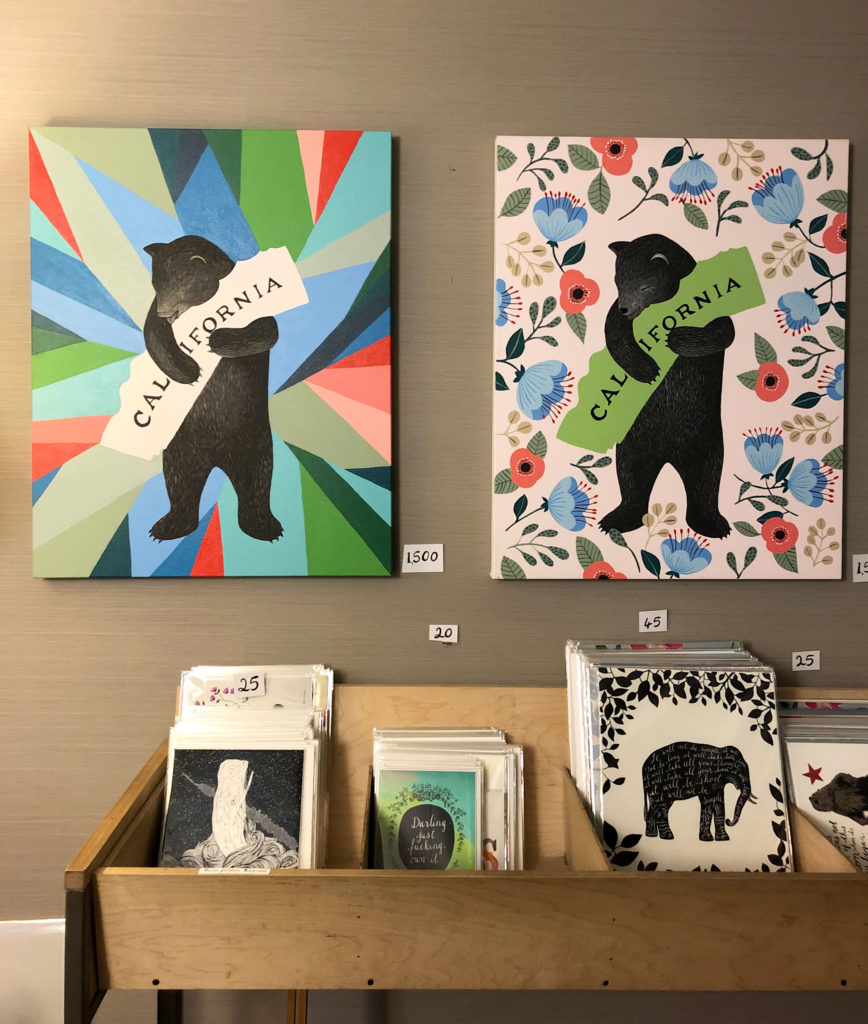
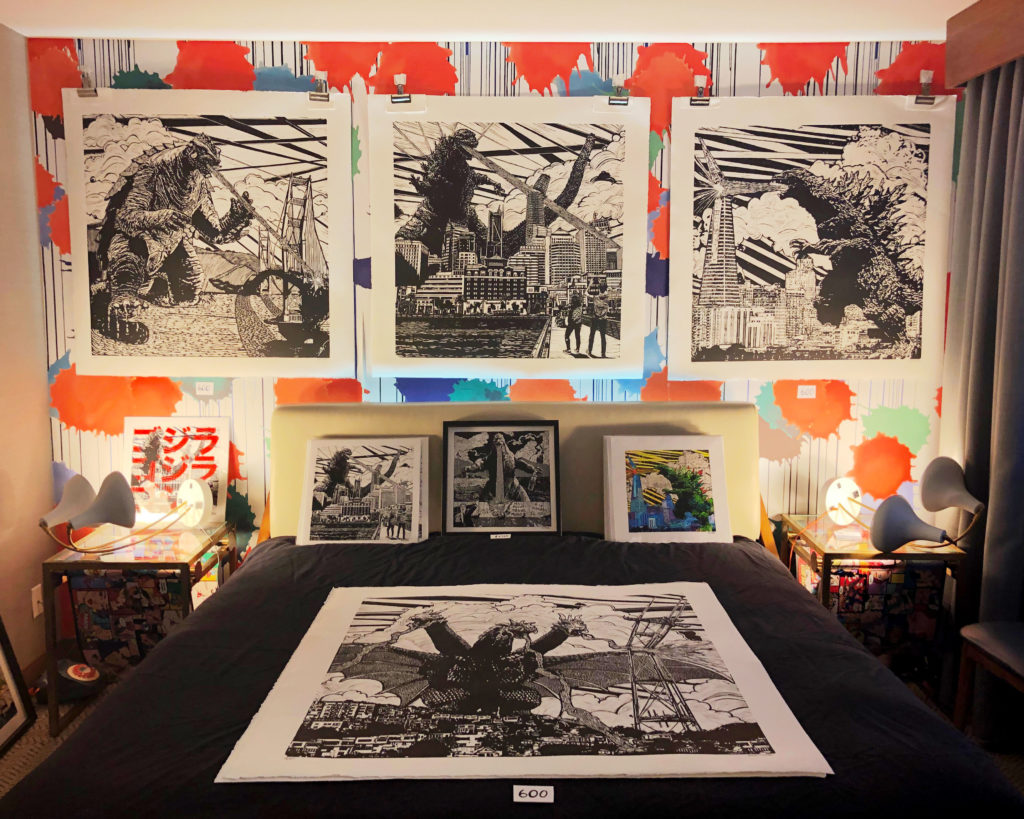
Husband and wife artists Eric Rewitzer and Annie Galvin of 3 Fish Studios in San Francisco had lots of great, affordable prints. They also teach printmaking and collage classes in their studio.

One of Camilla Magrane’s artworks

Artist Camila Magrane had several pieces in her darkened hotel room that use augmented reality technology to make the works animated and three dimensional when looked at through her Virtual Mutations app. The video above illustrates the effect.

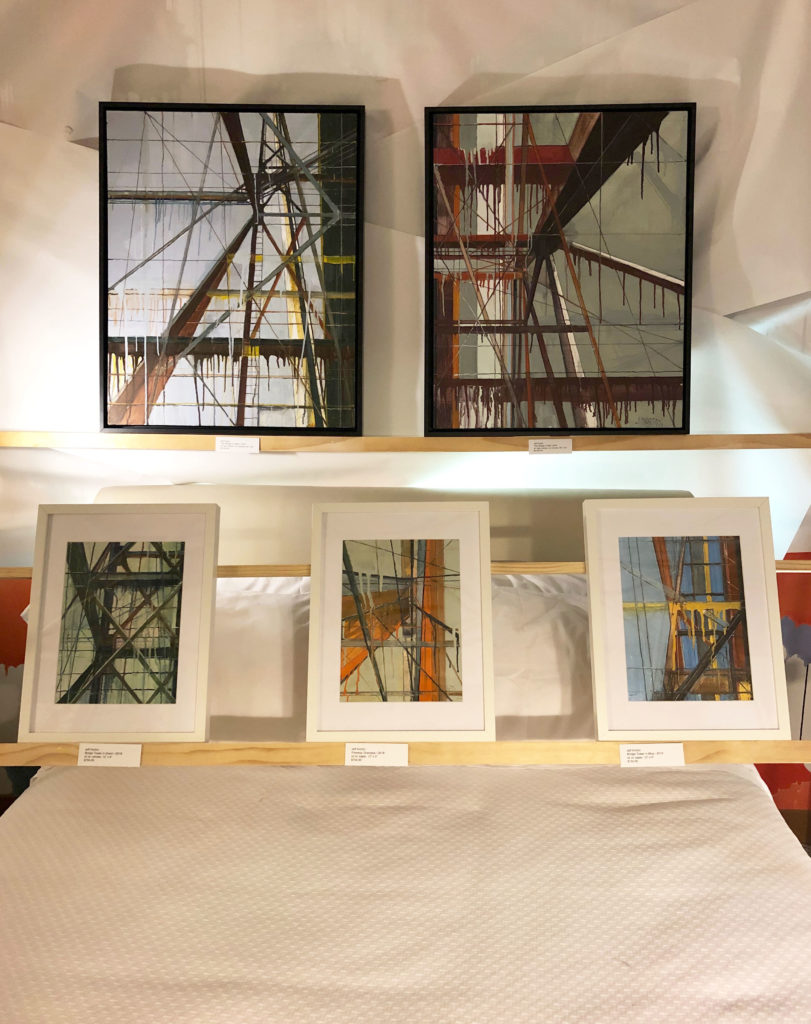
Jeff Horton uses his architecture background to create paintings of urban structures (often larger than what’s pictured above), some of which incorporate wax with oil paint for an added layer.

Other artists work not shown but worth checking out- Margaret Hyde makes ethereal still life photographs of natural objects she finds and combines with water, and Kyong Ae Kim showed a variety of impressive work including her animal skulls cut from multiple layers of drafting film and acrylic paintings combined with hand cut elements.


Feb 172019
 

Currently at Shulamit Nazarian gallery is Trenton Doyle Hancock: An Ingénue’s Hues and How to Use Cutty Black Shoes, the artist’s first solo exhibition in Los Angeles.

From the press release-

The new drawings, paintings, and sculptures in this show expand upon the artist’s saga of The Moundverse, a constructed world that has propelled his artistic practice for the past twenty-five years.

In addition to the narrative tradition of his religious upbringing, Hancock immersed himself in graphic novels, comics, and Greek mythology; at the age of ten, he began creating characters as articulations of his experience as a Black youth in small-town Paris, Texas. In The Moundverse, Hancock has developed an extensive cast: altruistic Mounds, destructive Vegans, and mutated Bringbacks; TorpedoBoy is a tragically flawed hero who serves as the artist’s alter ego; Undom Endgle is a color-wielding goddess who protects young souls, representing the force of the Black women who have affected and supported Hancock over the years. These characters and others explore timeless polarities like good and evil alongside related issues of race, class, identity, politics, and social justice.

Using the fantastical to grapple with the deeply personal has long been at the core of Hancock’s artistic practice. Formally, this is seen in what the artist calls his “rough and tumble” aesthetic: Richly colored tactile surfaces are loaded with objects that range from bottle caps that the artist played with in childhood to bits and pieces of older works that have been rebirthed to create something entirely new. Drawing heavily from the temporal structure of comics, Hancock’s practice seamlessly weaves storylines spanning long periods of time, often within a single artwork. The totality of his practice can be seen as an ever-expanding graphic novel in its own right, articulated through a variety of media.

Laced with personal memoir, Hancock’s Moundverse is a metaphorical space that reflects the everyday world. Several works show TorpedoBoy in mid-stride, clad in football gear, wearing his “cutty black shoes” as he runs from evil-natured Vegans that at times take the aggregated form of a goofy-footed, cloaked member of the Ku Klux Klan (the Paris, Texas, of Hancock’s youth had an active Klan). The malignant force that reaches for this distraught—albeit defiant—central character points to longstanding concerns of systematic racism and oppression.

The exhibition also includes Hancock’s most recurring character, The Mound—a half-plant, half-animal creature that absorbs and processes negative human emotions to bring positive energy to the world. Presented within the exhibition will be two large-scale paintings of Mounds, one standing nearly eight feet tall. In addition, Hancock will present new ink-on-paper works that introduce the first chapter of the artist’s most ambitious drawings to date: Trenton Doyle Hancock Presents The Moundverse. Designed as a traditional graphic novel, this series offers a sequential understanding of the characters and stories that have dominated Hancock’s practice for the past two and a half decades.

An Ingénue’s Hues and How to Use Cutty Black Shoes continues the artist’s exploration of primal forces as they play out in The Moundverse, reflecting our current moment and inviting viewers to consider parallel themes and stories in the world around us today.

This show closes 2/17.


Feb 162019
 

This month there are a lot of excellent exhibitions on view in Chelsea.

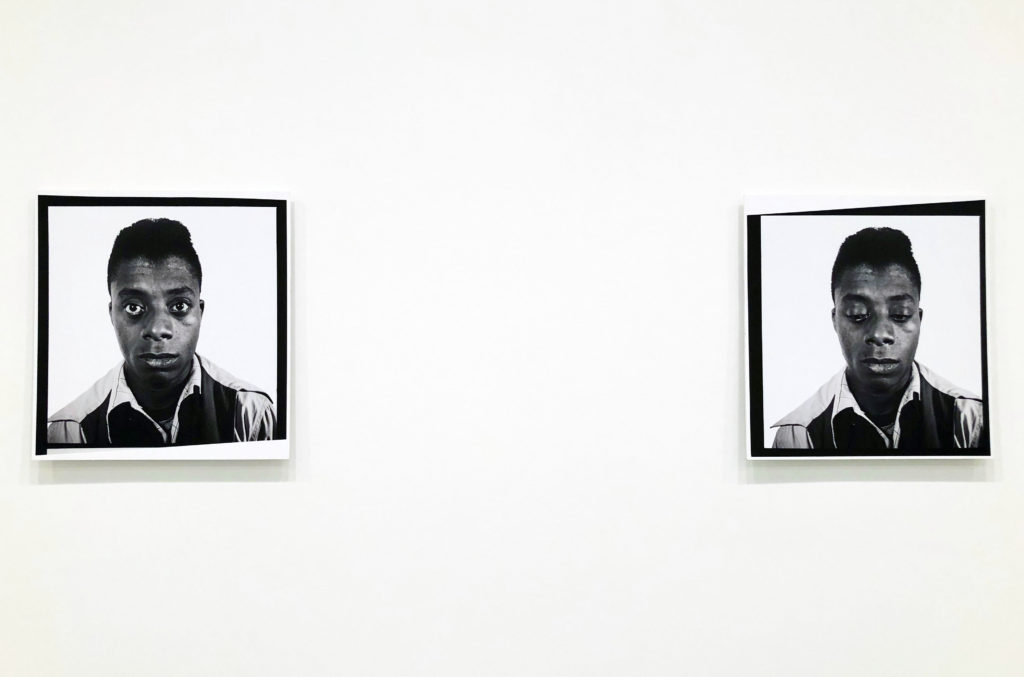
At David Zwirner is God Made My Face: A Collective Portrait of James Baldwin, a group show curated by writer Hilton Als. The works are varied and include portraits by Richard Avedon (shown above), a friend of Baldwin’s who also attended De Witt Clinton High School with him, as well work by Njideka Akunyili Crosby (seen below), Kara Walker, James Welling, Beuford Delaney, Glenn Ligon and many more.
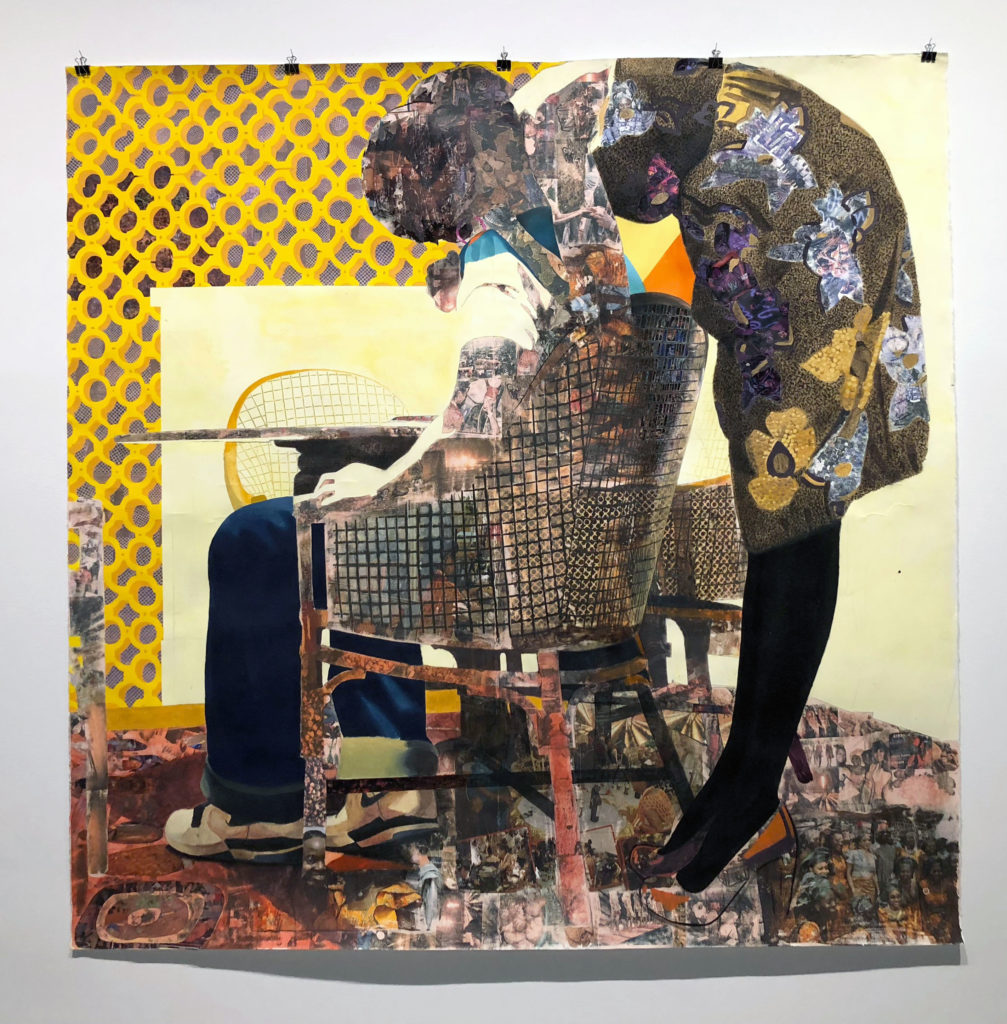
Nyado: The Thing Around Her Neck, 2011 by Njideka Akunyili Crosby

At Marianne Boesky Gallery is Pure, Very, New, Paul Stephen Benjamin’s first solo exhibition in New York. The exhibition includes paintings, photographs, sculpture, and single and multi-channel video installations, as well as a new site-specific black light installation in the internal passageway between the two spaces.

From the press release

Benjamin’s practice is rooted in a vigorous meditation on blackness, considering: “What is the color black?” “What does black sound like?” “Is it an adjective, a verb, an essence, or all of these components mixed to create a nuanced whole?” For his large-scale monochromatic paintings, Benjamin thickly coats the canvas in varying shades of black, producing a sensation of boundless depth. This is further accentuated by Benjamin’s application of the particular tonality’s name within the field of color—the words appearing to float and dissipate within the richness of the paint itself. The development of these paintings followed an ordinary visit to a hardware store, where Benjamin was confronted with the many permutations of commercial black paint. Shades of black came with emotive titles like “Totally Black,” “New Black,” and “Pure Black,” among numerous others. For Benjamin, this sparked a multi-layered investigation of the color and whether it could be distilled or understood differently within the context of a painting or the color itself.

 … Benjamin’s practice also extends into a conceptual investigation of sound, and how “black” can be conveyed and experienced aurally. In these works, he often uses single and multi-channel video installations to loop portions of particular historic and cultural footage to isolate fragments of collective memories or internalized narratives. With Black is the Color (2015), which will be included in the exhibition, Benjamin arranges a towering cluster of antiquated televisions, forming a glowing grid that endlessly repeats a segment of Nina Simone’s 1959 performance of “Black is the Color of My True Love’s Hair.” Here, Benjamin appropriates only the words “Black is the Color,” creating an abstraction of the song that reveals the contradictions and parallels between the notion of black being the color and it being a color. Moving fluidly from sound installation to painting to photography and sculpture, Benjamin’s practice is driven by the idea that blackness, whether explored as a matter of conceptual inquiry or identity, cannot be captured in a single action, emotion, or language.
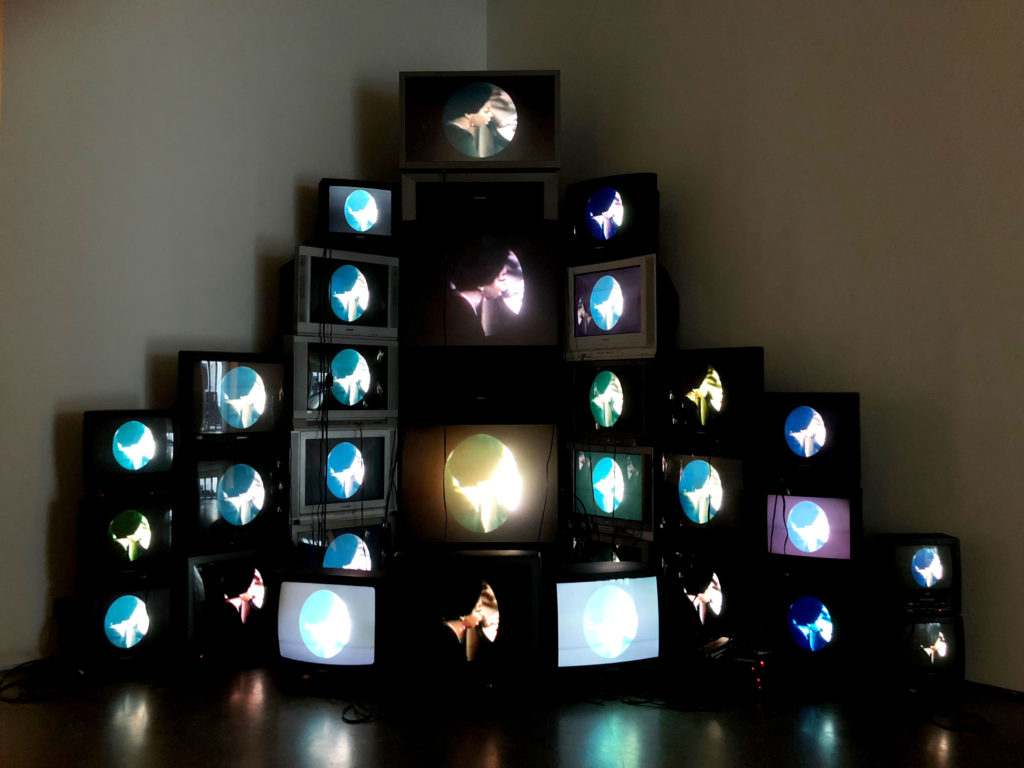
Black Is The Color 2015 by Paul Stephen Benjamin

At Yancey Richardson is Blue Sweep, an exhibition of Andrew Moore’s beautiful photographs, taken in Alabama and Mississippi over the course of three years.
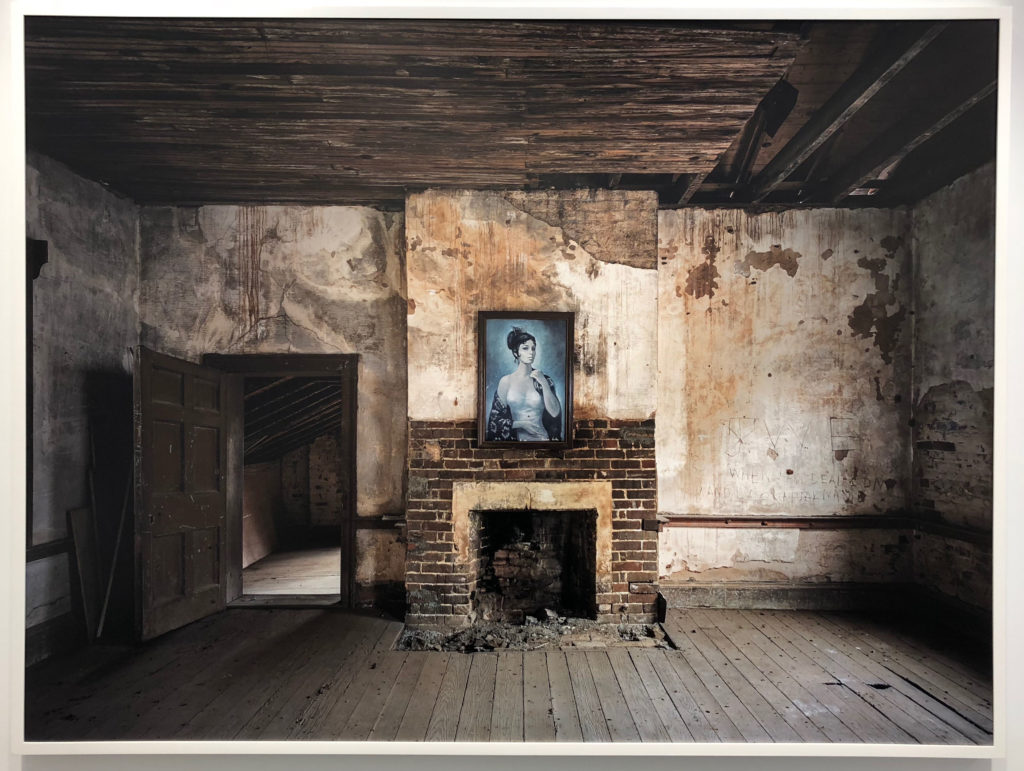
Carmen, Saunders Hall, AL 2015 by Andrew Moore

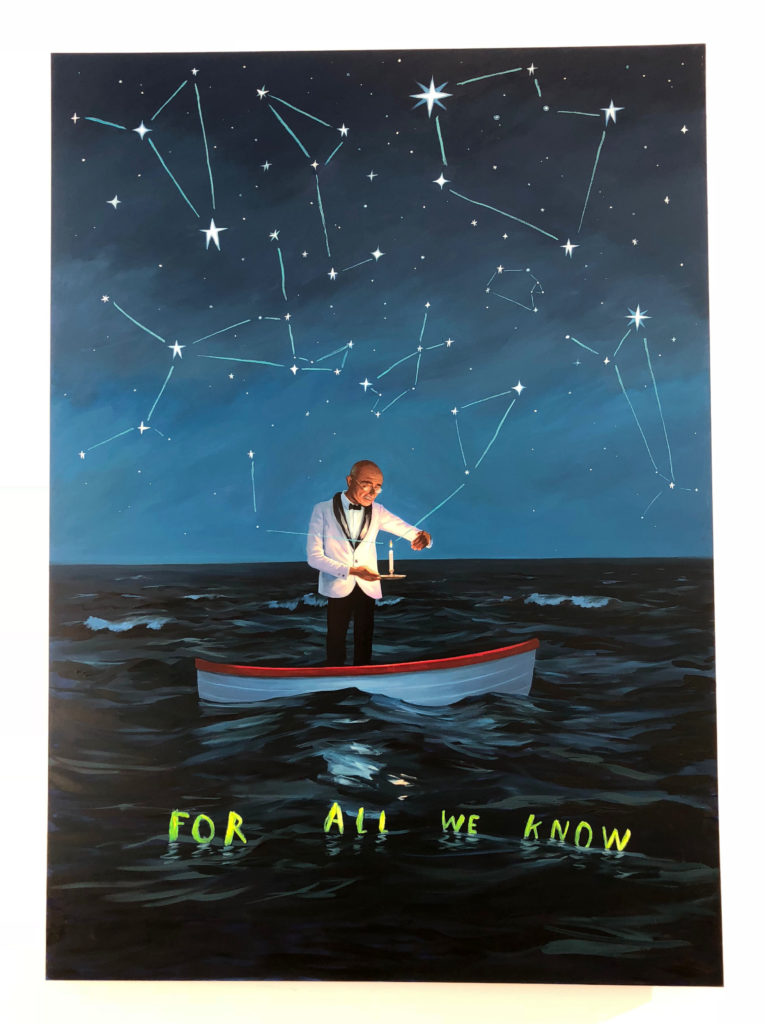
At Bryce Wolkowitz Gallery is Oliver Jeffers’ charming painting exhibition For All We Know. If his work looks familiar it may be because Jeffers is also the author of several critically acclaimed picture books.

From the press release

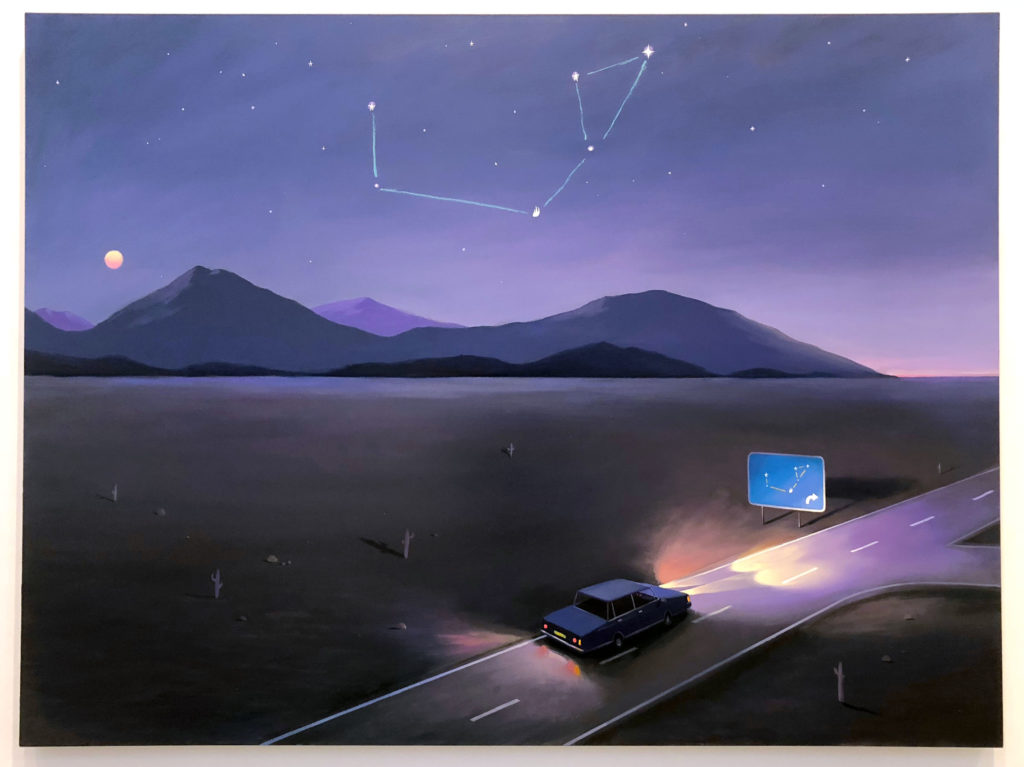
This series of paintings illuminate a dream-like nocturnal world populated by astronauts, deep-sea divers, sinking ships, floating pianos, and burning matches. Omnipresent throughout are the night sky and the ocean – the two great and unknown frontiers – glittered with the imaginary lines that create constellations, serving in this case as a mysterious key to unlock our world.

Expanding on years of observation, from the history of his upbringing in Belfast, to contemporary New York City, Jeffers’ evokes the precarious state of our home and its inhabitants. Inspired by Buckminster Fuller’s seminal book Operating Manual for Spaceship Earth, he presents pianos as dubious flotation devices and our planet presented as a cumbersome motor vehicle, overheating as we argue over what to play on the radio. From researching astronaut’s descriptions of looking at Earth from the distance of the Moon, Jeffers noticed certain recognizable patterns to the way in which he discussed the politics of his hometown from a vantage point of across the Atlantic Ocean. In finding that few people outside of Northern Ireland knew or cared of the intricate conflict there, a great waste of time was revealed: a divided population identical to each other in every way save for the flags they flew and the stories they told. Tragically, each side’s identity are still firmly rooted to the existence of the other, and therefore locked into a spiral of repeated patterns.
 

At both of Jack Shainman’s locations are a series of impressive paintings by Lynette Yiadom-Boakye.

Black Allegiance to the Cunning, 2018 by Lynette Yiadom-Boakye


For a new kind of exhibition experience, Asad Raza has organized the group show Life to Come, at Metro Pictures which “brings together works that meditate on the creation of new worlds and new models for living.” There are no labels or listings for the works included in the show. Instead there is a guided tour by hosts who take you around the various works to help you draw connections between the objects. Adding to the uniqueness of the experience, at one point the host pauses while talking and partially in motion, recreating a work by artist Tino Sehgal, and at another they show you that they have changed their eye color, a work by Rirkrit Tiravanija.

From the press release

Experiencing these works together incites intellectual, physical, and spiritual understandings of what it means to make an entirely new world, one in which reality is made from fiction. Raza asserts that “by re-immersing ourselves in the strangeness and fecundity of attempts to create worlds that have gone before, our imagination of a world beyond the present may be renewed.” The uncertainty about what new paradigm awaits us is unsettling in the wake of the modernist 20th century, but it links us to previous generations who experienced radical reinventions of biological and social life.
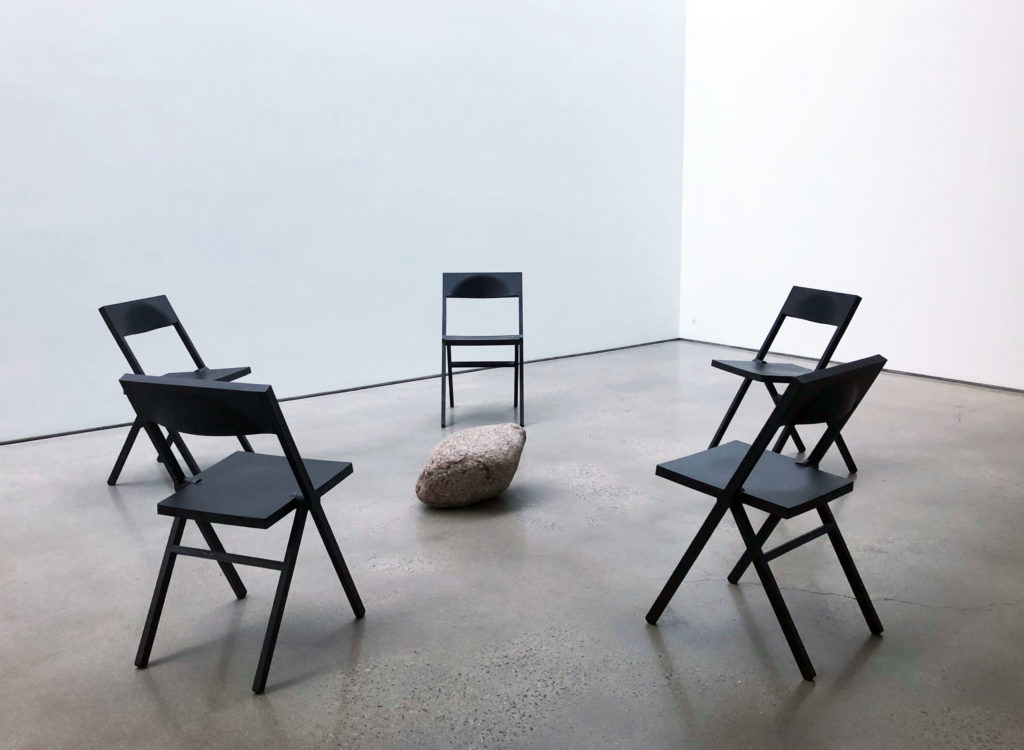
Philippe Parreno, La pierre qui parle (The Speaking Stone), 2018.
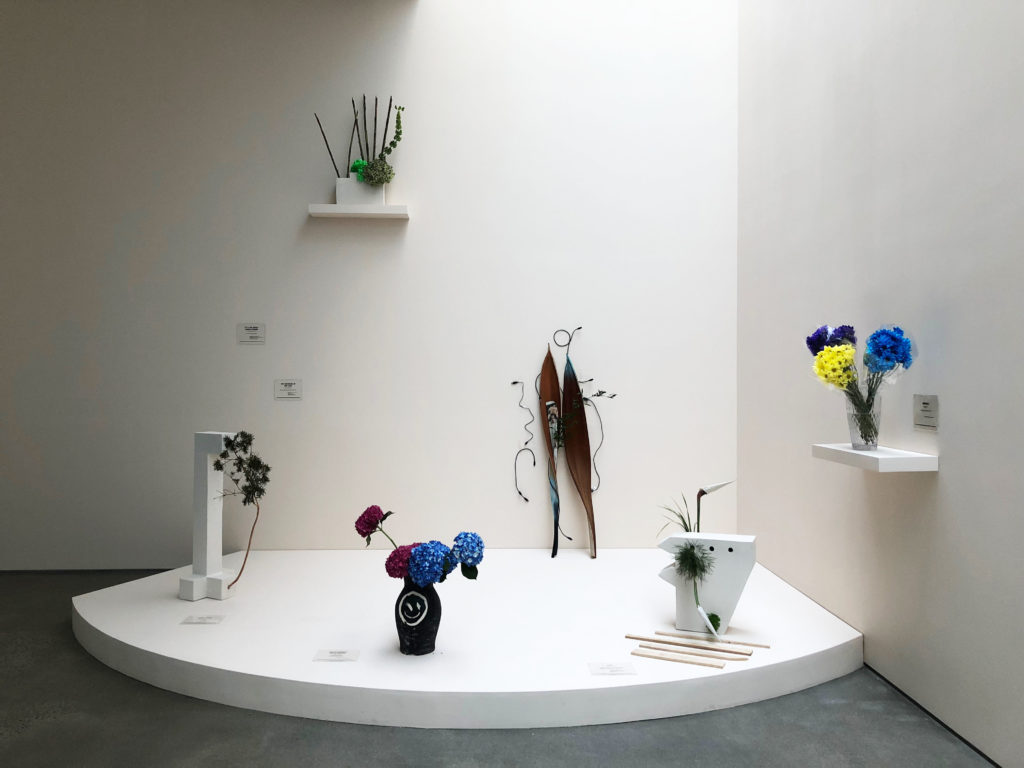
 

Selection of work by Camille Henrot (floral arrangements inspired by books)

All of these exhibitions close 2/16/19.


May 192018
 

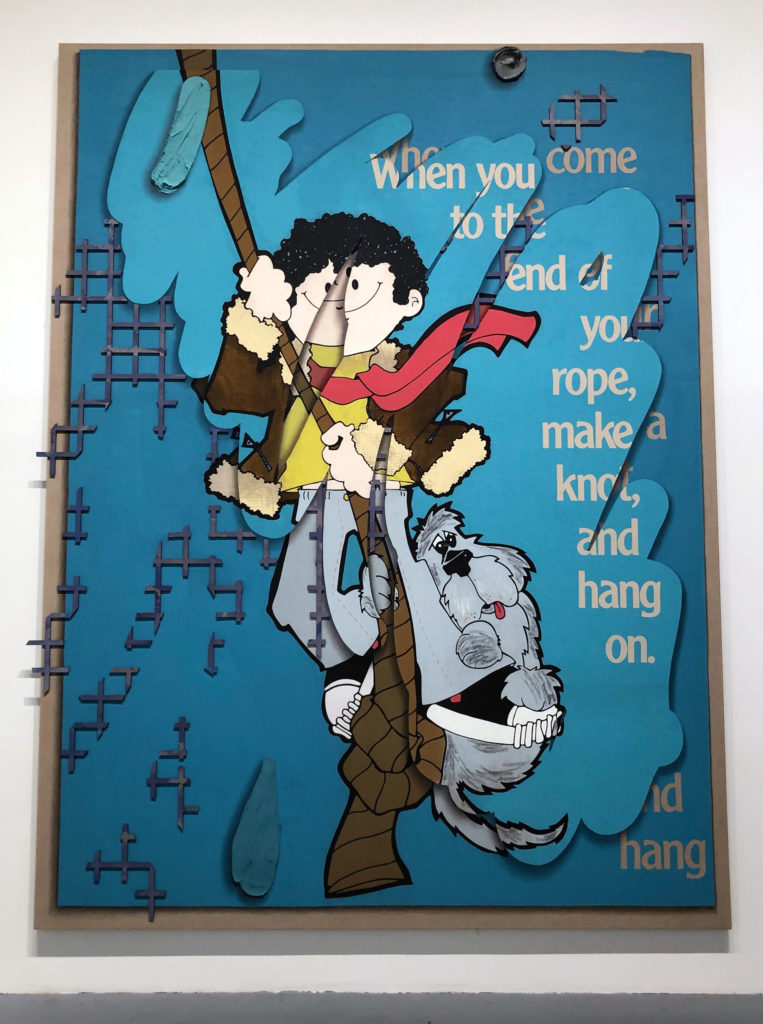
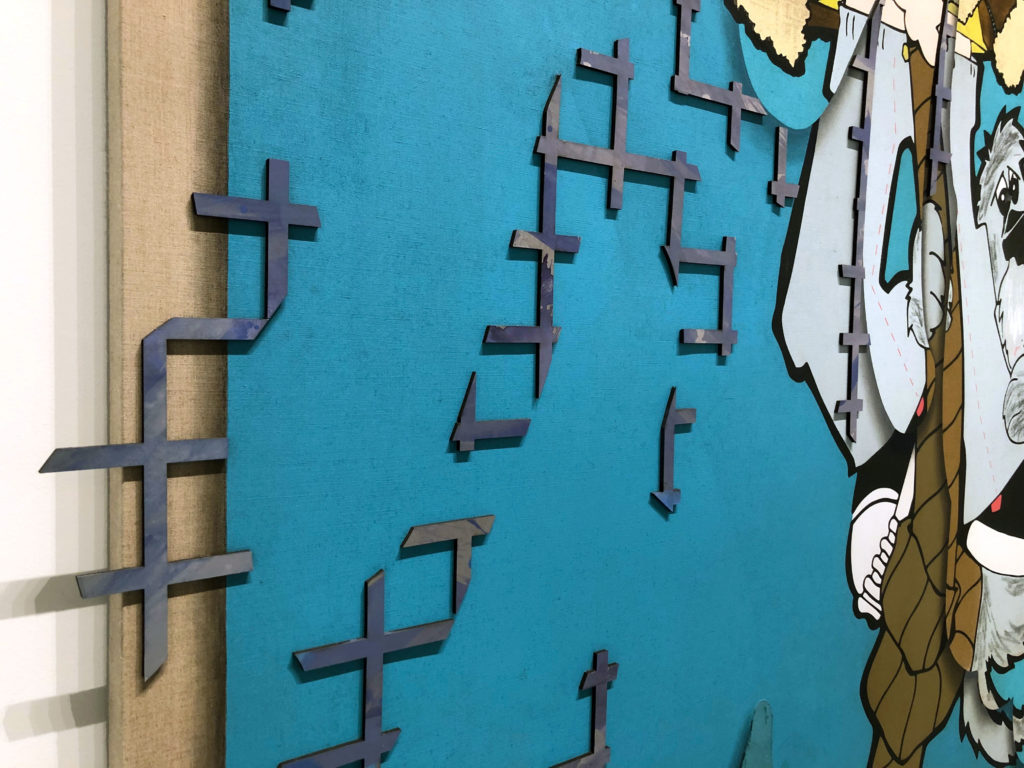
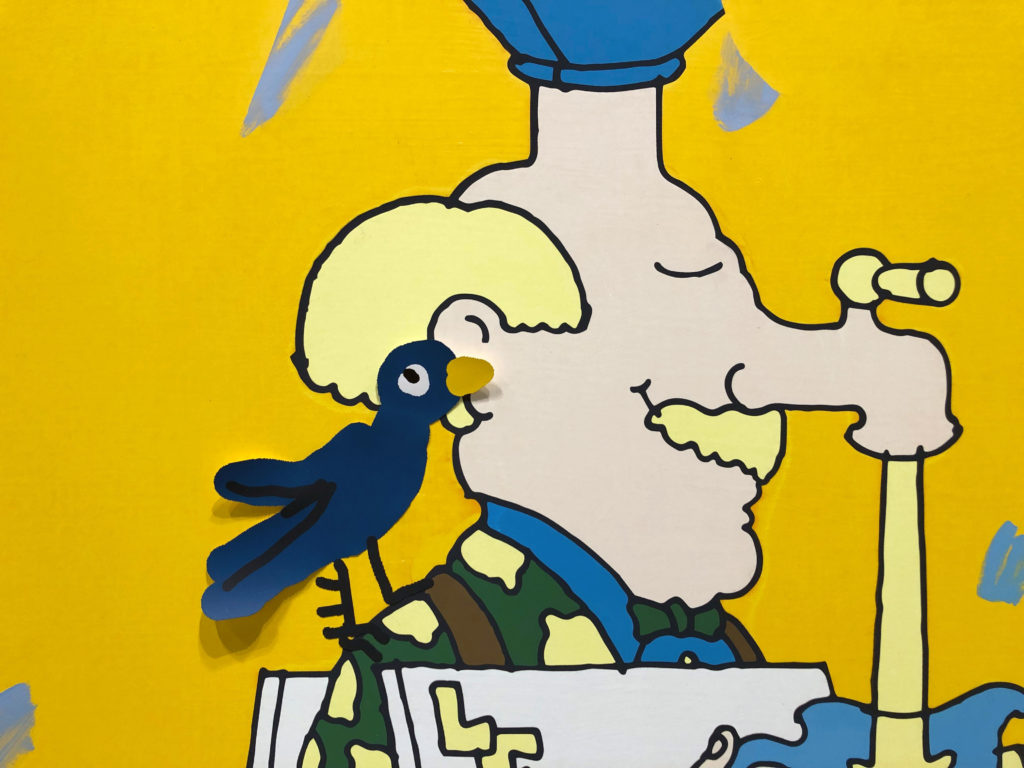
This weekend head to Hauser & Wirth to check out artist Mark Bradford‘s exhibition New Works. His first gallery exhibition in Los Angeles in over fifteen years, the paintings included continue to explore societal issues through his dramatic use of color, and his unique technique- which involves combining layers of printed paper with paint and then cutting into these layers to create intricate patterns and shapes. They are incredible to see in person.
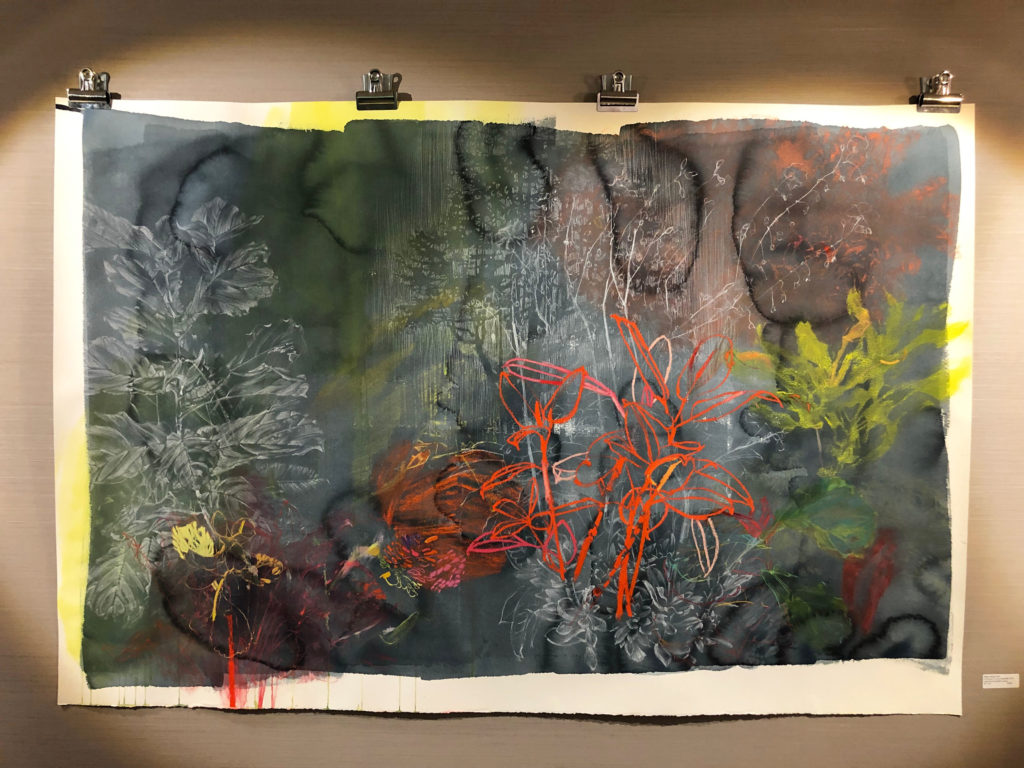
From the press release-

Bradford employs the ‘tools of civilization’ – billboards, merchant posters, newsprint, comics, magazines, and endpapers – to conflate cultural and political forces, and create layers of social commentary in paintings that evoke deep feeling. ‘How we build and destroy ourself are the materials that I’m really interested in,’ the artist once stated, ‘and paper is one of the main ways in which information is displayed.’ Through his rigorous physical approach to the material presence of painting, Bradford has addressed powerful issues of our time, including the AIDS epidemic, the misrepresentation and fear of queer identity, and systemic racism in America. His recent work engages in a broader excavation of American history to raise questions about the preservation of the past and the transference of power.

In the new works on view at Hauser & Wirth, Bradford probes stories found in comic books to question the archetype of the antihero and the influence of the media on contemporary society, while also revisiting misconceptions of black identity and gender as seen in previous works. ‘New Works’ presents paintings that extend the artist’s examination of homophobia and racism in American society, continuing themes explored in Bradford’s multimedia installation ‘Spiderman’ (2015), which was shown at the Hammer Museum in LA in 2015.

Also at the Hauser & Wirth space are two other exhibitions worth checking out- Louise Bourgeois: The Red Sky and Romanian artist Geta Brătescu’s The Leaps of Aesop. All of these shows close 5/20/18.

If you go on 5/19, at 2pm artist Matthew Day Jackson will be discussing his work with curator Hamza Walker, Executive Director of LAXART.


Apr 282018
 

For Viewing Room, his first exhibition at Anat Ebgi, Alec Egan has created bright and colorful paintings that capture the viewer’s attention immediately, drawing you into his world.

From the press release-

Fragmented and yet fully whole, Egan tackles the psychology of the domestic interior through a maze of lushly wallpapered rooms. Tulips, a window, a rug, a painting-within-the-painting; these are the clues presented in Egan’s blueprint-key, allowing the viewer to map this imaginary home. The indulgent use of oil paint create textures imbued with a cognitive power, the flatness of the patterns complemented by raised brushstrokes seemingly pushing and pulling one’s gaze. Thick impasto accentuate the dapples found in the floorboards or drywall of this home, the overwhelming quality of Egan’s playful patterns bordering on abstraction through Rococo-esque embellishment.

A pair of socks, boots, glasses; these discarded items wait to be used again, frozen against the wild landscape of the wallpaper, or the duvet-cover, a literal flowerbed. A camouflaging ensues – an upholstered chair all but disappears into the adjacent wall. For all the objects, the absence of the figure is palpable, yet each still-life insists on a haunting human presence and the viewer as witness. There is a sense of escapism throughout, books are featured prominently, and the air is rife with the nostalgia of adolescence and Americana. Swatches on swatches, Egan’s canvases produce an infinite number of windows, chambers and corridors, blending the internal with the external, relishing in their own lurid pattern-making and the comfort of déjà vu.

This exhibition closes 4/28/18.

Apr 282018
 

After Ingres, 2014

Blind Venus (for G),2018

Currently at Walter Maciel Gallery is Katherine Sherwood’s solo exhibition, The Interior of the Yelling Clinic.  The title, according to the press release, takes its name from an organized group of six artists, including Sherwood, “who have an interest in the intersections between war and disability. The Yelling Clinic was created to mix artistic practice with community outreach, art instruction and activism.”

Sherwood’s paintings are influenced by famous European works, but also include evidence of physical disabilities (like the cane in Blind Venus, pictured above), and her own brain scans. After a cerebral hemorrhage at 44, the artist lost the use of her right arm and hand and was forced to learn to paint with her left. The nudes mix the personal with the traditional while also challenging notions of beauty and the idealized female form. Adding another dimension to the paintings, they are created on the backs of old art history painting reproductions that she saved from being thrown away by the UC Berkeley Art Department where she taught. The gallery has hung one of her flower paintings (pictured below) from the ceiling so that you can see an example of what is on the other side of the work.

This exhibition closes 4/28/18.

Jan 092018
 

Jim Shaw “Cloud Maintenance”, 2017

Jim Shaw “The Ties That Bind”, 2017

Currently at Metro Pictures, Jim Shaw‘s current mixed media exhibition is full of works that are interesting, engaging and fun.

From the press release

Rendered in exquisite detail, Shaw’s virtuosic work combines his analysis of the political, social and spiritual histories of the United States with contemplative reflections of his own psyche. For more than three decades he has examined art history, comic books, subcultural undergrounds and consumer products—to name only a few of his wide-ranging fields of interest—to articulate a distinct visual language that charts the country’s ever-shifting sociopolitical landscape.

The paintings in this exhibition incorporate symbols and characters of the past to comment on our fraught present. Using imagery drawn from Old Testament stories, pagan myths and satirical cartoons, Shaw relies on his encyclopedic knowledge to visualize our common vernacular. His layered symbology reads like an exaggerated mirror of our hyper-mediated, “post-truth” reality.

This show closes 1/9/18.

Work by Elizabeth Murray

At Pace Gallery’s 25th Street location is Elizabeth Murray: Painting in The ’80s, a collection of sixteen unique colorful canvases the artist created during this period.

From the press release-

Elizabeth Murray: Painting in the ‘80s presents formal and narrative content that continues to influence the techniques and subject matter of contemporary painting. Murray arrived in New York in 1967 during the heyday of Minimalism and the rise of Conceptualism, and amid prevailing assertions of painting’s demise. As she recollected, “The mood was that painting was out, that hip people, people who were avant, weren’t involved in painting. That was unnerving, but then I didn’t give a damn.” Fully committed to painting, Murray broke new ground depicting personal, poetic and at times feminist narratives on complex multidimensional shaped canvases. Murray’s compositions from the 1980s suggest large-scale breaking cups, tumbling wineglasses, tilting tables, windows, rooms, attenuated human forms, letters, symbols and abstract shapes constructed through positive and negative, real and imagined space. As Roberta Smith has written, “She has put the vocabulary of twentieth-century abstraction to new and different uses, tracing in irresistible formal terms a psychological narrative that is not explicitly feminine but that women, thanks to society’s relentless conditioning, know best and most completely.”

This show closes 1/13/18.

Jorge Pardo

For Jorge Pardo‘s first painting show at Petzel Gallery, he combines his painted self portraits with a sculptural element. Candid snapshots of the artist are “blown-up, engraved, laser-cut, hand-painted and back-lit with LEDs, to produce, in some cases, vast ornamental objects”. The beautiful large works have the added effect of changing slightly depending on where you stand in the gallery as the light shines through the wood.

This show closes 1/13/18.


Oct 202017
 

Work by Leslie Wayne

If you are heading to Chelsea this weekend, stop in to these galleries which have excellent shows closing 10/21/17-

At Jack Shainman’s 24th Street space are Leslie Wayne’s rich and colorful sculptural paintings for her exhibition Free Experience.

From the press release-

In Free Experience, I have returned to the figure-ground relationship as a way of exploring the range of possibilities for the representation of an illusion in as many different ways as possible, from trompe l’oeil to verisimilitude, while still remaining undeniably within the confines of a traditional painting. These paintings are a collision of abstraction and representation, of illusion and three-dimensional form. They are defined not so much by the shape of the objects they represent, but by the perceptual slippage between object and illusion. They are, like all my work, somewhere between sculpture and painting, and perhaps in Krauss’s view would simply be considered painting in the expanded field.

Looking at art is a free experience. It costs you nothing. But it should also be an experience that is free from encumbrances, one that inspires you to see the world as if for the very first time. But perception is a tricky thing. It is never without personal history. How do we see, what do we think we see? And what makes the experience of looking at a work of art so compelling? The answer lies outside of language, in that transformational moment between looking and seeing, between information and knowledge. In that moment before the need to translate the experience into language moves from the id to the ego. Seeing is indeed forgetting the name of the thing one sees.

Upstairs at David Zwirner’s 20th Street location, is the gallery’s first exhibition of the work of Ruth Asawa (pictured below). It includes many of her famous wire sculptures as well as works on paper, paintings, and vintage photos of her and her work taken by Imogen Cunningham.