Apr 182023
 

“Untitled (Thicket)”, 2022, Steel, wood and paint

“Untitled”, 2020-22, Bronze and paint (two parts)

“Untitled (Fence I)”, 2020, Papier mache

Rachel Whiteread’s sculptures at Luhring Augustine’s Tribeca location draw the eye in with their textures, colors, and in some the unique combinations of items. They are even more intriguing when you discover they are often not what they first appear to be.

From the press release-

As is typical in Whiteread’s work, the sculptures in this exhibition communicate a high-low dialogue: discarded, seemingly inconsequential items are rendered in often precious, high-art materials, which transforms and elevates them from their original context and reading. The eye is tricked, and careful observation is required of the viewer. What appears to be spray-painted cardboard is in reality patinated bronze or silver, or shimmering metallic papier-mache, and assemblages of found materials are in reality amalgams of both found objects and hand-crafted simulacra. Cartons, boxes, branches, crates, cardboard, packing materials, and pipes overlap and interchange, creating an installation that becomes a pleasing visual puzzle. Whiteread created the works for this exhibition specifically with the light-filled, high-ceilinged Tribeca gallery in mind, so a beautiful optical play with colors and materials punctuates the space and draws the viewer into close examination of these human-scaled pieces. Silver and bronze casts of empty, anonymous boxes have a weighty presence, in contrast to the disposable nature of their form. The floor pieces are ghostly white assemblages of both found and cast objects, mostly debris; sitting wraithlike on the floor, each beckons the viewer to circle them and decode their elements.

This exhibition closes 4/22/23.


Apr 142023
 

Thornton Dial, “Memory of the Ladies That Gave Us the Good Life”, 2004, Tin, carpet, wood, glove, washbasin, scrub brush, yard ornament, motor-oil bottle, paint brush, clothing, wire, enamel, and spray paint on wood

David Hammons, “Untitled”, 1976-77, Wire, rope, pipe cleaner, hair, rubber ball, mesh, aluminum, sand paper, thumb tack

Robert Rauschenberg, “Matt’s Defense (Scenarios)”, 2005, Pigment transfer on polylaminate

Dial / Hammons / Rauschenberg at David Lewis presents several works by the three artists that, although different in many ways, work together well.

From the press release-

This is the first-ever exhibition to solely bring together these three great American artists, each of whose conceptual ingenuity is expressed by way of material transformation and possibility. In particular, Dial / Hammons / Rauschenberg seeks to articulate the intersection between the American Duchampian legacy, as expressed in the material invention and possibilities of postwar Neo-Dada, and African-American traditions of redemptive, alchemical, and visionary practices based in found and discarded objects.

The exhibition ranges over more than 50 years; the earliest work presented is in Rauschenberg’s iconic 1962 assemblage Cartoon, then includes an early Duchampian wire, rope, pipe cleaner, hair, ball, and tack construction by David Hammons (Untitled, 1976-77), and then focuses on the 90s and 2000s, featuring four magisterial assemblages from Thornton Dial’s ‘high,’ most modernist phase of work, as well as an example of each of Hammons Kool-Aid and Tarp series from 2006 and 2007 and additional later Rauschenberg works. The exhibition also features two important sculptures: Dial’s Top of the World (1998), and Rauschenberg’s extraordinary The Lurid Attack of the Monsters from the Postal News, August, 1875 (Kabal American Zephyr) (1981). The largest work in the exhibition, Dial’s astonishing Master of Space (2004), conjures and critiques the iconography of American imperialism, military and corporate both (the eagle is made of neckties), while simultaneously calling upon and vengefully subverting the most classical of all modernist devices: the grid.

Every piece in the exhibition deploys, invents, and reflects upon the logic of assemblage: the Duchampian act of appropriation, transmuted in postwar America, into the language of assemblage, the Rauschenbergian combine. Dial / Hammons / Rauschenberg highlights these acts of American alchemy, and asks us to imagine their power and possibilities in ways which revise, expand, and complicate the history of modern and contemporary art, and weave a broader tapestry.

This exhibition closes 4/15/23.

Apr 122023
 

There are only a few days left to see Franz West’s large, fun sculptures, Echolalia, at David Zwirner in NYC.

From the press release-

Executed in 2010, only a few years before the artist’s death, Echolalia consists of seven colorful, larger-than-life sculptures that seem to stand slightly off-balance, interspersed with three cushioned divans. The work’s title—which refers to the repetition of words and sounds made by young children when learning to talk—was inspired by the artist’s son, who at the time of its creation was three years old and brought his own, distinct perspective to his father’s oversized works.

Not exhibited publicly in more than ten years, the work represents the apotheosis of West’s commitment to sculpture as social space, integrating the viewer within an immersive, total environment. Conceptually, the installation manifests the intersection of many of West’s ongoing interests—most notably, the playfulness of sculpture, the participation of the viewer, and the importance of language.

A voracious reader throughout his lifetime, West was constantly and consistently incorporating various philosophical, psychoanalytical, and historical lines of thinking in his work, as though language itself was another material one could work with.

When Echolalia debuted in Rome in 2010, West published excerpts from the readings that came to influence the work, which included writings from figures across eras and disciplines, including Jacques Lacan, William Shakespeare, Sigmund Freud, Karl Marx, Mike Davis, Jean-Paul Sartre, Max Weber, and over a dozen others.

West’s sculptures and installations often invite the public’s interaction, engaging his viewers in order to subvert traditional exhibition models. In the mid-1970s, he began creating his so-called Passstücke, or Adaptives, a number of which are on view in a concurrent exhibition of West’s work at our Paris gallery.

These roughly hewn, abstracted sculptural forms were intended to be handled by the viewer in a manner of his or her choosing, thereby “adapting” the works to their own physical being and context.

Extending this interest, in Echolalia, the individual sculptures are seemingly weightless and on wheels, meaning the exhibitor can hypothetically rearrange these elements, interacting with the sculpture and evidencing the artist’s longstanding fascination with spatial manipulation and play.

This exhibition closes 4/15/23.
Mar 292023
 

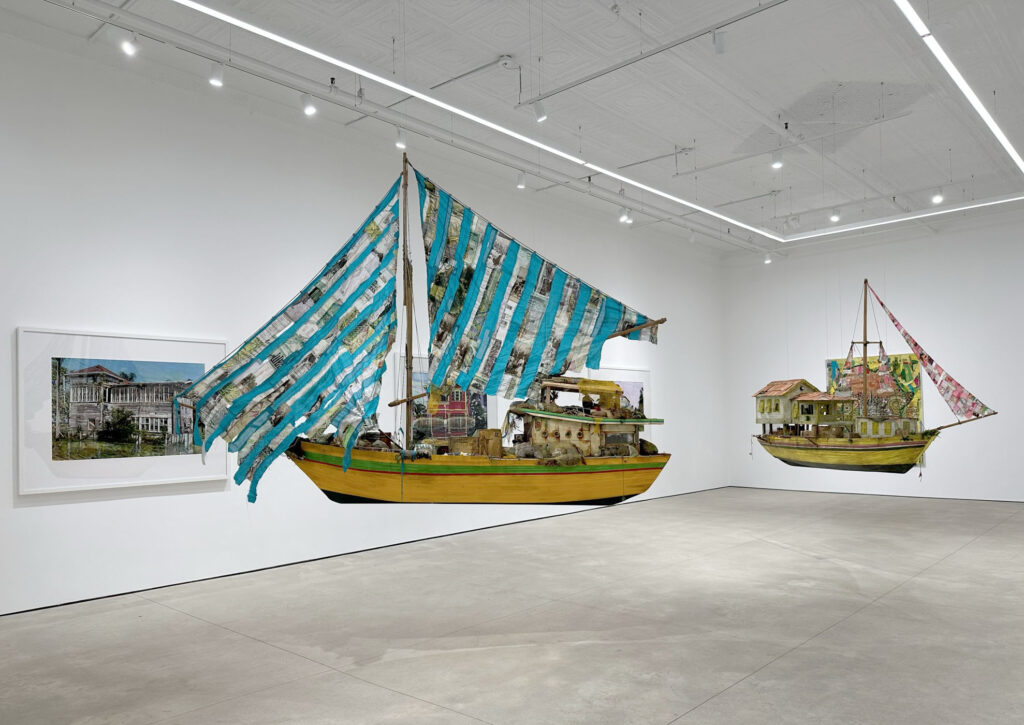
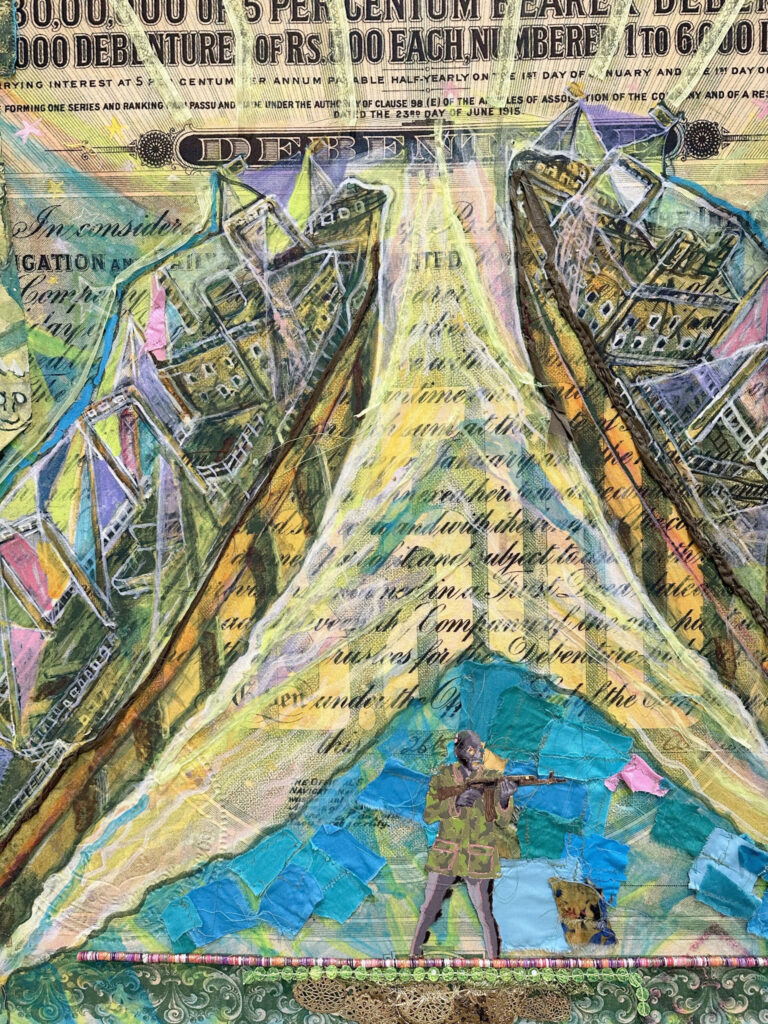
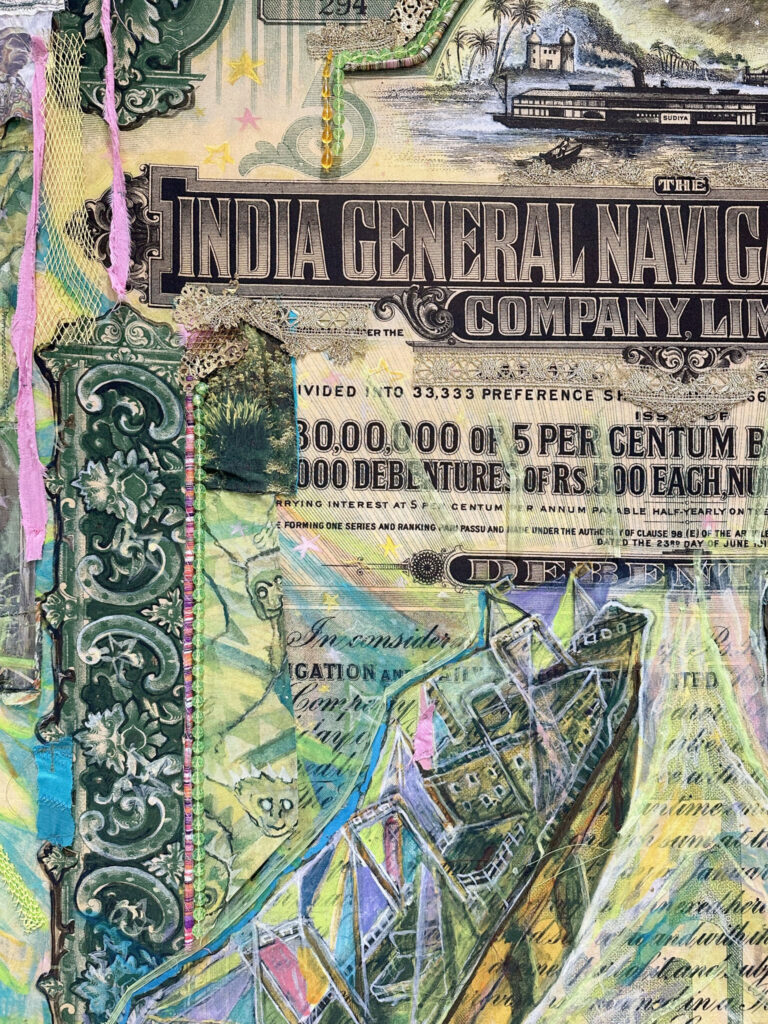
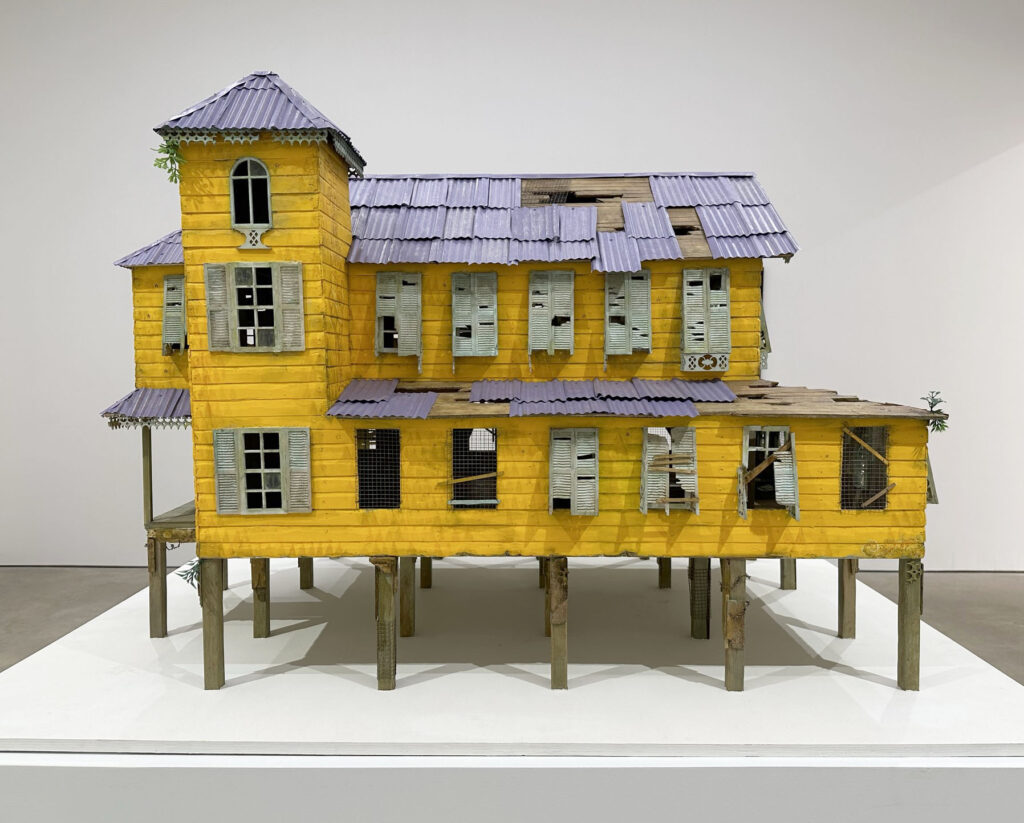
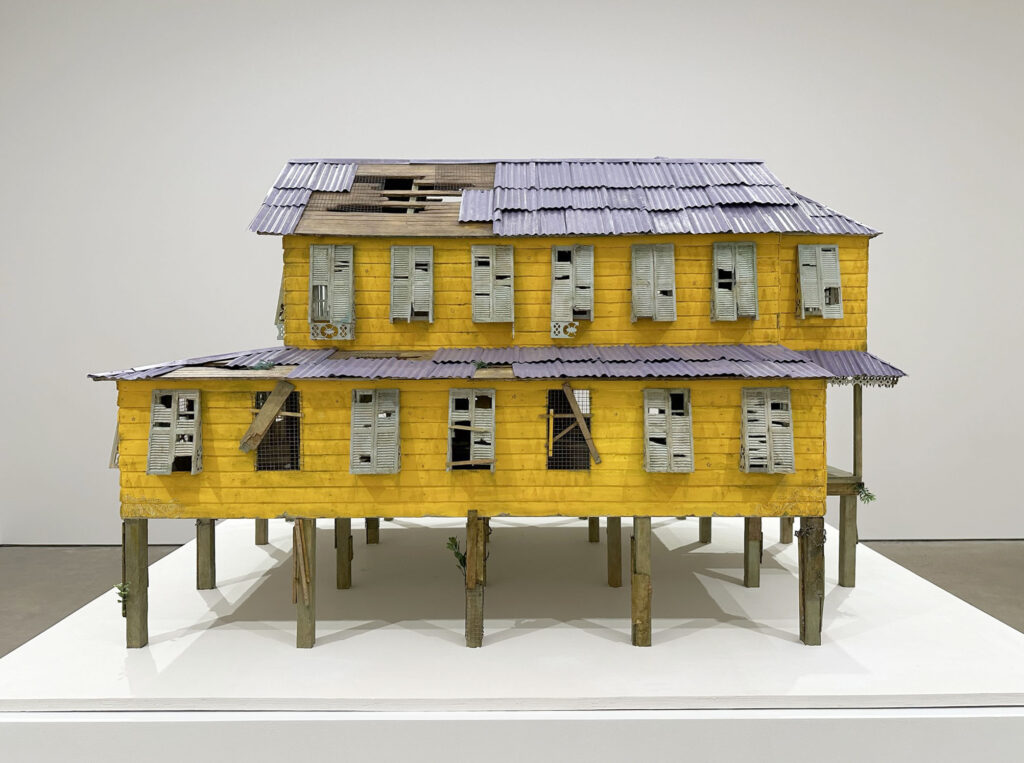
Hew Locke, “Listening to the Land” room view

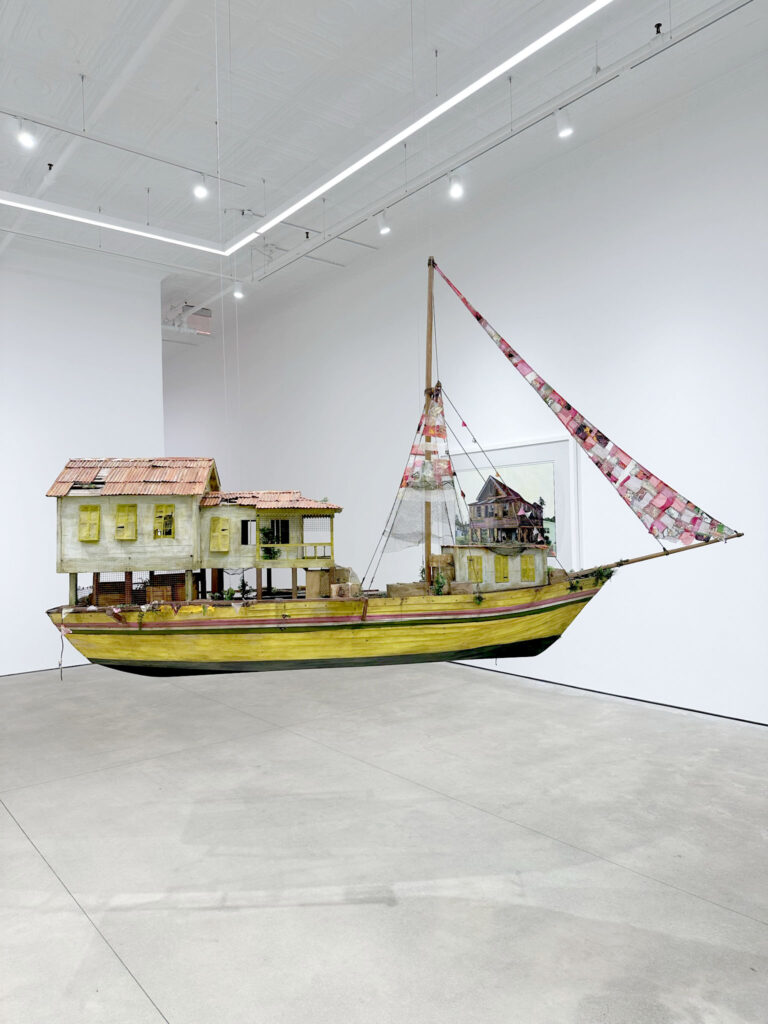
“The Relic”, 2022

“The Relic” 2022 (another side)

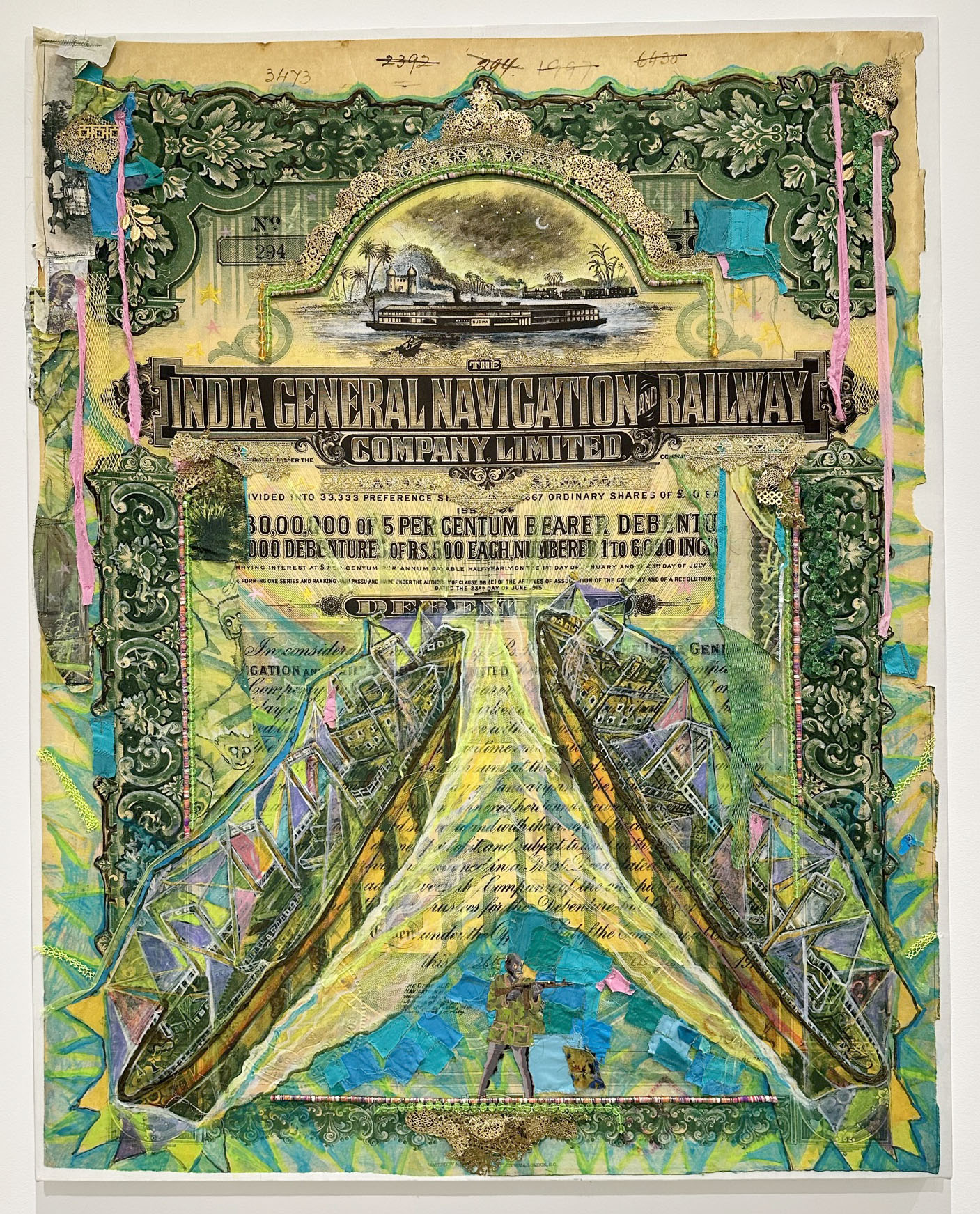
“Raw Materials 3”, 2022

“Raw Materials 3”, 2022 (detail)

“Raw Materials 3”, 2022 (detail)

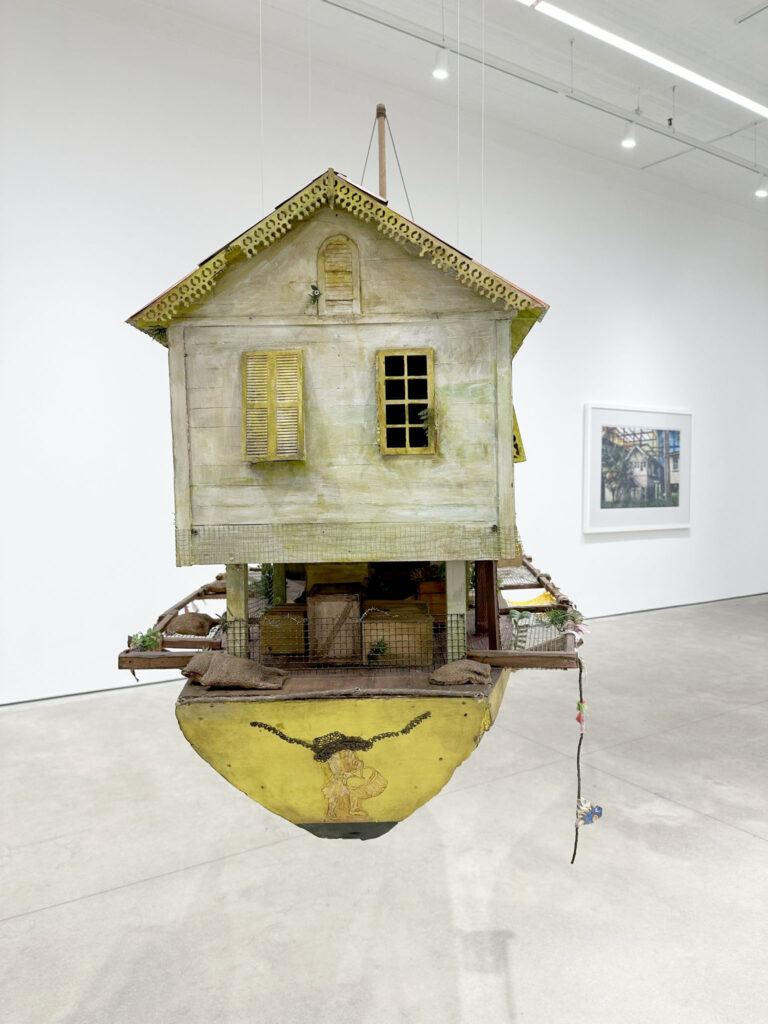
“Jumbie House 2”, 2022

“Jumbie House 2”, 2022

For Hew Locke’s exhibition, Listening to the Land, at P.P.O.W. he has created intricate sculptures and paintings that are fascinating in person.

From the press release-

Locke is known for exploring the languages of colonial and post-colonial power, and the symbols through which different cultures assume and assert identity. Furthering the themes explored in his celebrated commission The Procession at Tate Britain, and his concurrent installation Gilt on the façade of The Metropolitan Museum of Art, this exhibit engages with contemporary and historical inequities while reflecting on the landscape and history of the Caribbean. The exhibition draws its title from a poem by Guyanese political activist and poet Martin Carter which situates itself between two opposing forces of the landscape – sea and forest. Locke’s show features new sculptures and wall works with recurring motifs of stilt-houses, boats, memento mori, and share certificates referencing tensions between the land, the sea, and economic power. Reflecting on these links, Locke notes, “The land was created to generate money for colonial power, now the sea wants it back.”

Translating to ‘land of many waters,’ Guyana and its physical, economic, and political landscape serve as one of the primary sources for Locke’s work. Having spent his childhood in this newly independent nation, the artist witnessed first-hand an era of radical transformation. Now, the country teeters on the precipice of an oil boom and is one of the world’s fastest growing economies. Juxtaposing personal meditations on the climate crisis with political commentary on the history of a globalized world, Locke contemplates the ways in which colonies were exploited to accumulate capital, and observes how Guyana’s economic future lies in the exploitation of its waters. Locke’s new boat sculptures The Relic and The Survivor embody this broad worldview as the two battered wrecks drift through time and history. Evoking the fragmented and diverse legacies of the global diaspora, the boats’ patchwork sails are interspersed with photo transfers of 19th Century cane cutters and banana boat loaders, while their decks are loaded with cargo that could allude to colonial plunder, trade goods or personal belongings.

Based on an abandoned plantation house, Locke’s newest sculpture Jumbie House 2 features layered images that unveil the spirits that haunt this colonial vestige. Presented alongside are a series of painted photographs of dilapidated vernacular architecture across Georgetown and rural Guyana. Constantly under threat of being washed away by storms or rising sea levels, these crumbling structures echo anxieties surrounding climate change and historical erasure. A new series of mixed media wall works, Raw Materials, is derived from antique share certificates and bonds. Locke richly decorates the appliques with acrylic, beads, and patchwork to draw attention to the complex ways in which the past shapes the present. The image of an 1898 Chinese Imperial Gold Loan behind painted Congolese figures connects the global economy at the height of Empire to current Sino-African trade networks. In another work, a painted representation of a Nigerian Ife mask, alongside an image of David Livingstone, is layered on a French-African Mortgage Bond from 1923, connecting exploration and exploitation of African land, to current conversations surrounding the repatriation of artifacts. Taken together, the works in Locke’s Listening to the Land echo William Faulkner’s adage “The past is never dead. It’s not even past.”

This exhibition closes 4/1/23.
The Procession, mentioned above, can now be seen at Baltic Centre for Contemporary Art, in Gateshead, England until June 11th, 2023.
Gilt, also mentioned above, is on view at The Metropolitan Museum of Art until May 30th, 2023.


Mar 262023
 

Kirsty Wither “Tumbling Crowd”

Yelena Lezhen “Clockwork Bird Song”

Esther Rosa “Goes around, comes around III”

This weekend is the Affordable Art Fair in NYC. It’s a chance to check out and buy art at reasonable prices.The fair goes to Hampstead, London next, and will return to New York in September of 2023.

For more on the artists pictured above and their galleries-

Kirsty Wither runs the London gallery Cameron Contemporary with her husband, Robin Cameron.

Yelena Lezhen’s work was shown by Barcelona gallery Manifest Destiny Art. Check out her Instagram for current work.

Esther Rosa’s sculpture was part of InSight Artspace’s booth. Her Instagram is also a good place to see her work.


Mar 232023
 

Stefan Kürten, “We are all made of stars”, 2013

Stefan Kürten, “Running to Stand Still”, 2014

Stefan Kürten, “Running to Stand Still”, 2014 (detail)

Stefan Kürten, “Fine Wrinkles”, 2000

Rita McBride, “Mae West Mandala (Oaxaca), 2009 and “Color Test (Green Bar)”, 2009

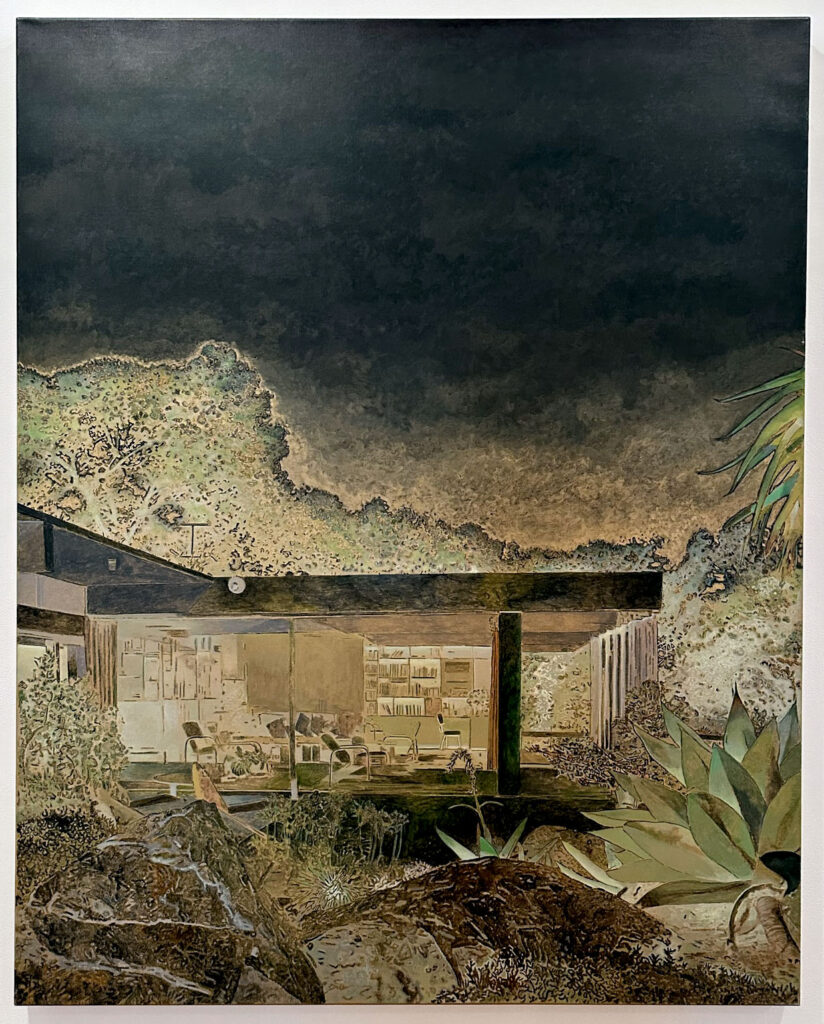
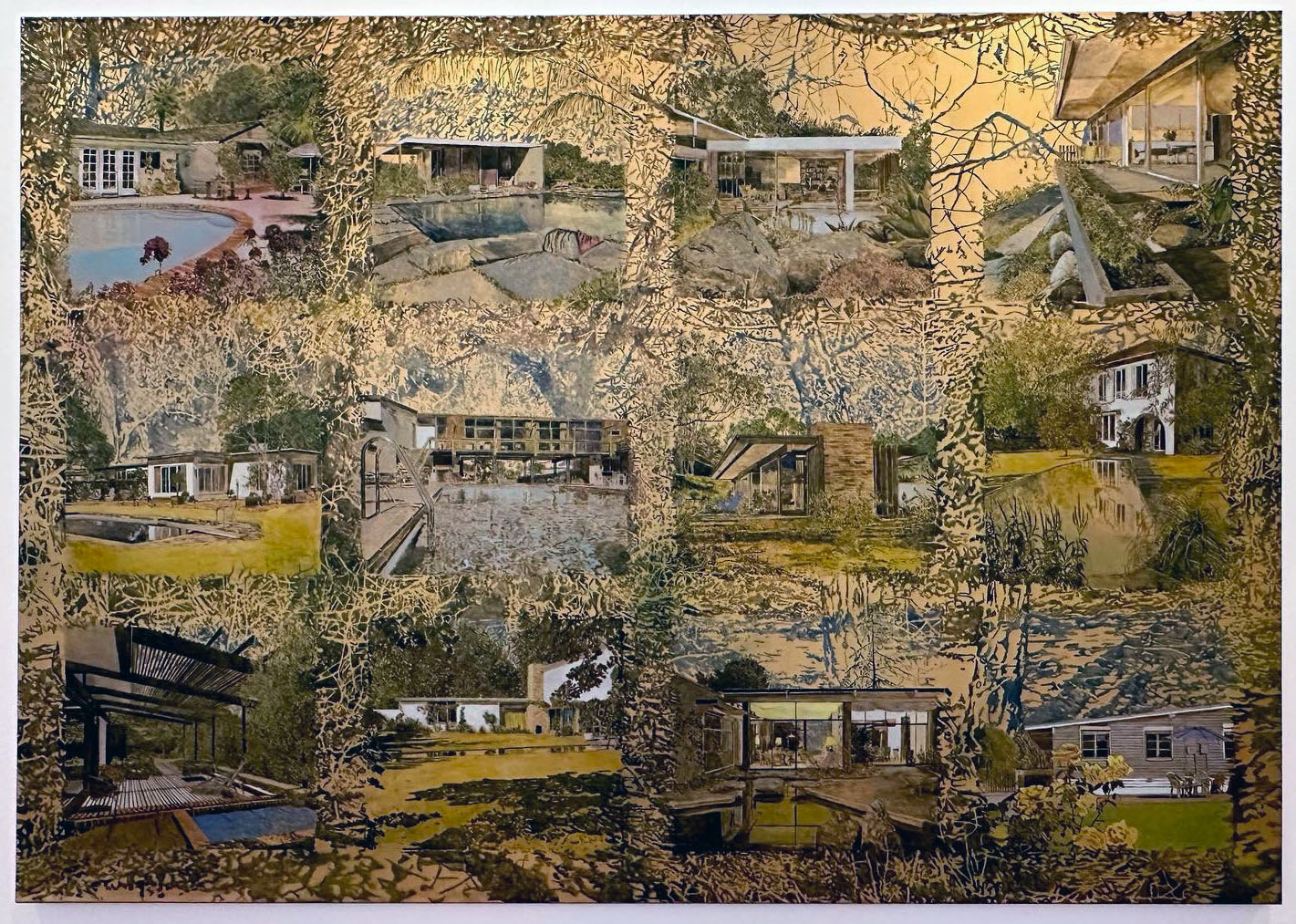
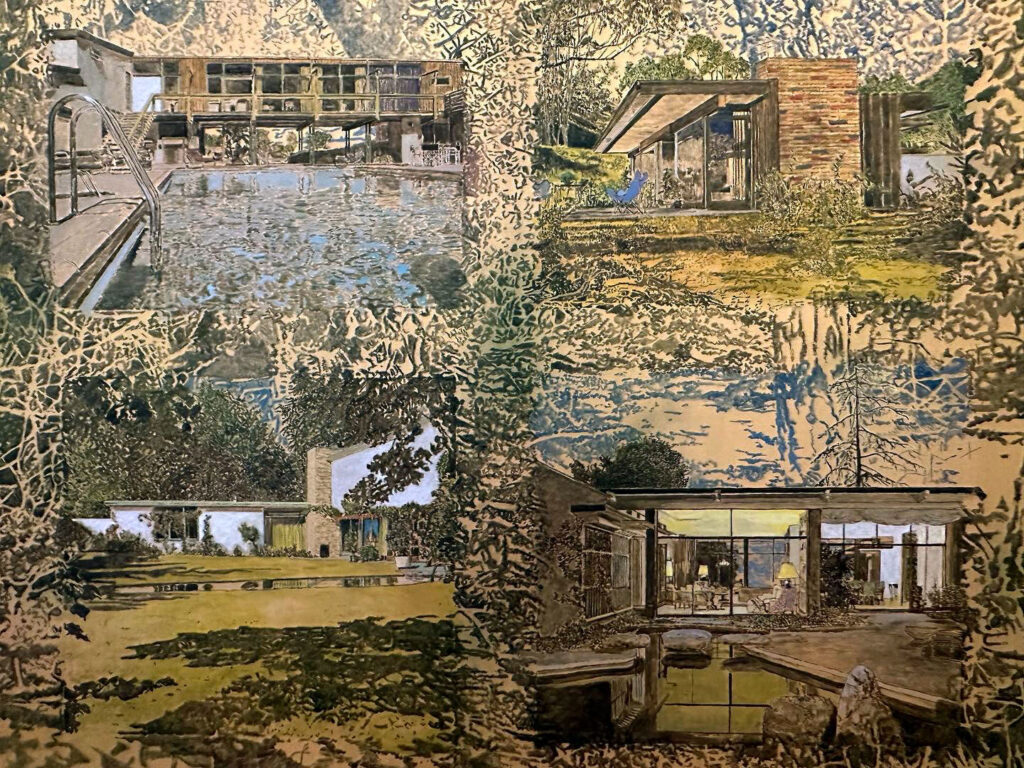
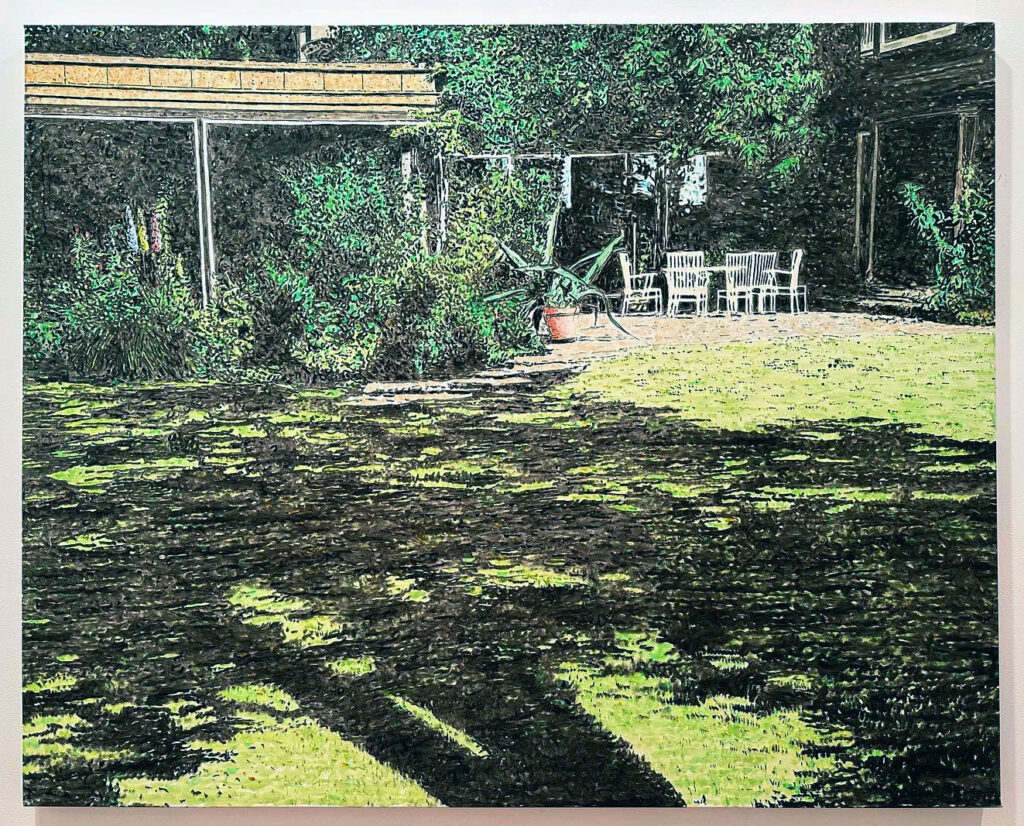
Stefan Kürten’s paintings of houses and Rita McBride’s wall coverings (and other sculptures) work with each other to question the concept of home, as well as the objects you might find within one. The exhibition, titled I Continue To Live In My Glass House, is on view at Alexander and Bonin until 3/25/23.

From the press release-

Stefan Kürten is known for detailed depictions of homes. Although constructed from both found and invented imagery, his homes feel known or experienced. The slippage between archetypes, memories, and dreams are central to his compositions. Set in lush landscapes and mysteriously unpeopled, Kürten’s homes evoke modern art or design museums with iconic sculptures and furniture viewable inside and outside of their transparent walls.

Rita McBride’s work invites us to reconsider structures and design elements such as ductwork, awnings, wall coverings and other utilitarian objects. McBride represents a bentwood chair in Murano glass, fastened together by a material that evokes spun candy or plastic wrap. Chair (1999) comments on the life of a domestic object whose usage necessitates an inventive approach to repair or stabilization.
McBride is also showing Particulates, an art installation that combines lasers with ambient dust and water molecules, will be on view at the Hammer Museum in Los Angeles starting 3/27/23.


Mar 172023
 

Currently at Derek Eller Gallery in NYC is Alyson Shotz: Alloys of Moonlight. The exhibition highlights her unique work which becomes more intriguing the more time you spend looking at it.

From the press release-

Featuring a monumental polychromatic steel sculpture and luminescent three-dimensional aluminum wall works, Alloys of Moonlight delves further into questions that Shotz has been exploring throughout her nearly 30-year career: how do we grasp the mysterious forces that shape the universe, and how do we reconcile observable reality with the noumenal reality of environmental phenomena? This new body of work explores the dialectic between these axes, as Shotz refines a sculptural language to visualize the unseen and the sublime forces that frame the natural world. The works in Alloys of Moonlight act as instruments by which to measure and reflect the ineffable forces of nature.

In the center of the gallery is Aphelion, a looped steel sculpture that turns and twists in ways that seem to defy nature, leading the eye in an endless serpentine path around its undulating curves. The sculpture transforms as the viewer moves around the piece, its colors shifting from gold to green to blue. Changes in light and time of day are registered by the changing colors of Aphelion’s surface, a phantom quality mirrored in the spatial nature of the work. Made of the least amount of material to hold its shape, Aphelion constitutes a delicate synthesis between positive and negative space. It is as much composed of a mesh-like steel as the air that flows through it. The form, which is born of the artist’s longstanding interest in knots and non-orientable surfaces like the Mobius Strip, is similarly fugitive and beguiling. Comparable entangled structures serve a fundamental role in the quantum-mechanical foundations of nature itself, and knot-like forms likewise have appeared as cultural signifiers throughout art history in Roman, Byzantine, Chinese, African and Islamic art.

The walls of the gallery feature a series of crumpled aluminum sheets, painted in a hazy spectrum of light-reflective mineral colors. Rather than the two-dimensional geometry of a flat plane, these pieces are spatial objects that delineate the magnitude of a prior impact. Named Alloys of Moonlight after the title of the show, each piece has a particular form, a shape that quantifies the exact nature of an individual collision. Conversely, the folding also embeds the aluminum sheets with a degree of potential energy and the suggestion of an incomplete natural process: the unfurling of a leaf or the folding of a wing. As representations or diagrams, these works define form through a negative logic—rather than creating sculptural volume through physical material, thin walls of aluminum outline the shape of an interior void. Alloys of Moonlight subverts the expectation of concrete immutability, instead using space as a sculptural medium. This language of spatial ambiguity is paralleled by the striking luminescent surfaces of the works, which are similarly variable. Like the orbits of moons around planets, each piece is in constant flux, registering changes in sunlight as well as the shifting position of the viewer. The sculptures in this exhibition exemplify the interplay between what is visible, concrete, measurable, and a more ethereal subtext that structures the natural world. Alloys of Moonlight renews and deepens Shotz’s exploration of the delicate and sublime space between these realities.

This exhibition closes 3/18/23.

Mar 162023
 

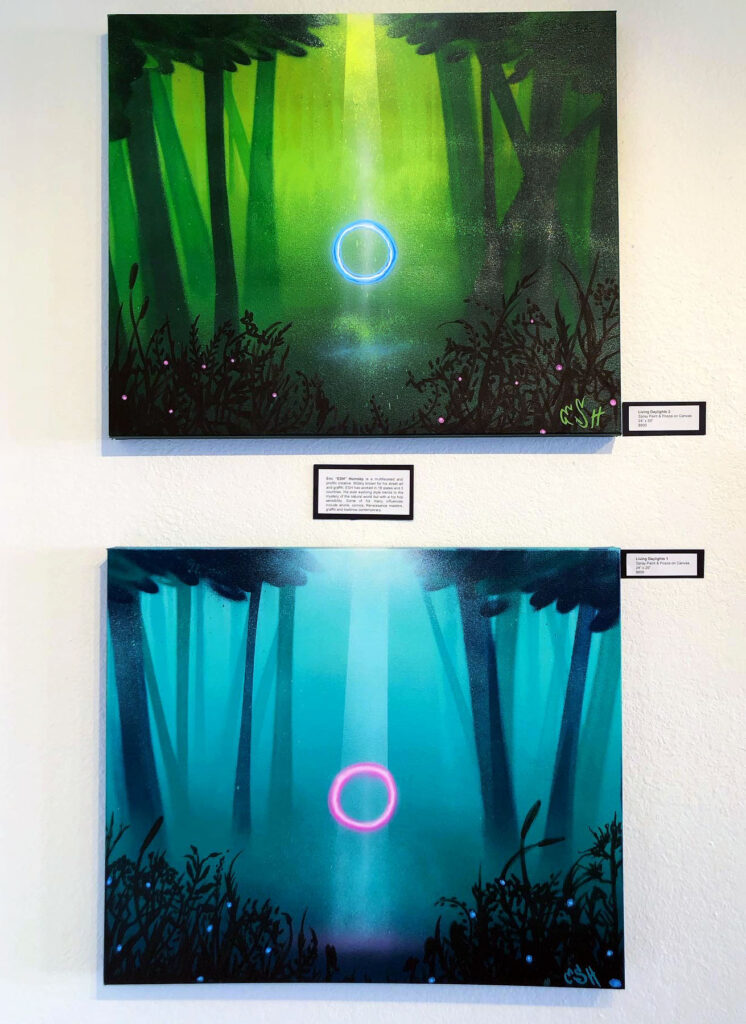
Eric “ESH” Hornsby, “Living Daylights 1″and “Living Daylights 2”

Adam Christopher Reed, “The Judge”

Nikita Rosalind, “Peace in the Wild Waves”

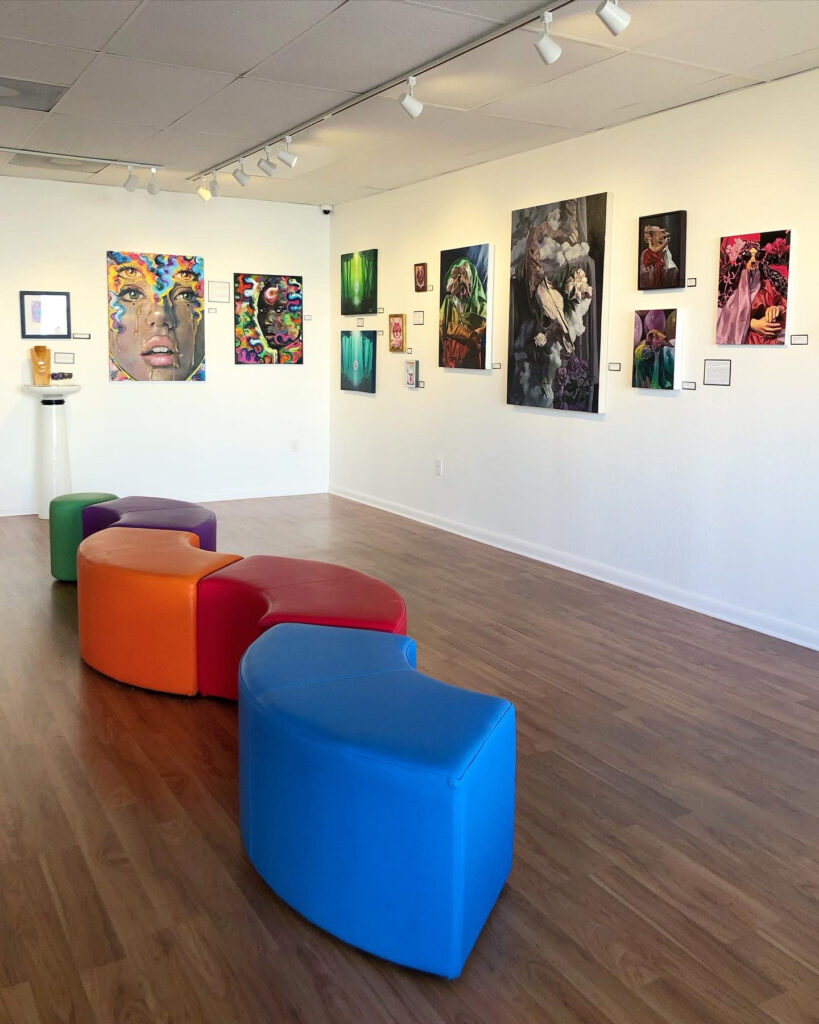
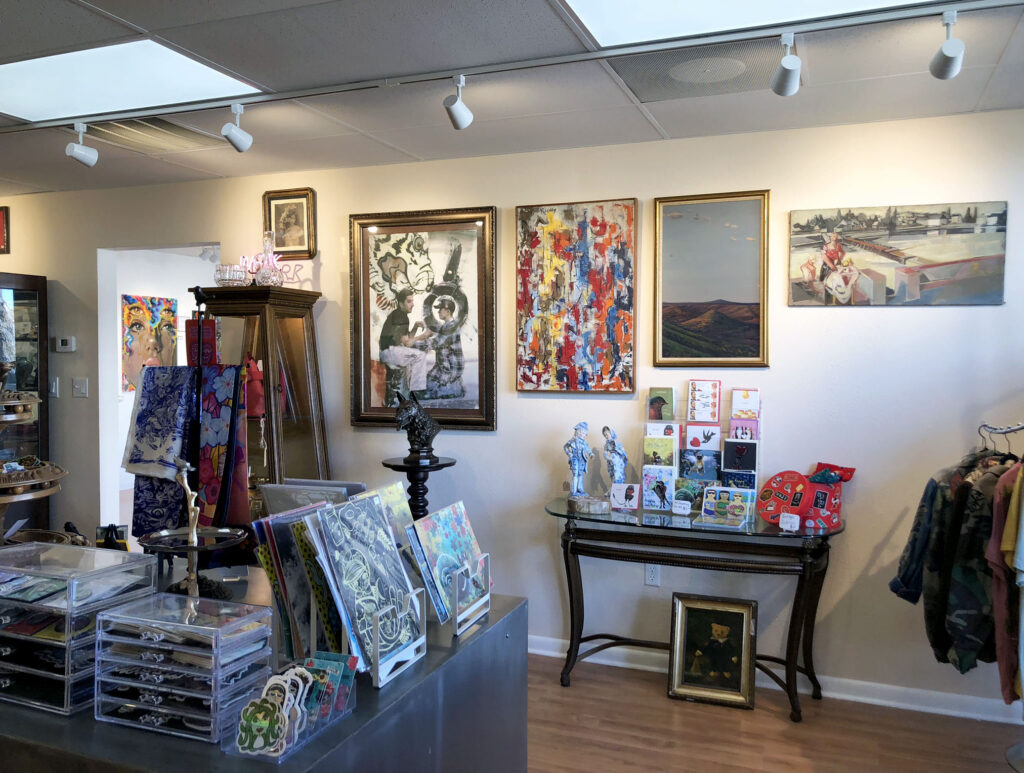
The Werk Gallery is an exciting new space in St. Pete that hosts monthly exhibitions in one half and the owners’ curated mix of vintage and modern items in the other. The photos above are from Shiny & New, the first gallery’s first show.

Artists from this exhibition pictured above- Adam Christopher Reed, Nikita Rosalind, and Eric “ESH” Hornsby

Currently the gallery is showing Rite of Spring, featuring artists Kenny Jensen, Nathan Beard, Samson Huang, Laura Spencer (Miss Crit), John Gascot, and Leafmore Studios (Becca McCoy and Justin Groom).

The gallery is open Thursday- Sunday from 12-5 pm.

Mar 162023
 

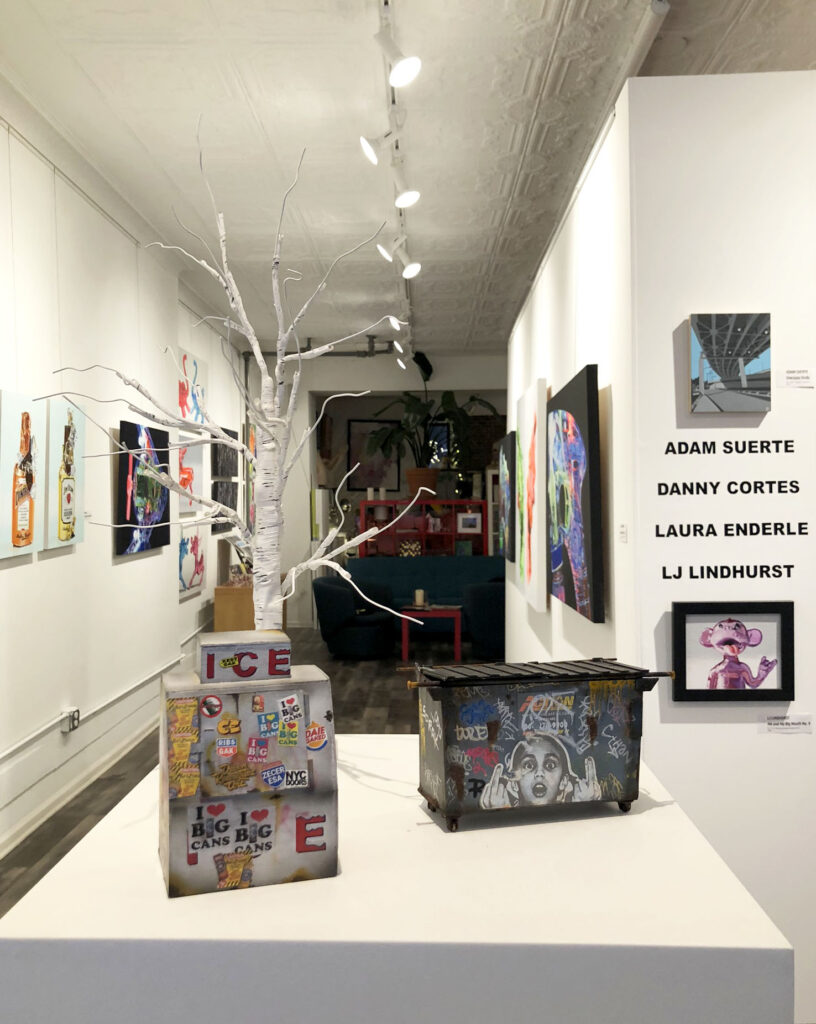
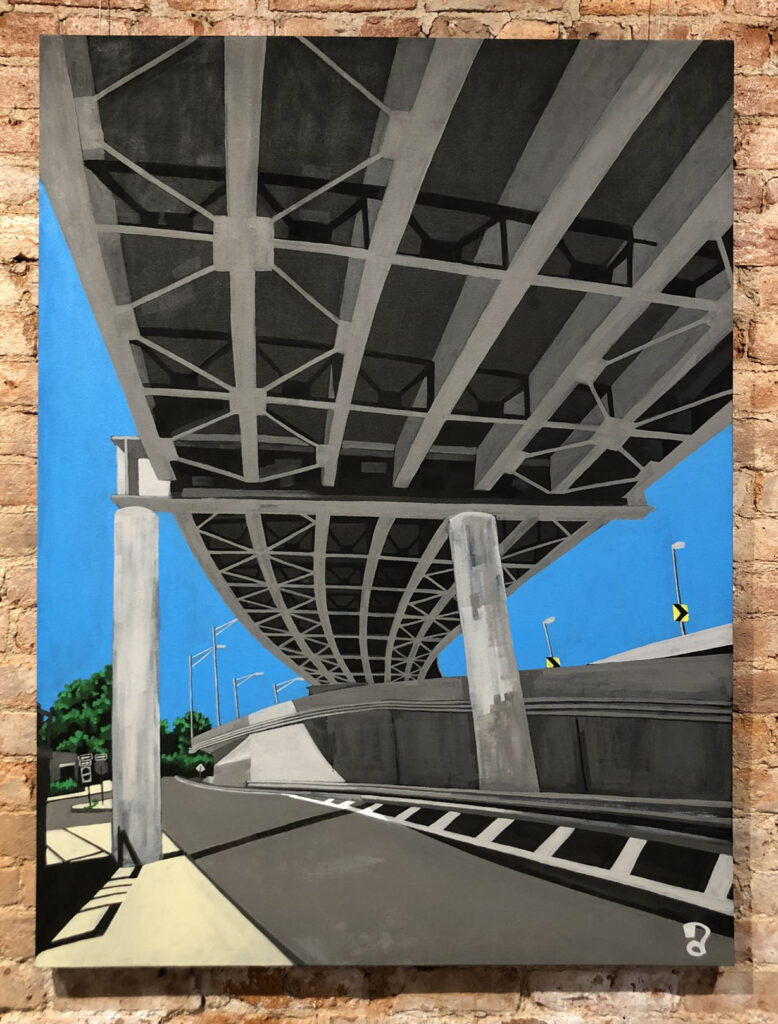
Adam Suerte, “Overpass, Redhook”

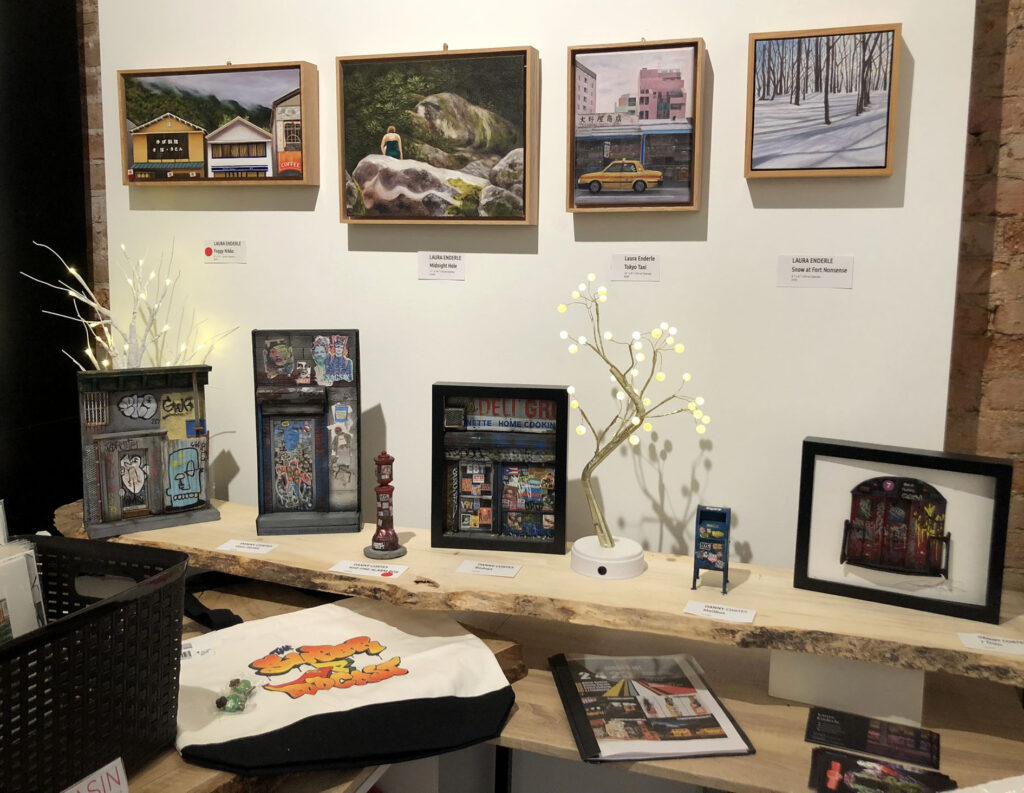
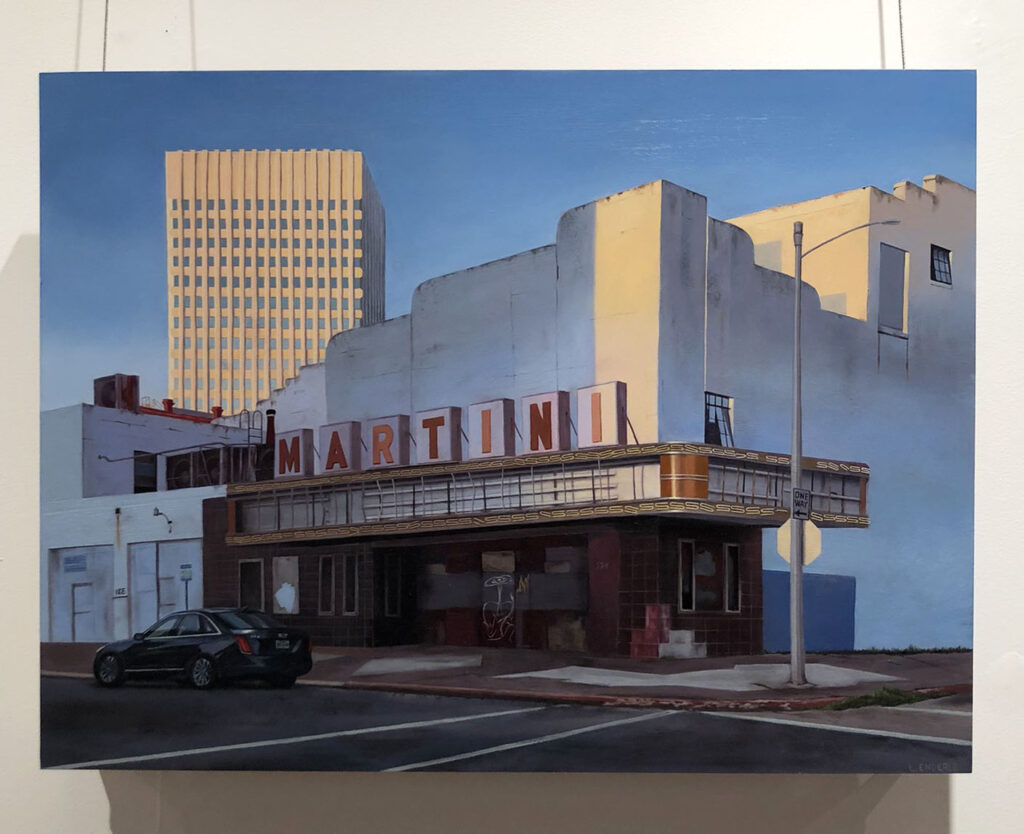
Laura Enderle, “Martini Theater”

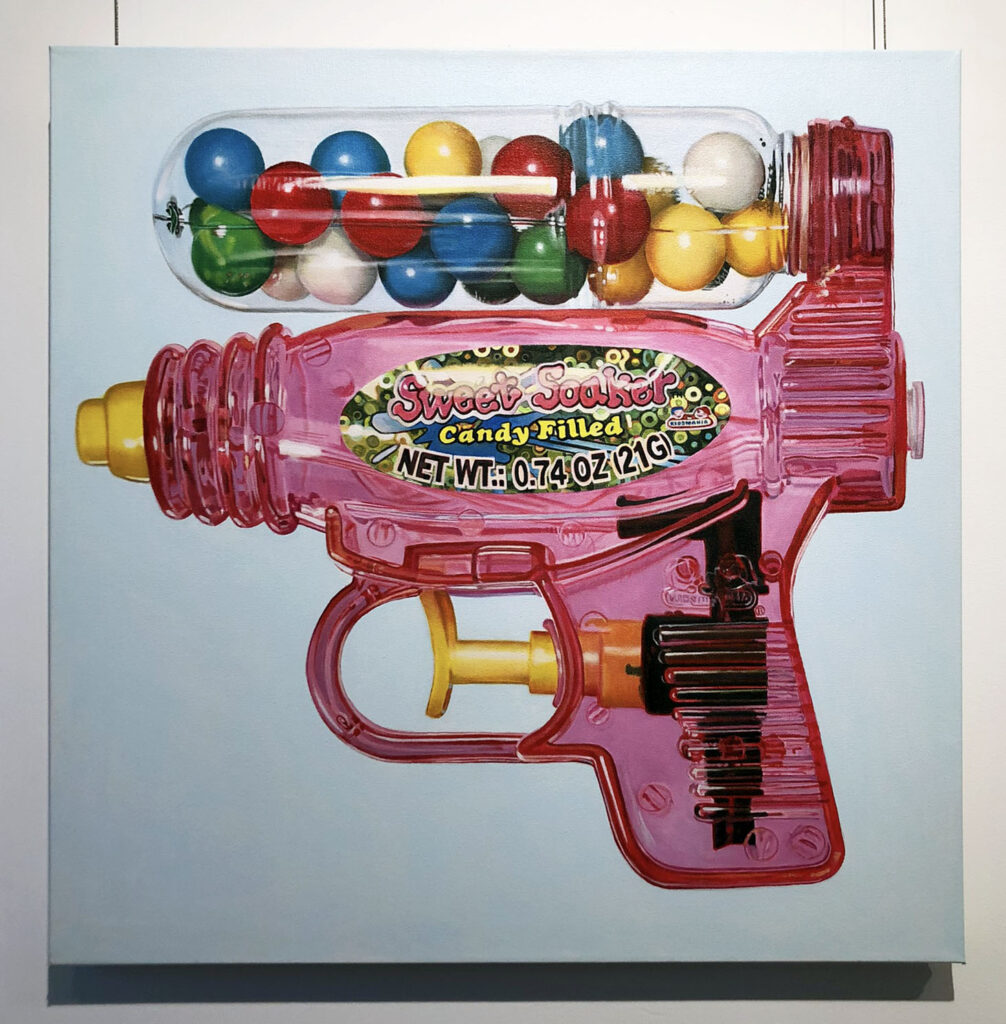
LJ Lindhurst, “Magenta Sweet Soaker”

Tonight (3/16/23) at Basin Gallery in Redhook, Brooklyn, is the closing reception for the group exhibition of work by Adam Suerte, Danny Cortes, Laura Enderle, and LJ Lindhurst.


Mar 102023
 

Bonam Kim, “Untitled (401 Suydam Street), 2022”, Dollhouse miniatures, taxidermy pigeon, wood, paint and “Can’t Stand Up For Falling Down”, 2018, wood, screw, silicone

Bonam Kim, “Untitled (401 Suydam Street)”, 2022, Dollhouse miniatures, taxidermy pigeon, wood, paint

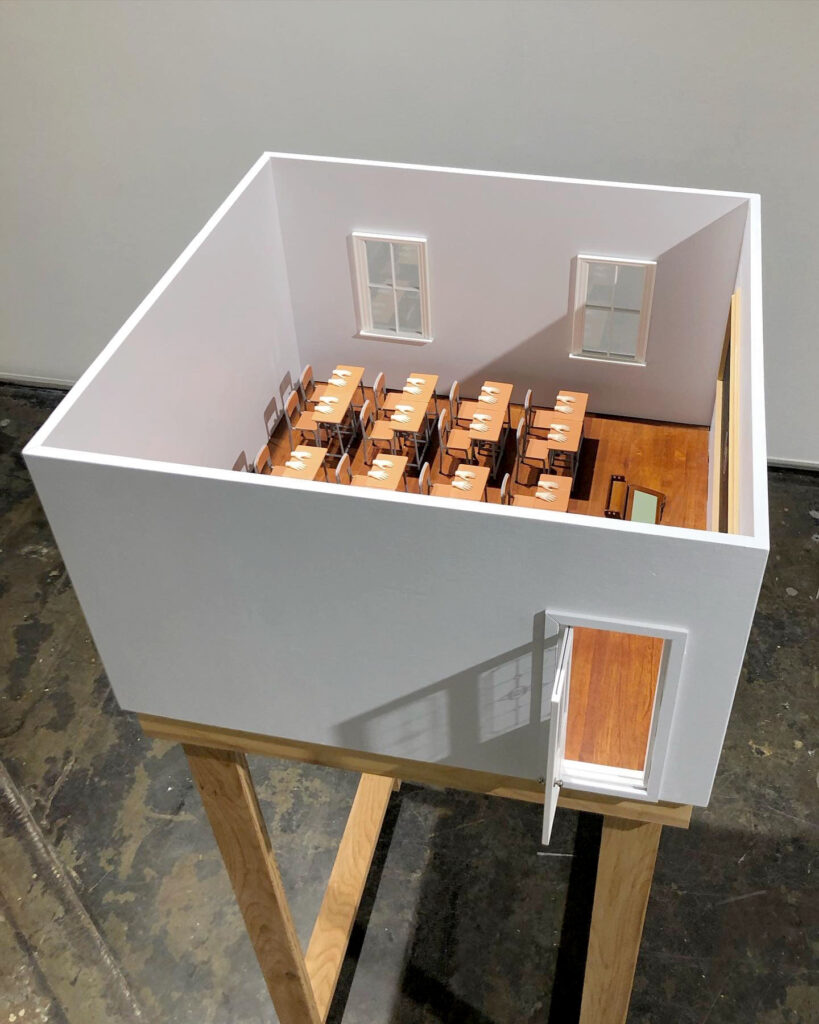
Bonam Kim, “Untitled (Classroom)”, 2022, Dollhouse miniatures, wood, paint, paper

Bonam Kim, “Untitled (Classroom)”, 2022, Dollhouse miniatures, wood, paint, paper

Bonam Kim, “Untitled (1990-2005)”, 2022, Wall clock, dollhouse miniatures, wood

It’s the last weekend to see Bonam Kim’s GOOD JOB WELL DONE, at A.I.R. Gallery in Brooklyn. The collection of sculptures are each based on events in Kim’s life and are incredible creations.

From the press release-

Kim grew up with her brother’s architectural models and drawings scattered around their house. Captivated by the relationship between model and actual space, she gained an acute sense of her spatial surroundings. This sensibility, combined with her love of making things with her hands, led her to constructing miniatures of her world. These objects invite us to navigate not only the spaces she has occupied physically, but also the psychological space of her experiences and memories. By manipulating scale and taking a bird’s-eye view perspective, Kim reclaims power over the past and present. Works like Between Dream and Dark and Can’t Stand Up For Falling Down playfully explore the frustrations of cross-cultural exchange, while Untitled (April 2, 2020) and Untitled (203 Harrison Pl) evince feelings of isolation and accumulation during the pandemic era.

In Untitled (Classroom), Kim recreates a typical classroom from memory. Within it she presents us with some of the artifacts of the post-war South Korean educational system: politely folded hands are given a “stamp of approval” on the blackboard, commended for their conformity. Kim continues this examination of the way architectural spaces regulate human behavior in Untitled (401 Suydam Street), a model of the artist’s bedroom. She restages an event in which her apartment’s ceiling had become infested by pigeons, eroding her sense of personal space and producing an uneasy awareness of surveillance—of being observed at her most intimate by an other.

Untitled (1990-2005) contends with a traumatizing childhood experience where Kim suffered a severe hand burn which led her to have multiple surgeries over an extended period of time. These memories led her to grow averse to going into spaces that brought forth memories of the hospital’s formal qualities, such as hair salons. With the piece she distills the relation between time, space, and memory, turning a wall clock into an operating room and hair salon. This sense of spatial unease is echoed in the piece Untitled (Mexico City-Seoul), which models the circumstances of renewing her visa in the middle of the 2020 pandemic. Having to ping-pong between Mexico and Seoul without knowing when she would be able to return to the United States made her reflect on the arbitrariness of the system, which is mirrored in the piece by an embassy office held within a lottery box, pointing to a bureaucratic opacity that leaves the user in a sort of Kafkaesque limbo.

This exhibition closes 3/12/23.