May 212023
 

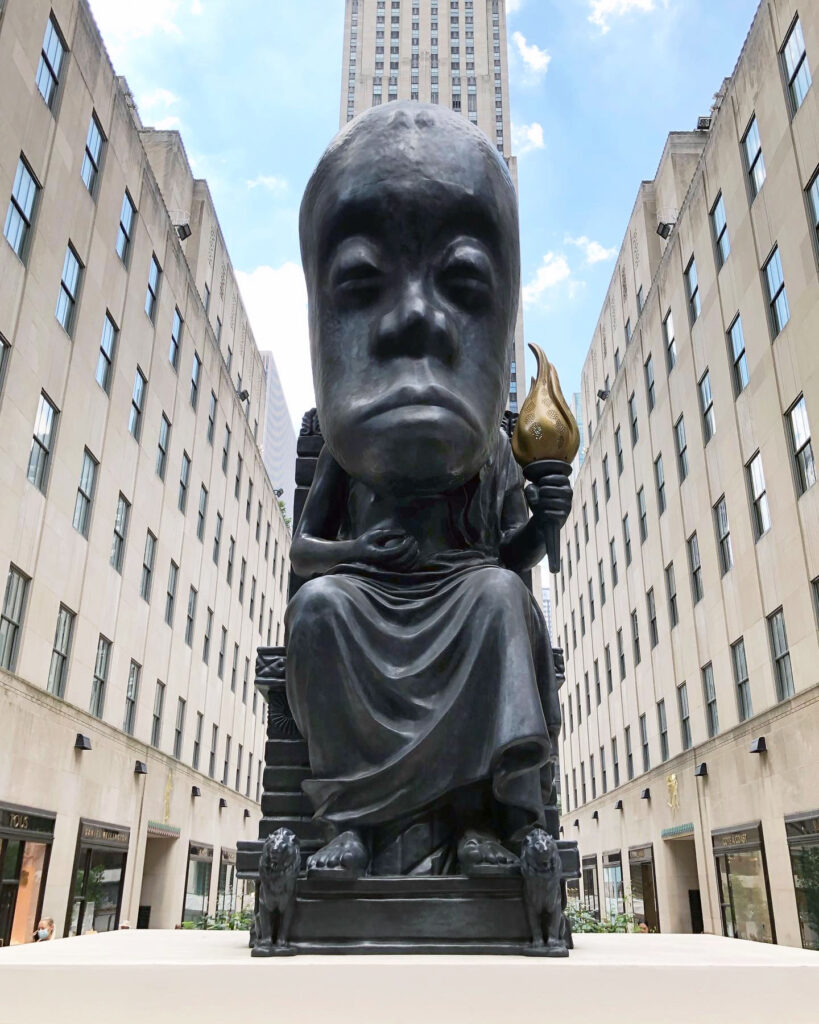
The above photos are of Sanford Biggers’ sculpture The Oracle when it was located at Rockefeller Center in NYC in 2021, where it was part of a multimedia installation.

It now resides outside the Hammer Museum in Los Angeles, on the new outdoor sculpture pedestal on Wilshire Boulevard and Glendon Avenue. It will be there until March of 2024.

From the Hammer website about the work-

Anchoring this corner is Oracle (2021), a cast bronze figure weighing 7.64 US tons (15,280 pounds) and standing at 25 feet tall. This monumental commission from Biggers continues his “Chimera” series that hybridizes the canonical figures and gestures of Greco-Roman sculpture with an assortment of iconic African objects from the 14th–20th centuries. Unlike Biggers’s other “Chimera” sculptures that are made in marble, Oracle is cast in bronze. The seated figure in Oracle is a depiction of the statue of Zeus at Olympia, while the head is a composite of several masks and busts from different African cultures, including the Luba Kingdom and the Maasai.

Biggers sculpturally patchworks historical depictions of the body and their subsequent myths, narratives, perceptions, and power. Biggers is intrigued by the recent scholarship about the academic and historical “white-washing” of classical Greco-Roman sculpture simultaneously intersecting with the early twentieth-century “black-washing” of various African sculptural objects. Oracle challenges the associated cultural and aesthetic assumptions about their source material while acknowledging the often dubious origins of the original objects themselves.


May 122023
 

Currently at Marc Straus is Marie Watt’s impressive exhibition, Singing Everything.

From the press release-

A member of the Seneca Nation, Watt also has German-Scott ancestry. Her layered and complex influences include Indigenous knowledge and Iroquois proto-feminism, the matriarchal structures of certain Native American nations, the rise of social activism throughout the 20th century, and the anti-war and anti-hate content of the 1960s and 1970s music scene.

Central to the exhibition are three Sewing Circle pieces that were initiated at communal gatherings at the Whitney Museum of American Art in 2022. Watt’s sewing circles are cross generational, multicultural gatherings that she has been organizing for over a decade. Inspired by poet laurate Joy Harjo’s (Mvskoke/Creek) poem Singing Everything, Watt collects words from the participants of her sewing circles with the prompt, “what do you want to sing a song for in this moment?” The submitted words are then embroidered or sewn onto patches of fabric during the sewing circle. For the Whitney Sewing Circle, with over 300 participants, Watt, for the first time, used all the submitted words. Each panel is patterned in a way that stays true to the original hand. She thinks of ones handwriting as an extension of the cadence of one’s voice and in this project, it becomes part of a larger chorus. By composing large-scale wall works from these pieces of fabric, Watt creates collaborative artworks that interweave many individual handwritings, touches, and the stories that were exchanged in a shared space.

When entering the gallery, the visitor is greeted by a sweeping, 24-foot-long neon sign spelling out the words “deer, skywalker, heron, bass, great lake, woodland, beaver, turtle, wolf, lowly, muskrat, rat” in various hues that evoke the sky on the horizon during sunset and sunrise. While the piece represents a new direction in Watt’s work, she views neon as an extension of beadwork. The glass itself is at once thread and bead, and both neon and beads have a relationship to trade. They both envelop light, color, and sound, embodying sunrises and sunsets on the horizon.

Two blanket towers, her signature sculptural works, appear in the show but now with tin bells or jingles added to the reclaimed wool blankets. This choice of added material felt like a natural extension to Watt. She writes: “Blankets are danced and so are jingles, there is something healing about them both. They are objects of comfort” – by way of touch or sound. Jingles acknowledge the Jingle Dress Dance which began as a healing ritual in the Ojibwe tribe in the 1910s during the influenza pandemic. The Jingle Dress Dance was also a radical act. In 1883, the United States banned Indigenous ceremonial gatherings. Though the ban was repealed in 1978 with the American Indian Religious Freedom Act, during its century-long prohibition the Jingle Dress Dance was shared with other tribal communities. Today it is a pow-wow dance and continues to be associated with healing. The relevance of this dance extends beyond pandemics.” By including jingles Watt brings the potential of sound into her work, adding to their visual and tactile aspects.

While drawing from long craft traditions such as textile or glass work, Watt is expanding her work by including contemporary stories and both individual and collective experiences. Her primary interest is to think about art as more experiential, rather than only visual, a direction she plans to explore further.

This exhibition closes 5/20/23.

May 112023


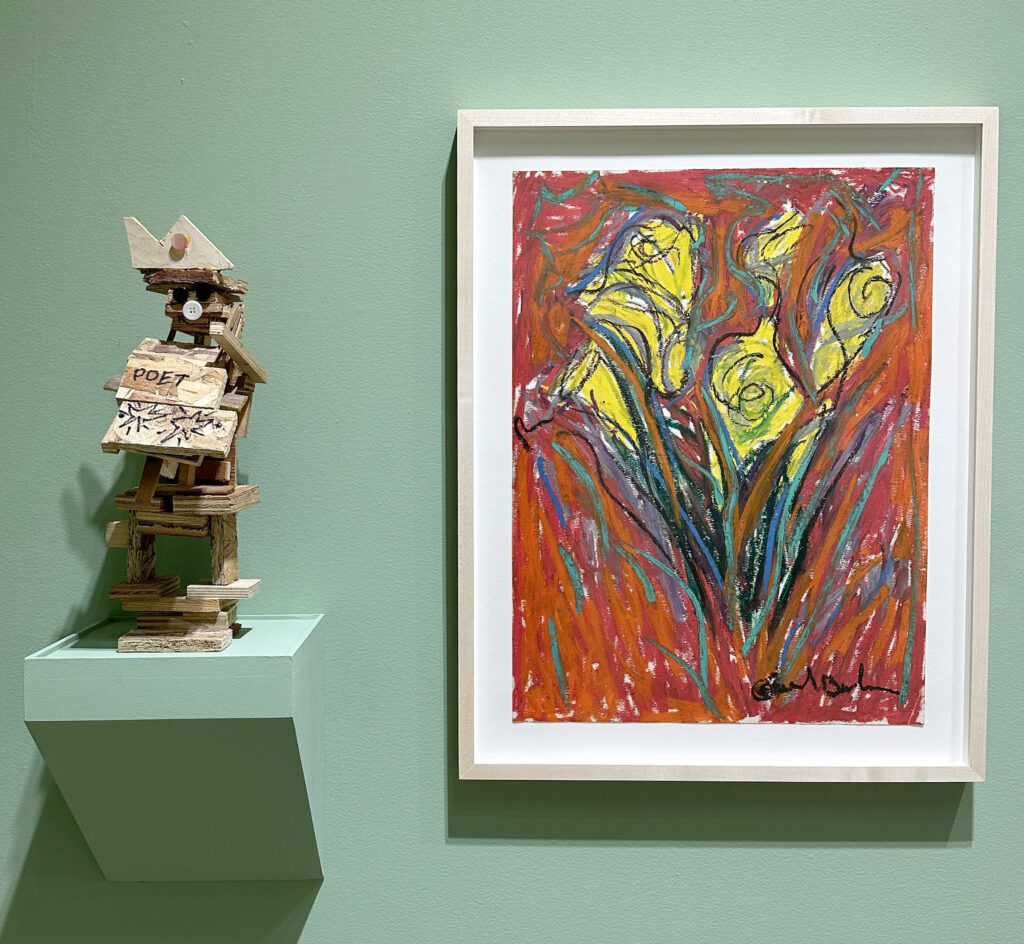
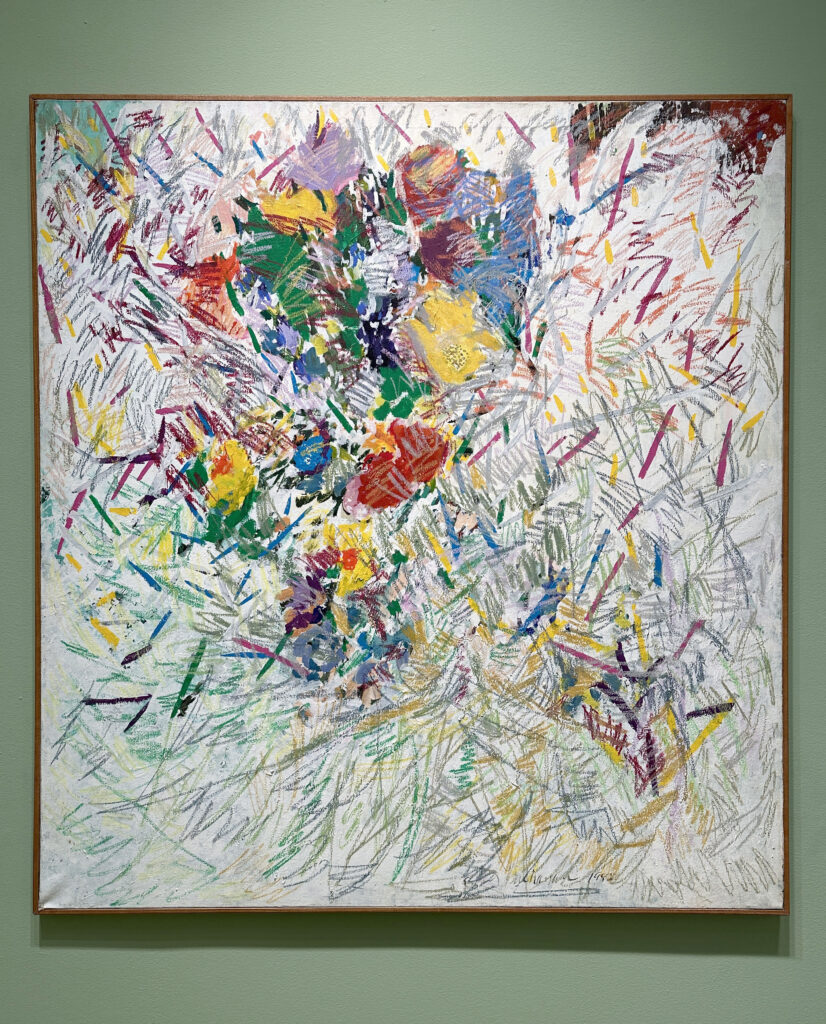
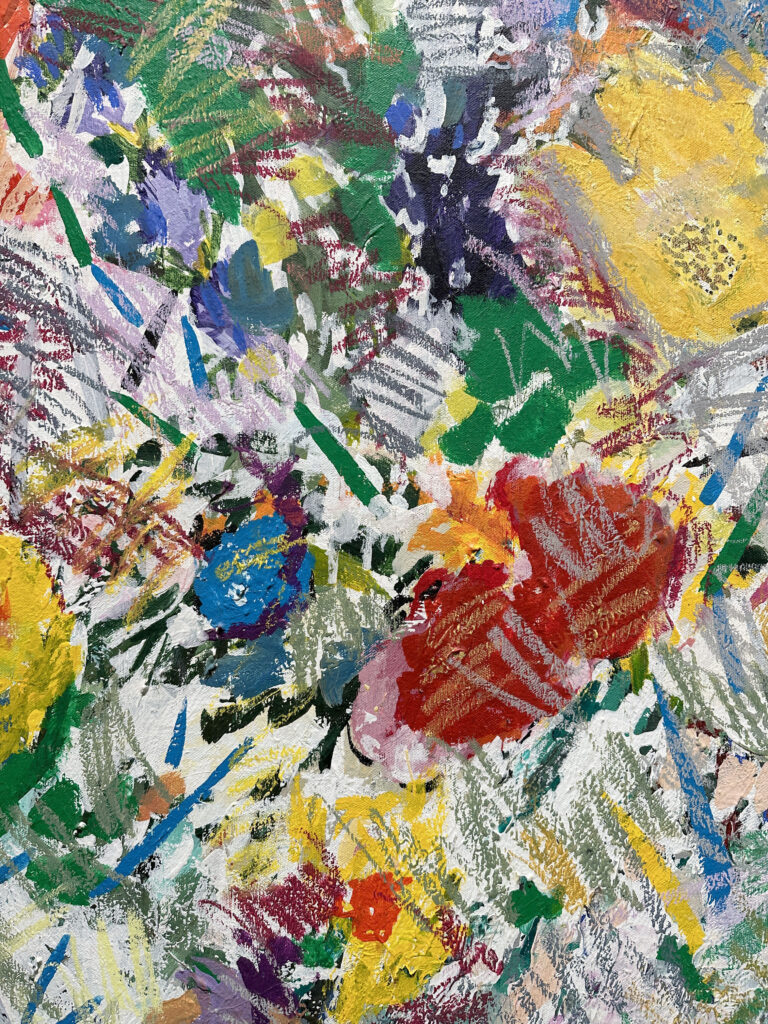
Andrew Edlin Gallery is currently showing a collection of rarely seen works by artist Beverly Buchanan. It covers her years as an abstract expressionist painter in NYC and her later work inspired by the rural South.

The gallery’s press release gives a really good history of this wonderful artist-

The first section of the show features the artist’s abstract paintings and works on paper from the 1970s, alongside post-minimalist sculpture from the late 1970s and early 1980s. The second section introduces a later, more personal side of Buchanan’s oeuvre, her colorful depictions of flowers and small folk-inspired assemblages created during the same period as her well-known “shacks.” A number of the works in the show, many of which were part of the artist’s private collection, have never been shown.

Though Buchanan wrote about her love of “making things” from an early age, it wasn’t until 1971, when she began taking evening classes taught by African-American painter Norman Lewis (1909-1979) at the Art Students League in New York, that her career as an artist took off. Abstract still-lifes that she made in Lewis’s class in 1972 are displayed here for the first time. That same year, her paintings were included in a group show at Cinque Gallery, a nonprofit space co-founded by Lewis and Romare Bearden (1911-1988), which showcased the art of emerging minority artists.

Having witnessed demolition sites in Harlem and SoHo, Buchanan evoked the visual erosion of architectural facades through what she dubbed her “Wall” paintings. In 1976 she presented a selection that she called “Torn Walls” in a two-person show titled City Walls at the Montclair Art Museum in New Jersey. In his New York Times review, David Shirey described the show as “indisputably a tinderbox of a display that will cause sparks to fly” and “the kind …one sees more regularly at the Whitney Museum and at some of New York’s avantgarde galleries.” Three of these paintings are being shown for the first time since that exhibition, forty-seven years ago. The show also includes a monotype, small studies, and a large painting from a series she titled “Black Walls.” The latter was originally featured in Shackworks, a seminal exhibition that opened at the Montclair Art Museum in 1994 and traveled to nine other institutions from 1994-1996.

By the late 1970s, Buchanan was further exploring the aesthetics of architectural decay through sculpture, i.e., cast concrete assemblages, made from pieces of stone, brick debris, clay, and cement mixtures. She arranged these works in clusters on the floor, documenting them with photographs, and exhibited them, notably at Truman Gallery in New York in 1978, and at the feminist artist cooperative A.I.R. Gallery in 1980 in its groundbreaking show Dialectics of Isolation, curated by Ana Mendieta. Some of the small black terracotta works on display may be considered as studies for these larger assemblages.

After moving to Georgia in 1977, Buchanan became increasingly interested in making what she referred to as “environmental sculpture,” artworks that mimicked exterior surfaces and were also site-specific installations that were allowed to decay over time and become part of the surroundings. Most notably, in 1979 she completed Ruins and Rituals (also the title of the Brooklyn Museum retrospective from 2016-2017), and in 1980 Marsh Ruins, with funding from a Guggenheim Fellowship. To construct the three mounds that comprise Marsh Ruins, Buchanan produced her own tabby cement. Composed of the lime from burned oyster shells mixed with sand, water, ash, and other shells, tabby is what colonial settlers used to build structures in coastal Georgia, the location of Marsh Ruins. In her zine “Making Tabby for Brick Sculptures,” Buchanan documented the labor-intensive process of making tabby, a task that in the eighteenth century was typically delegated to enslaved workers. Two smaller iterations of these structures, with bits of oyster shell showing in the concrete, are laid out in the show alongside four other examples of her cast concrete assemblages. Though little is known about their exhibition history, we do know that the artist placed these cast concrete works in her garden in Athens, Georgia. They retain stripes of the green, blue, black and earth-toned paint with which Buchanan initially covered them. The faint outline of her signature “B.B.” is also visible.

Buchanan’s later work is intimately linked to her natural surroundings and folk art. As a native Southerner, she drew on memories from her childhood as well as the lush Georgian landscape and yard art of local self-taught artists. A passionate gardener, Buchanan produced vivid oil pastel flower drawings and small assemblage works. She loved to rummage through thrift stores collecting marbles, wedding toppers, and beads, to create what she referred to as her “Christmas trees,” and “spirit jars,” her take on memory jugs, a prized Southern Folk Art form. Buchanan was particularly moved by a visit to folk artist Nellie Mae Rowe’s home in Fayette County, Georgia, and reminisced: “Being at Nellie Mae Rowe’s home was like being engulfed in a magic forest of her work because every surface had a mark from her hand and the simple chewing gum works made you never take gum as just chewing gum again.” A distinctive chewing gum jug and pin are also included in the show.

This exhibition closes 5/13/23.

May 022023


Currently on view at Bortolami is Tom Burr’s excellent multimedia exhibition. With new discoveries around every corner, the show keeps you engaged, at times even on an emotional level.

From the press release-

Once more Burr has assumed his dual role as artist and exhibition maker, relocating the act of making from the traditional studio space into the gallery. An architectural intervention of four walls defines the show, a deconstructed box whose contents have been scattered both in view and out of sight yet remain connected on levels of materiality, memory, biography, and history. Moving through the gallery, the viewer is directly confronted by Burr’s work, activating the artworks and the physical space created for them. As the interconnectivity of the different facets of the exhibition comes into view, not only here and now but in its connection to the entirety of Burr’s career, we begin to understand this as not merely an assortment of objects as artworks, but on a larger scale as a total artwork.

Four new wooden panels populate each makeshift wall, continuing the signature plywood sculptural series begun in the 1990s. Each painted a different color, the artist loosely utilizes the shipping crate motif, a point of interest for Burr. Adhering stainless steel and brass plates to each panel, the images portray the artist himself as well as his own simulation of stereotypical “faggy gestures,” as he refers to them, creating an intersection of public expectations of artistic sensibility, identity performance and exposure.

Also on view in the main gallery are a series of furniture-based sculptures. Set behind the walls, each work draws the viewer into the constructed architectural space as they grapple with themes of legacy, memory, and biography. Pulse utilizes various items once belonging to the “lounge” at Burr’s project space in Torrington, Connecticut—a disco ball, a couch, a lamp, a wool blanket — the disco ball being a relic from American Fine Arts, the legendary SoHo gallery run by Colin de Land where Burr exhibited throughout the 1990s and early 2000s. Accompanying the work is a wall text listing the various academic definitions of the word “pulse,” while the last line, a new addition by the artist, is a reference to the infamous shooting at the gay nightclub in Orlando, Florida, a signal to both the individual and communal meanings associated with the word. Similarly, the artist has gathered various items belonging to his father to create Johns (my father’s chest)—a chest of drawers, long johns, a metal storage box, and a handkerchief— evoking the same ideas of legacy and biography.

A new photo series entitled Capricornus I, II, III, and IV lines the outer walls of the main gallery. Depicting Burr in the three public bathrooms of his Torrington space, he is in the midst of various movements—lounging, laying down, reading. In a string of associations from Bruce Nauman to Francesca Woodman, as well as nods to his own past work, here the studio becomes a stage as Burr equates the everyday banal and artmaking.

Occupying the small gallery space, Floor Model (adolescent), is the most recent continuation of the artist’s series His Personal Effects, while in the office Burr has installed a series of new collages made in homage to Stefania Bortolami. The Visit, I, II, III depicts images of a visit by Bortolami to Burr’s space in Torrington, CT, as well as images of plant foliage from Burr’s seminal work, Construction of An American Garden, currently installed in the Torrington space. In the words of scholar and curator Blake Oetting “the body of the dealer emphasizes the commercial system that supports Burr’s work and translates it into exchange-value, a framework, he reveals, that often moves beyond the physical boundaries of the gallery.”

This exhibition closes 5/4/23.

Apr 282023
 

Leo Villareal’s exhibition at PACE, Interstellar, consists of fifteen mesmerizing, colorful sculptures that are a joy to watch.

From the PACE website-

Villareal’s practice is part of a lineage of artistic engagement that explores the connections between nature, technology, and human experience. The artist’s upcoming exhibition with Pace in New York will feature wall-based sculptures, including works from his new Nebulae series. Emitting hypnotic, diffused light, the Nebulae sculptures are informed by celestial imagery and evoke the dynamism of space through interplays of color and shape. Villareal creates unique and specific sequencing for each artwork through code that is generative and visceral, like nature itself. As such, no two sculptures are the same.

This presentation at Pace in New York will also include works realized at a scale that Villareal hasn’t explored in nearly a decade: two-foot square wall-mounted sculptures. These intimately scaled artworks, paired with their glass enclosures, encourage focused readings of Villareal’s abstractions. Like his larger works, the two-foot pieces invite viewers to consider the boundary separating physical and digital worlds.

This exhibition is on view until 4/29/23.
Apr 282023
 

Installation by Molly A. Duff

Work by Trinity Oribio (left) and Manon VanScoder (videos on right)

Currently on view at The USF Contemporary Art Museum is SOMEDAY YOU’LL HAVE TO SAY IT OUT LOUD, an exhibition of eight students graduating with MFA degrees from the USF School of Art and Art History.

The artists included are Molly Duff, Kai Holyoke, Caitlin Nobilé, Trinity Oribio, Rachel Treide, Manon VanScoder, Alicia Watkinson, and Willow Wells.

For the artists’ statements about their work, as well as more information on the exhibition, the museum has produced this PDF.

The show will be on view until 5/6/2023.
Installation by Molly A. Duff, another view
Alicia Watkinson, “Notations in Passing II”, 2023, plywood, lightbulbs, ceramic bases, timers. Duration of light set daily according to the previous day’s activities and observations

Alicia Watkinson, “Notations in Passing II”, 2023 (detail)

Photo transfer on glass by Rachel Treide

Still from video by Rachel Treide

Caitlin Nobilé, “The gap in the door”, 2023 triptych, acrylic on wood

Willow Wells, “Whispers”, 2023, oil painting on panel

Trinidad Oribio “Untitled”, 2023 oil on canvas

Trinidad Oribio, “La Trinidad”, 2023, archival pigment print

Video installation by Manon VanScoder

Manon VanScoder, “each day is an endless scroll”, 2023

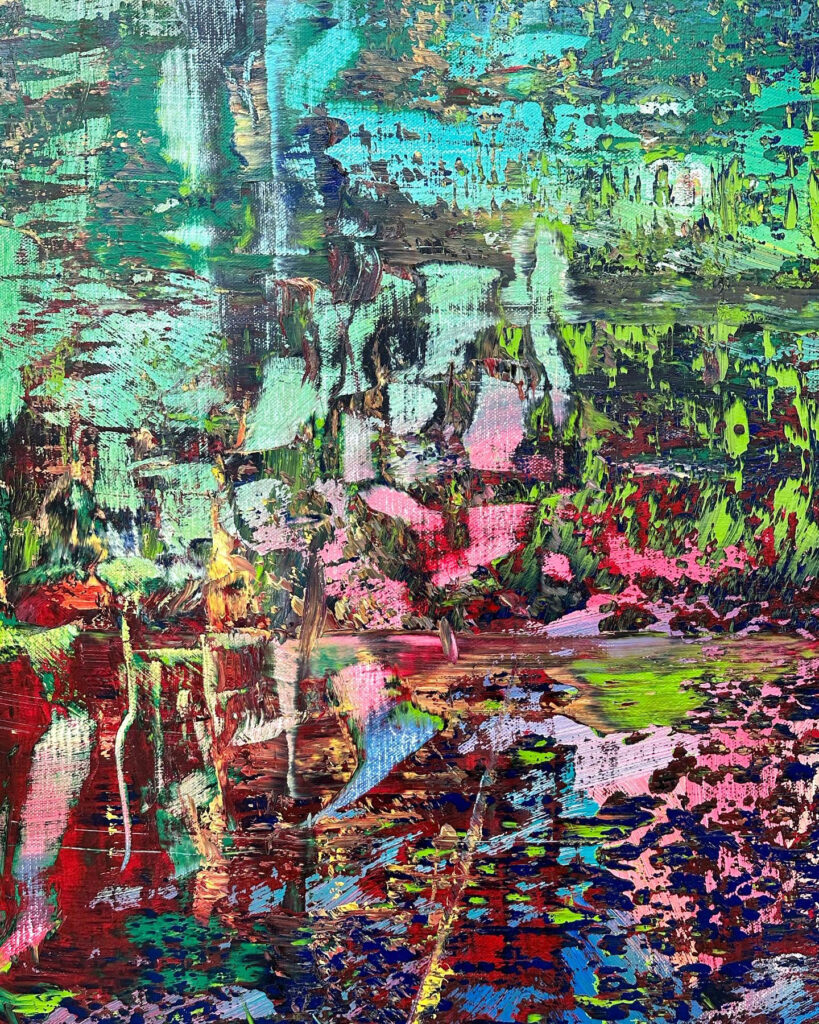
Kai Holyoke “Paradise Lakes”, 2023

Kai Holyoke “Paradise Lakes”, 2023


Apr 252023
 

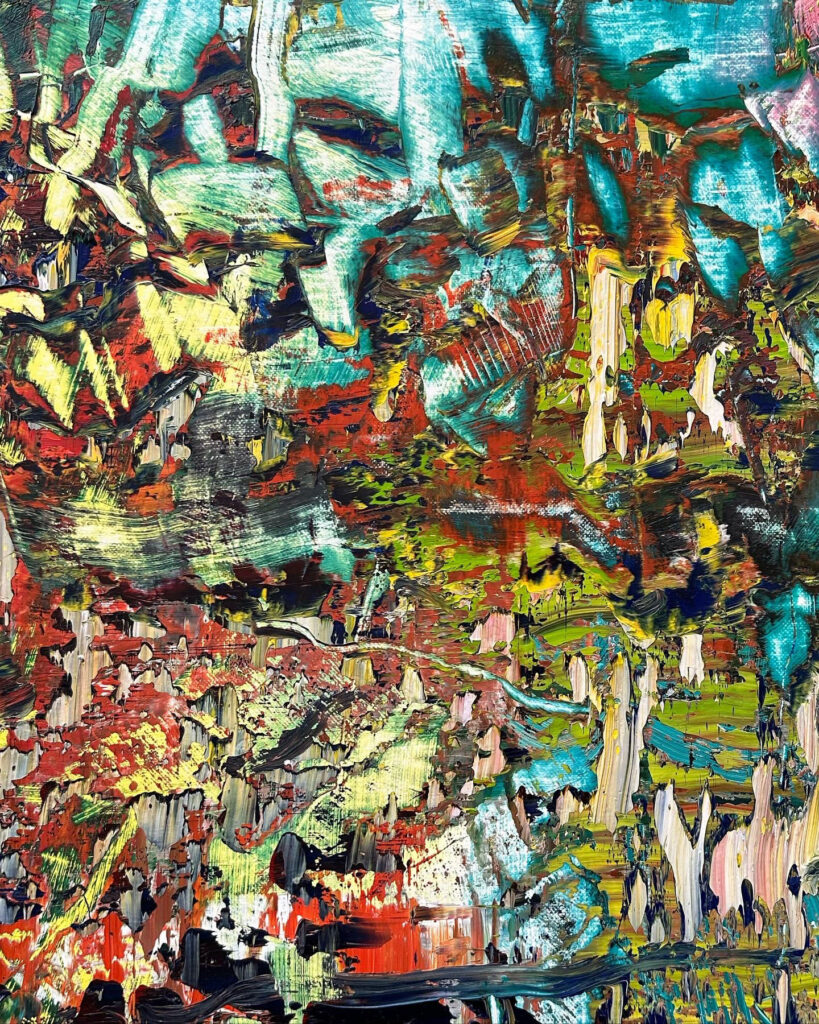
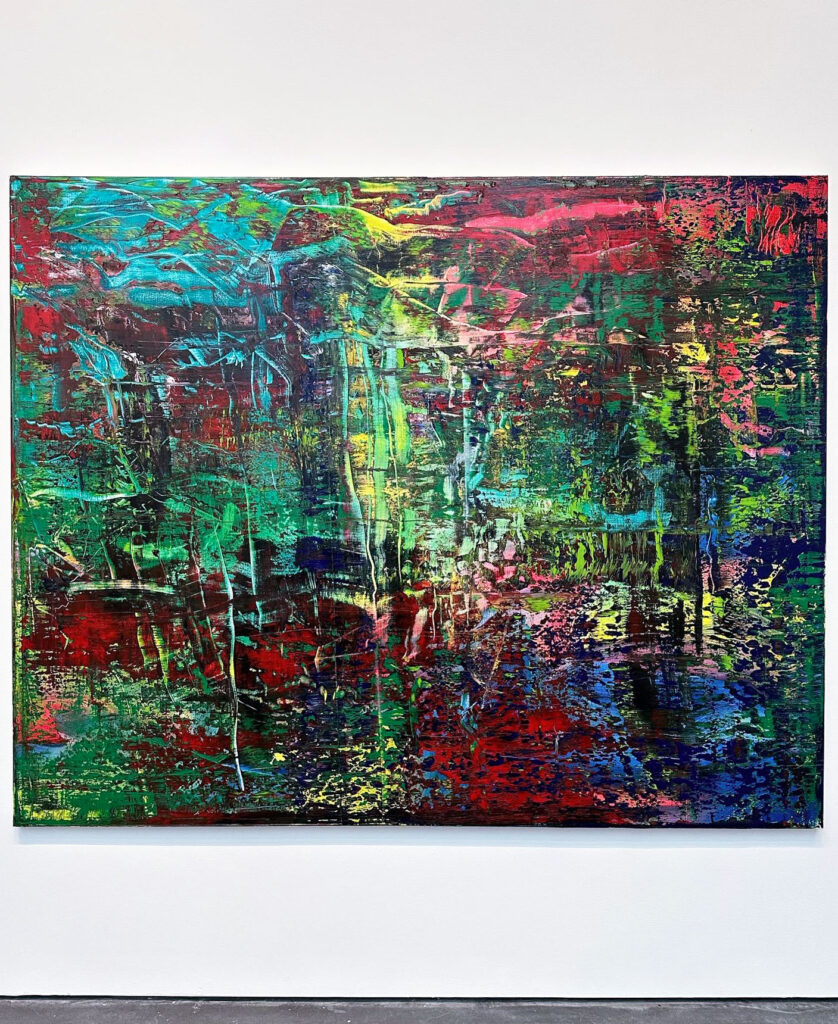
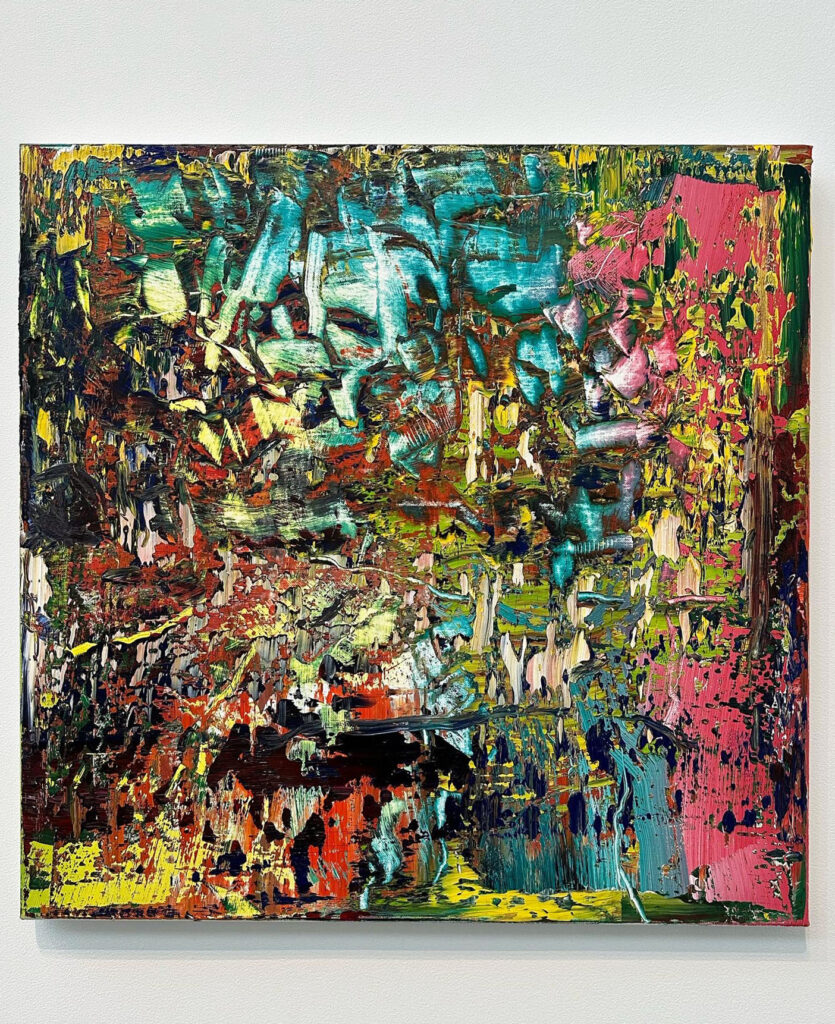
It’s the last week to see the Gerhard Richter exhibition at David Zwirner. The show includes a group of Richter’s last paintings from 2016-17, two of which are pictured above, as well as a new glass sculpture and recent works on paper.

From the press release-

Celebrated worldwide as one of the most important artists of his generation, with a career spanning from the 1960s to the present, Richter has pursued a diverse and influential practice characterized by a decades-long commitment to painting and its formal and conceptual possibilities. The artist has consistently probed the relationship between painting and photography, engaging a variety of styles and innovative techniques in a complex repositioning of genres. In Richter’s work, dual modes of representation and abstraction fundamentally question the way in which we relate to images.

The exhibition will bring together a significant group of Richter’s last oil paintings, made in 2016–2017, a number of which will be shown in New York for the first time. Richter stopped making oil paintings in 2017, and the final work on canvas he made will be on view in the exhibition. Part of the artist’s Abstrakte Bilder (Abstract Paintings) series—a cornerstone of his practice since the 1970s—the works on view exemplify Richter’s investigations into chance occurrences and the painted medium’s historical and material properties. With their highly worked and intricately stratified surfaces, the last paintings foreground the sheer physical presence of paint and color, enacting a mode of composition that is aleatory yet deliberately planned.

Centrally featured will be 3 Scheiben (3 Panes) (2023), a new glass sculpture that continues Richter’s exploration of human perception and the built environment. Comprising three sequential rectangular panes of transparent yet reflective glass—each one positioned upright and measuring almost ten feet in height—the installation invites viewers to look at, through, and beyond its surface, revealing the inherently subjective and situational nature of perceived reality. Richter has consistently created glass and mirrored works since 1967, often presenting them alongside his paintings and drawings and placing them in the larger context of their surrounding architecture. Crucially, while sculptural, these free-standing glass works are also positioned as a literal reflection on painting and image-making; they respond to the art-historical notion of the painting as both a mirror and a window, while also acting as a powerful corollary to the blurred effect of Richter’s photo paintings, which the artist began experimenting with in the 1960s. As critic Hal Foster notes, “The felt analogy between a composed painting and a contemplative viewer is so fundamental that we are not aware of it until it is interfered with. And this is precisely what the glass pieces do: our reflection, in the sense of our mirrored image, disrupts our reflection, in the sense of our contemplation.”1

An expansive suite of new works on paper from 2021–2022—some made with ink and others with graphite and colored pencil—will also be on view. Richter’s drawings constitute a significant element of his practice, allowing him to explore another aspect of the role of the artist’s hand in the creation of a dynamic and abstract pictorial narrative. Many of these works feature passages of cloudy graphite rubbings juxtaposed with equally hazy semi-erased portions. The artist embeds a sparse network of crisscrossing arcs and lines amongst this backdrop, forming an enigmatic topography that seems to map out the very possibilities of image-making itself. Other drawings on view are composed of abstract monochrome washes of ink and graphite, taking on a decisively painterly appearance; as Richter describes, these works on paper chart out a parallel but complementary path to his painted oeuvre, much like that of “a poem and a novel by the same author.”2

Also on view will be mood, a group of inkjet prints that relate to a recent series of colored ink drawings by Richter, both of which debuted at the Fondation Beyeler in Basel in 2022. Part of the artist’s extensive career-long experiments with the iterative translation and interplay of mediums, these vibrant prints are almost indistinguishable from their ink counterparts, revealing Richter’s continued fascination with the possibilities of image reproduction.

This exhibition closes 4/29/23.

Apr 222023
 

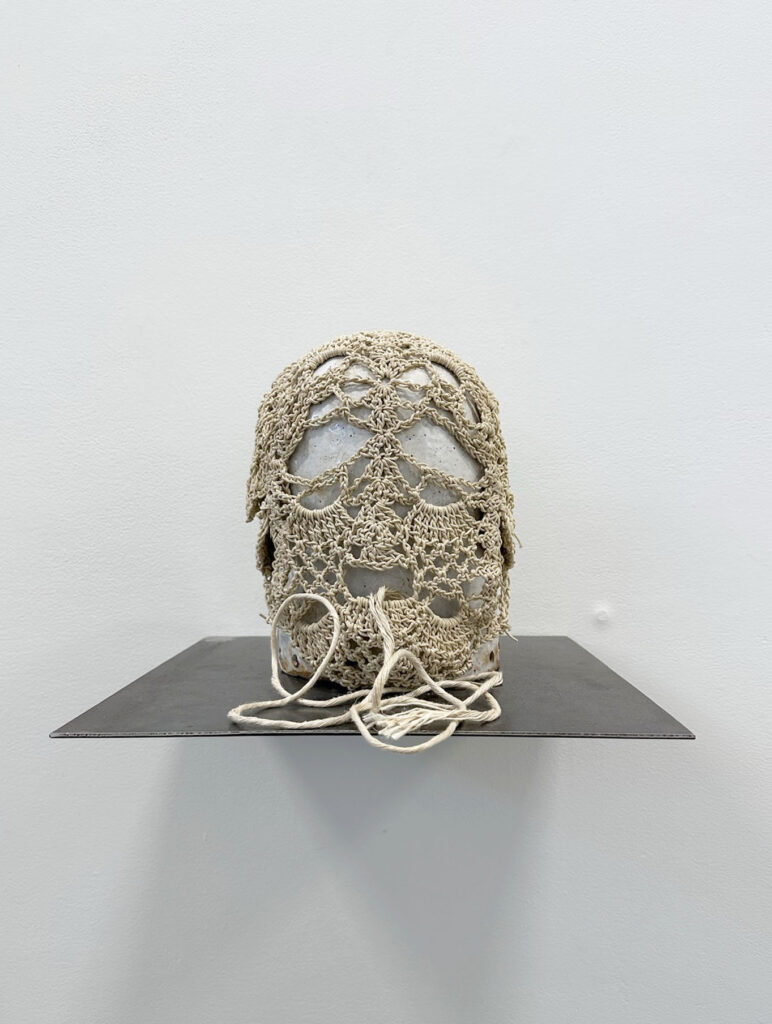
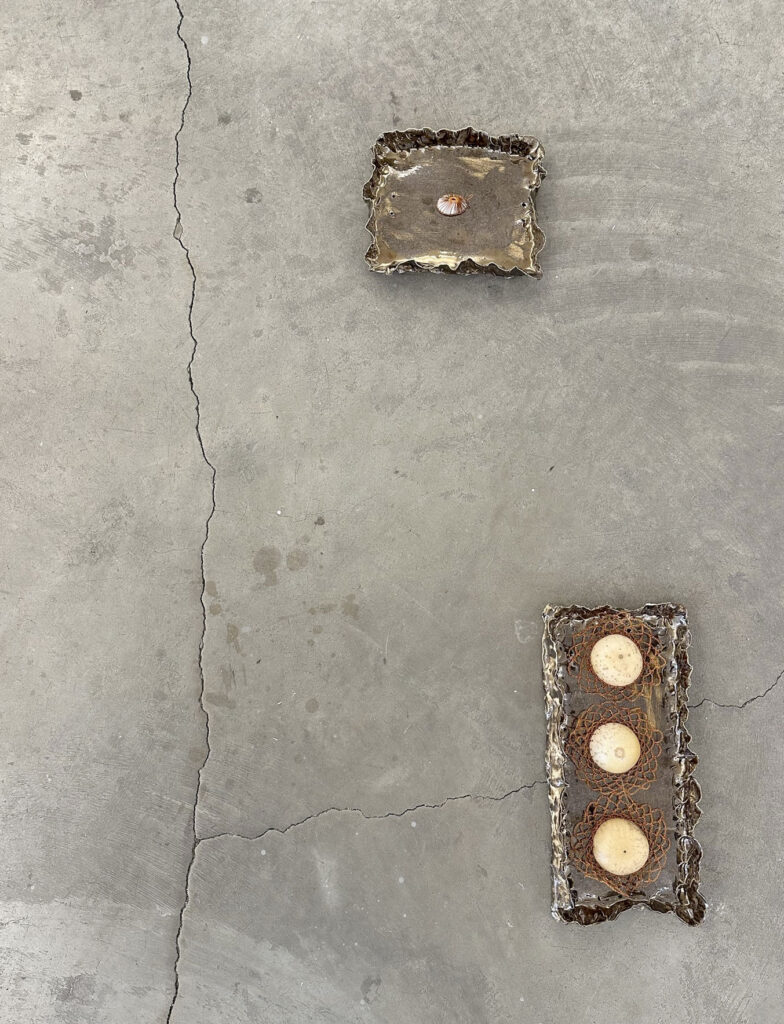
cabeza güera, 2019 Glazed ceramic and crochet cotton

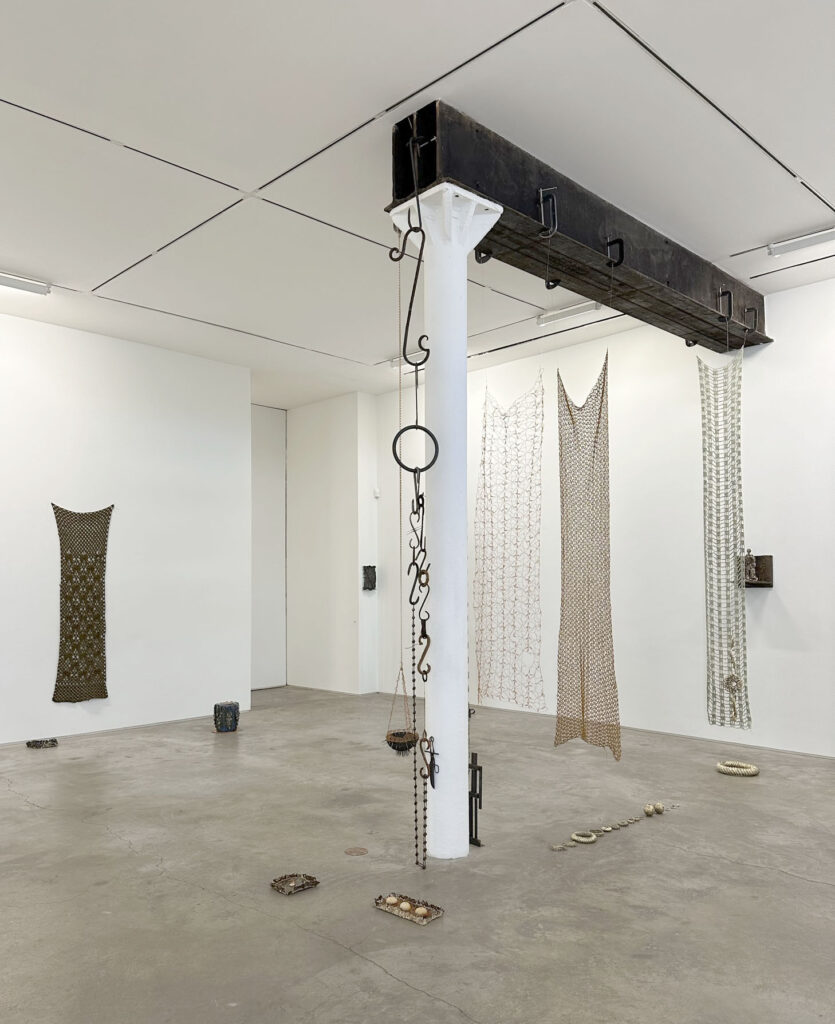
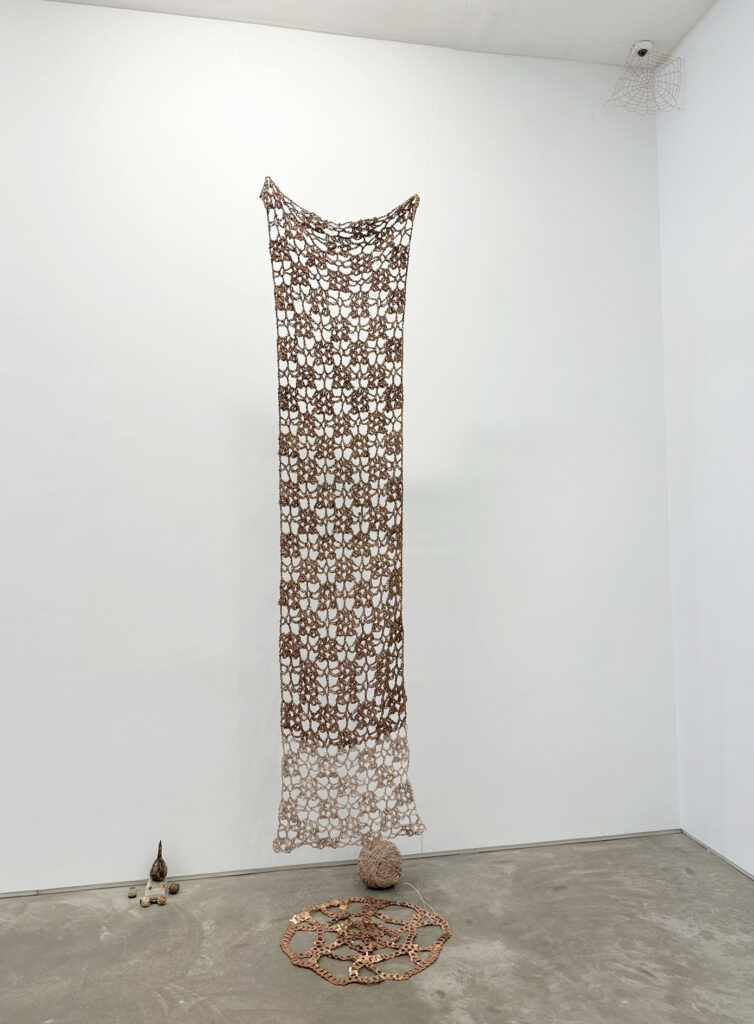
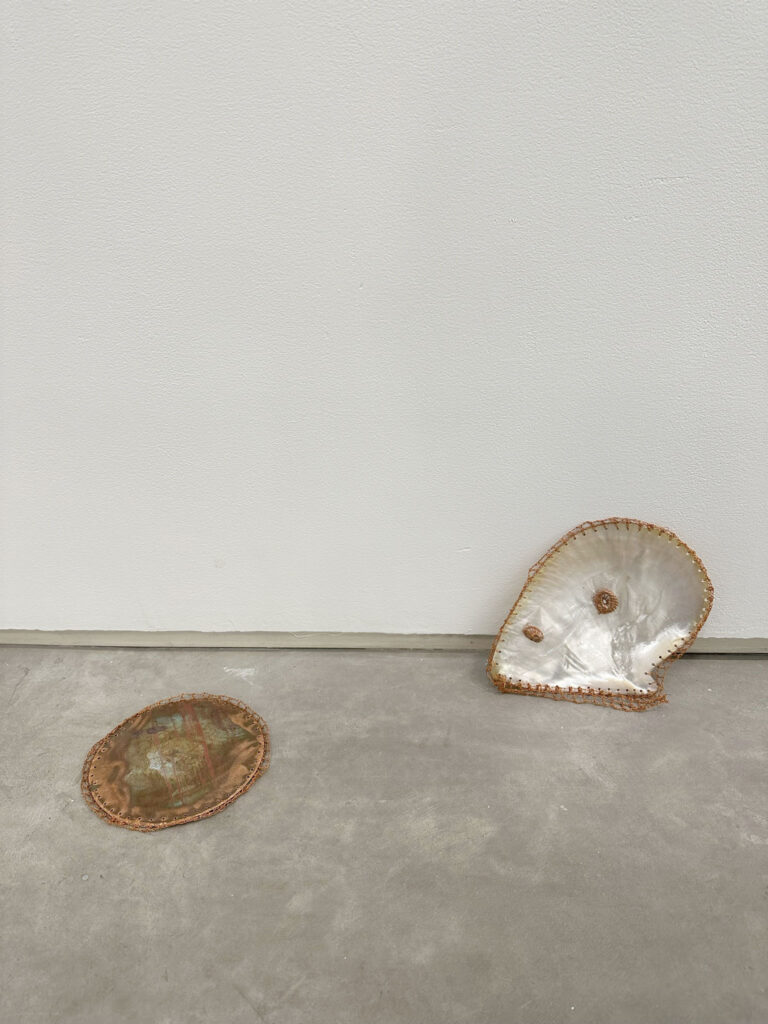
“encuero”, 2022-2023, Crochet leather and copper; “gotitas”, 2023 Agate, glazed ceramic, plasma cut metal, steel, onyx, palm, and seed podand; “telaraña de cobre”, 2020 (web in upper corner)

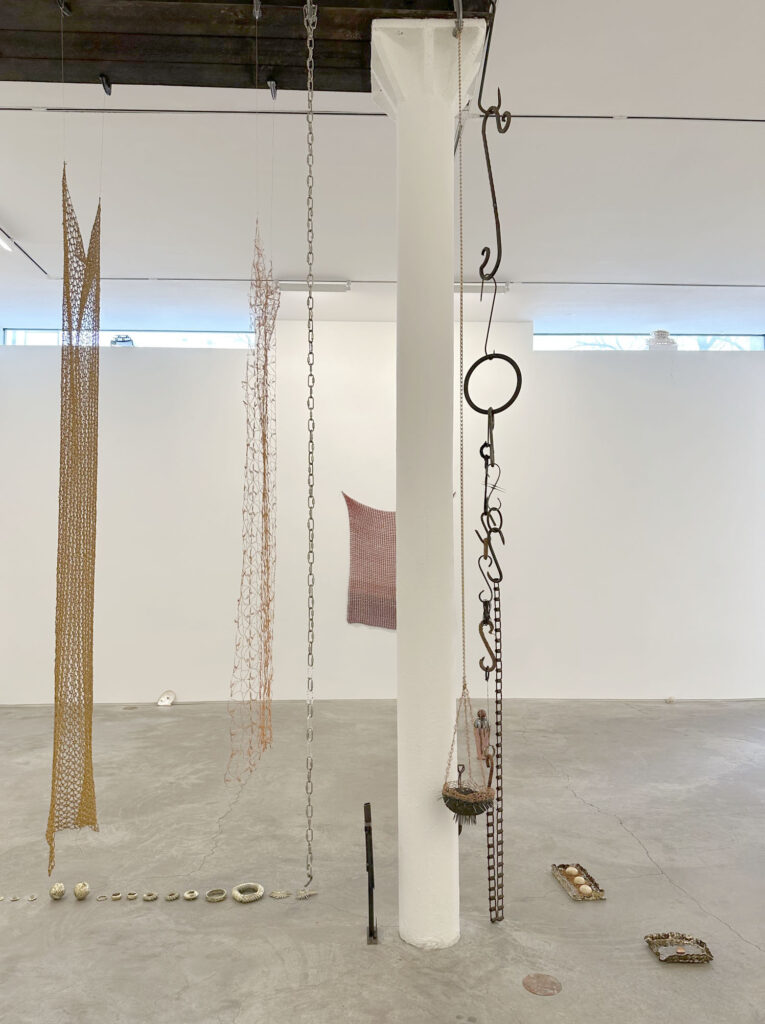
“trastes ceramica”, 2023 Glazed ceramic, gourds, crochet copper wire, and limpet shell

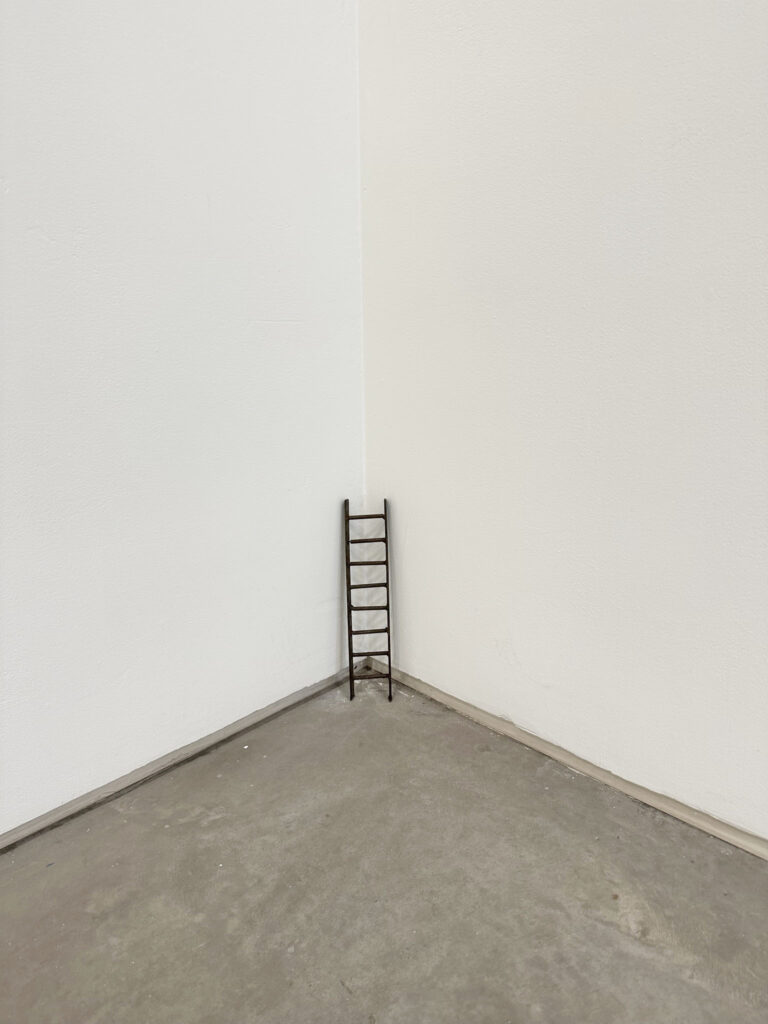
There’s only two days left to see ektor garcia: esfuerzo at James Fuentes. The enchanting sculptures inspire curiosity and encourage the viewer to imagine the story behind the work while also admiring their construction.

From Art Daily about the exhibition-

Each of ektor garcia’s exhibitions are more like a marker of a moment of pause in his work, rather than a presentation of something complete or discrete. In this way his works are evidence of a continual natural progression, as things build on top of each other, evolving. In relation to the specific time and place of this newest exhibition; it marks a cyclical continuation of the garcia’s presentations at the New Museum in 2017 and Sculpture Center in 2019—both of which moments in the artist’s life when he was traveling a lot, largely moving between Mexico, being on the road, and New York, specifically. This is the case once again, today:

For this show garcia traveled from his studio in Mexico City, suitcases filled with materials, to occupy the basement space below the gallery at 55 Delancey St in the lead up to the exhibition’s opening to the public. He has also retrieved objects previously exhibited or in storage—for example a 15-ft copper link piece recently exhibited at the Henry Art Museum has been broken into smaller pieces, added to and reconfigured into a new work(s). The exhibition title, esfuerzo translates to effort; as in a big push, like a birth, which feels apt for what the artist does. Pieces come together little by little over a long period of time; and the work comprises many small parts that each reflect his esfuerzo in making them. Another translation for esfuerzo could be output; and, shortened, fuerza means strength. Via his artistic practice, garcia is the conduit or vessel through which that life-force runs, resulting in an output that is this body of work. garcia is constantly making, hands always moving; this is simply part of how he lives his life. The work therefore isn’t made toward constructing a larger conceptual conceit; instead, its making is its meaning, the working is the work. Its presence in the space is evidence of all this; making room for it to be approached and even interceded, we inherently take part in the work’s life cycle, even potentially changing its course by entering this domain.

This sense of force, therefore, isn’t tied to garcia’s hand only, but relates externally as well. One piece in the show, cochinilla (2022), is woven from wool dyed red from the shell of the cochineal insect. Last year it was installed on the exterior of the Museum of Contemporary Art in Monterrey, Mexico, and upon taking it down garcia’s realized it had become sun bleached unexpectedly. With other pieces he more deliberately pushes, forcing change, for example by using a blowtorch against copper to catalyze an oil-spill patina. Over time, crochet has been one constant; a crocheted piece needs time, and then it meets time. In his words: “The materials are vibrating back and forth, taking turns. That is how they evolve.” And so although the works reference the past they do not prioritize it; likewise the future. Rather, in the style of the ouroboros, they are cyclical, perpetual, and most generous about the present.

Artist Cy Gavin wrote this piece to accompany the exhibition, which is worth a read as well.


Apr 212023
 

“when stone entwines”, 2023, Oil and enamel paint, graphite on cast aluminum, in two parts

“when stone entwines”, 2023, (detail)

“if only, if yet”, 2023, Oil and enamel paint, graphite on cast aluminum/painted wood

“if only, if yet”, 2023, detail

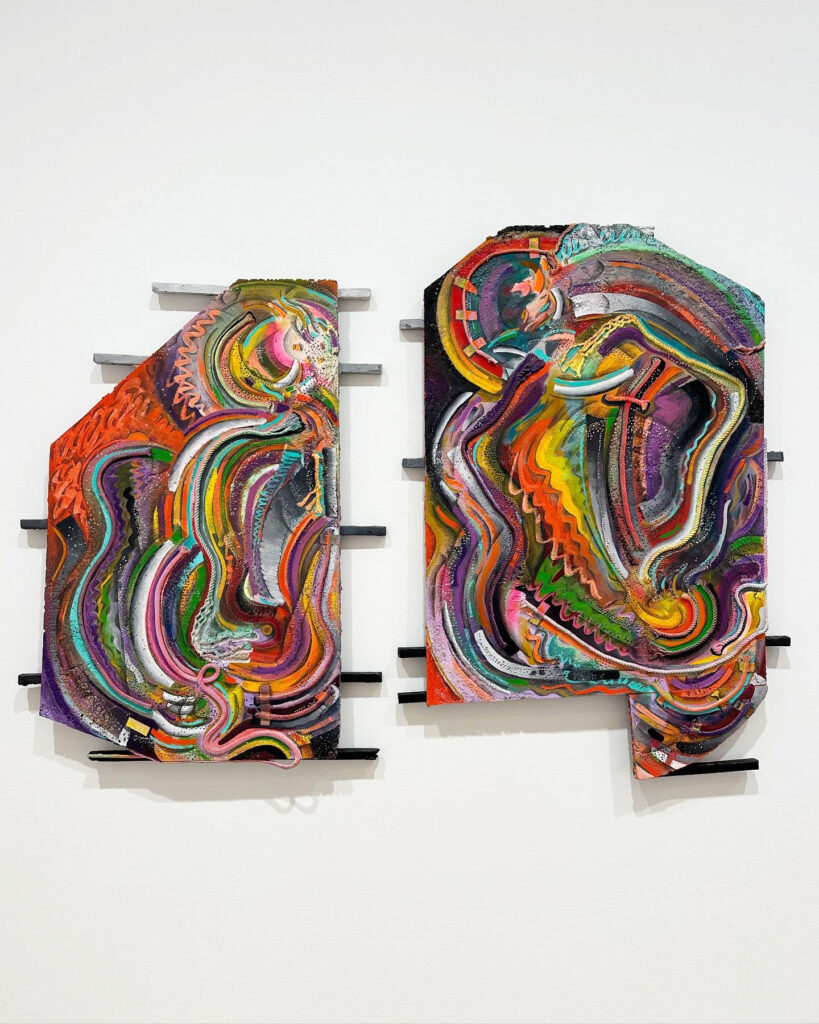
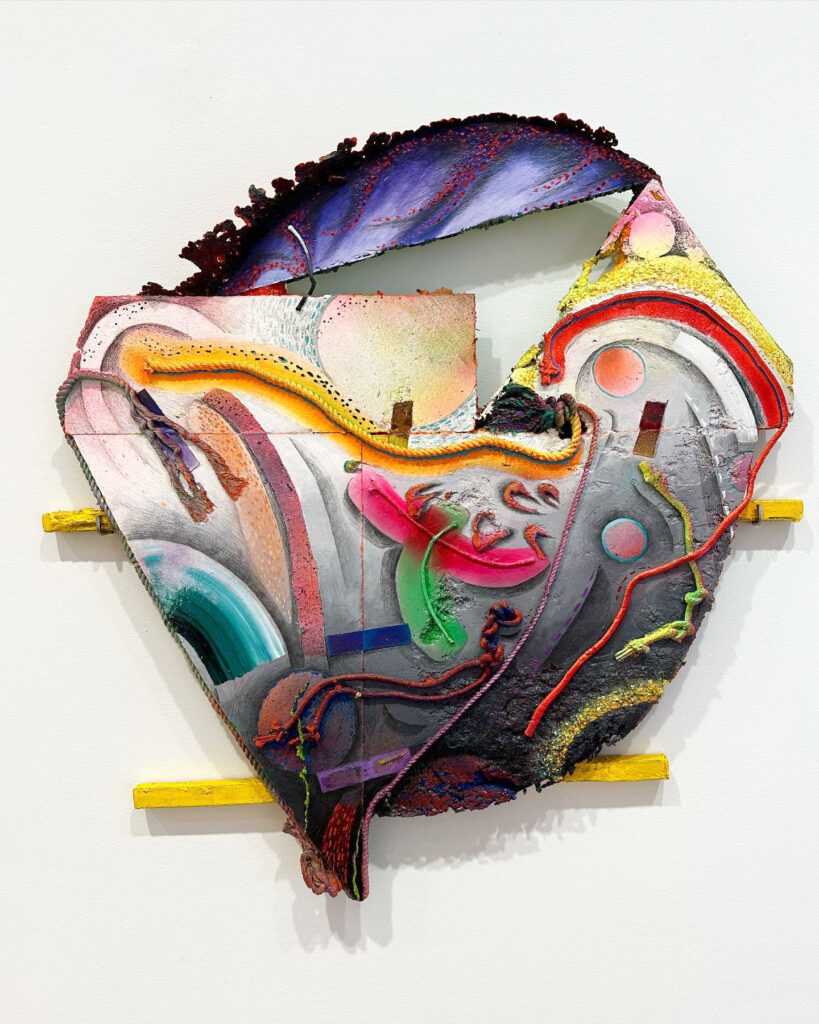
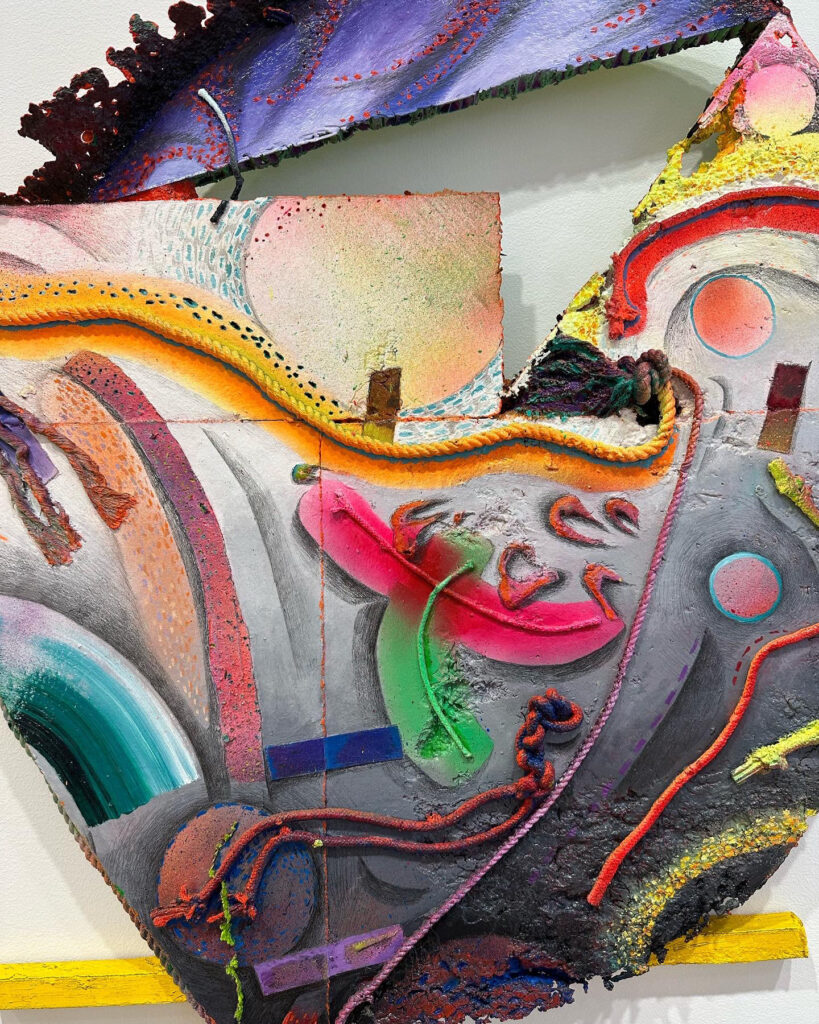
Miles McEnery Gallery is currently showing Katy Cowan’s colorful and intricate sculptures for her exhibition gods on a bridge.

From the press release-

gods on a bridge is Katy Cowan’s first exhibition of metalworks since relocating her artistic practice from California to Berlin. The resulting body of work is a culmination of her current experiences, coupled with engrained references to the historical presence of sculpture in the city.

Each work starts in a foundry where the artist casts solid aluminum forms, which are then adorned with a variety of mediums and methods: acrylic and enamel paints, sprayed and brushed. Cowan elects to retain the fractured casting bars, signaling a parallel to the remnants of the Berlin Wall. As personally described, a guiding principle in her process is to “combine a multitude of experiences onto one surface and find a way to seize that depiction.”

This overarching aim is realized when Cowan draws from natural and urban environment alike—the blooming trees, reflecting ponds, and embracing bodies. The most prominent of these influences are the stone sculptures that appear throughout the city, acting as constant fixtures in the landscape, changing with age, taking on the textures of time and layers of graffiti. In her essay, Stephanie Cristello cements their influence by the figurative turn in Cowan’s compositions, expressing that they “have manifested as sculptural abstractions and fragmented, embodied landscapes.”

Cowan translates this amalgamation of inspiration to her aluminum surfaces, contouring reflections with cast rope, painted lines and flowing points. “Each work constitutes at once a fleshing out of figures as much as a mapping of movements—whether bodies in a park or city street or marks that dance across the capacious plane of representation itself,” writes Stephanie Bailey. “[gods on a bridge is] where line, ground, and figure collapse into a vortex of intuitive becoming.”

This exhibition closes 4/22/23.

Apr 202023
 

“Pink and green music”, 2023

“What we re-quire is…silence”, 2023

“Within the Lattice”, 2023

“An Ode to Hugs”, 2023

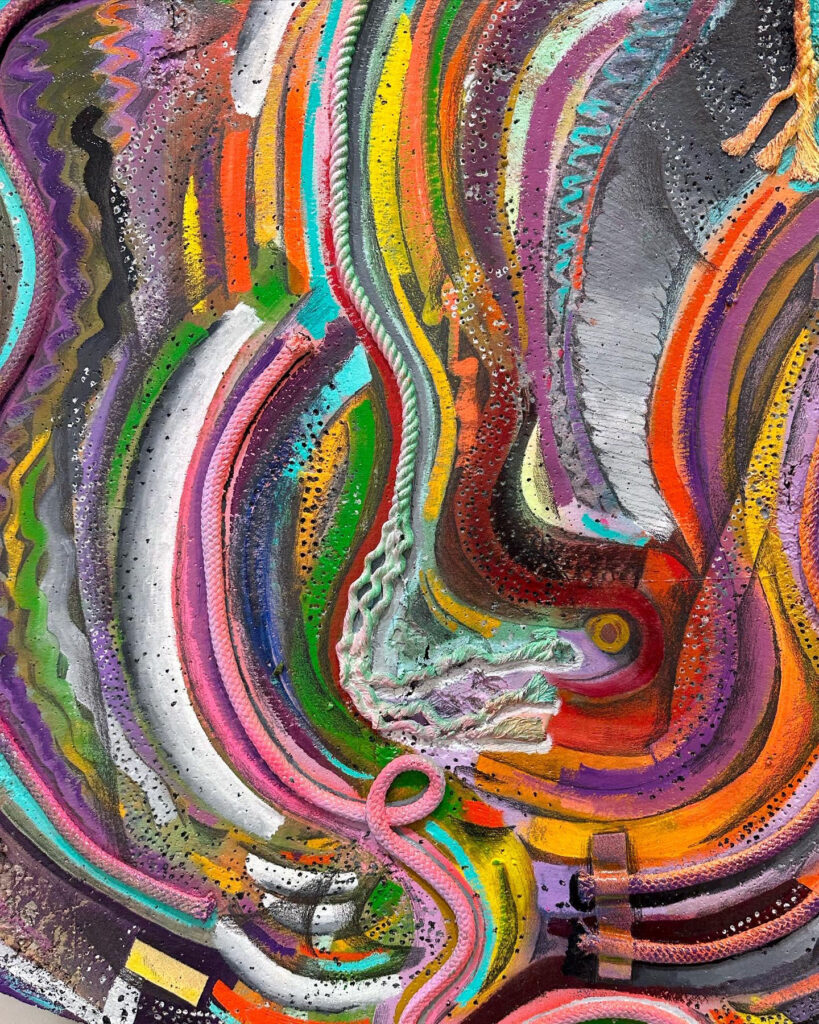
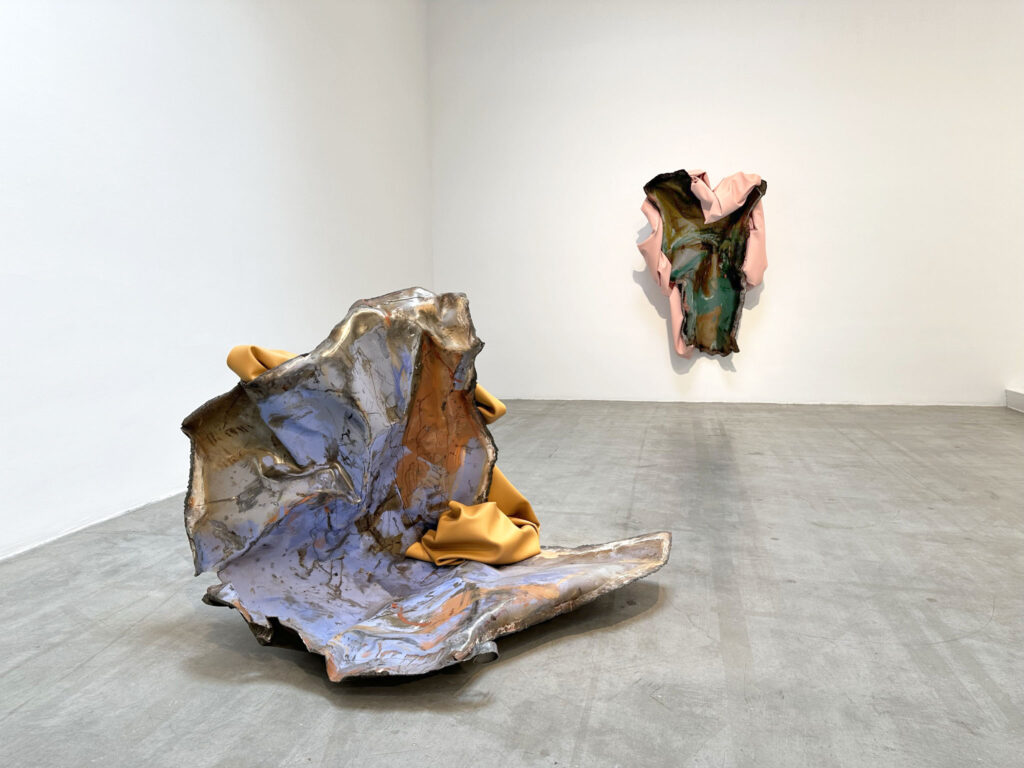
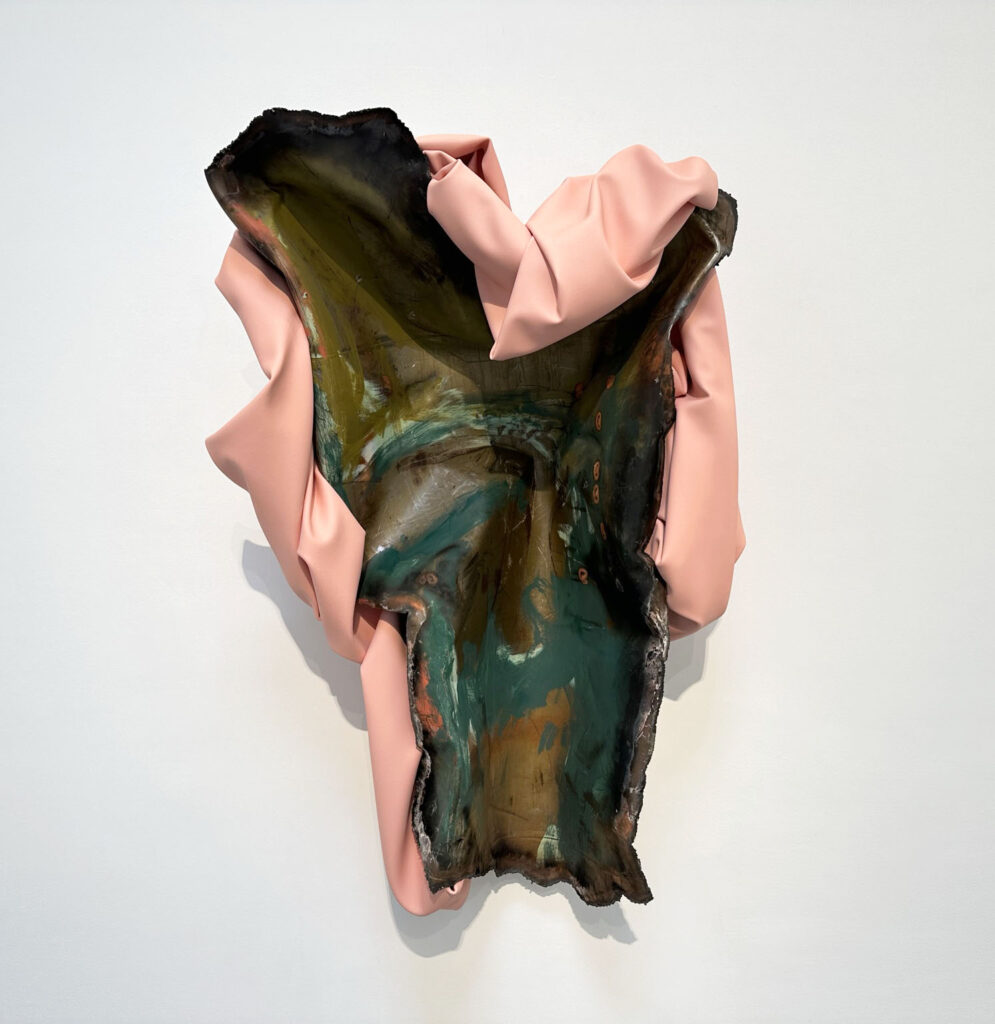
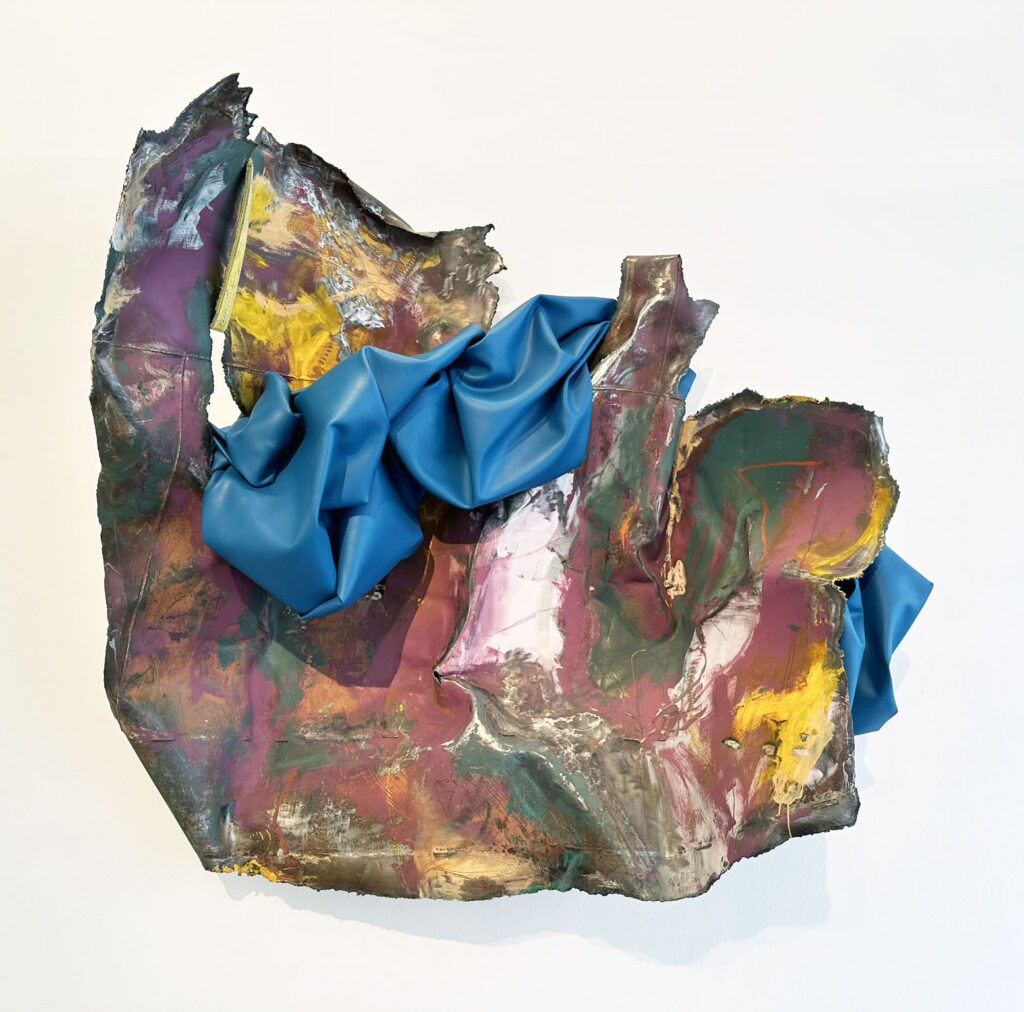
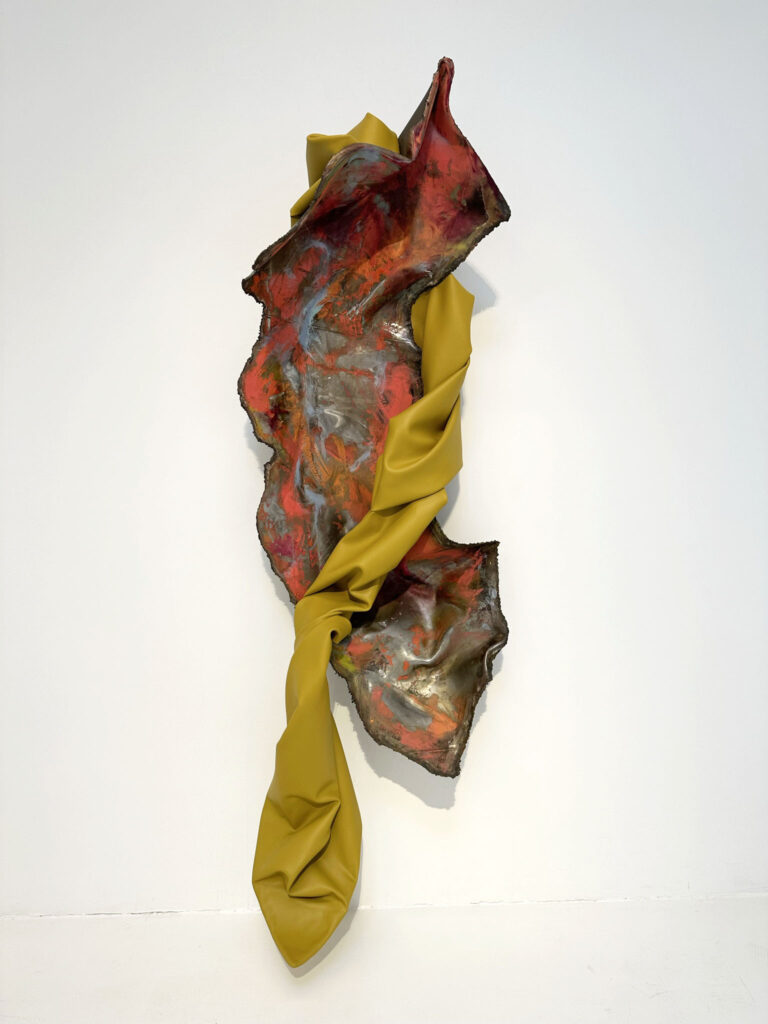
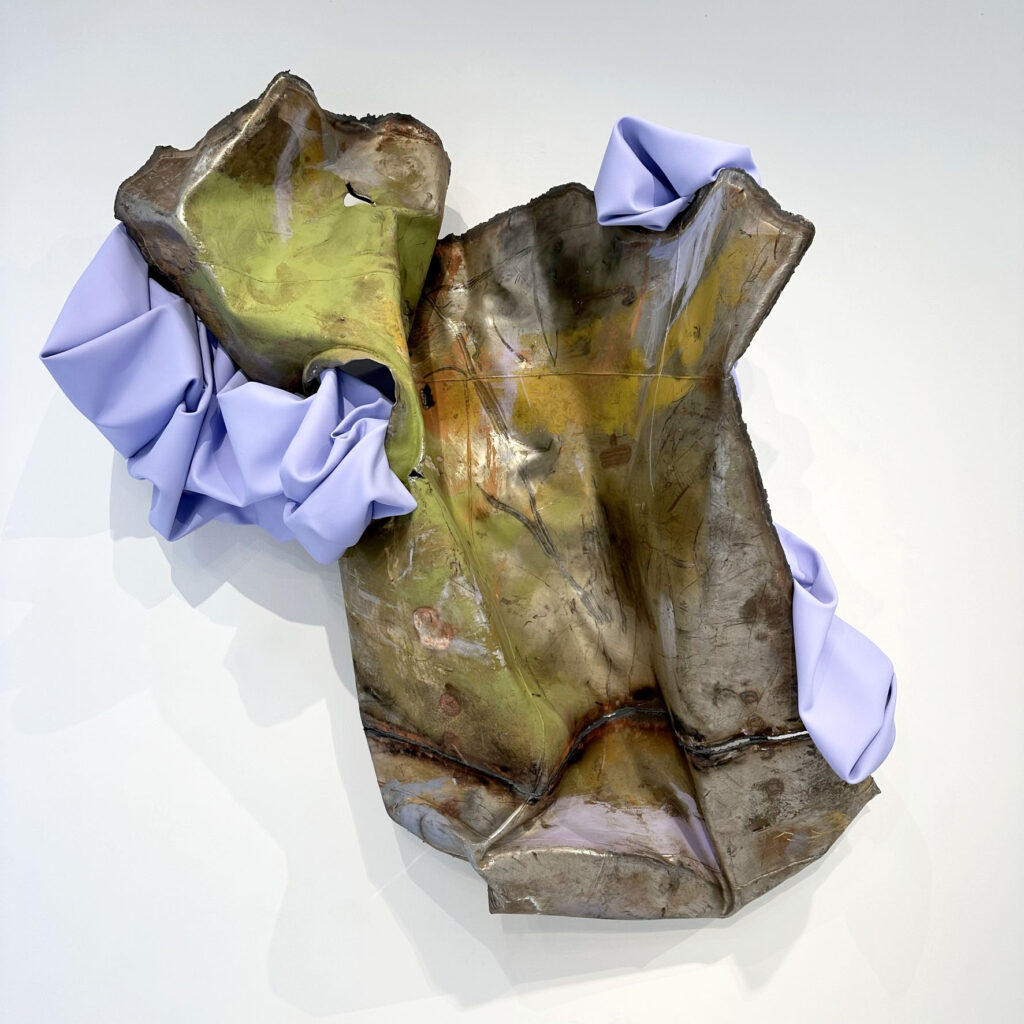
It’s the last week to see Kennedy Yanko’s exhibition, Humming on Life at Jeffrey Deitch gallery’s Wooster Street location.

Tonight, 4/20/23, she will be at the gallery discussing her work with Alteronce Gumby.

From the press release-

By employing paint skin and metal in ways that both transmute a bodily essence and reposition the weight of gravity, Kennedy Yanko wields materiality and abstraction with the possibility of intervening in the viewers’ perceptions. In Humming on Life, Yanko‘s first exhibition at Jeffrey Deitch, the artist continues this exploration.

Although the tactile quality and lyrical processuality of Yanko’s works emphasize their sculptural quality, the artist considers herself foremost a painter. In her new body of work, Yanko takes an approach to sculpture that reconnects it, and her, with painting. In recent years, the weathered paint and bruised patinas found on salvaged metal relics informed her palette for the paint skins. Now, the artist is introducing colors to the metal she finds. By painting the metal directly, underpainting, fire-cutting forms and compositions, and then crushing those new shapes, Yanko is expanding the definition of painting through her process. She remarks:

Working this way has been labor-intensive and has exposed me to sounds, like water thrashing inside a metal tank while cleaning it. Feeling that thrashing—hearing a power that felt like infinity incarnate—encouraged me to probe water as a medium and examine my intuitive method more closely, which seemingly only comes from physical exchange: input and output, expansion and contraction. In pulling water apart and becoming more curious about its behavior and participation, I’ve enjoyed revisiting the ways in which it’s a web of activation, a source, and information. It’s a cue and a salve and carries with it tinges of what it’s gone through.

What water did for me in that moment was to point back to the livingness of my medium — of the metal and paint skin I rely on — and wash away the binary between life and matter. Erasing this divide expands the possibility of experience; it gives materiality an abstract power that we yield to. It’s that vitality, found in color, form, attention and consciousness, that I hope this work can be a language for.

The “Illuminating Sound” presented apart of the exhibition, composed by Samuel Kareem, is derived from audio Yanko recorded while working in the yard. Kareem expanded one striation of sound within the clip—one small element he excavated from the layers of water, metal, paint and movement—and created 10 ten unique soundscapes. Each of the scapes corresponds with a sculpture within the show, and illuminates it. Listen to “Illuminating Sound” here.