Mar 092023


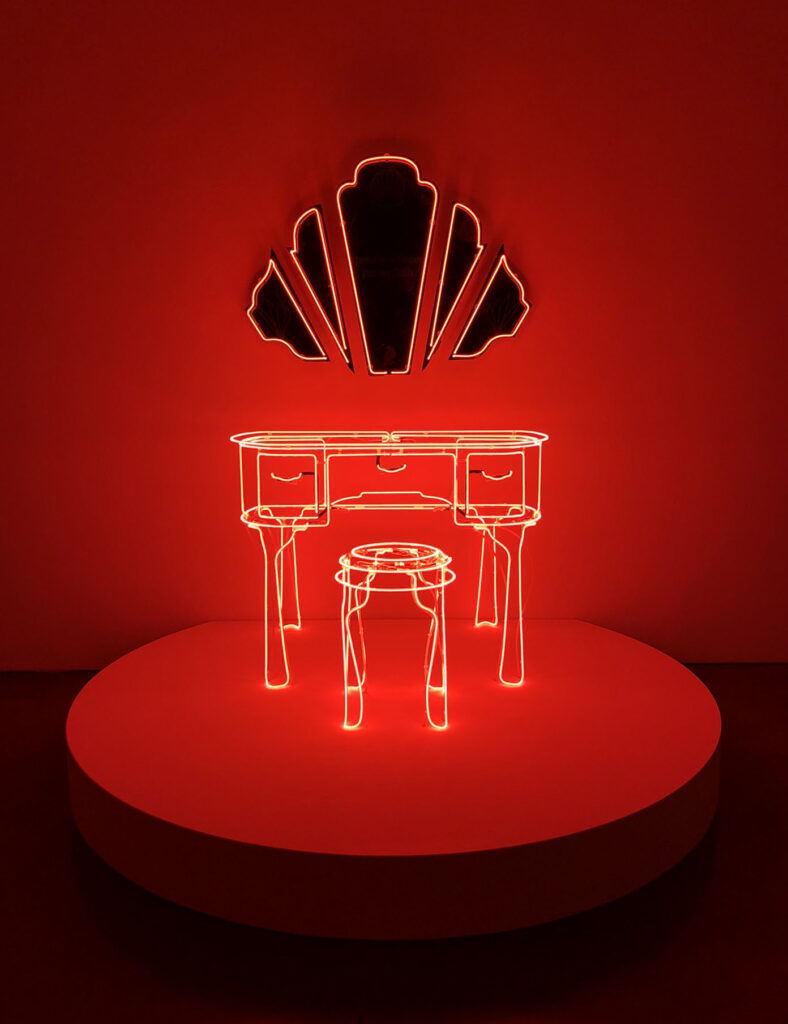
Ja’Tovia Gary “Citational Ethics (Zora Neale Hurston, 1943)”, 2023, wood, neon and engraved obsidian
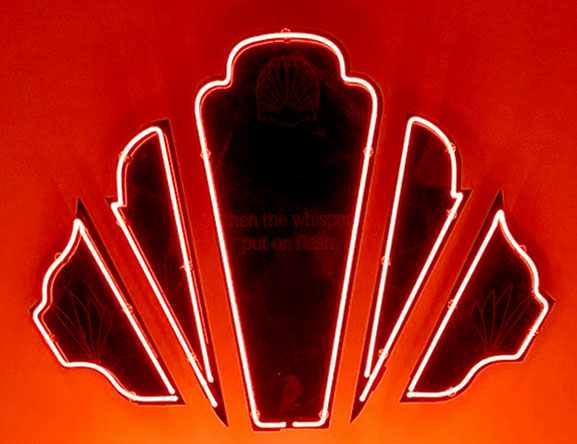
Ja’Tovia Gary “Citational Ethics (Zora Neale Hurston, 1943)”, 2023, wood, neon and engraved obsidian (detail)

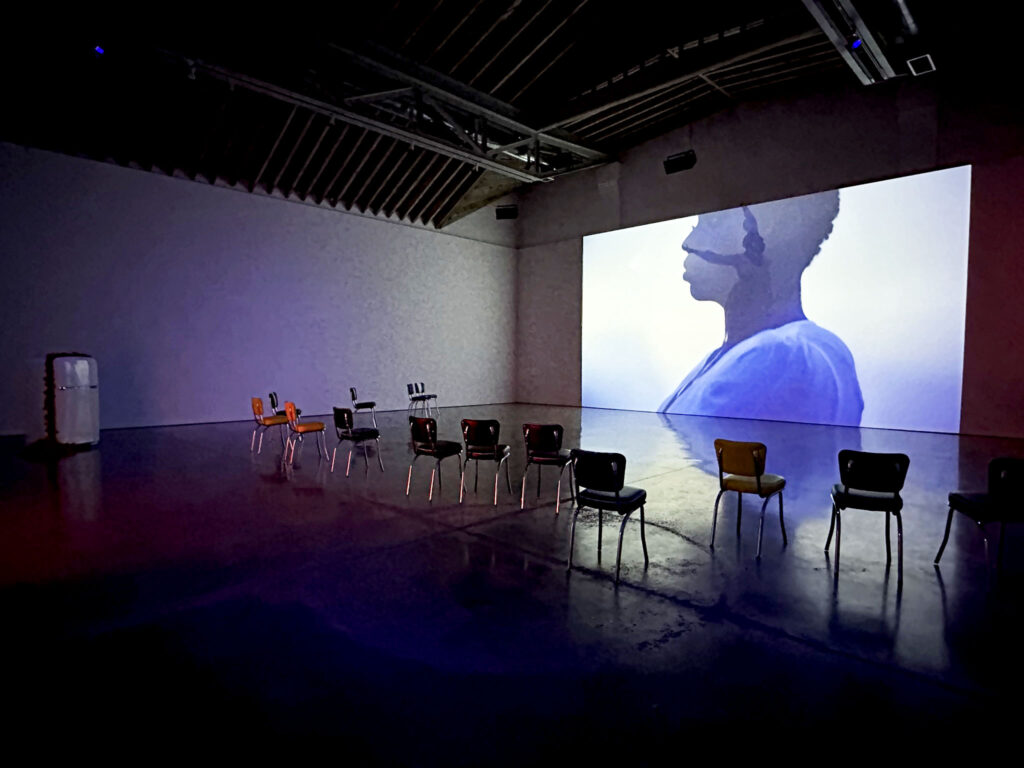
Currently at Paula Cooper Gallery in NYC is Ja’Tovia Gary’s You Smell Like Outside…, an exhibition that centers around her 2023 film, Quiet As It’s Kept, and includes two new sculptures.

From the press release-

The artist continues her practice of interrogating and re-contextualizing multiple archives, concerning herself with the power and responsibility of language and the radical possibilities of narrative. The exhibition title You Smell Like Outside… is a Black Southern phrase that foregrounds the artist’s specific cultural origins with discursive traditions that invoke an interior knowledge. Inspired by Toni Morrison’s 1993 Nobel Laureate lecture, Gary attempts to heighten the contradictions between a living and a dead language. Notions of domesticity, interior and exterior, and the conflict between perception and being perceived are explored in the show.

With a filmic and sculptural language uniquely her own, Gary eloquently intervenes into foundational renderings of Black life to expand the conversation and the possibilities of being. The artist considers what is destabilized when we include the cinematic within the category of language, asserting: “if we are to ensure the future efficacy of storytelling, we must boldly and audaciously insist upon new narrative forms.” Quiet As It’s Kept (2023) is a contemporary response to The Bluest Eye, Toni Morrison’s first novel published in 1970. Set in Ohio in 1941, the book is an evocative illustration of the everyday particulars of colorism and its ravaging effects on the intramural. Themes of embodiment, psychoanalysis, and beauty are explored in both the source text and the answering film. Instinctual and eviscerating, the film encourages viewers to make meaning that is rooted in the subjective and examine their position within looking relations.

Following Gary’s critically acclaimed films THE GIVERNY DOCUMENT (2019) and An Ecstatic Experience (2015), Quiet As It’s Kept (2023) is an intimate bricolage of vintage Hollywood, direct animation, original super 8 and 16mm film footage, and documentary conventions. Mediating on the gaze and Black women’s particular embodied realities, Gary also re-contextualizes contemporary social media footage. Creating conceptual links for each viral clip to a character, event, or thematic element from Morrison’s story, the film emphasizes questions around the book’s themes of internalized and externalized anti-blackness in contemporary culture. Situated within an immersive installation with domestic elements, the film asks the viewer to employ an oppositional gaze that allows for narrative structures that run counter to those of the mainstream.

High John de Conquer came to be a man, and a mighty man at that. But he was not a natural man in the beginning. First off, he was a whisper, a will to hope, a wish to find something worthy of laughter and song. Then the whisper put on flesh. [1]

The sculptures in Gary’s Citational Ethics series illuminate the words of Black women through the medium of neon, with the title of each work serving as a citation for the quote. Citational Ethics (Zora Neale Hurston, 1943) cites Zora Neale Hurston’s 1943 essay on High John de Conquer, a Southern folk trickster figure who brought joy, laughter, and strength to enslaved people while continuously evading capture. The sculpture is a vanity mirror set which gestures towards a speculative future past. Comprising a desk, stool, and fan-shaped obsidian mirror, the object invokes the Harlem Renaissance, Art Deco, and southern Black Hoodoo lore. A departure from the previous works in the series, the quote is etched into the highly polished black stone said to bring about visions through gazing, while the furniture is rendered in neon. Drawing the viewer in to read the words written in the mirror while bathed in red light, the sculpture summons an intimate encounter with the self and spirit.

[1] Zora Neale Hurston, “High John de Conquer,” in The American Mercury, October 1943, pp. 450-458

This exhibition closes 3/11/23

Mar 092023
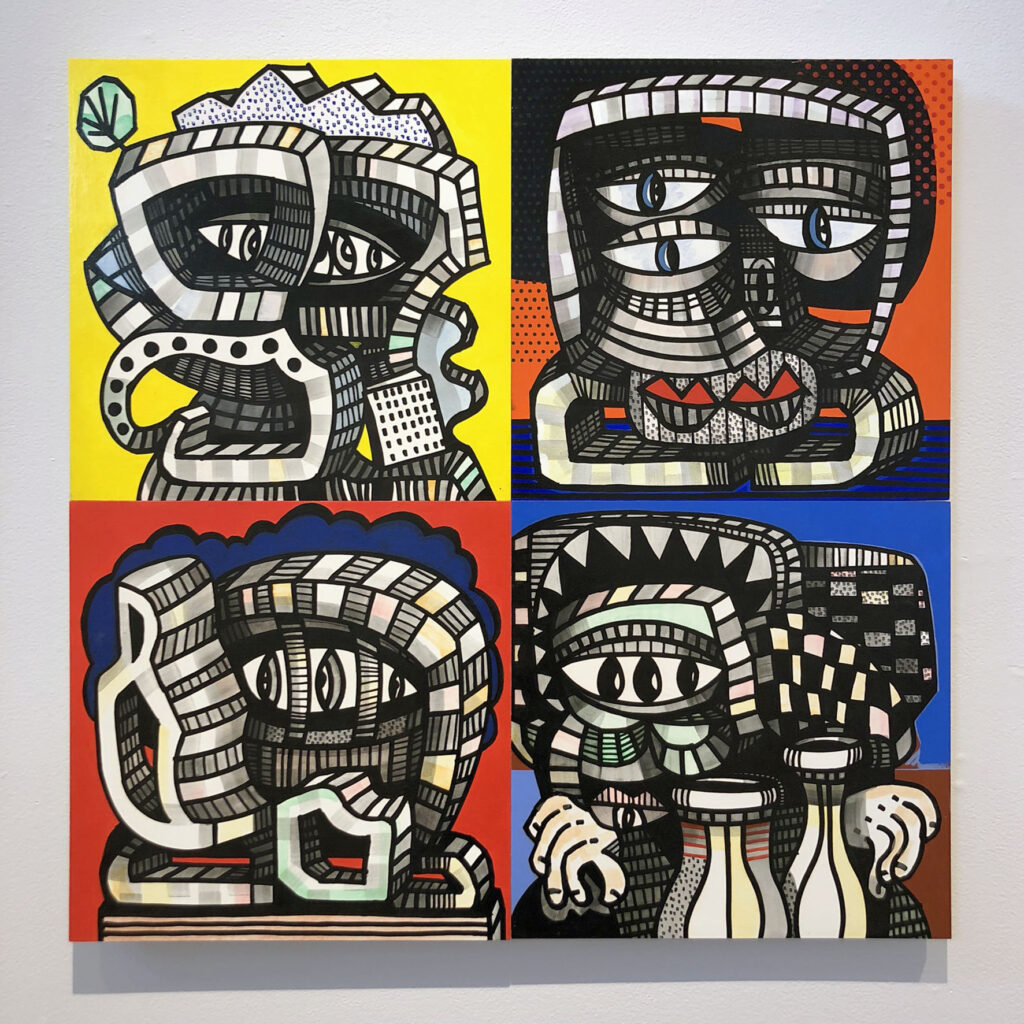
 

Lilian Thomas Burwell, “Enfolded”, 1973
Lilian Thomas Burwell, “Untitled”, c. 1980

Lilian Thomas Burwell, “Montagne”, 2012

The work above is from Lilian Thomas Burwell’s exhibition Enfolded at Berry Campbell gallery in NYC.

From the press release

Living and working  in Highland Beach, Maryland, Burwell, age 95, was recently hailed as the “Tom Brady of Artists” in the New York Times. In 2022, Burwell received Howard University’s Lifetime Achievement Award along with Betye Saar.

Lilian Thomas Burwell: Enfolded highlights the dynamic transition in Burwell’s abstract visual language from two-dimensional painterly canvases to three-dimensional sculptural forms. Burwell’s paintings from the late 1970s and early 1980s employ a distinctly bold palette and reference the natural world, featuring organic forms that abstract biotic phenomena. In 1984, Burwell literally cut into a canvas, creating a shape beyond the square. This pivotal act gave way to Burwell’s examination of form, bringing forth Burwell’s signature style of three-dimensional, painted wall sculpture. Dr. David Driskell described Burwell’s work as, “transcendental in showing stylistic diversity of earthly beauty and cosmic vision.”

This exhibition closes 3/11/23.

Mar 092023
 

For Martín Touzón’s exhibition DISSOLUTION, at Kates Ferri Projects in NYC, each work plays a part in the one that comes next. Moving from work on Wet Wipes, to neon, to painting and back again- the more you look at them, the more you can see their connection to each other.

From the press release-

As an artist who normally rejects his previously established rules from one project to the next, he turns the table on this pattern as well, dissolving his own methodologies. Touzón says that “Change comes from noticing a difference in the feeling towards something.” Being an economist-turned-artist, he studies the impact of altering one variable on another. In the process he unconsciously opens a dialogue between arts and economics, relating at some point to the accumulation and fuite, trade, exchange, barter and surplus, production and circulation.

“The unfolding between the series came quite intuitively,” says Touzón. While on board the train to his residency in Turin (the city of Arte Povera) in 2017, he picked up bits of text and shapes from a magazine using acrylic markers and sharpies. He had to work fast so that the image would not be muddled because of the bleed of colors on the wipes. Lacking full control over the final image, the artist then lets them dry inside the same magazine. This technique underlies the paintings on Wet Wipes in the exhibition.

In contrast, the neon sculptures are very intentional. In his collaboration with a sign maker from Buenos Aires, Touzón must communicate quite specifically about how he wants the rings to look–almost misshapen. Translating from a 2D surface now into a 3D object, the artist is also playing with scale. The works on Wet Wipes are immediate and close to the hand, while the neon sculptures take up space and its light brings in the body.

As a next step, Touzón utilizes the neon shapes during the painting process. Laid on the canvases or over paper, they let the paint to diffuse on the wet surface, which in turn allows chance to play a role in the outcome. This gesture mimics the results in the Wet Wipes series, and yet the effect of the neon through paint or light is wholly distinct. Thus, he leads his work on the Escher stairs, seemingly returning to the same place, but ultimately, landing someplace new.

This whole process is an exciting new chapter in Touzón’s work. As an Argentina-based artist, Touzón has first-hand experience of an environment where instability is a constant of everyday life. Reason why his obsession for the careful study of transitions and changes. As the dissolution of society and systems come crumpling at our feet with the pandemic, climate change, and ongoing wars, the art world is also being reshaped by new artists and cultural producers. The holdouts for the old-world order or artistic hierarchies are also disillusioned, finding themselves in a new society that may look similar, but is fundamentally changed. Through his works, Touzón subtly suggests a way of perceiving through the cracks of this new normality and how one’s diluted perception of the world might not be an accurate reflection of others’ reality.

This exhibition closes 3/13/23.


Mar 082023
 

Chiharu Shiota, “Connected to the Universe”, 2023

Chiharu Shiota, “Connected to the Universe”, 2023 (detail)

Chiharu Shiota, “Connected to the Universe”, 2023, detail

“Connected to the Universe”, 2023

Chiharu Shiota’s gorgeous installations are just one part of her engaging exhibition, Signs of Life, at Templon in NYC. The installations lead to other rooms of smaller sculptures as well as  paintings.

From the press release-

After a foundation degree in painting at Seika University in Kyoto, Chiharu Shiota chose to pursue her artistic studies in Berlin, focusing on performance. Her practice soon shifted towards site-specific installations. She skilfully weaves knotted threads to create fantastical scenes combining salvaged window frames, a piano, suitcases, books and used clothes. Bordering on drawing and sculpture, her fabulous ephemeral, immersive installations have become her signature. Since her impressive installation for the Japanese Pavilion at the Venice Bienniale in 2015, she has become one of the key figures on the international art scene and is regularly invited to show her work at museums worldwide.

In a hyper-connected world, Chiharu Shiota’s new exhibition questions the notion of the “web”, a living organism similar to the structures that make up the universe or the neurons our brains are built on. Created on-site over two weeks, a large-scale installation made of red threads symbolizes this permanent connection of information, collective memory and the world’s knowledge which cuts across cultures and continents. At the heart of the work are two arms, her own, placed on the ground. They are cast in bronze, palms facing up to the sky. “I always thought that if death took my body, I wouldn’t exist anymore,” explains the artist. “I’m now convinced that my spirit will continue to exist because there is more to me than a body. My consciousness is connected to everything around me and my art unfolds by way of people’s memory.”

The installation is followed by a series of sculptures. Enfolded at the centre of each one, as though frozen in place by the intertwined threads, are objects from daily life. “I feel that the objects we possess are like a third skin,” she says. “We accumulate these things and transpose our presence and our memory to them.” Often obsolete, weighed down by impenetrable histories, these objects — old suitcases, stained dolls, miniature pieces of furniture and tiny bottles — represent the treasures offered up by memory, to be seen but not touched.

“State of Being (Dress)”, 2022

State of Being (Photos), 2022

State of Being (Photos), 2022 (detail)

This exhibition closes 3/9/23.

Mar 042023
 

Alex Prager’s photographs, top floor of the gallery

Alex Prager, “Run” film still

Alex Prager, “Run” film still

Alex Prager, “Run” film still

Alex Prager, “Run” film still

It’s hard not to be delighted by Alex Prager’s latest exhibition, Part Two: Run at Lehmann Maupin gallery in NYC. Upon arriving on the lower level of the gallery you are met with a pinball machine, brightly colored photos, and the sculpture of a woman’s body with her head crushed under a giant silver ball. In the next room, the short film Run sucks you in to it’s strange world.

From the press release-

Directly responding to a period of cultural ambivalences and uncertainties, the exhibition urgently examines human perseverance and explores the opportunities for empathy, participation, and action present both within art and everyday life.

Across her practice, Prager crafts rich, often ambiguous narratives that examine the cultural mythologies and archetypes that shape collective existence. As she deploys and deconstructs artistic and narrative conventions, Prager explores how both our senses of self and our engagement with others are often mediated by familiar stories and tropes. Occupying a tenuous relationship to time and place, the artist’s carefully choreographed figures remain suspended between the past and the present, and Prager gestures to a collective will to exist that not only transcends our immediate circumstances but persists despite them.

The foundation for Prager’s latest body of work is the artist’s powerful new film, Run. Featuring musical compositions by Ellen Reid and Philip Glass and starring Katherine Waterston, the film deploys cinematic archetypes and absurdist humor as it examines human resilience in the face of catastrophe. An otherwise ordinary day in an uncannily generic setting erupts into chaos when a massive, mirrored sphere propels itself through a community. Here, forward motion is countered by retrospection. Figures collide into their own reflections in the sphere’s surface, and Prager suggests a curative, collective reckoning with those forces outside of our control.

The New York exhibition presents Run in dialogue with photographs and sculptures that further complicate and enrich the film’s fundamental concerns. Prager’s photographic work Sleep (2022) shows the intricately staged mass of people from Run, as they momentarily lay on the ground, after each colliding with the accelerating mirrored ball. Sleep humorously deconstructs the conventions of the film still, and Prager unveils the absurdist potential of suspending a single moment in time. Dramatizing the scene’s ambiguities, the work offers a narrative with a multitude of possible conclusions. Directly engaging the film’s central image, Prager’s sculpture Ball (2022) shows a hyper-realistic figure of a woman, whose head appears to be crushed by the mirrored sphere. As viewers approach the object, they are likewise confronted by their reflections, and they, too, become enfolded within Prager’s lively narratives. Here, as throughout the exhibition, Prager invites viewers into her visually and symbolically saturated works, suggesting that they, too, have critical parts to play.

Part Two: Run marks the culmination of a multipart exhibition, which also included distinct presentations at Lehmann Maupin Palm Beach in November 2022 and Lehmann Maupin London in January 2022.

Make sure to head to the top floor of the gallery as well, where the exhibition continues with more photographs.

This exhibition closes 3/4/23.

Mar 032023
 

Renée Stout, “Navigating the Abyss”, 2022

Renée Stout, “A Question for Christoper Wool“, 2022

Renée Stout, “Escape Plan D (with Hi John Root, Connecting the Dots)”, 2022

Renée Stout, “Wall of the Forlorn”, 2022

Renée Stout, exhibition room

Renée Stout, “Armored Heart/Caged Heart”, 2005

Renée Stout’s exhibition at Marc Straus in NYC,  Navigating the Abyss, presents a collection of her recent work in various mediums. From sculpture and painting to photography, her skillful and inventive work draws you in.

From the press release-

Starting out as a photo-realist painter depicting life in everyday urban neighborhoods, Stout soon developed an interest in the mystical and spiritual traditions in African American communities. Fascinated with fortunetelling and the healing power of Hoodoo, Vodou and Santeria still practiced within the African Diaspora in the American Southeast and Caribbean, she delved into ancient spiritual traditions and belief systems. She has drawn inspiration from a wide variety of sources such as current social and political events, Western art history, the culture of African Diaspora, and daily city life. While her artistic practice is rich with references and resonances, her works are eventually unique manifestations of her own imagination, populated by mysterious narratives and imagined characters derived from the artist’s alter ego.

In this exhibition, we encounter a group of portraits depicting Hoodoo Assassins and Agents (#213 and #214) who, in Stout’s imagination, are healers, seers, and empaths from a Parallel Universe in which fairness and balance rules. Erzulie Yeux Rouge (Red Eyes) is a spirit from the Haitian Pantheon of spirits whose empathic nature makes her a fierce guardian or protector of women, children, and betrayed lovers. Ikengas, originating in the Igbo culture of Southeastern Nigeria, are shrine figures that are meant to store the owner’s chi (personal god), his ndichie (ancestors) and his ike (power), and are generally associated with men. Stout’s Ikenga (If You Come for the Queen, You Better Not Miss) is a powerful female figure with her breasts and horns turned into weapons, and she is adorned with jewels and charms to boost her powers. Beyond the playful yet powerful imagination of these female characters are serious undertones of political commentary as Stout ponders the concepts of these deities while witnessing the recent rulings in our society that infringe on women’s rights.

In Escape Plan D (With Hi John Root, Connecting the Dots) Stout maps out her potential escape to the Parallel Universe when the daily news weighs unbearably on her psyche.

Visions of the Fall, in Thumbnails is a series of five small paintings that comments on the current state of our world and its imagined future with the titles as upcoming stages of its evolution.

American Memory Jar is an entirely black sculpture consisting of a glass jar covered with thin-set mortar, plastic and metal toy guns, topped with a doll head and adorned with a bead and rhinestone cross pendant. Memory Jugs are an American folk-art form that memorializes the dead adorned with objects associated with the deceased. Stout’s jar is a bitter but painfully accurate assessment.

While Stout’s work alludes to history, racial stereotyping, societal decay, and a set of alarming tendencies in our socio-political structures and ecosystem, it also reveals possibilities and the promise of healing. Various works reference healing herbs, potions, and dreams. Herb List, Spell Diagram and The Magic I Manifest speak of Stout’s belief in the power of consciousness, in the existence of more solid and fertile grounds, and of individual responsibility.

There is one overarching narrative that clearly emerges from Stout’s work – her personal history and spiritual journey as a woman and as an artist.

This exhibition closes 3/5/23.


Feb 252023
 

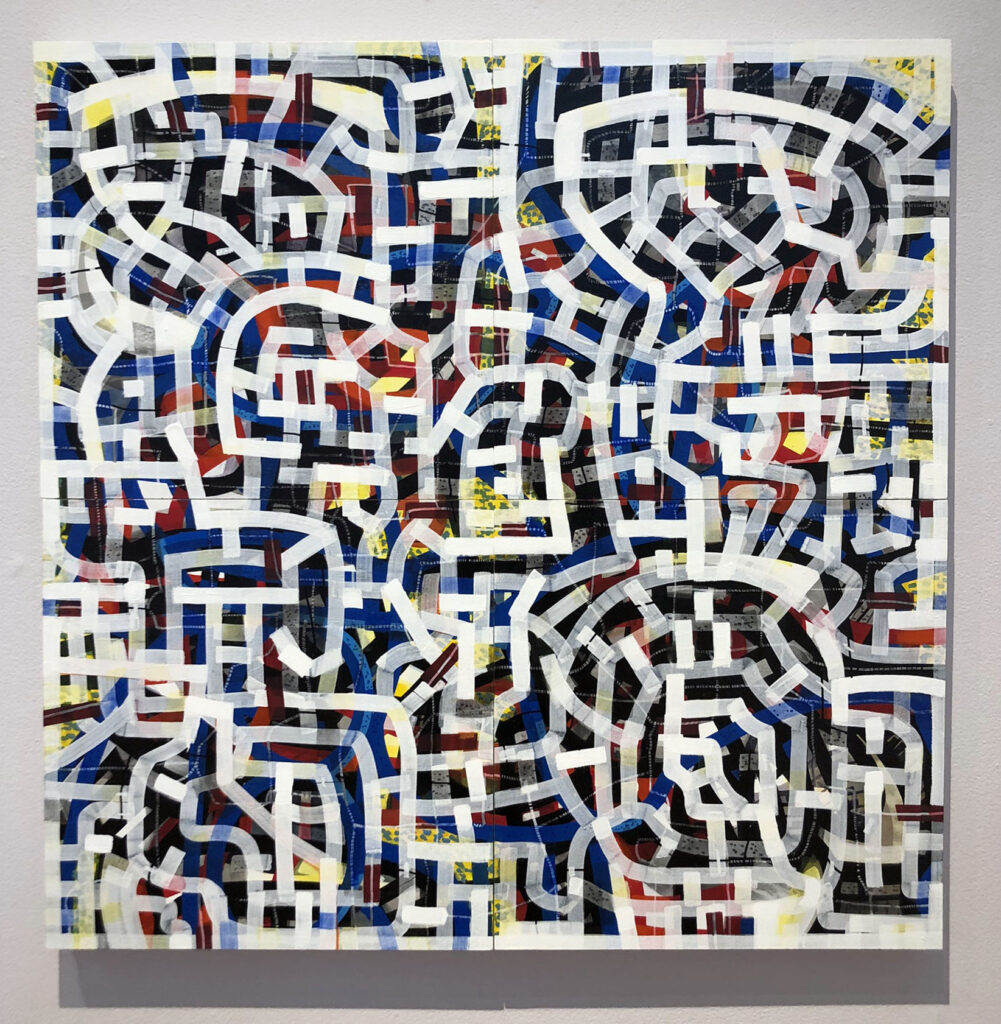
Christopher Skura, “Keep the Dream from Ending”, 2022

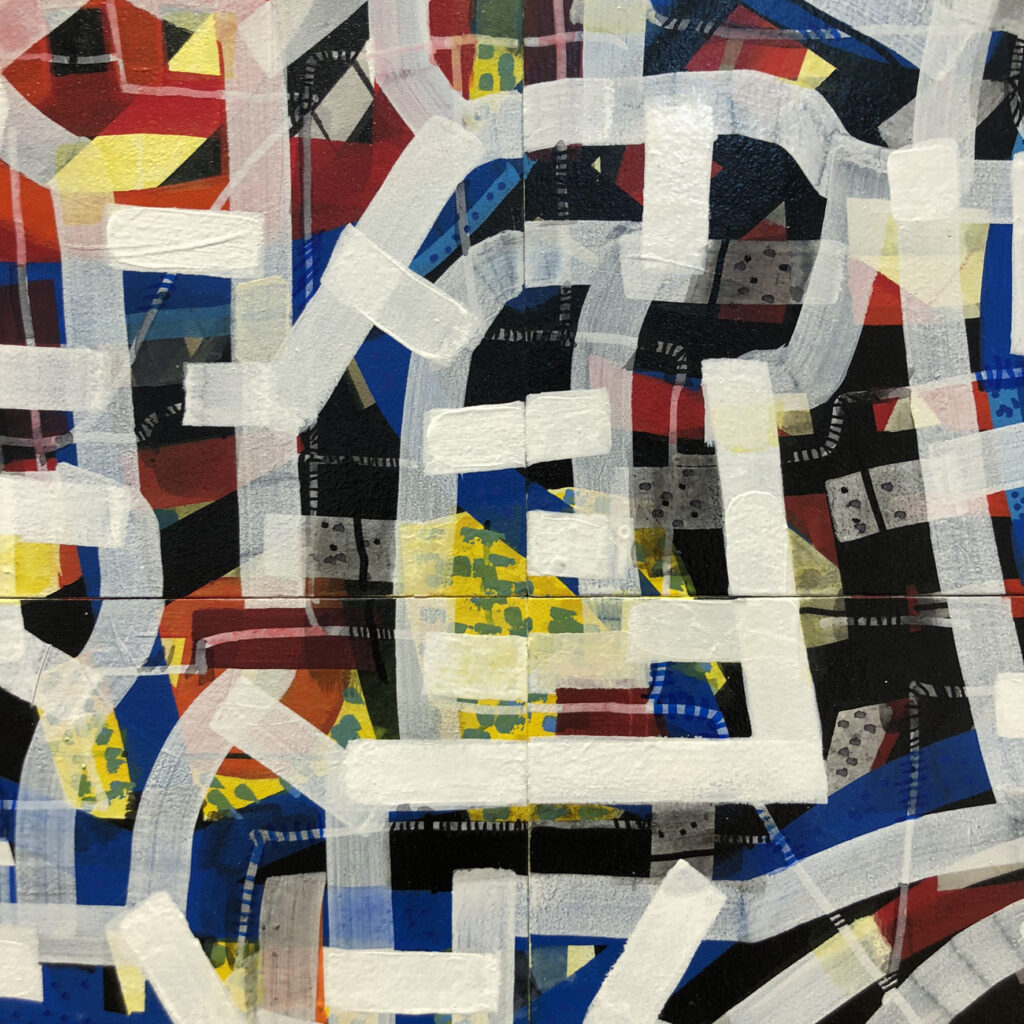
Christopher Skura, “Keep the Dream from Ending”, 2022 (detail)

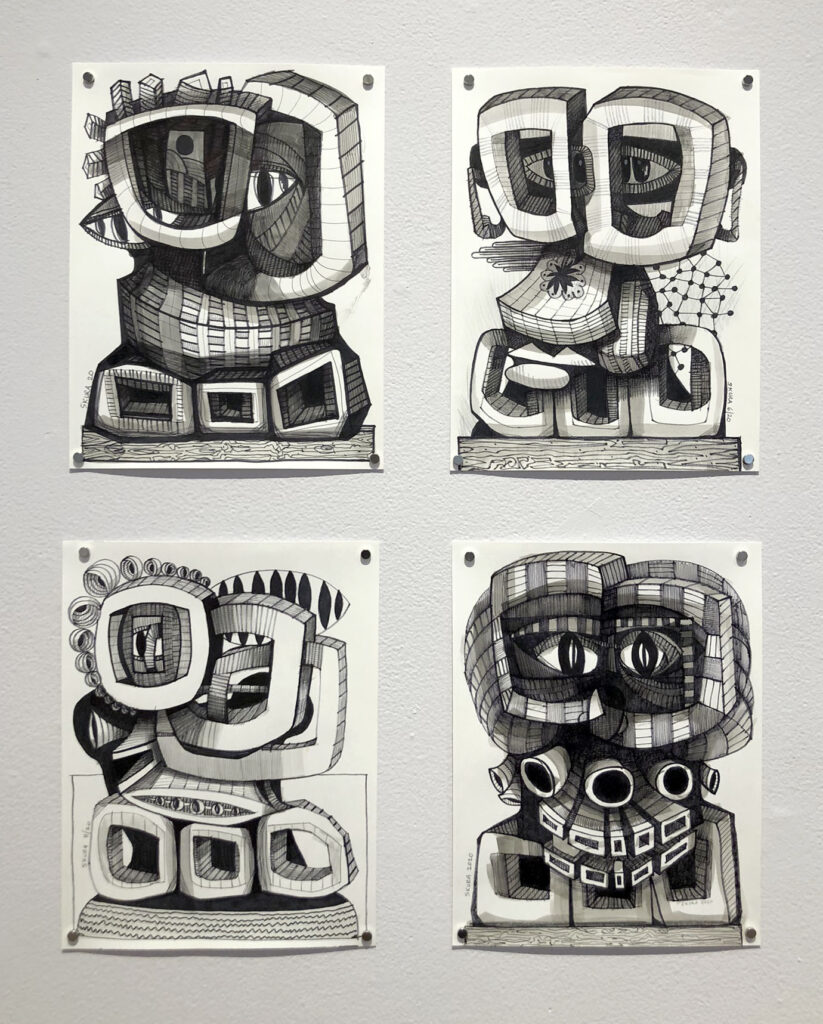
Christopher Skura “Sketchbook Drawings”

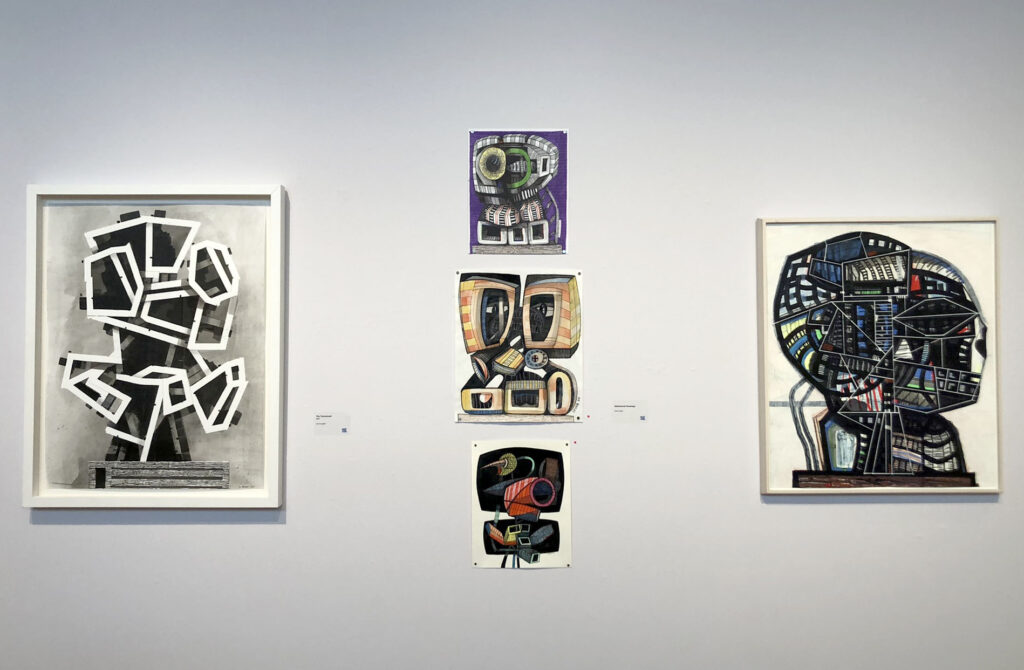
Christopher Skura, “The Turnaround”, 2021; “Sketchbook Drawings”; “Head Cult”, 2022


Christopher Skura, “Story Bored (Cast of Characters)”, 2021

Christopher Skura, “Gob Stopper”, 2018

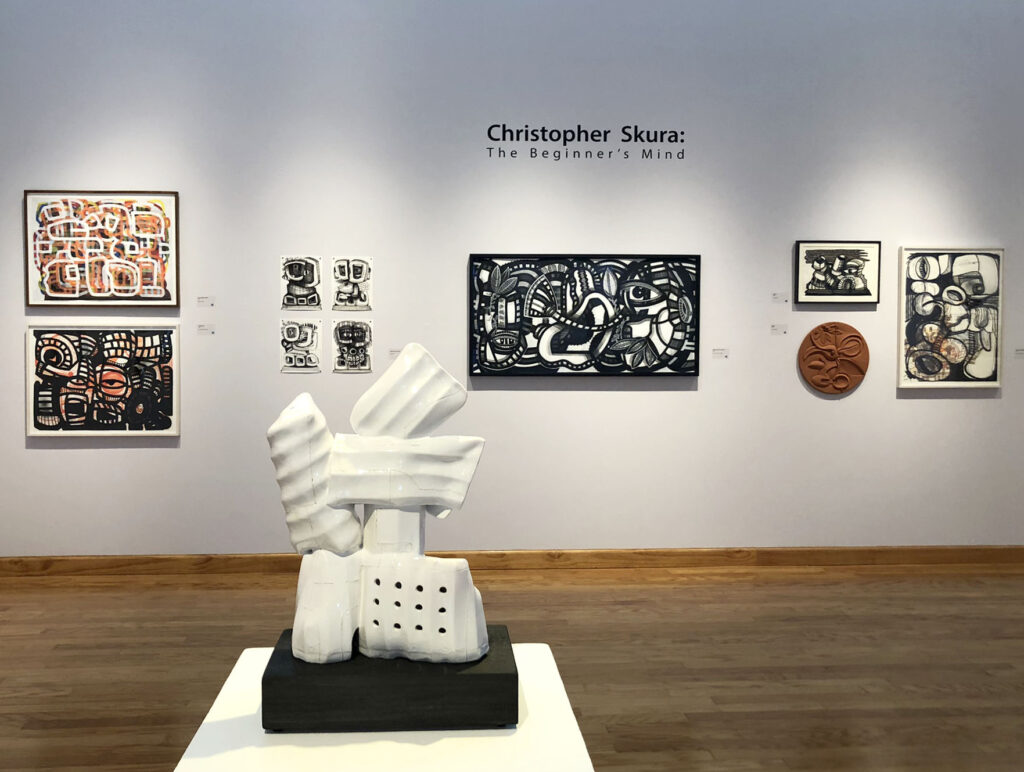
Christopher Skura’s exhibition The Beginner’s Mind (starting over after Covid) at Dunedin Fine Art Center is an interesting selection of his drawings, paintings and sculpture.

The artist’s statement on his work from the gallery wall-

Working in my Woodstock, NY studio during the 2020 Covid pandemic influenced my creative process by making my working method more direct and immediate. I have begun a routine of drawing everyday in sketchbooks. Out of these small drawings have come many sculptural ideas. Each imagined form serves as a kind of placeholder and represents someone we have lost. Drawing quickly with paint marker, my natural, hardwired shapes have become more pronounced. The goal is to work with a “beginner’s mind” and utilize the flow-state to achieve a direct expression.

All of my work comes out of extensive sketching and drawing. Very rarely do I recreate exact drawings as sculpture but I use them as a spring board to begin experimenting. Most of these drawings are small and done very quickly. By hesitating less, I have focused on completing an artwork in one or two sessions as opposed to laboring over it. The surfaces on the new works have become less concerned with refinement and I feel this has created a warmer and more active surface.

The style of my most recent artworks is influenced by the “street” art that blanketed my New York City neighborhood during lockdown. The images reference psychology, structural systems, emergence theory and the architecture of the human body. Improvisation and freehand drawing are emphasized for phenomenological effect and I try to capture the speed of living in Lower Manhattan. Some of my forms are organic and plant-like but others suggest the machinery of a man-made environment. This duality reflects my visual experiences growing up in the lush Florida landscape and my current life living in New York City.

The forms speak to the effects of time on the human body and the natural world. Each work imagined is a small psychological portrait of something struggling to survive or already gone.


Feb 242023
 

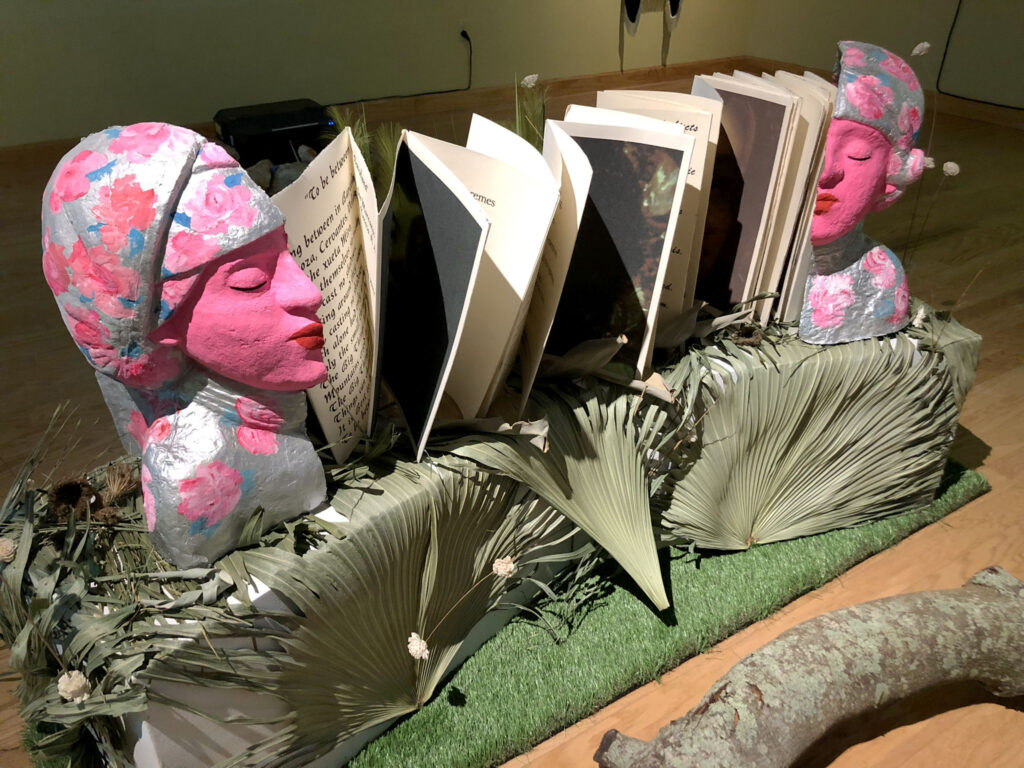
Micaela Amateau Amato, “Yoran Por Aire (contes brevas)”

Photographs by Amadia Shadow Rabbit

Film still from Kiara Mohammed Amin’s “Black Presence”

Film still from Kiara Mohammed Amin’s “Black Presence”

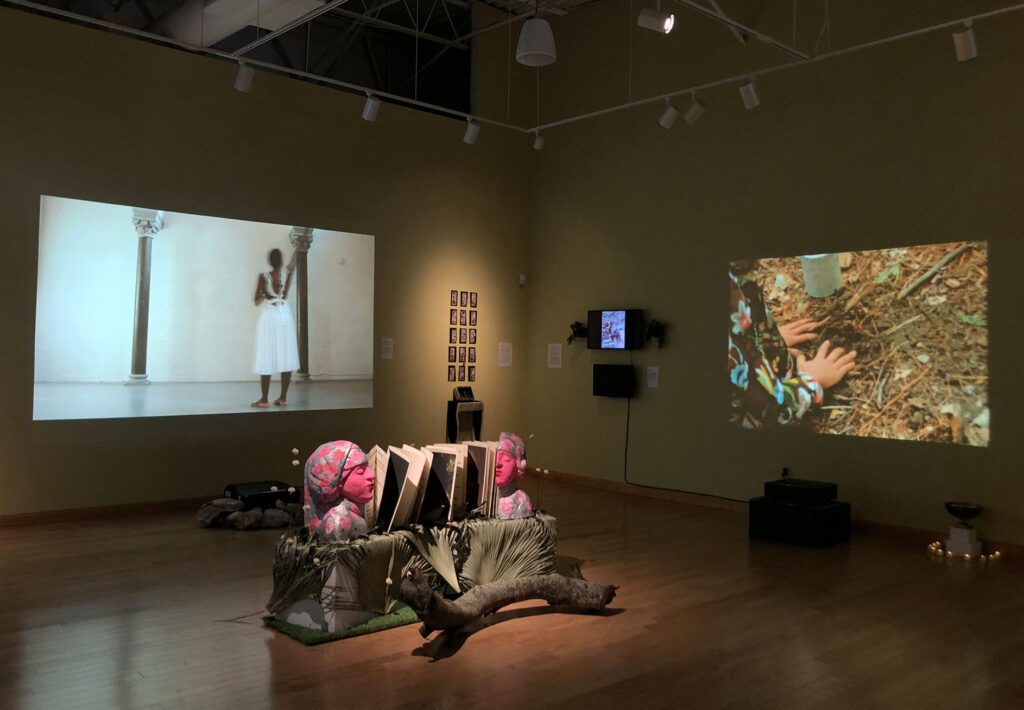
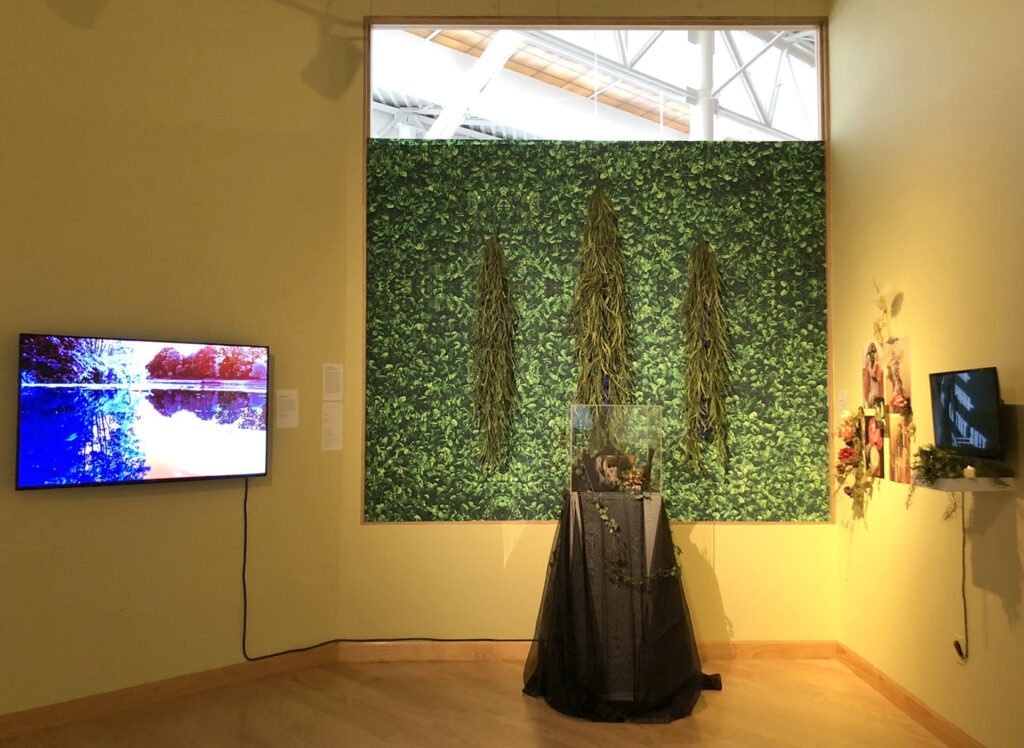
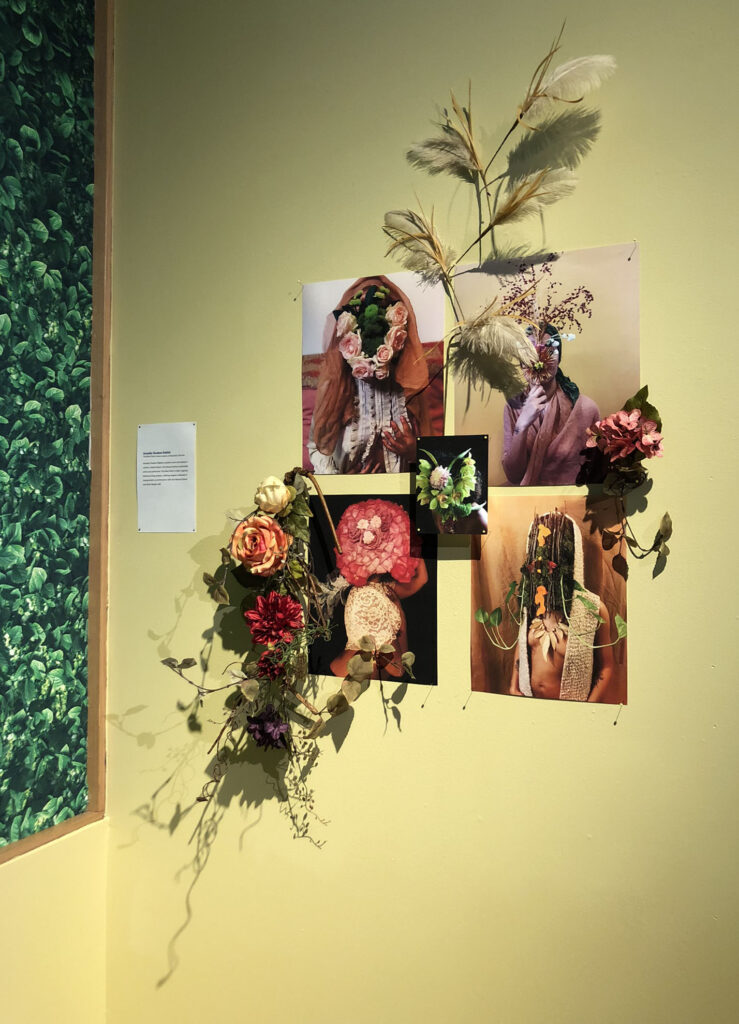
Soonoqo: We Become Body in Waves of Light and Sound at Dunedin Fine Art Center is a multimedia exhibition of 18 artists from around the world who “share a common desire for healing, communal growth and interdependence with nature” curated by S. Toxosi.

S. Toxosi’s statement about the exhibition (from the gallery wall)-

I do not possess the language to truly describe the be-holdings within Soonoqo. As a term within the Somali language, it would be difficult to translate into contemporary English. It considers a pluralistic worldview that allows ‘becoming and returning’ to bear witness of itself, within oneself while conjoining through space and time. Soonoqo, basks in the universal soul. Its otherness is imbued as the ‘physical cosmos’ and all its avatars and manifestations.

To speak in metaphor or in a sense of ‘poetic meditation’, one would engulf whirling vortexes, volcanoes and maelstroms that end up in other universes from which bring new revelations or images, The senses are engaged as viewed in Bruno Ferreira Abdala’s video art When Mother Breathes. It is here we can see a pluralist’s sensibility where the cohorts of Soonoqo ‘become and return’ with offerings that contend with the mythical genesis through the acknowledgement and practices of ancestral wisdom, queering mores, spirituality and love. Thus creating fission through initiating and remembering. There is a subtlety of conjuration, ritual, humility, vulnerability in K. Tauches’s Q.A.L. video-making that unfolds and reveals the sentience of a Nature that provides true sustainability.

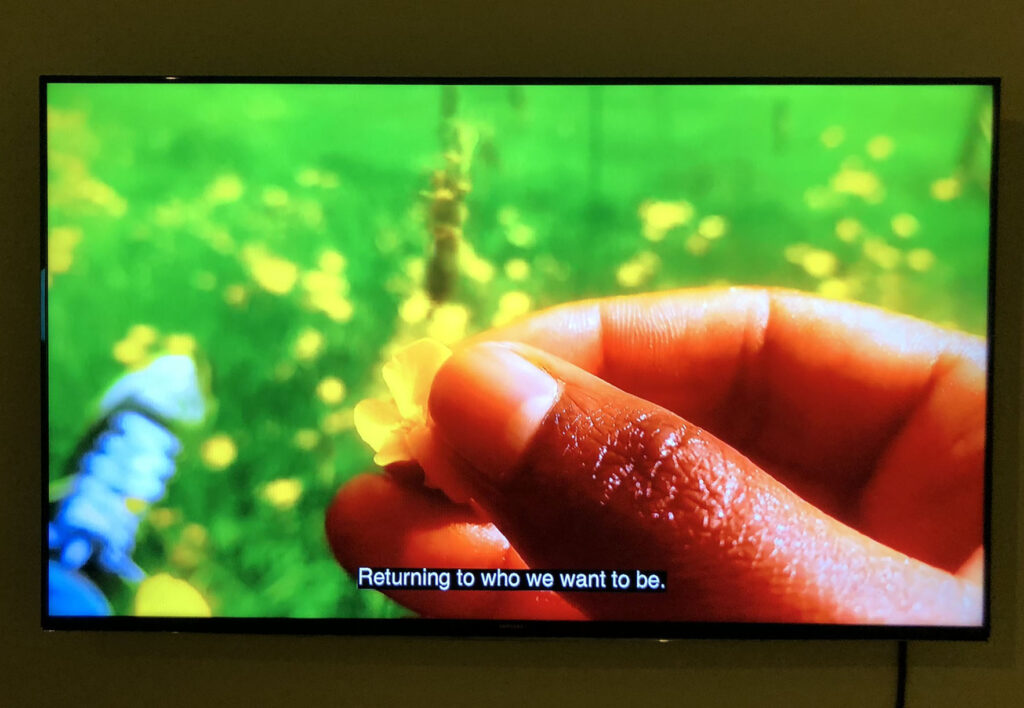
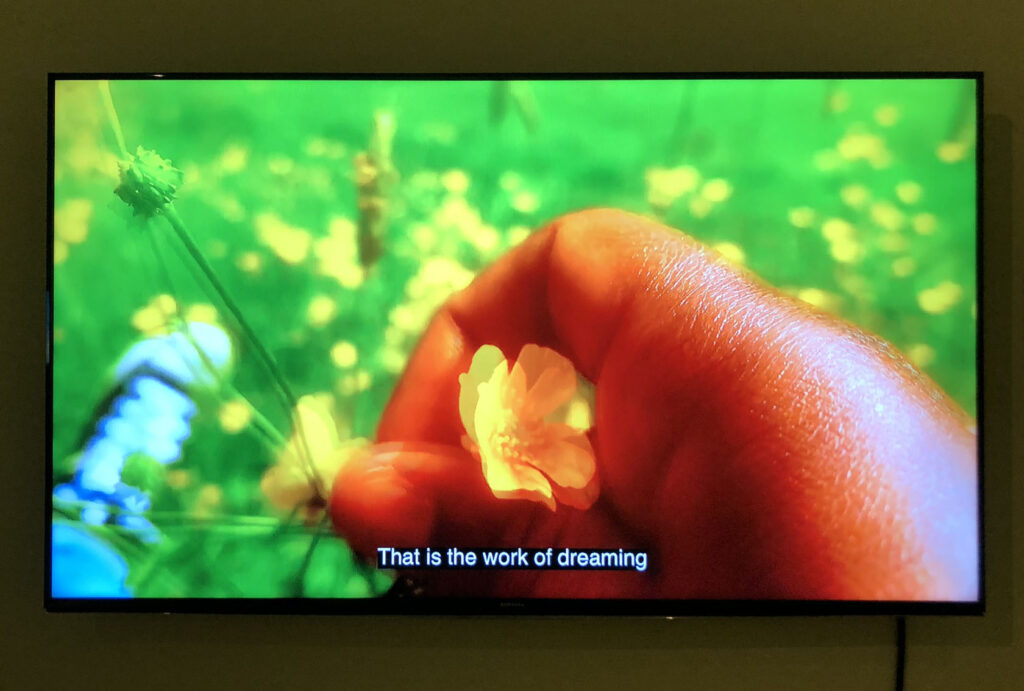
Soonoqo is a web of interconnected lights in continuous synchrony. It enables manifestations from varied domains of areas of perceptibility through human inner weavings of life experiences and becomes a variety of communicative prowess that encompasses video arts, film, photography, the written word and sonic compositions. These forms all ultimately resonate with and point toward healing where one/all is purified, catalyzed and cleansed through cooperation with nature, technology, shadow matter, dark matter and invisible matter. As can be seen in the film Womb not Tomb by Dea, where she investigates and yields to the teaching of the four elements or in Kiara Mohammed Amin’s Black Presence, a short film of talismanic energy and transformation.

Artists included in the exhibition- Brandy Eve Allen, Viveka Krumm, Harry Wilson Kapatika, Cara Judea Alhadeff, Sadie Sheldon, Chelsea Rowe, Micaela Amateau Amato, Saudade Toxosi, Jennifer Pyron, Amadia Shadow Rabbit, K.Tauches, Javier T. Dones, Bruno Ferreira Abdala, Sall Lam Toro, Kiara Mohamed Amin, Nayetesi, Dea

For more information on this exhibition check out @soono.qo and this conversation with S. Toxosi and DFAC Curators Catherine Bergmann and Nathan Beard which is very informative.

Feb 242023
 

Lars Fisk, “Court Tennis (v.1)”, 2023 with “das Ding (v.3)”, 2023

Lars Fisk, “Court Tennis (v.1)”, 2023 (right side)

Lars Fisk, “Court Tennis (v.1)”, 2023 (left side, closer) with “das Ding (v.3)”, 2023

Lars Fisk, “das Ding (v.1)”, 2023

Lars Fisk, “das Ding (v.1)”, 2023 (back view)

Lars Fisk, “das Ding (v.2)”, 2023

For 10SNE1, Lars Fisk’s exhibition at Broadway Gallery in NYC, he has created an immersive environment that is really fun to walk around in or even try playing in.

From the gallery’s press release-

Whatever isolation people experienced during the 2020 pandemic lockdown was, to residents of the remote enclave of Red Hook Brooklyn, both compounded and barely noticed at all.  Lars Fisk, who lives and works there in a stacked shipping container house and an adjacent studio, mostly carried on with his solitary practice fashioning astonishingly complex sculptures from glass, steel, brick and wood.  Apart from the occasional neighborly drop-in, he saw very few people.

As a result, when New York emerged from the fearful slumber of Covid, Fisk himself blossomed in late spring with a hunger for human connection. As luck would have it, he was invited by a Red Hook neighbor to join their softball league. Fisk had never really played before, but took a chance and shook off the isolation to give it a shot. He has described the profound uplift of multi-generational camaraderie and shared purpose; of competition and physical exertion in almost euphoric terms.

As summer wound down, Fisk was determined to find a way to perpetuate this endorphin rush. Simultaneously, he had also been playing tennis with some regularity, and, as is his inclination, had been researching the history of the game. He was delighted to discover that the game (known first as Court Tennis) originated in the Middle Ages with opponents paddling a cord-wound leather ball back and forth off of the sloping roofs of the stalls at the close of the public market—a version of what many a contemporary suburban kid would recall as a game of “Roofball”.

This gave Fisk the idea of creating a winter-ready racquet sport inside his studio. This portion of his workspace had been set aside for formal display of works that were complete but hadn’t yet been shipped out for exhibition—a place to present works to his now close-knit Red Hook community in an in-crowd acknowledgement of the locals’ contribution to his work and happiness. Therefore, this site (a White Cube with an absurdist twist of the traditional wattle and daub and timbering of Tudor architecture) became the obvious location for the court. Here, any neighbor or visiting friend that came to play and help develop the rules of this makeshift new sport became de facto performers—became the artwork that this space was designated to display. A low net was set up and a loose set of rules were developed to keep the play lively and competitive. Fisk experimented with different wall treatments (clapboard, asphalt shingles, etc.) that complicated the angle of rebound of volleyed shots and produced a controlled chaos that slowly refined itself as his visiting collaborators learned the peculiarities of the court.

Fisk was pleased that his passions for architecture, sculpture, competition and bonhomie had successfully converged in this new sport/performance/artwork and he began to develop the idea and how it might be realized within a more formal exhibition space.  In preparation for the show, he expanded upon the theatrical possibilities (both in presentation and potential for audience) that the commercial gallery setting in Tribeca would provide. The result is a kind of non-site environment that evokes an outer borough environment of vinyl sided clapboards and shingled rooftops that form the irregular angles and planes that recalls the architecture of Court Tennis. A basement bulkhead door emerges from the floor at a 45-degree angle perfect for bewildering bank-shots; a pre-fab bay window presents a multi-faceted surface refracting the ball in unexpected ways; an open garage shelters a sculpture based on a boxy 1970s Volkswagen “Thing” whose windshield is also fair play. Two more of these themed vehicle sculptures (one evoking a military ambulance and the other a preposterously tricked out off-road vehicle with aftermarket flood lights and winch) are arrayed in the court’s adjacent “gallery” acting alternately as obstacles, artworks and seating for viewers of the match. The sculptures’ angular geometry acts as a catalyst for the court’s faceted architecture, unifying the exhibition as a whole.

Formal concerns aside, the development of the game has naturally teased out conversations about court etiquette, dress and decorum as signifiers of class, and the twinned elitisms of the tennis club and art world. Within the exhibition these are reflected in the players’ tennis whites and the ritualistic manners of play. Perhaps as an antidote to this reality, the hope is that Fisk can expand his community by inviting exhibition visitors to engage with both the built environment and discrete artworks and to become a part of the artwork itself.  In the process, he may simultaneously democratize the lofty status of tennis and the gallery space itself.

This exhibition closes Saturday 2/25/23.


Feb 222023
 

Robert Yasuda, “Boundary” 2010-2020

Robert Yasuda, “Boundary” 2010-2020 (detail)

Robert Yasuda, “Pele”, 2022

Robert Yasuda, “Pele”, 2022 (side view)

Robert Yasuda, “Maluhia”, 2022

Robert Yasuda, “Pipeline”, 2022

Currently at Sundaram Tagore gallery in New York are Robert Yasuda’s sculptural paintings for his exhibition Transparent and Translucent.

From the gallery’s press release-

The artist’s latest body of work is a culmination of his decades-long exploration of perception, light and space. On view will be a series of atmospheric paintings rooted in his early encounters with nature in Hawaii where he was born and raised.

Yasuda’s iridescent paintings are composed of translucent veil-like fields of color layered on slabs of wood that protrude from the wall or nestle into corners. Several works are constructed to cast a reflected glow of colored light into the surrounding space. Depending on where you stand, the surfaces of the paintings shift in color and temperature.

“For many people, looking at a painting for 20 seconds can be extremely long but these are pieces that reveal themselves over time,” says Yasuda, who invites viewers to pause and immerse themselves in the work in order to perceive these subtle transformations.

Yasuda begins by shaping wooden panels, which are up to two inches thick, with chisels and grinders. Softening harsh vertical lines, he introduces bowed and gently sloping edges as well as sharply upturned corners. After painting a base layer onto the wood, he wraps the wood in diaphanous cotton. Adding as many as 40 layers of pearlescent acrylic paint, he suspends the fabric amid layers of luminous color. Most of his works are multi-paneled, with intricately wrought and detailed seams, and mounted on cradle-like structures that push them away from the wall.

Several of the works on view feature aqueous expanses of rich blues and lush greens evoking the ocean. In other pieces, sensuous swathes of paint evoke sunsets or the iridescent lining of seashells. “My entire childhood I saw myriad greens in the countryside of Hawaii and I spent a great deal of time diving…These works are connected with that point of view and the process of meditating on nature,” says Yasuda.

This exhibition closes 2/25/23.