Oct 282026
 

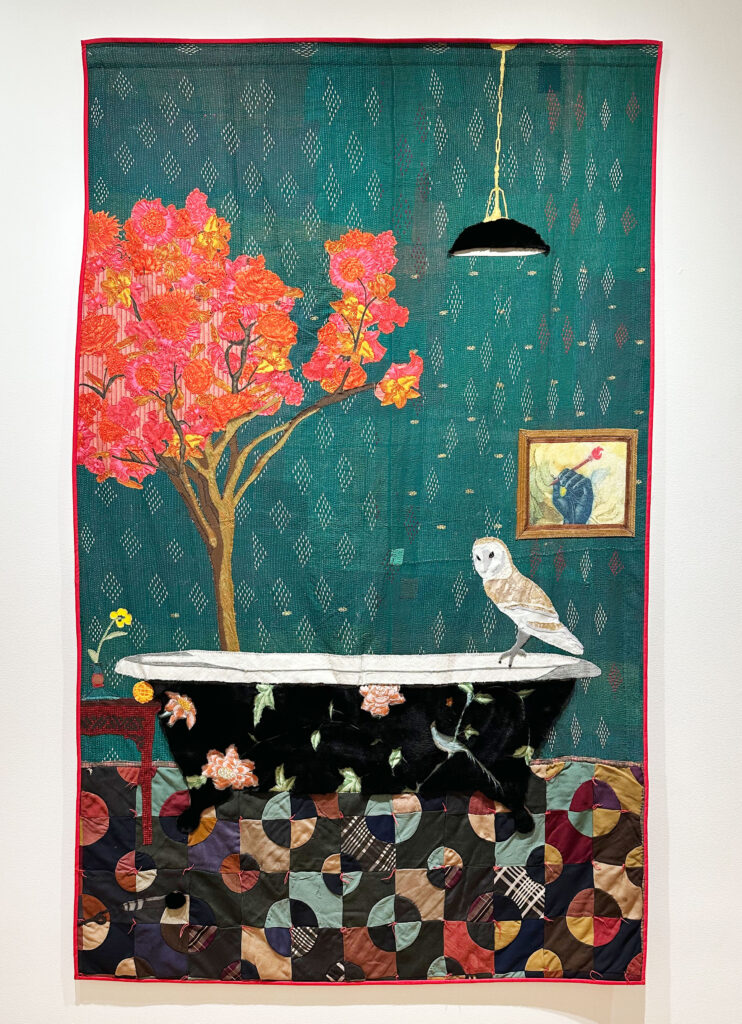
Jesse Krimes, “Riverside”, 2026, Antique quilts, used clothing collected from incarcerated people, assorted textiles
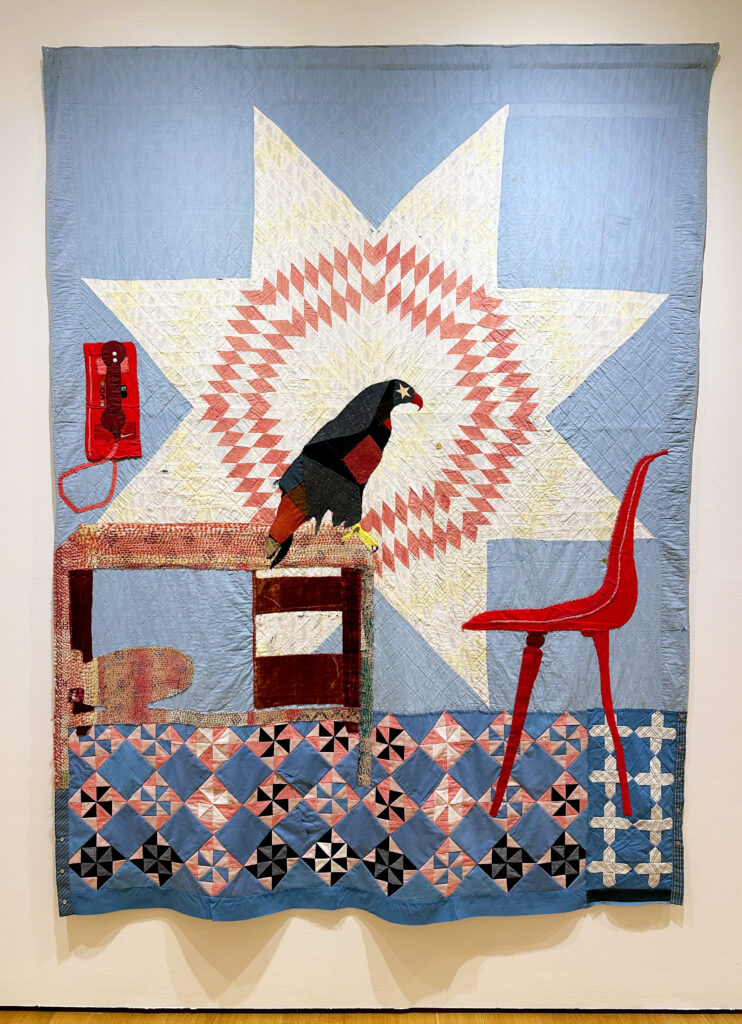
“Red Eagle”, 2020, Antique quilt, used clothing collected from incarcerated people, assorted textiles
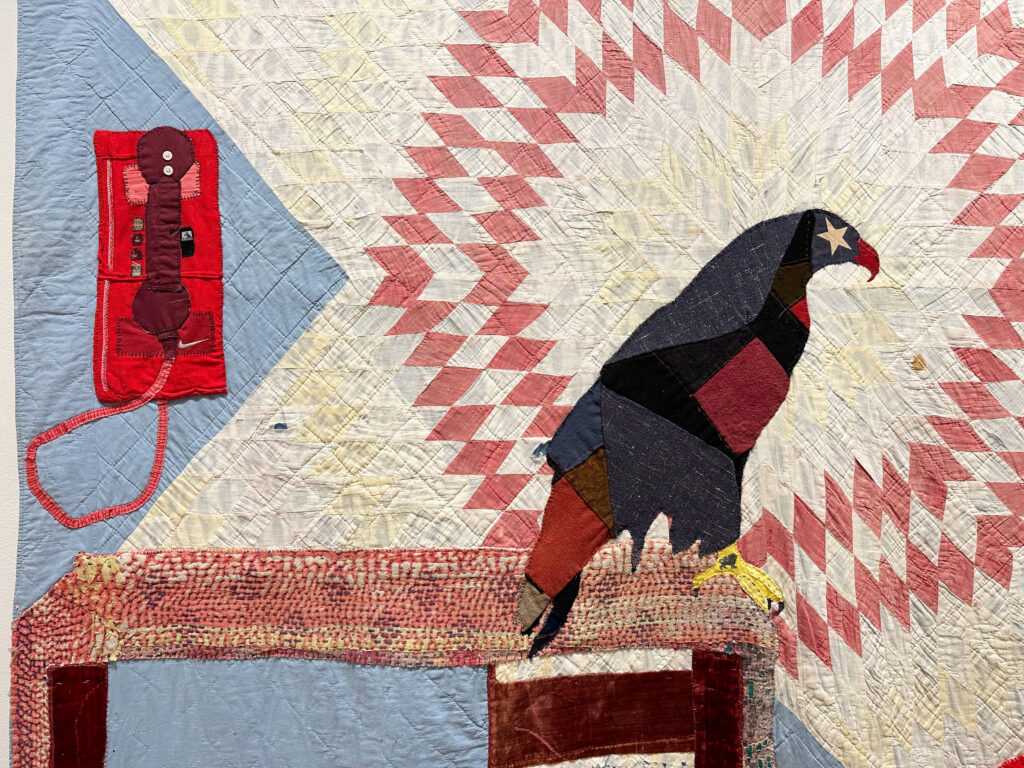
“Red Eagle”, detail

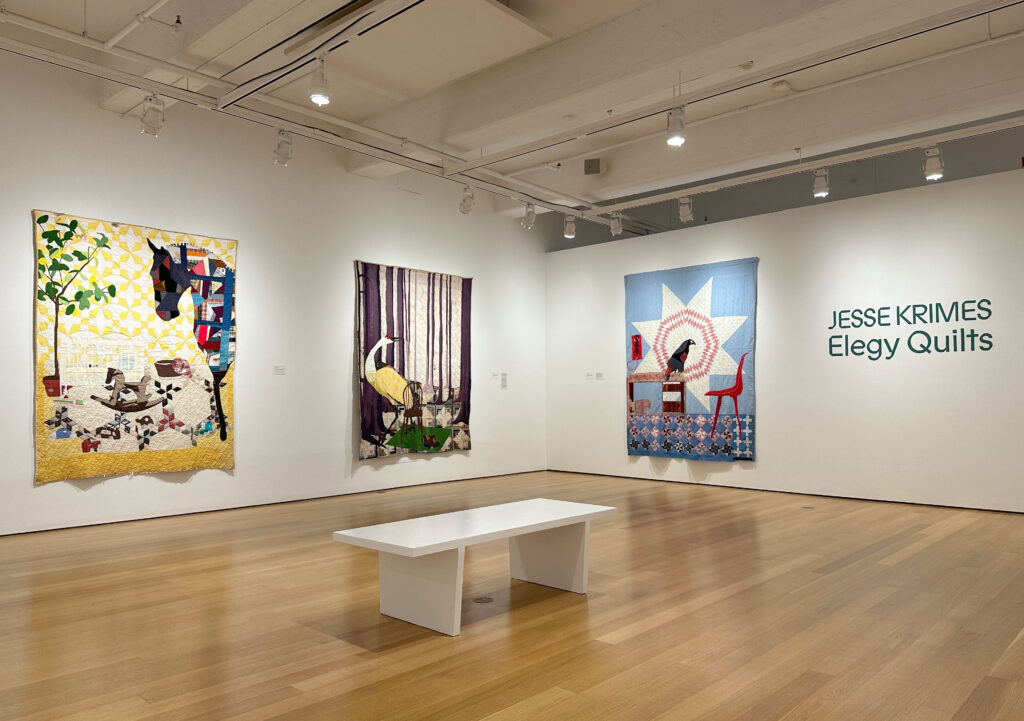
While the quilts in Jesse Krimes‘s exhibition Elegy Quilts at The Fabric Workshop and Museum are beautifully crafted works, it is how he builds on the ideas and personal items of the incarcerated people he worked with that make them so poignant.

The exhibition also includes the recent quilt Riverside, (pictured at the top of this post), a newly commissioned work inspired by Krimes’s workshops with young adults from Mural Arts Philadelphia’s Restorative Justice program. A mural of the piece was also created, located at 990 Spring Garden Street, Philadelphia.

From the museum about the exhibition:

Presented in partnership with Mural Arts Philadelphia, this exhibition features selections from Jesse Krimes’s Elegy Quilt series (2020–present), a body of work that renders the personal effects of the U.S. carceral system through portraits of domestic spaces. Drawing on his own experience with incarceration, Krimes gathers donated clothing and textile fragments from currently and formerly incarcerated individuals and reconstitutes them into intricately patterned quilts that meditate on memory, loss, alienation, and comfort. Continuing in the spirit of American quilting traditions, the works situate these narratives within broader histories of communal making and resilience.

To produce the works on view, Krimes invited incarcerated collaborators to describe a memory of home. He then prompted them to choose a representative animal figure as a symbolic stand in for the incarcerated person. The quilts, titled after U.S. prisons and jails, become tactile archives grappling with estrangement, yearning, and the complexities of release and reintegration. Through this process, Krimes reframes everyday materials into narratives of dignity and connection, prompting critical reflection on the psychological and material costs of incarceration.

Marion, pictured below, also has an affecting story behind it.
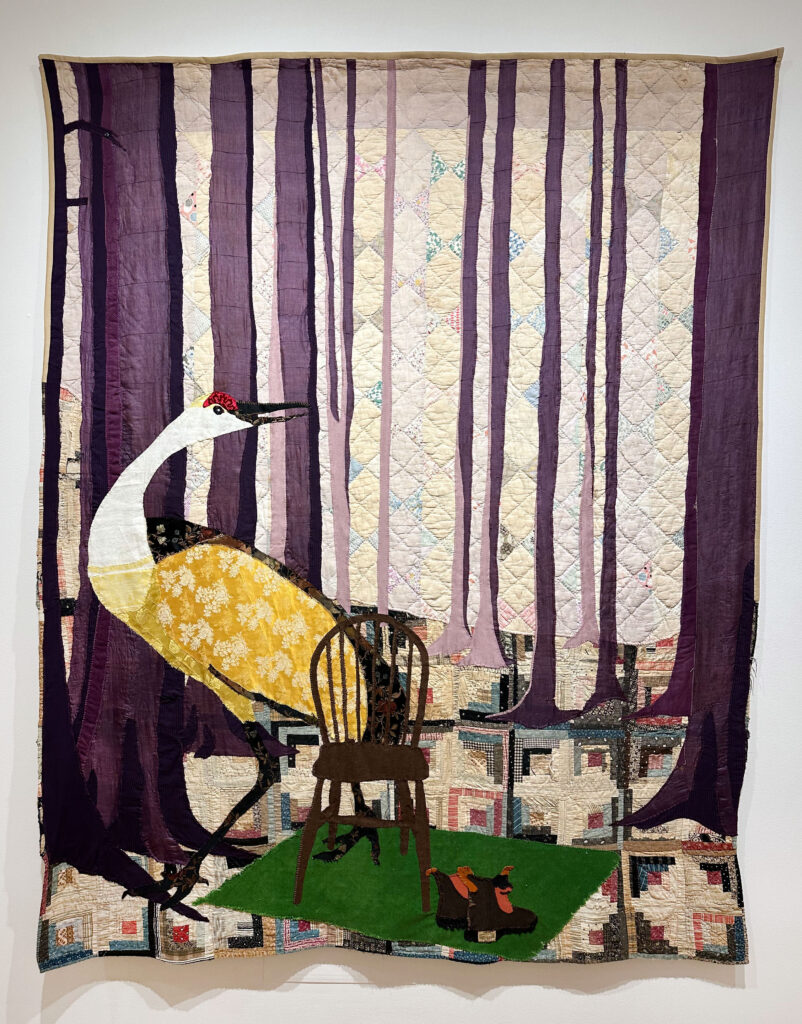
“Marion”, 2022, Antique quilt, used clothing collected from incarcerated people, assorted textiles

From the museum:

Krimes utilizes the names of American penitentiaries-here the Federal Correctional Institution in Marion, Illinois-as titles for his quilts to convey the immense scale of mass incarceration in the United States. The quilts themselves, however, depict personal relationships to home, memory, and safety.

When Krimes asked his collaborator for Marion, who is currently incarcerated, where he last felt most comfortable, the individual described the woods behind his house where he would meditate. The resulting quilt is a portrait in absentia: rather than depicting the figure in contemplative repose, Krimes presents an empty chair and discarded boots as the material traces of the “sitter.” A brightly patterned crane curves around the chair like a guardian figure suggestive of freedom and flight.

The crane’s vivid yellow coloring and the rich purple of the towering trees create a distinction between the peaceful natural setting and this animal avatar. As with the other works in the Elegy Quilt series, Marion offers a vision of individual longing, softness, and vulnerability in resistance to the severe discomfort and violent anonymity produced by the carceral system.

This exhibition is on view until 11/1/26.
Jul 282026
 

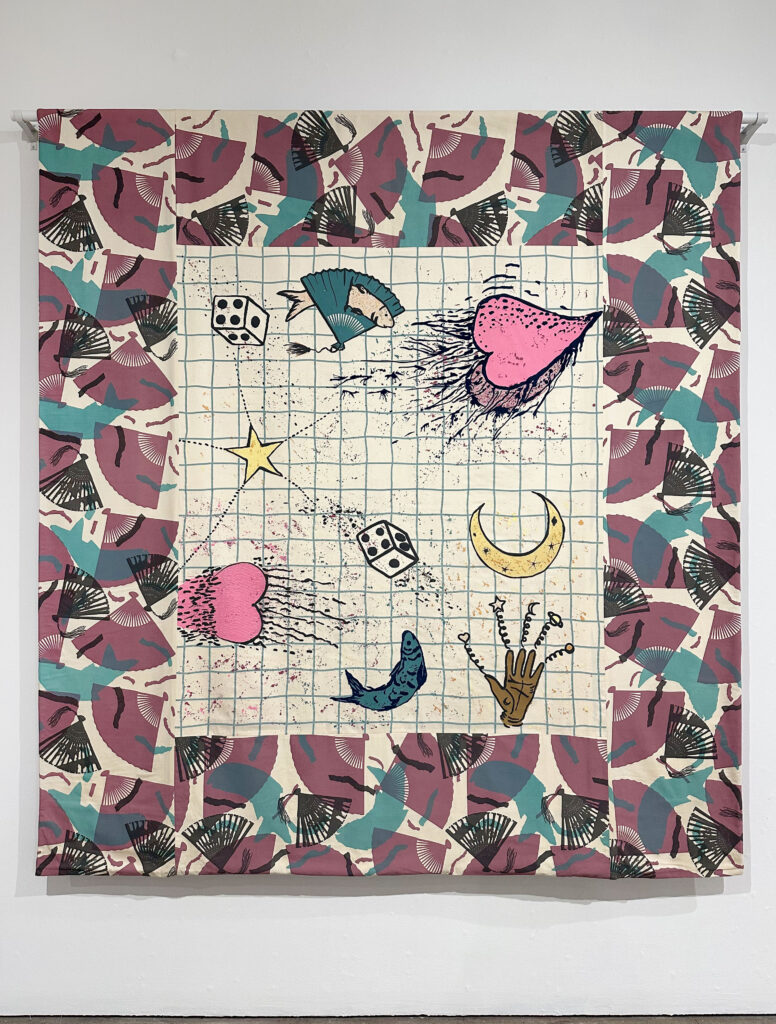
Betye Saar, “Takin’ A Chance on Luv”, 1984, pigment on cotton sateen, created in collaboration with The Fabric Workshop and Museum

Los Angeles artist Betye Saar passed away on Sunday, July 26th, at 99 years old, just a few days before her 100th birthday. Saar is best known for her assemblage pieces that confronted racism and sexism, often incorporating  spiritual and mystical elements into the work as well.

Takin’ A Chance on Luv, pictured above, was part of the group exhibition Some American Dreams at The Fabric Workshop and Museum in Philadelphia, which closed in June.

The short documentary below, created by Christine Turner for LACMA‘s Art+Film Initiative, features the artist at 93 discussing her work.

Jun 102026
 

Donald Lipski, “Who’s Afraid of Red, White and Blue #37”, 1990, White wool gabardine, made in collaboration with The Fabric Workshop and Museum

Rose B. Simpson, “Tonantzin”, 2022, Linen, cotton, clay, and thread, made in collaboration with The Fabric Workshop and Museum

(L to R) Rev. Howard Finster, “George Washington Meets Martha Custis, 1984, Pigment on cotton t-shirt; James Luna, “High Tech War Shirt”, 1997-98, Smoked hide, nylon setting, silk suiting, horse hair, metal, shell buttons, bead work with watches and necklace (shell, thermometer, and plastic toys); Hock E Aye VI Edgar Heap Of Birds, “Who Owns History”, 1992, Pigment on cotton t-shirt (all works made in collaboration with The Fabric Workshop and Museum)

S.A. Bachman, “Are You Telling Yourself A Little White Lie?”, 1988, Edition of 5, Halftone photographic silkscreen pigment on nylon, made in collaboration with The Fabric Workshop and Museum

Pictured are just a few of the many excellent artworks currently on view in Some American Dreams at The Fabric Workshop and Museum in Philadelphia. Exploring the concept of America and the American dream, all the works were created by an impressive list of artists who were Artists in Residence at the museum over the past four decades.

From the museum and curator Hilde Nelson:

In her 1986 essay “Waking Up in the Middle of Some American Dreams,” poet June Jordan calls for a multiplicity of American dreams rather than a singular paradigm. For Jordan, those in pursuit of these dreams include:

the white people the black people the female people the lonely people the terrorized people the elderly people the young people the visionary people the unemployed people the regular ordinary omnipresent people who crave grace and variety and surprise and safety and one new day after another.

On the occasion of the 250th anniversary of the U.S. Declaration of Independence, this presentation of works from The Fabric Workshop and Museum’s collection explores the complexity of American-ness through lenses of history, memory, and mythology. Made by past Artists in Residence in collaboration with the FWM Studio, the projects reimagine symbols of nationhood and belonging, critique ongoing legacies of inequity, and offer expanded visions of kinship and community.

The works on view represent four decades of making at FWM. They meditate on themes including indigeneity and race, alternative origin stories, landscape and the environment, the construction of historical narrative, memory and resistance, and images of cultural affiliation. Sections of the exhibition invite additional voices, drawing their titles from a chorus of American poets, songwriters, essayists, abolitionists, and historians.

The artists featured in Some American Dreams break down borders and categorical distinctions to propose a polyphony of American dreams shaped by hybridity, friction, and affinity. They ask: what if America is not one project, but many? And how might these Americas be affirmed, resisted or remade, in Jordan’s words, to envision “one new day after another?”

This exhibition closes 6/14/26.