Oct 282026
 

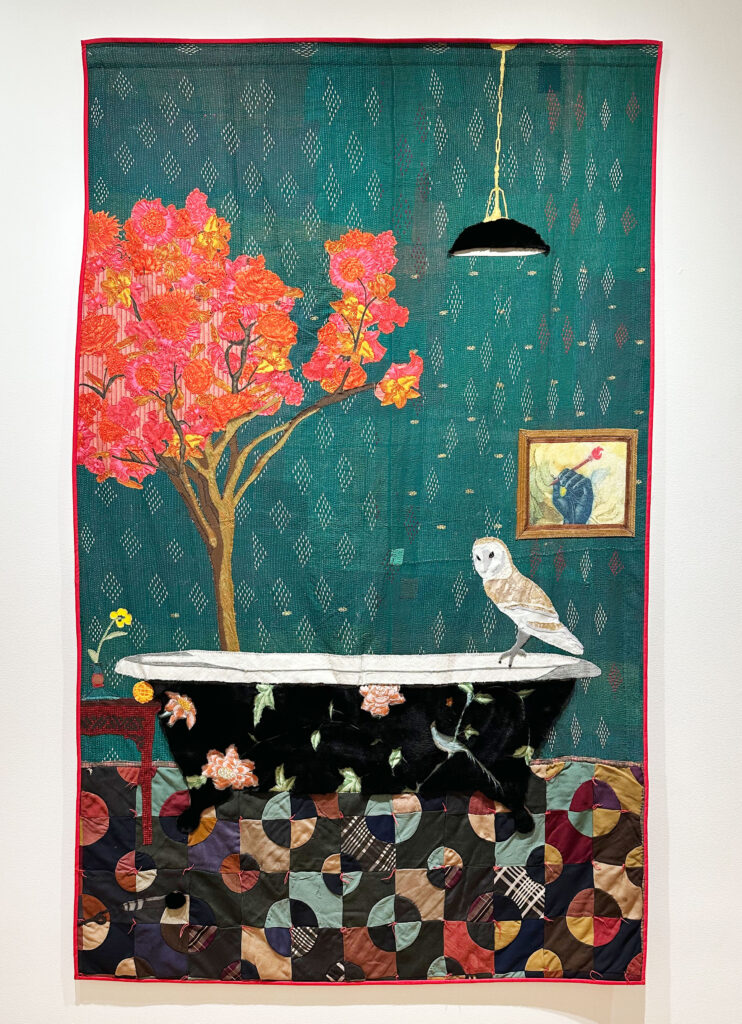
Jesse Krimes, “Riverside”, 2026, Antique quilts, used clothing collected from incarcerated people, assorted textiles
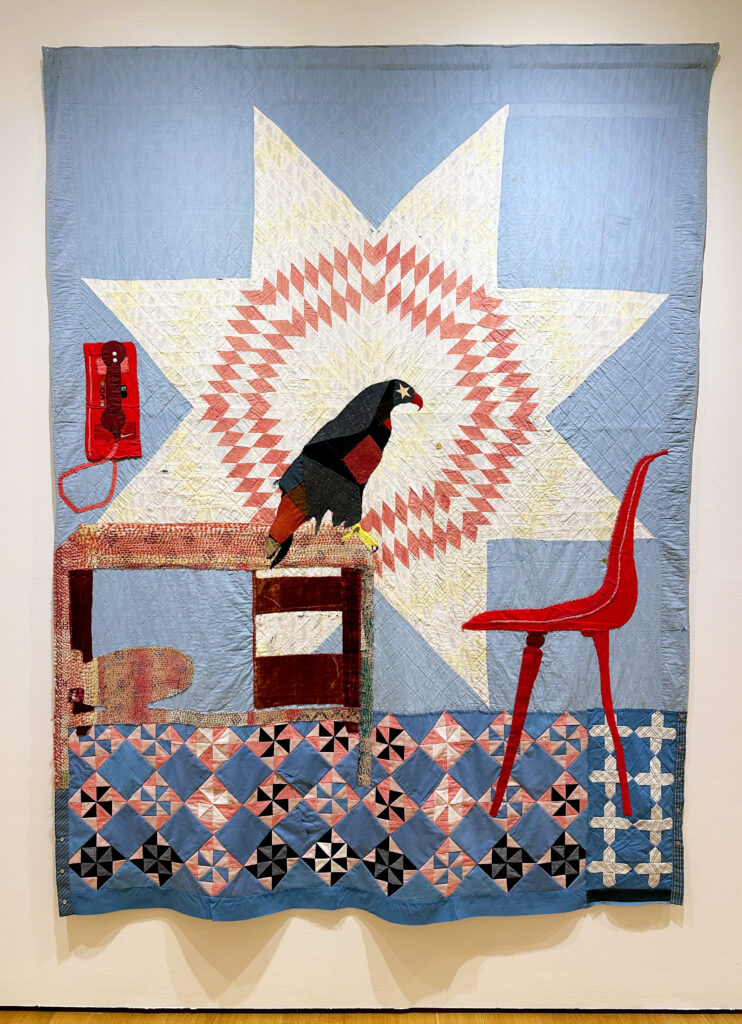
“Red Eagle”, 2020, Antique quilt, used clothing collected from incarcerated people, assorted textiles
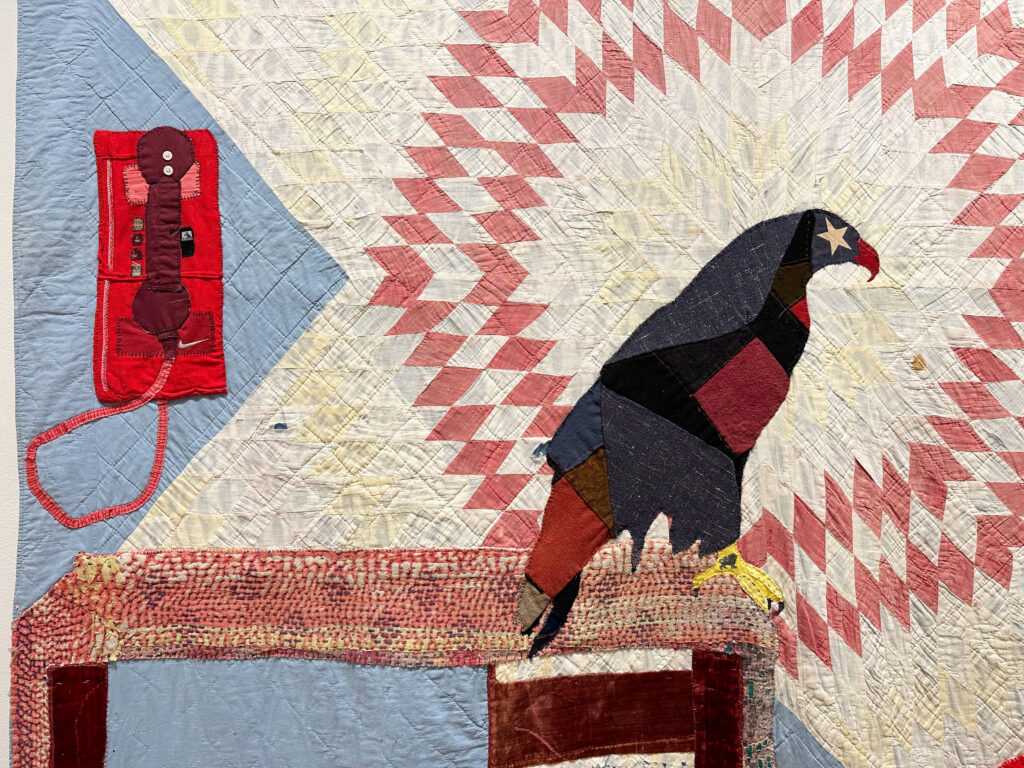
“Red Eagle”, detail

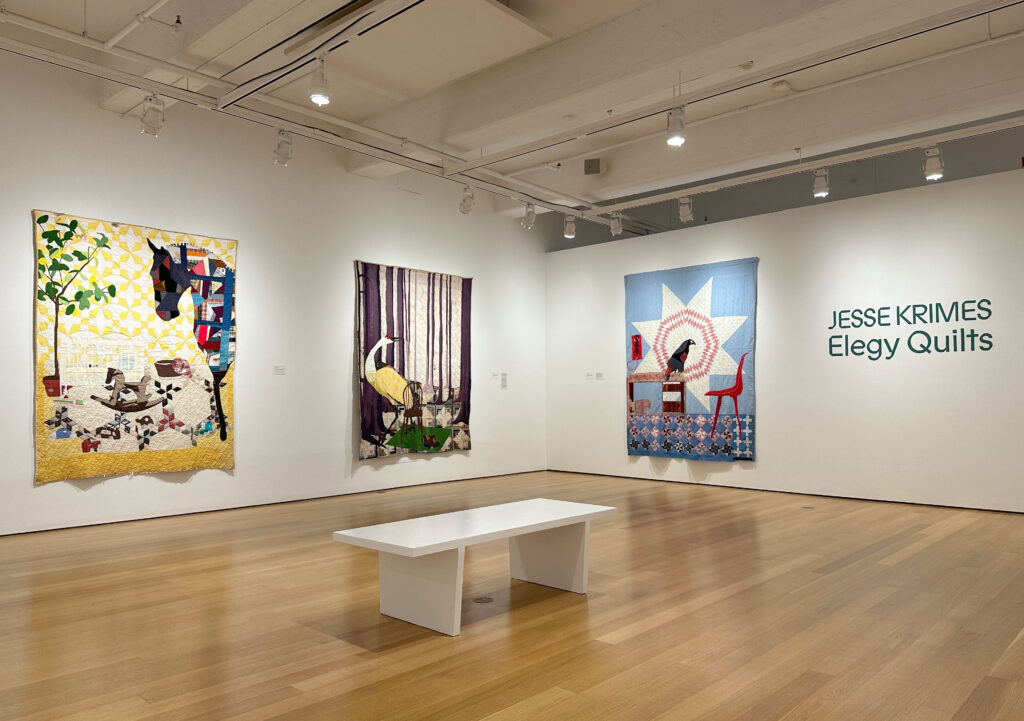
While the quilts in Jesse Krimes‘s exhibition Elegy Quilts at The Fabric Workshop and Museum are beautifully crafted works, it is how he builds on the ideas and personal items of the incarcerated people he worked with that make them so poignant.

The exhibition also includes the recent quilt Riverside, (pictured at the top of this post), a newly commissioned work inspired by Krimes’s workshops with young adults from Mural Arts Philadelphia’s Restorative Justice program. A mural of the piece was also created, located at 990 Spring Garden Street, Philadelphia.

From the museum about the exhibition:

Presented in partnership with Mural Arts Philadelphia, this exhibition features selections from Jesse Krimes’s Elegy Quilt series (2020–present), a body of work that renders the personal effects of the U.S. carceral system through portraits of domestic spaces. Drawing on his own experience with incarceration, Krimes gathers donated clothing and textile fragments from currently and formerly incarcerated individuals and reconstitutes them into intricately patterned quilts that meditate on memory, loss, alienation, and comfort. Continuing in the spirit of American quilting traditions, the works situate these narratives within broader histories of communal making and resilience.

To produce the works on view, Krimes invited incarcerated collaborators to describe a memory of home. He then prompted them to choose a representative animal figure as a symbolic stand in for the incarcerated person. The quilts, titled after U.S. prisons and jails, become tactile archives grappling with estrangement, yearning, and the complexities of release and reintegration. Through this process, Krimes reframes everyday materials into narratives of dignity and connection, prompting critical reflection on the psychological and material costs of incarceration.

Marion, pictured below, also has an affecting story behind it.
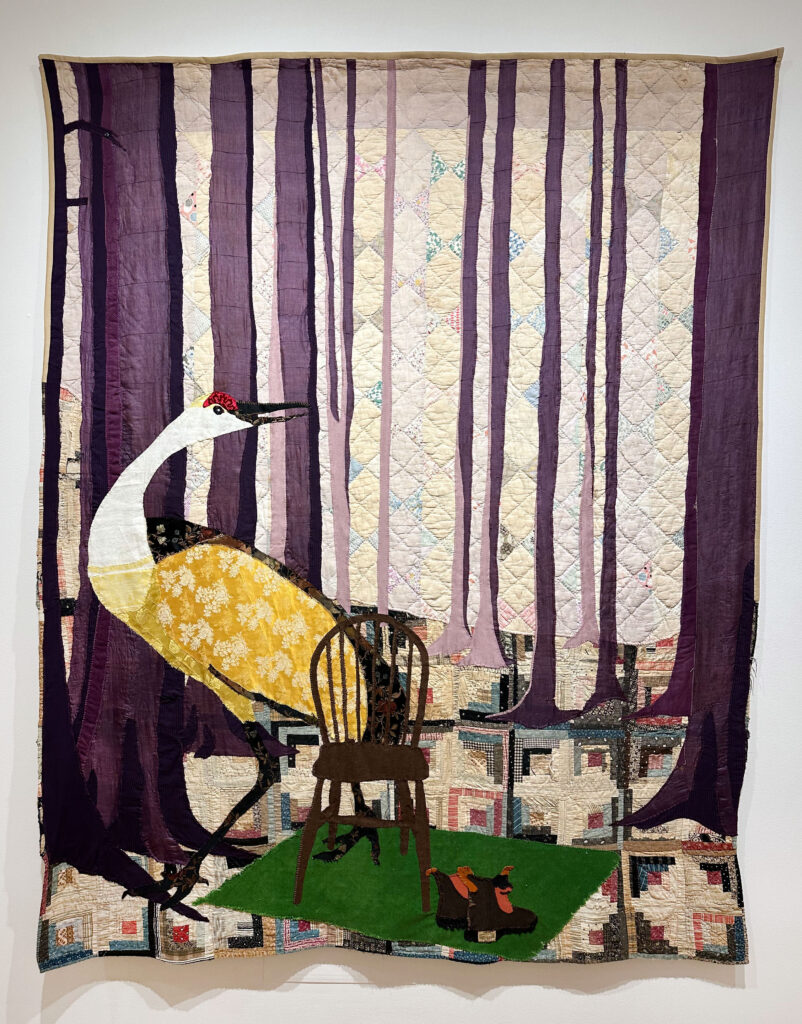
“Marion”, 2022, Antique quilt, used clothing collected from incarcerated people, assorted textiles

From the museum:

Krimes utilizes the names of American penitentiaries-here the Federal Correctional Institution in Marion, Illinois-as titles for his quilts to convey the immense scale of mass incarceration in the United States. The quilts themselves, however, depict personal relationships to home, memory, and safety.

When Krimes asked his collaborator for Marion, who is currently incarcerated, where he last felt most comfortable, the individual described the woods behind his house where he would meditate. The resulting quilt is a portrait in absentia: rather than depicting the figure in contemplative repose, Krimes presents an empty chair and discarded boots as the material traces of the “sitter.” A brightly patterned crane curves around the chair like a guardian figure suggestive of freedom and flight.

The crane’s vivid yellow coloring and the rich purple of the towering trees create a distinction between the peaceful natural setting and this animal avatar. As with the other works in the Elegy Quilt series, Marion offers a vision of individual longing, softness, and vulnerability in resistance to the severe discomfort and violent anonymity produced by the carceral system.

This exhibition is on view until 11/1/26.

Jul 102025
 

“Apokaluptein 16389067” 2010-2013, Prison bed sheets, transferred newsprint, color pencil, graphite, and gouache

Apokaluptein: 16389067 by Jesse Krimes was part of the group exhibition Marking Time: Art in the Age of Mass Incarceration, on view at MoMA PS1 from 2020-2021. This work can currently be seen as part of his solo exhibition Corrections, on view at The Metropolitan Museum of Art until 7/13/25.

From MoMa PS1 about Krimes and Apokaluptein–

Jesse Krimes graduated from art school shortly before he was arrested and incarcerated. He spent his first year in prison in an isolation cell in North Carolina. After being transferred to Federal Correctional Institution, Fairton, in New Jersey, Krimes formed a multiracial art collective with Jared Owens and Gilberto Rivera, whose works also appear in this exhibition. During his time at Fairton, Krimes used penal matter to address questions of political theory, philosophy, aesthetics, and value.

Made over three years, Apokaluptein: 16389067 comprises thirty-nine prison bed sheets that depict a sweeping landscape representing heaven, earth, and hell. Using hair gel and a spoon, Krimes transferred images from print media to the bed sheets, drawing and painting around them to create an exploration of social value, state power, idealized beauty, and extractive capitalism. The work’s title combines the Greek word “apokaluptein,” meaning “to reveal” or “to uncover,” with Krimes’s prison number. The mass destruction Krimes depicts resonates with what he has described as his “loss of identity and stripping away of all societal markers and this destruction that happened on a very personal level….You lose your name; you become this number.” Imprisoned people are rendered state property and exploited to produce state goods: the bedsheets that compose Apokaluptein: 16389067 were made by imprisoned workers through a federal government-initiated program called UNICOR.

Krimes made each panel of this work individually, using the edge of his desk to measure the horizon on each sheet so that the panels would line up once joined. Assisted by incarcerated mailroom workers and sympathetic guards, the artist clandestinely transported finished panels out of prison before they could be confiscated. Upon his release in 2014, he assembled Apokaluptein: 16389067 and was finally able to see the work in its totality for the first time.

From The Met’s website about Corrections–

Photography has played a key role in structuring systems of power in society, including those related to crime and punishment. This exhibition presents immersive contemporary installations by the artist Jesse Krimes (American, b. 1982) alongside nineteenth-century photographs from The Met collection by the French criminologist Alphonse Bertillon, who developed the first modern system of criminal identification before the adoption of fingerprinting.

Krimes’s image-based installations, made over the course of his six-year incarceration, reflect the ingenuity of an artist working without access to traditional materials. Employing prison-issued soap, hair gel, playing cards, and newspaper he created works of art that seek to disrupt and recontextualize the circulation of photographs in the media. Displayed at The Met in dialogue with Bertillon, whose pioneering method paired anthropomorphic measurements with photographs to produce the present-day mug shot, Krimes’s work raises questions about the perceived neutrality of our systems of identification and the hierarchies of social imbalance they create and reinscribe. An artist for whom collaboration and activism are vital, Krimes founded the Center for Art and Advocacy to highlight the talent and creative potential among individuals who have experienced incarceration and to support and improve outcomes for formerly incarcerated artists.

One of his recent works on view in Corrections, Naxos, was created to pair with Apokaluptein.

About the work from curator Lisa Sutcliffe’s essay on The Met’s website–

The breadth of this interest in collaboration and advocacy can be seen in Naxos (2024), which features nearly ten thousand pebbles gathered from prison yards by incarcerated individuals around the country and shared with Krimes. Each hand-wrapped stone is suspended from a needle by a thread hand-printed with ink to match imagery from Apokaluptein. Installed across from each other, their pairing mirrors and deconstructs that earlier work, serving as a reflection of individuals caught up in the system of mass incarceration. The artist was inspired by the writings of psychologist Carl Jung, who warned of the danger of reducing individuals to statistics: Jung noted the impossibility of finding a river stone whose size matches the ideal average. With each distinctive yet anonymous pebble standing in for the mugshot, Krimes interweaves the complexity of individual experience with the broader social and political context in which mass incarceration exists.

Krimes’ Center for Art and Advocacy recently opened ts flagship location in the Bedford-Stuyvesant neighborhood of Brooklyn, New York. Its inaugural exhibition, Collective Gestures: Building Community through Practice,  highlights “the transformative work of over 35 artists who have participated in The Center’s Right of Return Fellowship Program” and will be on view until 9/20/25.