Mar 222023
 

Rajan Krishnan, “House and a Little Cashew Tree”, 2010

Rajan Krishnan, “Language of Woods”, 2009

Rajan Krishnan, “Language of Woods”, 2009 (detail)

Rajan Krishnan “Bird from the Grove by the River”, 2011

Beautiful paintings by the late Rajan Krishnan from his exhibition Ecologue at Aicon Contemporary.

From the press release-

A play on the word eclogue, a genre of short poems about pastoral life, the suffix ‘logue’ denotes discourse of a specific type, ‘Ecologue’ then is an ecological discourse. This specific conversation about the ecological happens through contact between coarse canvas and the paint on the bristles of Rajan Krishnan’s brush, it is a document : a letter, a journal, a portrait, a story, a manual.

Krishnan’s paintings have been described by his wife and journalist Renu Ramnath as “documents of change.” The careful renderings of Kerala’s agrarian landscape (trees, birds, forests, rivers) are engrossed in larger themes of societal transition and movement – progress and decay, each individual painting freezing a moment in time. In this series of paintings, Krishnan visualizes a vibrant world so full of detail, yet isolated, in an aura of nothingness, compressed, with no backgrounds or foregrounds. His paintings bring the viewer in to meditate on existence. A boat, a fish, a tree, a house, a monkey just as they are.

The artist’s commitment to his home state of Kerala is admirable, as a topography to be both admired and critiqued as a landscape full of possibility. Andrew Shea recalls, for “those who knew him and those who admired his spirit and work, the palpable absence of the artist himself wanes slightly amidst the remarkable body of work he has left behind and his legacy as a pioneer of the uniquely collaborative and welcoming community of artists he nurtured within Kochi and further afield.”

Art historian Kathleen Wyma writes “Krishnan’s paintings seize on sites of crystallized memory as critical interventions into the present. Re-calling and re-recollecting the flow and ebb of time (both real and imagined). His images simultaneously evoke the will to remember and the desire to heed the accretions of localized time.” In our current moment, as questions of climate worsen and the illusion of development as progress remains, every intentional stroke of Krishnan’s brush acts as a tool for contemplation. Scenes of dried up rivers, singular fish, and labyrinth-like groves invite us to reflect on the past, present, and future.

Mar 222023
 

Erika Ranee, “Nacre”, 2023

Erika Ranee, “Nacre”, 2023 (detail)

Erika Ranee, “You Go First”, 2023

Erika Ranee, “You Go First”, 2023 (detail)

Erika Ranee, “You Go First”, 2023 (detail)

The paintings by Erika Ranee, part of her exhibition, All Natural at Klaus von Nichtssagend Gallery, are densely constructed and require a closer look to truly appreciate the work it took to create the intense final products.

From the press release-

Ranee takes inspiration from the world all around her; a crosstown bus ride might reveal pops of color in a passenger’s bright blue IKEA bag seen against municipal orange plastic seats. A bucket of “Purple Dark” acrylic, discontinued by Guerra Paints but gifted to the artist, might bring to mind dahlias and peonies, her favorite flowers. All Natural refers to Ranee’s time spent between NYC and rural Western Massachusetts, and an ongoing fascination with both the fertile, natural world of the countryside and a – no-less fecund  – urbanized terrain shaped by its human inhabitants. The title also obliquely refers to drawings Ranee made of her niece’s braided hair extensions, some of which have been collaged into her paintings’ surfaces, fomenting another set of layered meaning to the works.

Ranee employs a wide variety of painting techniques to create her abstractions. Image and surface are developed through wide-ranging and multitudinous applications and removals of material in dense layers. Wide swaths of color are poured, allowing multi-directional deltas that show the influence of gravity and entropy. Lustrous, glossy paints sit under or beside bubbling and crackled powdery pigments on the canvas. Elements are collaged from sources including blacklight posters, coloring book pages, found children’s drawings and spray-stenciled botanical matter. In places, cut scraps of other paintings are glued onto her raucous surfaces then painted over, cut up, torn out and painted again. Some layers include ink drawings on newsprint shellacked or encased in gel mediums, then incised and peeled to reveal hidden forms underneath. Patterns resembling electric Lichtenberg formations are made through spray paint expelled directly into wet shellac. The result is a body of work that invites us to look closely, examine details, and wonder at its making, all while reveling in the lush colors and forms that ebb and flow before us.

This exhibition closes 3/25/23.

Mar 212023
 

The images above are from Annette Kelm’s photography exhibition Present Past Perfect at Andrew Kreps Gallery.

From the press release-

In her work, Kelm moves freely between studio, and documentary photography to explore the function and history of objects, as well as the implications of their representation. A series of new photographs document ephemeral still lives built in her studio, combining colored paper and cardstock backdrops, with vegetation and found objects. Ultimately, these contemporary Vanitas-like compositions are left open-ended, as Kelm discloses their constructed nature, as seen in works like Sumach / Essigbaum, 2023, where the edge of a table and curve of the backdrop suggest the provisional process of the works’ making. Through this strategy, Kelm explores the implications of the framing and display of objects, as well as the value systems in which they exist.

A new series of photographs documenting vintage button pins continue Kelm’s ongoing exploration into the graphic manifestations of protest. Adorned with slogans such as “Keep Abortion Legal” and “If his home is his castle, let him clean it”, each button pin is affixed to a uniformly cropped jean jacket. Sharing an overhead view, and a serial format, the varying placement of each button suggests the individuality of an imagined wearer, culminating in a crowded, all-over composition.

Kelm’s interest in the socio-cultural history of objects is evoked in her 2019 series Recyclingpark Neckartal, presented here for the first time in the United States. The series documents 14 travertine columns originally commissioned by the National Socialists from Lauster quarry in Stuttgart in the 1930s, as part of an unrealized monument to Benito Mussolini planned for “Germania”, the planned reconstruction of Berlin overseen by Albert Speer. Kelm captures these in multiple angles in their current location, a recycling center. Seen through trees and brush, the columns stand overshadowed by a towering waste incinerator, surrounded by parked cars and traces of activity. Together, these views suggest the often uneasy approach society takes to addressing its dark past.

Mar 172023
 

Sheila Isham, “Chung Fu II– Wind with Lake”, 1972

Hollis Taggart in NYC is currently showing Beyond the Brush: Sheila Isham 1969-1978, which showcases the artist’s dreamy spray gun paintings.

From the press release-

Isham led an extraordinary life traveling around the world with her diplomat husband, carefully absorbing and transforming the myriad cultures and traditions she encountered into her own distinct abstract style. Beyond the Brush explores Isham’s enduring interest in philosophy, nature, and spirituality through the lens of a specific technique and decade in the artist’s illustrious career: her spray gun works from 1968 through 1978. Although Isham’s work is held in some of the country’s most esteemed museum collections – including the Museum of Modern Art, New York; Hirshhorn Museum; Washington, D.C.; and Minneapolis Institute of Art; to name just a few – it has not been the focus of a major solo exhibition in the United States for over a decade. Spanning both floors of Hollis Taggart’s recently expanded flagship at 521 West 26th Street, Beyond the Brush intends to reintroduce audiences to Isham’s ethereal works and celebrate her remarkable ability to translate the metaphysical into the visual.

Born in New York City in 1927, Sheila Isham married Hayward Isham, a U.S. Foreign Service officer, after she graduated from Byrn Mawr College. Her husband’s career caused the couple to frequently relocate internationally, while Isham’s inquisitiveness led her to fully immerse herself in each culture, diligently studying local beliefs and traditions. In Germany, she became the first American to be accepted at the Berlin Academy of Fine Arts, where she studied from 1950 to 1954 under German Expressionists. In 1955, Isham accompanied her husband to Moscow, where she immersed herself in Russian avant-garde art, and in 1962, to Hong Kong, where she began a rigorous study of classical Chinese calligraphy as well as Eastern philosophies. During her time in Hong Kong, Isham was especially influenced by her studies with the master Feng Kanghou, who oversaw her calligraphic efforts. After a brief return to the United States, the Ishams moved to Haiti in 1974, where the artist became especially preoccupied by the natural world and studying the effects of light.

While in Hong Kong and upon her return to the United States in the early 1970s, Isham became interested in merging Eastern and Western artistic traditions and philosophies. This spiritual inquiry led her into the atmospheric color abstractions that are the focus of Beyond the Brush. Aiming to achieve an impressionistic light effect and to imbue her abstraction with spirituality, Isham embraced the spray gun – an instrument that releases pigment under pressure – which she had been experimenting with since the mid-1960s. This technique, along with her delicate palette, allowed her to create cloud-like forms that capture the sensation of ethereality. As Patricia Lewy notes in her catalogue essay, “Isham followed an internal drive to affirm a higher consciousness through color and form,” leading her to develop of a singular, meditative visual language. Beyond specific cultural influences, it is Isham’s commitment to spirituality and interest in the sublime that provides the strongest thread between the works in Beyond the Brush.

“We are thrilled to devote both floors of the gallery to this incredibly rich decade of Sheila Isham’s career,” said Hollis Taggart. “Though Isham – now in the ninety-fifth year of her life – contributed greatly to the art of the twentieth century, her fascinating life and oeuvre has not been studied or exhibited extensively, especially in the past decade. With Beyond the Brush, we hope to not only begin to give Isham’s work the scholarship it deserves – starting with Patricia Lewy’s scholarly catalogue essay – but also to share the sheer beauty of her canvases with wider audiences.”

This exhibition closes 3/18/23.

Mar 172023
 

Currently at Derek Eller Gallery in NYC is Alyson Shotz: Alloys of Moonlight. The exhibition highlights her unique work which becomes more intriguing the more time you spend looking at it.

From the press release-

Featuring a monumental polychromatic steel sculpture and luminescent three-dimensional aluminum wall works, Alloys of Moonlight delves further into questions that Shotz has been exploring throughout her nearly 30-year career: how do we grasp the mysterious forces that shape the universe, and how do we reconcile observable reality with the noumenal reality of environmental phenomena? This new body of work explores the dialectic between these axes, as Shotz refines a sculptural language to visualize the unseen and the sublime forces that frame the natural world. The works in Alloys of Moonlight act as instruments by which to measure and reflect the ineffable forces of nature.

In the center of the gallery is Aphelion, a looped steel sculpture that turns and twists in ways that seem to defy nature, leading the eye in an endless serpentine path around its undulating curves. The sculpture transforms as the viewer moves around the piece, its colors shifting from gold to green to blue. Changes in light and time of day are registered by the changing colors of Aphelion’s surface, a phantom quality mirrored in the spatial nature of the work. Made of the least amount of material to hold its shape, Aphelion constitutes a delicate synthesis between positive and negative space. It is as much composed of a mesh-like steel as the air that flows through it. The form, which is born of the artist’s longstanding interest in knots and non-orientable surfaces like the Mobius Strip, is similarly fugitive and beguiling. Comparable entangled structures serve a fundamental role in the quantum-mechanical foundations of nature itself, and knot-like forms likewise have appeared as cultural signifiers throughout art history in Roman, Byzantine, Chinese, African and Islamic art.

The walls of the gallery feature a series of crumpled aluminum sheets, painted in a hazy spectrum of light-reflective mineral colors. Rather than the two-dimensional geometry of a flat plane, these pieces are spatial objects that delineate the magnitude of a prior impact. Named Alloys of Moonlight after the title of the show, each piece has a particular form, a shape that quantifies the exact nature of an individual collision. Conversely, the folding also embeds the aluminum sheets with a degree of potential energy and the suggestion of an incomplete natural process: the unfurling of a leaf or the folding of a wing. As representations or diagrams, these works define form through a negative logic—rather than creating sculptural volume through physical material, thin walls of aluminum outline the shape of an interior void. Alloys of Moonlight subverts the expectation of concrete immutability, instead using space as a sculptural medium. This language of spatial ambiguity is paralleled by the striking luminescent surfaces of the works, which are similarly variable. Like the orbits of moons around planets, each piece is in constant flux, registering changes in sunlight as well as the shifting position of the viewer. The sculptures in this exhibition exemplify the interplay between what is visible, concrete, measurable, and a more ethereal subtext that structures the natural world. Alloys of Moonlight renews and deepens Shotz’s exploration of the delicate and sublime space between these realities.

This exhibition closes 3/18/23.

Mar 162023
 

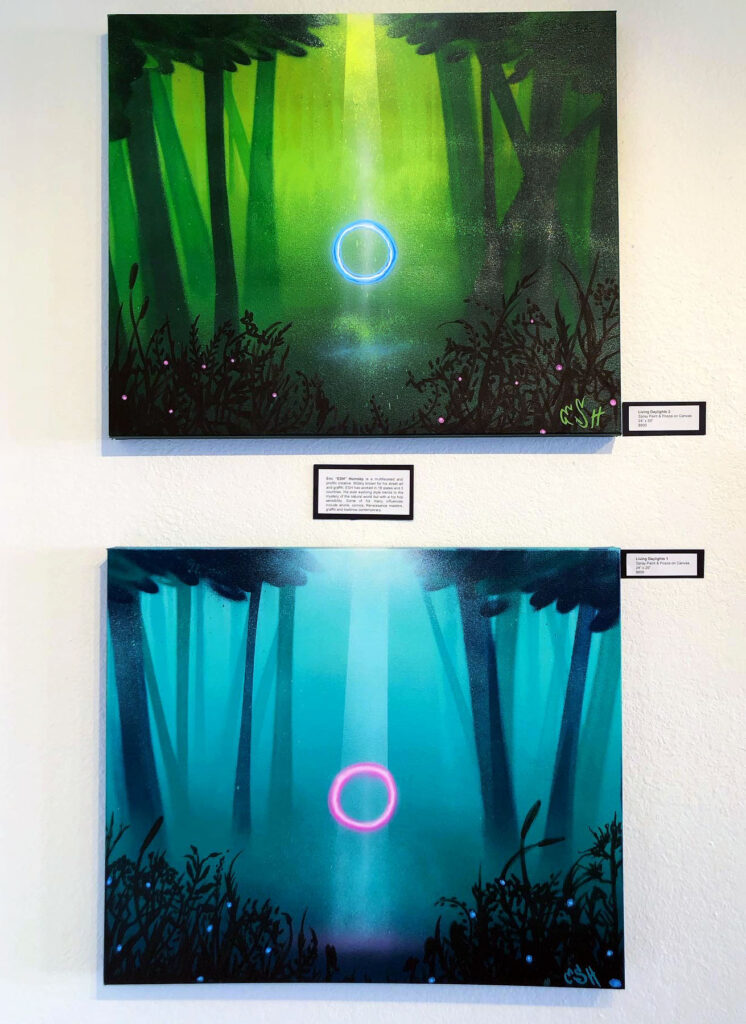
Eric “ESH” Hornsby, “Living Daylights 1″and “Living Daylights 2”

Adam Christopher Reed, “The Judge”

Nikita Rosalind, “Peace in the Wild Waves”

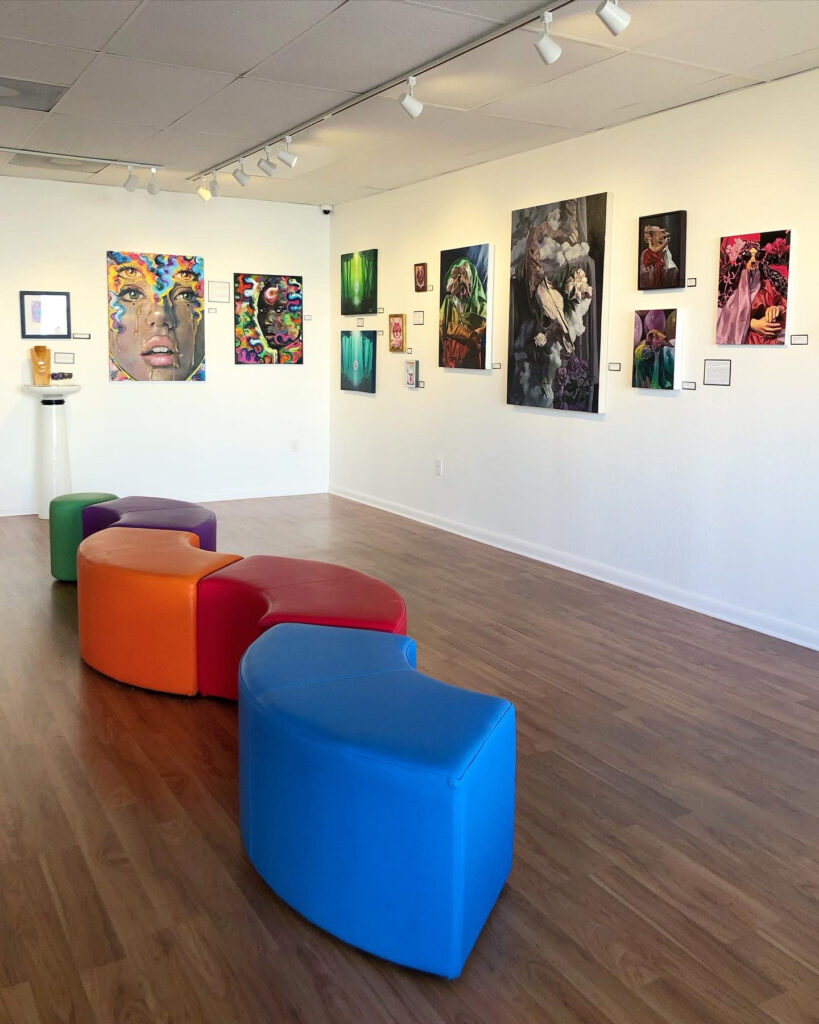
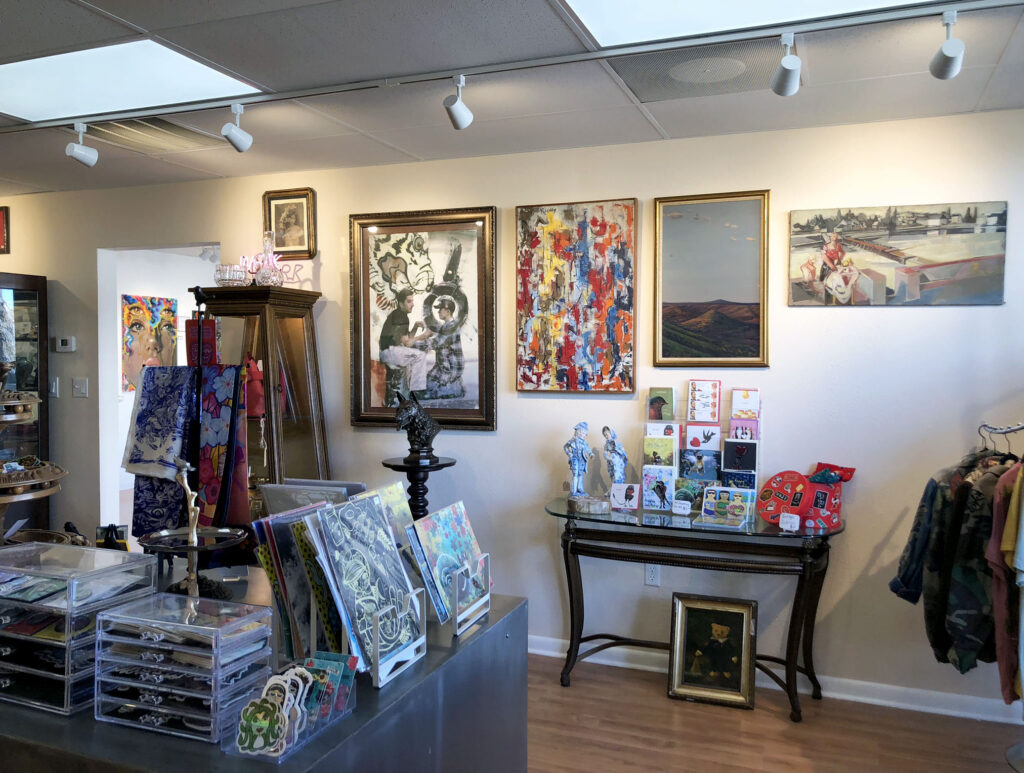
The Werk Gallery is an exciting new space in St. Pete that hosts monthly exhibitions in one half and the owners’ curated mix of vintage and modern items in the other. The photos above are from Shiny & New, the first gallery’s first show.

Artists from this exhibition pictured above- Adam Christopher Reed, Nikita Rosalind, and Eric “ESH” Hornsby

Currently the gallery is showing Rite of Spring, featuring artists Kenny Jensen, Nathan Beard, Samson Huang, Laura Spencer (Miss Crit), John Gascot, and Leafmore Studios (Becca McCoy and Justin Groom).

The gallery is open Thursday- Sunday from 12-5 pm.

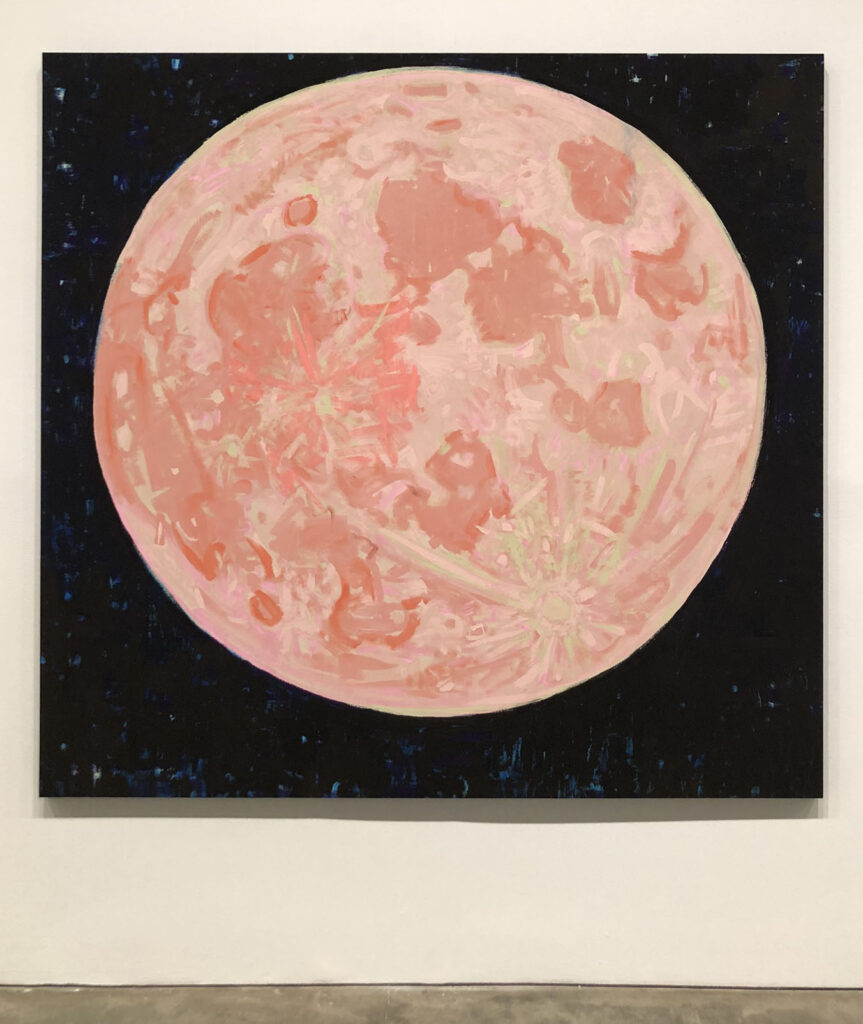
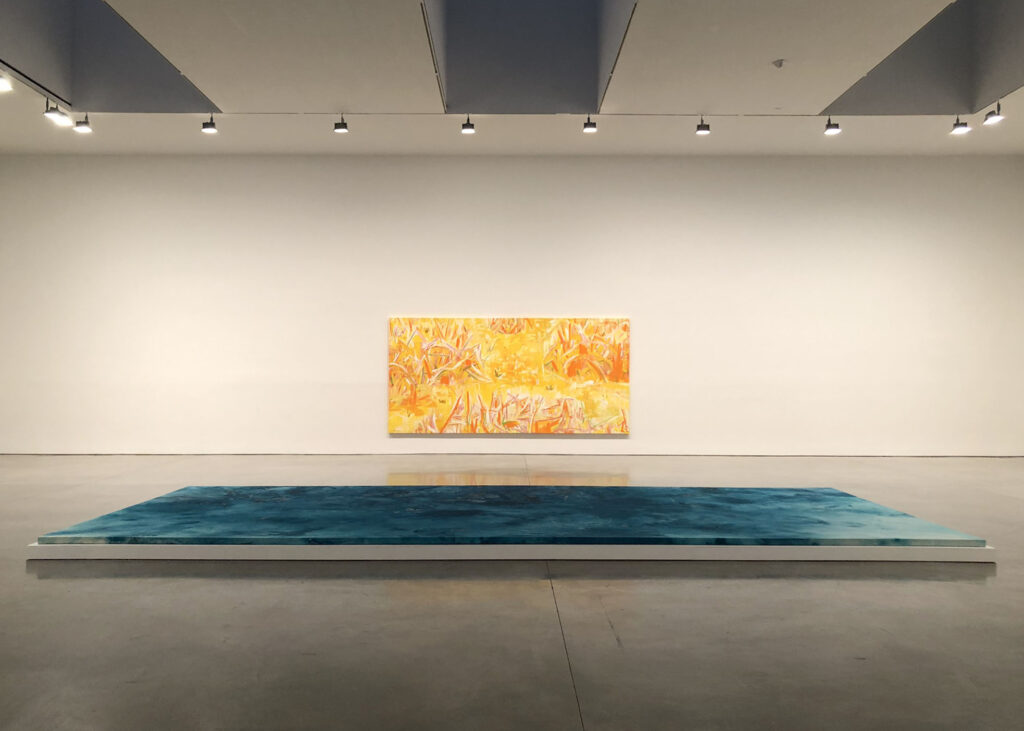
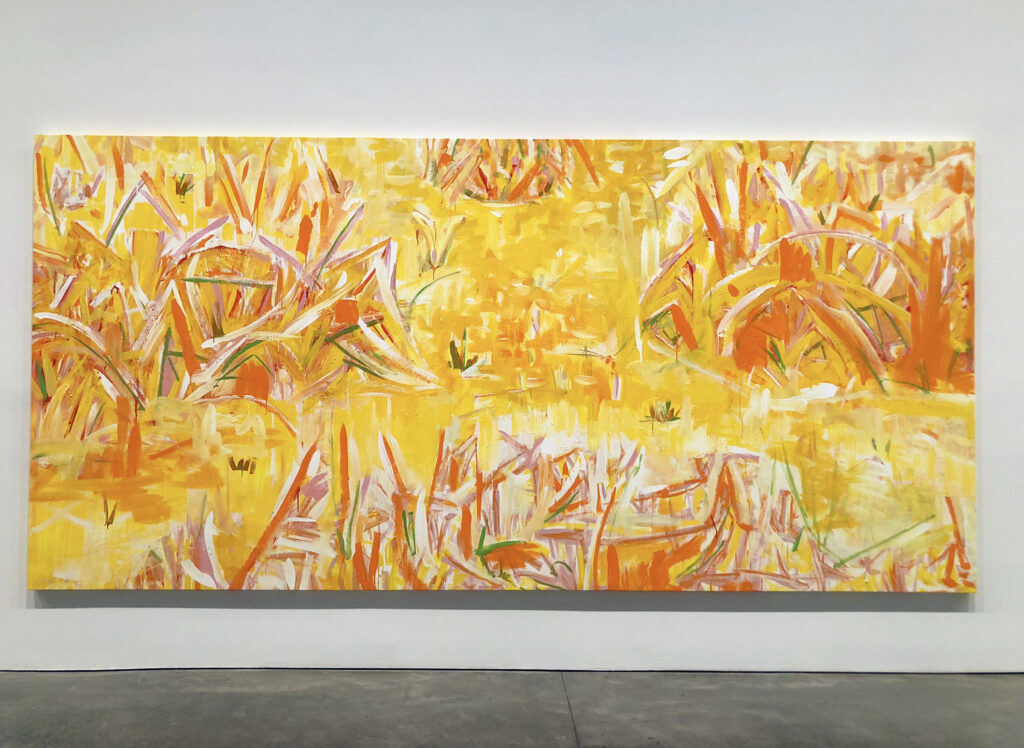
Mar 162023
 

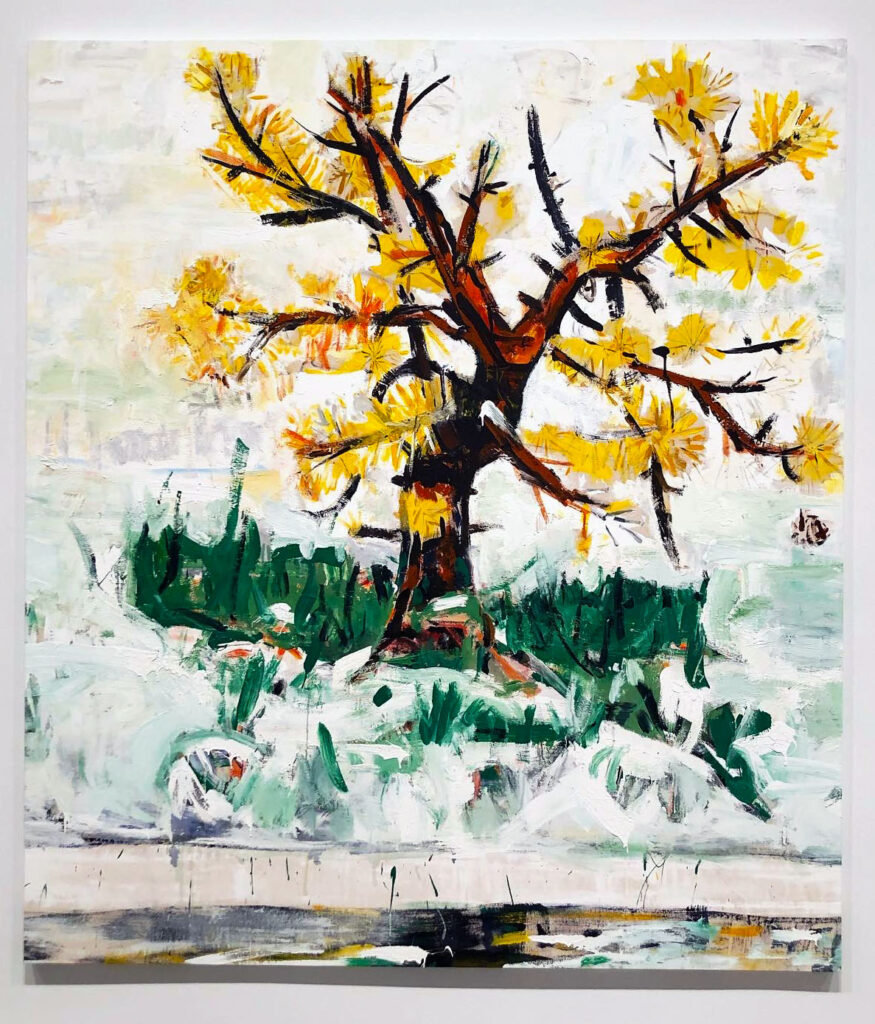
Cy Gavin, “Untitled (Yellow pine),” 2023

Cy Gavin, “Untitled (Crossroads/meadow), 2022

Cy Gavin, “Untitled (Crossroads/meadow), 2022

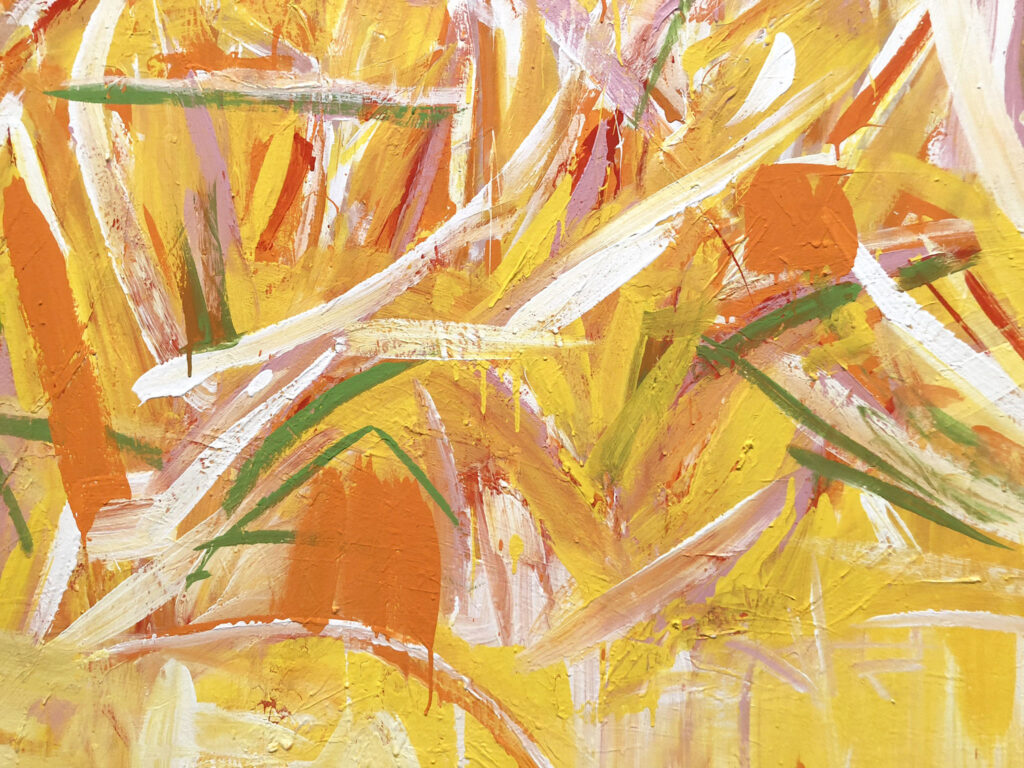
Cy Gavin, “Untitled (Crossroads/meadow), 2022 (detail)

It’s the last week to see Cy Gavin’s painting exhibition at Gagosian’s 21st location in NYC.

From the gallery’s press release-

Gavin’s landscape paintings transmute subjective responses to specific places into expansive works with striking palettes and fluid, gestural brushwork. Composed in dimensions that are in keeping with the scale of experience, these paintings interpret the sites and processes of the natural world. In this body of work, Gavin concentrates on subjects he finds in the vicinity of his studio in New York’s Hudson Valley. He proposes a conception of landscape in relation to his status as a citizen and steward of the land, developing ways to explore themes of growth, renewal, and belonging.

Gavin’s paintings respond to the land as he finds it, which he endeavors to preserve and rewild. Made following the artist’s move to his current studio in early 2020, these works are also undergirded by the tensions of our time, which are marked by periods of solitude and upheaval.

Operating both as a gestural abstraction and as a painterly interpretation of a patch of ground near his studio, Untitled (Crossroads/meadow) (2022) depicts the intersection of paths bordered by tall grass in a fiery palette dominated by yellows, oranges, and pinks, evoking the blazing heat and brightness of the late summer sun. Along with the traditional symbolism of directionality and decision-making that is inherent to crossroads, this view presents a previously manicured lawn that the artist allowed to regrow into a meadow, with mown paths allowing access through it.

The verdant Untitled (Paths in a meadow) (2022) revisits the motif, placing the viewer low to the ground so that burgeoning grass and wildflowers divide the picture plane. Untitled (Paths, crossing—blue) (2022) is a nocturnal scene that conveys the enveloping darkness of a moonlit night. Gavin composed the painting with shades of blue that range from the diffuse washes over raw canvas in its foreground to dark, opaque passages that demarcate a tree line and open up to a star-filled sky. In a related palette of blues, Floor Painting #1 (Natural spring) (2023) is a mural-size work inspired by the dynamic waters of a spring. Displayed horizontally, the painting’s surface conveys the experience of looking down into the roiling currents, light variably revealing its depths and movements.

The themes of boundaries and borders are also prominent in Untitled (Rhododendron border) (2022), a painting in which sweeping brushstrokes describe the leaves of a woodland shrub on a dark ground, beyond which nothing can be seen. Its opacity expresses its function: the privacy achieved by a hedge the artist sited along the thoroughfare adjoining his property.

Other conceptions of time, place, and growth emerge in Untitled (Baldcypress) (2022), a painting in complementary hues that expresses the robust growth of one of the many saplings that Gavin has planted on his property. Outside its current natural range, this ancient species of tree once thrived in New York State, with this specimen now brought back to the area. Reflecting a mix of natural forces and the history of human interventions that defines the land, Untitled (Grass growing on a weir) (2022) depicts currents of water as they pass over the concrete slabs of a former dam that is now fully submerged. Simultaneously revealing and concealing visual information, the painting exists as an amalgam of past and present that defines the specificities of this place.

This exhibition closes 3/18/2023.

Mar 102023
 

Bonam Kim, “Untitled (401 Suydam Street), 2022”, Dollhouse miniatures, taxidermy pigeon, wood, paint and “Can’t Stand Up For Falling Down”, 2018, wood, screw, silicone

Bonam Kim, “Untitled (401 Suydam Street)”, 2022, Dollhouse miniatures, taxidermy pigeon, wood, paint

Bonam Kim, “Untitled (Classroom)”, 2022, Dollhouse miniatures, wood, paint, paper

Bonam Kim, “Untitled (Classroom)”, 2022, Dollhouse miniatures, wood, paint, paper

Bonam Kim, “Untitled (1990-2005)”, 2022, Wall clock, dollhouse miniatures, wood

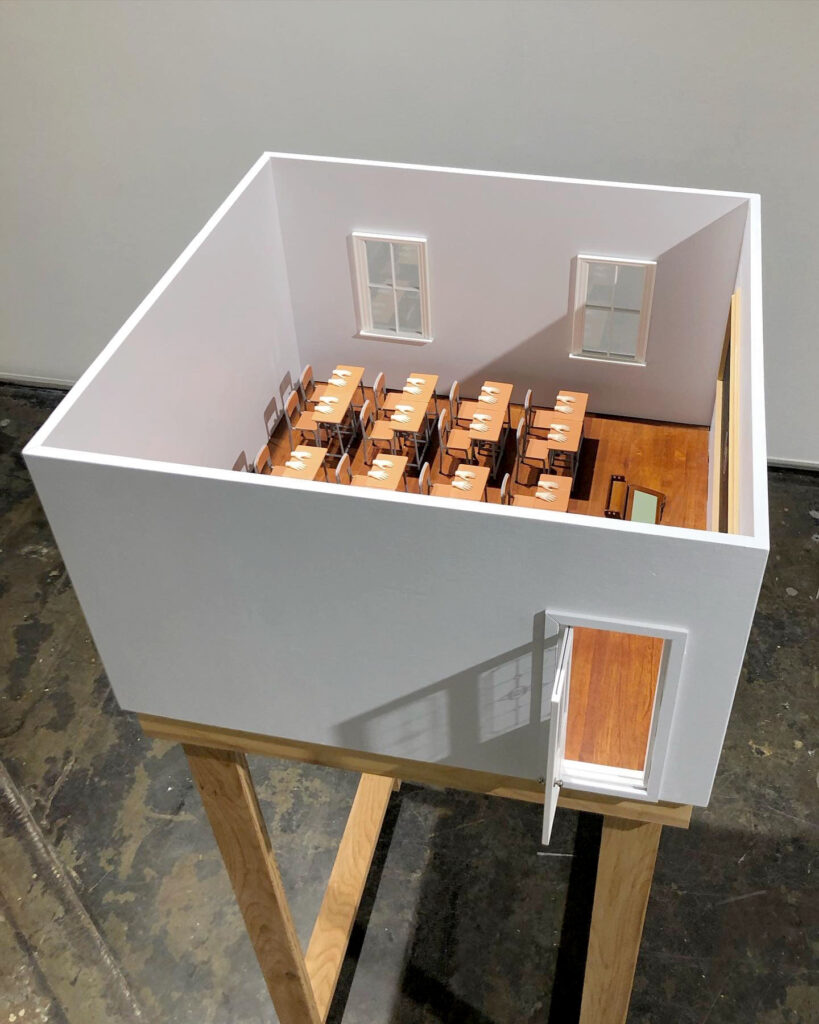
It’s the last weekend to see Bonam Kim’s GOOD JOB WELL DONE, at A.I.R. Gallery in Brooklyn. The collection of sculptures are each based on events in Kim’s life and are incredible creations.

From the press release-

Kim grew up with her brother’s architectural models and drawings scattered around their house. Captivated by the relationship between model and actual space, she gained an acute sense of her spatial surroundings. This sensibility, combined with her love of making things with her hands, led her to constructing miniatures of her world. These objects invite us to navigate not only the spaces she has occupied physically, but also the psychological space of her experiences and memories. By manipulating scale and taking a bird’s-eye view perspective, Kim reclaims power over the past and present. Works like Between Dream and Dark and Can’t Stand Up For Falling Down playfully explore the frustrations of cross-cultural exchange, while Untitled (April 2, 2020) and Untitled (203 Harrison Pl) evince feelings of isolation and accumulation during the pandemic era.

In Untitled (Classroom), Kim recreates a typical classroom from memory. Within it she presents us with some of the artifacts of the post-war South Korean educational system: politely folded hands are given a “stamp of approval” on the blackboard, commended for their conformity. Kim continues this examination of the way architectural spaces regulate human behavior in Untitled (401 Suydam Street), a model of the artist’s bedroom. She restages an event in which her apartment’s ceiling had become infested by pigeons, eroding her sense of personal space and producing an uneasy awareness of surveillance—of being observed at her most intimate by an other.

Untitled (1990-2005) contends with a traumatizing childhood experience where Kim suffered a severe hand burn which led her to have multiple surgeries over an extended period of time. These memories led her to grow averse to going into spaces that brought forth memories of the hospital’s formal qualities, such as hair salons. With the piece she distills the relation between time, space, and memory, turning a wall clock into an operating room and hair salon. This sense of spatial unease is echoed in the piece Untitled (Mexico City-Seoul), which models the circumstances of renewing her visa in the middle of the 2020 pandemic. Having to ping-pong between Mexico and Seoul without knowing when she would be able to return to the United States made her reflect on the arbitrariness of the system, which is mirrored in the piece by an embassy office held within a lottery box, pointing to a bureaucratic opacity that leaves the user in a sort of Kafkaesque limbo.

This exhibition closes 3/12/23.

Mar 092023


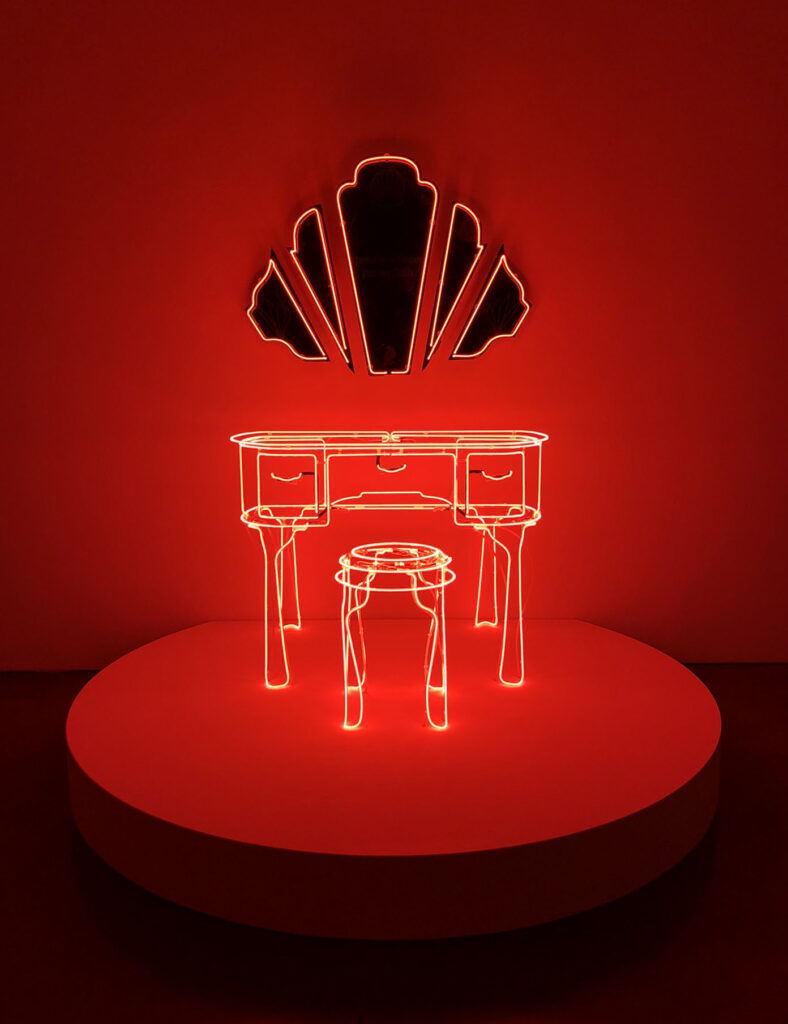
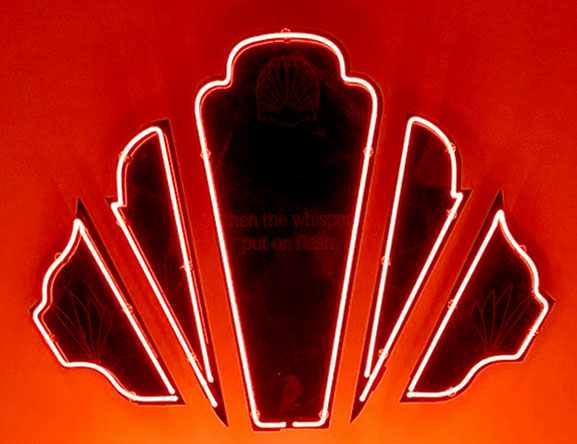
Ja’Tovia Gary “Citational Ethics (Zora Neale Hurston, 1943)”, 2023, wood, neon and engraved obsidian

Ja’Tovia Gary “Citational Ethics (Zora Neale Hurston, 1943)”, 2023, wood, neon and engraved obsidian (detail)

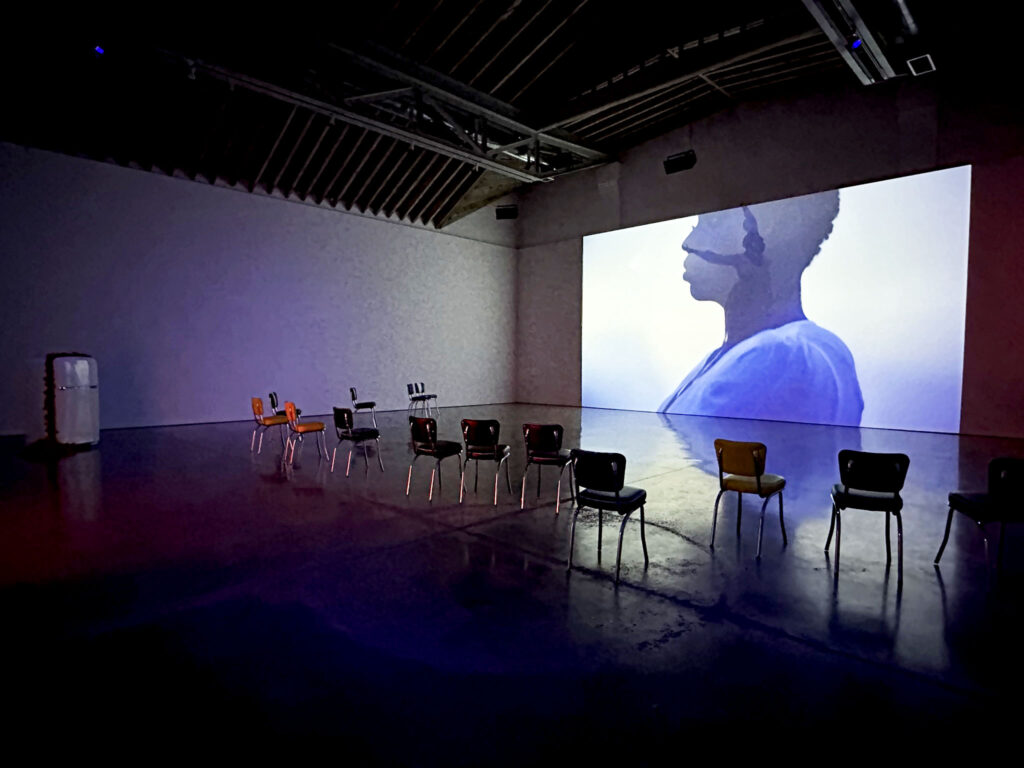
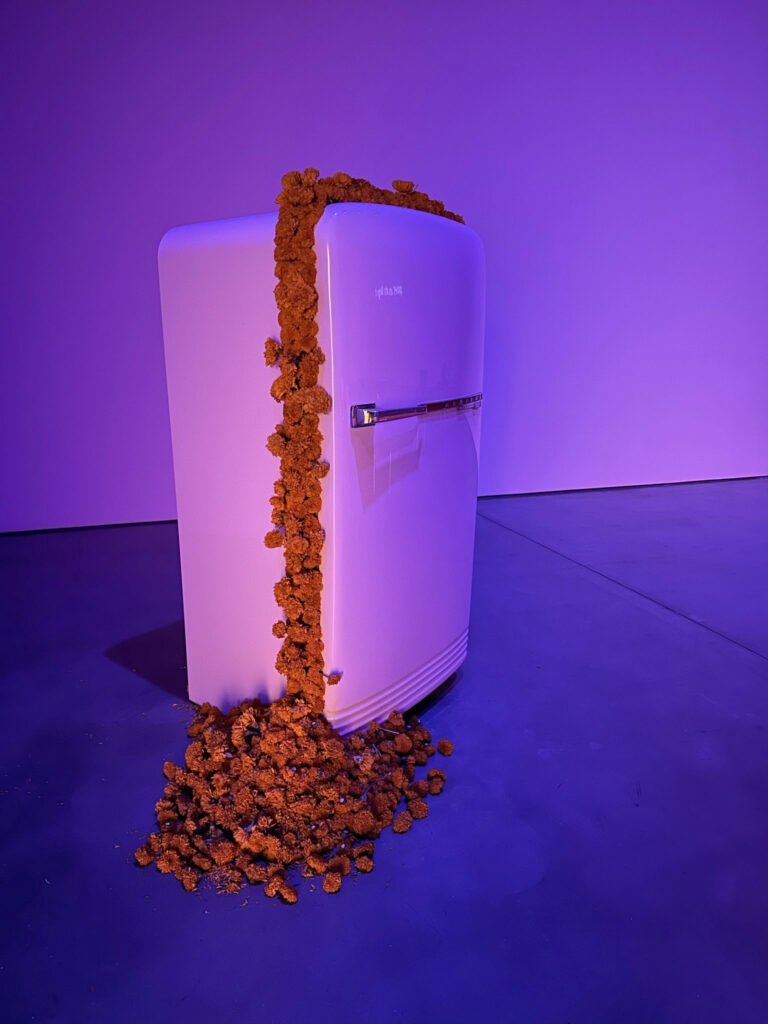
Currently at Paula Cooper Gallery in NYC is Ja’Tovia Gary’s You Smell Like Outside…, an exhibition that centers around her 2023 film, Quiet As It’s Kept, and includes two new sculptures.

From the press release-

The artist continues her practice of interrogating and re-contextualizing multiple archives, concerning herself with the power and responsibility of language and the radical possibilities of narrative. The exhibition title You Smell Like Outside… is a Black Southern phrase that foregrounds the artist’s specific cultural origins with discursive traditions that invoke an interior knowledge. Inspired by Toni Morrison’s 1993 Nobel Laureate lecture, Gary attempts to heighten the contradictions between a living and a dead language. Notions of domesticity, interior and exterior, and the conflict between perception and being perceived are explored in the show.

With a filmic and sculptural language uniquely her own, Gary eloquently intervenes into foundational renderings of Black life to expand the conversation and the possibilities of being. The artist considers what is destabilized when we include the cinematic within the category of language, asserting: “if we are to ensure the future efficacy of storytelling, we must boldly and audaciously insist upon new narrative forms.” Quiet As It’s Kept (2023) is a contemporary response to The Bluest Eye, Toni Morrison’s first novel published in 1970. Set in Ohio in 1941, the book is an evocative illustration of the everyday particulars of colorism and its ravaging effects on the intramural. Themes of embodiment, psychoanalysis, and beauty are explored in both the source text and the answering film. Instinctual and eviscerating, the film encourages viewers to make meaning that is rooted in the subjective and examine their position within looking relations.

Following Gary’s critically acclaimed films THE GIVERNY DOCUMENT (2019) and An Ecstatic Experience (2015), Quiet As It’s Kept (2023) is an intimate bricolage of vintage Hollywood, direct animation, original super 8 and 16mm film footage, and documentary conventions. Mediating on the gaze and Black women’s particular embodied realities, Gary also re-contextualizes contemporary social media footage. Creating conceptual links for each viral clip to a character, event, or thematic element from Morrison’s story, the film emphasizes questions around the book’s themes of internalized and externalized anti-blackness in contemporary culture. Situated within an immersive installation with domestic elements, the film asks the viewer to employ an oppositional gaze that allows for narrative structures that run counter to those of the mainstream.

High John de Conquer came to be a man, and a mighty man at that. But he was not a natural man in the beginning. First off, he was a whisper, a will to hope, a wish to find something worthy of laughter and song. Then the whisper put on flesh. [1]

The sculptures in Gary’s Citational Ethics series illuminate the words of Black women through the medium of neon, with the title of each work serving as a citation for the quote. Citational Ethics (Zora Neale Hurston, 1943) cites Zora Neale Hurston’s 1943 essay on High John de Conquer, a Southern folk trickster figure who brought joy, laughter, and strength to enslaved people while continuously evading capture. The sculpture is a vanity mirror set which gestures towards a speculative future past. Comprising a desk, stool, and fan-shaped obsidian mirror, the object invokes the Harlem Renaissance, Art Deco, and southern Black Hoodoo lore. A departure from the previous works in the series, the quote is etched into the highly polished black stone said to bring about visions through gazing, while the furniture is rendered in neon. Drawing the viewer in to read the words written in the mirror while bathed in red light, the sculpture summons an intimate encounter with the self and spirit.

[1] Zora Neale Hurston, “High John de Conquer,” in The American Mercury, October 1943, pp. 450-458

This exhibition closes 3/11/23

Mar 092023
 

It’s the last few days to see Jean-François Bouchard’s Exile from Babylon at Arsenal Contemporary in NYC. The film in the back room of the gallery gives you a chance to see the people who are missing from the photos. Alone or in groups, they drift between the three screens among the vast open space of the desert.

From the press release-

For this new body of work, the Canadian artist documented a squatters’ camp in California. Driven by homelessness, drug addiction or libertarianism, some Americans choose to reject modern society – Babylon as they call it – to form unlikely communities of squatters and wanderers seeking collective refuge. On a decommissioned military base in the desert, the community photographed by Bouchard lives without any form of local government and without any basic services such as running water, electricity, or garbage removal. On inhospitable grounds, they established themselves in shanties, makeshift tents, shipping containers, crumbling recreational vehicles, and even dens dug into the ground.

For Exile from Babylon, Bouchard has elected to represent the community’s grueling reality metaphorically through a series of still life photographs of trees. Each is adorned with garbage and debris that were either thrown at them or carried through the harsh desert winds. Collectively, these surreal postapocalyptic scenes testify to vast disparities that exist in our modern societies and the quest of fascinating characters for a sense of fulfillment derived through absolute freedom and how it is acquired at a great personal sacrifice.

This exhibition closes 3/11/23