Jul 062026
 

Mexican artist Frida Kahlo was born today, July 6th, in 1907. She painted many self-portraits, including the one pictured above, Me and My Parrots (Yo y mis pericos), from 1941. The painting was on view as part of the 2020 exhibition Vida Americana: Mexican Muralists Remake American Art, 1925–1945 at the Whitney Museum in New York.

Her work can currently be seen in the exhibitions Frida: The Making of an Icon at the Tate Modern in London and Frida and Diego: The Last Dream at the Museum of Modern Art in NYC.


Jan 222026
 

“Untitled Club Painting”, 2015, Acrylic on canvas

“Untitled Gutter Painting”, 2014, Acrylic on canvas

“Untitled Black Door Painting (304) “, 2013, Acrylic on canvas

“Untitled Yard Painting (Albert)”, 2015, Acrylic on canvas

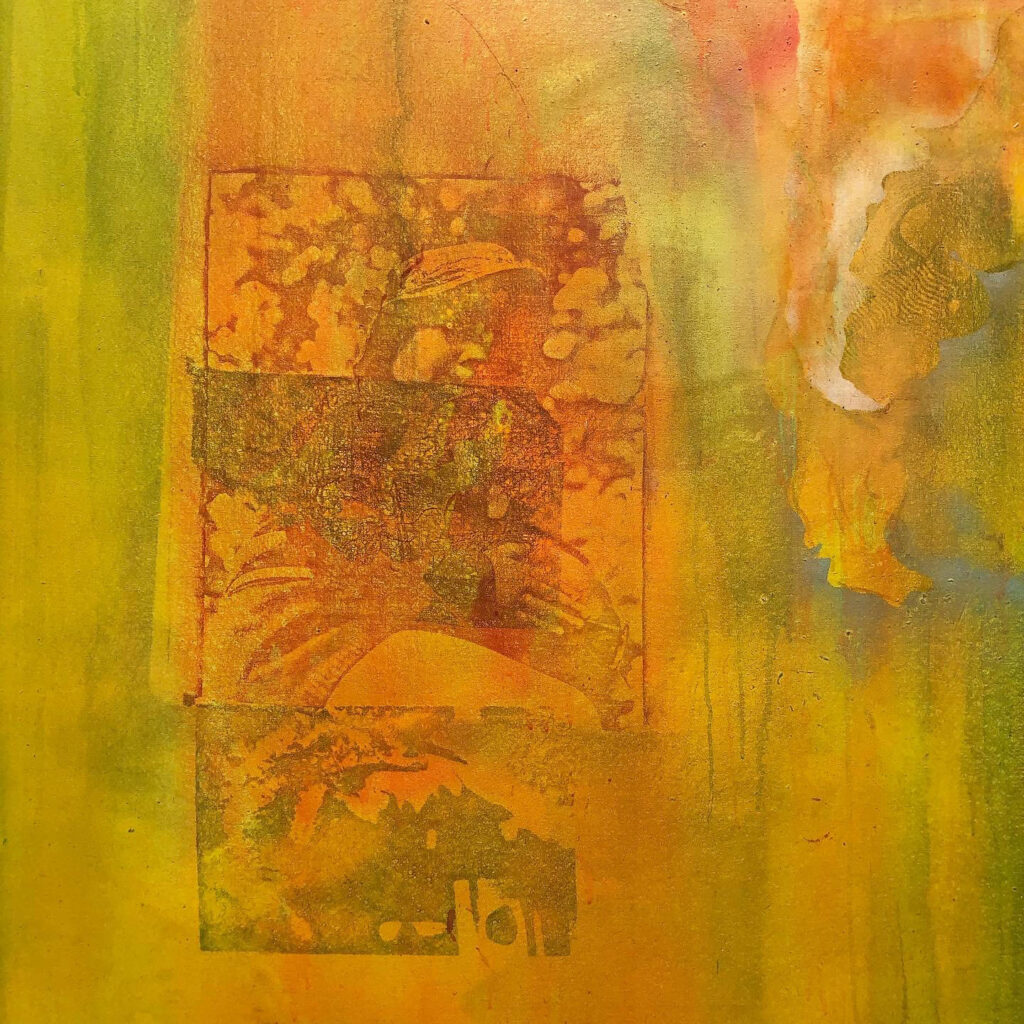
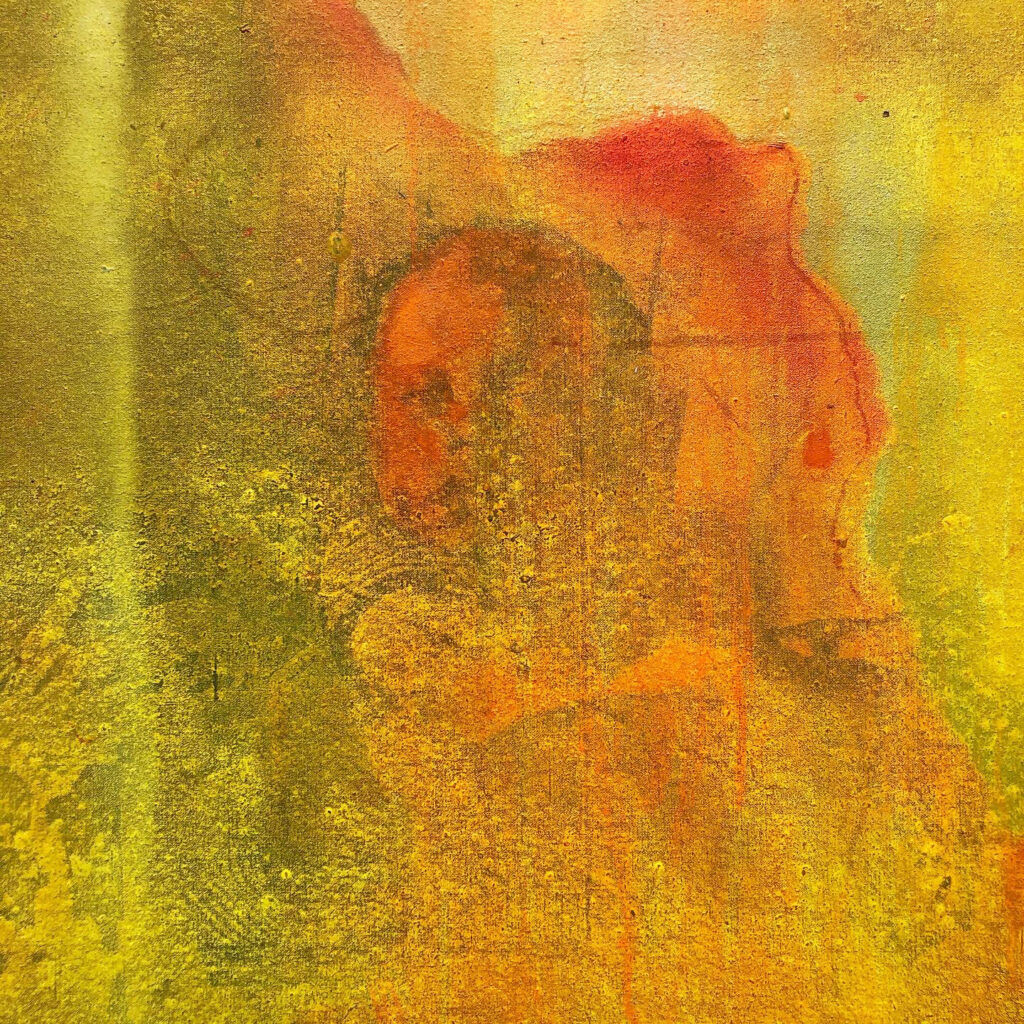
These contemplative paintings are from This Must Be the Place, Newcastle-based artist Narbi Price’s 2017 exhibition at Vane Gallery.

From Vane’s website about the exhibition:

Narbi Price’s work involves journeys to specific places that have witnessed a range of events – variously historical, famous, personal or forgotten.

He researches the precise location of a chosen event, ranging from significant moments in music, film and TV, whimsical acts through to places of violence and death amongst others. Working from photographs taken at the site, he makes paintings in the studio focusing on the abstract, formal and painterly qualities of the resultant images.

This process removes the conscious choice of subject matter; he must work with whatever is present at the spot. Whilst clearly photographically derived, the paintings use the language of abstraction to simultaneously acknowledge and disrupt the representational image. The paint is transparent, opaque, glossy, matt, dilute and impasted, often within the same work. As viewers, we are not immediately made aware of the specific histories of the sites and are given space to wonder about the multiplicities of events that might have taken place, an effect heightened by the painting method. Our experience of the work shifts as we become aware of the provenance of the depicted sites.

Below are the stories behind the locations for the paintings in this post (in bold type). All of the paintings in the exhibition can be found on Vane’s website.

Nov 272023
 

Tonight is the penultimate full moon of the year, so it seemed like a good moment to post this painting, The Real Realities 2, 2013, by Friedrich Kunath. It was on view in 2019 at the Marciano Art Foundation in Los Angeles which after abruptly closing due to a labor dispute, appears to have reopened.

The Art of Surviving November, Kunath’s inaugural solo exhibition at Galerie Max Hetzler’s London location, and consisting of a new body of paintings, is on view until 1/6/24.


Mar 292023
 

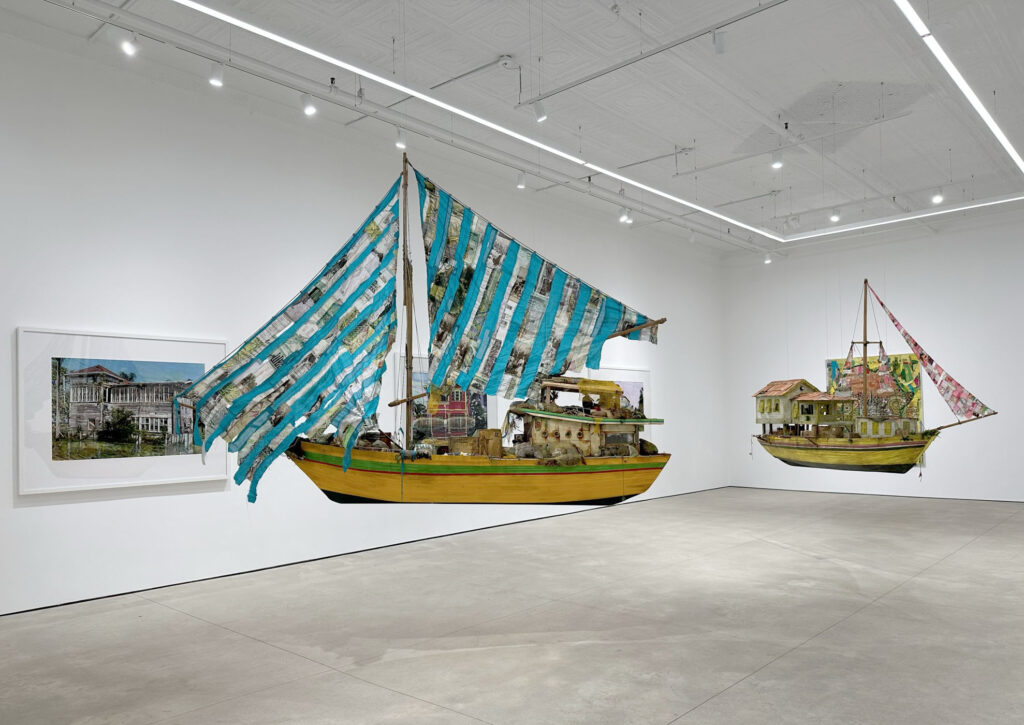
Hew Locke, “Listening to the Land” room view
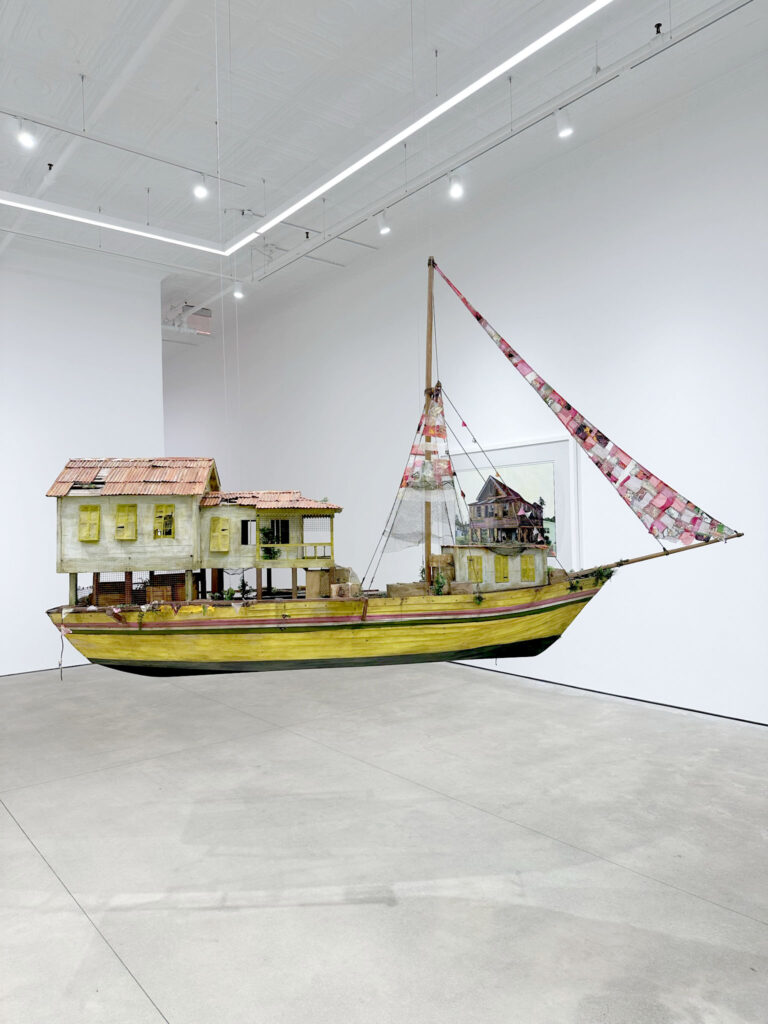
“The Relic”, 2022
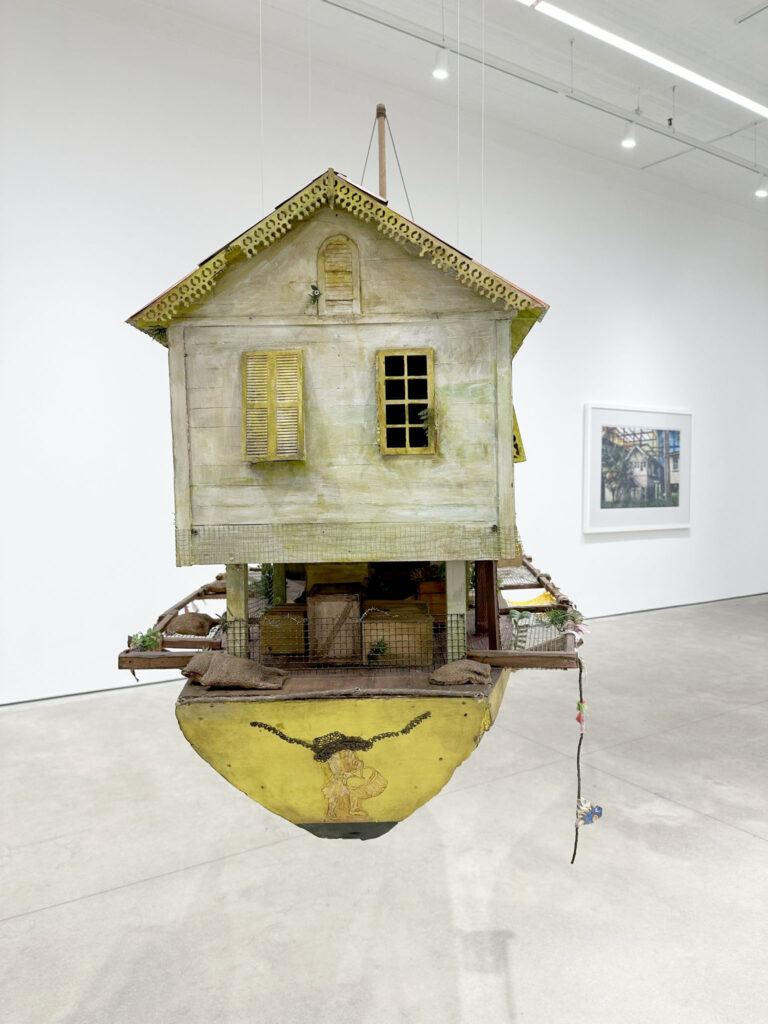
“The Relic” 2022 (another side)
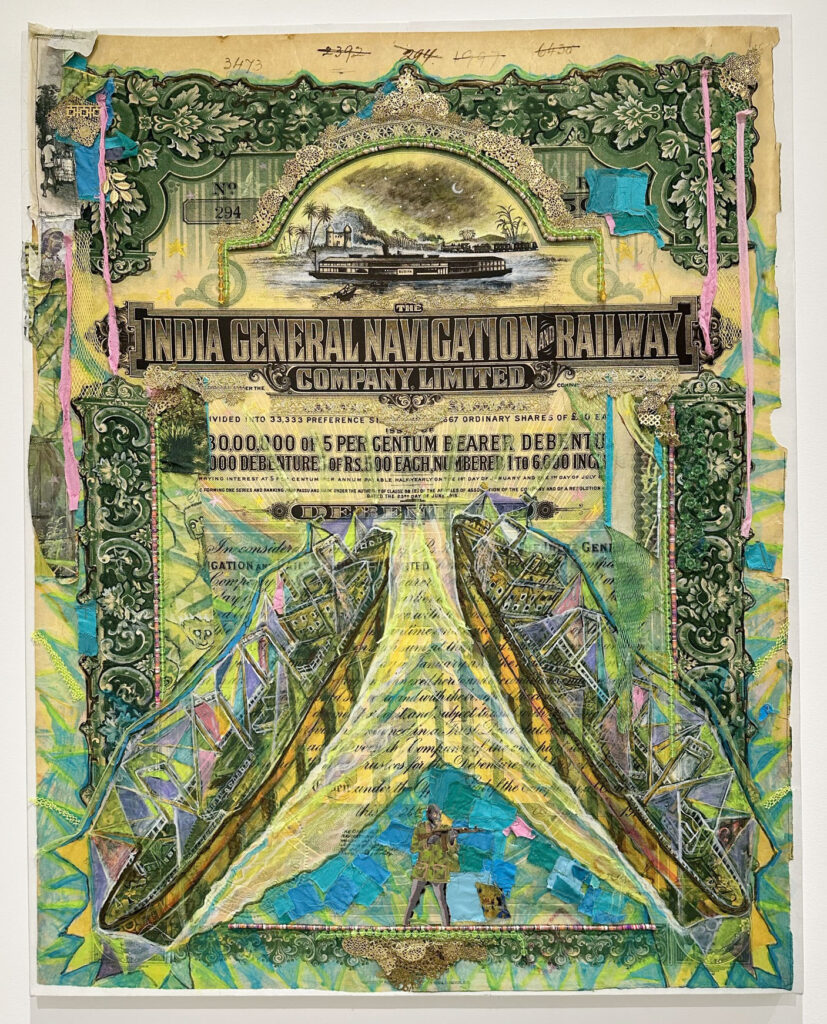
“Raw Materials 3”, 2022
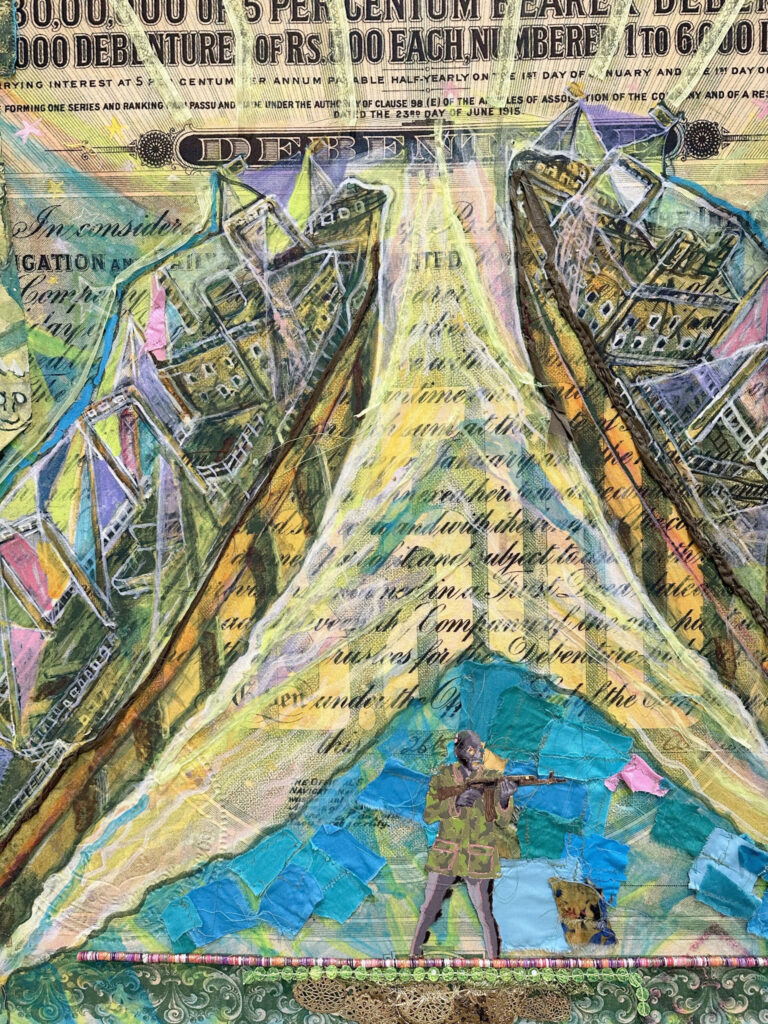
“Raw Materials 3”, 2022 (detail)
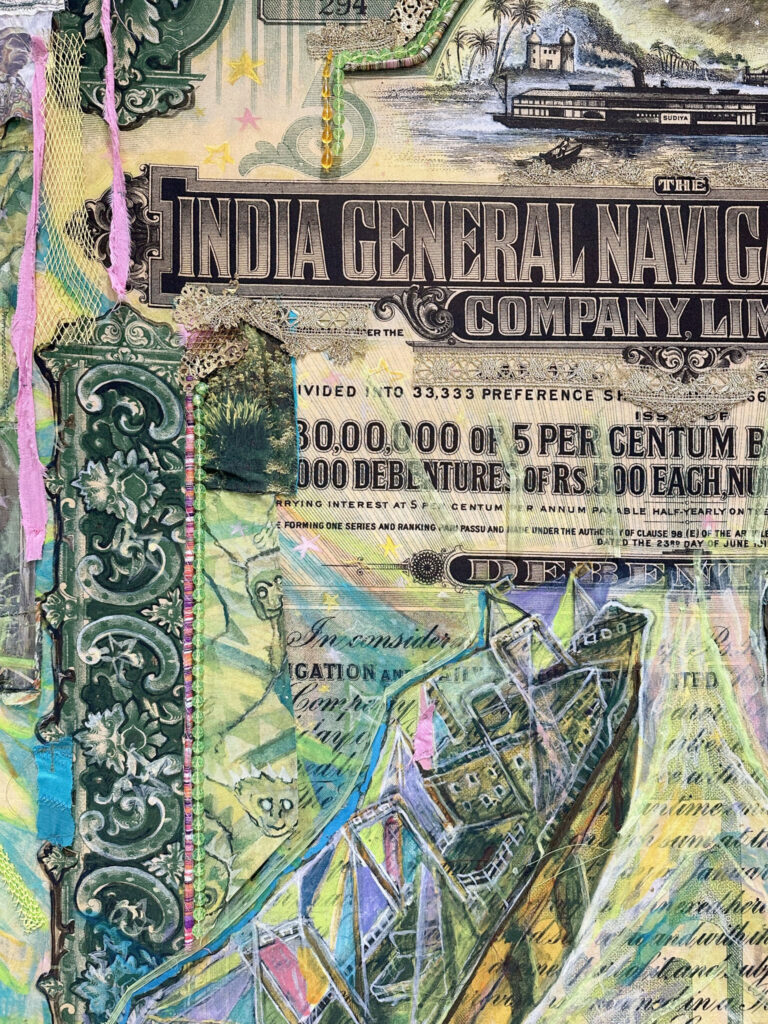
“Raw Materials 3”, 2022 (detail)
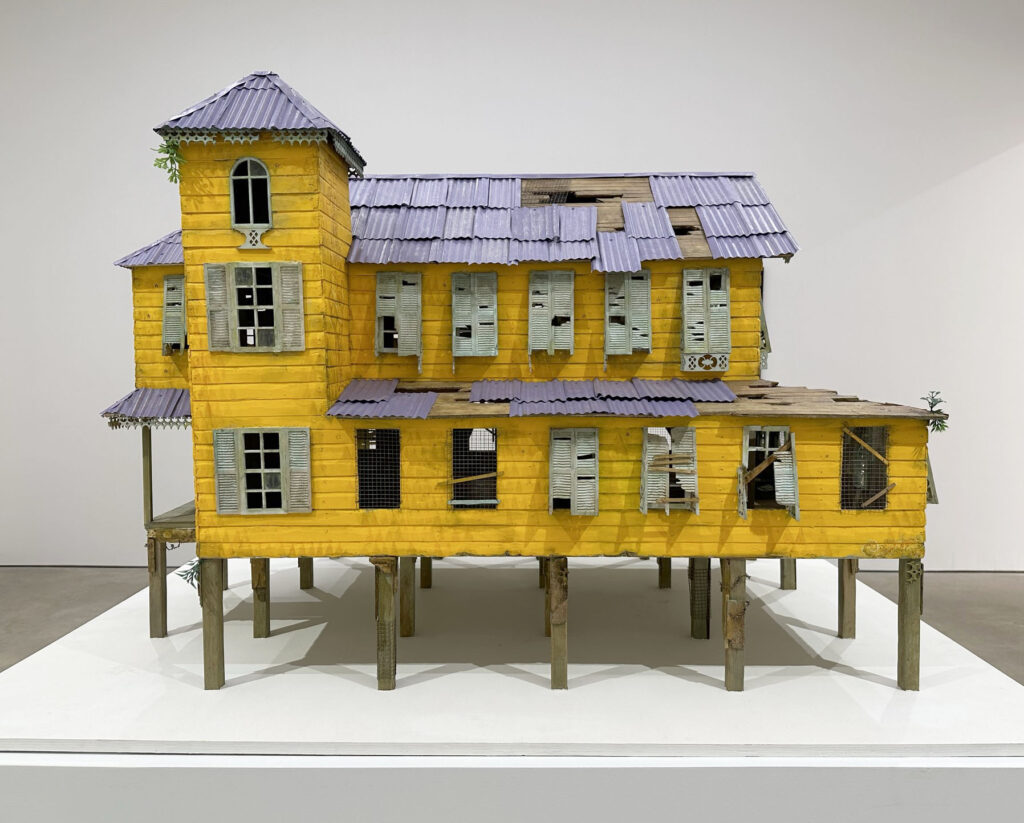
“Jumbie House 2”, 2022
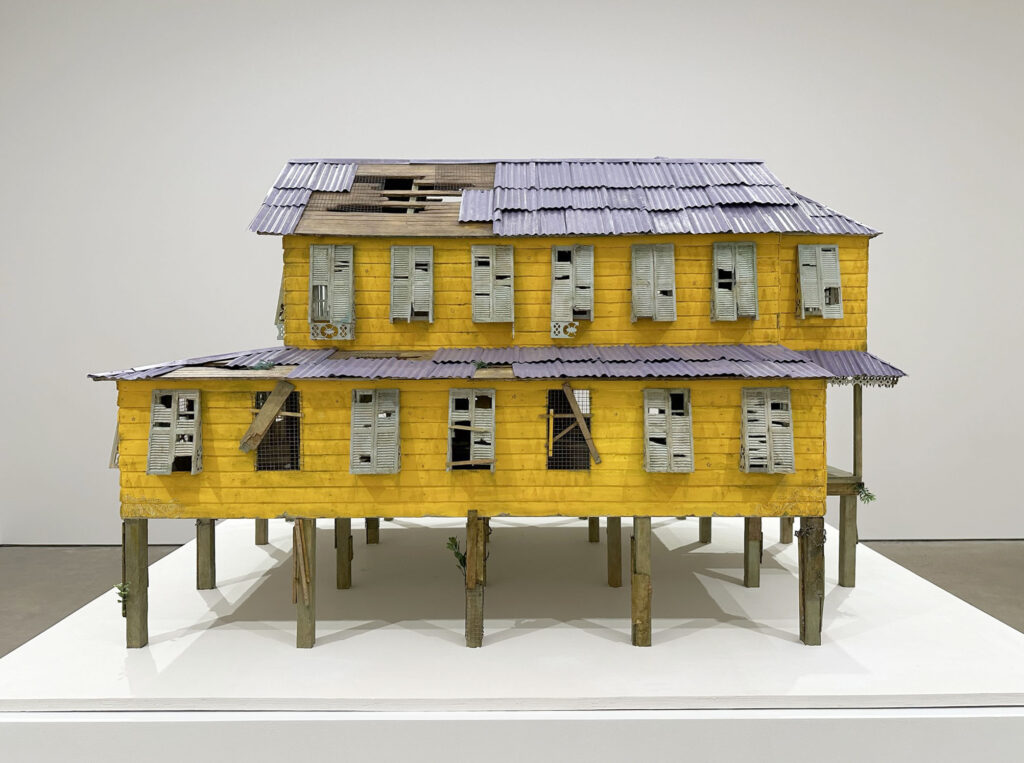
“Jumbie House 2”, 2022

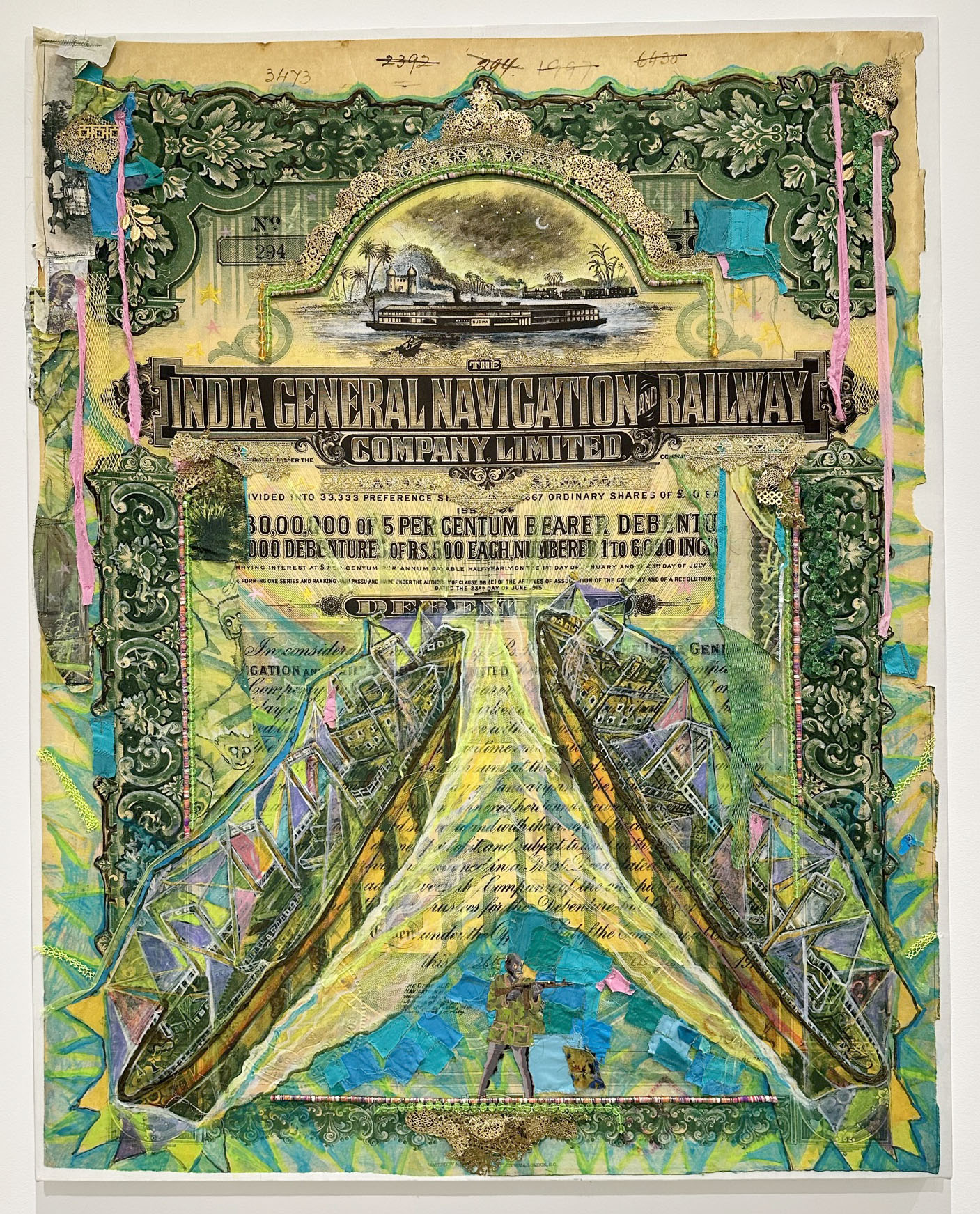
For Hew Locke’s exhibition, Listening to the Land, at P.P.O.W. he has created intricate sculptures and paintings that are fascinating in person.

From the press release-

Locke is known for exploring the languages of colonial and post-colonial power, and the symbols through which different cultures assume and assert identity. Furthering the themes explored in his celebrated commission The Procession at Tate Britain, and his concurrent installation Gilt on the façade of The Metropolitan Museum of Art, this exhibit engages with contemporary and historical inequities while reflecting on the landscape and history of the Caribbean. The exhibition draws its title from a poem by Guyanese political activist and poet Martin Carter which situates itself between two opposing forces of the landscape – sea and forest. Locke’s show features new sculptures and wall works with recurring motifs of stilt-houses, boats, memento mori, and share certificates referencing tensions between the land, the sea, and economic power. Reflecting on these links, Locke notes, “The land was created to generate money for colonial power, now the sea wants it back.”

Translating to ‘land of many waters,’ Guyana and its physical, economic, and political landscape serve as one of the primary sources for Locke’s work. Having spent his childhood in this newly independent nation, the artist witnessed first-hand an era of radical transformation. Now, the country teeters on the precipice of an oil boom and is one of the world’s fastest growing economies. Juxtaposing personal meditations on the climate crisis with political commentary on the history of a globalized world, Locke contemplates the ways in which colonies were exploited to accumulate capital, and observes how Guyana’s economic future lies in the exploitation of its waters. Locke’s new boat sculptures The Relic and The Survivor embody this broad worldview as the two battered wrecks drift through time and history. Evoking the fragmented and diverse legacies of the global diaspora, the boats’ patchwork sails are interspersed with photo transfers of 19th Century cane cutters and banana boat loaders, while their decks are loaded with cargo that could allude to colonial plunder, trade goods or personal belongings.

Based on an abandoned plantation house, Locke’s newest sculpture Jumbie House 2 features layered images that unveil the spirits that haunt this colonial vestige. Presented alongside are a series of painted photographs of dilapidated vernacular architecture across Georgetown and rural Guyana. Constantly under threat of being washed away by storms or rising sea levels, these crumbling structures echo anxieties surrounding climate change and historical erasure. A new series of mixed media wall works, Raw Materials, is derived from antique share certificates and bonds. Locke richly decorates the appliques with acrylic, beads, and patchwork to draw attention to the complex ways in which the past shapes the present. The image of an 1898 Chinese Imperial Gold Loan behind painted Congolese figures connects the global economy at the height of Empire to current Sino-African trade networks. In another work, a painted representation of a Nigerian Ife mask, alongside an image of David Livingstone, is layered on a French-African Mortgage Bond from 1923, connecting exploration and exploitation of African land, to current conversations surrounding the repatriation of artifacts. Taken together, the works in Locke’s Listening to the Land echo William Faulkner’s adage “The past is never dead. It’s not even past.”

This exhibition closes 4/1/23.

The Procession, mentioned above, can now be seen at Baltic Centre for Contemporary Art, in Gateshead, England until June 11th, 2023.

Gilt, also mentioned above, is on view at The Metropolitan Museum of Art until May 30th, 2023.


Aug 112022
 

cave, 2019, from Billy Childish’s 2020 exhibition remember all the / high and exalted things / remember all the low / and broken things at Lehmann Maupin’s NYC gallery.

From the press release-

For his fifth exhibition with the gallery Childish has created a body of work emblematic of his “radical traditionalist” approach. Pulling from themes found throughout art history—the bather, a lone figure in a landscape, a sunset—Childish presents intensely personal vignettes that feel archetypical, vibrating with the kinetic energy of a moment lived…

While working in a state of flow is essential to the creative process of any artist, for Childish this state represents the entirety of artistic production. Working intuitively and quickly, most of his highly gestural paintings are created in a single session without any revision. Childish is also an adept woodblock printer and he produces satirical and activist imagery with his London art cooperative, L-13 Light Industrial Workshop. His material approach to printmaking extends to Childish’s painting practice where color and line are emphasized through a flattening of each composition. His style is often compared to the expressionist painters of the early 20th century, such as Vincent Van Gogh, Kurt Schwitters, or Edvard Munch, however, for Childish, it is the embodiment of these artists’ roles within society that is most compelling. An unabashed universalist, Childish considers artistry to be the inheritance of every human being, a method to capture the expressive impulse and visualize the powerful lure of beauty.

Utterly unironic and vividly familiar, a Childish painting can be interpreted the way one might interpret a dream. In one painting, a woman swimming underwater may represent the unconscious, while in another painting, a woman wading out to a cave could represent the dark entry into the unknown. For the artist, the conceptual should never replace the humanistic—Childish states “I make a picture in the same way a child does—something ‘out there’ interests me. Making a painting of that ‘something’ then joins me with the universal creator/creation in a more intent way than just being an observer.”

Childish is currently showing new work at Lehmann Maupin’s London location until 9/3/22.


Jul 282021
 

Texas Louise, 1971

Where is Lucienne?, 1971


Where is Lucienne? (detail), 1971

Where is Lucienne? (detail), 1971

Frank Bowling’s incredible paintings are currently on view at two of Hauser & Wirth’s locations, London and NYC, reflecting the artist’s time living in both cities. The paintings above are from the New York location.

From the press release-

The exhibition charts Bowling’s life and work between the UK and the United States. Born in Guyana (then British Guiana) in 1934, Bowling arrived in London in 1953, graduating from the Royal College of Art in 1962. He later divided his time between the art scenes in London and New York, maintaining studios in both cities. London is the city where Bowling trained as a painter and achieved early acclaim. New York is the city that drew him to itself at the height of the Civil Rights movement, where he became involved in discussions of Black Art – New York was a place of fresh energy and ideas for an artist in search of new ways to make paintings.

Bowling’s transatlantic orientation reveals itself in a shift from his early engagement with expressive figuration and pop art, to an immersion in a uniquely poetic abstraction that continues to evolve even today. Visible in his work are the legacies of both the English landscape tradition and American abstract expressionism. Developing in and between two cities over the course of decades, Bowling’s exploration of light, colour, and geometry can be understood as profoundly influenced by the two great rivers of his life: he has maintained studios close to The Thames in London and the East River in New York, absorbing the brilliance of the rivers’ light into his vision. Bowling would often begin a work in one city and finish it in the other, merging the atmospheres of both. In his own words, ‘I would just roll the lot up and move. And I knew that when I got to the other end, I could roll them out again and continue to work.’

Bowling’s restless innovation on the painted plane endures in his latest works. He continues to break ground through the use of thick impasto textures, acrylic gels, collage, stitched canvas, and metallic and pearlescent pigments. The complexities of his upbringing in Guyana and his constant journeying between London and New York have only served to activate the richness of the different influences of each location. His paintings are a celebration of life lived in varying lights and colours.

Jun 232021
 

Quarantine, 2018

This painting is from Julie Curtiss’ exhibition Altered States at VSF gallery in Los Angeles in 2018.

From the press release from that show-

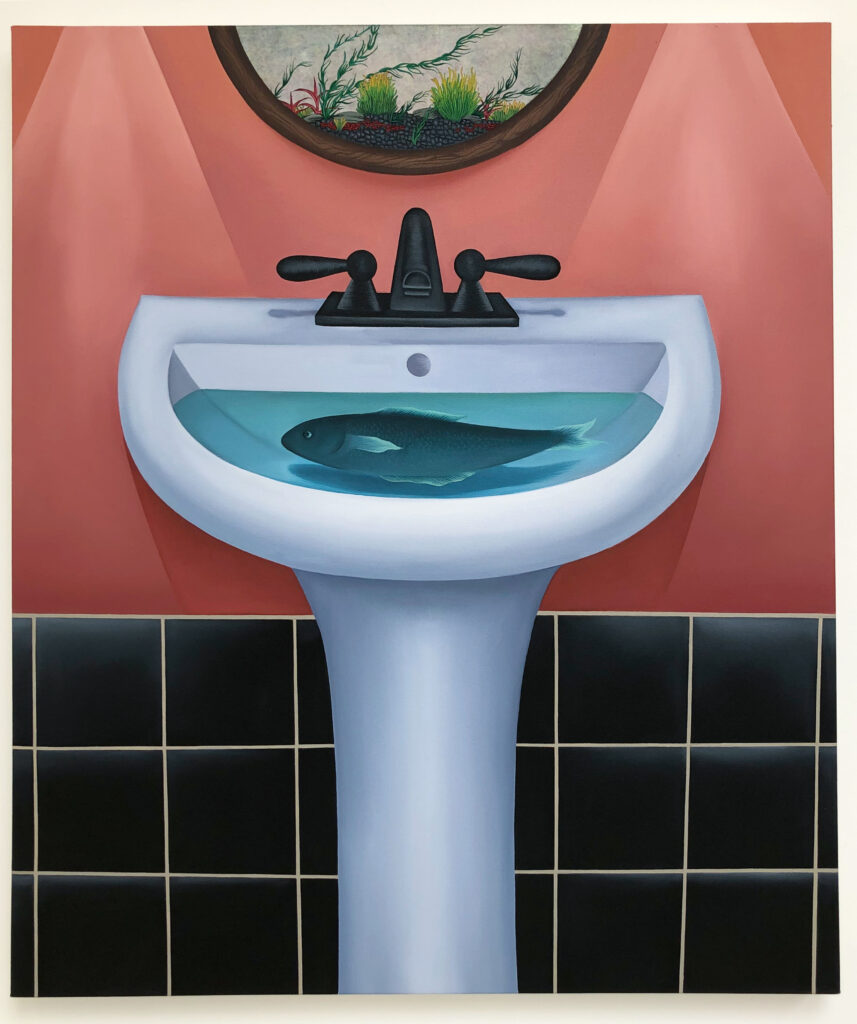
Depicting mostly female subjects in her works, Curtiss creates an undulating dreamscape where the depths of a woman’s psyche are as important and palpable as her body. Rife with swirling curvatures and oscillating lines that convey both physical movement as well as cognitive dissonance, Curtiss’ subjects are secretive and faceless, inhabiting uncanny narratives driven by the logic of dreams. Teetering between dichotomies of seduction and repulsion, feral and domestic, their countenances are strategically concealed with thick mounds of serpentine hair, clawed hands and razor-sharp nails that conjure the anatomy of cold-blooded beasts. For Curtiss’ latest series of paintings and gouaches on paper, marine imagery permeates the narratives: koi, lotuses, fishtails in lieu of feet, a lobster claw clasping a glossy manicured finger … a nod to the 1980s science-fiction film “Altered States,” whose protagonist descends into a bottomless search for the self by way of floatation tanks – sensory deprivation chambers filled with body-temperature saltwater (water being the Jungian dream symbol for the unconscious). While Curtiss invites us to dive deeper into the layered, mercurial mind of her subjects, we are inevitably faced with a reflection of our own subconscious.

She is currently showing her newer work, which includes sculptures, at White Cube Mason’s Yard, in an exhibition titled Monads and Dyads, closing 6/26/21.

Apr 042020
 

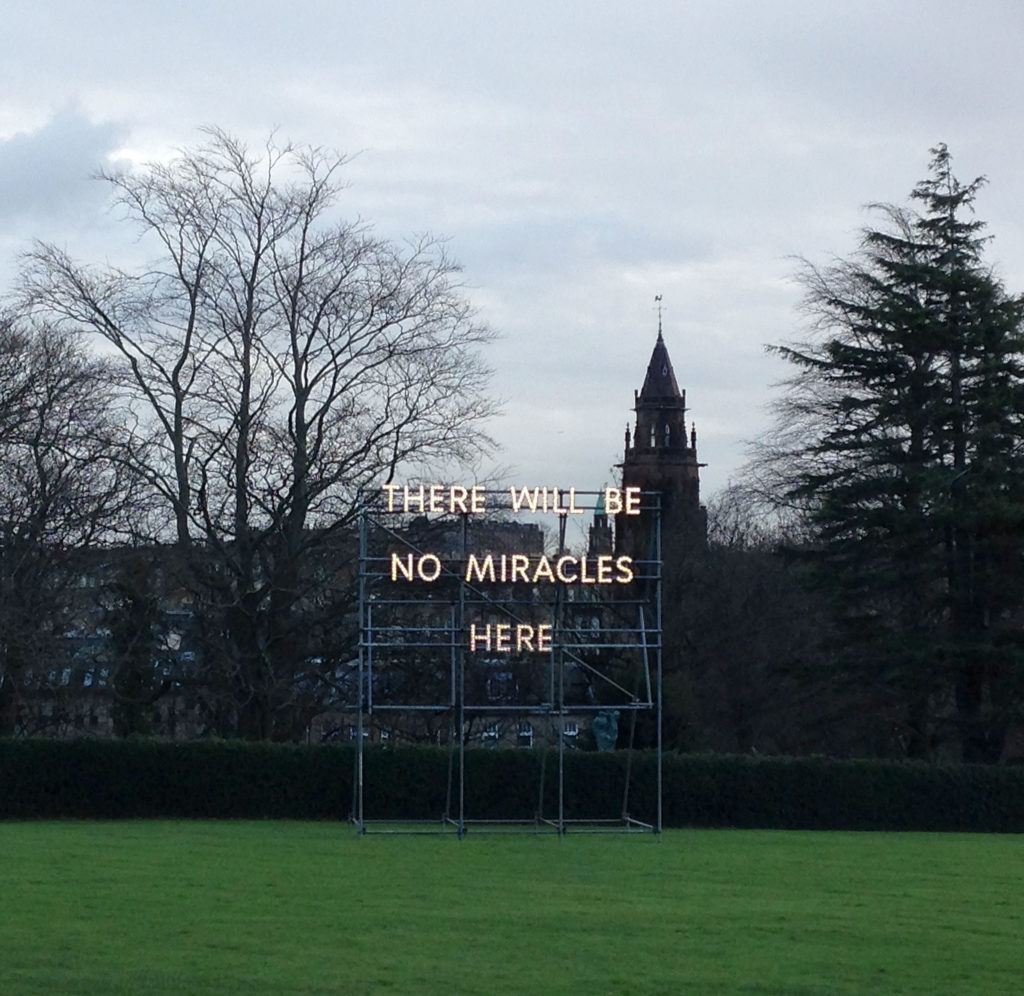
This work by Scottish artist Nathan Coley is located outside the Scottish National Gallery of Modern Art in Edinburgh.

From the museum’s website

This outdoor work by Nathan Coley proposes, on a scaffolding support six metres high in illuminated text, ‘There Will Be No Miracles Here’. This originates from a project in which Coley posted a series of public announcements around the town of Stirling. One included these words, taken from a seventeenth-century royal proclamation made in a French town believed to have been the frequent site of miracles. Coley’s practice is based in an interest in public space, and how systems of personal, social, religious and political belief structure our towns and cities, and thereby ourselves.


Oct 312019
 

Located in LACMA’s B. Gerald Cantor Sculpture Garden among the sculptures by Rodin is Zak Ové’s sculptural installation, The Invisible Man and the Masque of Blackness.

From the LACMA’s website-

The title’s references—Ben Jonson’s 1605 play, The Masque of Blackness, and Ralph Ellison’s 1952 novel, Invisible Man—mark two milestones in black history: the first stage production to utilize blackface makeup, and the first novel by an African American to win the National Book Award. In addition to literary references, the artist draws inspiration from Caribbean Carnival, a festival that originated from the Mardi Gras celebrations of the region’s French colonists, and Canboulay, a parallel celebration in which enslaved people expressed themselves through music and costume and paid homage to their African traditions. The installation’s 40 graphite figures stand tall and dignified to represent the strength and resilience of the African diaspora.

In the the video below, Ové  provides some interesting insight and information on the work.

This exhibition closes 11/3/19. LACMA is free for residents with ID from 3pm and is open late on Fridays until 8pm.

Mar 082018
 

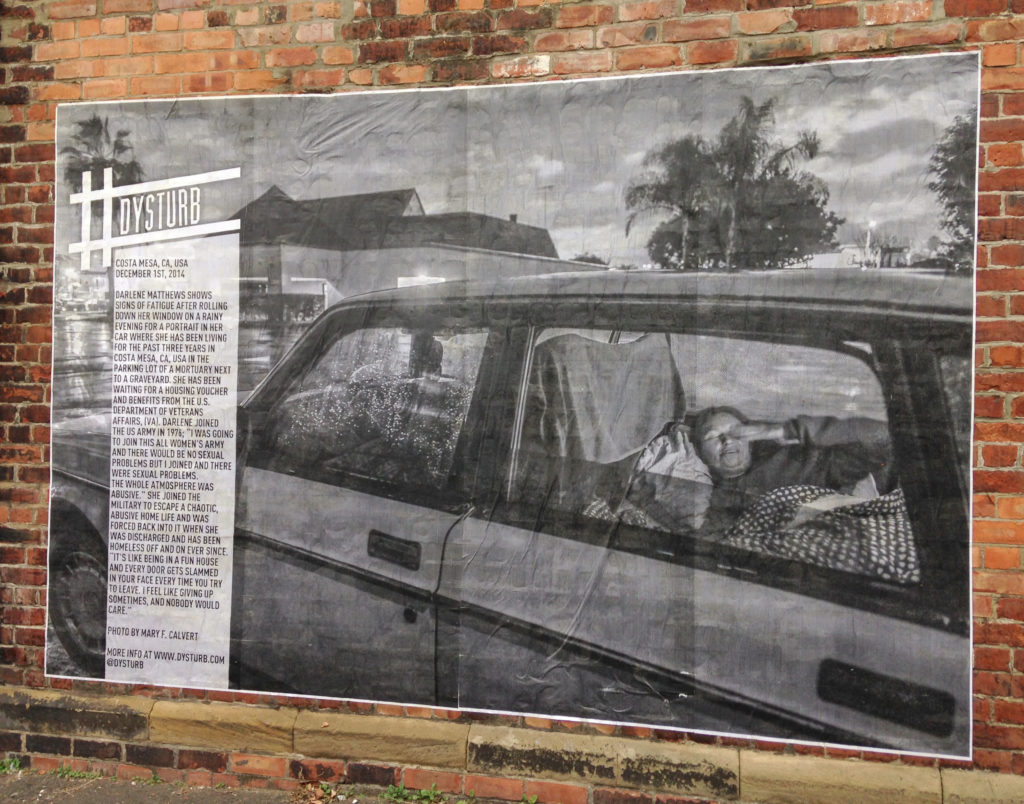
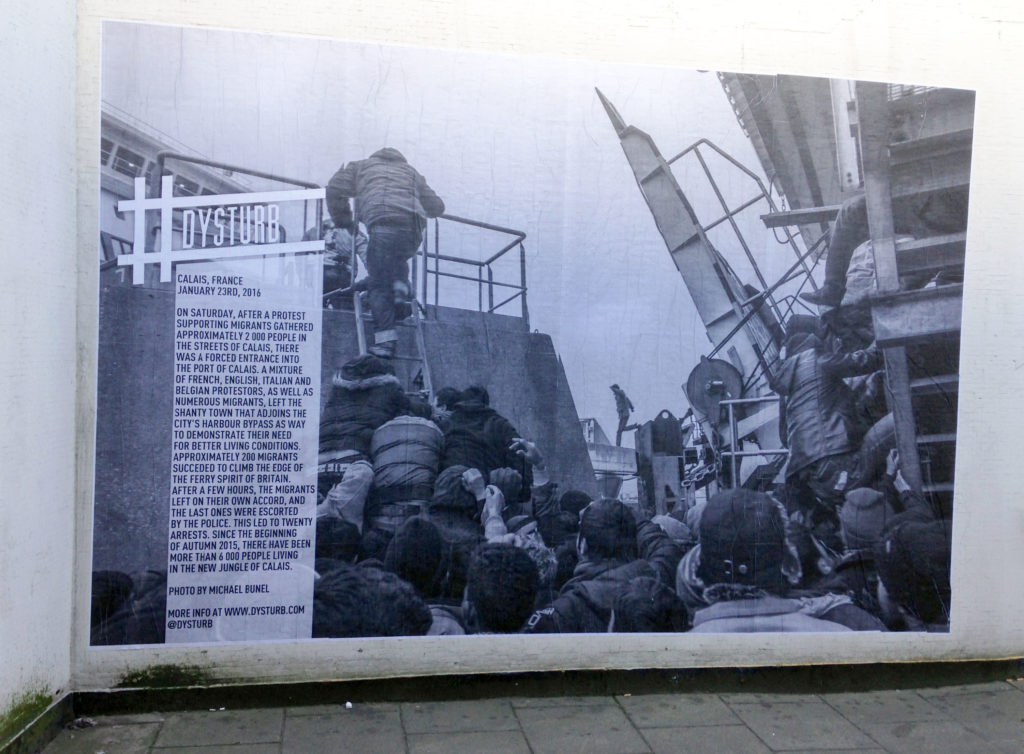
#Dysturb is a group of photojournalists who paste large-size posters in cities around the world, focusing on under-reported stories with the intention of getting this information to a wider audience. In addition to their public projects, they also have a quarterly print journal.

I first saw their work in Newcastle, UK (pictured above) as part of The Newbridge Project’s Hidden Civil War, a month of programming by various artists around the city in October of 2016.

#Dysturb’s current project is #WomenMatter, focusing on the fight against all types of violence against women. On International Women’s Day 2018, the group will be celebrating their fourth anniversary with a free discussion of this project, as well as their other work and the role of paste-up campaigns in contemporary documentary practice at ICP Museum in NYC.