Apr 102025
 

For Camille Henrot’s imaginative installation for A Number of Things at Hauser & Wirth, a variety of sculptures, including several from her Abacus series, are surrounded by paintings from her Dos and Don’ts series. There’s a playfulness to both, but something a bit darker too. Walking on the soft floor among the sculptures there is a feeling of childlike wonder, while at the same time, in combination with the paintings, you are reminded of the rules and restrictions that are imposed on us, starting when we are very young, and how they become more oppressive with age.

From the gallery’s press release-

Evoking children’s developmental tools, shoes, distorted graphs and counting devices, new large-scale bronze sculptures from the artist’s ‘Abacus’ series (2024)—presented alongside recent smaller-scaled works—address the friction between a nascent sense of imagination and society’s systems of signs. The exhibition will also feature vibrant new paintings from Henrot’s ongoing ‘Dos and Don’ts’ series.

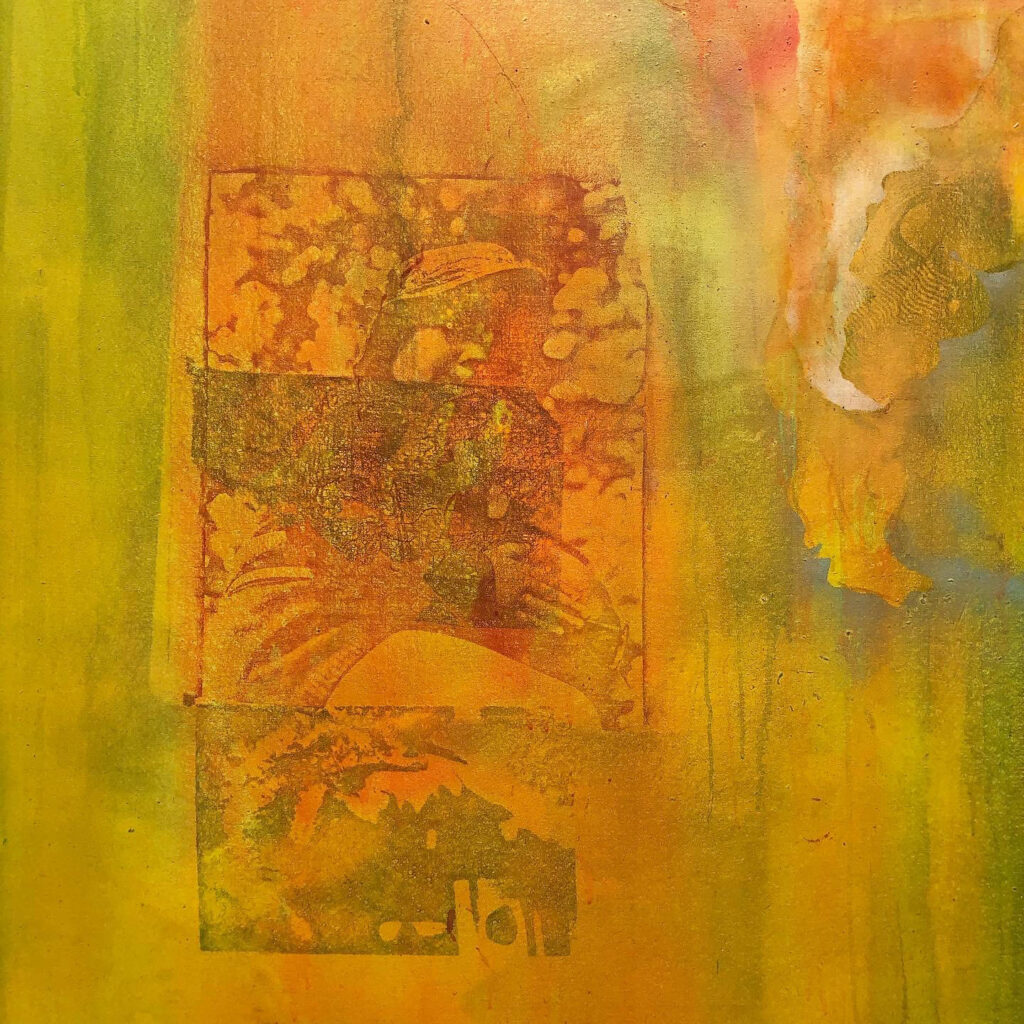
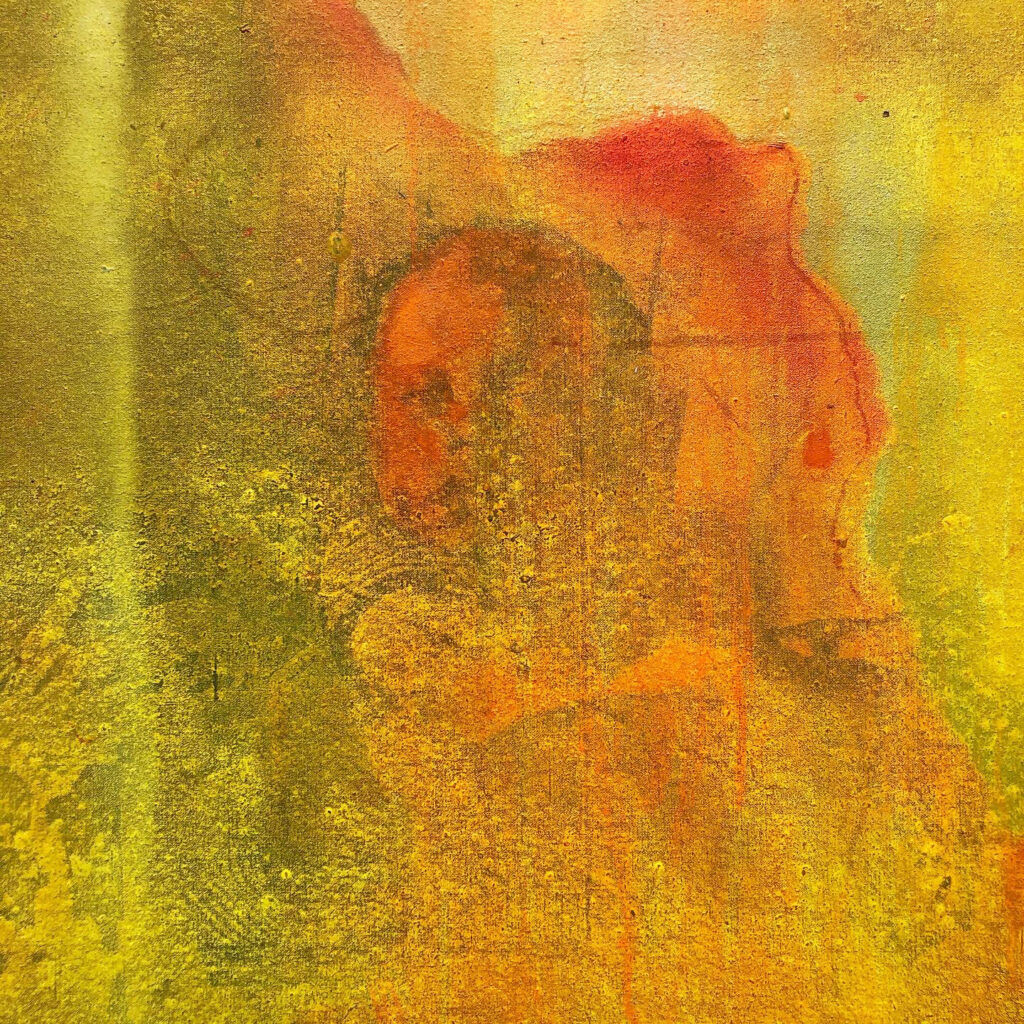
Initiated in 2021, the ‘Dos and Don’ts’ series combines printing, painting and collage techniques where etiquette books become the palimpsest for play with color, gesture, texture and trompe l’oeil. The artworks will emerge from a flooring intervention—conceived and designed with Charlap Hyman & Herrero—that transforms the gallery into a site of sensory experimentation. Henrot’s exhibition vivaciously sets the stage for the arbitrary nature of human behavior to circulate freely between rule and exception.

As viewers enter the gallery, they will be greeted by a pack of dog sculptures tied to a pole, as if left unattended by their walker. Shaped from steel wool, aluminum sheets, carved wood, wax, chain and other unexpected materials, Henrot’s creatures speak to the ever-unfolding effects of human design and domestication. As an extension of Henrot’s ongoing interest in relationships of dependency, the dogs stand in as the ultimate image of attachment.

Henrot’s latest ‘Abacus’ sculptures unite the utilitarianism of the ancient calculating tool with the arches and spirals of a children’s bead maze—a toy popularized in the 1980s as a heuristic diversion in pediatric waiting rooms and nursery schools. Through these formal associations, an instinctive sense of play collides with the learned impulse to search out patterns and impose order. With their biomorphic contours, opaline patinas and quadruped or biped anatomies, these works seem charged with a lifeforce of their own. Hovering between pure abstraction and their multivalent referents, Henrot’s bronzes invite our unfettered, sensuous engagement, even as they allude to the symbolic systems that tyrannize our imaginations.

Behavioral conditioning is a central concern of Henrot’s ‘Dos and Don’ts’ series. These richly layered paintings consider the idea of ‘etiquette’ as it relates to society at large: its codes of conduct, laws and notions of authority, civility and conformity. The works feature collaged fragments of invoices from an embryology lab; a note conjugating the German verb ‘to be;’ dental X-rays; digital error messages; children’s school homework; and to-do lists, among other things. Together, they build on Henrot’s interest in making sense of the urge to organize and categorize information—a theme that has been prevalent in her practice since her groundbreaking film ‘Grosse Fatigue’ (2013). The ‘Dos and Don’ts’ series distorts its source material to reveal the constructed, performative nature of any social identity, while acknowledging the emotional security that behavioral mimicry and groupthink can provide.

As the exhibition’s almost childlike title suggests, ‘A Number of Things’ brings together a disparate but related group of works that collectively address the enormously difficult task that is living, learning and growing in society. With tenderness for the most banal traces of our existences, Henrot offers a meditation on the competing impulses to both integrate and resist the unquestioned structures of society in our everyday lives.

‘There’s a reason why, in English, the word ‘politics,’ ‘polite’ and ‘police’ all sound the same—they are all derived from the Greek word polis or city, the Latin equivalent is civitas, which also gives us ‘civility,’ ‘civic’ and a certain modern understanding of ‘civilization.’

—David Graeber, ‘The Dawn of Everything’ (2021)

In the video walkthrough with Henrot (below) she discusses many of the inspirations for the work.

This exhibition closes 4/12/25.

Apr 102025
 

“Pahari Picnic”, 2024, Oil on linen

“Abe”, 2024, Oil on linen

“Lago”, 2024, Oil on linen

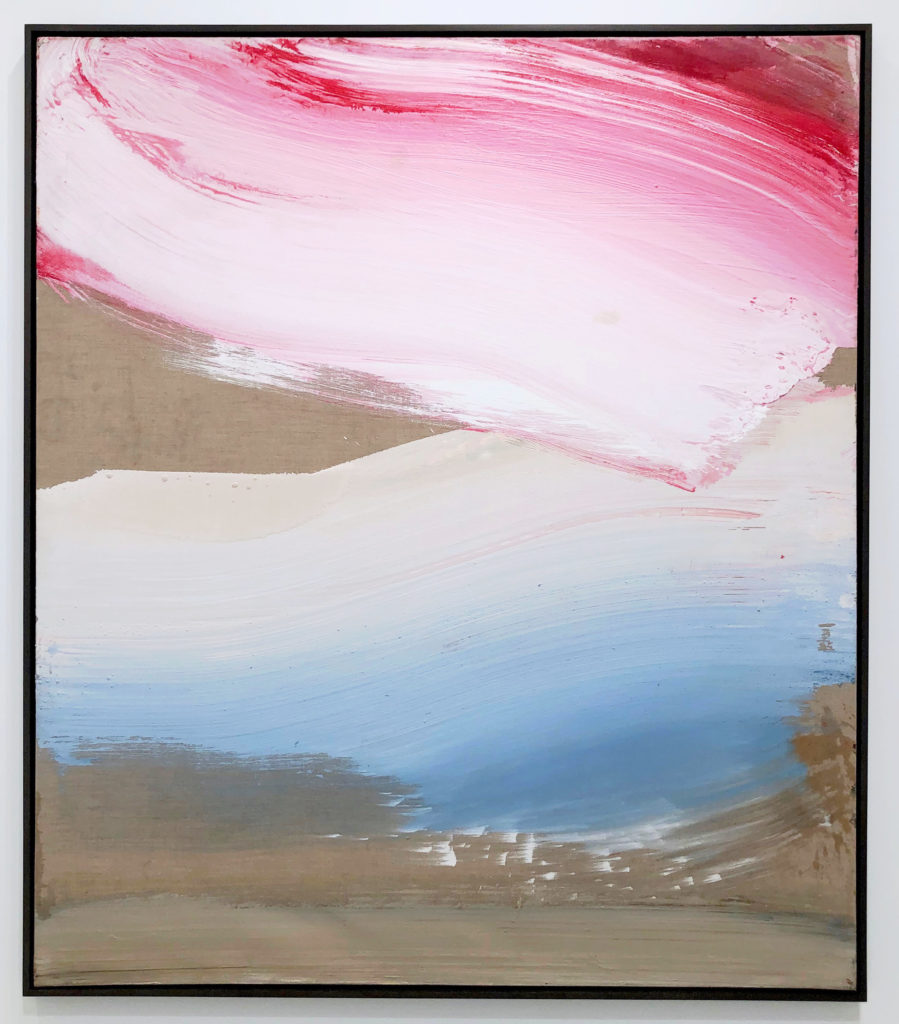
The paintings in Catherine Goodman‘s Silent Music, her current exhibition at Hauser & Wirth, are filled with energetic brushstrokes and bright colors have the eye moving all around the canvas. Although abstract, it’s the hint of recognizable forms that encourage a more contemplative look.

From the gallery-

Opening in January, ‘Catherine Goodman. Silent Music’ presents a series of new, large-scale paintings by the British artist, where her characteristically expressive brushwork yields animated surfaces that pulse with the dynamic energy of their making. For Goodman, the studio is a place of spiritual meditation. Each painting represents an act of intimate transmutation—a way for her to turn closely held memories and personal vulnerabilities into newfound stability.

As the artist trustee at the National Gallery in London, Goodman has spent hours drawing from the collection and has developed a particular affinity for Old Master paintings, which she describes as her ‘only real teacher.’ Inspired by the intensity and drama of Renaissance masterworks by artists such as Titian and Veronese, and influenced by the poignantly psychological work of such groups as the London School, Goodman’s highly personal paintings transcend her individual experience, opening outward and inviting us in.

For decades Goodman has maintained a daily practice of drawing from observation. Through this she has constructed charged pathways between the physical world she observes and her own inner landscape. In these most recent abstractions, she often begins from landscapes and portraits that hold meaning for her. She then obscures these figurative grounds, building up evocative and densely layered compositions that invite sustained attention. ‘Lago’ (2024), a whirlwind of crimson, cobalt and lush green is one of many works named for a meaningful location or loved one whose spirit they embody. Other compositions, like the exuberant ‘Pahari Picnic’ (2024) or ‘Echo’ (2024)—monumental in scale and bursting with energy—give form to poignant memories. The substantial physical presence of these paintings, with their thick impasto and richly layered pigments, materialize intangible impressions of moments, places and people alike, as well as the psychological terrain encountered during the creative process itself. As the artist has confided to writer Jennifer Higgie, her artmaking ‘was never about problem solving. It’s about releasing something.’

Though rooted in the personal, Goodman’s oeurve uses the intimate act of painting to address the expansive macrocosm of collective experience. Her paintings act as a form of silent communication, resonating beyond the written or spoken word. Persistently forward-looking, Goodman’s latest body of work continues her tireless pursuit of art’s unique capacity to nurture connection.

This exhibition closes 4/12/25.

Jul 192024
 

Rita Ackermann is currently showing work at both of Hauser and Wirth’s Chelsea locations for her exhibition Splits. At their 22nd street location are her paintings and at the 18th street location are large silkscreen prints. The figures in the paintings mix with the more abstract elements to create work that keeps the eye moving and engaged.

From the press release-

Titled ‘Splits,’ Ackermann’s latest paintings mark a pinnacle in the artist’s ongoing concern with the creation of dynamic, moving images. In these canvases, forms cascade downward and upward, at times merging seamlessly into one another. To optimize the potential of such chance transformative processes, Ackermann conceptualized the canvas as divided into three screens, as she aptly calls them. This enabled her not only to guide the flow of line and paint, but also to forestall the coalescence of drawing and painting. No sketch prefigured the images that surfaced, except those carved into the recesses of her memory. Instead, Ackermann allowed an instinctive force to guide her hand as it moved across the fields before her.

The fluctuation between the screens she populated with diaphanous lines and those carrying weightier, gestural strokes of color also conspired to infuse the paintings with an unexpected rhythm. In ‘Shut Eye’ (2023), for example, two screens brimming with fragments of drawn shapes entice the eye to actively pull open the middle register and thereby show more of the painted forms within. This occurs even as the upper and lower screens seem to press inward, creating a dynamic tension between revelation and concealment. To enhance this impression, Ackermann occasionally used luminous yellow pigment to further instill in these paintings a sense of lightness and transparency.

Composed as a sequence of stacked-up semi-translucent frames, these canvases can also be seen as the visual equivalent of images imprinted on a film strip. Ackermann, in fact, draws parallels between the transformative essence of the images in the ‘Splits’ and the dynamic permutations observed when montaged photographic images are projected in a cinema. In both mediums, meaning opens in the infinitesimal split between what the eye sees and the elusive. There, a unique motion also unfolds, one that oscillates between appearance and truth. In all these paintings, there is mystery, one that hints at the presence of the profound and unknowable. Through their enigmatic allure, the ‘Splits’ encourage the viewer to ponder the ineffable, reminding us that while transcendence eludes sight, its essence can nonetheless reveal itself.

This exhibition is on view until 7/26/24.

Jul 192024
 

Daydream Nation, Mary Heilmann’s exhibition at Hauser & Wirth, is filled with interesting forms, both familiar and abstract.

From the press release-

Curated by artist Gary Simmons, Heilmann’s friend and former student and colleague at New York’s School of Visual Arts, the exhibition celebrates her talent for distilling complex images and ideas into deceptively simple geometric forms and abstract gestural marks. Through rarely and never-before-seen works on paper from the 1970s to early 2000s, this presentation reveals how drawing functions as a form of daydreaming—of conjuring the sights, sounds and events of her past travels or her imagined future—in Heilmann’s creative process.

Heilmann is known for working across mediums and for installations which playfully combine disparate works. Reflecting on the artist’s approach to exhibition-making, ‘Daydream Nation’ brings together works on paper, ranging from watercolor studies for larger paintings to works that function as paintings on paper in their own right, alongside a selection of her ceramic sculptures and sculptural chairs to create an ambiently whimsical yet conceptually rigorous environment. Heilmann often works in series, revisiting and reimagining certain arrangements of form and color over time, as evidenced here in such recurring motifs as the chair, rosebud, spiral, wave and web. But in Heilmann’s oeuvre, repetition begets difference and from this multiplicity emerges important truths about the functions of memory and our process of translating it.

Drawing has always factored significantly into Heilmann’s practice, manifesting in a variety of forms in ‘Daydream Nation.’ The exhibition features a new mural-like installation that reimagines and expands an existing work into a new form of expression. Heilmann’s seventh wall drawing to date, this installation was developed in conversation with Simmons, who frequently explores the monumental scale of this medium in his own work.

The title of this exhibition is taken from Sonic Youth’s groundbreaking album ‘Daydream Nation’ (1988), beloved by both Heilmann and Simmons. Evoking Heilmann’s longstanding interest in daydreaming as a creative exercise and the importance of travel for her in this process, it also situates her oeuvre within the culture of youthful rebellion in New York City, the California-born artist’s adopted home since 1968 and a constant source of energy and inspiration for her both personally and professionally.

This exhibition closes 7/26/24.

For more about the artist and her work, check out this episode of Art21, below.

Mar 282023
 

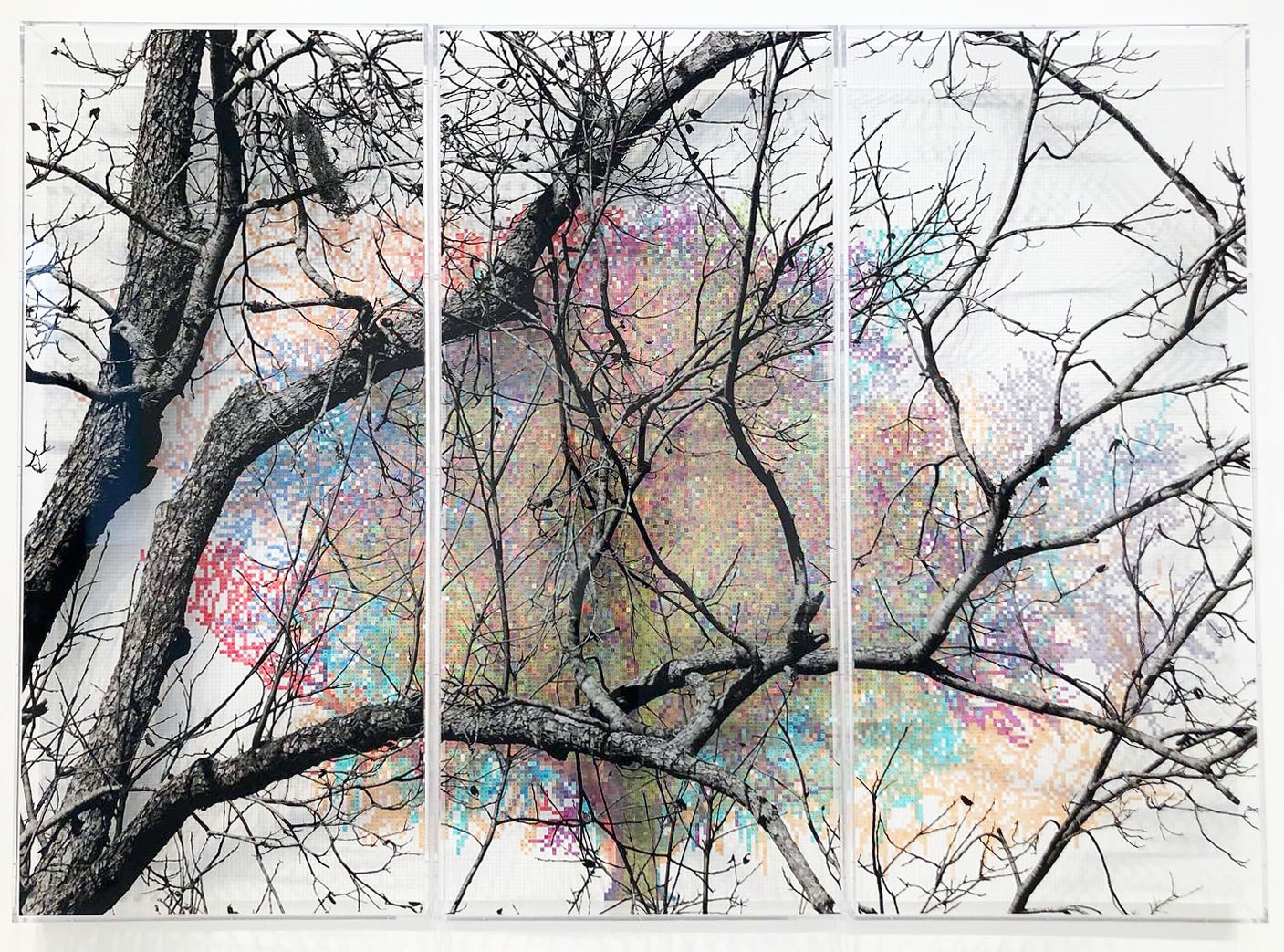
Charles Gaines’ work never fails to impress and his recent exhibition, Southern Trees, at Hauser and Wirth in NYC, is no exception.

From the press release-

One of the most important conceptual artists working today, the show explores the evolution of Gaines’s complex practice, demonstrating how he has continued to forge new paths within the innovative framework of two of his most acclaimed series, Numbers and Trees and Walnut Tree Orchard. The exhibition’s title, ‘Southern Trees,’ alludes directly to the 150-year-old pecan trees pictured in the new works, and symbolically to the opening lyrics of ‘Strange Fruit,’ Billie Holiday’s haunting protest anthem from the 1930s.

The image of the tree has been central to Gaines’s practice since he first began the Walnut Tree Orchard series in the 1970s. In ‘Southern Trees,’ Gaines advances the series using pecan trees photographed on a visit to Boone Hall Plantation in Charleston County, South Carolina––not far from where the artist was born and lived until he was five years old. Presented alongside a key early example from the walnut tree series, eight new triptych works on paper revisit and expand upon this significant original body of work.

‘Walnut Tree Orchard: Set M’ (1977), on loan from the Whitney Museum of American Art, New York, pairs a black and white photograph of a walnut tree with two drawings derived from it––an ink outline of the same tree and a grayscale grid that plots all of the trees included in the series up until that point. The newest series, titled Pecan Trees (2022), begins similarly, with a stark black and white photograph of a tree; yet in the drawings that accompany it, Gaines has filled in the outline of the tree with solid ink and used vibrant watercolors to plot all the previous trees in the final drawing. These successive modifications to scale, color and background demonstrate Gaines’s theory that while ‘the system has never changed, the outcome is always different.’

This extends to Gaines’s new Numbers and Trees Plexiglas series, which begin with the artist assigning each tree a distinctive color and numbered grid––breaking down the composition into individual cells that reflect the full form of the tree depicted in the photograph on the surface. However, Gaines reverses his signature process in this new series by overlaying the forms of the trees one at a time and in progression on the back panel of the work rather than on the front. He then brings the photograph to the surface by printing an enlarged detail of the most recently added tree on the work’s Plexiglas surface. This approach brings the tree’s shadowy branches to the foreground, highlighting its textural details and contrasting tones while obscuring the colorful numbered grids painted underneath it. This reversal produces a dramatically different effect, igniting a more somber, yet stirring, reaction to the work as the austere branches, dripping with moss, dominate the picture.

Created through carefully considered systems rather than through the artist’s own imagination or intuition, these new works remove the artist’s subjectivity by following a set of self-determined rules and procedures. The works call into question both the objective nature of the trees and the subjective natural and material human actions that surround them. The fastidious layering process allows Gaines to reveal the differences between the trees’ shapes where the forms do not align. These differences, highlighted by the artist’s systems, suggest the arbitrary nature of other manufactured systems in our society––such as politics, gender, race and class.

This exhibition closes 4/1/23.

Jul 282021
 

Texas Louise, 1971

Where is Lucienne?, 1971


Where is Lucienne? (detail), 1971

Where is Lucienne? (detail), 1971

Frank Bowling’s incredible paintings are currently on view at two of Hauser & Wirth’s locations, London and NYC, reflecting the artist’s time living in both cities. The paintings above are from the New York location.

From the press release-

The exhibition charts Bowling’s life and work between the UK and the United States. Born in Guyana (then British Guiana) in 1934, Bowling arrived in London in 1953, graduating from the Royal College of Art in 1962. He later divided his time between the art scenes in London and New York, maintaining studios in both cities. London is the city where Bowling trained as a painter and achieved early acclaim. New York is the city that drew him to itself at the height of the Civil Rights movement, where he became involved in discussions of Black Art – New York was a place of fresh energy and ideas for an artist in search of new ways to make paintings.

Bowling’s transatlantic orientation reveals itself in a shift from his early engagement with expressive figuration and pop art, to an immersion in a uniquely poetic abstraction that continues to evolve even today. Visible in his work are the legacies of both the English landscape tradition and American abstract expressionism. Developing in and between two cities over the course of decades, Bowling’s exploration of light, colour, and geometry can be understood as profoundly influenced by the two great rivers of his life: he has maintained studios close to The Thames in London and the East River in New York, absorbing the brilliance of the rivers’ light into his vision. Bowling would often begin a work in one city and finish it in the other, merging the atmospheres of both. In his own words, ‘I would just roll the lot up and move. And I knew that when I got to the other end, I could roll them out again and continue to work.’

Bowling’s restless innovation on the painted plane endures in his latest works. He continues to break ground through the use of thick impasto textures, acrylic gels, collage, stitched canvas, and metallic and pearlescent pigments. The complexities of his upbringing in Guyana and his constant journeying between London and New York have only served to activate the richness of the different influences of each location. His paintings are a celebration of life lived in varying lights and colours.

Dec 042020


Ida Applebroog’s exhibition Applebroog Birds at Hauser & Wirth’s New York location is a delightful collection of paintings and sculpture. But there is more to them than meets the eye.

From the press release-

For more than six decades, American artist Ida Applebroog has continuously engaged with the polemics of human behavior, often exploring interrelated themes of power, gender, politics, and sexuality in works that span and challenge the boundaries of her mediums. Her forthcoming exhibition ‘Applebroog Birds,’ opening 12 November at Hauser & Wirth New York, finds the 91 year old artist advancing her trenchant political inquiry through avian portraits, paintings, and sculptures, all of which are ripe with symbolism relevant to this unprecedented moment. This exhibition expands upon the ‘Angry Birds of America’ works she began making in 2016 and reaffirms her status as one of contemporary art’s most consistently inventive political image-makers.

A pioneering artist of the feminist movement since the 1970s, Applebroog constantly evolves her visual vocabulary and draws from a diverse array of themes, memories, and mass media sources. These range from her own genitalia to dolls and mannequins, to cartoon characterizations of people in her life, to fashion models and accouterment – and, most recently, birds. In 2016, Applebroog became captivated by ornithology and John James Audubon’s skill at merging art and nature. She developed an interest in drawing birds nestled in trees. Quickly realizing that Audubon and other ornithologists work from taxidermal birds, Applebroog began collecting birds and reading ornithological books, eventually producing her own models in plaster and paint.

Her series ‘Angry Birds of America’ was developed during a time of grief and rage, expressed with new intensity in American politics: it was the year that saw the beginning of Donald J. Trump’s presidency, the concomitant rise of white nationalism and anti-immigration violence. Mass shootings in Las Vegas and Texas, the #MeToo movement, and women’s long suppressed anger at accepted sexual affront and assault in the workplace were brought into public focus. Some of Applebroog’s ‘Angry Birds of America’ works will be on view at Hauser & Wirth, having been presented at the Kunstmuseum Thun, Switzerland, in its 2019 exhibition ‘Ida Applebroog.’ Centered on Applebroog’s paintings and sculptures of dead birds, these works provide viewers with analogs for the underlying amalgam of violence and beauty that exist in the world around us, both natural and manmade.

Applebroog’s images and sculptures of birds depict a wide range of avian types. Her ‘White Bird’ sculptures, inspired in part by Applebroog’s studio menagerie of stuffed birds, have the aspect of phantoms in flight, forms that seem to bob gently on unseen air currents, while the ‘Specimens’ works, innate and individually tagged, suggest findings from an ornithologist’s lab. The bird portraits on mylar similarly emit a feeling of taxidermy’s strange temporality. These works evolve from images that are printed with inks that the artist then manipulates by hand. Though the animal depicted in each work has expired, Applebroog’s skill in returning a carcass to life is in full view, creating a metaphor for contemporary political life in America and a call to action.

In an essay titled ‘Bird on a Wire,’ originally published in the Kunstmuseum Thun’s catalogue for Applebroog’s 2019 solo exhibition, art historian Jo Applin notes the irony that President Trump has his own, ‘ill-advised addiction to social media through which, like the proverbial caged canary, he tweets, and tweets, and tweets all manner of bizarre statements, unfounded allegations, and lies.’ In ‘Applebroog Birds,’ the artist’s portrait of a bald eagle – the national symbol of the United States of America – keeps company with a flock of dead birds.

This exhibition is on view until 12/19/20, by appointment.

Oct 282020
 

This is the last week to see the exhibition, Luchita Hurtado. Together Forever, at Hauser & Wirth’s Chelsea, New York location. The exhibition was organized with Hurtado, who sadly passed away this year at the age of 99. There is also a video on the website of Hurtado’s son discussing the exhibition and his mother’s work that is worth watching for additional insight into the artist and her work.

From the gallery’s website-

‘Together Forever’ presents over thirty works from the 1960s through the present day in which she explored the self and the surrounding world as her primary subject. Many of these highly personal artworks – recent paintings of birth along with early works on paper that have remained largely private up to this point – will be on view to the public for the first time.

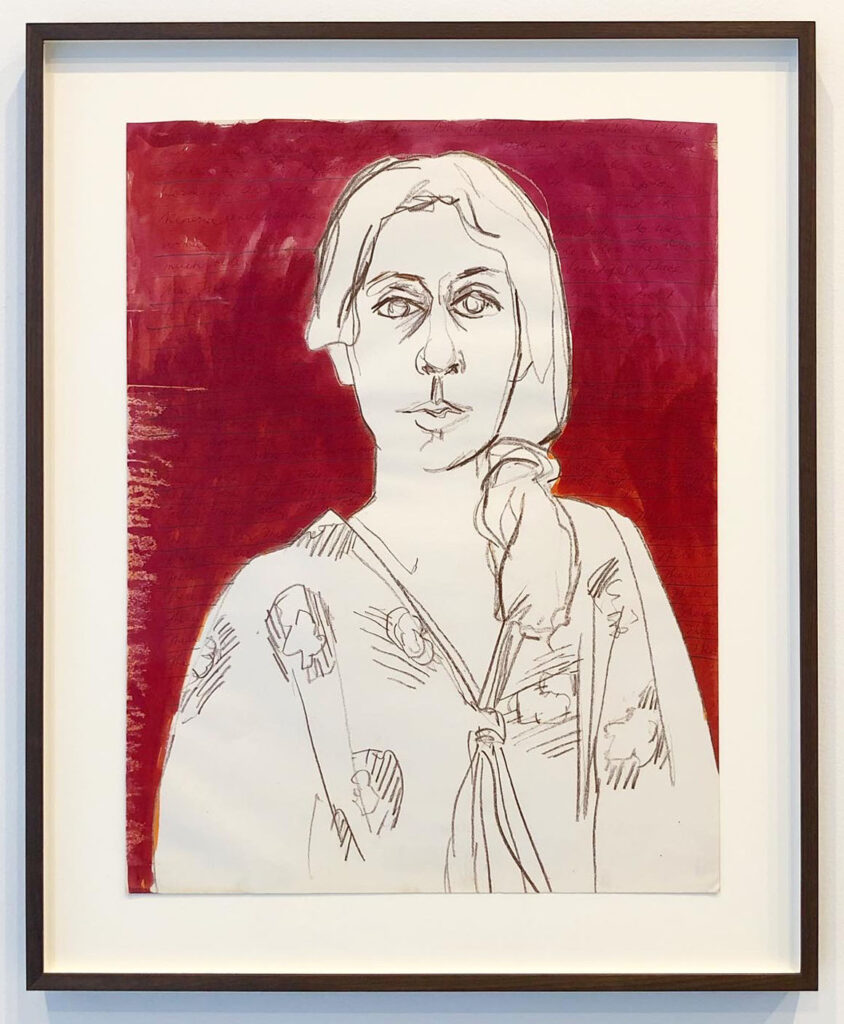
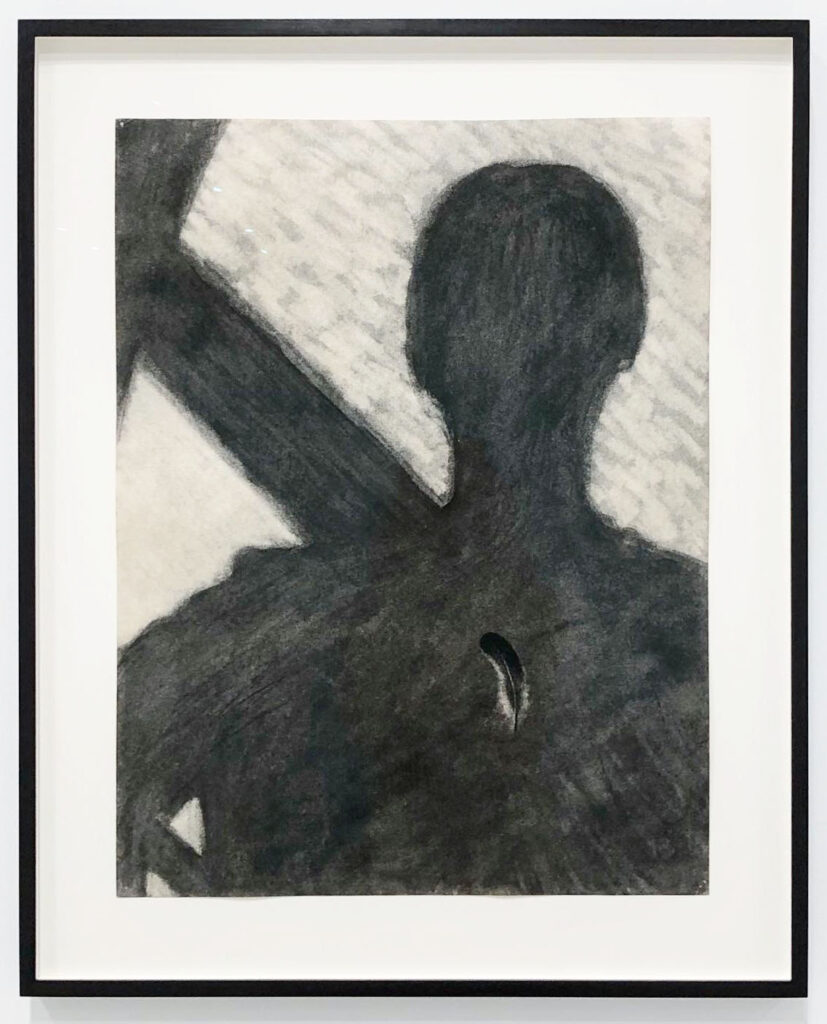
Parallel to a dynamic period of experimentation between abstraction and figuration in the early 1960s, Hurtado also focused her work inward, marking a trajectory to uncover new forms of self through portraits of herself in mirrors, looking down at her own body, and studies of her shadow. Describing this time in her practice, Hurtado explained “At a certain point, I said ‘there is no way that I can express, let’s say, except by painting myself.’ I said, ‘This is a landscape, this is the world, this is all you have, this is your home, this is where you live.’ You are what you feel, what you hear, what you know.” [1]

Throughout her practice up until recent years, Hurtado documented the forms of shadows in photographs and drawings, studying their size, shape, and potential. In early examples from the series included in this exhibition, the artist rendered her own body with oil, charcoal, or graphite on paper, sometimes juxtaposed with her own environment. In some works, a number of figures are depicted. However, these are multiple representations of her own shadow and the artist remains in solitude as her only subject. Another work from the series does not depict a figure at all, but only text where the artist states, ‘The only reasonable facsimile of me is in my shadow’.

During this solitary time of artmaking, Hurtado served as her own model and prioritized her own subjective experience in the world. These works represent significant moments of introspection, seclusion, and the claiming of time for herself. In an early self-portrait in crayon and ink on paper, the artist is surrounded with the text of her own poem written about family and memories of her life in New York before motherhood. Other works, such as ‘Untitled,’ show the artist interacting with the everyday domestic objects in her home – a bookshelf, a window, a door. Another work, also ‘Untitled,’ shows Hurtado emitting a single tear as she poses amongst plants.

In the most recent paintings on view, Hurtado evolves into the landscape as she explored ways in which her own body would transform and regenerate the earth. Functioning as a symbolic proxy and an intimate meditation on the Earth as mystic progenitor, these works underscore the interconnection between corporeality and the natural world – a delicate balance that is now in jeopardy.

‘Luchita Hurtado. Together Forever’ celebrates the various forms of the artist throughout her career and life. Even in the last days of her life, Hurtado continued to experiment and push the boundaries of her own practice.

This exhibition closes 10/31/20.

Oct 222019
 

Hauser & Wirth is currently showing two painting exhibitions. On the ground floor of their 22nd Street location are Ed Clark’s gorgeous abstract works, some of which are pictured above. The paintings on view are recent, made between 2000 and 2013. Created on the floor using a push broom, there is a high energy in the motion and blend of color in these canvases.

Sadly, Clark passed away on Friday, October 18th at the age of 93. He was an innovative abstract painter who worked for more than 60 years. This is a wonderful opportunity to see his work in person.

On the second floor of the gallery is Amy Sherald’s the heart of the matter… , (pictured below) her inaugural exhibition with the gallery. If her style looks familiar, it may be because she gained a lot of attention with her portrait of Michelle Obama for the Smithsonian’s National Portrait Gallery.

“If you surrendered to the air you could ride it” (2019)

“Precious jewels by the sea” (2019)

From the press release-

Informed by the artist’s reading of key texts that explore tensions between interior and public realms, the heart of the matter… draws its title from the first chapter of bell hooks’ seminal book ‘Salvation,’ and builds on themes of silence and stillness explored in Kevin Quashie’s ‘Sovereignty of Quiet’ and U.S. Poet Laureate Elizabeth Alexander’s ‘Black Interior.’ In her new paintings, Sherald considers how these relate to the conceptualization of blackness as it is represented publicly, questioning representation of black identity, which often negates the complex reality of an interior life. She envisions black American identity beyond the conceits to which it has largely been restricted, attempting to restore a broader, fuller picture of humanity.

Sherald’s portraits are vivid, large in scale but intimate in effect, capturing both the ordinary likeness and extraordinary essence of her subjects while simultaneously detaching them from everyday reality. Varying in expressiveness, gesture, clothing, and emotional auras, the individuals portrayed maintain a persistent sense of privacy and mystery, requiring viewers to ponder the sitters’ thoughts and dreams. Drawn to each of her subjects instinctively and spontaneously, these ‘Americans doing everyday American things,’ as Sherald has described them, are part of an informal network of people who populate our universe.

Once Sherald commences painting, a transformational moment ensues as the artist begins to view her sitter as an archetype in the history of representation and therefore a vehicle for challenging assumptions. Working from carefully composed and dramatically staged photographs, Sherald situates her subjects in brightly colored, ambiguous environments, then meticulously tweaks expressions and patterns to emphasize a sense of universality and connection. While her subjects are always African-American, Sherald renders their skin-tone exclusively in grisaille – an absence of color that directly challenges perceptions of black identity.

the heart of the matter… debuts two paintings that reach a new, monumental scale for the artist. In these works, Sherald’s monochromatic backgrounds evolve into fully realized scenes that reference quintessential Americana: friends posed at the beach and a man atop a metal construction beam. For the latter, Sherald draws inspiration from Charles C. Ebbet’s iconic photography of 30 Rockefeller Plaza in New York City. Sherald often looks to vintage photography for source material, drawn to what she describes as its capacity ‘to narrate a truer history that counters a dominant historical narrative… Photography was the first medium I saw that made what was absent, visible.’ Sherald continues, ‘It gave people who once had no control over the proliferation of their own image the ability to become authors of their narratives.’ By mining and positioning images associated with archetypal or nostalgic American moments – burgeoning industry, sunny beachside locales – Sherald is able to firmly situate and make fully visible black Americans within the canon of American iconography. In this way, her portraits reclaim space and author a narrative for people that official art history omitted, speaking to the human condition and holding up a mirror to American life.

Lastly,  take a trip to the top floor for the group show Personal Private Public, a group exhibition “exploring the idea of the inner life in three main themes: introspection, intimacy, and voyeurism”.  The exhibition includes work by Jonathan Lyndon Chase, Ivy Haldeman, Celia Hempton, Tala Madani, Paul McCarthy, B. Ingrid Olson, Paul Mpagi Sepuya, Emily Mae Smith, Mira Schor, and Kohei Yoshiyuki.

All three of these exhibitions close 10/26/19.