May 222024
 

Pictured above is Frank Stella’s 1986 work, La vecchia dell’orto, on view at Columbus Museum of Art, part of New Encounters: Reframing the Contemporary Collection of the Columbus Museum of Arta reinstallation of the museum’s contemporary galleries.

About the work from the museum-

In the 1960s Frank Stella began creating paintings with a composition of lines that closely followed the shape of the canvas. These works often resisted any sense of depth, but in the following decade, Stella would go on to create exuberant works like this, composed of brightly painted cones and other shapes that extend beyond the surface of the rectangle behind it.

The title of this work, like others in his Cones and Pillars series, is taken from an Italian folktale in which a mother’s only daughter is kept by a witch as payment for a cabbage she stole from the witch’s garden.

Stella’s practice was always evolving. In his most recent large painted sculptures, currently on view at Deitch in NYC, you can see how he expanded on the concepts he was working with here.

May 032024
 

In March, Strauss Studios hosted Diane Belfiglio: An Artist’s Legacy, an exhibition celebrating the late artist. The Ohio artist and educator’s exploration of light and shadow give her subjects a unique graphic quality.

Here Belfiglio discusses her acrylic paintings-

My paintings prominently feature closely-cropped, sunlit architectural forms. Although realistic in their presentation, I rely heavily on their underlying abstract qualities to give to the already imposing images an even greater sense of power. Shadows, ethereal by nature, take on a rigid structural aspect in these compositions. Colors range from brilliant to subtle in an effort to reproduce the strong sense of sunlight streaming through each piece. Although these images are visually powerful, the delicate details in the architecture—and often in the surrounding vegetation–are also prominently featured in my work. The resultant blend produces a heightened, stylized reality. I work to transform the mundane into the extraordinary, so that we see beauty in images that generally go unnoticed by most of us on a daily basis.

And here she talks about her decision to work with watercolor, like in the pair above-

Never say never. For the majority of my life, I have not taken to watercolor as a medium I ever wanted to use professionally. But in 2015-16, the Canton Museum of Art had a spectacular show of Joseph Raffael’s watercolor paintings. The colors and luminosity in his work were so amazing that I just couldn’t get the images out of my head. A couple of years later, I was called upon to teach Watercolors at Walsh University, a class I normally don’t teach. So there was another toe in the water (pun intended). Fast forward to 2020, when I finally had the urge to vanquish my demons and give it a try. I started slowly, making plenty of mistakes, but soon realized that I could create the luminosity that I crave in my work in this medium.

Tomorrow (5/3/24), Strauss Studios will be open late for Canton First Friday and showing the new exhibition Exploring Light and Darkness featuring artists Emily Orsich, Heather Bullach, Jo Westfall, Joe Ostrowske, Mary Crane Nutter, Patricia Zinsmeister Parker, and Susan Wilkof.


Apr 252024
 

Alyssa Lizzini, “Industrial Valley”, Ink and acrylic on paper on panel

Alyssa Lizzini, “East 41st”, Ink, acrylic, and found object on paper and panel

Alyssa Lizzini, “Unraveling City”, Ink and acrylic on paper mounted on 2 panels

Akron Soul Train is currently showing two exhibitions by Ohio artists. Alyssa Lizzini’s The Universe Between Here and There, pictured above, expands upon scenes from daily life using a mixed media approach. The works take the viewer into her expanded sections of the city, and encourages them to think about what may be unobserved in their own daily life.

From the gallery-

In The Universe Between Here and There, Alyssa Lizzini explores the interwoven connection between space, time, and memory through large-scale, multi-layer drawings. Lines, grids, maps, and data become the stars, black holes, and supernovae of an ever-expanding universe of memory. Using ink, acrylic paint, and collaged paper, Lizzini creates overlapping images that seem to compress space and time yet simultaneously fly apart or implode. Her drawings suggest that memory unravels in much the same way and investigates the almost inseparable connection between person and place.

“Drawings explore both my own personal histories related to remembered places and broader histories recorded through archival, ethnographic, and visual research of city spaces…The scale of [my] drawings allow the viewer to feel immersed in each piece, surrounded by swirling and morphing cityscapes, memory objects, and natural elements. They ask the viewer to consider the many layers of context not immediately visible in our urban world, and give a new language for understanding the ever-changing nature of memory.” – Alyssa Lizzini

Akron Soul Train Artist-in-Residence Melih Meric’s uses traditional Middle Eastern patterns to explore identity.

From the gallery-

Meric uses a traditional approach to their imagery through sacred geometry and explorations of Islamic geometric abstraction. Challenging traditional presentations of print editions, Meric’s print work crosses the borders of the paper. It highlights an expansion of patterns like Middle Eastern tiles. It also speaks to queerness without being explicitly queer. Stitched Editions: Exploring the New poses integral questions surrounding erasure and identity in Middle Eastern communities. Meric’s craft lies in creating wall-hanging objects that play between the realms of dimensionality while still being unmistakably paper. Their work acknowledges and is proud of its dimension, speaking certain truths to multiple minority groups.

“My work deals with making peace with a part of my culture that drove me to leave it. Finding beauty in design and simplicity, then creating systems to complicate those principles. I fell in love with printmaking and the idea of multiplicity when I first made the connection to tiles from the Middle East. It suddenly became a tool to create and expand patterns that challenge traditions in crafts.” – Melih Meric

Melih Meric, “I Think I Remember Something, Nevermind”, “Stitched Edition” of 12 linoleum prints

Melih Meric, “Carnation”, “Stitched Edition” of 36 woodblock prints

Melih Meric, “Carnation”, “Stitched Edition” of 36 woodblock prints (detail)

Melih Meric, “Swept Under”, “Stitched Edition” of 8 silkscreen prints

Both of these exhibitions close 5/11/24.

Apr 182024
 

There’s an unsettling tension in the room that houses Mel Chin’s installation Spirit (1994), at the Columbus Museum of Art. Is the rope strong enough to support the barrel? What will be its breaking point?

Some details from the museum about the work-

The rope that seems to carry the weight of Spirit’s enormous cask is made from tallgrass. This native plant was once central to a vast prairie ecosystem spanning over 170 million acres of North America. By 1930, most all of this was decimated as a result of agricultural and industrial settlement, and what remains is protected habitat (Chin received special permission to harvest a portion for this sculpture).

Wooden barrels are traditionally used to measure and transport dry goods like grain, beans, as well as beer, oil and wine, and were central to the process of European settlement and trade in North America. Here, the image of this rope bearing such a massive weight suggests the precarious status of nature in a world of outsized human development. Even the gallery walls, which curve inwards on all sides, seem to respond to the strain.


Apr 102024
 

Nalani Stolz “Bread Bodies”, bread, ceramic, muslin

Nalani Stolz, “”like floating in thick waters”, fermented membrane, stainless steel

Nalani Stolz, “a small ocean swallowed” baking soda, ceramic, cheesecloth, vinegar, pump, latex

“a small ocean swallowed”, closer

Nalani Stolz, “a wild wetland in our gut” ceramic, plum vinegar, muslin, stuffing, salt

Nalani Stolz, “a wild wetland in our gut” ceramic, plum vinegar, muslin, stuffing, salt

The Sculpture Center in Cleveland is currently showing Nalani Stolz’s Bodies Still Becoming and Zachary Smoker’s Inured.

With the sound of water dripping, the bread stretching fabric, and growth covered vessels leaking into mattresses- Stolz’s sculptures engage the viewers senses, at times viscerally.

She has also included her film Traces in the exhibition. For this work she and her mother slowly sew their hair together through a sheet of gauze.

From the gallery about the exhibition

The bodies Nalani Stolz crafts bulge, grow, and break down. Materials such as rising dough expand and constrict, cloth sculptures leak and ooze, fermented membranes and porous clay forms seep vinegar, growing warts across their surfaces. These bodily processes draw on the often-gendered experiences of how our physical forms take in and expel matter; the feelings of expansion and fullness and those of emptying out, of breaking down when weeping, menstruating, and experiencing miscarriage, abortion, and pregnancy. These moments shift our seemingly solid edges and reveal our porous boundaries; reminding us that we are dying, changing, decaying vessels, loosely contained by skin, muscle, and bone.

Zachary Smoker’s sculptures for Inured address issues related to U.S. currency, power, capitalism, and material culture. In two of the works, familiar items ask questions about purpose. The whiffle ball bat /police baton combination mixes violence and play. Shopping carts now have associations with living on the street, as well as for buying goods in a store- which one will this be used for when assembled?

Zachary Smoker, “Crony Tikes”, Plastic Whiffle ball bats, pegboard, double hooks, 2024

Zachary Smoker, “Anyone can make Art, not everyone can buy it”, Demonetized U.S. currency, BFK Rives, Elmer’s glue stick, safety wire glass, poplar, enamel paint, paint marker, 2023

Zachary Smoker, “A place for everyone, and everyone in their place”, Steel shopping cart, polyurethane wheels, enamel paint, 2024

Both of these exhibitions close on 4/13/24.

Apr 072024
 

“Moon Setting into Fog Bank over Cape Cod Bay, Morning of the Total Lunar Eclipse”, 2007, printed 2023

“1:30-4:30a.m., Moon Rising, Antelope Lake”, 2011, printed 2023

“Sun Ball, Imnamatnoon Creek, Lochsa River Valley”, 1995, printed 2023

“Fireflies”, 2005

One of the smaller prints from the “Fireflies” series

There is something so peaceful about the photographs in Barbara Bosworth: Sun Light Moon Shadow, currently on view at Cleveland Museum of Art. These beautiful moments she has captured allow the viewer to share her sense of wonder.

From the museum about the exhibition-

“My childhood home is where all my photographs come from,” says American photographer Barbara Bosworth (born 1953). Growing up in Novelty, Ohio, Bosworth adored walking with her father and looking up at the night sky, a practice that became a lifelong passion. This exhibition -timed to coincide with the total solar eclipse visible in Cleveland on April 8— features the artist’s photographs of light, from eclipses, sunrises, and sunsets to the luminescent glow of fireflies and a flashlight. Her images both explore how we endow these phenomena with personal meaning and elucidate bonds between humans and the natural world that often go unnoticed.

Photography is an art form with its roots in science, even though the two disciplines are sometimes considered opposites. The term photography was coined in 1839 by British scientist and astronomer Sir John Herschel from Greek words meaning “drawing with light.” Bosworth notes that light is an essential ingredient in both astronomy and photography. The camera and telescope, used together as Bosworth has in a number of the photographs on view, each collect light.

Time is another integral component of photography: a photograph records the light that strikes a sensitized surface-such as film or, in the case of digital photography, a sensor-during a certain length of time. In making her photographs of the heavenly bodies, Bosworth says she wants “to be reminded of the mystery closer to home: the sheer strangeness that light — millions of years old, unfathomably old – can still land on my film and be seen.”

This exhibition is on view until 6/30/24.


Apr 032024
 

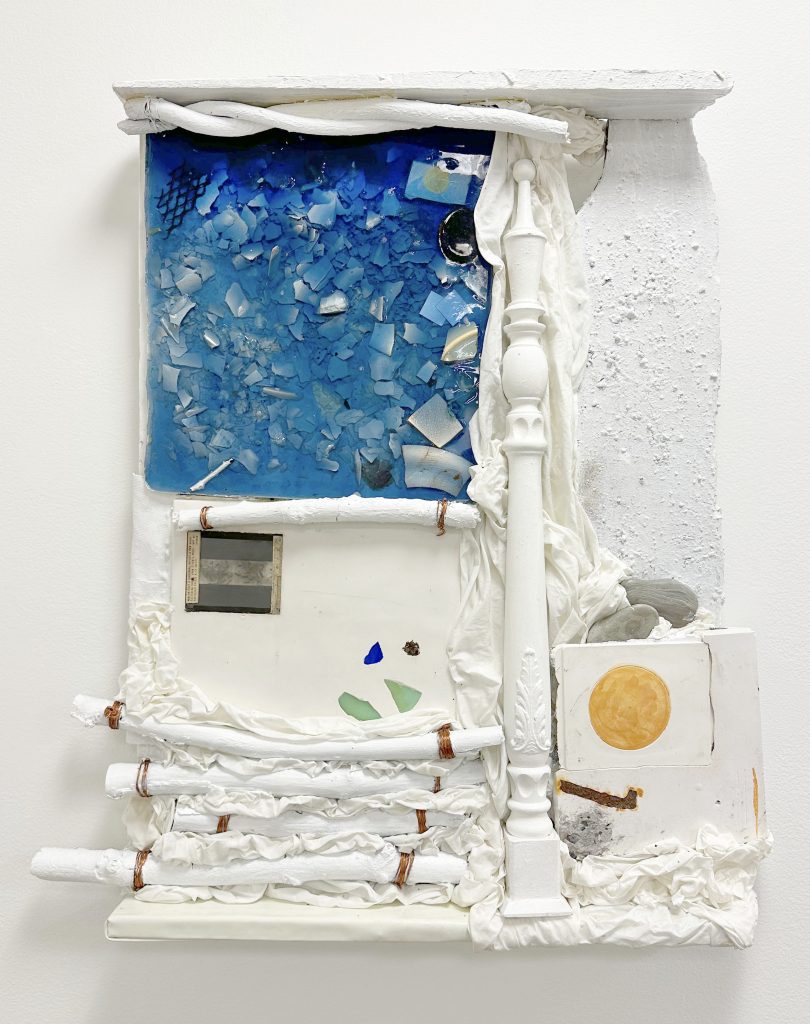
Julia Schenkelberg, “Blue Ocean”, 2020, Blue dye, resin, rusted metal from Detroit factory floors, plaster chips, vintage china, glass from Brooklyn beaches
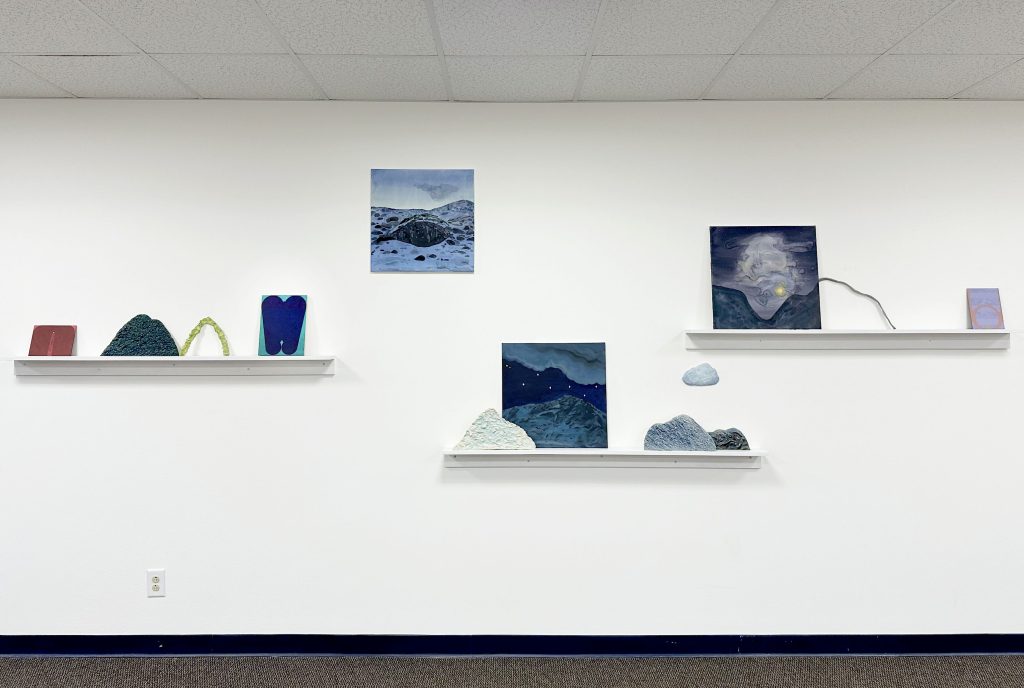
Malone University Art Gallery’s exhibition Healing Spaces features work by Northeastern Ohio artists Julie Schenkelberg, Chen Peng, Yiyun Chen, and Emily Bartolone. Although the mediums differ, the work flows together in the room. Below are some selections and more about each artist from the gallery’s documentation.
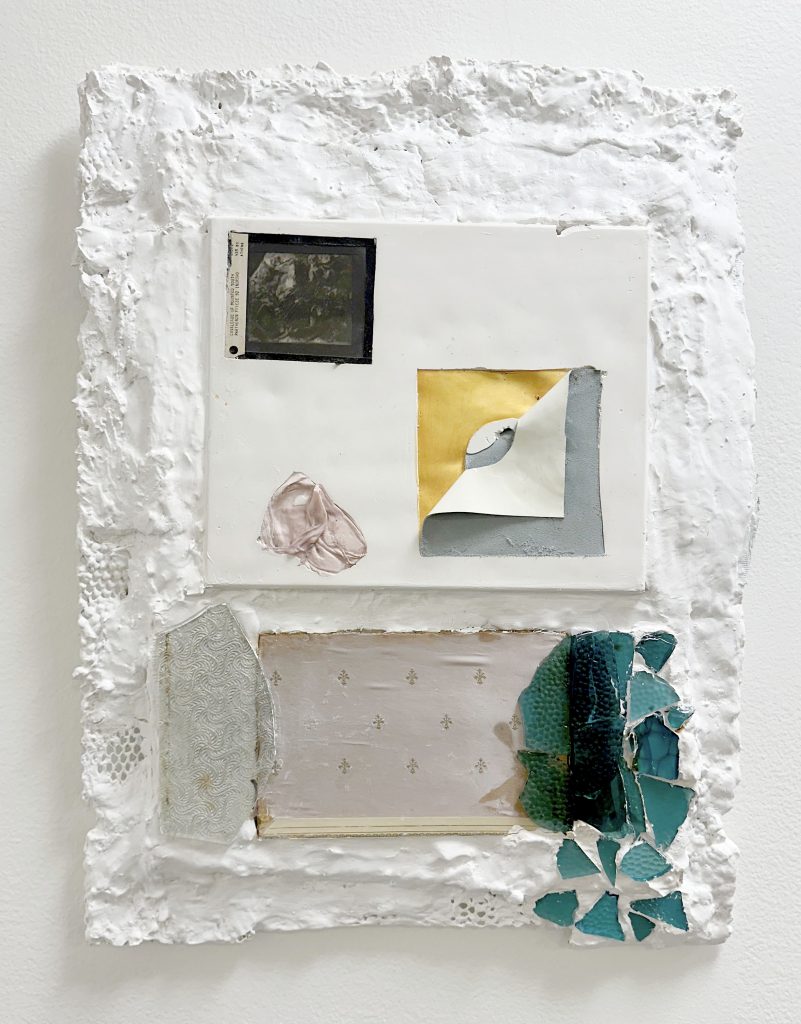
Julie Schenkelberg, “Modern Memorial”, 2020, Found screen, plaster, acrylic paint, vintage leather and fabric, jewelry box interior, glass gathered from Cleveland and Detroit auto and steel factory abandoned floors, vintage glass slide of the Parthenon Frieze

Julie Schenkelberg grew up in the post-industrial landscape of Cleveland, Ohio. Her mixed-media installations start with furniture, dishware, textiles, and marble, combined with concrete, resin, and construction materials, to transform notions of domesticity, and engage with the American Rust Belt’s legacy of abandonment and decay. Using the home as a playground for formal and conceptual subversions, the work aggressively disrupts cohesion within the physical sphere. Familiar furnishings rekindle memories or premonitions of collapse, suggesting both the utter destruction of war, calamities, or urban decay, but also the uncanny juxtapositions of fragile substances such as cloth and china, with industrial materials such as rusty metal, heavy concrete, and tool-made marks such as drilled holes and chain-sawed indentations.
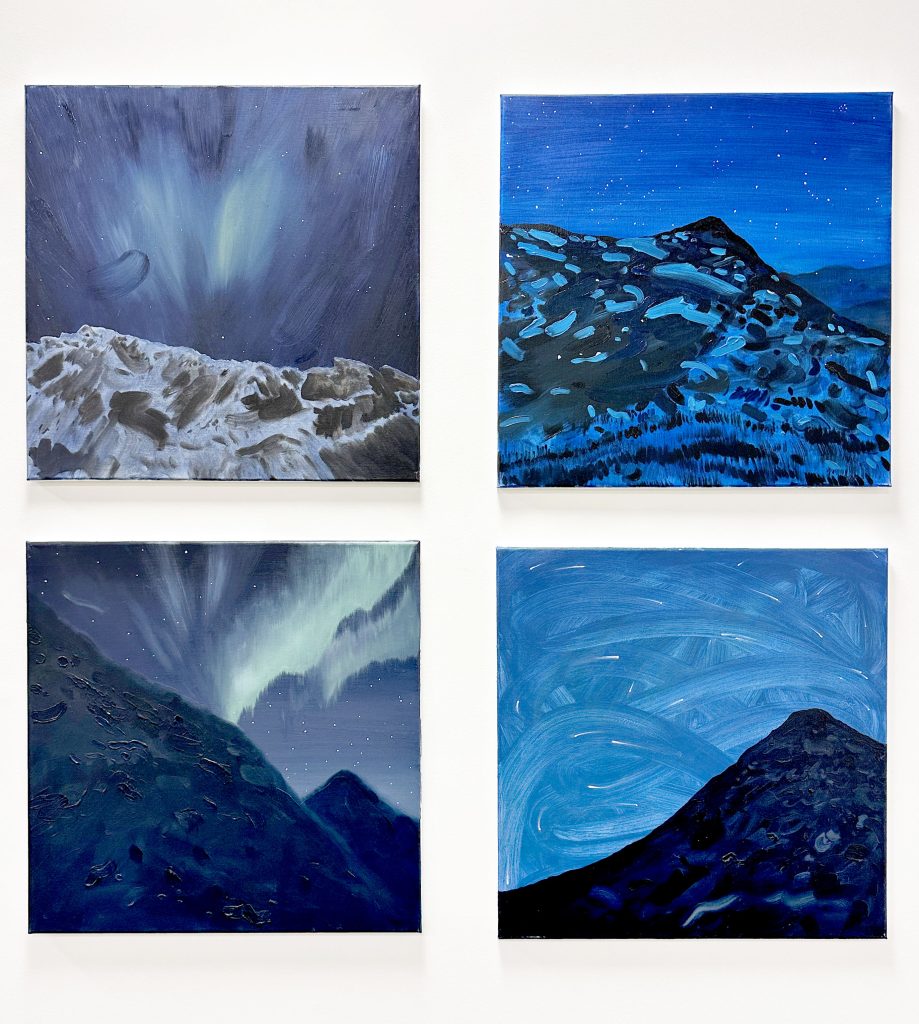
Chen Peng, Paintings from the “Mountains at Night” series, 2023, gouache, acrylic, and oil on canvas

Deriving from a desire to find stillness and grounding as an immigrant, Chen Peng explores the connection between landscape and the complexities of identity and belonging. She creates foreign landscapes from a combination of past experiences, memories, and imagination, delving into the disorienting sense of not knowing where home is. The moon, particularly in its fullness, becomes a symbol encapsulating emotions and metaphors associated with loneliness, reverence, and even terror. Her ceramic pieces extend this exploration of landscapes, featuring textures and marks that convey the essence of mountains, clouds, and the moon.
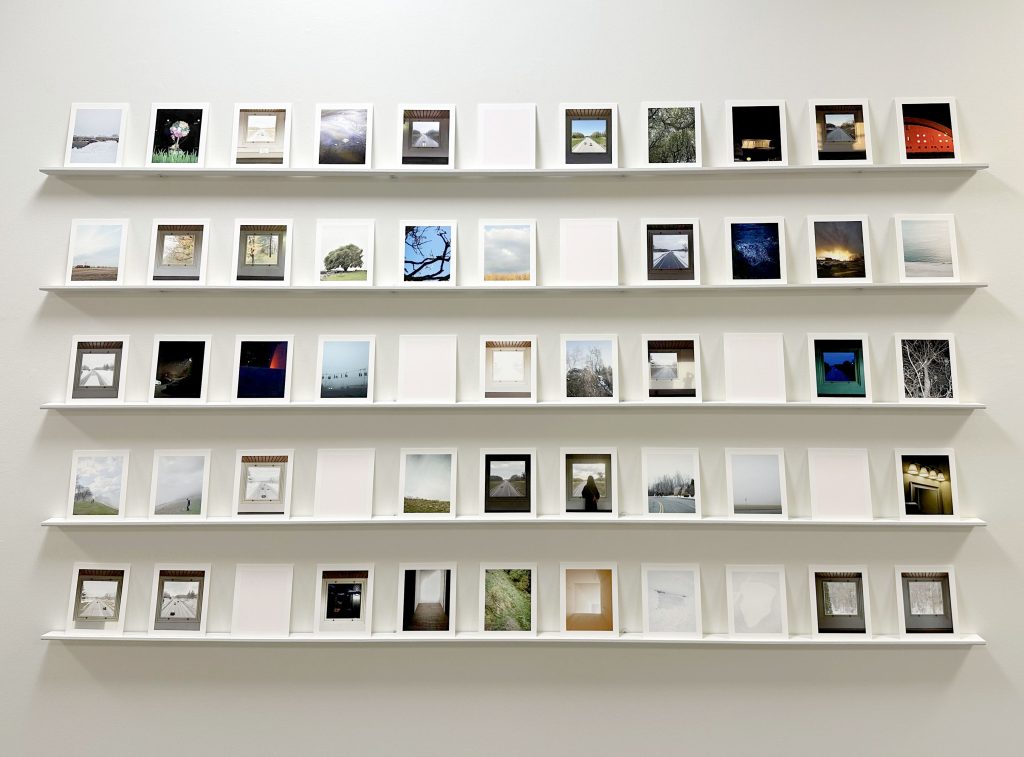
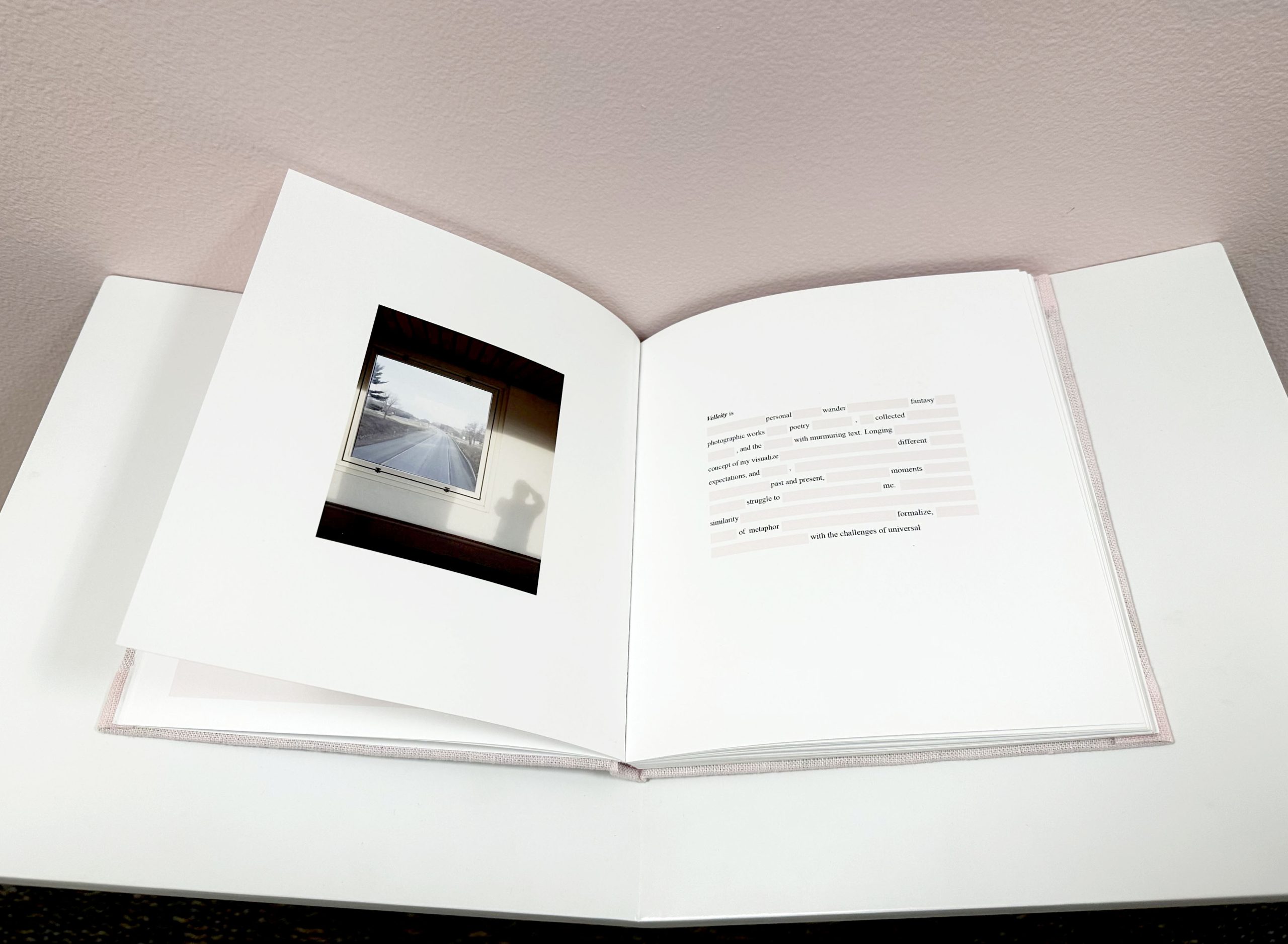
Photographs from from Yiyun Chen’s series “Velleity”, 2016-2018
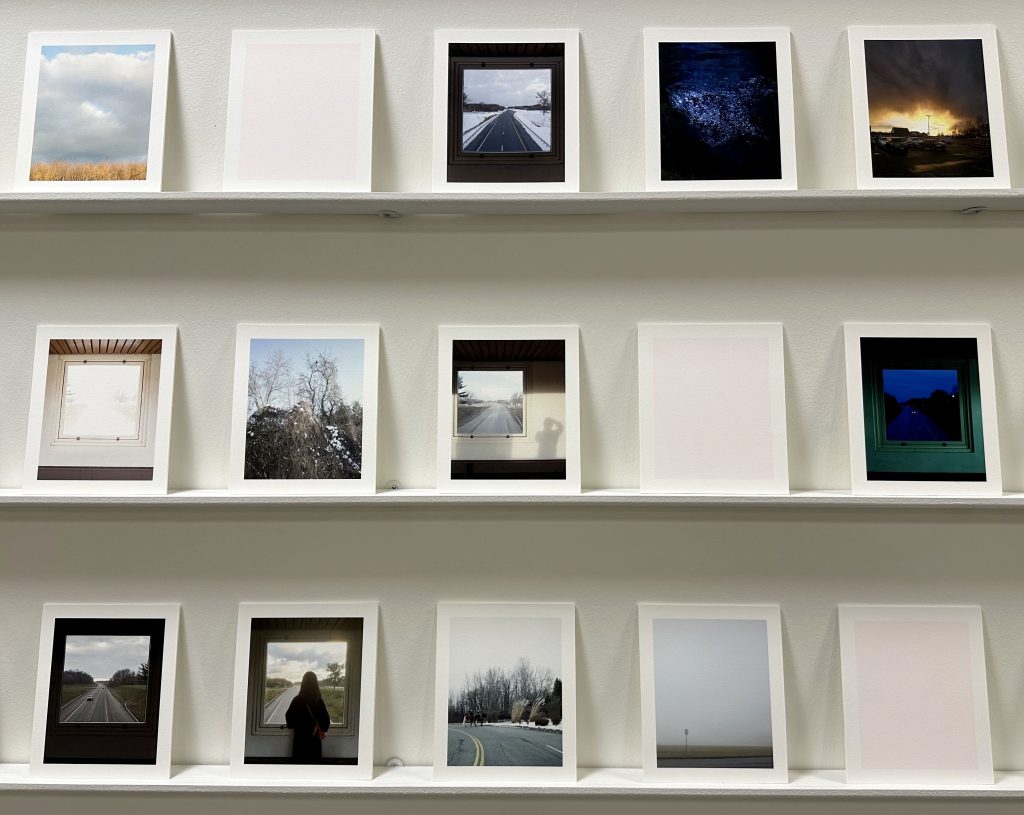
Yiyun Chen, “Velleity”, detail
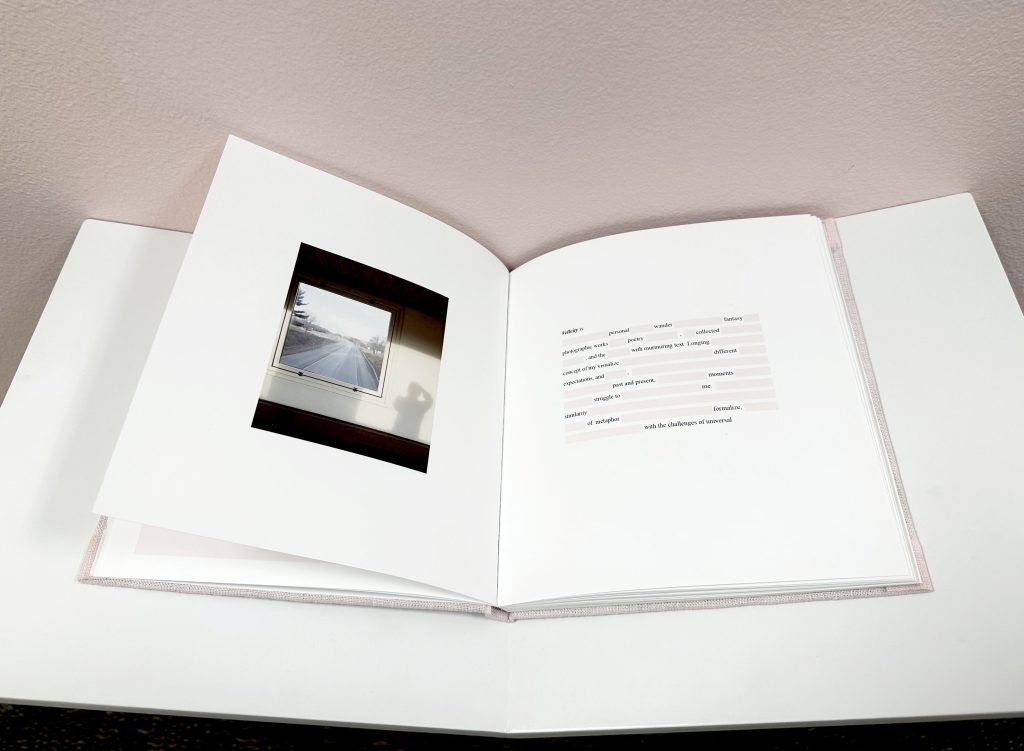
Yiyun Chen, Handmade photobook, 2018

The photography of Yiyun Chen is about the process of self-reflection and self-discovery as an Asian immigrant, exploring the relationship between people, environment and society, turning its personal experience and empathy into gentle conversations between humans and nature, capturing the poetic and distance of the environment around us. Through photography, we can take the essence of life seriously again and treat the people and things around us tenderly. Through his lens, they often have similar structure, people look tiny in nature scenes, creating an intimate visual experience. Most of his photographs are captured outdoors, with soft light and harmonious colors often used.
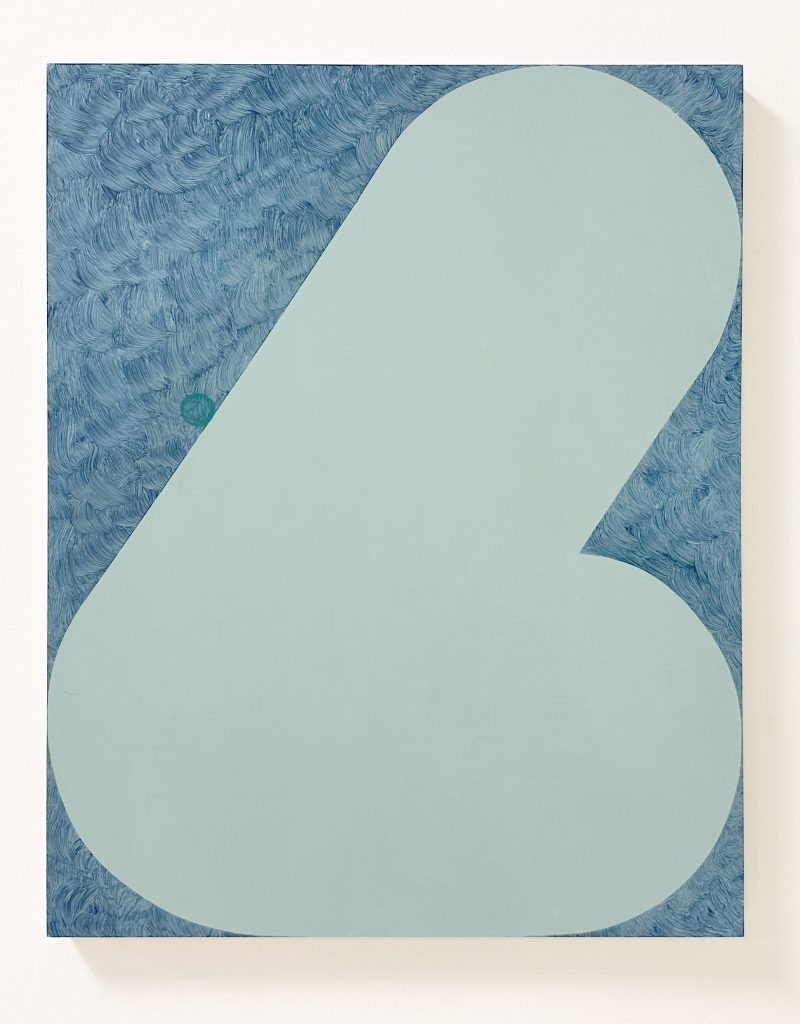
Painting by Emily Bartolone
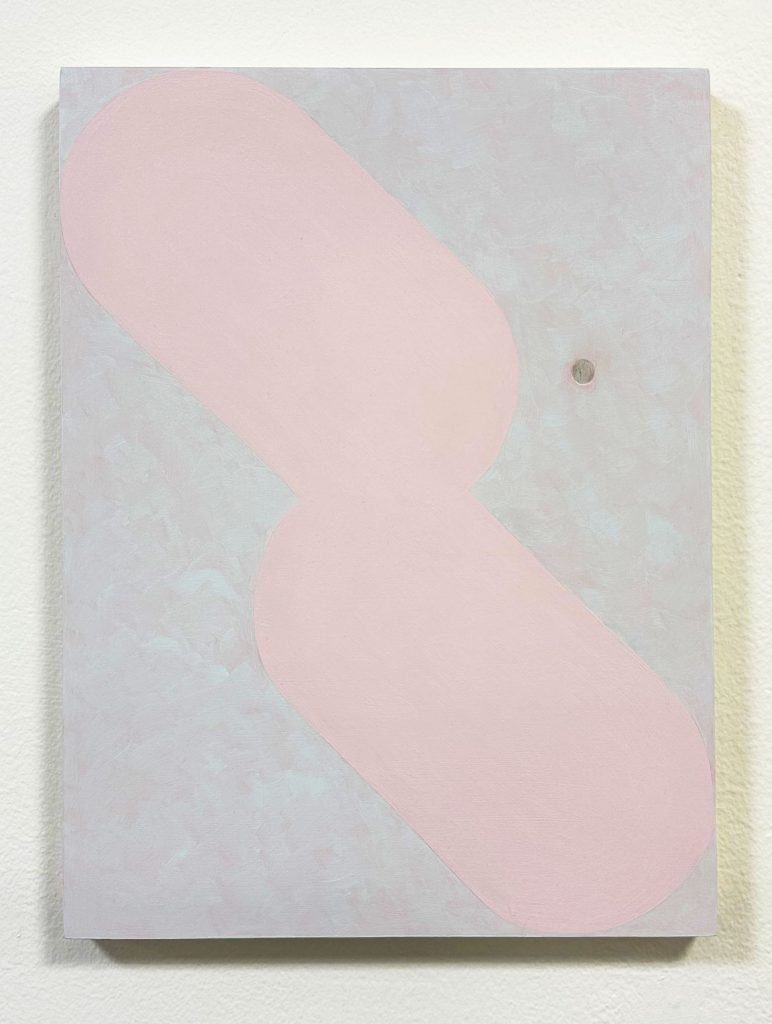
Painting by Emily Bartolone

Stemming from her infatuation with the formal elements of painting, the work of Emily Bartolone pairs down simple, anthropomorphized shapes in an effort to explore paint and color theory while simultaneously creating tension and humor through color, edges, and texture. The playful, human qualities of painting are incorporated into the work through the use of amorphous shapes animated within the picture plane. Further informed by ideas of the mundane, the awkward, and the jovial that surround everyday life, the complexity of human relationships are mimicked by the shapes interacting on each painting’s surface. In acknowledging that life is not always cordial, moments of tension are placed within the satisfying surfaces in the form of an abrupt mark, a disparate color, or a shift in scale. These ideas are used to take viewers outside of themselves for a short period of time, hoping to offer a break from the bombardment of distractions, notifications, and news we encounter so often on a daily basis.

This exhibition closes 4/9/24.


Mar 282024
 

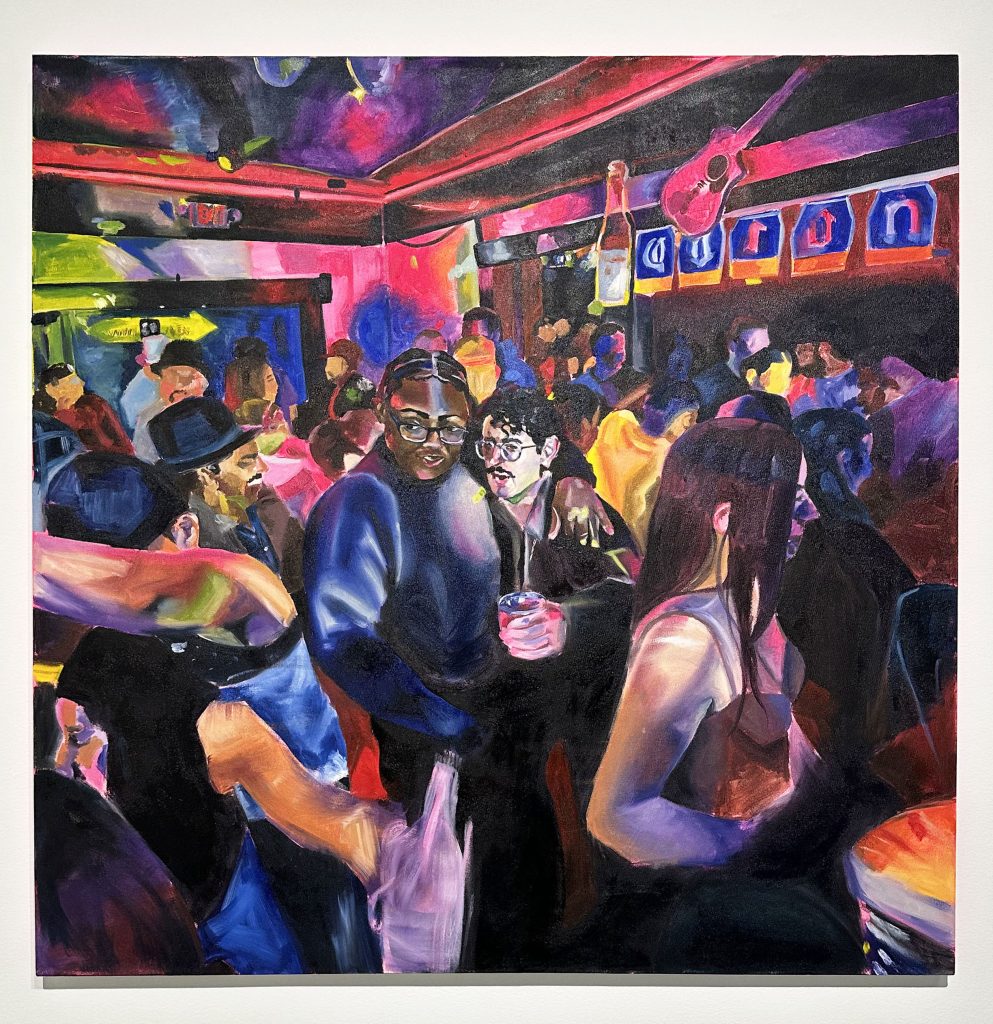
Jazzalyn Palma, “21st st”, Oil on canvas, 2023

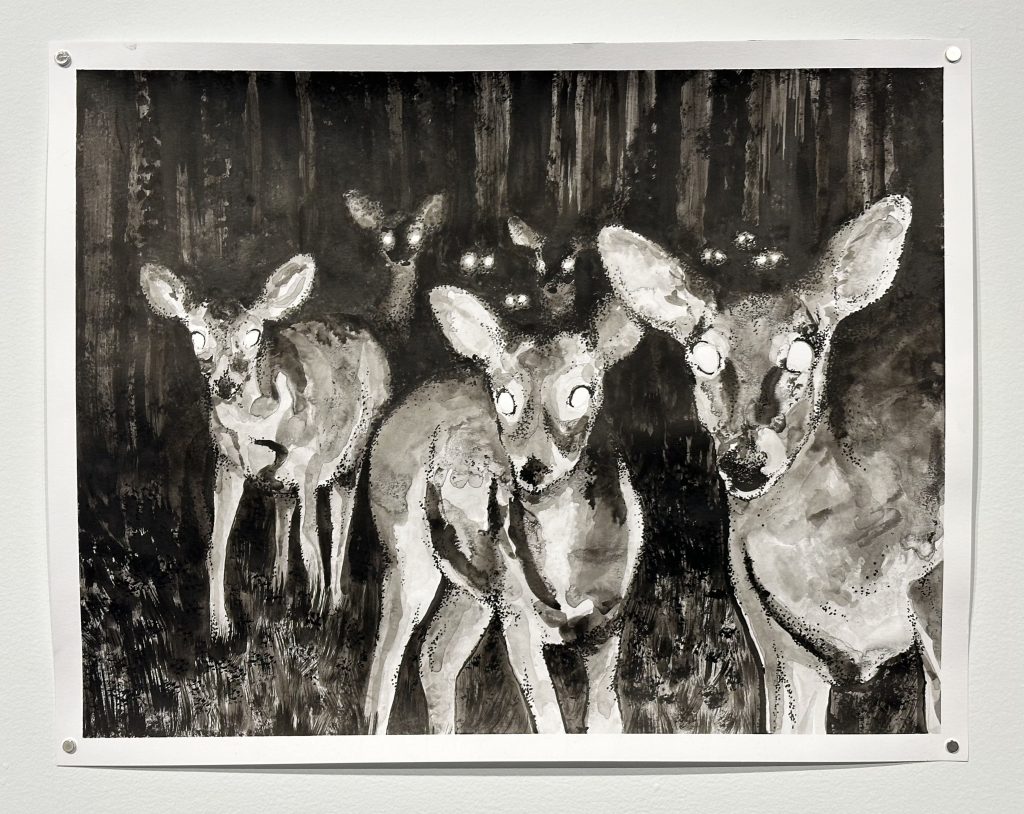
Rachel Augustson, “Gaze”, Ink on Paper, 2023

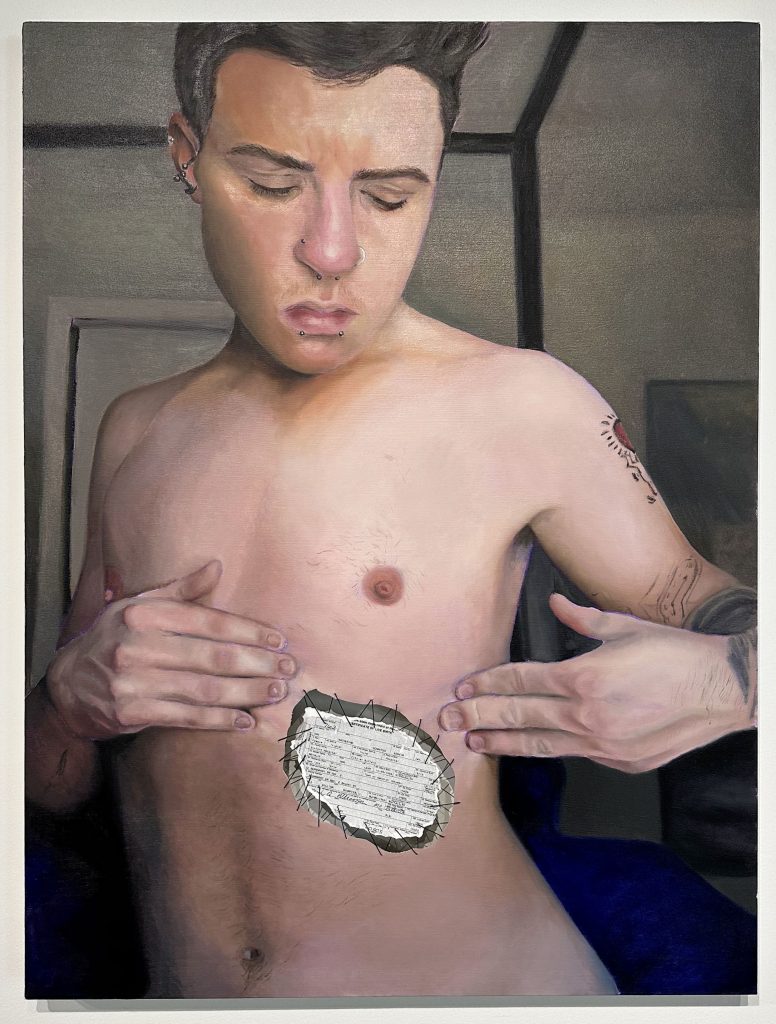
Ashton Burton, “…”, Oil on canvas, 2023

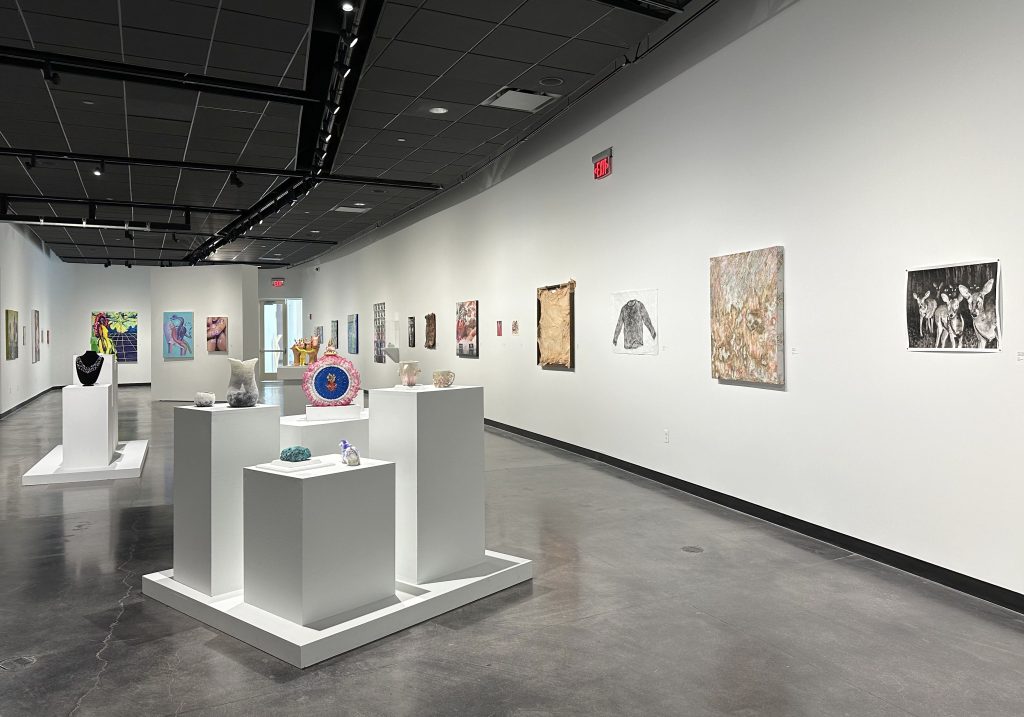
Cleveland Institute of Art’s 78th Student Independent Exhibition is currently on view in their Reinberger Gallery. The juried show is organized by the students and includes work from all mediums.

There are so many great pieces in this show, above and below are just a few selections.

This exhibition closes 4/7/24.
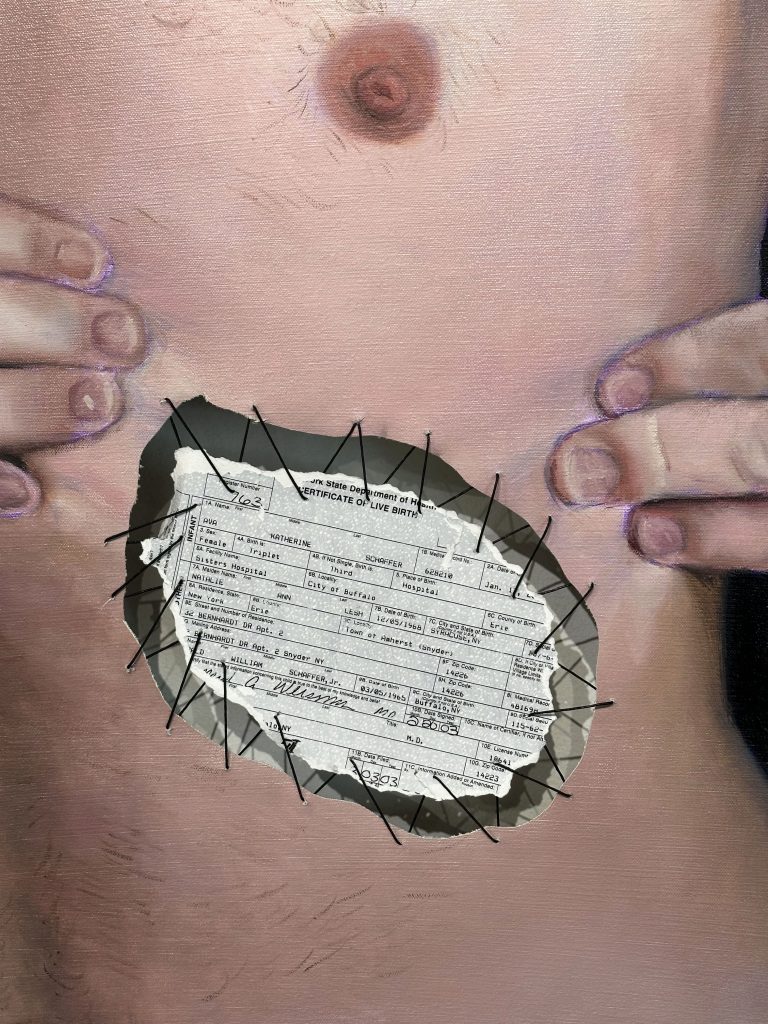
James Schaffer, “Bound”, Oil on canvas, 2023

James Schaffer, “Bound”, Oil on canvas, 2023 (detail)

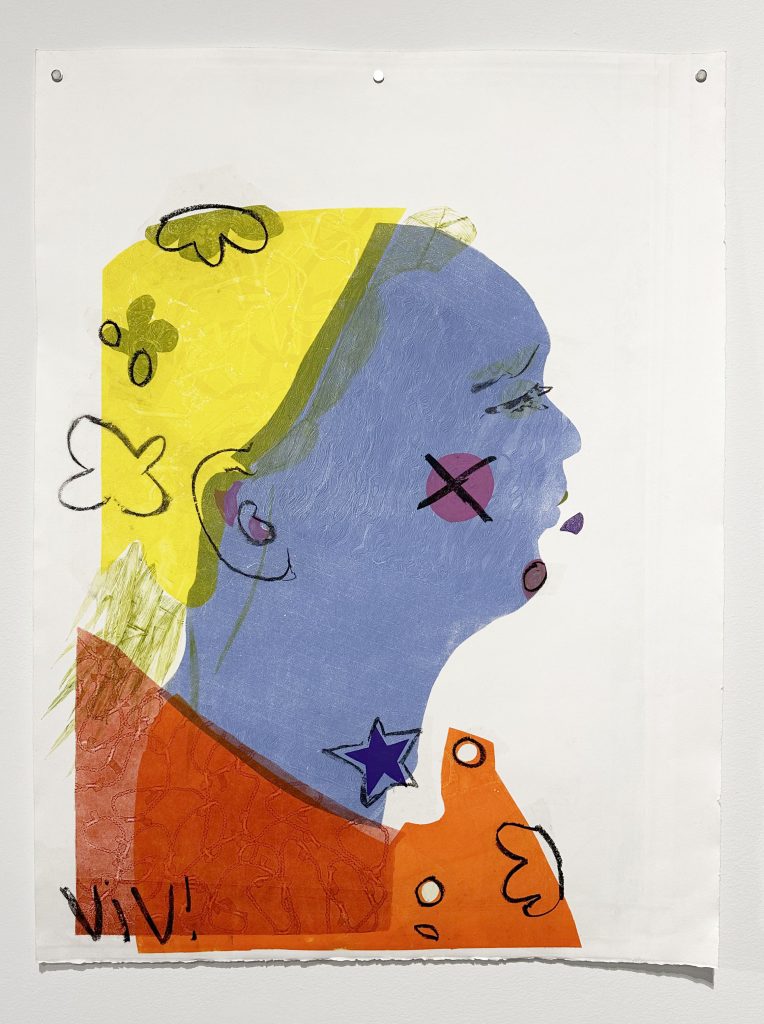
Gwen Putz, “Viv!”, Monoprint, 2023

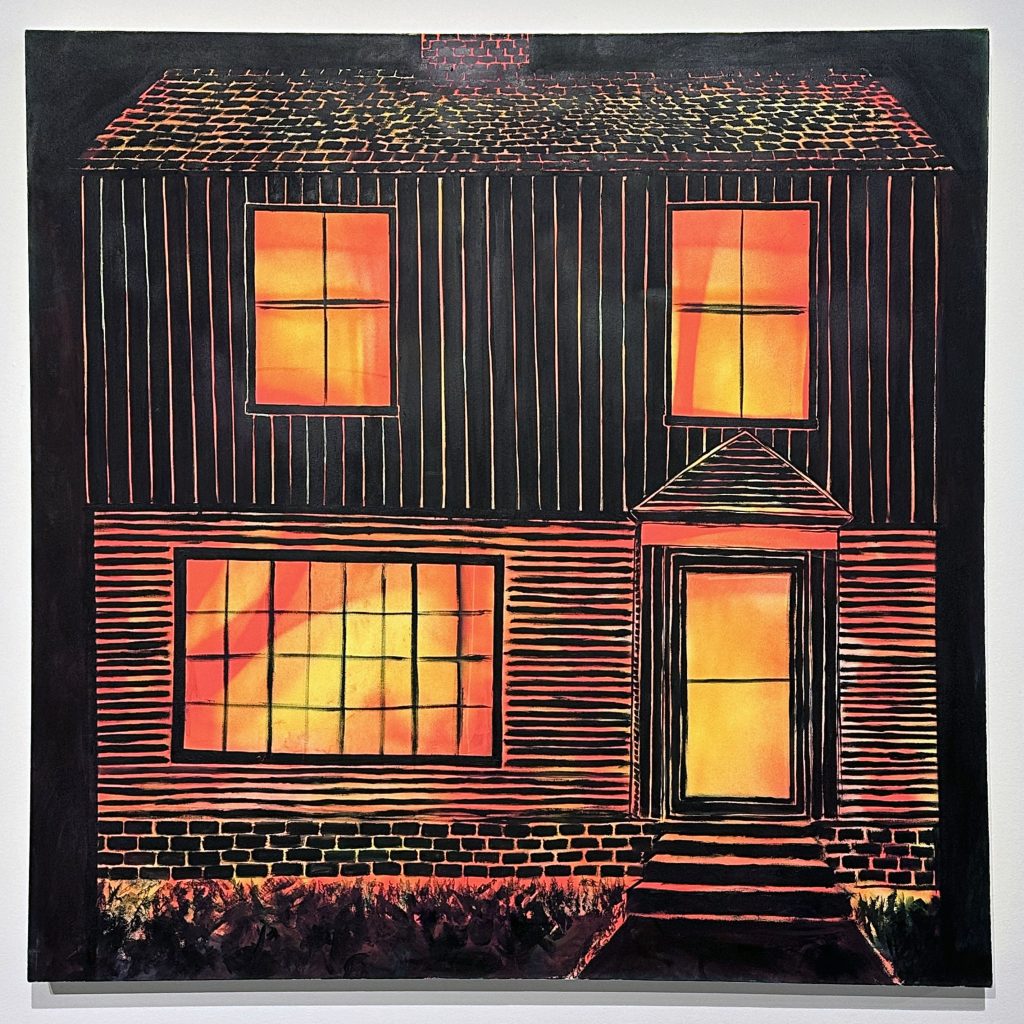
Tristen Kovacs, “897”, Spray paint and acrylic on canvas, 2023

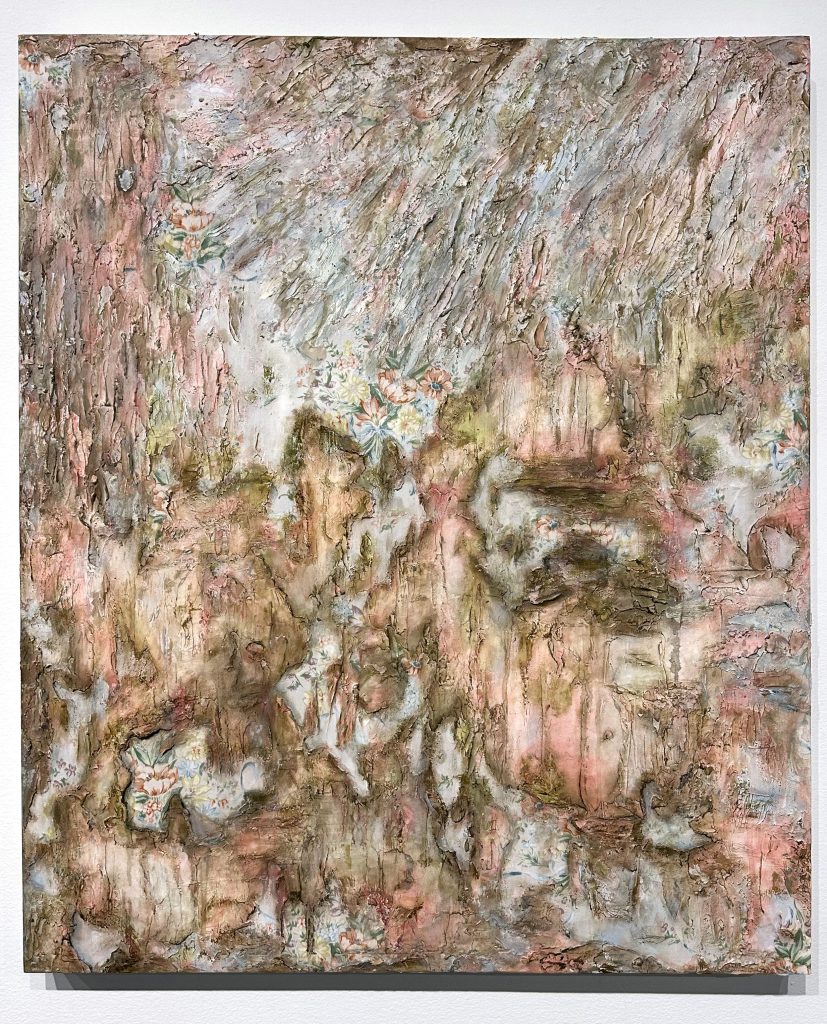
Emily Fontana, “Untitled”, Acrylic and spackle on fabric, 2024

Emily Fontana, “Untitled”, Acrylic and spackle on fabric, 2024 (detail)

Mar 192024
 

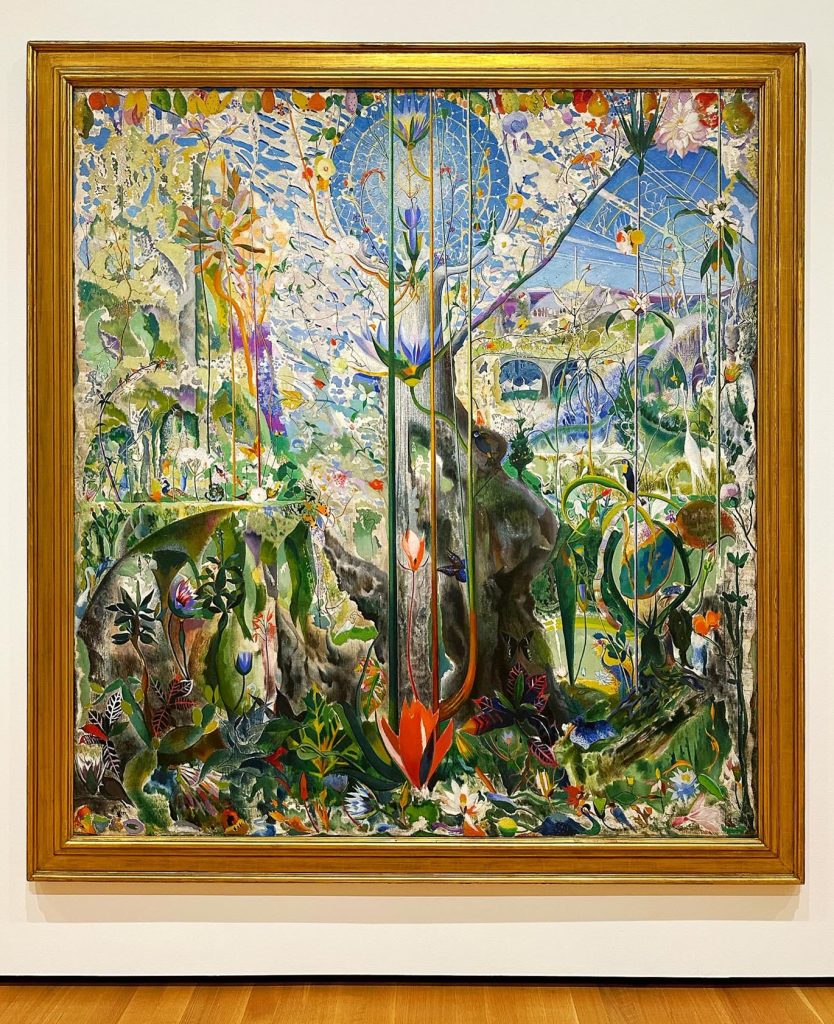
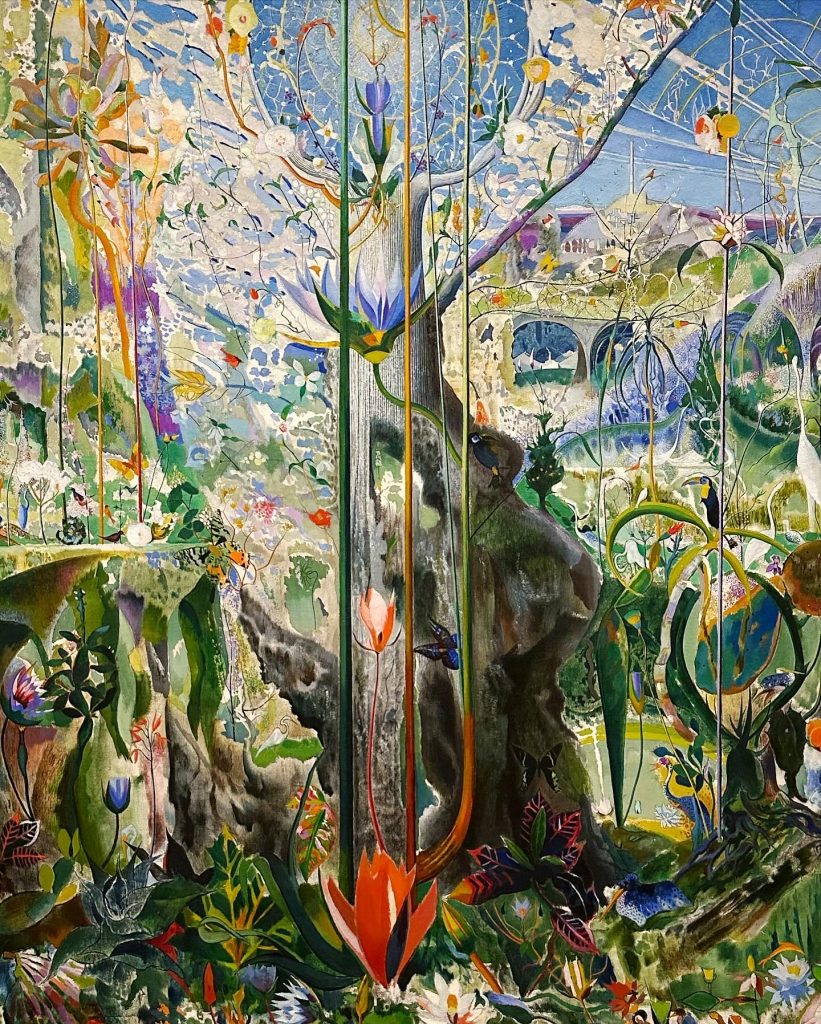
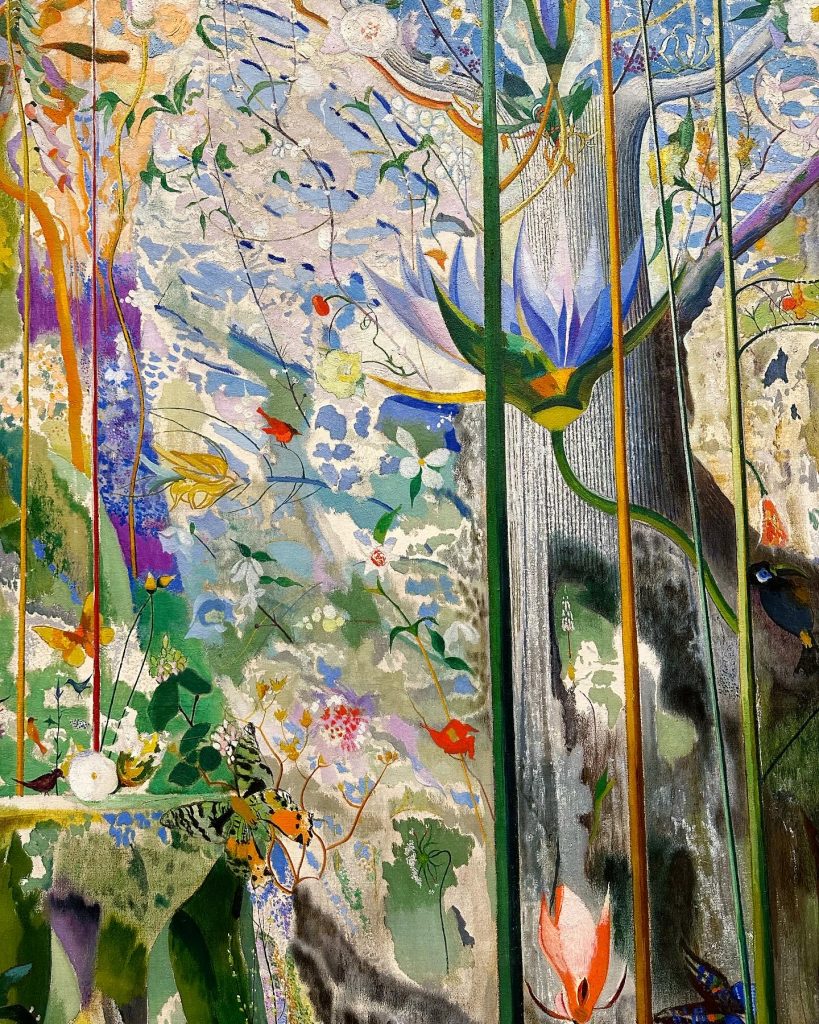
On view as part of the permanent collection at Akron Art Museum is Joseph Stella’s oil painting, Tree of My Life, from 1919.
From the museum about the work-

Joseph Stella described his inspiration for Tree of My Life as an epiphany: “A new light broke over me. I found myself in the midst of a joyous singing and delicious scent … of birds and flowers ready to celebrate the baptism of my new art.” Throughout the painting, forms and colors are infused with symbolic significance. The gnarled tree trunk represents the weathering effect of life’s temptations, while red lilies, blue patches of sky, and white blossoms symbolize lifeblood, divine protection, and spiritual ascendance. Stella, who maintained connections to his native Italy while living in America, combined this dense visual poetry with elements of adventurous European styles. Tree of My Life thus presents a distinctive new vision, marking an important moment in the course of Stella’s career and in the progress of American modern art.

Happy first day of spring! (in the Northern Hemisphere)

Mar 182024
 

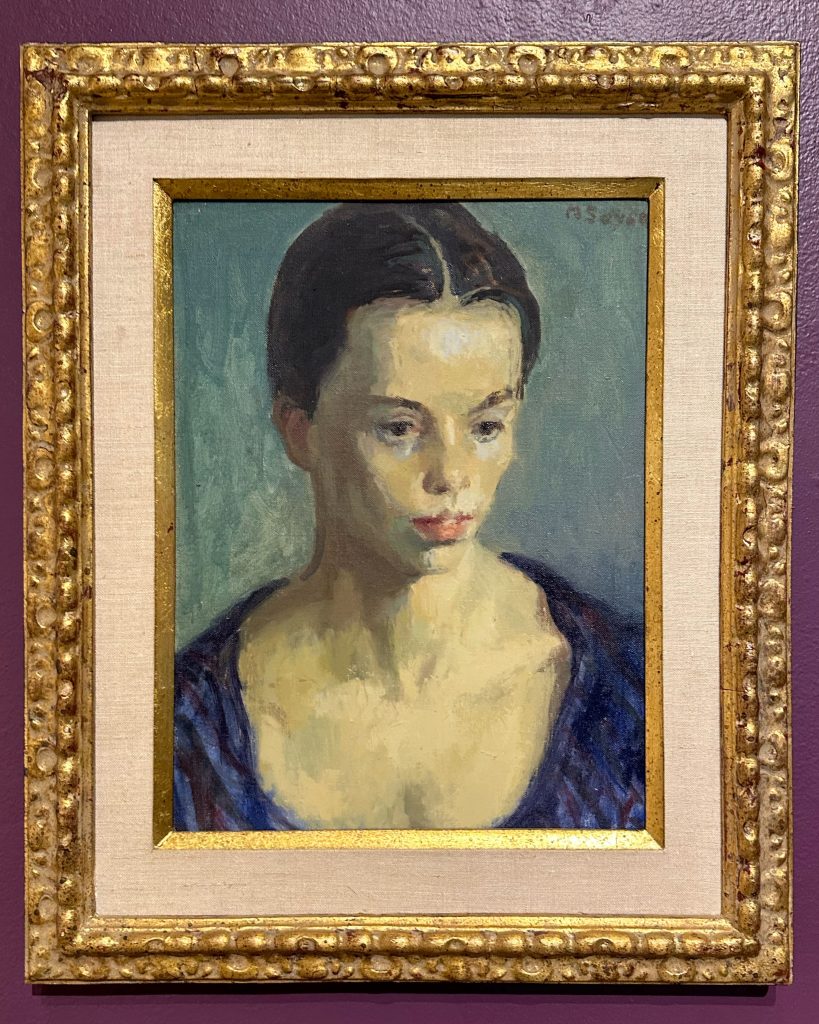
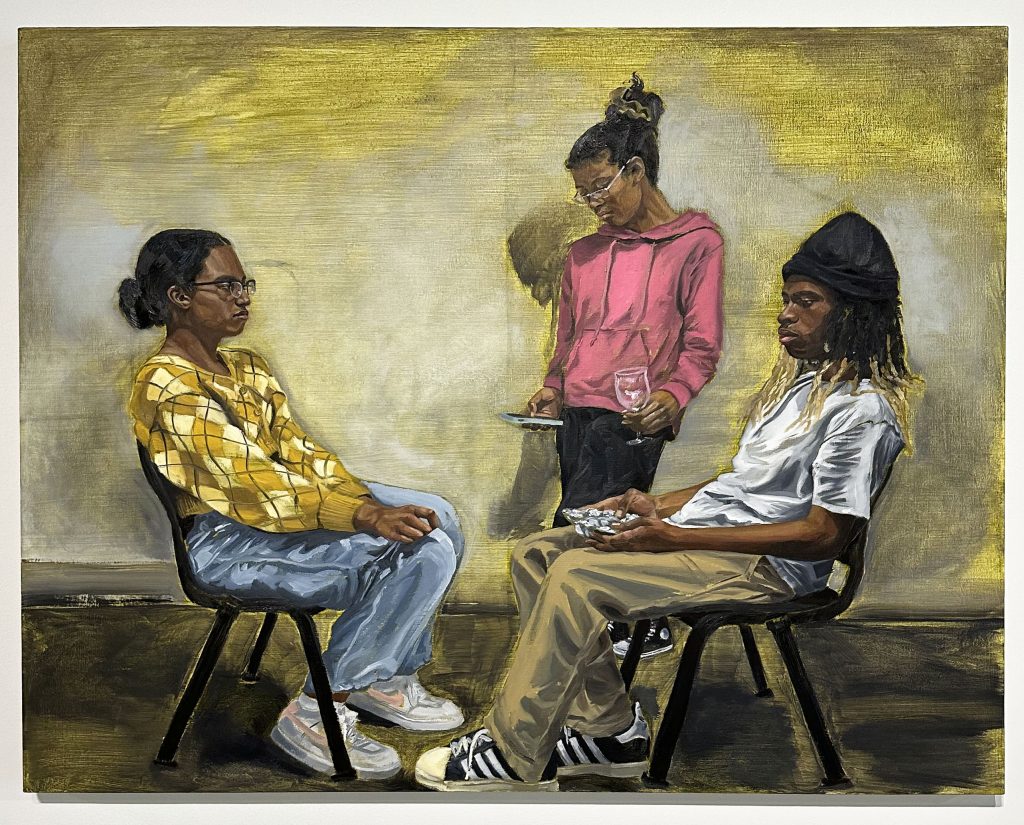
Moses Soyer’s oil painting, Young Girl, is one of the works on view in A New Deal: Artists of the WPA from the CMA Collection at Canton Museum of Art. The exhibition is a reminder of one of the best social programs ever created by the US government and the positive impact it had on the country during one of its hardest periods.

From the museum about the exhibition-

Against the backdrop of severe economic strife caused by the Stock Market Crash of 1929, President Franklin Roosevelt created the Works Progress Administration (WPA), which put roughly 8.5 million Americans, including more than 173,000 men and women in Ohio, to work building schools, hospitals, roads and more. Within the WPA was The Federal Art Project (FAP) which provided employment for artists to create art for municipal buildings and public spaces. The FAP had a non-discrimination clause that meant it attracted and hired artists of color and women, who previously received little attention in the art world. The only guidance the government offered about subject matter was to depict the “American scene” and stipulated no nudity or political issues. The goal was for artists to help the United States develop its own distinct American style of art, especially as artists in other parts of the world were forbidden freedom of expression and ordered to create artworks that projected the beliefs of their governments.

Though the WPA artists in the United States shared the common goal of capturing life in all its variety and promoting national pride, they each had different approaches, and many modified their typical subject matter to fit whatever project they were assigned. The arts before and after the New Deal relied on private patronage and the philanthropy of wealthy and elite institutions: galleries, museums, dealers. But during the WPA, art wasn’t a luxury good, it was seen as an essential part of our democracy. Artists were seen as professional workers who were making important and significant contributions to American life. The artworks made under the WPA became the collection of the American people and were put in public collections – hospitals, schools, post offices, housing projects, etc. – ensuring they were part of communities. The arts were seen as an important part of a democratic society and the American way of life, with a richness of experience and accessibility to culture.

While artists were offered opportunities through the WPA, they were far from immune to the distress caused by the Depression, and many still struggled to make a living. Will Barnet detailed a bleak scene he came across, saying:

“It was like a war going on. There were bread lines and men lined around three, four, five, six blocks waiting to get a bowl of soup. It was an extraordinary situation. And one felt this terrible dark cloud over the whole city.”

Moses Soyer also described the hardships artists experienced, saying,

“Depression–who can describe the hopelessness that its victims knew? Perhaps no one better than the artist taking his work to show the galleries. They were at a standstill. The misery of the artist was acute.”

The FAP supported the creation of thousands of works of art, including more than 2,500 murals that can still be seen in public buildings around the country. The FAP also supported art education and outreach efforts, including traveling exhibitions and art education programs for children. The WPA and FAP had a significant impact on the American art scene, and many of the artists who participated in the program went on to become important figures in the art world.

A New Deal: Artists of the WPA from the CMA Collection highlights the lives of artists from our Permanent Collection who worked for the WPA, and in doing so, fostered resilience for a struggling nation. You will learn about the projects they worked on, the subjects they were interested in, and how their own lives were affected by the Depression. Each of these artists helped to foster the nation’s spirit and prove that even in the darkest of times, art serves as a uniting force to collectively lead people into a brighter future.

And about Moses Soyer and his painting from the museum-

The Depression set the mood for most of Soyer’s art expression, and his portraits of people seem to be preoccupied with a sad secret. His portraits were often of solitary figures, using professional models or his friends, capturing in these paintings the spirit of his sitters, their dreams or disillusionment. He is best known for his introspective figure paintings of weary, melancholy women in muted colors, matching the mood of his sitters with the pigment in his paint. He was inspired by artist Edgar Degas, who used color expressively.

On the museum’s website you can find both the artwork on display for the exhibition and also a gallery of the museum’s entire collection organized into several categories.