Mar 232023
 

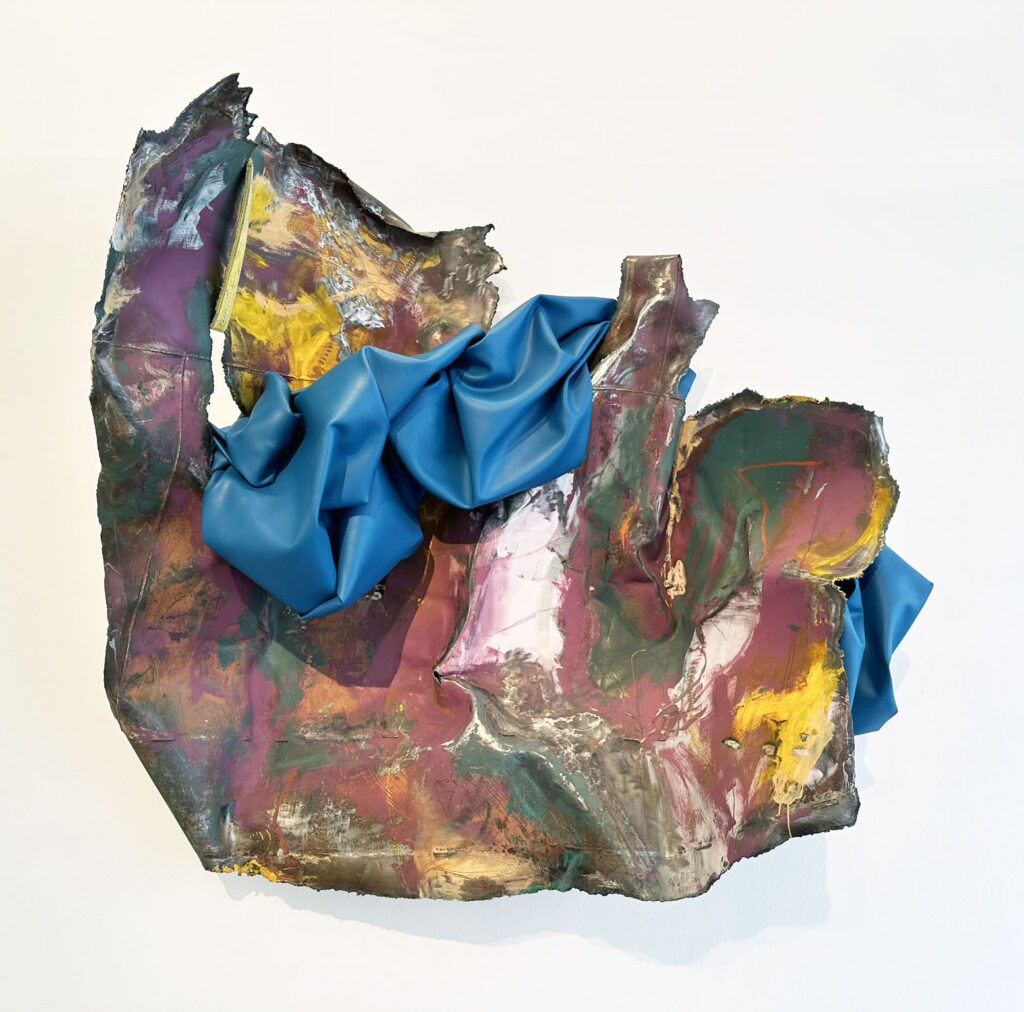
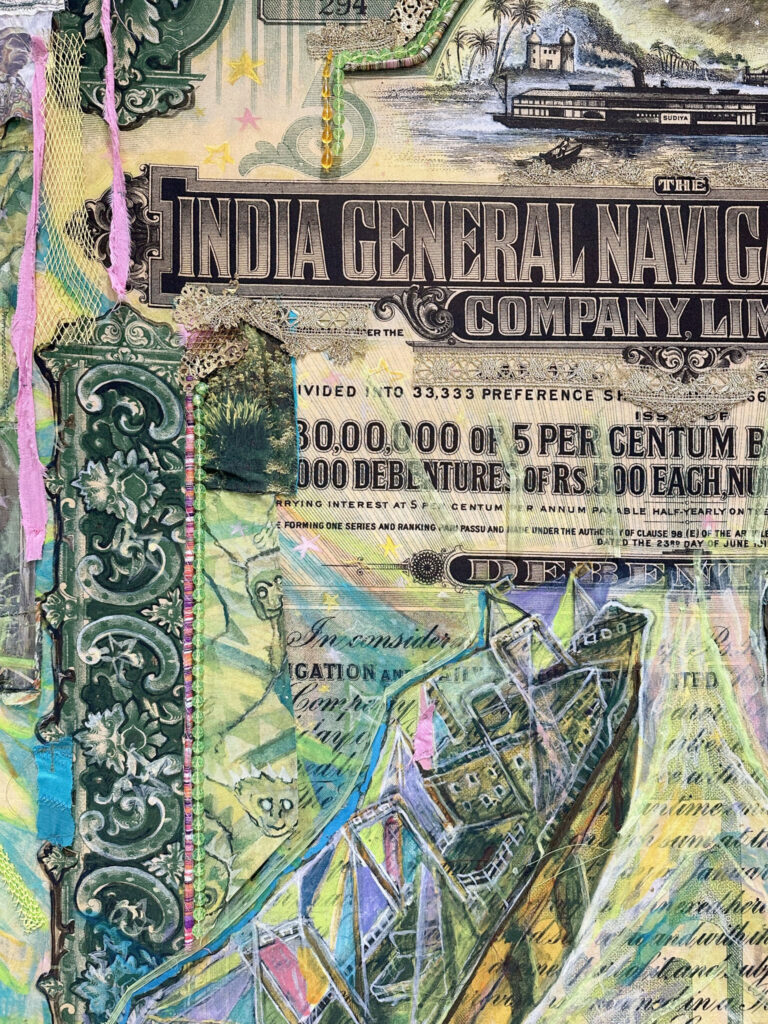
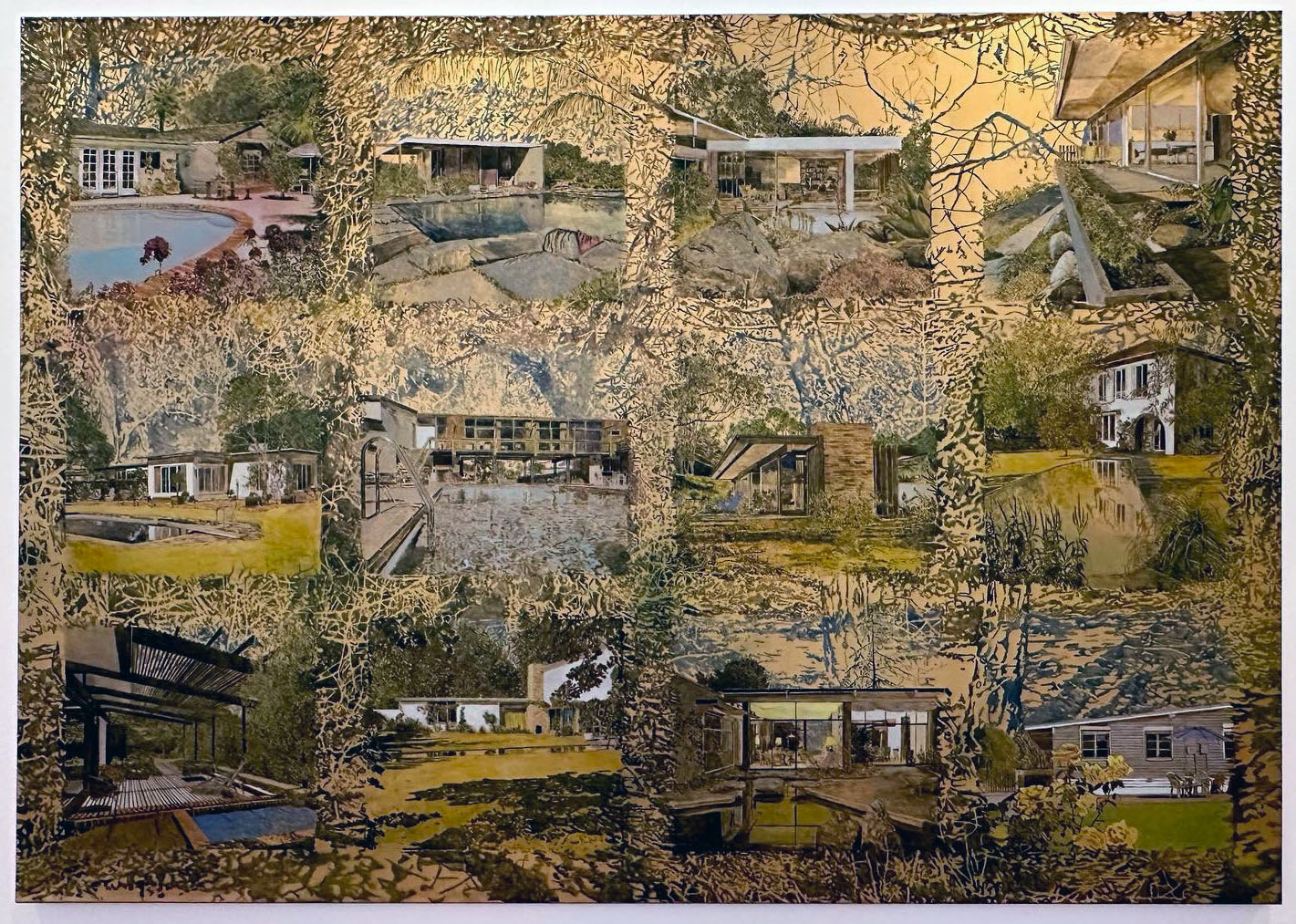
Stefan Kürten, “We are all made of stars”, 2013

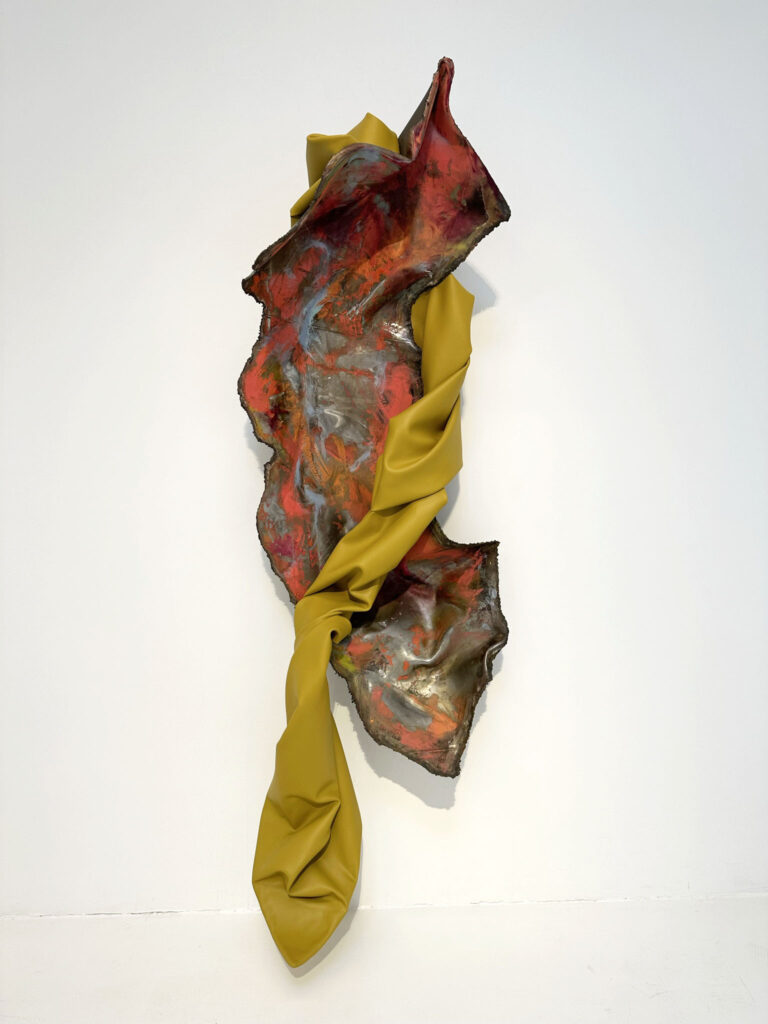
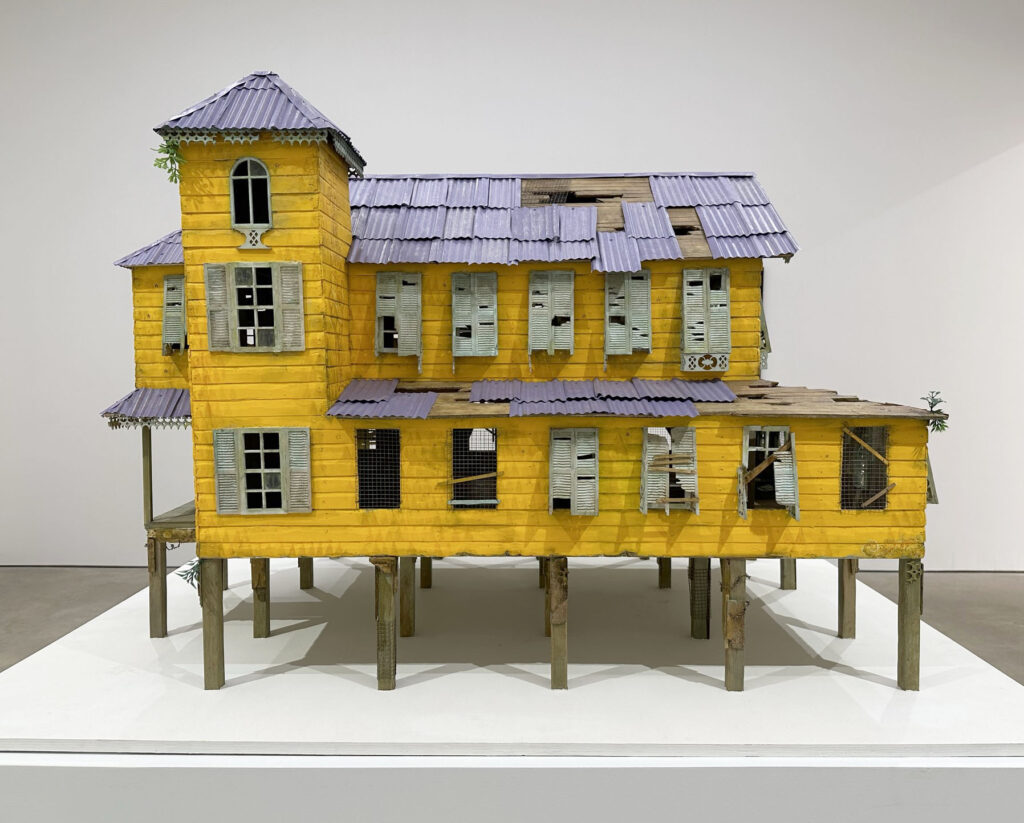
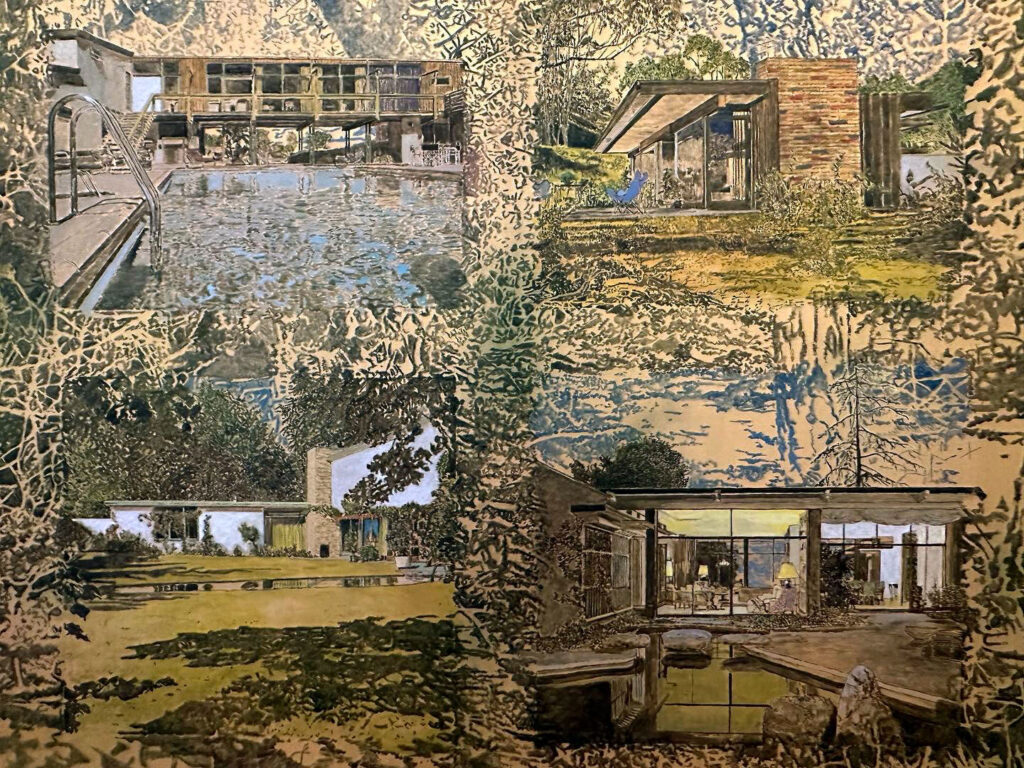
Stefan Kürten, “Running to Stand Still”, 2014

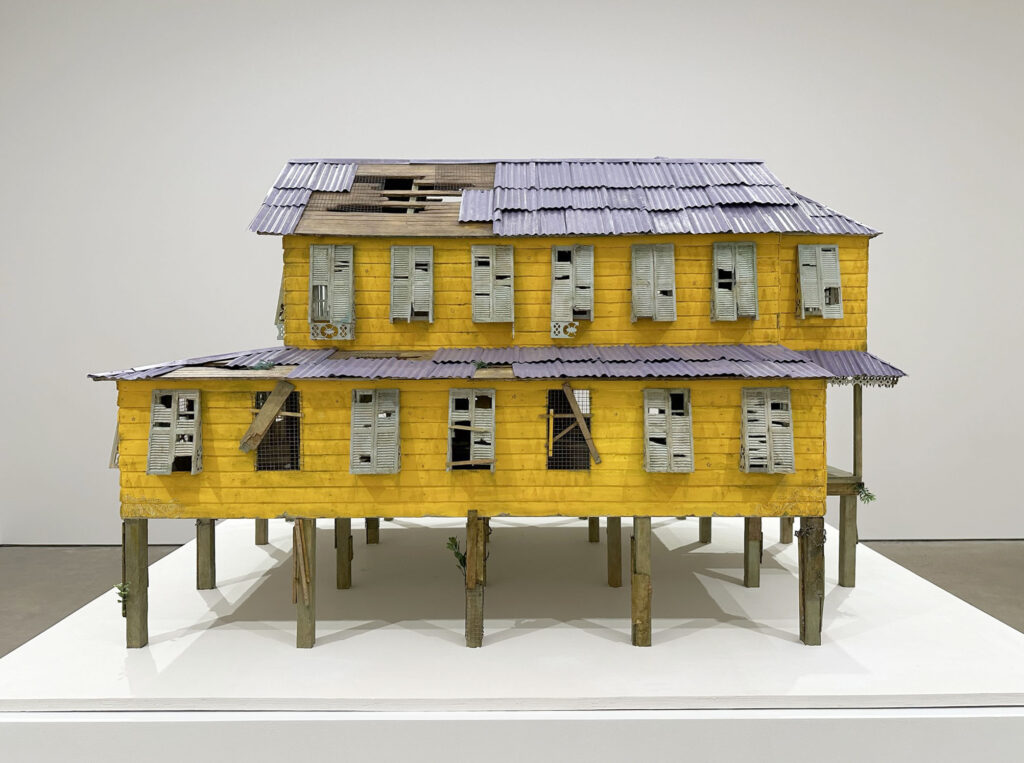
Stefan Kürten, “Running to Stand Still”, 2014 (detail)

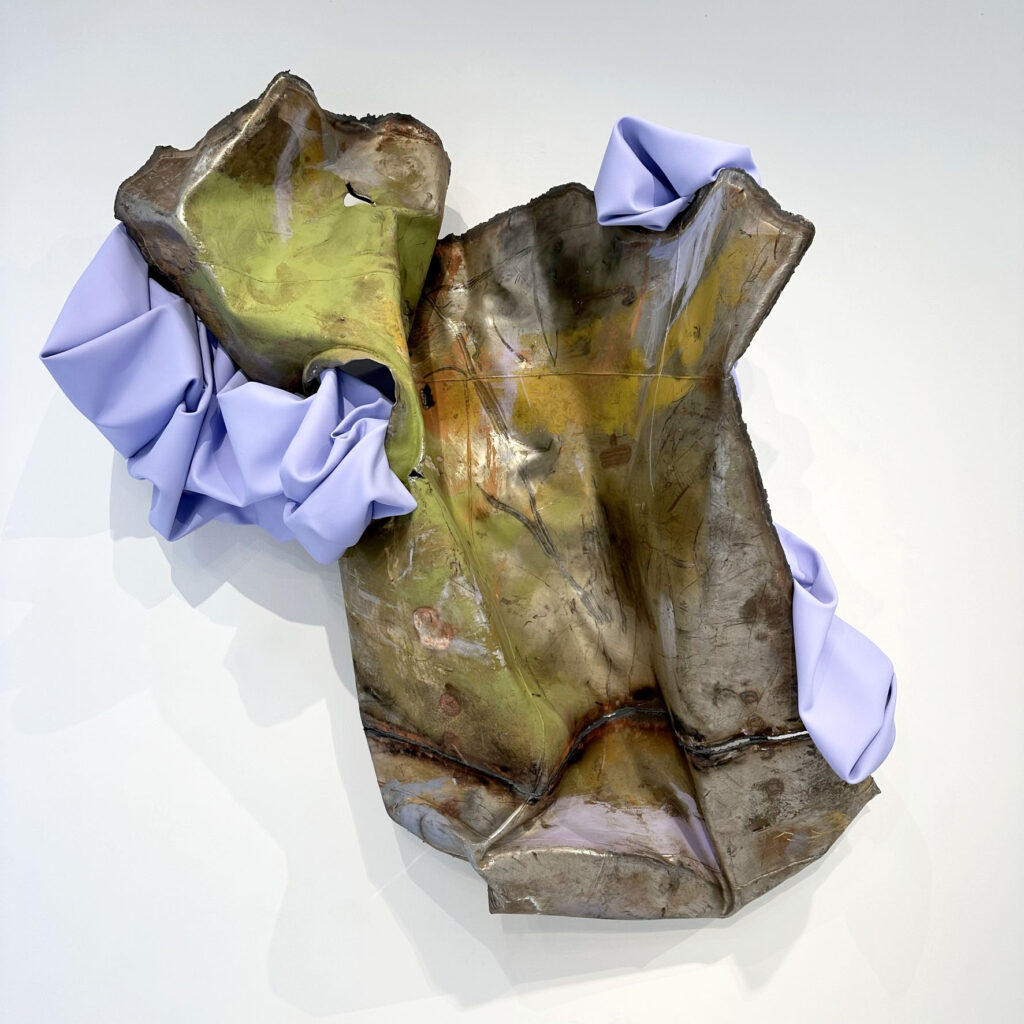
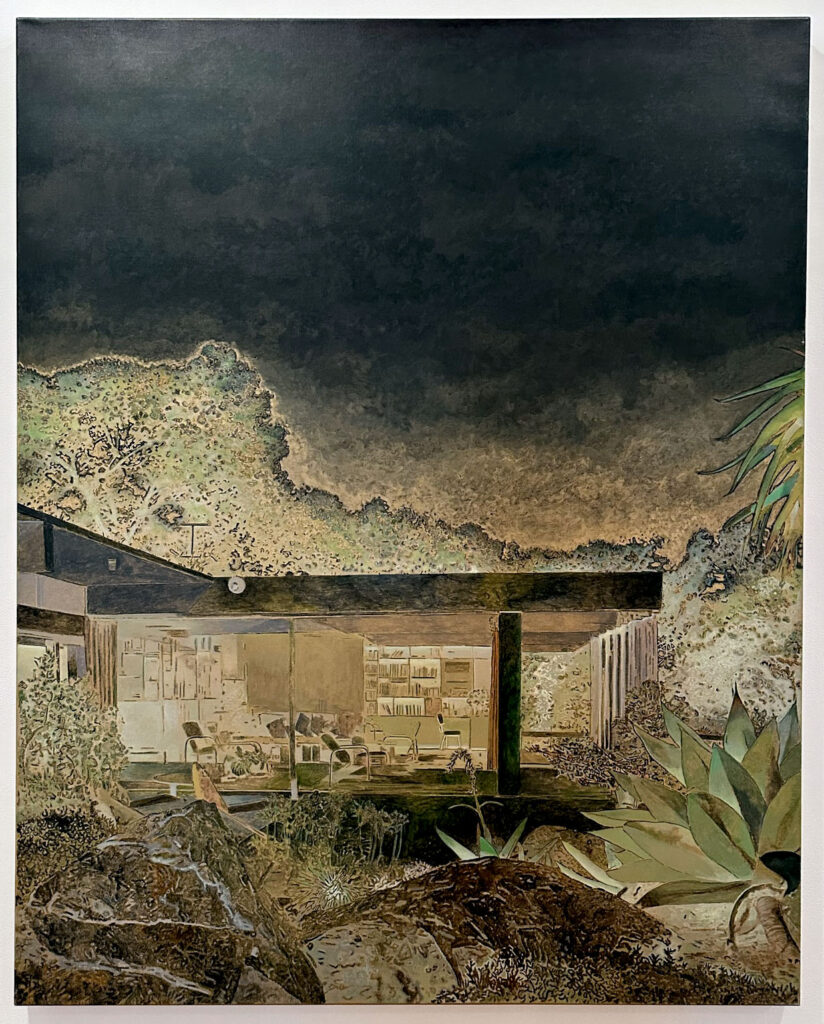
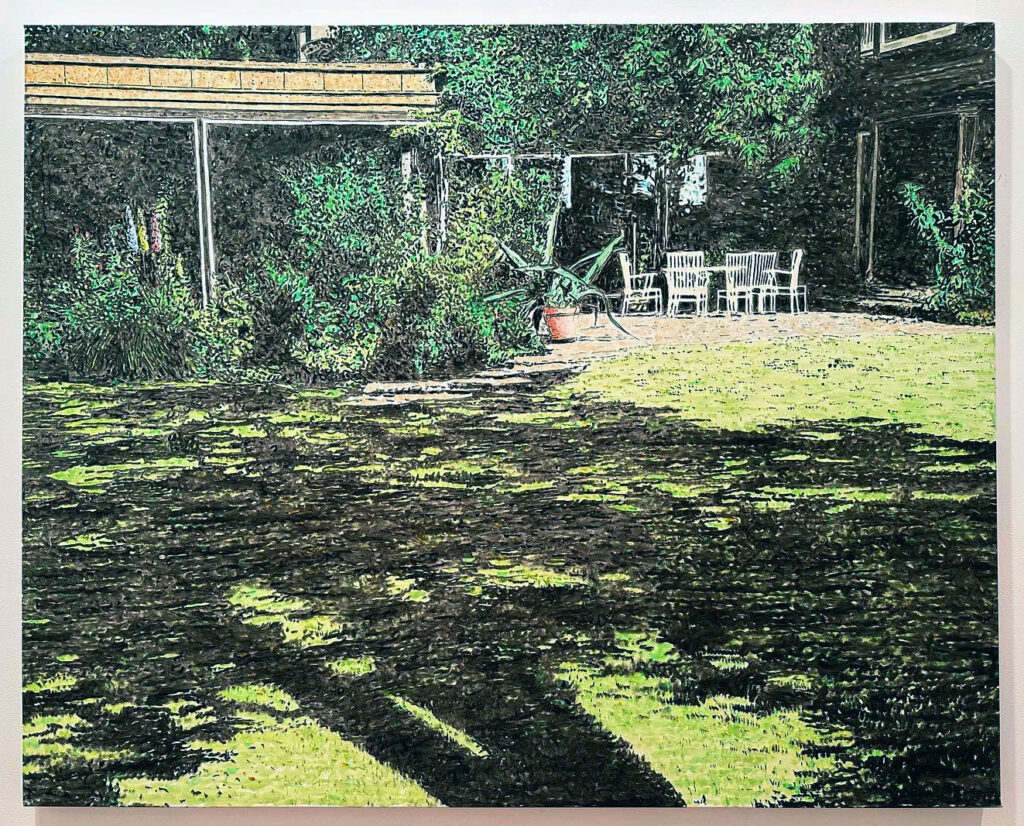
Stefan Kürten, “Fine Wrinkles”, 2000

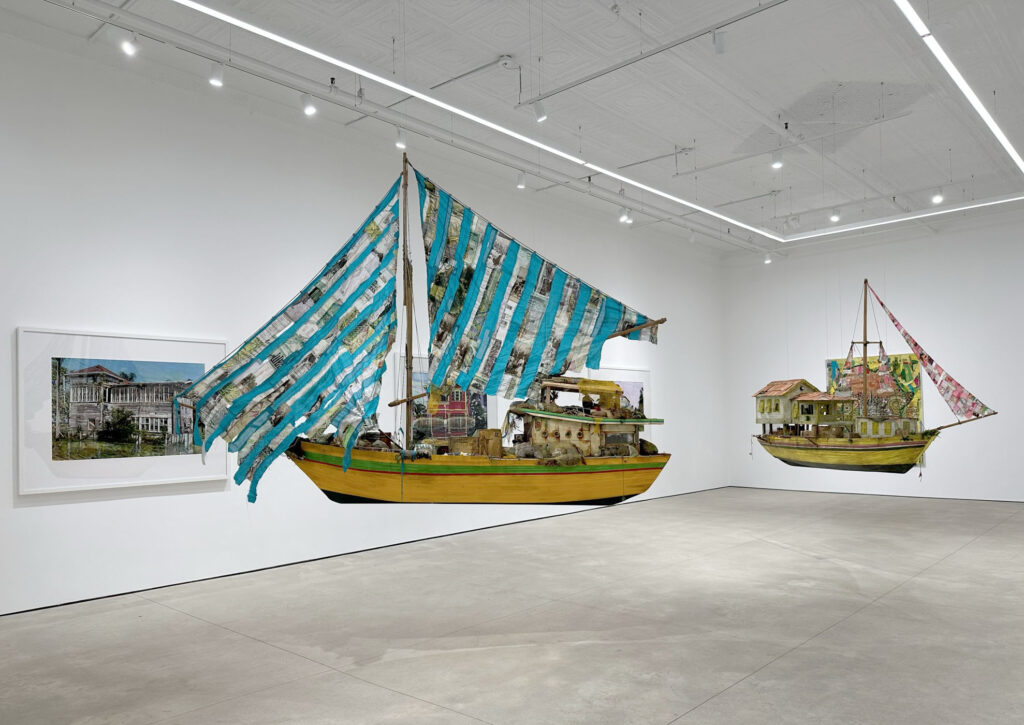
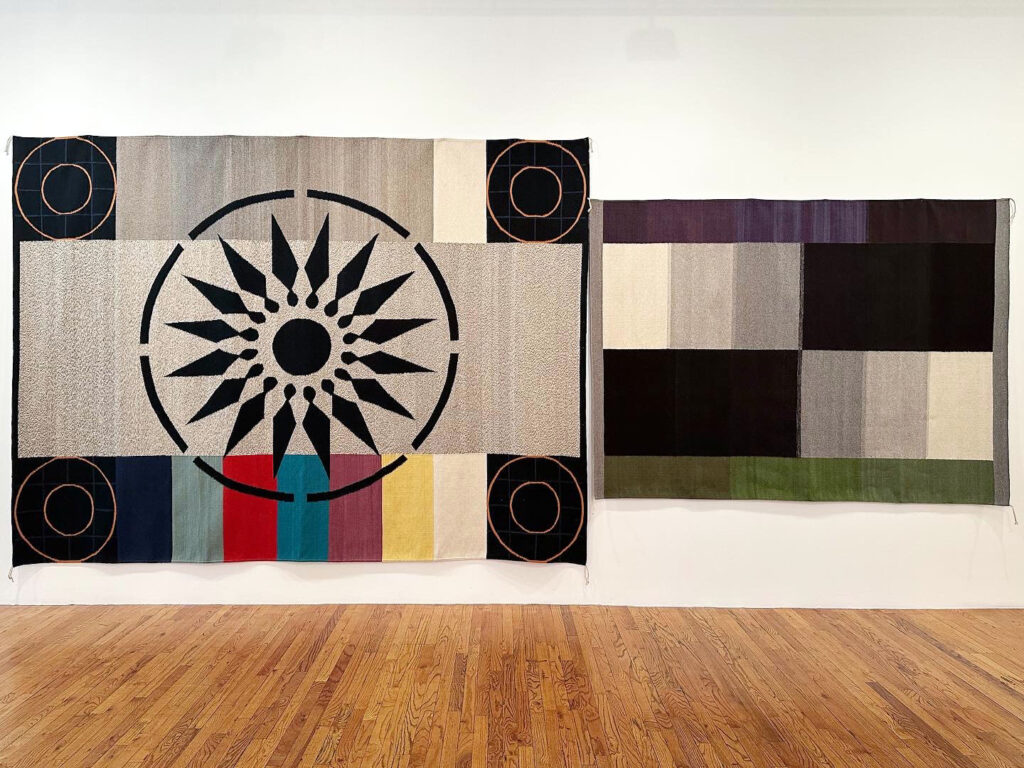
Rita McBride, “Mae West Mandala (Oaxaca), 2009 and “Color Test (Green Bar)”, 2009

Stefan Kürten’s paintings of houses and Rita McBride’s wall coverings (and other sculptures) work with each other to question the concept of home, as well as the objects you might find within one. The exhibition, titled I Continue To Live In My Glass House, is on view at Alexander and Bonin until 3/25/23.

From the press release-

Stefan Kürten is known for detailed depictions of homes. Although constructed from both found and invented imagery, his homes feel known or experienced. The slippage between archetypes, memories, and dreams are central to his compositions. Set in lush landscapes and mysteriously unpeopled, Kürten’s homes evoke modern art or design museums with iconic sculptures and furniture viewable inside and outside of their transparent walls.

Rita McBride’s work invites us to reconsider structures and design elements such as ductwork, awnings, wall coverings and other utilitarian objects. McBride represents a bentwood chair in Murano glass, fastened together by a material that evokes spun candy or plastic wrap. Chair (1999) comments on the life of a domestic object whose usage necessitates an inventive approach to repair or stabilization.
McBride is also showing Particulates, an art installation that combines lasers with ambient dust and water molecules, will be on view at the Hammer Museum in Los Angeles starting 3/27/23.


Mar 172023
 

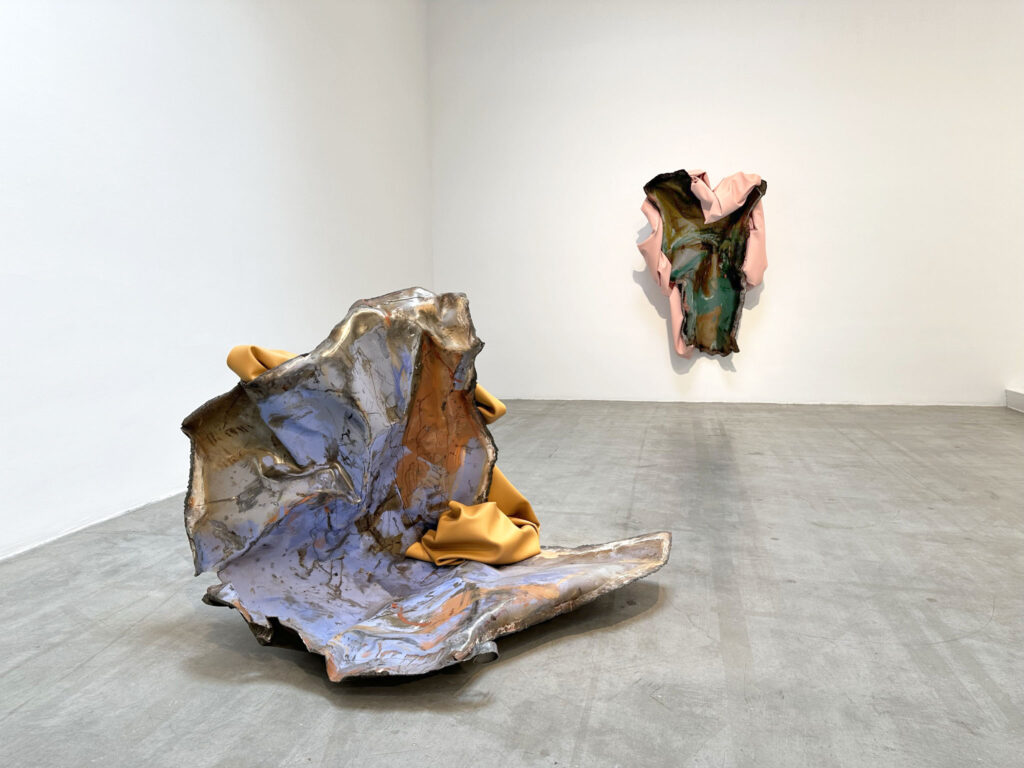
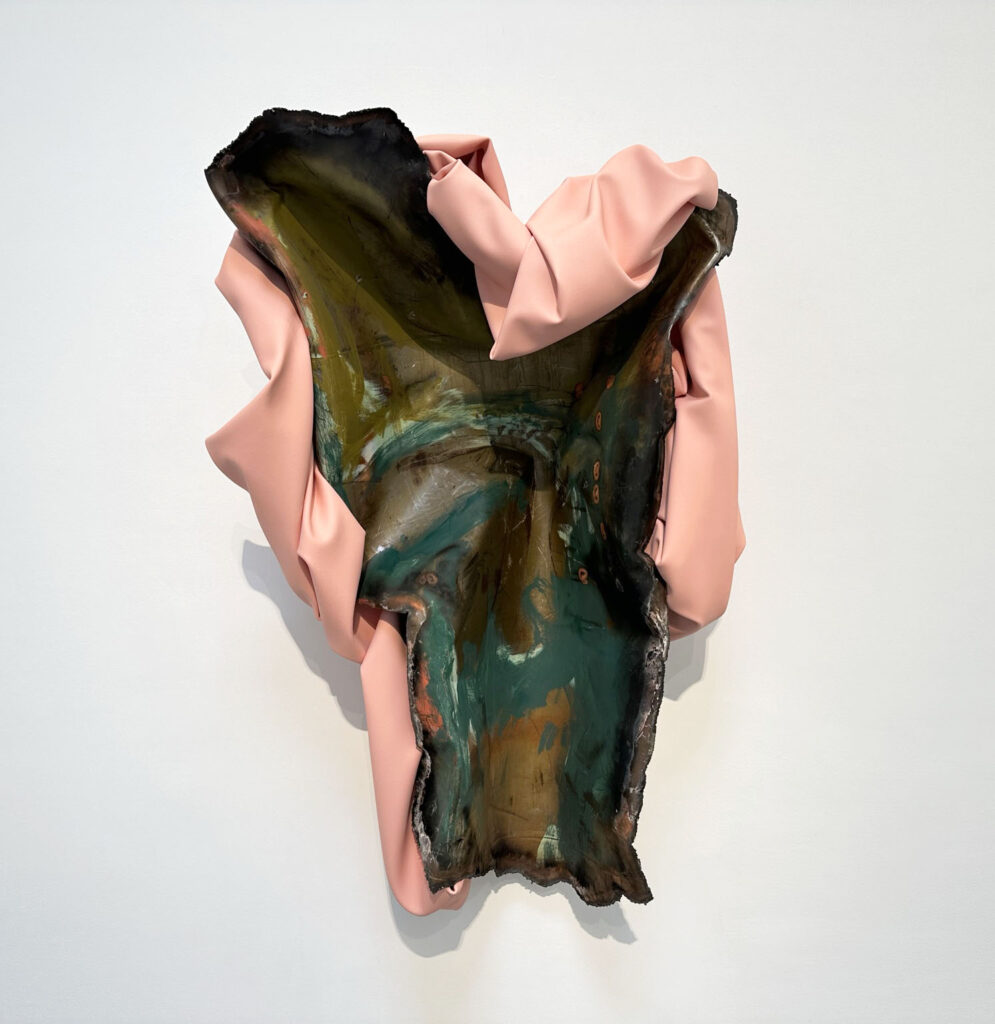
Currently at Derek Eller Gallery in NYC is Alyson Shotz: Alloys of Moonlight. The exhibition highlights her unique work which becomes more intriguing the more time you spend looking at it.

From the press release-

Featuring a monumental polychromatic steel sculpture and luminescent three-dimensional aluminum wall works, Alloys of Moonlight delves further into questions that Shotz has been exploring throughout her nearly 30-year career: how do we grasp the mysterious forces that shape the universe, and how do we reconcile observable reality with the noumenal reality of environmental phenomena? This new body of work explores the dialectic between these axes, as Shotz refines a sculptural language to visualize the unseen and the sublime forces that frame the natural world. The works in Alloys of Moonlight act as instruments by which to measure and reflect the ineffable forces of nature.
In the center of the gallery is Aphelion, a looped steel sculpture that turns and twists in ways that seem to defy nature, leading the eye in an endless serpentine path around its undulating curves. The sculpture transforms as the viewer moves around the piece, its colors shifting from gold to green to blue. Changes in light and time of day are registered by the changing colors of Aphelion’s surface, a phantom quality mirrored in the spatial nature of the work. Made of the least amount of material to hold its shape, Aphelion constitutes a delicate synthesis between positive and negative space. It is as much composed of a mesh-like steel as the air that flows through it. The form, which is born of the artist’s longstanding interest in knots and non-orientable surfaces like the Mobius Strip, is similarly fugitive and beguiling. Comparable entangled structures serve a fundamental role in the quantum-mechanical foundations of nature itself, and knot-like forms likewise have appeared as cultural signifiers throughout art history in Roman, Byzantine, Chinese, African and Islamic art.

The walls of the gallery feature a series of crumpled aluminum sheets, painted in a hazy spectrum of light-reflective mineral colors. Rather than the two-dimensional geometry of a flat plane, these pieces are spatial objects that delineate the magnitude of a prior impact. Named Alloys of Moonlight after the title of the show, each piece has a particular form, a shape that quantifies the exact nature of an individual collision. Conversely, the folding also embeds the aluminum sheets with a degree of potential energy and the suggestion of an incomplete natural process: the unfurling of a leaf or the folding of a wing. As representations or diagrams, these works define form through a negative logic—rather than creating sculptural volume through physical material, thin walls of aluminum outline the shape of an interior void. Alloys of Moonlight subverts the expectation of concrete immutability, instead using space as a sculptural medium. This language of spatial ambiguity is paralleled by the striking luminescent surfaces of the works, which are similarly variable. Like the orbits of moons around planets, each piece is in constant flux, registering changes in sunlight as well as the shifting position of the viewer. The sculptures in this exhibition exemplify the interplay between what is visible, concrete, measurable, and a more ethereal subtext that structures the natural world. Alloys of Moonlight renews and deepens Shotz’s exploration of the delicate and sublime space between these realities.

This exhibition closes 3/18/23.

Mar 162023
 

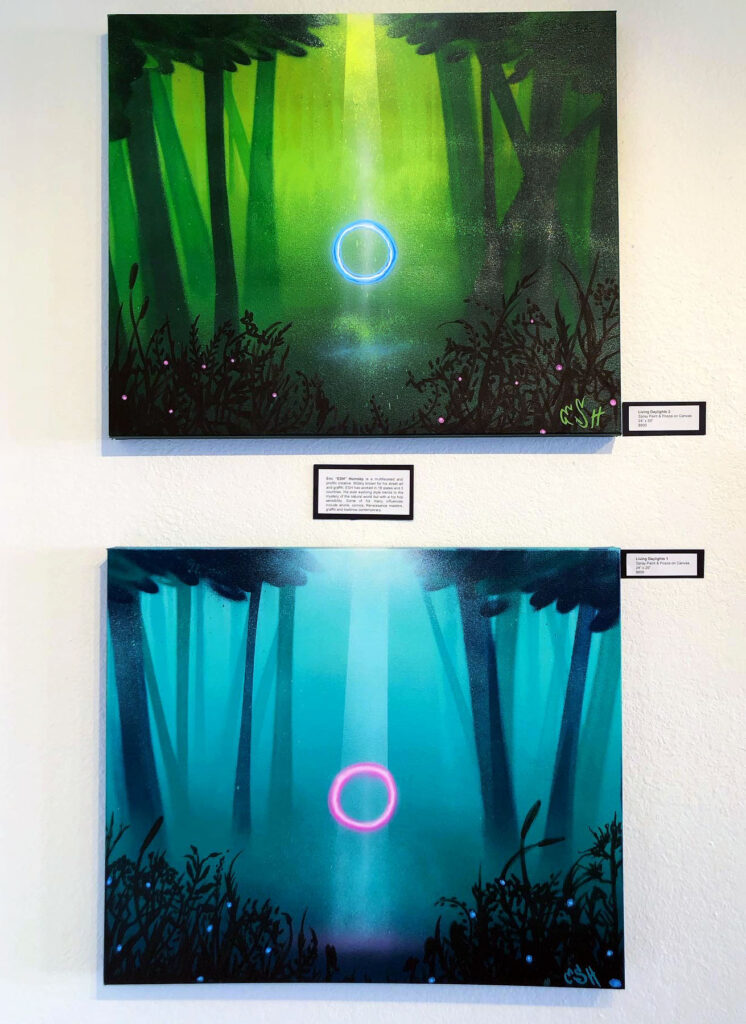
Eric “ESH” Hornsby, “Living Daylights 1″and “Living Daylights 2”

Adam Christopher Reed, “The Judge”

Nikita Rosalind, “Peace in the Wild Waves”

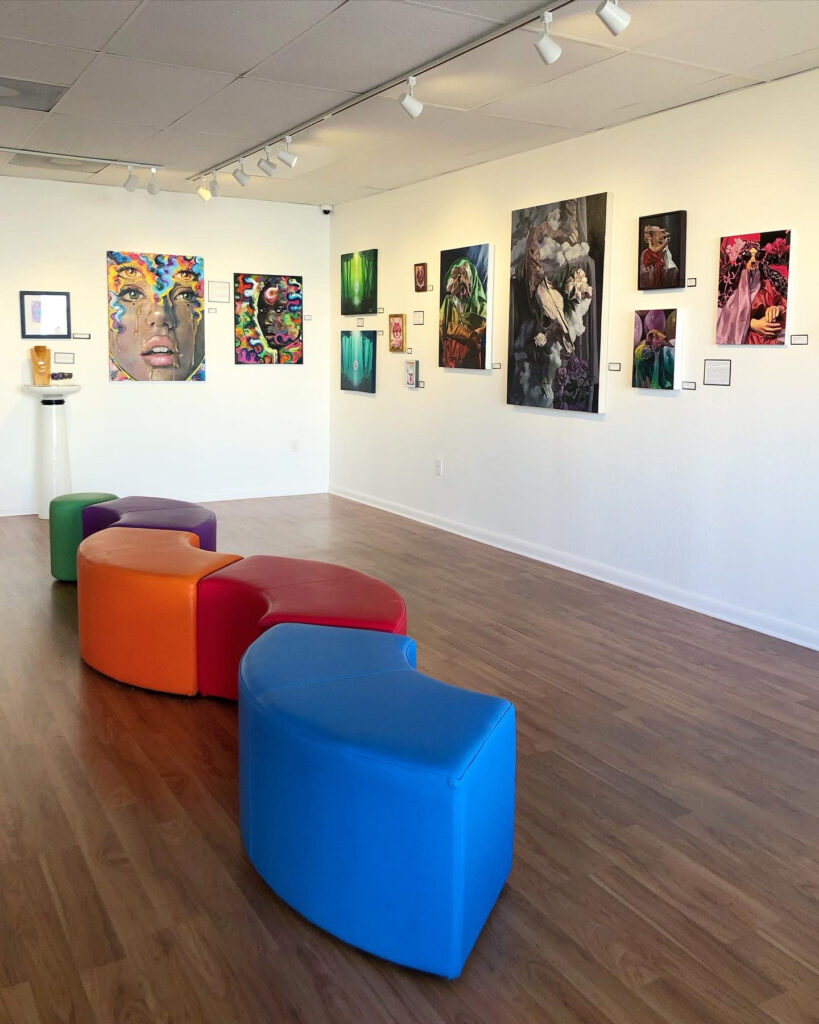
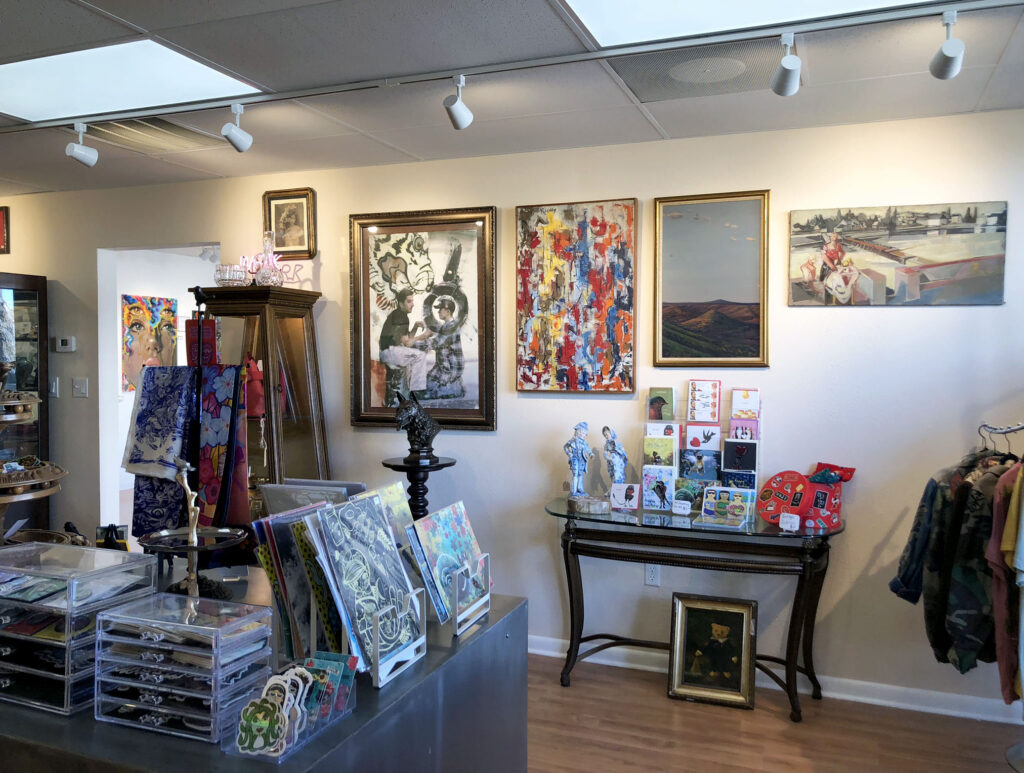
The Werk Gallery is an exciting new space in St. Pete that hosts monthly exhibitions in one half and the owners’ curated mix of vintage and modern items in the other. The photos above are from Shiny & New, the first gallery’s first show.

Artists from this exhibition pictured above- Adam Christopher Reed, Nikita Rosalind, and Eric “ESH” Hornsby

Currently the gallery is showing Rite of Spring, featuring artists Kenny Jensen, Nathan Beard, Samson Huang, Laura Spencer (Miss Crit), John Gascot, and Leafmore Studios (Becca McCoy and Justin Groom).

The gallery is open Thursday- Sunday from 12-5 pm.

Mar 162023
 

Adam Suerte, “Overpass, Redhook”

Laura Enderle, “Martini Theater”

LJ Lindhurst, “Magenta Sweet Soaker”

Tonight (3/16/23) at Basin Gallery in Redhook, Brooklyn, is the closing reception for the group exhibition of work by Adam Suerte, Danny Cortes, Laura Enderle, and LJ Lindhurst.


Mar 102023
 

Bonam Kim, “Untitled (401 Suydam Street), 2022”, Dollhouse miniatures, taxidermy pigeon, wood, paint and “Can’t Stand Up For Falling Down”, 2018, wood, screw, silicone

Bonam Kim, “Untitled (401 Suydam Street)”, 2022, Dollhouse miniatures, taxidermy pigeon, wood, paint

Bonam Kim, “Untitled (Classroom)”, 2022, Dollhouse miniatures, wood, paint, paper

Bonam Kim, “Untitled (Classroom)”, 2022, Dollhouse miniatures, wood, paint, paper

Bonam Kim, “Untitled (1990-2005)”, 2022, Wall clock, dollhouse miniatures, wood

It’s the last weekend to see Bonam Kim’s GOOD JOB WELL DONE, at A.I.R. Gallery in Brooklyn. The collection of sculptures are each based on events in Kim’s life and are incredible creations.

From the press release-

Kim grew up with her brother’s architectural models and drawings scattered around their house. Captivated by the relationship between model and actual space, she gained an acute sense of her spatial surroundings. This sensibility, combined with her love of making things with her hands, led her to constructing miniatures of her world. These objects invite us to navigate not only the spaces she has occupied physically, but also the psychological space of her experiences and memories. By manipulating scale and taking a bird’s-eye view perspective, Kim reclaims power over the past and present. Works like Between Dream and Dark and Can’t Stand Up For Falling Down playfully explore the frustrations of cross-cultural exchange, while Untitled (April 2, 2020) and Untitled (203 Harrison Pl) evince feelings of isolation and accumulation during the pandemic era.

In Untitled (Classroom), Kim recreates a typical classroom from memory. Within it she presents us with some of the artifacts of the post-war South Korean educational system: politely folded hands are given a “stamp of approval” on the blackboard, commended for their conformity. Kim continues this examination of the way architectural spaces regulate human behavior in Untitled (401 Suydam Street), a model of the artist’s bedroom. She restages an event in which her apartment’s ceiling had become infested by pigeons, eroding her sense of personal space and producing an uneasy awareness of surveillance—of being observed at her most intimate by an other.

Untitled (1990-2005) contends with a traumatizing childhood experience where Kim suffered a severe hand burn which led her to have multiple surgeries over an extended period of time. These memories led her to grow averse to going into spaces that brought forth memories of the hospital’s formal qualities, such as hair salons. With the piece she distills the relation between time, space, and memory, turning a wall clock into an operating room and hair salon. This sense of spatial unease is echoed in the piece Untitled (Mexico City-Seoul), which models the circumstances of renewing her visa in the middle of the 2020 pandemic. Having to ping-pong between Mexico and Seoul without knowing when she would be able to return to the United States made her reflect on the arbitrariness of the system, which is mirrored in the piece by an embassy office held within a lottery box, pointing to a bureaucratic opacity that leaves the user in a sort of Kafkaesque limbo.

This exhibition closes 3/12/23.

Mar 092023


Ja’Tovia Gary “Citational Ethics (Zora Neale Hurston, 1943)”, 2023, wood, neon and engraved obsidian

Ja’Tovia Gary “Citational Ethics (Zora Neale Hurston, 1943)”, 2023, wood, neon and engraved obsidian (detail)

Currently at Paula Cooper Gallery in NYC is Ja’Tovia Gary’s You Smell Like Outside…, an exhibition that centers around her 2023 film, Quiet As It’s Kept, and includes two new sculptures.

From the press release-

The artist continues her practice of interrogating and re-contextualizing multiple archives, concerning herself with the power and responsibility of language and the radical possibilities of narrative. The exhibition title You Smell Like Outside… is a Black Southern phrase that foregrounds the artist’s specific cultural origins with discursive traditions that invoke an interior knowledge. Inspired by Toni Morrison’s 1993 Nobel Laureate lecture, Gary attempts to heighten the contradictions between a living and a dead language. Notions of domesticity, interior and exterior, and the conflict between perception and being perceived are explored in the show.

With a filmic and sculptural language uniquely her own, Gary eloquently intervenes into foundational renderings of Black life to expand the conversation and the possibilities of being. The artist considers what is destabilized when we include the cinematic within the category of language, asserting: “if we are to ensure the future efficacy of storytelling, we must boldly and audaciously insist upon new narrative forms.” Quiet As It’s Kept (2023) is a contemporary response to The Bluest Eye, Toni Morrison’s first novel published in 1970. Set in Ohio in 1941, the book is an evocative illustration of the everyday particulars of colorism and its ravaging effects on the intramural. Themes of embodiment, psychoanalysis, and beauty are explored in both the source text and the answering film. Instinctual and eviscerating, the film encourages viewers to make meaning that is rooted in the subjective and examine their position within looking relations.

Following Gary’s critically acclaimed films THE GIVERNY DOCUMENT (2019) and An Ecstatic Experience (2015), Quiet As It’s Kept (2023) is an intimate bricolage of vintage Hollywood, direct animation, original super 8 and 16mm film footage, and documentary conventions. Mediating on the gaze and Black women’s particular embodied realities, Gary also re-contextualizes contemporary social media footage. Creating conceptual links for each viral clip to a character, event, or thematic element from Morrison’s story, the film emphasizes questions around the book’s themes of internalized and externalized anti-blackness in contemporary culture. Situated within an immersive installation with domestic elements, the film asks the viewer to employ an oppositional gaze that allows for narrative structures that run counter to those of the mainstream.

High John de Conquer came to be a man, and a mighty man at that. But he was not a natural man in the beginning. First off, he was a whisper, a will to hope, a wish to find something worthy of laughter and song. Then the whisper put on flesh. [1]

The sculptures in Gary’s Citational Ethics series illuminate the words of Black women through the medium of neon, with the title of each work serving as a citation for the quote. Citational Ethics (Zora Neale Hurston, 1943) cites Zora Neale Hurston’s 1943 essay on High John de Conquer, a Southern folk trickster figure who brought joy, laughter, and strength to enslaved people while continuously evading capture. The sculpture is a vanity mirror set which gestures towards a speculative future past. Comprising a desk, stool, and fan-shaped obsidian mirror, the object invokes the Harlem Renaissance, Art Deco, and southern Black Hoodoo lore. A departure from the previous works in the series, the quote is etched into the highly polished black stone said to bring about visions through gazing, while the furniture is rendered in neon. Drawing the viewer in to read the words written in the mirror while bathed in red light, the sculpture summons an intimate encounter with the self and spirit.

[1] Zora Neale Hurston, “High John de Conquer,” in The American Mercury, October 1943, pp. 450-458

This exhibition closes 3/11/23

Mar 092023
 

Lilian Thomas Burwell, “Enfolded”, 1973

Lilian Thomas Burwell, “Untitled”, c. 1980

Lilian Thomas Burwell, “Montagne”, 2012

The work above is from Lilian Thomas Burwell’s exhibition Enfolded at Berry Campbell gallery in NYC.

From the press release

Living and working  in Highland Beach, Maryland, Burwell, age 95, was recently hailed as the “Tom Brady of Artists” in the New York Times. In 2022, Burwell received Howard University’s Lifetime Achievement Award along with Betye Saar.

Lilian Thomas Burwell: Enfolded highlights the dynamic transition in Burwell’s abstract visual language from two-dimensional painterly canvases to three-dimensional sculptural forms. Burwell’s paintings from the late 1970s and early 1980s employ a distinctly bold palette and reference the natural world, featuring organic forms that abstract biotic phenomena. In 1984, Burwell literally cut into a canvas, creating a shape beyond the square. This pivotal act gave way to Burwell’s examination of form, bringing forth Burwell’s signature style of three-dimensional, painted wall sculpture. Dr. David Driskell described Burwell’s work as, “transcendental in showing stylistic diversity of earthly beauty and cosmic vision.”

This exhibition closes 3/11/23.

Mar 092023
 

Nic Dyer “Greedy”, 2022, acrylic, sculpey, wire, and resin on canvas

Nic Dyer “Greedy”, 2022 (detail)

Nic Dyer, “Breadcrumbs”, 2022 acrylic, paper mache, sculpey, air dry clay, pumice, garnet, powdered tire, black magnum, black mica, artificial foliage, 3D printed rocks, plastic cookies, rocks, stickers, cellophane, googly eyes, pearls, gemstones, sticks, toothpicks, feather. plastic corn, plastic crayon, wooden ladybugs, and wire on canvas


Nic Dyer, “Breadcrumbs”, 2022 (detail)

Nic Dyer “Forbidden Fruit”, 2023, acrylic, aerosol acrylic, polymer clay, and wire on canvas


Nic Dyer “Forbidden Fruit”, 2023 (detail)

Currently at Hashimoto Contemporary in NYC are Nic Dyer’s sculptural paintings for their exhibition, BREADCRUMB.

From the press release-

BREADCRUMB dives into the artists long term exploration of the act of consumption, utilizing their work to examine the role of food in our lives as well as the broader culture. The exhibition is comprised of a series of eight maximal and detailed mixed media paintings, filled with fruits and candies set within meticulously rendered landscapes. Trails of sweets guide ones eye across the canvas, while rows of three-dimensional ants march towards the scattered bounty.  From individual blades of grass to minuscule flies, each detail is painstakingly executed. Rounded fleshy apples and ripened bitten fruit tantalizingly call out to the viewer, although to what end?

For this new body of work, Dyer uses well-known narratives to explore the temptation of food. Inspired by fairytales and biblical parables such as that of Adam and Eve, Hansel and Gretel, and Little Red Riding Hood, the artist pulls from these stories, mixing and remixing elements to create deliberately ambiguous messages. Is food the reward? The cause or the effect, and how do we reconcile the two?

This exhibition closes 3/11/23.

Mar 092023
 

For Martín Touzón’s exhibition DISSOLUTION, at Kates Ferri Projects in NYC, each work plays a part in the one that comes next. Moving from work on Wet Wipes, to neon, to painting and back again- the more you look at them, the more you can see their connection to each other.

From the press release-

As an artist who normally rejects his previously established rules from one project to the next, he turns the table on this pattern as well, dissolving his own methodologies. Touzón says that “Change comes from noticing a difference in the feeling towards something.” Being an economist-turned-artist, he studies the impact of altering one variable on another. In the process he unconsciously opens a dialogue between arts and economics, relating at some point to the accumulation and fuite, trade, exchange, barter and surplus, production and circulation.

“The unfolding between the series came quite intuitively,” says Touzón. While on board the train to his residency in Turin (the city of Arte Povera) in 2017, he picked up bits of text and shapes from a magazine using acrylic markers and sharpies. He had to work fast so that the image would not be muddled because of the bleed of colors on the wipes. Lacking full control over the final image, the artist then lets them dry inside the same magazine. This technique underlies the paintings on Wet Wipes in the exhibition.

In contrast, the neon sculptures are very intentional. In his collaboration with a sign maker from Buenos Aires, Touzón must communicate quite specifically about how he wants the rings to look–almost misshapen. Translating from a 2D surface now into a 3D object, the artist is also playing with scale. The works on Wet Wipes are immediate and close to the hand, while the neon sculptures take up space and its light brings in the body.

As a next step, Touzón utilizes the neon shapes during the painting process. Laid on the canvases or over paper, they let the paint to diffuse on the wet surface, which in turn allows chance to play a role in the outcome. This gesture mimics the results in the Wet Wipes series, and yet the effect of the neon through paint or light is wholly distinct. Thus, he leads his work on the Escher stairs, seemingly returning to the same place, but ultimately, landing someplace new.

This whole process is an exciting new chapter in Touzón’s work. As an Argentina-based artist, Touzón has first-hand experience of an environment where instability is a constant of everyday life. Reason why his obsession for the careful study of transitions and changes. As the dissolution of society and systems come crumpling at our feet with the pandemic, climate change, and ongoing wars, the art world is also being reshaped by new artists and cultural producers. The holdouts for the old-world order or artistic hierarchies are also disillusioned, finding themselves in a new society that may look similar, but is fundamentally changed. Through his works, Touzón subtly suggests a way of perceiving through the cracks of this new normality and how one’s diluted perception of the world might not be an accurate reflection of others’ reality.

This exhibition closes 3/13/23.


Mar 082023
 

Chiharu Shiota, “Connected to the Universe”, 2023

Chiharu Shiota, “Connected to the Universe”, 2023 (detail)

Chiharu Shiota, “Connected to the Universe”, 2023, detail

“Connected to the Universe”, 2023

Chiharu Shiota’s gorgeous installations are just one part of her engaging exhibition, Signs of Life, at Templon in NYC. The installations lead to other rooms of smaller sculptures as well as  paintings.

From the press release-

After a foundation degree in painting at Seika University in Kyoto, Chiharu Shiota chose to pursue her artistic studies in Berlin, focusing on performance. Her practice soon shifted towards site-specific installations. She skilfully weaves knotted threads to create fantastical scenes combining salvaged window frames, a piano, suitcases, books and used clothes. Bordering on drawing and sculpture, her fabulous ephemeral, immersive installations have become her signature. Since her impressive installation for the Japanese Pavilion at the Venice Bienniale in 2015, she has become one of the key figures on the international art scene and is regularly invited to show her work at museums worldwide.

In a hyper-connected world, Chiharu Shiota’s new exhibition questions the notion of the “web”, a living organism similar to the structures that make up the universe or the neurons our brains are built on. Created on-site over two weeks, a large-scale installation made of red threads symbolizes this permanent connection of information, collective memory and the world’s knowledge which cuts across cultures and continents. At the heart of the work are two arms, her own, placed on the ground. They are cast in bronze, palms facing up to the sky. “I always thought that if death took my body, I wouldn’t exist anymore,” explains the artist. “I’m now convinced that my spirit will continue to exist because there is more to me than a body. My consciousness is connected to everything around me and my art unfolds by way of people’s memory.”

The installation is followed by a series of sculptures. Enfolded at the centre of each one, as though frozen in place by the intertwined threads, are objects from daily life. “I feel that the objects we possess are like a third skin,” she says. “We accumulate these things and transpose our presence and our memory to them.” Often obsolete, weighed down by impenetrable histories, these objects — old suitcases, stained dolls, miniature pieces of furniture and tiny bottles — represent the treasures offered up by memory, to be seen but not touched.

“State of Being (Dress)”, 2022

State of Being (Photos), 2022

State of Being (Photos), 2022 (detail)

This exhibition closes 3/9/23.