Mar 222014
 
gilford_drucker1

Luke Gilford / Zackary Drucker
dianerosensteinsabrinadrucker

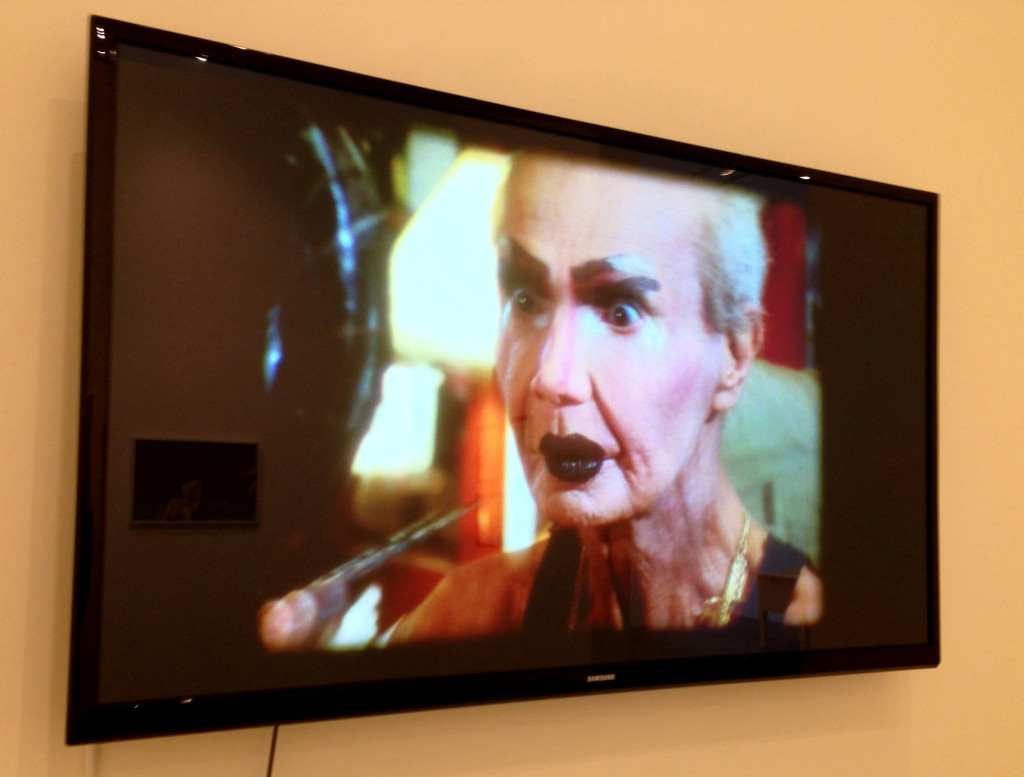
Flawless Sabrina in Zackary Drucker’s film
hawkinsondianerosenstein

Tim Hawkinson

therrienbearddianerosenstein

Robert Therrien

There are twenty eight artists in the group show Unsparing Quality, curated by Farrah Karapetian, currently at Diane Rosenstein Fine Art. The title is derived from André Breton’s First Manifesto of Surrealism– “Beloved imagination, what I like most in you is your unsparing quality.”

From the press release:

The exhibition poses the question: where do Surrealist impulses manifest in contemporary practice, and why are we seeing this now? The response involves three generations of artists who engage the legacy of Surrealist practice and offer work that investigates the subtle madness of the ordinary world.

The idea of self plays an important role in the collaborative portraits by Zackary Drucker and Luke Gilford titled, This Is What It Looks Like (To Go From One Thing To Everything) pictured above (image via Luke Gilford). In Zackary Drucker’s film with Flawless SabrinaAt least you know: you exist (2010-11) the older and younger artist interact to give a sense of continuation in the exploration of identity.

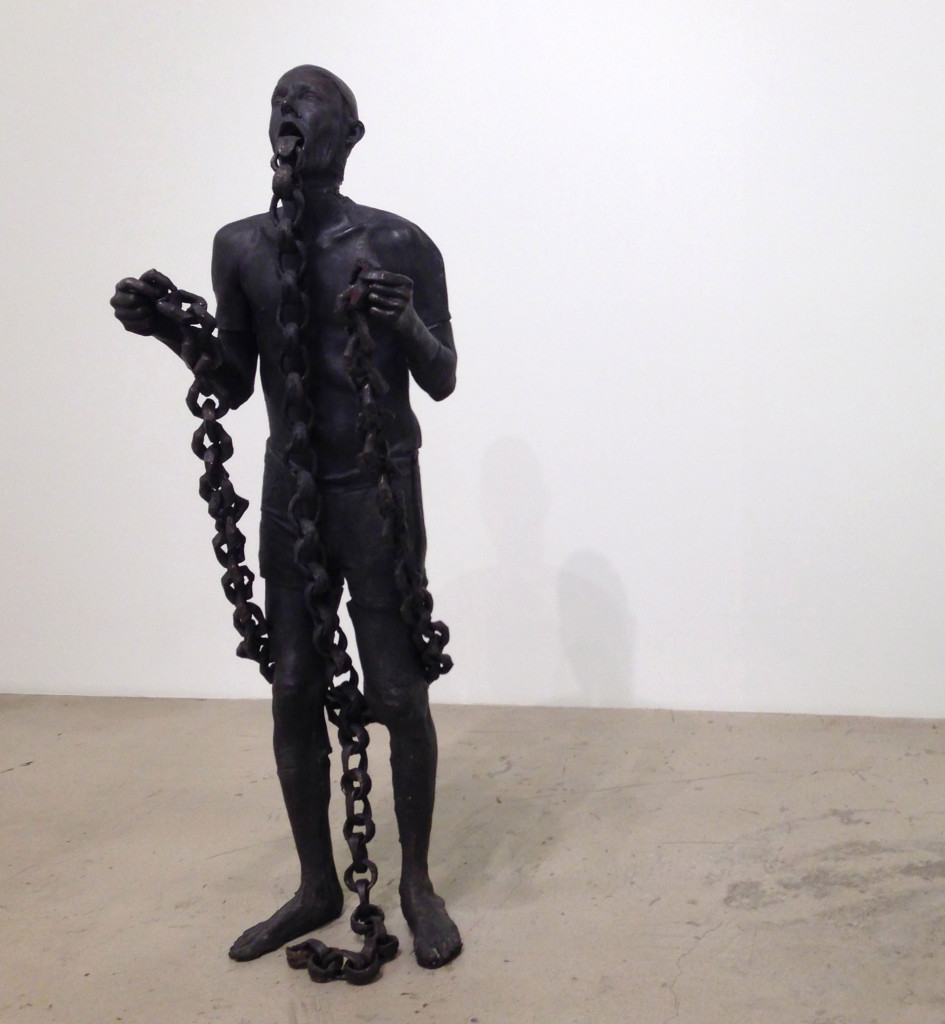
In Tim Hawkinson’s Samoa (2013), the artist made a bronze cast of his body for the sculpture with chains linking his hands to his tongue. The joints of the chain extending from his mouth are made from casts of the artist’s tongue and lips, while the ones originating from his hands are from casts of his thumb and index finger.  The sculpture poses questions about the nature of being an artist and its limitations with a surrealist approach.

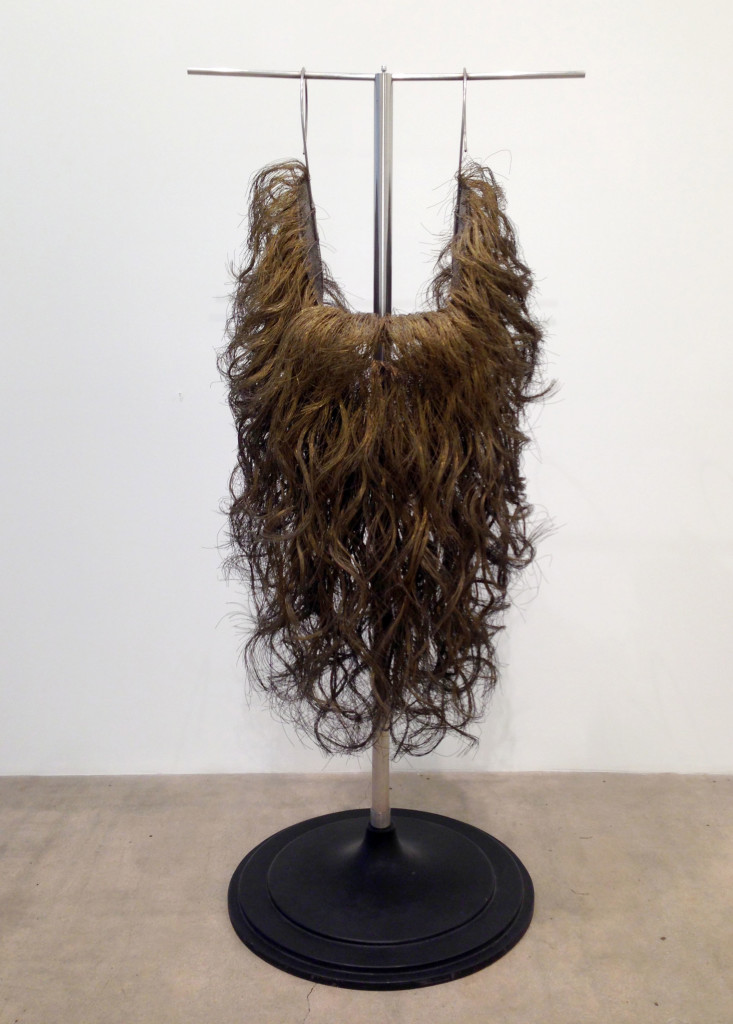
Surrealism’s influence can also be seen in Robert Therrien’s beard sculptures. The larger size (pictured above) and a “beard cart” with varying sizes, some of which very small, offer a chance to question the idea of this prop and its potential uses.

The exhibition also includes work going as far back as the early 1920’s to demonstrate the ways in which artists have been exploring and continue to explore the “unsparing quality” of imagination.

On March 22 at 4pm, Zackary Drucker, Luke Gilford, Ray Barrett, Masood Kamandy, Mie Hørlyck Mogenson, Max Rain and Kim Schoen will be part of a panel discussion at the gallery.

You can watch an excerpt of Zackary Drucker’s film here.

Here is a link to Tim Hawkinson talking about his work for a show at Pace Gallery which included Samoa. He explains that the name for this sculpture came in part from the Girl Scout cookies his daughter was selling at the time.

Feb 282014
 

Cutie and the Boxer- Official Trailer

Currently on Netflix streaming and nominated for an Academy Award for Best Documentary, Cutie and the Boxer is a glimpse into the lives of two artists, Ushio Shinohara and his wife Noriko.

Noriko was only a 19-year old art student when she met 41-year old  artist Ushio, and they have remained together ever since. While the film presents Noriko’s sacrifices and frustrations within the relationship, it also shows the process that goes into the artistic work itself for each of them. Now, forty years later, she is showing her own work and emerging from the shadow of her husband’s career.  It’s a fascinating, intimate portrait of the couple.

This is a good interview with Noriko.

Feb 012014
 

figueroa2

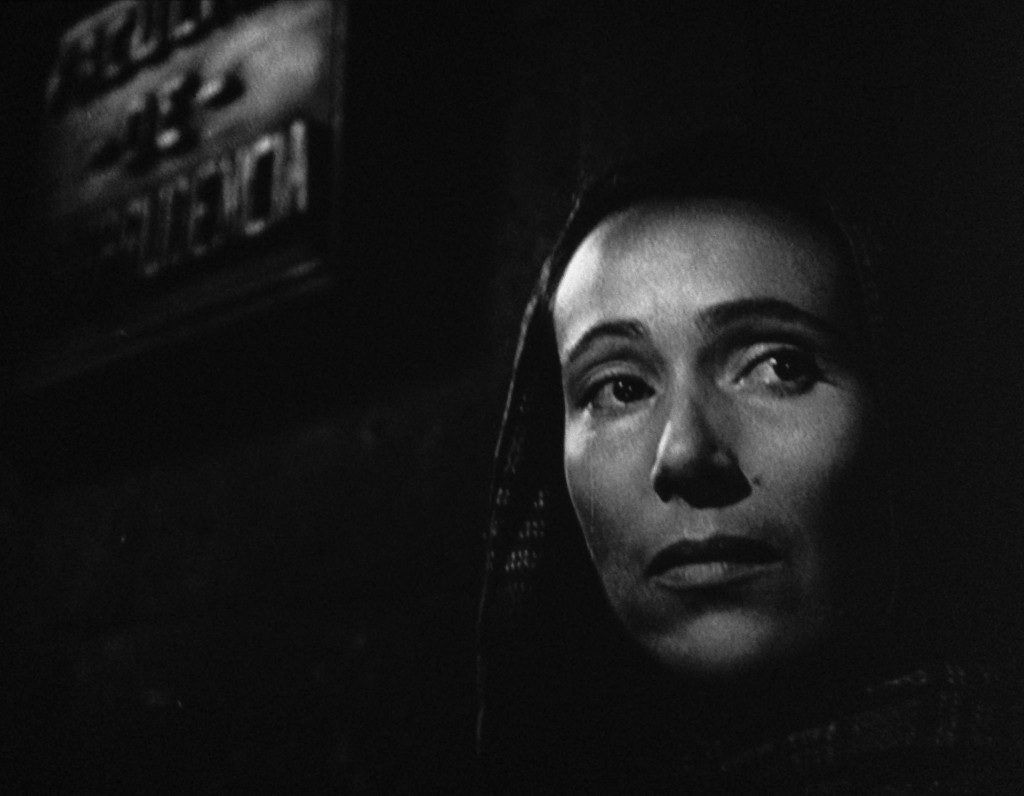
Image from Under the Mexican Sky: Gabriel Figueroa- Art and Film

From LACMA:

From the early 1930s through the early 1980s, the Mexican cinematographer Gabriel Figueroa (1907–1997) helped forge an evocative and enduring image of Mexico. Among the most important cinematographers of the so-called Golden Age of Mexican Cinema, Figueroa worked with leading directors from Mexico, the United States and Europe, traversing a wide range of genres while maintaining his distinctive and vivid visual style. In the 1930s, Figueroa was part of a vibrant community of artists in many media, including Diego Rivera, Jose Clemente Orozco, Edward Weston and Manuel Alvarez Bravo, who sought to convey the country’s transformation following the trauma of the Mexican Revolution. Later, he adapted his approach to the very different sensibilities of directors Luis Buñuel and John Huston, among others. Figueroa spoke of creating una imágen mexicana. His films are an essential part of the network of appropriations, exchanges and reinterpretations that formed Mexican visual identity and visual culture in the mid-twentieth century and beyond.

The moment you enter the exhibition, a montage of Gabriel Figueroa’s films plays on one wall to your right and it’s hard not to remain transfixed. As you move throughout the show, the history of his work begins to unfold through film clips, movie posters and stills, and artwork created at the time.

This excellently curated show includes not only large and small screen selections of Figueroa’s films, but also films shot in Mexico by Paul Strand and Sergei Eisenstein, and current artwork that was influenced by him. Of the contemporary art chosen, Rodrigo Garcia’s short film, La 7th Street y Alvarado is especially mesmerizing with its slow motion vision of Hispanic revolutionaries riding horses through present day Los Angeles.

There’s so much to see in this exhibition, yet it never feels overwhelming. That said, make sure to allocate a decent amount of time, especially if you want to see the majority of the film clips. This show closes on Sunday 2/2.

Dec 182013
 

Len Lye’s A Colour Box (1935)

If you missed the show at Roberts & Tilton, here is one of the works from it. This piece, by New Zealand artist Len Lye, was the first direct film screened to a general audience. Set to La Belle Créole by Don Baretto and his Cuban Orchestra, it was made by painting directly on the celluloid.

Dec 132013
 

betyesaar

From Betye Saar’s :The Alpha & Omega-The Beginning & The End 

Betye Saar’s installation at Roberts & Tilton contains many objects all coming together to contemplate time, identity, nature and the world around us.  Unlike her previous show at the gallery, Red Timewhich challenged the viewer with both its imagery and the power of the color itself; The Alpha and Omega, creates a feeling of calm, both in its color palette of blues and grays but also in the objects chosen like clocks and ships.  In both shows, history is an important theme. This can be seen most clearly in The Challenges of Fate, a sculpture within the work, made up of a black bird perched on a cage housing a ship, which is above a globe resting on a glass box of bones, all set upon a stack of books.

Also at the gallery is Projections Part II: Film As Painting, curated by Aaron Rose. Multiple films by various artists are presented through different projections and monitor displays. The films are very different in content but work together to present the concept of film as not just film, but moving painting. There are thirteen films within the show and their creation dates range from the earliest, Len Lye’s A Colour Box (1935) to Rose’s own The Dress (2013). One standout is Marie Menken’s Go! Go! Go! (1962-4) a frantic speeding up of footage of life in the 1960’s in New York.

Both shows close tomorrow, 12/14.

Dec 072013
 

vardalions1

Image from Agnés Varda in Californialand at LACMA

Tonight (12/7) at 7:30pm, LIONS LOVE (…AND LIES) is playing at LACMA along with Black Panthers.

Info from LACMA’s website for this event:

Agnès Varda’s first-ever American feature film was shot while she was living in Los Angeles with husband Jacques Demy (his own U.S. debut, Model Shop, was released the same year). LIONS LOVE (…AND LIES) finds Warhol superstar Viva joined by Hair cocreators James Rado and Gerome Ragni as the trio, in various states of undress, play host to visiting cinéma vérité luminary Shirley Clarke (The Cool World, Portrait of Jason) in a Hollywood bungalow. Sunsoaked Southern California counterculture, New York bohemia, and Left Bank abandon all intermingle in this film about a film. LIONS LOVE (…AND LIES) graced the debut cover of Warhol’s Interview magazine and is Varda’s anarchic paean to the age of aquarius and Tinseltown transience with guest spots by everyone from Eddie Constantine to Peter Bogdanovich. This is an encore screening of the brand-new, LACMA-supported restoration of this film—in partnership with the Annenberg Foundation and The Film Foundation—which is also the inspiration for the filmmaker’s LACMA exhibit Agnès Varda in Californialand.

Also screening, Black Panthers (1969, 30 minutes, color, DCP)—another film newly restored by LACMA, the Annenberg Foundation and The Film Foundation—and Varda’s American debut: a powerful document of the eponymous Oakland movement’s efforts to free activist Huey Newton.

Some interesting facts about Viva– aside from being one of the stars of this film and Warhol’s movies, she also had small parts in Paris, Texas; Midnight Cowboy; and Play It Again, Sam. Both her daughters, Alexandra Auder and Gaby Hoffman, are actresses as well. She currently lives and paints in Palm Springs.

Definitely two films worth checking out. If you miss this screening, clips from the LIONS LOVE(…AND LIES) are playing in the exhibition as well.

Nov 142013
 

cluzot3

cluzot1

Images from the film L’Enfer by Henri-Georges Clouzot

From the press release for The End of the Night:

LACE is proud to continue the collaboration with Ceci N’est Pas… in presenting The End of the Night, organized by curator Martha Kirszenbaum and designed by Exhibition Designer Marianne Zamecznik, is a bold group exhibition exploring the impact of French filmmaker, Henri-Georges Clouzot and his unfinished 1963-1964 film, L’Enfer, on notions of abstraction, the kinetic, and optical illusions in contemporary French art. For this exhibition, Kirszenbaum has invited five artists whose works reflect on Clouzot’s pictorial and sound experimentation and respond to his visual and sensorial imagination: a historical figure, Julio Le Parc, and four emerging artists, Florian & Michael Quistrebert, Isabelle Cornaro and Pierre-Laurent Cassière. Kirszenbaum’s project is a double exhibition – the other half taking place at the Palais de Tokyo in Paris, emphasizing a similarly themed exploration of the work of Los Angeles experimental filmmaker Kenneth Anger.

When you see the clips from Clouzot’s film at this show, it is easy to see how it could inspire an exhibition.  His use of spinning lights to create the illusion of changes in the actress’s face is one of the more mesmerizing aspects of the film.

One of the standouts from the show is the double channel projection video installation, The Eighth Sphere, by Florian & Michael Quistrebert.  The two projections of geometrical shapes merge and separate creating interesting effects.

Also at LACE tonight (11/14) there is a town hall forum that is open to the public.

Nov 132013
 

perrybreitz

Image from the film- The Audition- by Candice Breitz

From the press release for her show, The Woods, at Perry Rubenstein Gallery

The Woods encompasses installations filmed in three of the world’s leading centers of film production – Hollywood (Los Angeles, USA), Bollywood (Mumbai, India) and Nollywood (Lagos, Nigeria). Two of the three installations that make up the trilogy – The Audition (filmed in Los Angeles) and The Rehearsal (filmed in Mumbai) – present aspiring and working child actors, situating them in scenarios in which they ventriloquize voices and personae that would typically belong to adults. The third installation, The Interview (filmed in Lagos), features two adult actors who are best known on the African continent for their portrayal of child characters, and mimics the format of a conventional celebrity interview. As suggested by their titles, The Audition, The Rehearsal and The Interview zoom in on generally unseen show business rituals, which collectively become the loci of meaning through which Breitz reflects on and decodes the myth-making machinery of mainstream cinema.

The Audition, pictured above, has two video sets running at the same time- the child actor’s screen tests on one wall and on another wall, a set of screens with different child actors alternating between performing lines of advice from industry professionals, introducing themselves, and singing songs. The juxtaposition between their reading the words of adults and their free-form (no direction was given) screen tests, really accentuates this world where children grow up early for the sake of fame.

Each of these installations run close to or longer than an hour (the longest is 76 minutes). That said, they make an impression even without being seen in their entirety.

Nov 112013
 

Triumphs Over Trauma: The Scar Prints of Ted Meyer

At the Brewery Art Walk, Ted Meyer’s series “Scarred for Life”, is one that always draws a crowd. His images of the scars, the people who have them, and their stories, are fascinating.  The video above shows his process and his personal connection to the subject. It also focuses on one of his models, an Iraq war veteran, who shares his experience dealing with his own scars.

Oct 262013
 

dannyshining

The Shining is playing at LA State Historic Park tonight (10/26).

If you love The Shining, it is also worth watching Room 237, now on Netflix. It is filled with interesting theories on the potential meaning of the images used in the film.  Different interviewees suggest it could be about the Holocaust or Native American genocide or even Kubrick’s confession to taking part in the faking of the moon landing.  It’s a fascinating new look into an already captivating movie.