Feb 062026
 

Giorgio de Chirico, “Portrait of Guillaume Apollinaire”,1914, Oil and charcoal on canvas

René Magritte, “The Secret Double”, 1927, Oil on Canvas

Dreamworld: Surrealism at 100 at the Philadelphia Museum of Art presents a large collection of works, in a variety of mediums, from the artistic movement. The show takes you through Surrealism’s history and is filled with many inventive and imaginative pieces- including several from lesser-known artists.

From the museum about the exhibition-

Surrealism burst onto the scene in Paris in 1924. French writer André Breton announced the aims of this revolutionary literary and artistic movement in his Manifesto of Surrealism. It started with a question: How, ideally, should we live? Breton observed that, at about twenty years of age, we make the error of trading our childlike imaginations for adult good sense and logic. Yet it’s the imagination that allows access to the innate state of freedom that we all possess. And maintaining freedom, Breton proposed, should always be the highest human aspiration.

Surrealism’s ambitions were broad and bold: its adherents wanted nothing less than a revolution in consciousness. To that end, they explored a method of experimental poetry called automatic writing, comparable to spoken free association, done spontaneously and, as far as possible, without conscious intent. Sigmund Freud’s theories about the role of the unconscious and the interpretation of dreams were an important inspiration. The Surrealists looked to access the unconscious mind to break free from the constraining rationality of the modern world.

Visual artists were part of the Surrealist movement from the start. They took up surprising and often challenging subject matter, imagery, and techniques across many mediums: painting, sculpture, drawing, printmaking, photography, book illustration and design, and film. In Dreamworld: Surrealism at 100, we explore how, from the movement’s 1920s beginnings through the 1950s, these trailblazing artists made good on Surrealism’s revolution in consciousness.

The exhibition is split into six categories- Waking Dream which features Surrealism’s beginnings in the 1920s, Natural History, focused on the influence of nature, Desire, Premonition of War, Exiles, and Magic Art, which focuses on the new type of esotericism that emerged within Surrealism in the aftermath of World War II.

Lee Miller’s photographs of natural rock formations

Salvador Dalí, “Aphrodisiac Telephone” 1938, Plastic, metal

From the museum about Aphrodisiac Telephone, one of the artworks in the Desire section

Salvador Dalí likened the Surrealist object, which uses found items, as a symbolic creation with improbable juxtapositions, comparable to poetry and sexual perversion. He applied this idea in Aphrodisiac Telephone. Its basis is the substitution of a lobster— a real lobster in the sculpture’s first iteration for display in 1938, a factitious lobster in white plastic for the editioned version —for a similarly shaped telephone handset. The title alludes to the lobster’s reputation as an aphrodisiac when eaten.

Max Ernst, “The Fireside Angel (The Triumph of Surrealism)”, 1937, Oil on canvas

From the museum about the Max Ernst painting above, from the Premonition of War section-

Ernst painted The Fireside Angel (The Triumph of Surrealism) to protest the atrocities of the Spanish Civil War as well as the defeat of the Republican side. But this depiction of a rampaging bird-headed beast also served as an allegorical reflection on the nature of evil. Ernst exhibited this painting as The Triumph of Surrealism — a despairingly ironic title given the situation in Europe — at the 1938 International Surrealist Exhibition in Paris.

During World War II many European artists escaped to New York City and Mexico. The Exiles section features works by these artists, as well as Mexican (like Roberto Montenegro pictured below) and American artists whose work could also be seen as part of the Surrealist movement.

Roberto Montenegro, “The Double”, 1938, Oil on panel

The last section of the exhibition Magic Art, focuses on the increase in post-war interest in supernatural themes. There was also a room devoted to the work of artist friends Leonora Carrington and Remedios Varo, who had moved to Mexico during the war.

Leonora Carrington, “And Then We Saw the Daughter of the Minotaur”, 1953, Oil on canvas

Remedios Varo, “Creation of the Birds”, 1957, Oil on Masonite

This exhibition is on view until 2/16/25.

Dec 202024
 

Work by Carl Durkow (cloud chair), Trish Tillman Wood sculpture far left and sculpture far right pictured below) and Langdon Graves installation (blue walled area)

Installation by Langdon Graves, mixed media sculptures and framed drawing

Trish Tillman, “One Last Drink”, 2018, vegan leather, tweed, ultrasuede, chrome edging, wood, foam, thread, and glass

Trish Tillman, “One Last Drink”, 2018, vegan leather, tweed, ultrasuede, chrome edging, wood, foam, thread, and glass (detail)

Trish Tillman, “Candy Cigarettes”, 2024, hand-dyed leather, UV print on leather, thread, leather buttons, wood, foam, and metal hardware

Trish Tillman, “Giving Space”, 2023, hand dyed and UV printed leather, wood, foam, thread, polymer clay, and acrylic

Carl Durkow (left to right) “Cloud Side Tables”, 2023, MDF, formica, aluminum; “Diced Pineapples”, 2021, fiberglass, pigmented resin, polystyrene; “Musque Benches”, 2023, fiberglass, pigmented resin, polystyrene; “Peek Lamp I”, 2023, MDF, formica, aluminum, fabric, and “Peek Lamp II”, 2023, MDF, formica, aluminum, fabric, neon

“Musque Benches”, 2023, fiberglass, pigmented resin, polystyrene; “Peek Lamp I”, 2023, MDF, formica, aluminum, fabric, and “Peek Lamp II”, 2023, MDF, formica, aluminum, fabric, neon

Langdon Graves, Trish Tillman, and Carl Durkow all bring a distinctive vision to their sculptures for The Dream Expedition: A Design Exhibition, currently on view at The Delaware Contemporary. The intriguing works combine the familiar with the enigmatic to capture the viewers imagination.

From the museum-

This year marks the 100th anniversary of the Surrealist movement. Introduced by poet and critic André Breton’s Surrealist Manifesto (1924), Surrealism reaches beyond reality to explore dreams, unconsciousness, and absurdities of the human condition. The movement greatly influenced the future landscape of design through the phenomenon of Surrealist Objects–exemplified by the work of artists like Méret Oppenheim or Man Ray. The Surrealist Object, and other surrealist sculpture, presented three-dimensional manifestations of unconscious symbolisms offering introspective and reflective opportunities.

Over the last century, the field of design and the concepts of surrealism have consistently informed one another; design objects were often the focal point of surrealist sculpture or assemblage, while designers incorporated surrealist processes into their design work. Today, contemporary artists and designers continue to draw inspiration from surrealist concepts to reflect a diverse range of emotions, ideas, and experiences. The Dream Expedition aims to celebrate the elements of surrealism that influence contemporary design and sculpture to further bridge the divide between “Fine Art” and “Design.”

Each of these three artists pushes preconceived notions of sculpture and design to their limits. Carl Durkow’s works are fully functional design objects, yet they venture into the surreal through their abstraction of forms and aesthetics. Langdon Graves’ sculptural works engage familiar design and organic objects in new, unexpected ways questioning our relationship to memory and the world around us. In her work, Trish Tillman incorporates materials that we typically associate with design–vegan leather, cushions, wood, or upholstery–creating sculptures that seem to morph and bend with dreamlike movement.

This exhibition closes 12/29/24.

Mar 222014
 
gilford_drucker1

Luke Gilford / Zackary Drucker

dianerosensteinsabrinadrucker

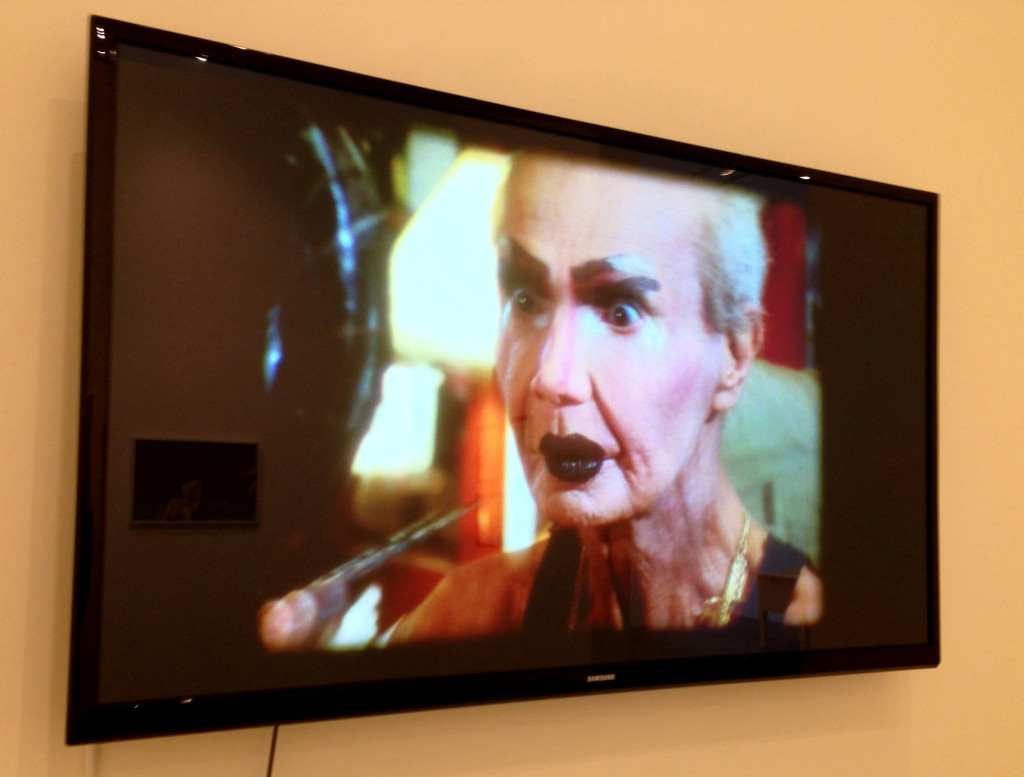
Flawless Sabrina in Zackary Drucker’s film

hawkinsondianerosenstein

Tim Hawkinson

therrienbearddianerosenstein

Robert Therrien

There are twenty eight artists in the group show Unsparing Quality, curated by Farrah Karapetian, currently at Diane Rosenstein Fine Art. The title is derived from André Breton’s First Manifesto of Surrealism– “Beloved imagination, what I like most in you is your unsparing quality.”

From the press release:

The exhibition poses the question: where do Surrealist impulses manifest in contemporary practice, and why are we seeing this now? The response involves three generations of artists who engage the legacy of Surrealist practice and offer work that investigates the subtle madness of the ordinary world.

The idea of self plays an important role in the collaborative portraits by Zackary Drucker and Luke Gilford titled, This Is What It Looks Like (To Go From One Thing To Everything) pictured above (image via Luke Gilford). In Zackary Drucker’s film with Flawless SabrinaAt least you know: you exist (2010-11) the older and younger artist interact to give a sense of continuation in the exploration of identity.

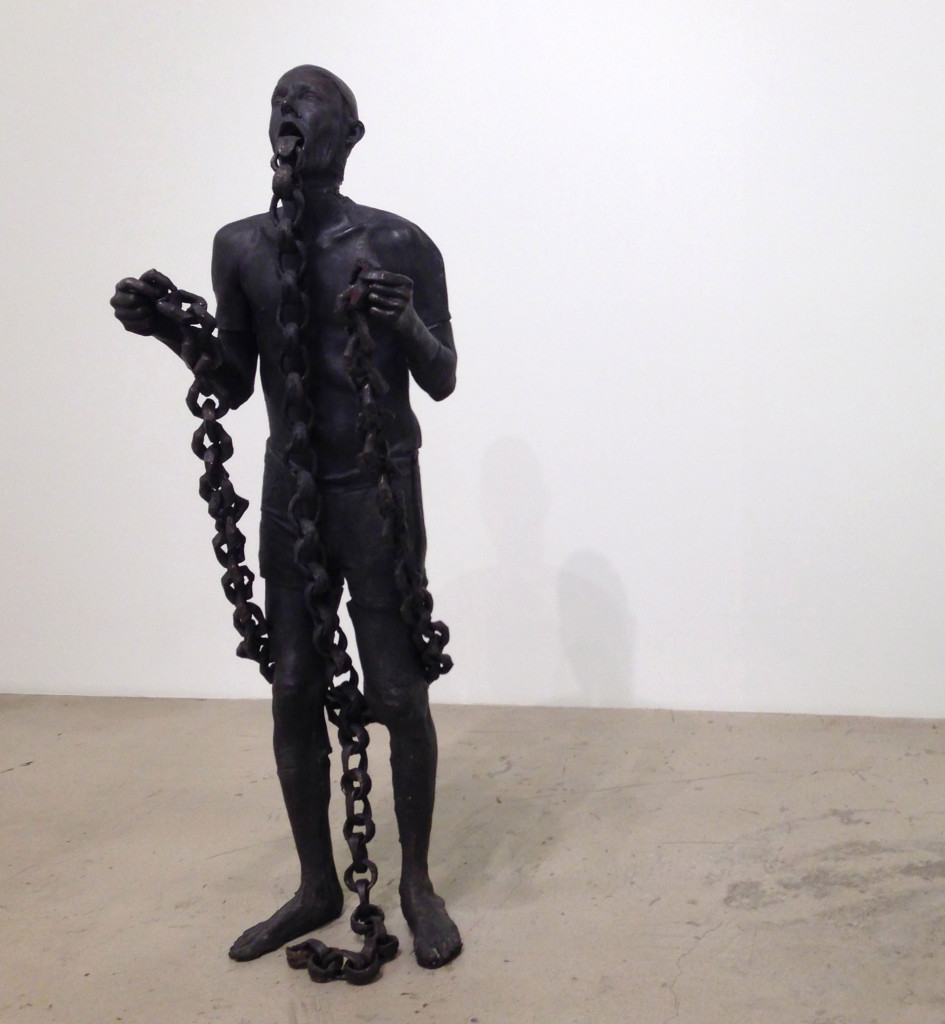
In Tim Hawkinson’s Samoa (2013), the artist made a bronze cast of his body for the sculpture with chains linking his hands to his tongue. The joints of the chain extending from his mouth are made from casts of the artist’s tongue and lips, while the ones originating from his hands are from casts of his thumb and index finger.  The sculpture poses questions about the nature of being an artist and its limitations with a surrealist approach.

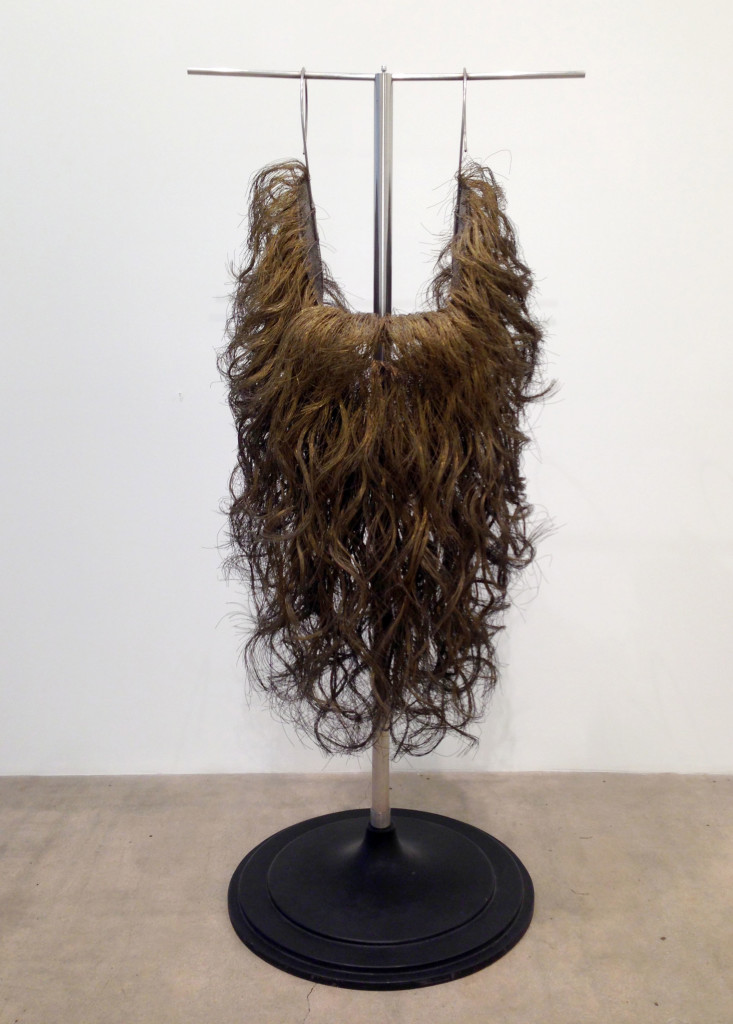
Surrealism’s influence can also be seen in Robert Therrien’s beard sculptures. The larger size (pictured above) and a “beard cart” with varying sizes, some of which very small, offer a chance to question the idea of this prop and its potential uses.

The exhibition also includes work going as far back as the early 1920’s to demonstrate the ways in which artists have been exploring and continue to explore the “unsparing quality” of imagination.

On March 22 at 4pm, Zackary Drucker, Luke Gilford, Ray Barrett, Masood Kamandy, Mie Hørlyck Mogenson, Max Rain and Kim Schoen will be part of a panel discussion at the gallery.

You can watch an excerpt of Zackary Drucker’s film here.

Here is a link to Tim Hawkinson talking about his work for a show at Pace Gallery which included Samoa. He explains that the name for this sculpture came in part from the Girl Scout cookies his daughter was selling at the time.