Jul 282021
 

Texas Louise, 1971

Where is Lucienne?, 1971
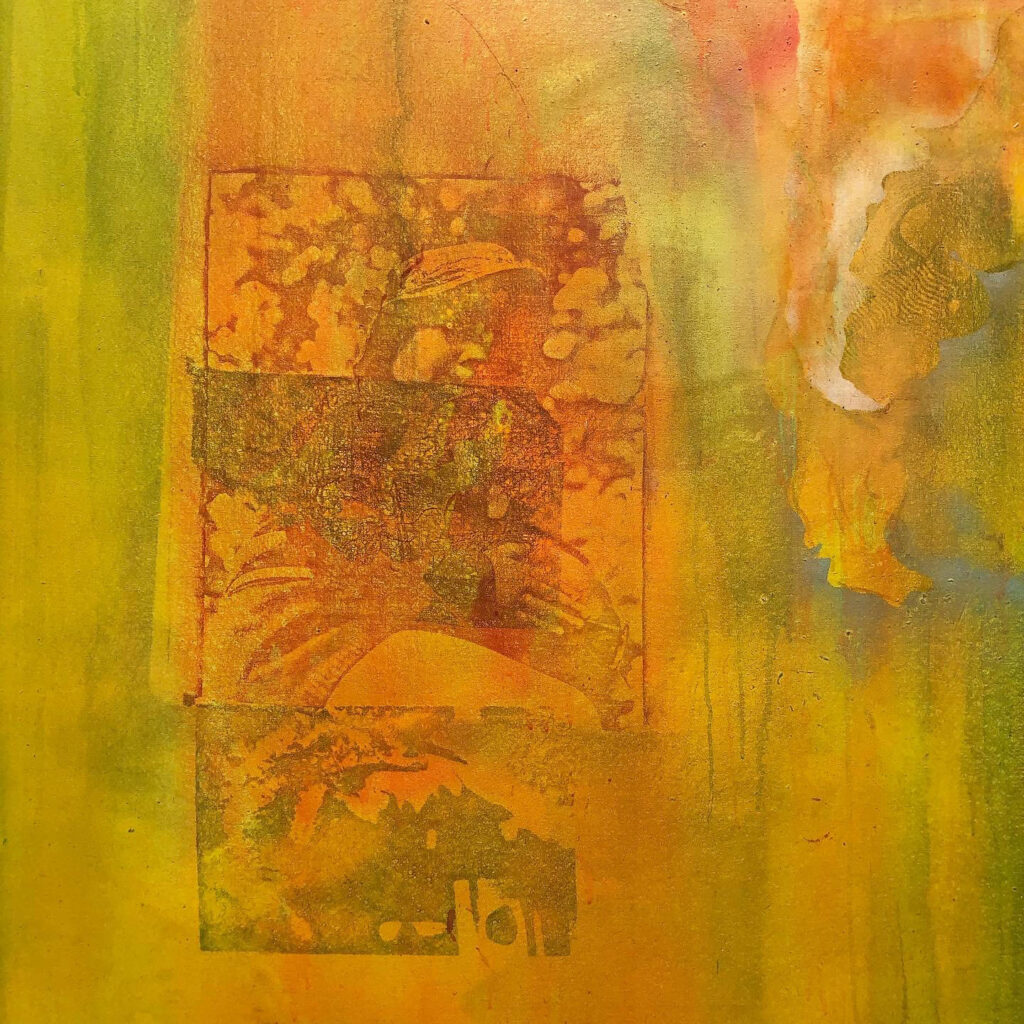
 

Where is Lucienne? (detail), 1971
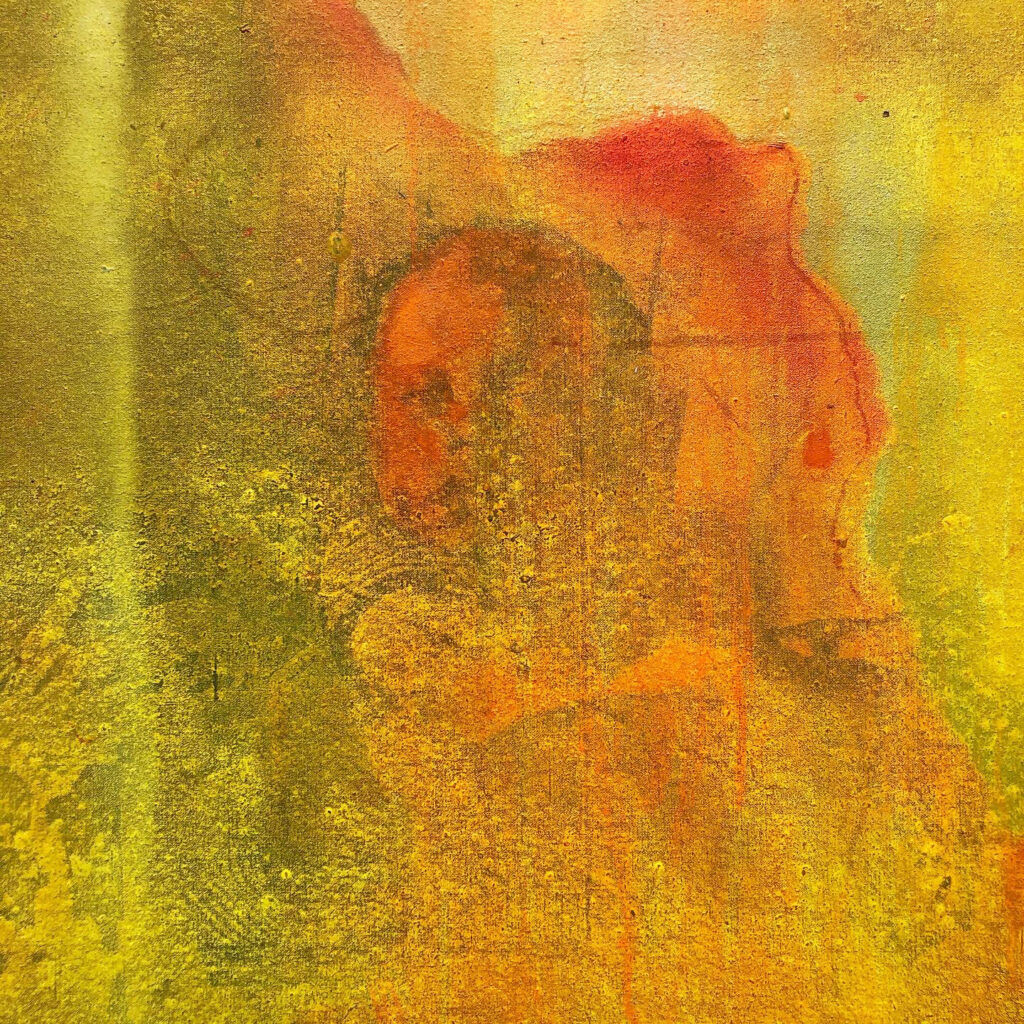
Where is Lucienne? (detail), 1971

Frank Bowling’s incredible paintings are currently on view at two of Hauser & Wirth’s locations, London and NYC, reflecting the artist’s time living in both cities. The paintings above are from the New York location.

From the press release-

The exhibition charts Bowling’s life and work between the UK and the United States. Born in Guyana (then British Guiana) in 1934, Bowling arrived in London in 1953, graduating from the Royal College of Art in 1962. He later divided his time between the art scenes in London and New York, maintaining studios in both cities. London is the city where Bowling trained as a painter and achieved early acclaim. New York is the city that drew him to itself at the height of the Civil Rights movement, where he became involved in discussions of Black Art – New York was a place of fresh energy and ideas for an artist in search of new ways to make paintings.

Bowling’s transatlantic orientation reveals itself in a shift from his early engagement with expressive figuration and pop art, to an immersion in a uniquely poetic abstraction that continues to evolve even today. Visible in his work are the legacies of both the English landscape tradition and American abstract expressionism. Developing in and between two cities over the course of decades, Bowling’s exploration of light, colour, and geometry can be understood as profoundly influenced by the two great rivers of his life: he has maintained studios close to The Thames in London and the East River in New York, absorbing the brilliance of the rivers’ light into his vision. Bowling would often begin a work in one city and finish it in the other, merging the atmospheres of both. In his own words, ‘I would just roll the lot up and move. And I knew that when I got to the other end, I could roll them out again and continue to work.’

Bowling’s restless innovation on the painted plane endures in his latest works. He continues to break ground through the use of thick impasto textures, acrylic gels, collage, stitched canvas, and metallic and pearlescent pigments. The complexities of his upbringing in Guyana and his constant journeying between London and New York have only served to activate the richness of the different influences of each location. His paintings are a celebration of life lived in varying lights and colours.

Jul 282021
 

Houses of the Holy, 2021

Houses of the Holy, 2021, detail

Rain Rereleases, 2021

Rain Rereleases, 2021, detail

Rain Rereleases, 2021, detail

Currently at Miles McEnery Gallery are Tom LaDuke’s incredible layered paintings. The more you look at them, the more the details emerge.

From the press release-

Tom LaDuke’s paintings are painstakingly constructed, offering multiple layers to absorb, with their own references and meanings. In his essay on the artist, Spaulding asserts, “hard-to-describe forms occupy a spatial netherworld that is neither entirely here nor there: neither entirely on the flat of the canvas, nor entirely in the spatial grid of post-Renaissance perspective.” LaDuke’s paintings situate the viewer in an illusory middle dimension, suspended between many levels of imagination.

Forms tend to be screened, stacked, and occluded among layers of fused, brightly colored impasto brushstrokes. “Art grows from the gallery like a tree from soil, in which strange tubes, tree-like structures, rock-like protuberances, proto-figures, or miasmatic nebulae of color precipitate from the atmosphere.” The complex abstract layers are set against the industrial lighting and airy architecture of the art gallery.

This exhibition closes on 8/13/21.

Jul 192021
 

End-To-End Encrypted (Lot’s Wife), 2020 by Elliot Reed, part of the group show Wish at Metro Pictures.

From the press release-

This exhibition closes 7/30/2021.

Jun 162021
 

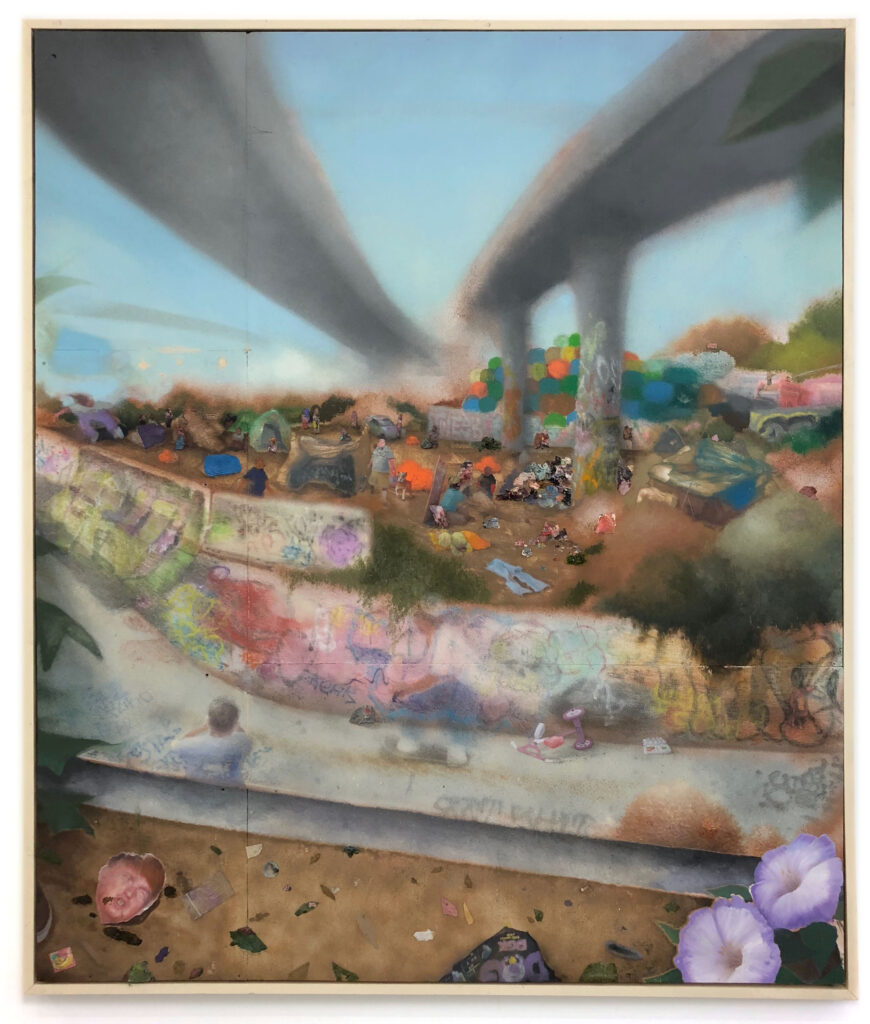
Wasteland Paradise, 2018

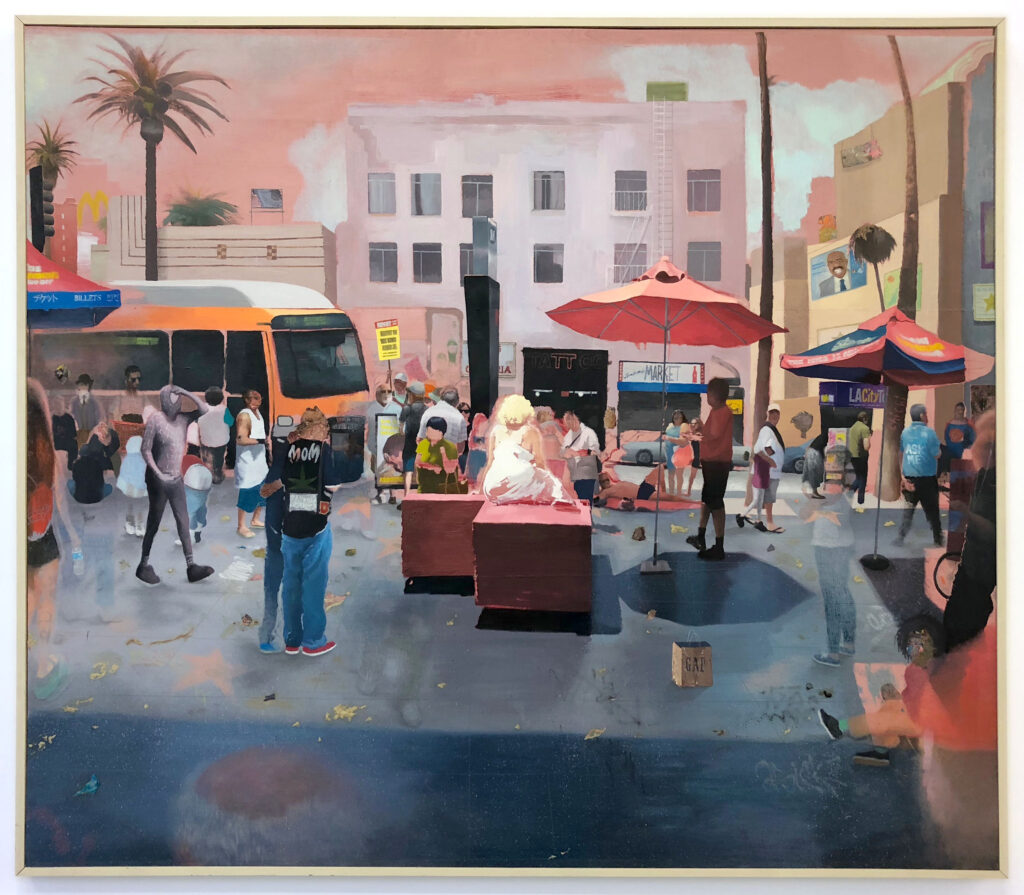
Hollywood/ Highland, 2017

These paintings are from Michael Alvarez’s 2018 exhibition We’re Out Here at Marlborough gallery in New York.

From the press release–

Taking inspiration from his immediate surroundings in the domestic sphere, at work in alternative education high schools and Juvenile Detention Centers, and the city at large, Alvarez creates a compound narrative of life as lived in the complex sprawl of his native Los Angeles. From the glitz and dashed hopes of Hollywood Boulevard to the backyard barbeque we begin to see through carefully constructed surfaces, revealing a tender humanity.

Also depicted are more marginal and thornier hybrid sites. Concrete drainage ditches, that double as skateboarding spots and broad canvasses for graffiti murals, are also host to homeless encampments, presenting a friction between an ascendant and hopeful lawlessness and the desperation of pure survival. Similarly, the eponymous painting We’re Out Here, which was created in collaboration with his incarcerated students (Alvarez’s portraits are interspersed with students’ original artworks) underscores the fine line and expanding gulf between opportunity and a dead-end existence.

Technically, Alvarez mixes a matter-of-fact style with dashes of magical realism. Exhibiting a keen understanding of photo-specific technique, figures blur and ghost across the images suggesting movement through time and space in a static image. Appropriately, snapshot source material ranges from the posed semi-formality of the family portrait to the yearbook-candid playfulness of his students. These images are collaged or cleverly composited into painted scenes that are invested with a warmth, humor and realism that supersedes mere depiction.

Alvarez recently was part of a group show at Sow and Tailor in Los Angeles. Follow his Instagram for more updates on his work and shows.

Dec 052020
 

Not My Burden, 2019

From a Tropical Space, 2019

From a Tropical Space (detail)

Analogous Colors, 2020

The Aftermath, 2020

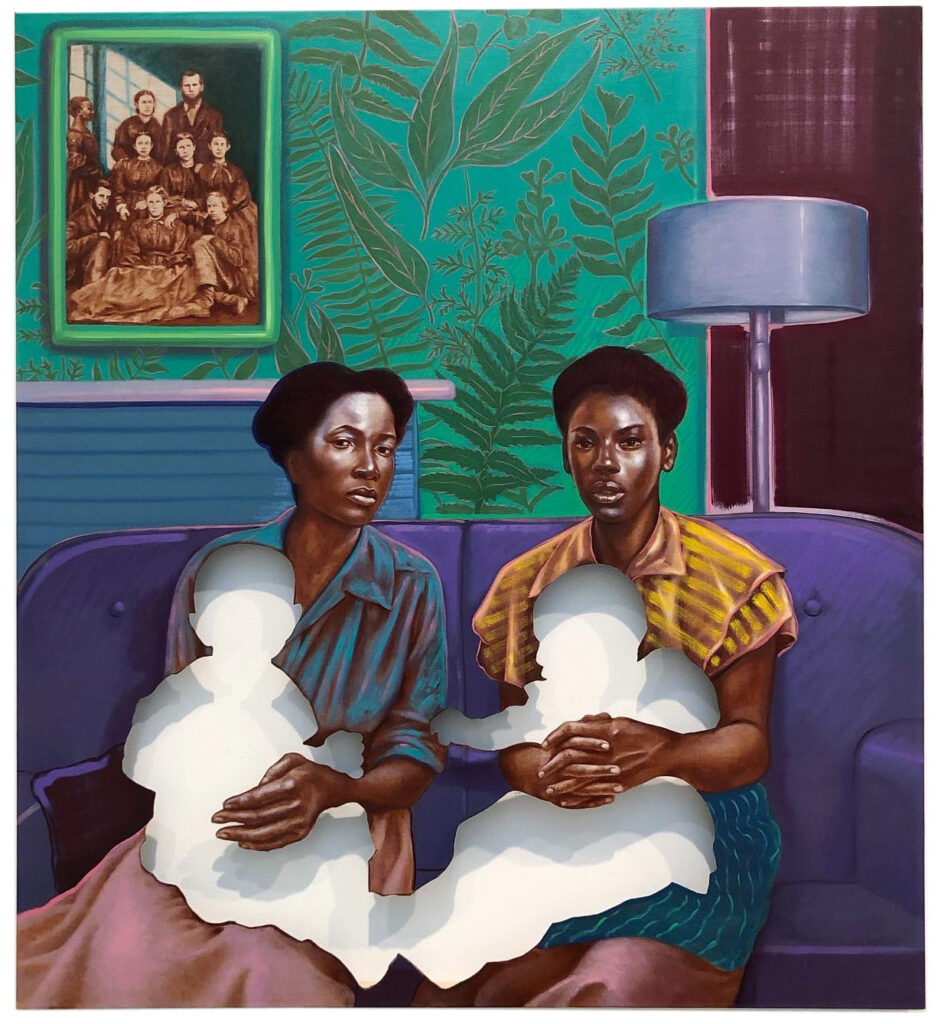
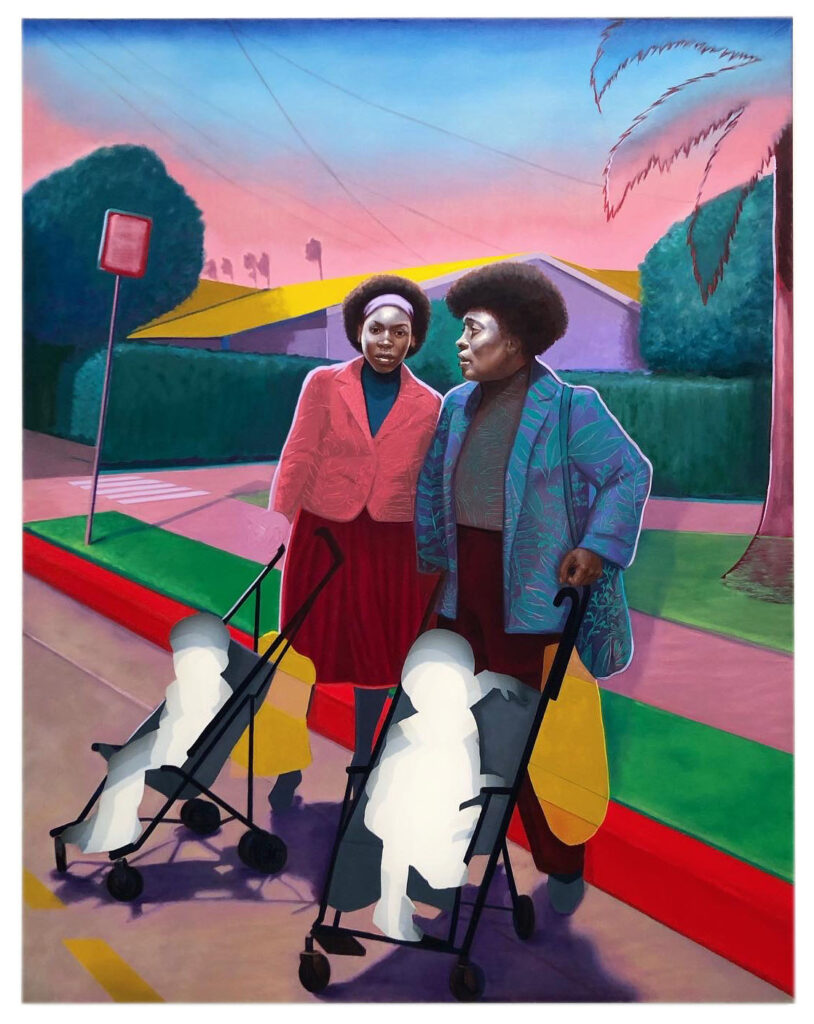
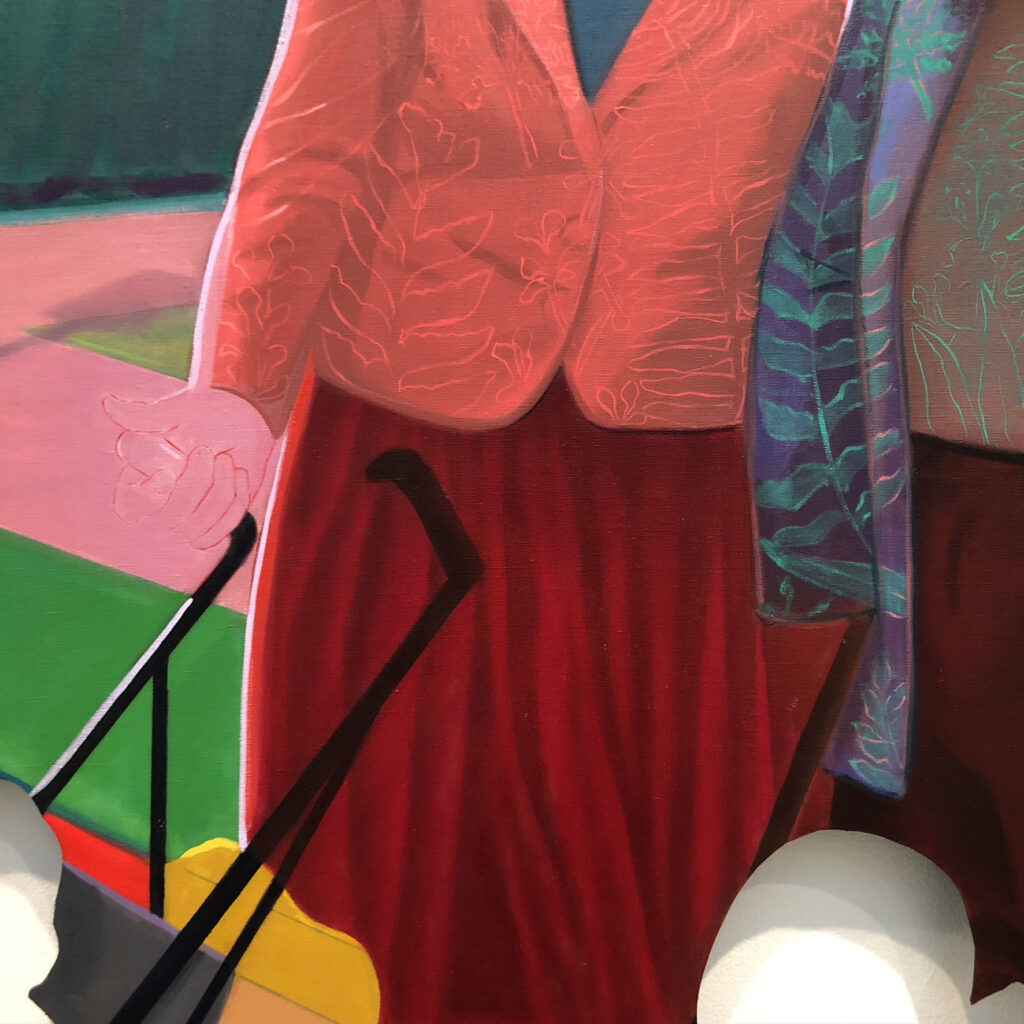
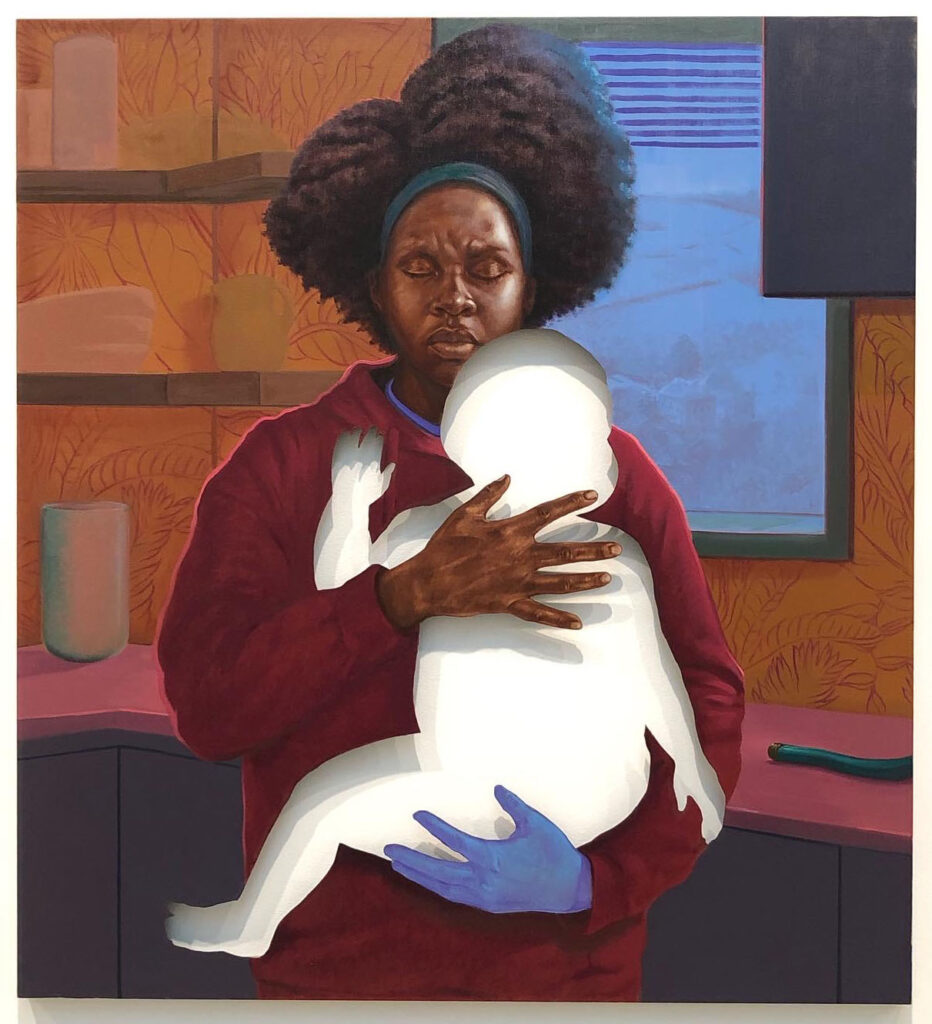
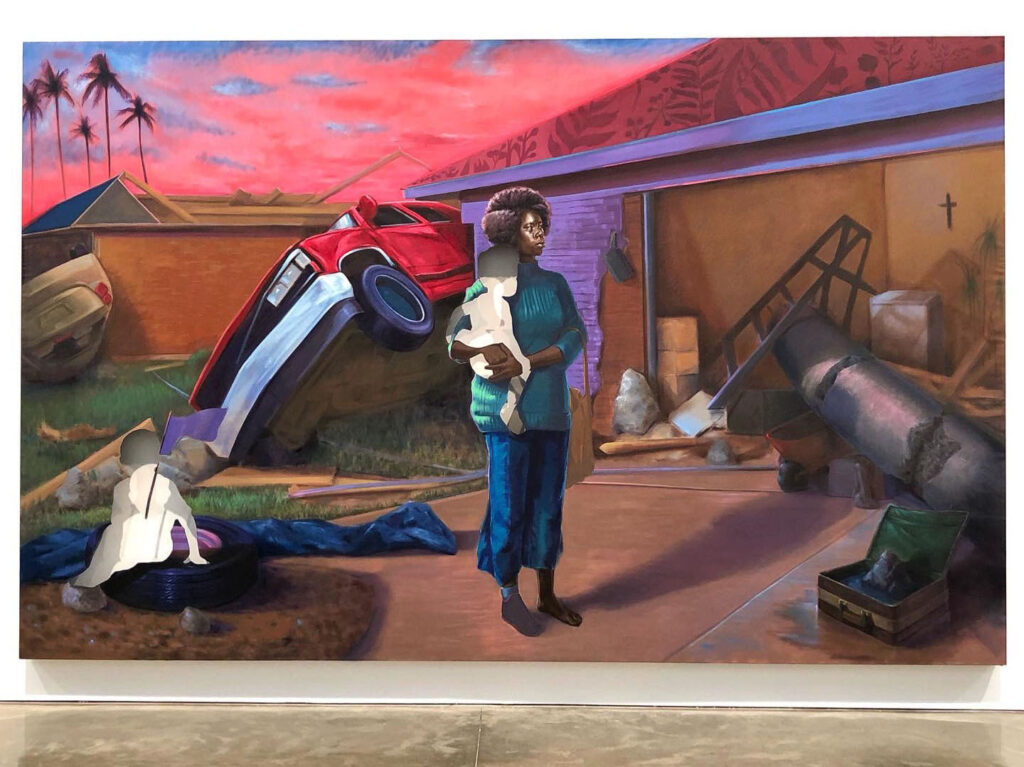
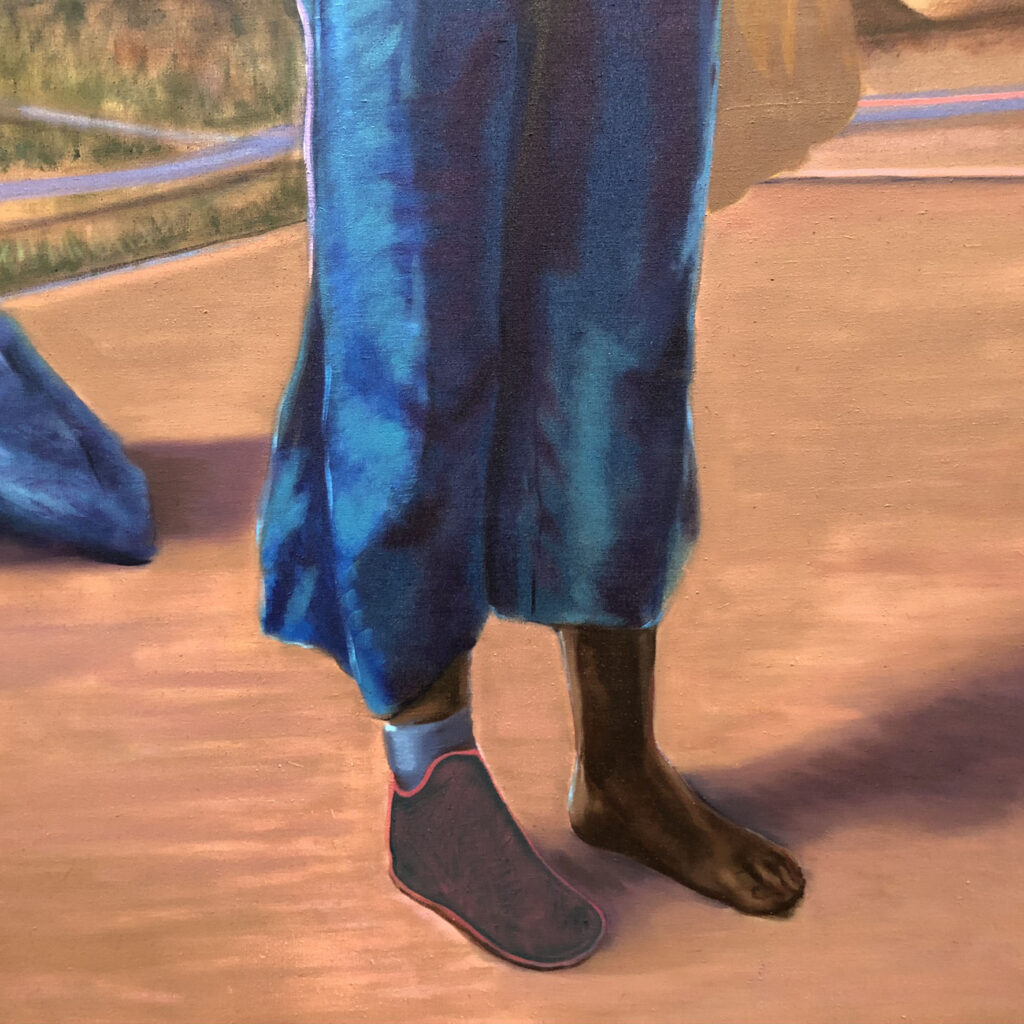
For Titus Kaphar’s first exhibition at Gagosian Gallery in NYC, From A Tropical Space, he has created moving scenes of loss, with children cut out of the paintings. While the cutouts and vivid colors are the first things that get noticed, on a longer look you can see that the women in these paintings are not just missing children, but often pieces of their own bodies are affected. Arms, a hand fading away or turning blue, a leg with only one sock and shoe- these women are losing more than what has been cut away from them, they are losing parts of themselves.

From the press release-

A painter, sculptor, filmmaker, and installation artist, Kaphar reexamines American history by deconstructing existing representations and styles through his own formal innovations. His practice seeks to dislodge history from its status as “past” in order to understand its continuing impact on the present. Using materials including tar, glass, and rusted nails—together with highly refined oil painting—and employing techniques such as cutting, shredding, stitching, binding, and erasing, he reworks canonical art historical codes and conventions. And by uncovering the conceptual and narrative underpinnings of certain source images, he explores the manipulation of cultural and personal identity as a central thematic concern while inventing new narratives.

While much of Kaphar’s work begins with an exhaustive study of pre-twentieth-century master painting techniques, From a Tropical Space sees him wield these various methods to create an emotionally saturated visual landscape that is entirely contemporary. Just as artists, through time, have translated the fraught and mercurial sociopolitical contexts in which they operate into new and often radical aesthetic modes, so do the pervasive social and cultural anxieties of the world in which we find ourselves resonate throughout Kaphar’s new work.

In From a Tropical Space, Kaphar presents a haunting narrative of Black motherhood wherein collective fear and trauma crescendo in the disappearance of children, literalized through the physical excision of their images from the canvases themselves. The absence of each juvenile figure—whether seated in a stroller or held in a woman’s arms—reveals only the blank gallery wall beneath. The intense coloration of the suburban environments in which the figures are set only heightens a pervasive tension—these are images for uncertain times. Included in the exhibition is Analogous Colors (2020). Demonstrating further the broader resonance of Kaphar’s recent work, the painting was featured on the cover of the June 15 issue of Time magazine, which included a report on the protests sparked by George Floyd’s killing at the hands of Minneapolis police.

This exhibition closes 12/19/20.

Dec 042020


Ida Applebroog’s exhibition Applebroog Birds at Hauser & Wirth’s New York location is a delightful collection of paintings and sculpture. But there is more to them than meets the eye.

From the press release-

For more than six decades, American artist Ida Applebroog has continuously engaged with the polemics of human behavior, often exploring interrelated themes of power, gender, politics, and sexuality in works that span and challenge the boundaries of her mediums. Her forthcoming exhibition ‘Applebroog Birds,’ opening 12 November at Hauser & Wirth New York, finds the 91 year old artist advancing her trenchant political inquiry through avian portraits, paintings, and sculptures, all of which are ripe with symbolism relevant to this unprecedented moment. This exhibition expands upon the ‘Angry Birds of America’ works she began making in 2016 and reaffirms her status as one of contemporary art’s most consistently inventive political image-makers.

A pioneering artist of the feminist movement since the 1970s, Applebroog constantly evolves her visual vocabulary and draws from a diverse array of themes, memories, and mass media sources. These range from her own genitalia to dolls and mannequins, to cartoon characterizations of people in her life, to fashion models and accouterment – and, most recently, birds. In 2016, Applebroog became captivated by ornithology and John James Audubon’s skill at merging art and nature. She developed an interest in drawing birds nestled in trees. Quickly realizing that Audubon and other ornithologists work from taxidermal birds, Applebroog began collecting birds and reading ornithological books, eventually producing her own models in plaster and paint.

Her series ‘Angry Birds of America’ was developed during a time of grief and rage, expressed with new intensity in American politics: it was the year that saw the beginning of Donald J. Trump’s presidency, the concomitant rise of white nationalism and anti-immigration violence. Mass shootings in Las Vegas and Texas, the #MeToo movement, and women’s long suppressed anger at accepted sexual affront and assault in the workplace were brought into public focus. Some of Applebroog’s ‘Angry Birds of America’ works will be on view at Hauser & Wirth, having been presented at the Kunstmuseum Thun, Switzerland, in its 2019 exhibition ‘Ida Applebroog.’ Centered on Applebroog’s paintings and sculptures of dead birds, these works provide viewers with analogs for the underlying amalgam of violence and beauty that exist in the world around us, both natural and manmade.

Applebroog’s images and sculptures of birds depict a wide range of avian types. Her ‘White Bird’ sculptures, inspired in part by Applebroog’s studio menagerie of stuffed birds, have the aspect of phantoms in flight, forms that seem to bob gently on unseen air currents, while the ‘Specimens’ works, innate and individually tagged, suggest findings from an ornithologist’s lab. The bird portraits on mylar similarly emit a feeling of taxidermy’s strange temporality. These works evolve from images that are printed with inks that the artist then manipulates by hand. Though the animal depicted in each work has expired, Applebroog’s skill in returning a carcass to life is in full view, creating a metaphor for contemporary political life in America and a call to action.

In an essay titled ‘Bird on a Wire,’ originally published in the Kunstmuseum Thun’s catalogue for Applebroog’s 2019 solo exhibition, art historian Jo Applin notes the irony that President Trump has his own, ‘ill-advised addiction to social media through which, like the proverbial caged canary, he tweets, and tweets, and tweets all manner of bizarre statements, unfounded allegations, and lies.’ In ‘Applebroog Birds,’ the artist’s portrait of a bald eagle – the national symbol of the United States of America – keeps company with a flock of dead birds.

This exhibition is on view until 12/19/20, by appointment.

Oct 282020
 

This is the last week to see the exhibition, Luchita Hurtado. Together Forever, at Hauser & Wirth’s Chelsea, New York location. The exhibition was organized with Hurtado, who sadly passed away this year at the age of 99. There is also a video on the website of Hurtado’s son discussing the exhibition and his mother’s work that is worth watching for additional insight into the artist and her work.

From the gallery’s website-

‘Together Forever’ presents over thirty works from the 1960s through the present day in which she explored the self and the surrounding world as her primary subject. Many of these highly personal artworks – recent paintings of birth along with early works on paper that have remained largely private up to this point – will be on view to the public for the first time.

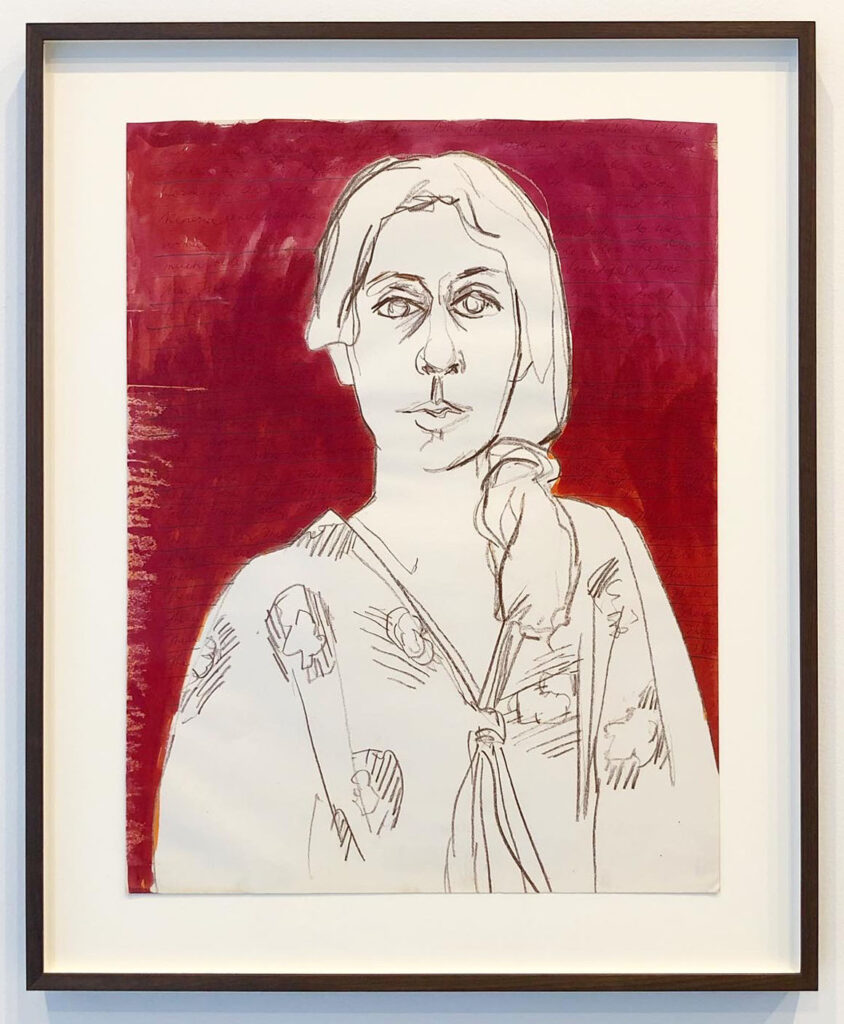
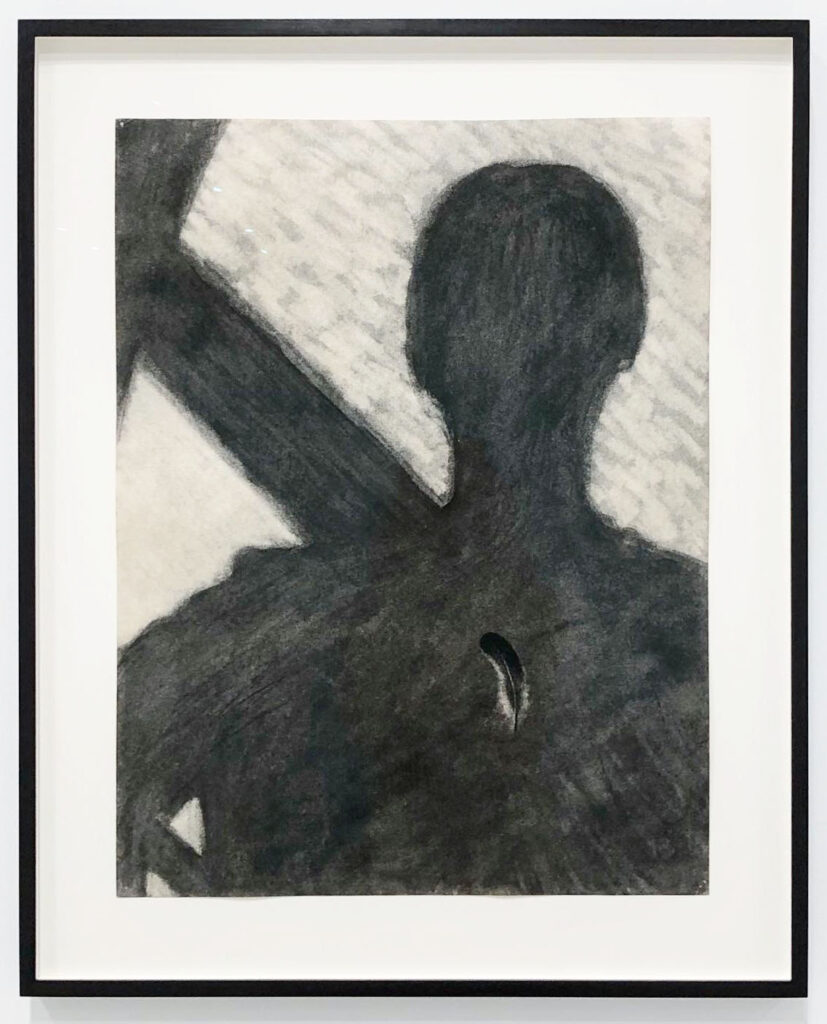
Parallel to a dynamic period of experimentation between abstraction and figuration in the early 1960s, Hurtado also focused her work inward, marking a trajectory to uncover new forms of self through portraits of herself in mirrors, looking down at her own body, and studies of her shadow. Describing this time in her practice, Hurtado explained “At a certain point, I said ‘there is no way that I can express, let’s say, except by painting myself.’ I said, ‘This is a landscape, this is the world, this is all you have, this is your home, this is where you live.’ You are what you feel, what you hear, what you know.” [1]

Throughout her practice up until recent years, Hurtado documented the forms of shadows in photographs and drawings, studying their size, shape, and potential. In early examples from the series included in this exhibition, the artist rendered her own body with oil, charcoal, or graphite on paper, sometimes juxtaposed with her own environment. In some works, a number of figures are depicted. However, these are multiple representations of her own shadow and the artist remains in solitude as her only subject. Another work from the series does not depict a figure at all, but only text where the artist states, ‘The only reasonable facsimile of me is in my shadow’.

During this solitary time of artmaking, Hurtado served as her own model and prioritized her own subjective experience in the world. These works represent significant moments of introspection, seclusion, and the claiming of time for herself. In an early self-portrait in crayon and ink on paper, the artist is surrounded with the text of her own poem written about family and memories of her life in New York before motherhood. Other works, such as ‘Untitled,’ show the artist interacting with the everyday domestic objects in her home – a bookshelf, a window, a door. Another work, also ‘Untitled,’ shows Hurtado emitting a single tear as she poses amongst plants.

In the most recent paintings on view, Hurtado evolves into the landscape as she explored ways in which her own body would transform and regenerate the earth. Functioning as a symbolic proxy and an intimate meditation on the Earth as mystic progenitor, these works underscore the interconnection between corporeality and the natural world – a delicate balance that is now in jeopardy.

‘Luchita Hurtado. Together Forever’ celebrates the various forms of the artist throughout her career and life. Even in the last days of her life, Hurtado continued to experiment and push the boundaries of her own practice.

This exhibition closes 10/31/20.

Oct 102020
 

The Mountain, 2020

The Mountain, Center Painting


The Mountain, Center Painting, Detail

Untitled, 2020

Detail of the above painting

Untitled, 2020

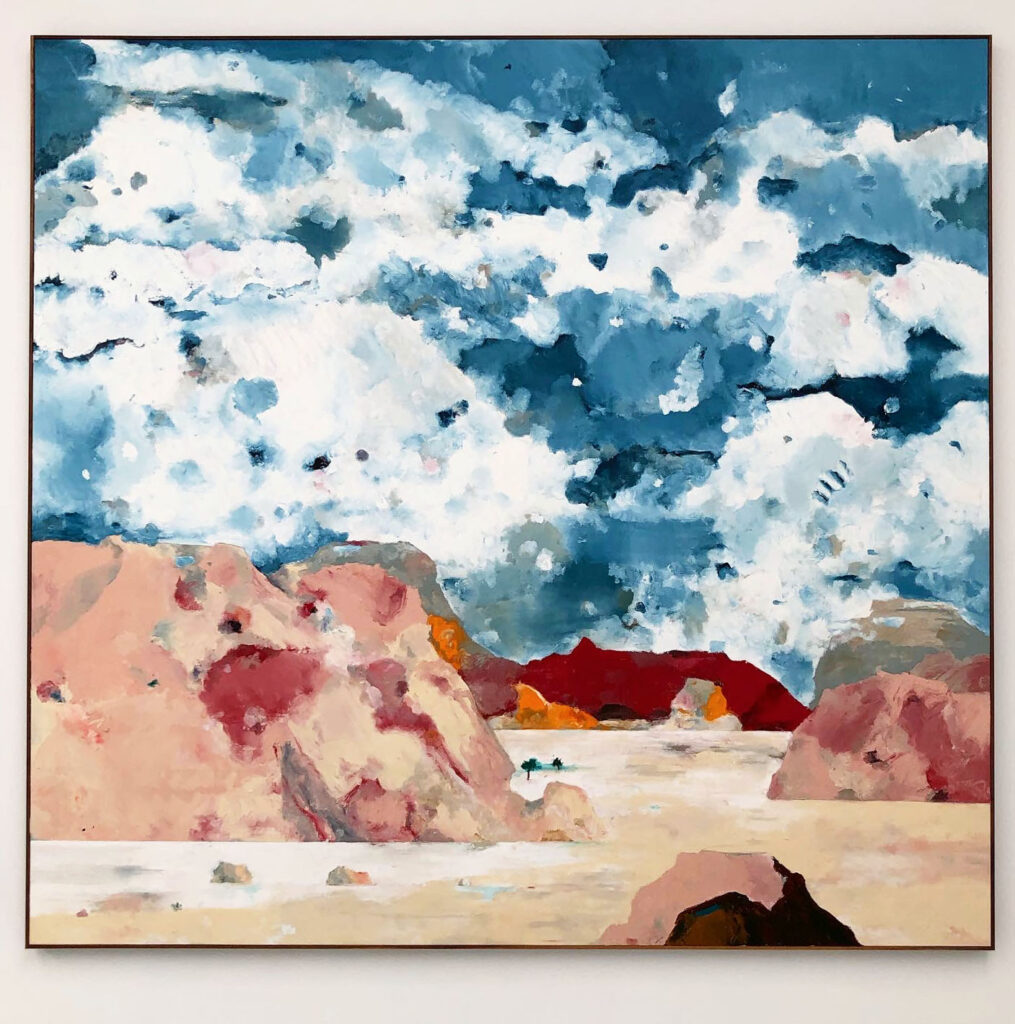
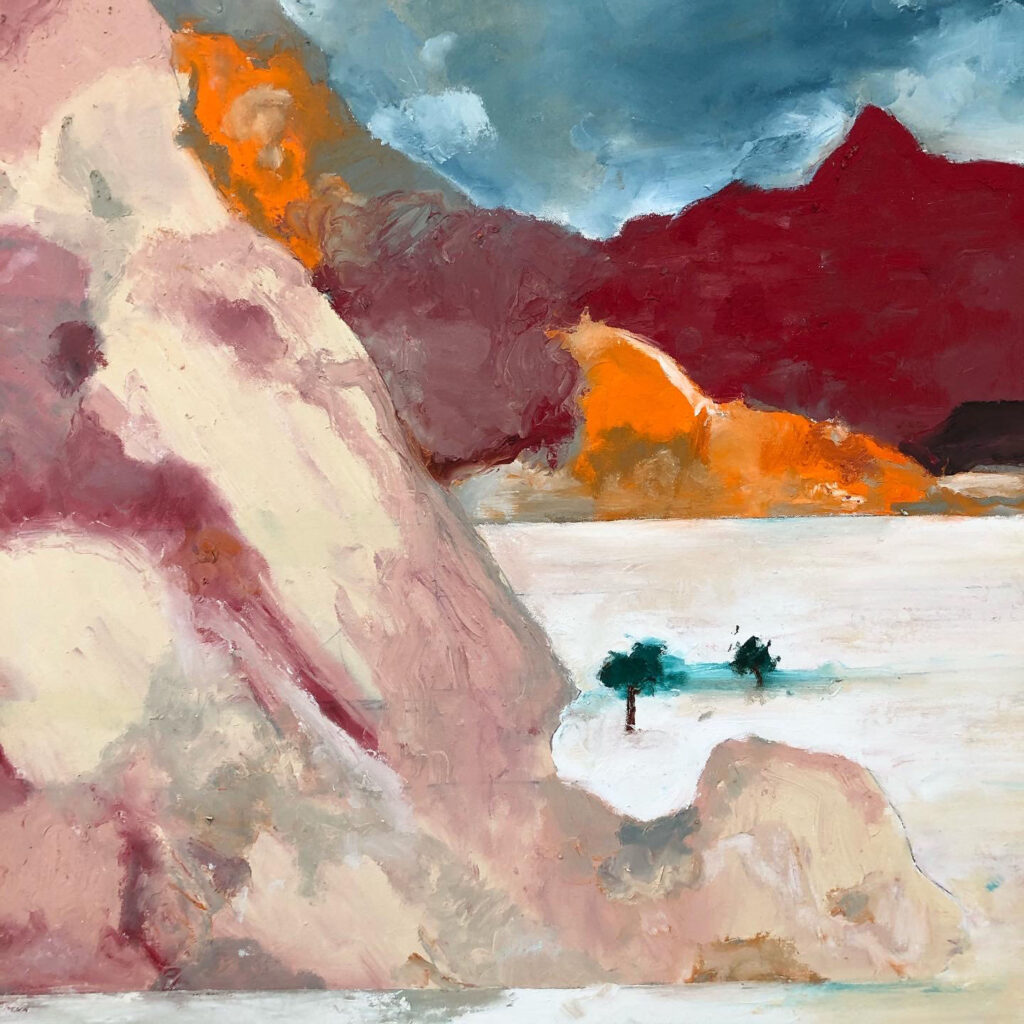
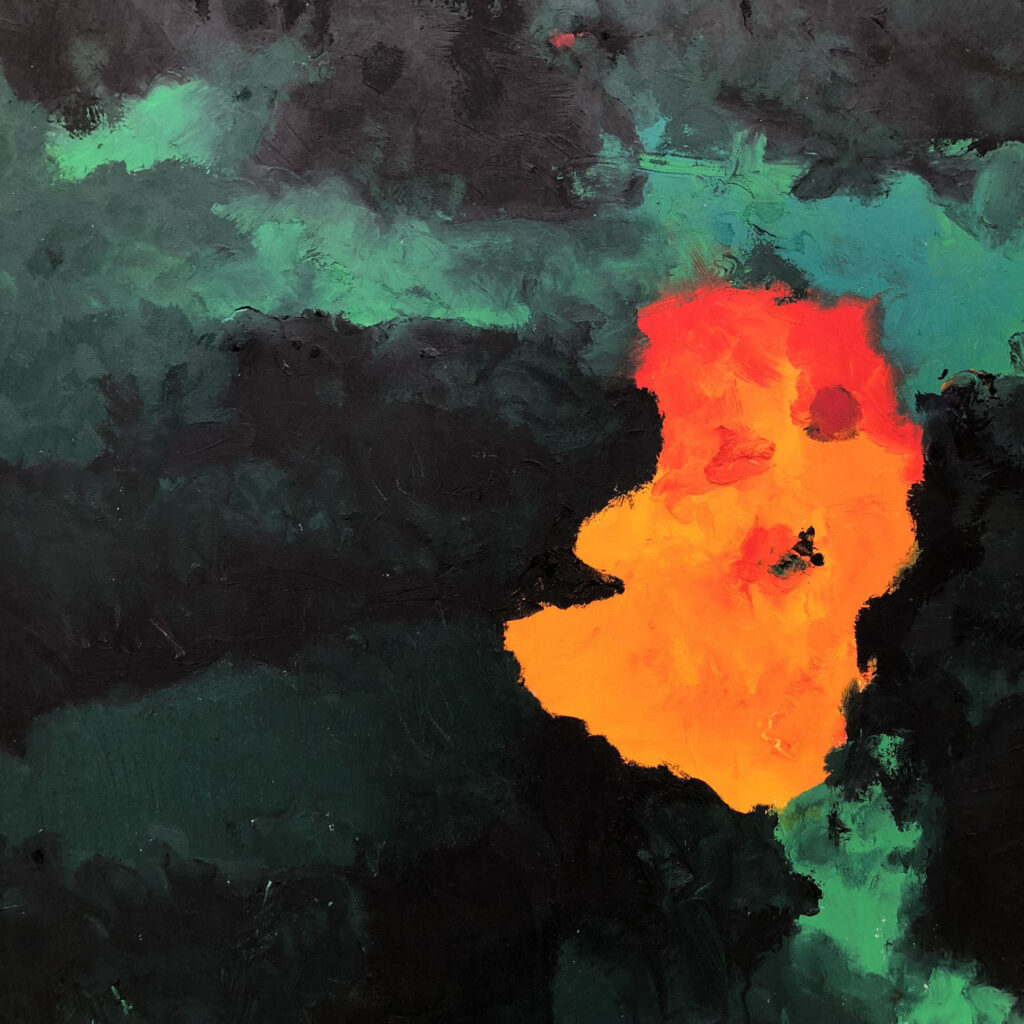
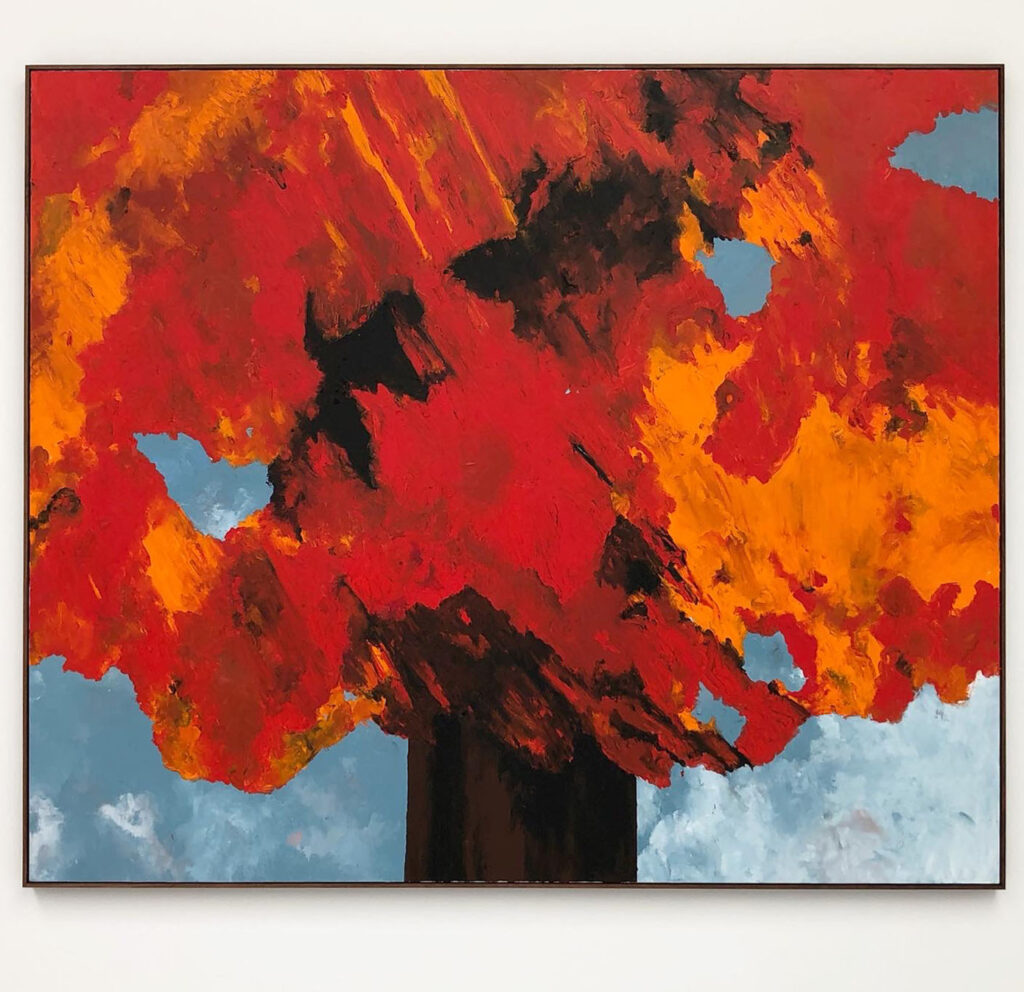
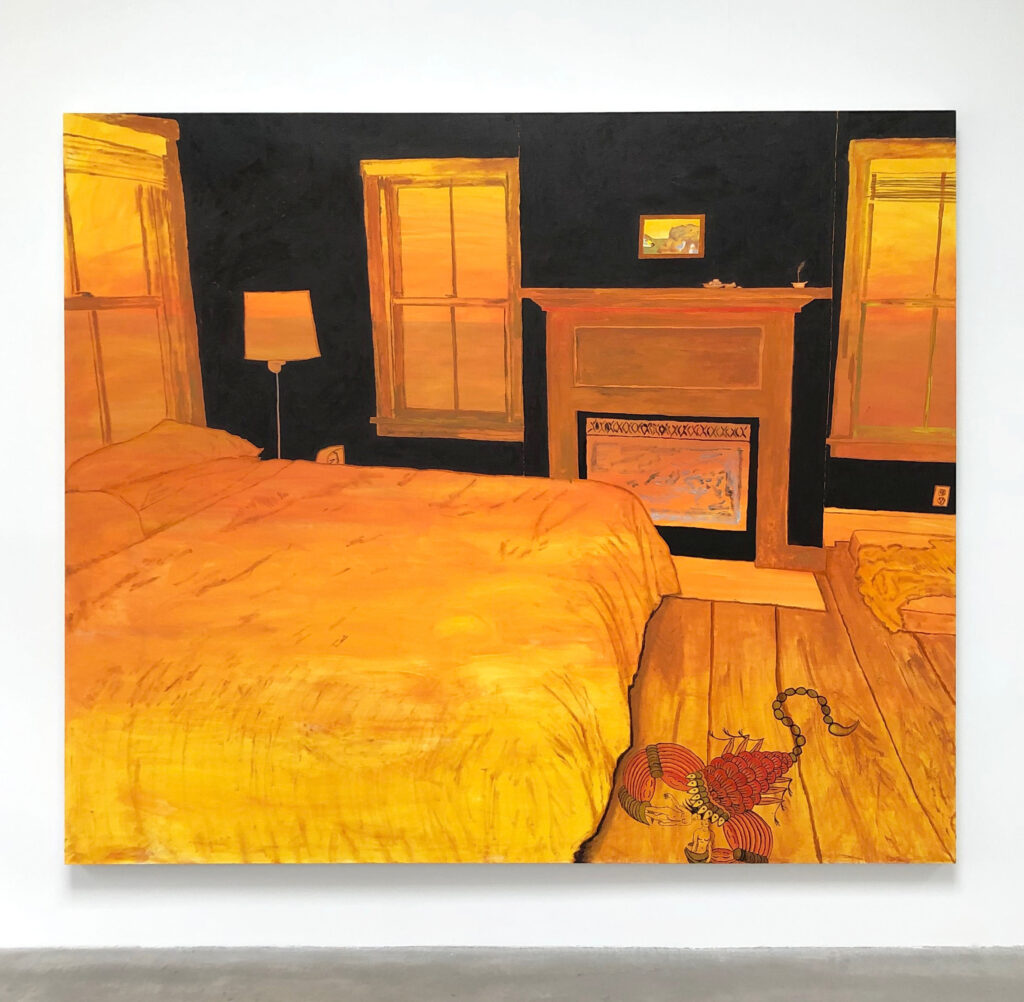
Currently at David Zwirner’s 19th Street location is Traveling Light, an exhibition of new work by Belgian-born, New York–based artist Harold Ancart. The stunning large scale paintings were created using oil stick and graphite.

From the press release–

On view in one gallery space will be a new series of paintings that depicts trees. These works were painted between Ancart’s Brooklyn studio and a makeshift outdoor studio in Los Angeles, which he traveled to during lockdown. Pointing to references as varied as René Magritte, Egon Schiele, Gustav Klimt, and Piet Mondrian, who approached this subject matter in distinct ways, Ancart’s tree paintings blur form and color, figure and ground, and figuration and abstraction.

In the adjoining gallery space, there will be two multipanel canvases that situate the viewer between a mountain-scape and a seascape, both monumental in scale. These works are inspired in part by the artist’s encounter with the modernist landscape murals of the American painter Gottardo Piazzoni (1872–1945) permanently installed at the De Young Museum, San Francisco.

The exhibition constructs an immersive landscape experience, and together, the works on view comprise a meditation on the expansive possibilities of painting.

The two quotes from Ancart below (taken from the gallery’s website) describe the concept of the exhibition a bit more.

“It is a very strange time to think about traveling, and it is a strange time to think about freedom. I didn’t conceive the exhibition this way, but I guess meaning always catches up with you. I am opening this exhibition, Traveling Light, at a time when no one travels.… But there are always means of transportation, and I think painting is very much one of them.”

“I actually did conceive the exhibition as a walk.… I think it is very important, as a painter, that you can wander freely through paint. And I think it is very important as a viewer that you can wander equally freely through it. You don’t need to know where you are going.”

This exhibition closes 10/17/20.