Jun 262024
 

The sculptures in the Charles Ray’s exhibition at Matthew Marks Gallery, are impressive in their construction and scale. Having just three in the large open gallery space also allows you to contemplate the works individually and without distraction.

From the gallery about the works-

Everyone takes off their pants at least once a day (2024) is a 9-foot-tall sculpture of a woman dressing. The sculpture is constructed from handmade paper and is based on a full-scale model originally made in clay. Merging the contemporary and the classical, the work builds upon ancient traditions of statuary.

Two dead guys (2023) is carved from three solid blocks of Italian marble, one for each figure and a third for the base. It depicts two naked men, just larger than life-size, laying side by side on a rectangular plinth. In some places the smooth surface of their skin presents an eerie perfection, while others reveal their inherently flawed corporeality. As Ray describes, “the finality of death is a window for the viewer to contemplate the mysteries and the inexplicable nature of our existence. Does the spark of our aliveness, the health of our bodies, come from the same fire today as it did for the ancients?”

8FLU100 (2024) is a twenty-four-inch-long paper sculpture of a crashed car. The title refers to the car’s license plate. To make the sculpture, sheets of Japanese paper have been meticulously cut into hundreds of pieces. Each piece is scored and folded, and then assembled by hand to precisely recreate the vehicle. As Ray has written about his paper sculptures, “The work’s fragility and close to zero weight is emergent from drawings. This sculpture is a drawing but drawn with space and time.”

This exhibition closes 6/29/24.

Jun 212024
 

“Claw Foot”, 2024, steel, glass, rubber

“Throughline”, 2024, steel, glass

“Twofold”, 2024, steel, rubber

“Tail End”, 2024, steel, glass, concrete

“Slipper”, 2024, concrete, glass, human hair

There’s something very visceral about Martha Friedman’s sculptures for Divided Subject at Broadway Gallery. The body parts, the strange juxtapositions, and the metal rods which act like skewers, combine to form works that balance humor with something darker and aggressive.

From the gallery-

The Lacanian reference of the show’s title is a tip-off that the artist will continue her ongoing psychoanalysis of Modernist sculpture traditions. Wielding humor and violence in equal measure, Friedman homes in on art historical givens with a critical eye.

A series of monumental steel skewers form the spines of these loosely figural works. Slotted with outsized hunks of meat and sliced vegetables cast in glass, and cast-rubber body parts made from molds of her muscular dancer muse Silas Reiner, Friedman marshals our collective appetites in a sendup of Minimalism. By reanimating and anthropomorphizing modes of staid Formalism, the sculptures disrupt accepted meaning and expectation via processes that are as complex and precise as they are absurdly grotesque.

Elsewhere, in some smaller works, we see cast cement limbs coated in luxuriant graphite and fitted with found footwear and exotic cast-glass foods such as geoduck clams, like a Robert Gober at the farmer’s market. These pieces are sometimes situated on artist-designed stands evoking anthropological museum display and engineered to accommodate their weight and precarious balance.

As a whole, the complex variety of materials and technique, as well as dramatic shifts in scale across the exhibition, destabilize the viewer placing them at a crossroads of technical precision and the bluntly visceral. Just as the sculpted figure in art history is a metaphorical container for meaning, Friedman’s pierced flesh reminds us that the body itself is, in fact, held fast by a delicate, porous membrane.

This exhibition closes 6/22/24.

May 302024
 

Beverly Semmes’ exhibition Cut Paste, at Susan Inglett Gallery, expands on her previous work with new textures and fabrics. A red velvety robe hovers behind a sky blue painting containing a wave of blond curls and a partial eye looking out at you. Two pairs of hands on yellow mirror each other.  Duplicates appear again in the paintings adorning textured vests sewn to a gauzy orange fabric.

The materials enhance the details of their attached paintings, but they also create questions about their meaning. What is the purpose of the robe, the high heels, manicured nails, the fake (or real) white fur – do they represent luxury or the illusion of it?

From the press release-

I begin by drawing and painting on an image from a porn or fashion magazine page. I then use scissors and tape to further separate the image. from this context/environment. A new image is born from these parts, most of which belong to my longtime friend Nikie, who modeled in the early 2000s. The pair of hands, the foot in a shoe, those are all Nikie’s.

—Beverly Semmes

In Cut Paste, Semmes ups the ante in her perennial mixing of mediums, found images, scale and techniques. Early on Semmes brought her roughhewn ceramic pots literally into the folds of regal wall-to-floor sculptures, her signature works, setting them out like buoys in the pooling fabric. Now paintings enter the fray, no longer separate but equal. While several large paintings are presented conventionally, others are treated as accessories to the fabric pieces, where they appear at chest height. Smaller than a breast plate, too large to be a pendant, the odd coupling trades in the artist’s long standing engagement with Surrealism and the absurd. One of the assemblages has a companion piece–a full-size, independent version of the “worn” painting–amplifying the dialogue between historically cisgendered sewing and painting, the one grounded in the here and now, the other conjuring a world apart. The paintings are themselves hybrids resulting from a recursive process of hand painting on iterative hi-res scans of the cut, pasted and taped magazine drawings. But paint has the final word, variously altering, accentuating and concealing what lies beneath.

The group of work as a whole is set to the rhythm of repetition through doubling and Rorschaching. A pair of wall-mounted twins in orange organza, standing shoulder to shoulder like choir boys, wear matching paintings. Doubling down, the small canvases feature a mirrored composite image involving photographic and painted bare legs, red pitchers, a sofa and stripes. The image has then been further altered–abstracted–by its upended presentation as a vertical when it actually reads horizontally. The fluid positionality carries on throughout the exhibition in the way Semmes toggles between abstraction and figuration, digital or painted illusionism and IRL, pitchers and stilettos, dressed and undressed, power and vulnerability. Here Semmes levels the playing field, using her favorite models along with long-coveted fabrics, shapes, objects, and patterns as fodder for an unhinged formalism. Her restless process of cutting and pasting leads the way.

This exhibition closes 6/1/24.

Apr 032024
 

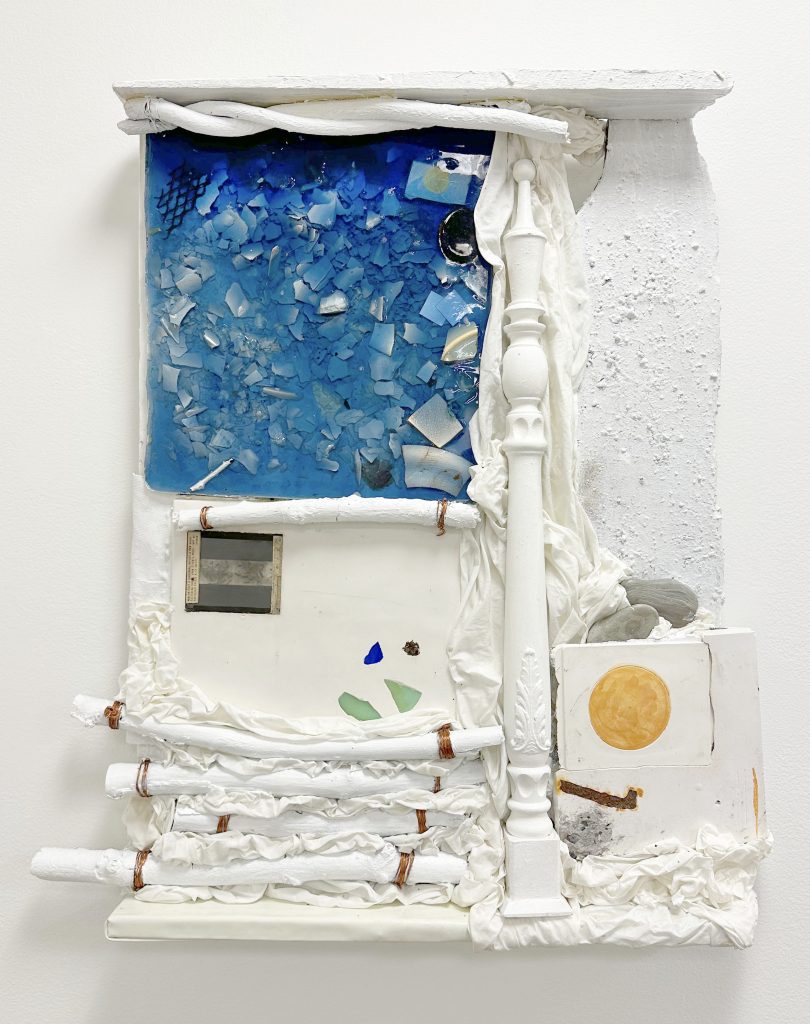
Julia Schenkelberg, “Blue Ocean”, 2020, Blue dye, resin, rusted metal from Detroit factory floors, plaster chips, vintage china, glass from Brooklyn beaches
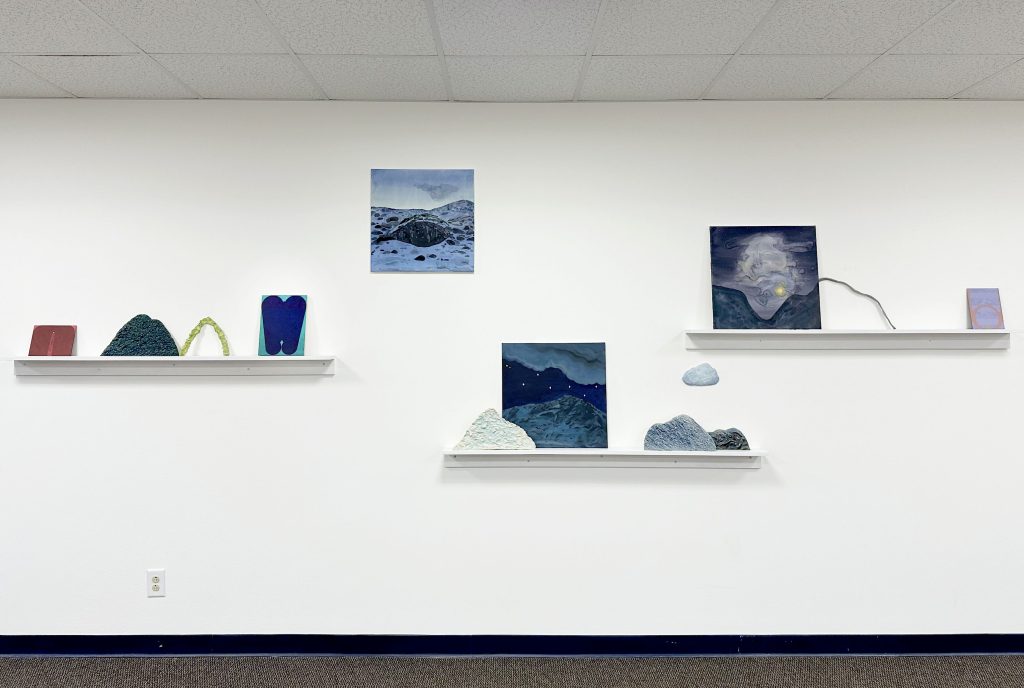
Malone University Art Gallery’s exhibition Healing Spaces features work by Northeastern Ohio artists Julie Schenkelberg, Chen Peng, Yiyun Chen, and Emily Bartolone. Although the mediums differ, the work flows together in the room. Below are some selections and more about each artist from the gallery’s documentation.
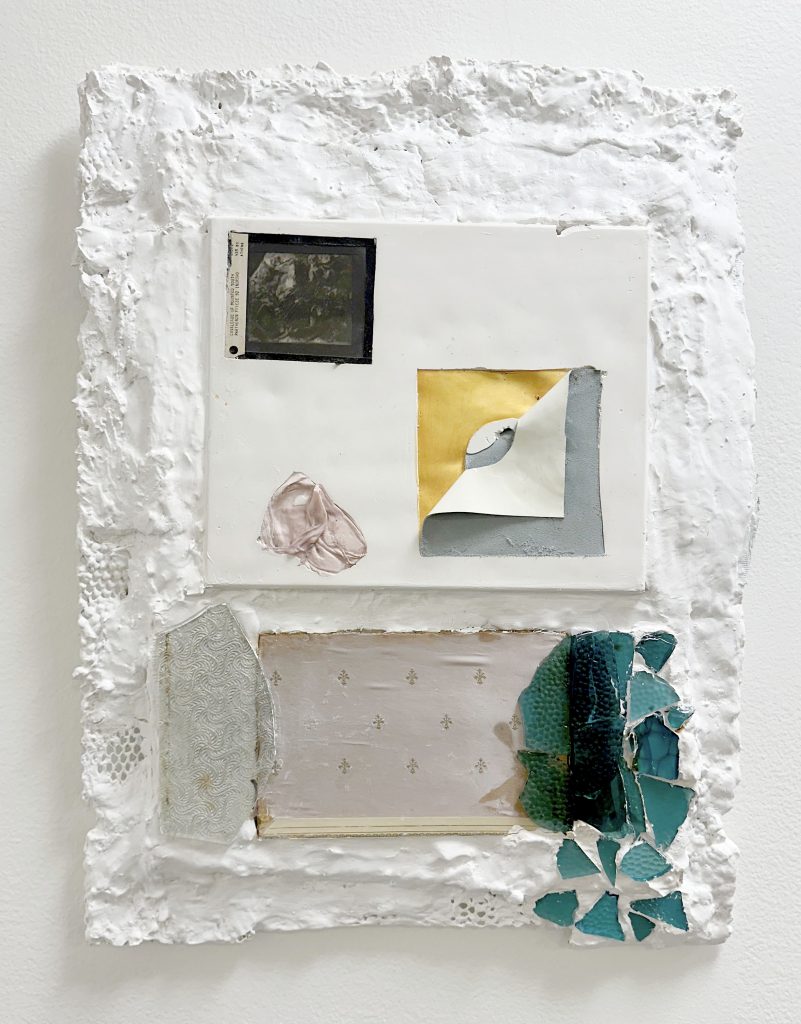
Julie Schenkelberg, “Modern Memorial”, 2020, Found screen, plaster, acrylic paint, vintage leather and fabric, jewelry box interior, glass gathered from Cleveland and Detroit auto and steel factory abandoned floors, vintage glass slide of the Parthenon Frieze

Julie Schenkelberg grew up in the post-industrial landscape of Cleveland, Ohio. Her mixed-media installations start with furniture, dishware, textiles, and marble, combined with concrete, resin, and construction materials, to transform notions of domesticity, and engage with the American Rust Belt’s legacy of abandonment and decay. Using the home as a playground for formal and conceptual subversions, the work aggressively disrupts cohesion within the physical sphere. Familiar furnishings rekindle memories or premonitions of collapse, suggesting both the utter destruction of war, calamities, or urban decay, but also the uncanny juxtapositions of fragile substances such as cloth and china, with industrial materials such as rusty metal, heavy concrete, and tool-made marks such as drilled holes and chain-sawed indentations.
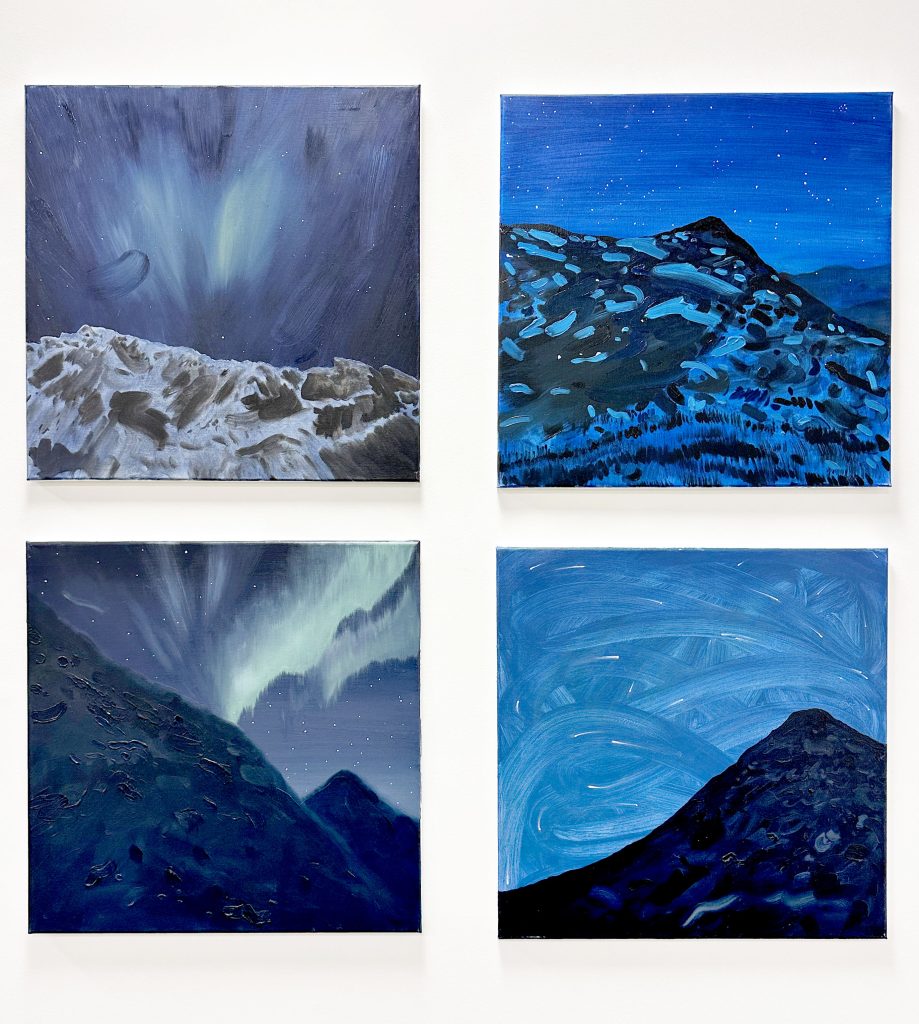
Chen Peng, Paintings from the “Mountains at Night” series, 2023, gouache, acrylic, and oil on canvas

Deriving from a desire to find stillness and grounding as an immigrant, Chen Peng explores the connection between landscape and the complexities of identity and belonging. She creates foreign landscapes from a combination of past experiences, memories, and imagination, delving into the disorienting sense of not knowing where home is. The moon, particularly in its fullness, becomes a symbol encapsulating emotions and metaphors associated with loneliness, reverence, and even terror. Her ceramic pieces extend this exploration of landscapes, featuring textures and marks that convey the essence of mountains, clouds, and the moon.
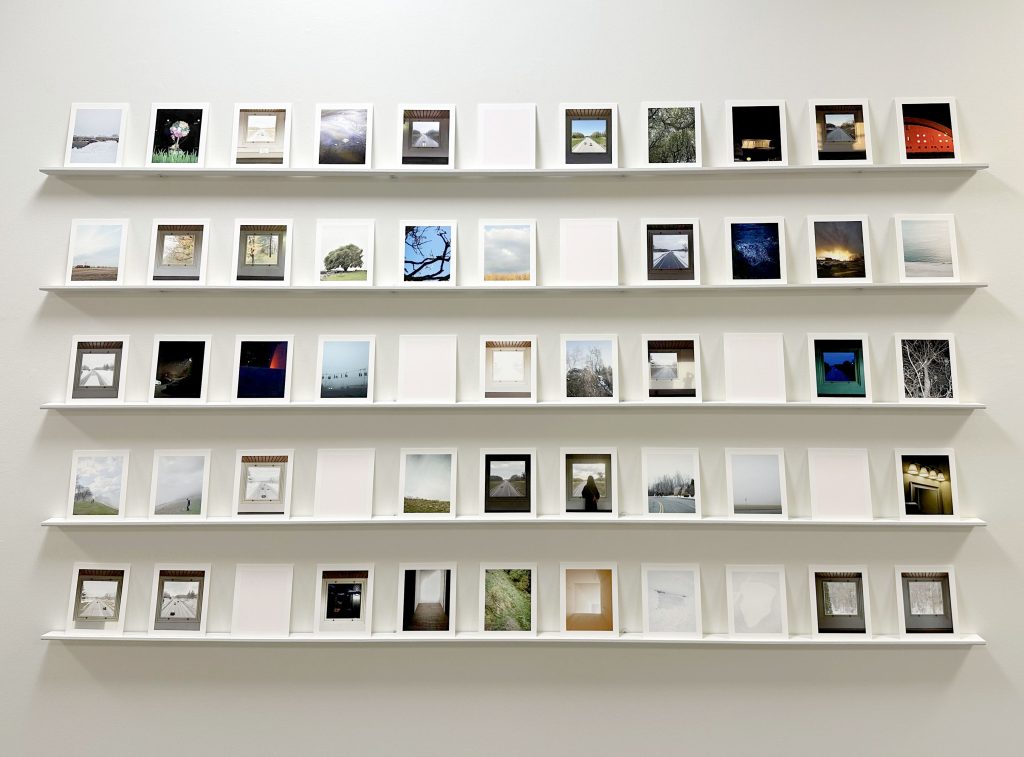
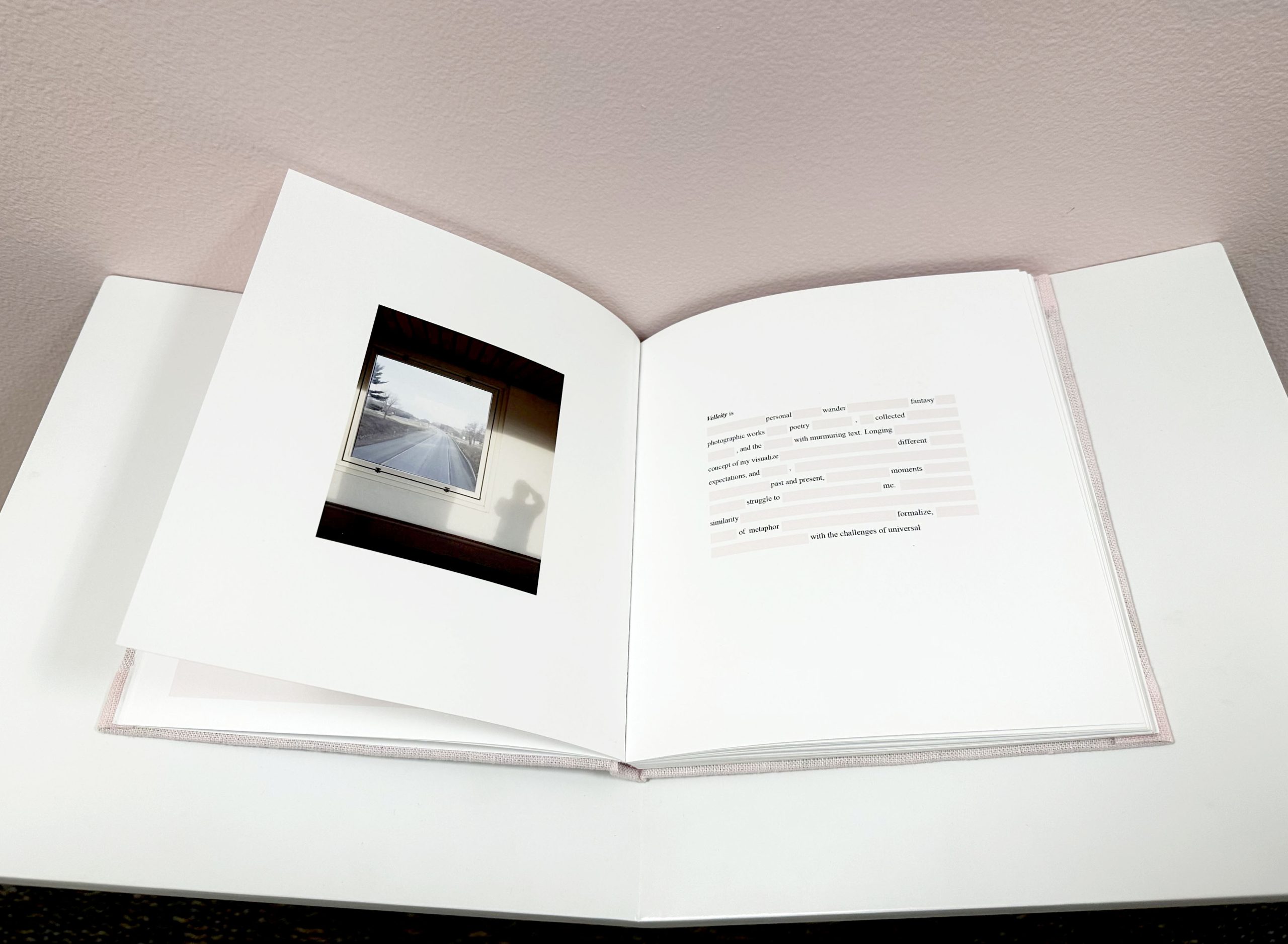
Photographs from from Yiyun Chen’s series “Velleity”, 2016-2018
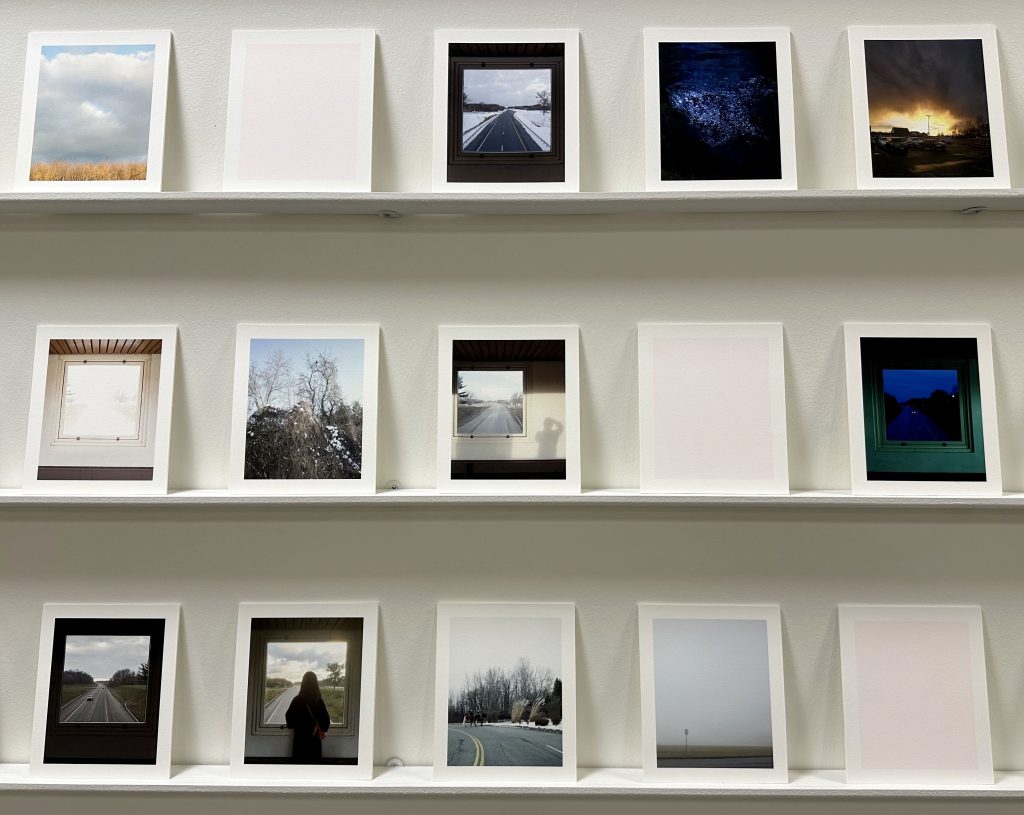
Yiyun Chen, “Velleity”, detail
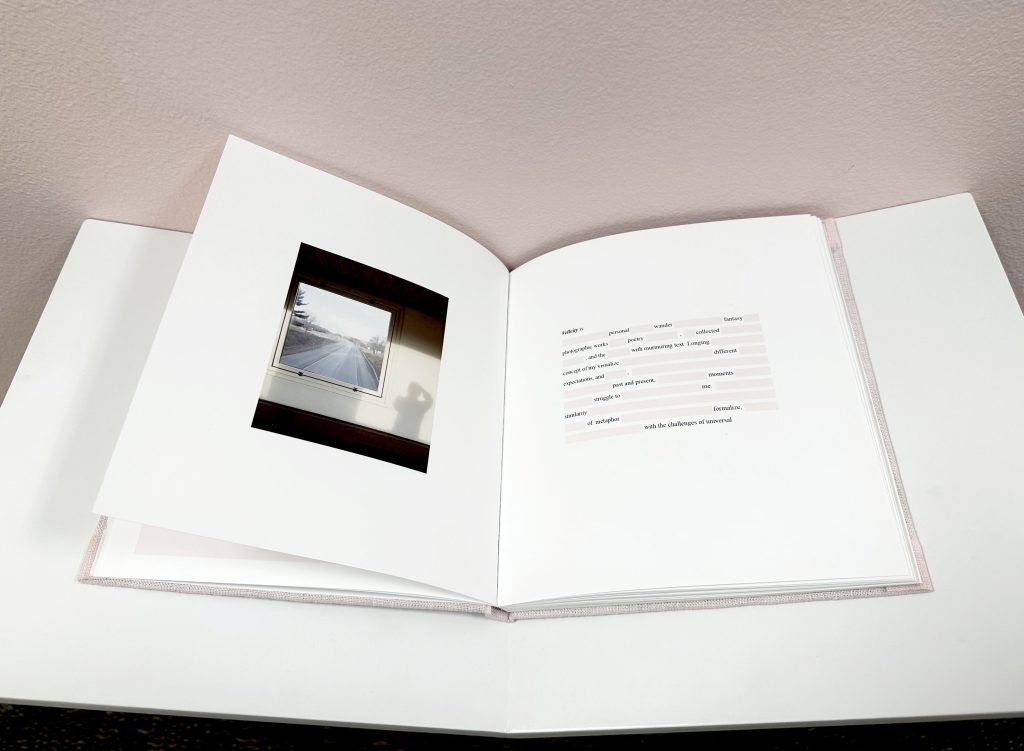
Yiyun Chen, Handmade photobook, 2018

The photography of Yiyun Chen is about the process of self-reflection and self-discovery as an Asian immigrant, exploring the relationship between people, environment and society, turning its personal experience and empathy into gentle conversations between humans and nature, capturing the poetic and distance of the environment around us. Through photography, we can take the essence of life seriously again and treat the people and things around us tenderly. Through his lens, they often have similar structure, people look tiny in nature scenes, creating an intimate visual experience. Most of his photographs are captured outdoors, with soft light and harmonious colors often used.
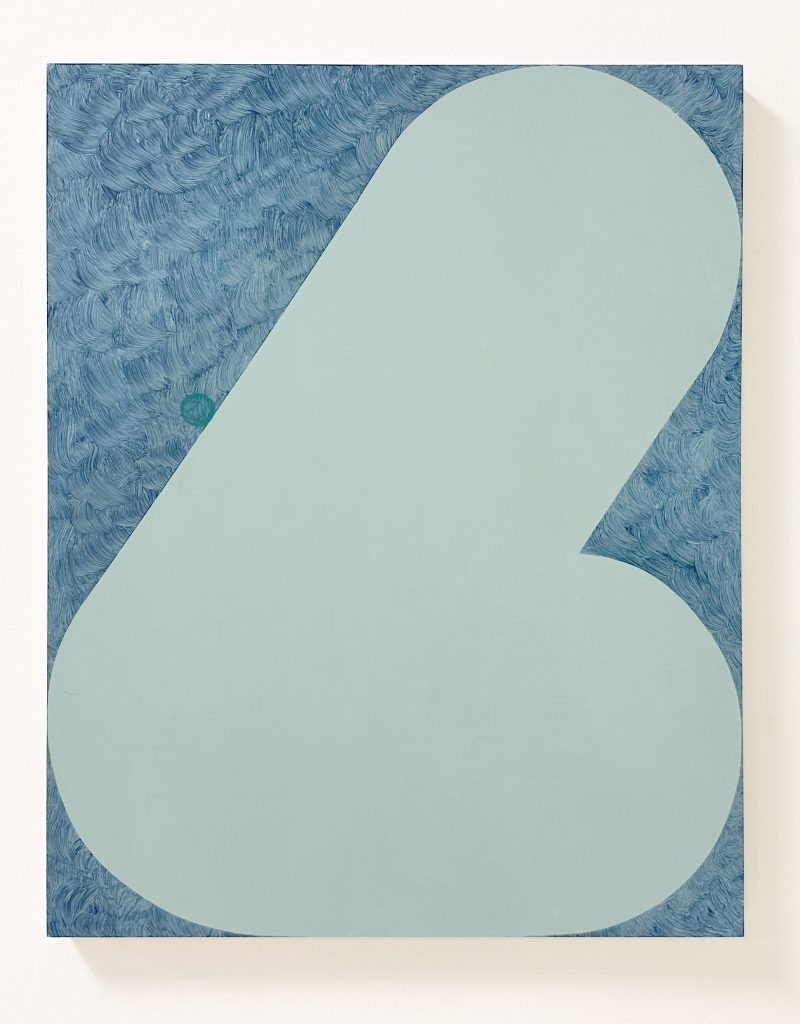
Painting by Emily Bartolone
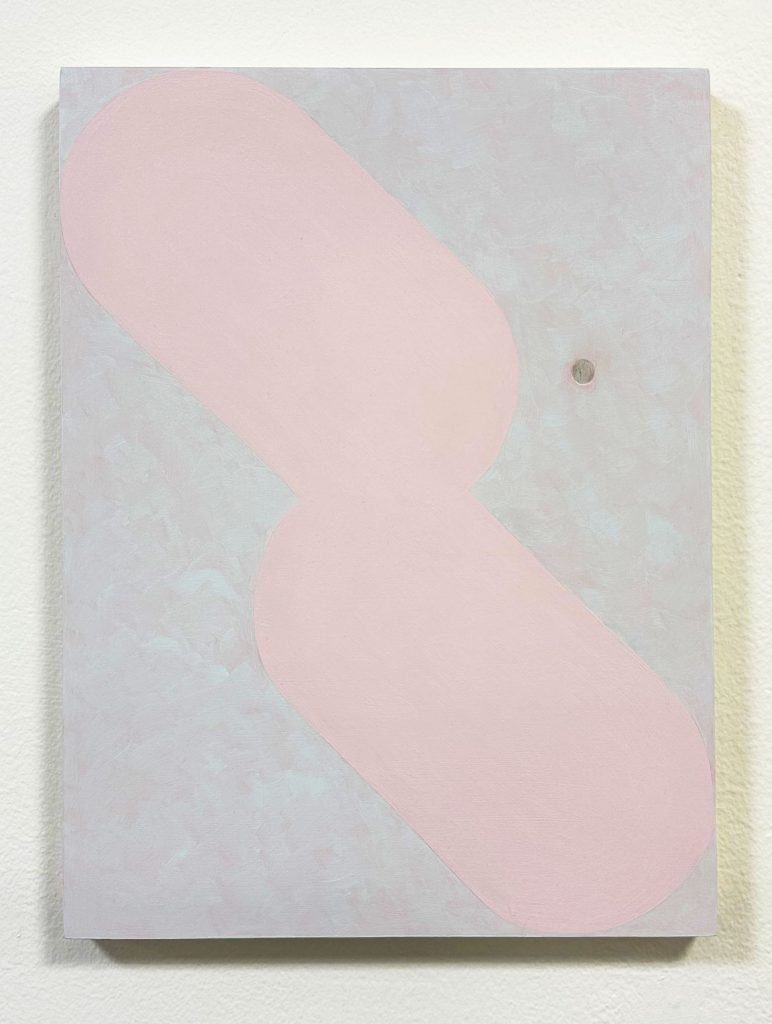
Painting by Emily Bartolone

Stemming from her infatuation with the formal elements of painting, the work of Emily Bartolone pairs down simple, anthropomorphized shapes in an effort to explore paint and color theory while simultaneously creating tension and humor through color, edges, and texture. The playful, human qualities of painting are incorporated into the work through the use of amorphous shapes animated within the picture plane. Further informed by ideas of the mundane, the awkward, and the jovial that surround everyday life, the complexity of human relationships are mimicked by the shapes interacting on each painting’s surface. In acknowledging that life is not always cordial, moments of tension are placed within the satisfying surfaces in the form of an abrupt mark, a disparate color, or a shift in scale. These ideas are used to take viewers outside of themselves for a short period of time, hoping to offer a break from the bombardment of distractions, notifications, and news we encounter so often on a daily basis.

This exhibition closes 4/9/24.


Oct 312015
 

robbputnamwaltermacielgallery

Here are a few good art shows closing on 10/31/15 in Culver City worth checking out:

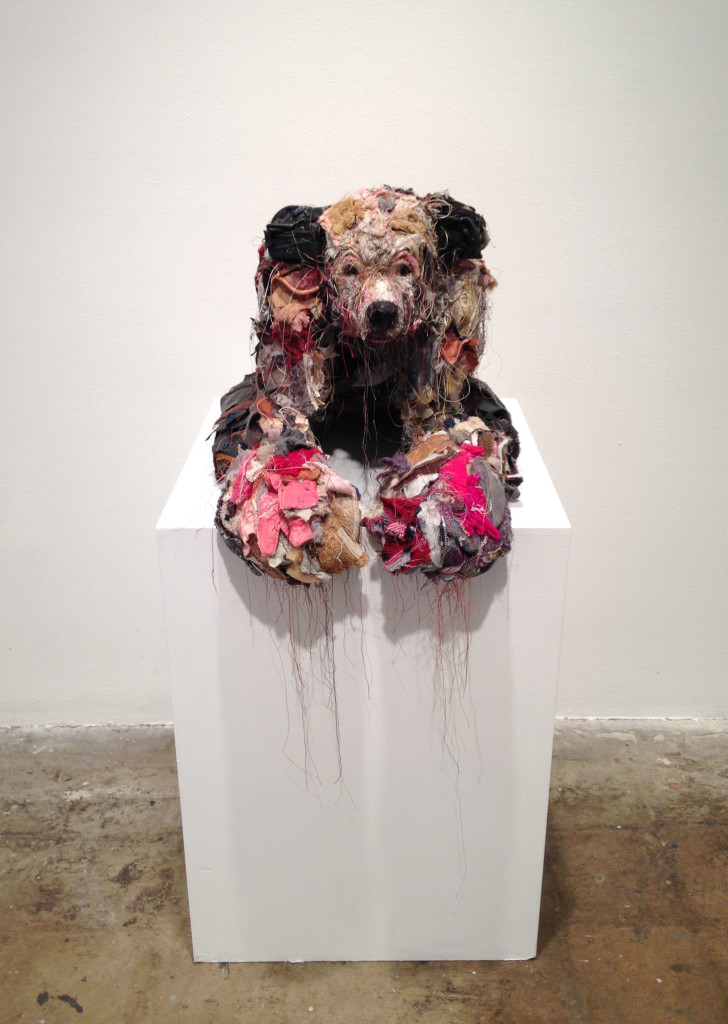
Robb Putnam’s impressive animal sculptures (above image) are at Walter Maciel Gallery for the exhibition Loiterers.

From the press release-

Putnam continues to create whimsical sculptures made out of fabrics, detritus and a plethora of disregarded items that explore memory and recollections of childhood storybook characters and imaginary friends.  His animal subjects take on the moods and emotions of the human experience with specific gesturing of posture and bodily expression.  Using this thoughtful process and personal reflection to execute the work, Putnam himself becomes a loiterer delving into his youth with his learned emotional maturity perhaps mimicking his own apprehension as a young boy circling the sidelines of the playground where he felt unwelcome. The work in Loiterers sparks ideas of what gives a living being or object its status and value while questioning the many notions of human empathy.

Michael_Waugh_2015_Boom_and_Bust
michaelwaughboomandbustcloseupvonlintelgallery

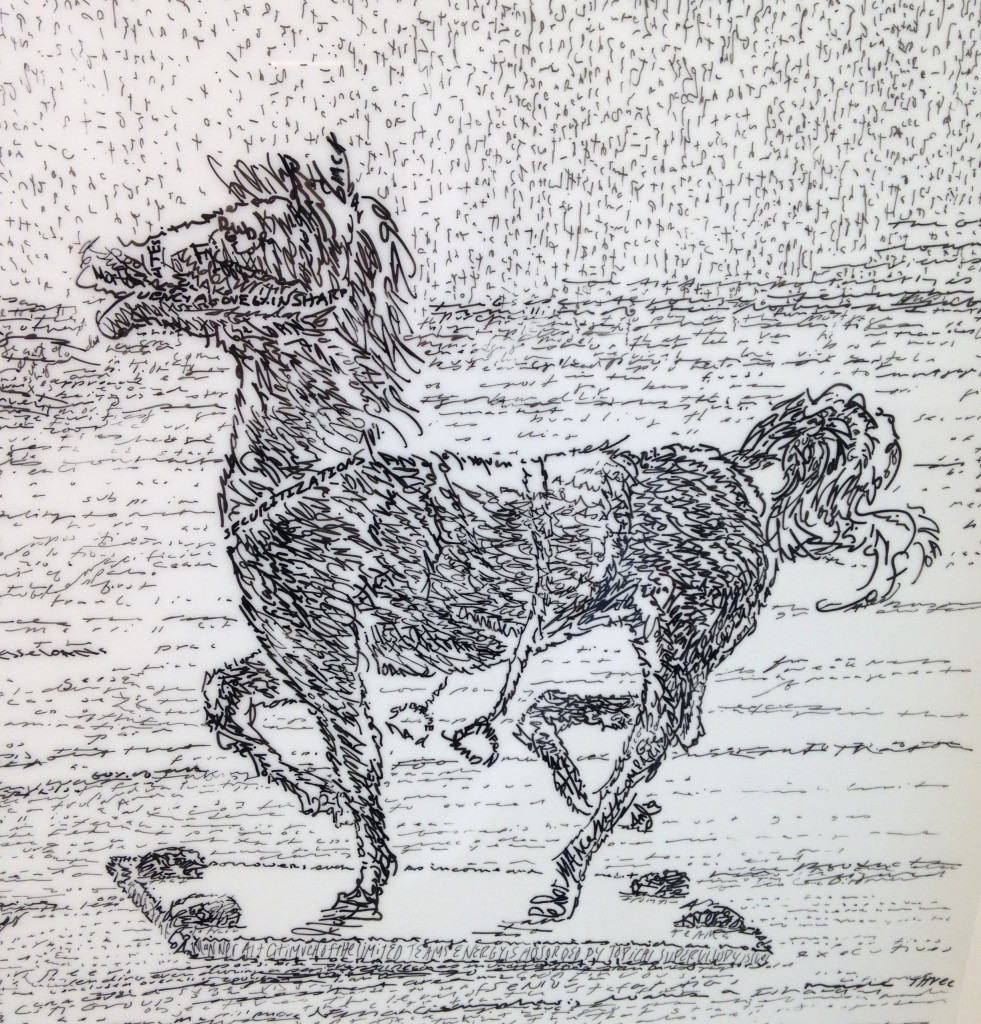
Michael Waugh’s drawings at Von Lintel Gallery are even more incredible up close when you see they are created from tiny handwritten text. (images via their website)

From the gallery website-

Waugh transcribes texts—such as government commissions and theoretical books about power and capitalism—into portraits and landscapes.  To Waugh, the selection of texts and images and the relationship between the two are the conceptual heart of the work.  “These are worlds made of words that draw upon a historical quest for knowledge and for political progress—a quest often at odds with social reality,” he explains. Waugh also explores these themes through mixed-media installations, performances, and videos, as in “The Wealth of Nations” project (2009-) for which he has staged (and documented) public readings from Adam Smith’s seminal economic text.

joelottersonmaloneyfineart

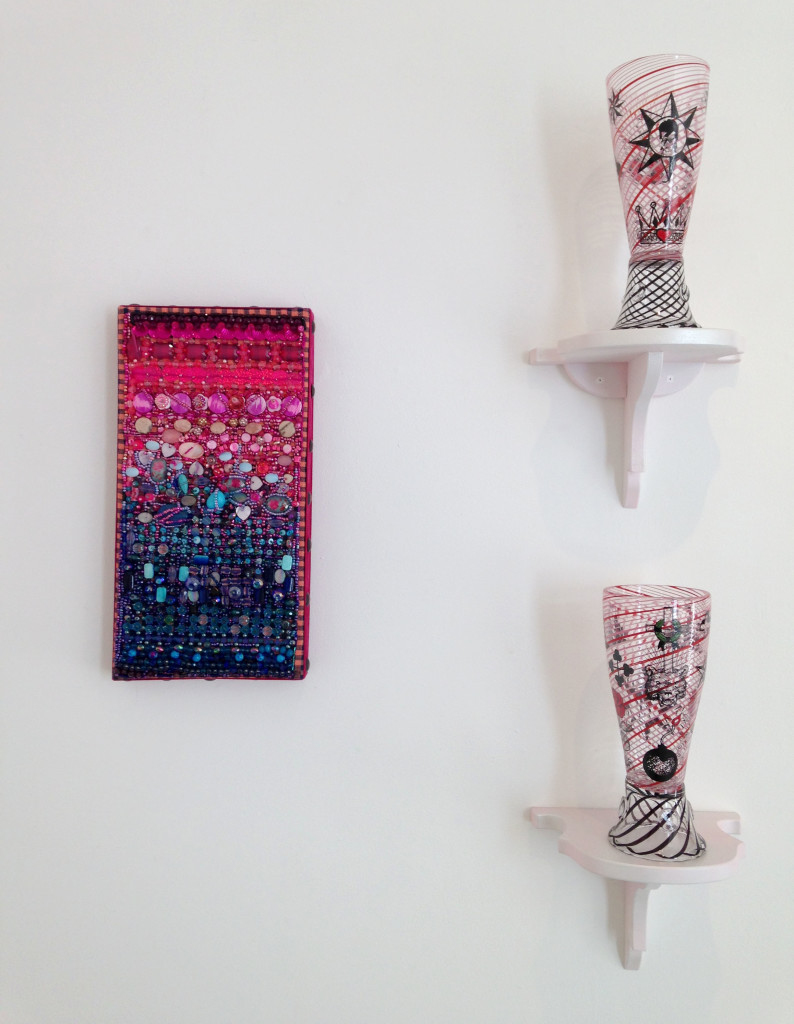
Joel Otterson’s Needleworks at Maloney Fine Art -“explores two new bodies of work; two-dimensional beaded “paintings” and three-dimensional hand-blown glass “flesh cups” which serve as a homage to the diversity, dexterity and tradition of sewing, stitching and embroidery.”

Dec 042013
 

joelotterson

joelotterson3

Joel Otterson- Bottoms Up #2

Joel Otterson’s current show is “Chandelier Queer” at Maloney Fine Art. This title references the slang term “chandelier queer” defined as- “a homosexual with exquisite and/or expensive taste” or a “self-spoiled fruit”(according to Urban Dictionary). The show consists of sculptures made from found glass wear. The chandeliers are beautiful and seemingly fragile creations which take take what most consider trashy objects, and turns them into something glorious.

Otterson is one of the artists selected to be in the Whitney Biennial 2014.